55.7 F
Davis

Davis, California

Monday, December 22, 2025
Home Blog Page 884

Warping can compress big data

UCLA researchers in the Henry Samueli School of Engineering and Applied Science have created a new data compression technique that surpasses the capabilities of current techniques such as JPEG.

The team, led by Northrop-Grumman Optoelectronics chair professor of electrical engineering at UCLA, Bahram Jalali, created their technique through the realization that data could be compressed through stretching and warping the data by way of a mathematical function. One specific application for this data compressor was targeted toward “Big Data” in the science and medical field where there are massive amounts of data needing to be processed.

“Any digital object (piece of data) — a text file, a video, a picture; has a certain size, measured in bytes. Compressing that object allows you to represent it with a smaller amount of data. Compression is desirable for two main reasons. One: the compressed data takes up less space than the uncompressed data, so you can store more stuff in the same space. Two: because the compressed data has a smaller size, it is easier/faster to transmit over a network,” said John Owens, a professor in the Department of Electrical and Computer Engineering at UC Davis.

The drawback of many data compressors is the loss of data and detail once the object is compressed. Quality of images, for example, may be compromised for storage space or to fit in an email; through compression some of the details can be lost. However, with the UCLA technique, called “anamorphic stretch transform,” or AST, the quality of data is maintained.

“AST warps the images in such a way that it stretches the small features but not the large features. This warping causes more samples (bits) to be assigned to small features, where they are needed most, and less to large features where data would be redundant. So we end up with a smaller file size yet with high resolution to see the small object clearly. The beauty of it all is that it works without needing to know where the small features are. This important property is embedded in the physics of the process,” Jalali said.

The idea behind the AST comes from the artistic technique anamorphosis — a technique that involves the distortion of an image.

With compression speeds and clarity to surpass current techniques — such as JPEG — AST may be a solution to the problem of “big data.”

Mohammad Asghar is a postdoctoral researcher on the UCLA team.

“The large telescopes on earth capture 25 gigapixel images each second. Transmission and storing of this amount of information is just a headache. AST has a promising solution for such applications,” Asghar said.

Utilizing AST will open up a large realm of possibilities — increasing data compression allows for smaller files and sharper quality, thus many applications will benefit.

“It will make websites faster and will make it easier to email and share large files including medical images … This leads to more accurate image recognition, whether in finding a cancer tumor in a medical image or identifying a burglar in a security camera picture,” Jalali said.

Looking ahead for AST, the widespread usage of this data compressor is in the works, with the team continuing to fine-tune and deliver their creation.

“We need to optimize the algorithm to get the most compression with minimum amount of computation time. We also need to figure out how to make it available for everyone to use,” Jalali said.

Artsweek: 1/23—1/30

0

MUSIC

Tracy Grammer
Jan. 23, 7:30 to 9:30 p.m., $20
Palms Playhouse, 13 Main St., Winters
Folk musician Grammer rose to acclaim through her musical partnership with Dave Carter as their duo project Dave Carter & Tracy Grammer. Together, they released three internationally-celebrated albums from 1998 to 2001. Since 2002, Grammer has continued making music as a solo artist, and is praised for her alto voice, crisp violin and storytelling in her lyrics. Her most recent album Little Blue Egg was the number one most played album on Folk Radio in 2012.

Jim Malcolm
Jan. 26, 7 p.m., $20
Wagman House, 1350 Monarch Lane
Once a member of the award-winning band Old Blind Dogs, Malcolm is now solo singing both traditional Scottish songs and his own, which are artfully crafted. His unique style feels authentic yet modern and accessible, and has been described as “one of the finest singers in Scotland in any style.”

ART/GALLERY

Artist talk with Leslie DePratt
Jan. 24, 7 to 8 p.m., free
Pence Gallery, 212 D St.
DePratt’s exhibition at the Pence Gallery titled Mad Housewives features narratives of women doing household activities while dressed in various guises. The paintings are rendered in a satirical and humorous fashion, touching upon the details that serve as metaphors for women’s roles in the world. The artist herself will share insights on her large scale paintings at the artist talk.

THEATER

Davis Musical Theater presents: Cabaret
Jan. 24 to Jan. 26, 8:15 p.m. Friday and Saturday and 2:15 p.m. Sunday, $18 general admission
DMTC Performing Arts Center, 607 Pena Drive
This 1966 Broadway hit is set in a nightclub in Berlin after the devastating effects of World War I and the rise of the Third Reich. Davis Musical Theater Company takes this Broadway classic to exciting heights with musical numbers such as “It Couldnt Please Me More,” “Wilkommen,” “Cabaret,” “Don’t Tell Mama” and “Two Ladies.”

FILM

Screening: Groundhog Day
Jan. 26, 7 p.m., $2 recommended donation
Yolo Pleasure Dome, 1401 Pole Line Road
The Yolo County Film Society will be screening the 1993 classic American comedy Groundhog Day, starring Bill Murray as the egocentric TV weather man who finds himself in a timeloop, living the same day over and over again.

OTHER

24-Hour Art Show
Jan. 25, noon to midnight, noon to 6 p.m. Free/6 p.m. to midnight $10
Third Space, 946 Olive Drive
Artists will be working for 24 hours to present their work at midnight. Guests are invited to watch the artists at work during the day, with musical accompaniment by Miss Lonely Hearts in the evening.

The Philosophy of Education: Stress Relief

0

Have you ever felt overwhelmed by all the things you have to do: classes, homework, papers, labs, work, etc.? Has stress made you feel exhausted, frustrated, irritable or angry? If so, you aren’t alone.

Chronic stress causes mental symptoms such as difficulty sleeping, difficulty concentrating, decreased awareness (which results in many bike accidents) or depression. Ultimately, it affects us physically by weakening our immune systems or causing symptoms like an upset stomach or headaches.

To deal with stress, many of us distract ourselves with activities such as video games, the internet or alcohol. However, the best way to reduce stress is to take a break from constantly doing things. When we step back from our frantic lives, we can think clearly and see the root of our stress. By distracting ourselves, we temporarily forget our pain, but it will return stronger.

When our minds are still, we can think clearly and realize that most stress is illusory. For example, we may be stressed about a paper. However, with a clear mind, we realize that if we just wrote the paper, we would finish in a few hours and no longer be stressed about it. Instead, we worry about and distract ourselves from it, lengthening those hours to a miserable day.

Put away the phone, turn off Facebook and try to quiet your mind. Even 10 minutes a day of tranquility helps if it is a habit. We must each find what works for us; each person may use a different method.

For example, some use music; however, they play music and lose themselves in it, not merely listen to it. If you have an instrument, play it, even if you “do not know how.” If you do not have one, you can clap or improvise with objects like spoons. You could also sing, perhaps with your favorite song. When doing so, feel the harmony inside you and let all other thoughts dissolve away.

Others spend time in nature, such as the Arboretum. There, they feel the gentle breeze, observe the gurgling river and see the squirrels’ carefree frolicking. They focus on the beautiful sights and sounds around them. Just like the musicians, they lose themselves in the present moment. In this state, their worries and thoughts fade away.

Some use silence. Those people go somewhere alone, sit or lie still in a comfortable position, and close their eyes. Some focus on internal rhythms, such as the breath or the heartbeat. Others focus on something dear to them, such as an image, a person or a phrase. Some focus on background sounds. They lose themselves in what they focus on. In that tranquil state, awareness comes.

The method is not important as long as it calms your mind. If you find a method that works for you and practice it daily, your life will change.

For example, many inner city San Francisco schools now practice “Quiet Time,” where students close their eyes, sit still, and try to clear their minds twice a day. In the first year, suspensions fell 45 percent. Twice as many students in these schools perform proficiently on standardized tests in English compared to schools without “Quiet Time.” In addition, practicing students report higher self-esteem and happiness.

By quieting the mind, we gain control of it. With this control, we can focus entirely on a task, greatly improving our performance. For example, we will study for less time yet learn more if we are not distracted by things like Facebook or fear of the test.

Most importantly, we become happier. How can you enjoy partying while worried about homework? If we can control our minds, we can focus on the party when we are there and on the homework when we are doing it.

If you think you do not have time to relax and clear your mind, remember, even 10 minutes a day is enough. However, change does not occur overnight. Taking this time must become a habit. One of the best ways to make it a habit is to do it at the same time daily, such as by setting the alarm 15 minutes earlier and putting a reminder note on the alarm clock.

Practicing any meditation technique, such as the three mentioned, will improve your life and increase your happiness, as it has done for millions of people for thousands of years. Anyone can do it without training. It’s never too late to learn how; just start doing it, make it a habit and watch your life change.


To share your stress relief techniques with WILLIAM CONNER, contact him at wrconner@ucdavis.edu.


Davis finds knack for novelty

Often associated with bikes, big red buses and cows, Davis was once claimed to be America’s Weirdest City in the satirical Weekly World News.

The town is home to peculiar urban legends, like historic potholes and Ted the Titan, and distinctive sites like the famous toad tunnel and Baggins End.

The concept of a toad tunnel first sprang about when the city was in the process of building an overpass by Pole Line Road in 1994.

“Helping the toads to find a happy little habitat was the intention,” said John McNerney, the wildlife resource specialist of the City of Davis. “The main idea is that they would encounter earthen berm.”

Community members such as Julie Partansky, who later became the mayor of Davis, were concerned that toads would be inevitably mashed in the process of their hippity-hopping across the overpass.

After much deliberation, Partanksy convinced the Davis City Council to build an approximately 220-foot long corridor tunnel with an 18-inch diameter of corrugated steel pipe.

According to McNerney, the core area detention basin was home to at least two different species of amphibians, the Western Toad and the Pacific Tailed Frog.

“Although [the Western Toad] was not threatened or endangered, there was a general concern about the global decline of amphibians,” McNerney said.

Word of the tunnel spread shortly after it was built, and it eventually appeared on “The Daily Show” in 1999. Though “The Daily Show” claimed that the project cost $20,000, McNerney said it was $2,000, and not a substantial amount of taxpayer money.

He also, however, recalled that some people in the community doubted the effectiveness of the tunnel and whether it would actually work.

Over time, McNerney has sampled the local ponds for larval surveys, but found no sign of Western Toad larvae.

“Several years after [the tunnel was built], we saw the Western Toad fall below previous levels,” McNerney said.

Though the cause of decline in the species has not been explicitly determined, a vast portion of hibernation habitat has been removed due to land conversion by Second Street.

In spite of the fact that the species population has faltered, McNerney said he believes that the community has kept the “spirit of the toads’” alive.

“The city wanted to cater to toads and there was just a lot of hope that they would find their way,” McNerney said.

On the eastern terminus of the tunnel by the South Davis post office, a little toad village has been set up in honor of the creatures.

Camera footage of the tunnel from “The Daily Show” did not reveal any signs of toads or frogs hopping through.

During the segment, correspondent Stephen Colbert even interviewed Partansky and Davis Enterprise columnist, Bob Dunning, about the significance of the tunnel.

“I called her [Partansky] ‘Julie from Mars’ in my column, but eventually we became friends,” Dunning said.

Along with her love of toads and frogs and her strong proposal for the tunnel, Partansky brought about awareness of the city’s potholes to the general public.

She argued that the plan to pave the alleyways between downtown Davis homes may possibly “disturb or destroy historic artifacts” due to the fact that the alleyways were built with the original neighborhoods.

Initially, her words were misunderstood in an interview, causing Davis to be considered a strange place where potholes are categorized as endangered species. Hence, the “historic potholes” myth that ensued for years to come.

“Julie was not on the council at that point or involved in politics. Few people knew about her,” Dunning said. “But it shot her like a rocket into the public sphere and the next thing you know, she’s running for City Council — and winning. The second time she ran she got the most votes of anyone and became mayor.”

Though many groundbreaking ideas that received national attention were attributed to Partansky and City Council, innovative research and discoveries also occurred on campus.

Through his invention of the “square tomato” in the 1960s, Gordie “Jack” Hanna, professor of agronomy, is thought to have revolutionized agriculture.

Roger Chetelat, tomato geneticist and director of C.M. Rick Tomato Genetics Resource Center, believes the name “square tomato” is a bit of a misnomer in that it is more blocky than square, though he does agree that the particular tomato was extremely vital at the time.

“Essentially the industry would have disappeared if not for the tomato,” Chetelat said.

As the Bracero Program that contracted laborers from Mexico to the U.S. slowly came to a halt, the drastic decrease in the number of workers severely impacted the tomato industry.

In anticipation of the industry’s eventual collapse, Hanna began to breed firmer tomatoes that could withstand machine harvesting.

Using a 14-inch drop test to rate the firmness of the tomato, Hanna eventually succeeded in breeding the specific tomato that could resist damage. Now, all that was needed was some kind of machine that could both effectively and efficiently harvest them.

So Hanna collaborated with UC Davis agricultural engineer, Coby Lorenzen, who invented a mechanical harvester that could pick rows upon rows of tomatoes.

Nowadays, loads of the “square tomato” are transported to local grading stations and canneries where they are concentrated into pastes, sauces and juices.

Not too far from where Hanna conducted his research lies Baggins End, or The Domes, which is currently home to 26 students.

Established in 1972, the cooperative living community of 14 polyurethane-insulated fiberglass domes continues to promote sustainability, organic agriculture and environmental education.

Evangeline Zhang, a third-year double major in managerial economics and psychology, discovered The Domes on her way to the Student Farm during her first year.

Intrigued by the unique structures, she researched The Domes and eventually made a living contract.

“I started coming to the community dinner and really enjoyed the food-sharing and free-talk culture,” Zhang said. “I felt like people in The Domes were more comfortable with spontaneous interaction and building relationships, compared to other housing or campus environments in which people don’t really hang out with strangers much unless there is a reason.”

In the summer of 2011, Student Housing was in the process of bulldozing The Domes.

In response to the potential threat of removal, a student-led coalition created the Save the Domes campaign.

The campaign formulated a five-year plan that consists of affordable ways to restore The Domes and ensure its availability for future students.

Students like Zhang argued that throughout 40 years, many generations of students participated in the building of a community that has contributed to the rich history of the University.

“The Domes have been an abundant resource of inspiration and warmth for me,” Zhang said.

The campaign was successful in stopping the demolition from occurring and fortunately, students can continue to call Baggins End their home.

Around the same time that The Domes were built, the UC Davis Botanical Conservatory was developed as a vast plant collection which currently holds over 3,000 different species.

One of the most popular plants at the conservatory, the titan arum or corpse flower, can grow to massive heights of nearly 10 feet, and has become another typical Davis landmark.

Known for its strong, rotting odor, the first corpse flower to bloom on campus in 2003 was named Ted the Titan after Chancellor Ted Hullar. According to curator Ernesto Sandoval, the flower received the name because some considered Hullar to be “a stinky chancellor.”

“They are relatively rare in the wild and around the world, but with all the fascination and hype built up about them over the last 20 years, a fair number of botanical collections with tropical conditions in the U.S. have them,” Sandoval said.

After receiving a handful of corpse flower seeds as a donation and discovering the potential of the plant in 1995, the conservatory provided other botanical gardens with the same batch of seeds.

“As tropical plants that develop an underground storage stem known as a corm, these plants pretty much take care of themselves if given tropical temperatures and humidity and sufficient watering,” Sandoval said. “For something so strange, you’d think they take a lot of specialized care but the truth is they are large plants and once they germinate from the thumb-sized seed, you really have to mess up the environmental parameters to hurt them.”

Soon enough the donated corpse flower seeds from the conservatory appeared all over the state of California as they bloomed at Cal State Fullerton, The Huntington Art Galleries and Botanical Gardens, Chico State, UC Berkeley and a high school in Sacramento.

Though it may not seem inherently apparent, Davis is filled with hidden gems that continue to preserve the quirkiness of the city. Looking beyond the rows of bikes, there just may be another uncommon marvel.


An Islamic State of Mind comes to UC Davis

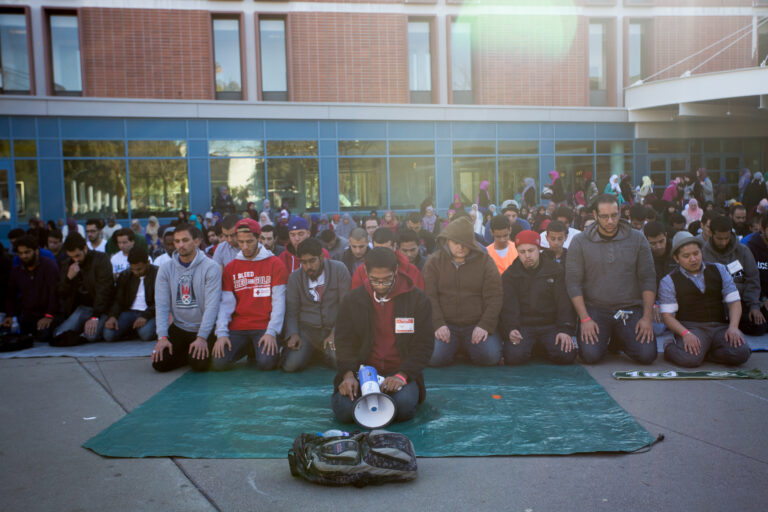
Over 1,000 people from all parts of the West Coast joined the UC Davis Muslim Student Association (MSA) on campus from Jan. 17 to 19 for the 16th annual MSA West Conference.

Chancellor Linda P.B. Katehi attended the conference opening ceremonies the evening of Jan. 17, welcoming students with a speech celebrating the University’s diversity.

“First of all, I think this conference provides a very safe environment for students to have a dialogue about important issues,” Katehi said. “Sometimes the issues are very difficult to discuss, but I believe these are the right ways and right environments where difficult discussions can take place and where people, through respect for each other, can develop trust for each other and can have safe dialogues that eventually can lead into some important solutions.”

The MSA on campus was founded by students in the 1970s, but was officially recognized by ASUCD in the ’90s.

“Our main goal is to have a safe haven for Muslim students on campus, and for community members to learn about Islam,” said third-year community and regional development major and MSA president Maheen Ahmed. “We want students to understand our religion, culture and our ethnicities to promote interfaith dialogue and intercultural understanding.”

MSA West, an umbrella organization managing 31 individual MSAs from universities across the west coast, helped manage the conference in conjunction with the UC Davis organization.

“With this conference, we are able to have more students learn about the Muslim Student Association and create greater awareness for Muslim students on campus,” Ahmed said. “Even though it is an MSA event, the fact that it is held here makes it open to all UC Davis students.”

Although the conference is held at a different university each year, this is the third year the Davis community has hosted. The University held the event in 2002 and 2009 as well.

“I think it’s great for UC Davis to be able to host this conference, I know it’s important for our students in the MSA, but also for students who are in similar organizations at the other campuses,” Katehi said. “To have the opportunity to bring students together from across the 10 campuses is a big thing, because the students can learn from each other, they can get engaged in important dialogues, and I think that is a wonderful thing to have on our campus.”

Ahmed and other members of the MSA worked with University officials, like Vice Chancellor Adela de la Torre, for the past few months to prepare the campus for an influx of visitors. De la Torre also provided opening remarks at the start of the conference.

“I want people to know that administration supports us,” said second-year political science major and conference logistics head Azka Fayyaz. “They don’t identify themselves as Muslims, but they are still coming and are very open to learning about the experience of Muslim students and Islam itself.”

With workshops and panels running from the night of Jan. 17 to the afternoon of Jan. 19, the conference featured close to 50 guest speakers from across the country, neighboring areas and local community to discuss topics related to spirituality, current events and Islamic culture.

“At the end of the day, we are all just people. There are so many similarities between us, but we tend to take only a few things and make boundaries within each other,” said fourth-year international relations major and conference chair Aisha Hameed. “The MSA is a place to start breaking those boundaries, show people what being Muslim is about and make them realize that we are all very similar.”

This year’s conference theme was ‘Islamic State of Mind,’ focusing on the American-Muslim identity of many college students.

“Everything we do should tie back into our identity. Our identity is Islam, our religion,” said fourth-year political science major at UCLA and MSA West president Haidar Anwar. “Students in my generation sometimes tend to forget, so this conference will help them bring everything back and realize that it all comes back to an Islamic state of mind, and in order to move forward, that should always be the state of mind they should be in.”

All student panels, large workshops and smaller sessions were focused on discussing different angles of this universal theme, specifically in what being a Muslim means, and how American Muslims can be discriminated against in a post 9/11 society.

“It’s all about spirituality and balancing your time for religion, making religion a way of life and molding your schedule to fit your religious priorities,” Ahmed said. “Learning about your identity as a Muslim and other problems like racism in our community at large, so not just within the Muslim community.”

Since most attendees came from around California, Ahmed said most of the discussions were designed to be pertinent to students at large public schools.

“Our main message is legacy. As a human being, what kind of legacy do you want to leave behind, and how are you going to carry yourself on a daily basis and change your own habits to get you there?” Hameed said. “This is something that is beyond religion or nationality. The core message is one of individual human beings, it’s universal.”

In addition to the theme of the conference, the MSA West hopes to extend their influence onto local governments. This year, the conference advocacy campaign was to stop the use of drones in American warfare.

“All of our attendees will be writing personalized letters, and the MSA representatives from each school will be mailing those letters out to their local government officials,” Anwar said. “I feel like it’s definitely going to be moving, since there will be over 1,000 letters.”

By the end, all conference planners hoped the conference bridged differences between cultures within the Muslim community, as well as the surrounding campus population.

“I think all student groups of different religions, culture and ethnicities are very important to the campus because they bring diversity,” Hameed said. “At the end, it’s not ‘one is right and one is wrong.’ It’s just a different way of life. A more accepting community is a more peaceful community.”

Literary Lessons: Pharcyde Intellect

0

There was a point in time when I had a crush on someone who listened to Pharcyde. Naturally, this meant that I created a Pharcyde Pandora station and listened to it constantly. Luckily, Pharcyde is truly a great hip-hop group with music that I ended up enjoying, so this acquisition of tastes was not completely pointless. (This was unlike the time I got into marathon running — much, much less enjoyable without the propulsion of a crush. You go runners, but I’ll be waiting at the finish line with some Chinese food.)

In any case, this Pharcyde crush turned out in the end to be not that awesome of a person after all. But, as literary clichés go, “all’s well that ends well,” and at least I learned about the song, “Passin’ Me By.” Moreover, as literary clichés should go, “it doesn’t matter why you accomplished something, you still did it.” This is much like attempting to acquiesce the tastes of someone you think is spectacular to (in some sort of strange sci-fi way) absorb their awesomeness.

Reading a book is kind of a commitment. Unless you are one of those who can easily tap out of a book without reading the end (I’m looking at you, people who fall asleep during a movie and don’t worry about the plot twist), classic literature can take a busy person about a month to finish. Even if some guy only read Bronte because he wanted to impress the cute person who he saw reading it on the bus one time, he still read it. That’s what matters. Time and effort was put into the endeavor of reading a book and the work ethic, as superficial in motivation as it may have been, led the reader on a pretty thought-provoking intellectual journey.

As I paraphrase the important literary figure Tina Fey, in her novel approach to life as a woman living in patriarchy, “Bossypants,” ‘exist-ith always people more awesome than thou, but one must emulate such persons to be a better human oneself.’

Remember that one time you were like, “Yeah. I think that the girl who complimented my shoes likes ___. I’m now going to take a class in ____ to impress her.” If you took that class, you get an award. It may not be an official award, but you can think about it as a metaphysical award for commitment to self-improvement.

People need to be less concerned about why someone is reading something, and just be happy that people are reading anything. Literature teaches humans about things that many of our college brains cannot yet comprehend: true love, destitute existence, religious awakenings, fantastical excess or absolute sorrow. Anyone who reads should be congratulated for their efforts. The same goes for the girl who learned 10 words in German to impress the cute exchange student, or the guy who spent three hours on the internet learning about the history of staplers because an adorable girl working at his favorite coffee shop was wearing an ironic shirt that said, “I love staplers.”

My friends, let us not judge people who only read important classic books of literature to seem cool to others. Although I have not taken a statistically significant sample, I would bet that the amount of books that these supposedly “fake” intellectuals have read is slightly more than those “real” intellectuals who are giving them flak. The same goes for people who pass judgment on those who only watch Sundance films to discuss them at Mishka’s, or for those people who only are vegan so they can announce it at dinner parties. When people are doing good things, it seems like a lot of meaningless effort to chastise them, and a lot more productive use of time to be all, “Bro… cool.”

Now, I will go and turn on my favorite Pandora station, Pharcyde of course, work on getting through Absalom, Absalom and contemplate life. When I’m old, I’ll be a scholar on many subjects. Moreover, hopefully I’ll still remember the things I learned even if I don’t remember the people for whom I learned them.


To revel in 90s hip-hop with EREN KAVVAS, you should email her at ebkavvas@ucdavis.edu.  


This Week in Science: 1/13 – 1/21

Our hands wrinkle for no real reason

Research conducted by Gary Lewin at the Max Debruck Center for Molecular Medicine in Berlin-Buch, Germany and recently published in PLOS ONE, uncovered the reason that our hands become wrinkled and soggy from water. The research suggests that finger wrinkling from soaking up too much water is actually not a mammalian adaptation, as previously suggested, but rather an incidental response to feeling warm water for a prolonged period.

https://www.sciencenews.org/article/wrinkle-arises-soggy-hand-studies


Promising new drug for PTSD patients

Findings of a new drug published in the journal Cell indicate that certain inhibitors may improve treatment for post-traumatic stress disorder (PTSD) patients. In this preclinical study, researchers tested on mice whether HDACis (inhibitors that activate genes involved in learning and memory) could help the brain to permanently reduce the effect of old traumatic memories. The research suggests that drugs with HDACis in combination with the regular exposure-based therapies can improve treatment for suffering PTSD patients.

http://www.sciencedaily.com/releases/2014/01/140116130648.htm


Process behind heart arrhythmias discovered

A study conducted by researchers at the University of Calgary and Libin Institute, Canada, discovered the process behind arrhythmias. For decades, the scientific community has known the heart defect causes irregular heartbeats and often results in fainting and sometimes death. However, the physiological process remained unknown. These findings were recently published in the journal Nature Medicine. The researchers discovered that a channel sensitive to calcium in the heart is responsible for an unusual influx of calcium waves, thereby causing arrhythmias.

http://www.sciencedaily.com/releases/2014/01/140119142458.htm


Consumption of Vitamin D can reduce MS risk

New research on multiple sclerosis (MS) sheds light on the disease, which affects the central nervous system and causes muscle, vision, balance and thinking problems. Investigators from the Harvard School of Public Health, in collaboration with Bayer HealthCare, recruited 465 patients with early stages of MS. The findings were published online in JAMA Neurology. Patients with sufficient levels of Vitamin D had a 50 percent reduced risk of developing MS symptoms, thereby suggesting that Vitamin D serves to protect against MS.

http://www.sciencedaily.com/releases/2014/01/140120173454.htm

One of the top ten hottest years

Experts claim 2013 as one of the top ten hottest years mankind has had to bear since 1880, when scientists began to record weather data. Due to ever-increasing temperatures of oceans and land, last year’s temperature increased by 0.62 degrees Celsius, which is above the 20th century’s average. This finding undoubtedly calls for a greater collaborative sustainability effort from all communities.

https://www.sciencenews.org/blog/science-ticker/2013-among-top-10-warmest-years-record

Women’s water polo hopes to swim to season’s first win

0

Teams: UC Davis at Sonoma State

Records: Aggies 0-1 (0-0); Seawolves 0-0 (0-0)

Where: Dr. G. Edward Rudloff Pool — Cotati, Calif.

When: Saturday, Jan. 25 at 3 p.m.

Preview:

After a tough defeat at the hands of the No. 4 ranked Cal Bears on Jan. 18, the No. 18 ranked Aggies hope to bounce back and earn their first victory of the season against Sonoma State. The Aggies will head to Cotati, Calif. where they will play two games, one against the Seawolves and the other against the Olympic Club.

The matchup against the Olympic Club, which starts at noon on Jan. 25, will be an exhibition and will not count on the record for UC Davis. But, the game against Sonoma State will matter in the rankings, and the Aggies must strive for a victory.

UC Davis can take a few positive points from their 14-9 loss to Cal heading into the showdown with the Seawolves. One of the biggest being the excellent form of senior Hannah Curran and sophomore Ariel Arcidiacono. Curran netted herself a hat trick against Cal, which included a penalty conversion. Arcidiacono, a transfer from Colorado State, scored twice in her first game as an Aggie.

Curran, who scored 33 goals last season, will be one of the Aggies’ biggest threats offensively. Arcidiacono, who led Colorado State with a mind-blowing 76 goals last season, figures to be an integral part of UC Davis’ plans. The Aggies will depend on the consistent contribution from both of these players if they hope to win this season.

One of the biggest question marks for the Aggies this season is who will play goalie. With the loss of Riane Woods — an all-conference goalie — due to graduation, UC Davis will be playing a duo of junior Jillian Wilding and sophomore Hailey Cameron until a starter is named.

“We have two good goalies,” said head coach Jamey Wright. “They don’t have the length that Riane had but they are very good and we have confidence in both of them.”

The Aggies faced a bit of a road bump as they conceded 14 goals against Cal. However, they should hopefully be able to right the ship against Sonoma State, who lost to the Aggies 6-8 last season. If UC Davis can manage to limit the goal scoring opportunities of the Seawolves, the Aggies should have enough firepower to pick up a road win to kickstart the season.

— Kenneth Ling


Aggies men’s basketball squad splits first two games of homestand

0

The UC Davis men’s basketball team came into their first game against UC Riverside hopeful to score a win after a disappointing Southern California road trip.

The Aggies started the game off hot, getting confident play from freshman forward Georgi Funtarov and junior forward Iggy Nujic. Within the first eight minutes, Nujic scored eight points, draining two three pointers and grabbing two rebounds.

Junior guard Corey Hawkins, however, was the headlining act of the night. Hawkins, with the game still close, hit two straight threes toward the end of the first half to bring the Aggies up by 13 points.

Hawkins continued to play well, scoring 14 points in the first half, before being hit in the eye at the beginning of the second half, forcing him to the sideline for the rest of the game.

“It’s a 10 millimeter cut on my eye,” Hawkins said. “It was bleeding out of my eye and it was pretty bad.”

When Hawkins went out of the game with 14:28 left in the game, the Aggies were up by 18 points. Within 4:12, that lead had been cut to 2 points.

The Aggies ultimately lost the game by 12 points, creating a 30 point swing within the 14 minutes that Hawkins sat on the bench.

While Hawkins injury clearly had a negative impact on the Aggies’ offense, as he is their leading scorer, it was the defense that came up short in the second half.

The Aggies allowed UC Riverside to double the amount of points they put up in the first half, scoring 54 points on 70.8 percent shooting. Forward Taylor Johns, who paced the Highlanders with 22 points, scored 16 of his points in the second half while only missing one of his eight shots. Guard Sam Finley also scored 18 of his 19 points in the second half while adding four rebounds.

“We allowed a visiting team to come in and shoot 70 percent in the second half,” said coach Jim Les. “That’s little or no attention to detail and energy and focus on the defensive end.”

The Aggies did see promising performances from several of their young players, including a career-high 14 points and three rebounds for Funtarov and 10 points and a career-high nine rebounds for Nujic. UC Davis simply could not close out the game without their star player.

After the poor performance against UC Riverside, coach Les opted for starting two players who have seldom played this season, sophomore forward Justin Dueck and sophomore guard Olivier-Paul Betu.

“We did some tough defensive drills yesterday [in practice], and I thought Justin and OB [Betu] really embraced it and really played well in practice,” coach Les said. “They earned it and this team and coaching staff has confidence in those guys.”

The Aggies did not play well on offense in the first half against the Titans. They were led by Hawkins who scored eight points, but only shot 36 percent from the field as a team.

Nujic missed all but one of his six shots, scoring just two points and grabbing no rebounds while senior guard Ryan Sypkens missed both of his attempts.

Still, the Aggies found themselves down by only six points at half thanks to stellar defense. The team forced the Titans into 11 turnovers, including two steals by Betu. UC Davis, on the other hand, only lost the ball five times in the half.

Once again, the game proved to be a tale of two halves as the Aggies scored 46 points and made over 60 percent of their shots in the second period. Hawkins was outstanding yet again as he scored 14 points while making four of his seven attempts.

Sypkens was the important story of the second half as he scored all 15 of his points while sinking three clutch shots from beyond the arc. He also came up with a steal and a key block on a seemingly easy transition bucket.

“I just don’t think we were hitting shots in the first half,” Hawkins said. “We had some good looks, but we can go cold in the first half and get hot any second. We have some of the best shooters I’ve ever seen.”

The Aggies still struggled on the boards against the Titans, getting outrebounded by 13 in the game. Forward Steve McClellan grabbed 13 rebounds for Cal State Fullerton, while the Aggies were led in rebounding by Dueck, Hawkins and junior guard Avery Johnson who each had five. UC Davis is certainly being hurt by the absence of senior forward Josh Ritchart, who leaves the team with only four forwards.

The Aggies, while overjoyed with the hard fought win, are already looking forward to the final game of their homestand against Hawai’i on Jan. 23.


Aggies look to stay hot in Hawaii

0

Teams: UC Davis at Hawai’i

Records: Aggies, 8-9 (3-1); Rainbow Wahine, 8-7 (2-1)

Where: Stan Sheriff Center — Honolulu, Hawai’i

When: Thursday, Jan. 23 at 9 p.m.

Whom to watch?

Molly Gruebel single-handedly saved the UC Davis women’s basketball team in the overtime thriller against Cal State Fullerton on Jan. 18. The sophomore drew a foul and hit two clutch free throws to send the game to overtime, where the Aggies pulled out the win.

Greubel will look to continue her fine play against Hawai’i on Jan. 23. While she averages a shade under six points per game, her ball handling and defense has allowed for her to start 13 of the Aggies’ 17 games. Look for Gruebel, who leads the team in free-throw percentage (83 percent), to be extra aggressive and get to the line often against the Rainbow Wahine.

Preview:

Following a most unlikely win against Cal State Fullerton on Jan. 18 to complete an undefeated SoCal roadtrip, the UC Davis women’s basketball team will look to ride that momentum into the tropics this week, taking on Hawai’i in Honolulu, Hawaii on Jan. 23.

Down two points on the road, with 0.5 seconds left in regulation and without the ball, the Aggies pulled off a miracle. Sophomore Molly Greubel drew a charge on Cal State Fullerton’s inbounds play, then sank two clutch free throws to force overtime. In the extra period, junior Sydnee Fipps scored the game-winning basket with 25 seconds left, giving the Aggies the 69-67 win, their third consecutive.

“We kept going back-and-forth on the play call,” Greubel said. “[Assistant coach] Matt Klemin and the staff drew up an awesome play and, we weren’t depending on getting the call, but the coaches just said ‘Take it. Take the charge.’ That’s what we did, and we got the call.”

Head coach Jennifer Gross was thoroughly impressed with Greubel for the play of the game.

“We knew that the only way that we could really try to win it was to try and draw a foul,” coach Gross said. “We know Molly is pretty sneaky, so she came up behind the defender on the ball and set a screen and was able to get the call. More important, she stepped to the line and knocked them both down.”

Greubel finished with eight points, six rebounds and four assists. The Aggies (8-9, 3-1) were paced with 12 points from junior Kelsey Harris and 10 from sophomore Celia Marfone. Sophomore Alyson Doherty scored 13 of her 15 points in the second half and added a game-high eight rebounds. Fipps, the Aggies’ leading scorer (17.5 points per game), also put up 15 in the winning effort.

The Aggies were monsters on the glass, out-rebounding Fullerton 44-25.

Coach Gross was proud of her team’s resilience against the Titans.

“You always hear about these amazing endings to basketball games and we always tell our teams to just keep fighting, keep clawing, find a way to win, and this was a perfect example,” coach Gross said. “You just never know what can happen and some crazy thing can go your way like it did for us tonight.”

Up next, the Aggies — now tied for first place in the Big West — face an upstart Hawai’i squad coming off consecutive conference wins over UC Riverside and Cal State Northridge by scores of 74-61 and 54-44, respectively.

The Rainbow Wahine (8-7, 2-1) are currently tied for second in the Big West.

UC Davis will have its hands full with Hawaii’s senior forward Kamilah Jackson, a 2012-13 first-team All-Big West performer. Jackson comes in scoring a team-leading 16.3 points per game and averaging a stellar 10.4 rebounds per game.

Junior guard Ashleigh Karaitiana, an All-Big West Honorable mention a season ago, is also a scoring and rebounding threat, averaging 10.3 points per game and 5.1 rebounds per game for Hawai’i.

The Aggies will hope to expand their lead at the top of the Big West standings with a key victory over the surging Rainbow Wahine.

— Scott Dresser

Latin Americanisms: Oi Gringo!

0

One of the more intriguing encounters I’ve had the pleasure to simultaneously bear witness to and partake in was a tequila-fuelled kerfuffle between a British bartender, a New York tourist and yours truly. The scene was a Mexico City bar in the Condesa neighborhood — a part of town known for its neo-bohemian ritz but yet not entirely devoid of the stabbiness that characterizes after-hours drinking establishments in the city — a few days before the ringing in of the New Year.

The bartender — whom I knew from prior visits — was an expat from London who freely and rather frequently expressed his profound love for his newly adopted homeland — a real patriot. On previous occasions we had made the sort of small talk you would expect from two strangers who happen to share the grand burden of the Queen’s English — he was an Arsenal supporter; I gave him grief for their recent run of bad form, real basic shit.

This time around was different. It might have been the fact that he was visibly intoxicated (part of Mexico’s bar-scene charm rests on the fact that the person behind the counter often joins in on the fun), or that he was simply sharing in the general feeling of national malcontent in a country that for all intents and purposes had gone through a really shitty 2012.

Anyhow, fast forward, a few drinks in — I’m standing outside with a friend smoking a cigarette, when we hear a booming voice yell out “I’m an American!” followed by some British niceties and the sound of a chair falling over.

Intrigued, and somewhat worried that our non-smoking friend — who had chosen to stay behind — had fallen victim to the flying chair, we hurried back into the bar whereupon I was immediately called over by the friendly British bartender. “Who, me?”

He pours me a drink (top-rate bartender I tell you) and recounts the events leading up to the fracas. He first admits to being somewhat pedo (Mexican slang for shitfaced, which oddly enough is also used to describe the act of passing gas), blames the throwing of the chair on this fact — but claims that the intended target (the New Yorker) fully deserved it. His sin? “He called himself an American!” The bastard.

“Doesn’t he know America is a continent? Mexico is America, Argentina is America. The nutter doesn’t understand reason so I threw a chair at him.” Interesting.

The New Yorker, who had begun to stumble out of the bar — resolved to file a criminal report with the local authorities the next morning, presumably after curing his certain hangover — waved one final goodbye and disappeared amid chants of U.S.A! U.S.A! U.S.A.!  from sarcastic bar patrons. Our hero responded in kind: “Oi Gringo! Piss off!”

While I continued ‘listening’ to his increasingly erratic story (at this point as a potential criminal witness), did my best to play the part of cultural counsel to a slightly overzealous Brit and secretly wished that bars back in the States could be half as fun as this, I got to thinking about what the term American meant. Was he wrong to be angry?

Sure the chair throwing was a bit much, and this whole situation might have been avoided were it not for tequila, but Americans — er, United Statesians (it’s got a ring to it, right?) — do have a reputation for arrogance abroad which might certainly account for the furniture violence witnessed that night.

More to the point, America would seem to hold a much more nuanced meaning than we are typically aware of as residents of the U.S. People in the rest of the continent don’t normally envision the Statue of Liberty when a reference to America is made. They may in fact resent the implication that Americans are a people confined to the Northern sector of the continent. The fact that a British bartender would feel the need to stand up for the use of proper demonyms should give you pause about what you choose to call yourself the next time you find yourself abroad in America.

If you would like to hear more crazy bar stories or recount your personal traumas with furniture violence you can reach JORGE JUAREZ at jnjuarez@ucdavis.edu

Spring tennis season in full swing for men, women

0

Both the men’s and women’s tennis teams travel to Pacific University this weekend to play on Jan 25. The women’s team also plays at Stanford on Jan 24. This will be an excellent test of both teams as they face top-tier competition.

The men are coming off a 3-4 loss to Santa Clara in which sophomore Brett Bacharach, freshmen Alec Adamson and James Wade all won singles matches, but the doubles match proved to be the pivotal point in the matchup. The Aggies lost in doubles and with that, the match as well. It was a positive showing for the Aggies though, as Santa Clara is ranked 73rd nationally and is a formidable opponent, as are the upcoming opponents, Pacific.

“They are both good tests in preparation for conference,” said head coach Eric Steidlmayer. “We will get back to work, improve and be more than ready for Pacific on Saturday.”

Pacific is ranked a top 75 team nationally on the men’s side, so it will be another difficult day for the men on Jan. 25. They will need to produce their best tennis to pull out a win.

The weekend of games also marks the first action for the women’s team this spring, playing on back to back days against Stanford and Pacific. The team has returned ready to make an impact as well.

“We have a great strength and conditioning coach who ran a great program over the break to [help the players] stay fit,” said head coach Bill Maze.

The prospect of playing on back-to-back days didn’t bother coach Maze either.

“Two days in a row is not bad,” coach Maze said. “For the conference tournament you have to play three days in a row, or even four.”

The team’s outlook figures to be quite positive, and in a competitive conference, the goal is to be seeded third or higher for the conference tournament in April.

“We’re strong in singles, but need to get better in doubles,” coach Maze said. “The doubles point is very important.”

The result from the men’s side this past weekend certainly proves coach Maze’s assertion, but Maze remains optimistic about the team and their goals.

“Chemistry [on the team] is pretty darn good,” Maze said. “The team really supports each other, and that helps in tight matches.”

There is certainly a wide array of talent with this Aggie team, starting with star senior Megan Heneghan who will likely play at the No. 1 position in both matchups this weekend. She has been at the No.1 spot for most of all four of her years at UC Davis, and this weekend figures to be no different. Junior Layla Sanders will probably take the No. 2 spot.

“We’ll figure out the lineup this week,” said coach Maze. “Tiffany Pham, our No. 7 [player] last year, is a heck of a player and we’re looking forward to seeing how she does. We like those fall tournaments to help see how we compete, and how to fit the lineup.”

The women’s team played three fall tournaments in preparation for this spring season. The ultimate goal at the end of the season is a spot in the NCAA tournament, whether through a conference championship, or gaining entrance through superior ranking. Both paths are difficult, but this women’s team looks to be up for the challenge.

— Vic Anderson

Aggies continue strong play in the Big West

0

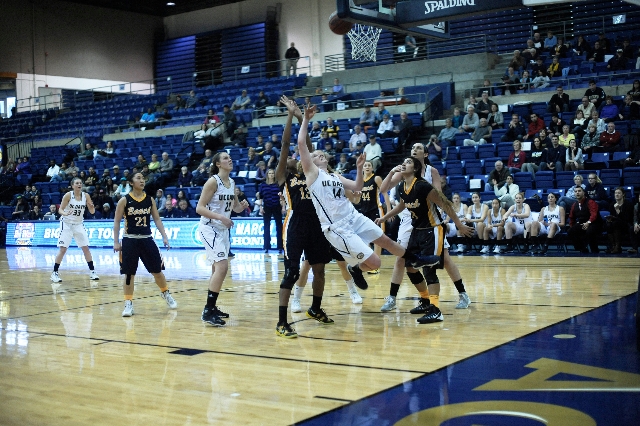
By winning two road contests, the UC Davis women’s basketball team has improved its record to 8-9 overall and 3-1 in Big West Conference play.

UC Davis started its first road trip of the season in Southern California, and its first matchup was against the UC Riverside Highlanders on Jan. 16. Shooting 50 percent from the field for the game, the Aggies defeated the Highlanders, 77-67.

Led by the play of two sophomore forwards, Celia Marfone and Alyson Doherty, the Aggies shot 65 percent from the field in the first half, including four of eight from the arc. Marfone and Doherty combined for 21 of the Aggies’ 42 first-half points. Both of them shot 3 for 3 from the field, and were aggressive getting to the free-throw line nine times.

Meanwhile, the Highlanders shot 48.1 percent from the field and three of their players scored double figure in the first half.

An 8-0 run gave UC Davis its first lead of the game, and nine straight points by Marfone helped the Aggies to their largest lead of the night, 26-15, with 11:39 to play in the first half.

However, the Aggies did not keep this advantage to end the first half. A 9-3 run with under two minutes left in the half, including a near half-court buzzer beater by Simone DeCoud, allowed the Highlanders to tie the Aggies at 42.

Both teams struggled from the field to start the second half, but the Highlanders made back-to-back baskets that helped them take their first lead of the game, 46-42. However, UC Riverside could not pull away further due to the Aggies’ consistent shooting, including an explosive 13-0 run midway through the second half to take back the lead.

The fouls and turnovers by the Highlanders cost them the game as UC Davis finally prevailed, 77-67.

Four Aggies scored double figures in this game. Sophomore forward Sydnee Fipps scored 15 of her game-high 22 points in the second half to lead the team to the victory. Marfone collected a career-high 19 points to go with three rebounds and three assists. Doherty and junior Kelsey Harris also finished in double figures.

The Aggies continued their road trip as they visited the Titan Gym to face a strong opponent, the Cal State Fullerton Titans, who had a 5-9 overall record as well as being one of the two unbeaten teams in Big West play before their matchup against the Aggies.

In the first half, the Titans scored the first five points of the contest in two minutes. But soon, UC Davis answered back with an 8-0 run to take a 12-9 lead with 10:53 to play in the half.

The Aggies and the Titans traded buckets for the remainder of the first half, and the teams ended the half tied at 24. Harris led the Aggies with seven points on three of four shooting from the field. Both teams were evenly matched in the first half as the Aggies shot 37 percent from the field while the Titans shot 36 percent.

UC Davis came out strong in the second half on a 6-0 run, putting the Aggies up 30-24. UC Davis held Cal State Fullerton to an almost seven-minute-long scoring drought. However, three back-to-back three-pointers by Alex Thomas and Samantha Logan gave the Titans their lead back, 33-32, with under 12 minutes to play.

Two minutes later, the Aggies answered with a 12-4 burst, with eight points from Doherty, to regain the lead, 44-37. But the Titans continued to make shots, and with 3:23 remaining the game was tied at 50.

Following two free throws by Fipps, UC Davis led by three. But Thomas took off on a 7-0 run by herself, shooting a jumper, draining a three-pointer and sinking a pair of free throws, after UC Davis was called for a foul with 0.5 left on the clock, for a 59-57 lead.

The Aggies had the ball out of bounds with a possibility of the last shot, when sophomore Molly Greubel stepped in front of Natalie Williams and drew a foul. Sending Greubel to the free-throw line where she sank both sent the teams to overtime.

In overtime, UC Davis built a five-point lead with 1:32 to play in the extra period, but Fullerton rallied back. With a pair of free throws and a three-pointer, the Titans tied the game once again at 67-67 with 1:15 to go.

The Aggies got the ball to Fipps, who scored 13 points up to that point, and she nailed a go-ahead basket with 25 seconds to play in the contest. Cal State Fullerton’s Thomas had a shot that was off the mark and Greubel rebounded the miss as time expired to beat the Titans, 69-67.

“You always hear about these amazing endings to basketball games and we always tell our teams to just keep fighting, keep clawing, find a way to win, and this was a perfect example,” said head coach Jennifer Gross.

Fipps finished with 15 points and reached double figures in points for the ninth consecutive game. Greubel collected eight points, six rebounds and four assists with a team-high 41 minutes. Doherty scored 13 of her 15 points in the second half, while both Harris and Marfone also finished in double figures.

The Aggies are traveling to Honolulu, Hawaii and facing the Hawai’i Rainbow Wahine on Thursday, Jan. 23, marking the end of their first road trip of the season.

IET and Campus Data Center face persistent service outages

0

On Friday, Jan. 10 at noon until Saturday, Jan. 11 around 1 p.m., the Campus Data Center suffered a sever service outage that persisted intermittently.

Most of the service outage was characterized by the Private Cloud Service (PCS) being unavailable. This service comes from the Quest Data Center located on the UC Davis campus. What clients saw was unavailability of all associated servers and services. Almost all Information and Educational Technology (IET) central services were affected by this outage, so SmartSite and related websites were inaccessible.

“The first outage of the PCS was Friday from noon till about 3 p.m. Once the PCS was restored from this outage, it took several more hours to restore all services. Possibly related to the outage, the uConnect firewall stopped working properly,” said Dave Zavatson, a principal engineer at the Campus Data Center. “While the PCS service and most dependent services were restored by 5:30 p.m., uConnect continued to be unavailable until 8 p.m. because of firewall issues.”

At around midnight on Jan. 11, the PCS’ service started exhibiting similar symptoms on a smaller scale. While the earlier outage eventually affected all hosts, this new outage was only affecting two VMWare hosts (VMWare is cloud software).

Workers at IET and the Campus Data Center began troubleshooting again, but at around 3 a.m. more hosts became affected by this second outage causing critical services to become unavailable.

Administrators continued working on the problem, and PCS service was restored around 7 a.m. At that point the process of restoring dependent services began and all services were restored by around 1 p.m.

“We know that the outage is due to storage area network software code. We have cases open with both VMWare and Netapp to isolate precisely what caused the service to be unable to communicate with the SAN,” said Babette Schmitt, chief information officer for IET.

Mark Redican, Telecom and Data Center director, sees very little logical relation between the uConnect firewall problems and the PCS’ failure.

“We are still investigating whether the uConnect firewall problems are related to the PCS failure. The timing of the failure is certainly suspect, but there is very little interaction between the two services except that some uConnect guest and external clients that rely on uConnect are hosted in the PCS,” Redican said. “We tried various troubleshooting steps to resolve the issue and ultimately needed to completely power off both firewalls and bring them back up sequentially to restore proper service.”

Due to the widespread nature of this outage, it was difficult for IET to communicate with clients about the conditions of services.

IET does have a Twitter account which did post outage and status notifications; however, the account only has 338 followers, which pales in comparison to the 33,300 students who constantly use these services.

“An outage such as this demonstrates just how critical these campus services are,” Zavatson said. “IET recognizes this and takes these services very seriously. Once the root cause analysis is complete we will make an incident report available to campus.”

The Campus Data Center’s next steps will be to work with campus leadership and Data Center clients to identify priorities and solutions for the business continuity.

“Solutions exist to address these shortcomings, and no doubt we’ll have much campus discussion about implementing them,” Schmitt said.

Famed baseball storyteller Chuck Brodsky to perform

0

Famed singer-songwriter and storyteller Chuck Brodsky will be performing Jan. 16 at Bill Wagman’s House at 1350 Monarch Lane in Davis at 7 p.m. Tickets are $20 and can be purchased at the door.

Brodsky, born and raised in Philadelphia, began his career performing in San Francisco coffee shops and busking across Europe during the late 1980s. Over the last 20 years, Brodsky has released 10 albums and toured North America and Europe extensively.

However, it is Brodsky’s incorporation of baseball and many of its eccentric characters into his songs that has brought him critical acclaim. As a result, 18 of his baseball story songs have been enshrined in the National Baseball Hall of Fame sound recording library.

MUSE spoke with Brodsky and asked him about his approach to writing music, why he loves baseball and his future as a musician.

MUSE: How would you describe your approach to music and what do you think separates you from other folk musicians?

CB: My approach to music is very organic I think. I don’t mean to sound smug, but music isn’t a career for me as much as it’s my calling. It’s a craft. Something I take great pride in. I’m not really in the business of music. I love songwriting and I love performing too much. The goal for me when writing a song is just to please myself on an artistic level and the goal when doing a concert is to feel connected with everybody while doing something I love doing. That’s it right there. I can’t really speak for other musicians, as far as what they might strive for, or how they might define success, but for me it’s never been about trying to reach some level of fame or some great big number of sales. That’s all good, but it’s not healthy to have those things be your focus. I like to keep it only about trying to reach people, having some fun, telling some stories worthy of telling, making some good music … it’s like being unleashed. It’s something I’m grateful that I get to do. I’m an independent musician who’d love to have a manager and a booking agent, but since I don’t, I do those jobs myself, make all my own arrangements, drive myself around, and then when I show up at the gig … that’s when I get to let it just be about the music.

How did your signature style of combining folk music and baseball come to develop over the years?

It happened completely by accident. I was a little bit unsure about playing my first baseball song. I thought people would find a song about sports to be trite. I was surprised people liked it so much when I started to sing it. When I wrote a second baseball song I noticed I was often being referred to as the guy who writes baseball songs, and that was just after two of them. By the time I’d written my third baseball song it occurred to me I might continue writing them until one day I had enough to fill an entire CD of them. I did ultimately release The Baseball Ballads. I kept writing more baseball songs, and a few months ago I released the follow up CD, The Baseball Ballads 2.

Why do you find baseball and its role as America’s national pastime so intriguing?

I think baseball is something that most people are probably exposed to at some point in their lives in one way or another. It’s something almost universally shared by fathers or by mothers with their children, playing catch in the backyard, following the favorite team together, going out to the ballpark — something a lot of people can relate to. It’s all been just a great big tremendous amount of fun, writing and singing about baseball. It’s taught me just how beloved baseball really is, by old and young, rich and poor, people of all colors, male or female. On a cultural level, I think baseball is an incredibly rich and colorful treasure trove of folklore. There have been so many great characters through the years, some of mythic proportions — the heroes, the goats, the winners, the losers, the goofballs — while generations of fans have lived and died with their teams.

How and why do you choose the stories that you tell?

It starts with me being touched by a story, whether it be one told to me face to face, or one I come across in a newspaper or magazine article, or even a photo that catches my eye and provokes me to imagining something very real. I look for stories that lift your spirit, or make you feel you’re not alone in your troubles, stories of people doing kind things, stories of the good examples we can be to others. I look for stories that are unique and worthy of telling, or I try to give voice to somebody else who has something profound to say but not a way of saying it. It might sound hokey, but it’s true… a lot of the best stories seem to find me.

What are does the future hold for you career and how do you see yourself developing as an artist?

 I think as an artist my songwriting keeps getting better and better, and I think my performances do too. I’d mostly just like for that to continue. I plan to continue touring throughout North America, Europe and elsewhere, hopefully for many more years. I’d like to play my songs for as many people along the way as I can. I’d like to send as many of them home happy and satisfied as I possibly can. That’s what I see as realistic. That’s all I can really control. I’m alive. I’m doing it better than I’ve ever done it. Anything beyond that is gravy. Continuing to be able to make my living as a performer and songwriter, being able to continue making records, is all a great privilege that I really don’t take for granted. My career goal is to keep on going, try to hang onto my integrity in a world that celebrates the phony and joyously make my way until my dying day.