55.5 F
Davis

Davis, California

Tuesday, December 23, 2025
Home Blog Page 883

Aggies look to send ‘Bows back to Hawaii empty handed

0

Teams: UC Davis vs. Hawai’i

Records: Aggies 6-13 (1-3); Rainbow Warriors 12-5 (1-2)

Where: The Pavilion — Davis, Calif.

When: Thursday, Jan. 23 at 7 p.m.

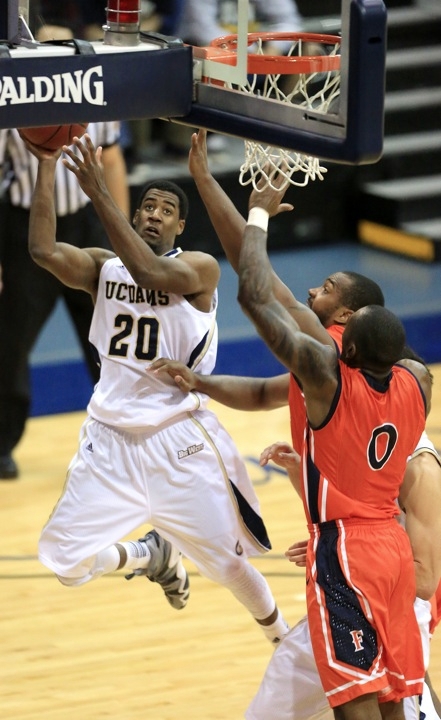
After a hard loss versus UC Riverside on Jan. 16 at home, the UC Davis men’s basketball team was still in search of its first Big West conference win. On Jan. 18, they would have their chance, taking on Cal State Fullerton in their second home matchup of the week.

The Aggies played well on their road trip, even in their loss against the Highlanders. UC Davis dominated most of both games, but only managed to split the homestand.

Against UC Riverside, UC Davis started off hot with four players raking up double figures, including a team-high 18 points from junior guard Corey Hawkins on the night. Although the Aggies and their fans watched the match slip through their fingers within the last 15 minutes of the game, in part due to an eye injury to Hawkins, there was a group of standout players on the night. These players included freshman forward Georgi Funtarov, junior guard Avery Johnson and junior forward Iggy Nujic.

Funtarov, a freshman forward hailing from Bulgaria, collected a career-high 14 points on the night. Another Aggie whose roots stem from outside the U.S. is Nujic. The junior Australian scored 10 points, along with a career-high nine rebounds. Finally, Johnson contributed to UC Davis’ 69 total points, with his own career-best output of 10 points on Jan. 16.

However, to the athletes’ dismay they were unable to hold their lead. With a 41-27 halftime lead, it appeared UC Davis would continue to dominate out on the court. Yet, they let the game slip through their fingers as the Highlanders went on a 16-0 run with less than 15 minutes remaining. UC Riverside built their lead to 10 points at one point in the game and the Aggies couldn’t make up the difference, only getting as close as five points of UC Riverside in the final minutes at the Pavilion. The game ended with a final score of 81-69 in favor of the Highlanders.

But the men were not done for the week, as they took on Cal State Fullerton at home on Jan. 18. That game ended with much better results, as the Aggies bounced back from their Thursday night loss, and defeated the Titans, 69-61, marking their first conference win of the season.

Once again Hawkins dominated on the court, with 22 points on the night. He was followed closely by senior guard Ryan Sypkens, who collected his own 15 points against the Titans. With three of those shots coming from behind the arc, Sypkens added to his overall statistics and is now in a three-way tie for fourth place in league history with 283 career three-point field goals made.

But there’s two sides to every game and it was not simply an offensive outburst which led to the win.

“We won this game on defense,” Hawkins said. “We held them to 29 points in the first half and limited their quality scoring chances throughout the rest of the game.”

The victory was a nice one for the Aggies and will hopefully kickstart UC Davis into playing winning basketball.

“It’s nice to get our first conference win, especially at home,” Hawkins said. “Now we have to go back to work at practice and make adjustments for our next game.”

With a long flight across the Pacific Ocean, the Hawai’i Rainbow Warriors will visit UC Davis on Jan. 23 for a 7 p.m. game against the Aggies. The Rainbow Warriors currently hold an overall record of 12-5 and are 1-2 in the Big West Conference. Both teams are coming into this match-up with wins on Jan. 18. Hawai’i defeated UC Riverside, 100-69, and UC Davis won against Fullerton, 69-61.

Both teams will no doubt come out hard, hoping that a second conference win will put them in good standing in the Big West. With plenty of basketball ahead, the Aggies will have to play hard on both ends of the court not only against Hawai’i, but against all their opponents, if they expect to get a bid into the Big West Championships in March.

— Sloan Boettcher

Police Briefs: 1/15—1/22

WEDNESDAY 1/15

Tempting fate
Someone found his old drugs and was afraid he would do them, so he wanted an officer to come take them away on Chiles Road.

Turning over a new leaf
Someone reported a person was using a leaf blower in excess of noise limitations and was overly focused on one area of concrete, circling that spot for over an hour.

THURSDAY 1/16

Smooth recovery
A guy tried to steal someone’s bike on G Street, but he fell off of it and walked away instead.

FRIDAY 1/17

Meals on wheels
A group of juniors threw food at someone’s car on West 14th Street.

MONDAY 1/20

Deadbeat
Two women went to someone’s front door stating they were from out of town and wanted to hold a funeral service in the area, then entered the house to use the restroom and proceeded to peer into the other rooms.

High-minded
Two guys were hanging around the church on C Street asking guests to buy drugs.

Police briefs are compiled from the City of Davis daily crime bulletins. Contact EINAT GILBOA at city@theaggie.org.

Dynamic Textbook Project may stem course material costs

0

The UC Davis Financial Aid office claims that books and supplies at UC Davis cost around $1,620 yearly. Textbooks are the third-highest expense in college, and prices are increasing at an average rate of six percent per year, according to a 2013 report by the Government Accountability Office — twice the current inflation rate, which is at 2.27 percent.

Delmar Larsen, a UC Davis professor of chemistry, spearheads the Dynamic Textbook Project, an endeavor which could potentially stem financial burdens from buying textbooks.

The project is a joint effort among six different schools: UC Davis at the forefront, Sonoma State University, Diablo Valley College, Contra Costa College, the University of Minnesota Morris and Hope College. Students and faculty contribute to its development, whether through monetary donations or content creation.

According to the project’s biannual progress report, it “consists of seven pseudo-independently operating and interconnected ‘STEMWikis’ that focus on augmenting education in separate STEM [Science, Technology, Engineering and Mathematics] fields.”

Students can log into the different wikis — ChemWiki, BioWiki, MathWiki, SolarWiki, GeoWiki, PhysWiki and StatWiki — to read up on different topics. The articles read like textbooks and even include examples to help students understand certain concepts.

The pages have varying content. Some feature javascript programs allowing the user to learn interactively.

ChemWiki is currently the most visited UC Davis subdomain; its pages garner 14.19 percent of the ucdavis.edu domain’s visitors.

The project received its first major funding from the National Science Foundation (NSF) this past summer, with a grant for $250,000. Larsen emphasized that prior to this, the project had only a budget of “around $8,000.”

Larsen said that since the NSF grant was only given to the six-year project recently, their funding was not a major factor in the initial success of the program.

Similar projects such as MIT’s Open Courseware program and the Open Stax College initiated by Rice University exist; however, as Larsen said, these have had budgets much greater than STEMWiki’s.

Open Courseware’s budget is at $3.5 million a year according to their website, and Open Stax is funded by several organizations, including the Hewlett Foundation and the Gates Foundation.

Despite less funding, the largest of the STEMWikis, ChemWiki, is nearing its final stages of completion, and with over three million visitors a month, it is proving to be a successful venture.

Chantel Karim, a second-year biology major working on the wiki, explained that it was a “learning experience, going through all the terms and getting to know the system.”

Most of the students working on the project are science majors; however, anyone is welcome to help, whether in editing content for accuracy or even for grammar.

In Spring Quarter 2014, Larsen will initiate the pilot experiment; he will teach two CHE 2C classes back-to-back. One class will use the traditional textbook, and the other will use only ChemWiki.

The General Chemistry textbook by Ralph H. Petrucci costs $210 purchased new at the UC Davis Bookstore. Larsen hopes to stem this cost for chemistry students by attempting to prove that ChemWiki is a viable alternative to the General Chemistry textbook.

He said he believes that by the end of next school year, ChemWiki may be able to supplant existing textbooks, but it will be a matter of gaining enough support from faculty and students to make it a reality.

The STEMWikis share similar characteristics with open source textbooks. These books are available free to students and teachers to use from the internet because the license is not owned by a publishing company.

To raise awareness of options for affordable education, ASUCD Senator Gareth Smythe has advocated the use of open source textbooks.

“Open-source education is one way to address this problem,” Smythe said.

As an ASUCD Senator as well as a UC Davis student, he has said that he is adamant that more affordable options be available.

Though open-source books are available and are free, the person with the final say on whether to use these free textbooks or to use traditional books is the instructor.

STEMWikis, though like open source textbooks, are more similar to a library of textbooks. Instead of being one textbook, they have the potential to be a multitude.

Potential contributors must first speak with Delmar Larsen, but in essence, anyone who wishes to put their work into the wikis can do so. This is what enables ChemWiki to be a dynamic project; it changes and improves as needed.

Kato Meley, assistant director of course materials at the UC Davis Stores, commented that the ChemWiki project and open source textbooks are “great models.”

“We want to be the aggregator and the provider for educators who want to use open source materials,” Meley said.

The bookstore, according to Meley, should be dynamic and shift with the industry as it changes. It already offers one of the largest rental programs in the country as well as ensuring that a large majority of textbooks it sells are used. It also offers an online price comparison tool through the UC Davis Store’s website.

Similarly, there are other online tools, like Bigwords.com, a website that compares prices and options between every online retailer and can save students money. The Bigwords search tool includes ebook options, rentals and can even factor in buyback prices for those who might sell their books later on.

Bigwords CEO Jeff Sherwood said that his website saves students an average of $1,000 a year.

Using the UC Davis Bookstore’s website, students can view prices for new, used, rentals and used rentals, as well as prices offered in real-time from various sellers such as Barnes & Noble, Amazon.com and others.

Meley said that their mission is to “provide students with the lowest possible price” in obtaining their books and supplies.

Furthermore, Meley said that the bookstore is a non-profit and “all the money [they] make goes directly to student programs.”

“We are not a monopoly, and we are always looking for ways to try to lift the financial burden of expensive textbooks,” Meley said.

At a time when the cost of living and learning, from textbooks, course materials, living expenses, food and to various day-to-day requirements are increasing, knowing every resource available can save money.

There are many different routes UC Davis students could take for affordable education that go beyond just finding the best deal. Resources like ChemWiki and open source textbooks are available, and with enough student and faculty support, might significantly reduce textbook costs.

UC Davis students can get involved in the development of ChemWiki, and ultimately, contribute to the abolition of textbook expenses.


To access the different STEMWikis, visit chemwiki.ucdavis.edu.

To find out how you can contribute to the Dynamic Textbook Project, e-mail dlarsen@ucdavis.edu.


Spirit of Uganda highlights culture, conflict

0

The Spirit of Uganda, a musical production by the nonprofit group Empower African Children, will come to the Mondavi Center on Jan. 26.

The production, which has been touring since 2007, features an ensemble of Ugandan students performing both traditional African songs along with original material inspired by Ugandan culture. Their aim is to share the culture of East Africa with international audiences.

Peter Kasule, who has been the artistic director as well as a performer for Spirit of Uganda since its inception, said that his creative process was to relate the culture of Uganda through music and dance.

“I had two main ideas,” Kasule said. “The first idea was, ‘How do we showcase African culture through music and choreography?’ The second idea was, ‘How do we have our students preserve their culture?’”

Joining the ensemble for this tour is Rachel Magoola, who was simultaneously a teacher and a member of the band Afrigo.

“[Magoola] has been teaching since 1989,” Kasule said. “She performs every [weekend] while also serving as the director of a school. We wanted to show a leading example of a musician who also lives as a teacher.”

Brian Odong, who has performed in Spirit of Uganda since its inception, has enjoyed touring with the ensemble as it has exposed him to various cultures.

“I get to do a cultural exchange,” Odong said. “I get to experience different cultures, and the whole thing has been very interactive and educational.”

Kasule said that the experience is not without its challenges.

“Every year you have to be current, as you have new materials and new cast members who may or may not have travelled,” Kasule said. “Still, the students love what they are doing.”

Kasule said that his personal experience with the show has been great.

“I’ve also been a performer for about 20 years, which is a journey that has been going on for a while,” Kasule said. “I’m always looking forward to meeting new audiences and showcasing this kind of work.”

The genesis of Spirit of Uganda was in the early 1990s, when Alexis Hefley, who would later start Empower African Children in 2006, met a nun who had taught children how to sing and dance.

“I decided that the children would benefit from an audience that could see them perform,” Hefley said.

This led to a touring group that began in 1994, which stopped in schools and churches. In 1998, Hefley came into contact with a booking agent who got the touring group on to professional stages.

“The theater provides a platform to raise awareness about AIDS but also about how talented young people can be when provided with the resources,” Hefley said.

In addition, to sponsoring Spirit of Uganda, which Hefley and Odong described as the organization’s public face, Empowering African Children also provides scholarships and education to orphans in Africa.

Odong pointed out the duality of what Spirit of Uganda aims to share with the world.

“Through the dance and music, we raise awareness of HIV, AIDS, orphans and those who have been affected by war in Uganda,” Odong said. “We have experienced this, but we also tell the world that there is another side to us besides what affects us.”

To learn more, visit empowerafricanchildren.org or spiritofuganda.org.

Sustainable Agriculture: Eat by Color

0

Not all vegetables are created equally. We are encouraged to eat five servings of fruit and vegetables daily, which seems pretty ambitious. As an overloaded, stressed-out college student, feeding myself three meals a day is a feat in itself. What if I told you, though, that eating one serving of certain vegetables would give you the same amount of nutrients of five servings of another?

Such is the case with spinach and iceberg lettuce. It is surprising how popular iceberg lettuce is considering how few redeeming qualities it has. Save for crunchiness, iceberg lettuce is neither tasty nor nutritional. One serving of spinach has over five times the plant nutrients, or phytonutrients, that iceberg lettuce has. But what are phytonutrients, and why should we like them?

Phytonutrients are chemicals within plants that have multiple health benefits. We are unknowingly familiar with them, because phytonutrients often give foods their flavor. Take for example carotenoids, a class of phytonutrients that act as antioxidants. Antioxidants are known to help protect us against cancer. Without a lab coat, though, how can an average person discern the amount of phytonutrients in produce?

By color! Fruits and vegetables with deeper, more vibrant colors indicate more nutritional value. Spinach, a deeply green hue, is obviously more exciting than iceberg lettuce, a half-hearted attempt at yellow green.

The same rule can be applied to different varieties of the same vegetable. There are hundreds of potato varieties grown worldwide, and the nutritional content of each varies. For example, purple potatoes can have over 20 times the amount of phytonutrients that yukon gold potatoes have. I don’t want to embarrass russet potatoes, the most widely used potato in the U.S., but I will. If phytonutrients were weapons, a russet potato would be holding a toothpick while battling a purple potato’s sledgehammer. Purple potatoes have over a hundred times the phytonutrients that russet potatoes have.

Once we understand the nutritional differences of vegetables, we start to ask why we are filling our stomachs with nutritionally weak food when better alternatives exist. This brings us to the histories of domestication of our vegetable crop plants.

The story starts thousands of years ago when indigenous people, mostly in Mesoamerica, began selecting wild plants that best served their needs. They selected for larger edible portions of plants, the ease of collecting, taste and suitability to their growing season. Some argue that the sweet tooths of early domesticators led to the nutritionally deficient produce we have today. But that still doesn’t explain the iceberg lettuce.

The fact is that modern plant varieties are developed for the rigors of the industrial food system, not for taste or nutritional value. The tomatoes that Davisites see strewn along the edge of Highway 113 come summer taste nothing like the heirlooms grown in the plots of community gardens. Those roadside tomatoes were bred to withstand the beating of machine harvest and trucks that transport them by the ton. The same is true for other fruits and vegetables. The flavors of our grandparents’ era are increasingly shoved aside for produce ripened by ethylene gas and flown across continents.

If we are concerned with the nutritive value of our food, we find that there has been a steady decline in the quality of vegetables starting from the 1940s — a convenient starting point as chemical fertilizers were developed in the same decade. A study done by a researcher at the University of Texas, Austin confirms that our obsession with increased yields has come at the sacrifice of nutritional substance.

In other words, our grocery carts and stomachs are filling up, but we aren’t getting a better value. Perhaps modern plant breeders should take some advice from my mom by adopting the ethic of “Quality, not quantity.”


To agree or disagree with ELLEN PEARSON’S mom, email erpearson@ucdavis.edu.


Tattoo culture in Davis

Within the City of Davis and its many live music and performing arts acts, a distinctly personal form of art embeds itself in the lives of UC Davis students and residents alike.

Tattoo art, a nearly permanent form of body modification, is both rooted in tradition and currently benefiting from advances in the industry’s technology and extravagant media exposure. With several options to choose from, UC Davis students have flocked to tattoo shops in Davis as they begin to add visual representations of their values, passions, interests and life histories to their bodies.

Considering age and average income, many UC Davis students are newcomers to acquiring tattoos and understanding the culture of tattoo art. Yet, according to first-year managerial economics major Kuwaun Wade, this time in a Davis student’s life can be especially suited for getting “inked,” as they experience new, life-altering events and transform their values and beliefs.

“In Davis, I see that there are a lot of new beginners with tattoos … I got the portrait of my grandfather in the summer, and [heaven’s gates] three weeks ago,” Wade said. “We [students] are coming together to show our personal representation of tattoo culture.”

For Wade, tattoos express a permanent representation of his family and his spiritual beliefs, and he urges Davis students considering getting a tattoo to think about whether they wholeheartedly want the tattoo permanently inked on their body.

“Basically, my thought is, if you’re going to get this tattoo, make sure this is something you’re ready to live with. Make sure it’s relevant to your life and who you are as a person. Just basically make sure you’re ready [for it to] represent you for the rest of your life,” Wade said.

From the perspective of tattoo artist Carlo Rossi at Sacred Tiger Tattoo in downtown Davis, tattoo culture in Davis is highlighted by the creativity and novelty of the students and residents who get the tattoos. Rossi said that he has noticed the uniqueness and resoluteness of the tattoo requests in Davis to be unlike anywhere else he has tattooed, which ranges from Santa Cruz to Fort Bragg.

“A lot of people in Davis come up with really good ideas,” Rossi said. “As far as a scene for tattoos, it’s sporadic. There are good ideas — it seems like [they have] more unique requests for art that they want on a specific part of their body more than anywhere else I’ve been.”

According to Rossi, who has been tattooing for 14 years, tradition in tattoo culture can be preserved as long as there are artists who can excel at multiple mediums of art.

“The [tattoo artists] that get major credit, to me, are the ones that have a wide selection of mediums to use from,” Rossi said. “Those are the guys that get respect and truly excel at tattooing. The veterans in the tattoo industry kind of have a duty to keep the tattoo world alive. It’s going towards a positive direction — we veterans definitely can pave the way for others who are worthy to the industry.”

Tattoo artist Chris Yoakum of Urban Body Tattoo and Piercing criticized the exorbitant glamor and intrigue that has been created around the tattoo industry as a result of the addition of tattoo-themed shows to the reality television market.

“Honestly, I feel that tattoo artists get too much respect from the public,” Yoakum said. “The wave of TV shows have glamorized the industry and portray it in a way that is not entirely accurate. They [care] more about the drama that makes an interesting TV show than showcasing good artists and their work,” Yoakum said.

Yoakum, who developed his interest in tattooing through acrylic painting, is excited about tattoo art’s future because of recent developments in ink and cartridge technology.

“The companies that are making ink are constantly getting better and better which makes the ink easier to work with, the colors more vibrant and less susceptible to wear,” Yoakum said.

In addition to his preexisting interest in acrylic painting, Yoakum said traditional Japanese art served as his artistic influence when first becoming a tattoo artist.

“I have a special place in my heart for traditional Japanese work, it always looks good, it’s classic and it’s an art form that they have been working with and perfecting for about as long as modern tattooing has been around. The Japanese really are to thank for where tattooing is today,” Yoakum said.

Tattoo art, although ostensibly different than other mediums of art, relies equally on tradition and creativity for the preservation and development of the medium. Just as Davis students and residents have embraced the thriving arts and music scenes, so they have to the needle and ink.

“Within Davis, [tattoo art] has been accepted,” Rossi said. “Times have changed for tattooing; it’s evolved to a good place and I think Davis is included [in that culture] as well.”

Campus Chic: Timayo Williams

0

In this edition of Campus Chic, our muse of the week, fourth-year art studio major, Timayo Williams, is all about finding fashion on a dime while stepping out of her comfort zone and experimenting with bigger, bolder and newer things in her wardrobe.

Tight on cash? No problem! What better way to get your fashion fix while saving a little money than to shop at one of Williams’ favorite stores, Target? Following in the footsteps of NYC-based designer, Phillip Lim, Peter Pilotto has also created a collection for Target for the spring/summer 2014 season. This long-awaited collaboration debuts Feb. 9 in select stores, Target.com and globally at Net-A-Porter.com. Prices range from as little as $14.99 to $79.99.

James’ Notes: After reviewing all the pieces of the collection, I have to say that I see a lot of Pilotto’s design aesthetic being watered down in some way for the consumerist market and I understand why that’s necessary; however, I personally prefer the softer palette and somewhat ethereal and effortless quality of certain pieces of his runway spring/summer 2014 ready-to-wear collection because it feels and reads more “couture” to me. There still exists some bold neons and interesting geometric patterns in the couture, but it’s done in a more impractical and artistic technique than in a way that’s fit for the average American consumer. That said, I still love the Peter Pilotto for Target collection and I thought some pieces like the blue and black crop top, the blue shorts and the black and yellow maxi were done well; but it doesn’t completely meet my expectations, especially when it pales in comparison to its runway opposite.

1. If you could describe your personal style in three words, what would they be?
Comfortable, cute and quirky.

2. Who or what is your style icon?
I definitely ask my brother for his opinion. My mom tells me to dress more feminine all the time so I kind of just mix [the two] together.

3. What are your three must-have items in your wardrobe?
My necklace, fake glasses and headbands/bandanas.

4. What is your favorite accessory and why?
I guess my waist beads. I wear them all the time so I’m comfortable with them. I like that it’s a secret; it’s like a tattoo you hide under your shirt that no one knows about. It’s cute when you’re wearing a bathing suit too. I got them from Ghana, Africa with my mom. She always thought it was a good idea to incorporate little things that remind her of home so I kind of just appropriated that idea and wore them from then on. I’ve worn [waist beads] for about seven years now.

5. Where do you love to shop and why?
Anywhere cheap is good! I steal clothes from my brother’s closet and mom’s closet. Target’s good… H&M for little things. Actually this shirt [that I’m wearing] is from Black Scale, which is where my brother works. They sell a lot of dark, street and urban clothing.

6. What is your most treasured item in your wardrobe?
My necklace. My mom is one of my best friends and it’s another thing that my mom and I decided to get together. I’ve worn it for years and even my friends think it’s weird when I switch out my necklace once in a while. It’s a fertility doll symbol and it’s just another thing that symbolizes home and Africa.

7. How has your style changed since high school?
In high school, I just wore jeans and a T-shirt and sometimes a jersey that my friend lent to me. I never liked showing my figure when I was younger and I was very plain. Now, this year, I’m trying to be more feminine and wear things that I want to wear because I know Davis is just about navy UCD shirts and sweats, you know what I mean? I see girls wearing heels and I’m like, “Good for you!” I used to think it was kind of unnecessary to wear heels class-to-class because that’s really uncomfortable, but if you want to look cute that day, go ahead and do it.
If I want to be a little gangster today, I’ll just wear my black bandana, black shirt and black pants and, the next day, if I want to be really girly, I’ll wear my lace headband and my long, floral dress.

8. What does fashion mean to you?
Fashion is something that makes you feel confident or comfortable that day, or probably even happy. A friend once told me that, if you’re depressed, you should just wear something really nice and go out by yourself or with a friend. It definitely puts you out of the mood you’re in in some way. I wore a blue wig to school once!

9. What final tips can you give to our fashion-forward readers?
Just have fun with your clothes. I’m definitely trying to do the same thing. Not to impress anybody, but just for yourself. Even if it’s weird, at least you get some kind of attention and that makes you feel different for the day.

102314-8370

102314-8368

102314-8341

102314-8334

102314-8330

UC Davis Study Abroad offers summer health internships

1

If you’re one of the thousands of pre-med undergraduates at UC Davis and you’re seeking those seemingly elusive internships and experiences, the UC Davis Study Abroad office has a solution for you. But you’ll be on the waiting list.

This summer, for the first time, the study abroad office will be offering students summer health internships in four different places around the world: Bolivia, South Africa and two different locations in India.

“I was drawn in by the traveling element and the internship; it was a good integration of all of my different interests,” said Kathleen Maher, a fourth-year anthropology major. “[The faculty and students] had such energy and there was such clear excitement about the program.”

These programs will last for four weeks, and will run from July to August. Between the four programs, there is space for approximately 40 students, and demand is high. The enrollment for the four programs opened on Wednesday Jan. 8, and all spots have already been filled, though spots on the waitlists are available.

While the study abroad office declined to say how many students were on already on the waitlist, Study Abroad Summer Program Coordinator Paula Levitt said that there is far more interest in the programs than they are able to accommodate at this time.

Before these new health internships, the Oaxaca Quarter Abroad Program, which will usher in its ninth group of students this fall, was the only opportunity for students to get hands-on healthcare experience whilst traveling abroad.

“Doctors in the U.S. are not as generous with their teaching, for whatever reason. I got great clinical experience in Oaxaca,” Maher said.

This kind of experience has attracted UC Davis and non-UC Davis students alike, as students at other universities and junior colleges can apply as well.

This demonstrates the concentrated interest in healthcare-related programs, which could, according to Levitt, be attributed to the increasing competitiveness of healthcare internships, entrance into medical school and jobs in healthcare.

Specifically, the heightened demand for quality healthcare in places like Oaxaca gives students marketable experiences that they can take back to the U.S. after the program ends.

Christina Siracusa, the program coordinator of UC Davis Quarter Abroad, stated that students that go abroad are able to observe things that they’re not able to see in the U.S. for a variety of reasons.

Levitt also said that some alumni claimed that their experiences abroad were the only thing from their resume that they were asked about in interviews. More often than not, these alumni have amazing stories to tell.

“One of the students [from Oaxaca] was able to witness a live birth. Shortly after that, either the same day or just a few days later, he witnessed the birth of a dead baby,” Siracusa said.

This year’s expansion into health-related summer internships has come from growing interest in those types of programs, according to Levitt.

The Oaxaca program, which has always been popular among students, runs during Fall Quarter. Its participants take part in UC Davis classes two days a week, and spend three days a week in clinic, where the program focuses mainly on reproductive health and tropical diseases.

“We wanted to help develop the new internship programs because it was a growing area of interest. They not only wanted to have a study abroad program, but they wanted experience for resume building and career development,” Levitt said.

While these programs boast amazing experiences and resume padding, they often come with a hefty price tag. The total estimated cost for the quarter trip to Oaxaca is approximately $13,200.

However, financial aid that students receive from the University does apply to these study abroad and internship programs. There are also additional grants available to students, which are awarded in amounts from $500 to $2,000.

Travel grants, which were originally introduced in 2000, were cut for a few years and are just now being brought back. Even if the funding offered by the University isn’t enough to cover all of the costs, it’s a good starting point.

This extra funding may also be motivating students to enroll in study abroad programs who might not otherwise, which could help explain the especially high interest in abroad programs for 2014.

“Having funding available motivates people to go forward and find other sources of funding,” Holland said. “People who don’t think they are able to actually can go overseas.”

The application deadline for grants for summer internships abroad is April 7.

Students who are interested in going abroad, but aren’t sure which program is right, should attend the Study and Intern Abroad Fair which will take place on Feb. 27 from 11 a.m. to 2 p.m. in Freeborn Hall.

How helmets help

There are a lot of things we acquire when we turn 18: the right to vote, the ability to purchase lottery tickets, etc. We also gain the right to bicycle without a helmet. Whether or not this is good for us, many young Americans choose to embrace this freedom. Most don’t understand how helmets even serve to protect us from injury, but at the heart of the matter, physics explains how something so simple can prevent so much damage.

When we crash our bikes, the amount of damage we receive boils down to two main things: how fast we stop and how concentrated the force is.

“During a bike crash your head comes in contact with the ground and … the ground exerts forces that cause your head to stop moving,” said David Webb, a physics lecturer at UC Davis, in an email interview.

The ground exerts so much force that it can stop our forward motion within seconds. Without helmets, our heads then experience an incredible amount of concentrated force when we crash. This is the same as when we collide with anything. Replace the ground with another person, for example, and you can begin to understand why concussions are so common in sports like hockey and football.

This event where an opposing force stops the motion of another object or person is due to something called the law of conservation of energy. It states that energy can neither be created nor destroyed; therefore, when we slam to a stop, our kinetic energy (the energy of our motion on the bicycle) simply changes form. It interacts with the force the ground is exerting, and the kinetic energy then becomes a part of the force that hurts us.

Here’s where helmets come in. While they may not seem substantial enough to protect us, they are designed very efficiently.

“The outside of the helmet stops nearly instantly when it hits the ground but your head keeps moving within the outer shell of the helmet as it stops because of the padding as well as how the helmet holds your head. Because your head takes longer to stop, the forces exerted by the helmet are smaller than they would be if you didn’t have a helmet … A second thing that the helmet does is distribute the force it exerts over a wide area of your head so that your skull is less likely to be broken,” Webb said.

The shape and makeup of the helmet play the biggest role in protection. The foam in the helmet compresses, which allows your head to come to a stop much slower than it otherwise would have. This drastically reduces the acceleration. Since force is equal to mass times acceleration, it drastically reduces the force.

Furthermore, the arc-like shape of the average helmet distributes the force along its entirety, rather than just at the point of impact. Think of it like walking on grass in a pair of sneakers versus in a pair of high heels. Although your weight is the same in both, the high heels concentrate the force that your body exerts on the ground far more. This is why heels can sink into an otherwise tough lawn. In sneakers, on the other hand, you’re normally fine. Force from a collision can be similarly dispersed.

Although helmets for football don’t look like the ones cyclists use, nearly all helmets share the same basic design. There are still differences that target the specific demand of each situation. For example, hockey helmets must protect the wearer from any number of dangers.

Sam Lehr, a second-year history major, plays hockey for UC Davis.

“In a sport that is as fast-paced and as physical as hockey, helmets are essential to protect from the multitude of things that could cause damage to the head, including pucks, other players and the rink itself. I have seen head injuries and [I] myself have taken some nasty hits where my head was either the principal point of contact or ended up hitting something else hard. If not for the helmet I was wearing, the injuries I might have sustained could have been very serious. Instead I am usually… able to get right back into the play,” Lehr said.

Not everyone is lucky enough to escape from collisions without concussions, however. Amy Chyan, a second-year neurobiology, physiology and behavior major, experienced her first concussion last year when a bike accident without a helmet flipped her over her handlebars.

“I felt myself flip over as my face smashed into the pavement. I banana peeled and my bike kind of hit me over the head and crashed on top of me. I was twisted in my bike … I felt a lot of pain everywhere, and my head had really sharp throbbing pain. Biking home I was really dizzy and lightheaded,” Chyan said.

Chyan went to the Student Health and Wellness Center the next day for multiple tests and ultimately was sent to the local hospital for a CT scan to check for internal bleeding. She missed the rest of her classes that day and a few throughout the week, as she felt exhausted and was plagued by a near-constant headache.

While they may not seem very important, helmets do an incredible job in protecting us from harm. Whether it be from an opposing player on the ice rink or the unforgiving asphalt, many forces are strong enough to bring our motion to a complete and sudden stop. Helmets can take that force and minimize it by delocalizing it on our heads. They also give our skulls more time to stop as the foam condenses. Physics is always at play when motion is involved. In this case, it can explain the difference between a bad hit from a puck and a hospital stay.

Meet your representatives: Janesh Gupta and Dana Sever

0

102314-8182Janesh Gupta
ASUCD Senator
Major: computer science
Second-year

1. What are you best at cooking?

I’m pretty good at making boiled eggs. I’m really bad in the kitchen overall, but I like boiled eggs a lot, and mac and cheese. I think I’ve perfected mac and cheese.

2. If you could make a magic potion to do anything, what would it do?

A magic potion for me to wake up in the morning at 8 a.m. because I’ve needed that these last couple of quarters. That’s probably it, to find the energy to wake up for 8 a.m.’s on this campus.

3. What movie would you like your life to resemble?

I wish it was like a Finding Forrester type of thing, where I don’t have everything figured out and then someone helps me get there, and I become their benefactor, kind of.

4. What’s your favorite quote?

I really like this quote that someone said at senate last week. Dr. Schubert from the Experimental College was presenting on why we should keep the Experimental College around and he said “Education, in its most profound sense, is personal growth.” I like a lot of quotes, I like a lot of things that people say, but I think I appreciate quotes that people come up with, something that you just hear off the top of someone’s head and you know that it’s like “wow.” It’s pretty amazing. So that’s my temporary quote, for like the week or two.

5. What advice would you give the 13-year-old you?

Don’t be scared, be vigilant. Embrace Davis your first quarter, because I didn’t really. And convince all your friends and all their parents to get their money out of the stock market because 2008 is going to be horrible for them. Hindsight’s always 20/20, but the experiences ultimately will mold you into who you are, so I wouldn’t really give any advice, do what you do. I’m pretty satisfied that I’ll figure out what I need to when adversity comes at this point.

6. If money were no object, what would you spend your life doing?

I’d want to be like a social worker, and then probably run nonprofits or something like that. Maybe run for Congress and see how that goes. But I’d definitely want to become a social worker for a couple years, especially in my 20s, and I think that that’s something that I can’t really focus on if I need to make money. Something very low income but something that can actually change people straight up.

7. What’s your most embarrassing moment?

There’s been a lot. At The Aggie debate last quarter, Senator Tal Topf came up to me and she spilled hot tea all over my pants, so I couldn’t stand up during the whole debate because my pants were soaked, and it was really embarrassing. So I was sitting there really awkwardly. It was really hot tea, and I had just gotten it, and it was a big cup.

8. What’s the best place in Davis to take a picture?

I like taking pictures. I think the Arb, nothing can top that. Especially the reflective properties of the water. In fall, there’s that one tree, I’m sure everyone knows it, where the leaves are just a perfect shade of yellow. So I’d say the Arboretum for sure.

9. What’s your favorite work of art?

I was a huge fan of The Great Gatsby, but now I feel like everybody is. I like A Separate Peace by John Knowles. It’s a really good coming-of-age novel that everyone should read in high school. It’s a story about two best friends, and they’re in a military academy on the East Coast during WWII. It’s about how friendship is affected, and how it can be molded at a young age. I think that that’s a very underrated and amazing book to read.

Senators_MishaVelasquez

Dana Sever
Chairman of the Academic Affairs Commission, ASUCD
Major: political science
Second-year

1. What are you best at cooking?

I’m not a good cook at all. I would say I’m a better baker, does that count? I’m really good at making Muddy Buddies, that’s not really making anything but I’m very good at it. And cookies.

2. If you could make a magic potion to do anything, what would it do?

I think make people laugh, because I think a lot of times people are really uptight, so the magic potion would just make them laugh and make their day better.

3. What movie would you like your life to resemble?

I love Disney, preferably a Pixar movie. Ratatouille because in fall, I’m studying abroad, so I hope I can be like the little mouse that runs around Paris and has his adventures. So I guess I would like my life to be like Ratatouille come August this year.

4. What’s your favorite quote?

“Everything will be okay in the end. If it’s not okay, it’s not the end.” And it’s unknown who said it.

5. What advice would you give the 13-year-old you?

To enjoy the little things a lot more. Because the little things in life are the most important and often they go unappreciated, but they make a big difference.

6. If money were no object, what would you spend your life doing?

Travelling. Travelling and going to school. If I could do both at the same time I would. I would get every degree possible.

7. What is your most embarrassing moment?

I got in a bike accident last year with my roommate. And the guy who saw it happen rode by and laughed at me. So that was pretty embarrassing. And I hit my head really hard and he didn’t even ask if I was okay.

8. What’s the best place in Davis to take a picture?

The Arboretum, easily. I mean, everywhere in Davis is pretty, there’s a lot of good places, but the Arboretum for sure. Where the big pond-lake is, or the gazebo, because the colors are always changing and it’s so pretty there.

9. What’s your favorite work of art?

I recently went to Paris and Italy, so I saw a lot of art. I love all Degas pieces because I dance and he does artwork of ballerinas. So I would say any Degas dancer piece.

Aggie Arcade

0

The State of Nintendo

I don’t enjoy criticizing Nintendo. Some of my fondest childhood memories include waking up early on weekend mornings so my brother and I could play games on the Super Nintendo Entertainment System (SNES). In many ways, I love video games because of Nintendo. But that company of 15+ years ago just isn’t the same anymore.

The reason I address this topic is because Nintendo recently announced a huge shift in economic projections for the fiscal year. More specifically, it is now expecting a $250 million loss, and sales forecasts for the Wii U have dropped from nine million to 2.8 million.

This news was followed by a revealing quote by Nintendo President Satoru Iwata.

“We are thinking about a new business structure,” Iwata said. “Given the expansion of smart devices, we are naturally studying how smart devices can be used to grow the game-player business. It’s not as simple as enabling Mario to move on a smartphone.”

So now we’re left with the prospect of Mario on smartphones. It demonstrates the way in which Nintendo exists in a vacuum, ignoring the successes of its competitors. Other things Nintendo could focus on: better digital distribution, more third-party support or a stronger emphasis on the 3DS.

That last one in particular strikes me as perhaps the best possible solution at this point. If someone were to ask me what Nintendo’s premiere platform is at the moment, I would not say the Wii U. My answer would be the 3DS, without hesitation. The key to the handheld’s success: games. I can’t envision myself purchasing a Wii U anytime soon because there aren’t many games that interest me, but I had no reservations about buying a 3DS late last year.

The 3DS does have the benefit of time — it came out in early 2011 while the Wii U was released in late 2012. But it doesn’t seem like there’s much on the horizon for the Wii U, and one big game probably won’t make a difference. In fact, we have proof — Super Mario 3D World came out last November, but it did not help the Wii U recover.

Meanwhile, the 3DS continues to sell in the U.S. and Japan, making it the key source of income for Nintendo. That doesn’t mean the company should completely abandon the Wii U; it should just put more of its resources into the 3DS. For example, a new Metroid title on the 3DS would be fantastic. Maybe that’s just wishful thinking… Super Metroid is my favorite game of all time after all.

But even if the 3DS isn’t the biggest key to success, the fact remains that Nintendo cannot remain in stasis. The company faces an identity crisis, and the next year or two will be huge in determining its fate. Part of me remains skeptical as to whether Nintendo can recover, but I’ll certainly be rooting for them.

Experimental College: Try new things

0

In December 2013, representatives from the Experimental College (EC) went to ASUCD  in a state of crisis. The EC has been losing money every year for the past eight years, and by winter 2013, their reserves had been completely depleted. Thus, ASUCD had no choice but to shut it down.

Now, the EC is working with ASUCD in order to fix the problems that led to its downfall. In the Jan. 16 senate meeting, a bill passed creating a task force composed of EC representatives and two ASUCD senators. The goal of this task force will be to fix the marketing and accessibility issues that are widely believed to be at the heart of the problem, along with helping the EC get onto more stable footing for the future.

We are very hopeful about the EC’s return, which may be as early as spring 2014. However, we have some suggestions.

First and foremost: live up to your name. Classes like jujitsu and line dancing may be cool, but they are far from “experimental.” The EC needs to make drastic changes to its curriculum in order to survive. We want to see more classes about subjects that we can’t take in school or that our parents never thought to teach us. How about offering some of these:

How to Train Your Dragon, Cat or Other Mythical Creature. Extreme Couponing. Bartending. Legalese: Know Your Rights. DIY: From Clothes to Crafts. Zombie Apocalypse and Other Survival Situations. And what we hope would be the most popular class: How to Bike.

Second, avoid offering classes that we can take elsewhere. The ARC offers a wide variety of martial arts and dance classes, our campus offers classes in many languages and we can learn yoga from YouTube videos if we really want. Ultimately, having those classes is exhausting the apparently rather limited resources that the EC has to offer.

Finally, make sure your new marketing campaign targets its audience. We understand that the suspension stopped the ball just as it was about to get rolling, but this is the perfect opportunity to make sure it was rolling in the right direction. Make T-shirts that say, “College is a time to experiment.” Expand your web presence. Do a demonstration day on the Quad where students can showcase what they have learned.

We fully support the comeback of the EC and we hope it comes back strong. However, we want to caution that if it resumes business as usual when it returns, we foresee the same problems cropping up in the future.


UC receives increased funding, still falls short of needs

Gov. Jerry Brown’s proposed budget for the 2014-15 year includes a five percent increase of funding to the University of California (UC) system, a shortfall from what the UC Regents requested from the state during their budget meeting in November.

The proposed budget leaked to the Sacramento Bee on Jan. 8 and Brown confirmed the budget in a press release the next day.

The UC Regents expressed in the November 2013 budget meeting an aim for an additional $120.9 million in addition to the five percent, or $142 million increase.

“We’re putting $10 billion into the schools of California after years of drought and cutbacks and pink slips for teachers,” Brown said in a press conference, the day after the budget was leaked.

Of the five percent increase, the proposed budget apportions $50 million for Awards for Innovation in Higher Education, a program that sets out to increase the number of people in California that have bachelors degrees, allows for students to complete degrees in four years from the time of enrollment and eases the transfer of community college students to four-year universities.

In addition to increased funding on schools, Brown’s budget also increased spending on K-12 education, correctional departments and rehabilitation and healthcare. It also includes a rainy day fund of $1.6 billion, to building back the state’s reserves.

The California Teacher’s Association said in a statement, “This budget will allow local school districts to continue to restore critical programs and provide the resources that educators need to help students learn.”

The UC’s vice president for budget and capital resources, Patrick Lenz, said in a statement, “The governor’s proposed increase in state general funds and UC’s continuing efforts to achieve savings through administrative efficiencies will preclude any tuition increase in the 2014-15 academic year.”

He further stated that the University appreciates Brown’s commitment to his multi-year budget plan for the UC system.

“The governor’s budget is good news in comparison to where we’ve been these last many years, but it’s not enough,” said Kelly Ratliff, associate vice chancellor of budget at UC Davis.

Ratliff explained that the increase is insufficient because the University has fixed costs. What the Davis campus is likely to receive if the budget is enacted is about half of what it needs to cover those fixed costs.

UC Davis’ budget estimates that this year it will need $31 million to cover fixed costs which include health benefits, salary raises and retirement funding. It is predicted that after appropriation of the increased funding to the UC system, the Davis campus will receive $16 million, just about half of what it needs.

Ratliff said that as far as changes that are visible to the community go, the proposed budget is “actually adding to our shortfall.”

Additionally, the deficit for the 2013-14 school year was brought down to $9 million through the spending of reserves. However, that deficit carries over to the 2014-15 year. That will add to the shortfall the campus is predicted to have because of the insufficient funding from the state.

According to Ratliff, the proposed solution being discussed is either more money from the state, or modest and predictable tuition increases.

As far as answers to the budget that incorporate the frozen tuition, Ratliff said, “I think there will be hard decisions to be made but I hope it doesn’t boil down to suffering, I hope that we can find things to do and do them well.”

Adrian Lopez, the director of State Government Relations for the UC Davis campus, said that there is a potential to get the 10 percent increase in funding that the UC Regents asked for in November, especially if the revenues for the state go up between now and May.

Lopez speculates that the increased amount that the UC system will receive will be more than five percent, but less than the requested 10 percent.

“Freezing tuition in a time when the budget is not sufficient to cover our mandatory costs is problematic,” Lopez said.

However, he agrees with UC President Janet Napolitano when she said that the five percent increase is a good starting point. He added that if that ends up being the funding the University receives, it will manage.

“We’ll have a discussion about what else can the university do and what other needs that we have,” Napolitano said in an interview with the Sacramento Bee.

Royal Philharmonic Orchestra to perform at Mondavi Center

0

On Jan. 25, the Royal Philharmonic Orchestra (RPO) will play at the Mondavi Center. Rooted in London, England, the RPO has been touring the world since 1987, earning international critical acclaim. They will be performing popular Beethoven works, including his famous Symphony No. 5.

This leg of the tour is set to display a unique attribute: the chair violinist will conduct the orchestra rather than the head conductor. Pinchas Zukerman, the lead violinist, will be in charge of running the full concert all while performing a large chunk of the repertoire.

This rare happening (dual soloist conductor) has historical meaning behind it, and the RPO plans to honor its origins.

“The role of a conductor wasn’t really cemented until after Beethoven’s time,” said third-year music and political science double major Alex Stepans. “Before that if you had a concerto, you’d have a soloist conduct. The concertmaster used to conduct and that would be the violinist.”

The set-list includes Beethoven’s Overture to “Prometheus,” Op. 43, Violin Concerto in D Major, Op. 61 and Symphony No. 5 in C Minor, Op. 67. Each work is considered a well-known classic, familiar and accessible to those without a musical background.

 Overture to “Prometheus” is the opening to Beethoven’s full-length ballet, The Creatures of Prometheus. This piece is often selected to be played as the introduction to orchestral concerts and was thus chosen by the RPO as its opening act.

Violin Concerto in D Major will feature Pinchas Zukerman on the violin. The song is about 45 minutes long and is split into three dynamic movements. This is the piece in which the audience will get to see Zukerman both perform solo and conduct the orchestra.

Phil Daley, publicity coordinator at the UC Davis Music Department, is most excited to see the concerto performed without their usual conductor.

“The orchestra has of course played the violin concerto multiple times,” Daley said. “I think that’s one of the cool things about orchestras like this — they’ve played classics like this a thousand times so they don’t really have to worry about playing the right notes since they already know the notes. It’s about making great music and that’s what makes it really special.”

The last piece, Symphony No. 5 in C Minor, is perhaps the most famous and influential song in classical music history. The beginning measures of the song have been featured in multiple advertisements, film and musical remixes. Though most people know the beginning measures by heart, few have listened to all four movements of the work all the way through.

“The big draw is Beethoven’s Symphony No. 5, with its famous ‘da-da-da-DUH’ intro,” said Rob Tocalino, director of marketing at the Mondavi Center. “It’s one of the most enduring and popular pieces of classical music, but surprisingly, this will be the first time it will be performed as part of the Mondavi Center’s Orchestra Series.”

Another reason many people are planning to attend the concert besides the familiarity of Beethoven is because the RPO is a non-American group. Orchestras from different countries often use different techniques and produce unique sounds to their own area. Since they are from afar, it’s a once in a lifetime experience to get to hear the RPO play.

“It’s a one-of-a-kind experience to see an orchestra from a different country perform,” Daley said. “The RPO is really meant to be heard and enjoyed live and they’re amazing.”

Tickets are currently sold out for the Jan. 25 concert. You can visitmondaviarts.org for any information on additional sales.

In Transition: C-C-Comparable

0

Now that I’ve been at UC Davis for over a year, I’ve noted some of the similarities between the University and my California Community College (CCC). Needless to say, I was fairly surprised to find any resemblances after making — what felt like — such a large-scale change.

I first discovered this feeling of familiarity after I transferred to UC Davis and started registering for classes. After I had completed all my GEs, all I had left to finish were classes for my major and minor.

Flashback to my last few semesters at community college: I was slightly more than compulsive when it came to registration, class requirements and degrees. I wanted to ensure that I hadn’t missed anything and could make a sweet and simple transition out.

So, I had become all too familiar with the Associate Degree requirements and subsequent class requirements. Navigating through UC Davis’ Majors & Minors page felt like déjà vu.

I had essentially been my own academic counselor and dean all through community college, and nothing has really changed since I’ve transferred to UC Davis.

By the time I’d even made an appointment with my Letters & Science counselor, I already knew what she’d say — because I’d spent hours figuring it out on my own.

Regardless, it’s nice to know I don’t have to.

I discovered this feeling of familiarity again as I purchased books for my first quarter of classes here. There’s nothing quite like overpaying for required materials that makes you appreciate the opportunity of education.

I was pleasantly surprised to discover this feeling yet again during office hours.

Naïve I may be, but before I transferred here, I had this grandiose idea of a UC education in my mind. Classes filled to the brim, hundreds of desks compressed in enormous lecture halls, lecture slides popping up from miles away.

I assumed that transferring to a school filled with over 30,000 students meant transferring to a school where I’d get lost.

I was shocked to walk into my first English class to find 40 students sitting comfortably in desks (well, as comfortably as you can sit in the desks in Olson Hall).

More so, I was absolutely ecstatic when I attended my first office hours session.

I utilized office hours a lot during my time at community college. With a 16 week semester, you’re bound to miss a class or two, or need additional help.

With a 10 week quarter, I’ve become a regular during professors’ office hours. I appreciate the one-on-one time and the chance to ask additional questions without eating up class time.

Additionally, I was slightly taken aback by how many students offered after-class help or invited me to a study group.

Recall my naïve, grandiose picture of UC Davis.

At community college, we often worked together in groups — not necessarily for the sake of supplementing our education, though. CCCs love to assign group projects as a means of teaching students how to “work with others” — and minimize teachers’ workload.

And as you near the end of your general education at a CCC, you’ll start to recognize the same people over and over again in your classes, or meet new people who are repeating a class — and have a heads up on the final.

So, we’d get together to study during our breaks before class, before finals week, or try to squeeze in some time between multiple jobs and internships.

It wasn’t exactly pleasant, but it got the job done.

It’s an incredibly wonderful sight to see UC Davis students practicing the same tactics, but at the benefit of education not convenience of schedule.

Overall, it’s a familiar sight.

Students pursuing education as a means of actualizing and appreciating opportunity while building lifelong relationships and skills. What more could I ask for?

(Special shoutout to Peter J. Shields. PJS: Pretty Joyful Studybud.)


To add to this list of similarities, email SARAH MARSHALL at smmarshall@ucdavis.edu. You can also check out Conrad’s Corner on YouTube to hear Sarah’s KDVS interview on the CCCs from last week.