55.7 F
Davis

Davis, California

Monday, December 22, 2025
Home Blog Page 887

It takes a village to save a college

Estevan Sanchez, a second-year African American and African studies and sociology major couldn’t get away with skipping Jiu-Jitsu practice at the Experimental College (EC).

“There have been times when I’ve thought about taking a day off, but I see other students on campus and they say, ‘Hey! You’re coming today, right?’ There is a great vibe and respect there, and the people care and want you to come back,” Sanchez said.

In light of the recent suspension of the EC, however, Sanchez and others will not only be taking a day off, they will be taking every day off until fall 2014 at the earliest.

In early December 2013, the outlet for those interested in learning martial arts, belly dancing, meditation, massage, pottery, DJing and just about anything that couldn’t be taught in a traditional classroom was suspended indefinitely by ASUCD due to financial losses.

In the past five years, the EC has experienced dwindling enrollment and failed to make the jump from print to digital advertising. Additionally, the high turnover of management resulted in lacking institutional memory and ultimately, failure to remedy the College’s financial issues.

“The Experimental College clearly had a marketing problem, its marketing had been based in print media for the last four decades… Unfortunately, [it] did not make changes in its marketing approach,                 [instead, it] cut its marketing budget in response to the problem that caused its inadequate marketing,” said Rick Schubert, Experimental College Instructors Advising Board chair during Jan. 9’s ASUCD meeting.

In their attempt to save money on marketing, the EC ended up becoming advertised through a few paper adverts and by students already enrolled in classes. While content remained at the same caliber, the inability to get the word out led to the EC’s decline.

“I’ve been taking social dance classes there for several years. Because it doesn’t really get advertised, I heard about the EC through word of mouth and most of my fellow students heard about it in the same way. Once people find out about it, just like me, they’re hooked,” said Charles Hagen, a student of the EC in an email interview.

This fall, in an effort to fix the EC’s many issues, a new, more communication-based management has taken steps toward opening up lines of communication between instructors, students and those in charge of finances. A new EC website was also designed to mitigate advertisement woes.

“The changes that are necessary to save the EC have been made, but unfortunately it was too little too late,” said ASUCD Senator Ryan Wonders, a third-year political science and international relations double major during Jan. 9’s senate meeting.

The suspension closed all classes and retained The Gardens, which was hoped to generate revenue in order to eventually reopen the College.

Instructors and students alike were taken aback by the news.

“I was very surprised to hear about the suspension,” said Experimental College Social Dance instructor Donnelle Yoshino, in an email interview. “Communication between the EC, EC instructors and ASUCD has been very limited. I knew the EC was in a bit of trouble, but I was unaware how severe it was until fall 2013. We were told we would be able to hold classes in winter 2014, but then were told suddenly that all classes were suspended.”

In response to the originally indefinite suspension, an outpouring of support for the EC has occured. At the Jan. 9 ASUCD meeting, the conference room was flooded with EC members, who range from veterinary school students and undergrads, to professors and Davis residents, all determined to petition for a resolution to the suspension.

“I feel like ASUCD really listened and now understands how valuable the institution is. It impacts lives. We have so many long-term students who have been coming for decades. You get to build an informal one-on-one relationship with these role models that you could never have had in a traditional lecture setting,” said Sarah Bonnar, a UC Davis graduate and student at the UC Davis School of Veterinary Medicine. “I would have never made a personal connection to [Professor] Sarah Lievens without my Hapkido class. I knew her first as one of my very good friends.”

After hours of testimonials from EC members and discussion with the senate on Jan. 9, it was decided that a task force dedicated to working with EC leaders was to be initiated and a loose date of reopening was set for fall 2014.

“I think that I would be very surprised if there was a member at this table that is not willing to work their butt off to get these problems taken care of and get us back online as quickly as possible,” Wonders said.

With steps made to get the EC up and running eventually, most members of are hopeful that its return will be a swift one.

“I have high hopes for the committee formed on Thursday [Jan.9] to restart the EC, but time is of the essence; the longer the closure persists, the more student interest will disperse,” Hagen said.

The passion of those involved in the EC has led to some instructors stating that they are willing to continue their classes free of charge, while others plan to relocate until classes open again.

“Some of the EC instructors, including myself and Gwen Burton Luke, have offered to teach the classes for free, asking our students to donate to the EC during the quarters of suspension. If we are not able to use the EC facilities to teach the classes, the social dance classes may be able to rent space at other dance studios in town,” Yoshino said.

The close relationships between the instructors and students have resulted in the continuation of the community, despite the EC’s suspension.

“The instructors are keeping us updated [on what the classes plan to do] and some are trying to go pro bono to retain and protect the community. We are community based, and deeply invested in these classes. It isn’t just the technical aspects of whatever you are learning — these are lifetime connections. I went through hip surgery, and these were the people that were sending me cards and checking on me. That doesn’t happen at the ARC; if you stop coming to classes, you drop off the map,” Bonnar said.

As part of the personal lives of those who attend, the EC has proven to be fiercely defended and loved by those who have walked through its doors.

“It provides tremendous value. It offers classes unique in content and unique in approach. It provides an environment in which students, faculty, staff and Davis residents can develop mentor-mentee relationships,” Schubert said. “The Experimental College is an incredibly valuable asset to UC Davis as a 47-year part of the institution, and it is arguably part of the very culture and character of the campus.”

City council hopefuls announce bids for election

0

Two more candidates have announced their bids for the upcoming Davis City Council election. Daniel Parrella and Rochelle Swanson will be running against a third candidate, Robb Davis, for the June 2014 election.

As of now, two City Council seats will become available in June, but if mayor Pro-Tem Dan Wolk wins the 4th Assembly District seat, a third seat in City Council will open up.

Rochelle Swanson has been a member of City Council for the past two years, and is seeking re-election in order to continue her work with the City of Davis.

“There is still work to be done on issues, specifically getting our fiscal situation truly sustainable for the long term so that we can preserve and enhance the quality of life for all citizens of Davis,” Swanson said.

On the other side is Daniel Parrella, who had to drop out of UC Santa Barbara because of rising tuition and cost of living, which is something that he said he sees happening in Davis and hopes to prevent.

“We are rapidly becoming a town of boomers and college students with nothing in between … we need to find ways of keeping young families and young professionals in Davis,” Parrella said in an email.

According to Parrella, this would also increase the city’s revenue and balance the budget.

Parrella would like to create a business park, which, he says, would generate hundreds of jobs for graduates, while also producing revenue to pay for the services that the city provides citizens.

“My biggest hope for the City Council moving forward is that we create a sustainable economy that produces high-paying jobs,” Parrella said in an email.

According to current City Council member Brett Lee, finances are the biggest issue that the City of Davis faces moving forward.

“City Council is struggling to pay for infrastructure costs. We haven’t been taking care of the roads, and it’s something that we’ve deferred for many years,” Lee said. “We also need to set more money aside for the future.”

While Swanson is aware of the financial problems that the city is facing, she said that the economic future of the city is bright.

“Even with all of the cuts that we’ve made, we’ve started looking at revenues,” Swanson said. “As we continue to move forward, we’re being efficient in our spending.”

To Swanson, economic expansion and city-university involvement go hand in hand.

“Leveraging taxes with the University, and adding more industry and manufacturing will help the city utilize the student resources we have,” Swanson said. “It also creates hands on experience for students.”

When asked about the relationship between the University and the City of Davis, Parrella said that each group needs to realize the importance of the other.

“The first step towards a positive relationship is having the students understand that local political decisions affect them just as much as federal or state decisions, if not more,” Parrella said in an email. “The City Council needs to understand that students are the reason we have such a thriving downtown.”

Lee stressed the importance of a strong relationship between the City of Davis and the University and its students. He believes that what sets UC Davis apart from many universities is that it is surrounded by such a great city to live in, something that he wants to preserve for future generations.

Lee would like to see an improved relationship between University students and elected officials.

“The city can do a better job of identifying what would make the town more university friendly,” Lee said.

Lee, a UC Berkeley graduate, stated the importance of having a quality living environment surrounding a university.

“I like Berkeley, but I had some colleagues that didn’t want to go to Berkeley because of the town or city environment,” Lee said. “[The City of] Davis [is] a place that parents want their kids to go to school,” Lee said.

Davis resident David Reid says that he has noticed more student involvement in the City of Davis recently.

“I see [students] at the farmer’s market and downtown more than I used to,” Reid said. “The University is bigger, and we need its students to fit into the city environment well, and to continue to support it.”

Reid added that because university students are exposed to such a wide variety of perspectives on a daily basis, they can often come up with creative solutions to problems, which is exactly what the city needs.

Swanson wants to work more with students and residents to create a more cohesive, receptive environment.

“People have great ideas, and I’ve found it rewarding to incorporate them,” Swanson said. “I want to support that creative environment.”

All voters registered in the City of Davis will be eligible to vote in the upcoming election.

Reid said that the June 2014 election will be one of City Council’s most unpredictable to date because of the wide range of candidates.

“You have an interesting combination of incumbent [Swanson], relatively unknown and young Parrella, and Robb Davis,” Reid said. “Should be interesting.”

“Breathe Free” campaign uses budget for signs, stickers

The cost of implementing “Breathe Free UC Davis” has reached $74,868.25, according to the Smoke and Tobacco Free Communication Budget.

Beginning Jan. 1, “Breathe Free” has banned all smoke and tobacco products across campus, and signs announcing this mandate began going up in September 2013. In total, money spent on signage, meaning ash urn stickers, door stickers, window clings and banners, have dominated the budget, costing $67,580. Program communication has an allotted $77,000 for this first year, and an additional $15,000 for the next, after which the policy’s success will be evaluated and future funding will be considered.

While this amount appears modest within the University’s $3.8 billion yearly budget, it still presents a philosophical issue, according to Professor Gregory Clark of the Economics Department who is a member of the Budget and Planning Committee.

“It’s not so much the money, because it’s amazing how much we spent,” Clark said. “I think it’s more of a philosophical issue, of who decided that this was a good expenditure of the resources of the University.”

Barbara Brady, director of Communication, Administration and Resource Management for “Breathe Free,” said that the communication program’s goal is to affect cultural change around tobacco use in the Davis community, an outcome which they believe will manifest itself over time.

“The design and messaging of our signage program are intended to project the welcoming spirit of our campus and support the educational approach the campus is taking in introducing the new policy,” Brady said in an email.

 Clark stated however, that the new policy, which also bans products like e-cigarettes, has banned things that have no effect on other people.

“The question I have is: why is it the responsibility of the University?” Clark said. “It is a totally personal decision that they’re trying to modify. Is this the best use of the resources of the University?”

The resources spent on “Breathe Free UC Davis” were largely allotted toward communication, and within that fund, were primarily spent on signage.

Throughout campus, there are currently several hundred signs on or near building entrances, building exteriors, outdoor seating areas and other gathering places, according to Brady. The number and placements were largely chosen in order to replace existing smoking-related signs, particularly those which indicated previous smoking policies.

According to the Communication Budget, 8,000 brochures and 10,000 policy reminder cards were also printed, and Brady said they have been distributed to various audiences, like new students during orientation, and placed in around campus and in tool kits for anyone who wishes to support the new policy.

“The other question I have is: what effect will this have? Is there any sign that all these signs will have any benefit?” Clark said. “People see [the stickers], but they know already that in California you can’t smoke inside a building. You can’t smoke close to a building. There are still going to be people smoking at the University because there are still going to be people who smoke.”

 Clark said that while the effort to implement “Breathe Free” may amount to little change on campus, the amount spent is also tiny relative to the University’s budget.

For example, they’re redoing classrooms at present — lecture rooms — and one of the things they have to do is make the podiums Americans with Disabilities Act compliant. You’re talking about $75,000 to do one lecture room,” Clark said. “Things are incredibly expensive with the University.”

Kelly Ratliff, associate vice chancellor of the Office of Resource Management and Planning, said that though the University budget is largely composed of things like money from the state, students’ tuition and individual faculty members’ research grants, the funding for “Breathe Free” did not come from any of these external sources.

Instead, the funding came from entities on campus like the Memorial Union Bookstore and Student Housing. According to Ratliff, these units make their own money, but still use the Campus Accounting Office and HR Services, which allows the University to tax them. Additionally, the University puts money in a bank and earns interest, which also provides some revenue.

Interest and internal taxes are both part of a general category of unrestricted funds controlled by the Provost, and according to Ratliff, something like “Breathe Free’s” communication efforts would have been funded by this.

“So funding wasn’t literally taken away from somebody else, but once you spend money on this, you can’t spend it on something else,” Ratliff said.

The University’s financial planning begins in November, when the Regents adopt their budget, according to Ratliff. Early January, Gov. Jerry Brown follows with his budget proposal, and while state funding is only nine percent of the University’s funds, Ratliff said they still wait for it before planning their own budget, because it amounts to over $300 million.

Tuition is also a large part of the budget, and during the third week of Winter Quarter, the number of students on campus are counted; then in February of each year, the Provost sends out the year’s projection. According to Ratliff, financial decisions are usually wrapped up around July, which the new year for the budget starts.

However, Ratliff said that “Breathe Free” came off cycle, meaning that it was not part of the usual budget process.

“If it happens in the whole budget process, you can line everything up side by side and know what you’re going to do and what you’re not going to do,” Ratliff said. “This one had to come through with its own timeline, so then it’s more speculative. We don’t know what else might be out there, but the money’s spent.”

The unrestricted funds managed by the Provost and funding “Breathe Free UC Davis’” communication budget are typically used for one-time expenses.

“During the budget crisis, almost everything was [used to help] bridge the budget cuts,” Ratliff said. “In the current year, it could be used for anything, from noticing that there were waitlists last year and trying to add some additional sections to some courses, to something like ‘Breathe Free.’”

Ratliff also said that the unrestrictive one-time funds are also used to pay for international student advising, English as a Second Language Program instructors and developing some online courses.

According to Clark, there was no pressure group pushing for a mandate like “Breathe Free,” and that while the University did not spent a huge amount on it, it was still an odd decision to make.

“We can actually cost it out,” Clark said. “In terms of having another class offered, to get an instructor for that class costs typically something like $8,000 or $9,000. So the campaign is the same as giving up about 10 classes that undergraduates could have had. Or it could have paid for another 20 teaching assistants.”

The communication funding is currently set for two years, at the end of which it will be decided if additional funding is still needed, according to Brady.

“Rather than having these stickers out, there could be more teaching assistants. If you presented people with a choice, which would people rather have?” Clark said. “It’s not huge, but it just seems kind of frivolous … a frivolous use of the money on the campus.”

Stories on Stage presents author Anthony Marra

0

Guess what crazy thing I did Saturday night? I went to a book reading at the Pence Gallery! I know, pretty badass, am I right? Okay, so maybe it wasn’t the ideal “wild Saturday night out,” but it was actually quite enjoyable.

Every month the Pence Gallery on D Street hosts “Stories on Stage.” During the event local actors read aloud excerpts from books or short works by a successful author and a promising young writer.

I dragged a few friends with me to the show to find there was only standing room in the excessively small gallery area and that everyone seemed to be perspiring. Pence Gallery was set to showcase New York Times Bestseller Anthony Marra, so everyone and their mothers were in attendance.

The show started with a reading from Maria Kuznetsova’s (a rising author) story “The Foreigner.” Actress Gia Battista, artistic director of the Davis Shakespeare Ensemble, read an excerpt from the book about a young Russian girl attempting to live normally during wartime.

Kuznetsova’s written word was easy to grasp and crisp with a sort of original innocence and curiosity. The piece was written simply, nuancing the dialogue with bits of accessible sadness and unwonted revelation. Battista brought Yulia (the young girl in the story) to life with an aura of vulnerability, her actions soft and longing. She was vocally and physically expressive and seemed to develop a melancholy glaze over her eyes as she retrieved the pain of a young woman. I’m pretty sure I was tearing up at the end of the reading, though it could have just been sweat.

Next Dr. Andy Jones, UC Davis Professor and KDVS DJ, read an excerpt from Marra’s newest book A Constellation of Vital Phenomena. The story follow’s doctors Sonja and Akhmed and orphaned girl Harra in a Chechen hospital during the Chechen wars in the 1990s.

The one thing that stood out to me most about the story was Marra’s ability to make a dark situation into a genuine work of comedy. No, I’m not saying the story wasn’t emotionally riveting or serious, but it offered light to what could have otherwise been a hopeless situation. The dialogue was, to put it in best terms, simply human, and was the pinnacle of perfection that made the novel the incredible work it is. Dr. Jones read with tremendous poise, carefully sorting through the phrases, giving each emotion vitality and pushing the audience to the edge of their seats.

A Constellation of Vital Phenomena did not affect me as emotionally as Kuznetsova’s piece, but it made me laugh without feeling detached from the characters’ dilemmas. I did tear up, but mostly because I was laughing too hard… or maybe it was just sweat. As a reader who’s extremely critical of her comedy, I was pleasantly surprised at how well Marra pulled off the balance of funny and serious.

All in all, the readings were spectacular. The whole event brought me back to the days of theatre radio (I’m actually 90 years old) and I now appreciate the spoken word much more.

If you’re an avid reader, I definitely recommend picking up copies of A Constellation of Vital Phenomena and “The Foreigner.” If you’re interested in discovering the wonderful art form of storytelling, then I super recommend attending Stories on Stage at the Pence Gallery. Just make sure to get there early for seating and wear lots of deodorant [like, just roll in some Old Spice (maybe I’m just a really sweaty person, who knows?)]

Breathe Free: At What Cost?

2

The Jan. 1 implementation of “Breathe Free UC Davis” carried a certain set of expectations from the University and from its citizens. Based on the pictures displayed on breathefree.ucdavis.edu, it seems the University expects their program to result in bright-eyed and bushy-tailed, smoke-free students. That’s not what we predict.

We foresee post-apocalyptic trashcan fires from renegade smokers disposing of their butts in improper receptacles (like the Jan. 7 incident at Segundo Residence Halls) — no more ashtrays under the new policy. We foresee mid-quad confrontations between enforcers and unwilling participants. We foresee sass, snark and narcs. We don’t foresee any peaceful change at this juncture.

We find it important to note that we’re not saying we support smoking — we just don’t support the policy. Breathe Free may have some good intentions, but for the most part it seems oppressive rather than educational, badly-planned, poorly-advertised and unrealistic.

What is the motivation behind this program? The website claims it is “for a healthier community and cleaner environment,” but it seems to be more skewed toward policing others’ rights.

At its core, Breathe Free implies the University wishes to cut out people’s exposure to smoke. Then why are they also banning e-cigarettes? The University outwardly states, in an email from Vice Chancellor John Meyer, that they “hope this policy will provide positive motivation for tobacco users to quit,” a goal based not on encouragement but on control. That isn’t their place.

The control extends past the student body and their bodies — staff and faculty are no exception to the rule, not to mention the hundreds of guests the campus sees every year, what with major events such as Whole Earth Festival, Picnic Day, sports events and graduations.

The no-smoke zone extends to “all indoor and outdoor spaces owned or leased by UC Davis,” as well as “housing buildings and facilities that are rented from the University” (such as the Residence Halls, West Village and the Colleges at La Rue). This means visiting or residential smokers would have to walk, bike or drive any distance across the 8.3 square miles of the largest UC campus for just one puff of a cigarette.

The Breathe Free policy would be much more reasonable if it provided certain concessions, such as providing designated smoking spaces on our (rather large) campus and allowing reasonable alternatives like electronic cigarettes. Although it may be a common occurrence to see students hindered by biking through a cloud of smoke, we’ve never seen anyone at a loss for breath around an e-cig.

Also, the alternatives provided by the University are not sufficient to facilitate a quitting smoker’s needs — “a free two-week supply of nicotine replacement therapy, smoking cessation classes and 24/7 telephone counseling.” Adding physical and psychological withdrawal from cigarettes to students’ already high levels of social and academic stress seems like an unfair burden, and nicotine patches and gum won’t necessarily help you kick your addiction in two weeks or less. Asking students to shell out for these products after the “free trial” is over is impractical — we’re broke college kids who can barely afford to buy textbooks, let alone Nicorette.

The policy’s website also states that “after an initial phase-in period, additional reinforcement measures may be considered.” This indeterminate introduction stage coupled with vague mention of prosecution (that borders on threatening) is uncomfortably cryptic. Based on UC Davis’ history of surprisingly violent enforcement of campus rules, it’s questionable at best that we aren’t told when and how smokers will be penalized.

What will be their punishment? Who will be doling out said discipline? And, on top of packs of patches and gum, what’s this all going to cost us?

According to UC Davis’ Strategic Communications Department, $77,000 has been allocated for the first year of advertising, including brochures, signs, promotional videos and a Great American Smokeout event. Another $15,000 is put aside for any signs and marketing that the University deems necessary in the next year.

And to us, that doesn’t seem worth it. Breathe Free needs more work if UC Davis wants it to work. The University needs to be more lenient, and a little more transparent — if they don’t want our students to be obscured by smoke, their words shouldn’t be either.

Here is the campaign’s communication budget:

STF_comm_budget_2013-09-04[2]

West Sacramento City Council votes on new medical marijuana ordinance

0

West Sacramento’s police department has been receiving a large volume of complaints in regard to medical marijuana license holders. As a result, a new ordinance about medical marijuana cultivation is set to be reviewed by the West Sacramento City Council on Jan. 15.

Since West Sacramento does not have dispensaries, license holders have to grow marijuana in their homes.

“The current ordinance prohibits cultivation associated with a dispensary (three or more persons) but does not regulate cultivation for personal use. Over the last two years, staff has experienced a considerable rise in the number of complaints and incidents associated with the cultivation of medical marijuana,” the new ordinance states.

This causes rifts between neighbors, as people claim that living next to a home that grows marijuana during picking season smells just as potent as being in a room with people who are smoking marijuana. Many West Sacramento citizens are families who enjoy cooking or letting their children play in their backyards, but feel uncomfortable doing so when they can smell marijuana in the air.

The ordinance states, “The majority of complaints and incidents received by staff have been related to the outdoor cultivation of medical marijuana. The outdoor cultivation of medical marijuana is posing a nuisance in the City [of West Sacramento] as the plant has a distinct strong odor that permeates surrounding properties and in some cases, where easily visible, the plants and/or premises have become a target for burglaries and crime.”

If adopted, the new ordinance limits the areas in which card holders are permitted to grow marijuana indoors and outdoors.

According to West Sacramento City Council member Oscar Villegas, although the problem has been recognized, it is challenging to find a solution. Marijuana is not recognized as legal by the federal government, but California state law states that it is acceptable in certain circumstances. This makes it difficult for officials in California to set limits and boundaries.

“It’s confusing; the federal government says medical marijuana is still illegal but the proposition in California says that it’s generally legal in certain circumstances. At the end of the road, you have cities trying to manage this, trying to ensure that there is a compassionate element to it and that we aren’t overstepping the state proposition,” Villegas said.

Michelle Rebuffatti, a second-year biology major, understands the reason for the new ordinance and believes it is reasonable.

“It’s very rare that I smell pot; I’ve never had a problem going through campus or anything. I don’t think that Davis is one of the hubs for problem areas for that. I think it is reasonable to have restrictions on growing even with a medical marijuana license. It is a balance of trying to keep everyone happy,” Rebuffatti said.

While growing marijuana seems to be a rising problem in West Sacramento, it has not become an issue in Davis. Davis’ demographic is significantly different than West Sacramento’s considering that Davis is a college town. However some students think that boundaries do need to be set.

Laura McVey, a third-year sociology major, believes restrictions are necessary, but also recognizes restrictions affect people who have licenses and can cause conflict.

“A few people I know have had one or two pots that they have grown themselves. My roommate last year emailed our landlord and asked if he could grow in the garage, but it was denied because of the electricity needed. Most people I know have had just one or two plants. I have a friend who had a license and it is not honored on campus, so his freshman year, he actually moved off campus so he could use it.”

When asking different officials and the Davis Police Department, it is difficult to discern what the restrictions are.

Villegas said that most times when the city council tries to make adjustments to the restrictions on medical marijuana license holders, someone threatens to sue. It is hard to make progress when everyone has a different opinion on the subject and the federal government does not recognize marijuana as legal.

“West Sac is a small city trying to keep up with progressive times and we are trying to find that balance and find a way to be compassionate without raising a flag to litigate it because it’s a controversial law,” Villegas said.

Steve Rea, assistant deputy to Yolo County Supervisor Don Saylor, believes the medical marijuana is an avoided topic because there are so many different viewpoints on the subject.

“There used to be a dispensary in downtown [Davis] but it got ran out of town. The problem is that it’s up to the locality and whether or not they want to put dispensaries and it’s such a controversial subject that people try to ignore it and hope that it goes away. I think it’s a sticky subject that a lot of politicians don’t want to touch so … [they] leave it to the local authorities and what they want to do,” Rea said.

Campus Chic: Seojung Kang

1

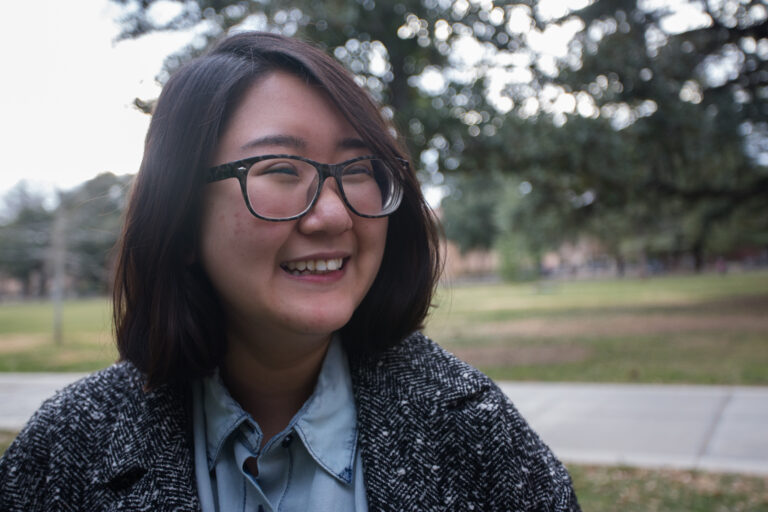
New quarter, new fashion. In our first edition of Campus Chic for 2014, our muse of the week, third-year biochemistry and molecular biology major Seojung Kang, tells us all about her winter getaway in Seoul, Korea and what she bought as a little gift to herself during the holiday season.

There’s something about Seojung that really caught my eye. Everything from the Karlie Kloss-inspired cropped hair to the oversized, tweed waistcoat was just so chic yet so effortless that I was immediately compelled to feature her look in MUSE. She is able to play with the masculine and the feminine and incorporate menswear tailoring in her look to create her own sophisticated style.

1. If you could describe your personal style in three words, what would they be?

Comfortable, classy and chic. Even though I say “comfortable” is one of my words, sometimes I just want to wear my heels.

2. What were you up to over the break?

I actually went to Korea … for business reasons, but I had a lot of fun, went shopping a lot and ate a lot of really good food.

3. Where did you go shopping in Korea?

There’s actually a lot of really small stores and boutiques that are super cheap near Ewha Womans University in Seoul. I also went to Myungdong which is really great for nightlife, and they have a lot of really cool stores there too. There’s also a really great variety of these shops alongside the road where they set up stalls with all these different kinds of hats and accessories.

4. What is your all-time favorite accessory?

Shoes definitely, but I bought this ear cuff while I was in Korea and I saw Ke$ha wearing a similar one on the red carpet. I got it for a really great price and it has these crystals and this feather shape that I really like.

5. Tell us about your look.

[This coat] is a long, boxy style that I saw a lot of people wearing, so I was looking for a coat like this while I was in Korea. I didn’t want a solid color and I like the pattern and that it’s similar to Houndstooth. I mostly dress in neutral colors so I wanted something that could go along with a lot of the outfits that I already have. I love cold weather and scarves and sweaters. I always say that you could put on however many layers when it’s cold, but you can only take off so many layers when it’s hot. I got my shoes from ZARA and my shirt on sale at Mango. It’s a chambray two-toned shirt that goes well with skirts and a lot of different bottoms.

6. Who is your style icon?

There’s actually a fashion blog that I follow called “Neon Blush” and she wears a lot of ZARA and a lot of clean-cut things that I really like. I try to find styles that are cheaper than ZARA, but similar in taste. [My interest in fashion] stems from my aunt who used to buy me a lot of clothes and send them to me from Korea. I used to live in Tennessee and I always preferred her style over the style in Tennessee where Aéropostale was a really big thing.

7. What do most girls usually wear down South and how has your style evolved since living in Tennessee?

There’s always the stereotypical Southern college thing where all the girls wear Nike shorts and oversized t-shirts. Going back and forth  between Korea [and the US] a lot has influenced me and, obviously, online shopping which led to looking around Topshop and websites like that. California has definitely affected [my style] a lot — not just weather-wise, but also being in an environment where people wear a lot of different things in a lot of different ways. Everyone wore pretty much the same thing everyday while I was in Tennessee; but coming here and going to San Francisco and L.A., it was just a big eye-opener for me.

campuschic-4933

campuschic-4912

campuschic-4906

campuschic-4936

KDVS initiates new DJs

Each quarter KDVS, Davis’ student-run radio station, initiates a new batch of DJs into the KDVS family. The volunteers go through multiple weeks of training and are offered time slots between the hours of 2 a.m. and 6 a.m. The early morning work hours are considered a rite of passage for all KDVS DJs.

New DJs are placed in the early morning when the smallest audience tunes in to allow room for amateur mistakes. The time slot is meant for the new DJs to become comfortable with the station and get a feel for what music they wish to play.

Third-year evolutionary anthropology major Emily Jones — aka DJ Feels — works the Friday 3 a.m. to 6 a.m. shift and has found the early mornings a worthy challenge.

“Initially it was difficult because it puts a limit to the amount of sleep I have for that day full of work and classes,” Jones said. “However, after a couple of weeks I adjusted, and although it is never easy to go into a job at 3 a.m., it’s become less of a struggle; plus DJing is loads of fun, so that makes it more enjoyable.”

Like many of the DJs, Emily co-hosts with a friend, allowing them to learn about the station together. The co-hosting arrangement cuts down the work for the new students so they aren’t too overwhelmed with having to get up early while simultaneously learning the ins and outs of DJing.

One of the perks for the new DJs is getting to discover music in KDVS’s vinyl library. During training the students take classes in musicology where they learn about the variety of music KDVS has to offer. The music covered is mostly twentieth century and beyond.

Fourth-year international relations major Adrian Glass-Moore was a new DJ Fall Quarter and enjoyed having KDVS’s vinyl library at his disposal.

“The library we have of music is one of the biggest libraries of vinyl records around; as a new DJ you can really only play music from the KDVS library,” Glass-Moore said. “You have to wait before you get to play your own music.”

New DJs have the choice to experiment with genres of music before deciding the theme of their show. With early time slots and a small audience, the students can play mixes of music that might not go together in order to see what they like broadcasting most. They play everything from ’60s rock to Hawaiian music to modern R&B.

 Even though the audiences are smaller in the early morning than during other time slots, the DJs still have a fan base who calls in with requests and comments.

“I loved when we got callers,” said fourth-year microbiology major Brittney Anderson, who worked as an early morning DJ Fall Quarter. “You think people aren’t listening, but we usually got one or two calls a week. More people are listening than you think during that time.”

Students who wish to DJ at KDVS are cautioned that the early mornings are a commitment they must be passionate about.

“Know that it’s a lot of hard work, but it’s very rewarding to be a DJ. School should come first, so make sure it’s something you have time to do before you commit,” Anderson said.

If you’d like to learn more about volunteering and/or DJing at KDVS, volunteer information meetings will be held Monday, Jan. 13 and Tuesday, Jan. 14 at 7:30 p.m. in Wellman 106.

Men’s basketball starts the new year off strong

0

Although most of the UC Davis population continued their slow recovery from New Year’s festivities, the student-athletes on the UC Davis men’s basketball team were already back in action taking on Simpson University in a matchup on Jan. 2. The men welcomed 2014 on a high note, defeating Simpson University 93-69.

The game began fairly even for the two teams, with the score tied at 12-12 to begin the first half. However, the Aggies leapt ahead with an 11-2 run shortly after. Certain players were especially effective on the night, aiding in the Aggies’ win.

Senior Ryan Sypkens was a huge part of that victory. Sypkens racked up a school-record 10 three-pointers in the victory. His 10 threes were not only notable in their own right; they were also made in an efficient manner as he had made 10 of 14 from behind the arc. He also scored a career-high 30 points, altogether having an outstanding first game early in the new year.

“Ryan is an elite shooter,” said head coach Jim Les.

He proved that with his strong performance, making six of his 10 three-pointers right off the bat in the first half.

However, Sypkens was not the only player that displayed his skills in that essential victory. Junior Iggy Nujic also posted a career-high 14 points for the Aggies, while junior Corey Hawkins collected 19 to add to the team’s margin of victory.

Overall, UC Davis dominated Simpson, who fell to a 2-15 record after the loss. The Aggies had a 40-30 rebound advantage, and only had 11 turnovers. At one point, the Aggies led by 30 points. In the second half, the Red Hawks could not get closer than 14 points. Coach Les was happy with the way the team performed.

“I liked the way we moved the ball around tonight,” coach Les said.

The Aggies have not had the strongest start to their season. Prior to the match-up versus Simpson University the team held a 4-10 record.  However, with the win the team now moves to 5-10 and can carry some momentum into their Big West Conference opener at Cal State Northridge.

Northridge currently has an 8-7 overall record. However, unlike the Aggies the Matadors lost their Jan. 2 matchup at South Dakota. With a close loss of 76-75, Northridge can’t boast a victory to start 2014 like Davis. With momentum on their side, the Aggies hope to use the win over Simpson to start their conference games off right, with a win in Northridge on Jan. 9.


— Sloan Boettcher


Police Briefs

0

TUESDAY 12/31

Window-shopping
A man was walking through the neighborhood on Bella Casa Street offering to clean windowsills but was also looking through the windows.

Slow food movement
A male was passed out in his vehicle in the drive-thru on G Street.

WEDNESDAY 1/1

This is not a drill
Two males, one carrying a hand drill, claimed they were visiting a friend in an upstairs apartment on Cranbrook Court.

FRIDAY 1/3

So last season
Two males were standing on Mace, throwing pumpkins off the overpass into traffic.

It’s casual
A bald man was wearing a tan-colored jacket with nothing else on Cowell Boulevard.

MONDAY 1/6

Stick to your guns
On East Eighth Street, unknown subjects have been hitting someone’s sliding glass door and roof with a stick between the hours of 12:00 and 4:00 a.m. for the past year.

Police briefs are compiled from the City of Davis daily crime bulletins. Contact EINAT GILBOA at city@theaggie.org.

Aggies ride hot-streak into Big West play

0

Teams: UC Davis vs. Cal State Northridge; vs. Long Beach State

Records: Aggies, 5-8 (0-0); Matadors, 4-10 (0-0); 49ers, 8-6 (0-0)

Where: The Pavilion — Davis, Calif.

When: Thursday, Jan. 9 at 7 p.m.; Saturday, Jan. 11 at 2 p.m.

Who to watch?

Sydnee Fipps has undoubtedly been the MVP for this Aggie team thus far, leading the team in scoring in 10 of its 13 games. The junior guard, averaging 17.8 points per game, has scored 20-plus points in five straight games — the longest streak in team history in 21 years — in addition to notching back-to-back double-doubles in the team’s last two games, a loss to Sacramento State and a win versus Simpson. Fipps’s excellent play of late has coincided with the Aggies winning three of their last four games.

Preview:

A grueling stretch of road games to open the season left the UC Davis women’s basketball team with a 2-7 record, but the Aggies, led by junior guard Sydnee Fipps, have been hot of late, winning  three of their last four.

Entering Big West play, the Aggies (5-8) take on the Cal State Northridge Matadors (4-10) at the Pavilion on Jan. 9. UC Davis is coming off a 78-46 drubbing of Simpson University on Jan. 2, which could be a significant confidence boost for the team heading into conference play.

In the contest against Simpson University, Fipps led the team with 21 points and 11 rebounds and was one of four Aggies to score in double figures. Junior Kelsey Harris played a stellar all-around game, scoring 17 points, grabbing six boards and dishing out four assists. Sophomore Heidi Johnson scored 14 points and pulled down eight rebounds, and classmate Alyson Doherty scored 14 points, recorded five rebounds, and added two blocks and a pair of steals.

“This was a great opportunity for us to look at somebody different,” head coach Jennifer Gross said. “We’ve had a couple really, really good practices with a focus on a couple of key areas. [This game] was a chance to see, ‘how is our focus,’ ‘how is our effort?’ In a couple areas, it was great. In a couple areas it still needs to improve.”

Cal State Northridge is coming off a narrow 74-73 loss to Cal State Bakersfield on Jan. 2. The Matadors have lost three straight and look to right the ship against UC Davis. The team is led by junior guard Cinnamon Lister, who has been anything but sweet to opponents this year, averaging just under 16 points per game. The Aggies will also have their hands full with junior guard Ashley Guay, who is scoring 14.3 points per game.

Last year, Cal State Northridge tied for fifth in the Big West, compiling a 9-9 league record. UC Davis was one spot behind in the standings, and the Aggies went 7-11 in Big West competition.

On Jan. 11, the Aggies play host to the Long Beach State 49ers in a 2 p.m. matinee. The 49ers (8-6) split the season series against the Aggies last year, finishing 9-9 in conference play. In both games, the home team proved victorious.

This year, the 49ers are coming off a 88-68 victory at home against Denver on Jan. 5. Before travelling to Davis, the team faces UC Irvine on Jan. 9.

Long Beach State is led by freshman sensation Raven Benton, who scored 26 points against USC on Dec. 28 and leads the team in scoring with 14.5 points per game.

The Aggies will try to ride Fipps and Harris in continuing their winning ways of late.

After the tough overtime loss to rival Sacramento State on Dec. 28, Gross was impressed with the play of her two stars, and she looks to keep them involved in the flow of the offense.

“Kelsey is a tremendous player, she’s a lights-out shooter, and we were trying to find her whenever we could throughout the game,” Gross said. “… Sydnee is tough to stop, so we wanted to get her the ball in places where she could be close to the basket and attack for 2-on-1’s.”

— Scott Dresser

The Philosophy of Education: Excuse Me, Lecture!

0

How many of us have skipped a lecture because we could listen to the podcast or read someone else’s notes later? These methods are not adequate substitutes for lecture, so we should not use them as an excuse to miss lecture when we can attend class. We often do this to minimize time spent on classes we dislike, but fail to realize that this strategy ultimately makes the class require more work, not less.

Podcasts or others’ notes prevent users from interacting with the professor and other students, which makes understanding the lecture more difficult. For example, at lecture, if we do not understand something, we can ask the professor during or after class for clarification, which is impossible through a podcast or notes.  In addition, the podcast and most notes do not pick up what students say during lecture, such as questions or answers to the professor’s questions, which are often helpful, if not necessary, for understanding.

Despite these costs, sometimes we miss lecture because we do not feel like going. Many times, our lack of motivation is due to our lack of interest in the class. We think that listening to the podcasts or reading others’ notes instead will take less effort but still allow us to pass.

However, we do not realize that these methods do not save time. The podcast is as long as the lecture, which defeats our purpose. While reading someone’s notes once takes much less time than the lecture, almost none of us will understand the material after reading notes once. To learn as much from someone’s notes as we would from writing them ourselves during lecture, we have to read them many times, which likely will take longer than going to lecture.

Many times when we make the excuse to ourselves that missing lecture is okay because we will listen to the podcast or get notes, we lack the self-discipline to carefully listen to or read all of it. As a result, we fall behind in the class, which makes understanding the rest of the class harder as classes build on themselves.

As we need to pass the class, we now must study harder for a class we have no interest in. By trying to minimize the effort we put into a class, we accomplish the exact opposite, compounding our frustration. Instead of struggling to catch up while the class continues to move forward, it is much less work to keep pace with the class by going to lecture, even for a class we have no interest in. While skipping class is easier at the moment, we will have to repay that debt with interest later.

Discipline about keeping up is easier with the attitude that we must go to lecture at the scheduled time. If we have this attitude, we cannot procrastinate as we would miss the class. If we plan to listen to the podcast or read others’ notes, however, we can easily put that off until tomorrow, then the next day, and so on.

In addition, learning is much easier in a lecture hall designed to create a conducive environment. In the lecture hall, a live human speaks to us, which we find harder to ignore than a recording or written notes. In addition, live classmates taking notes surround us, which help us focus as well. Finally, we have less access to distractions such as Facebook and phones in a lecture hall compared to listening to a podcast or reading notes at home.

However, sometimes we must unexpectedly miss lecture. Before making the decision to not go, ask yourself, “Why am I not going? Is it a real emergency, that is, is it something I would miss a party with my friends for? Or do I just feel lazy right now?”

If it is a real emergency and we must miss lecture, podcasts and notes are a great tool to catch up. Despite their inadequacies compared to lecture, they are useful when going to lecture is impossible. However, don’t expect to gain the same understanding this way as from the lecture. Most importantly, don’t let missing lecture become a habit.

Use podcasts and others’ notes as a tool to help yourself, but do not let them act as a catalyst to you hurting yourself. The only way to do that is to be honest with yourself about your intentions and motivations.

To share your experiences with skipping lecture, contact WILLIAM CONNER at wrconner@ucdavis.edu.

Public curates Davis Art Salon: Vive Le Public

0

On Jan. 22  at 7 p.m., the Nelson Gallery on campus will host the Davis Art Salon: Vive Le Public. The event is an art show, which exhibits submitted artworks from individuals of the greater Davis community. During the event, those in attendance will be given an opportunity to vote, and the winning artist will win a two-week exhibition at the Nelson Gallery beginning on Jan. 25. The event will also feature refreshments and live music.

The event is presented by the Nelson Gallery, in conjunction with the UC Davis Art History club.

Vive Le Public translates to “long live the public,” and the event is based on the empowerment of the public.

Art history and psychology double major, Ben Castle, is a member of the UC Davis Art History club and is also the organizer of the event.

“The Davis Art Salon is defined by the fact that it is a collaborative effort of the community,” Castle said. “That is why the name of this iteration of the event is Vive Le Public.”

In addition, Castle said the purpose of the event is to counter the traditional exhibition format.

“It challenges the traditional concept of the salon, which is historically chosen by an elite group,” said Hillary Fong, a third-year religious studies major and member of the UC Davis Art History club.

Castle hopes the event will be able to expand the definition of an art salon.

“The purpose of this event is to challenge the current paradigm of an art exhibition as a show put on by a curator and to extend the definition to encompass open-source events such as this,” Castle said.

Rachel Teagle, director of the Shrem Museum and Nelson Gallery on campus said that she feels that the event will help further some of the objectives of the gallery itself.

“I really like their idea because it’s focused on generating dialogue about art, between artists and the public, between students and the public,” Teagle said. “I believe that the gallery’s highest purpose is to create community dialogue.”

If successful, Teagle said she thinks the event has much in store for the fine arts community at UC Davis. Castle said that if the event goes as planned, they plan to hold another similar event during Spring Quarter.

Additionally, the event has greater prospects for the UC Davis fine arts community, beyond the Nelson Gallery.

“As the Director I’m excited by this experiment because it’s unlike anything we’ve done before at the Nelson Gallery,” Teagle said. “The event might become a model of programming for the new Shrem Museum.”

Castle said that he feels it is important for the event to thrive as it provides an unusual opportunity for artists in the Davis and Sacramento areas.

“I think this event is especially important for UC Davis students because it provides a way for new artists in Davis to achieve acclaim without any sort of connections,” Castle said. “A new artist can submit her work and if it is well received by the community, they can get an in-depth exhibition.”

Ultimately, the organizers of the event hope that it will unite the public after which it is named.

“It can be a way for students and community members alike to get involved in shaping its future,” Castle said.

The last day to submit artwork is Jan. 10. For more information on submitting art to The Davis Art Salon: Vive Le Public email davisartsalon@gmail.com.

Aggies begin Big West play

Teams: UC Davis at Cal State Northridge; at Long Beach State

Records: UC Davis, 5-10 (0-0); Cal State Northridge, 8-7 (0-0); Long Beach State, 4-10 (0-0)

Who to watch:

Senior guard Ryan Sypkens is coming into the game against Cal State Northridge having notched a UC Davis record 10 three-pointers made against Simpson University. Sypkens scored a career-high 30 points in the win.

He is scoring just 11.5 points per game on the season, his lowest total since his freshman year, but has averaged 20.6 points in the last three contests. It seems he has found his rhythm.

“When he is patient, he is as dangerous a shooter as anyone in the country,” coach Jim Les said.

Preview:

In the first game of their Southern California road trip, the UC Davis Aggies will face the Cal State Northridge Matadors.

The Matadors are coming off of a comeback defeat by the South Dakota Coyotes, which saw an eight point lead dwindle in the last 3:30.

Cal State Northridge is led by the trio of forward Stephan Hicks, forward Stephen Maxwell, and guard Josh Greene. Hicks averages a team high 17.6 points per game, on an efficient 55.3 percent shooting from the floor, while adding 7.4 rebounds per game. Maxwell has added an equally efficient 16.5 points and a team-high 8.6 rebounds per game. Finally, Greene has played the role of three point marksman, averaging 14.8 points while shooting 49.3 percent from beyond the arc.

The Aggies, meanwhile, have struggled significantly rebounding the ball. They are averaging a lowly 30.9 rebounds per game and are led by senior forward Josh Ritchart with 6.6 rebounds each contest. This has been in part due to the significant struggles of forwards Iggy Nujic and Clint Bozner, who are averaging a combined 5.8 rebounds per game.

If the Aggies want to win this game, they must accomplish a few things. First and foremost, they must crash the boards and not allow the Matadors to get many second chance points.

UC Davis also has to score the ball efficiently. Cal State Northridge has shot the ball well thus far, with its top two scorers making over half of their shots. The Aggies, on the other hand, are rarely efficient beyond Ritchart. Both junior guard Corey Hawkins and Sypkens are shooting under 42 percent from the field, and the team only makes 34.4 percent of their attempts from beyond the arc.

The Matadors will be a tough test for the Aggies as they have played well defensively. The Matadors have held three of their last four opponents to shooting under 42 percent from the field. Cal State Northridge has also benefited greatly from the play of center Tre Hale-Edmerson, who has averaged 1.9 blocks and 1.8 steals per game.

As for the Long Beach State 49ers, do not be fooled by the poor record. These 49ers have seen four of their losses come against top 25 nationally-ranked opponents. They barely lost to then #10 VCU, falling by six points, and recently were defeated by the #25 Missouri Tigers by 10 points.

Long Beach State is led by guard Tyler Lamb, who has only played in the last four games for the 49ers after sitting out due to transfer requirements. Lamb has struggled from the field, shooting only 35.7 percent thus far, but he has averaged 20.8 points per game and is getting to the free throw line over six times per game. Lamb will only continue to get better as he shakes off the rust from sitting out for over a year.

Guard Mike Caffey has held down the point guard position well for Long Beach State, averaging 16.9 points, 4.4 rebounds and 4.3 assists. The 49ers, meanwhile, have gotten much of their production down low from forward Dan Jennings, who has given them 11.2 points, 7.9 rebounds and 1.3 blocks per game.

As a whole, the Long Beach State 49ers have shot the ball very poorly this season, a weakness that the Aggies must capitalize on in order to score a victory. Through the first 14 games of the season, the 49ers have shot 39.6 percent from the field and a lackluster 27.6 percent from beyond the arc. If UC Davis wants to win, they will have to continue to limit the 49ers’ efficiency and prevent Lamb from having his breakout game of the season.

The Aggies will also have to play far more efficiently than they have, limit turnovers and second chance points and win the rebounding battle against a strong 49ers squad which pulls in 36 rebounds per game.

— Ryan Reed

Literary Lessons: Hmph. Nietzsche.

0

I love the first day of school. I love seeing if someone cute is in the class, then hoping I have discussion with them. I also love how what I thought I knew about a subject is just completely different from what that subject actually is, and the approach the class is taking to learn it. That’s sort of like what reading Nietzsche is like.

I read Thus Spake Zarathustra (Nietzsche’s portrayal of himself through the protagonist as a bearer of existentialism to man) over break because I am going through a hipster phase. Okay, maybe not exactly, but that’s how I felt reading this book. To explain it concisely, Nietzsche made me feel like I needed one of those berets that mimes wear.

In any case, that book was just full of so many surprises, and although (in my opinion) Nietzsche kind of seems like he thinks he’s really cool, I enjoyed it. Nietzsche seems like the guy at the party who walks around casually bringing up his GPA, which is actually not the highest one you have ever heard of, and expects all the ladies to swoon.

“No. Go away, Nietzsche.”

The book was also full of applicable life lessons, and the one I would like to share is how to approach the first day of school. Nietzsche is pretty germane to the struggle of figuring out what your quarter is going to be like when you walk into SocSci 1100 on the first day of class.

First reaction, “Oh man, that guy who just walked in is really cute.” That’s how the book started. I was like, “Damn, Zarathustra, you seem pretty cool and rugged because you lived in the forest all these years. Teach me your ways.”

Zarathustra is like the hot guy on the first day of class because he does things that make you think, “Aww, adorbs.” For example, I could not help myself from LOLing at some of the things Zarathustra said. “I teach you the Superman.” Hopefully kids these days will get the following reference, because all I could think of when I read that was the Soulja Boy song from 2007 where he goes, “Watch me crank that soulja boy and superman that hoe!” Look up a picture of Nietzsche right now and imagine him in the club walking up to someone and being like, “I teach you the Superman.”

Finally, after I was done, I realized that before starting the book, I literally had no idea whatsoever what Nietzsche’s philosophy really was. That’s sort of like comparing the last day of class to the first day of class.

I remember when I heard another person wearing all black and a beret say, in a raspy cigarette-stained voice, to someone with a mustache that curled up on the sides with a faked British accent, “God is dead and we have killed him.” As a bystander in that moment I thought to myself, “Oh my, look how smart I am. I know that what he said is Nietzsche.” And then I read the book and realized that there was A LOT more going on.

For some reason, I thought “Zarathustra” was going to be some nonfiction book explicitly lining out the absurdism of God and all that kind of stuff, that it was going to be in rigid academic writing, and that I was going to feel very serious the whole time.

I imagined myself scoffing at things. I would be all, “Hmph. Yes. Well, I guess. Ugh.” That’s not what ended up happening at all. It’s sort of analogous to when you read the description of a class on SISWEB and you think, “I totally have a general idea about this class. Nothing is going to appall me.” And then you get to class and read the syllabus and realize, “Nope. Not at all.”

So, on that note, I wish everyone great success in all their classes this quarter. It may be a slow journey, but in the end you will feel super proud that you did it. Remember, knowledge is something that no one can take away from you.

At the end of reading Nietzsche, I felt like I accomplished something, even if that was just the ability to smirk when people talk about Nietzsche. Go on, friends, conquer your first day of school! Consume the knowledge!

As Nietzsche wrote, “And this meaneth to me knowledge: all that is deep shall ascend — to my height! — Thus Spake Zarathustra” (135). Now, go find yourself a beret, conjugate “to speak” incorrectly and get on with your quarter.


To wear berets and scoff at things with EREN KAVVAS you should email her at ebkavvas@ucdavis.edu.