54.5 F
Davis

Davis, California

Saturday, January 10, 2026
Home Blog Page 904

KDVS to host first house comedy show of year

0

Davis’ local radio station, KDVS 90.3 FM, will be hosting their first house comedy show of the school year on Nov. 7. The show is called “F***in’ Funny” and will be held at the Robot Rocket Residence on M Street.

The event is a showcase of some of the best local standup comedians and is a way for students in Davis to get their comedy fill without trekking to Sacramento or San Francisco.

“F***in’ Funny” was started a few years ago by UC Davis alumna and comedian Allison Stevenson. When Stevenson graduated, former KDVS DJ and Comedy Spot Comedian in Sacramento Mike Cella decided to rekindle the event but kept true to its original house show format.

The event was originally held in a house on Pole Line Road and occasionally at other venues in and around downtown Davis. The house setting was chosen to allow for show-goers to have a comfortable place to laugh and blow off steam.

The new venue, Robot Rocket Residence, traditionally opens its space for musicians and bands to perform.

“We started doing the show at a house on Pole Line in Davis. We had the show in the living room with people backed up to the wall,” Cella said. “It’s very informal. I like having the show in a house because the vibe is pretty laid back and the setting is intimate.”

The event usually features seven to 10 local comedians and a prominent headliner from the Bay Area. Comedian Ray Molina will be headlining the Nov. 7 show.

Molina recently finished up Comedy Central’s “Up Next” comedy competition in which he was a semi-finalist. Molina has opened for big names such as Zach Galifianakis, Maria Bamford and Marc Maron. He prides himself on a feel-good variety of comedy, a characteristic somewhat unique to the standup community.

“I am looking forward to seeing a lot of people there,” Molina said. “When I perform I want people to feel good about themselves.”

Other performers to be featured are Andrew Holmgren, David Gborie, Anna Seregina and Darby Herms. The show will also consist of giveaways and musical interludes by third-year English major Matt Stalcup.

Cella will be co-hosting the event along with comedian and Robot Rocket resident Jaclyn Weiand. Both hosts will be offering short comic sets of their own.

Cella has hosted the event before, while Weiand usually performs comedy acts. Weiand started doing standup in Sacramento a year ago and has done sets at past house comedy events in Davis.

“[F***in’ Funny is] really a different kind of performance. Davis people don’t know to come out to Sacramento to see comedy so they’re really happy to be at this show and it’s a really fun place to perform,” Weiand said.

Admittance to “F***in’ Funny” is free. The show starts at 8 p.m. and will be held in the backyard, weather permitting.
Andrew Bird to perform at Mondavi

0

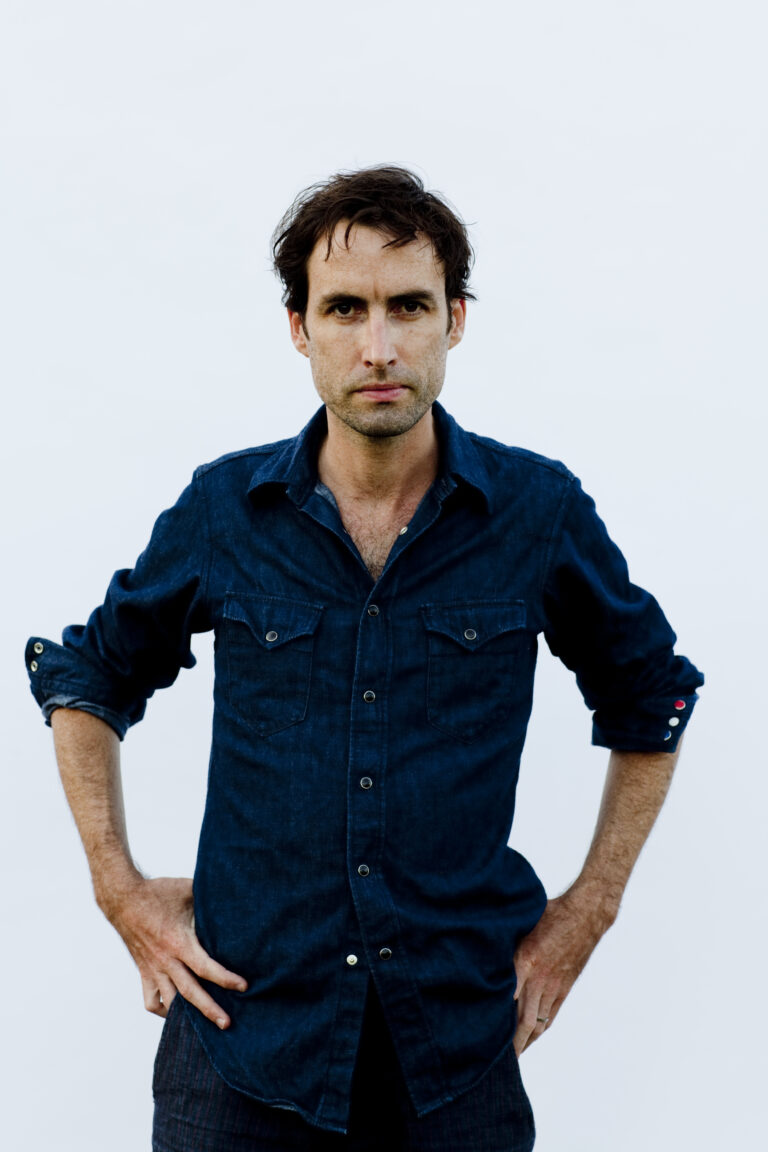
Andrew Bird, critically acclaimed singer, songwriter and multi-instrumentalist who is well-known for his incorporation of violin and fiddle to his indie rock and folk tunes, will be performing at the Mondavi Center on Nov. 14.

Bird first began recording albums in 1996 with the band Bowl of Fire, and soon broke off to create his solo career in 2003. In addition to his six full-length albums and multiple EPs, Bird also made the film score for the film Norman (2010) and The Muppets (2011) and has worked in visual arts, creating installations in the New York Guggenheim and Chicago Museum of Modern Art.

Starting in Davis, Bird kicks off his solo tour around California with opening acts by indie-folk band The Handsome Family. In a phone interview, MUSE spoke with Bird about his creative process, musical development and the process of creating his two most recent albums, Break It Yourself and Hands of Glory.

MUSE: How would you describe your musical development over the years, and what have been your musical inspirations?

AB: I began working on music when I was four, before I was a really conscious being. It was just something I did everyday since I can remember. I think the most formative thing I did early on was that I learned by ear. The idea was that music is like language. This idea is the most important thing for the musician I’ve turned into. People say music is like math, and I cringe when I hear that. Its not like math, it’s anything but math because it’s not about coming up with the right answer in music.

I was just ravenous for everything but classical music — the more obscure the music was, the more interested I was. From ages 16 to 26 I was jumping from one thing to another. I was influenced by early jazz, country blues and early 20th century music. I was really interested in what happened to music before music was recorded. That’s stuff I still play, the hymns, Carter Family stuff. I was influenced by stuff that existed before World War II. I also sing gospel music — it really opens up your singing.

Can you describe your creative process?

It’s not very premeditated most of the time. For the most part I just pay attention to what’s going on around me. I work in the morning, but I don’t have a strict schedule or a desk where I sit at to get all my work done,  unless something comes up and I am asked to do an assignment — then that’s a different process. Mostly, I just wait for things to materialize out of disparate observations. I’ll observe my surroundings and, for example, I’ll see someone sitting on a plane, and then I connect that to something in a book I was reading, and over the years I’ll connect a bunch of different things. There’ll be a common thread and I’ll pull that together in a song. The best way to describe it is: something falls into a stream, like a branch, and then it starts snagging other things around it over time and damns up a river — that’s when you have a song.

How do you think your musical education and training influenced who you are as an artist?

It’s not that I had a teacher that taught me something that stuck with me in particular. I was largely self-taught, and I was not always a model student in school. I give my musical education credit in the sense that I had four years of college to immerse myself in it and not worry about any other distractions. I got better through sheer exposure and osmosis, not so much through book lessons or a particular syllabus. There’s no other time in your life to have that kind of opportunity to focus, so you have to think of it more as an atmosphere where you’re just soaking up as much as you can. All that preparation for the job market makes me cringe. I don’t think that’s the point of higher education.

Describe the tour you’re on right now and the “Gezelligheid” tour coming up right after.

This is my solo songwriting tour. The “Gezelligheid” shows will be played in churches and synagogues around the country. Those shows are more ambient and instrumental and more suited to that kind of reverberant space. In a performing arts center, you can engage with the audience more directly. The church shows are more ambient, with more of a mood and a texture, whereas the tour where I perform in Davis and around California is more about stories, more about words. I’m touring with a favorite songwriting band called The Handsome Family who are opening for me. I cover a lot of their songs, and they’re a huge inspiration.

Your most recent albums are Hands of Glory (Oct. 2012) and Break It Yourself (Mar. 2012), which you recorded in your barn in Illinois. What was the process like for recording these albums?

We just stood up at the barn and recorded around one microphone. These days, I’m kind of into a certain kind of realism when recording. Most of my records are really carefully produced and layered in the studio the way a lot of other records are made, and I got kind of tired of that process. It felt like that process was somewhat less honest than just the band in a room playing with a single microphone live, which is how we made Break it Yourself and Hands of Glory. Pre-World War II stuff has always been there since the beginning of my musical inspiration and I wanted to capture that with the band. We started doing this thing on stage where we just played around one microphone, and it just makes you sing and play better, stripping the production down to its basic elements. The audience responded well to that, and so Hands of Glory is the record that captures that.

Since you recorded both albums in the same year, how would you describe them as companion albums?

Every time I make a record, by the time I get in the studio I’ve imagined each song done in six dramatically different ways. I wonder why I choose to do it this one way on the record versus the other ways to do it. Break it Yourself has a kind of taut, rhythmic, driving version of the songs, so I took Hands of Glory as a chance to show those songs in a totally different emotional backdrop. It makes you look at the lyrics in different way and makes you see the music in different way. Songs on records are never done. They’re always evolving and feel different every moment of the day. In the morning I want to do it one way and in the evening I want to do it in another way. I think that’s worth capturing and it keeps things from getting stale.

Why are you on tour right now?

The prevailing philosophy in the music industry is to hold back all your material and then have a massive publicity push for like twelve songs. I think if you’re going to have any sort of push whatsoever you should get it out there when the machine is going. That’s just what feels right to me. I don’t think I’m at risk of diluting anything. Being onstage is really important to the process for me, so the idea of disappearing entirely and then coming out in five years with a new record is just not good for the music.

Is there something particularly different you try to do to your songs in live shows?

I come from a background of always improvising and exploring. I like to do that on stage. If I didn’t, I’d go crazy. I see other bands who are performing to promote their records. For me, to perform live, I think it’s kind of liberating not to do it to promote new records. I ask myself ‘why are you on stage? Are you trying to create something new and exciting, or are you just recreating your records that you worked on for three years in a studio with producers, etc.?’ That’s not how I do it . It’s never been like that for me, not even close — I started doing records so I could justify playing on stage, that’s really the ultimate experience to perform live. I feel duty to myself that if something new didn’t happen on stage, I could have performed every note perfectly and I’d be disappointed. Every night I need to perform differently from the next in order to feel satisfied.

What’s your relationship with other art forms, like film and visual arts, and where do they fit in with your creative vision?

From the beginning, I didn’t think it’s just enough to be a good violinist. When I made my first records, I got very particular about the artwork and the way everything was presented, even how the stage looked. I wanted to do film scores when I was younger, but suddenly I started writing these full albums with common threads and I thought, ‘Wait a minute, this is my movie. The stage is 35 mm film, and how everything looks and how everything comes together is the movie. This is the thing I understand how to have control over, and I’m going to make this my whole package.’ But that brought me into collaborating with other artists. My mother’s an artist and I’ve always enjoyed working with people who aren’t musicians. Lately, with things like [my project, Sonic Arboretum, in the New York Guggenheim Museum] the “Gezelligheid” tour, they’re explorations of different ways of presenting and performing besides things like a rock n’ roll show, and working with different experience with audience. For that, I need to work with other artists.

Napolitano to allocate $15M to student programs

University of California President Janet Napolitano announced Wednesday that she would immediately allocate $15 million to programs for undocumented students, graduate students and postdoctoral fellows as one of her first actions in office.

During her first major public speech as president at a San Francisco hotel, Napolitano said she will allocate a total of $5 million to support the approximately 900 undocumented students in the UC. The funds will be used for resources such as financial aid, advisers and student service centers for undocumented students.

“These Dreamers, as they are often called, are students who would have benefited from a federal DREAM Act,” Napolitano said, referring to the federal legislation that would have granted residency to undocumented students who attended U.S. high schools. “They are students who deserve the opportunity to succeed and to thrive at UC.”

Seth Ronquillo, a fourth-year film and linguistics student, co-chair of IDEAS, UCLA’s undocumented student group, and a former Daily Bruin columnist, said the initiative shows she is listening to undocumented students, who voiced their concerns to her in multiple meetings this month.

“We’ll keep on pushing for undocumented student needs, because there were other demands that still need to be accommodated,” said Ronquillo.

Ronquillo said he still wishes Napolitano would issue a definitive statement saying she will be a champion of immigration reform and undocumented individuals in general – a request he mentioned to her when she came to UCLA earlier this month.

He also said he wants Napolitano to find a way for undocumented teaching assistants to be paid. They currently cannot receive pay since they do not have Social Security numbers.

Napolitano also announced she would dedicate $5 million to graduate student recruitment and $5 million to a UC program that caters to women and minority postdoctoral fellows.

The president’s Postdoctoral Fellowship Program provides research fellowships, professional development resources and faculty mentoring to recent Ph.D. graduates who conduct research at the UC.

“In two weeks, I’m going to be coming to the UC Board of Regents with some big ideas for consideration,” Napolitano said. “In the meantime, however, I’ve heard enough to know that if we are to remain a premier research university, we must increase our support for postdoctoral fellows and graduate students.”

However, Nicole Robinson, president of the Graduate Students Association, said she doesn’t think the funding will be able to fully make amends for the years of budget cuts the UC has seen to student programs.

“Any amount of money that goes back into the system is a good thing,” Robinson said. “At the same time, so much money was cut over the past several years.”

But Robinson said she appreciates the allocation. Budget cuts have made it harder for UCLA to hire enough teaching assistants and have enough classes to meet growing enrollment, and the $5 million for graduate student recruitment would help do this, Robinson said.

No tuition or state dollars will be used for the initiatives. The money will come from one-time reserves Napolitano can use at her discretion.

In the rest of her speech, Napolitano said supporting UC research, technology and diversity would be among her top priorities.

Napolitano said she is developing more ideas that she will bring to her first UC Board of Regents meeting next month. She recently told UCLA students she will bring her ideas for UC revenue solutions to the board.

Although Napolitano mentioned in her speech she has been studying the UC budget, there are still other questions left unanswered about how she plans to solve the UC’s funding problem, said Daniel Mitchell, professor emeritus at the UCLA Anderson School of Management and Luskin School of Public Affairs. Such questions include how Napolitano will resolve the UC’s decreasing amount of available campus space and whether administrative efficiency efforts will be enough to bridge the UC’s funding gap.

“The next regents meeting is in mid-November and, although the agenda isn’t yet posted, there will surely be some real issues on the table,” Mitchell said. “(Napolitano) talked about a learning curve so she will need to be well along that curve in a couple of weeks from now.”

The regents will meet on Nov. 12-14 at the UC San Francisco Mission Bay campus.

 This story was originally posted by the Daily Bruin

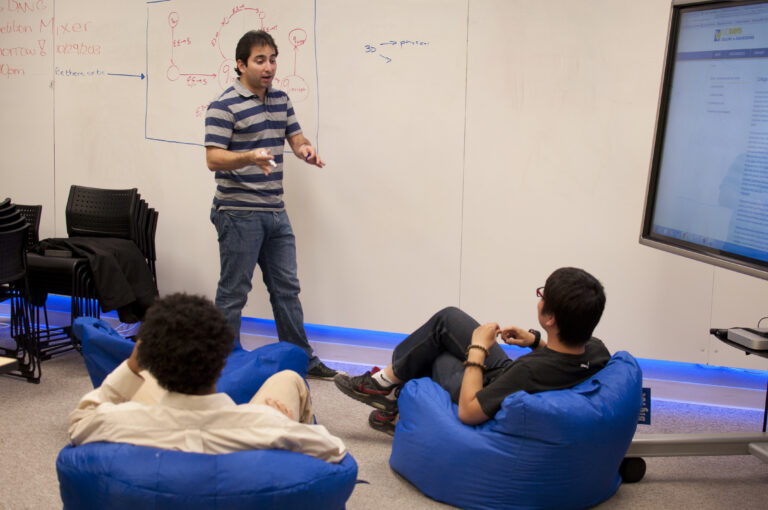
UC Davis Engineering Startup Center opens

On Oct. 11, the UC Davis Engineering Startup Center opened with a launch event in Ghausi Hall from 3 to 6 p.m. This event was essentially a reception and celebration of the finished Engineering Student Startup Center (ESSC), a center for use by UC Davis students as a platform to launch their entrepreneurial ideas.

Bruce White, the director of the Engineering Transitional Technology Center at UC Davis, hosted this event. Some other speakers featured at this reception were Enrique Lavernia, the dean of the College of Engineering, and Lucas Arzola, the founder and CEO of BetaVersity, the company that made the Startup Center possible.

BetaVersity, started by a group of UC Davis alumni, specializes in creating spaces and tools to turn ideas into reality. The group shares the common belief that entrepreneurship can solve problems and improve lives throughout the world.

“There is simply no substitute for the hands-on experience and student-led initiative that occurs within our beta spaces,” said Blake Marggraff, chief revenue officer for BetaVersity.

However, the crux of this reception was the speech made by keynote speaker Tina Seelig, the executive director of the Technology Ventures Program at Stanford University. She is a professor working with students to develop skills for entrepreneurship, creativity and innovation.

“Contrary to everything you think, I believe that creativity [is a skill] that can actually be taught,” Seelig said.

In her speech, Seelig outlined six components for generating creativity — resources, knowledge, attitude, habitat, imagination and culture. She argued that creativity is a skill.

“The way you ask the question determines the type of answers you get,” Seelig said. She criticized the way problem solving is taught in our schools. “We often teach children how to solve math problems like ‘5+5 =?,’” Seelig said.

With this problem, there is only one answer in the solution set which is 10. However, Seelig suggested that we should be reframing the problem in ways like setting “x+y = 10.” She argued that if you do not ask the question in a thoughtful way, you won’t get interesting answers.

“So many people don’t live up to their creative potential because they are in environments that don’t encourage innovation,” Seelig said.

Seelig claimed that companies like Google and Pixar are innovative because they have colorful and stimulating offices. For example, these companies have fun venues such as bowling alleys, slides and rock climbing walls. Seelig hopes the ESSC will provide an environment in which students are comfortable which will foster creativity.

The ESSC features a 3D printer/scanner, a huge computer monitor, whiteboard walls and a Shopbot CNC device for milling and machining plastic, wood and aluminum.

White said that it can benefit all the students of UC Davis as it is trying to draw in students from a variety of majors.

President of the UC Davis Entrepreneurship and Technology Club (ETEC) Natalie Qabazard encourages everyone to join.

“The ESSC is a milestone for students of all disciplines because it’s the first center of its kind on the UC Davis campus,” Qabazard said.

The center provides a design space for all students to work on prototyping their ideas, using the skills they have acquired through academia and applying it to their ventures. Her goal as the president of ETEC is to bring diversity to the center by reaching out to various groups and departments on campus.

“I am looking for an environment in which I could tap my creative potential, freely make mistakes and learn from them; the ESSC is perfect for this,” said Jackie Zhang, a first-year computer science and engineering major.

Similarly, Enrique Lavernia, the dean of the College of Engineering, is eager to see what innovation this center will bring.

“The ESSC will facilitate the development of the entrepreneurial skills of UC Davis students, provide pragmatic hands-on learning opportunities and help speed the delivery of high-impact technology to society,” Lavernia said. “The ESSC will also facilitate collaboration with our colleagues in industry, colleagues across campus and other centers.”

Farmer shares origins of Dixon corn maze

0

Every fall, the Cool Patch Pumpkins farm draws world record aficionados, families, students and corn maze lovers to its fields.

Now listed in the Guinness Book of World Records as the world’s largest temporary corn maze, it’s hard to believe that a few short years ago, the farm was nothing more than a roadside pumpkin patch.

“We started planting a small batch of pumpkins about 12 years ago for [the Halloween season]. At that time, we pretty much had to beg people to stop off the road so we could give away the pumpkins,” said Seth Cooley, a 2012 UC Davis mechanical engineering graduate whose family founded the maze.

The idea for including a maze came about as a way to supplement their pumpkin sales, but it soon turned into a challenge to create something extraordinary.

“The interest in our farm was pretty low. We needed something to attract more people, so we decided to make a small-scale corn maze,” Cooley said. “We became curious as to what the biggest corn maze was in the world, and it was only 18 acres, which is really small by farming standards. We knew we could blow that out of the water.”

From there, Seth’s father Matt and his uncle Mark Cooley set about designing their record-breaking maze. They used an Excel file to visualize the corn field as a grid with coordinates, and from there, they mapped out the entire maze.

The design was then transferred to the field with flags and tape measures to match the computer file. A small fleet of weed eaters then cut down around one-tenth of the total corn to make the path, and after a few long, hot summer days, the 40 acre maze was completed.

From there came the arduous process of getting the Guinness Book of World Records to survey the maze. The official record states that the maze measured 163,853.83 m² (40.489 acres) when opened to the public in September 2007. Since that time, the maze has been expanded to 53 acres.

“One of the reasons that we expanded was that toward the end of year, there are droves and droves of people coming through the maze. The corn can get a bit bulldozed. We make it larger with the hope that near the end of the season, there are larger areas that people haven’t trampled,” Cooley said.
As the years have gone on, techniques for growing the corn have been perfected. Seth explained that vandalization of the paths is to be expected, but that it is important to plant the corn stalks close enough together to discourage people from cutting through while also far apart enough that the stalks will have enough room to grow thick and resilient.

Each year, the maze is completely redesigned, with only one aspect maintained: there is only one true path out. As a result, every guest is given a map, even if they do not think they need one.

“There is no way that it could have been done without a map,” said second-year food science major Melanie Barnes, who visited the maze earlier this year. “It feels massive. To get into the actual maze, you have to walk up this bridge, and when you get to the top, you just see this expanse. The corn goes all the way to the horizon. It’s amazing.”

Fifth-year environmental science and management major Mario Evangelista agreed.

“We needed the map, for sure. There were stakes in the ground that marked where you were, and without the map we would have been so lost,” Evangelista said.

Each year, the Cooleys experiment with designs to fool their guests.

“One thing that we have this year is a whole corner of the maze which is nothing but intersecting circles,” Cooley said. “Even for me, who helped cut it — I get lost really easily. When there is nothing but lefts and rights, it’s easy to read the map. With the circles, it’s harder because you’re never really sure which one you are inside of.”

When a design aspect causes one of Cool Patch Pumpkin’s own to get turned around, it is likely even worse for a guest.

“With no straight lines, the circles were really hard. We got lost a few times,” Evangelista said. “It took us two hours to get through the maze, mostly because we got lost in the circles.”

Cooley estimates that the average time through the maze this year is around an hour and forty minutes. However, some maze-goers try to run through it faster for personal achievement.

“We timed it for fun — it took us an hour and 2 minutes,” Barnes said. “We had a really good leader who likes mazes. We couldn’t have gone nearly that fast without him.”

As the season closes, the field will be leveled to mitigate fire hazards and make way for the next year’s new design ideas. Afterward, however, the corn does not go to waste.

“We plant the corn very late by the standards of a corn field, so it’s green when people are in it, and we want it all gone by winter. What happens is when we close the maze, we chop it all down for silage, level it and feed all that green compost to cows,” Cooley said.

As the years go on, the Cooleys plan on continuing to expand the size of their corn maze to maintain their world record. The maze is open this year until Nov. 3.

Government shutdown puts UC Davis research on hold

0

UC Davis scientific research supported by the National Science Foundation (NSF) and National Institutes of Health (NIH) was severely impacted within the first few days of the recent government shutdown.

Due to the lapse in funding, several faculty members, graduate students and researchers have witnessed the debilitating effect on their research.

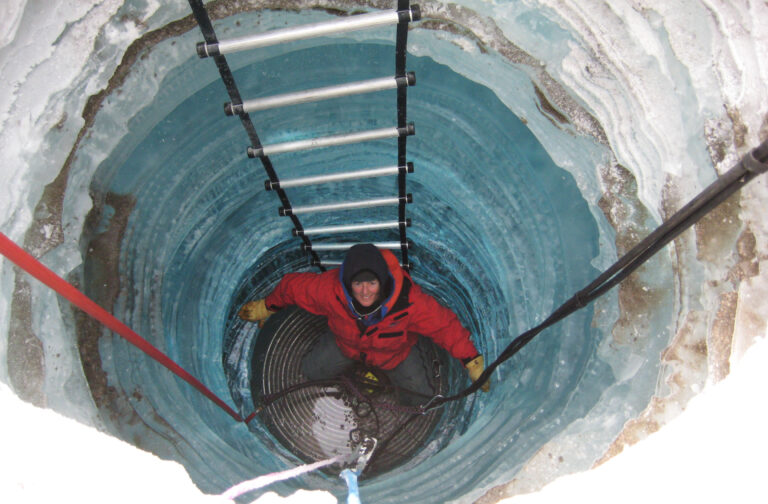
About a week before geology professor Dawn Sumner was supposed to embark on her three month trip to Antarctica with the United States Atlantic Program (USAP), it was abruptly cancelled.

Along with the thousands of researchers involved with USAP, which is funded by the NSF, Sumner is still waiting to hear whether the research in Antarctica will persevere.

“I still don’t know whether or not I’ll be able to go [to Antarctica]. It is very uncertain which is very unnerving,” Sumner said.

In order to coordinate fieldwork in Antarctica, the NSF works with Lockheed Martin, an American advanced technology company, for logistical and technical support.

When the shutdown initially occurred, Lockheed Martin had enough money allocated toward USAP for about a week.

As the pool of funding gradually depleted, all Antarctic research stations were transitioned into “caretaker status,” where the majority of stationed staff were required to go back home.

Now that the government has returned from its 16-day shutdown, USAP is currently in the process of recovering all delayed research.

If USAP is unable to reschedule the trip, Professor Sumner is among the lucky ones who will still be able to do her research with the help of the New Zealand Antarctic Program.

While the possibility of researching in Antarctica looks more promising for Professor Sumner, there are still challenging time constraints that must be considered.

Since Professor Sumner was supposed to depart on Oct. 17 and conduct her fieldwork in early November, all of her research has been pushed back into later months.

“We need that time in November, [because] typically it’s too warm by December,” Sumner said. “If you miss one year of monitoring, you can never get that back. This can significantly damage the quality of results.”

Tyler Mackey, a geology Ph.D. student researcher involved in Professor Sumner’s project, addressed the same concern.

“If we aren’t able to get there in time during the year, we won’t be able to do our work this year at all,” Mackey said.

Ultimately, the loss of this fieldwork in Antarctica could inhibit Mackey from specifically addressing elements of his work.

“It will affect what my Ph.D. is on and will change the different parts of the research,” Mackey said.

Mackey, however, stated that he was fortunate. If he had not done enough research previously, he may have been in danger of not getting his Ph.D..

The potential decrease in research that this shutdown has caused may also impinge upon scientific efforts and achievements globally.

“The science that the U.S. is doing is not in a vacuum,” Mackey said. “We collaborate extensively with other countries.”

According to Mackey, the lack of research that they will be able to share is an unfortunate byproduct of the shutdown and budget cuts.

Research funding in the U.S. has been cut back dramatically for a while now. Under the sequestration order that was signed on March 1, 2013 by the federal government, the NSF’s budget was cut by $356 million.

While all research funded by the NSF will receive the allocated grants for this year, the sequestration will limit the future scope of the program, and the sharing of research between nations may be impacted.

In turn, the multitude of scientific projects on campus and the availability of grants for graduate students will be cut down.

Johnathon Anderson, a genetics Ph.D. student who works in an NIH funded lab at the Institute for Regenerative Cures, shared his concerns regarding the future difficulties that students will face.

“I fear that some of the students may have been discouraged from applying for the NSF Fellowship since they could not access the NSF FastLane website and the submission deadline is coming fast upon them,” Anderson said in an email interview.

Like the potential graduate students applying for NSF scholarships, Anderson has experienced similar obstacles when writing grants for his own laboratory.

“The recent government shutdown froze my lab’s Transformative NIH (high risk, high reward) grant,” Anderson said. “This has caused my research to grind to a halt as I have not been able to order much needed supplies for my project.”

In addition to the challenges during the grant writing process, Anderson said he believes that scientific resources utilized for groundbreaking research are being jeopardized.

“The shutdown has also put the lives of thousands of valuable research mice at risk that are used in cancer, diabetes and Alzheimer’s research, and put shipments on hold for fruit flies which are an invaluable research model organism,” Anderson said.

Although all of these issues will be extremely challenging to solve in the upcoming year, Anderson believes that both the recognition of scientific innovations among the general population and the need for federal support will help to advance programs like the NSF and NIH.

“I think the scientific community as a whole could do a much better job of elucidating just how crucial government funding is to generating tangible products that our society benefits from, while concurrently sparking much needed wealth creation for our economy,” Anderson said.

Study finds linkage between DNA, marital satisfaction

When it comes to marriage, wouldn’t it be nice to know whether it’s for the better or for the worse? Fortunately, for the meticulously-cautious and planning-obsessed people, a recent study published in the journal Emotion begins to tap into this fascinating area of marriage and its relation to DNA. Dr. Robert Levenson, a psychology professor at UC Berkeley and the main investigator of the study, suggests that our genetic make-up contributes to our marital satisfaction.

The study discovered that alleles — different versions of particular genes — set the stage for how individuals process and understand their emotional state, which eventually affects their relationships.

“We are always curious why some couples are happy and thriving whereas others are seemingly unhappy and miserable,” said Claudia Haase, co-author of the study, in an email interview. “Research has shown that the emotions that spouses show when they are together (e.g. affection, joy, sadness or anger) play an important role in how their marital satisfaction develops over time.”

The researchers discovered a linkage between an allele known as 5-HTTLPR which regulates serotonin levels and relationship satisfaction. All of us inherit some variant of this gene from our parents. Since 1989, this longitudinal study tracked 156 married couples over 20 years.

Every five years, the participants checked in at UC Berkeley to report their marital satisfaction and interact with one another in a lab setting. The researchers observed and coded their behaviors, such as the participants’ facial expressions, body language, tone of voice and the topic of the participants’ conversations. Half of the participants provided DNA samples, and researchers were able to match up their genotypes with the level of marital satisfaction reported by the participants.

The study found that participants with two short alleles of the 5-HTTLPR gene were found to be most dissatisfied in their marriage when a great surge of negative emotion was experienced. However, they were the most happy when positive emotion was involved. In contrast, participants with one or two long alleles for the gene, were less likely to be bothered or affected by the emotional highs and lows of their marriages.

The researchers caution that one shouldn’t predict their happiness or unhappiness in a marital relationship simply based on their genes. It isn’t advised to assume that just because you have inherited two short alleles for the gene, that you are set up for marital doom.

Committed married couples form an integral part of the UC Davis community — ranging from professors and staff to both graduate and undergraduate students. Dustin Burns, a third-year PhD graduate student in the physics department, is a member of this subpopulation.

“At least from personal experience, some people are definitely more sensitive to the emotions present in their relationship, while others are more indifferent,” Burns said.

The study simply suggests that individuals with two short alleles are more likely to be sensitive to the emotions they experience in their marriage. For instance, they are more likely to be happy in a healthy relationship, and fare the worst in an unhealthy one. Regardless of your genetic make-up, it is important to not exclude environmental factors, which clearly also play a role in one’s emotions and relationship satisfaction.

Dr. Lian Bloch, who earned her PhD in clinical psychology from UC Berkeley and is now a psychologist, played a key role in envisioning the connection between genetics and marriage. She believes that therapy, whether it be done with a professional or at home, can help couples to regulate their emotions and to better process and understand their heightened emotions when they occur.

“Couples therapy supports taking an active look at self-awareness, emotional and communication dynamics within the marriage. [It takes] time to foster awareness as an individual, and as a couple as well,” Bloch said.

Nameless Magazine

0

Nameless Magazine is UC Davis’ exclusively student-run literary magazine, which publishes one digital issue per quarter and one print issue per year. Each issue features fiction, poetry or mixed media submissions.

Mitchell Winter, editor in chief and fourth-year linguistics and religious studies major, believes it is the emphasis on student participation for which the publication is named.

“[The name] can seem kind of eccentric but it also is true. Because there are so many different voices that we’re trying to convey, we don’t want to give one title to any one piece,” Winter said. “It’s this kind of being nameless, and not having a certain voice that’s coming through, trying to have everyone.”

The first digital issue, which will come out at the end of Fall Quarter, will feature works exclusively from undergraduate students.

“While some literary magazines with wider scope tend to be more competitive, Nameless is largely about connecting the undergraduate community with opportunities to publish and share their work,” said editorial board editor and third-year gender studies major Katherine Geni, in an email.

Though Nameless cannot accept all entries, the staff works and meets weekly to incorporate as many pieces as they can into each issue.

“We’re definitely selective, but we select a broad amount of works,” Winter said.

Additionally, the Nameless staff hopes to emphasize diversity in the pieces that it publishes.

“Nameless also accepts submissions from people of all majors,” Genis said. “We’re hoping to receive a good mix of content from varying positions and perspectives on campus.”

The magazine extends beyond simply selecting student submissions. Nameless hosts workshops for the public. At these workshops, students are able to discuss and polish ideas for pieces and submissions.

“We try and give people stable critiques, and stable ways to look at art in Davis,” Winter said.

In the past, submissions were reviewed by members of a board corresponding to each type of media the magazine publishes.

However, facing a decline in staff due to graduating editors, this year Nameless magazine is moving in a slightly new direction.

“This year, we’re merging the three editorial boards (poetry, fiction and mixed media) into one entity. [Merging] will hopefully make communication more efficient and streamline the overall editing process,” Genis said.

Despite the decline in staff, Nameless Magazine plans to extend its focus beyond publication.

 “We’re also aiming to do more publicity and hope to connect with other groups on campus,” Genis said.

The staff hopes these efforts will help them to bring the core values of Nameless Magazine to a broader spectrum of students. The literary magazine offers a stage for artistic expression for students who are less comfortable with performance mediums, said poetry editor and third-year linguistics major Syd Salsman.

“Nameless is important because we provide a point of diffusion for students’ creative works that might otherwise go unread, unappreciated or unpublished,” Salsman said.

To learn more about getting involved in Nameless Magazine, visit namelessmagazine.com.

The Enchanted Cellar grows from Halloween auction to year-long business

0

From Halloween festivities and themed parties to theater productions and Dickens’ fairs, people from The Enchanted Cellar serve the Davis community and surrounding areas with over 25,000 stock items for rental year-round.

“Some people have a costume idea but think, ‘how in the world am I going to make the costume do that?’” said costume shop director Roxanne Femling. “That’s a challenge, but sometimes that’s the fun part for us too.”

The Enchanted Cellar, located in the basement of Wright Hall, offers a variety of clothing and accessories for rental. With the various events that occur on campus, in town and in Sacramento, Enchanted Cellar staff believe there is a student need for costumes.

“There are a lot of events that people go to or organize that they might need a costume for,” said Anel Zarate, a third-year design major and rentals assistant/stock agent at The Enchanted Cellar. “There are a lot of parties that people want to dress up for, even if it’s not Halloween.”

Originally started in 1999 under the name Halloween Costume Auction, the shop held auctions for three years before officially beginning to sell and rent to the UC Davis Theater and Dance Department in 2004.

The Enchanted Cellar name was coined in 2007, the same year that the shop opened its doors to students who were not affiliated with the theater department and to the public.

To encourage local visitors, the shop offers 50 percent off all sales and rentals to customers affiliated with the university.

Without that 50 percent off rate, one-week rentals through The Enchanted Cellar range from $75 to $150.

Although usually offering rentals only, The Enchanted Cellar held their second Decade Sale this year, with over 1,000 items on sale for the Halloween season.

“There are a lot of really cool things that people would find, like jackets, corsets and fairy wings,” Zarate said.

The Decade Sale, taking place every 10 years, allows the Theater and Dance Department to look through their inventory and pull out what they no longer use.

“The inventory of all our costumes has accumulated over time from shows we do and donations from the community,” Femling said. “Sometimes it grows too much, and then we have our decade sale. We haven’t used these items for ten years in the department, so they’ve had their chance.”

The Enchanted Cellar staff started pulling items together January of this year.

“With our costumes, you feel like you are in a more historical garment,” Femling said.

Femling said that customers vary greatly, from students to dance companies, and suggested that potential customers just come down to browse and have a good time, even if they don’t have a costume in mind.

“I want people to just come to look at what we have and have fun. Create some ideas, we are here to help with that too,” Femling said.

All of the costumes are made by students, according to Jason Moscato, a second-year dramatic art and linguistics double major and assistant company manager for the Department of Theater and Dance.

“All of the costumes that we make are really high quality, much higher quality than Halloween shops,” Moscato said. “You are supporting the students and getting a great product in return.”

The development of The Enchanted Cellar and its services has been a long process, with the project evolving every year in its presentation.

Last year, the Department of Theater and Dance put on The Haunt, a haunted house for students during the Halloween season, complete with a costume party after. The Enchanted Cellar made costumes for the event and offered costume rentals to party attendees.

“The Haunt was great, however attendance wasn’t as high as we expected, so the costume rental numbers were a little bit lower,” Moscato said. “Students were mostly focused on The Haunt instead of The Enchanted Cellar.”

This year, the department was able to publicize the shop on its own, without the pressure of scheduling a coordinated event alongside it.

“I think the publicity is a little more successful now because it’s more focused on the shop,” Moscato said. “Having The Enchanted Cellar publicized independently will allow students to see what a great resource it is.”

Increased publicity for this season allowed for greater student involvement. From building costumes and managing the shop to tabling on the Quad and dressing up for publicity photo shoots, The Enchanted Cellar offers students the opportunity to gain experience in several fields.

Depending on how many people are working and how intricate the project is, a costume can take from a week to a month to make. Femling said the most popular costumes for rental are Renaissance and period gowns, along with 1920s attire.

“Compared to other costume places, we have a lot more things that are legitimately from the period. They are actually made the way that they were made back then,” Zarate said. “We also have a lot of weird things that you wouldn’t find at a costume store, like horse heads.”

This year, because of increased demand, The Enchanted Cellar staff has and is working on more costumes from today’s pop culture scene, such as characters from Star Trek and Harry Potter.

Customers are also not limited to The Enchanted Cellar’s current stock.

“We can pull things together to try and make whatever they are envisioning,” Zarate said. “We can definitely help them try to create what they are looking for.”

Campus Book Project moves students to action

0

Half the Sky, a novel based on empowering women, is the focus of this year’s Campus Book Project, and has inspired UC Davis students to take matters into their own hands.

The authors, Nicholas Kristof and Sheryl WuDunn, argue that the worldwide oppression of women is “the paramount moral challenge” of the 21st century, and their novel is currently featured in two classes at UC Davis: a freshman seminar as well as a humanities class. It has also been read by students of the Davis Honors Challenge, and has inspired the creation of Voices for Opportunity, a UC Davis fundraising organization. The novel has also been featured by a Davis seminar series titled Women in Leadership.

“It was chosen for its global appeal and impact on women, as well as the importance that it places on education,” said Mikael Villalobos, the chair of the Campus Book Project.

Two first-year students from the Davis Honors Challenge were inspired to create Voices for Opportunity, which chooses a non-profit organization to sponsor every quarter. This quarter, addressing Half the Sky’s emphasis on the importance of education for women, they are sponsoring the Campaign for Female Education (CAMFED).

CAMFED supports the education of girls in rural Africa. Through the program, girls are provided with school essentials and are offered access to everything from girls’ clubs that offer peer mentoring to money management and business training and global speaking opportunities, according to CAMFED’s website.

“We’re being treated to an amazing education at UC Davis, and we want to expand that to others,” said Kimberly Berg, a first-year genetics major and the vice president of fundraising at Voices for Opportunity.

According to the president of Voices for Opportunity, Heather Nguyen, a first-year neurobiology, physiology and behavior and English double major, they hope to expand into more elaborate fundraisers in the future.

At the moment, Voices for Opportunity tables at various events for Half the Sky, and takes donations for CAMFED.

While the novel focuses on oppression that women face today, it is also intended to be a tool for readers to take matters into their own hands, suggesting “Four Steps You Can Take in the Next Ten Minutes” to improve the lives of women worldwide.

The book also has an appendix which lists various organizations that support women, and according to Villalobos, also addresses oppression that women face in the United States.

“Its salient to address that women face worldwide oppression,” Villalobos said.

Women in Leadership is another project on campus that was started by Nicole Chaffee and Jeni Lee, two Ph.D. students in the designated emphasis in the biotechnology graduate program.

With the help of the UC Davis Biotechnology Program director, Dr. Judy Kjelstrom, they seek to facilitate dialogue about issues facing women in leadership, and to improve the lives of women in the United States.

The Women in Leadership Seminar Series mission is in line with Voices for Opportunity and the Campus Book Project, hoping to raise awareness of gender imbalances and to promote equality.

The Women in Leadership series has offered several film showings, including a screening of Half the Sky on Oct. 23.

To combat problems of gender equality that exist even in the United States, Women In Leadership will host a panel session on Dec. 2 from 3:30 to 5 p.m. at the UC Davis Conference Center.

The panel will be made of up six female leaders in academia, state government and industry, including UC Davis Chancellor Linda Katehi.

The panel will consist of a discussion facilitated by Chaffee and Lee, as well as audience generated questions. Chaffee and Lee seek to inspire other women to pursue their passions and improve gender equality, especially in STEM (Science Technology Engineering and Math) related fields.

“If you have more women at the top, they can speak for the women that are below,” Chaffee said.

According to Catalyst.org, women hold less than 5 percent of CEO positions in Fortune 500 companies, even though more women than men earned PhDs in 2010.

“As women in science, we face that [stigma] all of the time. It’s little things, you don’t really realize what’s going on. It’s a unique form of discrimination,” Lee said.

These projects are all centered around or featuring Half the Sky, and are attempting to bring light on the problems that women face.

“We’re increasing awareness towards what women experience and what we as individuals can do,” Villalobos said.

DavisFREE grant to create energy efficiency plan

0

The City of Davis has received a $300,000 grant awarded by the California Energy Commission to enact a two-year plan to reduce Davis’ carbon emissions completely by 2050. The Davis Future Renewable Energy and Efficiency (DavisFREE) grant will be put towards hiring technical experts to plan and execute the city’s climate action goals.

The project will be headed by the Valley Climate Action Center (VCAC), an outgrowth of the Yolo County Energy Efficiency Project (YEEP).

YEEP, a nonprofit organization that cooperates with the City of Davis, was able to show that if people are informed, they will choose efficiently for both money-saving reasons and as a duty to their community. VCAC wants to take that duty to the next level.

According to the VCAC website, their main goal is to provide quick and easy information to residents and businesses for the purpose of sensible investments that will save both their energy bill and the environment. They believe that efficiency investments are dampened mostly by barriers such as high initial cost, lack of attractive financing and lack of information on the best products, technologies, providers and methods.

For the DavisFREE Grant, the VCAC will work closely with the Cool Davis Coalition, the backbone of the annual Cool Davis Festival held in downtown Davis.

“The VCAC is the nonprofit agency heading up this project. They are a team of energy experts, members of the Cool Davis Coalition and a partner of Cool Davis,” said Chris Granger, executive director of Cool Davis, in an email.

The movement will target the Davis community and urge their collaboration with the project.

“Of course we are having a detrimental effect on the environment,” said John-Francis Caccamo, Davis community member and member of the Endangered Species Club. “Looking at the number of cars on our roads that spew out carbon dioxide, Davis could utilize rural and community areas in much more effective, energy-saving ways.”

The VCAC has broadened its focus to include measures which reduce carbon emissions of energy and water use in buildings and transportation. This would impact every individual in Davis, changing lifestyles and making community members more conscientious.

“The City received this grant to do an energy plan for the community. This will map out where all the energy we use in Davis will come from in the future,” Granger said. “They will be examining our current baseline of energy use starting from where we are now, and then examine how we will get to net-zero carbon by 2050, a goal that the City Council set in 2010.”

According to the VCAC website, another part of the project is to develop a geographical information system — a spatial analysis tool and database that will incorporate aerial imagery and property ownership with energy improvement history.

“While I respect the initiative and its goals, this seems like a lofty endeavor to me,” said Jacob South, a member of Advocates for a Better Environment (ABE). “Although I am hopeful for any environmental advances that could ripple into the industrial world, I have not yet seen anything that comes realistically close, but I would like to be proven wrong.”

The DavisFREE initiative strives to conduct research and develop Zero Net Energy Retrofit Guidelines for existing residential buildings to address the needs of a settled, low-growth community.

The project hopes to utilize PG&E analysis of energy efficiency to find candidates who would be able and willing to make improvements in their energy sources.

“This project seems to follow along the same lines as a project of SMUD (Sacramento Municipal Utility District),” said Ben Cobbold, a UC Davis Medical Center registered nurse. “[The project] allows you to pay four to seven dollars more on your energy bill per month to utilize a certain percentage more renewable sources toward your energy usage.”

The DavisFREE initiative will utilize the current city setup of Davis and improve it slowly relative to the potential of each individual establishment. The initial $300,000 in grant money will be used to substitute renewable energy for carbon-emission consequence fuel, and in the future, be able to save that amount of money and more.

News from around the world

0

Arrest at Barneys New York stirs talk of institutionalized racism

Last week, Trayon Christian, 19, was arrested by undercover police officers and jailed on suspicion of fraud for purchasing a $350 Ferragamo belt at Barneys, New York luxury store. He filed a lawsuit because although Christian showed police his receipt for the purchased item along with his debit card and identification, police still claimed that he wouldn’t be able to afford such an expensive purchase.

Medicare chief apologizes for Medicare website’s shortcomings

On Oct. 29, Medicare chief Marilyn Tavenner testified at Capitol Hill at the House Ways and Means Committee hearing on the implementation of the Affordable Care Act. Tavenner apologized for dysfunction on the website for new sign-ups. The main problem is that health care plan cancellation notices are affecting small businesses and individuals who are purchasing private insurance. She asserted that insurers are responsible for cancellation letters that have reached 14 million people purchasing individual policies. Officials say this is not a problem because new, possibly even less expensive and better plans can replace the cancelled ones.

Rim-Fire Fully contained

As of Oct. 24, the Rim Fire has been 100 percent contained and the cost to date is $127.350 million — though the cause is still under investigation. The Rim Fire began Aug. 17 and is the third-largest fire in California history. It has burned a total of 257,314 acres of the Stanislaus National Forest. The remnants of the fire continue to be managed by the Groveland and Mi-Wok Ranger Districts on the Stanislaus National Forest with 42 personnel remaining on the scene.

Syrian Polio outbreak; high-risk internally and globally

There have been 10 polio cases confirmed in northeast Syria, according to a U.N. health agency in an interview with the Associated Press. Polio was last reported in Syria in 1999 and has since spread due to lack of vaccinations, access to health care and basic hygiene. The U.N. has implored the Syrian government to allow the U.N. access to immunize the approximately 500,000 children that have never been vaccinated against the highly contagious disease. In partnership with the World Health Organization, they hope to immunize the 2.4 million children of Syria. Due to the collapse of various Syrian medical and governmental organizations, polio immunizations have not been available in the country since before the Syrian civil war began in 2011.

U.S. National Intelligence Director testifies at House Intelligence Committee Hearing

At the House Intelligence Committee hearing on Tuesday, Oct. 29, National Intelligence director James Clapper asserted that spying on other countries and at home is justified because it is commonplace. His testimony was in response to allegations that the National Security Agency has pushed into unethical boundaries by surveilling some 35 national leaders from allied countries. The hearing was meant to address the possibility of making changes to the Foreign Intelligence Surveillance Act in so far as that Tuesday, President Barack Obama ordered a review of the various US surveillance programs.

— Gabriella Hamlett

Cockroach infestation causes Davis citizens to struggle

0

In recent weeks, students have noticed a higher concentration of cockroaches in their homes, restaurants downtown and on campus. The concentration is particularly high near downtown, but they can be seen in almost any deserted area in Davis at night.

Max Moazzam, a fourth-year economics major, sees cockroaches in his apartment every day.

“The worst thing about cockroaches is they can be anywhere. In your bed, in your food, in between the pages of The Aggie; they can really surprise you,” Moazzam said.

Visitors to Davis have also experienced the infestation. Roberta Dousa, a third-year English and anthropology major at UC Berkeley, took the bus to Davis to visit her friend. In the two days that she was in town, she noticed the problem.

“I saw tons of them in my friend’s apartment. I was concerned for her health and that of her housemates. I believe they had a cockroach problem because her summer housemates made the grave error of killing a mouse behind a stove and not picking up its decaying carcass. Her apartment was located downtown and I saw many cockroaches in the streets next to restaurants downtown as well. This was particularly disgusting and repulsive,” Dousa said.

Students often describe cockroaches as “disgusting and repulsive” but the question remains as to whether or not they actually cause a health issue or if their appearance is simply unappealing.

The U.S. Department of Health website states, “When cockroaches that live outdoors come into contact with human excrement in sewers or with pet droppings, they have the potential to transmit bacteria that cause food poisoning (Salmonella spp. and Shigella spp.) if they enter into structures.”

Cockroaches are of particular concern when considering all of the local restaurants, especially the ones located in downtown Davis. This area accommodates large masses of people which creates an enormous amount of waste. When the trash sits outside for long periods of time in open containers and is not disposed of properly, it attracts cockroaches. This makes it nearly impossible to keep the pests from entering restaurants.

Therefore restaurants in downtown have to be extremely attentive to health regulations and have to make concerted efforts to keep cockroaches out of their restaurants. Some restaurants are successful at keeping the pests out of the kitchen and away from customers.

A former employee of Woodstock’s Pizza, Joshua Ross commented on the lack of cockroaches at his workplace.

“I never encountered a cockroach in the restaurant in the several months that I worked there,” Ross said.

While some restaurants are persistent in keeping cockroaches out of their buildings, others have lapses.

“I have never seen them at Bernardo’s but at Bistro 33 I did,” said a former employee of Bistro 33 and Cafe Bernardo. “However they really tried to control it. Whenever there was a big problem they would bug out the restaurant. I believe they did that at least once every month.”

The Yolo County website has records of all health inspections for  restaurants in the area. Bernardo’s has had at least two health inspections a year and has never had an investigation due to  complaints. However, Bistro 33 only has one routine inspection a year. The years in which they had more than one inspection were due to complaints or were follow up inspections.

If some of the restaurants located in the midst of a cockroach haven are somehow able keep their restaurants cockroach free, it must be possible for students in apartments downtown to do the same.

Leah Boodrookas, a third-year design major, has a hard time living with cockroaches.

“Dealing with the stress of college is difficult enough without the stress of having your apartment bombed every other weekend,” Boodrookas said.

Boodrookas and her roommate made their landlords spray their apartment complex until they no longer saw cockroaches on the premise. The U.S. Department of Public Health states that while spraying apartments can be effective it is also the responsibility of the residents of an apartment to restrain cockroaches.

The U.S. Department of Public Health’s report on cockroach management states, “Although baits are a highly effective method of control, if cockroaches have access to stored food products, if pet food is left out or dirty dishes are left in the sink overnight, this method of control will have limited effect.”

“They are everywhere in Davis, I have even seen them on campus in Haring [Hall]. So there is no escaping them,” Boodrookas said when asked how she prevented the cockroaches from once again encroaching on their home. “But, what helped me and my roommate the most was keeping everything spotless. Maybe that’s hard in college, but I think it’s most definitely worth it.”

Tune In: Addressing all types of music

0

E.D.Empty

Electronic Dance Music (EDM) is very quickly growing in popularity. From UC Davis students, to middle school students, to aspiring DJs who work at Trader Joes (I met one of those), everyone seems to be getting into one type or another of this blossoming genre.

I am not by any means a huge electro-head. That title belongs to my friends who literally can listen to nothing else.

I refer to essentially all fast-paced modern electro as EDM because there are so many DJs and remixes and sub-genres that my attempts to tell them apart have always been futile.

It should be noted that I have never been to a rave. You can label me a “noob” if you want, and many of you reading this are sure to be more knowledgeable of electro culture than myself. However, I am going to discuss EDM to the best of my ability anyway.

To me, it all sounds the same. The genre features sounds that are crazy, spacy, clean, dirty and everything in between. The genre may make you want to jump around for hours straight and lose your mind, or bob your head for an entire two-hour car ride.

I get it — the energy is unmatched. But what else is there to the genre besides energy and cool sounds? That seems to be it. I crave human emotion, personality, individuality. It seems to me that the music goes no deeper than sounding fun, and for me that’s not enough. Maybe I’m listening to the wrong EDM songs, but they all seem to follow the same formula: crazy synth pattern, kick drum-heavy dance beat, build-up, then tons of bass.

I’ll give EDM this: the rhythm can really can blow your mind. But whenever I listen to EDM, I hear only sounds.

Obviously, EDM is not my cup of tea. Swedish House Mafia makes me mad, Tiësto annoys me, but I’ll admit Avicii is not terrible. I do have a point to this rant though: there can be a compromise.

Human emotion does exist in some electro music, and can coexist with the same energy and synth sounds that we all enjoy. Where, you ask? In ’80s electro music.

The band I have in mind is New Order. Their prime was the early ’80s, they are overflowing with relatable, authentic emotion and they make beautiful electronic music.

Even if you do not know it by name, you have probably heard the song “Bizarre Love Triangle.” It’s got an incredibly poppy drum beat, and I don’t believe it possible for a human being not to be energized by the music as the layers develop. The synth and bass go hard. Before you know it, you have your eyes closed imagining yourself in a black light roller rink.

The instrumentals are insanely catchy, and a voice comes in and sings about his messed up love life in an abstract way reminiscent of Bob Dylan. It is actually formatted with real lyrics and real verses. Not to mention they’re well written. And the best part? He is singing over well-produced, energetic electronic music.

Each of their albums is filled with fantastic songs. Some are just instrumentals, but the passion is evident in every single one. I don’t understand why people don’t rage their faces off to songs like “Bizarre Love Triangle” or “Blue Monday,” another New Order classic.

I get that you EDM fans out there love the energy of the genre. I am simply saying that you can get a purer, more original form of that energy with meaningful lyrics and quality sound production.

You never know, perhaps giving ’80s pop a chance could turn you on to a whole new musical experience.


TYLER WEBB will be gettin’ electric all week and can be reached at arts@theaggie.org.

Campus Chic

0

IMG_1641

IMG_1649

IMG_1719

IMG_1772

IMG_1734

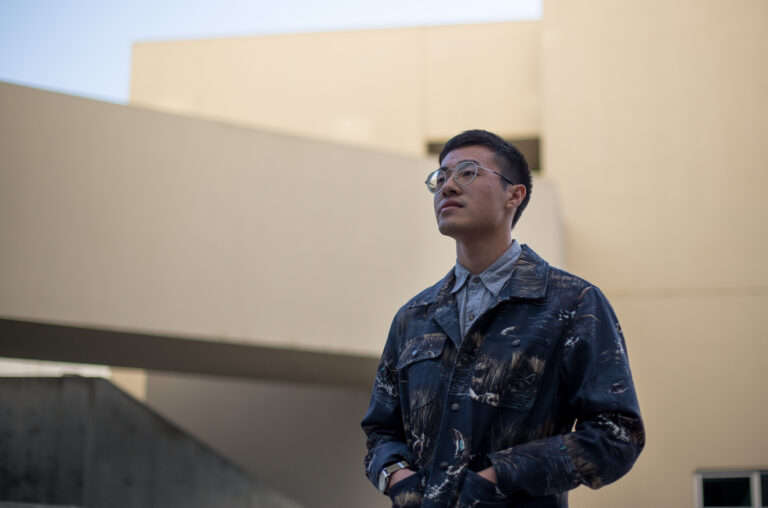
The smell of menswear is in the air as fashion enthusiast and raw denim junkie, third-year electrical engineering major Jasper Siu, gives MUSE the inside scoop on his personal style and how to do menswear his way.

In this week’s edition of Campus Chic, let’s talk raw denim. If you like your clothes nice and clean, raw denim is not for you because these jeans are all about getting down and dirty. Think of them as a blank canvas awaiting to be painted by the colors of your daily experiences or a caterpillar anticipating its metamorphosis into a majestic butterfly after undergoing countless trials and tribulations. If you’re up for the challenge, you will be wearing these jeans everyday without a single wash for up to six months or even an entire year.

A word from the wise: Febreze is your friend. Hang your jeans and spray on a reasonable amount of any air freshener you have to temporarily reduce the odor of the garment. Another way to deodorize your jeans is to secure them in a Ziploc bag and freeze them in order to kill off the bacteria producing the odor. Remember to beware of rain and water as the indigo dye from your jeans can bleed into your white shirt or shoes. Roll the hems of the pant leg to prevent water from reaching your shoes and to show off the selvage detailing of your jeans. After your six months (or year) are up, wash your jeans and you will end up with a beautiful pair of pants customized with every fade and flaw created through all the day-to-day happenings of your busy life. Like Siu says, they truly are your second skin.

James’ Notes: For all the raw denim enthusiasts out there, it might be a better idea to opt for a nice pair of chinos or tailored trousers when going on a date or a job interview. No one needs to smell those dirty jeans of yours, especially not your boss.

Q&A with Jasper Siu

1. If you could describe your personal style in three words, what would they be?

Clean, simple and dark.

2. What are your three must-have items in your wardrobe?

Raw denim, a plain white crewneck T-shirt and a blue Oxford button-up.

3. What do you love about raw denim?

Everything really. First of all, just the fact that it looks better as it ages over time. It’s pretty much like your second skin. As you wear it, you have a small story behind every fade, like a wallet fade or pencil fade. My old pair had my driver’s permit on my left back pocket and even that left an imprint. I like the stiffness behind [raw denim], really. After going back to trying out normal jeans, they kind of felt like sweatpants. They’re just so soft and they didn’t feel like the true jean.

4. How do you maintain your jeans?

I’m more into slim fits so, if I find that it doesn’t fit me on the first wear, I’ll pre-soak it and have my sister tailor it for me. The first soak is to just get the extra shrinkage out and then you just wear it from there. The pair that I’m wearing right now are from United Stock and they fit me fine on my first wear so I’m just going to wear them and wash them in probably another few months.

5. What is your favorite accessory and why?

My Timex weekender watch. It’s my favorite because it’s also a functional accessory. I’m constantly checking it during the day and especially during testing time, so I can manage my time better.

6. Where do you love to shop and why?

For my basics, I like Uniqlo because they have reasonably priced clothing and the quality’s pretty decent. They pretty much have everything you would ever need if you’re looking for something simple.

I also like Supreme a lot because they have really unique clothing and they really held true to what they’ve been doing. They have a lot of designs that don’t follow the norm and they’ve always been very futuristic and ahead of the game. There were a lot of prints that they’ve been doing a few years ago, like full artwork/graphic tees, and people weren’t quite into that when they were doing it; but right now, a lot of the high fashion brands, like Givenchy, are doing the same thing, but [Supreme] had already done it.

7. What is your most treasured item in your wardrobe?

It would have to be this Supreme jacket that I’m wearing now. I remember when I first saw it in the lookbook that came out, I was in the airport on my phone and was like, “What is this? I have to have it!” No matter how much it cost, I was gonna get it.

8. What items do you recommend our readers to incorporate in their wardrobes for the fall season?

Casual vests. It’s a great piece that’ll keep you warmer that doesn’t cover the rest of your outfit but rather adds on another layer.

9. What final tips can you give to our fashion-forward readers?

I know as college students we’re on a tight budget, but sometimes spending a little more money on the essentials can make a big difference. For example, a good leather belt can last you forever, and will look better as it ages if maintained well.