54.5 F
Davis

Davis, California

Sunday, January 11, 2026
Home Blog Page 907

News in Brief: Davis does Dia de los Muertos

0

Davis will participate in the Meso-American festivity of Dia de los Muertos with three different events that Davis Downtown, the Davis Cemetery and the University will all host.

On Oct. 31, the second annual Dia de los Muertos celebration will occur in the E Street Plaza from 2 to 5:30 p.m. Attendees can enjoy a Dia de los Muertos procession, dance performances and a community altar organized for the El Dia de los Muertos Celebration.

At 4 p.m. the El Dia de los Muertos procession will begin, starting from Tres Hermanas, located at 805 Second St., and ending at the E Street Plaza. Performers and costume wearers are encouraged to participate.

This year, Pamela Trokanski’s Dance Group will put on a flash mob performance of Michael Jackson’s “Thriller.”

Additionally, Davis will also be celebrate the lives of the dead on Nov. 2 from 11:30 a.m. to 4 p.m. at the Davis Cemetery, located at 820 Pole Line Road.

Davis will be celebrating the life of internationally departed scholar Jack Forbes in a celebration of his life and work through Dia de los Muertos. Jack Forbes was a Native American scholar who was responsible for the establishment of the Native American studies program at UC Davis.

Along with recitation of Forbes’ poetry, burial site blessings and speeches about his life and work, the event will also include elements from previous Dia de los Muertos events. There will be an altar viewing beginning at 11:30 a.m., joined by Mariachi Tramontin, Native Drumming and Flute Music, and Mexican hot chocolate will be served until 4 p.m.

Lastly, UC Davis will also be holding a Dia de los Muertos event, Nov. 1, from 6 to 8 p.m., on the first floor of Sproul Hall.

The event will be sponsored by the Department of Spanish and Portuguese and Chicana/o Studies. Students will participate in the ritual ceremony with poetry readings and remembrances of the departed.

This Day of the Dead Altar and Celebration is dedicated to the life of poet and artist José Montoya, who passed away earlier this year, and students will recite his poetry at the event. Pan de Muerto, a traditional bread eaten this time of year, horchata and other drinks will be served as as refreshments.

 

SmartSite: How it helps, how it hurts

Replacing MyUCDavis in 2005, SmartSite is the current course management system here at UC Davis. Sakai is the underlying, open source software for Smartsite hosted through the outsourced vendor Asahi Net International.

Andy Jones, academic associate director of Academic Technology Services, said in an email that Sakai is “the community source collaborative learning environment that provides the code and ‘engine’ for our SmartSite.” This means that software developers at other schools from around the country can contribute tools and applications that we can use on SmartSite. UC Davis’ software developers are responsible for the Gradebook2 application.

SmartSite is one of the most heavily relied upon tools that instructors and students use to keep track of their courses.

“SmartSite is used in the vast majority of all UC Davis classes, and in almost all large-enrollment classes,” Jones said.

As such an important tool in students’ everyday lives, there is a lot of dependency placed on it, and this dependency is a real issue when SmartSite’s routine maintenance goes wrong.

The most recent example of this problem is the incident that occurred during SmartSite’s maintenance on Oct. 18 that caused access issues through most of the weekend.

“There was something that went wrong with that maintenance that wasn’t detected until Saturday. So it was down from about seven in the morning Saturday until mid-afternoon Saturday; and then, although it seemed to be corrected, it occurred again Sunday,” said Steve Faith, the instructional technology coordinator of Academic Technology Services.

Asahi Net International hosts and performs maintenance on Smartsite when something goes wrong.

“They can’t always tell us when it’s going to be fixed because they don’t always know what’s wrong,” Faith said.

UC Davis used to host SmartSite personally, but it was cheaper to outsource this duty.

The general consensus about the occasional downtime with SmartSite is frustration.

“It’s just a hassle for the student to have to deal with all these problems with SmartSite,” said Dung Nguyen, a fourth-year English major. “The teacher had to push back the deadline (for my homework). It was a hassle for her too … my homework was almost late and I had to talk to my teacher about the problems I was having.”

Though SmartSite may seem unevolved, it receives regular updates to enhance it.

“The SmartSite team updates the system regularly to maintain security and provide patches,” said project manager and developer Constance Fuller in an email interview.

According to Fuller, they are working on the deployment of a new, streamlined user interface that may be available to enhance tablet and phone usage.

“As time has gone on, it has not evolved as well as other products that are in the same category that SmartSite is,” Faith said.

According to Jones, the SmartSite team is “considering future learning management system alternatives to Sakai that might better adapt to the needs of its users.”

“[We’re also] looking at a new partial GUI (graphical user interface) change to SmartSite,” Faith said. “It’s going to be called NeoPortal.”

Faith said the new GUI would make it easier to get to your courses than it is now. Though it might not be called SmartSite, it can be expected in the next couple of years.

SmartSite is a great resource for classes but it can also be useful for clubs as anyone can make their own page. It is also customizable to the needs of the instructor, the class and anyone else who uses it.

Fuller said Faith and his colleague, Fernando Socorro, lead training sessions every week for those who need assistance with Smartsite.

So as Aggies look ahead to see what new course management system awaits, we can still use SmartSite to our best abilities and hope we don’t experience anymore downtime.

Athlete alumni found Davis-based company

0

Three UC Davis alumni have used their personal experiences as student athletes to contribute to the niche market of college recruitment through social media.

Fuse Athletics started as an idea for a mobile app, and turned into an online social platform for communication and management between high school athletes and college recruiters. They are now supported by local business accelerator Davis Roots which aims to keep local startups in town.

Having respectively played collegiate level football, swimming and basketball at Davis, the founders Ethan Garrett, Hudson Lofchie and Andrew Ritchart knew how difficult recruitment could be.

Garrett, the chief executive officer of the operation, graduated UC Davis in 2012 with a degree in environmental policy analysis and planning. He played high school football but had never heard of UC Davis until he and a classmate tried out during their senior year.

“I would have never been seen [by recruiters] if I had not come to Davis’ football camp,” Garrett said. “What if I went to a different football camp? It’s all about being visible and in this social world you have to have an online presence.”

Garrett said that they knew that a lot of coaches’ email addresses and phone numbers are hidden from potential athletes, so Fuse Athletics partnered with a company that supplied collegiate information for every division and every league.

“Kids can go and search by sport, state, division, conference, gender or school along with the contact information, which is encrypted like Craigslist,” Garrett said.

Over eight months, they interviewed college coaches and high school athletic directors, built their website and received an initial investment from their co-founder and chief financial officer Doug Coats. In September, they were accepted by Davis Roots, and are now one of four UC Davis alumni startups in the program.

General manager of Davis Roots Alex Rossbach graduated from UC Davis in 2012 with a degree in political science and also swam collegiately. As a former college athlete, he understood the company’s concept.

Garrett mentioned that Davis Roots decided to support the company after calling it a “Linkedin for sports.”

“For me, coming from a swimming background, [the recruitment process] was about who your coaches knew and not about how good you were all the time,” Rossbach said. ”When [Fuse] came to us with their product, team and idea, it really resonated with all of us because it was easy to see there is a problem with this market … and they’re trying to democratize that process.”

Davis Roots, founded in 2012, was created out of a need for economic vitality in the City of Davis.

“One of the big problems we’re tackling right now is that there are no real jobs in Davis for graduates,” Rossbach said. “We see this mass exodus from Davis to the Bay Area because there’s a lot more opportunity there. Our whole mission is to create financially-sustainable companies to help Davis grow and inspire other students coming out of the university.”

Davis Roots is a mentorship program for startups, to aid them through the steps of business development. The founders, Andrew Hargadon and Anthony Costello, provide the companies contacts to investors and local entrepreneurs, office space in Davis, workshops in public relations and marketing and act as advisers to each company in the program.

The idea of social media recruitment tools for high school athletes is not new, and Fuse Athletics faces competition from websites like beRecruited.com, which was founded in 2000, boasts a userbase of one million and is based in San Francisco.

Fuse Athletics is currently contacting athletic directors of local high schools to be part of their beta phase of development for private trials. Dixon High School and Davis High School have already committed.

“There are cases where it could fail, ” Garrett said. “But we see [Fuse Athletics] going well during the beta and we see this getting pushed nationwide.”

Due to internet accessibility, Garrett, Lofchie and Ritchart fear that widespread use may be overwhelming, and with some funds raised through the Davis Roots program, they plan to hire UC Davis students for web programming and customer service. They have also worked with the University Writing Program department to offer writing internships for basic web content.

“We had offers to go to San Francisco, [and also] to bring the company down to Santa Monica, but we want to be here because UC Davis has so many smart kids,” Garrett said. “The ultimate goal of having this is to keep more UC Davis graduates here. We just want people who are excited to dream big.”

According to Anthony Costello, co-founder of Davis Roots and current adviser of Fuse Athletics, it is important, as a business accelerator, to invest in not only a worthwhile business idea but also the team that is executing that idea.

“Companies have to learn how to get comfortable with making mistakes, how to hire the right people, how to ask for help and how to raise money,” Costello said. “But what you really can’t teach people to have is passion for their market or passion for their idea. For me it’s feeling passionately about what you’re trying to do as a business that makes the difference between being successful and failing.”

This Week in Senate

0

ASUCD Vice President Bradley Bottoms presided over the Oct. 24 meeting. The meeting began at 6:20 p.m., with Senator Yee Xiong absent.

Jay Chou, director of ASUCD Specialized Transportation Services and Tipsy Taxi supervisor, announced that cameras will be installed in all Tipsy Taxi vehicles by winter 2014. This will ensure both driver and passenger safety. The cameras can also be used to record any verbal disputes or customer dissatisfaction.

An ASUCD bill to fund the Students of Color Conference (SoCC) was passed by the Senate.

SoCC is an annual conference hosted by the University of California Student Association (UCSA). The three-day conference promotes dialogue between students and raises awareness of issues that affect those of color. UC Davis is not a member of the UCSA and does not fund its students attending the conference. Most other UCs are members and cover all conference costs for their students.

The Senate Bill was proposed to cover most of the travel, lodging and registration fees of UC Davis students participating in the conference. The bill was initially sent to Vice President Bottoms and asked for a total of $3,000. After review from the Business and Finance Commission (BNF), the bill dropped its asking price to $2,500. It was then brought before the Senate with a BNF approval and Ethnic and Cultural Affairs Commission approval.

Those in Senate favoring the bill praised the conference’s merit as an outreach event for UC Davis students. Senators not in favor of the bill noted that it is also receiving funding from the Club Finance Council (CFC).

“The CFC is also funded by ASUCD, so they’re essentially ‘double-dipping,’” Senator Ryan Wonders said.

The bill, however, passed by a close 7-3-2 vote. The money will be taken from the Senate’s $12,800 reserves.

The meeting was adjourned at 11:01 p.m.

— Atrin Toussi

Experimental College confronts $40,000 deficit

0

The Experimental College (eCollege), an ASUCD unit, lost $40,000 from its independent reserves due to a struggling market for its classes. The Experimental College, founded in 1966, offers classes based around movement, such as yoga, kung fu and dance that are not otherwise offered in the school system.

“We are currently in a situation where our reserves have run low and may not be able to support us through the end of the year,” Experimental College office coordinator Hannah Moore said in an email interview.  “ASUCD does not have the ability at this time to help us financially while we work on new strategies.”

The loss of funds began in 2007, said ASUCD budget controller Eric Evans, when Campus Rec began to push their classes which were similar to the eCollege.

“The Experimental College hasn’t adapted to the market yet and is now playing in a new field,” Evans said.

The eCollege currently has $15,537 in reserves. It is projected to lose about $23,000 by the end of this school year. Evans said that ASUCD is working with the eCollege to increase their profits so they will hopefully break even by the end of the year instead of going into a deficit.

In order to prevent the projected loss from happening, cuts and improvements have been made to the eCollege overall. These include cuts in course printing, staffing positions, pay for instructors and staff and complete cuts of classes at the eCollege that have not been making money.

There has also been a change in the split between funds made from eCollege classes. In winter 2013, the split changed from 70-30 to instructors and funds to ASUCD respectively, to a 50-50 split.

“The cost of managing the previous split was more than the college could afford,” Evans said.

In an effort to gain funds, the eCollege has been working with ASUCD unit Creative Media and the new marketing department ASUCD funded this year.

“This year we have been working closely with the Creative Media Marketing unit to produce materials that are visually consistent and creating new marketing plans,” Moore said.

Creative Media has helped eCollege come up with a new design for advertisements and they have also redesigned their website. This was the first major project given to them because it required participation from all aspects of Creative Media; marketing, design and programming.

Creative Media Director Alex Park spoke about the changes the program has made for the Experimental College.

“We made the Experimental College’s identity able to show more through their website,” Park said. “We also made designs based off of their culture.”

A large benefit of the new website is that registration is now easier than before.

“Our biggest asset that is currently being worked on is our website.  It will make online registration easier and be on whole an experience tailored to user ease,” Moore said. “We are focusing on discovering what it is that our students want to see and then filling that need.”

The long-term marketing plan for the eCollege is to advertise with their new designs, put up signs in Unitrans buses, table at events and reach out to faculty and students about their classes.

“We are taking this as an opportunity to reach out to the campus and community to conduct focus groups on what types of learning and courses are of interest and where there are educational gaps on campus,” Moore said.

There is also a new Try Before You Buy option for eCollege classes, which means members can try out a class for free to get a feel for whether they want to buy a pass.

“We are trying a lot of different ways to help the Experimental College advertise and bring in new more members,” said marketing department co-director Nick Dias.

Dias said the eCollege is also going to incorporate cultural literacy classes into the curriculum. This will be done by having a handful of cultural clubs on campus teach classes to raise awareness on different cultures. The eCollege will also teach free classes in dorms to raise awareness of their programs.

One aspect of the college that has continuously raised funds has been the eCollege garden. Here, anyone who wants to garden can rent out a plot to grow vegetables and plants of their choice.

“Garden spots have almost always been fully sold,” Evans said.

Second-year human development major Jade Lewin and second-year evolution ecology and behavior major Jenna Huxley share a plot in the Experimental College garden.

“I’m thankful to have the opportunity to cultivate a piece of land and make it my own, engaging in the process of transforming a weeded plot into a full-blown garden, as well as a nice place to read or do homework,” Lewin said.

“It’s been a great place for peace of mind because it’s so different in there than the rest of Davis. It’s definitely my safe haven,” Huxley said.

The marketing department and ASUCD will continue to work closely with the eCollege until results from their efforts can be seen in winter 2014.

“As with other projects within ASUCD, this is an incredible opportunity to make huge changes,” Evans said. “There is a very broad horizon here.”

Yolo County food programs aim to educate community

0

Woodland-based Yolo Food Bank (YFB) works year-round to provide those in need with food. It serves Yolo County through a variety of programs such as Friday’s Table and the Kids Farmers Market. Fresh produce comprises a significant portion of the items offered, allowing families to cook at home.

Alongside YFB, the Yolo County Department of Agriculture is also reinforcing the importance of food through community projects.

According to Kevin Sanchez, executive director of Yolo Food Bank, a sea of canned goods is typically the first image conjured when the topic of food banks comes up, but that’s entirely wrong. Sanchez is working towards improving access to fresh produce and starting food education early in the school system.

Yolo Food Bank

A line forms at 4 a.m. every Friday outside YFB’s warehouse in Woodland, three hours before distribution begins. People file through, picking up one type of item at each station, and leave with about 25 pounds of food. This includes three to four loaves of bread, pick-ups from Whole Foods and Trader Joe’s and produce donated by regional farms such as Durst and Food Bank Farmers.

Cordellia “Corkey” Mapalo of YFB mentioned that on account of there being only three paid warehouse staff, “[YFB] relies heavily on volunteers.”

Sanchez agreed on the importance of volunteers and encourages UC Davis students to reach out.

He then gestured to the cars in the parking lot, which was full of year 2000+ models. Nothing about the composition of this parking lot gave any indication that it was a food bank.

“Look at these cars,” Sanchez said. “There is no category to put these people in.”

There is no “type” of person who goes to food banks, Sanchez explained. The only thing the people in line have in common is that they’ve reached a point in their life where they’re forced to prioritize and make decisions to keep or let go of things previously taken for granted.

In addition to giving out food at Friday’s Table, YFB runs a Kids Farmers Market at several Yolo County elementary schools. It is an afterschool activity where the school pays for the produce in advance, then students receive play money and “buy” 10 pounds of fresh food to take home. A gap in basic food knowledge sometimes makes itself apparent during these visits.

“Some things will give you goosebumps. When I would do outreach to schools, some kids didn’t know what a potato was, because they had been eating McDonald’s their whole lives,” Mapalo said.

With 19 percent of people in Yolo County living below the poverty line, fast food presents itself as a cheap way to pack in as many calories as possible. This leads not only to adverse health effects, such as obesity and Type II diabetes, but also contributes to a deficit of agricultural literacy within a community where farming is the principal industry.

Farm-to-School

Another group tackling this issue is helmed by John Young and Nicole Sturzenberger of the Yolo County Department of Agriculture. They are the administrators of the Farm-to-School Yolo Grant, and serve as mediators between farmers and schools.

“A lot of the difficulty … is mostly logistics, getting the people to connect and getting them to know that there is this market available for them…” Young said. “The farming world and the school food service world are completely separate; you need a relationship in order for that to happen.”

Sturzenberger added that the relationship is key, and that trust has to be built into the system.

Young went on to say that although the parties involved in school food service unanimously agree that fresh local produce needs to be on lunch plates, school food service administrators face a fiscal reality.

“When you’re dealing with the school cafeteria, that’s a separate business, they don’t get any money from the budget of the school district,” Young said. “They are on their own to make sure that they’re self-sufficient, so the bottom line becomes important.”

Reconciling local produce and a tight budget is an issue that Farm-to-School faced by starting small. Young and Sturzenberger started “Harvest of the Month,” a project where Yolo County schools feature a seasonal fruit or vegetable every month.

“Basically, farmers sit down with directors and tell them ‘This is what we’ll have in season, this is what we produce very well at the cheapest possible price,’ then the food service director will commit to buying part of the harvest of one fruit or vegetable every month,” Young said.

Community involvement

The ultimate goal is a return to seasonality in Yolo County, coupled with the collaboration of retailers, institutions and families. Local chain Dos Coyotes participated by offering asparagus quesadillas in April earlier this year. Young and Sturzenberger expressed a wish for other businesses to follow this example.

There is no other Farm-to-School grant program in California; it is unique to Yolo County. However, the office of the Agricultural Commissioner is currently in the process of writing a guidebook to help other counties follow suit.

Georgeanne Brennan, an award-winning author and Anne Evans, cofounder of the Davis Food Co-op, are working on the guidebook and contributing seasonal recipes for schools to make on an industrial scale.

“There is a history of being progressive … sometimes [there are] a lot of meetings, a lot of talking about what we should do, but Yolo  County puts that into play, we do it,” Young said. “We listen, we enact things. It’s not just talk.”

More information can be found at yolofoodbank.org/givetime.

Massage therapy and counseling could aid students’ success

0

Laptops are an ergonomic disaster, according to a display in the physical therapy office of the Student Health and Wellness Center (SHWC).

Midterms and essays can result in problems for students’ health, but emotional stress is the cause, not the effect. According to Jill Nelson, a massage therapist at the SHWC, the downward position in which most students look at their laptops engages back and neck muscles, often for extended periods of time. Pain and injury in the back and neck are the most common reasons clients visit her.

“There’s the physical pain of actually doing schoolwork,” Nelson said.

On top of unfortunate laptop designs, Nelson pointed out that many students ride bikes in a way that isn’t optimal. They also carry heavy backpacks and have to sit in the mass produced, non-adjustable classroom seats.

“If you have pain it’s not gonna go away until you are proactive in taking those steps to actually relieving [it],” Nelson said.

Nelson’s profession, massages, is oftentimes a treatment for pain caused by these daily habits, and are available at the SHWC at $30 for 30 minutes or $40 for 45 minutes.

On the strictly physical side, massage is known to improve blood circulation, reduce stiffness in muscles — especially after working out — and help tone and stimulate muscles for greater flexibility and mobility.

Ultimately, it benefits physical health, lowering blood pressure and also mental health by reducing the stress hormone, cortisol.

According to Nelson, mental and physical health are not mutually exclusive. If they occur, they can occur in cycles, one triggering the other.

“To get a bad grade and fail a class could cost somebody a whole year of tuition and rent. It’s a lot to internalize. And that’s what most people do. They internalize all the stress that they have and it manifests itself in some type of pain,” Nelson said.

The people who see Nelson are generally already in pain and looking for relief. Whether the pain is physical, mental, emotional or any combination thereof, the SHWC has several resources that can aid in recovery or prevention.

Henriette Bruun, a physical therapist at the SHWC, works primarily with people who are already injured, and stated that she’d like for people to learn skills to protect themselves from preventable injuries.

“If I could get hold of the freshmen on campus before they hurt their necks and their lower backs and I could show them study positions and that kind of stuff before they already get in pain, that would be beneficial for their wellness and success as a student,” Bruun said.

Emily Hartley, who works as a therapist in Counseling and Psychological Services (CAPS), provides people with possible prevention methods by combating emotional stress. She also provides counseling and therapy to students, aiding them in dealing with stress.

“If you can find a way to slow down that’s usually really helpful. Part of our culture and certainly part of us being on this UC campus is to go really really fast, and there’s a lot of pressure and it doesn’t lend itself to self-care,” Hartley said.

Hartley coordinates the Stress and Wellness Clinic and the Mind Spa, both of which are free to UC Davis students. Students can use a biofeedback program to help train their brain to recognize and deal with stress and also enjoy a massage chair.

“I can teach them mindfulness skills. I can teach them how to slow down, how to regulate breathing. I can teach them how to work with their thoughts, so if they start having these thoughts like ‘I’m gonna fail, I’m gonna fail’ there’s something we can do about it,” Hartley said.

Watts Legal

0

Question: I’m scared of one of my neighbors. Everyday, the creeper hangs on a sign on my front door. It has his phone number, and he asks me to call him, calling me a “cutie” and saying he wants to be my “special friend.” I haven’t responded. He hasn’t said anything violent. If anything, it seems he likes me too much. Can I get a restraining order to make him stop, or does he have to threaten me first? Should I call the cops?

– Anonymous, Davis, CA

Answer:
You can get a restraining order for all sorts of things. You can use it to stop violence, but also to stop people from harassing you. In other lawsuits, a court might issue a restraining order to stop the police from enforcing an unconstitutional law or to stop an execution of a prisoner. A restraining order is meant to preserve the status quo. It’s supposed to restrain a person from acting in a way that would substantially alter the relationship between you and the person you’re suing, causing you irreparable harm before a lawsuit even has a chance to get started. For a business dispute, that could mean a restraining order preventing the CEO from spending all the company’s money before the case gets to trial. In a domestic squabble, it could mean restraining a husband from beating his spouse to death before their divorce is finalized.

Of these several types of restraining orders, two might apply here.

The first type is a “domestic violence” restraining order, which is used to restrain family members, roommates or people you’re dating or used to date. The restrained person doesn’t have to be your spouse; any close relationship with the perpetrator is enough, if the person has committed unlawful violence against you. You can also restrain someone close to you if they’ve issued just a credible threat of violence or knowingly and willfully engaged in a course of conduct directed at you that seriously alarms, annoys or harasses you, as long as those things serve no legitimate purpose. For example, if they repeatedly phone you at 3 a.m. every night, that’s seriously annoying. But if they’re phoning to warn you because they see a burglar trying to break into your house at 3 a.m., the phone calls serve a legitimate purpose. There’s no master list of things that constitute a “legitimate” purpose. It’ll be up to the judge to decide.

Since you didn’t say whether you dated or are related to the stalker, it sounds like the second type of restraining order would apply. It’s called a civil harassment restraining order, and it’s used to prevent neighbors, strangers and regular friends or acquaintances from stalking or harassing you. Once again, “harassment” must consist of unlawful violence, a credible threat of violence or a knowing and willful course of conduct directed at you that seriously alarms, annoys or harasses you, and that serves no legitimate purpose.

A court can issue a civil harassment order if your stalker has engaged in any series of acts over a period of time — even a short period of time — that demonstrate a continuous purpose to harass you. Examples of conduct would include following you, stalking you, making harassing phone calls or sending harassing correspondence to you by any means, including electronic messages. The messages posted on your door would definitely qualify. For that matter, repeated emails, Twitter messages sent “@you” or Facebook messages could also qualify as harassing correspondence.

The messages have to be really annoying, though. They must be so annoying or disturbing that a reasonable person in your situation would feel substantial emotional distress. Not only that, but you yourself must have actually felt emotional distress. If you’re tougher than the average person and these messages didn’t really bother you, you can’t get a restraining order.

In addition, courts like to see that you’ve made a good faith effort to stop the harassment. Try hanging a poster saying, “No trespassing — do not hang posters here or I will call the police.” If he does anything else crazy — like sending you repeated text messages, calling you at 7 a.m. to accuse you of messing with his Facebook or sending you screenshots of disturbing emails he’s sent to your family to terrorize them — you’ll still probably need to show the court you took some steps to prevent the harassment. In these examples: Block him on Facebook, send a single text telling him “stop contacting me or I will get a restraining order” and don’t answer his calls. If you’ve done all that, you’ve got a good shot at getting a restraining order, which can last for up to three years. Violating the restraining order will get the stalker arrested and sent straight to jail if you call the police on him.

This should go without saying, but I want to be clear: if this guy ever threatens to hurt you, call the police before doing anything else. People are crazy.

More information on restraining orders are available at yolo.courts.ca.gov/RestrainingOrders/

UC president visits Davis campus

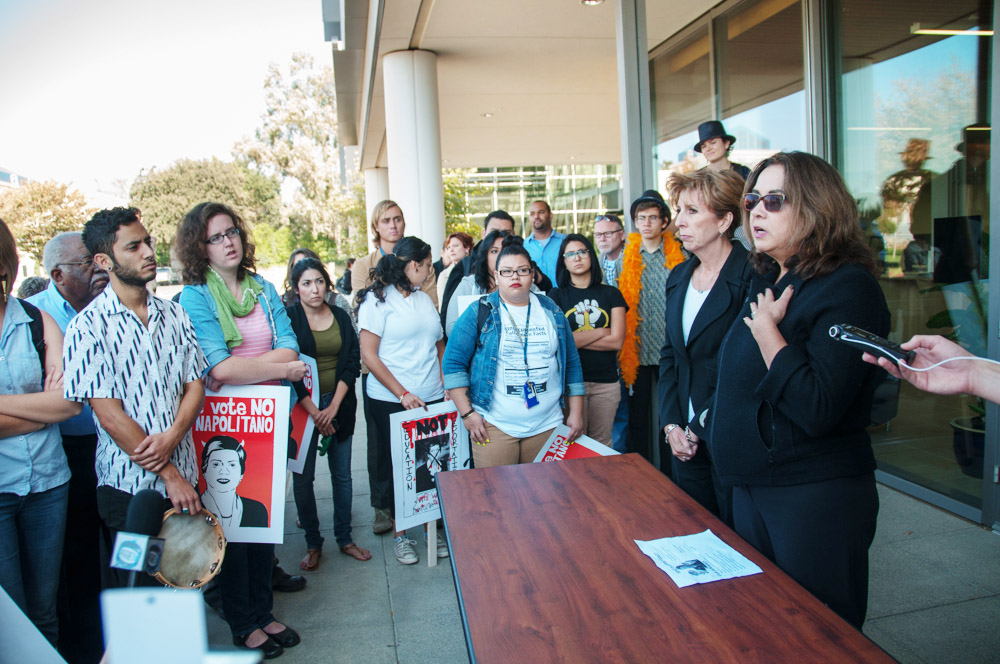
On Oct. 24, UC Davis student leaders and representatives met with University of California President Janet Napolitano in a closed meeting.  Napolitano spent two days at UC Davis to meet with students, faculty and the administration as part of her listening and learning tour of all the UC campuses.

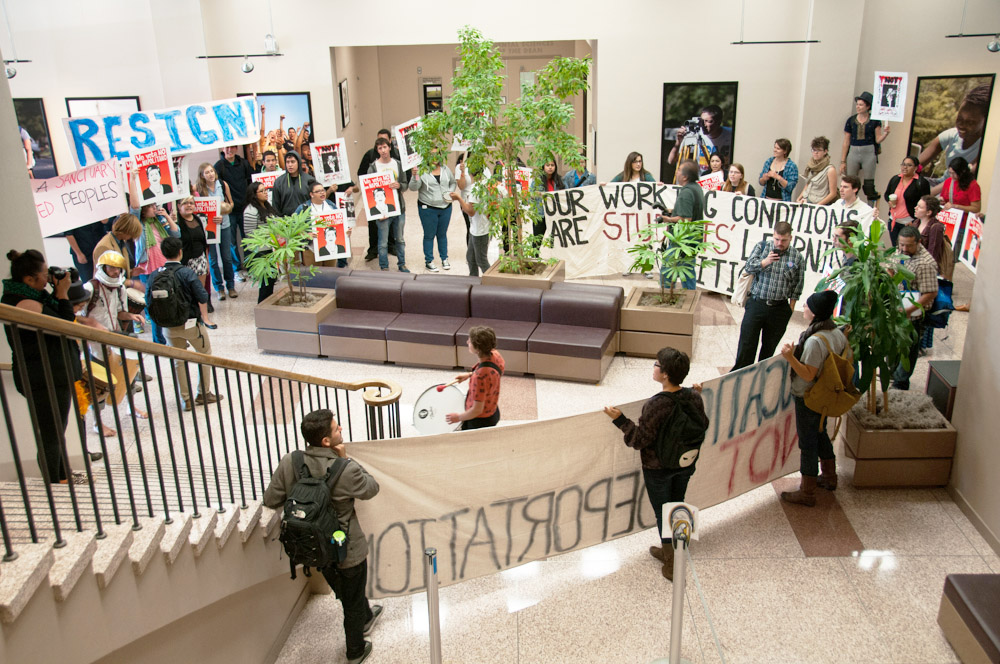
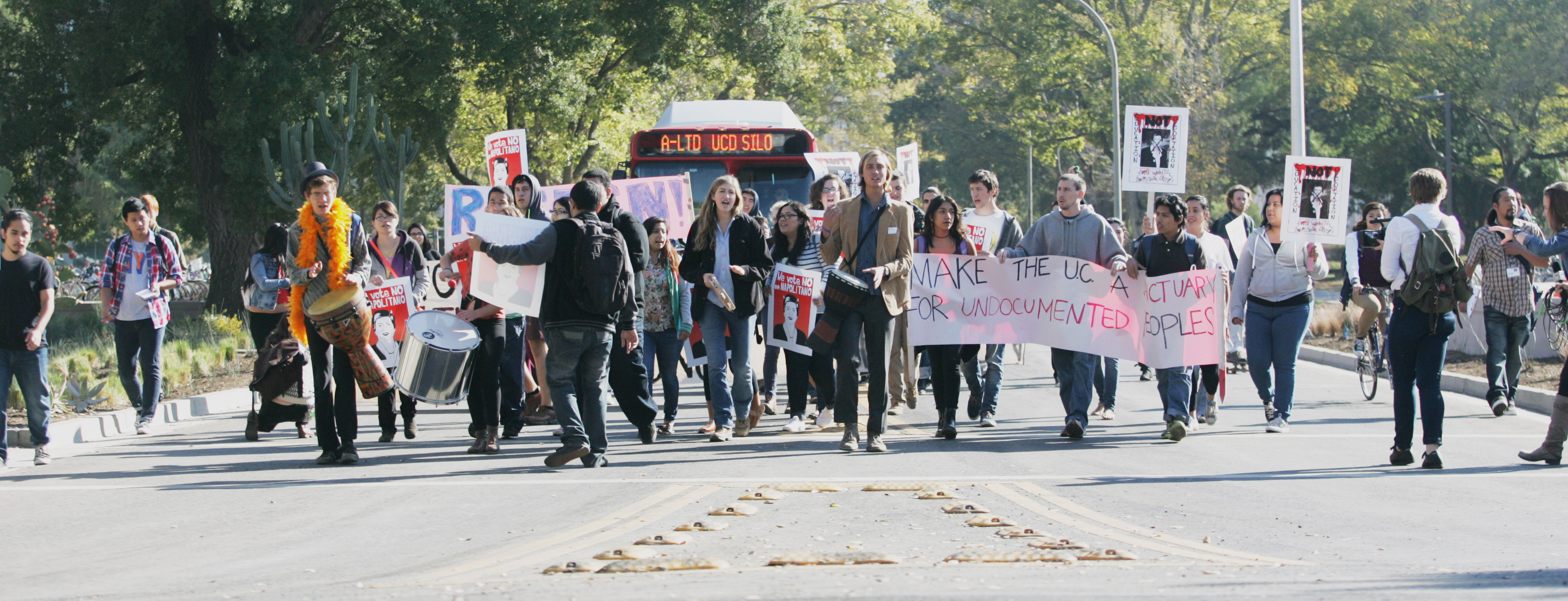
UC Davis students and teaching assistants protested the visit from the newly elected UC president, which began at the Memorial Union and ended at the Welcome Center.

Students raised issues and concerns such as the campus climate, retention rates, support for undocumented AB540 students, and lack of student input in many of UCOP’s policies.

Napolitano opened the discussion by introducing herself and providing her professional background. She was previously the Secretary of Homeland Security and a two-time governor of Arizona.

“I’ve had a lot of experience managing large, complex public institutions,” Napolitano said. “What I can do is the nuts and bolts — how many, how much will it cost, are we attracting students in various fields that we want to attract.”

She also expressed interest in a continuance of these meetings to expand her knowledge of the student issues.

Napolitano urged students to continue working in their capacity as student leaders to organize students and lobby for the issues they are advocating. Her power as president is largely limited to UC-wide policies. She has initiated a top-down and bottom-up efficiency review in the time she has been president.

“You would be surprised by how many people look at a piece of paper before a decision is made,” Napolitano said. “It’s hard to ask the taxpayers to give us more money without showing that we are making the most of their money.”

Protesters are upset about the lack of transparency in Napolitano’s actions. They question the lack of student democracy involved in how Napolitano came to office and how the student representatives were decided.

“Janet Napolitano? Where did she come from? What business does she have at the UC and why weren’t students given a voice in her representing the university?” asked Rebecca Hernandez, a fifth-year political science major.

Chancellor Linda P.B. Katehi claims that Napolitano was elected through the traditional process. According to Katehi, UC Regents created a group led by the chair of the board. This group spoke with UC chancellors and an advisory group from the Senate and together eventually selected the UC president from a long list of nominations. Katehi claims that neither the chancellors nor the Senate voted for the president.

“The chancellors did not vote; the Senate did not vote. This is not a unique process for the UC system. It’s a process that many other universities are following. There is no vote that goes,” Katehi said.

According to Adela de la Torre, UC Davis vice chancellor, the student body president and different campus groups nominated the students who were able to speak with Napolitano. Katehi claims that due to Napolitano’s strict schedule meeting with other university representatives, she had no control over the process for Napolitano’s student conference.

Protesters are also concerned about the safety of undocumented students and workers on campus due to Napolitano’s history as the former U.S. Secretary of Homeland Security.  Protesting students demand Napolitano make campuses across the UC system sanctuaries for undocumented students and workers to protect them against deportation.

“We want our undocumented students to be safe. We want the UC system to be a safe space for them so they won’t be scared to even attend classes,” said Abrahan Tapia, a fifth-year psychology major.

Protesters also demand undocumented TAs receive the same benefits as those who are documented.

“There are some TAs out here who are also undocumented that don’t get the same pay that regular TAs do. They also don’t get the same benefits, like health care, because of them being undocumented,” said Ilse Lopez, a second-year.

For Guadalupe Espinoza, a second-year human development major, Napolitano’s deportation record is disconcerting.

“During her term, there [were] more deportations in history. It wasn’t just the deportations of criminals, it was the deportation of families, it was the separation of families and there was deportation of AB 540 students,” Espinoza said.

According to AB 540, undocumented students are unable to qualify for financial aid, both state and federal, such as FAFSA money or BOG waivers due to not having a legal status in the United States.

“For people who are trying to access the American dream, part of that is education. And a means of that is a public institution, like the UC system,” said Marissa Cuevas, a fourth-year sociology major.

Due to a recent University contract that cut into the wages and pensions of UC workers, members of the UAW Local 2865, the TA union, are fearful of the same cuts happening to them.

“They’ve already sent the message that they don’t care about their AFSCME workers by implementing an unfair contract. What are UAW workers going to think is going to happen to them?” Hernandez said.

For Duane Wright, a member of the UAW Local 2865, he’d like to see Napolitano implement better working conditions for TAs. According to Wright, TAs are overworked with too many students, which negatively affects the education of undergraduates.

“As a TA, if I’m overworked and have too many students then that’s going to affect my students because then they’re not going to get enough one-on-one time. I can’t give enough good feedback to them. I can’t provide the mentorship. I can’t be there for emotional support, etc. So our working conditions are their learning conditions,” Wright said.

Along with lower class sizes, protesting TAs also demand higher pay for their work.

“The UC prestige goes down when we have 500-person classes instead of a serious education. And it’s bad for graduate students who are overworked and have to choose between serving their students and getting paid a decent wage,” said Caroline Mckusick, a Ph.D. student in anthropology.

Due to Napolitano’s background, many protesters worry about an increase in surveillance on campus.

“One of the things we’re talking about is any surveillance on students and guaranteeing freedom of expression. Being able to freely protest or do sit-ins are becoming less and less okay on the campus, so we want to make sure we can continue to do that,” said Deirdre Morris, UAW Local 2865 member.

According to Torre, Napolitano is interested in making UC schools sanctuaries and implementing fair contracts for campus workers.

Future plans for protesters include supporting ASFCME 32999, the university labor union, if they vote to strike on Oct. 30.

“During the 2008 election cycle, UC workers spent even more than the university in support of Prop 30. The workers care about our education being funded than the university itself. It’s about students and workers standing together,” said Ian Lee, a third-year environmental science major.

According to Hernandez, Napolitano has seen major protests on almost every UC campus.

“This is not just happening at Davis. This is something that’s happened at Berkeley. It’s happened at UCLA. It’s happened at Irvine and Riverside. Students, UC-wide are upset. We want to put pressure and we want to make changes. This should be our university,” Hernandez said.

protest4_MishaVelasquez

protest3_MarkAllinder

protest2_MarkAllinder
Protest_MishaVelasquez

Harder, better, faster, stronger

Allow me to introduce one of the most curious and exciting technological innovations yet: Liquidmetal. Developed by material engineers at the California Institute of Technology, this state-of-the-art metal alloy is marketed by Liquidmetal Technologies and licensed by no other than Apple Computers.

Created through the rapid cooling of molten, multi-component metal, Caltech material engineers were able to evade the metallic tendency to harden into crystalline structures. Liquidmetal, also known as metallic glass, is an amalgamation of drastically different sized metallic and chemical elements, and it is this heterogeneity in part that allows Liquidmetal producers to bypass metallic crystal formation, which relies heavily on the specific order of atoms and a timely cooling process.

Liquidmetal alloy boasts a structural integrity twice that of titanium while matching the processing capacity of plastics, which is pretty much unheard of for metallic substances. These features alone mean that any device composed of Liquidmetal will be able to sustain harsher blows than titanium-swathed devices and be processed in a much more efficient manner.

Just to put the unmatched durability of Liquidmetal in perspective, current iPhones are made of aluminum, which is roughly half as strong as titanium. Do a little math, and this would mean that a Liquidmetal-clad iPhone would possess an exterior that is up to 400 percent stronger than current and past generations. Additionally, Liquidmetal’s excellent resistance to scratches and corrosion indubitably make it the best option for future handheld devices.

The rights to Liquidmetal were originally secured by Apple Computers for “Consumer Electronic Products” in 2010, and an extension on the lease was made within the last year, indicating that Apple will likely be fashioning the impending iPhone 6 housing from this superior material.


Attempted sexual assault in North Davis apartment complex

On Tuesday Oct. 28, a male suspect attempted to sexually assault a female around 10:30 p.m. in the 600 block of Alvarado Ave. near Anderson Rd.

According to a press release by the Davis Police Department (DPD), the female victim had returned to her apartment complex and parked her car when the suspect confronted her and attempted to sexually assault her in the parking lot. The female defended herself so she was able to escape from the attacker. Police arrived on scene shortly after, but were unable to locate the suspect.

Lt. Glen Glasgow from the DPD, said the police have a detailed description of the suspect which they are using in their investigation. However, they cannot release too much information at this time because it is an ongoing investigation.

The press release by the DPD states that the suspect was described as an African American male, 5’11” tall, weighing 220 pounds, a wide-set nose, bald with a salt-and-pepper beard and about 40 years old; the suspect was last seen wearing a black jacket and dark colored pants.

Glasgow said this seems to be an isolated event, and there hasn’t been an incident of this nature for while. “Its not part of a series of incidents,” Glasgow said.

Anyone who witnessed the event, or has any information that could lead to the suspect’s identity should contact the DPD at 530-747-5400.

— Paayal Zaveri

“WHAT art thou, Romeo?”: Review of recent Romeo and Juliet adaptation

2013 has been a big year for remakes of the classics for Hollywood. With Baz Luhrman’s long-awaited version of Fitzgerald’s The Great Gatsby and Joss Whedon’s modern interpretation of Shakespeare’s Much Ado About Nothing, it would feel incomplete without a fourth attempt at an adaption of Shakespeare’s Romeo and Juliet.

After so many recreations of one of the most epic and heart-wrenching stories of all time, with hundreds of modern adaptations of plays, books and movies, one would expect something more exciting and riveting than what Italian director Carlo Carlei produced in his recent version.

While it is conceivable to the viewer that Carlei was trying to maintain the original romantic beauty of the epic play without “hollywoodizing” or modernizing any of its aspects, he also ends up producing a relatively unemotional and entirely cliché version of what should be a tear-wrenching experience.

Even though it is set in breathtaking Verona, Italy, makes use of magnificent period-piece costumes and sticks avidly to Shakespeare’s original prose with only some original scenes cut out, the film ends up resembling a cinematic rendition of a high-school version of the play. Although all the actors in the film have had excellent reputations in previous movies, their projection of the famous lines seem either overly dramatic or without enough emotion in moments where the opposite effect would be desired.

For example, when Haylee Stansfield, Academy Award nominated actress for her gutsy performance in True Grit (2010), recites the most famous seven words of the play: “Romeo, O Romeo, wherefore art thou Romeo?” she does not give off the the impression of the tormented star-crossed lover that she is supposed to be, but that of a distant and non-attentive school girl.

This is not to say that other actresses have mastered this line, such as Claire Danes in Baz Luhrman’s 1996 Romeo + Juliet. In my opinion, she also gives a somewhat lame representation of Juliet, however, Luhrman distracts us from this with the powerful performance of Leonardo di Caprio as Romeo. The intensity of the love that he has for Juliet and the gutting sorrow he feels upon learning of her false death is truly felt in di Caprio’s delivery of the prose, whereas Douglas Booth’s delivery in this 2013 performance seems so forced that it renders his epic lines almost humourous.

However, all of the actors fit their roles — physically at least. Haylee Stansfield’s angelic and youthful face truly evokes the innocent beauty that one could picture Juliet having, with her long, dark Renaissance locks, and rosy cheeks that are reminiscent of a da Vinci painting. Douglas Booth also truly epitomizes the striking boyish courtliness that Romeo is described as having. Everything from his lips, lashes and bone structure emanate a Renaissance stud one would imagine Juliet would wholeheartedly fall for.

However, I believe that the true quality in this film lies in the acting of the supporting actors. Carlei chose a star-studded cast to represent his less relevant characters, most prominently Paul Giamatti, as Romeo’s confidant Friar Laurence. His performance accurately demonstrates the fatherly and friendly figure who guides Romeo into marriage with his beloved Juliet. Giamatti greatly conveys the friar’s undying optimism, seen through his hopeful attempt at uniting the Capulet and Montague families.

Beloved Gossip Girl star, Ed Westwick also makes an appearance as the fiery Capulet cousin, Tybalt. His uncontrollable anger towards the Montague family wonderfully manifests itself through a passionate display of a duel fight with Romeo’s cousin, whom he kills. Known for his fervent personality as Gossip Girl’s Chuck Bass, in Romeo and Juliet Westwick properly delivers this same beastly passion as the insubordinate character of the Capulet family.

Although aesthetically the film captures the Shakespearian charm of the epoch, this film lacks the creativity that has been so frequently seen in other reproductions. It is impossible to watch this film without comparing it to Luhrman’s 1996 version that was criticized by many Shakespeare enthusiasts for it’s destruction of the original setting. One could claim that at least Luhrman made a conscious attempt to change the frequently reproduced formula by exchanging Verona for the modern setting of South Beach, LA. However, Carlei didn’t even seem to try.

Perhaps it is because the classic, original love story has been reproduced so many times in so many different versions that I feel this way about the film. Carlei’s attempt at maintaining the purity of the original play, in a world that has been sullied with Hollywood’s latest modern additions, he only ends up producing a terribly cliché version of one of the most beautiful plays ever written.

DACA: Far From Immigration Reform, but not to be Ignored

0

The Deferred Action for Childhood Arrivals (DACA) program, which took effect on Aug. 15, 2012, continues to be implemented while Congress mulls over immigration reform. As stated in the United States Citizenship and Immigration Services (USCIS) guidelines, the initiative offers two years of protection from deportation along with work authorization for unauthorized youth, who are eligible if they “are between the ages of 15 and 30 (as of June 15, 2012); entered the United States before the age of 16; were physically present in the United States on June 15, 2012; have lived in the United States continuously for at least five years; are currently in school, have graduated from high school or earned a GED, or are honorably discharged veterans of the US armed forces or Coast Guard; and have not been convicted of a felony or significant misdemeanor; and do not otherwise pose a threat to national security.”

Although DACA offers merely a glimpse of true integration, applying is undoubtedly beneficial for those eligible. The most notable reason revolves around the conceivable passing of a new immigration law in the near future. As the most recent bill on the house table indicates, legalization will most likely be expedited for DACA recipients. However, regardless of whether this proposal is soon passed, DACA offers other significant and immediate benefits.

Beyond protection from deportation, the program not only provides increased economic opportunities, but also social incorporation for young adult immigrants. As stated in the preliminary findings from the National UnDACAmented Research Project, “approximately 61% of DACA recipients surveyed have obtained a new job since receiving DACA.  Meanwhile, over half have opened their first bank account, and 38% have obtained their first credit card. Additionally, 61% have obtained a driver’s license.” In more liberal states such as California, financial aid for university students is also being offered through AB540 and the California Dream Act.

One primary concern with DACA is whether submitting an application will make those applying a target for Immigrations and Customs Enforcement (ICE) and put their immediate family in danger. DACA recipients are among the lowest priority cases for deportation. As affirmed by E4FC (Educators for Fair Consideration) in “Ten Reasons to Consider Applying for DACA Now,” those who maintain their eligibility will be among the safest from ICE even if there is a change in administration.

However, applicants should still seek prior legal counsel, which is not as difficult as one might think. UC Davis’ King Hall Immigration Law Clinic and other organizations around the country are offering low-cost assistance and workshops.

Register for a free DACA Workshop on October 26, 2013 by calling the DACA Hotline at (530) 752-8045. Also, the E4FC  offers a free intake service online at E4FC.org, which helps those interested in applying better understand their potential eligibility.

Another great resource to consider is the free smartphone app called “Pocket DACA.” It’s a self-screening tool that can also provide useful referrals to nearby legal service providers.

Nonetheless, immigration fraud is prevalent so be wary. “Notarios,” for example, take advantage of the duplicitous meaning of the title in Spanish to fool unsuspecting immigrants into thinking they offer real legal assistance.

Despite the relative safety in applying, DACA yields other notable concerns and frustrations. The exclusion from health care under the Affordable Healthcare Act practically contradicts DACA’s main intentions and the application fee of $465 is exorbitant. Fortunately, certain states are finding ways around flaws in the legislation. In California, for example, DACA recipients can apply for emergency state-funded Medi-Cal. As for the fee, many organizations have lending circles specifically for DREAMers and the USCIS (the department in charge of approving DACA requests) offers fee exemptions in particular cases. E4FC offers more information on loans and fee exemption on their website.

Although DACA reflects the frustrating yet seemingly inevitable status of immigration reform, the prospect of immediately helping young immigrants in need and pressuring Congress into passing legislation long overdue still makes it significant. As only about half of those estimated to be eligible have applied, there are still not enough applicants. DACA may be far from real immigration reform, but it is not to be ignored. For the DREAMer movement and countless other student immigrant movements around the country, spreading the word on DACA is an integral first step in pushing for more significant immigration reform and helping deserving immigrants achieve the American dream.

Joe Epstein, DACA intern, is a recent UC Davis graduate in international relations and Spanish, and can be reached at jnepstein@ucdavis.edu.

T.J. Maxx opens in Davis

0

On Oct. 20, T.J. Maxx opened its doors to the public from 8 a.m. to 8 p.m., with the first 1,000 customers receiving free reusable bags. The store is located on 4621 Second St. in the Target shopping center.

T.J. Maxx is one of the nation’s largest off-price retail stores with more than 1,000 stores currently operating in 49 states and Puerto Rico. A retail store guarantees the sale of products to the public in relatively small quantities with lowered prices.

The grand opening on Oct. 20 featured many customers and new fall clothes. The store had a single line queue for faster checkouts.

Some UC Davis students went to the grand opening and enjoyed shopping at the new store.

“I really liked T.J. Maxx, it was spacious and it had a variety of goods that any college student would buy,” said Jiwon Kim, a second-year managerial economics major who went to the grand opening. “Along with the stores that currently exist, T.J. Maxx has the advantage to cater to students who are always looking for bargains when they shop.”

T.J. Maxx offers items that come from top designers and brands that arrive every week from all over the world. According to a press release, customers will maximize their budgets by shopping for the same, on-trend, in-season, first quality merchandise they would find in department and specialty stores, but for much less.

“We are pleased to expand our store base,” said Richard Sherr, president of T.J. Maxx in the press release. “Delivering value and an exciting selection of fashion to serve the needs of customers.”

Davis is not known for having many shopping centers or clothing stores, but T.J. Maxx used this to their advantage.

“In general, when we open new stores, we look for areas with the right mix of characteristics,” said Brittany Welch, T.J. Maxx real estate spokesperson, in an email. “[These include] families with children, home ownership, thriving retail areas and areas where shoppers are fashion-conscious, yet value-conscious.”

Welch believes that the Davis branch will be an important asset to the community. “We’re thrilled to be a part of the Davis community, and are happy to provide local residents with a new way to shop,” Welch said. “As an off-price retailer, we carry great quality and on-trend pieces from the most desirable brands at unbelievable prices.”

UC Davis students are happy to have a new place to shop because the new store offers them more clothing choices.

“I’m really glad it opened since we only have Forever 21 and Target when it comes to shopping for clothes,” said Alison Kang, a third-year exercise biology major. “Usually we have to drive over to Vacaville or Sacramento when we want to go clothes shopping.”

Many students agree that having a new store is more convenient for them because their shopping areas are limited.

“Although this is a college town, there aren’t a lot of easily accessible places for students to shop for clothing,” said Jenny Kim, a third-year psychology major. “It’s inconvenient especially for students who don’t have cars, but now that T.J. Maxx has opened, more students can shop with just a bus ride.”

The style and quality of the materials sold suit the students’ tastes as well.

“The clothes at T.J. Maxx are nice because they’re better quality for an affordable price,” Kang said.

According to their press release, T.J. Maxx buyers work with more than 16,000 brands and designers around the world to score the most coveted pieces at prices that will “wow” shoppers.

“They offer a wide variety of brands and items, and sell them at reasonable prices,” Kim said.

In addition to providing a new shopping option for Davis residents, T.J.Maxx will also add approximately 60 full and part-time jobs to the area.

The store hours are from 9:30 a.m. to 9:30 p.m. Mondays through Saturdays, and 11 a.m. to 8 p.m. on Sundays.

Trying to understand… The DC experience

0

For some, walking into one of the dining commons (DC) is the equivalent of walking into a candy shop as a young child: a delightful journey full of a plethora of possibilities. For others, it simply means a meal.

Getting to experience the DC on a daily basis can be overwhelming for some newcomers, which is probably why I see people feasting off of six different plates every day. What makes me curious is whether or not this bliss will start to wear off. Will the constant joy of having buffet-style meals start to disintegrate or will this trend last all year?

All I know is that it will be one fun ride as I sit back and creepily observe people in the habitat that is the DC.

For me, the DC is a mystery. I hadn’t been officially diagnosed until approximately a week of eating at the DC, but apparently I’m a “flavor hater.” I score the driest, blandest, most un-flavorful food on a daily basis and you know what? It tastes delicious.

So, when I walk into the DC, I’m always unsure of exactly how much bland food they’ll be serving. Sometimes, and this hurts to say, there is none. On one occasion, I resorted to eating Lucky Charms for dinner. The thing you need to know is that I have Frosted Flakes (the king of cereal) in my dorm … and I ate Lucky Charms? There was nothing else that interested me and the people I ate with that night looked at me like I was crazy. Even though I technically am, for reasons unrelated to food, they just couldn’t fathom that not one other thing looked appealing.

As someone who can’t stand anything spicy, I’ve noticed that a great deal of food served in the dining commons is heavily spiced. It’s heaven for those like my roommate, but for me it’s a struggle to find flavorless food.

When I do manage to find such highly delectable dishes, the DC Gods rain on my parade, forcing my freakishly slippery utensils to casually slide off my plate and crash on the floor with a noticeable bang. The heavy plates are a worthy opponent for my rather weak phalanges, and have won many a battle against me, ending with something dropping on the floor.

However, I’m not the only one who this happens to. I’ve been enlightened with many embarrassing stories, with one common factor: they all occurred in the DC.

It’s really just one big, hungry clumsy family in there.

Cuarto’s DC, unlike Segundo’s and Tercero’s, has an obstacle that some people must face: the stairs. Walking up that long flight of stairs with extremely heavy plates and a full glass of liquid is a challenge that some are not bold enough to face. One time, I fell up the stairs and proceeded to spill my drink everywhere. The yellow cleaning cone remained on the stairs for the next hour to remind me and everyone else of the incident.

Then there are the people who balance three plates of food and a bowl in one hand while carrying a drink in the other, like they’re practicing for their circus act. It still shocks me when they successfully make it to the second floor. After my first graceless spectacle on the stairs, I never know if the food I put on my plate will safely make it to the table.

The suspense is hard to handle but the feeling of sheer talent and skill I get when my plate lands on a table unscathed is like nothing else, forcing my fist up in the air into a victorious fist pump.

When dinner rolls around, people go HAM. We all know that UC Davis is an extremely sustainable campus when it comes to the food that’s grown and served on campus, so naturally many healthy plates are prepared in the dining commons. But oftentimes, people head straight for the pizza and burgers. Personally, I wish dragon would be served once in a while because think about it — it would be fairly epic to feast on dragon.

The purpose of this isn’t for you to question my sanity; it’s for you to question the overall sanity of all who eat in the DC, and for that matter, all humans in general.

The DCs provide students with an array of meal options and it looks like the plate balancers and spicy food lovers are enjoying themselves.

If you want to be publicly embarrassed at one of the DCs, SAVANNAH HOLMES can be reached at skholmes@ucdavis.edu and can easily make that a reality for you.