57.2 F
Davis

Davis, California

Monday, December 22, 2025
Home Blog Page 93

Gauchos stifle Aggies on the mound

UC Davis men’s baseball goes 0-3 against UC Santa Barbara over Picnic Day weekend


By DIEGO CERNA — sports@theaggie.org


Over the weekend of April 19 to 21, the UC Davis men’s baseball team hosted the UC Santa Barbara Gauchos in a three-game weekend series on the Phil Swimley Field at Dobbins Stadium. Coming off back-to-back wins against Abilene Christian University and University of the Pacific, the team looked to extend their winning streak against the Gauchos. 

However, this would be a tough matchup, as UC Santa Barbara has been successful this season with an impressive conference record of 8-4 going into the series. The Aggies entered Picnic Day weekend with an overall record of 17-17 hoping to climb up in Big West Standings.

The series kicked off with a defensive pitching masterclass from both starting pitchers on April 19. The first game featured UC Davis’ pitcher third-year Bryan Green who threw a spectacular game. Green pitched a no hitter in seven innings before giving up only one run. Nonetheless, he finished with an impressive nine person strikeout, arguably the best performance of his collegiate career. UC Santa Barbara’s talented pitcher third-year Ryan Gallagher also pitched a great game, providing a complete shut out. Gallagher currently has the third-lowest earned run average (ERA) out of Big West pitchers at 2.49, showcasing his talent.

The Aggies kept it a competitive game throughout, as they headed into the top of the eight down only 0-1. With great pitching from both sides, there were only two hits recorded from Davis and three hits recorded from Santa Barbara in total — that was, until Gaucho’s first-year Jonathan Mendez hit a home run in the eighth inning to extend the lead. After third-year Ivan Brethowr sealed the game with a home run in the ninth, the final score was 3-0, with the Gauchos victorious.

The second game took place on April 20, our 110th annual Picnic Day. The game offered free admission for anyone to enjoy during all of the Picnic Day festivities. Unfortunately for the Aggies, the game was rough with Santa Barbara’s offensive firepower proving too much to handle. 

Home runs by Santa Barbara’s third-year Aaron Parker, fourth-year Brendan Durphy, third-year Jessada Brown and Brethowr left fans speechless. All four players are in the top 10 for most home runs in the Big West Conference, which showed with the 6-1 victory by the Gauchos. Despite the loss, third-year Aggie Braylon Woodridge connected on two out of his four at bats. Second-year Nick Heeley also achieved the Aggies’ only run in the sixth inning. 

With one match to go, the series finale on April 21 saw the same result. Second-year Ryan Lee gave the Aggies an early lead providing a runs batted in (RBI) double up in the middle for a 1-0 lead. Lee also hit a single later on, going 2-4 for the day and for the benefit of the Aggies as the only time the Aggies would put points up.

 UC Davis third-year Noel Valdez started for the Aggies, pitching five innings and allowing three runs, along with five strikeouts. Nick Leehay came away from the game with two walks. Santa Barbara’s second-year Tyler Bremme and first-year Cole Tybra threw 11 strikeouts to give the Aggies their third loss of the weekend. The final score was 4-1 in favor of the Gauchos.

The Gauchos’ series win helped move them up to second place in Big West Conference standings, behind UC Irvine. The Aggies currently sit at eighth place and will look to climb the rankings before the Big West playoffs commence. They will face Conference opponents Cal Poly San Luis Obispo, Long Beach State, Cal State Fullerton, UC Riverside and Cal State Bakersfield in order to determine the rankings. 

Written by: Diego Cerna — sports@theaggie.org

The P and Q bus lines are the high-achieving power couple

They are better than us, I fear


By ALLISON KELEHER — adkeleher@ucdavis.edu 


The P and Q are fourth-year undergraduate buses, each with a double major, a part-time job and no signs of burnout. If they make you feel unworthy of your spot here at UC Davis, join the club. Even other bus lines are jealous of them. 

“They’re going places that I could only dream of!” an anonymous bus line exclaimed.

From the outside, it seems like the P and Q have their lives together. However, a rift is beginning to form. 

The P is a pre-med student double majoring in biotechnology and communications. She already has several acceptances to medical schools, and now her biggest concern is just which one to pick. When she’s not worrying about her bright future, the P can be found at her part-time job at the Silo Peet’s where she runs those shifts like it’s the military. Everyone is getting their coffee when the P is working. 

“I saw her yell at her coworker when they forgot my latte had oat milk,” one bystander reported.

On the other hand, the Q is a managerial economics and computer science double major. He is pursuing an MBA after graduating and is thrilled about his acceptance to the UCLA program. The Q dreams of making it on Wall Street by exploiting anyone in his way. He’s had some practice with this already when he was elected president of his frat by exposing another brother’s criminal behavior. Outside of his presidency, the Q is a barber in his free time and runs this business on the front lawn of his frat. 

The P and Q met at a frat party in their first year here at UC Davis, and it was strangely a quick match. I like to think they bonded over their shared love for being better than everyone else. Their ambition has carried them through their undergraduate years here, and they have supported each other through their difficult times. 

However, lately the Q has had much less time to spend with the P. He says he has too many networking events to attend — not that the P minds because that gives her more time to log hours in her professor’s lab. The P and Q will always prioritize their education and career over each other. 

It’s tragic, really. They are the perfect couple on so many levels, but their aspirations are driving them apart. I guess you could say that they are going in different directions.


Written by: Allison Keleher — adkeleher@ucdavis.edu 


Disclaimer: (This article is humor and/or satire, and its content is purely fictional. The story and the names of “sources” are fictionalized.)

Recent contract to return healthcare services for over 16,000 Yolo County residents

Dignity Health recently reached an agreement with Aetna in response to an expired contract 


By OLIVIA HOKR — city@theaggie.org 


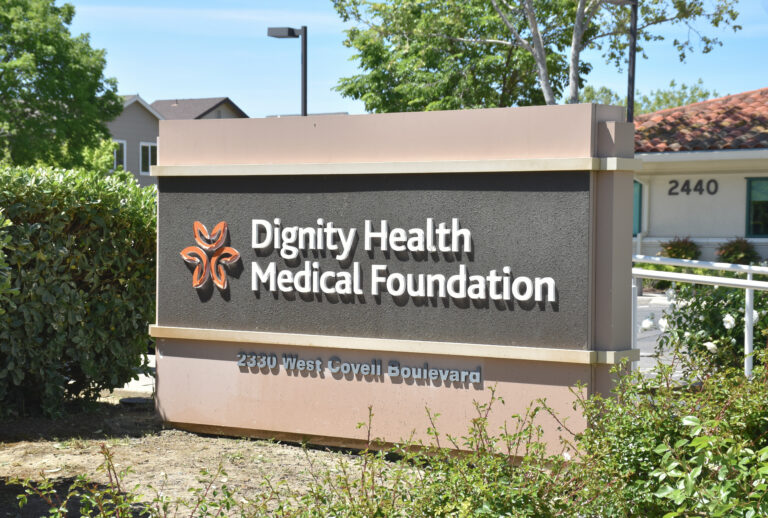
Dignity Health recently announced that they reached a multi-year agreement that will help return healthcare services for the 16,000 Yolo County residents who lost access to their providers over a contract expiration. 

“Dignity Health is pleased to announce we have reached a new multi-year agreement with Aetna that will allow patients in California, Arizona and Nevada to maintain in-network access to Dignity Health hospitals, physicians, ambulatory surgery centers, and ancillary providers,” the group said in a press release

On March 31, the contract between Dignity Health and Partnership HealthPlan expired after failed ongoing contract negotiations, resulting in thousands of Yolo County citizens without access to their essential healthcare services. 

Partnership is a nonprofit healthcare organization that provides over 900,000 low-income communities in Northern California with Medi-Cal benefits through government funding. After the initial expiry, Partnership released a statement to ensure citizens that they were working toward an agreement. 

On April 9, the Yolo County Board of Supervisors meeting agenda included an update on the impacts the negotiations had on residents.

Nolan Sullivan, a Partnership board member and director of the Health and Human Services Agency, presented information regarding the standstill between Dignity Health and Partnership. Staff on both sides worked diligently every single day, according to Sullivan. However, he also explained the problems that occurred between the two organizations. 

“Both groups have a pretty strong vested interest to make a deal,” Sullivan said at the meeting. “The problem, frankly, is sort of twofold. The first is that Partnership is reimbursed by [the California Department of Health Care Services] to pay Medi-Cal rates and they have a cap, so Partnership can only go so high without going into a net loss […] Dignity is trying to cover their cost, and to some extent they are trying to get [profits] out of the deal. So they’re both sort of stonewalling each other.”

Chief Health Services Officer of Partnership Katherine Barresi shared that the disagreements were in regards to costs that Partnership cannot afford, according to KCRA

“As a Medi-Cal managed care plan, all funds come from the government,” Partnership said in a press release. “Payments to providers depend on revenue from the state and the plan cannot rely on lucrative corporate contracts like commercial health insurance.”

The contract complications have resulted in canceled doctor’s appointments and discontinued care services. Without access to Dignity Health services and facilities, residents have had to find new primary physicians and new treatment centers. Partnership clarified that in some cases, they may be able to make arrangements for patients.

“Partnership may be able to arrange for some members in the middle of care to continue to see their current [Dignity Health] doctor until treatment is completed,” Partnership said. “This may include care for acute conditions, cancer treatment, pregnancy, and some serious chronic conditions.”

At the Board of Supervisors meeting, Supervisor Jim Provenza of District 4 stressed his concern for the impacted Yolo County citizens’ ability to find new care. Not only is Provenza concerned about the urgency of citizen’s healthcare needs, but he is also concerned with the competition of the thousands who are looking for new doctors. 

“Some of these people are sick, very sick — some are alone,” Provenza said at the meeting. “So you’re alone, you’re sick, you’re losing your doctor and you’re competing against 17,000 other people. How in the world do you find a doctor under those circumstances?” 

Jonathan Raven, former chief deputy district attorney of Yolo County, spoke up during public comment to express his disappointment in the two organizations’ failing efforts. In his years of involvement with Yolo County, Raven became close with his constituents, deepening his worries for the vulnerable citizens being impacted. 

“I’ve worked with this population extensively in our collaborative courts and know families who have loved ones impacted,” Raven said. “Can you imagine someone who lives with psychosis getting a letter saying they have to get new doctors? That person then has to navigate this challenging terrain and part with doctors who have been treating them and find new doctors.”

Throughout negotiations, Dignity Health and Partnership were discussing a new contract to ensure that citizens would receive the care and services they need. 

“Partnership is committed to continuing to negotiate in good faith with Dignity to reach an agreement soon,” Partnership said. “Dignity has been a valuable partner and Partnership looks forward to having them as a part of the network again.”

The Yolo County Board of Supervisors shared a press release to emphasize their stance on the issue and encourage a successful resolution for the safety of their communities. 

“Both parties must recognize their shared responsibility to uphold the wellbeing of the population they serve,” the press release reads. “By working collaboratively and in good faith, we can find solutions that meet the needs of both Partnership HealthPlan and Dignity Health while ensuring uninterrupted access to healthcare services for our most vulnerable residents.”

Dignity Health shared how this new agreement with Aetna will impact the lives of their patients.

“This is a win for our patients who deserve access to high quality, high-value health care services close to home, and we appreciate their patience as we have worked through this process,” Dignity Health said in their press release. “We sincerely appreciate our patients’ understanding during the negotiations.”


Written by: Olivia Hokr — city@theaggie.org 

An interview with ASUCD President Francisco Ojeda as his term comes to an end

Ojeda reflects on his year as he ends a tenure marked by heavily covered impeachments and setbacks


By VINCE BASADA — campus@theaggie.org   


ASUCD President Francisco Ojeda’s year-long term has been nothing if not historic. The third-year political science and Spanish double major made history as the first AB540 President of the association and the first to be impeached by the Senate, who accused him of failing to carry out his constitutional duties. Ojeda announced during his State of the Association speech on April 4 that he would not be running for re-election and would leave ASUCD at the end of his term and the current academic year. He agreed to sit down with The Aggie to talk about his administration, what he’s learned and what’s next.


Below is a transcript of Ojeda’s interview with The Aggie that has been edited for length and clarity. 


Q: So, how are you feeling today? How are budget hearings going? How’s the association today?

Ojeda: It’s good. It has been a long wait for many people to see the budget, and it has taken us a lot of time but, thankfully, has been able to be released before the deadline. I served as [a] senator during the last budget hearing, and that was heavy and [required] long days […] we’re hoping this is easier on everyone.

Q: Let’s talk about your term as a whole. Have you been reflecting a lot?

Ojeda: Definitely. I feel like there’s some small conversations with people, with friends, that have made me think of my year more with the election this time around. It has been a year since I was out there in the quad, in the Silo, talking to students about my goals and putting myself out there. It has been a crazy and wild year in all aspects. I don’t want to sound egotistical, but there has been so much stuff happening. We had an Opportunity for All crash and the regents postponed that. We are able to accept [undocumented students], but we are not able to give them work. That was one of the unfortunate things.

Q: How do you feel your term went as a whole? I mean, it’s not over just yet, but you’re getting close to the end.

Ojeda: What, five, six more weeks? It was crazy at this point [during] week four [of] last quarter. It was stressful. I’m not gonna shy away from mentioning the impeachment. It stopped me from doing my work, and I’ll admit to that.

Q: During the impeachment, could you talk about specific things that you weren’t able to do?

Ojeda: Progress got stopped. I just felt like managing this whole position is already hard, but when you have to defend your position and also keep doing this work, I do believe it hinders my progress. I would like to apologize to the students for that particular time period [when] I wasn’t at my best. It’s like, damn, I finally get what this position demands from me, but I’m about to term out, you know? It’s definitely bittersweet the way you have all these skills, but you’re terming out, and it is what it is. You have conversations with the chancellor and different stakeholders; you need to know how to do it. And when I came [into power] in September and during the summer, I didn’t know that. I learned that along the way.

Q: Now that you’re kind of closing out this term, you feel like you’re getting the grasp of it, getting the hang of it. So why not run for reelection and keep going?

Ojeda: Well, although I have done things that haven’t been done, like being the first AB540 ASUCD president or other stuff, I’m a person too. I’m an individual person. And although some people have forgotten about that during this year, [I’m] looking [to go] into my [fourth-]year more relaxed. Like I said, this is a very demanding position. I do not envy any student government president. But, every time I was doing my work, every time I was starting a project, I wasn’t thinking about setting up any political reelection. I feel like it is very healthy for me to understand that. I had a year. I believe I accomplished things I wanted to accomplish.

Q: You mentioned that you accomplished some things that you were planning to and you accomplished some things along the way that you weren’t expecting. Could you be more specific?

Ojeda: The budget is one of the unexpected things. I hope [that] after budget hearings, the units and all the ASUCD bodies are able to say that they feel well set up for next year. And that’s one of the things I was surprised about. We always talk about how there’s no money around, and I was surprised that out of first impressions, people seem pleased about their budget. [Something] that were always on [my] watch was The Pantry’s transition to what was formerly known as Gunrock Gaming. There’s a bigger premiere lounge coming up which we hope to have balloons and stuff. I don’t know if it’s gonna be under my term or for the next president in fall.

Q: You mentioned the upcoming ASUCD president. By default, it will be Gaius Ilupeju. What are some messages of advice you have?

Ojeda: First of all, I know Gaius. He served as senator way before I came into Senate. I feel like ASUCD and the UC Davis students are going to be happy with his work. He knows ASUCD. I have some more advice for him that I’ll share with him privately, but I think he’s well set up. I have no doubt he’ll do an amazing job. I have a lot of faith in him and what he represents.

Q: This is kind of taking a step back a little bit, but looking at ASUCD as a whole, what do you think it can improve on? What do you think are its biggest failures and weaknesses?

Ojeda: Let’s start with the downsides. Outreach is something we don’t seem to get right. I feel like this academic year we have slightly improved, and I hope this election reflects it. We didn’t have a Sunset Fest this year, and for that I’d like to apologize to the students. We did fail. Hopefully, that’s improving for next year. 

It hasn’t been an easy year for students. We have seen the protests [on] campuses, and I want all the students to know that we have. I want students to know that we have brought those issues to the stakeholders on campuses. ASUCD is the whole undergraduate body, but, you know, we have a smaller family, which is our employees, and I hope they feel appreciated. And what better way to do that than [through] their wages, because we know prices are going up. We hope these budget hearings reflect that ASUCD wouldn’t be here without its employees. We also need to respect them and give them their respect. We know the minimum wage is going up. I feel like ASUCD has a responsibility to [pay] higher than that, to respect our students.

Q: Let’s move forward and address the impeachments. I mean, undoubtedly it marked your tenure. How do you feel about them now that a few months have passed? 

Ojeda: I do not owe an apology to the Senate. I don’t believe they owe me an apology. I feel like they said their piece. I feel like I wasn’t allowed to say my piece at the time. And when it comes to student government, it’s not functional. I hope future senators understand that it’s part of their role to make it functional, to create a good work environment. I aim to do that. This year, I couldn’t.

Q: What has having this role meant for you in your personal life?

Ojeda: There’s some times where you’re just walking and you look at the CoHo and you look at The Pantry or Unitrans, and you’re like, ‘Oh, I might have put my two cents there when I said this during this meeting.’ I wouldn’t say I cry, but definitely some tears come out when I see students happy with ASUCD services. I get to be the first ASUCD AB540 president, and that’s a big thing. And actually, sometimes I wish I wouldn’t have been the first, because it has come with its difficulties, and I hope and I pray I’m not the last AB540 student. I feel like AB540 students’ opinions are not on the high table there, and we saw it with Opportunity for All crashing the way it did. 

Q: You know what’s next for you, do you? I mean, you’re not going to be president next year– 

Ojeda: Thank God. 

Q: –do you think you’ll still be somewhat associated with ASUCD? 

Ojeda: Yeah, well, they say you can never run out of, just run away from, ASUCD. I hope that’s not true. I do need a break from the third floor [the home of ASUCD administrative offices]. I currently don’t have plans to stick around in any position in ASUCD.

Q: Is there something you want to say and get off your chest, for our readers to know?

Ojeda: I feel like during this time, please take care of your mental health. School, grades and all the other criteria [used] to rate us as professionals do not define you as a person. Please engage with ASUCD. We have Unitrans. You might have voted in the elections if you didn’t vote in fall elections. Elections might seem silly, but elected people like me, elected people like this year’s senators — If you want [things] to change, if you want to keep [them] the same, you know, you gotta keep an eye [on] the candidates. 


Written by: Vince Basada campus@theaggie.org

Danzantes Del Alma’s 45th annual show celebrates the vibrancy and diversity of Mexican culture

UC Davis’ folklórico group serves as a home away from home for many students 


By LAILA AZHAR — features@theaggie.org 


A week before Danzantes Del Alma’s annual show, Michelle Mendoza, a fourth-year design and communications double major and the group’s publicity chair, described the energy that went into the production of the show. 

“We’ve had our moments of stress and overwhelmedness and chaos,” Mendoza said. “It’s all been there, but I’m finally at peace. I’m ready for it all to come together and to see the excitement on everyone’s faces.” 

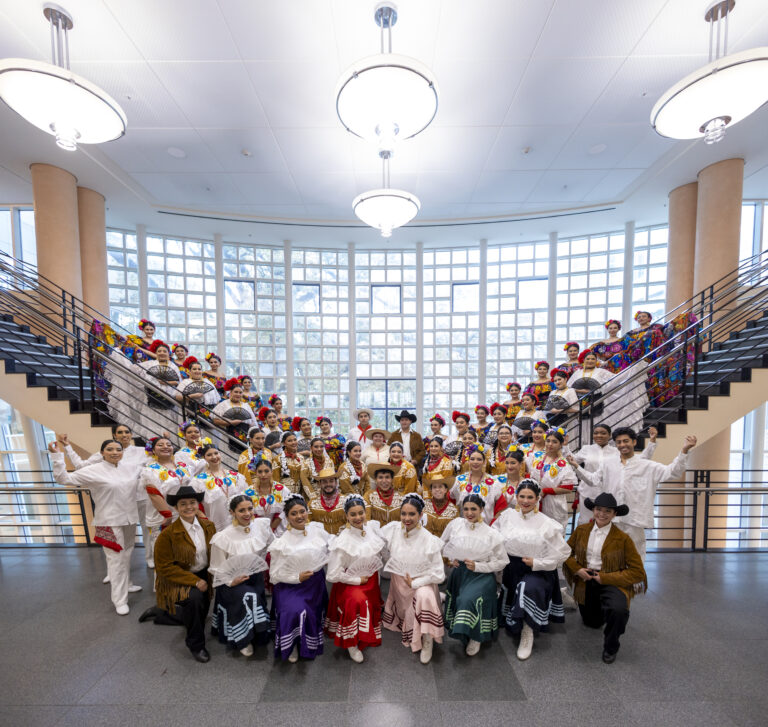
When the group took the Mondavi Center’s stage on April 27, the production was a vibrant display of the members’ dedication and passion, and just as Mendoza had predicted, the excitement was palpable. 

The production showcased music and dance from a variety of regions in Mexico, from Chiapas to Yucatán to Veracruz. Before each group of performers took the stage, introductions for each region were made in both Spanish and English. 

Each group of dancers took the stage with wide smiles and colorful costumes. The crowd was full of energy, as people clapped and cheered along with the music. When the curtain closed in between performances, audience members called out the names of their friends and family members in the show. 

This year marked Danzantes Del Alma’s 45th annual show. The group, which is a student retention program housed under the Cross Cultural Center, has been a part of the UC Davis campus since 1977. The club is officially a folklórico troupe, a term that encompasses a variety of traditional Mexican dances. However, their impact goes beyond the stage. 

“I came from a town with a lot of people that I shared my ethnic background with,” Arlene Cisneros, a third-year psychology and human development double major and the group’s academic chair, said. “Not that there aren’t people here that do. I just immediately felt that this is a new place for me, a new city. I had never moved away. I knew I wanted to find community, and Danzantes Del Alma has been that for me.” 

The group has served as a home away from home for many students. As Cisneros put it, “Everyone has a genuine interest in supporting one another, whether that’s in the dance studio or personally or academically.” 

Along with providing an outlet to current students, Danzantes Del Alma has also played a role in prospective students’ decision to attend UC Davis. 

“I know many people whose decision to come to Davis was because we had an established folklórico group,” Mendoza said.  

While the club is a tight-knit community, one of their goals is to highlight and celebrate the diversity within the group. 

“Each single region is different, but it plays such an important role in the traditions and culture,” Maya Medina, a fourth-year biological sciences and Chicano studies double major and the group’s show chair, said. “That’s so important to our group as well, all of the diversity, even within Mexico. It goes beyond what is most often portrayed.” 

With the theme of this year’s show, “Celebraciones Del Alma,” the group hoped to emphasize the importance of taking time to appreciate celebrating with loved ones. 

“We get so caught up in very valid important stuff — there’s work, there’s life, there’s school,” Mendoza said. “But with spring quarter and the theme of our show, I feel like it’s important to celebrate hanging with your loved ones, your friends, just enjoying the party of life.” 

Danzantes Del Alma’s 45th annual show served as a testament to the profound impact that the group has had on its members. 

As the group continues to showcase the beauty and diversity of Mexican culture to the wider UC Davis community, it’s clear that Danzantes Del Alma will continue to leave a lasting impact on its students for generations to come. 


Written by: Laila Azhar — features@theaggie.org 

Rocknasium’s second annual Pole Studio Showcase highlighted a vibrant community

The local rock climbing gym’s pole dance showcase put on an engaging production


By GRETA FOEHR — features@theaggie.org 


Rocknasium, Davis’ local climbing gym and pole studio, hosted its second annual Pole Studio Showcase on April 20, 2024. The showcase featured a variety of pole dancing performances and select belly dance acts. 

Imani Latif, a UC Davis alum and manager at Rocknasium, started the Rocknasium Pole Studio in 2016 when the studio that she was teaching at closed down. She decided to start teaching classes at Rocknasium and converted the yoga studio into a pole studio. Since then, the program has grown exponentially, with thousands of people passing through her classes. There are now four other instructors, but she was the sole teacher until 2021. 

Last year, Latif decided to host a pole showcase for her students, a chance to demonstrate what they had been working on all year. 

“I wanted it to be like a recital for people who want to show their friends and family the things that they have been working on,” Latif said. “In 2023, we had enough students, enough instructors and enough bandwidth to be able to put on a show. And then this year was the expansion of that.” 

Last year, the showcase was in Rocknasium’s weight training area, which was too small to accommodate the growing popularity of the pole dance program. This year, Mark Leffler, Rocknasium’s owner, built a stage over what is normally the gym’s walkway, creating a theater-like setup where the audience sat in the middle room of the gym under the climbing roof. 

Jonathan Serna, a Davis resident and Rocknasium employee, was in charge of the lighting and filming for the showcase. He and his team climbed the gym walls to set up static lines to bring up the film equipment. They recorded the entire show, with the audience in the frame, from a point on the wall directly across from the stage. During the show, Serna also recorded the performers closely. 

“It’s a very engaging experience to be the one to film,” Serna said. “I get to be in sync with the performers, with their movement, with the music, with their performance, with their emotions and feelings. And then, of course, I get to be a part of the audience too.”

Serna will be releasing a two-minute highlight reel of the event on Rocknasium’s social media accounts. 

The Studio Showcase not only had an elaborate backdrop and lighting setup but also engaging performances and an ecstatic audience. The audience was made up of friends and families of the performers, as well as Rocknasium members who wanted to experience the pole studio’s community and hard work. The event had around 150 attendees. 

Serna appreciated the energy that the audience brought to the event.

“The audience was generally quite fanatic,” Serna said. “There was a lot of whooping, yelling, cursing, screaming and loving. It was a great turnout in terms of audience entertainment and reception.”

The performers put countless hours of work into their acts, and it paid off. They started attending weekly practices for the showcase in February, when Latif gathered a group of her students that were interested in creating a dance for the show. Every performer picked their own song.

“They have to pick their own music and their own kind of style because I want their personality to show through,” Latif said. “I think it’s fun when we have this huge mix of music.” 

Every performer seemed to be exactly in their element, and because of that, each dance was completely different from the next. Latif succeeded in her goal of highlighting not just the skills of her performers, but their personalities and styles as well.

The weekly classes started with clinics taught by Latif about performing and building choreography. These clinics morphed into a time for performers to hone skills from class that they wanted to include in their performances. They first established their major pole tricks, then perfected the dance and performance aspects of their choreography.

Latif’s favorite part about the pole show and the process leading up to it was getting to see her students perform something they worked so hard on in front of an enthusiastic crowd. She said that during the showcase, everyone performed better than they did in any rehearsal.

“Everyone really was feeding off of the energy of the crowd and went full out,” Latif said. “A lot of people added extra little moves and looks and expressions. It wasn’t just like, ‘I’m going to do my routine in front of people.’ People were on stage performing. And it was cool to see that mental shift.”

The pole and belly dance community brings a vibrant energy to Rocknasium, and the pole showcase is an opportunity for them to show that Rocknasium is more than just a climbing gym. 

“The way that we’re really able to take this [rock climbing] space and transform it to hold space for something that isn’t climbing, I think is really cool,” Latif said.

Serna appreciated the new angle that pole dancing brings to a rock climbing gym. 

“It’s so much more than, ‘How long can I climb?’ or ‘How hard can I go?’ There’s an artistic aspect to these performances,” Serna said. “It’s not just about showing off strength but also showing off the meaning behind the movement: emotionally, mentally, sometimes physically.”

Sheena Cuccia, a UC Davis alum and belly dance teacher at Rocknasium, performed in the showcase, as did three of her belly dance students. Her favorite part about being in the showcase was experiencing the range of acts that were included in the show. 

Cuccia also commented on the crossover between rock climbing and dance. 

“I really think that dance can play a big part in rock climbing, getting [in] that flow and in tune with your body,” Cuccia said. “I think it’s a crossover that people don’t quite expect, but that works really well together.” 

Rocknasium’s pole dance show highlighted an underappreciated aspect of Rockniusm’s community, and everyone in attendance brought enthusiasm and appreciation to the event. Rocknasium’s pole and belly dance studio brings a lively community to the climbing gym, and the show’s production as well as the dancers’ hard work, made for an incredible show. 

Find information about future events or pole classes on their website, rocknasium.com, and look out for the recap video on their Instagram, @rocknasium.  


Written by: Greta Foehr — features@theaggie.org

On the one-year anniversary of last year’s stabbings, Davis community honors the life of Karim Abou Najm

The city and campus community dedicate mental health forum and bench memorial to Najm

By EMMA CONDIT AND CHRIS PONCE city@theaggie.org

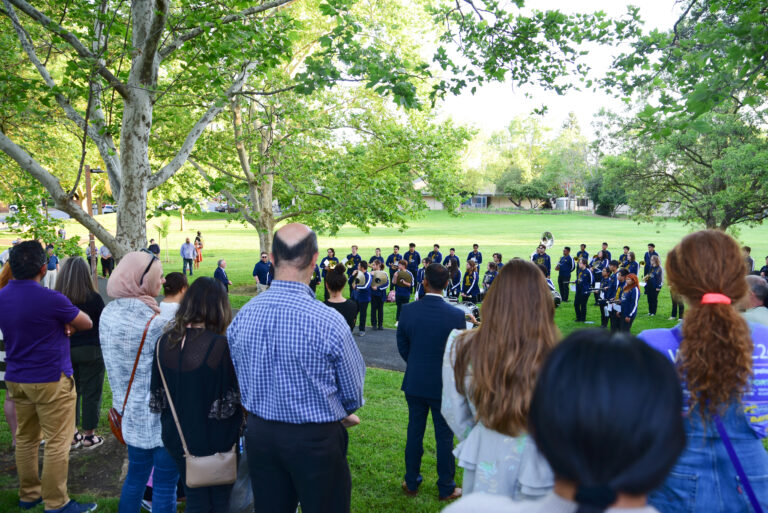
On Monday, April 29, shortly after the one-year anniversary of last spring’s stabbings which left two dead and one severely injured friends, family and other members of the Davis community gathered in Sycamore Park to discuss mental health and commemorate the life of Karim Abou Najm.

Karim was a fourth-year computer science major set to graduate last spring. On April 29, 2023, he was the victim of the second fatal stabbing which occurred at Sycamore Park, the same place this year’s memorial was held. 

Karim’s father, Majdi About Najm, who is an associate professor of soil biophysics at UC Davis, reflected on the past year. 

“We all lost someone dear on April 29,” Majdi said. “In about an hour, it will have been one year. To me and to many here, time stopped at that moment. Is it one year? At least that’s what the calendar says.”

The city dedicated a bench memorial to Karim, named a bike path after him and announced an art piece to be made next to the bench. The UC Davis Marching Band played some of Karim’s favorite songs in his honor, including “Imagine” by John Lennon. 

The group stood around the site where Karim was stabbed last year. A plaque on the bench reads words written by Nadine Yehya, Karim’s mother. 

“May the trees whisper his name and the birds sing his glory,” the plaque reads. “May the stars shine his light and the hearts carry his story.” 

Mary Croughan, UC Davis provost and executive vice chancellor, attended the event and spoke about Karim.

“Karim’s future was full of possibilities, and the positivity that he shared with others thanks to his very generous and very kind heart could have continued to make this world a better place,” Croughan said. “Losing someone like that leaves a hole in all our hearts and in the future of our community.” 

The evening also featured a discussion about mental health and the collective trauma that has been faced over the last year. The event titled “Let’s Talk: Mind Matters” was meant to open a dialogue about mental health.

Dr. Andrés Sciolla, a professor of psychiatry at UC Davis Health and the keynote speaker of the event, offered guidance about ways to seek help. 

“Resources are never enough,” Sciolla said. “Scarcity is the name of the game […] Seeking professional help can be very important. We know now that traumatic events benefit from early intervention. Any kind of community can show support.”

The “Let’s Talk” segment of the memorial was organized by the work of Sciolla and three undergraduate students: third-year chemistry major Jude Haidar, third-year human biology major Hailey Rosales and third-year psychology major Sydney McCan. 

“We started the event just to kind of raise awareness about mental health with [Sciolla] as a psychiatrist and speaker, and then kind of evolved into honoring Karim since the day that we’re hosting them as on April 29,” Haidar said. “So we will be honoring Karim, who unfortunately passed away that day last year.”

While none of these students knew Karim personally, they met with his family to discuss the event prior and how to respect his memory. Haidar shared that he and Karim are both Lebanese, which made his passing all the more personal. 

“We are both Lebanese,” Haidar said. “On campus, I have not met a lot of Lebanese students myself. So to know that someone from your culture and ethnicity, unfortunately, passed away due to those circumstances, it’s kind of like they’re almost a brother to you in some way.” 

McCan shared how it felt to meet Karim’s family and that she is glad there is work being done to help honor his legacy.

“It’s more personal when you get to know them,” McCan said. “It’s not just some story. And, I don’t know, at least for me, it was really heartwarming to see everything that’s being done to honor their son.”

Rosasles hopes that the event inspired people to look out for each other’s mental health. 

“Encourage supporting one another, and if you see a friend or someone who is struggling, offer them help or seek other resources for them or yourself too,” Rosales said. 

Vice Mayor Bapu Vaitla shared his gratitude for the memorial.

“I’m glad for this sign,” Vaitla said. “I know it’s just paint and steel, but it’s also a reminder of Karim’s joy. We share what we learn in the hopes that no one else will have to experience this sort of profound loss.”

Majdi shared that he felt time stopped for him the day his son died. 

“Time stopped for me on April 29, but the days kept moving and with them, as expected, many of the people we know moved on and expected me to follow,” Majdi said. “It’s like time wants to push me forward with the least disruptions to the space-time-continuum […] After all, how can time stop, if life goes on?”

He also shared that he knows they are not alone in remembering Karim. 

“To me, April 29 is not a space-time anomaly that will fade in another year or two when normal wins and life goes on,” Majdi said. “To me, April 29 should be a new start. And I know we’re not alone in this. Your presence here with us tonight is proof that we’re not alone.”

Majdi spoke about the kind of person Karim was and the difference that he made.

“Karim is a mind that luminated brilliance and a heart that spread positivity and hope,” Majdi Abou Najm said. “A bundle of energy. I never heard him say, ‘I’m tired.’ And [Karim was] a time bender; he challenged time and did so much with his short journey through our physical world. 

Finally, Majdi shared his wish for the community. 

“Never take love for granted,” Majdi said. “I ask that you please reflect on this past year. Try to count how many times you said ‘I love you’ in this last year.”

Written by: Emma Condit and Chris Ponce city@theaggie.org

Protests are meant to be inconvenient

The Editorial Board urges administrators to pay attention to student voices as pro-Palestinian protests erupt across America


By THE EDITORIAL BOARD


In recent weeks, protests have broken out on college campuses across the country calling for universities to take action in support of Palestine in response to the current conflict in the Middle East. 

At the University of Southern California, an on-campus encampment formed after the university announced they would not allow their valedictorian — who has publicly supported Palestinians — to make a commencement speech. They later closed the campus to outside visitors and canceled their main commencement ceremony, although college-specific graduation ceremonies will go on as planned without the valedictory address. 

A similar encampment is ongoing at Cal Poly Humboldt, where the campus is closed until May 10 due to protestors occupying and defacing the office of the campus president, as well as setting up dozens of tents around the hall, according to the New York Times.

UC Davis students have spoken up as well in response to the violence in Gaza. In February, urged by hundreds of students who showed up at the quarterly ASUCD Town Hall to speak during public comment, the ASUCD Senate passed Senate Bill (SB) #52, implementing an ASUCD boycott of and divestment from “corporations complicit in human rights violations against Palestinians.” 

The Editorial Board believes that in a moment like this, when students feel passionate enough about an issue to do something about it, universities have an essential opportunity to remember and uplift the importance of free speech — even and especially when it’s controversial or inconvenient. 

Do colleges legally have the ability to set rules in place and enforce those rules when it comes to destruction of property, or trespassing? Yes, and we understand why responding to these protests can be complicated. There might be some legitimate safety issues, concerns about the costs of vandalism and an unwillingness to interrupt education — especially when it’s already been interrupted so recently by the COVID-19 pandemic and a UC system-wide academic strike last fall

But although there are legal boundaries, the First Amendment doesn’t say that we have freedom of speech except when it makes things complicated. In fact, the point of being a country that values free expression is precisely to make things complicated, or to have enough diversity of viewpoints that the complexity of a situation is revealed. Protests are inconvenient for a reason — that’s what makes people pay attention to the issues they’re fighting for. 

If anything, colleges should be more of an advocate of free expression than almost anyone else. If university is meant to teach students how to think critically, how to form an opinion in complex situations and how to care deeply about the things going on in the world around them, students shouldn’t be punished for doing just that. 

There is an important distinction to be made. We recognize that not all of the protests have been peaceful. Some universities cited acts of antisemitism as reason for increasing security or closing down their campus, whether it be harassment of Jewish students — at Columbia, students reported being shoved, spat upon and blocked from attending classes — or violent chants and slurs, from “Kill the Jews,” at Northeastern University to “Zionists don’t deserve to live” at Columbia. 

All students should feel safe on their college campus, and attempting to reach peace overseas via spreading more violence and hatred locally is not a solution. But the fact is that many of these protests have been peaceful. Delegitimizing all students’ concerns and arguments regarding the ongoing violence based on the actions of some is a fallacy that fails to honor the nuanced thinking that is characteristic of an academic institution. 

So what are students’ concerns? What exactly do they want the outcomes of their protesting to be? 

Some students are calling on their student governments and administration to divest from organizations that have financial connections to Israel, especially when it comes to weapons manufacturing. Others are calling on their universities to entirely cut ties with Israel, including ceasing study abroad programs and ending academic collaboration with Israeli universities.

As mentioned above, ASUCD voted on a student government divestment months ago. However, the University of California at large put out a statement on April 26 opposing calls for a boycott against and divestment from Israel, saying that “a boycott of this sort impinges on the academic freedom of our students and faculty and the unfettered exchange of ideas on our campuses.” They also noted that UC tuition and fees are not used for investment purposes.

Some of the student activists’ goals might be more complicated than others. Divesting endowments can be difficult, especially because much of this funding is often used to provide financial aid and scholarships to students, meaning that divesting or refusing to accept donations from certain companies could have a direct unintended negative impact on students. But protests with this call have succeeded before; in July 1986, the UC Regents voted to divest more than $3 billion from companies doing business with South Africa’s apartheid government after more than a year of student protests.

Whether or not universities decide to divest from Israeli-tied companies, the continued calls from students for them to do so not only keep the conflict in the news, but also serve as a constant reminder of the fact that youth are aware of and engaged in conversation surrounding Israel and Palestine — an impact that shouldn’t be underestimated with it being an election year. 

This isn’t the first time nation-wide activism has spread across college campuses, and it won’t be the last. Regardless of what ends up happening at each of these schools, the administrations’ response to student protests matters. Are they going to take student concerns seriously? Are they going to negotiate and talk with student protestors in good faith? 

College campuses in the United States are a microcosm of the divisive but passionate political activism on the rise in today’s youth. How each university chooses to facilitate or hinder that, regardless of how complex the issues at hand are, is going to be a part of those institutions’ legacy — whether they like it or not. 


Written by: The Editorial Board


ASUCD spring 2024 election results announced

This election had a 23.7% voter turnout and The Green Initiative Fund passed with 87.9% approval


By SYDNEY AMESTOY — campus@theaggie.org


The results of the ASUCD spring election have officially been released on the ASUCD website.

For the ASUCD executive ticket, Gaius Ilupeju (for President) and Aaminah Mohammad (for Internal Vice President) won under the Forward slate.

The External Affairs Vice President position was filled by Zephyr Schnelbach, who ran under the Forward slate as well. 

Six new senators have been elected:

Dhilena Wickramasinghe with the “Bitch” slate

Amrita Julka with the “Bitch” slate

Mia Cohen with the “Empower” slate 

Asif Raiyan Ahmed with the “Forward” slate

Audrey Jacobs was elected Student Advocate. They ran as an independent.

Muhammad Rafay Waqar was elected the International Student Representative, running with the Forward slate.

  Safa Mohammad was elected Transfer Student Representative, also running under the Forward slate. 

Both measures on the ballot, Constitutional Amendment #89, which introduces an official measurement of accountability to the ASUCD code of ethics, and The Green Initiative Fund (TGIF), which reinstates a student fee that pays toward student-led sustainability projects, passed. 

Notably, TGIF, which has been on previous ballots, passed with over a 20% turnout, meeting the threshold required to make its passing valid. 


Written by: Sydney Amestoy — campus@theaggie.org

Arboretum toxicity leads to mutant creatures

Drawn by: Emma Lapidus –– eblapidus@ucdavis.edu

Disclaimer: (This cartoon is humor and/or satire, and its content is purely fictional. The story and names of “sources” are fictionalized.)

Commentary: Unpacking the meaning behind ‘Tangled’ and the Grimm tale it’s based on

Recent casting rumors spark conversation over the popular children’s story


By LORENA ALVAREZ — arts@theaggie.org 


Disney holds a track record as one of the leading brands worldwide, but that does not shield the company from backlash. While they are known for their children-oriented animations, their live-action remakes appeal to their older audience. This childhood nostalgia can often lead to an uproar over casting decisions.

While Disney has yet to confirm plans for a live-action “Tangled,” let alone casting decisions, the rumors of a remake have been met with criticism, with some fans voicing their (dis)approval of the fan-casting of Avantika Vandanapu as Rapunzel. In light of the recent controversy, the following is a commentary discussing the meaning behind the Grimm brothers’ original tale and Disney’s “Tangled.” 

Although Disney fans picture Rapunzel as a young girl with long golden locks, Rapunzel’s hair and race are not key factors in the overarching message of the story. The original version does not even emphasize her hair color, only mentioning it once in passing. Here, what is of importance is the fairytale’s cautionary tale.

Grimm’s 1812 “Children and Household Tales” version follows a couple who is punished for trespassing into the garden of Frau Gothel, a powerful sorceress. The text warns of the dangers of greed and temptation as a man steals in response to his wife’s “longing” for an edible purple wildflower “belonging to a sorceress who possessed great power and was feared by everyone.”

The acknowledgment that people were not welcome to take from the sorceress’ garden suggests that the couple, although driven by great desire, are in the wrong as they deliberately go behind the sorceress’ back to steal from her.

When the sorceress catches the man trespassing for the second time, she is angered that the man steals from her rather than asking if she could spare some rampion for his pregnant wife. 

“How dare you climb over into my garden like a thief, and steal my rampion! It shall be the worse for you!” Gothel said in the story. 

The message encouraging people to be truthful as well as grateful is further emphasized at the end of the tale, where Gothel cuts Rapunzel’s beautiful locks after discovering that her “daughter” has also betrayed her. 

“I thought I had hidden thee from all the world, and thou hast betrayed me!” Gothel said. 

As the story concludes with Rapunzel reuniting with the king’s son after living “in great woe and misery” as their punishment, the household tale warns children against disobeying their guardians and giving into temptation. 

While Grimm’s version teaches children to be loyal and ask before taking things from people, Disney’s adaptation is a modernized take exploring the good that can come from taking risks and believing in oneself. 

“Tangled” follows Rapunzel as she takes agency over her life that has been stolen from her by Mother Gothel and helps Flynn Rider, a thief, redeem himself by helping her leave the tower. For those unfamiliar with the story, Rapunzel dreams of leaving the tower in hopes of seeing the yearly lanterns that cover the sky on her birthday. 

The iconic song “When Will My Life Begin? (Reprise 2)” depicts Rapunzel’s struggle to overcome her fears and explore the scary world that she believes Gothel has been protecting her from.

“Look at the world so close and I’m halfway to it,” Rapunzel sings. “Look at it all, so big, do I even dare? Look at me, there at last, I just have to do it […] here I go.”

The animation pairs these lyrics with a scene of Rapunzel cautiously pausing before stepping on the grass, and leaving her tower’s safety (and isolation). Through this, the scene highlights the fear and anxiety she must overcome to make her dream of leaving the tower a reality.

As she demands that Rider take her to see the lights, the script stresses the importance of taking an active role in the direction of one’s own life. 

“You will act as my guide, take me to these lanterns, and return me home safely,” Rapunzel said. “Then, and only then, will I return your satchel to you.”.

Thus, classics like Rapunzel’s story play an important role in teaching young impressionable people valuable life lessons — both Grimm’s and Disney’s versions warn against theft, but the latter’s version adapts the story to encourage agency and bravery. While there is a lot of controversy over whether adaptations are better than the originals, taking a popular story and adapting it to meet modern audiences can oftentimes do more good than harm. 


Written by: Lorena Alvarez — arts@theaggie.org 

Sports betting and lifetime bans: Jontay Porter breaks the ultimate rule in professional sports

This year alone, two major sports gambling scandals have occurred, exposing an industry overtaken by gambling


By CAROLYN (CARI) FENN — sports@theaggie.org


 On April 17, the NBA announced that they had placed a lifetime ban on Toronto Raptors two-way player Jontay Porter after he was found to have violated league betting rules on games. Porter is currently facing serious repercussions for providing information to sports gamblers and faking an illness for betting purposes.

The NBA began investigating Porter in late March after multiple instances of betting irregularities were noticed. The league was mainly looking at prop bets involving Porter from games on Jan. 26 and March 20

When the Raptors played the LA Clippers on Jan. 26, Porter left the game after just four minutes due to an aggravation of an eye injury. Before the game, there was an increased betting interest in the under for Porter’s props, with DraftKings Sportsbook stating that the under on Porter’s three-pointers was the biggest money winner for bettors of the night for the NBA.

Then, nearly two months later on March 26 when the Raptors faced the Sacramento Kings, Porter left after playing for just three minutes with an illness and did not return. The next day, DraftKings Sportsbook reported that Porter’s Prop bets had the largest winnings of the night in the NBA. That night, it was later discovered that a bettor associated with Porter placed an $80,000 parlay proposition bet on Porter’s props hitting the under, which would have resulted in a $1.1 million payout. The unusual betting activity caused the $80,000 bet to be frozen and never paid out. 

Suspicion largely began to arise following the March 20 game after licensed sports betting operators and an organization that monitors legal betting markets brought the findings of these suspicious bets to the NBA. The suspicious increase in the number of bets on the under of Porter’s props and the unusual performance of Porter led to the two-way player’s downfall.

In the end, the NBA found that Porter had violated league rules on sports betting. Along with being found guilty of disclosing confidential information to a sports bettor for the March 20 game, Porter was found to have placed bets on NBA teams from January through March 2024. While Porter was traveling with the Raptors’ NBA G League affiliate, Porter placed at least 13 bets on NBA games on an associate’s betting account ranging from $15 to $22,000. Porter bet a total of $54,094 and earned a payout of $76,059 during those two months. 

The league’s investigation into Porter remains open and may result in further findings. Porter could potentially face criminal charges for his actions.

The last time the NBA faced such a large gambling scandal was in 2007 when referee Tim Donaghy pleaded guilty to two felonies for betting on the NBA and advising professional gamblers. 

While Jontay Porter is the first player in almost 60 years to be banned from the NBA for gambling offenses, his scandal is not the first huge sports betting scandal to rock the sports world in 2024. 

On March 20, 2024, the Dodgers fired Shohei Ohtani’s interpreter, Ippei Mizuhara, after questions started to arise following nearly $4.5 million in wire transfers from Shohei Ohtani’s bank account were sent to a bookmaking operation. At first, Mizuhara tried to claim that Ohtani had sent the money to pay off his gambling debts for him.

“[Mizuhara] has been stealing money from my account and has been telling lies,” Ohtani said after he and his lawyers came out to deny Mizuhara’s claim.

While the MLB initially opened an investigation into Ohtani to see if the superstar had engaged in any form of sports betting with his former interpreter, they have since announced that they will wait for the conclusion of the federal government’s case against Ippei Mizuhara before deciding if further investigation is necessary.

The scandal comes after Ohtani signed a record-breaking $700 million deal with the Dodgers in December — the terms included Ohtani being able to keep his interpreter Mizuhara.

Despite gambling once being greatly restricted in professional and high-level college sports, it has been drastically increasing in the last few years. In 2023 alone, Americans bet $120 billion on sports, which is about a 28% increase from the year before. 

Sports betting has taken off greatly since the U.S. Supreme Court struck down a federal law that prohibited it in 2018. As a result of the ruling, sports betting has been made legal and operational in 38 states, including Washington, D.C., through online/mobile sportsbooks. 

While these two betting scandals have rocked the sports world this year, they are not the first and certainly will not be the last. These scandals are likely only the tip of the iceberg of betting scandals within the sports world as our world progresses to more technologically advanced generations. 

Written by: Carolyn (Cari) Fenn — sports@theaggie.org

New fish species alert!

Researchers at UC Davis have discovered two new species of lamprey fish in California waters


By MARLE LAMOUNTRY— science@theaggie.org


Do you love fish? Well, we do! Researchers at the UC Davis Fish and Wildlife Department have discovered new species of lamprey fish through the use of genetic testing. 

If you’re unfamiliar with lampreys, these jawless creatures have suction-based feeding and vampire-like features, including a diet consisting of blood from nearby fish. They also have prominent migratory behaviors and are often overlooked in research — until now. 

Researchers at the UC Davis Genomic Variation Lab stumbled upon the fish with the help of Pascale Goertler of the Delta Stewardship Council. Researchers in the lab, including Grace Auringer, a UC Davis graduate student, used mitochondrial gene analysis to study their unique inheritance patterns. These patterns helped differentiate the two groups of fish from other populations along the west coast. 

The gene of interest is mitochondrial cytochrome b, which researchers sequenced to find diversity.

Lamprey individuals (N = 87) from 19 sites in the Sacramento–San Joaquin River basin, San Francisco Bay, and Klamath River basin were sequenced for the mitochondrial cytochrome b (cyt b) gene, and the data were combined with publicly available lamprey cyt b sequences for analysis,” the study reads.

The two new species were discovered in the Napa River and Alameda Creek, near the Bay Area. Auringer was surprised by this, as the lampreys managed to swim unnoticed beneath a widely populated area and remained completely concealed until their discovery. 

“Lampreys are understudied, and I wish I had references to understand the patterns I was seeing,” Auringer said. “After colonization, certain fish were considered pests or ‘trash fish.’ Lampreys look like eels and have scary mouths. People judge a fish by its cover and call it bad.” 

Lampreys are viewed as a delicacy in some parts of the world — namely in England, Nordic countries and indigenous populations of North America. In California, lampreys hold a significant historical presence, once serving as a vital food source for indigenous communities as one of their earliest cultural staples. However, these fish populations are now facing a decline.

The scarcity of recorded data on lampreys is a global phenomenon. These ancient creatures have roamed in Earth’s waters for over 300 million years, outlasting the dinosaurs, yet their populations are currently dwindling. Their story reflects narratives seen worldwide, highlighting the urgent need for human stewardship to restore lamprey habitats.


Written by: Marle Lamountry — science@theaggie.org

Davis City Council announces nominations for the Thong Hy Huynh Awards

The student-run organization Aggie House is among the select recipients of this award


By MATTHEW MCELDOWNEY — city@theaggie.org


On April 9, nominees for the Thong Hy Huynh Awards were ratified by members of the Davis City Council. With categories for award recipients 18 and over, under 18 and Community Organizations, Aggie House was selected for the impact they have made in empowering the lives of students facing housing insecurity. 

This award, presented in light of the 1983 racially motivated murder of Davis High School student Thong Hy Huynh, seeks to recognize the people of the Davis community whose actions reflect the values of social justice, equality and diversity that the city upholds. 

City Councilmember Gloria Partida reiterated the council’s commitment against intolerance where it may arise.

“It’s important to remember that I don’t think we ever get to the end of wiping out intolerance, and so the actual work that we do along the way is in and of itself the ends,” Partida said.

This year, Aggie House is nominated, among great company, for this award. 

The Human Relations Commission proudly recommends the following to receive the Thong Hy Huynh award for the May 7 ceremony, according to a staff report from Community Relations Program Manager Carrie Dryer.  

Pattie Fong was nominated for the 18 and over category for helping to rescind an anti-Japanese American resolution affecting citizens all over Yolo County and co-leading a Day of Remembrance to educate the public about Japanese Internment Camps.

Annie Louise Temple was also nominated for the 18 and over category for her advocacy against anti-semitism and islamophobia amid the ongoing violence in Gaza, organizing an interfaith vigil to express grief for the victims caught up in this conflict. 

Chaves “CJ” Millican was nominated for the under-18 category as the communications manager for the Black Student Union and for his advocacy for marginalized communities and the unhoused.  

Aggie House was nominated for the community group category for its dedicated efforts to help combat housing insecurity and cultivate a sense of community for its residents and volunteers alike. 

Aggie House, founded in 2021 by Allie O’Brien, Ashley Lo and Katie Shen, is the third university campus shelter in California after UCLA Bruin and USC Trojan shelters. However, Aggie House is the first of its kind to have a residence where students can stay 24/7. Through the dedicated efforts of its volunteers, they are able to accomplish their mission of providing this safe space for students, by students, to get one another back on their feet. 

Virginia Moore, a third-year human development and psychology double major, was recently promoted to resident co-president for the organization. As resident co-president, Moore is responsible for cooperating with Aggie Compass and ASUCD to be able to further help vulnerable students find the appropriate resources. 

“I’ve continued to grow more in my interests to help others,” Moore said. “Before my role as a case manager, I was already interested in social work and counseling, but ever since I’ve taken this greater role in Aggie House, […] my passion for this kind of work [has] been solidified.” 

Moore is honored on behalf of Aggie House to be receiving such recognition by the city for the work that they have been doing for Davis’ student community.

“We are excited,” Moore said. “We can’t wait to go to their ceremony and meet all the folks that voted on our behalf. I feel this could only open up more opportunities for us.” 

As an organization, Aggie House hopes that this work continues to get noticed. They currently receive grants on an inconsistent basis, so the hope is that they are able to expand in the future to receive consistent funding, establish a permanent shelter and continue to provide its residents with this sense of belonging during these uncertain times when they need it most. 

Moore is excited for what the future might hold for the organization.

“We hope the recognition from Davis allows us to be recognized as an impactful resource that deserves to be permanent,” Moore said. 


Written by: Matthew Mceldowney — city@theaggie.org


Audiences love Paul Atreides, but do they understand him?

Why do viewers seem to miss what “Dune” is really about?


By JOAQUIN WATERS — jwat@ucdavis.edu


“Dune: Part Two” is only a month old, yet it may already be the movie of the year. The film has taken the entertainment industry by storm, leading many to declare the sci-fi franchise the next “Lord of the Rings” or “Star Wars.” 

That comparison is appropriate in many ways. Like those other series, “Dune” is a visually groundbreaking epic with a huge pop culture footprint. But such a comparison has also led to mass misreadings of the latest film and its messages. 

Search “Dune” on social media, and you will be bombarded by arguments about what both the film and the classic novel it is based on are really trying to say: is it a cliched white savior narrative or a biting critique of imperialism? Is it a morality tale about how a good person turns evil in the vein of “Star Wars: Revenge of the Sith” or an environmental stranger-in-a-strange-land tale in the vein of James Cameron’s “Avatar?” Is it fascist? Is it “woke?” Well, the truth is a bit more complicated than that. Allow me to explain. (It goes without saying that spoilers follow for both the films and the novels.)

“Dune” follows Paul Atreides, the young scion of an intergalactic Duke. After his family is murdered in a political plot, he becomes an outlaw and rises to become the messianic ruler of the desert planet Arrakis — and, since Arrakis is home to an all-important substance called “the spice” (think of it like a cross between marijuana and oil), the entire human race. Paul’s development is the fulcrum of the sprawling tale, and it has widely proven difficult to penetrate. Critics of the story point to Paul as a textbook example of the white savior trope: an imperialist colonizer who comes to a foreign land, ingratiates himself among the people (in “Dune,” this is the native “Fremen”) and leads them out of their perceived savagery into a brighter future. I have seen reviews of “Dune: Part Two” state that rather than Timothee Chalamet, the filmmakers should have cast an actor of color in the role to curb these perceived problematic undertones. But this is an immensely shallow reading of the story that goes no further than skin-deep.

Paul, like Neo of “The Matrix” or Harry Potter of, well, “Harry Potter,” is an archetypal chosen one. The Fremen have prophecies foretelling a great leader who will lead them to paradise, and Paul fits the mold. But unlike those previous examples, “Dune” makes it clear that this prophecy is not genuine but planted among the Fremen as a means of control. Paul foresees that should he take on the role of the savior, the Fremen will become religiously enslaved to him and genocide will follow. As a fundamentally good person, Paul resists this future for much of the narrative in favor of living a simple life among the Fremen. But ultimately, his desire for revenge against those who killed his family, along with the imperialist values he grew up with, surpass his love of the Fremen, and he gives in to the supposed “prophecy.”

There is a line in the novel that the recent films removed in which a character ominously warns a Fremen leader, “No more terrible disaster could befall your people than for them to fall into the hands of a Hero.” I have seen viewers of the film state that they do not understand why Paul’s ascendancy is a bad thing; after all, he kills the villains who have suppressed the Fremen for decades. But this is also a misreading: Paul may have “liberated” the Fremen from their current condition, but he has also enslaved them to his own cult. He does not break the corrupt system, he merely restructures it so that he sits at the top. His victory against the evil emperor rings hollow because of what follows on its coattails: in the sequel novel “Dune Messiah” (which will allegedly form the spine of the upcoming third film), it is revealed that the holy war started in Paul’s name resulted in the deaths of billions of people. 

On this note, I have also noticed yet another misreading permeating the online discourse —  that Paul’s descent into fascism is comparable to that of another famous sci-fi character, Anakin Skywalker of the “Star Wars” prequels. Once again, on a surface level, that comparison is understandable; both are morally compromised savior figures with long hair and swirly dark cloaks. But “Revenge of the Sith” (the film that depicts the heroic Anakin’s transformation into the villainous Darth Vader) depicts Anakin’s fall as being caused by dark forces pulling him away from his destiny. He becomes the villain by failing to live up to his prophecies. With Paul, it is quite the opposite; he becomes the villain precisely because he does fulfill his supposed destiny. He remains the hero of the story — but a hero can be a terrible thing.

The discourse around “Dune” was inevitable. Filmgoers (especially of the sci-fi/fantasy genre) have been conditioned to expect a certain kind of story where good triumphs over evil, and a hero goes through a journey of self-discovery. “Dune” hits all of the familiar beats, yet viewers seem not to know what to do with his obviously wrong actions. Hence the debate: is the film endorsing Paul or condemning him? Is it about a hero who loses the way or a villain who finds it? But the truth is that it’s a far more complicated story than that, one that is not interested in questions of good and evil so much as freedom and control and the ways in which one blends into the other. Paul Atreides is a liberator and a tyrant, a colonizer and a refugee, an impassioned freedom fighter and an imperialist politician. These things may seem contradictory but often they are not: just look at real-world figures like T.E. Lawrence, Fidel Castro or Vladimir Lenin. So to understand “Dune,” do not try to pin down its politics. Let the unsettling ambiguity wash over you, and you will understand why it is so important.


Written by: Joaquin Waters — jwat@ucdavis.edu


Disclaimer: The views and opinions expressed by individual columnists belong to the columnists alone and do not necessarily indicate the views and opinions held by The California Aggie.