46.4 F
Davis

Davis, California

Sunday, December 28, 2025
Home Blog Page 958

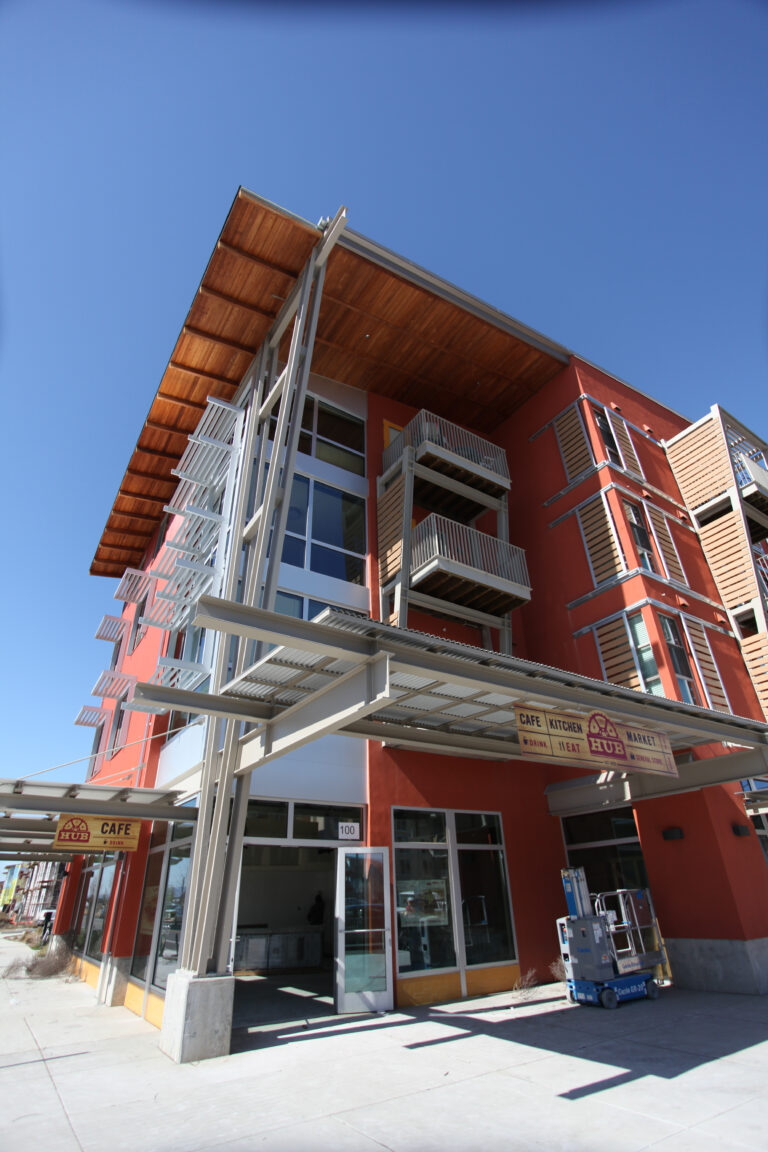
West Village opening cafe, market

UC Davis West Village is home to 1,500 residents, a pool, a gym and a study area. And at the end of March, West Village will be introducing the new HUB kitchen, cafe and market.
HUB has been in the works for some time and is intended to support the property, its residents and the Davis community.

“These retail operations are designed to provide what is needed for the residents of the West Village apartments and the West Village development, as well as students and anyone else that wants a great cafe or place to shop for sundries,” said Ron Heckmann, a spokesperson for West Village Community Partners.

According to HUB’s website, the cafe, kitchen and market will each be open seven days a week.

HUB cafe will provide coffee and espresso drinks as well as baked goods and breakfast foods, and is intended to be used as a gathering place for residents, according to Heckmann.

The market will provide sundries such as household goods and some supermarket variety items.

The kitchen offerings include an assortment of pizza, sandwiches, salads and pasta dishes as described by HUB’s website. The entire list of menu items can be found at hubwestvillage.com.

All of the food will be provided by Sodexo, which currently services both the Silo and the Dining Commons on campus.

“The development team knows a lot of service providers in the industry, and when talking with Sodexo, they made for a great fit,” Heckmann said.

The menus, market offerings and the name were influenced heavily by a focus group which contained residents and some non-resident students.

“We’re thrilled to have HUB opening up in March to expand the offerings here at West Village,” said J. D. McLeod, a senior community manager for West Village, in an email interview. “We’re already seeing the kind of community atmosphere and student-life that was first envisioned, and the HUB will just add to it.”

According Heckmann, now is the most opportune time to open such establishments so that West Village can best accommodate its expected growth.

Heckmann said that the available apartments are filling up and a third project, Solstice, is completing construction and will be occupied this fall.

Third-year exercise biology major and current West Village resident Molly Garcia said that HUB will be convenient as long as the prices are affordable. She said that she currently feels like it is a pain to get in the car when she wants to get a coffee or something small to snack on, and HUB’s location will make her life easier.

“If it’s super expensive, I’m obviously going to drive to Starbucks or Safeway, but if not, [it’ll] be awesome to just walk down there to get something to eat,” Garcia said.

First-year psychology major and prospective West Village resident Sedona Kolodney said she is excited to live in Solstice and utilize all of the facilities that West Village has to offer.

Kolodney also shares Garcia’s sentiment about HUB’s convenience.

“It’ll be helpful to have that stuff because there’s not much out there,” Kolodney said.

SYDNEY COHEN can be reached at city@theaggie.com.

Letter to the Editor: An Open Letter to the UC Davis Community

0

Hello UC Davis Students, faculty, staff and community partners,

As the proud representative of California’s third congressional district, which includes UC Davis, I need to alert you to events in Washington that directly impact our campus.

Mandatory across-the-board cuts known as “sequestration” came into effect on Friday. We can still avoid the worst damage, but Congress needs to act soon.

Under sequestration, research at UC Davis could experience an 8.4 percent cut — more than $42 million. This would be the equivalent of 445 jobs, but that’s not the whole story. Students on campus will see their work hampered, with research labs operating at reduced capacity. If we fail to abate sequestration, class offerings will also likely be reduced in the coming academic year.

The harm from sequestration doesn’t stop there. The UC Davis Health System will see a $4.6 million loss in Medicare revenues. Some students already struggling to pay for their education, already saddled with debt, will see hundreds of dollars taken out of their pockets with cuts to work study and grants. Pell Grants are protected from cuts in 2013, but they too could see a substantial reduction if Congress fails to act, harming the 43 percent of your classmates who currently rely on Pell Grants.

I don’t even have the space to discuss the million jobs that will be destroyed, risks to national security, delays in flight travel, layoffs of teachers and childcare workers, cuts to breast cancer screenings and childhood vaccinations, or closures of national parks and beaches.

How did we get here? In 2011, America faced a manufactured economic crisis. As one of only two industrialized countries — the other being Denmark — that requires its legislature to vote on honoring existing debts and obligations, a periodic extension of the so-called “debt limit” is an absolutely essential congressional action. Unfortunately, congressional Republicans used the opportunity to extract demands they otherwise would be unable to secure. The vote was delayed until we were days away from default. Apple had more cash on hand than the U.S. Treasury.

Responsible nations honor their debts, so Congress voted on must-pass legislation to preserve the full faith and credit of the United States. Had we failed to extend the debt limit, which passed with overwhelming bipartisan support, America’s bond rating would have been in tatters, interest rates would have skyrocketed, international investors would have taken their money elsewhere, retirement accounts would have been in jeopardy, and hundreds of thousands of jobs would have been destroyed. A “yes” vote was the only responsible vote.

That bill included sequestration, which called for cuts so mindless, it was believed Congress would have to come together for the sake of America. I’d still like to believe that. On three separate occasions, I voted to end sequestration. I’m still prepared to make a tough vote.

When I was a UC Regent, I voted against every undergraduate tuition hike, because pricing students out of an education is terrible public policy. Yet even at the peak of the Great Recession, I never saw the Legislature or University of California propose anything as reckless as sequestration, which could easily drag us back into a recession.

I’m asking you, the campus community, to get involved. Make your voices heard. Mobilize your friends at campuses throughout the state. Make sure our state’s Congressional delegation knows that our students are ready to fight for our future. Make sure your family knows that sequestration directly impacts someone they love. If I can’t convince my colleagues in Congress to stop sequestration, maybe you can.

Thank you,
Congressman John Garamendi

News in Brief: Picnic in the Park concert season to begin

0

Starting March 20, Picnic in the Park concerts will return to the Davis Farmers Market from 4:30 to 8:30 p.m. every Wednesday until Oct. 30.

According to a Davis Farmers Market press release, Davis Food Co-op will sponsor the live concerts given by local bands. Additionally, Central Park’s bicycle-powered carousel, Rocknasium’s climbing wall, Bouncing Bungalows, face-painting, pony rides by Pony Ranch Parties and balloon-maker Dilly Dally the Clown will be on hand for children.

The local bands will play a variety of genres, such as bluegrass, Americana, rock ‘n’ roll, folk, blues, R&B and much more. Visit the Davis Farmers Market Facebook page for the list of bands that will play each week.

— Claire Tan

Baseball Preview

Teams: UC Davis vs. Cal State Bakersfield
Records: Aggies, 6-7; Road Runners 8-4
Where: Dobbins Stadium — Davis, Calif.
When: Friday at 2:30 p.m.; Saturday at 1 p.m.; Sunday at 1 p.m.
Who to Watch: Sophomore Nick Lynch continues his hot hitting streak to start the season. He played two of the three games against Oklahoma State last weekend, going 4-7 from the plate.

He pushed his batting average up to .429 on the season, which leads the team. Lynch leads the regular players in hits with 18, slugging percentage with .548, and on-base percentage with .510.

The first baseman has started twelve games this year and usually bats in the middle of the order.

Did you know? Senior Paul Politi had a 17-game hitting streak going into Friday’s game against Oklahoma State. He could not extend it, as he went hitless on the day.

Politi has started all thirteen games this season and plays at third base. He leads the team with two home runs and 13 runs batted in. He is also batting .314 on the season.

Preview: After salvaging only one game during the three game series against Oklahoma State, the Aggies dropped their game against Sacramento State on Tuesday by a score of 0-14.

The Aggies got off to a hot start this season, winning four of their first five games. However, they have gone 2-6 since.

For the last two series, the Aggies have won only the series finales. Getting off to a good start and winning the first game will be a big plus for the team.

“You anticipate they’re going to be there. You’re going to be a little bit psyched and pumped up,” Politi said. “You just kind of get ready for that and feel and recognize it and check in and try to get focused on what you need to do and get really directed towards what you really need to accomplish.”

UC Davis comes into the series batting .305 as a team with a small-ball mentality — making sure to run the bases well and steal bases when possible — to win games.

The Aggies have a team-earned run average of 5.26 and have had strong starting pitching from junior Evan Wolf (1-0) and sophomore Robert Parucha (1-0). Wolf has started three games and holds a 2.40 ERA. Parucha has come in to relieve the starters and has done a nice job in his four appearances accumulating a 1.54 ERA.

The Aggies are currently seventh in the Big West Conference standings, but have yet to play any conference games. Cal State Fullerton leads the league with a record of 10-1.

UC Davis will be playing at home, where it holds a 5-5 record. It looks to improve from a 27-30 record last year, which consisted of an impressive home record of 17-11. Its conference record was even at 12-12 and finished fifth in the Big West in 2012.

CSU Bakersfield comes into the series with a record of 8-4 and is second in the Western Athletic Conference. It has played its first 11 games at home and has matched up with Nebraska and USC, two teams in major conferences.

It traveled for the first time to play UC Irvine on Tuesday, losing 1-6. Now, the Roadrunners are ready for their second road trip of the season against the Aggies.

CSU Bakersfield is led by senior Dylan Christensen, who is batting .413 and has started all 12 games. He is among the leaders in every offensive statistic for his team.

As a unit, the Roadrunners are batting .282 on the season. Their pitching has been solid thus far, maintaining a 3.11 ERA. Christensen pitches as well as he hits and has two saves with a 1.08 ERA.

—Luke Bae

Column: Watts Legal?

0

Question: I would like to know if it is legal — constitutionally, federally or whatever — that schools discriminate against students based on their age. I am 20 years old and I fully support myself working at a part-time job, but because I am not 24, enlisted, married, an orphan or raising a child, I am forced to use my parents’ tax returns to determine my financial aid even though I am not claimed as a dependent on their tax returns.
— Eli C., Davis, Calif.

Answer: The Fourteenth Amendment to the Constitution says that a state cannot “deny to any person within its jurisdiction the equal protection of the laws.” That Equal Protection Clause also applies to all subdivisions of the state, including the UC Regents.

It’s one of the post-Civil War amendments designed by Congress to protect African-Americans in southern states from racial discrimination. Since the 1860s, the courts have since expanded it to prohibit many other types of discrimination.

Read on its face, the language of the Equal Protection Clause would indeed seem to require states to treat a 20-year-old no different from a 24-year-old. But it would also seem to ban laws “discriminating” against smokers or allowing people to bring service dogs (but not regular dogs) on airplanes — not to mention the 21-year-old drinking age.

The way the Supreme Court interprets and applies the Equal Protection Clause depends on the category or class of persons. When a law discriminates on the basis of a “suspect” class — like race — the court will almost always strike down the law as unconstitutional, unless it’s necessary to achieve a compelling state interest. Very few such laws would survive this kind of strict scrutiny. Race-based affirmative action is one of the race-discriminatory policies that have survived in the past, though the Supreme Court may reverse itself later this year. (Google “Fisher v. University of Texas” if you’re interested.)

Sex-based discrimination is also unconstitutional — usually. The courts will uphold sex-based laws if they are substantially related to furthering an important government interest — basically, if the government can think of a really good reason to discriminate on the basis of sex, the courts will uphold the law. Like with race, very few sex-based laws withstand such scrutiny. And again, affirmative action is one of them.

Other classes are not suspect; age is one of them. When the court deals with a non-suspect class — students, 20-year-olds, smokers, people with tattoos, the shoeless masses — it will uphold a law if it is rational. Unless a law is completely insane, the court will uphold it.

What’s an irrational, insane law?
“When Jupiter is at its xenith, all left-handed people must hop four times or else pay a $50 fine.”
“If the groundhog sees his shadow, all drivers of the Toyota Prius are admitted into UC San Diego.”
As for age: You have to be 18 to vote. You have to be 21 to drink. Are those completely insane laws? No. They might be imperfect laws. They might even be bad laws.

But they’re not insane, because they’re rationally related to a legitimate government interest. Adults are more responsible than children, and there’s a legitimate interest in making sure only responsible people vote and drink.

There’s a reason why the financial aid office considers you financially independent only if you’re 24 years old: Younger students are often — but not always — dependent on their parents, and the school has a legitimate interest in giving scarce aid money only to the most needy.

Is this a perfect policy? No. Does it account for circumstances like yours? No.

But it doesn’t need to. It just needs to be rational. And it is.

Question: Does our landlord need to give us a few days notice if he brings people over to look at our apartment, or can he just call last minute and say, “By the way, I’m showing the place in less than an hour?”
— Michelle O., Sacramento, Calif.

Answer:

The landlord has to give you “reasonable” notice — in writing — before entering your apartment to show it to a new tenant. The written notice must include the date, approximate time and purpose of the entry. The courts will presume 24 hours reasonable notice, unless there’s evidence to the contrary. He should enter only during normal business hours — no 4 a.m. surprise visits.

A landlord cannot abuse his right of access or use it to harass or repeatedly disturb the tenants, per California Civil Code Section 1954(c). He can’t keep intentionally violating these access rules to influence you to move out, either. If you can show a court that he’s repeatedly entering your apartment to harass you or influence you to move out, you can sue the landlord in small-claims court for $2,000 for each violation, per Civil Code Section 1940.2(b).

Daniel is a Sacramento attorney, former Davis City Council candidate and graduate of UC Davis School of Law. He’ll answer questions sent to him at governorwatts@gmail.com or tweeted to @governorwatts. XXX

Davis math professor moves to cyberspace

1

Professor Duane Kouba has been teaching in the UC Davis Math Department for 30 years. For 20 of those years he’s been involved with the UC Davis basketball team and just about ten years ago he set up a webpage filled with calculus problems to assist his students, simply called “The Calculus Page Problem List.” The site’s stark white background and minimalist layout of problems leading straight to their solutions is so low-tech that your grandmother could probably navigate the site in between playing rounds of Pong on her Commodore 64, but that’s exactly Kouba’s intention.

“If you go to my website you can see that it’s low-tech — here’s a topic, here are problems, here are solutions,” Kouba said. “You just click on the links. No bells and whistles. I haven’t worked on it for many years, but people like it because my explanations are clear.”

The site’s simplicity, and the fact that the link is the first to appear when searching for “calculus problems” on a number of popular search engines, led to Kouba receiving an email from Salman Khan, the creator of highly acclaimed informational website Khan Academy.

“[Khan] said, ‘I’ve been using your calculus website for some problems and inspiration,’” Kouba said. “He asked, ‘Would you be interested in working with us? Let me know’ and of course I’m flabbergasted.”

Launched by five-degree-holding MIT graduate Salman Khan in 2006, Khan Academy is an online educational tool that hosts “micro lecture” videos in a number of languages on a number of subjects with a concentration in mathematics and sciences, and with the goal of distributing useful knowledge to as many people as possible.

According to the website, Khan Academy has uploaded over 4,000 videos to its free-access website, and has delivered over 235 million lessons. To fund this, they’ve racked up a number of grants from the Bill and Melinda Gates Foundation to Google to Carlos Slim, the world’s richest man.

“Because everybody’s starting to get computer access, even though they don’t have food everyday and clean water, education should be free and I love that attitude,” Kouba said.

Fourth-year sociology major Xavier Ontiveros agrees.

“From a humanitarian perspective that sounds like the best thing we can do,” Ontiveros said. “Google and Wikipedia have saved my ass so many different times. People learn in very different ways. Some people will go to the internet, five different places, take bits and pieces of what will actually work for them, put it together and create one synthetic outcome that is just as sound.”

Lucian Novosel, a second-year computer science major, started using Khan Academy’s calculus lessons two years ago in a high school calculus class and still uses the site for reference. While he found it helpful for lower-level math, he sees a disconnect between the material and the caliber of his course load now.

“The level of Khan Academy is more high school-oriented. It’s really simple, there’s not that much material. If you try using Khan Academy for chemistry, it’s a wild goose chase for things that are actually relative,” Novosel said.

Kouba sees his new employment as an opportunity to improve the math education system.

“We want to make math better,” Kouba said. “Whatever he [Salman Khan] liked about what he saw on my website, he wants me to bring that to him, so I think that’s what I’m going to do. Based on our conversation, that is to add new problems and solutions for practice and maybe suggestions for his videos, and also just give my opinion about where I think he could make the current list of video topics better.”

In January of this year, Governor Jerry Brown announced a plan to pressure California public colleges and universities to expand their online course offerings for required lower-division classes after experimenting with a similar program at San Jose State University with another educational website called Udacity.

Novosel, while a fan of Khan Academy, has mixed emotions about such an idea.

“Interestingly enough, I have a friend at Arizona State University and a lot of her freshmen courses are actually all taught online,” Novosel said. “Now they’re really not that rigorous at all.”

Ontiveros is also skeptical about such a large shift from a person to digital format.

“I think it’s an attempt to outsource our learning experience to the internet as opposed to in the classroom. I don’t see any reason why a person-to-person learning experience should not be the first option,” he said.

Kouba, however, sees the digital realm as a frontier with untapped potential.

“[Khan] thinks public school teachers, at some level, have too much to do to teach 30 to 50 kids in a class because that’s what’s going on in public schools. His idea is he’s got spreadsheets that can track students’ progress through his videos,” Kouba said. “It’s a different way for teacher-student contact.”

For now, Kouba is ecstatic to work for Khan Academy through any capacity he can.

“It’s going to be fun,” Kouba said. “I’m going to write hard for ‘em, and try to make math more widely used; that’s my goal.”

SAM RIBAKOFF can be reached at features@theaggie.org.

Dining in Davis: Taqueria El Burrito

You’re strolling downtown after midnight on a Friday after hitting the bars — what sounds like the most satisfying morsel you can grab to fix your case of the munchies?

Owner Jose Cortez of Taqueria El Burrito, which opened in November in the old Great Wall of China II location across from de Vere’s, was very bright in deciding to open a downtown spot that serves tasty, inexpensive Mexican food and is — punchline — open until 3 a.m. on weekend nights.

El Burrito is more than just late-night craving satisfaction, though. Walking through the door, I noticed nothing short of the typical taqueria décor — Spanish-style tile floors, Corona and Bud Light neon signs in the windows, traditional brightly-colored woven fabric laid into the table tops, a refrigerator of Mexican popsicles by the door and Tapatío and habanero hot sauce bottles on every table. Aurally speaking, the Mariachi music playing in the background completes the taqueria experience. Another notable quality of El Burrito is its cleanliness — the continuously wiped-down surfaces and airy feel to the space make me want to dine there often.

Fitting for a college town full of students on time crunches with very little money, the order-at-the-counter setup of El Burrito contributes to the casual atmosphere. Fortunately, even though I was standing behind at least ten other people, the line moved quickly.

Despite its name — which actually means little donkey in Spanish — the eatery features an extensive and thorough menu that offers so much more than the standard burrito. A bit overwhelming, the menu contains everything from tacos and enchiladas to tortas and soups, and there are 23 different combo plates from which to select.

The menu also provides an array of meat choices. You can choose the typical chicken, steak or pork to go into your burritos and tamales, but you can also spring for more exotic options, including lengua (beef tongue), cabeza (beef head), tripa (beef tripe) and buche (pork stomach). There is also an entire section of the menu dedicated to seafood.

In order to avoid waving people by and saying, “Go ahead, I’m not ready yet” for too long, like I did, I would recommend looking at the menu online beforehand or taking a peek at the to-go menus they have outside.

After my friends and I finished a basket of complimentary chips to hold us over, our meals arrived promptly — and the fact that servers brought our food to us and we didn’t have to pick it up at the counter was a huge plus. The taco salad with chicken ($6.25), steak enchilada and chicken tamal combo plate ($9.45) and chicken and pork tamales plate ($9.80) are all delicious but taste similar to others I’ve had at Davis taquerias. The combo plates and specialty plates come with rice, refried beans (with a kick), sour cream, guacamole, lettuce and tomatoes, creating a decent-size portion for the price.

The focus here should be two items not widely seen in Davis: the carne asada fries ($7.25) and the chile relleno burrito ($6.95). The carne asada fries are just what they sound like — crinkle-cut French fries piled high with carne asada, refried beans, sour cream, guacamole, salsa and cheese. While it’s probably not the healthiest choice for dinner, it makes one hell of a late-night snack. It also tastes even better washed down with a cup of fresh horchata ($2.00), which is a traditional Mexican drink made with rice and cinnamon.

The chile relleno burrito rises above as the standout dish. It presents the fixins for a chile relleno — chiles, cheese and salsa — wrapped up in a massive tortilla with rice, beans, avocado and sour cream. All burritos can be made “wet,” or slathered in red or green (or both, which they call “Christmas”) enchilada sauce, for an extra $1.90. The added sauce ties the flavors in beautifully and the dish perfectly represents what’s so hearty and comforting about Mexican cuisine. Note: knife and fork definitely required.

KATIE MORRIS writes for the Aggie Eats food blog and can be reached at kemorris@ucdavis.edu


Taqueria El Burrito
223 F Street, in E Street Plaza
Hours: Monday 10 a.m. – 11 p.m.
Tuesday and Wednesday 10 a.m. – 12 a.m.
Thursday and Friday 10 a.m. – 3 a.m.
Saturday 9 a.m. – 3 a.m.
Sunday 9 a.m. – 11 p.m.

Food: ****
Ambiance: ****
Cost: $


Key
Food and ambiance quality
**** I’m dining here every day
*** Almost like eating at home
** Better than my roommate’s cooking
* Only if I’m starving
Budget
$$$$ chancellor $20+
$$$ professor $15-20
$$ graduate student/alum $10-15
$ undergraduate $5-10

ASUCD senators reflect on campaign platforms

Six ASUCD senators said their farewells during last Thursday’s Senate meeting as six new senators took their place.

We asked former senators Beatriz Anguiano, Bradley Bottoms, Don Gilbert, Joyce Han, Kabir Kapur and Paul Min to provide statements reflecting on their terms.

Senators who did respond admitted to accomplishing few, if any, of their platforms. However, they still feel that they were successful leaders overall.

Beatriz Anguiano

Platforms
Create more student financial aid advisors to help students
Create a resource guide on appealing dismissal decisions
Establish a textbook reserve in the Student Community Center
Grant funds to community-specific graduations

Accomplished?
Anguiano could not be reached to receive feedback on her term in office. More grants for community-specific graduations were secured, though.

Bradley Bottoms

Platforms
Fight tuition hikes
Create a safer environment for bicyclists.

Accomplished?
“For my advocacy platform I said that I would engage leaders by bringing UC Davis students to the Capitol as well as bring leaders back to campus for direct conversations with students and to see the condition on campus. During my term, I lead the UC Davis delegation (although small) to the Capitol for the March in March. I also went with many other students to lobbying sessions with the Regents and hearings that pertained to higher education. As for bike safety, I was really fortunate to have a good working relationship with Student Housing to work on bike safety education during orientation. I was also able to work with campus grounds and facilities to ensure that the infrastructure of our campus is safer for cyclists through bringing more bike circles to campus and repaving roads. The police department was also an amazing partner in making sure that bike infractions are remedied through education rather than punishment. Unfortunately, I did not find the proper home for a bike skills class yet, as there are a lot of liability risks associated with that, but will continue exploring that in the next year.”

Don Gilbert

Platforms
Increase the number of wireless hotspots on campus
Reach out to disadvantaged UC Davis students, making them aware of support systems available in UC Davis

Accomplished?
Gilbert expressed interest in being included in the story but did not provide a response.
It’s tough to objectively say whether or not Gilbert reached out to disadvantaged students without any documented proof. There were no bills passed, however, to increase wireless hotspots on campus during his term.

Kabir Kapur

Platforms
Work to make syllabi for classes available online during registration
Fight tuition hikes by strengthening ASUCD’s lobby units and student involvement and empowering student advocacy

Accomplished?
“I think I have had a very successful term mainly because I made ASUCD my number one priority during this past year. As far as my platforms go, I did not get very far during my term with my first one which was having course syllabi available to students before class registration but I did have a very productive meeting with Carolyn de la Pena, the Vice Provost of Undergraduate Studies, and Elias Lopez, the University Registrar, [earlier] to discuss the topic and I still plan on working on accomplishing it even though my term is over. My second platform is tougher to determine if I accomplished it or not because it was very broad based but I do believe my work on voter registration, actively supporting and advocating for Prop. 30 on campus and attending Lobby Corps weekly, as well as going on multiple lobby visits to the Capitol in Sacramento to advocate for student issues did ‘empower student advocacy’ to a certain degree.”

Joyce Han

Platforms
Create a mentorship between first-year students and upperclassmen in which upperclassmen can inform first-year students about resources available on campus with the benefit of earning free dining commons swipes
Make Griffin Lounge available to students 24/7
Improve campus escort services

Accomplished?
“I think my term as a Senator was successful. If anything, it was a continuous learning process … It was a great opportunity for me to back what I thought was important especially during budget hearings for things such as Safeboats and AggiePack. I unfortunately didn’t have the opportunity to accomplish any of my platforms, however, I don’t think that speaks to how I did as a senator. A lot of people come unprepared with their platforms when running for Senate and I was one of them. I failed to realize how much effort, money and time my platforms would take. I didn’t realize the complications I would run into. For example, although this wasn’t my platform, my project of beautifying the 24 hour study room took [over four] months of work to accomplish with constant emails and deliberation.”

Paul Min

Platforms
Increase lighting on campus
Maintain the roads on campus to create safer roads for bicyclists
Create a space where Christian and interfaith organizations can unite “to fight for social justice”

Accomplished?
“I was able to accomplish the first platform by working with the police department and partaking in the Campus Safety Lighting Walk. We went around and took note of lights that were broken or covered by foliage and submitted requests to the power and lights department … The second platform of maintaining/improving roads on campus was something that I wasn’t able to really work on during my term. For the third platform of ‘uniting interfaith groups to work on campus to fight for social justice issues’ I was able to work behind the scenes and help publicize for the ‘knockout slavery’ event … hosted by Catalyst, an on-campus Christian ministry … However, looking back, I could have done more to work on this platform … In conclusion, I felt I had a pretty successful term because I was able to empower students by accomplishing some of my platforms, and because I actively engaged with my constituents through office hours.”

LILIANA NAVA OCHOA can be reached at campus@theaggie.org.

Free legal consultation available through ASUCD

2

Attorney Ava Landers browses through the list of students seeking legal advice. Next up: a student wanting legal consultation, because their roommate ate their cookie.

ASUCD contracts with an attorney to offer registered undergraduate students free legal phone consultation, a service that seems unknown to many students. Every quarter, each student can get up to 15 minutes of free consultation. In some cases, students may schedule another 15 minutes in the same quarter if needed.

Paid for out of ASUCD student fees, the service has been around as far back as the 1980s. Students can go to the ASUCD office at 347 Memorial Union, show their student ID card and make an appointment for their free consultation.

The issues students want advice for vary, with about 85 percent pertaining to tenant-landlord issues, according to Landers.

“A lot of the time, it’s roommate issues and housing issues,” said Kathy Wilton, ASUCD Student Services Office Manager. “Those are the most prominent things. Every once in a while, you have someone who got a DUI or they got into a fight with somebody.”

Of course, occasionally, Landers said that students want to consult with her about their roommates eating their food.

“It’s a real waste of time, but you’d be surprised,” she said.

However, Landers has also dealt with more serious issues.

“I had a student who had gotten into a physical altercation with his roommate,” Landers said. “He was charged with a very serious felony. For something like that, I would always meet with them in person.”

Landers has been working with ASUCD since the late 1990s, conducting phone consultations three times a week on Mondays, Wednesdays and Thursdays.

After students make their appointment, the list is sent to Landers on Tuesday, Wednesday and Friday nights.

“Because I’m in court all the time, sometimes I can’t call them at the appointed time, but by the end of the day, I get to everybody on the list,” Landers said.

Few students either use or know about the legal consultation service, with only around six 15-minute consultations scheduled per week during a school year. During the summer, business is even slower. The list rarely fills up, according to Landers.

“It’s not really advertised,” said Kimberly Garrett, a fourth-year evolution, ecology and biodiversity major, who has used the service. “It’s not something that if you didn’t go looking for it, you’d know about.”

Students are not timed or strictly limited to their 15 minutes. If further help is needed, they can schedule another 15 minutes at another time. Sometimes, depending on her schedule, Landers said she consults with the student for as long as an hour.

But not all students find the service helpful.

Garrett sought legal advice regarding adoption issues, and ultimately called it no more than a referral service.

“You put your name down, and then you have to wait for the person to call you back. The person who called me back was in a hurry. So she was rushed, and she was like, ‘Well, what do you need?’ It was pointless,” Garrett recounted. “She just pretty much said, ‘My recommendation of course is to get a lawyer.’ And I’m like, ‘Well, I already knew that.’ There was no advice given basically. It was just 15 minutes of me explaining what my situation was.”

Garrett only used the service once.

“Many law firms in Sacramento offer free consultations,” Garrett said. “You are probably better off looking there.”

Still, Wilton maintains that the service is underutilized, and students don’t realize that not many people can get the opportunity to ask legal questions with a professional attorney for free.

“I think [students] do feel it’s helpful,” Wilton said. “When she’s able to contact them, she does answer their questions. I know that sometimes they’ll come back and make another appointment for a follow up.”

For students looking to get their free 15-minute consultation, bring your student ID and make an appointment at 347 Memorial Union.

JOYCE BERTHELSEN can be reached at features@theaggie.org.

Google Drive auditing feature removed for UC Davis emails

0

Two weeks ago, some students began receiving a new notification when trying to access online documents on Google Drive through their UC Davis email accounts due to a new Google feature.

The new feature, introduced by Google, allowed administrators to see when a document was viewed or edited. A notification was displayed to students trying to access a document through their UC Davis email accounts. It has since been turned off for UC Davis account holders.

“You are about to access a document administered by the UC Davis domain. Your activity on that document will be logged and viewable to the UC Davis administrator,” the notification stated.

Gabriel Youtsey, Interim Assistant CIO of the Office of the Vice Provost in the Information and Educational Technology (IET) department, said that the department investigated the feature.

“There was no intention of recording anyone’s activity on Google Docs,” Youtsey said.

The feature only allowed administrators to see when someone viewed or edited a document. The actual content of the documents or files was not available to administrators.

The term “administrators” on the UC Davis campus refers to fewer than five technical system administrators in IET who manage the email service for the campus. They are the only people who had access to the logs during the time the auditing feature was active for Davis accounts.

While some students were concerned about the notifications, others were not as worried when they found out that administrators could not actually see the documents.

“I don’t see a problem with it. It really wouldn’t make a difference to me if they could see when a document was viewed or accessed,” said undeclared first-year Hayley Heino.
Juiting Ling, a third-year chemical engineering major, agreed.

“I think it’s OK. I don’t really understand why anyone would need to know that information, but I don’t see any harm in it either,” Ling said.

IET staff is responsible for experimenting with and introducing different features like this one for UC Davis, according to Youtsey.

“IET staff regularly check for new features in products like Google Docs,” Youtsey said. “We have now disabled this feature, and we will be considering our process for reviewing, introducing and announcing new features in these applications.”

Students who are concerned about their online privacy or want more information about how to stay protected online can refer to IET’s Protecting Privacy Campaign at security.ucdavis.edu.

LAUREN MASCARENHAS can be reached at campus@theaggie.org.

Aggie Digest

The UC Davis women’s water polo did some early spring cleaning as they swept their opponents in the 33rd annual Aggie Shootout. The 14th-ranked Aggies beat Concordia, Santa Clara and Colorado State as they improved their record to 10-7 on the season.

The weekend heroes were seniors Carmen Eggert and Jessica Dunn, who scored a combined 17 goals in the tripleheader. The duo also had a hand in most of the other Aggie goals, as Eggert had two assists and Dunn had seven assists total.

In the first game on Saturday, Concordia struck first, scoring with an early goal to surge ahead by one. However, from there the Aggies took control. Eggert scored five of her nine goals against the Eagles. Her high-scoring performance paved the way for an easy UC Davis victory by the score of 14-9.

Dunn’s four goals in the Aggies’ second game against Santa Clara proved to be vital in the closest match of the day. She started off firing as she added two goals in the first quarter, to lead UC Davis to a 3-1 lead. She sealed of her scoring performance with a 6-on-5 goal and a natural goal, which helped seal the game.

Another key performer against the Broncos was senior Riane Woods. Her 14 saves against the Broncos, which included a penalty save, was critical in shutting down the Broncos’ offense. The clutch scoring of Dunn and the automatic defense of Woods helped the Aggies win the game by the score of 8-4.

In the final game of the night, UC Davis maintained their momentum and finished off their weekend by beating Colorado State, 13-6. The Aggies were led in scoring by Eggert and sophomore Keelia Houston, who scored four and three goals, respectively. The Aggies cruised through this game and were never behind at any point.

This dominant performance over the weekend should help UC Davis as they head into Big West competition. The Aggies open up conference play against Cal State Northridge on March 8 and UC Santa Barbara on March 9.

— Kenneth Ling

Tech Tips: Cheap books? How about free?

With the ever-rising costs of textbooks, many students are looking for cheaper, or even free, alternatives to help alleviate the financial burden. Amazon and other used book sources can provide many of the required books at a much cheaper rate than the campus bookstore, but some web-savvy students have started scouring the web for free (and legal) versions of their required texts. Without a doubt, Project Gutenberg (PG) is the biggest and best online collection of free eBooks, containing material on thousands of topics.

What is it?
Project Gutenberg was founded in 1971 by Michael S. Hart, the inventor of the eBook. It gets its name from the famed Johannes Gutenberg, the inventor of the printing press. Project Gutenberg is the oldest online library of eBooks, containing over 42,000 titles.

PG prides itself on having the best free versions of eBooks available. Project Gutenberg also offers a platform for authors to electronically publish their book.

How much does it cost?
Access to Project Gutenberg is free. However, you can donate money, volunteer to proofread their eBooks or host fundraisers.

How does it work?
Project Gutenberg collects texts with expired copyrights, and texts whose authors have allowed Project Gutenberg to distribute their work for free. These books have been published in print, then digitized and proofread to keep them as close to the original publication as possible.

Readers can search the book catalogs by name or category to find their desired title. EBooks are available in different formats including HTML, plain text, Plucker, EPUB and Kindle. Available eBooks range from the sciences to language and literature to children’s books.

In the case of those retrieving eBooks for a class, make sure your professor or teacher approves of the version since sometimes they prefer newer editions. Students should also be aware that Project Gutenberg closely monitors its internet traffic, and anyone suspected of using automated tools to mass-download material runs the risk of having their IP address banned permanently from the site.

VICTORIA TRANG can be reached at science@theaggie.org.

Pre-health organizations gear-up undergraduates for future

0

Students who wish to be in the pre-health field at UC Davis may have different majors, but many strive for one goal: to pursue their fields of study after graduating and ultimately help others.

Both the Nursing Club and the Foresight Pre-Optometry Club help students interested in pursuing nursing or optometry careers beyond their UC Davis education.

The Foresight Pre-Optometry Club aims to provide both academic and social support to students who are willing to learn more about the profession of optometry. Members are mainly given all the information needed about the process of applying to optometry school.

“I decided to join fall of my sophomore year after having spent my first year at Davis as an undeclared major and exploring various career options,” said Teresa Nguyen, a fourth-year psychology major. “Optometry was the path that made the most sense to me. It’s clean, comfortable and fits my personality.”

For member Ece Turhal, a fourth-year biochemistry major, the most important part is the screening process for children in the community. Students administer a basic acuity test and refer them to a professional if they notice anything is wrong with the child’s vision.

“It is a very rewarding feeling. Considering about 80 percent of the information we learn comes through our eyes, vision is very important for a developing child. Children don’t know how clear they’re supposed to see, so they may not complain about not being able to see to their parents and teachers. So, our job is to make sure they can indeed see the board and learn,” Turhal said.

Aside from screenings, the club also helps students become more competitive applicants by having them participate in the club’s various activities throughout the year. With the help of their health sciences advising pre-optometry peer advisor Tiffany Phan, the club has guest speakers from optometry schools and students are able to meet with optometry school recruiters and visit optometry schools in California.

“We work closely with Prevent Blindness Northern California and participate in many of their events. We also have many optometry schools come and talk to us about their programs and talk about the admissions processes. We have seminars where we learn about the OAT and how to use OptomCAS to make applying in the future simpler. Also, the meetings are a great opportunity to talk with peers about classes — which classes to take, when and with who,” Turhal said.

This quarter, the Vision Service Plan, one of the largest eye care providers in America, came to talk to the students about their company and what they have to offer students who are interested in private practice. The club also holds social events, including a Thanksgiving potluck, and game nights. During spring break for the past couple years, the club has planned a trip to SoCal to see optometry schools such as the Southern California College of Optometry and Western University of Health Sciences.

“This is a great opportunity to not only bond with fellow members but to get a feel for the schools we visit. There are so many helpful people in the club, it would be silly not to come talk and get to know them. I feel more comfortable with the application process and I got to hear presentations from the schools I was interested in. I made friends, improved my grades, got experience and solidified my decision of becoming an optometrist,” Turhal said.

For those who are interested, the Foresight Pre-Optometry Club meets every other Wednesday from 6:10 to 7 p.m. in Wellman 26.

Similar to the Foresight Pre-Optometry Club, the Nursing Club educates many students who are interested in pursuing nursing after graduating from UC Davis.

The main purpose of the club is to inform pre-nursing students about the different graduate and accelerated programs in nursing. It also provides students with information about prerequisites for nursing schools, along with information about internships and volunteer experiences relevant to the nursing field.

“I wanted to meet other like-minded people with [the] same long-term career goals. I think it’s [a] great resource in learning more about nursing, especially at a school like UC Davis that doesn’t have an undergraduate nursing program yet,” said Amanda Jones, a third-year psychology major.

The students aid each other in pursuing their goal of becoming nurses, whether it be in picking classes, choosing what programs to apply for or informing each other about research or internship opportunities. They also have many guest speakers from different nursing universities’ admissions committees come and talk at the meetings as well as current UC Davis students or alumni who have been accepted to nursing school.

Students in the club volunteer at Sutter Oaks Nursing Center in by helping with holiday card delivery, helping at themed parties and spending time with patients.

Aside from learning about nursing, students have the time to enjoy each other’s company through pizza socials or bracelet-making at the Atria Covell Gardens.

“It has really opened my eyes to the different specialties in nursing and what it takes to get into a nursing program. It has enabled me to meet a ton of awesome people. It’s a great place to hear inspirational people too, and has really solidified my decision to pursue nursing as a career,” Jones said.

For those who are interested, the Nursing Club meets about twice a month on either Wednesday or Thursday in Olson 118 at 7 or 8 p.m.

ALICE LEE can be reached at features@theaggie.org.

Column: Things that eat

*Editor’s note: I realize that I have drastically oversimplified many of these concepts, but there is just too much information to adequately express it all. You could easily fill 500 single-spaced pages explaining just the first paragraph. For you organic chemistry people, the size of this column is limited by steric hinderance. For the non-o-chem people, the number of things is too damn high.

In the beginning, billions of years ago, there was a soup of free floating nucleotides that, through molecular interaction, grouped together into the first self-replicating entity. Translation: once upon a time, there were a bunch of “almost-things” that grouped together into the first thing. This is generally considered to be a good thing.

The groups of nucleotides needed to replicate themselves, and to do so, needed to assimilate more free-floating nucleotides as raw material for growth. Translation: to make more of themselves, the things ate more almost-things. The problem is that the things were unstable; they would break all the time. This is generally considered to be a bad thing. The good thing is that the things were in water.

The groups of nucleotides that ended up in hydrophobic membranes were more successful at replicating. They were able to protect themselves from the harmful environment and gather nutrients at the same time. In other words, the things that could protect themselves made more of themselves. This allowed the things to eat in peace. Needless to say, membranes became all the rage.

The organisms that began to specialize within themselves were far more successful at surviving. Some of these membraned organisms were smaller than others and were absorbed by these larger individuals. Instead of being killed, the smaller organism and the larger organism began to work together, becoming more successful than they would have been on their own. Translation: small things and big things teamed up. These thing teams were very good at surviving and eating more things. Teaming up is a good thing.

Some of these smaller organisms, once inside the larger organisms, were able to generate energy from food (mitochondria) or light (chloroplasts), or even repair broken parts of the larger organism. This specialization allowed the larger organism to focus its energies on replication and growth. In digestible terms, the small things did a lot of work for the big things they lived inside. This allowed the big things to be better hosts to the small things. When things cooperate, it’s a win-win.

As the larger organisms grew even larger, it became a challenge to get nutrients for all the parts within. This limited how big and how successful these organisms could be. These organisms developed a system, called the cytoskeletal system, that transported nutrients to where they were needed. Translation: the big thing could not adequately feed all of the small guest things. It needed its small guests to survive, so the big thing invested in a feeding and transport system to get all of the things it ate, to all of its honored guests. Within the cellular soup, there was not enough food. Ironic.

Now that the large organisms were powerful, effective and numerous, they needed to be able to move on to greener pastures … or puddles. Some of these large organisms developed methods of quickly moving through their watery environment, such as flagella, pseudopodia and cilia. Basically, the large things needed to get to places where there were more small things to eat. The large things built crazy tail-like things that they would whip around quickly to move from A to B.

Some of these larger organisms began to group together. They were more successful operating as a collective unit than they were by themselves. At first, these groups consisted of relatively similar organisms with no specialization. The big things grouped together, because as we said earlier, cooperation is a good thing.

These groups began to specialize; individuals would perform different tasks, making the community more efficient. Some would eat, others would convert the food to energy, others would protect the group, and still others would help the group move. Coloniality is a bunch of the same thing, doing the same thing, together. Polymorphism is a bunch of similar things, doing different things really well, together.

Once again, the problem arose of how to get nutrients to all the different members of the colony. A vascular system was developed that could effectively send food and energy to all members. This allowed organisms to grow even larger and further specialize. Basically, not all the things were getting food … evolution fixed that.

This went on for some time, and even though the form of these organisms changed, the way they dealt with problems stayed pretty constant. New parts of the organism began to further specialize, allowing the organism to become ever more efficient at surviving. These new parts needed energy, and thus the cycle continues.

Some more time passes, and we get to humans, and the human brain. The brain is so specialized that it negates the need for most of the other specializations we have developed over the year. We have motors to replace our motor control and delivery to replace hunting. Hell, we even have IVs to replace eating.

Things need to eat, and it is amazing what things will do to get the things they need.

If science had been explained using the word “things”, it might have been a lot easier to understand. Use your computer thing to reach HUDSON LOFCHIE at science@theaggie.org.

News in Brief: California students march at state capitol

0

As part of the March to Advocate and Reclaim California’s Higher Education (M.A.R.C.H.E) event, University of California, California State University and California Community Colleges students assembled for a rally at 10 a.m. on Monday at the Capitol building in Sacramento.

The rally was a push for adequate funding of higher education, according to a March 1 University of California Student Association (UCSA) news release.

The rally also aimed to demand that the state legislature reduce tuition by fully funding higher education and preserving the Cal Grant program, the release stated.

ASUCD Senator Felicia Ong said that she believes that students do not realize the true impact they can have on elected officials.

“Being in such close proximity to Sacramento, [UC Davis] students are at an advantage when it comes to advocating for higher education and voicing their concerns to our state legislators. I think the [M.A.R.C.H.E.] was a prime opportunity for students to participate in advocacy at the state level, not only because Sacramento is just a 20-minute drive away, but because it was an opportunity for students all across the state to come together, capture the spotlight, and demand reinvestment in higher education,” she said in an email interview.

Ong is working to educate UC Davis students on how the decisions of elected officials will impact them and the future of UC, with help from ASUCD advocacy units.

She said that events such as this are important for the future of higher education so that students feel empowered to advocate for quality education that is affordable.

“Although Prop 30 passed last fall, it doesn’t mean that we will no longer face cuts to higher education … In 2012, the average student debt after college was around $30,000. This is unacceptable considering that we are the leaders of our next generation that hold the potential to turn our economy around,” she said.

— Muna Sadek