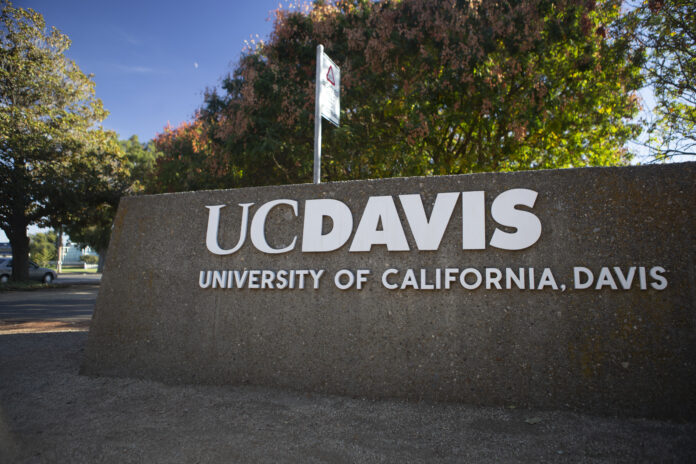
The labs relied on support from USAID, which has had its operations significantly reduced
By RIVERS STOUT— campus@theaggie.org
The College of Agricultural and Environmental Sciences announced on April 3 that UC Davis was closing the Feed the Future Innovation Labs. The research labs, whose funding primarily came from the federal government, were part of a United States Agency for International Development (USAID) initiative to reduce global hunger and secure U.S. fruit and vegetable supplies.
The larger Feed the Future Innovation Labs initiative, which funded labs across the country and abroad, included a Davis branch. Here, the program was composed of two parts: the Horticulture Innovation Lab and the Lab for Markets, Risk and Resilience (MRR). Both were told independently that they would stop receiving funding before the end of their contract with USAID, according to an announcement from the College of Agricultural and Environmental Sciences. Other labs in the program have also had their funding cut.
USAID has faced significant staffing and budget cuts since the inauguration of President Donald Trump, including cuts to many of its foreign aid and research programs. In total, the labs received about $36 million, according to usaspending.gov.
“[It was] really chaotic and discombobulating,” Erin McGuire, the director of the UC Davis Horticulture Innovation Lab, said. “We first knew something was amiss when the executive order to shut down foreign assistance while assessments [were going] through was a red flag, but we weren’t impacted because we were awarded funding for five years.”
Both the Feed the Future Innovation Lab for Markets, Risk and Resilience (MRR) and the Horticulture Innovation Lab, along with several other international projects, received stop-work orders from the federal administration in January, according to a UC Davis press statement on the issue. MRR was formally terminated in February. Nearly 95% of the allocated funds had already been spent on research projects.
McGuire described the immediate impacts of the loss of funding.
“We are in the middle of our grant cycle,” McGuire said. “All research is in the middle of the research cycle. Field trials are in the middle of data collection, and all of that is gone. Everyone is mid-stride, and we have to figure out how to stop that. We had 170 scientists that work on our research globally, and all of the sudden they didn’t have funding.”
The justification for shutting down the lab was that “the program wasn’t in the interest of the United States government anymore,” according to McGuire.
The labs primarily worked on “integrated pest management strategies, soil health, increased production, and postharvest loss,” according to its 2023-24 annual report. Though these research projects were largely conducted abroad, the implications the research held and effects it had on foreign populations may ultimately affect the United States’ own food chain.
“We had consistent food supplies because we invest in research and understanding crop diversity,” McGuire said. “If we stop doing that, we will not be able to feed ourselves in the way we’re used to feeding ourselves. We also have long-term established relationships that the U.S. deeply benefits from. Without access to this information, we’re trying to drive our food system blind.”
A university spokesperson said that UC Davis had received several dozen notices from federal agencies relating to specific grants or projects since the start of the current Trump administration.
“The affected grants cover a wide range of areas, including research related to cancer and Alzheimer’s disease, food production and safety, renewable energy, basic science and a great deal more,” the spokesperson said.
The loss of international research is likely to limit the U.S.’ power internationally, allowing other countries to fill the void.
“In our absence, other countries will step in,” McGuire said. “I don’t think Americans realize the strong presence the USA has in West and East Africa. […] The second we’re gone, other countries will step in because they’ll want that soft power, [it’s] hugely powerful. People don’t realise how powerful that is internationally, and other countries are chomping at the bit to have that power.”
The Feed The Future Innovation Labs are not the only UC Davis research programs to face possible budget cuts due to changes at the federal level. UC Davis administration and leadership are working on a case-by-case basis with researchers regarding federal notices, according to the university spokesperson.
“In each case, the Office of Research is working directly with the principal investigator and campus leadership to determine the appropriate course of action,” the spokesperson said. “In the case of research terminations, this may include filing an appeal directly with the agency, litigating matters in court and negotiating a financial settlement prior to winding down the research. These processes can take months and prevent us from sharing information publicly until complete. ”
Written by: Rivers Stout— campus@theaggie.org