





Debating college students for fun and profit
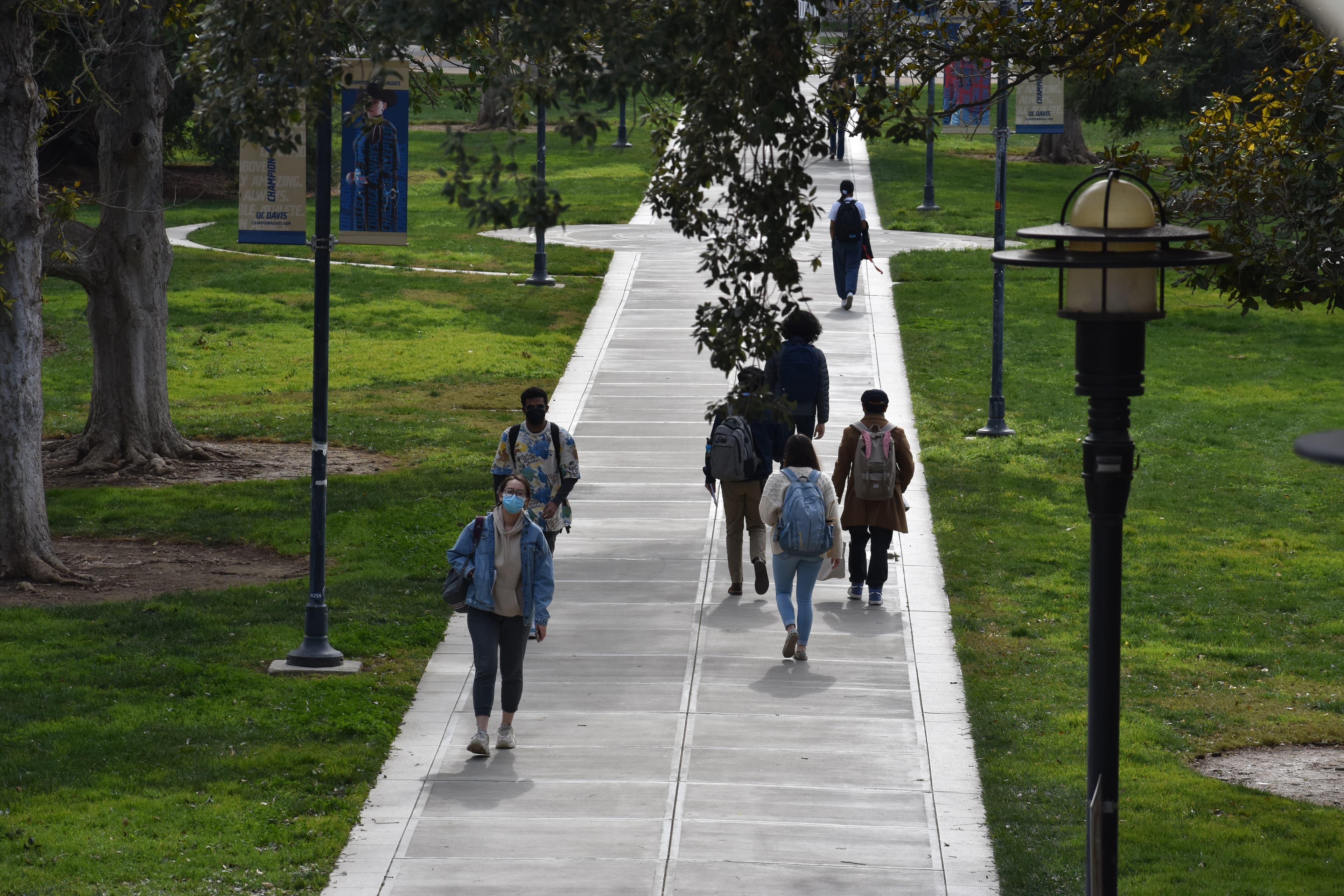
UC Davis students discuss the popularity of online content showcasing debates on university campuses
By LAILA AZHAR — features@theaggie.org
It’s a familiar scene by now: a well-known media personality stands confidently amidst a crowd of college students, as a well-meaning but perhaps slightly overconfident undergraduate attempts to articulate a point about gender identity or racial equity.
The student stumbles, backtracks, reaches for the right phrase. The crowd jeers and boos. Phones are out. Later, the footage will appear online under the title, “Woke college student destroyed by facts and logic,” or perhaps, “College social justice warrior gets owned in debate.”
Online personalities from across the ideological map have found that debating their opposition makes for reliably popular content.
Dean Withers, a popular livestreamer, often debates conservatives through TikTok Live. Jubilee, a digital media company with nearly 10 million subscribers on YouTube, has found success producing videos such as “1 LGBTQ+ Activist vs 25 Conservatives” and “Should the U.S. Deport Its Citizens?”
College campuses are a popular battleground for these debates, and college students are a popular opponent. Popular political commentator Ben Shapiro is known for his debate-style online content, often involving college students. One of Jubilee’s most popular videos, with nearly 30 million views, is “Can 25 Liberal College Students Outsmart 1 Conservative?”
Several of these debate-style videos have taken place at UC Davis, particularly in recent months.
In 2023, Charlie Kirk, co-founder of the political organization Turning Point USA and the “1 conservative” in the aforementioned Jubilee video, hosted a Q&A session at UC Davis, posted to YouTube as “Charlie Kirk debates College Students At UC Davis.”
This month, YouTuber and political commentator Brandon Tatum, otherwise known as The Officer Tatum, has posted videos including “Antifa Punks TRIED ME at UC Davis and FAFO!” and “Officer Tatum BATTLES HEATED Antifa Activists at UC Davis.”
Some UC Davis students have reported being approached on campus by people with microphones and cameras to film similar content.
As Sneha Manikhandan, a second-year neurobiology, physiology and behavior major, recalled, she and a friend were approached for a video as they were leaving the Memorial Union.
“The interviewer asked if we would be willing to participate in a five-minute interview and when asked what it was about, we were told it was about relationships and our ‘icks,’” Manikhandan said. “The more the interview went on, the more controversial the questions got, diving into gay marriage, men wearing makeup and my political viewpoints. These were topics I was not prepared to speak about, given that I was misled as to what the interview was about.”
About a week later, Manikhandan’s friends began sending her the two clips from the interview which had been posted on TikTok and Instagram.
“I don’t believe that my views were effectively communicated through the videos that the interviewer shared with his viewers as he clipped the segments of the interview that could be considered more controversial without giving the background of the conversation leading up to it,” Manikhandan said.
Manikhandan reported that while one of the videos received supportive comments, the other was met with thousands of negative comments, including some expressing racist sentiment toward her.
As students have pointed out, it often seems like the goal of these videos isn’t good-faith exploration of controversial issues, or even to persuade those with differing views.
To Nicole Lee, a second-year political science major, the goal seems to be simply entertainment.
“I worry about the people whose only way of being politically informed is through influencers,” Lee said. “It’s easy to see why people enjoy watching this content. It’s entertaining to watch people dunk on opinions you disagree with; It affirms your own beliefs and makes you feel smart. But that’s all it is: entertainment, not education.”
Lee went on to detail reasons why this content may be considered unfair.
“These people whose job is to talk in front of a camera debating a college student with no experience in the media is clearly unfair,” Lee said. “But even if it was a debate between two people on an equal playing field, the person with the camera still gets to edit the video and frame it however they’d like.”
Emerie Elrod, a second-year cognitive science major, pointed out that the people who create this content are often intentionally inflammatory.
“I don’t think the debates we see on TikTok are genuine,” Elrod said. “The end goal of these creators is to get as many views and likes as possible. Involving controversial topics makes viewers upset, therefore getting the video more engagement.”
With this in mind, she recommends students ignore creators seeking out debates.
“It’s not productive for anyone but the creators themselves when students engage,” Elrod said. “They ask questions that are meant to make us mad and discuss topics they know that the majority of university students feel strongly about. To engage with them is just giving them more power over you.”
Manikhandan expressed a similar opinion and provided advice for those who want to engage in seemingly harmless questions on TikTok.
“The best way to engage in TikTok debates is to either not [engage] or understand that not everyone will agree with you,” Manikhandan said. “If I had seen that video, I would have also thought we were salty teenagers. Without the full picture, viewers can only see a glimpse of your character. I would suggest clarifying where the content would be posted, the exact questions/topics they plan on discussing, and their social media account they plan on posting the clip on, to gauge the end goal of their video.”
At the end of Tatum’s most recent video on the UC Davis campus, a student who had been arguing with the YouTuber highlighted the artifice of the exchange, predicting how the YouTuber will depict him.
“You have this whole fucking set up where you’re farming clips, you’re farming this engagement,” the student said. “But I know, in the editing room, you’re gonna say look, look how these people are shutting down conservative voices on campus. That’s your whole game. It’s been played out. It’s been done for like 10 years.”
“You’re playing in the game with me,” Tatum said in response. “You’re complicit.”
The moment is not presented as a reckoning, or even a critique. The student’s comments are not examined, nor are Tatum’s. Instead, the exchange becomes the dramatic finale of a video titled “WOKE UC Davis Student CALLS ME A N*ZI Then CRASHES OUT!” — another installment in a genre that, as these UC Davis students have pointed out, funnels political discontent into bite-sized entertainment.
Written by: Laila Azhar — features@theaggie.org