






The history of Halloween
A look into popular Halloween traditions and UC Davis students’ favorite ways to celebrate
By AMBER WARNKE — features@theaggie.org
As Halloween is just around the corner, students are starting to participate in traditions long associated with the holiday. From buying costumes to carving pumpkins, the beginning of October denotes a segue into the spooky season. Despite the popularity of this iconic holiday, many do not know where these traditions came from, or why we still celebrate them the way we do today.
“I know [the origins of Halloween] are pagan from Samhaim, and how [practitioners] believed it was when the veil between this world and the spiritual world was the thinnest,” Nirvana Ziaie Nejad, a fourth-year English major, said.
Like Nejad explains, Halloween’s roots can be traced to the Celtic festival of Samhaim, or “summer’s end” — a Celtic harvest festival dating back at least 2,000 years. The celebration involved bonfires meant to bring light into the dark part of the year and ensure survival through the winter by pleasing the deities. This was a time when it was believed that the veil between the mortal and spirit worlds was the most fragile, allowing spirits to enter the world of the living.
This explains the basic origins of the holiday, but many people still wonder why Halloween famously includes the tradition of dressing up in costume.
“My favorite part of Halloween is getting to dress up with friends and planning a group costume — I guess that’s also something that would be interesting to know why we do,” Sarah Lazureanu, a second-year managerial economics major, said.
Costume-wearing came about as a way for people to try to frighten off evil beings who managed to enter our world. However, this was not the only purpose of the costumes — Samhaim also offered an opportunity for individuals to cross-dress, granting celebrators the rare opportunity to don clothing of the opposite sex.
The chance to dress up and express oneself in different ways through costumes has been one of the most consistent aspects of the holiday throughout time.
For many at UC Davis and beyond, this is their favorite aspect of the holiday — this especially rings true for Harmony Aragon, a first-year molecular and medical microbiology major.
“In a perfect world, anyone would wear whatever they want and that would be normal, but we have specific holidays meant for that, so that’s when people can have fun,” Aragon said.
Nowadays, costumes often go hand-in-hand with trick-or-treating, a longstanding tradition when children go door-to-door asking for candy while in costume. There are multiple traditions that trick-or treating could have stemmed from, including the Celtic practice of leaving out food to appease spirits during Samhaim.
By the Middle Ages, “Mumming” became a tradition when people would dress up as ghosts and demons, performing and entertaining in exchange for food or drinks. Lastly, trick-or-treating may have originated from young people committing acts of vandalism and occasional violence on the holiday. In response to this, family-friendly trick-or-treating came about as a way to give the youth a way to celebrate without delving into chaos. All these factors may have contributed to the creation of the modern trick-or-treating tradition as we know it.
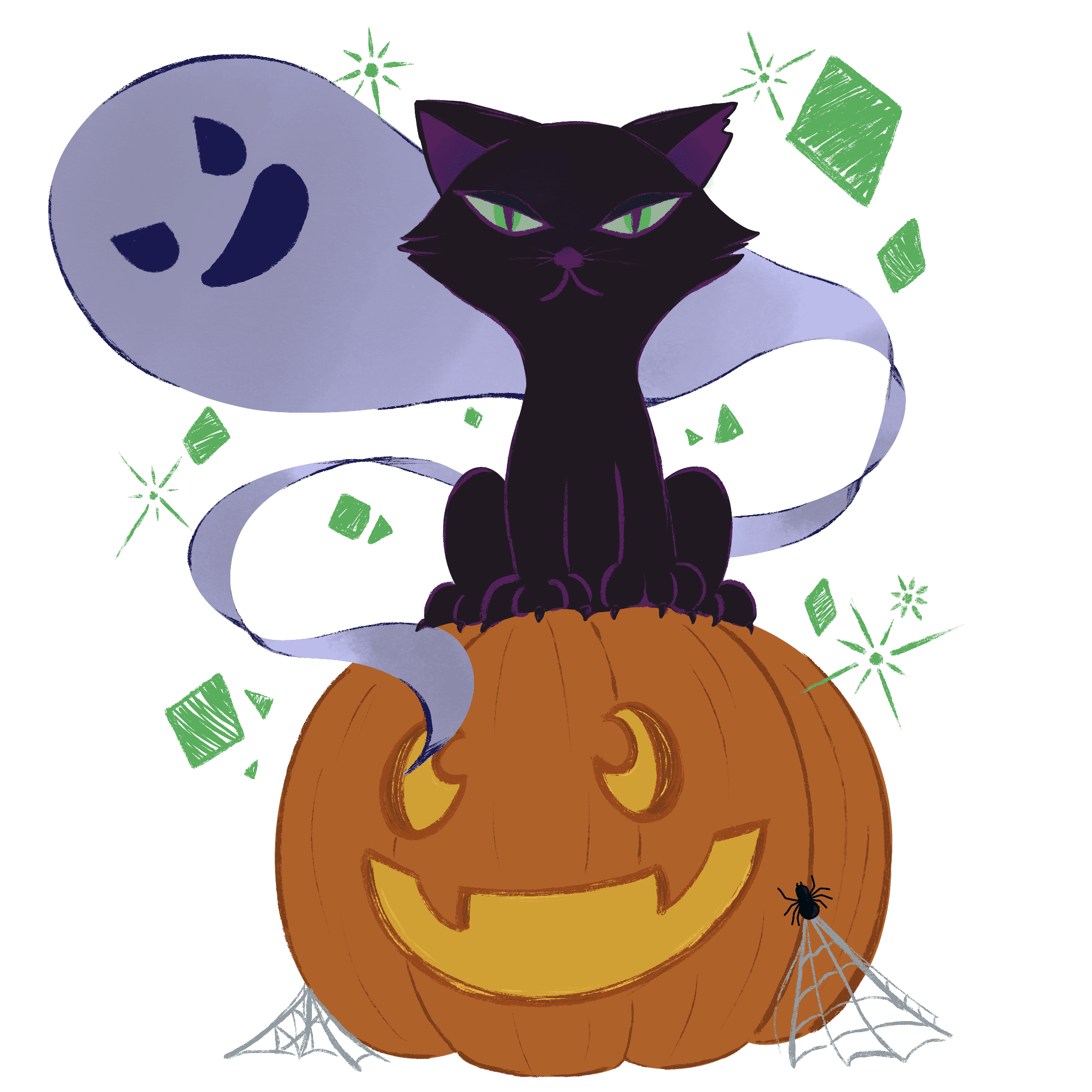
Another key part of Halloween celebration is pumpkin carving, which originated as turnip carving in Ireland. According to legend, a man named Stingy Jack once trapped the Devil and only released him after making him promise to never send Jack to Hell. Instead, when Jack died and was rejected from Heaven, he wandered earth as a ghost for eternity, and the Devil gave Jack a carved out turnip with a burning coal for light. This led to turnip-carving as a way to ward off Jack’s spirit, bringing about the name “Jack-O-Lantern.” When the tradition was brought over to America by Irish immigrants, people began using pumpkins instead.
All of these traditions have come together to create the contemporary version of Halloween that we celebrate today. While college students look forward to Halloween parties or scary movie nights, they can remember the origins of the same celebrations they continue today. When Aggies dress up, they carry out the same human desire to play around with self-presentation, just like Celts had thousands of years ago.
Ultimately, through all its traditions, Halloween is about togetherness — whether that be partying, planning costumes, carving Jack-O-Lanterns or watching scary movies. The thrill of fear we associate with the holiday is only meaningful when combined with the realization that there is nothing to be afraid of after all, as these Davis students have shared, so long as we surround ourselves with care and community.
Written by: Amber Warnke — features@theaggie.org