





‘Quiet piggy!’ — Trump’s rhetoric towards female journalists
UC Davis students discuss Trump’s comments and the normalization of misogyny
By VRITI SHAH — features@theaggie.org
Throughout President Donald Trump’s career, he has been faced with many allegations of verbal and sexual misconduct toward women. Examples of this behavior have ranged from allegations of abuse to his apparent closeness with convicted child sex offender Jeffrey Epstein. In each of these allegations against Trump, one thing is clear — his history of alleged misogyny has left a considerable imprint on the media.
Female journalists have historically experienced harassment within the field; with the rise of primarily online media, up to 73% of female journalists have experienced some form of online harassment or threat, according to the International Women’s Media Foundation (IWMF). Despite this pre-existing trend, it seems to have only been further exacerbated under the Trump administration.
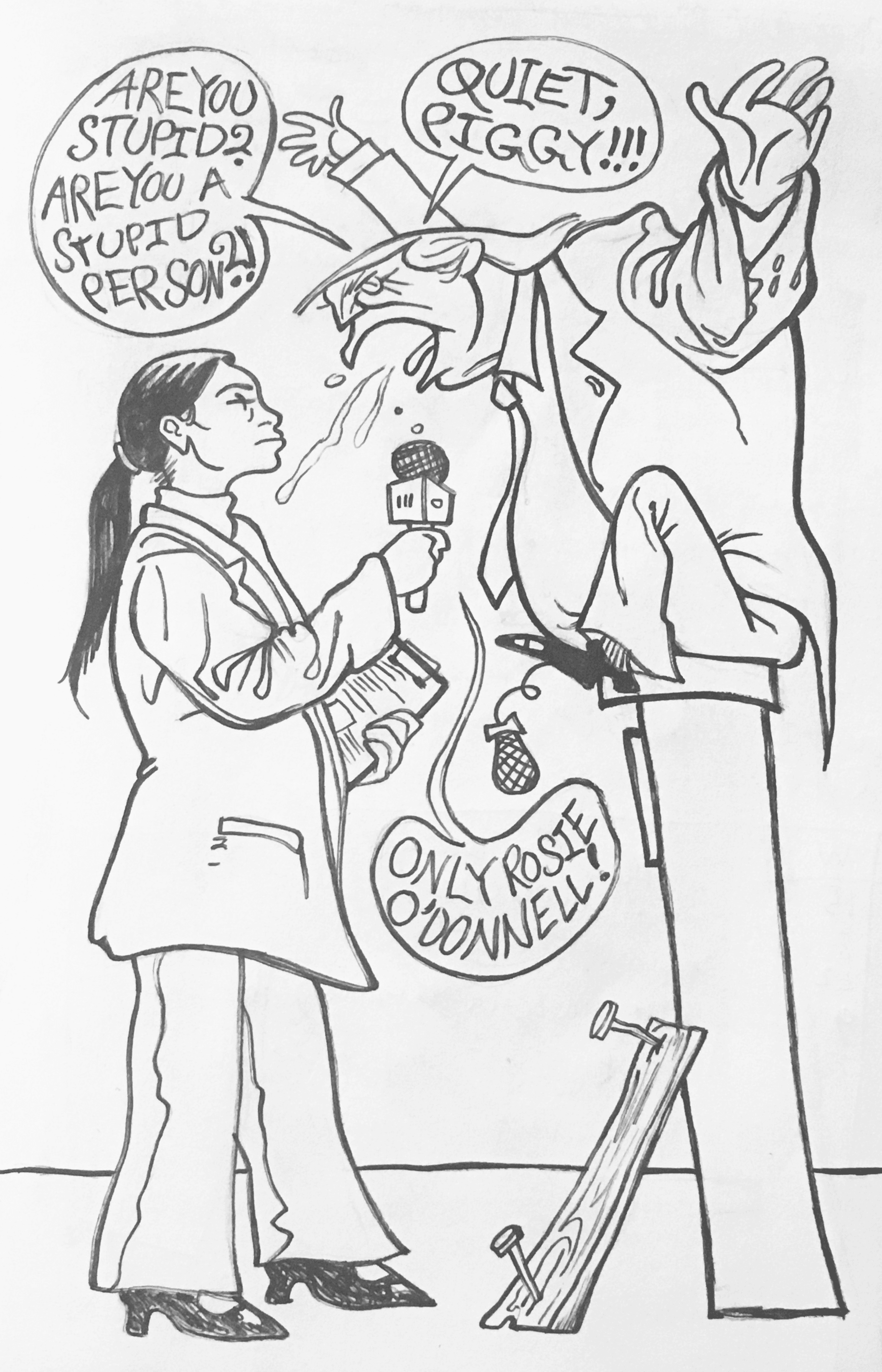
Recently, President Trump has been under fire for his treatment of female journalists while speaking to the press. On one occasion, after being asked by a female reporter about his involvement with Jeffrey Epstein, President Trump responded by yelling, “Quiet, piggy!”
Immediately, this remark was faced with varying opinions. While many were quick to criticize Trump’s comment, others characterized it as a typical response from the president. White House Press Secretary Karoline Leavitt defended his remark.
“He calls out fake news when he sees it and gets frustrated with reporters who spread false information,” Leavitt said. “But he also provides unprecedented access to the press and answers questions on a near-daily basis.”
When asked about the impact of Trump’s rhetoric toward female journalists, UC Davis students had their own differing views.
“I think [it’s] definitely rude and honestly disgusting,” Shae Addiego, a first-year viticulture and enology major, said. “I think it’s honestly really gross, and if he continues it, [treatment of women in press] is just going to get worse.”
It is true that many believe Trump’s rhetoric normalizes misogynistic behavior. In fact, this has not been a one-time occurrence. After another female journalist, Mary Bruce of ABC News, asked about the release of the Epstein files, she was met with a similar response.
“It’s not the question that I mind. It’s your attitude,” Trump said. “I think you are a terrible reporter. It’s the way you ask these questions. You start off with a man who is highly respected, asking him a horrible, insubordinate and just a terrible question.”
It is clear that the president’s behavior toward female journalists has become a pattern. Many at UC Davis believe that this pattern has and will continue to have detrimental effects on women working in the press.
“Well, [Trump’s rhetoric] obviously has a negative impact towards [female journalists],” Eva Giesen, a second-year sociology major, said. “For one thing, it may hold them back from actually continuing their career as a journalist — but also how viewers are treating them when they’re doing their job.”
Giesen continued to discuss the negative impact of Trump’s rhetoric towards female journalists, suggesting that this power imbalance will further escalate tensions between politicians and the press.
“In general, [it’s] just giving the idea that [leaders] can do whatever they want since they are in a higher power […] that they could just treat people the way they want,” Giesen said.
Caleigh Carlisle, a first-year undeclared student, also believes that President Trump’s rhetoric is alarming, particularly concerning Americans’ freedom of speech and press laws.
“It’s unacceptable,” Carlisle said. “I think that [in] the U.S. Constitution we have the right to free speech, and we have a right to journalism. The presidents before Trump, if I’m correct, always had journalists come into press conferences and were allowed to ask the question[s] they needed to ask. [Trump] has been very much restricting that free voice.”
These UC Davis students suggest that Trump’s rhetoric toward female journalists has had a significant impact on American freedom of press and the outlook toward women as a whole.
“He’s [behaving] in a disgusting manner […] he’s infantilizing women, and that’s not okay,” Carlisle said.
Written by: Vriti Shah — features@theaggie.org