






UC Davis students reflect on the news following the Jan. 3 U.S. intervention in Venezuela
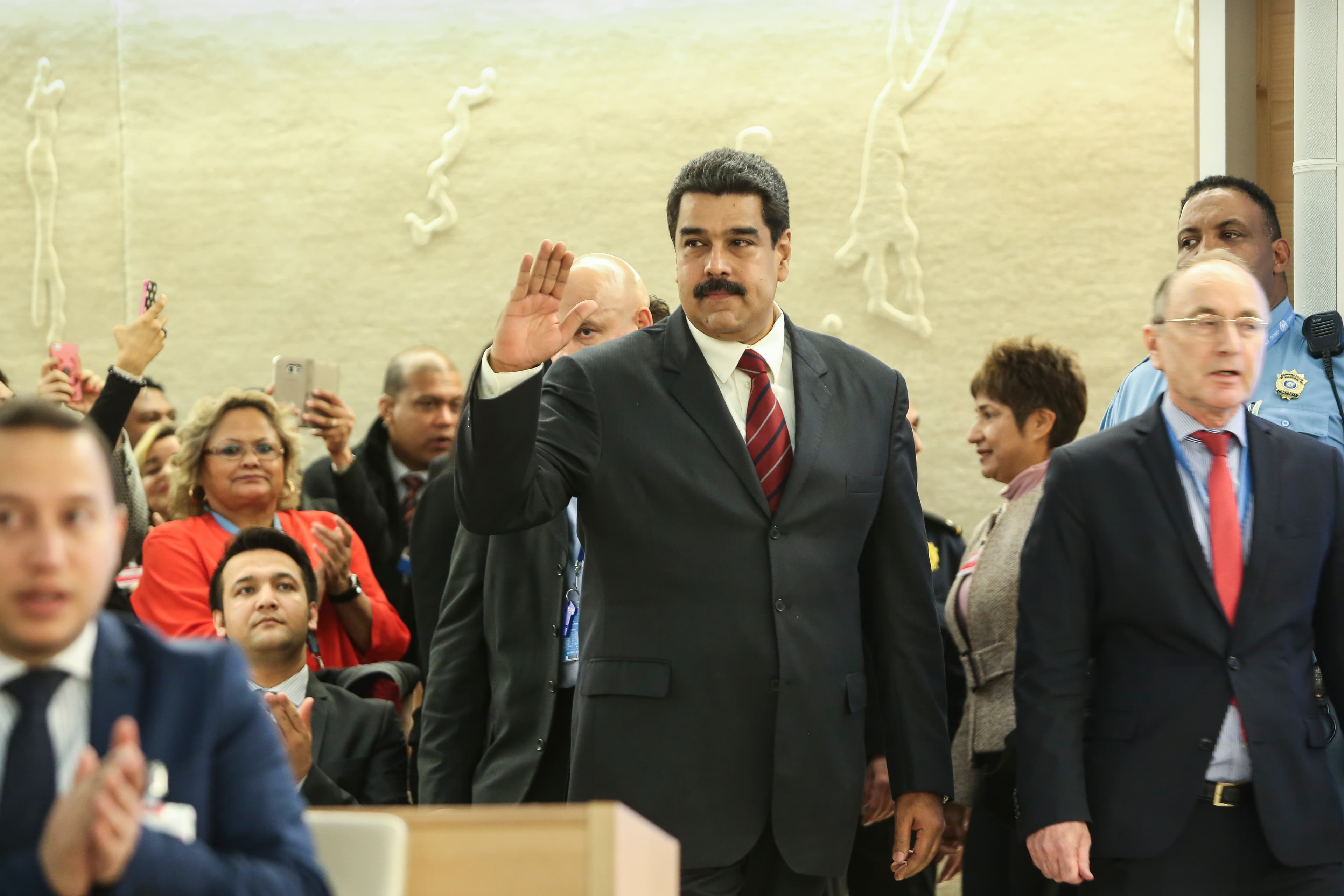
Students discuss information sourcing and ongoing uncertainty about current events
By AMRA ABID — features@theaggie.org
In the early hours of Jan. 3, 2026, United States special forces led a siege into Venezuela’s capital Caracas and captured Venezuelan President Nicolas Maduro on charges of narco-terrorism, possession of weapons and drug transportation.
Although tensions between the U.S. and Venezuela have been building for months, news of Maduro’s arrest sent shockwaves through the media, as the event marked the first-ever known large-scale U.S. attack on South American soil, with an estimated 75 casualties.
Despite the attack flooding news outlets worldwide for several days following the event, many of the details during this time remained unknown, and the complicated politics behind the attack have left many divided over what to think. Some, including the United Nations (UN) and several U.S. senators have condemned the attack, accusing the U.S. of violating international law by using military force against other countries and failing to respect their sovereignty. Others, such as Nobel Prize Winner María Corina Machado and U.S. representative Mike Walz, have lauded the Trump administration, calling Maduro a “dictator” and claiming he fraudulently stole the Venezuelan election.
Although forming opinions on the matter may be difficult because of the lack of information available around the facts of the operation, mass videos circulating on social media of Venezuelans across the world celebrating has contributed to shaping many first impressions of the attack.
Federico Jimenez, a UC Davis alumni with a Bachelor of Science (B.S.) degree in computer science now working for UC Davis Information and Technology Services (IT), is one of many Americans grappling with difficulty drawing conclusions from conflicting media narratives.
“I’ve seen like a big old parade of them just really happy and saying that they’re just being grateful,” Jimenez said. “It’s tough to [form an opinion] because they seem really happy about it, but it’s also like, I don’t know.”
Although Jimenez believes the U.S. isn’t primarily interested in the betterment of the Venezuelan people — rather in benefiting from Venezuela’s abundant natural oil deposits, as the country has the largest in the world — posts on social media have made it difficult to form an opinion; platforms like X and Instagram are abundant with media of Venezuelans across the world celebrating Maduro’s deposition.
Prabhjot Bedi, a second-year molecular and medical microbiology major, expressed how much of the content he’s seen is at odds with his own preliminary opinions on the matter.
“There was this one TikTok — there was this one guy, he was running around, there was a whole party and everyone was super happy,” Bedi said. “So I was like, ‘Okay, good. So we maybe did something fine, right?’ Now I’m like, ‘Who knows?’”
Despite the large volume of these types of videos, they still only show a small portion of reality. Many of the videos depicting celebrations only show the reactions of Venezuelans living in other countries, such as the U.S. and Chile, which may not be equally representative of sentiments held by Venezuelan citizens themselves.
Following the attack, the majority of citizens within Caracas were largely staying at home, stocking up on essentials and keeping generally low profiles, according to reporters from The Guardian. In the direct fallout of the siege, locals clearly felt fear and uncertainty about what the future holds for their country.
Nevertheless, it has still been reported that there are smaller numbers of Venezuelan citizens taking part in public displays, with both celebrations and protests against Maduro’s deposition. Even then, however, much of the Venezuelan people’s sentiments are unseen by the global media due to the censorship and detention the journalists on the ground in Venezuela are actively facing.
These gaps in real-time reporting have not only amplified misleading content, but have also allowed plenty of room for misinformation to spread. Theo Hartlaub, a third-year community and regional development major, said he is wary of the content coming out of what remains a complicated, politically charged and largely uncertain story. Though he mainly sources his news from outlets like the Associated Press news and Al Jazeera in addition to social media, he emphasized remaining cautious regardless.
“Yeah, like I’ll go on Twitter […] and I’ll see videos [of Venezuelans in Caracas celebrating] and there’ll be like a community note [saying] it’s like this video is from 2024 following a soccer game or something like that,” Hartlaub said.
The post to which Hartlaub was referring was by right wing conspiracy theorist Alex Jones captioned “Millions of Venezuelans flooded the streets of Caracas and other major cities in celebration of the ouster of Communist dictator Nicholas Maduro.” The video, which turned out to be extremely outdated, does in fact show the streets of Caracas filled with Venezuelans — but it was filmed 18 months ago, instead displaying anti-Maduro protests following the disputed presidential election. The post is still up and has garnered up to 2.2 million views on X.
Though the majority of social media content may not be explicitly misinforming, the nature of social media algorithms are personalized to each individual user and can easily skew opinions, misrepresent reality and present dichotomies that are much more extreme than they actually are, according to Hartlaub.
“People who might support intervention in Venezuela, obviously they might be reposting, liking, whatever, videos of people protesting in celebration,” Hartlaub said. “And then, I’m sure that there are also plenty of people who are opposed to U.S. intervention. There are people protesting like either way [and] people are just trying to stay safe. So when I see those videos, I just take them with a grain of salt. I don’t really think it shows the full picture. Obviously, there are going to be videos cutting either way.”
Written by: Amra Abid — features@theaggie.org