The recent, short-lived TikTok ban might have deeper implications than we think
By SABRINA FIGUEROA — sfigueroaavila@ucdavis.edu
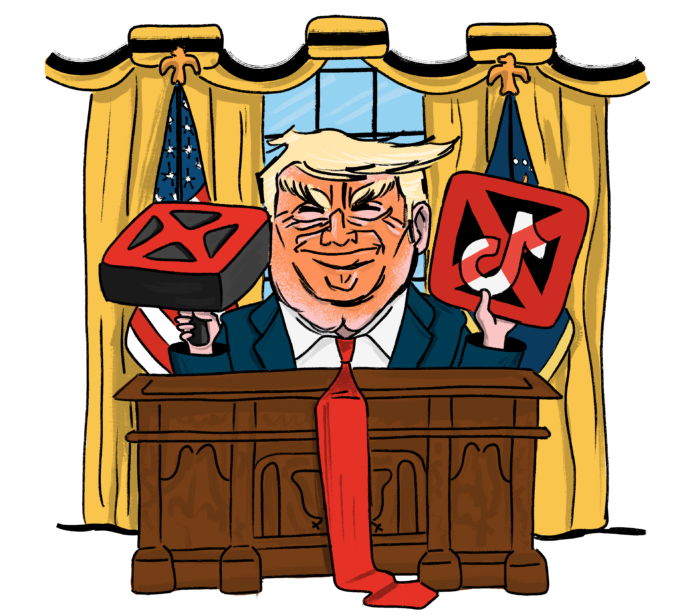
In 2024, the government passed a bill that would ban TikTok in the United States if it was not sold to an American company by Jan. 19, 2025. While many did not believe that statement to be true, it eventually occurred — hours ahead of time. However, TikTok wasn’t gone for long: The ban was suddenly lifted after just 12 hours for many American users.
Many in the U.S. were confused as to why TikTok would go down for only a short period of time and why the app displayed a message thanking President Donald Trump — even though he was the one who originally wanted to ban the app back in 2020.
TikTok has been a powerful social media app that has managed to spotlight the ugly truths of the world, such as police brutality and discrimination. Not only this, but it has also allowed for millions around the world to organize, protest and learn things more efficiently. All of this made the app an immense check on power — a check that didn’t necessarily have to come from journalists. Perhaps this is why the government wanted to ban it in the first place.
However, in recent press releases, Trump has appeared to have changed his mind on the TikTok ban, though not because this action is unconstitutional (according to the First Amendment). Instead, he changed his mind after winning the 2024 presidential election with the help of popular right-wing TikTok influencers and streamers, which provided him a crucial increase in percentage of the younger vote.
That being said, there are deeper implications — an ulterior motive — behind his change of opinion and stance on the TikTok ban. TikTok has a largely younger audience, and “saving” it would pin him as a savior in their eyes. In the end, he’d get a bit more empathy and a little less resistance from a younger generation who despised him and vowed to continue to do so.
Nevertheless, a vow is simply not enough. There will be people in the U.S., especially among the younger generation, who will fall in line with the entire “TikTok Ban Plan” that Trump is currently leveraging to gain support. It is important to think critically about every piece of media we consume — none of us are immune to propaganda.
To reiterate, the ban being lifted is a good thing, don’t get me wrong — U.S. residents will still have this outlet to get the word out about discrimination, events, protests and more. However, how well this outlet will work during Trump’s presidency seems to be unclear.
Trump now has presidential immunity, after a Supreme Court ruling in July 2024, and has proved he can exercise this significant power with the over 20 executive orders signed in his first days in office, many undoing years of social justice work by and for minorities. He also seems to have the tech industry wrapped around his finger, with Elon Musk, Mark Zuckerberg, Jeff Bezos, Shou Zi Chew and more in attendance at his inauguration. All of these factors can come together to help him inflict serious damage to U.S. society, including pushing censorship and propaganda on the social media apps we use.
This is certainly not the time to make jokes, nor is it the time to take things lightly. The TikTok fiasco of January 2025 is just the beginning of what may be in store for us, so it’s incredibly important to keep our eyes wide open. We are just as powerful as our leaders.
Written by: Sabrina Figueroa — sfigueroaavila@ucdavis.edu
Disclaimer: The views and opinions expressed by individual columnists belong to the columnists alone and do not necessarily indicate the views and opinions held by The California Aggie.