Data regarding viruses from animals and their potential to spread to humans is analyzed with the help of Artificial Intelligence
By KATIE HELLMAN — science@theaggie.org
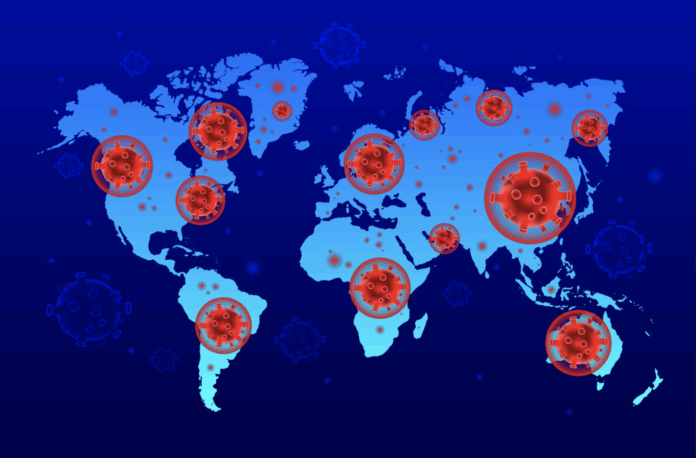
With new COVID-19 cases on the rise, we are reminded of the ongoing effects of the pandemic that wreaked worldwide havoc. To stay on top of data regarding future possible pandemics, UC Davis experts are using Artificial Intelligence (AI) to identify viruses that have the potential to become global health threats.
The Biothreats Emergence, Analysis and Communication Network (BEACON) project has a disease surveillance program, which will be combined with UC Davis’ Virus Intelligence & Strategic Threat Assessment (VISTA) project and the Coalition for Epidemic Preparedness Innovations (CEPI).
BEACON utilizes data from disease-tracking systems and then uses AI to organize the data and assess the level of threat that each virus poses, and it is the first open-access surveillance program for infectious diseases with this purpose.
“Leveraging advanced artificial intelligence (AI), large language models (LLMs) and a network of globally based experts, BEACON rapidly collects, analyzes, and disseminates information on emerging infectious diseases affecting humans, animals, and the environment,” BEACON’s website reads. “By providing timely and actionable insights, BEACON’s mission is to empower communities and public health officials to take proactive measures, preventing outbreaks and mitigating the spread of diseases.”
The goal of these projects is to conduct risk rankings for pandemic threats with the help of AI tools. These risk rankings specifically analyze which viruses have the greatest risk of spillovers from animals to humans and which may result in the greatest incidence of illness and mortality.
Over half a million animal samples from 28 countries were collected for this project, and 900 wildlife viruses were analyzed to rank the likelihood of spillover from animals to humans.
The benefits of using AI for these methodologies are further discussed in an article by the Emerging Pathogens Institute, University of Florida.
“Mechanistic models, the traditional way to model disease outbreaks, aren’t perfect,” the article reads. “Their reliability depends on accurate data. In large quantities, this data is overwhelming, often simplified and sometimes unavailable for modeling. To add another layer to the laboriousness, data from satellites, social media and search queries requires time-consuming efforts to sift through and manually extract useful information.”
This is where AI comes in to help; there are so many ways to utilize its functions to analyze and assess data, leading to improved pandemic surveillance and preparedness.
Written by: Katie Hellman — science@theaggie.org