Do cooler temperatures and less daylight make you feel tired? Your circadian clock may be shifting due to environmental cues
By KATELYN BURNS — science@theaggie.org
October has come to Davis. With cooler temperatures and less daylight, it’s natural to feel more tired. Your body’s internal clock, called the circadian clock, takes cues from the environment to help you stay alert in the day and sleep at night. Environmental cues, like light and temperature, reinforce or reset your circadian rhythms.
When you wake during the day, the light sets your circadian clock. However, if you wake during the night and turn on lights — including your phone’s light — your clock resets and can interfere with sleep.
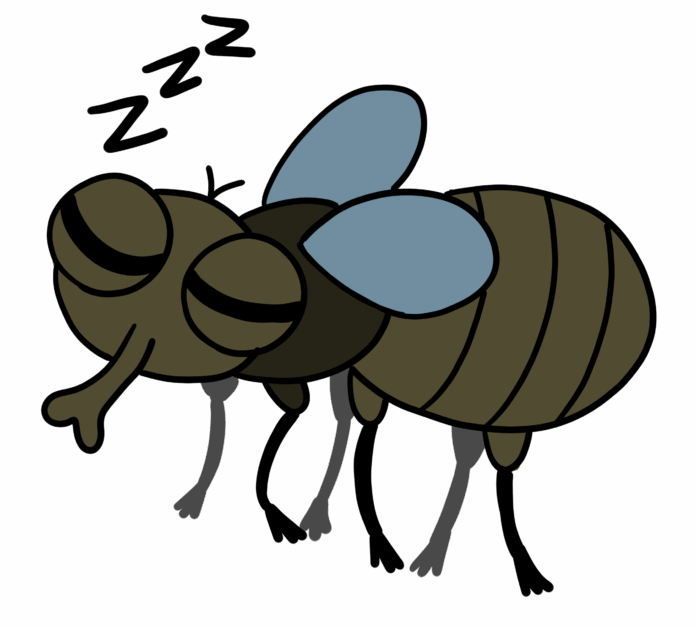
Fumika Hamada, a professor of neurobiology, physiology and behavior at UC Davis, uses flies to study temperature and better understand circadian rhythms.
“Temperature is also able to set the clock, [which is] one of the reasons we have body temperature rhythms,” Hamada said.
Humans and flies heat their bodies differently. Humans generate heat from their own energy because we are endotherms, whereas flies heat their body using the environment because they are ectotherms.
Flies are smaller and easier to manipulate, which makes them useful models in science. Additionally, ectotherms allow researchers to observe behavior to monitor body temperature changes, since ectotherms use the environment to heat their bodies. Flies have a similar body temperature rhythm to humans, which makes them a useful tool when creating comparisons. The results from such studies could then be used to find treatments for various sleeping disorders.
“The circadian neuron system receives temperature signal(s) and integrates this information with circadian information to orchestrate suitable behavioral responses,” a PubMed article reads.
Other ectotherms seen commonly around Davis are lizards. During the day, lizards are often visible in the sun absorbing heat, which increases their body temperature. During the night, they disappear. Their temperature preference rhythm is observable via their behavior.
Despite differences in heat production methods, both the body temperatures of flies and humans cycle from low in the mornings to high in the evenings, making flies an ideal model for studying body temperature rhythms.
“The temperature decrease is an important cue for the onset of sleep,” Hamada said.
You can help cue the onset of sleep using methods like lowering the thermostat temperatures at night or showering before bed to lower your body temperature. With cooler temperatures and less daylight, working with your circadian clock is essential to staying alert in the day and getting enough sleep at night.
Written by: Katelyn Burns — science@theaggie.org