‘Breaking the Deadlock’ aired its third episode, ‘Truth Under Fire,’ on Oct. 21
By ROBIN FRANKLIN and ASA GENTRY — campus@theaggie.org
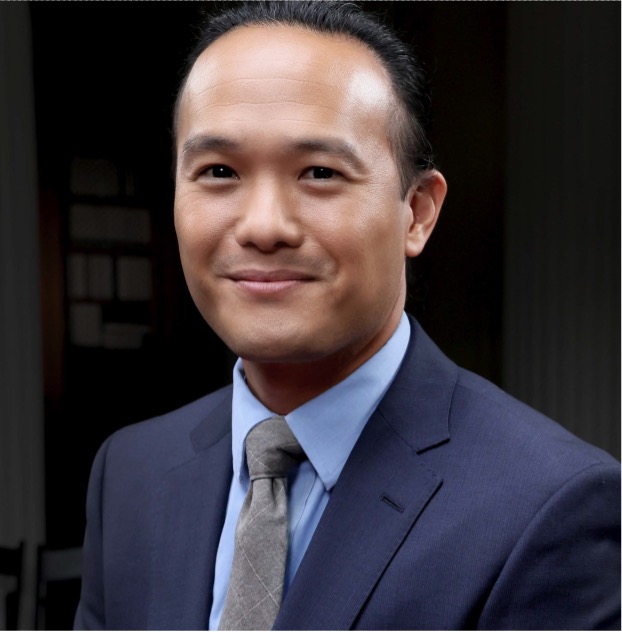
UC Davis Law Professor Aaron Tang is returning to the Public Broadcasting Service (PBS) series “Breaking the Deadlock,” where he serves as host and moderator. The program’s most recent episode, which aired Oct. 21, follows a group of panelists wading through a hypothetical case of misinformation.
Each episode of the public affairs series features a set of panelists, often from opposing and diverse backgrounds, who are presented with a scenario that is both plausible and relevant to the modern political landscape. The setting is conceived with help from outside experts who bring the scenario together over the course of a month.
Tang has the key role of delivering the scenario to the panel. He memorizes the details of the situation well enough to shepherd the panel and answer any questions they have. With many opposing viewpoints present, he encourages the panelists to find common ground and debate approaches to fictional political problems in hypothetical dilemmas.
“I most enjoy watching panelists reach surprising decisions in ways that do not always follow baseline assumptions about partisanship and ideology,” Tang said via email. “It turns out that many people actually do want to find common ground on hard issues, rather than merely ‘own’ the other side. It’s just that our real life politics is so divisive that it occludes genuine shared values that people often hold in common.”
The latest episode, “Truth Under Fire,” was filmed in front of a live audience on Sept. 21 at The New York Historical. The hypothetical scenario follows the spread of disinformation on social media after the passing of a controversial school board mandate in a fictional school district.
Panelists on the program include: journalist Soledad O’Brien; conservative pundit Ann Coulter; NBC News Senior Business Analyst Stephanie Ruhle; Professor of African American Studies at Princeton University Eddie Glaude Jr.; and Co-founder and CEO of Moms for Liberty Tina Descovich.
“They do not have advance knowledge of the scenario,” Executive Producer John Bredar wrote via email, referencing the panelists. “They don’t know what’s going to happen. In [the show], it’s ‘reality improv’ with Aaron as the conductor.”
Off the air, both friendships and disagreements bloom in the green room through conversations off camera, according to Tang.
“Prominent figures who we recognize from our politics are also ordinary people, and some of the conversations that take place in the green room can be surprising, whether because there are surprising friendships, or because the disagreements we come to expect actually do surface,” Tang said.
The PBS team conducted a nationwide search for the moderator role, and invited Tang to audition as host after watching his commencement speech to the UC Davis Law School’s graduating class of 2019. One of the show’s executive producers found the clip on YouTube and PBS deemed the speech “extraordinary,” according to Bredar.
After his initial interview, the production team had Tang perform in a rehearsal episode, complete with a full practice scenario and even a practice panel. The team did this with multiple candidates from the nation’s top law schools and law firms. Tang, who clerked for Supreme Court Justice Sonia Sotomayor, stood out the most, according to Bredar.
“Aaron delivered a bravura performance,” Bredar said. “He’s incredibly smart, very funny, thinks quickly on his feet, and has a warm, sincere rapport with the panelists. In the try-out scenario, he even modified the ending on the fly to deliver a final riveting twist. Hands down [the] best candidate.”
For his part, Tang hopes that audiences will be receptive to the dialogue and conversations at the heart of the program.
“It’s been a wonderful opportunity to do these shows, and my hope is that viewers will watch and be both entertained and better informed,” Tang said. “We won’t always agree as Americans — far from it. But if we are willing and able to sit down and really listen to one another, we might find that the spaces between us are different in size and character than we thought.”
Written by: Robin Franklin and Asa Gentry — campus@theaggie.org