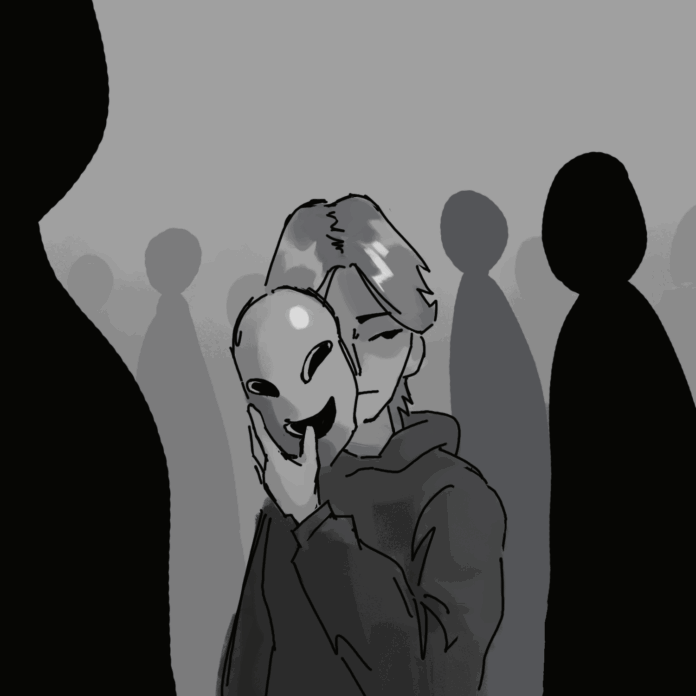
Imposter syndrome in college can be heavy, but you’re not alone
By SABRINA FIGUEROA — sfigueroaavila@ucdavis.edu
My first year at UC Davis was a crushing experience. I remember sitting in an elementary statistics exam, staring blankly at the first page. More and more students trickled out of the room as time went on, and I couldn’t help but think: “I used to be good at math. What went wrong?” In the span of just two quarters, I had convinced myself that I was not as smart as everyone else here; that I was mediocre at best.
As first-generation students, attending one of the best public schools in the country is an expectation that you feel obligated to achieve, and it’s a veritable breeding ground for imposter syndrome. Once you do reach it, it’s like navigating Daedalus’ Labyrinth pretending you’re Theseus until the Minotaur finds you and tears you to shreds.
During winter quarter of my third year, the Minotaur finally caught up to me. I couldn’t deny that, no matter where I looked, I felt like I didn’t fit in at all. Yet, my family members and the high school students I worked with were still enamored with the fact that I went to UC Davis, a well-renowned university. The reputation behind the name alone made them think I was a genius, and I couldn’t help but feel like their beliefs were far from the truth. I felt guilty, like I was lying to them, and pressured myself to keep going just so I wouldn’t disappoint them.
I did push myself, though I can’t say I did it effortlessly — I even looked into taking time off — nor did I do it by burying all the stress down and hoping it went away.
“I keep thinking, ‘What went wrong?’” I said to a counselor I discussed this with. To which they said to me: “that’s not the question you should be focusing on. We always wonder ‘what went wrong,’ or ‘where did I go wrong,’ but the truth is that it’s not really our fault, sometimes our situations are simply inherited and we have to keep working on it to make it better for ourselves or others.”
Especially as first-generation students, so much of what we feel is the result of the situations we were born into. Some of us don’t have the same resources or knowledge as our peers because we are the first to go through this process. Some might feel isolated because they don’t see other students of their ethnicity or race around them, often due to historical prejudices in education and housing. Some might have to work multiple part-time jobs to support themselves as students because they come from a low-income household. None of that is their fault; it’s systematic. Time spent trying to figure out how you “went wrong” — when you clearly didn’t — is time wasted; you’re looking for something that doesn’t exist.
College was not a choice for many of us. It was an expectation, and without a real familiarity with the American education system, it feels even heavier. None of that is your fault, nor is it anyone else’s; it’s a situation born out of years of biases within our world. Blaming ourselves only takes away accountability from all the broken systems that need to be fixed.
Imposter syndrome can be lonely, too. It makes you feel like no one else is as lost, that everyone has their life figured out. But that is not true; college is a time where people are figuring things out. From learning how to study, to switching majors multiple times, to changing career paths, we are all navigating the Labyrinth that is adulthood. Even if it doesn’t seem like others are in the same position, life is merely a performance — this is no different.
To any student — new or old, first-generation or not — who is feeling like they don’t belong here, you do. The very fact that you were accepted into this rigorous institution only proves that you have the potential to grow into who you would like to be, even if you don’t know what that is yet. Allowing yourself grace — to ask others for help, to accept you’re lost, to accept and learn from a low grade — is one of the strongest, kindest and most intelligent things you can do for yourself. You do belong.
Written by: Sabrina Figueroa — sfigueroaavila@ucdavis.edu
Disclaimer: The views and opinions expressed by individual columnists belong to the columnists alone and do not necessarily indicate the views and opinions held by The California Aggie.