Diving into the dynamics of focus and certain ADHD traits
By EMILIA ROSE – science@theaggie.org
We all get distracted sometimes. Maybe even right now. Maybe you’re distracted while reading this, preoccupied with some other part of your day. But what is distraction, and why are we so quick to demonize it?
When our minds drift during work or study, we often get frustrated, as if complete focus is the only kind of thinking we allow. But why? There are a surprising number of levels to this question and to the types of distractions we experience. This is the crux of mind-wandering and how it both helps and harms us — especially for individuals with attention-deficit/hyperactivity disorder (ADHD).
At the 35th annual European College of Neuropsychopharmacology conference, preliminary research featured two studies involving two independent groups. Both found a positive correlation between measured creativity and people who self-reported mind-wandering.
Even if this is early-stage research, some natural questions arise: How do you measure levels of creativity? How reliable are the self-reports? Yet, despite these uncertainties, the study points towards a fascinating implication that certain types of mind-wandering are linked to creative thinking.
Before going any further, it is essential to establish a definition for what “mind-wandering” is. UC Davis Professor of Psychology Dean Simonton commented on the neurological process of mind-wandering.
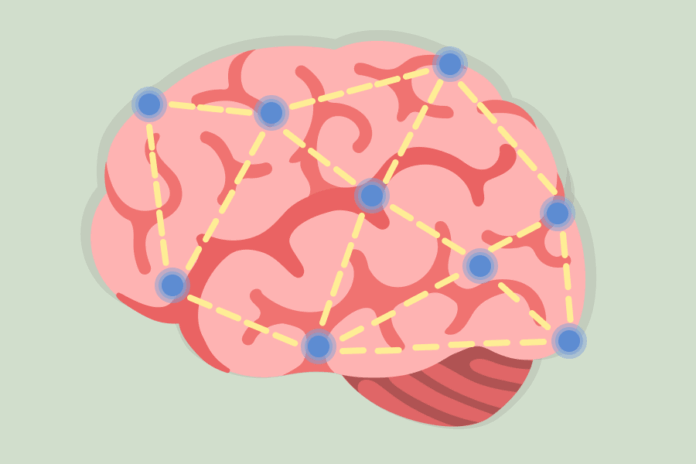
“Mind-wandering occurs when conscious thought is no longer under executive control, resulting in ‘defocused’ or ‘disinhibited’ attention,” Simonton said. “This cognitive state is often associated with the brain’s ‘default mode network’ in which electrical activity becomes less concentrated on a particular task.”
Additionally, Simonton further explained the connotations of ADHD.
“The link to ADHD is most accurately attributed to the ‘AD’ part of the acronym, namely ‘attention deficit,’ in which executive control lapses, leaving the mind to wander,” Simonton said.
Thus, when we lose focus on a given task, we are not lazy. Instead, it is our brain returning to its natural state, full of loosely connected ideas and intermingling thoughts. For people with ADHD, this phenomenon is more common.
However, the question still remains: How exactly does mind-wandering lead to creativity? Julie Schweitzer, a UC Davis psychology professor and clinician at the Davis MIND Institute, has an answer.
“Mind-wandering is essentially internal distractibility,” Schweitzer said. “If you’re able to disengage from what you’re doing and you have more possibilities that you go towards, that may be why you can come up with more novel solutions.
Simonton also briefly comments.
“Creative ideas or responses are by definition low-probability events, yet focused attention will by its very nature filter out low-probability events such as ‘distractions’ or ‘noise.’”
Like entropy in the wider universe, focusing our brain will tend towards more highly probable states, meaning a loss in creativity. But when we do let our minds stray, a new universe of possibilities and ideas opens up to us. Mind-wandering, at its core, leads to divergent thinking, allowing us to explore multiple paths, instead of one. In focusing the brain, we cut off the branches of divergent thinking, putting us on a single path forward.
It can be more counterproductive to tell easily-distractible people, like those with ADHD, that they need to focus when their divergent thinking is the basis of new ideas. In fact, many of humanity’s greatest achievements stemmed from mind-wandering. Isaac Newton often wrote about being bored, and it was during one of these moments — when his mind wandered to observation and recognizing patterns — that led him to the theory of gravity.
If mind-wandering is so beneficial and largely responsible for new ideas, why is it so frowned upon? Why are we told to focus on specific tasks from a young age, when we could be thinking about so many new concepts? This is where the different levels of mind-wandering and divergent thinking come into play. In everyday life, there are situations where distraction can be a benefit and a curse.
“I had a patient many years ago who worked in advertising, and he was very creative,” Schweitzer said. “I think for somebody like him, mind-wandering could be very good because he was able to make associations that people who weren’t mind-wandering couldn’t do.”
In this case, mind-wandering was helpful because of the patient’s profession. But in other cases, it can be detrimental.
“When I talk to students who are trying to study and they have to reread the same paragraph again and again, that’s when mind wandering is detrimental,” Schweitzer explained.
This variability is the problem with mind-wandering. It can be good; there is no doubt. When new ideas are needed, letting the brain travel down a web of interconnected thoughts — both conscious and subconscious — means that mind-wandering can serve as that path of travel. But when there is a specific task in mind and there is no need for novelty, our brain’s default mode network simply won’t cut it.
Like a galaxy, our focused thoughts orbit a central task — stars circling the galactic nucleus. There is nothing inherently wrong with this pattern. It is stable, predictable and reliable when applied to most tasks. But, when the mind wanders, those stars drift outward, forming new constellations for us to discover. The dynamics of focused and unfocused thought are interdependent. The original study suggested we’ve been too quick to disregard mind-wandering and the fruits it bears.
There is no truth in claiming that either divergent or focused thinking is better. In reality, it is contextual. As more research is undertaken about the interconnectedness of ADHD traits, creativity and how we learn best, mind-wandering will likely play a key role in the mechanics of our understanding.
Written by: Emilia Rose — science@theaggie.org