55.7 F
Davis

Davis, California

Tuesday, December 23, 2025
Home Blog Page 106

Review: UC Davis’ production of ‘The Laramie Project’ uses the past to comment on the present state of LGBTQIA+ rights

Cast and crew members discuss the creative process and why they feel the 1998 story is still important today


By SAVANNAH ANNO — arts@theaggie.org


Content warning: This article contains discussions of homophobia and violence. 


On Feb. 22, the UC Davis Department of Theatre and Dance debuted their production of “The Laramie Project,” written by Moisés Kaufman and various members of the Tectonic Theater Project.

The play centers around the murder of Matthew Shepard, a gay, 21-year-old political science student at the University of Wyoming. At the hands of two men, Russell Henderson and Aaron McKinney, Shepard was abducted, beaten and left tied to a fence on the outskirts of Laramie, Wyoming on Oct. 7, 1998. On Oct. 12, 1998, Shephard succumbed to his injuries at a Colorado hospital and died. 

Reaching national news, Shepard’s murder became “one of the most notorious anti-gay hate crimes in American history,” according to the Matthew Shepard Foundation. With vigils and protests held all over the country in honor of Shepard, his story is now used to challenge individuals and communities everywhere to stand up against homophobia and bigotry. 

“The Laramie Project” follows the New York-based Tectonic Theater Project as they conduct hundreds of interviews with Laramie locals, university students and those involved in the murder investigation. Gathering testimonials, news statements and their own journal entries, the group created a script focusing on the local and national aftermath of Shephard’s murder. 

Directed by Granada Artist-in-residence Scott Ebersold, the UC Davis production is dependent on the performance of its eight-member, all-student cast. Combined, they work to portray over 60 different characters that recount Shepard’s murder, the media’s response and the trial of Henderson and McKinney. 

Madeline Weissenberg, a fourth-year theatre and dance major, played seven different characters over the course of three acts. In a particularly poignant scene between Amanda Gronich, a member of the Tectonic Theater Project, and the Laramie Baptist Minister, Weissenberg acted as both characters at once, moving back and forth. 

Taking on multiple roles, Weissenberg explained how the actors are able to distinguish one character from another.

“A lot of it is figuring out how the character would stand, how they would walk through the space,” Weissenberg said. “Things like that really helped to ground me into all these different characters. Asking questions to myself about what the characters’ thought processes are is also huge. If I can figure out what they’re thinking at any given moment, I can figure out why they’re doing what they’re doing.” 

By changing their voices, postures, hand movements and small accessories like jackets or glasses, each actor was able to smoothly transition from one perspective to another. Each played a wide variety of real people, some of whom were supporters of Shepard, and some of whom were very clearly not. 

Ryley Sakai, a fourth-year economics and design double major, moved from the charming and comedic roles of Doc O’Connor and Matt Galloway to blatantly homophobic Fred Phelps, for example. First-year managerial economics major Arman Abbassi portrayed Dr. Cantway, who treated Shepard when he first arrived at the hospital, as well as Aaron McKinney and Russell Henderson, the two men that murdered him. 

Third-year cognitive science major Ananya Yogi said it was difficult but rewarding to play characters they would personally never want to interact with in real life.

“[This play is] able to show the black, the white, the gray,” Yogi said.“In order to see the light in this play, you need some of that darkness. We as actors are here to tell everyone’s stories. There are moments when you go ‘I don’t feel good doing this,’ but you don’t have to feel good.” 

Debuted in February of 2000, “The Laramie Project” is 24 years old, and has been seen by an estimated 10 million people in 13 different languages, according to Playbill. There’s a reason the production is still performed today. 

“It’s something that isn’t talked about as often as it should until something like it happens again,” EJ Agata, a third-year English and theatre and dance double major, said.

On Feb. 7, 2024 at Owasso High School, non-binary student Nex Benedict was victim to “what the police said was a ‘physical altercation’ in a high school bathroom,” according to The New York Times. 

The following day, after being suspended from school, Benedict was rushed to the hospital and later passed away. Benedict’s death has sparked national outrage from the LGBTQIA+ community and its allies, many of whom believe the attack was a result of Oklahoma’s anti-transgender laws

“It is a similar, horrible situation that happened to Matthew Shepard,” Agata said. “I think it’s really important for the student body to understand that this isn’t fiction. It’s something that happens all the time. It’s something that happened in the past and something that continues to happen.” 

After the opening night show on Feb. 22, the cast and crew along with Gloria Partida, Davis City Council member and founder of the Davis Phoenix Coalition, and Blake Flaughner, director of the LGBTQIA+ Resource Center, also hosted a Q&A for audience members. 

The group answered questions about preparing for roles, why they think the play is important and how it connects to their own experiences today. 

“As someone who works to support students, and having been in this role for the last four months, I have really experienced a new side of my own queer life,” Flaughner said. “A lot of things have come up that I haven’t experienced since I was a teenager. There’s still a lot of shame and I hate that we’re still people dealing with this, this kind of hate and bias.” 

On March 10, 2013, Partida’s son, Lawrence Partida, was the victim of a hate crime in Davis. Assaulted as a result of his sexual orientation by a 19-year-old Davis resident, Lawrence Partida was left with a fractured skull. Following the attack, Gloria Partida formed the Davis Phoenix Coalition, an off-campus LGBTQIA+ resource center. 

“Ten years ago when this happened for my son, it was a time where we really felt like we were turning a corner; he really felt like he was safe,” Partida said. “So it just shook the entire community. As I was listening to the actors talking about how the town [after Shepard’s murder] kept saying ‘this is not who we are,’ I kept thinking: but it is who we are. It is who we are no matter what town that we’re in unless people stand up. Unless people fight back and continue the work.” 

A heart-wrenching story, “The Laramie Project” offers insight into how a community grapples with homophobia and the aftermath of hate crime. Each actor brought unmatched energy and emotion into each person they portrayed, creating a production that not only highlights the impact of hatred but also the hope and acceptance that is necessary to resist it. 

Written by: Savannah Anno — arts@theaggie.org
TikTok says I have ADHD

The implications of self-diagnostic social media content 


By MOLLY THOMPSON — mmtthompson@ucdavis.edu 


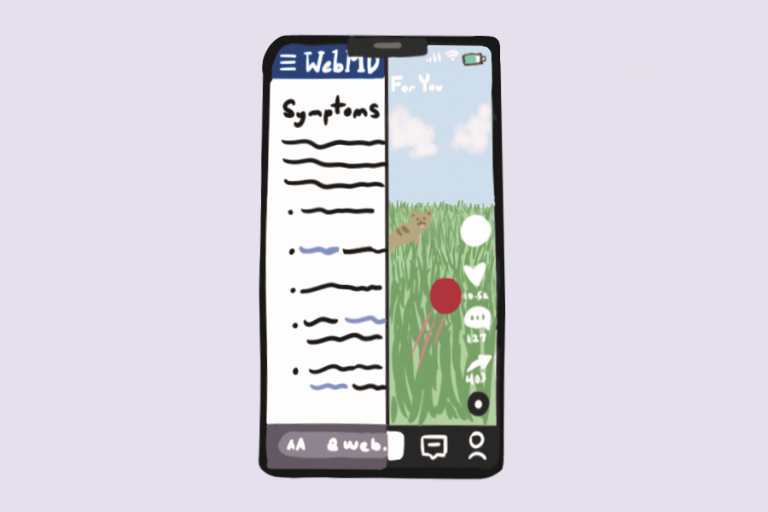
“Put a finger down if it’s hard for you to stay organized,” an “expert” said in a TikTok video who went on to diagnose me with ADHD — attention-deficit/hyperactivity disorder. 

It has become increasingly common in recent years for internet creators to post videos listing symptoms and characteristics of varying mental health conditions with the intention of helping viewers potentially discover underlying ailments that they can treat. Some producers are genuinely qualified doctors trying to spread educational information, but the vast majority who contribute to the heavy saturation of this type of content are people who have experienced some sort of neurodivergence or mental illness and are sharing their own anecdotal accounts. 

There are a few reasons it has become so popular; there are certainly success stories of people realizing that they were living with a disorder that they could take actions to treat, for one. But more fervently, there is a complex ecosystem on social media of glamorization of mental illness that makes it seem, in a twisted sort of way, desirable. 

Even though no one explicitly voices the sentiment of wanting to be mentally ill, our generation has made it seem cool (which is a whole other article on its own). So naturally, when we see a video that tells us we have obsessive-compulsive disorder (OCD), we want to align with it because it makes us feel special. To complicate it further, oftentimes we will genuinely be struggling and seeing these videos validates that. Even if it is not necessarily, in this example, OCD that we are struggling with, thinking that it might be makes us feel justified and affirmed in the sense that we are not just exaggerating or making it all up. 

Issues present themselves when we as a society start to take it too far. When it comes down to it, nobody can get a diagnosis from a video. An actual diagnosis takes more than a list of symptoms — no mental condition presents the same way in everyone, and they are so complex that professionals need to take into account your history, personality, lifestyle and more in order to come to a conclusion. 

There are certainly commonalities across people with the same disorders, but there is too much variation to encapsulate in a thirty-second video. Simultaneously, internet depictions of these disorders tend to be very visual and single-narrative, which perpetuates the surrounding stereotypes. It is common for people who suffer from conditions that do not manifest in the classically presented ways to dismiss their symptoms since they do not align with what is typically shown in the media. 

When it is so easy to draw misdiagnoses, the weight of a real diagnosis becomes diluted. It’s analogous to the phenomenon that occurs with food allergies: when people claim that their sensitivities or preferences are allergies, allergies start to be treated as sensitivities or preferences, which is dangerous for people with actual allergies. When everyone is claiming that they are “so OCD,” suddenly real cases of OCD are not taken seriously and can easily be dismissed as non-issues. 

A lot of the claims made by these videos are also incredibly easy for a very broad audience to relate to. Something like “You might have ADHD if… you’ve kind of struggled with anxiety and depression throughout your life” (this is a direct quote) is applicable to an immense range of people, especially in an age where there is more awareness and transparency around mental health issues than ever before. 

It is almost comparable to astrology — horoscopes and astrologically based guides are notorious for being extremely ambiguous and general (today, CoStar told me not to overreact). In both cases, they give you very vague information that you are likely to relate to, even on a small scale. As an example, there is a significant difference between misophonia and a tendency to get annoyed by certain sounds. They get conflated as a result of the way the symptoms are described, which leads viewers to jump to conclusions. You’ll relate to it, you’ll see yourself in it and you’ll start to wonder if you have ADHD, OCD or autism (or maybe if Mercury is just in retrograde again). 

I have a very dear friend who has OCD. It took her a long time to figure it out, partially because she did not relate to the narrative that’s commonly pushed — her life did not look like the lives of online creators sharing their experiences with the disorder. Now that she has a professional diagnosis, she frequently encounters people who have diagnosed themselves and think that she is “doing so much better” than they are because she has been formally diagnosed, and they have not.

 We do not get to diminish the struggles of others to validate ourselves and our own burdens. Again, that is a whole article on its own, but it is a cycle that is perpetuated by normalization of self-diagnostics and misrepresentation of mental conditions. The message that is sent (regardless of how it’s actually phrased) is often “Oh, I have OCD too, but I never got a professional diagnosis, so I’ve never gotten any care, unlike you.” 

While a self-assessment could very well be legitimate, it is not okay to pit our issues against others’ in a way that implies that they take pity on us — we can’t even begin to assume what they are dealing with, professional assistance isn’t necessarily conducive to health. 

All that being said, there are still some positive aspects of this phenomenon. For one, it can encourage people to get screened by professionals for potential mental conditions. It is always a good thing to decrease the taboo-ness around mental illnesses, which is something that this trend is helping with — it is prompting people to talk more openly about their mental health. 

A self-diagnosis, in and of itself, is not inherently invalid; it can be a great tool for people who do not have access to formal diagnostics. The fact that I might relate to a diagnostic TikTok video is an independently genuine fact that should be acknowledged and attended to. It is objectively a privilege to have access to professional input, and if social media content can help people better understand themselves and their brains, then by all means we should continue those conversations. Self-diagnoses can very well be correct, but the trend as a whole has gone too far and is creating more harm than benefit in our society. 


Written by: Molly Thompson — mmtthompson@ucdavis.edu 

NAS115 class holds flash mob as part of Missing and Murdered Indigenous Women project

The event saw several stories about missing and murdered Indigenous women, as well as performances by Indigenous drummers


By RAGAVI GOYAL — campus@theaggie.org 


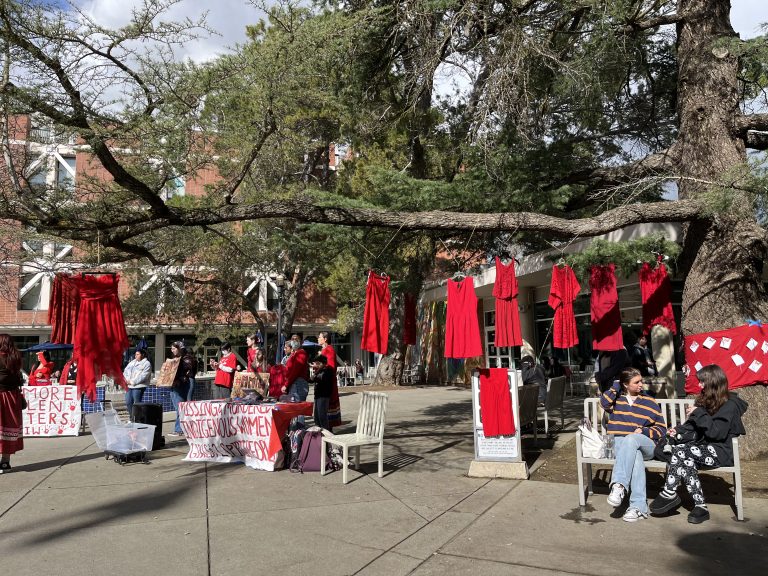
Students of the class Native Americans in Contemporary World (NAS 115) held a flash mob in the Memorial Union quad at 1:30 p.m. on Wednesday, Feb. 21 as a part of their Missing and Murdered Indigenous Women (MMIW) project.

The event started with the quad surrounded by red dresses as a symbol of each Indigenous woman who was murdered. The brief introduction of the project was followed with a song performed by Indigenous drummers who were invited to the event. 

This event was led by a student in the class, who asked to remain anonymous, sharing stories of Indigenous women who were abducted, went missing or were murdered.

 “I’m going to take a minute to talk about a story that is about a post-Bringham Mine’s sister,” the student read to the crowd. “Her name is Jessica Alba. Jessica Alba was murdered on April 20. Jessica Alba was murdered by her boyfriend — the father of her children.” 

The quad echoed Jessica Alba’s name as everyone commemorated her. The stories about these women were similar in that they weren’t usually followed up by proper investigation.

“Far too often, murderers and missing person[s] cases in Indian counties go unsolved and unaddressed, leaving families and communities devastated, seeking answers [and] looking for justice for their families,” the speaker said.

There were also dresses of children hung up, symbolizing the Indigenous children that were harmed or went missing. 

“We want no more stolen sisters,” the speaker said. “We want no more stolen family members. We need justice for our people. We need justice for our family members.” 

There was a red tapestry wrapped around a tree — on it, the names of victims. Everyone chanted these names in due respect, from names of little girls who are still missing to names of older women who were murdered.  

“We know that this is an issue that’s in Indian country here and in North America, but this is also an issue for women all over the world,” the speaker said.

Another speaker from the class began to talk about femicide and its prevalence affecting women, girls and two-spirit people. Femicide is a term that refers to the murder of a woman, perpetuated by a man due to her identity as a woman or for presenting as a woman. This definition includes other forms of violence against women, such as kidnapping and domestic, sexual and psychological violence.

 Despite femicide being a crime, according to the speaker, a majority of cases are charged as assault and battery which leads to shorter sentences. Some have even resulted in acquittals being weaponized and used to justify and normalize violence against Indigenous women. 

“Within my community, machismo is very prevalent,” the speaker said. “It’s very sad to say, but there are many reasons for it — due to capitalism, due to colonialism [and] due to the patriarchy. What ends up happening is that women are disrespected, they are beaten, they are murdered and nobody cares. Nobody is forced to care.”

MMIW is a hemispheric issue that has seen too many lives lost and is a protest against the violence for colonization, capitalism and war. 

“They were mothers, sisters, daughters and we cannot forget them,” the speaker said. “As Indigenous women, we feel that it is important to acknowledge and speak out against the genocide being committed against Palestinian women and children.” 

This flash mob continued with a song from the drummers, followed by another disheartening story.

 “Nicole Smith was a member of the Mendocino Coast Manchester Band of the Pummo People,” the first speaker read. “On the evening of Nov. 18, 2017, 33-year-old Nicole Smith spent the evening with family. Early the following morning, around 5:33 a.m., shots rang out from outside, piercing the walls of the home. A bullet struck Smith, and she would succumb to the gunshot wound at the scene. A person of interest was identified in her death, Raymond Soto, but he would later be released from the Mendocino County Jail due to lack of evidence. This is just one of the many, many stories that have been unsolved.”

The event ended with another demonstration by the Indigenous drummers and a march to the Cross Cultural Center where the display would be placed.

This project was undertaken by the entire class under the guidance of their professor, Juan Avila Fernandez, who graduated from the UC Davis graduate school in 2017 with his Ph.D in history with a Native American studies emphasis.

 “I am a Yoeme Native American,” Fernandez said. “This is one of the most contemporary issues that’s important to the Native American community.” 

Fernandez says that the Native American studies department was founded 53 years ago, and one of the founders was David Risling Jr., a Native American and activist professor. 

“Unfortunately, his granny [is missing],” Fernandez said. “His granny is Emily Riesling from the Hoopa Reservation, and she’s been one of the victims of this epidemic.”

Part of the reason Fernandez thinks that it is important to hold demonstrations like these is because of cases like Emily Risling. 

“They designated it a cold case, even though it’s only [been] about three years that she’s been missing,” Fernandez said. “She still hasn’t been found, and the investigation doesn’t seem to be going very far. That’s the other reason that I’m doing it — to try to get some justice for her.” 


Written by: Ragavi Goyal — campus@theaggie.org 


New epilepsy unit offers advanced diagnostic and treatment methods

Cutting-edge technology allows patients’ seizure activity to be carefully analyzed, leading to more effective interventions


By KATIE HELLMAN — science@theaggie.org

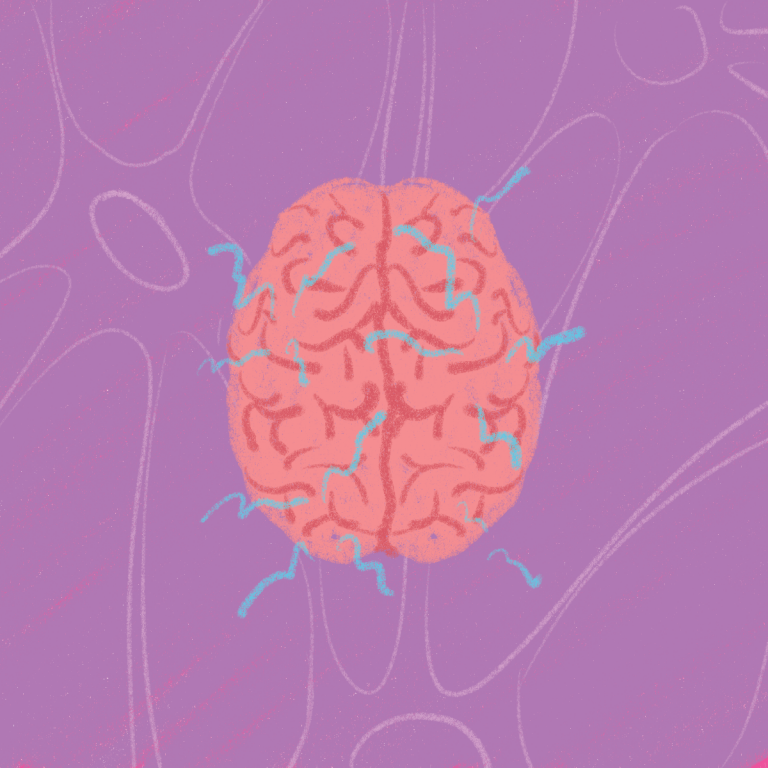
Epilepsy is one of the most common neurological diseases, affecting around one out of every 100 people globally. A diagnosis of epilepsy can be made if someone has two or more seizures. Typically, an electroencephalogram (EEG) is used to check for abnormal electrical activity in the brain and confirm a diagnosis.

A study discussing various epilepsy treatments, published in PubMed, explains the underlying brain mechanisms that cause seizure activity. 

“Different neurotransmitters play intricate functions to maintain the normal physiology of various neurons,” the study reads. “If there is any dysregulation of neurotransmission due to aberrant transmitter levels or their receptor biology, it can result in seizures.”

The majority of people with this condition can manage it with medication, but one-third of patients may need to have surgery or undergo other treatments.

UC Davis Health is considered to be a level 4 comprehensive epilepsy program, meeting the requirements for having intensive diagnostic and treatment technologies like laser ablation, robot-assisted surgery and neuromodulation.

“The program is recognized as providing more complex forms of intensive neurodiagnostic monitoring, as well as more extensive medical neuropsychological and psychosocial treatment,” UC Davis Health’s website reads. “Level 4 centers also offer a complete evaluation for epilepsy surgery and a broad range of surgical procedures for epilepsy. Those include minimally invasive laser surgery and neurostimulation devices such as responsive neurostimulation, deep brain stimulation and vagal nerve stimulation.”

Jack Lin, professor of neurology and director of the UC Davis Comprehensive Epilepsy Program, explained the first phase of the evaluation process at the unit.

“In order to figure out what the next step is that is appropriate for these patients, we need to figure out where the seizures are coming from,” Lin said. “That’s where the epilepsy monitoring unit comes in — we bring [the patients] in and then slowly take them off of their seizure medications. We let them have their usual seizures while we are recording the EEG as well as a video […] It’s sort of a GPS system.”

Julia Sharma, associate clinical professor of neurological surgery and pediatric neurosurgeon, explained how the seizures can then be treated.

“If the [brain] area can be safely removed, then the patient goes on to surgery where the area is resected via craniotomy or ablated via minimally invasive laser interstitial therapy (LITT),” Sharma said via email. “If the region cannot be safely resected, then the patient may be a candidate for neuromodulation where electrodes are permanently implanted into the brain and attached to a device that either delivers regular electrical stimulation (deep brain stimulation – DBS) or delivers electrical stimulation in response to seizure detection (responsive neurostimulation – RNS) to decrease seizure frequency or stop seizures completely.”

It’s important that epilepsy patients have access to the medical care they need in order to keep their symptoms under control.

“[We use] the latest technology and 24/7 monitoring,” Lin said. “There’s a huge unmet need in Northern California right now, especially in the Sacramento area. Improving healthcare access and disparity is huge.”

Written by: Katie Hellman — science@theaggie.org


Do UC Davis students like the quarter system?

0

Exploring the differences between semesters and quarters for college students


By ZOEY MORTAZAVI — features@theaggie.org


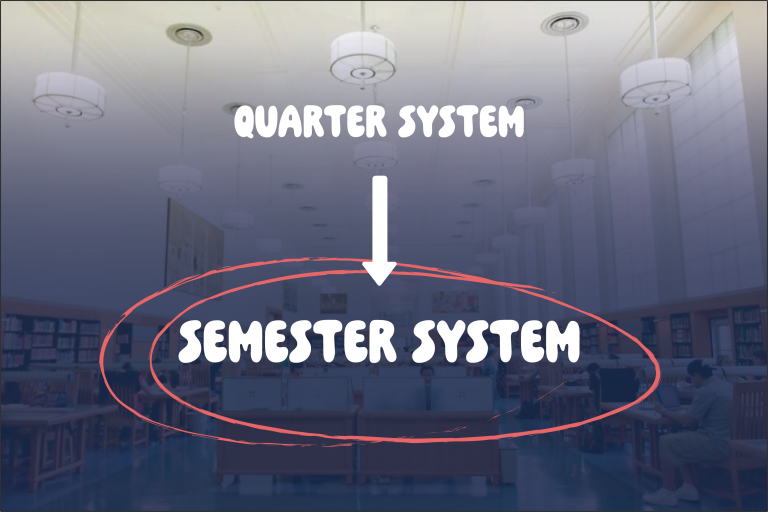
Across the United States, very few universities operate using the quarter system. Around 95% of the country’s colleges and universities implement the semester system instead, where students enroll in two 15-week sets of courses for the year. Under the quarter system, which we have here at UC Davis, students take courses across three 10-week quarters, with two optional summer sessions. 

Many students appreciate the quarter system because of its shorter course lengths, allowance for more exploration of classes and frequent school breaks. Because nearby universities are choosing to make the switch to the semester system, students at Davis are beginning to weigh the pros and cons of the quarter system. 

“The quarter system allows for a really deep dive into multiple subjects, which can be very beneficial for students looking to expand their academic horizons,” Alexander Liesegang, a first-year environmental policy analysis and planning major, said. “At the same time, if you struggle to grasp material for certain courses, it can make for a very stressful experience with no opportunity for a redemption arc. At the end of the day, I think the quarter system can be what you make it; sometimes I love it, other times I hate it.” 

Most of the University of California (UC) schools utilize the quarter system — aside from UC Berkeley and UC Merced — and students tend to take the summer quarter off. At other universities, such as Dartmouth College in New Hampshire, students have a “flexivle study plan,” which grants them the freedom to choose which quarter they take off after their first two years as a full-time student. 

Other universities, including Cal Poly San Luis Obispo (SLO) as of 2026, are beginning to make the switch from quarters to semesters. Cal Poly SLO, being the last California State University (CSU) on the quarter system, decided to make the switch to strengthen communication between the CSUs, as well as resolve other equity and articulation issues. 

Many students seem to have mixed feelings about quarters. A common feeling from students is that they wish the quarter system allowed for further exploration into certain academic subjects, such as core classes for their majors. Students also report enjoying the ability to take a wider variety of courses. 

“Honestly the quarter system is both good and bad, and mostly the latter. On one hand it allows me to cover more material, but at the same time I find myself wishing we had the time to discuss topics more in depth,” Daniel Blecman, a second-year history and German double major, said. “Oftentimes, many of the history courses I have taken have not gone through the entirety of the content, or barely touch upon concepts that I would love to go more in-depth to.” 

Aside from the complaint about class depth, another issue some students at Davis have with the quarter system is its fast pace. With more difficult courses, some have a hard time keeping up with the workload, and the fast pace of 10-week quarters can make it difficult for students to catch up on work they may have missed. 

“Though I appreciate the ability to take more unique classes in a school year, and thereby explore more subjects, I find it difficult to retain information at the quarter system’s fast pace,” Anthony Shepherd, a second-year international relations and Japanese double major, said. 

Shepherd gave further context into how the quarter system works for his field of study. 

“Language learning has been particularly challenging, since I spend the majority of time preparing for the numerous weekly vocabulary and ‘Kanji’ quizzes, that I find it hard to understand [or] recollect the nuances of the language introduced earlier in the course load,” Shepherd said. “Deeper into the major, it gets much harder to keep up with the dance of finding time to reinforce a hastily-built foundation while still adding more to the same demanding schedule.”

While there are definitely cons that students associate with the quarter system, many students still enjoy it and argue that it works well for them. Overall, it seems to depend on how individual students are wired, and what kind of system is most productive for their habits. 

“In my opinion, the quarter system is a system that really works, although it’s a negative that we sometimes have to really rush to get things done,” Hazel Henninger, first-year history major, said. “Overall, I feel like it’s a really efficient use of time for students to get credits out of the way more quickly. I also like that the quarter system allows us to explore new opportunities, inside and outside of class.” 

There are theories circulating that the UCs will join the CSUs and eventually make the switch to semesters. However, no official statements have been made implying that they are planning to make this change. UC San Diego considered altering the duration of their courses from 10 to 15 weeks, which was reported back in 2020, but no changes have been made since that time.

Until the UC system makes the decision to switch its universities to semesters instead of quarters, it appears that they are here to stay. UC Davis students report mixed feelings regarding the quarter system but say that it can be precisely what you make of it. Whether or not you like the 10-week course system, learning to adapt to new circumstances and adjust your study and work strategies can make a world of difference for students. 


Written by: Zoey Mortazavi — features@theaggie.org

UC Davis softball ends game with a bang, changes their winning luck

Aggies take on three teams in the top 30 strongest teams in the United States


By LUCIENNE BROOKER — sports@theaggie.org


Despite weather troubles plaguing the first couple weeks of the season, the UC Davis softball team has gotten off to a strong start. Since garnering a substantial amount of opening season wins, the Aggies have established themselves as a formidable opponent. 

Opening up the season at home by hosting the Norcal Kickoff in early February, the Aggies faced some challenging teams. First up, they faced off against the Middle Tennessee Blue Raiders, who won a Conference USA title in 2023 after winning 42 games. Despite this, the Aggies defeated the Blue Raiders 4-3 in a thrilling match. Although Middle Tennessee took the lead twice during the match, the Aggies dug deep and made a comeback for the win.

Unfortunately for the Aggies, they weren’t as lucky in their second match against Saint Mary’s. Although Saint Mary’s had lost more games than they won in 2023, this year they were looking for redemption and found it in a 6-0 defeat of the Aggies. 

Despite low morale for the Aggies after their loss, they weren’t ready to be counted out. The next day, the Aggies crushed the San Jose State Spartans 7-2. First-year pitcher Ashley Sawai made a strong impression with five strikeouts and only giving up two runs. 

To close out the Norcal Kickoff, the Aggies faced off against their long-time rival, the Sacramento State Hornets. Despite their strong performance earlier in the tournament, the Aggies were not able to clinch another victory from the Hornets with a final score of 4-1. After the Hornets converted a three-run home run in the first inning, they were determined to hold on to the lead as Davis struggled on the offense. The Aggies ended the Norcal Kickoff with a record of two wins and two losses. 

Next up, the Aggies traveled to Mexico for the Puerto Vallarta College Challenge where they played 25th-ranked Auburn. The Aggies had a strong comeback as they held their own against Auburn, but ultimately ended up losing 3-6. After falling behind 4-0 early in the match-up, the Aggie offense staged a mighty comeback, though it wasn’t enough to take the lead.

While the Aggies were excited to prove themselves in the next game against Wichita State, harsh weather in the area forced officials to cancel the match and postpone UC Davis’ second game of the day. 

Finally, the weather cleared up enough for the Aggies to face off against 20th-ranked South Carolina a few hours later. After a huge comeback from UC Davis to tie the game 4-4, the Aggies and the Gamecocks headed to extra innings. Unfortunately for the Aggies, South Carolina claimed the victory in the eighth inning, but Davis had put up a good fight with a final score of 4-6.

Before heading back to California, the Aggies had one more game against Mississippi State on Feb. 18. With fourth-year human development major Kenedi Brown pitching, the Aggies at last had their first win in the Puerto Vallarta College Challenge. The tight 2-1 Aggie victory had fans watching nervously as the two teams were stuck in a tie for the majority of the game. It was not until the bottom of the seventh and final inning that third-year undeclared major Grace Kilday was able to send fourth-year psychology major Sarah Nakahara home to score the winning run and break the tie.  

The Aggies will be looking to build on the momentum of this victory as they face California Baptist in a three-game series at home and then travel to take on UC Berkeley on Feb. 28. 

Written by: Lucienne Brooker — sports@theaggie.org

Your major decides your Peet’s order

Sorry, I don’t make the rules —- or the drinks


By ALLISON KELEHER — adkeleher@ucdavis.edu


Animal Biology: Iced milk.

Geology: Coffee on the rocks (translation for non-geology majors: iced coffee).

Managerial Economics: Small hot latte (only ordered for a networking event).

Mechanical Engineering: Vanilla frappe (doesn’t like coffee) but washes it down with an energy drink for caffeine.

History: Hot cappuccino with a day-old pastry (historical).

Linguistics: Medium iced oat latte with one pump of vanilla (wordy order).

Design: Refuses to order Peet’s and opts for aesthetically pleasing coffee from downtown.

Genetics: Doesn’t order anything but finishes off a friend’s drink to get some extra DNA from the saliva.

Economics: Takes too long to order because they can’t determine which drink would give them the most utility.

Environmental science: Hot matcha latte (closest thing to drinking the environment).

Communications: Too indecisive when ordering so just gets what a friend got.

Nutrition: Small hot herbal tea. 

Microbiology: Iced matcha latte with oat milk (for the gut health, obvs).

NPB: Iced spinal fluid.

Cow: Matcha frappe, extra whipped cream.


Written by: Allison Keleher — adkeleher@ucdavis.edu

Disclaimer: (This article is humor and/or satire, and its content is purely fictional. The story and the names of “sources” are fictionalized.)

Educational student organization prepares members for the food science industry

0

UC Davis’ Food Tech Club hosts professional development events and hands-on learning experiences


By LYNN CHEN — features@theaggie.org 


Student organizations at UC Davis cover a wide range of interests. The Food Tech Club on campus is specifically committed to career development for future food scientists. Though it is geared towards food science majors, the club is open to other interested undergraduates as well.

“[The club is] for students that are interested in food tech or are in the food science major to learn and get opportunities from the school, industries and anywhere else,” Saanya Gupta, a fourth-year food science major and president of the Food Tech Club, said. 

The club is a part of the Institute of Food Technologists which provides undergraduates with volunteering opportunities in the field to learn about food safety, nutrition and sustainability.

The Food Tech Club alone presents a broad range of activities and events for its members to explore, according to Gupta.

For instance, the club frequently hosts educational food demonstrations. To celebrate the latest Lunar New Year, the club hosted a dumpling-making demonstration. 

Students can also participate in mentorship programs, speaker events and networking mixers to gain a deeper understanding of potential career paths in their field. Professionals attending these events include faculty from the Food Science and Technology department as well as experts from businesses including Pepsi and Blue Diamond.

Furthermore, the club also offers industry tours for undergraduates to learn about the food-making processes of different corporations in a more hands-on environment.

Recently, Gupta said that members have visited companies such as Jelly Belly, Premier Protein and Mattson, a food and beverage innovation company based in California.

Additionally, the club is a contributor to the UC Davis community. For the upcoming Picnic Day, the Food Tech Club booth is planning to give out ice cream that they made from scratch.

A rigorous procedure will be used to ensure that the icy treats can be safely consumed by the public, according to Carol Jian, a fourth-year food science major and vice president of the Food Tech Club.

“We will have a team of [members] who are interested in food safety, and they will come together and develop a food safety plan for making ice cream,” Jian said.

After the plan is made, the team will then collaborate with the Pilot Plant — a food processing facility on campus — and their manager to produce the ice cream on a larger scale.

Other than educating members on topics in the field, the club is also dedicated to teaching students about other important subjects related to the discipline.

“Recently we had a cultural appropriation of product development talk,” Gupta said. “People came and basically communicated important questions like, ‘What is the difference between appropriation and appreciation of a culture’s food?’”

Overall, the Food Tech Club can be an enriching experience for students pursuing the field.

“Hopefully, [members] meet other food science majors and build connections that take them outside of the club,” Jonah Messinger, a second-year food science major and external relations chair of the Food Tech Club, said. “I think hearing from the guest speakers we bring in and touring different industries and factories helps people see [their careers] more clearly.”


Written by: Lynn Chen — features@theaggie.org

“Once Upon a Time” blurs the line between hero and villain

Fairytale characters coming to life in this series depict the duality of human nature 


By LORENA ALVAREZ — arts@theaggie.org


In a world where fairy tales with happy endings are the dominant presence in television as children, the Grimm Brothers tales are a stark contrast to Disney’s well-known stories. Like the former’s dark and violent tales, where Snow White’s happy ending entails the Evil Queen wearing red-hot shoes and dancing until she dies at their wedding, “Once Upon a Time” explores the complexity of happy endings and who is deserving of them. 

For those who are unfamiliar, Edward Kitsis and Adam Horowitz’s “Once Upon a Time” follows Emma Swan and her son, Henry Mills, as they reunite in a world where magic does not exist. The plot alternates between Snow White’s fairy tale and a world where the fairytale legends are forced to forget their identities and live an ordinary life away from their partners: the Evil Queen’s happy ending. 

In this harsh reality, the Evil Queen must share her adoptive son — the only person she has — and co-parent with Emma Swan. Henry undertakes the responsibility of making everyone recall their identities in order to realize that Regina is the true villain in their story. In their difficulty to co-parent and do what is best for Henry, Regina and Swan develop a complicated relationship with one another and uncover both sides of Snow White’s story.

This plot blurs the line between hero and villain through two main storylines: the Evil Queen’s backstory and Little Red Riding Hood’s. In depicting these seemingly contrasting characters’ fairy tales, the series reminds viewers that things may not always be as we perceive them as viewers and the protagonists in our own stories.

One of the first instances where viewers’ and Swan’s perception of Regina — the Evil Queen in the alternate universe —  is complicated occurs in episode 18 of season one. The episode alternates between Swan’s search to prove that her mother, Snow White, is innocent and the Evil Queen’s backstory. Once a young woman forced to marry a King for status and wealth, Regina’s backstory reveals her grief and anguish; her mother kills Regina’s love, Daniel, after a younger Snow White informs Regina’s mother of the affair. In revealing the source of the Evil Queen’s hatred, the plot highlights innocence, complexity and the harsh reality that villainy is often in the eye of the beholder.

As if contemplating if Regina’s backstory would get this message across, the series dedicates season one, episode 15 to Little Red Riding Hood’s tale to highlight how even the seemingly innocent and naive can be the perpetrator. 

While the plot illustrates Little Red’s fight for agency and freedom in an oppressive world, her fairy tale follows the deaths of innocent people at the hands of her lack of awareness. Many lives are lost when Little Red transforms into a werewolf and attacks the town, unable to take steps toward protecting her family and friends. In revealing that she has been the wolf all along and has been shielded from her own viciousness, and thus made unaware of the danger and pain she is capable of, the storyline challenges the inability to be both victim and villain. 

As her lover dies at her own hand, the episode contemplates the grief one causes themself and the threat they cause to others in refusal to acknowledge the blurred line between innocent and perpetrator. In doing this, the episode encourages viewers to question and become aware of who we depict as villains and whose story goes unheard.

“Once Upon a Time” is a modernized version of the fairy tales many viewers today grew up watching. In blurring the line between hero and villain, the series speaks to the importance of hearing all sides of a story and contemplating the roles we play in the stories of others. While it is a drama, the series explores the seriousness of being biased and close-minded. The title itself, “Once Upon a Time,” suggests that the same person can be both a villain and a hero depending on whether we see one’s behavior at a given time.


Written by: Lorena Alvarez — arts@theaggie.org

It’s time to say goodbye to unpaid internships

While they may be legal, they are never really ethical


By CLAIRE SCHAD — cfschad@ucdavis.edu 


Internships, though not mandatory for graduation at UC Davis, offer valuable opportunities for students to explore career options and develop professional skills essential for job applications. Given this, society puts immense pressure on college students to get an internship before graduating. However, almost half of all internships are unpaid, making them unattainable for many students.   

Last winter, I was anxiously applying for internships in Washington, D.C., before my impending departure to the UC Davis Washington Program. I was nervous and excited about the opportunity to study and work in the nation’s capital for the spring quarter. However, my foremost concern was finding an internship. Like many of my peers, I spent hours searching LinkedIn, Indeed and other job bulletins, noticing that about half of all postings were for unpaid positions. Despite saving up before I left, the prospect of an unpaid internship in the fifth most expensive U.S. city made me nervous. However, I was not in a position to be picky, so I applied for various paid and unpaid internships. 

Luckily, after an intense search, I secured an internship that provided a monthly stipend. Even though I was paid less than half of D.C.’s minimum wage, I was still grateful for the financial support that the stipend provided; however, it came nowhere close to covering my living expenses.

While I was lucky enough to be in a position where the internship worked for me, many students don’t have that privilege. For some, the idea of forgoing regular wages to participate in an internship is impossible. Additionally, Deferred Action for Childhood Arrivals (DACA) recipients and international students are often barred completely from receiving compensation for certain internships, including those in Congress.

Unpaid internships perpetuate class divisions and inequities, allowing wealthier students to complete unpaid work and boost their resumes while those who can’t afford it miss out on opportunities. Despite the evident barrier that unpaid or underpaid internships create, many companies and organizations fail to pay their interns adequately. 

So, if internships are crucial to our professional development, why are so many companies still refusing to pay their interns? Well, they do so because they can. According to the Fair Labor Standards Act, unpaid internships (or any internship that pays less than minimum wage) are legal as long as the intern is the “primary beneficiary” of the experience. This means that the intern’s work must not be substituted for that of an employee, and the education that an intern receives while working can act as compensation. Despite these regulations, unpaid internships have been normalized, and nobody is checking to see if a person should be financially categorized as an intern or an employee. 

Even more frustrating, in most situations, interns are critical to the operation of certain offices and companies. During each of my internship experiences, supervisors explicitly stated that the office or organization would not be able to function without interns, which is true from my experience. This dependence on interns seems as though it would violate the requirements of the Fair Labor Standard Act, yet unpaid internships are still widespread. 

Unfortunately, it is unlikely that there will be a nationwide overhaul on unpaid internships anytime soon. However, there are still ways the system can be improved. 

The Subsidizing Unpaid Interns Program was a promising step taken by the University of California D.C. program (UCDC) last fall. This new program provides all UCDC students who secure an unpaid internship with a $1000 stipend in the form of a scholarship for the term of their internship. While this is still not much, it is a step in the right direction and many other universities should consider implementing similar programs. Recognizing the barriers to the professional world that unpaid internships create is the first step toward change.   

If we want to foster diversity in leadership, change must start at the grassroots level with interns. Shifting to exclusively paid internship programs would attract a more diverse, qualified and expansive applicant pool, benefiting everyone and contributing to a more equitable future. 


Written by: Claire Schad — cfschad@ucdavis.edu 


Disclaimer: The views and opinions expressed by individual columnists belong to the columnists alone and do not necessarily indicate the views and opinions held by The California Aggie.

How do UC Davis students and faculty members feel about AI advancements?

0

Learn more about how AI works, people’s fears around it and how it affects human lives


By SABRINA FIGUEROA — features@theaggie.org 


Advancements in artificial intelligence (AI) have taken the world by storm, causing some to live in fear and others to embrace how it will affect society’s future. 

AI has developed quite further and faster than society could have imagined. It has gotten to a point where AI is being used to generate “deepfakes” that people can no longer always differentiate from reality, which can have repercussions in both politics and personal lives

This has fueled the fear of many. Even Geoffrey Hinton — known as “the Godfather of AI” — reportedly told the New York Times that one of his concerns is that the internet could possibly be flooded with false images, text and videos to the point where the average person wouldn’t be able to identify what is true anymore. 

So, how did we get to this point? How did AI develop so quickly in such a short amount of time?

Martin Hilbert, a communication professor and chair of the designated emphasis in computational social science at UC Davis, said there are two reasons for its fast development.

“The amount of data [produced before and during the COVID-19 pandemic] together with the trick of using GPUs, which gave us the computational power, lead to this jump in parameters and made them more useful,” Hilbert said. 

GPUs are the latest graphics processing units, which have opened new possibilities in gaming, content creation, machine learning and more.

Artificial intelligence runs on data, and the more data it gets, the better it becomes at predicting and generating human-like work and behavior. When the pandemic hit, and people yearned for human connection, society turned to social media and social-simulation video games online as a mode of communication with other people they couldn’t spend time with in person. This then created a plethora of digital footprints and data that AI now utilizes. 

Because data is power, this causes a big dilemma in the AI world. Since human society is filled with bias and discrimination, so is a lot of the data AI utilizes. Left unchecked, AI can help contribute to misinformation or exhibit those same discriminatory biases that humans have. 

“If we give [AI] data based on where [society is] right now [and in the past] — living in a very sexist and racist society — that is what [AI] will reproduce and that’s what it does reproduce. That isn’t the machine’s fault, it’s just the data that we have,” Hilbert said.

Even so, it’s not difficult to factor out these discriminatory variables so that AI doesn’t use them. All it takes is good prompt engineering skills. 

“It’s extremely difficult to eliminate human bias in the brain, it’s just a bandwidth capacity problem,” Hilbert said. “However, you can get it out of machines. So you can tell a machine, ‘Consider all the variables you want, but do not consider gender. Make sure that in regards to gender, the outcome is completely neutral,’ for example. The machine will be able to optimize that.” 

As machine learning becomes more advanced, society is now seeing that it can help aid human cognition and labor. In some cases, it has already surpassed the abilities of humans — such as standardized testing. 

“For the SAT, in reading, writing and math, humans score [in the] 65th [percentile] and [GPT-4] gets up to 90,” Hilbert said. 

It doesn’t stop at SAT either. GPT-4, a multimodal large language model created by OpenAI, has also passed professional exams, such as the Bar Exam that law graduates take to become attorneys. GPT-4 was able to pass the multiple-choice portion as well as both of the written portions of the bar exam, scoring in the 90th percentile — exceeding the average human score.

Hilbert also suggested that emotional empathy in artificial intelligence may already be better than the human capability of empathy.

 “If we use a machine to consult a primary care physician, for example, people evaluate the machine to be much more empathetic, [especially in] emotional listening. It’s not a robot, it’s something very intimate,” Hilbert said. “In terms of knowledge and emotional intelligence, [AI] outperforms us already, and it can always become better.” 

However alarming this may sound, AI is still not perfect. In fact, OpenAI announced that their large language model is still less capable than humans in other scenarios, though it outperformed humans on the SAT and other professional exams. Its biggest problem is that it tends to make things up and insists it’s right when it’s not. 

Despite its seemingly helpful advancements, some continue to see AI’s power in knowledge and other skills as a threat to education and the workforce. 

At almost every university, including UC Davis, professors note in their syllabi that the use of AI when completing assignments is prohibited unless otherwise instructed. To regulate its utilization, professors usually enforce AI detection programs to hold students accountable. Yet, none of those programs can reliably detect AI-generated text, and the most popular program that universities use, Turnitin, even admitted that it detects a lot of false positives

Lizette Torres-Delgado, a second-year political science and public service major, spoke about her experience with AI at UC Davis.

“I haven’t used AI because many of the professors that I’ve had are really against it, and I’d also rather do research myself to know more about a topic I need to write about.” 

In the midst of this, there are some professors who make it mandatory for students to explore AI and become familiar with its functions.

“I make it mandatory in my classes, and that doesn’t make me very popular with my colleagues,” Hilbert said. “I [enforce the use of AI because] I just think it’s unfair if 10% of students use it and the other 90% don’t. It’s also why I ask more of my students now, [they can now] do more thanks to the [AI] assistantance students have.” 

Additionally, some students use ChatGPT and other large language models in a way that wouldn’t be classified as “cheating,” but simply as a complementary aid. 

“I have used ChatGPT and also Notion’s built-in AI and I’ve really enjoyed it since it helps me come up with new ideas or helps me understand things more clearly whenever I am confused or lost [on a topic]. AI is a great tool to help students brainstorm in my opinion,” Alejandra Velasco, a second-year computer science major, said. 

In her experience, AI benefits educational spaces rather than threatens them. 

“Personally, I think teachers should be open to using [AI] more. If students decide to use this tool to cheat, then it’s on them and it will reflect on their exams and career,” Velasco said. “If everyone finds a productive way of using it, then it can help benefit students and prevent them from cheating more.”

Apart from education — whether people see it as a threat or not — AI and other digital technology have been used in the workforce as well, causing another wave of concerns: what if AI were to replace humans in the labor market?

According to a study done by the McKinsey Global Institute, health, STEM, transportation, warehousing, business and legal professionals are projected to be growing under AI, while office support, customer service, sales, production work and food services are the most negatively impacted by AI acceleration.

The research found that the labor market saw 8.6 million occupational shifts with most people leaving food services, in-person sales and office support for other occupations from 2019 to 2022. The study also suggests that this pattern will continue into the future due to AI’s impact.

Although AI will still change the way many jobs work — such as having AI assist humans in their tasks — there are still things that give society hope that we will not be replaced. 

“It all comes down to consciousness. [Humans] can hold consciousness without thinking and feeling. For example, this is what happens when you meditate. Machines cannot do that, as far as [researchers and scientists] know,” Hilbert said. “Thinking is an information process, and consciousness is something different.” 

Without consciousness, AI is still not capable of doing everything humans can do, meaning our jobs won’t be replaced by AI just yet. 

AI definitely comes with repercussions, but it’s important to understand that the machine itself is not responsible. Any kind of digital technology is not inherently good or bad, nor neutral, the responsibility in the way it’s used falls in the hands of us humans. In other words, it’s socially constructed in that humans shape technology, not the other way around. 

Hilbert suggested that people use AI based on their different interests and intentions, but that “it’s always the human at fault” whether it comes down to the data AI uses or the way it’s used because the machines “have no agency” in the decision of what they are used for. 

With all this being said, AI is also used for things like helping people connect with others. For example, SignAll, a company based in Hungary, created a machine that is able to read American Sign Language and translate it into spoken and written language in an attempt to break communication barriers between people. 

But this is just one example out of many, ranging from saving the bees and using it to predict climate change’s effects to cancer screenings and reducing inequality and poverty. 

However terrifying it may feel to think about the direction we are heading in with AI and other digital technology, it’s best that society continues to talk about it, research it and be open to adapting to it. It can be useful while being regulated by laws and governments. 

“Be mindful about [AI], talk about it, use it and then empower yourself with it; have a companion on your side that can help you [personally] and can help you shape the world,” Hilbert said. “If there are problems that you aren’t satisfied with [in the world], then we can use these tools to help make it a better place.” 


Written by: Sabrina Figueroa — features@theaggie.org

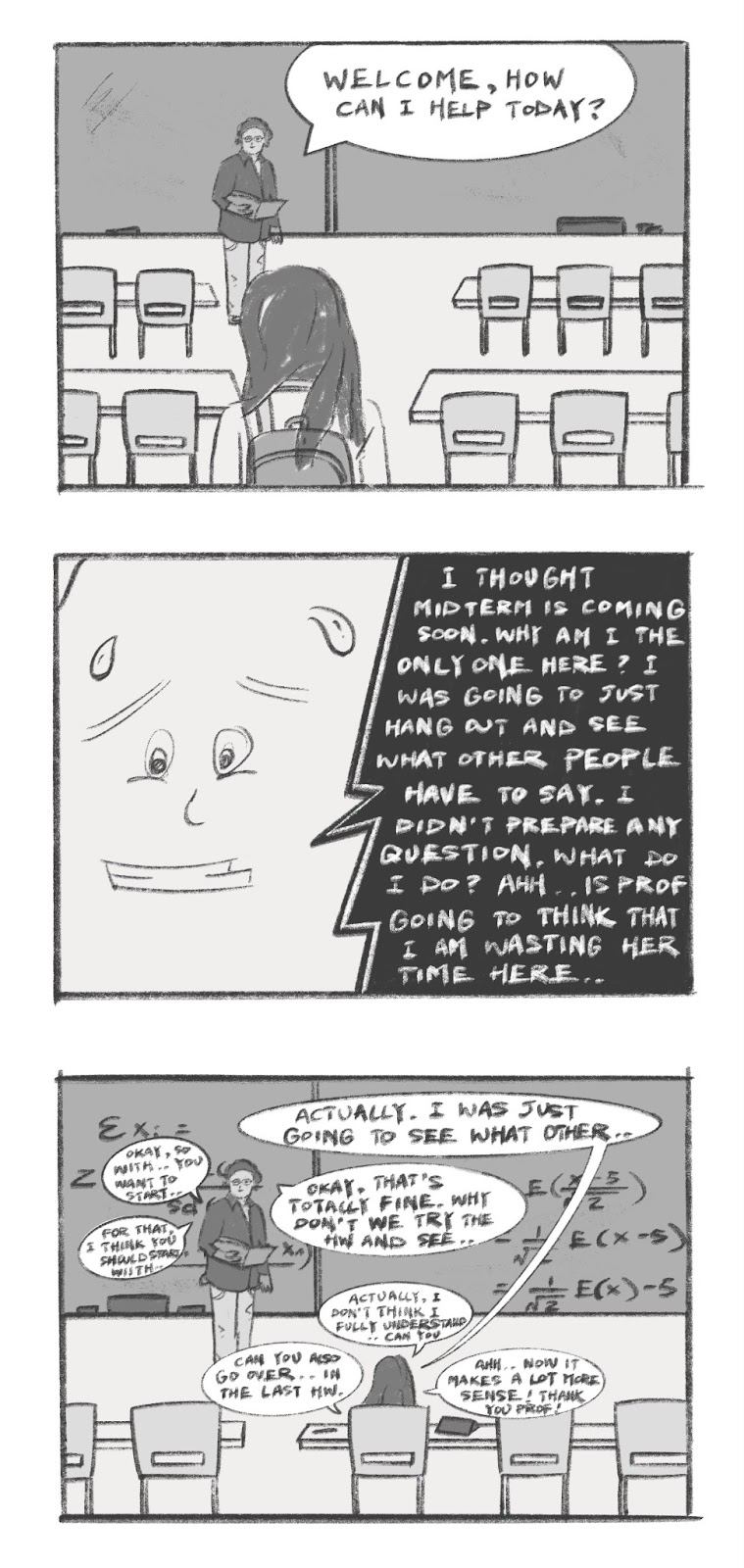
Office hour panic

Drawn by: Lanhui Zhen –– lazhen@ucdavis.edu 

Disclaimer: (This cartoon is humor and/or satire, and its content is purely fictional. The story and names of “sources” are fictionalized.)

The complex politics of separating art from the artist

Is it possible to be objective about art?


By JOAQUIN WATERS — jwat@ucdavis.edu

The phrase “separating art from the artist” has been thrown around a lot recently. Arguments in favor of the mantra and against it permeate just about every space of cultural discussion. Is it possible to view art with complete objectivity, even if — especially if — the artist in question has said or done hurtful things? It’s a complicated question, one with no easy answer. 

A common response is that it depends on the severity of the artist’s offenses. On some level, I agree; at the very least, I understand the rationale. I doubt that anyone reading this could look at one of Adolf Hitler’s paintings or listen to one of Charles Manson’s songs and feel anything but utter repulsion, no matter the technical quality of the work in question. But then, the paintings of Hitler and the songs of Manson were never terribly popular or influential before their descent into evil. 

It’s easy to separate with these examples because practically nobody living was ever an avid follower of their art. That they once dabbled in creative outlets is nothing more than a hardly relevant footnote in their monstrous lives.

But what of Bill Cosby, the formerly beloved comedian and serial rapist? His 1980s sitcom “The Cosby Show” broke barriers with its positive representation of a middle-class African American family. Undoubtedly, there remain countless people of color in the United States who were positively impacted by the representation “The Cosby Show” provided and perhaps even still have fond memories of it, despite the 60-plus sexual assault allegations leveled against Cosby himself. Is it possible to watch “The Cosby Show” without feeling that same level of repulsion one feels when looking at the art of Hitler or Manson? For many, the answer is yes. They may never be able to see it the exact same way, but they can, more or less, separate the show from the man. 

This gets even trickier when we get into somewhat less extreme cases. What of artists who have revealed themselves to be bigots who, while not violently monstrous, have committed themselves to spreading hateful ideologies? I speak, of course, of modern icons like Kanye West or J.K. Rowling. Their bigotries only came to light well after their art had become beloved among the very communities they would come to harm. 

West’s music spoke deeply to an entire generation of people of color (just a few weeks ago, Donald Glover called him the “GOAT” — the Greatest of All Time) well before he allied himself with neo-Nazis and stated his admiration for Hitler on InfoWars. The “Harry Potterbooks were beloved among queer communities who saw their struggle to fit in reflected in their stories well before the depth of Rowling’s transphobia became clear.

Despite the deserved stigma that the names of West and Rowling now carry, their works are still hugely popular. Evidently, a majority of people have found it difficult — if not impossible — to separate their disdain for these artists as people from the impact their art imparted on them. 

This is not unilaterally the case, of course. Many more former fans have found themselves unable to support or even respect the creations of such problematic people lest they feel complicit in hatred. To me, this response is just as understandable as the inverse. I do not pretend to have an answer to this conundrum. The ability to separate art from the artist varies from person to person. The closest thing I can give to an answer is this: whether or not we can separate an artist from their work, we owe it to ourselves not to ignore either of them.  

H.P. Lovecraft is an oft-cited example among literary nerds like myself. The impact of Lovecraft’s books on the horror genre cannot be overstated. He is so influential that the term “Lovecraftian” has become an adjective describing any work that contains elements of cosmic or existential horror. He was also a virulent racist whose bigotry can be found all over those same works. His is an even tougher case than West or Rowling, because his offenses do not stand in contrast to his art; his racism is partly what enabled him to write so succinctly about the fear of the other. 

However, a great many people have read his works without internalizing that ideology. Some adaptations — like HBO’s “Lovecraft Country,” a show that uses Lovecraftian lore to discuss systemic racism in America — even actively refute the ideology of the man while simultaneously standing on the shoulders of his work. To me, this represents a solid compromise to the debate of art versus artist: it is impossible to properly study Lovecraft without engaging with his bigotry, but that does not always necessitate discarding his work. Perhaps, rather than separation, the most appropriate response is synthesis between art and artist.

After all of this analysis, I am only certain about one thing: this issue angers people more than the corruption of the most powerful or famous people. It doesn’t bite as deep when a politician or a wealthy businessman is revealed to be a heinous person. But art strikes deep chords within us. Art can save lives, define lives, shape us into the people we are. Great art can make our souls sing. So, when an artist we love does something utterly in contrast to our values, it cuts deep. It feels like betrayal. And whatever reaction we ultimately have to this betrayal — anger, defensiveness, separation, ignorance — stems from that deep, spiritual sting.

I want you to engage in a thought experiment for a moment. Imagine your all-time favorite artist — someone whose art has had a profoundly positive impact on your life — has been exposed as a deeply vile, morally bankrupt individual. What is your reaction? Never consume their art again? Continue to consume their art while all but ignoring their trespasses? Or something in the middle? 

I’m positive that if you engaged in this thought experiment, you probably felt a swell of anger at the thought that someone you love could do something horrible. Could you really separate? Have you before? Whatever your answer, I do not judge it. But we all should remember that art — even the most powerful art — requires human hands to bring it into existence. And human hands have done terrible things.


Written by: Joaquin Waters — jwat@ucdavis.edu 


Disclaimer: The views and opinions expressed by individual columnists belong to the columnists alone and do not necessarily indicate the views and opinions held by The California Aggie.

UC Davis hosts annual Biodiversity Museum Day

The free event encouraged exploration across multiple exhibits that showcased different forms of biodiversity


By AALIYAH ESPAÑOL-RIVAS — campus@theaggie.org


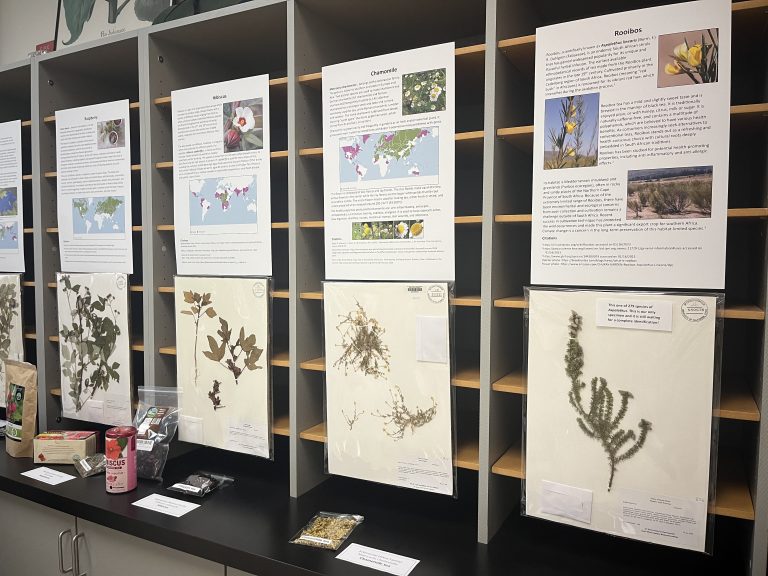
On Feb. 10, UC Davis hosted its annual Biodiversity Museum Day which consisted of multiple collections of biodiversity exhibits. Open to students and the public, the free event allowed attendees to choose between 10 different exhibits spread throughout campus. Exhibits featured topics such as entomology, botany and plant diversity.

In the Bohart Museum of Entomology exhibit, attendees were greeted with rows of booths featuring various insects and animals. Student interns were also there to provide insightful information for anyone who stopped by. In some booths, participants were allowed to hold and feel various insects, allowing for a hands-on learning experience. 

Student Intern Guenever Hall, a second-year wildlife, fish and conservation biology major, enjoyed seeing all of the excitement visitors had for the animals and insects on display. 

“I like seeing how interested everyone is, because it’s not often people see all these kinds of animals just out and have the opportunity to touch them,” Hall said.

Hall’s booth was dedicated to the Lunar New Year and displayed species that exhibited different aspects of a dragon: the Chinese zodiac animal for 2024. To achieve this, the booth displayed pictures and models of carp, catfish, eagle talons, deer antlers and a rattlesnake.

As for attendees, Alejandra Mercado, a third-year linguistics major, enjoyed how knowledgeable all of the interns were and how they provided a fun experience at every exhibit.

“The student interns seem really interested in the topics they know,” Mercado said. “They just love to share their knowledge, and I love to learn […] about things I don’t know about.” 

In addition, Mercado also enjoyed the free horse-drawn carriage rides the event offered. The rides took visitors between the entomology exhibit in the Academic Surge and the plant diversity exhibit at Katherine Esau Science Hall. 

“I was freaking out like, ‘Oh my god, this was the first time I’ve seen [horse-drawn carriages] on campus,’” Mercado said. “I thought I wouldn’t get the opportunity to [take them], but we could, and the workers were super nice.” 

In addition to student interns, the event also had various volunteers. Nazzy Pakpour, a UC Davis alumna who studied entomology and completed a postdoctoral working with mosquitos, explained that she wanted to volunteer to give back to the Bohart Museum and the community. 

“I love interacting with the public and seeing people that are not normally geeked about insects get super geeked about insects,” Pakpour said. “I love supporting the museum because it’s been so supportive of my career in all of its different stages.” 

Looking toward the future, participants expressed their hope to return next year and encouraged students to do the same. Ana Machado Perez, a fourth-year psychology and human development double major, said that it was important for students to attend Biodiversity Museum Day because it’s a special opportunity for students who don’t regularly learn about science.

“We have such a special opportunity to see all these animals,” Perez said. “There is so much nature all around us, and if you don’t take classes talking about it, you may never learn about it. It’s important to learn about the different disciplines Davis has, even if [they aren’t] your major.” 


Written by: Aaliyah Español-Rivas — campus@theaggie.org

Yolo County district attorney decides not to seek death penalty against Carlos Dominguez

On Feb. 26, the Yolo County District Attorney’s Office provided notice they would not seek the death penalty against suspected serial stabber Carlos Dominguez


By HANNAH SCHRADER and CHRIS PONCE city@theaggie.org


Prosecutors at the Yolo County District Attorney’s Office announced on Monday morning that they would not pursue the death penalty charge against Carlos Dominguez. The update was announced shortly before a preliminary hearing for Dominguez was held later that day.

“The Yolo County District Attorney’s Office has provided notice of its intention to NOT seek the death penalty in the Carlos Dominguez case,” the Yolo County District Attorney’s Office said in a press release email. 

Dominguez is a 21-year-old former UC Davis student who is the suspect in a series of stabbings last spring that left two dead and one severely injured. According to three mental health professionals, Dominguez was diagnosed as schizophrenic and deemed unfit to stand trial shortly after being arrested. But as of January, based on an evaluation, he was deemed fit to stand trial

On Feb. 26, at 1:30 p.m., a preliminary hearing was held at the Woodland Superior Court where Dominguez is the suspect of murder and attempted murder. The hearing should last approximately four days, according to the district attorney’s announcement. 

The hearing was held on the same day as a birthday celebration for David Henry Breaux, also known as “The Compassion Guy.” David Breaux was the first victim killed during the serial stabbings. David Breaux’s sister, Maria Breaux, said she considers it a good decision to not seek the death penalty.

“I think that’s good news,” Maria Breaux said. “I’m in line with what David said [to me], ‘If I’m ever harmed and unable to speak for myself, forgive the perpetrator, and help others forgive that person.’ He didn’t say, ‘force people to forgive,’ he didn’t say, ‘manipulate people into forgiveness.’ He said, ‘help people,’ and so everyone’s gonna have their own reactions to it, and all of them are valid. And for me, compassion is at the root of everything, and so I consider that move [to be] good news that another life has not been taken. There’s been too many lives taken.”

This story is developing, check back for updates. Last updated: Feb. 27, (12:39 a.m.)

Written by: Hannah Schrader and Chris Ponce — city@theaggie.org