50.6 F
Davis

Davis, California

Friday, December 26, 2025
Home Blog Page 150

The problem with fast fashion

Trendy trouble for our planet and people


By EMILIE BROWN — emrbrown@ucdavis.edu


Fashion trends may come and go, but the consequences of fast fashion are here to stay. As college students, most of us have fallen victim to the allure of inexpensive and trendy items from popular brands like Target, GAP, H&M or Zara. But it’s time we face the truth and understand the real price we pay for our trendiness. Brace yourselves for a journey through the dark side of the fashion industry, where social and environmental issues run rampant.

Let’s start with the environmental havoc caused by fast fashion. From production to disposal, this industry leaves a trail of destruction. The fashion industry is the second largest consumer industry of water, requiring about 700 gallons to produce one cotton shirt and 1,800 gallons of water to produce a pair of jeans. This level of consumption is simply unsustainable, especially when droughts are already parching our world. 

The fast fashion industry isn’t just using up precious water — it also contributes to water pollution, as many textile factories still regularly dump untreated toxic waste waters directly into waterways, often resulting in dyed, toxic waters. In fact, it is estimated that 70% of the rivers and lakes in China are contaminated by the 2.5 billion gallons of wastewater produced by the textile industry. 

But it doesn’t end there. Fast fashion also has a toxic relationship with greenhouse gas emissions, pun intended. The fashion industry and clothing production contribute a whopping 10% of global greenhouse gas emissions. Yes, you read that right. 

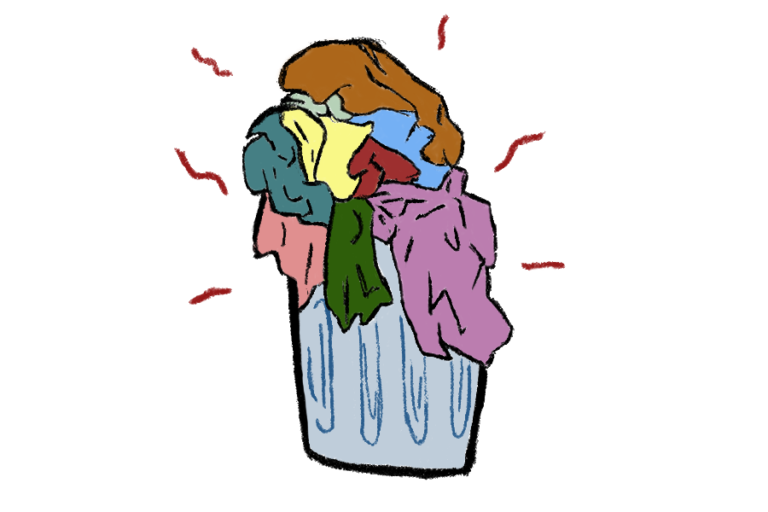
Perhaps this percentage is not so surprising, considering we consume around 80 billion new pieces of clothing every year, 400% more than was consumed twenty years ago. The increase in clothing consumption has inevitably led to an increase in clothing waste, with the amount of clothing Americans throw away also doubling in the last 20 years. Unfortunately, about 66% of clothing ends up in U.S. landfills and the average American generates 82 pounds of clothing waste every year. These increases come with massive effects on our environment as making clothing wastes energy and affects our lands and clothes’ decomposition can take over 200 years.

Fast fashion is not only an environmental disaster, but it’s also a social one. Fast fashion pieces are often produced in sweatshops, where workers are paid low wages and subjected to poor working conditions. The workers who make our clothes are often not given fair wages, safe working conditions or the power to unionize. In many cases, these workers are women and children who work long hours in unsafe conditions.

So, what can we do about this? It’s time to show the fast fashion industry that we mean business. First and foremost, avoid brands that prioritize profit over our planet. Seek out brands that use environmentally friendly practices and take responsibility for their economic impact. The added bonus? These clothes are often made to last, saving you from the disappointment of a shirt that falls apart after a single wash. Being conscious about your clothing choices is crucial. Instead of buying new clothes every week, try reusing and repurposing your old ones. 

And if you’re on a tight budget, embrace the wonders of secondhand clothing. Thrift stores and online platforms like thredUP, Poshmark and Swap are treasure troves waiting to be explored. Not only will you find unique pieces, but you’ll also be doing your part to combat clothing waste.

In the end, the price we pay for fast fashion goes beyond our wallets. So, next time you find yourself caught up in the whirlwind of fashion trends, pause and consider the implications of your choices. The power to change lies in your hands. When it comes to fashion, it’s time to slow down, think sustainably and dress for a better future.


Written by: Emilie Brown — emrbrown@ucdavis.edu

Disclaimer: The views and opinions expressed by individual columnists belong to the columnists alone and do not necessarily indicate the views and opinions held by The California Aggie.
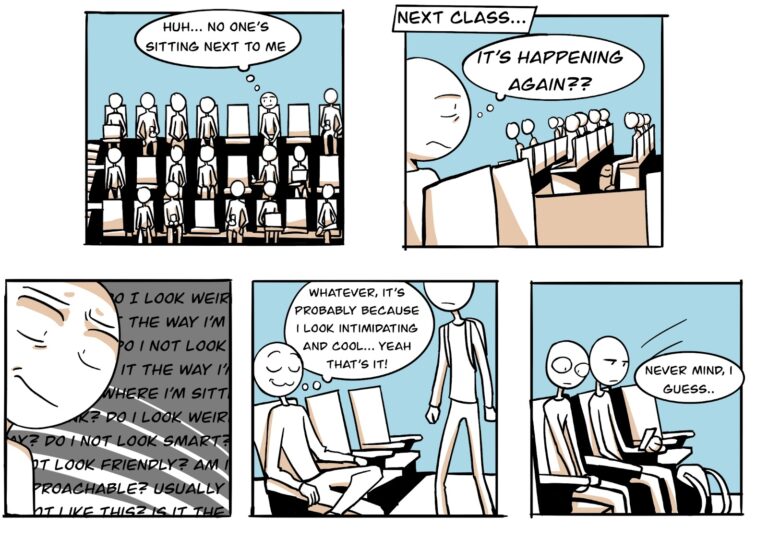

Overthinking

Drawn by: Lidya Shcherbakova –– lvshcherbakova@ucdavis.edu

Disclaimer: (This cartoon is humor and/or satire, and its content is purely fictional. The story and names of “sources” are fictionalized.)

Graduating seniors share their biggest college regrets

Tips for making the most of your undergraduate experience 


By CORALIE LOON — arts@theaggie.org


No one wants to have regrets. At the same time, as a newly admitted freshman, the idea that you still have your entire college experience to do the things you want to do can sometimes overpower your will to do those things. And, next thing you know, you’re being handed a diploma and saying goodbye to the world you feel like you just entered.

So what does it really mean to make the most of your college experience? And do most students do everything they want to, or do they walk away wishing things were different?

According to one survey of recent college graduates, most students surveyed reported having no regrets, and those with regrets most commonly mentioned student loans, areas of study or the ability to network. Another source cited common college regrets as not getting enough work experience, not making or maintaining enough friendships and not traveling or studying abroad.

Many of these examples point to regrets that aren’t tied to academic success. Few graduating seniors seem to think they didn’t study enough, but many feel they didn’t try hard enough in other areas.

Kai Uchio, a fourth-year environmental science and management major, shared his college regrets.

“I wish that I had applied for more internship and job opportunities and communicated with TAs and professors more,” Uchio said.

Work experience, in fact, is the regret Career Addict puts in the #1 slot. With school and student jobs taking up so much time, it’s no wonder career-related work experience is difficult to prioritize. Talking with more people and expanding social horizons, however, is something that may require less time to achieve.

“I would tell myself that professors aren’t so scary and you should get used to going out of your comfort zone to talk to people,” Uchio said when asked what advice he would give to his freshman self.

Bella Masterson, a fourth-year psychology and human development double major, shared her regrets as well.

“I think what I regret is not making more connections and putting effort into meeting new people and trying new things,” Masterson said.

While Masterson was busy studying and gaining work and internship experience, she said she wished she had participated more socially and joined on-campus clubs.

“I think I tend to stick to what I know, but college is a great time to try new things because there are so many opportunities to do that,” Masterson said.

Recent college graduate Cate Sievers also wished she had gotten out of her comfort zone more.

“I definitely regret allowing fear and anxiety to hold me back for so long,” Sievers said. “Once I learned how to overcome those obstacles it felt like a whole new part of the world was available to me. I got to meet so many wonderful people and do things I never thought I’d be capable of doing.”

Sievers, who graduated last quarter with majors in sociology and communication, believes that college is all about embracing discomfort, something that took her a while to fully embrace.

“College is a time for major self-growth, and to really allow that to happen you need to really allow yourself to explore the unknown,” Sievers said.

When asked what advice they would give themselves as college freshmen, those interviewed unanimously agreed that not letting self-doubt get in the way of new experiences was the best way to conquer fears and limit regrets.

“Choose confidence and understand the power you have,” Masterson said. “It is easy to second guess yourself and what you are capable of, but that is only selling yourself short.”

Getting out of your comfort zone could be something as big as signing up for a student-led backpacking trip or as small as giving a friendly compliment to a fellow classmate.

Whatever it is, just don’t wait until you graduate to do it.

Written by: Coralie Loon — arts@theaggie.org

City council candidate Donna Neville leading in unofficial election results

With 100% of precincts reporting, Neville has received a majority of votes


By CHRIS PONCE city@theaggie.org


On May 9, the Yolo County Elections Office updated the precinct reports from the District 3 city council special election. The two candidates who ran to fill the seat vacated by Supervisor Lucas Frerichs were Donna Neville and Francesca Wright. The current election results have Neville leading with 60% of votes with 100% of precincts reporting. 

Davis District 3 has a population of over 13,000 residents, but only 2,401 votes were recorded in the election as of May 5. Neville received 1,448 (60.31%) votes across both precincts while Wright received 953 votes (39.69%). Wright made a comment regarding the current unofficial election results. 

I loved meeting so many District 3 voters and am sorry I won’t have the opportunity to realize my visions for reinvigorated governance of Davis,” Wright said via email. “Thank you to the 40% who believed in me. I learned how important the support of the political establishment is to win a district election.”

In a statement, Neville discussed the unofficial election results and her campaign, but first she wanted to take a moment to address the recent stabbings in Davis. 

“Before commenting on the election, I want to publicly extend my deepest condolences to the families and friends of David Henry Breaux and Karim Abou Najm,” Neville said via email. “Our entire community grieves the loss of these two extraordinary men. I also send words of support to Kimberlee Guillory who was able to survive her attack but will have a long recovery. These events left our community shaken and full of questions. […] Our response showed that in times of tragedy we pull together and do what it takes to support one another, including those who are most vulnerable.”

In Wright’s comment, she also talked about Neville’s campaign and wished support for Neville as a council member. 

“Donna Neville is a smart hard worker who wants to address our housing shortages, to revitalize our downtown, and to address fiscal responsibility,” Wright said. “I wish her the courage to make tough decisions that are rooted in a vision of an equitable and creative community.”

Throughout the campaign, Neville has expressed respect for Wright as well. Neville talked about Wright’s campaign and stated she was a dedicated candidate. 

“I want to give well-deserved praise to my fellow candidate, Francesca Wright, who ran a great campaign, and stayed true to her commitment to make this race about the issues,” Neville said. “Hopefully anyone who observed the district 3 city council race recognized that there were two candidates who are both truly dedicated to Davis and to making a positive impact.”

Neville was a popular candidate, receiving several endorsements from local leaders and organizations such as Rep. Mike Thompson, Mayor Will Arnold, Councilmember Gloria Partida, the Davis Enterprise, the Yolo County Democratic Party and Davis College Democrats. 

“We were impressed by the thoughtfulness of her answers to our questions and her vision for the future of Davis,” Davis College Democrats said in an Instagram post. “We have faith that Donna will continue to stand up for students and the issues that matter as a member of City Council!”

Mayor Will Arnold announced his support for Neville in a letter to the Davis Enterprise. 

“Donna uniquely understands the issues and knows how to develop solutions,” Arnold said. “Donna can lead our community by providing innovative solutions that will keep Davis on the map for smart, sustainable, and responsible planning.” 

Neville said that while the current results are unofficial, she is looking forward to addressing the major issues facing Davis. 

“Once the results are certified, I look forward to joining my colleagues on the Davis City Council on June 6,” Neville said. “The important issues remain the same – making housing more available and more affordable so that low to moderate income individuals and families can actually afford to live in Davis; getting to work updating our General Plan; reinvigorating our downtown by putting in place a strong economic development plan; attracting and retaining innovative businesses that want to locate in Davis; addressing climate change and making Davis more climate resilient. We have a lot of important work to do, and I look forward to getting started!”


Written By: Chris Ponce city@theaggie.org


Madeleine Young contributed to this article


Anesthesiologists are reducing greenhouse gas emissions in operating rooms

Fresh gas flow rates and more eco-friendly anesthetics are allowing medical staff to reduce their impact on climate change


By KATIE HELLMAN — science@theaggie.org 


University of California medical facilities, including UC Davis, have been making multiple changes to reduce the amount of greenhouse gases emitted during surgical procedures, according to a recent study in the Journal of Medical Internet Research Publications.

Real-time clinical decision support (CDS) systems lower anesthetic gas waste by prompting anesthesia professionals to reduce fresh gas flow (FGF) when a set threshold is exceeded,” the study reads.

Desflurane, which is frequently used in operating rooms by anesthesiologists, is a greenhouse gas that causes a significant amount of pollution. One hour of using the gas is equivalent to the emissions produced from driving a car for 400 miles. UC Davis Health has replaced desflurane with sevoflurane, a more eco-friendly option, in its operating rooms as a result.

Emily Methangkool, co-author of the study and an anesthesiologist at UCLA Health, commented on the impact of these gases.

“The gases we use for putting patients to sleep and keeping patients asleep are potent greenhouse gases and ozone depleters,” Methangkool said via email. “There are certain gases that are worse offenders than others, so we are trying to use the ones with less greenhouse gas impact.”

Nina Schloemerkemper, a professor and clinical director of obstetric anesthesia at UC Davis Health, provided insight into an often-overlooked impact that medical facilities have on the planet.

“The healthcare sector in the U.S. is probably responsible for 10-30% of U.S. greenhouse gas [emissions],” Schloemerkemper said.

A typical surgical procedure involves administering sedation to patients and helping them breathe through tracheal tube intubation. The patients are kept unconscious by using a breathing machine that continuously supplies them with anesthetic.

Allowing more anesthesia to be re-used by the patient every time they breathe can also significantly reduce the production of greenhouse gases during surgeries, without negatively affecting patients or altering their unconscious state during procedures.

“The patient exhales and then breathes back in, and we recycle the air,” Schloemerkemper said. “We are taking out the carbon dioxide that they have produced and adding extra oxygen.”

UC Davis is working on providing medical staff with fresh gas flow rates and displaying their sevoflurane usage on an online dashboard, which would alert them when an anesthetic exceeds a specific usage. Researchers hope this will reduce emissions from anesthesia by over 50%, and these changes are being put into effect at other institutions as well.

“We can decrease how much oxygen and air is delivered to the patient while maintaining patient safety, and that will reduce how much anesthetic gas is needed for the procedure (and also how much is sent into the atmosphere),” Methangkool said.

Written by: Katie Hellman — science@theaggie.org

UC Davis baseball shuts out Cal Poly in first game of series

The pitching efforts of UC Davis’s Bryan Green and Danny Carrion keep Cal Poly to a zero-run game


By CAROLYN (CARI) FENN — sports@theaggie.org


On Friday, May 5, the Aggies faced off in the first game of a three-game series against Cal Poly on Phil Swimley Field at Dobbins Stadium. With Cal Poly being ranked eighth in the Big West and UC Davis being ranked ninth, it was a close battle between the two teams to see who would come out on top. After less than two hours though, the Aggies won the game, shutting out the Mustangs in a low-scoring encounter, 1-0. 

The most eventful inning for UC Davis’s offense came in the first inning where they gained their only run. After third-year outfielder Damian Stone hit a single and slowly advanced to third, a fly ball from third-year Alex Gouveia allowed Stone to make a sprint for the home plate, beating out the throw from center field and giving the Aggies the lone run of the game. 

Following the first inning, the Aggies were only able to get three more hits, and from those hits, they were only able to reach third base. A big part of the reason they were unable to get another run is that they were facing off against third-year Bryce Warrecker — Cal Poly’s best pitcher — who had scouts clocking the speed of his throws during the game. Warrecker was on the mound for the rest of the game and he did not allow the Aggies to get another hit, showing just how difficult of a pitcher he was for UC Davis to face.

While UC Davis was struggling to get hits, so was Cal Poly. They were only able to get a total of three hits in the entire game and only got to third base in the first inning. Despite UC Davis being ranked eighth in fielding among the Big West teams, both the infield and outfield made some impressive plays that were crucial to the team’s success in the game.

Where the Aggies shined the most throughout the game was easily in their pitching duo: second-year Bryan Green and third-year Danny Carrion. They allowed an impressive combination of just three hits and five walks. and struck out six batters. The rest of the batters either hit ground or fly balls that their teammates on the field kept from becoming hits. 

Opening the game was Green, who pitched a total of seven innings. Within those innings, he only allowed three hits and three walks and struck out three Mustangs. This was one of his best performances of the year, but Green is a consistent pitcher in UC Davis’s rotation and this season, he is ranked 12th among pitchers in the Big West with a 3.76 ERA.

The most impressive moment from Green was in the top of the third inning when he picked off second-year infielder Ryan Fenn at first base. Not only was Green able to pick off Fenn in the third inning, but he was also able to keep Fenn to only one hit during the game — an impressive feat, as the Mustang is currently ranked third in the Big West for hitting with a 0.359 AVG

Closing out the last two innings of the game, Carrion came in to pitch for the Aggies. In those innings, he didn’t allow the Mustangs a single hit and struck out three of the seven batters he faced. While he allowed one batter on base with a walk, he didn’t allow any Cal Poly players to get on base after that; he finished out the game for the Aggies with a strikeout. Carrion’s impressive performance lowered his ERA to 1.78 —  the lowest ERA on the team. 

Despite the fast-paced game mainly being a back-and-forth of fly balls and strikeouts, it did allow a moment for UC Davis’s pitching to shine as Green and Carrion proved to be a tough pitching duo for the Aggies. The shutout was the second of the season for the team but was the first in conference play.

The Aggies went on to lose Saturday’s game 8-1 — a tough loss following Friday’s win. They came back to beat Cal Poly in their third matchup on Sunday with a score of 8-1, securing the series win. 


Written by: Carolyn (Cari) Fenn — sports@theaggie.org


Entertainment Council debriefs Lawntopia at May 4 Senate meeting

The table also heard a quarterly report from the Student Sustainability Career Fair Committee


By JADE BELL — campus@theaggie.org


At 6:11 p.m, Vice President JT Eden called the May 4 Senate meeting to order. The meeting was conducted entirely via Zoom due to safety concerns at the time about the recent string of stabbings in Davis. Eden began by calling roll and reading the UC Davis Land Acknowledgement.

The meeting started with the confirmation of second-year political science major Albena Goulishera to the Judicial Council. Goulishera said that she is passionate about addressing social justice, equity and women’s rights issues.

“I applied to the Judicial Council because I felt that the position most directly aligned with my personal interests, my academic goals and my career goals,” Goulishera said. “I’ve always been very passionate about social justice, equality and equity, [which] led me to the political science major, where I learned and am still learning so much about the U.S. government and international relations. This position is such an amazing way to put those skills and procedures to good use in serving the Davis student body.”

After her confirmation, the Aggie Mentors Committee and Aggie Arts Committee member confirmations took place.

Amy Aguirre, a fifth-year music major and one of the Aggie Arts Committee nominees, shared what she hopes to bring to the role.

“[I want to] amplify those voices of not just only the music majors we have on campus but everybody on campus who is interested in music,” Aguirre said. “We have a lot of musicians, and I know how difficult it is to even minor in music. I want to be able to provide a space for them and also create diversity because I am a first-generation student, so I know how hard it is to navigate college. Music is a very powerful way to connect with others.”

After confirmations, the meeting moved to hearing quarterly reports. Julianna Christofi, a fourth-year psychology and sociology double major and the chairperson of the ASUCD Entertainment Council (EC), provided the council’s quarterly report.

“This is the biggest headliner we’ve ever had, in terms of budget and somebody that we paid for,” Christofi said. “Previously, we’ve had promoter shows like Khalid or Chance the Rapper and Drake, but those are all paid for by promoters like Golden Voice. This one was actually paid for by student funds. We’ve had over 16,000 interactions with our post.”

In terms of improvements, Christofi said that EC is hoping to receive an increased budget from ASUCD in the coming year in order to enhance security and improve the student check-in system. 

Next, the Student Sustainability Career Fair Committee (SSCF) provided its quarterly report. Jordyn Kosai, a fourth-year sustainable environmental design major and the SSCF vice chairperson, said that this year’s career fair saw improvement from last year’s 2022 Sustainability Career Fair, with an increase from 90 students to 130 students in attendance.

After the quarterly reports, Eden called for elected officer and ex-officio reports to be completed and submitted.

The status of previous legislation was discussed next. Senate Bill (SB) #101 was an emergency bill passed with signature. This bill proposed redistributing $3,000 from Whole Earth Festival’s (WEF) Equipment Rentals budget to Equipment Purchases in order to buy enough solar generators to maintain WEF’s goal of being a “completely off-grid event.”

The table then moved into the consideration of old legislation.

SB #97, which would allocate $1,800 to the ASUCD Student Government for purchasing food for weekly Senate meetings and the 2023-2024 budget hearings, failed with a 3-4-5 vote.

SB #98, which increases the voting period for ASUCD general elections to at least five days, passed with a 9-2-1 vote. 

Eden adjourned the meeting at 8:35 pm.

Written by: Jade Bell — campus@theaggie.org

Cross Cultural Center to host first Lights Festival on May 26

The event will include food vendors, crafts and activities and performances by various cultural groups 


By RACHEL GAUER— campus@theaggie.org


On Saturday, May 26, the UC Davis Cross Cultural Center (CCC) will host their first ever Lights Festival. The event, which will take place on the UC Davis quad from 4 to 9 p.m., aims to celebrate the diverse cultures of the Asian and Pacific Islander (AAPI) communities and Middle Eastern, North African and South Asian (MENASA) communities. To put on the event, the CCC has partnered with MENASA Student Resources, the Strategic Asian and Pacific Islander Retention Initiative (SAandPIRI) and two academic departments: the Department of Asian American Studies and Middle East/South Asia Studies. 

Lou Cha, the program coordinator at the CCC who serves the AAPI and MENASA communities and is leading the event, explained the initial ideas and planning process behind the festival. 

“We originally had the Asian Pacific Islander Night Market, which began in 2015 but stopped during COVID-19,” Cha said. “This year, we decided to change it up to the Lights Festival so that we could also include the MENASA community. We thought it would be beautiful to end the year together, and that’s how the Light Festival came about. It’s brand new, and it’s the first cultural day that includes such a large diaspora.”  

Claire Santos, a fourth-year political science major who also serves as an AandPI community coordinator at the CCC, was part of the planning committee for the Lights Festival. Santos commented on what the committee aimed to achieve with the event. 

“We planned this event to be as inclusive to as many communities as possible,” Santos said. “Everyone and anyone can come. When we were planning this event, we tried to not leave any culture or nationality behind in the Asian community, so we tried to incorporate as many aspects of different Asian cultures as possible.”  

The festival’s key difference from past events is this merging of different groups; Santos explained the challenge that they faced in successfully merging these cultures to accurately represent both groups. 

“One hurdle we faced was [attempting] to create an event that represented all of the communities,” Santos said. “I think working on that specific goal of inclusivity made the whole thing very meaningful. It prompted us to dive deeper; this is not just a festival, We aren’t just tabling and designing and advertising; it is more than that. It is giving students a community where they feel like they belong and where their cultures are being represented.” 

The teams began collaborating and brainstorming for the event during fall quarter. They formed a team of about 15 people for their planning committee and met weekly to plan details such as participating organizations, food vendors and crafts.

“We met once a week […] to plan out details and to check in with one another to make sure that members from different communities felt represented in everything we were doing,” Cha said. “I led the meetings and set up the logistics, but I have to give it to my planning committee because they are so detail oriented, so responsive, mindful and intentional about what they wanted to [incorporate] in this festival, so I really want to give it up for them.”   

Melissa Segura, a second-year environmental policy analysis and planning major who also serves as an AandPI community coordinator, commented on her work in the planning committee and the experience working toward a larger event.

“It’s been really cool to be a part of all of the logistics, from budgeting to marketing to designing,” Segura said. “I really liked planning an event and seeing the outcome of it.” 

The festival itself will include several food vendors including Share Tea, Dumpling House and Shah’s Halal Food. Additionally, there will be several performances from various cultural groups as well as hands-on activities such as henna, origami and kite-making. Cha also described the group’s goal for a special closing ceremony at the event. 

“During the nightfall, we want to gather the crowd together and take a moment to recognize our community and our unity while lighting up the night with our light sticks, which we are selling at the event,” Cha said. “We are hoping to have those last moments devoted to centering the community to recognize how we are so different yet so united.” 


Written by: Rachel Gauer — campus@theaggie.org


Dog Therapy

Drawn by: Sandhya Pfile — sbpfile@ucdavis.edu

Disclaimer: (This cartoon is humor and/or satire, and its content is purely fictional. The story and names of “sources” are fictionalized.)

City of Davis renovates N Street Park for first time in more than 20 years

City of Davis and Davis Manor Community collaborate to renovate local park for residents


By ALMA CULVERWELL city@theaggie.org 


On April 23, the city of Davis unveiled the recently renovated N Street Mini Park, located at the south end of N Street. The park was built in 1960 and was renovated after the Davis Manor community reached out to the city. Prior to the recent construction, the park had not been renovated since 1996.

The changes selected were [chosen for] a combination of versatility and accessibility for all users of the park and cost,” said Diana Jensen, the city’s director of public works engineering and transportation.

The idea to renovate the park was originally proposed by the residents of Davis Manor; they had hoped to make the park a more visible and engaging space to spend time in. The city conducted a survey in the fall of 2020 to get a sense of the residents’ preferences, and after holding several community outreach meetings the construction project’s details, along with final renderings, were presented to the Recreation and Park Commission in October 2020.

The city of Davis and the neighborhood planning committee collaborated on the vision for the upgraded park and the creative action team held over 30 meetings to create and review the final design.

“One of the neighbor proponents worked with a design group from UCD and the proposed design was a senior class project to develop some concepts for the neighborhood to discuss,” Jensen said.

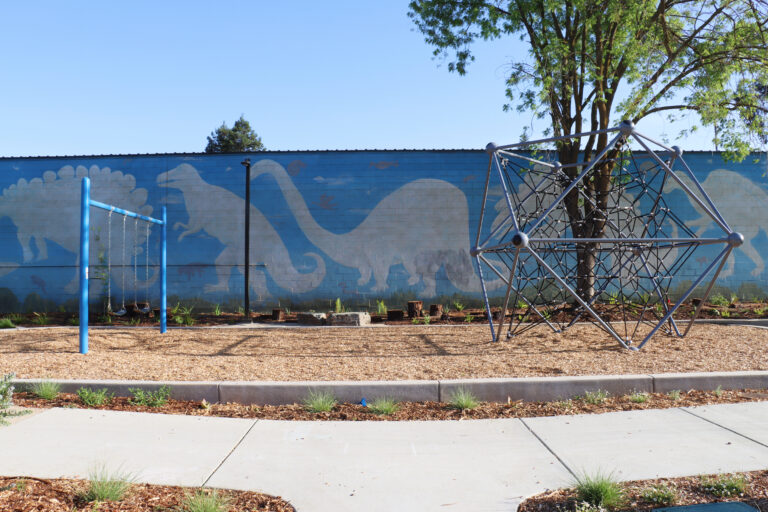
The changes included replacing the old play structure, installing additional seating and lighting and replanting grass. More amenities were also added, including a small performance stage, picnic tables, a water fountain, a more efficient irrigation system and drought-tolerant landscaping. 

This park renovation is definitely an improved asset for this local neighborhood and for any other residents who wish to come and utilize the amenities,” Jensen said. “There will be a small stage and an art installation coming in the next few months that will also add to the project.”

Lorenzo Kristov, a Davis Manor Neighborhood Council board member, explained what he hopes will be the result of the construction.

“We will now have something that’s really beautiful to go to and we will have play structures that will be a lot more interesting for people that want to bring their young kids to go there, and we’ll use it as a meeting site for community events,” Kristov said. 

The changes were made possible due to funding from Park Impact Fees, Prop 68 Per Capita grant funds, Cannery Community Funds, the Municipal Arts Fund (Fund 165) and the General Fund.


Written by: Alma Culverwell city@theaggie.org 


Secrets to college success

Apps and websites that will help you ace those midterms, maintain your health and get more sleep


By EMILIE BROWN — emrbrown@ucdavis.edu


We all know college life — especially during midterms season — can be overwhelming, stressful and exhausting. But fear not, fellow Aggies. I have compiled this list of the best apps and websites to help you take care of your mental and physical health, boost your productivity and get some much-deserved rest.


Forest: Having trouble staying focused? Easily distracted by text messages and social media? This productivity app can help you stay on task while having fun. Whenever you struggle with focusing, you plant a virtual tree on the app. If you leave the app before the tree is fully grown, it dies. But if you stay focused, you’ll grow a beautiful digital forest. 


Headspace: This app offers guided meditations, sleep sounds and mindfulness exercises to help you de-stress and improve your mental health. It makes it easy to unwind and relax. 


Fabulous: This app is like having a personal coach for your most important daily habits. It offers personalized plans to help you improve your physical health and become more productive through meditation sessions, meal plans, workout routines and habit trackers. Plus, it has cute animations and fun challenges that make it a joy to use.


Sleepytime: We all know getting enough sleep is crucial for success academically, but few of us are actually able to do it. This website can help you feel more awake and refreshed when you wake up by helping you calculate the best time to go to bed based on your sleep cycles. 


Seven: This app gives you personalized workout routines you can do in seven minutes without any equipment. It makes it easy to stay physically healthy by creating fast and effective guided workouts.


Zombies, Run!: If you run but get bored of it easily, or just want a change of pace while running, this is the perfect app for you! This app simulates a zombie attack for you to outrun for more motivation while working out. It combines your chosen music with its video-game-like storytelling to create a unique experience for every user.


Brain.fm: Studying for midterms can be a daunting task, but this app and website can help you focus by playing music tracks that are scientifically designed to boost productivity. It uses AI to generate songs that can enhance your focus and help you stay on task.


Studious: Keeping track of deadlines, assignments, class schedules and tests can be overwhelming and complicated. This free app can help. Studious allows you to input all of your course information and receive reminders for upcoming assignments and exams on your smartphone. It also has a “mute” feature I love that automatically silences your phone during class time.


Happy studying and remember to take care of yourself!


Written by: Emilie Brown — emrbrown@ucdavis.edu

Disclaimer: The views and opinions expressed by individual columnists belong to the columnists alone and do not necessarily indicate the views and opinions held by The California Aggie.
Culture Corner

The Art Desk’s weekly picks for music, movies and more


By RUMA POUDELL — arts@theaggie.org


Song: “SWAMP” by BROCKHAMPTON (2017)

In 2017, former boy band BROCKHAMPTON spontaneously released multiple albums within the time frame of about 5 months and made music for 6 years total. Despite the fact that they were around for some time, I only discovered them recently through the recommendation of a friend — but I already have a feeling that they’re going to be my top artist on Spotify Wrapped for 2023. Their dynamic lyrics, the contrast between each member’s voices and the overall unique music production on the band’s songs have left an impact on me. “SWAMP” has been one of my favorites recently, as some of the lyrics touch on the fact that you need to love yourself — which is a basic message — but that message is sent in an impactful way. 


Movie: “Pretty Woman” dir. by Garry Marshall (1990)

In this classic rom-com, Julia Roberts plays a sex worker who crosses paths with a wealthy businessman played by Richard Gere —  specifically, a businessman who “screws” people, albeit for money. The two spend a week together and, unsurprisingly, they fall in love. I thought the way the movie portrayed Roberts’ character wasn’t the greatest due to an overdone air of ditziness and the plot is a bit predictable. However, there are plenty of funny and entertaining moments that make up for this, making “Pretty Woman” worth the watch. 


Book: “Sincerely” by F.S. Yousaf (2018)

This book of poetry will leave your heart full. In “Sincerely,” Yousaf proposes to his partner through a series of poems that spell out “Will you marry me?” He details stories of their love and what his soon-to-be wife means to him. Poetry can be tough to read and comprehend sometimes, but this was an easy read that still had great meaning. For the hopeless romantics out there, grab this book and clutch onto it till your own worshiper crosses your path —  it’ll leave you hopeful that it is bound to happen.


Anime: “Erased” by Tomohiko Ito and Taku Kishimoto (2016)

Fed up with my recommendations about love? This is a mystery/thriller anime that details the story of a man who can time travel and is set on using this power to prevent a murder. I watched this way back when it came out in 2016  and I have fond memories of watching it on Crunchyroll with friends. I didn’t have premium Crunchyroll, so there would be a KFC ad that felt like it played five times in a row about every 10 minutes, but hopefully, when you watch it, you don’t experience the same thing. If you do, I promise it’ll still be worth it because the plot is amazing and will leave you in suspense, in tears and in laughter at various points. 

Written by: Ruma Poudell — arts@theaggie.org

Commentary: What having a dog has taught me about my mental health

Why investing in an emotional support animal will almost always pay off


By CORALIE LOON — arts@theaggie.org


Everyone knows a dog is a man’s best prevention method for heart disease, right?

Maybe the fact that dog owners are at a lower risk for elevated blood pressure and heart disease than non-dog owners is not common knowledge, but most people are not new to the idea that dogs (and other pets) provide emotional and mental health support

According to one study, 85% of dog owners self-reported their pets helping their mental health during the pandemic compared to 75% of cat owners.

Other than this being clear evidence that dogs are superior pets (okay, I won’t go that far), I never quite understood the significance of these statistics until I had my own dog.

When I picked her up from a nonprofit animal shelter in Richmond, CA, I knew my life would never be the same. For the next 15 or so years, I would have to feed her and walk her multiple times a day, give her baths and head scratches and pay veterinary bills that would never be covered by my insurance.

I adopted a dog for two reasons: I love dogs and I thought it would help my mental health and anxiety. But as soon as I took her home for the first time and let her hop around the apartment for her first sniff, I was struck with panic at the responsibility that now lay on my shoulders. I would have to put work and energy into this small being and take care of her. Anything that happened to her would be my fault

A few weeks later, the panic began to wear off. Giving her a scoop of morning kibble and taking her outside to pee became routine, and I started to realize that, while I was doing it for her, I was also doing it for myself.

I was spending time outside and getting light exercise more consistently than ever before, using the time to listen to music, call a friend or just think and self-reflect. Every day, my dog reminds me that nature and exercise are two things that hugely support mental and emotional well-being.

She also gently reminds me to talk to other people. When we pass fellow dogs and dog owners, she can’t help but say hi (in dog, of course), and I have no choice but to go along. The brief conversations I have with other pedestrians on the street always leave me feeling warm and remind me of the opportunities for connection that are always around, just under the surface.

One of her greatest reminders, though, is to find joy in simple pleasures. There’s nothing she likes better than lying in the sun and doing nothing. In between the commotion of everyday life, one of the best things I’ve ever invested in is the art of doing nothing.

It’s a beautiful reminder, but in reality, I can’t just sit and sleep in the sun all day. Besides the need to go to class and pay rent, my little friend relies on me, and it does take effort and energy to give her what she needs. 

What has unfolded during my brief time as a dog owner is a bigger metaphor. It takes time and energy to keep my dog happy and healthy, and while during the moment it can feel cumbersome, overall I find myself happier and more self-secure than before I had her. I think of all the times I shied away from going to therapy, meditating or telling a person how I really felt because it required too much effort. As much as we’d all love a quick fix to all our problems, the routes for improving mental health in the long term always require a certain amount of stamina.

Now, I know I would never trade being a dog owner for anything in the world. In exchange for a few walks and field trips to Petco, my dog gives me love, company, cuddles and plenty of daily reminders to be a better person.

I would say that’s a pretty good deal.

Written by: Coralie Loon — arts@theaggie.org

Curry’s 50 point night ends the Kings season in a game seven thriller

After a 16-year playoff drought, the Kings tested the defending champions in a closely contested series but could not close the series at home


By ELOISE ENGS — sports@theaggie.org


On April 15, the No. 3-seeded Sacramento Kings opened game one of a seven game series in the first round of the NBA Playoffs against the 2022 defending champions, the No. 6-seeded Golden State Warriors. The series has been highly competitive with both teams going back and forth forcing a game seven which took place on April 30 at the Golden 1 Center in Sacramento. The Golden State Warriors ultimately won the series in the seventh game.


Game one

The Kings hosted the Warriors for the first game of the series at the Golden 1 Center. Kings’ fans brought the energy for game one as it was Sacramento’s first playoff game since 2006. After a 16-year playoff drought, spectators gathered outside the arena hours before the game to support the team that had been at the bottom half of the standing for so many years. For a rare playoff appearance, the fans would not miss out on the opportunity to cheer for the purple and black, especially against a team like the Warriors, who have won four NBA championships in the past eight years. 

The Kings prevailed in game one, winning by a margin of three points (126-123). The Kings’ point guard De’Aaron Fox led the team with 36 points on night one. Other standouts included shooting guard Malik Monk, who totaled 32 points and made the team’s last two free throws with 2.9 seconds left on the clock to put them ahead of the Warriors. Power forward Domantas Sabonis was also a force in the game, grabbing 16 rebounds.

Star point guard Stephen Curry led the Warriors with 30 points, closely followed by shooting guard Klay Thompson with 21 points and small forward Andrew Wiggins and shooting guard Jordan Poole, who both tallied 18 points. Curry had an opportunity to tie the game following Monk’s free throws, but he missed the three-point shot and the Kings won their first playoff game in 16 years.


Game two

The Kings again hosted the second game of the series on April 17 after defeating the Warriors two days prior. The Kings won their second first-round playoff game at home with a score of 114-106, putting them ahead 2-0 in the best-of-seven-games contest. 

Fox and Sabonis both scored 24 points and were closely followed by Monk, who had 18 points. Fox’s three-point shot made the score 107-101 with 2:17 to play in the fourth quarter, and the Kings took off from there. 

The Warriors were led by Curry with 28 points, who shockingly only made three out of 13 three-point shots throughout the game. Wiggins followed Curry with 22 points. 

Game two took a turn when power forward Draymond Green was ejected from the game for a flagrant foul against Sabonis. Green was ejected for stepping on Sabonis’s chest when he was on the ground after a missed shot. The Kings’ fans went wild, which only fed Green’s actions on the court, so he started holding his hand to his ear, prompting loud boos in response from the fans. His actions led to him being suspended for game three, which would be held in San Francisco.


Game three

The Warriors hosted the Kings on April 20 at the Chase Center. The Kings were up 2-0 in the series, but they were going into a tough game three for their first away game in the first round. “Dub Nation” is the moniker of Golden State’s fans, and they brought the energy that night, especially because Green was suspended due to the altercation with Sabonis during game two. If the Warriors wanted to extend their season, they would need all the energy they could get from their supporters. Typically, it is improbable for a team to come back in a playoff series being down 0-3. 

Curry was a major standout in game three as he totaled 36 points in 37 minutes. The Warriors were more aggressive on the court than in games one and two, especially when Curry was on the bench. Wiggins also came to play, scoring 20 points and totaling a team high of nine assists for that game. The Warriors had double the amount of steals as the Kings had with 12 steals compared to the Kings six steals.

Fox, once again, was a standout for the Kings as he had 26 points, 9 assists and 9 rebounds. Sabonis collected the most rebounds in the game between both teams with a total of 16. Nobody else on the Kings really stood out that night, which would have been a crucial opportunity for them to steal a win on the road without Green playing.

However, the Warriors took their first win at home with a final score of 114-97. During the first two games of this series, the Kings were able to develop momentum one play after another, but with Curry performing the way he was in bursts on and off the bench, the Kings could not contain one of the greatest shooters of all time.


Game four

The closest final score of this series was in game four with the Warriors winning by one point, 126-125, which tied the series at 2-2.

With 42 seconds remaining in the game, the Warriors looked confident that they would take home the win for game four, but Curry attempted to call a timeout when the team had no timeouts remaining, which earned him a technical foul. Monk made the free throw following the foul, and the Kings remained in possession of the ball. Fox got a hold of the ball and made a crucial three-point shot, making it 125-126. The Warriors got a hold of the ball and passed it to their most reliable player, Curry, and he missed a jumper, giving the King’s another chance. The Kings did not have a lot of time to put up a shot, and the time expired right after Fox, who could not put up a shot, passed to small forward Harrison Barnes who missed.

With the series tied at 2-2, the teams traveled back to the Golden 1 Center.


Game five

Game five in Sacramento was a nail biter for both teams. The Kings led in the first quarter by three points, but from there, the Warriors had a promising lead throughout the game. In the fourth quarter, the Kings took advantage of defensive foul calls on the Warriors and held on until the very end. With 29.4 seconds remaining, it was only a five point game — until Curry made a clutch three-point shot to put the Warriors ahead by eight points. At this point, the game was over with a final score of 123-116. Just like that, the Kings who held a firm 2-0 lead in the series were down 3-2 and on the brink of elimination.

Standouts for the Warriors included Curry, once again, with 31 points, Thompson with 25 points and Wiggins closely following with 20. Forward Kevon Looney was the player to watch in game five, as he had 22 rebounds and seven assists.

The Kings fought until the end, especially Fox, who he was playing with a broken index finger on his shooting hand. He totaled 24 points, nine assists and seven rebounds, making it a great game five for the point guard. Monk stood out yet again with 21 points and carried out great defensive skills against their opponents.

With the Warriors leading the series 3-2, the competition headed back to the Bay Area for a possible season-ending game for the Sacramento Kings.


Game six

The Warriors hosted the Kings for a possible end to round one of the playoffs, with the hosts leading 3-2. The Kings were hungry for a win; after 16 years, they weren’t ready for their Cinderella story to come to an end.

At the end of the first quarter, the Warriors led by one point, but soon after, the Kings gained momentum and took the lead for the remainder of the game. The Kings won the game 118-99, staying alive in the series and forcing the Warriors into game seven, hosted in Sacramento.

Fox carried out yet another strong game with 26 points, four rebounds and 11 assists. Monk could have been the player of the night with 28 points, taking the team lead. The Kings shot 37.8% from three while the Warriors shot 31.3%, which is very unlikely for a team like the Warriors.

The Warriors took a hard loss at home, which was crucial to move on to the second round of the playoffs. Curry was not cooking on this particular night with his three-point game, but he still managed to score 29 points. Thompson looked promising in the second half with some consistent three-point shots; he contributed 22 points to his total.

The Warriors’ free-throw attempts were statistically low for their team with only 25/35 being made. In game six, the Kings held on and tied this back-and-forth series yet again at 3-3. 


Game seven

With the series tied at 3-3, the Sacramento Kings had home court advantage for the make-or-break game seven. However, the young team lacks playoff experience, and were facing a team that has won four championships in the last eight years. The Warriors’ experience seemed to be the deciding factor in the final matchup. Curry produced a 50-point performance to lead the Warriors to victory, 120-100. 

At the end of the first quarter, Sacramento led 31-30 and outscored the Warriors in the second quarter to lead by two points, 58-56. However, everything changed in the third quarter, when the Warriors’ defense swung the momentum/ The team grabbed 23 rebounds to the Kings nine, giving Golden State opportunities for Curry and Thompson to score. 

At the end of the third quarter, the Warriors led 91-81. The Kings would not recover, as they could not contain Curry, who scored the most points in a game seven in NBA history. Wiggins added 17 points and Thompson added 16. For the Kings, Sabonis scored 22 points and Fox, who played through his injury, scored 16. 

Written by: Eloise Engs — sports@theaggie.org

Student organizations host events during Mental Health Awareness Month

Several on-campus events will be held to highlight mental health intersectionality, wellness and resources for students


By LILY FREEMAN — campus@theaggie.org


The month of May is “Mental Health Awareness Month” and several student organizations will be hosting events and activities to promote both mental wellness and the resources available for students on campus. 

The Mental Health Initiative (MHI), a student organization dedicated to mental health advocacy, has planned several events and spaces to cultivate conversations surrounding mental wellness this May. 

Astha Soni, a fourth-year psychology and human development double major and the director of MHI, explained the importance of Mental Health Awareness Month to the organization. 

“May is the month when we rely on advocacy and connecting with our community,” Soni said. “We are going to do more advocacy projects in terms of outreach, research and collaboration while also creating a space for the entire month for students to just look at different intersections within mental health.” 

Soni said that MHI will be hosting two to four events every week during May, each discussing different intersections within mental health. 

“One of our weeks will focus on the intersection of the queer community and mental health,” Soni said. “We are also going to be talking about more niche and not-as-well-talked-about intersections such as the undocumented and incarcerated communities and their mental health overlap.” 

Natalie Bruch, a fourth-year biological psychology major and the publicity coordinator of MHI, also discussed the activities that the organization has in store and how they plan to handle conversations that MHI members might not be experts in. 

“There are also going to be a lot of collaborations with other clubs and organizations around campus because we aren’t qualified to talk about all of these things, but still want to touch on these topics because they’re important,” Bruch said.

MHI will be hosting a yoga event on the Quad and a menstrual health activity with Davis Period. The organization will also be giving out flowers and affirmation mirrors on campus. 

Bruch said that a complete list of events for the month will be posted on the MHI Instagram so that students can be in the know about when and where they can participate. 

ASUCD also plans to recognize Mental Health Awareness Month. Senator Priya Talreja said that she and others in ASUCD Senate want to be intentional throughout the month.

“One of my goals this year as a senator is to work towards addressing the need for more racially diverse and culturally competent mental health support on campus,” Talreja said. 

Talreja has specifically been working toward the creation of more South Asian-specific mental health programs and advocating for the creation of a South Asian support group. 

“This group is meant to be a culturally mindful space to help students navigate the intersection between their experiences on campus and their South Asian identity,” Talreja said. “I hope that this group will serve as a starting point for the expansion of identity-based support groups on campus.”

Talreja also talked about the South Asian Mental Health Coalition, which she created this year to bring together campus partners and student-government members to discuss South Asian mental health.

“The goal of this group is to build community and support collaboration between mental health advocates on campus in a way that centers the lived experiences of our students,” Talreja said. 

ASUCD President Radhika Gawde highlighted other ways that ASUCD is planning to use this month to promote mental health advocacy. 

“College is hard, and students face a number of mental health challenges throughout their time at UC Davis,” Gawde said. “ASUCD is planning to partner with Student Affairs to explore innovative ways to ensure that Aggies have better access to counseling and to foster the growth of ASUCD’s Mental Health Initiative Conference and ASUCD’s other mental health resources.”

Bruch explained why having a dedicated time of year to recognize mental health challenges is important to many.

“It’s important to create spaces to talk about these things, and I feel like it’s easier to do when you recognize that this is a dedicated time to start searching into that for yourself,” Bruch said. “It’s going to be a very positive time around campus because I know that there are a lot of awareness clubs around campus, and everybody has their own plan. I would expect that there’s going to be events happening almost every single day. Everybody can find a space that resonates with them, […] and they feel like this is personal to them and like they can feel safe in these spaces.” 

While Mental Health Awareness Month only lasts through May, students always have mental health resources available to them at UC Davis. Soni said that to help students navigate all of the resources that UC Davis offers, MHI created an on-campus resource guide for students to decide which services would be best for them. This guide can be found on MHI’s Instagram @ucdmentalhealthinitiative


Written by: Lily Freeman — campus@theaggie.org