51.2 F
Davis

Davis, California

Friday, December 26, 2025
Home Blog Page 151

Poser alert: UC Davis freshman claims to like IPAs

He keeps commenting on the “loaminess.” Is that even a thing?


By OWEN RUDERMAN — opinion@theaggie.org


Last night at my party, Brandon Flynn, a freshman in the Davis Brewing program, showed up and started telling everyone who would listen that he “actually really likes IPAs.” I don’t know who invited him, but it definitely wasn’t me. 

Flynn is 18. Now, I don’t have anything against 18-year-olds. Yes, they kind of suck, but that isn’t really their fault. Unless they’re Brandon Flynn. Then it’s definitely their fault.

What I’m trying to say is, Flynn is completely full of it. The beer-drinking rule book clearly states that you have to be at least 30 before you can enjoy an IPA. Flynn should be at the point where a Bud Light tastes too alcoholic, and yet there he was, ruining the vibe of my party with his “freakishly developed palate.”

At one point, Flynn even came up to me and started telling me that “IPAs are the beer-drinkers’ beer to drink beer beer drink” and “you can’t be a real Californian if you’re not hooked on that pale goodness.” I also noticed he was holding some absurd can in his hand that said “Hazy Frontal Lobe Decimator 5000” on the front. I have no idea where he got it, but Google isn’t turning up any results.

He even approached my friend Bella at one point and, upon seeing that she was drinking a seltzer, swatted it out of her hand, yelling, “It’s bitter or nothing! It’s bitter or nothing!” as loud as he could.

And then there was the whole Brent Callaghan debacle. Brent, the infamous alcohol extraordinaire, tried Flynn’s drink, but immediately spit it out. He was gagging and spitting for what seemed like an hour before he finally passed out in my kitchen.

After a while, a small riot formed and attempted to kick Flynn out, but it didn’t work. The bitterness must have enhanced him in some way because even the strength of 15 people wasn’t enough to bring him down. 

Long story short, the cops showed up because of the noise of the riot and arrested both of us. We’re sitting in a cell together right now, and he still won’t shut up about the IPAs. I have no idea how he did it, but he got a can of that “Frontal Lobe Decimator 5000” inside the big house. Please, someone, bail me out of here before he makes me taste it.


Written By: Owen Ruderman — opinion@theaggie.org

Disclaimer: (This article is humor and/or satire, and its content is purely fictional. The story and the names of “sources” are fictionalized.)

The hijab is not a symbol of oppression

How we can learn from the U.S. intervention in Afghanistan


By YASMEEN O’BRIEN — yjobrien@ucdavis.edu


Two weeks ago, Muslims around the globe celebrated Eid al-Fitr to mark the end of Ramadan, the holy month of fasting. After celebrating this year, a friend asked me what Eid signified and why we celebrate it. He also asked me, with quite a puzzled look, why I don’t wear a hijab if I’m Muslim. I have gotten this question countless times. People often question my faith because my mixed ethnicity and displayed hair are not what they visualize when they think of a Muslim woman.

Questions like these always make me think about how the world sees Muslims, especially Muslim women, and all of the misconceptions there are about us. When I think about this, what comes first to my mind is the veil — which is an overall statement that refers to head and body coverings worn by some Muslim women, such as the hijab, burqa, niqab or abaya. Because these coverings are visual, the Western world analyzes and assigns meaning to them. Often, this meaning is their own.

One example of this was America’s presence in Afghanistan from 2001 to 2021, which included the Afghanistan War from 2001 to 2014. One of the main responses to this war was seeking knowledge about and protecting “women of cover,” as then President George Bush called them in a 2001 News Conference. At first glance, protecting women seems like a positive thing. But it became an excuse for American occupation in Afghanistan, as well as widespread misconceptions about what the veil symbolized for women of the Islamic faith. It gave the false impression that the reason they were there was to protect these “poor women.”

After reading “Do Muslim Women Really Need Saving?” — the work of American anthropologist, Lila Abu-Lughod — I was struck by the extent to which America was concerned with Muslim women in this war, mostly due to the fact that they wear coverings. This desire to “liberate” Muslim women by “saving” them from their veilings is a belief that comes from exclusively looking at the Taliban’s presence in Afghanistan through the Western lens. A lack of understanding surrounding cultural differences makes America’s “valiant” involvement in Afghanistan almost meaningless.

In Abu-Lughod’s work, she talks about America’s antagonization of the veil — which is rooted in Islamophobia — and that much of the Western world sees it solely as a symbol of oppression and imprisonment when this is not always true. It is also an empowering cultural and religious practice. Abu-Lughod says that for many Muslim women, veiling makes them feel safe and respected. It is a form of devotion to their faith that is their decision.

While it is true that not all Afghan women desire to wear the burqa, the choice should be theirs and theirs alone. When the U.S. intervened in Afghanistan in the name of helping liberate women, they did not give the freedom of choice back to the women — which would have been truly liberating. Instead, the power over Afghan women merely transferred from the Taliban to the U.S.

And while this is an example that may feel far away, I believe it contains important sentiments that we should all apply to our daily lives. When we claim to celebrate women and call ourselves feminists, we really need to be asking ourselves if veiled women are being taken into account. Just because what’s empowering for them may not be what empowers us, doesn’t mean they are being oppressed.

Seeking understanding is the first step. As college students, we are the future, and including all women in the fight for equality matters.


Written by: Yasmeen O’Brien — yjobrien@ucdavis.edu

Disclaimer: The views and opinions expressed by individual columnists belong to the columnists alone and do not necessarily indicate the views and opinions held by The California Aggie.

UC Davis a cappella team harmonizes Western and South Asian music and identities

Jhankaar A Cappella creates a sense of belonging through Western-South Asian fusion


By INDRANIL BASU — features@theaggie.org


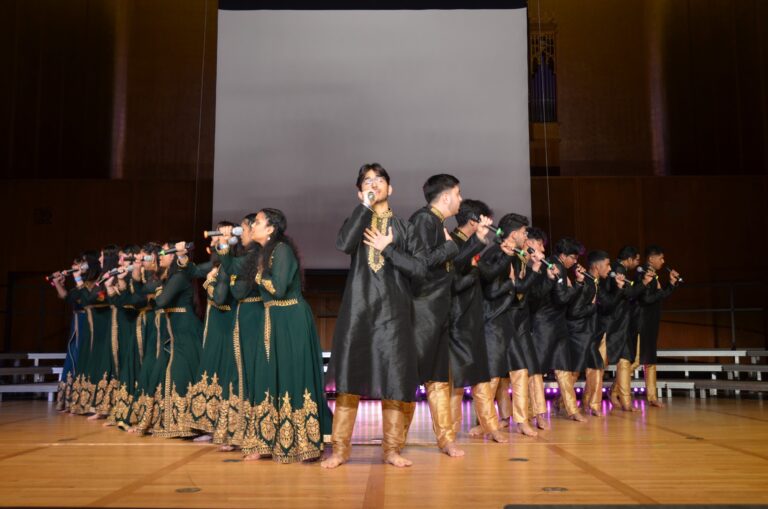
Jhankaar, UC Davis’s only South Asian a cappella team, fuses traditional South Asian and Western music genres to present a unique blend of music. Founded during the 2009-2010 academic year by three former students, Jhankaar has become a family for South Asian students and a place for belonging on campus within their South Asian diaspora in the U.S. Jhankaar brings together the different South Asian cultural heritages of members through their common passion for music. 

According to Co-Captain Sanjana Aithal, who graduated from UC Davis in fall 2022, Jhankaar is one of the many South Asian and Western Fusion Desi a capella teams across the country and is part of the Association of South-Asian A Capella (ASA) competitive collegiate circuit. They have won numerous awards at various ASA competitions, such as multiple Best South Asian/Western Soloist awards, Best Visual Performance at Mehfil 2020, third place overall at Jeena 2017 and Jeena 2022 at Austin, TX, as well as Best Vocal Percussionist and Best Arrangement at Awaazein, Dallas, TX, 2023. Their most recent performances have been at Anahat in Berkeley and Hellacappella hosted by The Spokes at UC Davis last month.

“Our overarching goal [is] bringing together two distinct musical traditions — South Asian and Western — and creating a unique sound by combining them in a cappella arrangements,” Aithal said. “In our eyes, this fusion allows for creative reinterpretations of popular songs and traditional music from both cultures and results in a fresh and exciting sound that we enjoy innovating every year.”

The team is a gender-inclusive Registered Student Organization (RSO) with a total of 18 members, who all sing and assume various officer roles within the team. Nine of them are elected board members.

According to the board, Jhankaar unites all kinds of people and music, and their fusion diversifies and broadens people’s exposure to music. They are proud to showcase their South Asian music and culture to a wider audience.

“At Hellacappella, members of the audience were amazed at the South Asian culture that we just presented, and that is the biggest moment of pride for us,” Aithal said. “People are amazed and exposed to this whole new world of music because of our fusion, even within a 10-[minute] performance. Opening their eyes to how incredible South Asian music is, to people that would not have seen it otherwise — we take pride in that.”

Jhankaar also plays an instrumental role in helping South Asian students who were born and brought up in the U.S. reconnect with their heritage through music, as well as find cultural belonging with other South Asian students, according to Rithik Sachdeva, the team’s PR officer and a fourth-year electrical engineering and computer engineering double major. 

“I grew up [somewhat] whitewashed, so I wouldn’t say that I had a lot of experience with the Indian side of everything,” Sachdeva said. “My mom and dad tried really hard to get me to, but I’d be like, ‘I’m American; please let me play with my friends.’ [Jhankaar] brought me greater appreciation [of my Indian heritage] by being proud of the fact that we come from this dual identity and that we can stay so as well and show that to the world.”

Fifth-year biomedical engineering and music double major and Lead Music Director Savita Pereira also resonated with this, saying that she grew up “very westernized.”

“Jhankaar is like our own diaspora […] where I finally felt like I belong; this is what I’m doing for my culture,” Pereira said. 

Pereira, who was a captain of the team last year, added, “Members here are so supportive and inclusive.”

The newest members, such as Rayan Narayanaswamy, a first-year mechanical engineering major, also attested to how Jhankaar has helped them find a place on campus and has become like a family to them. 

“Jhankaar had a huge impact on who I was as a person, and it really helped me assimilate to UC Davis’s culture and find my place here,” Narayanaswamy said. “Jhankaar gave me a purpose. It made me feel like I was doing something that benefited our campus in some way. We’re all making music together, but aside from that, we’re all still friends and […] we’re a huge family.” 

Narayanaswamy added that Jhankaar has expanded his music taste and revealed how “creative and beautiful” South Indian culture is. 

Along with singers, like many a capella groups, some of Jhankaar’s members are beatboxers who provide rhythm for their music. 

“It was very interesting to tackle the challenge of how to beatbox for South Asian music just because it’s so different rhythmically, or on a percussive sound level, from any Western music,” said Immanuel Victor, a third-year neurobiology, physiology and behavior major and first-year member of Jhankaar. “So it really challenged me to kind of find those sounds and deliver a different type of beatbox. And I think it really did help me to reconnect with my roots.”

Victor is the vocal percussionist for Jhankaar, who, like Narayanaswamy, also has South Indian heritage and grew up in the U.S. 

“Growing up, I didn’t have a huge Indian culture around me,” Victor said. “So it was nice to find a group of people like me who I could relate to and sort of connect back to my culture with. I’ve learned a lot about my culture along the way, from mundane things like food to music. I didn’t have a background in Carnatic or Hindustani [North Indian classical] music when I joined.”

Pranav Padture, a third-year biochemistry major who has been with Jhankaar since his freshman year and is currently the group’s co-music director, said that the team is very innovative.

 “We’re the only South Asian a cappella team in UC Davis. So I feel like it’s very cool that our team showcases Indian culture within a cappella, which started off as a very Western genre. To have Indian music, but in a Western style, is something very unique. With Jhankaar, one of the biggest things we have always tried to do is innovate, and even within our niche genre, we’ve always tried to mess around with different styles and genres, adding different easter eggs in arrangements and our singing.”

He agreed that Jhankaar offers a sense of belonging. 

“As a South Asian person who was born here, I kind of grew up in American culture, but at the same time, there was kind of that feeling for me to hold on to my roots and really try to find out and learn as much as I could about my own culture,” Padture said. “I feel like that was one of the driving forces for many of the members on this team — just being able to connect and know more about your culture.” 

Padture said Jhankaar’s unique style is also “rather symbolic” of the way the group fuses Western and South Asian music. 

“It shows that music from two completely different cultures can still be mashed up together and sound good together because I feel like music is a very universal language,” Padture said. “And that’s at the core of what we kind of aim to show, that music really has no barriers, has no borders. Music is music, and different cultures have their own music. But at the end of the day, there’s something that everybody can appreciate.”

The majority of Jhankaar’s funding comes from fundraisers at UC Davis events, gigs at weddings that they can be hired for and grants for competitions, according to Sachdeva. Competitions often charge registration fees and entail travel and lodging costs, which Jhankaar generally has to pay out-of-pocket twice a year. Recording, mixing and mastering music, as well as purchasing costumes, also come with significant costs, according to Avani Klinder, a fifth-year cognitive science major and co-captain of the team. 

“We typically fundraise with the goal of putting a little dent in the price of plane tickets as those are our biggest expense if the competitions are far, but the majority of us are paying personally because we want to go,” Klinder said.

Padture said Jhankaar is worth the extensive time members put into rehearsing and competing. 

“I can say I’ve put a lot of hours, especially during the [competitive] season into the team,” Padture said. “But it is very rewarding, especially when we’ve won awards, as it really shows that the time and effort that we’ve put into preparing for this is appreciated, and it really pushes us to really strive to be better, put more creativity and just to keep doing what we’ve been doing.”

Jhankaar is currently working on developing a more interwoven alumni network and is in the midst of creating a website and Wiki page, according to Klinder. They currently has between one and three thousand streams on Spotify and up to 3.5K views on YouTube, though they have only been putting videos out for the past two years. The team is working on ideas for more music videos and content. One of its main goals at the moment is to increase outreach to the community.

To learn more about Jhankaar or hire the group for gigs, follow @jhankaaracappella on Instagram or Jhankaar on Facebook. You can find Jhankaar’s music videos on Youtube channel and listen to their music on Spotify and Apple Music. 


Written by: Indranil Basu — features@theaggie.org

How taking care of plants helps college students’ mental health

Written by a college student, 10 baby plants later


By MAYA KORNYEYEVA — mkornyeyeva@ucdavis.edu


This year, I opted to live in one of the residents halls on the UC Davis campus. As I got to know the students in the building, one pattern became increasingly clear: almost every single room contained a plant. A succulent, a bouquet of flowers, a tiny sprout, you name it. 

When I asked why, most residents gazed back at me with thoughtful expressions before replying with something along the lines of: “I like taking care of it,” or “It brightens the room.” Intrigued, I bought a $5 succulent from Trader Joe’s a few weeks after moving in. Turns out, it takes quite a bit of effort to keep a plant alive, like remembering to water it, giving it enough sunlight and keeping the soil healthy. As time progressed, I got better at maintaining it.  Now it sits on my windowsill, adding a dash of color to the muted browns and beiges of the walls and furniture.

With that being said, I am willing to bet that there was a deeper effect on my living space than just the added aesthetic appeal of the plant. In fact, there is actually a bit of psychology behind this. For one, research shows that bringing a little bit of the natural world into our indoor environment promotes better quality of life and minimizes stress and mental fatigue — especially among university students. Being within a self-created “green space,” whether it’s on a grassy lawn or inside your overgrown apartment, can encourage creativity and actually boost academic performance.

I can’t help but agree with these findings, as I am often drawn to the Arboretum for a morning stroll before midterms, and find myself feeling significantly calmer afterward. I love sitting under a tree on the Quad doing homework, and I’ve recently taken a liking to keeping a fresh vase of flowers on my desk. Not only are they beautiful, but they are also a daily reminder to go outside and enjoy a bit of natural scenery.

Additionally, raising a plant and taking on the responsibility of caring for it is proven to be associated with feelings of satisfaction and improved mood, as “contact with plants is an intuitive and nonverbal activity that can provide psychological stability and comfort.” It can also create a routine, which is beneficial for staying organized and avoiding feeling overwhelmed. The life of a college student can be immensely busy; taking those five minutes out of the day to water your plant and tilt it toward the sun can keep you feeling grounded.

In this way, there is, in fact, rhyme and reason for the common occurrence of houseplants in university students’ living spaces, and the homes of most people for that matter. The culminating motif is that we have a natural affinity for life, and living and growing alongside it has a wide array of both physiological and psychological benefits. I am happy to say that my succulent is still alive and doing well and I’ve added nine other new plants to our leafy family — although they are comparatively less prosperous than the expansive assortment of plant species in the dorm of the horticulture and agronomy major two suites down from mine.

No matter your gardening experience, I highly recommend becoming a proud parent of a baby plant and taking it upon yourself to maintain it and help it grow. Mine is named Stevie… What about yours?


Written by: Maya Kornyeyeva — mkornyeyeva@ucdavis.edu

Disclaimer: The views and opinions expressed by individual columnists belong to the columnists alone and do not necessarily indicate the views and opinions held by The California Aggie.

Davis City Council discusses allocation of CDBG and HOME funds, adopts Climate Action and Adaptation Plan at April 18 meeting

The final draft of the plan aims to reach carbon neutrality in the city of Davis by 2040


By MADELEINE YOUNG city@theaggie.org


On April 18, the Davis City Council held its last meeting of the month to cover the allocation of funds for the Community Development Block Grant (CDBG) and Home Investment (HOME) funds for the fiscal year of 2023-2024 and adopt the final draft of the Climate Action and Adaptation Plan (CAAP).

Item 5 on the agenda covered the preliminary funding recommendations and annual action plan for the CDBG and HOME funds given to the city this fiscal year. These are federal funds that the Housing and Urban Development (HUD) allocates to assist low-income households and remove barriers in public facilities. 

Kelly Stachowicz, the assistant city manager, brought before the council the preliminary funding recommendations during the required public hearing.

“This particular [20]23-[20]24 program year, we have not received our final allocations from HUD yet, but we are estimating that we will receive approximately $780,000 in CDBG funds and $460,000 in HOME funds,” Stachowicz said. “We have gone through all the processes necessary for the public outreach and input, we have received applications and gone to the social services commission to get their input as well”.

The council will spend a majority of the CDBG funds on public services, allocating extensive funds for programs such as Davis Community Meals, Empower Yolo and more to help with food insecurity and other needs, according to Stachowicz. 

“The reason this is difficult is because this is limited to 15% of the overall funds available to us and the need is much, much greater,” Stachowicz said. 

The bulk of the CDBG funds is spent on public facilities, specifically Americans with Disabilities Act (ADA) compliant projects such as annual Flatwork and improvements to Playfields Park. The remaining 20% is put towards fair housing and city administration. 

The city will put $414,000 of the funds toward the Mercy Housing Project, which is creating senior housing in the Bretton Woods development. The remaining funds will be given to the city administration.

Moving onto Item 6, the council discussed the final 2020-2040 Climate Action and Adaptation Plan (CAAP). Diana Jensen, the director of public works engineering and transportation and CAAP project director, took the floor to present the final CAAP report, which has been slightly changed since the draft presented in December

Jensen explained that the city council’s goal in updating the CAAP and integrating the plan into city policy is to reach their March 2019 resolution of attaining community carbon neutrality by 2040.  

Kerry Loux, the city’s sustainability coordinator and the project manager for CAAP, presented the final report to the council. The CAAP was intended to implement the community vision adopted by the city council and serve as a planning document with recommendations for actions, based on an initial greenhouse gas inventory and vulnerability assessment. 

“The actions in the plan are in five categories which are color-coded in the plan and the goal was to make them implementable and measurable,” Loux said. “We wanted to be able to say ‘This is what the action we want to do is and here’s how we are going to measure success and know what we are attaining with those goals.’”

The plan contains 28 action items that will help achieve carbon neutrality by 2040. It also  addresses climate risk. The CAAP states that the implementation will prioritize community outreach and regional collaboration and work with city partners and proactive interdepartmental staff. 

Josh Lathan, the architecture, engineering, construction, operations and management (AECOM) technical lead, then gave an update on the 2030 greenhouse gas reduction scenario, which estimated that the 2030 minimum target gap would be around 17,500 metric tons of carbon dioxide per year. 

“The city has been working on the development of a ‘CAAP dashboard’ that will allow transparent tracking of CAAP implementation progress; the dashboard layout right now will show a high-level overview of greenhouse gas emission metrics,” Lathan said. “The dashboard would include some details about implementation for each of those 28 prioritized CAAP actions, things like projected milestone dates for those, a visualization that shows progress, some sample tracking metrics and an indication with icons of what the different co-benefits of those actions are.”


Written By: Madeleine Young city@theaggie.org

Who I’d beat in a fight: UCD edition

Not literally, just metaphysically


By CARMEL RAVIV — craviv@ucdavis.edu


To be honest, I’ve been hitting the gym a lot lately and just PR’d on bench press (35 lbs), so I feel confident in my ability to take out my frustrations and show off my two months of Krav Maga practice. I’ve been eating a lot of butternut squash tacos at the DC too, and my protein intake is the highest it’s ever been. Therefore, I’ve made a list of people I feel confident I could take on in a fight in the University of California, Davis vicinity. 

  • The Egghead in front of the library
  • 15 squirrels (at once)
  • ChatGPT (verbal argument)
  • A frat brother working security (they have a 20% blood alcohol level)
  • Two turkeys (at once)
  • My RA
  • David Dobrik (he has no affiliation with UC Davis, he just has a stupid face)
  • Any electric scooter owner
  • Anyone from Cuarto
  • The people working the desk at the ARC (they seem low energy so I’d offer them a slurp of my Celsius but they’d get mad and post my ID on the UC Davis Snapchat story)
  • A computer science and engineering (CSE) major (too depressed to fight back)
  • Those lazy freeloaders in the hammocks on the Quad


Written by: Carmel Raviv — craviv@ucdavis.edu


Disclaimer: (This article is humor and/or satire, and its content is purely fictional. The story and the names of “sources” are fictionalized.)
Davis professors share tips they wish they knew before becoming educators

Several professors gathered for an informal panel discussion to discuss lab funding, impressing employers and the importance of self-advocacy


By MIA BALTIERRA — features@theaggie.org

Lea este artículo en español.


At a research institution like UC Davis, most instructors are performing research while teaching classes. The path to these positions can take on many forms, but almost all of them include attending graduate school, completing a Ph.D. and potentially holding a postdoc research position. 

On April 20, several UC Davis professors came together for a discussion at the Graduate Center to answer questions about their careers in higher education, as well as logistical aspects of their careers that they wished they had known how to navigate earlier on.

In particular, the educators emphasized the idea that there are many career paths that can lead to the same destination. Not every experience is the same, and students should not be afraid to explore and pursue unique interests after attaining their bachelor’s, master’s or doctoral degree.

Christine Diepenbrock, Ph.D., an assistant professor in the Department of Plant Sciences, gained hands-on experience in research before she returned to academia as a professor.

“In the industry, I was working on a very computational team,” Diepenbrock said during the panel. “[I learned] this idea of working across functional teams and what it takes to communicate across these teams.” 

Colleen Bronner, Ph.D., an associate professor of teaching in civil and environmental engineering, also gained social skills from her time outside a university. 

“I worked at a psychiatric hospital for a while,” Bronner said during the panel. “It teaches you to communicate with diverse folks and how to calm down folks who are overwhelmed. Most of our students are overwhelmed. Interpersonal skills are really important, and I don’t think we practice that as much as we could in academia.”

The professors also shared their experiences receiving a “start-up package” — the first set of financial and material supplies given when starting a faculty position, which includes a starting salary, job benefits, equipment, money to fund graduate students in a lab and more.

The panelists expressed how important this package is to starting the first year as a professor in an institution. They said that employees should discuss with the school what items they will need to thrive.

“You are fully expected to negotiate,” said Randy Carney, Ph.D., an assistant professor of biomedical engineering.

For those who aren’t familiar with the process, the panelists explained that it is easy to simply take what is offered. However, not acquiring all the necessary funding can make the first year extremely challenging for a new faculty member.

“I didn’t ask for anything more, and I regretted it a little,” Bronner said during the panel.

Self-advocacy was a central theme in the discussion, and the speakers said that having a support system as a new faculty member — something that is not always given — is extremely important.

“Be productive; don’t assume the support you need will find you,” Bronner said. “Have lunch with a colleague; ask for mentorship. We see way too many faculty of color leaving academia because the mentorship isn’t there, and they end up feeling like they don’t belong.”

The daily tasks of a professor can be taxing on a newcomer, and Carney suggested that for the first year, “it might be incumbent to ask for a teaching release,” or a release from a heavy teaching load, so that there is time to adjust to the new environment. 

The panelists each gave their opinions of what a board of employers at a school will be looking for in potential candidates. According to Bronner, employees search for those who have made good use of opportunities and demonstrate a commitment to diversity, equity and inclusion. 

Another necessary skill for someone looking to become a professor is time management. As an educator, teaching, researching and writing will take up a lot of time, according to the panelists.

Panelist JoAnne Engebrecht, Ph.D., a professor of molecular and cellular biology, said that when you do land a position, or a few, it is important to weigh each job opportunity carefully. 

“Don’t say yes right away,” Engebrecht said. “Particularly early on in your career, have mentors to talk to. I would strongly recommend that for anyone who has a problem saying no.”

Engebrecht encouraged prospective professors to advocate for themselves when they do take a job.

“One thing I wish I had done more of [is] be willing to take chances,” Engebrecht said. “If you have a really good idea, go for it. Maybe don’t be so hesitant. [If] you don’t have this linear path, every off-road [experience] brings something to your position. Perseverance counts for a lot in this field.”

Written by: Mia Baltierra — features@theaggie.org

Profesores de Davis comparten consejos que desearían haber recibido antes de convertirse en educadores

Varios profesores se reunieron en una mesa redonda informal para hablar sobre la financiación de los laboratorios, cómo impresionar a los empleadores y la importancia de la autodefensa


Por MIA BALTIERRA — features@theaggie.org

Traducido por BROOKE BYRNES y ANASTASIA THOMASSON

Read this article in English.


En un instituto de investigación como UC Davis, la mayoría de los instructores investigan mientras enseñan. El camino hacia estos puestos puede tomar muchas formas, pero casi todas incluyen asistir a la escuela de posgrado, completar un doctorado y potencialmente tener un puesto en investigación.  

El 20 de abril, varios profesores de UC Davis se reunieron para tener un debate en el Centro de Graduados y responder preguntas sobre sus carreras en enseñanza superior, así como aspectos logísticos de sus carreras que desearían haber sabido cómo abordar antes. 

En particular, los educadores enfatizan la idea de que hay muchas carreras que pueden llevar al mismo destino. No todas las experiencias son iguales y los estudiantes no deben tener miedo de explorar y perseguir intereses únicos después de obtener su licenciatura, máster o doctorado.

La doctora Christine Diepenbrock, profesora asistente del Departamento de Ciencias Vegetales, adquirió experiencia directa en investigación antes de regresar al mundo académico como profesora.

“En la industria, trabajé en un equipo muy computacional”, dijo Diepenbrock en la conferencia. “[Aprendí] la idea de trabajar con equipos funcionales y lo que se necesita para comunicarse a través de estos equipos”. 

La doctora Colleen Bronner, profesora asociada de enseñanza en Ingeniería Civil y Medioambiental, también adquirió habilidades sociales fuera de la universidad.

“Trabajé un período en un hospital psiquiátrico”, dijo Bronner durante la conferencia. “Eso te enseña a comunicarte con gente diversa y calmar a personas que están abrumadas. La mayoría de nuestros estudiantes están abrumados. Las habilidades interpersonales son muy importantes, y no creo que las practiquemos tanto como podríamos en el mundo académico”.

Los profesores también compartieron sus experiencias de recibir un “start-up package“: el primer conjunto de suministros financieros y materiales que se entregan al comenzar un puesto de profesor, que incluye un salario inicial, prestaciones laborales, equipamiento, dinero para financiar a estudiantes de posgrado en un laboratorio y mucho más.

Los panelistas expresaron la importancia que tiene este paquete para empezar el primer año como profesor en una institución. Dicen que los empleados deberían hablar con la escuela acerca de qué elementos necesitarán para prosperar.

“Se espera que usted negocie plenamente”, dijo el doctor Randy Carney, profesor adjunto de Ingeniería Biomédica. 

Los panelistas explicaron que, para aquellos que no conocen el proceso, es fácil aceptar simplemente lo que se ofrece. Sin embargo, no conseguir toda la financiación necesaria puede hacer que el primer año sea extremadamente difícil para un nuevo miembro del cuerpo docente. 

“No pedí nada más y me arrepentí un poco”, dijo Bronner durante la conferencia.

La autodefensa fue un tema central en el debate, y los exponentes afirmaron que tener un sistema de apoyo como nuevo miembro del equipo docente –algo que no siempre se recibe– es extremadamente importante.

“Sé productivo; no des por supuesto que el apoyo que necesitas te encontrará”, dijo Bronner. “Almuerza con un colega, pídele que sea tu mentor. Hemos visto demasiados profesores de color que abandonan el mundo académico porque no hay mentores y acaban sintiendo que no pertenecen a ese mundo”.

Las tareas diarias de un profesor pueden resultar extenuantes para uno nuevo, por lo que Carney sugirió que durante el primer año “podría ser conveniente pedir una liberación de enseñanza”, o la liberación de una carga pesada de enseñanza, de modo que haya tiempo para acostumbrarse al nuevo entorno.

Cada uno de los panelistas dio su opinión sobre lo que una junta de empleadores de una escuela busca en los posibles candidatos. Según Bronner, los empleados buscan a quienes hayan aprovechado bien las oportunidades y demuestren su compromiso con la diversidad, la equidad y la inclusión.

Otra habilidad necesaria para alguien que quiera ser profesor es la gestión del tiempo. Como educador, enseñar, investigar y escribir toma mucho tiempo, según los panelistas. 

La panelista doctora JoAnne Engebrecht, profesora de Biología Molecular y Celular, dijo que cuando se obtiene un puesto, o varios, es importante sopesar cada oportunidad de trabajo con cuidado. 

“No digas que sí inmediatamente”, dijo Engebrecht. “Particularmente al principio de tu carrera, ten mentores con los que hablar. Se lo recomiendo fuertemente a cualquiera que tenga problemas para decir que no”.

Engebrecht animó a los futuros profesores a abogar por sí mismos cuando acepten un trabajo.

“Una cosa que me hubiera gustado haber hecho más es haber estado dispuesta a correr riesgos”, dijo Engebrecht. “Si tienes una idea realmente buena, ve por ella. No dudes tanto. Si el camino no es lineal, recuerda que cada experiencia por fuera de la academia aporta algo a tu carrera. La perseverancia cuenta mucho en este campo”. 


Written by: Mia Baltierra — features@theaggie.org

Traducido por: Brooke Byrnes y Anastasia Thomasson

Review: ‘Beef’ brings together ‘car-crossed haters’

The dark comedy unpacks the universal yet complex emotion of anger


By BRANDON NGUYEN — arts@theaggie.org  

Lea este artículo en español.


“That’s what’s wrong with the world today, man. They want you to feel like you have no control,” Danny Cho, played by Steven Yeun, says in the first episode of Netflix’s new dark comedy series “Beef.” 

His experience is, no doubt, relatable; be it blaming your bad day on your parents for not seeing eye-to-eye with you because of a “generational gap,” on capitalism for making the rich richer or on the pandemic for trapping you in your house for months on end. For Cho, his cynicism becomes more apparent upon a road-rage encounter instigated by Amy Lau, played by Ali Wong, setting the tone for the remainder of the show.

While “Beef” opens with an arguably commonplace incident, it off-roads dismally (though comedically for the viewer) towards a vengeful feud as the two characters attempt to make the other’s life as terrible as possible in the following episodes. 

What makes “Beef,” created and written by director Lee Sung Jin and produced by A24, one of the more insightful, reinvigorating and compelling shows of the year so far is its exploration of a universal yet uniquely complex emotion: anger. Every unhappy character is unhappy for different personal reasons; how they each cope and channel this unhappiness reveals that there is much more to the high-speed, middle-finger-flipping chase of life than meets the eye. 

Cho is a struggling handyman and contractor scrambling to accumulate enough money to build a house in Los Angeles for his parents who were forced to return to Korea. Lau, who married into art money, is an entrepreneur desperately trying to sell her small houseplant business to relieve years of stress and putting up a facade in hopes of finally being able to stay home and spend more time with her husband George (played by Joseph Lee) and her daughter June (played by Remi Holt). They are both close to their breaking points and following their near fender-bender incident, they become each other’s last straws. 

The dark, thriller comedy could have easily followed the cliché class-war story: Cho, the less fortunate financially of the two, comes out on top with a new house and his family reunited while Lau deservedly loses everything due to an inability to sell her business and her marriage has a fallout upon deflection of her stresses onto her husband and daughter. Lee Sung Jin, however, puts a spin on this chaotic feud storyline with the idea that the biggest jerk you meet may be fighting battles you know nothing about. 

The show’s title is also intentional in name, playing on the word “beef.” Colloquially, beef means a feud or dispute you have with someone —  a fitting description of Cho and Lau’s relationship. Lee Sung Jin also plays with its symbolic meaning, exploring the layers of the word, with how anger — even superficial, petty anger — can be liberating and provide some semblance of control (at least temporarily). 

The end of the first episode reveals a nuance to the emotion after Cho tracks down Lau’s license plate and her address to ask her to “use the guest bathroom” before making a run for it (you can guess what he does out of childish pettiness). It’s the first time you see both of their faces light up. Their beef will become the worst thing that has happened to either of them, but in this scene, it is also the best. They fight not just out of pride, but also out of the steadfast belief that their rage might somehow make everything right.

Playing on the title in another way, one of the motifs that Lee Sung Jin weaves through “Beef” is hunger. Cho has an addiction to Burger King — he eats like it’s his job, straining and puffing in that hillside scene in the first episode — while Lau has a sweet tooth, a legacy of her dark childhood as we come to learn that she has passed the trait on to her daughter, who loves Skittles. Despite their differences, they are more alike than it seems, united by the hateful relationship they have.

Lee Sung Jin’s “Beef” is worth the watch, broadly highlighting how anger can also, for some people, be meat. It fills an emptiness, it sustains, it temporarily satisfies — even if, in excess, it’s terrible for your heart.

Written by: Brandon Nguyen — arts@theaggie.org

Reseña: La serie Beef une enemigos por un cruce de coches

La comedia negra despliega una emoción universal, pero compleja: la ira


Por BRANDON NGUYEN — arts@theaggie.org  

Traducido por FRANCHESCA QUINTERO y JOHN WALKER

Read this article in English.


“Eso es lo que está mal en el mundo de hoy, hombre. Quieren que sientas que no tienes el control”, dice Danny Cho, interpretado por Steven Yeun, en el primer episodio de la nueva serie de comedia negra de Netflix, Beef

Su experiencia, sin duda, es algo con lo que nos podemos identificar; sea echándole la culpa de tu mal día a tus padres por no estar de acuerdo contigo debido a una “brecha generacional”, al capitalismo por hacer a los ricos más ricos o a la pandemia por haberte atrapado en tu casa por meses. Para Cho, su cinismo se vuelve más claro en un encuentro de furia en la carretera instigado por Amy Lau, interpretada por Ali Wong, y así se establece el tono del resto de la serie.   

Aunque Beef comienza con un incidente posiblemente común, se desvía brutalmente (aunque cómicamente para el espectador) hacia una enemistad vengativa donde los dos personajes intentan hacer que la vida del otro sea lo más terrible posible en los siguientes episodios. 

Lo que hace de Beef, creado y escrito por el director Lee Sung Jin y producido por A24, uno de los espectáculos más perspicaces, revitalizantes y convincentes en lo que va del año es su exploración de una emoción universal, pero única y compleja: la ira. Cada personaje infeliz lo es por diferentes razones personales; la manera en que cada uno lidia con su infelicidad y la canaliza revela que hay más bajo la superficie en esta persecución de la vida a alta velocidad e insultos con el dedo medio.

Cho es un personaje de mantenimiento y contratista que lucha por acumular suficiente dinero para construir una casa en Los Ángeles para sus padres que fueron forzados a regresar a Corea. Lau, que se casó con el dinero del arte, es una empresaria que trata desesperadamente de vender su pequeño negocio de plantas domésticas para aliviar años de estrés y poner una fachada con la esperanza de finalmente poder quedarse en casa y pasar más tiempo con su esposo George (interpretado por Joseph Lee) y su hija June (interpretada por Remi Holt). Ambos están cerca de sus puntos de quiebre y, después del incidente de tocar el guardabarros, se convierten en las gotas que rebalsan los vasos del otro.

La comedía negra de suspenso fácilmente podría haber seguido la historia cliché de la guerra de clases: Cho, el más pobre de los dos, sale ganando con una casa nueva y su familia reunida mientras Lau, merecidamente, pierde todo debido a la inhabilidad de vender su negocio y su matrimonio falla porque descarga su estrés en su marido y su hija. Lee Sung Jin, sin embargo, le da una vuelta a la trama de contienda caótica con la idea de que el cretino más grande que conoces posiblemente está luchando batallas que no se ven. 

El título del programa también tiene un nombre intencional que juega con la palabra “beef” (carne de res). Coloquialmente, beef significa una contienda o debate que tienes con alguien –una descripción apropiada de la relación entre Cho y Lau. Lee Sung Jin también juega con el sentido simbólico, explorando las capas de la palabra con cómo la ira –aun una ira superficial y mezquina– puede ser liberadora y dar una apariencia de control (por lo menos temporalmente).

El final del primer episodio revela un matiz a la emoción después de que Cho localiza la matrícula y la dirección de Lau para pedirle “usar el baño de huéspedes” antes de huir (puede adivinar lo que hace por pura mezquindad infantil). Es la primera vez que se ven iluminadas las caras de ambos. Su contienda va a convertirse en lo peor que les ha pasado a cada uno, pero en esta escena, también en lo mejor. No luchan solo por orgullo, sino también por la firme creencia de que su ira de alguna manera hará las cosas bien.

Otra manera de jugar con el título, un tema con el que Lee Sung Jin coquetea a través de beef es el hambre. Cho tiene una adicción a Burger King –come como si fuera su trabajo, forzando y respirando en la escena de la ladera del primer episodio– mientras que Lau tiene paladar dulce, un legado de su infancia oscura que a su vez le hereda a su hija, a quien le encantan a los Skittles. A pesar de sus diferencias, ellos son más parecidos de lo que creen: están unidos por la relación odiosa que tienen. 

Vale la pena ver Beef, de Lee Sung Jin, destacando cómo la ira puede ser también, para algunas personas, carne. Llena un vacío, lo sostiene y lo satisface temporalmente –incluso si, en exceso, es terrible para el corazón. 


Escrito por: Brandon Nguyen — arts@theaggie.org 

Traducido por: Franchesca Quintero y John Walker

Nuevo proyecto de UC intenta reducir emisiones de metano de vacas editando el genoma de sus microbios intestinales

CRISPR, una poderosa herramienta de edición de genes, se puede utilizar para mejorar la salud ambiental y humana


Por LILLY ACKERMAN — science@theaggie.org 

Traducido por NAYELI GÓMEZ-CRUZ y JAYLENE VALDIVA

Read this article in English.


Investigadores de UC Davis, en colaboración con otros de UC San Francisco y UC Berkeley, han recibido 70 millones de dólares para un proyecto que intenta reducir las emisiones de metano de las vacas a través de la edición del genoma de sus microbios intestinales con Repeticiones palindrómicas cortas, agrupadas y regularmente interespaciadas (Clustered Regularly Interspaced Short Palindromic Repeats, CRISPR).

Los fondos vienen de donantes a través de TED Audacious Project, una iniciativa que apoya proyectos con potencial de gran impacto global al convertir las ideas en planes de acción de varios años con el apoyo de donantes. 

Los microbios, o los organismos microscópicos desde bacterias hasta hongos o virus, tienen un impacto mucho más grande de lo que su tamaño nos sugiere. Ellos viven básicamente en todos lados, incluyendo el interior y el exterior del cuerpo, y juegan un papel principal en el funcionamiento y la salud del sistema que habitan.    

El nuevo proyecto tiene dos grandes enfoques para la edición del genoma microbiano: mejorar la salud humana aliviando el asma infantil y reducir la emisión de metano de las vacas, lo cual contribuye significativamente al cambio climático.

Las vacas son rumiantes, lo que significa que tienen sistemas digestivos especiales que usan microbios para fermentar la comida que comen. El proceso produce metano y otros subproductos. El metano es uno de los más potentes gases de efecto invernadero, y con cerca 1.7 millones de vacas lecheras en California, transformar sus microbios para producir menos metano haría una gran diferencia.

La porción actual de edición de genoma del proyecto sería emprendida a través del Instituto de Genómica Innovadora en UC Berkeley por la Dra. Jennifer Doudna, quien ganó un premio Nobel por el desarrollo de la tecnología CRISPR en 2020, y la Dra. Jill Banfield. 

Las dos investigadoras de UC Berkeley trabajarán en estrecha colaboración con el Dr. Matthias Hess, profesor adjunto de Ciencia Animal en UC Davis, que estudia cómo los sistemas microbianos interactúan con su entorno. Hess examinará las ediciones de microbios en un laboratorio. 

“Básicamente, vamos a estar desarrollando herramientas que no solo nos permitirán resolver el problema de las emisiones de metano del ganado, sino que realmente nos permitirán aplicar ingeniería inversa a los microbios en el entorno”, dijo Hess.

El Dr. Ermias Kebreab es profesor de Ciencia Animal, director de World Food Center y decano adjunto de compromiso global en la Facultad de Ciencias Agrícolas y Ambientales de UC Davis. Después de las pruebas en el laboratorio de Hess, Kebreab probará las herramientas desarrolladas por el proyecto en terneros vivos.

“Una vez que tengamos una comunidad de microbios que produzcan el efecto deseado, […] vamos a usarla y llevarla al campo”, dijo Kebreab. “Así que ahí es donde entro yo para hacer el trabajo en vivo”.

La meta es poder implementar los nuevos microbios en las vacas cuando son jóvenes y mientras sus rúmenes, o la parte del estómago donde ocurre la fermentación, aún se están desarrollando, según Kebreab.

“Existe evidencia de que la introducción de microbios a una edad temprana les da una ventaja a esos microbios para asentarse y convertirse en mayoría una vez que se desarrolle el rumen”, dijo Kebreab. “Así que esperamos ver, primero, una reducción sustancial de las emisiones y segundo, una mejor eficiencia de la alimentación”.

El otro sector del proyecto espera utilizar microbios para mejorar la salud humana directamente. En UC San Francisco, la Dra. Sue Lynch también estará trabajando con Doudna y Banfield para aplicar CRISPR a los microbiomas de los niños con la esperanza de aliviar el asma infantil.

Será toda una interconexión entre el desarrollo de herramientas, la salud animal, la salud humana y la salud del ecosistema”, dijo Hess. “Así que realmente es un excelente proyecto en muchas dimensiones diferentes”.


Escrito por: Lilly Ackerman — science@theaggie.org

Traducido por: Nayeli Gómez-Cruz y Jaylene Valdivia

UC Davis Baseball wins series against UC Riverside after 11-6 victory

Multiple Aggies shine in high-scoring game against the Highlanders


By PATRICK FIGUEROA — sports@theaggie.org

Lea este artículo en español.


On April 24, the UC Davis Aggies faced the UC Riverside Highlanders in the final game of their three-game series. The Aggies won the first game 13-11 but lost the following one 7-5. In order for the Aggies to win their second series of conference play, they needed to defeat the Highlanders in the third matchup of the series. 

Right-handed second-year Carter Delaney was the starting pitcher for the Aggies in game three. Delaney had a respectable 4.00 earned run average (ERA) in 27 innings but was yet to receive a win this season going into the game. The Highlanders’ starting pitcher was right-handed redshirt third-year Blake Burzell, who has struggled this season with a 14.36 ERA in 15.2 innings. 

Following a 1-2-3 top of the inning from Delaney, the Aggies’ batters ambushed Burzell. After the first two batters, third-year outfielder Damian Stone and second-year outfielder Mark Wolbert, were walked, third-year infielder Alex Gouveia hit a single to right field that drove in the first run. The Highlanders immediately removed Burzell from the game for right-handed first-year pitcher Cameron Tracy. Then, the Aggies’ second-year infielder Nick Leehey hit a sacrifice (sac) fly to score a second run. After one inning, the Aggies were up 2-0. 

Highlanders’ third-year infielder Anthony McFarland earned a walk at the top of the second inning. Second-year outfielder Jacob Badawi came up to the plate and put the ball in play. Delaney fielded it but made an errant throw to first base that allowed the runners to advance to second and third bases. Two sac flies would drive in both runners and tie the game 2-2. 

The Aggies’ offense quickly made up for the error at the bottom of the second inning though. The team’s first five batters all got on base and were able to score two runs to regain the lead. With Highlanders’ left-handed fourth-year Jack Weeks now pitching, Gouveia hit a sac fly that scored another run. The Aggies would add on yet another run before the inning ended, giving them a 6-2 lead. 

 The Aggies extended their lead to 9-2 after a three-run fourth inning. However, at the top of the fifth, the Highlanders began mounting a comeback. After back-to-back hits by third-year utility player Tyler Weaver and third-year outfielder Marcellus Pearson, redshirt fourth-year catcher Jacob Shanks smacked a single to center field that drove in Weaver. An Aggie defensive error allowed another runner to score. After 71 pitches, Delaney’s day was over, and third-year Danny Carrion entered the game. 

Carrion had been one of the Aggies’ best pitchers with a 2.55 ERA entering this game. Still, the Highlanders added another run after third-year infielder Dominic Martinez hit a single to right field. Shortly after, a passed ball would allow another Highlander to score. The score was now 9-6, and the Highlanders had a runner on third. Yet, Carrion managed to get out of the jam by striking out the next batter and forcing the following batter to hit a pop-up.
At the bottom of the fifth inning, the Highlanders brought right-handed third-year pitcher Tucker Juline out of the bullpen. He held the Aggies scoreless that inning, but Carrion responded with a scoreless inning of his own at the top of the sixth. The back-and-forth pitching duel continued as Juline held the Aggies scoreless again at the bottom of the sixth inning, followed by Carrion at the top of the seventh inning. 

The Aggies finally got to Juline at the bottom of the seventh inning as the first four hitters all got on base. This included third-year catcher Jack Gallagher getting his third hit and second extra-base hit of the day and third-year utility player Nick Iverson hitting a single that drove in a run. With the bases loaded and Highlanders’ right-handed redshirt second-year Corbin Barker pitching, Stone hit a sac fly that gave the Aggies an 11-6 lead. 

The Aggies held this lead to the very end. Aggies’ right-handed redshirt third-year Kaden Hogan pitched the final two innings and held the Highlanders scoreless for an Aggie victory. With this win, the Aggies improved their record to 14-21 overall and 5-10 in conference play. Meanwhile, the Highlanders fell to 7-29 overall and 1-14 in conference play.

After the game, UC Davis Head Coach Tommy Nicholson spoke about what this series’ victory means to the team. 

“It’s building our confidence. Our guys have been working hard for it all year long,” Nicholson said. “It’s something that we wanted to do. We didn’t win a whole lot of series last year, and it’s one of our goals to win as many series as we can.” 

Nicholson reiterated that winning series is important for building the team’s confidence.

While the offensive downpour and standout performances from players like Gallagher, Iverson and Gouveia were important, Carrion’s efforts on the mound were crucial to maintaining the Aggies’ lead. 

“We went into that inning with a 9-2 lead, and it got a little dicey there with some runners on base,” Nicholson said. “But [Carrion] is our best guy, and we wanted to go right to him to stop any momentum that they were building.”

Nicholson added that Carrion did a great job pitching two more innings and holding the Highlanders to no runs before the Aggies could add to their lead. 

The Aggies still have another month before the season is over, leaving plenty of time for the team to build momentum and add wins to their record. 

After defeating UC Riverside, UC Davis hosted the University of Pacific on April 25 but lost by a score of 5-6 in a non-conference game. The Aggies will look to regroup as they travel to Southern California on April 28 to face UC Santa Barbara, who are 25-12 overall and 10-5 in conference play.


Written by: Patrick Figueroa — sports@theaggie.org


UC Davis Beisbol gana la serie contra UC Riverside por 11 a 6

Aggies se destacan en un partido con alto puntaje contra Highlanders


Por PATRICK FIGUEROA — sports@theaggie.org

Traducido por SARAH BAUTISTA y JACOB GONZÁLEZ

Read this article in English.


El día 24 de Abril, UC Davis Aggies se enfrentó a UC Riverside Highlanders en el juego final de su serie de tres juegos. Los Aggies ganaron su primer juego por 13 a 11, pero perdieron el siguiente por 7 a 5. Para que los Aggies ganaran su segunda serie de juegos de conferencia tenían que vencer a los Highlanders en el tercer enfrentamiento de la serie.

Carter Delaney, el diestro de segundo año, fue el lanzador abridor de los Aggies en el tercer juego. Delaney tuvo un honorable promedio de 4.00 en carreras limpias (ERA, earned run average) en 27 entradas (innings), pero aún no había ganado esta temporada entrando al juego. El lanzador abridor de los Highlanders fue el diestro de camisa roja Blake Burzell que se encuentra en su tercer año y que había tenido dificultades esta temporada con un promedio de 14.36 en carreras limpias en 15.2 entradas.

Después de una parte alta de 1-2-3 en la entrada de Delaney, los bateadores de los Aggies agarraron por sorpresa a Burzell. Luego de que los dos primeros bateadores, Damien Stone, jardinero de tercer año, y Mark Wolbert, jardinero de segundo año, avanzaran, el jugador de cuadro de tercer año Alex Gouveia bateó un sencillo al jardín derecho que inició la primera carrera. Los Highlanders sacaron inmediatamente a Burzell del juego por el lanzador diestro de primer año, Cameron Tracy. Luego, el jugador de cuadro de segundo año de los Aggies, Nick Leehey, hizo un sac fly para anotar la segunda carrera. Después de la primera entrada, los Aggies ganaban por 2 a 0.

El jugador de cuadro de tercer año de los Highlanders, Anthony McFarland, obtuvo una base en la parte alta de la segunda entrada. El jardinero de segundo año, Jacob Badawi, llegó al campo y puso la pelota a trabajar. Delaney la defendió, pero hizo un tiro errado hacia primera base que permitió a los corredores avanzar a segunda y tercera base. Dos sac flys impulsaron a ambos corredores y empataron el juego por 2 a 2.

Sin embargo, la ofensiva de los Aggies rápidamente compensó el error en la parte inferior de la segunda entrada. Los primeros cinco bateadores del equipo lograron conseguir una base, lo que les permitió anotar dos carreras para recuperar la ventaja. Con el lanzador zurdo de cuatro años de los Highlanders, Gouveia hizo un sac fly y anotó otra carrera. Los Aggies sumarían otra carrera antes de finalizar la entrada, obteniendo una ventaja de 6 a 2. 

Los Aggies extendieron su ventaja a 9 a 2 después de una cuarta entrada de tres carreras. Sin embargo, en la parte superior de la quinta entrada, los Highlanders comenzaron a remontar. Después de hits consecutivos del jugador utilitario de tercer año Tyler Weaver y el jardinero de tercer año Marcellus Pearson, el receptor de camisa roja Jacob Shanks logró enviar un hit al jardín central que empujó a Weaver. Un error defensivo de los Aggies permitió que otro corredor anotara. Después de 71 lanzamientos, el día de Delaney había terminado, y Danny Carrion de tercer año entró al juego.

Carrion había sido uno de los mejores lanzadores de los Aggies con un promedio de 2.55 en carreras limpias entrando al juego. Aun así, los Highlanders agregaron otra carrera más después de que el jugador de cuadro de tercer año Dominic Martinez lanzara un sencillo al jardín derecho. Poco después, un servicio permitió que los Highlanders anotaran otra carrera. El marcador ahora estaba en 9 a 6 y los Highlanders tenían un corredor en tercera base. Sin embargo, Carrion logró salir de la situación sacando al próximo bateador y obligando al siguiente bateador a hacer un pop-up.

En la parte baja de la quinta entrada, los Highlanders sacaron su lanzador diestro de tercer año Tucker Juline del toril, quien mantuvo a los Aggies sin puntaje esa tanda. Pero Carrion respondió con sus propias entradas sin puntaje en la parte alta de la sexta. El duelo de lanzamientos continuó con Juline manteniendo a los Aggies sin puntaje nuevamente en lo último de la sexta entrada, seguido por Carrion en la parte alta de la séptima entrada. 

Los Aggies finalmente alcanzaron a Juline en lo último de la séptima entrada, con los primeros cuatro lanzadores llegando a la base. Esto incluyó al receptor de tercer año Jack Gallagher que alcanzó su tercer hit y el segundo hit de base adicional del día, y el jugador utilitario de tercer año Nick Iverson bateó un sencillo que causó un cuadrangular. Con las bases llenas, el lanzador diestro de camisa roja de segundo año de los Highlanders, Corbin Barker, lanzó un sac fly que dio a los Aggies una ventaja de 11 a 6.

Los Aggies mantuvieron su ventaja hasta el final. Kaden Hogan de los Aggies, diestro de camisa roja y de tercer año, lanzó en las últimas dos entradas y mantuvo a los Highlanders sin puntaje hasta la victoria de los Aggies. Con esta victoria, los Aggies mejoraron su récord a un total de 14-21 y 5-10 en juegos de conferencia. Mientras tanto, el total de los Highlanders disminuyó a 7-29 y 1-14 en juegos de conferencia. 

Después del partido, el entrenador principal de UC Davis, Tommy Nicholson, habló sobre la importancia que la victoria de la serie tiene para el equipo. 

“Está edificando nuestra confianza. Nuestros muchachos han estado trabajando duro todo el año”, dijo Nicholson. “Es algo que hemos querido hacer. No habíamos ganado series de partidos el año pasado, y es una de nuestras metas ganar todas las series que podamos”.

Nicholson repitió que ganar la serie es importante para la confianza del equipo. Mientras que las grandes muestras de la ofensiva y el gran desempeño de jugadores como Gallagher, Iverson y Gouveia fueron importantes, los esfuerzos de Carrion en el montículo resultaron cruciales para mantener la ventaja de los Aggies.  

“Comenzamos la entrada con una ventaja de 9 a 2, y se puso algo riesgoso con algunos jugadores en la base”, dijo Nicholson. “Pero [Carrion] es nuestro mejor muchacho, y quisimos acudir directamente a él para detener cualquier ímpetu que estuvieran obteniendo.”

Nicholson agregó que Carrion hizo un gran trabajo lanzando en dos entradas adicionales y manteniendo a los Highlanders sin avanzar antes que los Aggies aumentaran su ventaja.

Los Aggies aún tienen otro mes antes del fin de la temporada, lo que les deja más que suficiente tiempo para que el equipo aumente su ímpetu y agregue victorias a su récord. 

Después de vencer a UC Riverside, UC Davis acogió a la Universidad del Pacifico el 25 de abril, pero perdió por 5 a 6 en un partido no conferencial. Los Aggies buscarán reagruparse mientras viajan al sur de California el 28 de abril para jugar contra UC Santa Barbara, quienes tienen un puntaje total de 25-12 y 10-5 en los juegos de conferencia. 


Escrito por: Patrick Figueroa — sports@theaggie.org

Traducido por: Sarah Bautista y Jacob González

Davis blooms at the 2023 Cherry Blossom Festival

The Davis Cherry Blossom Festival is a celebration of spring, culture and community


By FAITH DEMEULENAERE — features@theaggie.org

Lea este artículo en español.


The Davis Cherry Blossom Festival is a two-day event celebrating Asian American culture that occurs annually in April, presented by the club Bakuhatsu Taiko Dan at UC Davis. Visitors can enjoy live performances by local bands, participate in workshops on origami, calligraphy and other Japanese arts and taste a variety of delicious Asian dishes from local restaurants such as The Dumpling House.

According to the Davis Cherry Blossom website, “Cherry Blossom draws from hanami (“flower viewing”), the Japanese seasonal observance of the coming of Spring marked by brilliant displays of cherry blossoms, as well as hanamatsuri (“flower festival”), the celebration of Shakyamuni Buddha’s (Siddhartha Gautama) birthday, usually celebrated on April 8th.”

The website also states that hanamatsuri festivals, such as the Davis Cherry Blossom Festival, honor the tradition of Japanese American communities that have been in the United States since the late 19th century and celebrate their legacies.

One of the highlights of the festival is the Taiko drumming performances, a traditional Japanese art form that combines rhythm, movement and energy to create an unforgettable experience. 

“It’s a way to bring a community together, people across the Asian diaspora and beyond,” said Sophia Loo, a fourth-year geology major and the publicity manager of the festival. “For example, I like to extend that to how we gather to listen to music. It shows how we engage with other people while we listen to the music, so it definitely brings people together.”

The Davis Cherry Blossom Festival is also an opportunity for the community to come together and celebrate its diversity and unity. The festival is organized by volunteers from different cultural backgrounds who work tirelessly to create a welcoming and inclusive atmosphere. According to Loo, the festival had twice as many food vendors and performers as last year and “almost 180 volunteers, which is the highest number since the festival [began].”

The festival carries meaning for students and members of the Davis community alike. Gloria Kum, a UC Davis alumna, said she has been part of the festival since it began eight years ago. Kum designed the 2023 Cherry Blossom Festival’s official mascot, a pink Shishi lion named Hanamin, according to her Instagram account, @glo.shrimp

“It really helped me get to where I am today in my career,” Kum said. “[Being a volunteer] really helped me grow in leadership skills, communication skills and my creativity overall. […] It is so inspiring to see how the festival has grown year by year, seeing how far my team has come in bringing the Davis community together. For students, it is just a space to have fun and learn about Japanese culture.”

The festival also showcases contemporary Japanese art, including paintings, sculptures and installations by local artists. Vendors, of whom a majority were Asian American community members, sold crochet plushies, clothes, prints, stickers, crystals, jewelry and more. 

“Just last year, we only had about 10-12 art vendors, and this year, we have about 50,” Kum said, “which is a huge jump and is absolutely amazing.” 

This year, the festival was held at the Sudwerk Brewing Co. restaurant. Trent Yackzan, a Sudwerk employee since 2009, said the brewery has been preparing for the festival all year. 

“‘Sudwerk’ is a German word, a slang term for ‘community brewing,’” Yackzan said. “It’s part of our ethos to represent that, and this festival is the ultimate representation of showcasing different cultures and people of all parts of life coming together […] It hits all the boxes of what we stand for.”

Volunteers, attendees, vendors and community members agree that the Davis Cherry Blossom Festival is a vibrant and memorable celebration that captures the essence of the city of Davis and its commitment to promoting cultural awareness and unity.


Written By: Faith DeMeulenaere — features@theaggie.org


Davis florece en Davis Cherry Blossom Festival 2023

Davis Cherry Blossom Festival es una celebración de la primavera, la cultura y la comunidad


Por FAITH DEMEULENAERE — features@theaggie.org

Traducido por CARLO FIGUEROA-MORALES y EBELIN G. MONTOYA MARTINEZ

Read this article in English.


Davis Cherry Blossom Festival (Festival Flor de Cerezo de Davis) es un evento de dos días que celebra la cultura asiático americana. Se realiza anualmente en abril y es presentado por el club Bakuhatsu Taiko Dan en UC Davis. Los visitantes pueden disfrutar actuaciones en vivo por parte de grupos musicales locales, participar en talleres de origami, caligrafía y otras artes japonesas, y probar una variedad de platillos asiáticos deliciosos de restaurantes locales tales como The Dumpling House.

Conforme al sitio web de Davis Cherry Blossom Festival, “Flor de cerezo viene del término hanami (“observación de flores”), la observación japonesa de las estaciones y la llegada de la primavera marcada por el deslumbrante despliegue de las flores de cerezo, así como del Hanamatsuri (“Festival de las Flores”) y la celebración del cumpleaños de Shakyamuni Buddha (Siddhartha Gautama), usualmente celebrado el 8 de abril.”

El sitio web también establece que los festivales Hanamatsuri, como Davis Cherry Blossom Festival, honran la tradición de las comunidades japonesas americanas que han vivido en los Estados Unidos desde finales del siglo XIX, y celebra sus patrimonios.

Unos de los aspectos más interesantes del festival son las actuaciones de tamborileo Taiko, un arte japonés tradicional que combina ritmo, movimiento y energía para crear una experiencia inolvidable.

“Es una manera de unir a la comunidad, gente a través de la diáspora asiática y más allá,” dijo Sophia Loo, una estudiante de cuarto año de Geología y gerente de publicidad del festival. “Por ejemplo, quisiera extenderlo a cómo nos juntamos a escuchar música. Vemos cómo nos relacionamos con otra gente mientras escuchamos música, así que definitivamente une a la gente.”

Davis Cherry Blossom Festival también es una oportunidad para que la comunidad se reúna y celebre su diversidad y unión. El festival es organizado por voluntarios de antecedentes culturales diversos que trabajan incansablemente para crear una atmósfera acogedora e inclusiva. Conforme a Loo, el festival tuvo el doble de vendedores de comida y artistas que el año pasado y “casi 180 voluntarios, que es el número más alto desde que el festival empezó.”

El festival tiene un significado tanto para los estudiantes como para los miembros de la comunidad de Davis. Gloria Kum, exalumna de UC Davis, dijo que ha sido parte del festival desde que comenzó hace ocho años. Kum diseñó la mascota oficial de Davis Cherry Blossom Festival 2023, un león Shishi rosa llamado Hanamin –según su cuenta de Instagram: @glo.shrimp.

“Realmente me ayudó a llegar a donde estoy hoy en mi carrera,” dijo Kum. “Ser voluntaria realmente me ayudó a desarrollar las habilidades de liderazgo, comunicación y mi creatividad en general. […] Es muy inspirador ver cómo el festival ha crecido año tras año y ver lo lejos que ha llegado mi equipo para unir a la comunidad de Davis. Para los estudiantes, es solo un espacio para divertirse y aprender sobre la cultura japonesa.”

El festival también exhibe arte japonés contemporáneo, incluidas pinturas, esculturas e instalaciones de artistas locales. Los vendedores –cuya mayoría son miembros de la comunidad asiático americana– vendieron peluches de crochet, ropa, estampas, calcomanías, cristales, joyas y más.

“Apenas el año pasado, solo teníamos entre 10 y 12 proveedores de arte, y este año hemos tenido alrededor de 50,” dijo Kum, “lo cual es un gran salto y es absolutamente increíble.”

Este año, el festival se llevó a cabo en el restaurante Sudwerk Brewing Co. Trent Yackzan, un empleado de Sudwerk desde 2009, dijo que la cervecería se ha estado preparando para el festival durante todo el año.

“‘Sudwerk’ es una palabra alemana, una jerga que significa ‘elaboración de cerveza comunitaria,'” dijo Yackzan. “Es parte de nuestro espíritu representar eso, y este festival es la representación culminante que reúne a personas de diferentes culturas y en todas las etapas de la vida. […] Engloba todos los requisitos de lo que representamos.”

Los voluntarios, asistentes, vendedores y miembros de la comunidad están de acuerdo en que Davis Cherry Blossom Festival es una celebración vibrante y memorable que captura la esencia de la ciudad de Davis y su compromiso de promover la unión y la sensibilidad cultural. 


Escrito por: Faith DeMeulenaere — features@theaggie.org

Traducido por: Carlo Figueroa-Morales y Ebelin G. Montoya Martinez