58.6 F
Davis

Davis, California

Monday, December 22, 2025
Home Blog Page 18

Investigating the revival of retro pixels and the digicam craze

Capturing moments with intentionality, through a vintage lens 


By IQRA AHMAD — arts@theaggie.org  

What’s in your bag? Click. Shutter. Flash. Snap. No, it’s not 2007, but it sure does look like it. In the age of Y2K revival and internet nostalgia, digital cameras are everywhere. Whether thrifted from resellers or dug out of a forgotten coat closet, your parents’ point-and-shoot has officially graduated from a junk drawer item to an accessory. Why does everyone seem to have a digicam? And what, exactly, is behind this retro comeback? 

For many, it’s about chasing a feeling. 

“It looks like memories, because it’s blurry and imperfect,” Katie Glasgow, a 25-year-old from New York, said in a BBC article. “It looks more like how we remember things.” 

In a world where smartphones and filters ensure every photo is polished and curated, digital cameras bring back the magic of selectivity. Instead of instantaneous shooting, digital cameras allow you to decide which moments are worth capturing. 

“Those images make us feel nostalgic, and I think people are chasing that,” Elizabeth Gulino, a freelance reporter, said in an article with NPR.

Digital cameras offer the unique opportunity to encapsulate moments that feel more authentic, marked by retro-tinge and saturated hues that add significantly to the storytelling.  

Others attribute this growing admiration to the slower, more intentional experience of shooting with a digital camera. 

“Digital cameras also enable presence: You need to remember to carry the camera around, and in return it won’t give you notifications or show you other apps while you’re shooting,” Tim Gorichanaz, an assistant teaching professor of Information Studies at Drexel University, wrote for The Conversation

The charm is in that simplicity — a device that does exactly one thing: take photos. It’s refreshingly deliberate in a world where everything happens too quickly. Using a digital camera forces you to consider the moment in front of you before you press a button. 

Then, there’s the ritual: the ever-so-long pause between taking a photo and seeing the result. This process of transferring images from the camera to a computer, selecting which ones to save and which ones to share, builds anticipation. What could feel inconvenient instead feels like it matters; like it’s not just another picture in your endless camera roll. Every photo is weighted by the process and memories tied to it — in some ways, a keepsake. Using digital cameras feels like a true activity. A little hassle, sure, but worth it for memories that don’t just vanish into the cloud.

Whether it’s snapping a soon-to-be-viral sunset photo, a simple coffee date or cute outfits, digital cameras offer an authenticity that smartphones lack. 

“There is a yearning among young people for photos that look real, especially of themselves,” Photographer Casey Fatchett said in the NPR article. “There’s a feeling there that you can’t get from your cell phone camera.” 

Maybe that’s the heart of the resurgence: a collective longing for something that feels intentional and human, all within the click of a shutter. And if it happens to make your Instagram look effortlessly cool? Well, that’s just the megapixel cherry on top. 

Written by: Iqra Ahmad — arts@theaggie.org
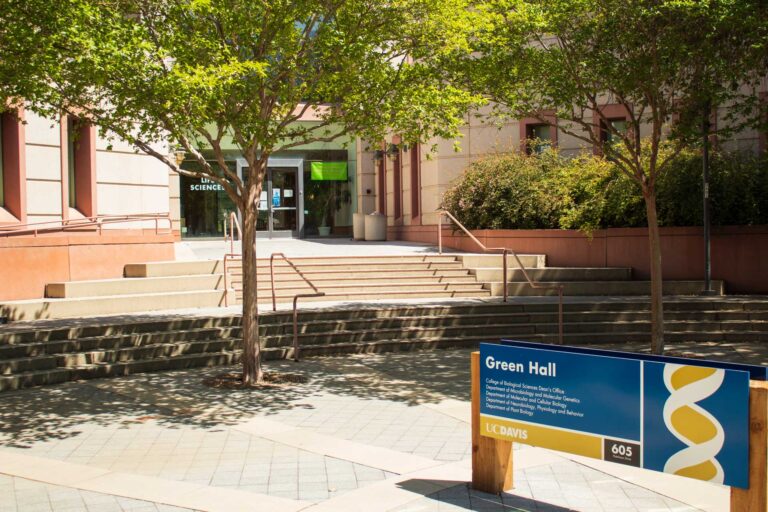
A guide to UC Davis’ College of Biological Sciences

Learn about the majors in this college, including their unique requirements and the potential career paths you can pursue after graduation


By KATIE HELLMAN – science@theaggie.org


If you’re new to UC Davis: First of all, welcome! There’s a good chance that if you’re reading this, you’re majoring in a STEM field; after all, around 56% of undergraduates here decide to pursue a STEM degree. It’s common to be unsure of exactly what you want to major in or to switch your major until you find the right fit for you, especially with so many options to choose from. Sooner or later, you’ll figure out what you’re interested in, whether that be a degree in biological sciences, computer science, engineering or something completely different. 

There are four colleges at UC Davis: Agricultural and Environmental Sciences, Biological Sciences, Engineering and Letters and Science. Many of the majors within these colleges have distinct requirements and clear differences in the types of careers students pursue post-graduation, but some majors are very similar in these aspects. 

The College of Biological Sciences, in particular, offers majors that might seem similar at first glance, leaving students admitted to this college to have potential difficulty deciding what to specialize in. Use this guide to learn a little more about some of the biology majors that are offered at UC Davis and what careers you can pursue with each degree.

This college incorporates the following majors: Biochemistry and Molecular Biology, Biological Sciences, Cell Biology, Genetics and Genomics, Human Biology, Marine and Coastal Science-Marine Ecology and Marine Organismal Biology, Molecular and Medical Microbiology, Neurobiology, Physiology and Behavior, Plant Biology and Systems and Synthetic Biology. 

These classes require foundational coursework in subjects like biology, physics, general chemistry, organic chemistry and calculus, in addition to upper-division coursework specific to each major. Here is a little more information about each of these majors and the associated potential career paths.


  • Biochemistry and Molecular Biology: This major provides insight into life at the molecular level. Possible career paths include laboratory technologist, pharmaceutical/biotech researcher, healthcare clinical researcher, production manager and agricultural technologist. 


  • Biological Sciences: This major incorporates a wide range of topics and interests, including medicine, the environment and other living organisms. Common career paths include pharmacist, food scientist, technical writer, conservation biologist, teacher and veterinarian.


  • Cell Biology: This major teaches you about how a cell, the basic unit of all living organisms, works. Future careers include doctor, research analyst, legal analyst, teacher and biotechnologist.


  • Evolution, Ecology and Biodiversity: This major provides insight into the diversity of life and how populations evolved over time. Careers include horticulturist, forester, environmental consultant, wildlife biologist and environmental lawyer. 


  • Genetics and Genomics: This major educates you on the inheritance of characteristics in living organisms and the basis of heredity. Possible career options include genetic counselor, biotechnologist, physician, researcher and agricultural technologist. 

  • Human Biology: This major includes a curriculum regarding genes, cells, tissues and organism/environmental interactions. Careers include doctor, professor, dentist, nurse and physical therapist.


  • Molecular and Medical Microbiology: This major offers insight into microorganisms and their impact on health, and they provide a great background for careers in the health sciences. Common career paths include doctor, biotechnologist, science teacher and lab technician. 


  • Neurobiology, Physiology and Behavior: This is the most popular major in the College of Biological Sciences and has a strong focus on organism/environmental interactions. Career paths include doctor, nurse, dentist, pharmacist, researcher and teacher.


  • Plant Biology: This major educates students on how plants interact with the environment and how they operate as living organisms. Career paths include plant biologist, cellular biologist, geneticist and science teacher.


  • Systems and Synthetic Biology: This major is relatively new (as of fall 2022) and it aims to educate students on the common principles of biological regulation. Career paths include biomedical scientist, agricultural technologist and nutrition scientist.


Even though the foundational courses for these majors are similar, each of the degrees provides unique insight into an area of interest with a wide range of possible career routes to pursue after graduation. For a more comprehensive look at all of UC Davis’ majors and requirements, you can visit https://www.ucdavis.edu/academics/majors


Written by: Katie Hellman – science@theaggie.org

Juxtaposition on wheels

0

Loving the craft while hating the craftsman: Teslas and Elon Musk


By VIOLET ZANZOT— vmzanzotl@ucdavis.edu


If you need a surgery — a surgery so rare and specific that you feel cosmically unlucky to need it — I’m sure that finding the perfect surgeon would be a priority. 

When searching for this surgeon, wouldn’t you be likely to consider their morals and ideals? If their morals very specifically contradicted your own, which do you sacrifice: the surgery from the best doctor or the insistence on upholding your strongest conviction? 

The separation of surgeon and surgery, art and artist, craft and craftsmen is a quandary that broadly peaks my interest. Using the controversy around Elon Musk and his company, Tesla, as an example, it becomes clear exactly how nuanced the question really is. 

Let me paint you a picture. It’s 2023, Biden’s Inflation Reduction Act passed almost a year ago, you just got a bonus at work and you are in the market for a new car. With their popularity exploding in your San Francisco suburb and their stock prices clearly rising — not to mention the tax credit advantages — a Tesla seems to be the most enticing option. 

Now, flash forward two years: a new man is in office and the air feels heavier. As you drive to the job you feel lucky to still have, you reflect on the recent madness. You find yourself stuck thinking about the guy whose company made the car you proudly bought. He has been such a central character in the media cycle for almost two years —- his notoriety makes you angry. 

You get home from work that day and the only thing you can think to do is buy a bumper sticker that reads: “I bought this before Elon went crazy.” You feel you have done your part; You love the craft, but you hate the craftsman.

Teslas are juxtapositions on wheels. They demonstrate why conflating the art and the artist is a one-dimensional way to look at a three-dimensional problem.

Think about the product itself: it’s a tech forward, eco-friendly and expensive automobile. With that in mind, the target audience should be future-focused, wealthier people who care about protecting the environment. And yet, Elon Musk’s political involvement with Trump seems to attract the opposite demographic. He is marketing himself to an entirely different audience than his company’s product might naturally attract. Part of the complication in separating the art from the artist is that they may have different intended audiences. Musk and Teslas are designed for different shoppers, but sold in the same store.

This discrepancy that arises between the creator and their product leads to another predicament. Generally, the product is largely intended to be a positive addition to society. Many people purchase Teslas because they want reliable cars that are less harmful to the environment. So, if the product is beneficial, does it matter who created it?

To add in another layer, I beg the question of how important a product’s creator should be to the consumer. Or, is it more important to focus on their expertise? If a person is very good at baking and that is where their knowledge lies, must we take their opinions on something like film seriously, or should we just accept the fact that they are speaking not as an expert, but as an interested novice? 

The answer to that question may lead directly into the other dilemma: cancel culture. Our society is quick to judge creators — we dismiss someone’s products all together if we find out they committed a moral injustice that is unrelated to what they sell. Often, we decide how related a person’s actions are to their product based on the extent to which their actions bothered us. Would it be better to find the separation between someone’s personal and business endeavors before we discount them on account of a sensational story?

At the end of the day, the question of whether or not we should separate the art and the artists (or craftsmen and their craft) is not as simple as individual preference. The product and the producer are not always the same — we may love the product and it might benefit the world. Teslas are driving oxymorons and demonstrate how hard it is to be a consumer of both products and people in the modern world.


Written by: Violet Zanzot— vmzanzot@ucdavis.edu


Disclaimer: The views and opinions expressed by individual columnists belong to the columnists alone and do not necessarily indicate the views and opinions held by The California Aggie.


The ‘Love Story’ of the ages

0

Lessons from Miss Americana herself 


By MOLLY THOMPSON – mmtthompson@ucdavis.edu 


It’s been a great summer to be a ‘Swiftie’; As the TikTok videos flooding my feed proclaim, “Mother has been feeding us.” 

On Aug. 11, Taylor Swift announced her 12th studio album and cover reveal, “The Life of a Showgirl.” On Aug. 13, she guest-starred on a two-hour podcast episode with her NFL superstar boyfriend Travis Kelce and his brother Jason. And, on Aug. 28, Swift announced her engagement to Kelce, which included a photo of the $5 million rock she now has on her finger — so much for “paper rings.” All this is to say, she has been very present in the societal landscape recently. 

While she’s in the spotlight arguably more than ever before, I (as a self-proclaimed Swiftie of at least a decade) wanted to take the opportunity to highlight what I think are some of the most valuable lessons we can all learn from our favorite blonde pop princess — Miss Swift herself. 

Swift is infamous for her “long list of ex-lovers.” As featured in her autobiographical Netflix documentary, “Miss Americana,” she received a lot of flack earlier in her career for being a serial dater and focusing too much of her discography on her many tumultuous relationships. Long story short, she’s been through the dating wringer. 

Although it’s true that the average marriage age of younger generations is rising, it’s undeniable that a lot of societal pressure is put on marrying and starting a family by a certain age milestone. Swift is currently 35 years old and will turn 36 in December. She didn’t meet the man she’s going to marry until she was 33. While this is not “old” by any means, what I hope our generation can learn is that it’s okay if you don’t find the love of your life in your 20s. 

If Swift, one of the most beloved and renowned people of our generation, didn’t find “the one” until her mid-30s, then we, as college students in our late teens and early 20s, should try to let go of our fears of falling behind or missing out. If you rush things or settle into a relationship that simply isn’t serving you, you could very well miss out on your “So High School” moment. It took Swift years of heartbreak and turmoil, but it was all worth it in the end. So, take a deep breath, trust your gut and trust the process. If “Miss Misery” can find her Prince Charming, then so can you. 

Along a similar vein, Swift’s highly autobiographical discography can teach us that just because things don’t always work out the way we expect them to, it doesn’t mean that life is worse for it. For example, Swift dated British actor Joe Alwyn for six years and seemed to expect to be with him for the rest of her life. While all theories regarding who she writes her songs about are alleged, she wrote songs during her relationship with Alwyn including “Lover” (“can we always be this close / forever and ever”), “Paper Rings” (“I like shiny things but I’d marry you with paper rings”) and many more that alluded to marriage or “forever” in one way or another. 

Later on however, she ended up writing songs about the same man and the same relationship that depict a devastating and heartbreaking end, such as “You’re Losing Me” (“how long could we be a sad song ‘til we were too far gone to bring back to life?”), “So Long, London” (“I’m just mad as hell ‘cause I loved this place for so long, London / had a good run / a moment of warm sun / but I’m not the one”) and others with similarly bereft sentiments. 

She’s an incredible storyteller, and it’s tangible in her songs just how ruinous her breakup with Alwyn felt. I mean, the end of a six-year, formative relationship with someone you were (at one point) counting on marrying is inevitably a life-shattering experience. I would bet money on the fact that, in the depths of the breakup, she genuinely believed that she might never recover or find a better man. 

But not too long after, Kelce walked into her life with a friendship bracelet and a dream (we can just go ahead and ignore the existence of Matty Healy). I can almost guarantee that she prefers this outcome — her new fiancé — over what she thought her life with Alwyn was going to look like. My point is, we can plan all we want, and yet sometimes life takes unexpected turns. But they won’t always be turns for the worse; In fact, it’s likely that whatever unexpected twists come your way will eventually be blessings in disguise. 

All of this is to say, you’re going to be okay. Even if you haven’t met your soulmate by the age of 22 (although congratulations to those of you who have), it’ll be okay. Even if the plans that you counted on become foiled, it’ll be okay. It’ll probably be better in the end. Trust that you’ll find your place in this world; You still have so much time ahead of you. 


Written by: Molly Thompson — mmtthompson@ucdavis.edu 

Disclaimer: The views and opinions expressed by individual columnists belong to the columnists alone and do not necessarily indicate the views and opinions held by The California Aggie

Life in technicolor

0

Seeing red, feeling blue and tickled pink


By MOLLY THOMPSON – mmtthompson@ucdavis.edu 


When I was in first grade, one of my most beloved elementary school teachers would call me “rainbow girl” because of my constant propensity to dress myself in an array of vibrant neons and cheerful pastels. I would enthusiastically accompany my dad on his trips to Home Depot just so I could stare at the wall of paint chips (and squirrel the prettiest ones away to keep on my bookshelf at home). My bedroom, my wardrobe and even the contents of my desk drawers have always been full of a spectrum of saturated hues, and to this day, you’d be hard-pressed to find black in my closet. Needless to say, I love colors. ​​

My fervent adoration of anything colorful led to a similar fascination with color psychology — the science behind how colors affect us. While certain people tend to gravitate towards certain colors more than others, there’s a relatively small group of colors that we all tend to prefer. For example, light, bright or muted shades of blue, purple, green and pink are generally favored over hues like brown, orange, yellow or in-between shades mixed with green. 

This is likely due to our intrinsic biological adaptations. We like colors that represent positive things (clear skies, green foliage, clean water, ripe fruits) and we’re repulsed by colors that represent negative things (rotten foods, feces, illness, decay). So as a species, we’re naturally much more drawn to brighter or lighter colors than darker or muddier colors. 

Similarly, we also like colors that we’ve personally associated with positive things. You might like red because you grew up loving Spiderman or Lightning McQueen, or you might prefer baby blue because that was the color of your favorite childhood stuffed animal. 

While our perception of colors and what they mean is contextual and dependent on many external factors, every color also affects us in its own way. Red, which is bright and eye-catching, can elicit feelings of passion and excitement, energy, danger and urgency. Red has also been known to bring out hunger, which might be linked to the fact that red is a common naturally occurring color in food. 

Yellow is known to be optimistic. While it’s also attention-grabbing, it’s generally warmer and more inviting than red. Yellow has also been shown to enhance feelings of hunger, which is why red and yellow are some of the most common colors in grocery packaging and restaurant branding. Most fast food chains use red or yellow as their most prominent colors — think about McDonald’s, In-N-Out, Burger King or Jack in the Box. These companies use colors like red and yellow intentionally to subconsciously nudge their customers towards purchasing more food. Colors like green and brown are used much less frequently in food marketing because they have the opposite effect and tend to make people feel less hungry or less ready to eat. 

But green still often evokes positive emotions like tranquility, peace and renewal. Likely because we associate green so closely with nature, certain shades tend to make us feel safe, rejuvenated and calm. That’s why so many wellness brands use green as their primary colors; green feels balanced, relaxing and generally good for you. Green is also sometimes associated with jealousy, envy or greed, but that can be attributed more to artificial cultural ties than an inherent emotional connection. 

Purple often feels mysterious or spiritual, likely because it mimics the depth of the night skies or dusky sunsets, which also feel mystical. Purple is also often associated with luxury or creativity, which is another artificial connection we’ve made as a society. Purple dyes have historically been more rare and expensive than other colors, so only the highest-class citizens (usually royalty) could afford to wear or own purple things. That association has persevered throughout centuries, and purple still feels more luxurious than many other colors. 

Black and white both have a lot of cultural connotations that vary across the globe, but black is intrinsically mysterious and depressing. We tend to think of black as negative because darkness and shadows are so unknown. Anything could be lurking in a black swath of an unlit forest glen or a room with the lights off, and that’s scary. White is the opposite; it’s clean, pure and open. White is safe because it’s bright, it feels safer and more positive than black does. 

Blue is the most commonly-loved color in the world, with 42% of people claiming it as their personal favorite. Blue is calming, relaxing and cool. It’s the color of the clear sky and the ocean, so it’s familiar and safe. It’s sometimes associated with sadness or depression, but that also tends to be a cultural connection rather than a natural one. Gray carries some similar connotations but is more naturally justified because it reflects storms and dreary weather. Blue also often elicits feelings of trust, clarity and serenity, which is why so many financial companies use it in their logos — they want you to trust them with your money. 

Colors are powerful. If used strategically, they can have a significant effect on how people feel and act. Department stores, dining establishments, financial institutions and even Disneyland designers use colors in very specific ways to get you to subconsciously behave one way or another. Colors can be used to hide things in plain sight, draw you in, make you trust one thing over another or repel you from something else. Because colors hold such strong natural affiliations, we tend to judge new things based on their colors before we even get a chance to make a logical decision about them. 

Your favorite color is probably your favorite color for a reason — it might say more about you than you think. 


Written by: Molly Thompson — mmtthompson@ucdavis.edu 

Disclaimer: The views and opinions expressed by individual columnists belong to the columnists alone and do not necessarily indicate the views and opinions held by The California Aggie

How to induce the flow-state

0

I got you girl — from right here


By NEVAEH KARRAKER — nakarraker@ucdavis.edu


“Lord of the Rings.” “Star Wars.” “Harry Potter.”

It’s easy to get lost in the lore of incredible stories like these. I can spend hours studying elvish runes, ancient wars and the distinct fighting styles of each Jedi without a hint of boredom. And yet, when it comes to a basic Canvas assignment, I struggle to even start — that red and white logo just stares back at me with judgement, and frankly, a sense of looming doom.

I can’t imagine the things I’d accomplish if I approached my academics with the same enthusiasm I do with my hobbies. However, that sense of wonder doesn’t just disappear — it becomes buried underneath the stress of deadlines and exams. By overpowering passion with pressure, academic institutions indirectly suppress a students’ desire to learn — which is ironically the exact quality they’re looking to nurture. It’s like when your parents ask you to wash the dishes right as you’re about to do them on your own; the task has now been reduced to an obligation instead of a choice.

So, how do we revive that wonder?

Let’s be real, taking unique classes that pique our interest is not always a possibility. Higher education will always come with unwanted assignments, so it becomes the student’s responsibility to generate their intrinsic motivation.

Take this as a sign to try and see your coursework as an opportunity: an “I get to” rather than an “I have to.” Here are some tips that I’ve gathered to help you resist intellectual burnout — a little more than the standard advice to “get eight hours of sleep” (although that is equally important).


  1. Fuel your body. Eat fruit and salty foods throughout the day to boost your electrolytes and consume protein to stimulate neurotransmitters tied to concentration and mood. Food is brain fuel, after all.
  2. Romanticize the grind. Buy some new stationary, fix a snack of sliced apples, crank the volume up on a good playlist — treat studying as you would arts and crafts during the summer: wield that yearning for creativity and nostalgia.
  3. My personal favorite tip: trick your mind. Being immersed in a novel feels like entering a flow-state. Those that get it, get it (bookworms know exactly what I mean). That effortless, consuming focus you slip into when a story grabs your attention can be recreated with schoolwork by fabricating the environment around you. Set the mood with candles that dimly light the room and send the scent of tea wafting through the air. Can’t take a crack at that painstaking essay just yet? You’re not a history student, you’re a wizard at Hogwarts: that chemistry homework is just a polyjuice potion recipe.
  4. Create a reward system. A second part of this little trick is to construct an incentive program, and take it seriously. Rewiring your brain to bestow mini dopamine shots every time you pick up your Apple pencil can be a very effective technique of motivation — fully embrace neuro-manipulation. Every time you finish a paragraph, treat yourself with a bite of chocolate. Hit play on your favorite show only once you’ve started studying. And, if you can’t focus in your room, go to the CoHo and make a firm rule: matcha is only for solving calculus problems. With consistency, you will have successfully correlated studying with the things you love the most, making your brain look forward to doing work.

Now, these tips are merely tools to reframe your attitude; They are not substitutes for balance or masks for exhaustion and burnout. Don’t forgo rest if you need it — nourishment is essential for productivity. 

In the end, you have the power to respond to the rigid systems around you, even though your “laziness” is justified by them. Because you’re not truly lazy, you’re simply uninterested. If you can get emotionally invested in the politics of Middle Earth, you can learn how to become invested in your education. We can’t blame everything on the system; now that’s lazy.

There’s only so much others can do for us. My role is telling you this; Romanticize everything. The rest is up to your own drive and discipline.


Written by: Nevaeh Karraker—nakarraker@ucdavis.edu

Disclaimer: The views and opinions expressed by individual columnists belong to the columnists alone and do not necessarily indicate the views and opinions held by The California Aggie.

Trump administration seeks $1 billion settlement with UCLA after freezing federal

0

The proposal to restore funding suspended over alleged antisemitism has been criticized by UC and local leaders 


By RIVERS STOUT— campus@theaggie.org


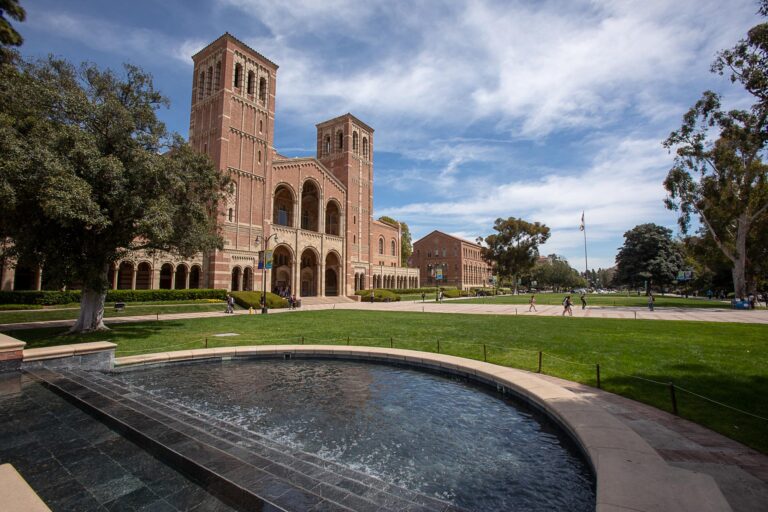
The Donald Trump administration is calling on the University of California, Los Angeles (UCLA) to accept a $1 billion settlement, alongside other political concessions, to restore federal funding grants. These grants were frozen following a Department of Justice (DOJ) investigation, wherein the school was found to have failed to address alleged antisemitism. 

As reported by CNN in early August, proposed political concessions from UCLA would include guaranteed single-sex housing for women and recognition for athletes assigned female at birth, at the expense of transgender athletes. It would also require UCLA’s hospital and medical school to stop providing gender-affirming care. The settlement also calls for an end to race and ethnicity-based scholarships along with changes to protest policy.

On July 29, a DOJ investigation found UCLA to be in violation of federal law by “violat[ing] the Equal Protection Clause of the Fourteenth Amendment and Title VI of the Civil Rights Act of 1964 by acting with deliberate indifference in creating a hostile educational environment for Jewish and Israeli students,” according to a DOJ press release

On Aug. 12, a federal judge partially restored some of the $584 million in grant funding to UCLA, which was suspended by the Trump administration as part of a class-action suit. This suit was independently pursued by UC San Francisco and UC Berkeley professors over earlier grant cancellations, according to the Los Angeles Times.

The proposed settlement has received criticism from top university leaders, including  recently appointed UC President James Milliken. 

“As a public university, we are stewards of taxpayer resources and a payment of this scale would completely devastate our country’s greatest public university system as well as inflict great harm on our students and all Californians,” Milliken said in a statement.

Governor Gavin Newsom also firmly rejected the idea of accepting the settlement.

“It’s not just about UCLA, it’s about anybody or any institution that disagrees with them,” Newsom said at a Politico Summit on Aug. 27. “So how could you possibly accept the fine? A fine for what? The guy who had dinner with Nick Fuentes, telling us about antisemitism, are you kidding me?”

The university received support from Hillel at UCLA, which was one of the organizations that recently received part of a $2.3 million settlement from the UC system, stemming from a lawsuit alleging campus-enabled antisemitism.

“I’ve spoken with students who have felt unsafe or isolated, and I’ve seen the changes UCLA has made firsthand to resolve their concerns,” Howard Welinsky, board member for UCLA Hillel and former chair of Jewish Public Affairs Council of California, said in a press release. “Jewish students want to feel seen, heard, and protected, and UCLA is moving in the right direction. Pulling federal support will put UCLA 10 steps behind the effort to curb antisemitism.”

The UC system receives over $17 billion annually from the federal government, including $5.7 billion in research funding and $1.9 billion in student financial aid, according to a letter by Milliken to state lawmakers on the effects of federal funding cuts.

“Classes and student services would be reduced, patients would be turned away, tens of

thousands of jobs would be lost,” the letter reads. “We would see UC’s world-renowned researchers leaving our state for other more seemingly stable opportunities in the U.S. or abroad.”

“If the University loses the federal funding I mentioned earlier, we would need at least $4-5 billion per year to minimize the damage of that loss,” Milliken said. 

UC Davis has also been under investigation by the United States Department of Education for alleged antisemitism since March of this year. No UC Davis grants have been frozen over the investigation as of time of publication.


Written by: Rivers Stout campus@theaggie.org

UC Research and Public Service Professionals vote to form new union

0

RPSP-UAW will represent some 7,200 workers across the UC system


By VINCE BASADA — campus@theaggie.org


7,200 research and public service professionals across all of University of California’s (UC) campuses have voted to form a new union. 

The ballot, held in early September, tallied 3,080 to 612 in overwhelming favor of the creation of the Research and Public Service Professionals-United Auto Workers (RPSP-UAW).

The new union represents workers across a broad set of skills in the UC’s academic and research missions, including data analysts, research administrators, grant officers and field researchers. Their fields of study can vary from addressing public health and homelessness to astronomy and energy.

Aside from wanting to have input over their pay, benefits and working conditions, RPSP-UAW said that they formed in part due to recent threats from the federal government. On their website, the union expresses its belief that UC administrators have not been providing research and public service professionals enough of a say in their responses to changes at the federal level.

“Forming a union has never been more important with higher education under increasing attack,” Deborah Ferguson-Fitch, a research administrator at UC San Francisco, said in a press release. “We are joining a movement of research and professional employees in UAW who have been at the forefront of fighting funding cuts and protecting jobs and values in higher education.”

The sentiment was echoed by regional union leaders.

“As the Trump administration continues its assault on workers, it’s never been more important to join the movement of tens of thousands of higher education workers throughout the country who are standing up for social and economic justice at their jobs and in their communities,” Mike Miller, UAW Region 6 director, said in the same press release. “UAW members across the country look forward to standing with RPSPs in their fight to improve their working conditions, to protect research funding, and to create the better world we all deserve.”

In an email, UC Office of the President spokesperson Heather Hansen told The California Aggie that the University recognizes the union’s vote.

“These UC employees play a vital role in advancing UC’s mission at a time when both research funding and union rights are under attack nationally,” Hansen said. “We respect the decision of these workers and are committed to bargaining in good faith toward a first contract that strengthens UC’s research, public service and the workforce that makes both possible.”

Members of the RPSP-UAW now join some 50,000 academic and research workers systemwide who have already unionized with the United Auto Workers.

“Many of our closest colleagues at UC are already a part of this movement, and through an incredible organizing effort, we have now gained the same rights and bargaining power as them,” Ferguson-Fitch said.

The union plans to collectively bargain with the UC sometime this fall.


Written by: Vince Basadacampus@theaggie.org

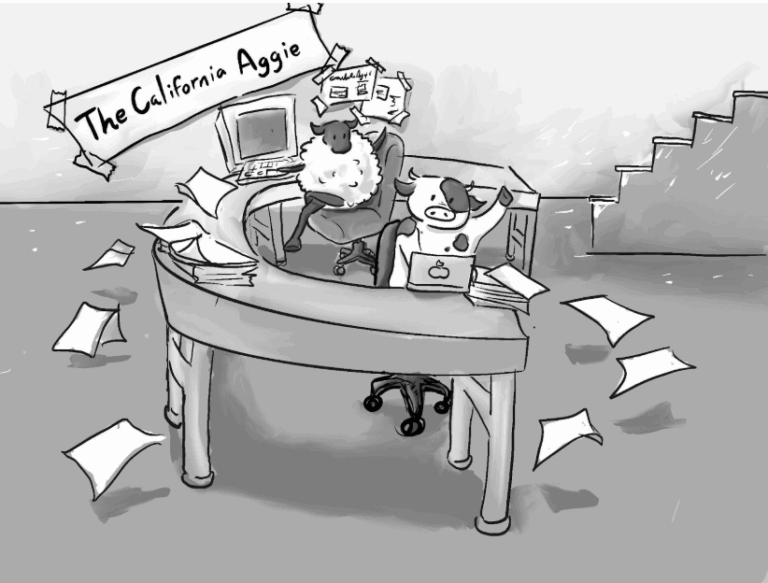
The California Aggie welcomes you back!

By AILI KOGA — aakoga@ucdavis.edu


Disclaimer: (This cartoon is humor and/or satire, and its content is purely fictional. The story and names of “sources” are fictionalized.)

Tom and the Broken Hearts bring classic rock to Sudwerk Brewing Co.

0

Local fans enjoy a night of classic rock during Sudwerk’s ongoing concert series 


By ALMA CULVERWELL city@theaggie.org


On Saturday, May 24, Sudwerk Brewing Co. hosted Tom and the Broken Hearts, a Tom Petty tribute band, for an evening performance as part of its ongoing Sudwerk Concert Series, which brings live music and local acts to Davis residents. The show, held in the brewery’s Beer Hall, attracted a full crowd and showcased the band’s dedication to recreating Tom Petty’s music with precision and care.  

Frontman and founder of the band, Tom Moore, who previously spent two decades touring with an Elvis tribute show, explained how the inspiration of the group came in the wake of Tom Petty’s passing in 2017.

“I found out that Tom Petty had died, and it just hit me hard,” Moore said. “I really liked Tom Petty, his music and everything. And so we did a show like a week or two after he died, and so we did a couple of songs dedicated to him. […] And it was kind of funky, but people loved it. I mean, people really liked that. And I just thought, man, I should be doing Tom Petty because it’s hard to get people interested in Elvis.”

Moore brings decades of experience as a performer, including his work with Northern California bands such as “The Edsels” and “The Hucklebucks.” Earlier in his career as a singer-songwriter, Moore opened for artists such as Michael Hedges, T-Bone Burnett and Jesse Colin Young. He later launched a full-scale Elvis tribute band, Elvis and the Experience, performing at various venues such as Harlow’s in Sacramento as well as regional casinos. In 2018, he became a Gretsch Guitars artist.

Following the challenges of the COVID-19 pandemic, Moore began building his Tom Petty tribute band by posting an ad on Craigslist. The band gradually came together both virtually and by word of mouth with musicians who shared both a passion for live performance and a strong technical background. 

Tom and the Broken Hearts also features Mark Burgess on lead guitar and vocals, Todd Brown on bass guitar and vocals, Julian Dean on keyboard and vocals and Rowan McGuire on drums and vocals. Several of the band members also tour with other tribute acts, including Creedence Clearwater and Traveling Wilburys Revue. 

Moore explained the close attention to detail that the band members take into account when preparing their performances. 

“One of the things that we try to do is replicate a show that they would have done,” Moore said. “So, like, I have all the right instruments, and I play them for the right songs, and I have to bring four or five guitars to each show. So like, I have a Rickenbacker, I don’t know if you know any of these, but he played a certain stratocaster for 10 years, so I’ve got an exact replica. I’ve got a replica of this Telecaster, and then I’ve got a bridge like the one he used when he recorded the Full Moon Fever album. And we studied the music a lot and we did harmonies.”

The band performs a broad range of Tom Petty’s greatest hits, with a current setlist of 31 songs. Moore explained that they typically run out of time to fit all of their songs in one show, but “Mary Jane’s Last Dance,” “Refugee” and “Learning to Fly” often make the cut. 

Moore reflected on his personal favorite song to play and why performing it is most memorable to him.

“I think ‘You Don’t Know How It Feels’ is probably my favorite, and that’s because I play harmonica on it,” Moore said. “I have to play two different harmonicas, so I have this special harmonica holder that I attached to my mic stand, […] and it holds two harmonicas, one on top and one below. […] I play the guitar and I sing, and then I also blow the harmonica, and then right in this little in-between part, I stop playing guitar, and I grab the harmonica from the bottom rack, and I play that because it’s a different key. […] I think I surprised people, because […] they don’t expect that they’re going to hear just like the record, like they don’t really expect that they’re going to hear something that good.”

Tom and the Broken Hearts first performed at Sudwerk several years ago on the patio, but have since moved inside to the Beer Hall. Moore explained why Sudwerk is a favorite venue of the band. 

“We’ve been selling it out every time, so that’s really nice for us,” Moore said. “All of our friends go and they have a nice sound system in there that we can tap into.”

The band also performed recent shows in places like Jam Cellars in Napa Valley, Brentwood Emporium and The Prospector in Placerville. They’re also planning a fall performance at SacYard in Sacramento and hope to play in Chico. 

Moore explained his future goals for the band and what he hopes to accomplish in the future. 

“I guess my ultimate goal, personally, is to play small theaters,” Moore said. “That’s what I would really like to do, and bigger audiences. That’s been my goal all along.”

Tom and the Broken Hearts’ May 24 performance at Sudwerk Brewing Co. showcased the brewery’s concert series, bringing the community together through live music and local talent. With their faithful rendition of Tom Petty’s hits and close attention to detail, Tom and the Broken Hearts delivered a performance that captured both the energy of a live rock show and the timeless appeal of Petty’s legacy.  

Written By: Alma Culverwell — city@theaggie.org

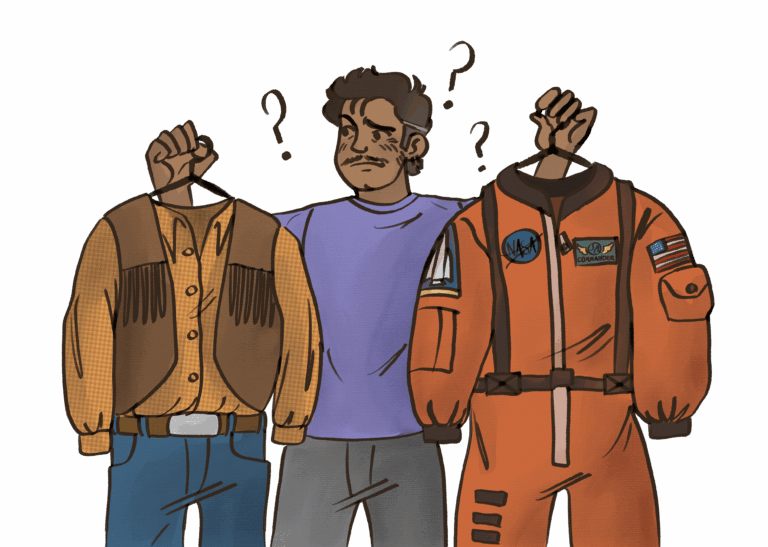
Playing dress up with language

0

How code-switching changes a person’s identity 


By VIOLET ZANZOT— vmzanzot@ucdavis.edu


How many languages do you speak? 

Personally, I can speak English. That’s it. That being said, I can do a decent amount with English. I like to think that I can write in formal English, and on occasion, I can speak in formal English. I speak casually with friends. I speak a very different kind of casually with customers while working in the service industry. The way I speak with my sister is probably considered English to most, but may not be to others. 

I can use the singular language of English as a performative tool in order to connect with others. This is because language is more expansive than grammar rules, syntax, letters or words. Language is a code that represents meaning and culture. 

Fatiha Guessabi explains that “to interact with a language means to do so with the culture which is its reference point.”

While this rings true, it is also important to consider that many cultures may use the same language with slight differences in their coding. By engaging in code-switching, shaping the culture of the language one is speaking in, one can alter their linguistic vocabulary to portray oneself in unique ways. 

Former President Barack Obama was notoriously captured greeting white basketball coaches very differently than Kevin Durant, a Black basketball player, in 2012. The scene was later parodied by comedians Keegan-Michael Key and Jordan Peele. The humor of their bit devolves from the reality that is code-switching. To see it so drastically, obviously and quickly feels like we’re seeing a secret switch that often exists behind closed doors. Putting both versions of Obama in one room is so seemingly contradictory that it’s parodiable. 

Broadly, code-switching involves adjusting one’s style of speech, appearance, behavior and expression in ways that will optimize the comfort of others in exchange for fair treatment, quality service and employment opportunities,” according to an article by the Harvard Business Review

The authors describe code-switching as a practice that benefits specifically the Black community, but which can also be an underlying cause of psychological trauma. Because language is an expression of culture, it seems clear that code-switching — in other words, changing how one chooses to say something — changes more than just the exact words being used. While the point of code-switching may be inherently used in order to change culture, a commonly ignored and harmful side effect is that it forces people to take on multiple identities and change their version of themselves. 

Speaking differently to operate in specific environments requires a person to act duplicitously: to never be singular and always be plural. How can one have a sense of self when that self must change to adapt in every situation? 

 If you ever put on a costume, or even just wear a different style of clothing, you sense yourself embodying that role. Somehow, wearing the cape makes the man “super.” 

Language does the same thing. While we might find that we can maintain the same disposition, morality or sense of self, as we are forced to change our verbal costume, so does our personhood change. There is no singular self in a world of code-switching; we become the way we use our language. 


Written by: Violet Zanzot— vmzanzot@ucdavis.edu


Disclaimer: The views and opinions expressed by individual columnists belong to the columnists alone and do not necessarily indicate the views and opinions held by The California Aggie.


The basketball team is demanding taller electric scooters

0

Shaq said it was okay


By ALLISON KELEHER — adkeleher@ucdavis.edu


I was biking to class the other day at a leisurely pace when — BAM! I collided with an electric scooter. I’d like to say that I’m sorry, but it definitely wasn’t my fault. This electric scooter was manned by a very tall UC Davis basketball player who clearly didn’t know anything about the speed limit. As I lay on the ground in pain, I looked up to see this athlete gazing down at me in his basketball tracksuit. 

“Are you okay?” he asked. I hadn’t decided yet if I wanted to be mad or not, so I thought for a second before answering. 

“Yeah, I’m okay.”

“Okay, good, you know this isn’t my fault,” the basketball player insisted. 

I was blown away by his ability to deflect blame so quickly. I think he noticed that I was surprised, because he quickly clarified with an “Oh, I’m not talking about you; I’m talking about the scooter.”

This was when I got the unprompted explanation about the basketball team’s ongoing petition to get new electric scooters from the school. Apparently, it’s common for basketball players to run into people with their electric scooters. They can’t help it. After so many collisions, they were sat down by someone in management to have a talk about safety. This was when the basketball team decided that it wasn’t their fault; it was the scooter’s fault. 

The problem is, the scooters are too short for these shawtys. The basketball team has an average height of about seven feet, so when they step onto their tiny scooters, they are so far above the controls that it’s difficult to direct the scooter. They must bend over to reach the handlebars, meaning that nothing is in their line of sight — including me, on my bike. If we’re ignoring the fact that they are still going 20 miles per hour on their scooters, this alone might be a safety issue. 

Following the very long and in-depth explanation of the situation, I was enlisted to sign the basketball team’s official petition for brand new electric scooters that were taller to fit their height specifications. I was surprised by this request, since I still had marks on my pants from the asphalt I just fell on. 

He could sense my apprehension, because he followed up his request with the words “Shaq has signed it.” 

This blew my mind. Shaquille O’Neal, incoming general manager of the Sacramento State basketball team, has signed this stupid petition. Apparently, he understands the needs of those taller than 6 feet, 5 inches. Obviously, I had to sign the petition. 

Following my signature, the basketball player continued to complain about his current electric scooter. Some of the problems listed included that it takes forever to charge, there’s no bell and it only goes up to 20 miles per hour. Clearly, these athletes are living in squalor. 

Or, at least, they are in comparison to the Shaq State team, since they have top-of-the-line electric scooters. No expense was spared for the Shaq team. They might have to tighten the budget a bit, but it’s necessary if they want to keep Shaq happy. 

One of my sources tells me that Shaq is a very demanding person to work for. Shaq State is a wreck trying to keep up with all of his requests. One of his first demands was that all doors must fit his specifications, or he won’t walk through them. Then, among other things, he got the Shaq State team a fleet of new electric scooters so that they wouldn’t have to lift a toe on their way to class. 

The UC Davis team heard about these luxury accommodations and is extremely jealous. Now, it’s only fair that we pressure the school to give more money to the athletics department as a way to measure up to Shaq. 


Written by: Allison Keleher — adkeleher@ucdavis.edu

Disclaimer: (This article is humor and/or satire, and its content is purely fictional. The story and the names of “sources” are fictionalized.)

The ethics of vegetarianism

0

Vegetarianism, now more than ever before, is an indication of personal morality and responsibility


By GEETIKA MAHAJAN — giamahajan@ucdavis.edu


Vegetarians and vegans get a lot of flack— and it’s understandable why. For all the goodness of their cause, it’s hard to tolerate a group of people who ceaselessly preach about how their life choices are more ethical than your own. Like feminists or Twitter (now X) activists, vegetarians frequently and unfortunately fall into that group of people who have a decent message but poor publicity.

In recent years, there’s been a new kind of vegetarian — one motivated not by animal rights, but rather by the rising climate crisis. About one fourth of the adults in the United States are “climatarians,” according to The New York Times — not vegan, not vegetarian, but still attempting to limit their consumption of red meat due to concerns over its carbon footprint

There’s still an ethical divide between “climatarians” and vegetarians, even though the output is the same. When it comes to perspectives on actual lives, consequentialism is ineffective in measuring where people’s moralities lie. Whether people are interested in acknowledging it or not, the basis of vegetarianism — believing that human lives and animal lives are essentially equal — is rooted in a more compassionate worldview than pescetarianism, climatarian-ism or any other variation that simply “limits” the amount of meat a person consumes. 

There are a lot of arguments that seem to invalidate this perspective. There’s the vague yet commonly referenced study that seems to prove that plants have “emotional depth” or some semblance of “feeling,” which is frequently used as evidence that omnivorous and herbivorous lifestyles are equally unethical. However, this presentation of the study misrepresents the actual findings — plants can respond to their environment, but they can’t actually feel pain or any emotion at all. If we were to interpret every response to external stimulus as a sign of sentience, then rocks, self-adjusting thermostats, and motion detectors could fall under the umbrella of “being alive” as well. 

Another rebuttal against vegetarianism is that humans need meat to survive, which is based on the assumption that the diet of our hunter-gatherer ancestors affects our nutritional needs in the modern world as well. On the one hand, it is true that human society seems to have evolved around the consumption of meat; Historically, weapons, societal structures and even fire were invented with this impetus. On the other hand, humans are constantly evolving — both psychologically and physically. What was true for our ancestors does not necessarily apply to us now; our ancestors didn’t wear clothes, but that doesn’t mean that we have to run around naked. 

While it is true that protein-rich foods are integral to a healthy diet, the assumption that animal products are the most cost or nutrition-efficient source of this protein is untrue. Beans are a protein-dense alternative to meat, and are some of the cheapest items on grocery shelves. Plant protein, as well as meat alternatives, are becoming more and more readily available. The majority of the Indian subcontinent manages to survive on a vegetarian diet — while there may be some nutritional benefits to a carnivorous diet, there are equal benefits, if not greater ones, to cutting down on red meat. 

In truth, eating meat is something we as humans do without questioning — simply because questioning it is uncomfortable. Examining this habit on a deeper level forces us to come to terms with the idea that, between doing what’s right and what feels easy or comfortable, many of us will choose the option that requires less sacrifice and minimizes our own discomfort. Arguments advocating for the consumption of meat are becoming less relevant as humans and alternative food sources evolve, and the climatic consequences of consuming meat become more obvious. 

Now, more than ever before, swapping animal products for tofu and oat milk is a question of personal ethics rather than personal preference — and while it is unfortunate that the agricultural industry has corrupted the consumption of animal products in this way, it’s not something that we should, or even can, ignore. In a world where every act of consumption has economic and ethical ramifications, we should not be wielding our purchasing power so carelessly.


Written by: Geetika Mahajan — giamahajan@ucdavis.edu

Disclaimer: The views and opinions expressed by individual columnists belong to the columnists alone and do not necessarily indicate the views and opinions held by The California Aggie.

City Council presents Golden Heart and Thong Hy Huynh Memorial Awards

0

Recipients of the annual awards were acknowledged at a city council special meeting


By OLIVIA HOKR — city@theaggie.org


Earlier this year on Tuesday, May 20, the Davis City Council held a special meeting before the regularly scheduled council meeting to present the Golden Heart Awards and the Thong Hy Huynh Memorial Awards. The awards are aimed at recognizing individuals throughout the community for their dedication to making Davis a better place.

The Golden Heart Award was established in memory of Andrew Mockus, who was killed in 1992 by a group of Davis teenagers. This award is split into two categories to recognize youth in the community: the Service Award and the Personal Challenge Award. The Service Award recognizes individuals who provide exemplary community service and act as role models for their peers. The Personal Challenge Award acknowledges those who have overcome obstacles in their life.

The 2025 Golden Heart Service Award recognizes Jonah Spang, a third-year at Davis High School (DHS). As a straight-A student involved in varsity sports, Spang has also gone above and beyond to serve the community and his school. Council Member Josh Chapman described the extent of Spang’s involvement throughout Yolo County. 

“As a Yolo County Youth Commissioner, [Spang] has been instrumental in allocating $160,000 to local non-profits focused on enhancing youth literacy, career readiness, teen center support and expanding early education opportunities for young children,” Chapman said. “Beyond this leadership, Jonah actively volunteers at the Yolo Food Bank, dedicating over 50 hours to combating food insecurity, champions environmental stewardship through his internship with Tree Davis and co-founded California Habitat Restoration Club.”

The 2025 Golden Heart Personal Challenge Award recognizes Camila Pastor, a fourth-year at Da Vinci Charter Academy. Vice Mayor Donna Neville explained Pastor’s worthiness of recognition for the Personal Challenge Award. 

“As a young child, Camila endured abuse by a man she should’ve been able to trust,” Neville said. “Deciding enough was enough, she bravely disclosed the abuse to her mother and law enforcement.”

Following an investigation, the man pleaded guilty to multiple felony counts. He was sentenced to 32 years and eight months in state prison. Meanwhile, Pastor’s resilience has allowed her to continue to thrive. She will graduate from high school with a number of college credits and currently works two jobs simultaneously.

“I feel incredibly grateful, and I hope that one day I can be an advocate for kids who had to go through the same thing as me,” Pastor said.

The Thong Hy Huynh Memorial Awards are presented in memory of DHS student Thong Hy Huynh, who was stabbed to death on May 4, 1983. These awards seek to raise awareness and acknowledge individuals who illustrate diversity, community, social justice and equal rights. This award also has two categories: one for recipients who are 18 and over and another for community groups supporting the Davis community. 

In the 18 and over category, the Thong Hy Huynh Award recognizes community members Dillan Horton and Ann Block. Horton is recognized for his contributions to advocating for civil rights and inclusivity, particularly for the LGBTQ+ community in Davis. Serving on the Pride Committee and the police accountability commission, Horton’s dedication to social justice and support for marginalized groups has shown his commitment to the Davis community. 

“When Thong Hy Huynh was killed, it was in the middle of a poisonous climate towards Asian Americans where people believed that Asian American immigrants were taking jobs and economic opportunities from their white peers,” Horton said. “It’s hard to miss the parallels between that toxic climate of the early ‘80s and the bigoted threats facing folks in our community today. We have a handful of hateful people working nonstop to make trans and gender non-conforming folks feel unwelcome in this community. Of course, we need to push back on this toxic rhetoric, but we also need to dig deeper and work to address the issues of housing discrimination and workplace discrimination that trans and gender nonconforming folks still face in our community today.”

Ann Block is an immigrant attorney who is being recognized for her commitment to advocating for the rights of immigrants in Davis and the surrounding areas. She spends her time actively educating and supporting the immigrant community through workshops and legal assistance. 

In the final award presentation, the Davis Night Market and Delta of Venus cafe owner Lee Walthall were recognized for the community organization category. The Davis Night Market is being acknowledged for their ongoing efforts toward fighting hunger and food waste in Davis. By collaborating with local businesses, they are actively reducing greenhouse gas emissions and landfill waste, while simultaneously assisting those in need.

 Walthall was also nominated for his dedication to promoting inclusivity and social justice in Davis. At Delta of Venus, Walthall showcases multicultural music and art, focusing on creating a safe space for youth, Black, Indigenous and People of Color and LGBTQ+ community members. 

Every recipient of the Golden Heart and Thong Hy Huynh Awards this year demonstrated an exceptional commitment to bettering the lives of all people in the Davis community as well as a dedication to future fights for social justice. 


Written By: Olivia Hokr city@theaggie.org


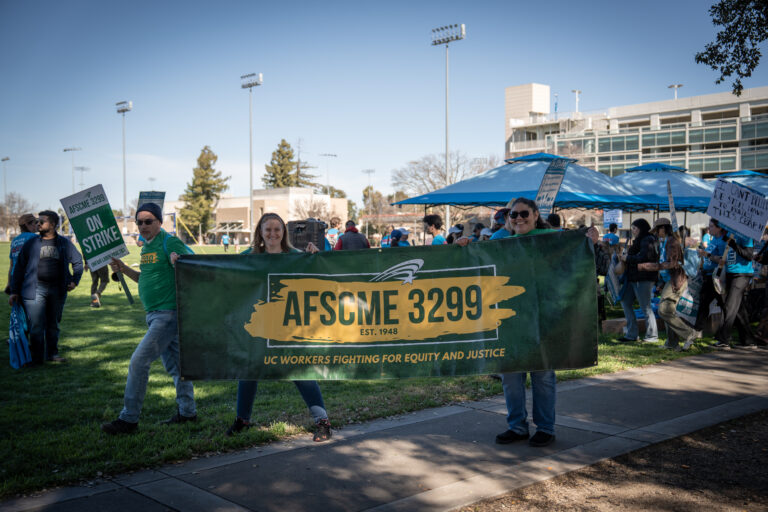
UC Davis Health workers gather in Fremont Park to fight for fair labor practices

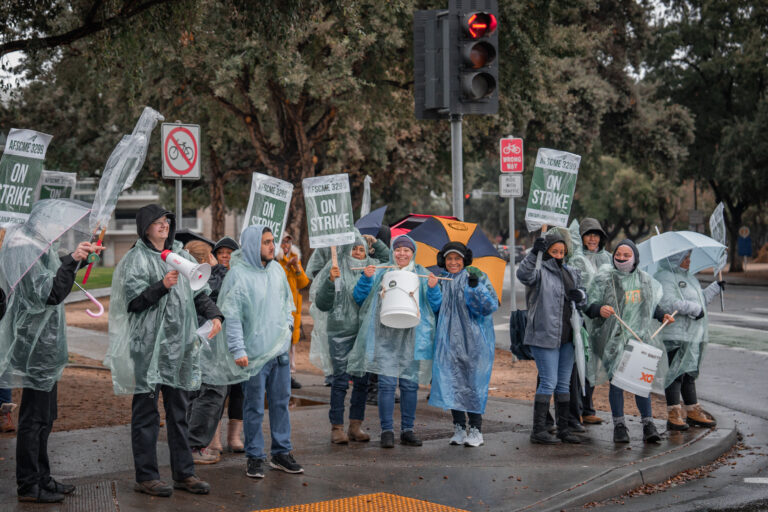
On International Workers’ Day, UC Davis Health employees went on strike


By IHA RASTOGI — science@theaggie.org


May 1 is marked every year by International Workers’ Day, a day honoring the shared commitment and labor of working individuals. At UC Davis Health, this day signified an opportunity for healthcare workers and researchers to continue their unfair labor practice strike against the University of California.

Current UC Davis Health employees attest to an understaffed work environment resulting from a unilateral hiring freeze. The University Professional and Technical Employees (UPTE), a labor union that represents over 20,000 workers across the UC system, cites “imposition of a systemwide hiring freeze” as a major reason for the strike. The hiring freeze “would further undermine patient care, research, and education across the state,” according to the UPTE website.

Sonya Mogilner, a licensed social worker at the UC Davis Medical Center, was present at the May 1 strike. 

“For years, social workers have seen firsthand how short-staffing has hurt the quality of patient care we’re able to provide,” Mogilner said. “I have been with UC for about six years, and none of the social work teams at the hospital have been fully staffed for more than a month or so.” 

Understaffing has led to employees having to cover for each other.

“When we have coworkers out and open positions we have to cover for one another, leading to the burnout of staff we have left,” Mogilner said. “Usually my caseload is about 30 to 40 patients, but I’ve had to cover more than 100 or 120 when we are really short.”

We’ve heard concerns about the impacts of this freeze from our workers, other workers, and even management,” Amy Fletcher, UPTE’s treasurer and UC Davis researcher, said. “UC imposing a hiring freeze while giving the new president a 13% raise and continuing with billions in building projects highlights that addressing the crisis of short-staffing is not the priority.”

Mogilner asserts that with overloaded caseloads, patients aren’t receiving an adequate level of care before being discharged, leading to more re-admissions over time. In order to do critical work, both Mogilner and Fletcher agree that they need to be staffed more appropriately.

“Proposals in line with what our sister unions, AFSCME and CNA, already have and that would meaningfully address the staffing crisis. This, along with a halt to the unfair labor practices, would represent meaningful engagement,” Fletcher said. 

Mogilner commented on the goals of these unions for the future.

“We are reasonable people who want to settle this fight,” Mogilner said. “We need the UC to stop violating the law and get serious about their proposals at the bargaining table.”


Written by: Iha Rastogi – science@theaggie.org