57.9 F
Davis

Davis, California

Monday, December 22, 2025
Home Blog Page 19

Secret Spot says goodbye

0

As Secret Spot prepared for its closing, the founders of the beloved art and music lounge reflected on the importance of community 


By LAILA AZHAR — features@theaggie.org


On June 5, from 4 to 9 p.m., a funeral was held on D Street. Guests were encouraged to either dress in a goth style or in strange and wacky clothing. There was a DJ, a handmade coffin and a funeral procession. 

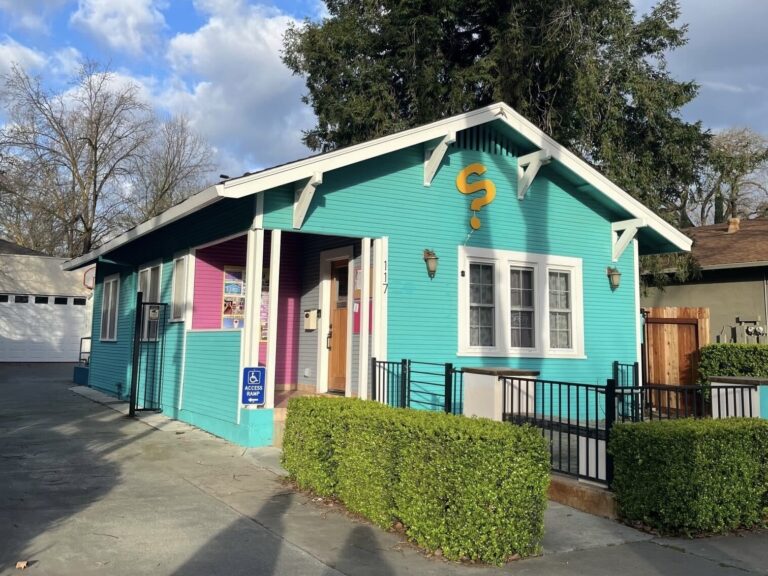
This is how Secret Spot, the beloved art and music lounge located at 117 D St., said goodbye to the Davis community.

For the past year, the lounge has been a unique part of Davis’ art scene. Visitors could purchase work by local artists or simply relax and take in the lounge’s vibrant, eclectic atmosphere. The space hosted workshops on everything from comic drawing to sock puppetry.  

Originally, Secret Spot began as a studio tucked behind The Wardrobe — quite literally a secret spot. When The Wardrobe moved locations, co-founders Toni Rizzo, Harry Greer and Stephanie Peel saw an opportunity to bring their project into a more public space.

As they reflect on the lounge’s closing, Rizzo and Greer appreciate the ways in which it deepened their connection to their local community. 

“People would come in [to display their art] and I’d be like: ‘I recognize you! You’re my grocery store checkout person — you made this? I had no idea!’” Greer said. 

The founders got to watch as friendships formed, bands were created and first dates unfolded. 

“That really was the goal,” Rizzo said. “We wanted a space to actively uplift artists. Especially both of us being from Davis, we’ve seen the art scene for so long, and we wanted to provide the opportunities that we wish that we had when we were younger.” 

However, it wasn’t long before they faced serious challenges. Just a few months after opening the expanded lounge, Rizzo was hit by a car while biking downtown, leaving her seriously injured.

“With the state of American healthcare, not only could we not stop working and Toni couldn’t do any healing because of that — we just had no opportunities for doctors,” Greer said. 

Alongside health and financial struggles, Rizzo pointed to a broader cultural shift that made things even more difficult. 

“We’ve had this huge switchover to everybody staying home, just using technology for the most part, not going out into the world and finding community as much,” Rizzo said. “We have a good friend who runs another local business that says our main competition isn’t each other, it’s Netflix. It’s people staying home and not going out and interacting with the actual physical location they live in. And that’s been a pretty evident uphill battle for us.”

Despite these challenges, the team feels at peace with Secret Spot’s closing.

“We’re out here learning and every failure is a new thing that you’ve learned and is just going to help towards the next thing you do,” Rizzo said. “Nobody should take it personally.” 

Greer likened the experience of running Secret Spot to taking a two-semester class. 

“I learned a whole bunch and I did a super cool magical thing for a while, and that it’s not going to continue on indefinitely is totally fine with me,” Greer said.  “I wouldn’t want to still be in my calculus class.” 

The funeral held on June 5 was an uplifting way for Davis locals to say goodbye to Secret Spot and to remember the joy it has brought the community. 

After the funeral, both artists are taking time to rest. Their studio space will remain, and Rizzo planned to continue organizing the popular immersive event, Art Mania. Greer, meanwhile, has a new album with their band, as well as the next installment of their dream-inspired comic series. For those who want to stay connected, the Secret Spot Instagram will continue to provide updates on the artists’ projects. 

There are still ways to support them: the original Secret Spot GoFundMe remains open to help with closing costs, and another fundraiser exists to support Rizzo’s medical recovery. But more than anything, they hope the closure of Secret Spot wakes people up.

“I’m hoping that the reaction to us closing is that people wake up to the fact that we do need to get out of our houses and find community,” Rizzo said. “In this political and economic climate that we’re in, humans need to be together, sharing space.”


Written by: Laila Azhar — features@theaggie.org
10 years since the infamous dress

0

It’s all conjecture, really


By ABHINAYA KASAGANI— akasagani@ucdavis.edu


One of my dearest friends loves to use the phrase “it’s all conjecture,” which always strikes me as a little amusing. Although she is right that many things in life are based on speculation, I believe many things to also undoubtedly be true. In our society, this is simply how we have been taught to approach most things — with the understanding that there are some questions that are meant to be debated long before an answer is found. 

My friend and I were sitting together when I brought up the 2015 viral dress, wondering when people decided that their interpretation was right and everyone else with an alternate opinion was wrong. When did it all stop being up for debate?

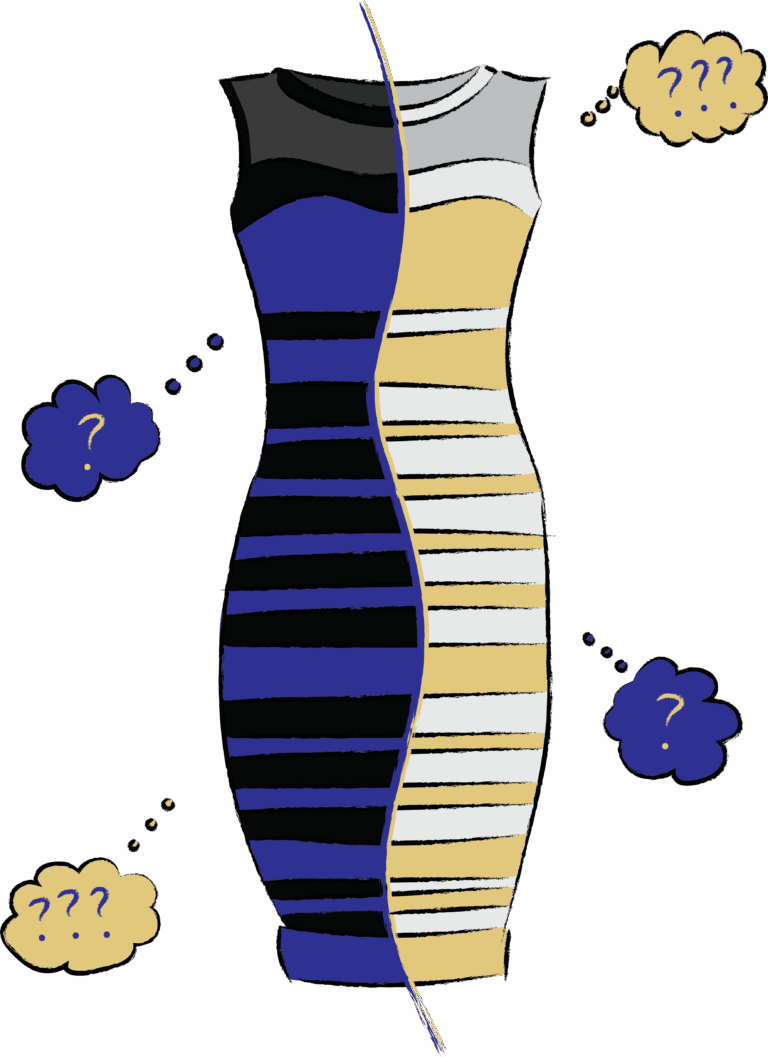
“The dress,” as it is infamously referred to, caused widespread disagreement online about whether the garment was black and blue or white and gold. The dress soared to popularity in February 2015, when Cecilia Bleasdale, the mother of bride-to-be, Grace, photographed a dress she had intended to wear to the wedding and sent it to her daughter,  who assumed it was white with gold lace. Grace posted the image to Facebook, where her friends began to disagree about its color. 

A few days later, the image was reposted on Tumblr, where it sparked controversy and puzzled those who could not see the dress both ways. To this day, it remains remarkable that millions of internet users found themselves unable to resign their answer once learning the truth. The digital age has done wonders for our longstanding relationship to perception, bias and truth.

What makes “the dress” such an unsettling debate is not that it caused disagreement, but that those who participated remained absolutely certain that they were right and convinced that they possessed the truth. 

The reason for this dissonance was revealed several years later in a 2017 study, which theorized that these visual differences were determined by the lighting the viewer had interpreted the dress as being under — if they believed the image was taken in daylight, they assumed the fabric was white and gold; if they thought it was taken under artificial lighting, they assumed it was black and blue. Despite knowing that our perception is a result of the way in which we interact with and perceive the world, the viewers’ perspectives were limited by the absence of context, since the image could only be accessed digitally. Facts alone were not strong enough to convince them of the truth.

This is similar to how information operates online today — what is true is often more about what “feels right” and less about what really is. Misinformation flourishes on the Internet because people choose to remain and continue to be uninformed, just as they did when they learned the true color of the dress. Most people are uninterested in perspectives that contradict their own, and so choose to ignore any external criticisms and critiques they might receive. 

Some people remain biased simply because they are told to — social priming, in this way, influences perception and embraces conformity, siding with the general consensus. Something as trivial as a dress worn to a wedding stands in for large patterns of polarization, whether political, conspiratorial or theoretical. “The dress” is no longer about color perception, but about the extent to which our brains selectively filter out the world, making perception passive, not participatory. 

When I brought this up to my friend, she claimed that the world is no longer able to hold grief and joy at the same time and that society has grown fixated on binaries that are answerable, where one can win or best another. Ultimately, “the dress” is a Rorschach test of sorts for the digital age, wherein this bias is a feature of human cognition that is leveraged by digital platforms to produce a sense of illusion. 

In actuality, it doesn’t matter whether the dress is black and blue or white and gold (the dress had been spotted at the wedding and it is, unfortunately, black and blue), but rather what matters is the understanding that things are not always as they seem. It doesn’t matter whether you’re right or wrong. The question being asked is how open you would be to considering that you might be at fault, or whether your judgment was actually a misrepresentation on your part. So, perhaps it really is “all conjecture” at the end of the day.


Written by: Abhinaya Kasagani— akasagani@ucdavis.edu


Disclaimer: The views and opinions expressed by individual columnists belong to the 

columnists alone and do not necessarily indicate the views and opinions held by The California Aggie.

The loss of free speech is the loss of democracy

What Jimmy Kimmel’s cancellation means for America


By THE EDITORIAL BOARD — opinion@theaggie.org


Censorship is a tried and true bellwether of authoritarianism. By definition, an authoritarian government thrives on a thin veil of propaganda that hides just how fragile it would be without the compliance of the public. That’s why one of the first warning signs of a shift toward authoritarianism is media censorship — every dictator curates the news their citizens receive so that it aligns with what they want them to believe (think of Vladimir Putin in Russia or Kim Jong Un in North Korea).​ The power of an authoritarian leader exists only because they manipulate the information that their constituents receive in such a way that their only choice is to believe that the political agenda of the leader is a necessity. 

We must, therefore, protect our free speech with the utmost care and urgency. In America, we pride ourselves on our freedom and independence. Our Founding Fathers tried to codify into the very Constitution of our nation that “Congress shall make no law … abridging the freedom of speech, or of the press…,” so it should come as an alarming red flag that we’re seeing our current administration disregard that essential right. 

On Monday, Sept. 15, late night show host Jimmy Kimmel made comments about the recent assassination of right-wing activist Charlie Kirk, saying: “We hit some new lows over the weekend with the [Make America Great Again] (MAGA) gang desperately trying to characterize this kid who murdered Charlie Kirk as anything other than one of them and doing everything they can to score political points from it.”

In response, the Chair of the Federal Communications Commission (FCC), Brendan Carr, accused Kimmel of disrespectfully conveying the political views of Kirk’s suspected shooter. Before Kimmel could respond, his show was indefinitely cancelled by ABC. 

Kimmel’s statements can’t reasonably be construed as hate speech or derogatory by any metric. It’s a widely accepted fact that Kirk’s shooter was politically conservative, and the actions of the Republican party make it obvious that they are trying to distance themselves from him, using the event to bolster nationalism and party unity for themselves. For speaking the truth, Kimmel was condemned and suppressed by the team of a leader who claims to uphold true American values — it’s tragic, ironic and horrifying.

Freedom of speech includes freedom of dissent; freedom to hold and express opinions against the government. When we see President Donald Trump and his administration actively trying to silence the voices of people who disagree with his political agenda, what we’re really seeing is his attempt to suppress the fundamental rights of the American people — to dictate what we can say. 

Hate speech, however, cannot be excused as an expression of fundamental free speech. In uplifting Charlie Kirk’s right to spread extremist ideology while simultaneously demonizing those who speak out against him, they’re ignoring the fact that the First Amendment does not protect hate speech. Further, some conservative activists claim that any attempts to deplatform Kirk were unjust and unfairly disregarded his right to speak freely. And yet, when Jimmy Kimmel makes a comment that offends them, they take away his voice. They accuse the left of being hypocritical while they’re the only ones committing acts of hypocrisy. 

The show never should have been cancelled in the first place, but it returned to air Tuesday, Sept. 22, after strong public outrage. What this proves, though, is that we as citizens do possess real power to create change. If no one had spoken up, not just for Jimmy Kimmel but for what the event of his show’s cancellation means for the future of the nation, he would have remained off of the air, forced to be quiet. 

Collective activism is a force to be reckoned with. Authoritarian leaders manipulate and strongarm their citizens into compliance because, if they believe in their ability to revolt, the leaders will be overthrown. We’ve seen what Trump and the government are trying to do, but we’ve also seen the power that we have, as American people, to rise up and protect our freedom. Let this be an alarm, but also an inspiration — we’re not powerless against these injustices.

 “I want to thank the people who don’t support my show and what I believe, but support my right to share those beliefs anyway,” Kimmel said in his first monologue back on the air after he was allowed to return. 

That sentiment is exactly what holds us together as a country. We must protect everyone’s individual right to speak and be heard, even if our views are diametrically opposed. The second we lose our rights to free speech, we lose our democracy. Jimmy Kimmel is one of many Americans who have suffered unjust consequences for simply exercising their basic rights — we have to recognize that for what it is: an early symptom of authoritarianism at the expense of democratic integrity. 


Written by: The Editorial Board — opinion@theaggie.org

UC Davis Fire Department welcomes Chief Nathaniel Hartinger

0

The department begins a new chapter following the departure and criminal indictment of its former chief last year


By ROBIN FRANKLIN — campus@theaggie.org 


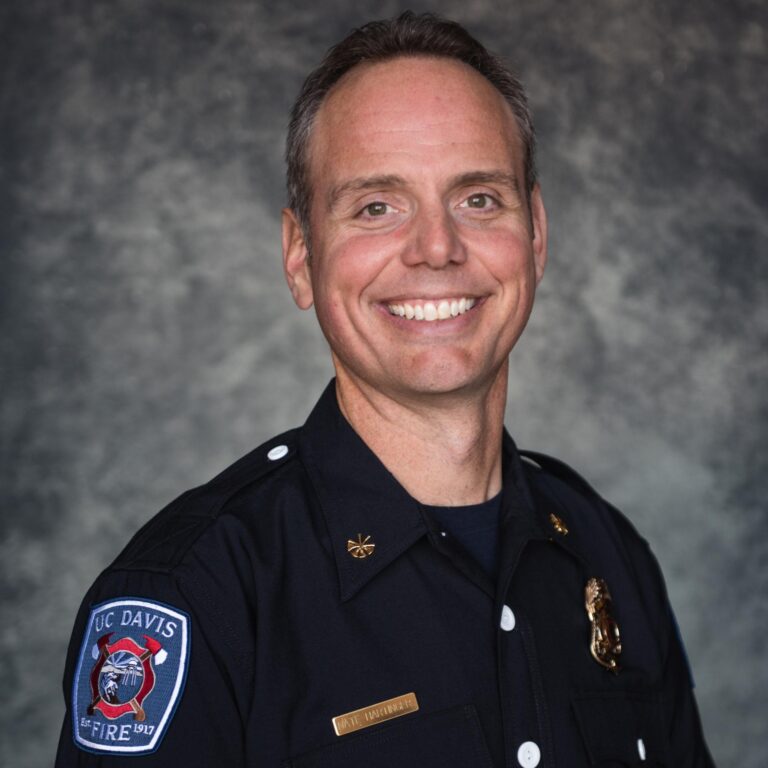
The UC Davis Fire Department has officially sworn in Nathaniel Hartinger, a department mainstay and UC Davis alum, as fire chief. For over 25 years, Hartinger has served the campus, aiding in hazard prevention training and the cultivation of new university programs.

“I’m incredibly proud and honored to be sworn in as the 7th fire chief of the UC Davis Fire Department,” Hartinger said via email. “Looking back to my start as a student firefighter over 25 years ago, I never could have imagined that I would one day be leading the department!”

Hartinger graduated from UC Davis and holds dual degrees in sociology and communication. He began working as a student firefighter as an undergraduate and later worked himself through every rank in the department, including captain, battalion chief and deputy chief. During that time, he was involved in founding the UC Davis Emergency Medical Technician certification program and Health 34, the 24-hour mental health support unit.

As chief, he will be responsible for overseeing these programs, alongside traditional fire services and the department’s almost 60 employees.

Hartinger brings a fresh start for the fire department following the indictment of his immediate predecessor Nathan Trauernicht over allegations of misappropriation of public funds last year. Alongside his former Executive Assistant Meagan McFadden, Trauernicht has since been charged in the case.

The Davis Enterprise has reported, based on search warrant affidavits that The California Aggie has not been able to obtain or verify, that Trauernicht approved fraudulent timesheets over a two-year period that resulted in $42,000 in overtime pay for McFadden.

Hartinger has been serving in the role on an interim basis since Trauernicht left the position last October; his official swearing-in ceremony took place on Aug. 11.

In a press release announcing Hartinger’s promotion, Chancellor Gary May commended his dedication to the university.

“Chief Hartinger’s leadership reflects the best of UC Davis — a commitment to service, a collaborative spirit and a deep love for this community,” May said. “His experience and heart are unmatched, and I’m grateful to have someone of his caliber protecting our campus.”

Hartinger told The Aggie that he is aiming to get the department more involved in the campus community, and he invites students to say hello to him and other members of his team should they see them doing outreach on-campus — including at sporting events or at new student Moove-in.

“I am so thankful to be surrounded by amazing people at UCD Fire,” Hartinger said. “Our student and career employees are what make our department such an exceptional place to work and are what drive our excellence in delivering service to our community. Talented people are the building blocks of any great department.”


Written by: Robin Franklin — campus@theaggie.org


Crêpe Bistro permanently closes at the Silo

0

The food stall is closing after the retirement of operator Michel Bloch


By ROBIN FRANKLIN — campus@theaggie.org 


The Crêpe Bistro, a favorite haunt at the Silo for students looking to satiate both sweet and savory cravings, has closed after 27 years. Operated by French expatriate Michel Bloch, the food service stall fed roughly 300 students a day, per an announcement of its closure.

Bloch first started serving crêpes out of a trailer in the Sacramento area in the late 1970s, according to the UC Davis Student Housing and Dining Services (SHDS). He later opened a storefront in Downtown Davis, named La Crêpe, in 1981 before opening a stall of the same name in the Silo in 1998. That location expanded to become the Crêpe Bistro in 2017, taking a spot formerly occupied by Taco Bell.

UC Davis SHDS Director of Retail Dining Operations Mary Schertzer said Crêpe Bistro is closing after Bloch’s retirement this summer.

“On behalf of Dining Services, we’d like to thank Michel [Bloch] for serving our campus community with quality, passion and care,” Schertzer said via email.

Schertzer said the university has not yet decided what will fill Crêpe Bistro’s open storefront.

“Dining Services is currently exploring options for the space that the campus community will enjoy,” Schertzer said. “It will remain empty for fall 2025, as the notice we were given mid-summer didn’t provide enough time to develop a new dining concept.”

In a 2009 interview with The California Aggie, Bloch said that he worked to keep his desserts authentic.

“I give my secret away — and that secret is there is no secret in the ingredients of crepes,” Bloch said. “I feel like today, very few [crepe businesses] respect the real concept of crepes.”

Bloch could not be reached for comment by the time of publication.


Written by: Robin Franklincampus@theaggie.org

Scam emails, phishing attacks on the rise across UC Davis

0

Campus officials call for caution as scammers target students and staff


By JESSICA YUNG — campus@theaggie.org


Phishing and scam emails have been impacting the UC Davis community this year. Valid UC Davis accounts are at risk of being hacked using stolen log-in credentials, to in turn send phishing emails to other members of the UC Davis community.

A phishing scam is an attempt to steal personal information using email or a website, according to the UC Davis Knowledge Base.

“‘Phishing’ (pronounced ‘fishing’) refers to a form of fraud that attempts to acquire sensitive information,” the website reads. 

Phishing attacks can take many forms, including requests for replies to a message or suspicious links. Some hackers impersonate real UC Davis faculty and staff members in an attempt to gather student information, on the premise of a research or job opportunity.

An email to UC Davis students and staff sent by UC Davis Information and Educational Technology (IET) on May 15 detailed the attacks facing the campus community.

“Phishing scams are on the rise at UC Davis and other higher educational institutions,” the email reads. “Scammers are impersonating legitimate and trusted sources, such as UCPath, Canvas, and other [University of California] Systems. They are targeting students, faculty, and staff with fake emails, text messages, phone calls, and social media messages to try and obtain passwords, Duo codes, or other sensitive information. Do not respond!” 

UC Davis will never ask for passwords or other sensitive information via email or text message, according to IET. 

UC Davis Vice Chancellor for Student Affairs Pablo Reguerín, in an email sent to the student body, also warned of these attacks and urged vigilance.
“Dozens of community members across the UC system have already fallen for the scam, including at UC Davis (campus and health),” Reguerín said. “Although no money was diverted in these recent scams, thanks to excellent cyber protection provided by UC Path [UC’s employee portal], we need to stay vigilant and protect ourselves.”

Many students have been impacted by these emails, including Tyson Rendon, a fourth-year economics major.

“The email was a confirmation-type email that said my UC Davis email address would be deleted by the end of the day unless I took immediate action,” Rendon said. “It presented a link to another website or an email address, and it seemed like they were just trying to get my UC Davis login credentials. My reaction, at first, was very frightened, because I thought that somehow I would make a mistake that would delete my email.”

When campus community members receive a suspicious phishing email, they are encouraged to report the activity to cybersecurity@ucdavis.edu.

Rendon noted that the scam emails use websites and links that look familiar to official UC Davis websites.

“There can be scammers who will replicate that very, very closely and maybe just change one letter of the address of UC Davis and it’ll seem very accurate,” Rendon said. “You just have to keep an eye out for that.”

A UC Davis IET post, originally from late 2024, noted that replying to and clicking phishing links can be very dangerous.

“Do not respond to any suspicious emails, click any links, or download any attachments,” the website states. “In doing so, you may put your identity and the university’s information and systems at risk.”


Written by: Jessica Yung — @campus@theaggie.org

Turn up the whimsy!

0

Tips for making life just a bit more whimsical


By MADISON SEEMAN — meseeman@ucdavis.edu


Picture this: The laptop screens are shining, Canvas notifications are chirping and the scantrons are flying off the shelf. It’s the final stretch of the quarter, the season of tearful goodbyes to fourth-years and tearful hellos to blue books and piles upon piles of concepts to cram. 

Math and economics majors are frantically crunching numbers, design students are desperately searching for the perfect hex code, music majors are mastering tunes at rates previously unheard of and data science students are doing whatever it is that they do (but under more stress). 

We’re all a little worn out! The bottom of the motivation barrel is beyond scraping and life is a little less sparkling. We all could use a little more whimsy. I’m here to help you find ways to bring pep back into your step to the tune of Natasha Bedingfield’s “Unwritten.” Save your sparkle with these helpful tips:

  1. Take a quick trip to my personal favorite art gallery: the first-floor bathrooms of the Maria Manetti Shrem Art Hall. It’s the best kind of art — vandalism. I legally can’t recommend that you contribute, but there are some must-see masterpieces in there worth checking out before they’re lost to an evil wash of white paint.
  2. Acquire more stuffed animals. I don’t care whether your current number is zero or 100: You need more. Try Squishmallows, Jellycats or even make your own! It’s not enough until you have no space left in your bed. If you aren’t buried under a sea of jungle animals and food with eyes on it, you aren’t doing it right.
  3. Bring back skipping — and I’m not talking about class. It’s the superior mode of transportation. Not only is it much faster than strolling across campus, it’s also 10 times the fun! Bonus points if you can find a nice field and lock arms with your friends like you’re in a Zyrtec advertisement. What could be more whimsical than that?
  4. Dip your toes into the seas of mass consumerism, but with an ethical twist — go thrifting! Many of you have the clothing side of thrifting mastered, but make sure you’re not letting the magic of the trinket aisle pass you by. Whimsy is stored in novelty Garfield mugs, metal dog statues and time-weathered Cabbage Patch Kids dolls. Maybe you’ll find a miniature Pac-Man machine, a pirate-themed picture frame or someone else’s family pictures. The opportunities are endless. I’m not sure if you can buy happiness, but I know you can thrift it.
  5. Exercise your free will: Break some rules and social contracts! Sip some juice in a martini glass, slip some Monster Energy into your water bottle, don’t turn in your assignments or go off the grid. Remember, you are the master of your own life.
  6. Customize everything! Add one charm to your backpack, then 20 more! Sticker-up your student ID, bring a little star shaped flair to your scantron. Bring back heart-dotted i’s and decorate the first initial of your final essay like it’s a medieval manuscript. Claim your unofficially assigned seat with some tasteful pencil graffiti. Marking your territory has never been so stylish.
  7. Break up with reality and don’t let a lack of consciousness stop you from making new friends. Name your fridge, personify your plants; talking with your inanimate objects can only bring you closer to feeling like a Disney princess. You won’t believe what updating your fridge on your crazy chemistry TA will do for your whimsy levels. 
  8. Assign strangers backstories. Maybe that very expressive phone call happening right outside your window is his last chance at convincing his father that he can’t take over the family stationery store because he has a soap carving dream. Maybe the lady who’s blocking your way to the soup aisle has been kicked out of her polycule for not washing the dishes. I personally find that there’s an inverse correlation between the quality of their imagined life and the bitterness of my mood, but the whimsy is still there.


So, chin up! Life in the trenches of finals may be the secret tenth circle of hell, but when you have whimsy on your side, nothing is impossible.


Written by: Madison Seeman –– meseeman@ucdavis.edu

Disclaimer: (This article is humor and/or satire, and its content is purely fictional. The story and the names of “sources” are fictionalized.)

UC Davis and Sacramento State’s continued battle throughout the decades

Neither of these schools wants to give up its pride 


By DAVID HU — sports@theaggie.org


There’s only about a 19-mile separation between two notable colleges in Northern California. To the east of the Yolo Causeway lies UC Davis, located in the heart of Yolo County. On the other end is Sacramento State, near the state capital. 

These two schools have developed a passionate rivalry that fans can count on for excitement when it comes to sports.

Much like the famous UC Los Angeles and University of Southern California rivalry in Southern California, this is a light-hearted but fierce competition that’s played out across multiple sports over the years. The close proximity has helped create a special connection between the two schools. 

A prominent part of this rivalry is the “Causeway Classic,” an annual football game between UC Davis and Sac State. What was once a normal football game between the two schools turned into the Classic when an alum from Sac State decided to donate a horse-drawn carriage as a trophy for the winner in 1954.

Since then, the Causeway Classic has become a staple for both schools, celebrated by students, athletes and alumni annually. The 2024 game marked the 70th anniversary of the Classic. 

“Four consecutive times, [Lan] Larison put the Aggies on his back to prevent the Hornets from having a chance to comeback,” Sac State Editor Ryan Lorez said in an article on the 2024 game. “The game-breaking play was Larison’s final carry, going up the gut for a 59-yard touchdown.”

With this game, UC Davis ended Sac State’s hopes of a playoff run in that season. Despite Sac State’s best efforts, Davis was able to win the game by consistently being on top of their own game.

Historically, UC Davis has dominated the regular season matchups, winning more than double the number of games in their shared conference. However, in their only postseason meeting, Sac State came out on top, proving their resilience and competitive spirit. 

In basketball, both schools are part of the highest division in the National Collegiate Athletic Association (NCAA), Division 1. While these two schools aren’t in the same conference, they have faced off plenty of times. Since 2008, UC Davis and Sac State have met 17 times on the field with the current record sitting at 9–8 in favor of Davis.

With no other major colleges in the area, UC Davis and Sac State naturally capture the attention of the local community in Yolo County. The rivalry between the two schools goes beyond individual sports such as football or basketball. 

Both schools have a deep hunger for athletic success and regional pride for each sport. While both of these schools are in Division 1 of many sports, they have never experienced the high of winning an NCAA championship. 

These two colleges often struggle when going up against more reputable programs during the regular season and postseason across multiple sports. But that shared experience has created a sense of mutual camaraderie and respect between them.

Their rivalry in football and basketball highlights just how evenly matched the schools can be at different points in time. 

All of this only adds to the rivalry’s appeal. Every faceoff is exciting, competitive and important, as both teams can’t afford to fall behind one another. Neither side wants to fall behind, because losing to each other gets in their way of chasing a grander goal. 

“Today the Causeway Classic is expanding, as you know, we have a rivalry in football between Sac State and UC Davis,” a Sac State faculty member said. “Now, the night before the Causeway Classic, we’re going to have a boxing match between Sac State and UC Davis.”

With the launch of Sac State’s boxing ring, it just shows the rivalry will continue to live on as the future unfolds. The ring proves both of these colleges will continue to invest in their athletic programs, as well as honor the rivalry. 

The energy and significance of this long-standing rivalry are not going away anytime soon. The longevity of the rivalry marks something special about the bond UC Davis and Sacramento State share. 


Written by: David Hu — sports@theaggie.org

In 2025, try stepping inside the fashion world

Some of the top fashion museum exhibitions that should be on your radar 


By BETH MUNRO-MORRIS — arts@theaggie.org 


Whether you’re mapping out stops on your summer travels, planning a sophisticated date or simply seeking a rainy-day refuge, the fashion world awaits behind inside museum walls. Fashion capitals like New York, London and Paris showcase art, culture and identity through the lens of dress. Here are some of the standout fashion exhibitions of 2025. 


“Superfine: Tailoring Black Style”

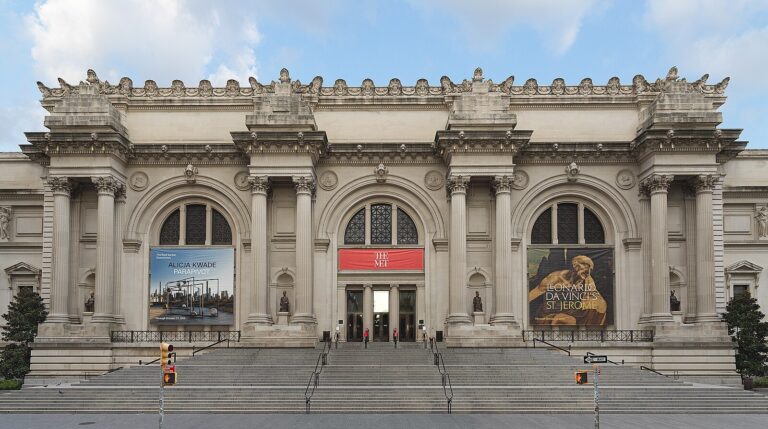
After the annual Met Gala spectacle lit up social media with celebrity interviews and red carpet highlights, the show continued inside the Metropolitan Museum of Art. “Superfine: Tailoring Black Style” carries the archived looks from this year’s gala, its theme a tribute to Black fashion and identity. Spanning 300 years of history, the show explores the concept of Black dandyism and the intersection between African and European influences. The exhibit is organised into 12 thematic sections, some of which are titled: Champion, Respectability, Heritage and Beauty. The 2025 Met Gala exhibition transcends aesthetics and exemplifies how to regain agency through the power of style. 


“Africa fashion” 

Following its debut at London’s Victoria and Albert Museum, “Africa Fashion” has found new life at the Field Museum of Natural History in Chicago. Building off of the original exhibition, clothing, among them is a Tunisian gown previously modelled by former First Lady Michelle Obama. Its accompanying exhibit “Connecting Threads: Africa Fashion in Chicago,” zooms in on the African influence on the city’s fashion scene. Expect a dynamic mix of textiles, garments from local designers, interactive installations and panel discussions. 


“Louvre Couture”

The Musee du Louvre has long been a cathedral of classical art, but this summer, it opened its doors to the world of couture. The Louvre’s first-ever fashion exhibition, “Louvre Couture” is as elegant and enigmatic as it sounds. Though curators are keeping many details under wraps, it’s rumoured that iconic archival pieces, specifically Jean Paul Gaultier’s 2008 Autumn/Winter collection makes an appearance. The 65 couture looks and 30 accessories showcase some of the best techniques employed in the decorative arts. From Byzantine tapestries to Second Empire décor, pieces are carefully placed within the galleries of the Department of Decorative Arts, offering an aesthetic dialogue between fashion and historical artifacts. With garments on loan from some of the world’s most iconic fashion houses, the exhibition rightfully earns its title as a “first-class museum.”


“Splash: A Century of Swimming and Style”

From the bold Baywatch bikini to the barely-there Speedos of the 1980s, the Design Museum in London is making a splash with its dive into a century of swimwear. This exhibition charts the evolution of aquatic fashion through over 200 pieces — from the first ever bikini, to Olympic swim gear and high-concept runway interpretations. Beyond the underwater world of fashion, the museum offers a rich selection of displays celebrating style. Don’t miss the museum’s free companion show “Future Observatory: Tomorrow’s Wardrobe,” which explores the next wave of sustainable and tech-infused fashion — fitting for a city famed for its street style and sartorial innovation.


“Leigh Bowery!”

London’s fashion influence extends east, with the Tate Modern hosting a dazzling tribute to the genre-defying designer Leigh Bowery. Though Bowery passed away at just 33, his multifaceted career is celebrated in a show that fuses his work in photography, costume, video and live performance, self-titled, “Leigh Bowery.” This installation is more than an exhibition, it’s a full-blown celebration of boundary-pushing creativity. With fashion at the intersection of drag, body art and pop culture, Bowery’s work embraces the unconventional and offers a fluid approach to identity through dress. 


This season, fashion goes beyond the runway. Museums around the world are proving that style is not just something to wear — it’s something to witness, interpret and experience. So dive into culture and experience something new. 

Written by: Beth Munro-Morris — arts@theaggie.org 


What are summer trends — and do they matter?

Trends provide the season with structure, but do they end up subtracting from summer’s traditional sense of spontaneity? 


BY JULIE HUANG – arts@theaggie.org


Summer is nearly turning to fall, but the summer trends of 2025 were in the works as early as spring, as people planned their wardrobes and vacations. As the season where most people get time off from work and school, summer is traditionally associated with freedom, relaxation and new horizons. For those who suddenly find themselves with an increased amount of free time, the dominant trends of the season can provide inspiration and a sense of personal growth. 

Summer has always been idealized as a time for self-care and self-exploration. During these balmy weeks free of life’s usual demands, there’s a sense that anything can happen. The extra time and space often encourages people to pursue new experiences, whether that involves changing up their fashion sense, trying a niche hobby or starting a new show.

As always, people wanting to make changes to their lives but are lacking inspiration can turn to the latest trends for ideas. Summer trends, which once may have been used to refer more specifically to clothing and fashion trends, have now become a more general description of a conceptual ideal meant to encapsulate the entirety of the season. 

Notably, many of these general, large-scale summer trends are associated with specific pieces of media. Examples from the last few years include “Hot Girl Summer,” exemplified by Megan Thee Stallion’s 2019 hit, the cinematic phenomenon of “Barbenheimer” in 2023 and the “Brat Summer” of 2024, inspired by Charli XCX’s iconic lime-green album. On several occasions, “Stranger Things” was influential on summertime culture, leaving people to reminisce on the notorious summer of 2022. 

The media-based nature of these summer trends reinforce a sort of escapism long associated with the season of summer itself. Unlike the more structured routines of the other months, summer seems to offer transformative experiences comparable to entering a parallel world, like Barbieland or Hawkins, Indiana. Instead of focusing on life’s mundane necessities, people are free to imagine fantastic possibilities, taking inspiration from fiction.

Over the years, this enthusiasm surrounding summer trends and the escapism they provide has become increasingly aware of itself. As the season gets closer, people take to social media and speculate on the next major trend, posting their predictions and engaging in discussion on what they would like to happen. 

The generalized nature of these large-scale trends also means that nearly every area of life can be subsumed into the overall trend. Anything can become a core component of the trend, from specific clothing, hairstyles, jewelry, shoes, songs, albums or locations (the neon green Brat Wall comes to mind). This general approach to trends means that an endless amount of questions can be raised on the nature of the next trend, which inevitably leads to another question. Will the next trend live up to the hype?

Summer trends should not be a source of anxiety, but the level of self-awareness currently surrounding the creation of trends often leads to a sense of pressure to hit upon the right content material to turn into a trend. Especially insidious is how influencers are free to use the arrival of summer as a marketing tactic, pushing a product or lifestyle that will supposedly maximize one’s enjoyment of an up-and-coming trend. Summer trends are meant to be joyful and inspirational, but when they become the framework through which one views the entire season, it might inhibit spontaneous and authentic expression instead of encouraging it. 

Over-reliance on what’s trending this summer encourages people to use their time and money in ways that they may not personally resonate with, simply because the reigning trend is everywhere and thus must be applicable to everyone, right? It’s not easy to tell what will bring personal fulfillment and what is simply a passing trend that becomes more appealing every time it appears on one’s screen or in one’s social circles. 

In an era where every trend is aware of its own existence and promotes itself accordingly, it becomes increasingly important to remember that summer earned its reputation as a special time of the year because of its lack of structure that offers a chance to act spontaneously. This time could and should be used to travel in a wide range of directions, physically or otherwise. Though trends can augment that sense of wonder and opportunity, they should not ever become restricting. 

As summer passes, instead of feeling pressure to immerse yourself in whatever trends prevail, consider them as guidelines that might enhance your warm-weather experience. Remember, summer is a time to experiment and explore hobbies that have always piqued your interest but didn’t fit into your schedule during the school year. 


Written by: Julie Huang — arts@theaggie.org 


Review: Which episodes of the newest season of ‘Black Mirror’ are worth the watch?

From worst to best, the episodes from season 7 of ‘Black Mirror’ will be sure to leave your mind boggled


By BELLA PETERSON — arts@theaggie.org 


The newest season of “Black Mirror” left its loyal audience stunned with a mixture of both negative and positive reactions. Some believe that this beloved show has lost its roots, while others stand by the fact that after over a decade of production, it still has some valuable stories to tell. Here are a couple of sentiments and thoughts compiled into a ranking (subject to interpretation, of course) of the newest season of “Black Mirror.”


  1. “Episode 4: Plaything” 


“Plaything” is the spiritual successor of “Black Mirror: Bandersnatch,” following the protagonist, Cameron, who is described as an “eccentric loner.” The concept of the episode seemed interesting enough to show some potential, but as the episode came to an end, it didn’t stand as tall as its neighboring episodes of this season. Following similar themes as its predecessor was simply not enough to make this an interesting episode. With the removal of “Black Mirror: Bandersnatch” from Netflix’s platform, it’s a sad thing to be left only with this remnant of what the original story was. It had potential, but potential isn’t enough when it comes to the possibilities that the “Black Mirror” universe can reach. 


  1. “Episode 2: Bête Noire” 


“Bête Noire” is completely original in its plot, with the episode’s format following the progression of a week with our protagonist, Maria. She begins to come face to face with her past, a woman named Verity who she used to bully. As the episode unfolds, the audience becomes just as confused as she is about what Verity’s intentions are. The episode is phenomenally structured, leading the viewer through twists and turns and giving absolutely no clue as to what will happen next. It isn’t until the last few minutes of this episode that its place in this ranking drops. Most endings in the “Black Mirror” series are supposed to make viewers feel powerless or despondent, but this ending simply felt too abrupt in comparison to the rest of the episode to allow for those feelings. Despite this, the episode still manages to be brilliant in its own right. 


  1. “Episode 1: Common People”


“Common People” starts this newest season off with a depressing story of a couple struggling to live normal lives amid a tragedy that bestows itself upon them. Like most episodes of “Black Mirror,” it serves as a forewarning to its audience, with this installment being a commentary on healthcare and how easy it is for the average person to get taken advantage of. This episode was brutal and didn’t go easy with its ending — truthfully it’s only placed in this spot because the other episodes that ranked higher were just that hard-hitting — but it certainly proves itself to be the perfect first episode for this newest season of the show.


  1. “Episode 3: Hotel Reverie”


To kick off the top-three episodes of this season is, fittingly, the third episode of season 7. This was an episode that caused quite a stir with fans, some believing it was a cheap copy of one of the show’s most beloved episodes: “Black Mirror: San Junipero.” The episode follows actress Brandy Friday looking to find her spark in acting again. She takes up the unique gig of being transported into an old movie, where she’ll be acting in place of the role that was originally the romantic male lead. The episode’s pacing is wonderful and really allows the viewers to immerse themselves in this story. Funny at times and even tear-jerking at others, this episode really stood out amid the other episodes of this season. The episode is more than just a copy and paste version of “San Junipero.” It’s not perfect, but it’s heart-wrenching enough to leave an impact. 


  1. “Episode 5: Eulogy”


“Eulogy” explores the possibility of being able to reenter photographs and relive moments from your past. The episode is deep and emotional, with material to offer for just about anybody. “Black Mirror” often shows the audience as a faulty protagonist, a tactic that effectively draws in viewers only to snap them out of it in the last couple of minutes of the episode. This episode isn’t as abrupt as the other times “Black Mirror” has used this trope; it still manages to leave you questioning just how reliable the main character of this episode really is. This emotional tale presents a major question about perspective, asking the viewer to look at something twice before making a snap judgement. Viewers are left with something to consider: Is it better to forget than to cherish? Overall it was a beautiful and thought-provoking episode that sits solidly at second place on this list. 


  1. “Episode 6: USS Callister: Into Infinity”


At the top of the list is “USS Callister: Into Infinity.” This final episode of the season really lands an impact with its audience as it is the first episode to directly sequel a previous episode. It doesn’t just show you easter eggs of past episodes; it is a legitimate continuation of an episode from a past season. Seeing as the past season’s episode was also successful, it’s no surprise that this episode was able to cement its place at the top of this ranking. Surprisingly, it does not require viewers to have watched the first installment of this story before tuning into this one, although it may be the best way to enrich the watching experience. The episode itself gives you all the context you need to be just as invested as the fans who have watched the other episodes. The episode’s pacing never fails to keep the audience’s attention despite its length, and it rightfully deserves to be at the top of this ranking. 


It’s understandable that there were mixed feelings about this new season of “Black Mirror.” However, fans might notice some gems they might’ve missed if they haven’t watched the entirety of the season. Despite the conflicting opinions regarding season 7 of “Black Mirror,” the show never fails to cultivate compelling narratives that leave viewers contemplating the conflicting outcomes that human nature and technology can create. 

Written by: Bella Peterson — arts@theaggie.org

A recap of the 2025 Whole Earth Festival

The beloved weekend-long Earth Day celebration returns with an array of music, activities and more 


BY SHREYA KUMAR — arts@theaggie.org 


Each spring, the UC Davis Quad transforms into the Whole Earth Festival (WEF), a student-run event that raises awareness for sustainability and the environment. The large-scale festival began as a small art project in the late 1960s, aiming to teach students and community members alike about the importance of taking care of our environment through art and other creative activities. 

Tents pop up like wildflowers, music drifts through the trees and tie-dyed cloth ripples in the breeze. For over 50 years, WEF has served as more than just a weekend event — it’s also an expression of what makes UC Davis so special.

Held from May 9 to 11, 2025’s WEF drew thousands of students, alumni, artists and environmentalists to the UC Davis Quad for a weekend rooted in sustainability and connection. WEF provides a space for students to browse goods by local vendors or even sell their own, and be part of a larger artistic community overall. Whether it’s through music, art, dance or drag, the festival invites students and community members to indulge in many different styles of performance and art. 

Dozens of vendors lined the Quad pathways, transforming the heart of campus into a colorful, dynamic arts and crafts market. Among them was “The Aggie Baggie,” a brand created by UC Davis alumna Chloe Wang, who studied computer science and managerial economics before graduating in December 2024. Her booth stood out as a fan favorite at WEF with stickers, acrylic pins, door hangers and more featuring cute and playful cow-themed designs illustrated by Wang herself.

“Sometimes, someone will come up and say, ‘I bought your sticker three years ago from a little table at the corner of campus, and it’s been on my laptop ever since,’” Wang said. “I will remember those moments for the rest of my life. I’m beyond honored that I’ve been given this chance to connect with others and bring them a little extra joy, and I’m so grateful that WEF has given me the opportunity to do so. The Whole Earth Festival was the first festival that took a chance on me — just a student artist with a tiny table and a silly cow sticker. WEF has always been a festival where the community comes out to find joy in art, music and connection with each other, and that connection and shared happiness is the whole reason I’m in love with making and selling my art.”

Music played a central role in shaping the festival’s atmosphere, filling the Quad with rhythm and energy from morning to night. Local and student musicians took over the Cedar and Quad stages, drawing crowds that danced, swayed and sprawled out on picnic blankets under the sun. Indie headliners like Neggy Gemmy, Girlpuppy and Fig attracted huge audiences with their vibrant sets, while local acts like Carabeza, an art-rock band from the San Francisco Bay Area, brought a more experimental edge to the lineup. Together, these artists shaped a soundscape that was unpolished, heartfelt and unmistakably Whole Earth.

“We were welcomed with the Davis heat and a golf cart ride to the quad stage,” a Carabeza member said. “We walked around, enjoyed the vendors and music and got to play a sweaty and energetic set for the earth dwellers at WEF.”

Workshops took place across the festival grounds, offering everything from rock painting and pressed flower collaging to drag shows and yoga lessons. Many were led by students and alumni, highlighting the festival’s ethos of shared learning and creating art together.

While the art and music make the festival vibrant, its environmental mission is what grounds it. At a university known for putting sustainability first, the festival is another way to showcase how we live out our environmental values. All vendors were required to sell vegetarian food and use recyclable or compostable materials, and volunteers helped sort compost and make WEF a truly zero-waste event. Even the cob bench near Wellman Hall, a campus symbol of sustainability, was built during a workshop at the 2004 WEF.

“When I think about it, WEF creates so much of the student culture here on campus,” an anonymous student said. “The fashion, the art, the music, it all comes together at WEF and you can see what students here are really all about.”

Even as the sun set on the final day and the crowds slowly thinned, the energy remained. For many, WEF is more than a campus tradition — it is a reflection of what us students hope the world can be, and a chance to enjoy being part of a community larger than what we have here in Davis. Even as tents come down and music fades, what lingers is the sense that something meaningful happened here, and that it will continue to happen every year after.


Written by: Shreya Kumar — arts@theaggie.org 


ASUCD Senate makes budget adjustments at May 22 meeting, allocating funds for the 530 Night Market

The table also approved new summer positions for the Innovation and Research Lab


By AALIYAH ESPAÑOL-RIVAS — campus@aggie.org 


At their May 22 meeting, the ASUCD Senate passed a series of spending bills, including a budget for catering at the 530 Night Market, an anticipated Community Health and Culture Fair for the Asian American and Pacific Islander (AAPI) Committee.

Before this, the Senate passed Senate Bill (SB) #77, which hopes to “clarify the process by which the ASUCD Senate can provide funding to Registered Student Organizations (RSOs),” SB#81, to remove the “administrative division of Executive Agencies” and SB#92, allocating $296 to reserve the Quad for the ASUCD Quarterly Showcase on June 2.

SB#91 was also passed after long deliberation, allocating $3,000 to the AAPI  Committee for the 530 Night Market, taking place on May 30 in the ASUCD Coffee House (CoHo).

Senator Ezra Rubin voiced concerns with the bill, citing its high budget for a relatively smaller scale event and that money would be taken from the Safety Initiative Fund for the event.

“It’s a $7,000 cost for an estimated 400 attendees, which would be about $18 per person,” Rubin said. “My understanding from speaking with the [bill’s] author is that the reason it’s so high is because it’s catered from the CoHo, and they want to have a variety of food options to balance the different cultures. I think that’s a great idea, [however], I do think that should be balanced with physical responsibility, and ultimately $7,000 for 400 attendees is fiscally irresponsible.”

Rubin continued explaining his sentiments.  

“I’d rather see some of that money go back to general reserves for next year to counteract the deficit to whatever extent possible rather than just spending money,” Rubin said. “I think taking from the safety initiative funds in particular is not an appropriate use of that funding source.”

Chairperson Iris Chen, who wrote the bill, responded saying that the menu for the event was already the lowest proposed.

“After we talked to [the CoHo], our original plan was to give a budget with an estimate of $3,000 to $2,000,” Chen said. “[They] sent us a menu of over $5,000 dollars, [explaining that] it was hard to maintain the low budget of $5,000 […] for 400 people.” 

The bill was ultimately passed, with the only “no” votes coming from Rubin and Senator Mia Cohen.


Quarterly Reports

The Senate first heard a quarterly report from the ASUCD Undocuscholars Advocacy and Aid (UAA) Committee. Chairperson Rosa Linda Martinez, a second-year sociology and community regional development double major, discussed the successes and challenges of the committee to date.

This quarter, the UAA Committee collaborated with Puente, MEChA and Las Raises for various events, including tote bag-making and a movie night. Furthermore, the UAA Committee continued their cap and gown program, giving nine first-generation scholars free regalia for graduation.

“We learned that 100% of our participants were first generation college students,” Martinez said. “81% of the participants identify with the AB540 or California Dream Act.” 

Looking to the future, the UAA Committee hopes to increase their social media presence and awareness of their programming through different collaborations and continue their work of uplifting the immigrant and undocumented students on campus. 

Then, the Senate heard a quarterly report from Creative Media (CM), ASCUD’s in-house marketing and design team. ASUCD Director of Marketing Mitchell Borges shared that this quarter, CM launched the ASUCD Spring Trading Card promotion, where students had the opportunity to obtain a trading card from three ASUCD events — Whole Earth Festival (WEF), Lawntopia and Picnic Day — to win a “picnic pack” (a bag full of ASUCD merchandise). Close to 300 students were able to obtain all three cards, and Borges hopes to continue the program next year on a larger scale.

Additionally, CM was able to collaborate with WEF for their solar towers to be installed next year, media passes and signage for various ASUCD events and merchandise for other ASUCD organizations. Currently, CM is working on a vinyl refresh for the CoHo and signage for the Campus Center for the Environment (CCE). 

Aggie Studios, a subunit of CM tasked to make all promotional content for ASUCD and its units, collaborated with different RSOs this quarter, such as Student Health and Wellness, Bike Barn, Love Lab, Davis Dance Revolution, Picnic Day, WEF and Hack Davis to create social media content.

Next, the Student Advocate Office (SAO) gave their quarterly report. Audrey Jacobs, a third-year Asian American studies and gender, sexuality and women’s studies double major and head student advocate, talked about a recent Office of Student Support and Judicial Affairs (OSSJA) partnership and other ongoing SAO projects. 

Additionally, Jacobs discussed the impacts of California Assembly (AB) 1575, otherwise known as Katie Meyer’s law, which “will allow students at California’s public colleges and universities to select an adviser to help them navigate the disciplinary process.”

In addition to the new referral process from OSSJA, SAO has seen an increase in cases since the passing of AB 1575, according to Jacobs. OSSJA directly involves SAO in the referral process, where students now have the option to select both a campus judicial board advisor and an SAO case advisor.

“We’ve seen AB 1575 really impact our caseload,” Jacobs said. “We’ve had 111 cases this quarter, and considering we’re only in our third year of doing case advising, I think it’s the most we’ve had in any quarter. A lot of it is due to our new OSSJA partnership.”

Afterwards, the Judicial Council (JC) gave their quarterly report. Head Justice Iman Tariq, a third-year sociology and political science double major, discussed the changes and challenges the judicial branch faced in the recent quarter.

This quarter, JC handled two complaints and other election appeals, and hired a new justice and new judicial clerks. JC faced some challenges with delayed onboarding for the new judicial clerks and inaccuracies within the legislation tracker. 

Lastly, the Senate heard from Point Director Aradhya Chakraborti, a second-year genetics and genomics major, of the Aggie Reuse Store. The store hosted several theme events this quarter where students could receive assistance repairing their clothes, along with activities such as vinyl painting and embroidery.

The store also collaborated with Yesterday Vintage, WEF and the clothing app Depop.  Aggie Reuse was able to divert more than 15,000 pounds of waste and prevent over 384,000 pounds of carbon emissions, according to Chakraborti. 

Looking towards the future, Aggie Reuse hopes to increase volunteer retention, boost social media engagement and gain approval for a textile recycling program.


Budgets

The Innovation and Research Lab (IRL), ASUCD’s in-house research and software development group, asked for an increase in their budget to accommodate for summer hours for two positions — a senior developer and associate director — to support the “Aggies on the Moove” project approved at the May 15 Senate meeting, which aims to install eight new bike counters on campus. 

IRL Associate Unit Director Jeremy Elvander, a third-year data science and geographic information systems double major, stated that the summer hours are needed due to the project’s quick evolution and partnership with the Institute of Transportation. 

“Installation for the project will likely occur over summer, which is going to require group coordinated effort on IRL’s part,” Elvander said. “We need to ensure the right technology is used and that ASUCD has full control of the equipment, while facilities make the actual cuts in the pavement.”

Furthermore, Unit Director John Carraher, a fourth-year computer science and engineering major, emphasized that progress must be made regardless if the budget is approved or not.

“There’s a lot of technical work that needs to get done, and it’s going to get done whether or not we get paid over the summer,” Carraher said. “Ideally, I want to pay Jeremy and my senior developer who have been heading this project because it’s a lot of work and they deserve to get paid.”

The proposed budget would add $4,000 per paid position to the previously approved budget of $32,000, for a total requested increase of $8,000.

Senator Rubin expressed his frustration with the proposal, asking for the positions’ accountability in the initial budget, largely finalized the previous week.

“I’m amenable to supporting these changes because I think the work should be done and compensated,” Rubin said. “But I have to say it is a little frustrating that my impression was [that] this would be covered by facilities and IRL would come back in the fall. It would be nice to know that this was a cost you were getting into in the first place.”

Ultimately, funding for both positions was approved by the Senate.

The Senate then reopened numerous ASUCD unit budgets and fixed minor, overlooked mistakes from initial budget approvals. These included a 50-cent wage increase for the marketing manager of CM and accounting for a week missing in their budget, adjustments to the budget for the Executive Office and corrections to the base pay of several unit directors.

The meeting was called to order at 6:15 p.m. and adjourned at 9:31 p.m.


Written by: Aaliyah Español-Rivascampus@theaggie.org

Fourth-year Catherine Pham heads to dental school after cherishing the small moments in a big college town

0

Last spring, seniors reflected on their time at UC Davis and shared their post-graduate plans


By JALAN TEHRANIFAR — features@theaggie.org


When Catherine Pham transferred to UC Davis from De Anza College in Cupertino, she thought college was just a box to check — something to get through on the way to the next step. Now, two years later, she’s preparing to walk the stage, and her outlook couldn’t be more different.

“I used to think of college as just a stepping stone,” Pham said. “But now I look back at it as a time I really loved. I’ve grown so much, and I’m going to remember it for the small moments that made it meaningful.”

A San Jose native and human biology major, Pham chose UC Davis through the Transfer Admission Guarantee (TAG) program. Among all the UC campuses, Davis stood out for its strong biology department, proximity to home and its reputation as a friendly, nature-filled college town.

 “It felt like the right balance,” Pham said. “Far enough to feel independent, but close enough to go home when I needed to.”

During her time at Davis, Pham joined the Pre-Dental Society (PDS), a student organization that became central to her college experience. 

“I joined my first quarter here because I wanted to meet other pre-dental students,” Pham said. “Those friends became my community. I ended up loving it so much that I ran for a board position and served as publicity chair this past year.”

Pham also made space for fun and made memories she’ll never forget. Her favorite night at UC Davis was Lawntopia, a student-run music festival that brought rapper Don Toliver to the UC Davis campus. 

“It wasn’t free this year, but it was still such a fun experience,” Pham said. “Getting to see an artist I love with my friends at school — that’s the kind of thing that makes Davis special. I’m really glad ASUCD does things like that.”

From biking around campus to grabbing coffee at Pachamama or sipping apple juice at the Davis Farmers Market, Pham learned to savor the slow, peaceful rhythm of life in Davis. 

“It’s just such a serene town,” Pham said. “I walk through the Arboretum or across campus and there are always trees, birds, squirrels, plants. I try to take mental pictures of everything.”

Pham will be heading to LECOM School of Dental Medicine in Florida this fall — a major milestone after years of hard work and planning. 

“I’m really proud of getting into dental school,” Pham said. “It’s something I’ve wanted to do since I was younger, and college was when it all started to become real.”

Before diving back into academics, though, Pham plans to take a well-deserved break. 

“I just want to enjoy my life for a bit,” Pham said. “College is a big deal — it’s easy to forget that. I want to celebrate, be proud of myself and spend time with the people I care about.”

When asked what advice she’d give to future Aggies, Pham didn’t hesitate. 

“Try everything,” Pham said. “Explore Davis, bike around, try different food places, go to the Arboretum, see the little botanical garden. Make small memories. And academically, especially for transfer students, understand that the quarter system can be intense. Stay on top of your work, go to class and give yourself grace.”

Looking back on her time at Davis, Pham said she’ll miss the quiet beauty of the town, the kindness of the people and the rare sense of being surrounded by others going through the same thing.

“Davis is such a good place to grow up a little,” Pham said. “There are so many like-minded people here, and it’s just a really great place to be young and figure things out.”

As she prepares for her next chapter, Pham hopes future students will learn to appreciate the time they have here — just as she did.

“Enjoy the time that you have in Davis,” Pham said. “It’s been my favorite years of my life so far.”


Written by: Jalan Tehranifar — features@theaggie.org

Florida Panthers and Edmonton Oilers face off for the 2025 Stanley Cup

0

A thrilling rematch for the end of the season 


By DANIELLE WIRNOWSKI — sports@theaggie.org


The Florida Panthers clinched a spot in the 2025 Stanley Cup finals in ice hockey for the third straight season after defeating the Caroline Hurricanes. In game five on May 28, 2025, the Panthers earned their spot in the Eastern Conference with a 4-1 lead. 

The Florida Panthers have a chance to hold onto the Stanley Cup for another year as long as they can pull ahead of the Edmonton Oilers, just as they did last year. 

The Edmonton Oilers were able to secure a spot in the finals after defeating the Dallas Stars on May 29, in the Western Conference with a 4-1 lead as well. 

The last time the Edmonton Oilers won the Stanley Cup was in 1990, with John Muckler as head coach. However, the Oilers were back in the finals for the 2024 Stanley Cup, going up against the Florida Panthers, yet lost to them after seven games. 

The Florida Panthers have had a strong regular season, finishing with a 47-31-4 record and earning 98 points, which has improved their ranking in the standings to determine playoff positions. 

They were placed third in the Atlantic Division, out of eight teams, and fifth in the Eastern Conference, out of 16 teams and two divisions. 

As the Panthers head into the finals, star player Eetu Luostarinen suffered an injury during game five of the Eastern Conference. Although the team has not disclosed what the injury was, he was unable to return to the game. 

Another few key players for the Panthers throughout the regular season are Sam Reinhart and Aleksander Barkov, who led in team goals and points and topped the assists chart. 

While, in the first round, the Panthers defeated their cross-state rivals, Tampa Bay Lightning, in a very physical five-game series. This led to Barkov leaving the second game in the series with an injury, where he did not return later in the match.  

Entering the second round after defeating their rivals, the Panthers entered the seven-game series with the determination to win this round against the Toronto Maple Leafs. While the series started off with a 0-2 deficit, they were able to make a comeback in the last five games and secure a spot in the Eastern Conference Finals. 

Entering the Eastern Conference Finals, the Panthers were pitted against the Carolina Hurricanes, who had previously won against the Washington Capitals. 

In comparison, the Edmonton Oilers finished their regular season with a 48-29-5 record, accumulating 101 points across the season. 

They were placed third in the Pacific Division, out of eight teams, and sixth in the Western Conference, out of 16 teams and two divisions. 

As the Oilers approach the Stanley Cup finals, two of their players have been injured in recent games, with Connor Brown injured on May 25 and Zach Hyman injured on May 27. 

Unfortunately, the Oilers reported that Hyman will undergo surgery on May 28 for an upper-body injury and will be out for the remainder of the postseason games. On the other hand, key players such as Leon Draisaitl, who led the team in goals, and Connor McDavid, who led the team in assists, remain uninjured and ready to face off in the finals. 

The Oilers faced the Los Angeles Kings in the first round of the playoffs. While they were at first losing the six-game series by two games, they were able to rally and defeat the Kings after all. 

As the Oilers advanced to the second round, they played the Vegas Golden Knights, whom they eliminated within a five-game series, and proceeded to the Western Conference Finals. 

Entering the Western Conference finals, the Oilers faced the Dallas Stars in a rematch of the 2024 Conference finals and defeated them in a five-game series. 

The Edmonton Oilers and the Florida Panthers next faced each other in the Stanley Cup Finals, a rematch of last year’s competition. The game, held on Wednesday, June 4, went to the Florida Panthers for their second consecutive Stanley Cup win. 


Written by: Danielle Wirnowski — sports@theaggie.org