55.7 F
Davis

Davis, California

Monday, December 22, 2025
Home Blog Page 20

Where have all the unicorns gone?

No longer the center of books, movies or television, unicorns have been slowly fading from fantasy — is it time for their magical return? 


By SAVANNAH ANNO — arts@theaggie.org

It’s 2016. You’re in middle school, and your friends are posting photos of themselves holding plastic Starbucks cups filled with an icy, purple-pink mixture. Blue sour drizzle, mango syrup and cream blended together to create the nationwide phenomenon that was the Unicorn Frappuccino. 

It didn’t just end there. The late 2010s marked a cultural shift for the mythological symbol of the unicorn. No longer an enchanted creature living in hidden forests, unicorns became a vibrant, rainbow and glitter explosion, beloved along with now-cringey icons like narwhals and moustaches. Food, clothing, makeup and skincare brands all gravitated towards the shimmery, pastel trend, which Vox has described as a widespread manifestation of “millennial nostalgia.” 

Like most trends do, it seemed to disappear overnight. While we all may vaguely remember the brightly-colored drinks, unicorn onesies and Snapchat filters when prompted, trends simply vanish and fall to the wayside as new ones pop up everyday. 

And so the unicorn, the original myth and a symbol of magic since the age of Ancient Greece, was reinvented and thrown away. Losing its original mysterious, woodland image created during the Renaissance, the unicorn now resides in our memories as a reminder of the 2010s. Who wants to revisit that? 

It’s no surprise that today, unicorns have become a scarcely utilized creature in all forms of media. After their small feature in “Harry Potter and the Sorcerer’s Stone” and the 2019 ending of “My Little Pony: Friendship is Magic,” no one has picked up the unicorn in quite the same way. Compare this to the long list of works that vampires, dragons, werewolves and mermaids have amassed over the decades, and the discrepancy is easy to see. 

While vampires received a return to their historical roots and a mature, frightening image in Robert Eggers’ 2024 hit “Nosferatu,” unicorns have only been recently portrayed in Alex Scharfman’s 2025 dark comedy “Death of a Unicorn,” which received a 54% on Rotten Tomatoes

Shown as giant, almost dinosaur-like creatures with sharpened teeth and even sharper horns, Scharfman’s unicorns were a large step away from the caricatured 2010s image, but perhaps too large a step. Called “agonizingly unfunny,” in a review by IndieWire, the new film has done nothing to save the ancient myth’s image within pop culture. 

With so many different — and largely unsuccessful — iterations of the unicorn in today’s media, is it even worth saving? 

No matter their role in adult fiction, unicorns continue to be a staple in the hearts of children everywhere. Encouraging imagination, unicorns and rainbows are still largely featured in children’s books, toys and decorations. If they have the potential to be timeless for childhood, what’s stopping their transition back into the sphere of adult fantasy media? 

While it’s hard to move past memories of trends that make us cringe or want to look away, the long history of unicorns as a symbol for imagination and rarity should be enough to forget about the creature’s — and our own — brief awkward phase of 2016. Images of horses with billowing hair and magical horns, running through a forest of flowers and tall trees, serve as representations of femininity, magic and even queerness.  

When it comes to returning to childhood obsessions we were once made fun of for, unicorns sit at the top of the list, right next to princesses, ponies and Barbies. As girls continue to reclaim the once openly-hated “horse girl aesthetic,” become increasingly obsessed with images of wide-eyed baby deer and post montage clips of wild horses to Lana del Rey songs on TikTok, it feels that the return of the unicorn is just one more trend away. 

Written by: Savannah Anno — arts@theaggie.org
Why WNBA expansion is more urgent than ever

Rising talent faces tough reality as over half of rookies are cut 


By DIEGO CERNA — sports@theaggie.org


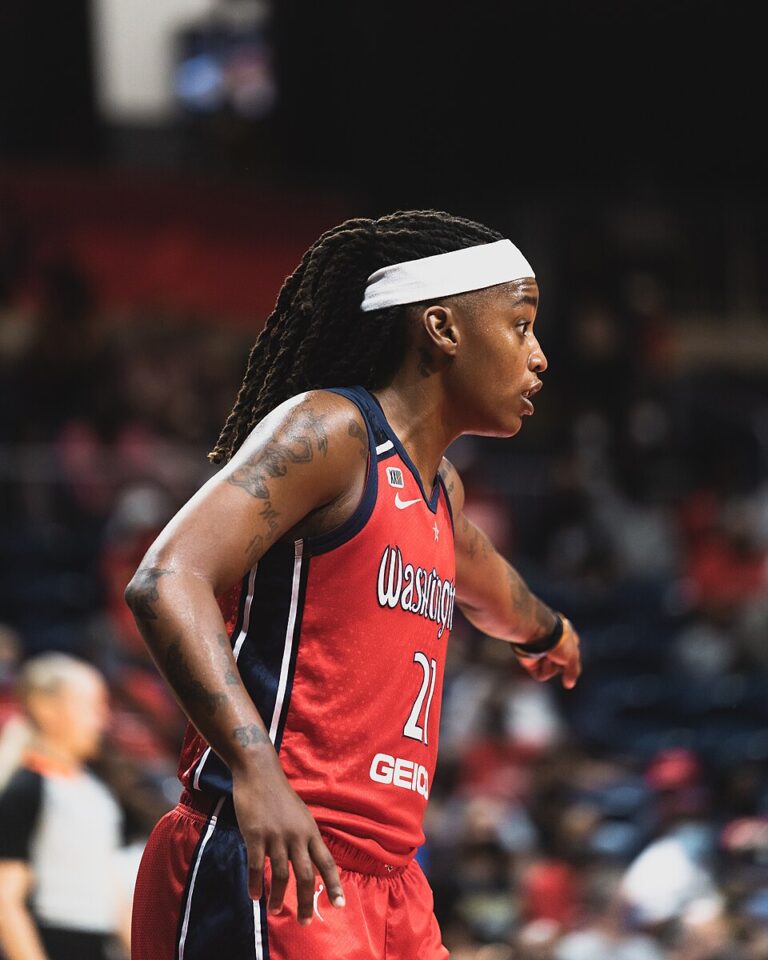
On April 14, 2025, the Women’s National Basketball Association (WNBA) held its annual draft, which took place at The Shed in New York City. Guard Kaitlyn Chen was among the players drafted, as she was selected in the third round by the newly appointed Golden State Valkyries.

Chen had been one of the more notable rookies, as she became the first-ever Taiwanese-American player to be drafted into the WNBA. Chen won the 2025 National Collegiate Athletic Association (NCAA) National Championship with the University of Connecticut Huskies. In the previous three years of her career, she won three Ivy League titles and three Most Outstanding Player of the Year awards in the Ivy League with Princeton.

Just a month later, on May 14, the Valkyries announced that they would cut Chen from making the final roster going into the WNBA season.

However, Chen isn’t the only rookie who was cut. In fact, over half the WNBA rookies who got drafted in New York have been waived within a month of getting drafted. 

The WNBA is a competitive league to stay in as a player. Teams must keep a roster of 12 maximum players. The Golden State team has been the newest addition to the WNBA, establishing itself as the 13th team of the league, the first expansion team to be implemented since 2008. 

Talented players like Chen often miss out on roster spots, not because they lack skill, but because there just isn’t enough room on teams.

Plans surrounding expansion have been an ongoing issue the WNBA has dealt with throughout its short 28-year lifespan. One of the reasons is due to financial difficulties in sustaining the league. While the league has been gaining traction in recent years from stars such as Center A’ja Wilson from the Las Vegas Aces and guard Caitlin Clark from the Indiana Fever, the league still incurs negative profits each year.

One of the easiest ways to address this is to pair newly added teams and cities with already formed National Basketball Association (NBA) teams. This allows both NBA and WNBA teams to use the same arena to lessen the cost of implementation. The WNBA has already started its expansion plan with The Valkyries, as they plan to share Chase Center with the Golden State Warriors. 

WNBA Commissioner Cathy Engelbert has stated that new WNBA teams will be formed and most likely share arenas with the Toronto Raptors and Portland Trail Blazers in 2026. Engelbert also hinted at adding a new team in 2028, making it a 16-team league by then. 

Several other cities, including Detroit, Cleveland and Nashville, have expressed interest in bringing the WNBA to their cities.

Although expansion may be expensive, it could work as a solution to creating profit within the league. Expanding teams would most likely expand the previous 40-game regular season and an eight-team playoff bracket, increasing revenue from ticketing and broadcasting.  

This 2025 season has already implemented a new record high 44-game schedule. The WNBA will look to utilize its growing popularity through star players, hopefully turning the tide for the league to grow and stay competitive in the long run.


Written by: Diego Cerna — sports@theaggie.org

Davis City Council meets on May 20, 2025

0

Presentations covered seasonal mosquito concerns and the upcoming fiscal budget proposal 


By PIPER AWEEKA city@theaggie.org


On Tuesday, May 20, 2025, the Davis City Council held its biweekly meeting at 6:30 p.m. at the Community Chambers located on Russell Boulevard. After ceremonial presentations of this year’s Golden Heart and the Thong Hy Huynh awards, the council convened to discuss agenda items. Up first, the council heard a presentation on what to expect this upcoming year in terms of mosquito activity. 

Gary Goodman, representing the Sacramento-Yolo Mosquito and Vector Control District, laid out the current steps being taken to assess the potential hazards facing the Davis community.

“Starting off, we just started our [West Nile virus] testing cycle this last week,” Goodman said. “So far, no positives. We do have the right species of mosquitoes that can transmit dengue. […] We haven’t had local transmission of dengue in quite some time, and to have it two years ago and again 10-fold last year is a significant concern for us moving forward.”

Despite possible worries, Goodman made sure to emphasize that the community should always feel free to contact the district if something on their property causes concern. 

“We ask the public to go around their yards,” Goodman said. “ Go around, take a look at any sandy water, give us a call. […] We go to thousands of pools per year within our district of Sacramento and Yolo County. We want people to be aware that [West Nile virus] is and can be a very serious disease and to take appropriate precautions.”

With that, the meeting flowed into a discussion on potential changes to the current city budget in light of the upcoming fiscal year budget proposal. 

Kiran Sanghera, finance manager for the city of Davis, laid out the most notable of the proposed changes for the 2025-2026 fiscal year. Sanghera prefaced her presentation of these substantial budget alterations by noting that most budgeting is typically only altered according to a specific inflation rate. 

Most of the fees and charges that are in place are currently increased by a pre-approved annual inflator,” Sanghera said. Parks and community services had the most changes [in the proposal]. Youth service fee ranges now include accommodations for shorter length programs as well as increases related to staffing and supply costs.”

With these changes accounted for, the meeting segued into discussing the proposal for the upcoming fiscal budget, set to extend until June 30, 2027. Following Finance Director Elena Adair’s presentation of the revised budget, Interim City Manager Kelly Stachowicz said a few words to the council.

“I just wanted to close with a reminder that the budget is a living document, so you must approve it by the end of June, but you may also amend it as policy goals evolve or economies change,” Stachowicz said.

In their commentary, the council shared surprise at some of the sharp fee increases. Vice Mayor Donna Neville expressed this collective shock amongst council members.

“Some of the cost increases that went up were all beyond what I think most people were envisioning,” Neville said. 

Mayor Bapu Vaitla conveyed a similar sentiment to Neville. Despite the time to gain clarity and revise the proposed budget before its confirmation, Vaitla indicated the disappointment of the council and their inability to address personal priorities within the current proposal.

“I was expecting a lot more wiggle room in this budget than there was,” Vaitla said. “It’s a very, very tight budget, and I think all of us here had priorities that we just couldn’t get to.”


Written By: Piper Aweeka — city@theaggie.org


The annual May rainbow crosswalk painting attracts dozens of attendees and several protesters

0

Police were called to the scene at the behest of one protester


By SUNNY LIU — city@theaggie.org


On May 25, Davis Phoenix Coalition held its annual rainbow crosswalk painting at the intersections surrounding Central Park in preparation for Pride Month. Volunteers started gathering around the park after 5 a.m. and got to work at 5:30 a.m. 

City Councilmember Gloria Partida, who organized the event, described the annual tradition.

“We do rainbow crosswalks every year, just before the month of June, which is Pride Month, and it’s a way to just make the celebration very visible,” Partida said.

Partida further described the history of the tradition and noted where members of the Davis Phoenix Coalition first got the idea.

“It’s been about a decade [since the first rainbow crosswalk painting],” Partida said. “We had seen, I think, that Sacramento had done their crosswalks. They had done a set of crosswalks in Sacramento, and there were other cities that were also doing this sort of [thing] as a show of support and solidarity with the LGBTQ community.”

Wendy Weitzel, who runs her own business newsletter in Davis, explained how long the crosswalk will be visible.

“Pride Month’s coming up, and [the crosswalk] usually lasts,” Weitzel said. “It’s […] a chalk-based paint, but it usually lasts through the month if it doesn’t rain.”

Dillan Horton, a yearly attendee at the event, described how the event fits into the wider pride celebration in Davis.

“In my mind, [the rainbow crosswalk painting is] like the first official event of Davis Pride Season, because we’re, you know, showing out here. […] We always end up encountering a bunch of runners and early birds who are moving throughout the community, who are really excited to see the sidewalks come back,” Horton said. “So it’s a thing that […] a lot of folks have gotten used to as a part of the community [and] as a part of Pride Season here in Davis.”

However, even after a decade of rainbow sidewalks in Davis, some attendees worry that a few residents still have not gotten used to the tradition. When asked about the possibility of protesters, Weitzel expressed her sentiment.

“[There will] probably [be protesters],” Weitzel said. “They usually can’t get up this early, so it takes a little [time], closer to 8 a.m. or so. But yeah, we got a lot of time. But you know, hopefully [we do] not [get any protestors].”

A little before 8 a.m., a group of three women showed up, two with signs, protesting the event. The event attendees quickly pulled out rainbow umbrellas and their own signs depicting phrases such as “Good vibes only.”

Beth Bourne, chapter chair of Moms for Liberty in Yolo County, held a sign reading “No child is born in the wrong body” and “Adult drag shows endanger kids.” She began using her phone to record the event and confronted attendees, but was instructed by a Davis Police officer to move off the drying crosswalk. Bourne commented on why she came out to protest the painting.

“There’s no reason we’re bringing young children to drag shows or having them paint crosswalks,” Bourne said. “My daughter was one of the first kids to learn about these, you know, opposite gender identities. […] She was going through distress, uncomfortable with her body because she was going through puberty. She thought she was a trans man.”

Another protester, who was identified as Dorte Jensen, weighed in on the crosswalk painting.

“I don’t really know why [they’re painting the crosswalks],” Jensen said. “I mean, they’re just crosswalks and it’s safer to just have them the way they are rather than painted up. We just don’t agree, and I want to get the word out, especially about children, that it’s not good, that they can’t consent when they’re under 18, so they shouldn’t be having any medical or social interventions. […] Trump is saying no, none of this for kids.”

At the end of the event, several police cars arrived on the scene at the behest of Bourne. Bourne subsequently filed a police report, alleging that someone had hit her in the head with an umbrella. 

“As I’m trying to talk to different people, including […] Gloria Partida, […] [a person] kept trying to get in between us and then she put her umbrella really hard against [the] temple of my head,” Bourne said. “And we had witnesses and I have video so I just made a police report, that’s all. But you know, it’s the same thing that happened on April 3 [with] Turning Point USA […]. If I want to be there with signs, you have to just let me be there. Just ignore me. But [they’re] going around trying to intimidate me by putting umbrellas in my face so I can’t video.”

A video taken by Bourne posted on X shows an event attendee trying to block Bourne from viewing an interview between a journalist and Partida. As Partida was leaving, Bourne followed her while asking questions such as, “Why are children being sterilized at Holmes Junior High School?” Partida did not respond but continued to carry supplies to a car. Another event attendee commanded Bourne to “get off of” Partida while shoving an umbrella between Partida and Bourne. It is unclear from the video if and where Bourne allegedly got struck. 

  The Davis Phoenix Coalition was founded by concerned community members soon after 2013, when Partida’s son, Mikey Partida, experienced hate violence in Davis because of his sexual orientation. The incident left him hospitalized for two weeks

The website explains the organization’s purpose every year in hosting Pride events.

“The Davis Phoenix Coalition exists to engage and unite the Davis community in eliminating intolerance, preventing hate, and promoting a broader civic culture that embraces all aspects of our diverse community,” the website reads.

The organization has multiple Pride events planned in June. Gloria Partida invited community members to come out and show support for the upcoming events.

“[The Pride Festival] is June 7,” Partida said. “At two o’clock, there will be a ‘Pride is a Protest’ before the festival happens, at Central Park. And then the festival itself is at Civic Park, and it goes from 3 to 8 p.m. And then the next day, June 8, is our run for equality, which starts at […] Central Park. […] We have a whole month of Pride activities that people can participate in. We have a skate, a comedy night, we have a trivia night — so all of these […] great events for people to come out and show support.”

Further information on Pride events from the Davis Phoenix Coalition can be found on the organization’s public calendar


Written By: Sunny Liu — city@theaggie.org

How to start off your year right and get involved in athletics on campus

0

Come as you are and try a new sport


By MEGAN JOSEPH — sports@theaggie.org


Did you play a sport in high school or have you been interested in exploring or trying out a new sport? Well, UC Davis has just the thing for you. There are over 30 different recreational sports for students, faculty and school affiliates to get involved in through the UC Davis Rec One Sports Pass

Participants have the option between competitive teams, which compete usually once a week, or recreational teams which allow players the freedom to decide when they want to play. Both options offer players a way to stay active and connect with others. 

Additionally, players have the opportunity to compete in one of the three types of leagues for each sport: CoRec, Women and Open. All three leagues have both levels of competition but will also offer participants the chance to play with their friends no matter their gender identity. 

Leagues for each sport are about one month of competition with each team playing one game per week. At the end of the four weeks, teams will be ranked by performance and seeded for playoffs. Once in the playoffs, the teams compete for two weeks to determine the league champion. These leagues can range from 5-on-5 basketball and outdoor 8-on-8 soccer to 4-on-4 grass volleyball and 7-on-7 ultimate frisbee. 

If one month of playing for a larger league isn’t enticing to you, UC Davis also offers another type of competition called mini leagues. These competitions are essentially smaller versions of full leagues with three weeks of competition and two weeks of playoffs. Mini leagues are less strict with participation requirements and offer players an alternative to the more intense regular league games. Some of the mini leagues available are 5-on-5 tube polo, tennis and blindfold bocce ball.

On the other side of the spectrum, UC Davis also offers tournaments for many different sports. These are smaller competitions that range from a couple of hours to a couple of days. These competitions are held for various sports and activities such as spike ball, badminton and even poker palooza. In order to play in the tournaments, you must complete registration online before showing up to play.

In addition to joining leagues and playing in tournaments, UC Davis offers lessons and resources for students and affiliates to learn how to play the sport. You can join the Archery Club on Howard Field to learn the archery basics and get a chance to shoot a target with a bow and arrow. At only $10 per class for students and $20 for non-students, it’s a great way to branch out and try something new. 

Moreover, if you have ever wanted to try gymnastics, classes are taught by the UC Davis gymnastics team at Hickey Gym. Similarly to archery, the class fee is only $10 for students and $15 for non-students. There is no limit to the amount of classes an individual can sign up for, and it is a beginner class with no experience necessary. 

Lastly, another opportunity UC Davis offers is tennis lessons, designed for beginner and intermediate players and provides rackets to players who do not already have one. The class is also taught by teachers and coaches directly from the UC Davis tennis team and program.

So, check out all of the respective sites for information regarding registration and class times for fall quarter 2025. These few athletic opportunities mentioned are not all UC Davis has to offer, so be sure to check out all of the university’s intramural sports. If you are interested in trying a new activity or are looking to fine-tune sports you already play, the freedom and flexibility of intramural sports at UC Davis may make it the choice for you. 


Written by: Megan Joseph — sports@theaggie.org

An interview with former ASUCD President Gaius Ilupeju

Ilupeju reflects on historical ASUCD firsts, expansion on basic needs and election reform


By AALIYAH ESPAÑOL-RIVAS — campus@aggie.org 


Associated Students of the University of California, Davis (ASUCD) President Gaius Ilupeju’s 2024-2025 term was nothing if not eventful. Reports about alleged election misconduct and inter-ASUCD power struggles, plus a contested student election this past spring, has marked a challenging term. But, during his time as head of the student government, Ilupeju was a strong advocate for students’ basic needs and reform in the Executive Office.

Ilupeju sat down with The California Aggie on June 5, 2025 near the end of his term to discuss his time in ASUCD and where he hopes the leaders of the student body will move going forward.


Below is a transcript of Ilupeju’s interview with The California Aggie, edited for length and clarity. 


Q: Going off of finalities, today is your final Senate meeting. How are you feeling about the ASUCD and what you all have accomplished this quarter and year?


Ilupeju: I’ve been [in ASUCD] since my first year, and the reason I’ve stuck around is because year after year, I haven’t seen the fundamental changes that I believe should be made to make ASUCD a more student-centric organization that actually serves students, rather than talk about how it can serve students. I feel like this is the first year since my time here that we’ve actually hit that goal, truly being student-centric in the programs and initiatives that we’re offering.


I think I’m gonna be able to step away from the job with a lot of peace, clarity and pride in what we were able to accomplish this year.


Q: How was it being the ASUCD President? How would you describe your term?


Ilupeju: It’s honestly been the most anxiety-inducing and most rewarding experience I’ve ever had. There were many weeks when I came into this office excited for what could be done, but instead I was faced with student government drama here and there, or administrative difficulties with campus leadership. But overall, I think most days I came into office realizing that we had a really cool opportunity to get something done that day, or that week we had hit campaign goals. 


Sometimes I run into students, and I don’t expect them to know who I am. I think we’ve done more on the [communications] end this year. Typically people don’t care about student government. I’ve had people come up to me the last couple of weeks saying, “Oh, hey, you’re the president. Thank you for your service. Thank you for doing this or that,” or, “I was paying attention and I really appreciate the work that was done this year.” Those are some of the rewarding moments, especially when that person is able to tie it back to something that we’ve done, like a program or initiative that we created, and how that’s materially benefited them.


Q: This is a bit of a fun question, but if you had to summarize your term in one song what would it be?


Ilupeju: Wait, I was thinking of something similar a couple days ago. I was like, if I have to think of a song that summarizes how the world is, what would that song be? I think it would be Billy Joel’s, “We Didn’t Start the Fire.” I really hope I’m able to write some expository piece about that one day and how the lyrics of that song capture a lot of the things in the world. But I think it really describes my term. 


I didn’t come into this role expecting to fix every single problem, but as many problems as I could. I also came into it knowing that some of these problems would persist after my term, but the whole purpose was to make a recognizable dent in these problems. 


If you’re adding up the actual days, you don’t have much time, and that thought in the back of my mind has pushed a lot of things that I’ve tried to do this year. I’ve tried to keep an upbeat tempo and be fast-paced. And, delivering on our campaign promises and signing off on projects. Well, it’s a tangent, but as it relates to the song; I didn’t start the fire, but it’s been going on ever since ASUCD was created. I’m just a part of that history. I’ve done the best I can.


Q: Thank you. You already touched on it, but is there anything in particular that you’re really proud of that you’ve done during your term?


Ilupeju: I am proud of three things in particular. 


First of all, I’m really proud of [June 5] Special Session. I’ve been working with campus leadership on different agreements since the start of the academic year to safeguard and bolster the basic needs resources offered here at Davis. We looked at all those agreements yesterday, and the Senate decided to reach an investment of nearly $1.7 million over the next five years to improve transportation, equity, healthcare access, housing resources and to even partner with the Davis Downtown Business Association to start a program that will give students a baseline 10% discount on individual transactions at participating businesses. As far as I know, those 30 minutes where they went over the Memorandums of Understanding was the single, largest multi-year allocation of ASUCD funds and other financial commitments to basic needs in a single meeting of the Senate in history, that wasn’t budget hearings. I am so incredibly proud of what happened and the fact that everyone who was in attendance agreed that providing these resources and programs to students was paramount. 


I’d say No. 2 is the dollar [wage] raise that we did in fall 2024. It’s the most effective thing we did for basic needs this year. There’s no better way to show your employees how much you care for them and to help them amidst this affordability crisis than by raising their wages. I’m really proud that we were able to make that happen and that the Senate partnered with us to approve that bill. 


Lastly, the creation of Vital Emergency Shelter and Transitional Assistance (VESTA) I’m really proud of. I think that there’s so much more we can do when it comes to housing, beyond just housing advising. We can provide resources directly to students and partner with student organizations that are willing to enter the transitional housing space. And that’s essentially what we’re trying to begin to invest in. Yesterday we committed $250,000 over five years at minimum to Aggie House to make sure that they’re able to afford a lot of their operations. 


Q: Is there anything that you wish you could go back and redo, or things you wish you could have worked on more?


Ilupeju: If I could go back, I wish I did more, just in general. I think some of the things that prevented me from doing even more was getting caught up in petty squabbles that came out of student government. That I should’ve just ignored completely. There’s a personal aspect of the job that’s hard to ignore. But sometimes you have a small minority of people who go against the grain and don’t really add anything productive overall to the conversations going on and detracting the progress that could be made. It’s better to just keep your head down and focus on the work you’re doing. 


I wish I said no to more things. I said yes to so many meetings and so many ideas that I did not have the capacity for. And I think if I said no to more stuff, I’d have been able to focus more on the high-impact projects that we started working on at the start of the academic year. 


Lastly, I also wish I’d met with more students. I try to do as much of that as I can, but I really think that I could have met with way more students than I did this year.


Q: One year ago, before you took office, you spoke with The Aggie about your goals for your term. You spoke about your unhappiness with the ASUCD, saying, “I ran for president because I was really unhappy with the current state of affairs. I’ve been there for the past three years, and we continue to face the same issues frequently. I just felt, with the experience I had, I really needed to assert myself and put myself in the position of higher leadership to direct ASUCD where I think it needs to be headed.” 


Do you feel with your leadership, you were able to direct ASUCD to where you hoped? 


Ilupeju: Without a doubt. As I said earlier, we made the single largest multi-year financial commitments in a meeting of the Senate for basic needs. That’s something that’s going to outlive me that future generations of leaders can build upon. But I think the tone this year has been basic needs first, everything else second. Under my leadership, I’ve been able to help people see that that should be our core principle. We’re headed in the right direction. 


Q: In that same interview you said that students “should know that fixing the issues on this campus and making sure that everyone’s voice is heard is a mission that we all have to commit ourselves to. That includes people within and outside ASUCD. Unless we build a sense of community and foster a culture of accountability, none of the things that we all want will happen at all.” 


Do you think you fostered a culture of accountability within ASUCD during your term?


Ilupeju: I think from the very beginning, I let the [Senate] table know that I invited criticism. And a few of them made sure to do that as much as they could this year. I did not shy away from criticism, and I addressed it head on. I took responsibility for the parts that I thought were fair, and when I thought criticism was unfair, I pushed back. I think that was one of the ways that I redirected the environment. My old thought process was, if people saw that the Chief Executive is willing to have personal and critical conversations behind closed doors, then they’ll be willing to take accountability themselves. 


At the start of the year, I wrote a bill restructuring the Executive Branch to make it more accountable to the Senate and the student body. One of the mechanisms was the creation of executive directors, which are supposed to reflect the will and the decisions of the president, but can also be counteracted by the Senate through a vote.


I think lastly, when it came down to hiring, I made sure to hire people who weren’t always going to agree with what I have to say. My chief-of-staff and I have had very spirited debates about some of my policy projects and ideas in this very office. I think it was good to surround myself with people who would be honest with me at all times. Especially the internal vice president (IVP), Aaminah Mohammad, who is the most honest person I’ve ever met. She says things as they come to her and places a higher value on truth, doesn’t coddle people. 


A lot of times it wasn’t, “Oh, I had a No. 2;” I was governing with a co-president. That’s basically how the relationship has been, and she’s helped me to be accountable. 


Q: In that same quote, you also talk about building a sense of community. During this interview, you’ve mentioned numerous times about how there’s been some internal conflict within ASUCD. Do you feel you were able to build community, or if it necessarily didn’t work out, where do you think you or other members of the Association went wrong?


Ilupeju: I think I did build a sense of community. When I was speaking to this a year ago, I wasn’t talking primarily about ASUCD. I was talking about ethnic groups and underserved communities on our campus, and I think through the Community Development Fund we’ve been able to achieve a lot of that. This year, the Executive Office partnered with clubs in the Black community, in the Middle Eastern, North African and South Asian, Pacific Islander communities. And right now, and this is not part of the Community Development Fund right now, but we’re working with Senator Solana Rodriguez to see how we can help students in the Chicano/Latinx community pay for commencement fees.


Hopefully that works out, but that’s the community that I envisioned a year ago — making sure that I made myself accessible to the student leaders in all of these different communities, so they could reach out whenever they had concerns. I gave many of them my personal contact. Over the summer, I met with a fair amount of club presidents to talk about what ASUCD could do for them. 


I think for the first time in a couple years, I even extended that to Greek life. When we started Tipsy Taxi, I met with the Interpaternity Council to communicate that they were part of this community that I was trying to build as well, because they represent and serve a lot of students, and we have a shared goal of making sure that students get home safely.


When it comes to student government and the workplace in general, it’s cynical, but I don’t envision a future where [conflict] is ever not a thing. You put people in the room who have different ambitions, different political ambitions at any level of governance, and there’s bound to be conflict that can’t be avoided.


Although the sense of community I was trying to develop here, internally, didn’t quite meet the standards I would have liked it to be, I wasn’t delusional to actually think that I would solve student government drama in one year. I’ve been here for four years, and there hasn’t been a year where there wasn’t some type of drama or interpersonal conflict. I think it’s further exacerbated by the fact that the student government is the most public-facing side in ASUCD. Other groups have interpersonal issues, but you never hear about them, because there’s not a reporter taking things down, or people putting out statements and whatnot. It was just bound to happen.


Q: Switching gears now. This year, many ASUCD units faced budget cuts, and you played a major role in them. What was your goal when tackling the ongoing deficit?


Ilupeju: It was to prioritize the units and services. The ones students utilize the most, and also weren’t duplicated by the campus. Cuts had to be made, and I proposed many of those cuts. I think we should have cut more than we ended up cutting, to be quite frank. 


But our units and commissions and offices and committees and all sorts of bodies, they proposed $1.1 million more [in spending] than what’s coming in as revenue. It was impossible for everyone to get what they wanted. I relied a lot on the controller’s expertise, but I also definitely brought in my values. The way I’ve always thought about ASUCD services is that they’re meant to supplement what the campus already offers. If there’s something that the campus isn’t doing that students really need, then it’s ASUCD’s job to ensure that they’re provided. But if there’s something that we offer that’s underutilized, and there are other campus alternatives, it doesn’t seem to be in the students’ best interest that we continue funding it at the same level, especially if students are missing a return on investment on the fees that they’re giving to ASUCD. 


Q: Again, to kind of switch gears, you were the manager of the Unite for Action slate, which ran your current IVP, Aaminah Mohammad, for your job. During the election, it was reported that the slate was disqualified due to actions on your behalf, with violations “including sharing Senate candidates on the ASUCD Executive account” and “promoting the slate to the University Honors Program students.”


I know you spoke with The Aggie about this, as other violations would ultimately lead to the dissolvement of the slate. How do you feel about the dissolvement and her disqualification? 


Ilupeju: I think what happened was unfortunate. But I’m a person of faith, and I believe that everything happens for a reason. The fact that there was a dissolvement of the slate and that the candidates were disqualified, it was meant to happen and the world is going to go on. I think what I would say is that the manner in which it happened and the way that things occurred are, in my opinion, very unethical. I think that there’s a lot of election reform that needs to happen here at ASUCD.


For example, the External Affairs Vice President (EAVP) candidate, Janani Sundaram, won that race, probably by 20%. And I have no apprehension that Senator Zack Dollins will do a great job, but I’m just speaking to the election itself. She won that race, but she was disqualified because she didn’t turn in a form. But from what I understand, she was facing an emergency that prevented her from submitting that form. And essentially, the voices of hundreds of students were just disenfranchised due to what I think was a truly incompetent Elections Committee. 


When it comes specifically to the slate in elections, a lot of the allegations that were levied against [United for Action] were factually false. If you actually went to the University Honors Program Director, Kate Andrup Stephensen, if I had reached out to her to ask her to share the Unite for Action flyer, she would tell you that I never reached out to her. 


I sent a flyer to a listserv. She was on the listserv, remembered my name, and was just like, “Oh, he probably seems like a great guy” and sent it out on my behalf. We need a system where the claims that people make and the violations that they report are fact checked or adjudicated after the elections, so people can’t engage in lawfare. I think what happened during this election was lawfare, and to me, it’s incredible that this is something that we never thought of fixing.


This has been the worst-run election, but I think that now we know that it’s possible people can misuse systems that are supposed to promote fairness and accountability. It should be the job of the student government to fix that in the future. Because, like I said, this is what happens in Third World countries, where you involve your opponent in endless and pointless litigation to take them away from the campaign trail. That’s essentially what happened. We weren’t able to make our case for a lot of these things that we were alleged to have done. When we were promised that the election period would be extended so that we were able to go in front of the Judicial Council to make our case, it’s my understanding that some candidate pressured the Elections Committee to release the results right away so we wouldn’t be able to make our case. That is not unlawful or illegal, but just morally wrong. 


However you want to look at my role as slate manager, I think I only filed out two violation points for other candidates. But what I found insane was that it’s been reported by different campaign agents that we had some candidates who filed dozens of violation points against United for Action. It just begs the question, are you campaigning to prove that your ideas and your vision are better for the students of UC Davis, or are you just campaigning to make sure that someone else doesn’t win? And what does that say when your strategy is just to prevent the other group from winning rather than actually trying to campaign and prove to everyone the popularity and interest in your ideas? There’s so much I can say, but I definitely do think that we need a lot of election reform. 


Q: How did the appeals process go?


Ilupeju: It was all over the place. We were told different things at different times. The evidence that was given for the allegations that were made were really poor. 


I said this to the Judicial Council, and I think it’s worth mentioning here as well. Some of the evidence for the things that we did was things that people put on an anonymous platform. How can you validate that it wasn’t the people who reported the thing that you’re said to have done, who posted those things anonymously online? There’s no way to make sure that those are actual people who experienced those things who aren’t campaign agents that might be influenced to say those things. That’s just a very low threshold for evidence quality. I think that we need to rise above that and do a lot better.


Q: On that same note, given that the slate was dissolved, how has it been working with the incoming executive team?


Ilupeju: It’s been great. I’ve had weekly meetings with President Elect Amrita Julka, and we’ve kind of gone over what you need to know, what this current role entails, pending actions and projects that we’re involved with and ways that I can be of support to them once they assume office.


Q:  If you could give a piece of advice to new ASUCD President Julka, what would you tell her that you haven’t already?


Ilupeju: To be honest, I don’t think she needs too much advice. Senator Julka is a very capable individual, but if I could give her advice that I haven’t said yet, it was just to find more opportunities to listen to students more. That’s something that I wish I did a lot more of this year. I had this idea to start the year to do coffee chats and taking random students to breakfast or something, hearing their problems and the ways they wanted to solve things. It didn’t really materialize, but we did try to find ways to talk to students this year that they could probably build upon. 


We orchestrated a couple of town halls. We went to a lot of club events, the vice president and I, to make sure that we were also embedded in the communities that we were trying to serve. I hope that that’s something that she continues. 


Q: What are your hopes for the future of ASUCD?


Ilupeju: I hope they continue with this basic needs model. [The Special Session] was like an ASUCD New Deal of sorts. I hope that the future generation of leaders after me build up on that and continue to realize that we’re at our best when the things that we’re doing materially improve the lives of students, but we’re at our worst when we spend hours in meetings engaging in pointless discussion, pointing fingers and focusing on vanity projects that don’t really serve the wider student body.


Q: Moving forward, what are your post-grad plans?


Ilupeju: I am attending a rival University of California to do a master’s program in Global Studies. It has been my goal to enter into the Foreign Service one day. I’m hoping that it’s a stepping stone in that direction.


Q: And when you mean rival? I don’t want to pry more, but would you care to share?


Ilupeju: For the article or for yourself?


Español-Rivas: For the article.


Ilupeju: It’s gonna be on LinkedIn soon, but UC Berkeley.


Q: Congratulations. My last question for you is, do you have any final comments that you’d like to make to the student body?


Ilupeju: These last four years being one of your elected representatives have been great and truly transformational. Thank you for giving me the opportunity to serve you. I hope I made a lot of you proud, and I hope that the investments that we made this year continue to benefit future generations of Aggies to come.

Written by: Aaliyah Español-Rivascampus@theaggie.org

Davis Food Co-op’s hired security sparks petition by concerned community members

Petition calls for community-based alternatives to security presence  


By LAILA AZHAR — features@theaggie.org


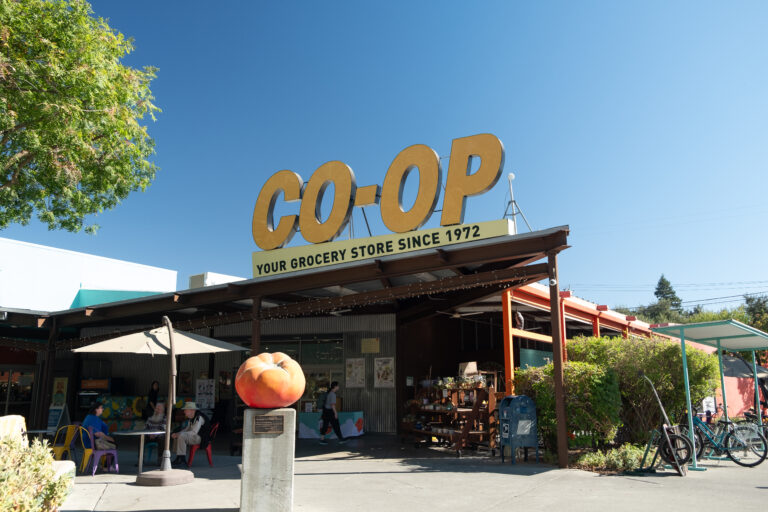
As of a few weeks ago, security guards equipped with gear — including tactical vests and tasers — have been present at the entrance of the Davis Food Co-op, a cooperatively owned grocery store in Downtown Davis. 

“This partnership with the security company we selected has allowed our staff to refocus on their roles while creating a safer environment for everyone,” a statement released by the Co-op reads. 

However, rather than harboring a safe shopping environment, this decision has sparked fear among many community members in Davis. 

About a month ago, a petition titled “End the Militarized Security Presence at Our Davis Food Co-op” was released. It has now garnered over 250 signatures. 

One of the organizers of the petition, who wishes to remain anonymous for security reasons, explained that the presence of security officers doesn’t necessitate feelings of safety. 

“When you’re asking the question about safety, and you do a poll or ranking of what matters to community safety, to families, to friends, you’re often looking at things like shelter, food, income,” the organizer said. “Policing is largely last on that list. And so when we have this modern urge or instinct to equate safety with policing, I think there’s a massive misstep. It perverts the idea of what safety generally means to most of us on the ground level.” 

As another organizer of the Davis Food Co-op petition explained, the decision to hire equipped security personnel may be considered especially unsettling in light of the role police forces have played in today’s political climate.  

“There’s this kind of irony when you enter a space that’s supposed to be for the public good — supposed to be nurturing, providing care and food supply — and then all of a sudden you’re having flashbacks or your cortisol levels go up because you’re seeing the same kind of equipment that was used on your communities,” the organizer said. 

They continued, citing recent United States Immigration and Customs Enforcement (ICE) raids as an example. 

“People are enduring these raids that are happening especially in city centers, by ICE agents, who are a lot of the time people who are not batched, and might as well be security guards with the same type of equipment or tactical gear,” the organizer said. “[Many] fear leaving their houses or [are more] watchful for their families, and then all of a sudden, they enter a space at Davis and the same type of thing is there.” 

The petition calls for the removal of the security personnel, the introduction of workshops and programs to facilitate increased community outreach and input into security decisions, de-escalation training for Co-op staff and more transparent communication about where the Co-op feels security is lacking and how this can be better addressed by the local community. 

As a third petition organizer, who also chose to remain anonymous, pointed out, the issues the Co-op has cited as reasons for their decision are likely symptoms of larger issues. 

“Some of the issues that the Co-op might be experiencing [may] also be [symbolic] of bigger systemic things going on in Davis,” the organizer said. “There [are] a lot of financial resources available among those three groups [city, county resources and the resources of Co-op patrons] to help some of our more vulnerable neighbors who might be in a situation where stealing food or sleeping outside of a Co-op [are their only options] — which is probably not anyone’s first choice.” 

They continued, asking how the money put toward security could be better utilized to benefit community members. 

“Loss prevention is a reason given for hiring security, [which may] indicate that people have needs that aren’t being met,” the organizer said. “Maybe the Co-op could instead put more funding into programs to help people get [what they] need. What are the possible ways the Co-op could use the funding they’re using on security in a way that actually helps people in vulnerable positions, [rather than] criminalizing or intimidating them?” 

Communication with the Co-op is currently underway. On Sept. 4, 2025, Samantha Conselman, the president of the Davis Food Co-op’s board, contacted the petition’s email address, dfcpetition2025@gmail.com, inviting members to voice their concerns at the Sept. 8 board meeting. 

During the meeting, a handful of speakers addressed the Co-op board regarding these concerns; several others submitted written statements. While it is currently unclear what, if any, changes the Co-op will make, the organizers are hopeful that their concerns will be heard.

As one of the mentioned petition organizers pointed out, as a cooperatively owned store, this communication is an essential part of the Co-op’s mission.

“The Co-op is a community-owned, member-owned grocery store, so it feels really important that that democratic process [takes place] and members of the community are consulted when ethical and values-based decisions are made,” the organizer said. “We’re really hoping that the conversation can continue. One of the seven co-operative principles is ‘concern for community,’ and I just don’t feel like we’re seeing that in this decision at all.” 

For those interested in signing or reading the detailed demands, the petition can be found at https://www.change.org/p/end-the-militarized-security-presence-at-our-davis-food-co-op.


Written by: Laila Azhar — features@theaggie.org 

Summer of screams

A review of this past season’s most exciting horror releases.


By BELLA PETERSON — arts@theaggie.org 


This summer, we’ve seen no shortage of releases in the horror genre — both returning titles and newer stories. With this fresh surplus of movies for horror fans to enjoy, it’s difficult to know where to begin. Here’s a highlight of which ones deserve a watch.


“Sinners” dir. by Ryan Coogler 


In April, we saw arguably the most loved film on this list as it rose to popularity: “Sinners.” The film was another creation of the praised mind of Ryan Coogler. Known for directing “Creed” and “Black Panther,” Coogler is no stranger to delivering amazing movies. To no surprise at all, his take on the horror genre was instantly embraced. It was truly satisfying for horror fans to get a Southern gothic tale as well put together as “Sinners,” taking place in 1932 along the Mississippi Delta. The film follows twin brothers Smoke and Stack, alongside their younger cousin Sammie, as they navigate the opening of their own business — which comes to be disrupted by both vampiric and real life forces of evil. 

The movie is a masterclass on establishing connections between characters with a history that goes beyond the film’s content — relationships that feel both real and heartwrenching in their nature of complexity. The film featured a variety of characters and well-written villains, creating a cinematic atmosphere that is so efficiently built to the viewer’s experience. With new releases, it’s not always a guarantee that the cast of characters will each have a unique performance, but this time it seems they nailed it. The film’s performance in the box office proved the genius that comes with its original storytelling. Not only does this film serve as a thought-provoking horror, but a solid summer thrill with its hot Southern setting and mix of real-world fears with supernatural powers. 


“Final Destination: Bloodlines” dir. by Zach Lipovsky and Adam Stein 


 Following “Sinners” was the return of a brutal cult classic series: “Final Destination: Bloodlines.” With the revival of such a renowned series, there is no shortage of risks; many films lose their identity in the hands of the wrong people or sometimes have too many ambitions for one movie. Luckily, the film managed to fall right back into the rhythm of its previous installments. As the legend of “Final Destination” goes: after an individual receives a premonition of a fatal catastrophe and intervenes to save lives, death returns to reclaim the survivors’ lives one by one through unnatural, gruesome events.  

The film manages to surprise its audience by revealing the method of how their universe works. Being a part of that audience, I can attest to its impact — as it didn’t stray away from its roots. The fresh reintroduction to the series reignited the faith in future installments the franchise lost some movies ago. This movie serves as a positive sign for other horror series that have quietly left the scene, almost forgotten. Overall, it proved to be a fun film to kick off the summer. ”Final Destination: Bloodlines” was welcomed back into the arms of its fans with the hopes the series will continue to live on.


“Bring Her Back” dir. by Danny and Michael Philippou


While the Philippou brothers may be new to filmmaking, it isn’t obvious by the examples of their work so far. The pair broke out onto the film scene with their first work “Talk to Me” back in July of 2023, receiving raving reviews. Although many eager fans were expecting another installment of the series, they were instead met with a wholly new title early this summer. “Bring Her Back” took many horror fans by surprise, bringing about a unique story that inspires no shortage of real life discussions about problems people face every day — such as flaws within the foster care system along with themes of abuse and manipulation. The movie follows two siblings, Andy and Piper, after the tragic death of their father. When moved to a foster home, malevolent forces reveal themselves in the foster mother, Sally, and quiet foster brother, Oliver. 

While this film may not have gotten the same attention as “Talk to Me,” it still manages to impress this viewer, as it feels just as emotionally harrowing as it is spine-chilling. The movie allowed for viewers to empathize with all characters involved; even the antagonist, a mother violently grieving the early loss of her daughter. A major mistake many studios fall victim to is making the characters you’re supposed to root for unlikeable — thankfully, “Bring Her Back” is not one of them. The film takes on a similar theme found in the Philippou brothers’ previous work: grief. Many described their first film as brutal, and this new story was no different. It seems the brothers have once again proven themselves worthy to stand amongst the greats of the horror genre. 


“28 Years Later” dir. by Danny Boyle  


Another returning name to the game was “28 Years Later.” The film entered into popular discussion with its fascinating trailer, which featured a chilling voice over. With the promise of this film came the confirmation of future installments to the series, which isn’t common in the resurgence of once-forgotten horror names. The movie tells a similar tale to its predecessor: what it takes to survive in a world that has since fallen. 

Taking place on an island far from the mainland, we follow the young Spike, a character who searches for a hopeless answer to his mother’s unknown disease amidst a virus that has taken over all of Europe. While promising, the film could’ve done more establishing its presence, as the first half-hour or so felt more like an informational dump that could’ve been sprinkled throughout the movie to allow for better flow. While the introduction of new characters breathed new life into the series, we’ll hopefully see more familiar faces in the upcoming installments as well. The film, having taken some inspiration from other zombie media examples and even being used as a bar for others, has nevertheless proven it has a place amongst the horror icons. 


“Together” dir. Michael Shanks


Rolling out in the final moments of summer was “Together,” a major curveball on the scene. Those that did get to see this film in theaters might have heard it faced a controversial entrance; Despite this, “Together” manages to be an ingenious new take on the genre. Many debated its validity due to the amount of “gross” content, but “Together” owns its identity under the subgenre known as “body horror.” Not only does this film manage to be witty and confident in its identity, but it’s emotional in a number of ways that most horror fans will appreciate. 

This film featured a main couple being played by real life pair, Dave Franco and Alison Brie, which allowed for the film to have an enriched portrayal of their dynamic. The film depicts the modern day issues many couples are faced with, amidst a supernatural conflict that builds between the two as their bodies become physically entwined. This is a must watch for any horror fan looking for something new that can take them by surprise. “Together” embraced its own brand of weird — and it definitely paid off, according to horror fans. While late to the summer scene, it’s very deserving of its place on this list alongside the other films mentioned.


“Weapons” dir. Zach Cregger

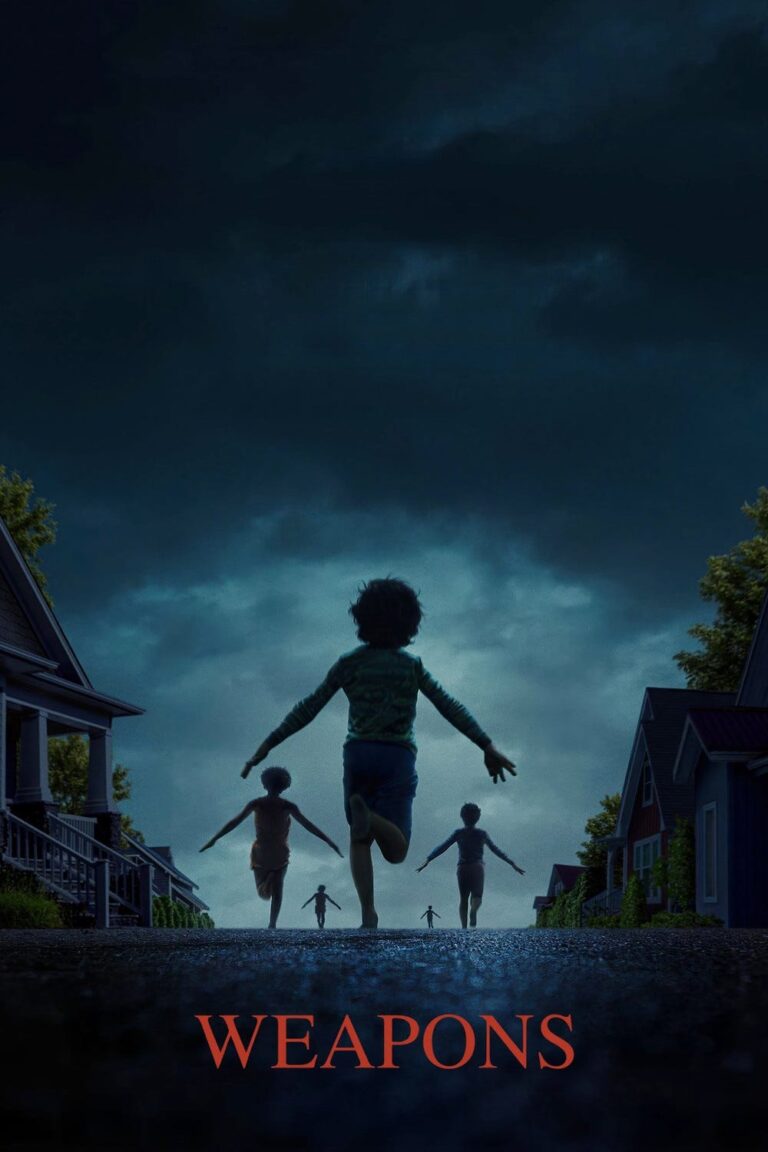
Finally we land on perhaps the second most popular of this list: “Weapons.” This film was directed by Zach Cregger, who previously released another horror film, “Barbarian” (2022), to mixed reactions from fans. The film follows young teacher Justine Gandy as she tries to uncover the motive behind the disappearance of her third-grade class after they mysteriously, simultaneously ran out of their houses at 2:17 a.m. the night before. “Weapons” features a star-studded cast whose individual performances allowed for the characters to feel real. The film didn’t shy away from any comedic beats, giving the audience the full experience of what Cregger does best. Much like its predecessor, “Weapons” takes on a pacing that goes against the status quo of most horror films. 

Personally, however, it felt that the film could’ve been a stronger product had it included a more fleshed out villain. Despite the antagonist’s iconic presence, which is already undisputed within the community, her character would have benefited from a more unique motive. With so much excitement surrounding the film, it left too much room for disappointment. These issues aside, no one can deny that this film was a solid ending to this year’s summer of screams, receiving much praise from both regular movie goers as well as the horror junkies looking for a new thrill. 


As many people already begin to move on to fall, now is the perfect time to catch up on any of the movies listed above that you might have missed in theaters — all now available to rent or buy on multiple platforms, with “Sinners” and “Final Destination: Bloodlines” now streaming on HBO MAX.  

Written by: Bella Peterson — arts@theaggie.org

A look into Morning Sign Out at UC Davis

This club works to simplify complex scientific and medical research into more accessible articles for the general public


By MADELINE HASS — science@theaggie.org


Since 2020, the undergraduate-led branch of Morning Sign Out at UC Davis has been dedicated to publishing quarterly articles detailing recent science and medical news. This branch is a part of the larger network of Morning Sign Out chapters that can be found at universities across the country. 

The main goals of this online publication group relate heavily to their namesake, with the phrase “sign out” referring to the healthcare process of medical professionals accurately and concisely communicating information in between shifts. Their group aims to present new research publications in an engaging and easily accessible format.

Varsha Vijayakartik, a third-year human biology major and the co-president of Morning Sign Out at UC Davis, remarked on their mission statement and what it means to their group. 

“Our mission statement relates a lot to our name; the sign out part relates to — in the healthcare field — when one shift or one team will sign out their patient and sign out their information to the next shift so that there’s constant communication ensuring things are operating smoothly,” Vijayakartik said. “I think that this [is] an application of that; we’re trying to sign out certain types of information onto a community that might not necessarily have good access to it.”

The articles published highlight the main points of the research they are focused on in a manner that doesn’t require readers to have previous knowledge. They are constantly working to bridge any gaps between the scientific community and the general public through articles that highlight the key takeaways in an easily digestible and readable way. 

Khushi Jain, a third-year genetics major and editor for Morning Sign Out, described this in more detail.

“I think the objective of the group itself is my favorite part,” Jain said. “We’re taking research articles and making them simpler while not losing the main interest topic. I think even coming from a STEM background it can be very easy to not get the key idea of a research paper but instead get lost in the literature and health-related jargon. So, I can’t imagine how hard it would be for people who don’t have that literacy or don’t have access to that type of knowledge to be able to break down these types of papers.”

Student writers will each work on one or two articles to be published per quarter. They are allowed complete freedom and autonomy in selecting the topics for their articles, as long as the research publication they are basing their writing on is considered to be a primary source. This permits and encourages a wide variety of articles to be published, thereby allowing for a diverse range of accessible scientific information to be offered to the community. 

Harriet Gensler, a second-year biochemistry major and co-editor-in-chief of Morning Sign Out, spoke on this.

“We don’t restrict topics,” Gensler said. “The only restriction is that writers have to pick a scientific article that has to be an original primary research article. We prefer them to be relatively recent, otherwise there’s a plethora of topics writers can choose from.”

Vijayakartik further expressed similar sentiments. 

“We just want writers to be passionate about the topic they choose as that will come through in their article,” Vijayakartik said. “Topics could even be a humanities-based analysis of science. So, something like a science and technology study about the history and study of science; It doesn’t have to just be STEM-related, as long as the research behind it is purely more empirical.” 

A major focus of the Morning Sign Out at UC Davis group is to increase science literacy — amongst not just community members, but also club members, in addition to helping strengthen members’ writing skills. Within their group, the co-editors-in-chief will often run workshops centered around this goal and offering writing insight.

Andrea Liu, a third-year global disease biology major and co-editor-in-chief of Morning Sign out at UC Davis, shed light on this.

“We don’t have any type of requirements or previous experience required for people wanting to join Morning Sign Out,” Liu said. “Instead, we are really focused on teaching people how to read, write and edit scientific articles. We’ll host in-person workshop events throughout the quarter to try to achieve this.” 

As time moves forward, this group hopes to continue providing the community with accessible science and medical articles and increase their impact and presence as a whole. 

“There are so many clubs on campus that it’s easy to get lost, so moving forward we hope to show more people what our club is about and who we are,” Liu said. “We’re working towards drawing more attention to ourselves from the community and people who could benefit from reading our articles.”


Written by: Madeline Hass— science@theaggie.org


Debating college students for fun and profit

0

UC Davis students discuss the popularity of online content showcasing debates on university campuses 


By LAILA AZHAR — features@theaggie.org


It’s a familiar scene by now: a well-known media personality stands confidently amidst a crowd of college students, as a well-meaning but perhaps slightly overconfident undergraduate attempts to articulate a point about gender identity or racial equity. 

The student stumbles, backtracks, reaches for the right phrase. The crowd jeers and boos. Phones are out. Later, the footage will appear online under the title, “Woke college student destroyed by facts and logic,” or perhaps, “College social justice warrior gets owned in debate.”

Online personalities from across the ideological map have found that debating their opposition makes for reliably popular content. 

Dean Withers, a popular livestreamer, often debates conservatives through TikTok Live. Jubilee, a digital media company with nearly 10 million subscribers on YouTube, has found success producing videos such as “1 LGBTQ+ Activist vs 25 Conservatives” and “Should the U.S. Deport Its Citizens?” 

College campuses are a popular battleground for these debates, and college students are a popular opponent. Popular political commentator Ben Shapiro is known for his debate-style online content, often involving college students. One of Jubilee’s most popular videos, with nearly 30 million views, is “Can 25 Liberal College Students Outsmart 1 Conservative?” 

Several of these debate-style videos have taken place at UC Davis, particularly in recent months. 

In 2023, Charlie Kirk, co-founder of the political organization Turning Point USA and the “1 conservative” in the aforementioned Jubilee video, hosted a Q&A session at UC Davis, posted to YouTube as “Charlie Kirk debates College Students At UC Davis.” 

This month, YouTuber and political commentator Brandon Tatum, otherwise known as The Officer Tatum, has posted videos including “Antifa Punks TRIED ME at UC Davis and FAFO!” and “Officer Tatum BATTLES HEATED Antifa Activists at UC Davis.” 

Some UC Davis students have reported being approached on campus by people with microphones and cameras to film similar content. 

As Sneha Manikhandan, a second-year neurobiology, physiology and behavior major, recalled, she and a friend were approached for a video as they were leaving the Memorial Union. 

“The interviewer asked if we would be willing to participate in a five-minute interview and when asked what it was about, we were told it was about relationships and our ‘icks,’” Manikhandan said. “The more the interview went on, the more controversial the questions got, diving into gay marriage, men wearing makeup and my political viewpoints. These were topics I was not prepared to speak about, given that I was misled as to what the interview was about.”

About a week later, Manikhandan’s friends began sending her the two clips from the interview which had been posted on TikTok and Instagram. 

“I don’t believe that my views were effectively communicated through the videos that the interviewer shared with his viewers as he clipped the segments of the interview that could be considered more controversial without giving the background of the conversation leading up to it,” Manikhandan said. 

Manikhandan reported that while one of the videos received supportive comments, the other was met with thousands of negative comments, including some expressing racist sentiment toward her. 

As students have pointed out, it often seems like the goal of these videos isn’t good-faith exploration of controversial issues, or even to persuade those with differing views. 

To Nicole Lee, a second-year political science major, the goal seems to be simply entertainment. 

“I worry about the people whose only way of being politically informed is through influencers,” Lee said. “It’s easy to see why people enjoy watching this content. It’s entertaining to watch people dunk on opinions you disagree with; It affirms your own beliefs and makes you feel smart. But that’s all it is: entertainment, not education.” 

Lee went on to detail reasons why this content may be considered unfair. 

“These people whose job is to talk in front of a camera debating a college student with no experience in the media is clearly unfair,” Lee said. “But even if it was a debate between two people on an equal playing field, the person with the camera still gets to edit the video and frame it however they’d like.” 

Emerie Elrod, a second-year cognitive science major, pointed out that the people who create this content are often intentionally inflammatory. 

“I don’t think the debates we see on TikTok are genuine,” Elrod said. “The end goal of these creators is to get as many views and likes as possible. Involving controversial topics makes viewers upset, therefore getting the video more engagement.” 

With this in mind, she recommends students ignore creators seeking out debates. 

“It’s not productive for anyone but the creators themselves when students engage,” Elrod said. “They ask questions that are meant to make us mad and discuss topics they know that the majority of university students feel strongly about. To engage with them is just giving them more power over you.” 

Manikhandan expressed a similar opinion and provided advice for those who want to engage in seemingly harmless questions on TikTok.

“The best way to engage in TikTok debates is to either not [engage] or understand that not everyone will agree with you,” Manikhandan said. “If I had seen that video, I would have also thought we were salty teenagers. Without the full picture, viewers can only see a glimpse of your character. I would suggest clarifying where the content would be posted, the exact questions/topics they plan on discussing, and their social media account they plan on posting the clip on, to gauge the end goal of their video.”

At the end of Tatum’s most recent video on the UC Davis campus, a student who had been arguing with the YouTuber highlighted the artifice of the exchange, predicting how the YouTuber will depict him. 

“You have this whole fucking set up where you’re farming clips, you’re farming this engagement,” the student said. “But I know, in the editing room, you’re gonna say look, look how these people are shutting down conservative voices on campus. That’s your whole game. It’s been played out. It’s been done for like 10 years.” 

“You’re playing in the game with me,” Tatum said in response. “You’re complicit.” 

The moment is not presented as a reckoning, or even a critique. The student’s comments are not examined, nor are Tatum’s. Instead, the exchange becomes the dramatic finale of a video titled “WOKE UC Davis Student CALLS ME A N*ZI Then CRASHES OUT!” — another installment in a genre that, as these UC Davis students have pointed out, funnels political discontent into bite-sized entertainment. 


Written by: Laila Azhar — features@theaggie.org

I came to Davis for a degree but stayed for the music

0

Local Davis talent makes the music scene in this small town unforgettable 


By JHANA RHODES — jsrho@ucdavis.edu


Nobody does the music scene in California quite like Los Angeles and San Francisco. Admittedly, as an LA native, I am biased. However, it’s crucial to get one thing clear from the start: The best scene and the best music are not the same thing. While the quality of music is a matter of taste, what is not debatable is the sheer amount of live music, diverse cultures and talent constantly emanating from every corner of LA.

The ease of finding live music is a constant perk of living in a big city like LA. As a creature of habit, I often had the privilege of spontaneously attending various music shows. Whether it was joining thousands of fellow music lovers at the Hollywood Bowl or enjoying legendary drag queen performances at Hamburger Mary’s, finding out about these events didn’t require a secret handshake or relying on a friend of a friend — a simple online search did the trick.

Moving to Davis changed everything. Gone were the days of spontaneous concert hopping, replaced by the subdued atmosphere of quaint, farm-town life and a biweekly rotation of the same five bars, which (while superb) constitute the majority of the nightlife in Downtown Davis.  

 I quickly learned that I needed a more intentional approach in Davis to discover live music. This meant hearing about local artists from glimpses of flyers on clustered bulletin boards or catching wind about events from classmates a week after they happened. Ironically, it was through this very understated, almost coincidental way that I first heard the name Homsy.

Homsy, also known as Noah Homsy King, a fourth-year sustainable agriculture and food science double major, takes a unique approach to DJing. His mixes interweave a range of genres encompassing African, Latin and Brazilian music, seamlessly blending tracks into journeys that often begin with melodic, silky and richly textured sounds. Homsy’s music echoes a deep appreciation for the diverse sounds within each genre.

Listening to Homsy describe his production process revealed his thoughtful approach to blending global rhythms. His experimentation with different sounds (at least, from my understanding) shows a willingness to bring together diverse and cultured music — a quality that I believe to be essential in a good DJ. His mixes are often played at local events, such as his recurring night at Sophia’s Thai Bar, a lively atmosphere where students can experience amazing music.

With Homsy’s upbringing and experiences attending an international school in Uganda, it is clear that he has fostered a unique and personal connection to his mixes. As Homsy noted himself, he feels “drawn to people from different places” and finds a sense of home in the culturally diverse environments he experienced growing up. He continues to see places like the Tri Co-ops in Davis, where he resides, as providing a similar sense of culture and community. Homsy is an artist who clearly cherishes culture, a quality that shines through both in his demeanor and music.

While Homsy has undoubtedly made his mark, he credits the support of the wider Davis music scene for fostering his creativity and growth as a musician. Many of Homsy’s first DJ sets were with the DRC Creatives, formerly Davis Rave Company (Co.), a student-run organization at UC Davis that focuses on creating and hosting Electronic Dance Music (EDM) events for the local community. He also mentioned playing at a few Five Percent Studios events, an organization that focuses on creating accessible and impactful art experiences by and for the community. And, of course, Homsy made sure to shout-out the “.sody Collective,” another creative group at Davis who, quite frankly, produces some of the most visually stunning content in the city. I wouldn’t have discovered half the local talent in Davis if it weren’t for their videos and events.

As Homsy recently graduated last spring, writing about his artistry feels like a meaningful way to acknowledge one of the many individuals who have added vibrancy to our campus. Now that my time at Davis has also come to a close, I realize how much artistry, life and culture are a part of Davis. For a long time, I was so focused on finishing school, graduating and moving back home to LA that I missed out on what Davis has to offer.

Whether it be the fantastic performances hosted by DRC Creatives or just bar-hopping in Downtown Davis, having the opportunity to interview and get to know organizations and artists like Homsy makes me wish I’d spent just a little more time experiencing the abundant talent here at Davis.

That being said, if you’ve got more time before you hit that graduation stage, don’t miss out on some of the best years of your life. Check out Sophia’s Thai Bar, see the Rocky Horror Picture Club perform and hike at Putah Creek. Even if it is harder to come by, the search is worth it; experiencing the music, life and culture at Davis is better than anything a big city can offer.

If you’re a fourth-year, I hope you’ll take the time to really immerse yourself in Davis culture — the musicians, the events and the community. I hope you leave Davis with more (good) memories than you can count. As we all venture into the world, the sounds and experiences created by the Davis community have undoubtedly formed a part of our collective memories. 

As this is my final piece for The California Aggie, thank you for reading. I hope you continue to support and celebrate the unique voices that make Davis a special place. Best of luck, Aggies!                       


Written by: Jhana Rhodes— jsrho@ucdavis.edu 


Disclaimer: The views and opinions expressed by individual columnists belong to the columnists alone and do not necessarily indicate the views and opinions held by The California Aggie.

Davis Cemetery honors fallen soldiers during Memorial Day ceremony

0

Keynote speaker speaks on the importance of Memorial Day as a holiday of healing that transcends divisions


By MATTHEW MCELDOWNEY — city@theaggie.org


On Memorial Day, May 25, 2025, the Davis Cemetery held a ceremony in remembrance of soldiers who had fallen in active duty. Veteran speakers called for the Davis community to honor their memory by acknowledging the sacrifices these soldiers made for what the United States stands for. 

Supervisor Sheila Allen from the Yolo County Board of Trustees offered her condolences to those observing Memorial Day with loved ones in mind.

“Knowing that when we lose one soldier or one nurse or one person serving our country that it leaves a hole not only your heart, but also at your table and at your Thanksgiving time, [I want you to] know that this Memorial Day I am thinking of you, and I remember you,” Allen said. 

In her speech, Allen emphasized the importance of saving time and space for these fallen soldiers in order to ensure that not only their lives are remembered, but that their cause is not to be forgotten as well. 

Jessica Smithers, the district superintendent of the Davis Cemetery, described the significance of hosting this time of remembrance.

“I think a lot of people tie Memorial Day with backyard barbeques, and I think that […] the purpose of Memorial Day is really to honor those that were lost, […] and having it at the cemetery is really important, because we have almost a thousand veterans interred [buried] here,” Smithers said.

The cemetery district hosted one of their staff members as the keynote speaker for this significant ceremony, according to Smithers. 

Artemis Riley, a cemetery groundskeeper and a U.S. Army Veteran who served in the Ordnance Corps, delivered a speech on the cause that U.S. soldiers have set out to protect. 

“Their courage and commitment about something bigger than themselves — they fought for a country where every voice could be heard, where freedom and justice flourish,” Riley said. “We owe it to them and to each other to remember that spirit, to find common ground, to respect the freedoms they secured, even when times are tough.”

Riley called back to the origins of the holiday as Decoration Day, where in the aftermath of the Civil War, Union and Confederate soldiers were laid to rest alongside one another at the Arlington National Cemetery in Virginia as an act of national healing.

“We see tension in our politics, distrust in our institutions and uncertainty about our national identity,“ Riley said. “And yet, just like in the aftermath of the Civil War, we are called to remember what binds us is far greater than what divides us.” 

Bridging the divide in the U.S. is all the more important as these tensions still feel palpable today, according to Riley. While the country is not reeling from the same tragedy as it had in the wake of the Civil War, Riley emphasized the pressing importance of reconciling the divisiveness that had once split the country.

“We’re not just honoring the past, we’re reminding ourselves of our duty in the present to learn from history, to find unity where it seems scarce and to never forget the price that has been paid, not just once, but again and again for our freedom,” Riley said.

To close their speech, Riley called upon the Davis community to remember and reflect, but also reunite.

“Let us live with gratitude, respect and unity,” Riley said. “Let us support our veterans and their families, not just today but everyday. And, let us remember that true freedom requires all of us to work together, to listen, to understand and to care.”

Written By: Matthew Mceldowney city@theaggie.org

Davis Faculty Association organizes to protect academic freedom amid federal threats

0

‘This isn’t only about students — it’s about all of us’


By KHADEEJAH KHAN — campus@theaggie.org


Facing federal threats to academic freedom and funding, faculty have taken it upon themselves to advocate for their rights, shared governance and academic freedom through the Davis Faculty Association (DFA).

DFA belongs to the Council of University of California Faculty Associations (CUCFA), which emerged in the 1970s with UC Academic Senate faculty from UC Berkeley. They believed that the UC system alone could not address issues relating to faculty compensation in a period of rising inflation. This turned into faculty mobilization at Berkeley and subsequently all UC campuses. 

Newly emerged faculty associations then drafted the 1979 Higher Education Employer-Employee Relations Act (HEERA), which allows for employees to seek redress for violation of labor rights. 

Today, DFA board member and UC Davis History Professor Stacy Fahrenthold believes DFA’s work continues the lineage of faculty advocacy that emerged in the UC.

“We function as advocates,” Fahrenthold said. “We function as watchdogs and protectors of faculty rights in a context where there really isn’t another body that’s doing precisely those things.”

In the past few months, DFA has taken part in on campus actions, from joining CUCFA’s Emergency Day of Action on March 19 at the Memorial Union Quad and hosting a “Know Your Rights” panel at the UC Davis School of Law as part of the April 17 National Day of Action

DFA operates as an autonomous group independent of the university’s internal infrastructure, able to write public letters and engage in lawsuits. On March 28, DFA issued a letter to UC Davis administration, calling on them to protect students, staff and faculty from privacy violations and political targeting.

One of the biggest threats to academic freedom is cuts to federal funding based on viewpoint retaliation, according to UC Davis Law Professor Brian Soucek. A trend mirrored across private and public institutions across the nation, Soucek believes these threats are especially harmful to the mission of the University of California as a public institution made to serve the interests of all Californians. 

“At the University of California, serving the needs of the public as diverse as California’s is a central part of our mission,” Soucek said. “Some of the attacks from the current administration on diversity, equity and inclusion in particular, really go to the heart of what we see ourselves as doing here at the University of California in a way that it might not go to the heart of what Harvard or Columbia [University] or some other [private] school sees itself as doing. We would be a very different university if we didn’t care about the extent to which our teaching and research is reaching a diverse public.”

In April, DFA also joined CUCFA and the American Federation of Teachers (AFT Local 1474) in their letter calling on the UC to address student visa revocations. That same month, DFA joined CUCFA, alongside 30 faculty associations nationwide, in submitting an amicus brief in American Association of University Professors (AAUP) v. Rubio to “halt the ideologically-targeted deportations of students nationally.”

As a Professor of History and Middle East Studies, Fahrenthold sees how fears of visa revocations enter the classroom through the ways in which students engage in critical and candid conversations about Palestine and Israel.

“Revoked visas create a pervasive and hostile climate of fear,” Fahrenthold said. “It’s not just about terrorizing the people who find out that their visas have been revoked. It’s also about the way that these revocations impact the work that we do as faculty. This isn’t only about students, it’s about all of us.”

The DFA is also greatly concerned over attempts to silence pro-Palestine activism as part of the Donald Trump administration’s investigation into allegations of antisemitism in higher education. Specifically, the administration has conducted operations under Title VI, a law that prohibits discrimination on the basis of race, color and national origin in programs and activities. 

As AAUP wrote in a brief on the investigations, Title VI does not require higher-education institutions to provide information of individual students and faculty to the federal government, and that sharing information may violate the first amendment rights of students and faculty. 

As part of a federal Title VII investigation, which prohibits employment discrimination, the University of California Office of the President (UCOP) disclosed personal and demographic information of over 850 UC faculty members after being subpoenaed by the U.S. Equal Employment Opportunity Commission (EEOC) in late March of this year.

“The EEOC subpoena shows brazen disregard of academic freedom and shared governance and reflects a broader effort by the federal government to stifle dissent and pit faculty members against one another,” CUCFA said in a written letter

The faculty whose information was disclosed signed one of two letters, with the first being an open letter to the UC Berkeley community expressing concern about “recent events in Israel and Gaza.” The second letter was UC-wide and alleged that faculty and students were facing antisemitism amid students’ “anti-Zionist” protests.

A similar incident occurred at Barnard College in April, when faculty received texts by the EEOC to ask if they were Jewish. 

Soucek and other professors speculate that both the UC and Barnard investigations are part of an attempt to identify complainants or witnesses of alleged campus antisemitism in federal investigations. Soucek is especially concerned with their “one-sidedness,” rather than the investigations themselves.

“What is strange and problematic is the fact that the EEOC and the Trump administration’s so called ‘Antisemitism Task Force’ are only focused on allegations of antisemitism on campus without at all, it seems, caring about equally problematic, if not more problematic, allegations of Islamophobia and anti-Muslim animus and actions,” Soucek said.

Facing internal threats, faculty are also organizing to protect UC shared governance — the model in which faculty, staff, students and administrators participate in decision making. 

In a January 2025 Regents meeting, Regent Jay Sures said faculty governance “is not working.” Fahrenthold is concerned how eliminating shared governance would grant outsized power to the Regents, the majority of whom are non-elected governing members of the university. 

“[Ending shared governance] would be a death knell of the American university,” Fahrenthold said. “It would be the end of our competitiveness as the leading public institution in the United States. It would be the end of a public university.”

When asked about the future of shared governance, a UC spokesperson said in an emailed statement that the UC is “committed to our shared governance model and our partnership with faculty across all campuses” to serve California, deliver patient care and advance academic freedom. 

As faculty towards the future of the UC with new President James B. Milliken, Soucek hopes to see the UC lead in protecting the principles that define the public university. 

“The University of California, as the greatest public university in the world when you combine the 10 campuses together, is just in a unique position to be leading the way on these kinds of issues,” Soucek said. “I think one thing that you have to take away from the example of Harvard these last few weeks is that people are thirsty for that kind of resistance. People are eager to see an institution standing up for itself and showing the world why it matters and why the attacks against it are just utterly un-American and unconstitutional.”


By Khadeejah Khan — campus@theaggie.org

Do vision boards really work?

Investigating the beloved manifestation method that everyone’s talking about


By NATALIE SALTER—arts@theaggie.org 


Since its creation in 2010, image-collection social media site Pinterest has risen to a position of immense popularity in the culture. A visual-focused platform that allows users to create “boards” full of carefully curated pictures — from outfits to artwork to celebrity Instagram posts — Pinterest has a strong aesthetic appeal and an invitingly simple interface.

In recent years, one of the most popular uses of Pinterest’s board system has been for a very specific kind of curation: vision boards, which intentionally string together pictures and mantras representing the sort of life the creator dreams of living. Though vision boards can be made in a variety of mediums, Pinterest has found itself to be the most popular choice for this sort of visual manifestation.

Open a vision board on Pinterest, and you may find images of one or many of the following: tropical beaches, concerts, pilates routines, designer outfits, penthouses, flowers in the outstretched hand of a romantic partner and glassy-clean skin. Together, they weave a picture of an idealized, perfect life of boundless blessings.

However, the core purpose of a vision board is not simply to dream up an ideal life. When one makes their vision board, they do so with the intention of “manifesting” it into reality. The idea is that by having specific images in mind of what one wants to accomplish, they effectively solidify that it will happen in real life.

You might raise an eyebrow at that statement. After all, spending a few minutes putting images of London on your Pinterest board doesn’t guarantee you a flight over. It might seem more like wishful thinking than actual manifestation.

But do vision boards have any real sway over your life, or are they just a playful pastime? It’s worth investigating, because if the former is true, and a collection of pretty images can bring your dreams to life, it’s certainly worth a try.

The influencers who sing their vision boards’ praises claim that vision boarding creates intention, a sort of unconscious psychological drive inspiring you to make those dreams come true. For example, if you save a slew of concert pictures to your vision board, you’ll supposedly be more subliminally driven to search for tickets and spend on them.

The visualization aspect of vision boards (after all, it’s in the name) is worth considering too. Seeing visual proof of the things you want, like a stylish hair color or a vacation in France, makes them seem more achievable and tangible in your mind. Instead of vague ideas, you are given actual images of your dreams, thereby validating them and making them seem within reach.

All of this psychological work, however, doesn’t substitute for the real costs and demands of making certain goals come true. It is very important to consider that the influencers who insist that a vision board helped them move to Japan are intentionally leaving out the financial privileges and personal freedoms that actually made such a leap possible.

It’s also worth noting that some vision boards encourage you to fixate on superficial aspects of yourself, a mindset that can ultimately be very harmful as it inevitably perpetuates insecurities. It is important to not let yourself feel obligated to fix your physical appearance before enjoying life to the fullest — it’s happening now, and you deserve to live it fully with or without perfectly primped hair.

As sweet as it seems to imagine that your Pinterest board can bring your dreams to life, a crucial truth is that your life is dependent on you. Not every opportunity will magically fall into your lap, and not every dream will bloom without causing you to break a sweat. Most wonderful things take time and effort to create, and not all of it is accessible to begin with.

This truth shouldn’t dampen your spirits or prevent you from throwing together a cute, little collection of images you want to make true. Vision-boarding can help make your dreams feel more real, and even if they don’t leave your board, it’s still a fun way to express what you want to chase next in life. 

Written by: Natalie Salter—arts@theaggie.org

UC Davis students spend more time appreciating the Arboretum in warm weather

Students reflect on the atmosphere of the Arboretum and what they love about it 


By AMBER WARNKE  — features@theaggie.org


UC Davis students flock to the campus’ beloved Arboretum in the spring and summer months, taking advantage of the warm weather and flourishing plants amongst the Arboretum’s scenery. When the rainy winter season is over, many students seek to spend as much time in nature as possible. 

In the spring, many students may be especially keen to maximize their time in the Arboretum because of the looming summer break, when countless Aggies leave Davis for three months. Other graduating students may be trying to make the most of their time in the Arboretum for the last time, as they prepare to move out of Davis after commencement. 

Noah King, a fourth-year sustainable agriculture and food systems major, visits the Arboretum often, where he appreciates being able to spend time alone in nature. 

“I like it because it’s a natural space on campus, and it has some intimacy built into it,” King said. 

This can be especially beneficial to students who live off campus and spend long days in class, as the Arboretum can give students a quiet and calm place to decompress. 

Andrea Barreras, a third-year music and communications double major, finds the Arboretum to be a relaxing environment and specifically appreciates the sensory experiences she is able to have in it. 

“Coming from someone who came from a really dry area, I think the smell and the sounds are the most enjoyable part of the Arboretum,” Barreras said. 

Many students benefit from the many rich sensations they can experience in the arboretum, which hosts over 100 plant species in a rainbow of colors, as well as over 135 bird species, which can be heard at all hours of the day.

One bird Barreras is specifically drawn to in the Arboretum is the duck. Barreras is a member of the alto saxophone section in the UC Davis marching band, which has adopted the duck as their section mascot. 

“I feel like every time I see a duck now, especially on campus, it [reminds] me of community because of how the altos use ducks as a symbol,” Barreras said. “Even students without these ties, however, can appreciate the beauty of these creatures, who live in the Arboretum year-round, as opposed to many wild duck species who migrate in the winter.” 

Forest Sabbath, a second-year anthropology major, has also found himself drawn to the Arboretum ducks, which he visited particularly often during his first year as his dorms were close to the Arboretum. 

“I love the ducks,” Sabbath said. “That was like one of the first things I bonded with someone over in Davis.”

Sabbath not only appreciates the Arboretum’s proximity to wildlife, however, but also in how it gives students exposure to greenery, which he believes is very important to students’ mental well-being. 

“It’s important to have green spaces, because humans forget they exist unless they get to see them,” Sabbath said. 

This sentiment is supported by research, as various studies have shown that green spaces in cities lead to less anxiety and mental health problems. In this way, even students who don’t have the time or the means to go hiking or camping in national parks can still take advantage of the benefits of the nature around them. 

As students prepare for the end of the quarter, many remember that the Arboretum can be just as nice a study spot as the library and just as nice a place to have lunch as the Memorial Union. Even spending short time periods in the Arboretum can help students to feel more calm, centered and present as they make the most out of the beautiful scenery present in the Arboretum. For students new or returning to campus, remember that the Arboretum is flourishing in its summertime beauty — for anyone who wants to visit. 

Written by: Amber Warnke — features@theaggie.org