55.5 F
Davis

Davis, California

Tuesday, December 23, 2025
Home Blog Page 21

Let go of what you know

0

Taking a leap of faith outside of your comfort zone can lead you to something beautiful


By MOLLY THOMPSON – mmtthompson@ucdavis.edu 


There’s a certain solace in predictability. It’s nice to settle into the familiarity of routine, to bask in the warm continuity of a comfort zone. 

Newness is the opposite; it’s sharp, dark and cold. Out of self-preservation, of course we desire to avoid it. We’re afraid of the dark simply because we don’t know what could be lurking in the corners, not because the darkness itself is particularly threatening. It’s the unknown aspect of it that scares us — for all we know, our worst nightmares are waiting in the shadows. 

We avoid new things for the same reason; we simply don’t know what threats they could hold. On the other hand, we know what the routines we’ve built for ourselves look like and we know what to expect — we know that they’re safe. 

But the second we stray from that familiar cycle, there enters an element of risk. Suddenly, in the face of the dreaded abyss of the unknown, we can no longer trust the stability that we’ve relied upon for so long. 

But that is an inevitable part of life. College is one of the most prominent examples of this instability; everything you’ve known your entire life is uprooted all at once as you’re shoved into a completely novel lifestyle. You no longer have the sanctuary of home to retreat to. Your life as you knew it is gone and you’re left to traverse the dark, scary newness without any idea of what you’ll encounter within it. 

But, as much as that darkness could house something insidious, you just as soon might find something beautiful. The thing about the unknown is that it can end up becoming wonderful, just as easily as becoming unpleasant. 

Consistency is inherently neutral. While routine can feel safe and comfortable, it has a ceiling for adventure, excitement and joy. When you stay in your comfort zone, you protect yourself from unknown threats while also closing yourself off from potential opportunities. It’s a trade-off — you sacrifice the possibility of exhilaration and thrill for the guarantee of not encountering something scary. 

There’s a common saying that life is what happens while you’re busy making other plans. This rings true. If you stay in your comfort zone, you’re essentially letting all the potential shooting stars pass you by because you’re afraid of being hit by an asteroid. While this sentiment is valid to a certain extent — there’s a lot out there that is truly scary and worth avoiding — it’s so easy to want to hold onto the predictable normalcy of what we know. But at the same time, life without risk is frankly boring. 

Of course, this relationship between safety and risk is not a binary situation — you’re not flipping a coin for “good” or “bad.” Within life, you’re inevitably going to find elements of both. When you let go of that familiar routine, there will be setbacks and hardships. However, if you trust the process, letting go of routine can also result in discovery, sunshine and bliss. In other words, if you always stay inside, you’ll never get stung by a bee or sunburned. But you’ll also never see butterflies, city skylines or a blue sky through sunlight leaves. 

You can hold onto what you know and stay safe from the unknown, but, in doing so, you’ll miss out on what makes life worth living. Jumping into the deep end is intimidating and hard, but it’s worth it for what you could find when you reach the bottom. Yes, there are unavoidable unpleasantries, but there are also so many wonderful things to find. While you can’t have true joy without a little discomfort, it’s beyond worth it. 

“C’est la vie.” 


Written by: Molly Thompson — mmtthompson@ucdavis.edu 


Disclaimer: The views and opinions expressed by individual columnists belong to the columnists alone and do not necessarily indicate the views and opinions held by The California Aggie 
 

Davis Community Church hosts talk on Latino working class

0

Antonio De Loera-Brust discussed issues faced by Latino workers in Yolo County


By RORY CONLON — city@theaggie.org


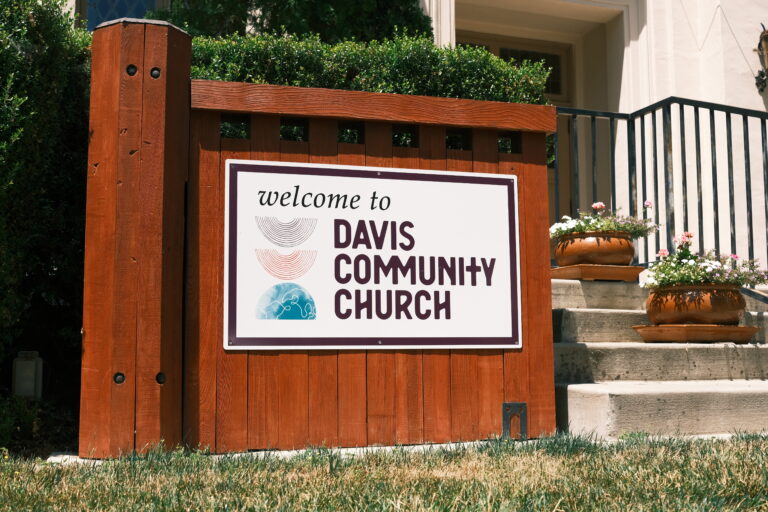
On May 25, the Davis Community Church hosted local activist Antonio De Loera-Brust for a discussion on the challenges faced by Latino workers in Yolo County. 

Vai Ramanathan, one of the organizers for the event, introduced Loera-Brust as the communications director for the United Farm Workers (UFW) labor union. Ramanathan said her organization, the Adult Formation Committee, invited Loera-Brust to speak on the range of issues faced by Latino immigrants in Yolo County. 

“Immigration right now is a profoundly difficult, complex issue,” Ramanathan said. “There are very local concerns and articulations [of this issue] that we need to be paying attention to, and Antonio [De Loera-Brust] is going to be helping us with that.” 

Loera-Brust was born and raised in Davis. He first became interested in immigrant and farmworker issues when he started reflecting on his family history. 

“My grandpa had come to the country as a bracero farm worker in the late ‘40s and ‘50s,” Loera-Brust said. “He went back when he was done, so my parents both grew up in Mexico City and came to the [United States] on student visas in the ‘90s. I was born here, so I always grew up with a little bit of that bicultural framing.” 

In college, Loera-Brust ran an afterschool program for the Yolo Interfaith Immigration Network, which introduced him to migrant farmworker families within the community. After graduation, Loera-Brust served in Washington, D.C. as a staffer under the Joe Biden and Kamala Harris administration.  

Three years ago, he returned to Davis to join the UFW. As part of the organization, Loera-Brust said he often interacts with “working poor” families in Davis. 

“In Davis, we have these pockets in the apartments along 8th Street and the apartment buildings in South Davis where you have a lot of what I would call ‘working poor’ families,” Loera-Brust said. “These are the folks who do a lot of the housekeeping work, the gardening work and the [work in] all the Davis downtown kitchens.” 

Loera-Brust, who specializes in helping Latino workers navigate labor disputes with their employers, said the main issues faced by this population have to do with working conditions rather than outright racial discrimination. 

“I can count on one hand the number of times I’ve heard real discrimination issues in the sense of someone being fired for speaking Spanish or being told they won’t be rented to because they’re Hispanic,” Loera-Brust said. “What I hear all the time is, ‘I can’t pay rent,’ ‘my wages aren’t what they’re supposed to be,’ ‘my scheduling is not flexible [enough] to meet with my family,’ ‘my boss is an asshole.’”

Loera-Brust said he is working with an undocumented woman who got injured on the job.  

“She had a hernia, she went to the doctor, she got a note that she couldn’t lift more than 10 pounds and she requested accommodation for that,” Loera-Brust said. “The manager was unwilling to give the accommodation. This led to a series of back-and-forths where they ultimately fired her.” 

Since being fired in August 2024, the woman’s case has moved through two state agencies. Loera-Brust said she could potentially receive a substantial amount of money in withheld pay and back wages from wrongful termination, but the case is still ongoing. 

Loera-Brust said the case is an example of how prolonged labor disputes prevent workers from advocating for their rights. 

“The No. 1 thing that keeps immigrant workers silent in the face of labor abuses [and] disempowered politically, socially and culturally, is poverty,” Loera-Brust said. “No. 2: labor relations. It does not make financial sense for most people to advocate for themselves or exercise their rights.” 

Loera-Brust also discussed how labor rights intersect with immigration rights. In 2022, the UFW started organizing workers on a mushroom farm in Yakima, Washington, with the ultimate goal of demanding better working conditions. 

After Immigration and Customs Enforcement (ICE) detained a local man, an immigration lawyer held a “Know Your Rights” training in the community. Loera-Brust said that, as a result of this training, the workers attending organizing committee meetings dwindled from 50 people to 20 people. 

“[The immigration lawyer] gave what, in her view, is the best legal advice, which is: ‘Do not risk it, do not speak out,’” Loera-Brust said. “But for us as a union, [our] job is to empower workers to fight, organize and be outspoken. I feel like this just undid years of work.” 

Juan Carlos Ruiz, who works in educational and cultural affairs at the Mexican consulate, also spoke at the meeting about national policies that could affect Latino workers. He said that in addition to the direct threat of deportation, a proposed law could tax the money Latino workers send home to their families. 

“This is money earned by hardworking families that already pay taxes,” Ruiz said. “The first time [the bill] went through the House, it failed, but now it’s [been] approved for a 3.5% tax. Let’s see what the Senate does.” 

The proposed law would put additional pressure on immigrants who work in the U.S. and negatively impact families that rely on that money in other countries. Ruiz said one way to combat the issue is to speak out. 

“There is a campaign that has been launched,” Ruiz said. “It said, ‘Please write to your local congressman, to your senator, and say that you don’t want this.’ If you’re Mexican and you live in the U.S., you can help with that.” 

To conclude the meeting, Loera-Brust outlined ways community members could help out locally. He said that there have been three ICE detentions in Yolo County under the Donald Trump administration: two in Davis and one in Woodland. 

Loera-Brust said community members could donate to non-profits like the Immigrant Legal Defense or directly to the families of detained individuals. 

“Macro, you can support organizations to expand their capacity to represent folks pro bono,” Loera-Brust said. “Micro, you can support individual local families who find themselves needing to pay for private representation because the most important thing is to make sure everyone has their rights and their lawyers.” 


Written By: Rory Conlon — city@theaggie.org


Highlighting the importance of cleaner fish in coral reefs

Microbial exchanges through cleaner fish in reef environments bring new levels of understanding to reef ecology


By MADELINE HASS — science@theaggie.org


Species-driven microbial transfers within ecosystems have become a growing area of interest within microbial ecology. One way to study these interactions is through research conducted on species aggregation hubs, which are areas where a concentration of species will gather for a particular purpose, such as feeding or spawning. 

A team of researchers consisting of scientists from UC Davis and Woods Hole Oceanographic Institute (WHOI) in collaboration with the University of Miami Rosenstiel School of Marine, Atmospheric, and Earth Science set out to study these microbial interactions within coral reef communities. 

The group’s study, published in the Marine Ecology Progress Series journal, is one of the first to take a closer look at the effects that cleaner fish stations have on microbial diversity. Cleaner fish stations are a classic example of aggregation hubs, as cleaner fish will be stationed in one consistent area and attract groups of client fish to swim up and be cleansed of any bacteria or parasites, and as a result they are microbial hotspots. 

Anya Brown, an assistant professor in the Department of Evolution and Ecology at UC Davis and the Bodega Marine Laboratory, as well as a corresponding author of the study, spoke on the importance of studying these cleaner fish.

“We had expertise and interest in cleaner behavior, and we realized just how much physical contact is involved in the interaction between the cleaner and the client fish,” Brown said. “We also know from previous studies, and as showcased in this study, that if you manipulate the cleaner fish it will completely change the abundance and density and diversity of other fish. So, because you’ve got cleaner fish attracting a wide range of fish to that site, all of which are bringing their own microbes with them, you create this potential for these cleaning stations to be these hotspots for the exchange of microbes.”

The team focussed their study on specifically cleaner gobies within two separate reef systems, one in Puerto Rico and the other in St. Croix, as they set out to investigate the microbial diversity around the cleaning hubs. 

“One of the reasons why we chose cleaning gobies is because they’re conspicuous, they’re easy to find and easy to see,” Brown said. “You can find lots of these cleaning gobies in all of the places we were going to in the Caribbean, and the interaction between cleaners and clients are quite obvious while also happening very frequently. The range of cleaning gobies is also pretty small — they don’t travel much further than a meter from their home base or their major habitat.”

The team tested the effects of cleaner fish by experimentally removing cleaner gobies to create numerous different treatment zones with and without the presence of cleaner gobies. They then monitored the microbial communities of the nearby reef areas, while also paying special attention to the amount of client fish present in each treatment zone and the effects on damselfish. 

Overall, the researchers found the presence of cleaner gobies attracted significantly more visitors, while also quantifiably influencing the diversity of microbes living in the reef. Damselfish showcased effects on their microbiome by the presence of cleaner gobies as well. The study further went on to note that the microbial impact shifts depending on the type of seafloor or reef territory, as each reef territory has a distinctive microbial environment.

Paul Sikkel, a research professor in the Department of Marine Biology and Ecology at the University of Miami Rosenstiel School, remarked more on the group’s findings.

“Cleaner fish seem to be able to facilitate the recovery of the microbiome of the client fish, if it’s been stripped, like with antibiotics, they can help recover that,” Sikkel said. “Say we have a mass heating event that could affect the microbiome of the client fish. Well, the cleaners may help them to regain their natural microbiome, which is essential for protecting against diseases.”

This discovery is a large step forward in understanding microbial interactions and poses as a stepping stone in implementing new reef management strategies through a reef restoration lens. Sikkel described the potential implications of the study. 

“If you have a heavily fished out reef, the cleaning stations can act like sort of the hubs of recovery,” Sikkel said. “They can attract what fish are left, and maybe even fish from other areas, which could then help restore that section of the reef. There are lots of implications and possibilities that we’re only beginning to sort of see and know what the potential is.”

Brown further commented on the importance of microbes.

“One thing here that we’re excited about is providing some foundational knowledge of how microbes are moving around the reef,” Brown said. “In a more foundational science sense, this is giving us an idea of where we might have hotspots of transmission of microbes, and we’re suggesting that cleaning stations may be one of them.”

This study makes the vital role of cleaner fish in facilitating microbial exchanges abundantly clear. Further research of the influence of species-driven microbial transfers within these coral reef systems could offer even more insight into coral reef resilience and new reef management strategies. This study can serve as a reminder that sometimes an ecosystem’s survival relies on the smallest interactions. 


Written by: Madeline Hass – science@theaggie.org

Realistic versus non-realistic video game graphics: which is better?

As video game visuals become more and more lifelike, the question arises: Is that even what the masses want? 


By BELLA PETERSON — arts@theaggie.org 


When it comes to discussing video games, the graphics quality plays a considerable role in the conversation. As more years pass and more games are released, it’s not hard to notice the increase in hyperrealistic graphics. It seems that what so many game developers strive for is a lifelike appearance to their game that will leave both reviewers and fans stunned. Bordering on achieving the “uncanny valley” effect aside — it seems that realistic graphics are no longer the stand out when it comes to gaming. 

Realistic graphics in video games went from being a groundbreaking evolution to a simple standard that developers had to meet. Appearance isn’t the most important factor of a video game — but one might argue it has a lot to do with its relevance and popularity; after all, who wouldn’t want a nice view while staring at a screen for multiple hours in a day? 

But does a “nice appearance” always have to be realistic? While more and more games move in the direction of scarily realistic graphics, fans are becoming drawn to the niche group diverting from this trend. 

When video games don’t center on realistic graphics, artistic freedom becomes a major part of the creation process. If they aren’t stunning us with their technical prowess, then they have to impress in a different way. 

When most people think of games with abstract graphics, however, it’s not surprising that their minds drift to titles classified under the genre of children’s video games, such as “Minecraft” or “Roblox.” It’s interesting to think that the most popular games resisting realistic graphics tend to predominantly target children. Luckily, it’s not always the case.

Indie developers, for example, aim to steer away from mainstream graphics. The hit title “Stardew Valley” was developed by a single man, Eric Barone. Despite the graphics of his game being limited to a 2.5D perspective with hand-drawn pixel art, the game ended up being a major success, selling a total of 3.5 million copies by the end of 2017. 

The simplicity in graphics was an admired factor of the game, as it managed to still create a comforting atmosphere in the world players were dropped into. The question of whether the game would have been as successful with more realistic graphics still begs to be asked. 

Another indie developer that stands out is Wrong Organ; their 2024 psychological horror game, “Mouthwashing,” received handfuls of positive reviews. The game is supported by its unique, low poly character graphics meant to unsettle the players. One might think that the “better” the graphics in a horror game, the scarier. With “Mouthwashing,” its positive reception proves that the choice in design was just right. 

Unique graphics, however, aren’t just reserved for indie game developers. The company Telltale has developed unique graphics for their beloved series such as “The Walking Dead” games and “The Wolf Among Us.” Both share a similar style with the characters and world appearing to be a comic book that has come to life. This style was confidently adopted due to both games taking inspiration from graphic novels.

Despite both games displaying surrealistic human characters, there isn’t a demand for a “bettering” of the graphics. Fans are satisfied with this approach, calling it creative and interesting. The concept of adapting a comic into a video game and allowing the similar style to be displayed is something to be admired, seeing as graphic novels are also a valued form of art. 

Something not everyone may understand is just how much work goes into making a game’s graphics appear unrealistic and original. In a similar vein as regular animation, it’s something to be respected. There are so many developers that have adopted this method and continue to stand by it. But will this format of game creation continue to survive?

South of Midnight,” Compulsion Games’ newest creation, brings up this question. A game company not new to the concept of distinctive game graphics — having proven that with their previous project, “We Happy Few” — “South of Midnight” isn’t just unique, it’s inspiring. The game’s graphics pull from the concept of clay figures placed in stop-motion animation. 

There’s already such an admiration for the art style of stop motion, that it’s just natural for the game’s story to adopt. Whatever else is said about the game, it’s obvious that the art style and its choice of graphics is truly admirable. 

So, do gamers prefer a more unique direction of art style? It’s hard to say. Not everyone has the same opinions when it comes to what they’re looking for in a game. Some players prefer realistic depictions of a story, while others find importance in the individuality of an artistic appearance. Thankfully, we live in a world where all types of developers are making their own visions come to life in their respective video games. 

Written by: Bella Peterson — arts@theaggie.org

With 248 journalists killed while reporting the genocide in Gaza, now is not the time to look away

The Editorial Board encourages media outlets to not sacrifice journalistic integrity as many continue to speak out


By THE EDITORIAL BOARD 


As of September 2025, 248 journalists have been killed in the Gaza Strip — unprecedented numbers spanning any modern conflict. In fact, more journalists have been killed in Gaza since Oct. 7, 2023 than in the Iraq War, Afghanistan War and in Ukraine, according to Newsweek. A new statement from the United Nations (U.N.) on Sept. 3, 2025 reads: “States must stop Israel before all journalists in Gaza are silenced.” 

A team of four Al Jazeera journalists including Anas al-Sharif, Mohammed Qraiqea, Ibrahim Al Thaher and Mohamed Nofal were targeted and killed in a drone attack on a journalists’ tent outside the main gate of Al-Shifa Hospital in Gaza City on Aug. 10, 2025. After Israeli officials had claimed the bombing was an accident, later reporting clarified the attack was, in fact, intentional. 

These are just a few names of the many who have been silenced for their reporting. It has become increasingly clear that these are deliberate attacks on the truth; recent reporting has shown that Israel feels a decreasing need to hide these deliberate attacks as time passes. In recognizing the work of these journalists, we barely scratch the surface of this problem and cannot even begin to imagine their reality.

In addition to the journalists who have been killed for documenting the truth, over 64,400 Palestinians have been killed in Gaza since Oct. 7, 2023, with the actual death toll estimate being significantly higher.


Censorship and retaliation

Today, accurate reporting from Gaza is simultaneously more important and more limited than ever, as the brave individuals risking their lives to show the reality of the situation are being targeted for doing so. When examining Western media outlets, it is clear that many fear retaliation from both the Israeli and United States governments, as the Trump administration remains fiercely loyal to Israel’s plans to cleanse the Gaza Strip completely.

Despite concerns, Western news organizations still have a responsibility to provide accurate and truthful information about global affairs to the public. Many established media outlets have yet to address the situation head on, and articles covering the Israel-Palestine conflict use selective phrasing and passive language to protect themselves at the cost of ethical, transparent journalism. 

 In contrast to the mainstream media, students in the U.S. continue to speak out against the actions of the Israeli government. Students on visas from countries all over the world have faced consequences for protesting the actions of the Israeli government, and student journalists, as well as activist movements, are largely being treated as problems worse than the issues they are fighting for. 

The Editorial Board condemns the Trump administration’s efforts to censor the press and discourage media outlets from justly and accurately providing news coverage. While Western journalists fear retaliation for speaking out against this genocide, their struggles cannot begin to compare to those of Palestinian journalists — we are not losing our lives, loved ones and livelihoods simply for showing the truth. 


Journalistic integrity and ethical reporting 

Over 250 media outlets from over 70 countries have staged a front-page protest to honor the bravery of these journalists. The United Nations Educational, Scientific and Cultural Organization (UNESCO) also recently condemned these killings, as have over 250 of the most highly regarded human rights organizations across the globe. Leading human rights organizations in Israel, B’Tselem and Physicians for Human Rights, have also stated that they believe Israel is committing genocide against Palestinians in Gaza. 

These are the very organizations that we should rely on to call out human rights violations; yet, even with their proclamations that it is in fact a genocide, no real progress has been made in terms of accountability. 

“United Nations experts, all major international human rights organisations, thousands of legal and other scholars, and even former Israeli officials have said that this war has crossed every red line of international law,” Nour Elassy, a poet and writer based in Gaza, wrote in Al Jazeera.

Far too late are states and international organizations admitting that what is happening in Gaza is a genocide. Calling the conflict a genocide would force accountability from international organizations and many countries across the world; thus, many have avoided taking legitimate action or responsibility against these continued injustices. The lack of accountability in both international media and law is beyond disappointing, as many avoid using the word to deny the reality of what it means and what must therefore be done to confront it. 

U.N. experts continue to assert that “it is important to call a genocide a genocide,” as it should enforce member states to no longer be complicit in continuing to provide mass amounts of weaponry to Israel — and yet nothing has truly been done. If international accountability has any merit in today’s world, things will change as more scholars, human rights groups and civilians speak up on behalf of Palestine.

Beyond this, the reclaiming of terms like “takeover” or “conquest” to reoccupy and empty the territory through “voluntary displacement” efforts is particularly disturbing, as people are forced from their homes in mass numbers and expected to relocate to neighboring countries without the space or resources to take them. 

These killings speak volumes about the level of censorship within Gaza. These brave journalists have risked and lost their lives defending the truth — one of the central principles upon which journalistic integrity is supposed to stand — and the entire world has watched them martyred on the global stage.


Advocacy and taking action

It is beyond important that reporting on such significant events is accurate, consistent and reliable. Journalists have been subjected to more targeted killings during this conflict than any other; ask yourself why you think that might be, and, rather than hear their stories and continue to scroll, think critically about why the truthseekers are one of the largest targets of the ongoing genocide. 

Remember their names and share their stories as this tragedy continues. You may feel helpless watching so much tragedy unfold, but giving your undivided attention and sharing these individuals’ continued reporting can make a difference in our community and beyond. Pay attention, ask questions, read (about both the present and the past) and think critically — it is vital that we continue to keep our eyes on Gaza and Palestine as the genocide continues. 

As student journalists in the U.S., we appreciate a level of safety that Palestinian journalists do not have. It is our responsibility to continue to advocate for them, share their reporting with our community and see the truth through their eyes. We must let their message be heard, let their truths be understood and allow journalists to continue publishing honest, comprehensive coverage of this genocide. 


Written by: The Editorial Board

Culture Corner

The Arts Desk’s weekly picks for music, movies and more 


By SAVANNAH ANNO — arts@theaggie.org


Song: “Obvious” by After (2025)

Like summer in a bottle, “Obvious” is a dreamy, romantic track from the two-man band After’s debut EP. The extended play record — fittingly titled “After EP” — is an ode to Y2K trip-pop, the sound-evoking memories of bubbles, blue skies and dandelions. In “Obvious,” lead singer Justine Dorsey plays on nostalgia with not just the sound, but lyrics calling back to the awkwardness and intensity of a high school crush. 

With “Obvious,” After takes everything addicting about childhood tracks from singers like Hillary Duff and Avril Lavigne and elevates it, befitting a newly adult audience that sometimes needs an escape back into the 2000s. Also influenced by bands like The Sundays and 800 cherries, After’s colorful sound is both polished and experimental. With songs like “Obvious,” the duo artfully blends musical choices they know any listener will love and others that still feel miles away from mainstream. Effortlessly cool, After is building a new auditory atmosphere one track at a time, and “Obvious” serves as the perfect first look inside. 


Movie: “My Best Friend’s Wedding” dir. P.J. Hogan (1997) 

For fans of the newest romantic comedy-drama “Materialists” and the heart-wrenching “Past Lives,” directed by Celine Song, “My Best Friend’s Wedding” is now a required watch as the up-and-coming filmmaker gets ready to pen the sequel’s screenplay. I personally believe that the original 1997 romantic comedy, however, is so perfect that anything created in its image will be an insult to just how good it is. 

Set in Chicago and starring a young Julia Roberts, Dermot Mulroney and Cameron Diaz, the film’s visuals couldn’t possibly get any dreamier. Each scene reflects a warm, bustling city existing in the pleasant space between spring and summer. Outside of its aesthetic, the film tackles regret, jealousy and all the messiest parts of love through an impressive display of both romantic chemistry and physical comedy. As Julia Roberts’ character tries to sabotage her best friend/ex-boyfriend’s wedding in the most outrageous ways possible, the film questions whether or not something you may want with all of your heart can truly ever be good for you. Witty, full of yearning and ahead of its time, “My Best Friend’s Wedding” is a goldmine of psychological complexity hidden under classic, ‘90s rom-com charm. 


Essay: “Georgia O’Keeffe” by Joan Didion (1979)

I’m sure that I don’t need to sit here and convince you that Joan Didion is a good writer. In fact, she’s most likely one of the greatest of her generation. A renowned journalist, Didion has penned 13 nonfiction essay collections, examining political shifts, social figures, California lifestyles and more. In her 1979 collection, “The White Album,” Didion paints a portrait of America post-1960s. While many of the works assess culture on a macro level, I think Didion’s attention to detail shines brightest when given just a single figure to examine. 

In “Georgia O’Keeffe,” Didion examines the painter’s determination to create in a world where men constantly try their best to dismiss her. O’Keeffe, known for her captivating flower paintings, entered the art world in the 1920s and quickly became recognized as a founder of the American Modernist movement. One of the few profiles where Didion doesn’t actually interview the subject herself, the writer relies on a recounting of her young daughter’s experience seeing an O’Keeffe painting for the first time to make the piece feel authentic. For anyone interested in art or in need of a bit of inspiration, “Georgia O’Keeffe” is one of few Didion essays that end on an appreciative, almost hopeful note. 


Album: “Baby!” by Dijon (2025) 

Receiving more and more attention after his recent work on Justin Bieber’s “SWAG” album, “Baby!” is included in this Culture Corner as recorded evidence that I was Dijon’s biggest fan before his transition into the main music scene. His second full-length album, “Baby!” follows up his experimental, Americana-esque R&B record “Absolutely,” with even bolder moves and sounds. Where “Absolutely” is layered melodies and smooth vocals, “Baby!” finds its groove in harsher instrumentals and unexpected bursts of lyrics. Influenced by the greats: Prince, Bon Iver and Frank Ocean, Dijon throws listeners around with his forever-changing sound but keeps them grounded with a strong, emotional center. At the core of “Baby!” is the story of a new family, as Dijon recounts the feelings of fear, responsibility and boundless love that come with first-time fatherhood. Creating a brand new sound all his own, “Baby!” is the album you want on when you’re looking for a freshly intense, more joyful world. 


Written by: Savannah Anno — arts@theaggie.org

Review: Laufey is enchantingly honest in new album, ‘A Matter Of Time’

The bewitching singer-songwriter’s third album takes her music in a wilder, more vulnerable direction


By NATALIE SALTER — arts@theaggie.org 


The contemporary dating scene — one so emotionally barren that the term “situationship” has emerged to define almost every romance — tends to make true love look like a distant, almost illusory prospect. Is it really old fashioned to expect a lover who will show you utter affection and devotion? Does love from fairytales and romantic comedies even exist in reality?

These questions have eternally tormented the Icelandic-Chinese singer-songwriter Laufey, who waltzed onto the music scene in 2020 with hopeless romantic dreams and a hearty appreciation for the classics. With a sirenic voice and a catalogue of jazz standards at her disposal, she has staunchly refused to give up on her belief in “happily ever after,” no matter how hard the world tries to shake her faith.

Laufey’s third full-length album, “A Matter Of Time,” is undoubtedly her most daring. Those who found solace in her previous starry-eyed daydreaming, however, will still be satisfied with her latest project, where these feelings burn brighter than ever. “Lover Girl” infuses the infectious sparkle of breakout hit “From The Start” with a summery twist. On the other hand, “Snow White” picks up threads of past insecurities and lets them loose, Laufey’s voice cracking and aching over a quiet string melody. 

Perhaps Laufey’s specialty is her ability to paint stories of love lost and found, so grand they feel like film scenes, only to remind the listener that she’s living in as much of a desperate reality as they are. On “Clockwork,” a magical tale of a first date set against a jazzy backdrop, she wonders if her lover is running late because, “like me, he probably had to regurgitate.” 

The contrast between the album’s strikingly raw lyrics and swelling musical soundscape may be an echo of how its creator’s romanticism is out of place in our modern world. Though she wants her Prince Charming, she’s stuck with an insecure ex who spends his days “screaming at the TV / Cussing out opposing football teams” (“Tough Luck”). Her potential beaus waste time mansplaining Homer and Edgar Allan Poe: “You’re just a stoner patronizing me,” she eyerolls on “Mr. Eclectic.”

Laufey’s dissatisfaction soon finds itself sinking into agony, though the result of her despair is heart-wrenchingly beautiful. On “Forget-Me-Not,” a fluttering, ballet-esque flute swells into a powerful chorus, during which the singer dances between English and Icelandic to beg for her eternal remembrance. The bridge of “Too Little, Too Late” is one of her most memorable, capturing her crying out desperately for a lover who is engaged to another. 

On tracks like “Carousel” and “Cuckoo Ballet (Interlude)” Laufey’s ability to craft melodies infused with pure enchantment is stunning. The faintest of instrumental details — a twinkling chime, a brief sound of accordion, a grand clock ringing — elevate the entire song with their delicate beauty, like golden engravings on an ornate music box. Her songs are pockets of exquisite magic, as if she has given melody to glowing stardust and childhood dreams. 

What truly elevates “A Matter Of Time” beyond its predecessors, however, is Laufey’s willingness to let her own flaws crack open this enchanting world. As much as she wants it to be, her life is no tale of true love; she’s not even a perfect princess herself. The album’s closer, “Sabotage,” is the ultimate culmination of this admission. The track is torn apart by explosive moments of unadulterated cacophony — instruments screaming and grating in a picture of her anger, grief and self-doubt. It’s this portrayal of her hopes and fears, side by side, that makes “A Matter Of Time” feel like a more complete, authentic image of the singer’s psyche. 

Laufey might have the answer for the old souls desperate for a seemingly impossible soulmate. This world is messy and complicated and will often leave you bleeding; nothing, and no one, is ever perfect. But that’s no reason to give up on love. Rather, to hold onto your romanticism with bruised hands, refusing to relent when it would be so easy to become jaded and hopeless, is the most courageous thing you can do. And, if Laufey won’t let pretentious posers or failed situationships ruin her lover-girl tendencies, you shouldn’t either.

Written by: Natalie Salter—arts@theaggie.org 

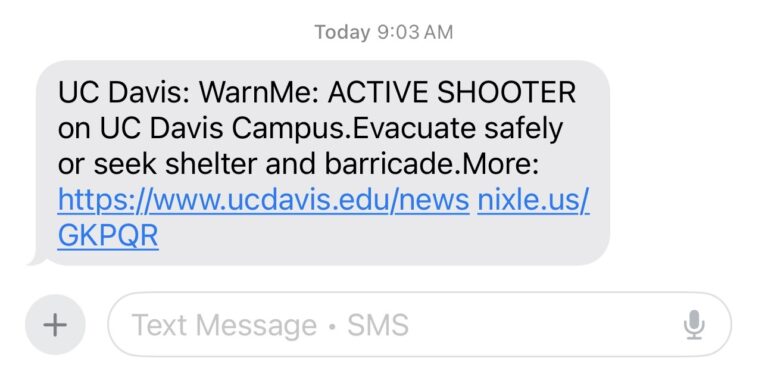
BREAKING: UC Davis active shooter warning sent to students fails to note it was a drill

By VINCE BASADA — campus@theaggie.org

A UC Davis WarnMe message sent early Thursday, August 21 did not note that the warning of an active shooter on the university’s campus was a drill.

The message, sent out via the WarnMe text notification system and picked up by Nixle at 9:02 a.m., instructed recipients to “seek shelter and barricade.”

“ACTIVE SHOOTER on UC Davis Campus,” the message reads.

A Nixle link sent with the initial message did clarify that the alert was a drill, however the initial SMS text did not. At 9:19 a.m., a second text message sent via the Aggie Alert notification system confirmed this.

“A DRILL WarnMe message was sent a few minutes ago without being labeled as DRILL,” the message reads. “No emergency on campus. DRILL only.”

A UC Davis Police spokesperson told The California Aggie that the message was intended to be sent only to UC Davis Police and Fire Department personnel as part of a yearly mass casualty incident training drill at the Activities and Recreation Center.

“We apologize for any distress caused,” the police spokesperson said. “We understand that this is a sensitive issue. We never want to cause unnecessary stress to anyone, and we are trying to correct that error and make sure it doesn’t happen again.”

UC Davis Police is looking into the mistake and why the message was sent to a larger group than intended, according to the spokesperson. 

The mistake had an impact on students, both in Davis and back home for summer break, with many taking to social media and the UC Davis subreddit to express confusion and shock over the mistake.

The last day of the mass casualty incident training is scheduled for Friday, Aug. 22, from 7 a.m. to 1 p.m.

This is a developing story. Follow The Aggie’s coverage for more updates.

Written by: Vince Basadacampus@theaggie.org

Former UC President Michael Drake calls for end to boycotts targeted at countries

Facing potential pressure from the federal government, UC President Michael Drake orders university entities and student governments to end certain boycotting practices


By RIVERS STOUT— campus@theaggie.org


On July 2, just weeks before his retirement in August, University of California (UC) President Michael Drake sent a letter to UC Chancellors ordering university entities, including student governments, not to engage in boycott actions based on a company’s association with any country. 

Though the letter does not explicitly state Israel, it follows years of pro-Palestine protests calling for the divestment of UC funds from companies on the Boycott, Divestment and Sanctions (BDS) list. Additionally, pressure from the federal government could have been influential with this decision — the United States Department of Education is investigating multiple UC campuses over alleged antisemitism

Drake justified this decision by citing university business policy.

“University policies […] require that financial and business decisions be grounded in sound business practices including competitive bidding,” Drake said in the letter. 

The letter continued by describing the implementation of these policies with university entities. 

“This principle also applies to student governments,” the letter reads. “University policy provides that ‘any financial and business activity under the control of student governments is operated in accordance with sound business practices and is consistent with legal requirements and University policies and procedures’ (PACAOS 67.00). Actions by University entities to implement boycotts of companies based on their association with a particular country would not align with these sound business practices.” 

It is currently unclear how this recommitment to enforcing policy will affect the Associated Students of UC Davis (ASUCD), UC Davis’ undergraduate student government, which passed legislation to boycott companies on the BDS list in winter 2024. The status of the UC Davis Law Student Association also remains unresolved after their constitutional amendment to incorporate BDS guidelines resulted in their suspension earlier this year. 

As of publication, neither the UC Office of the President nor UC Davis leadership has released a statement or guidelines regarding how they will end boycotts already in place and ensure they don’t reoccur.

Instead of boycotts, Drake noted that university policy allows student governments to “take public positions on issues.”

When asked to comment on Drake’s letter, an ASUCD financial officer declined to comment.


Written by: Rivers Stoutcampus@theaggie.org

This is a developing story. Follow The Aggie for more developments.

ASUCD’s 21st Annual Excellence in Education Award recognizes exceptional instructors 

The award is based on contributions towards students’ education, displayed passion towards teaching and for making a positive impact on campus

By ROBIN FRANKLIN — campus@theaggie.org

Three instructors across several academic disciplines have been selected by the ASUCD Academic Affairs Commission (AAC) to receive the 2025 ASUCD Excellence in Education Award. The awardees are: Matthew Butner, Junko Ito and Kathy Stuart

Academic Affairs Commission Chairperson Iris Chen, a third-year psychology and economics double major, expressed the importance of the award to her team’s mission.

“Not only is prioritizing voices and ensuring academic success for all UC Davis Aggies the purpose of AAC, but recognizing the work and efforts of professors is also essential,” Chen told The Aggie in a written statement. “Academic success cannot be achieved without faculty. This award symbolizes the bond between students and faculty members.”

Each spring quarter, nominations are opened and students can cast their votes for which faculty they believe should be recognized. The award was first established in 2003. Students can vote for multiple faculty members, though they cannot vote for the same instructor twice.

Matthew Butner, Computer Science

When students ask Lecturer Matthew Butner what to expect in his courses and how to prepare, he responds with a unique analogy to get students thinking outside the box.

“I always compare it to building with Legos,” Butner explained. “In the class, you don’t get the instruction manual. You get the picture on the front and then here’s all your Legos and you can do whatever you want with them, but you need to make it work like that. You need to figure out how to piece them together. You use a lot of creativity.”

A student who the nominated Butner for the award discussed his qualifications.

“His interaction with the class during lectures and availability during office hours show that he understands the value of direct communication with students,” the nominator wrote. “Overall, Lecturer Butner emphasizes the importance of having students not just get good grades, but learn and practice useful skills, and he provides many resources to help his students succeed.”

Butner takes a real-world application approach to teaching and encourages students to analyze their failures and continue working towards viable solutions.

“I try to relate it to analogies that are close to something in real life as much as possible,” Butner said. 

“If things didn’t go good,” he continued, “what changes will you make next time so things will go the way you want them to go?”

Kathy Stuart, History 

Associate Professor Kathy Stuart teaches various seminars on demonology, the history of madness, crime and punishment and her popular course on witchcraft. She is also the main instructor for the summer abroad program “Crossroads of Central Europe” in Vienna, Austria.

“I am really honored, and it really is wonderful,” Stuart told The Aggie. “I’m grateful for [students’] acknowledgement and their friendship.”

One student who nominated Stuart credits her teaching skills and enthusiasm for pursuing a double major.

“I have never met a professor who is more passionate about or involved in their field of study than Professor Stuart,” the nominator wrote. “She is a big reason I wanted to add a second major of history and has inspired me to pursue a career in the field. Her lectures are packed with information that you can not hear elsewhere and she truly is an expert in her niche of history.”

Stuart said that she hopes that her fervor for her classes is passed along to her students, regardless of their prior knowledge. Through the inclusion of humorous and sometimes provocative early European political art in her slides, she pushes the boundaries of what a university lecture can look like to engage students. 

“Never take things too seriously,” Stuart said of her teaching philosophy.

Stuart was also presented the UC Davis Excellence in Teaching for Global Learning Award earlier this year, in large part for her contributions to the Vienna study abroad program.

Junko Ito, East Asian Languages and Cultures

Lecturer Junko Ito is well known as an instructor in Japanese, but she did not initially plan on becoming an educator. What first inspired her to start was an unexpected stroke of fate.

“After graduating from university, I started working in a company,” Ito wrote in a statement. “But then, by chance, I had the opportunity to teach at a high school in Japan for just one year. I discovered how much I enjoy teaching. That was the moment I decided to become a teacher.”

Ito is dedicated to spending quality time with her students every single day and finds the most rewarding part of teaching is hearing student feedback and receiving letters.

“I see my Japanese students almost every day, and they’ve truly become like family to me,” Ito said. “Their energy keeps me going.”

One nomination for Ito praised her around-the-clock dedication to students.

“She’s [a] kind and diligent instructor who stays up ridiculously late to make sure her students get feedback and corrections on their work,” the nominator wrote. “She gives every student hand-written, personal feedback on just about every assignment, and I can’t think of a single professor I’ve had who works harder to teach or deserves an award more.”

Ito said that she’s consistently trying to improve herself and her students, and expressed gratitude towards them for nominating her for the award.

“I was really surprised because I had no idea,” Ito said. “But I feel truly honored. I will treasure this award for the rest of my life. I’m filled with gratitude, and I will continue to improve to become the best teacher I can be.”

Written by: Robin Franklin — campus@theaggie.org

Is he flirting with me or does he just work at Trader Joe’s?

How to tell if he was checking you out or just checking you out


By MADISON SEEMAN — meseeman@ucdavis.edu


There’s a new man in my life. He’s smart, he’s easy on the eyes, he’s employed — it all started at Trader Joe’s. In one intense moment, we locked eyes as his coworker stuffed my chocolate bananas into my Snoopy Baggu: the rest is history.

We’ve all had that one fairytale Trader Joe’s customer-employee moment: light but charming small talk with a side of heartstopping eye contact that will have you skipping all the way down Russell Boulevard.

Maybe your heart skipped a beat as she handed you a yogurt sample, maybe you nearly collided as he was stocking the Ube Mochi Pancake tower or maybe they were checking you out (in more ways than one!).

The famously charming employee culture at Trader Joe’s calls on their employees to be almost ruthlessly charismatic as they ring up your orange chicken — conversation that’s aimable, well-intentioned and occasionally overwhelming in the chaos of the Saturday afternoon rush. 

The scramble for eggs, the chaos for kimbap; Trader Joe’s on a weekend afternoon is a battlefield, and, in the midst of it all, the brave employees of Trader Joe’s make a career out of mixed signals and small talk that toes a very flirty line. Tell me I’m reading into it all you want, but no Safeway employee has been cheeky enough to wink at me.

That said, I think I found “the one.” I know believing your Trader Joe’s cashier is into you is equivalent to thinking your therapist might want to be friends with you, but this was different. This was flirty: coy, even.

He started by asking me about my day (which was 10 times better the moment we started talking). Then, he asked me what I was having for dinner, and I won’t lie — I blushed. I mean, just ask me out at that point! 

The rest was a whirlwind. I had him check out my groceries again a couple weeks later, and I could tell by the fluorescent sparkle in his eyes that he recognized me. He even asked me what my major was — more like he’s “majorly” interested.

And then, the unthinkable happened: Last week, we bumped into each other outside of the newly renovated walls of that liminal grocery store. One thing led to another, and, in a legendary feat, I turned my cashier crush into my Friday plans.

The date was magical. He asked me how my day was, what I was planning on having for dinner later and then we had a really heartfelt conversation about the weather. He held my bag, which was sweet, although he wouldn’t stop reorganizing it so the most fragile items were at top. I couldn’t help but feel it was all too familiar.

“He’s treating you like you’re a customer,” my friends told me after. Okay, so maybe he just doesn’t know how to talk to people outside of work. It’s like those kindergarten teachers who accidentally use their baby voice on friends — they just can’t turn it off! Nothing a little bit of training can’t fix.

But her words started to eat at me. Does he only see me as a customer or is he just a Trader Joe’s employee to his core? Does he really care how my day was, or is that one of the only questions he knows? When he tells me the 2025 National Grocers Association Best Bagger award was a UC Davis college student, is he still imagining that wooden partition between us, ringing up apples and bananas as fantasy-me pulls out one of my borderline rotted tote bags? Can he ever turn it off? Could a Trader Joe’s employee ever truly love a girl like me?

Maybe he’s really flirting, or maybe his time at Trader Joe’s has possessed him with charming yet slightly impersonal and incredibly repetitive mannerisms — we all have our quirks. It’s possible I’m just another customer to him, but I’m charmed: cashier questions and all.


Written by: Madison Seeman –– meseeman@ucdavis.edu


Disclaimer: (This article is humor and/or satire, and its content is purely fictional. The story and the names of “sources” are fictionalized.)

A thrilling way to end the season for UC Davis women’s beach volleyball

The Aggies lose its final matches of the season in close matchups


By COLINA HARVEY — sports@theaggie.org


On April 24, the UC Davis women’s beach volleyball team traveled to the Big West Championships in Santa Monica, California. All Big West teams automatically qualify for the tournament; however, they must make it through a pool play stage in order to qualify for bracket play. 

The Aggies’ 2025 season saw both success and struggle as they lingered around a 0.500 winning percentage for most of the season. Despite a promising six-game winning streak in April, they finished the season on a four-game losing streak. 

Their 4-4 Big West record landed them the fifth seed of seven teams going into the tournament. 

In pool play, the Aggies were slated to play fourth-seeded California State University, Northridge (CSUN) and first-seeded California Polytechnic University, San Luis Obispo (Cal Poly). 

During the regular season, the Aggies beat CSUN, and they looked to replicate that result in the championship.  

The first duo to take on the CSUN Matadors was Kimi Waller, third-year nutrition science major, and Alexandra Leal, a second-year environmental engineering major. They suffered a harsh loss in the first set, losing 21-9. Despite their efforts, they lost the second set as well, giving up one point to CSUN. 

Skye Smolinski, a second-year design major, and Mia Olen, a fourth-year environmental policy analysis and planning major, were able to get the Aggies back in the game with a close first set win and a dominant second set win, gaining a point for Davis. 

They were then followed by Kylie Miller, a fourth-year managerial economics major, and Tabitha Mitchell, a fourth-year animal science major, who won two sets to rack up another Aggie point. 

Although Emily Uhrinak, a second-year sustainable environmental design major, and Kendal Steller, a first-year managerial economics major, won one set, they were not able to win the match, leaving the score tied at 2-2. 

The pressure was on for the last two finishers, Lindsay Heller, a fourth-year communications major, and Kate O’Steen, a third-year human development major, as they won the first set but lost the second. This meant that their third and final set would determine which team won the point. The duo was ultimately successful, winning 15-11 and securing the win for Davis. 

Later in the day, the Aggies faced Cal Poly, which beat the Aggies 5-0 during the regular season. Once again, the Mustangs dominated the game, winning all five matches, with UC Davis unable to score a point. Smolinski and Olen were the only Aggie pair able to force three sets against their opponents. They nearly won the third set, but ultimately lost 16-14. 

Despite the loss, the Aggies secured a spot in bracket play and took on the University of Hawaiʻi at Mānoa Rainbow Warriors on April 25. 

Heller and O’Steen were able to beat their opponents in only two sets. They showed their strength in the second set, only allowing the Rainbow Warriors to score nine points. However, Smolinski and Olen were not able to overcome their opponents, losing in two sets. Miller and Mitchell also lost, leaving the Aggies down 2-1. 

Waller and Leal won a very close first set and then lost the second, pushing the match to three sets. The third set was hard fought, and Waller and Leal were able to come out on top, tying the match 2-2. 

The last pair to finish their match was Uhrinak and Steller. After being trounced in the first set, they came back strong, winning the second set 13-21. Although they came close to winning the third set, they could not quite get the job done, resulting in the end of the Aggies’ season. 

The close game was a tough way for the Aggies to go out. However, the young team will have many returning players next season. Hopefully, they will be able to come back to the championship in a year’s time and have more success. 


Written by: Colina Harvey — sports@theaggie.org

UC Davis men’s golf finishes the season strong at the 2025 Big West Championships

Aggie team members come out proud of results


By DIEGO CERNA — sports@theaggie.org


From April 27 to 29, the UC Davis men’s golf team competed in the 2025 Big West Championship at the La Quinta Country Club in La Quinta, California. The Aggies looked to improve from last year’s championships, where they placed fifth overall. 

Zack Tarter, a first-year undeclared major, led the Aggies to a decent start after the first day, tying for fifth place overall and two under par of 70. Tarter recorded four birdies to help the UC Davis Aggies stay competitive.  

Treed Huang, a second-year undeclared major, started strong right alongside Tarter, as he ended with an even par of 72, tying in 11th place overall.

Louis Grizot, a first-year undeclared major, and Lequan Wang, a first-year undeclared major, finished in the top 40, finishing with rounds of 75 (three above par) and 73 (one above par). The Aggies ended up tied with UC Irvine in fourth place overall after the first day, scoring just two above the team par of 290. 

Shaun Nair, a first-year undeclared major, made his tournament debut on the second day, subbing in for Curtis Da Silva, a second-year undeclared major, who put up an 81 (nine above par) on day one. Nair was an immense asset for the Aggies, delivering the second-best Aggie performance of the day and shooting one under the course’s par of 71. 

Grizot made a tremendous improvement to his score of 75 (three above par), as he recorded 69, three under par. He jumped an incredible 23 spots on the leaderboard, moving into the 15th spot overall. Huang remained steady, rounding into the top-20 list as well, three spots below Grizot with a day of 73 (one above par). 

On the final day of the tournament, the Aggies recorded a team score of 274, seven points under the team par of 281 for the day. 

Nair notched a team-high of five birdies, tying with Grizot for the most birdies by an Aggie that day. Grizot went 69 and 69 the last two days, impressively moving up right outside of the top 10 overall at 11th. 

Tarter provided a sensational final round with a score of 66 (six under par), along with five birdies and an eagle. Huang and Wang both carded 74 (two above par) to round out the final team score.

UC Davis ended up tying third overall with UC Irvine, sitting behind second overall California State University, Fullerton and the reigning Big West Champion California State University, Long Beach, who finished first overall. 

Tartar ended up earning a Big West Championship All-Tournament honors team with his impressive performance throughout the days, finishing third individually. 

 This team of mainly first- and second-year students displayed an impressive performance at the Big West Championships overall. With standout performances and continued development, they will look to build on this experience and improve next season and are setting their eyes on a potential National Collegiate Athletic Association Regionals tournament next season.


Written by: Diego Cerna — sports@theaggie.org


Review: ‘You’ might be the problem

The final season of “You” asks viewers to consider their own role in condoning Joe Goldberg’s actions 


BY JULIE HUANG – arts@theaggie.org


The fifth and final season of “You” was released on April 24, bringing viewers a definitive conclusion to Joe Goldberg’s story that doubles down on the repetitive nature of his obsessive need to murder and emphasizes the criminality of his actions more than ever. 

The preceding seasons, largely narrated from Joe’s perspective, were drenched in a darkly comedic atmosphere. Joe’s internal monologue is bitingly irreverent and endlessly entertaining. The discrepancy between his awful thoughts and the cooperative front that he shows to others adds a level of absurdity and humor that seemed to be the show’s way of suggesting that the audience not take his more serious actions too seriously. However, as the show progresses, his crimes begin to add up in a way that cannot quite be ignored and it becomes clear that “You” wants audience members to understand that Joe’s narrative is deliberately divorced from the reality of his circumstances. 

In the first season, Joe is a bookstore clerk who pursues his idea of the perfect love story with graduate student Guinevere Beck. The second season shows him with a higher body count and a new identity, yet almost immediately repeating the same narrative of romance with Love Quinn. Then, the third season shows the fallout of Joe failing to uphold his role in the narrative of a happy family and making his escape by latching onto yet another woman to idealize. 

Every new season made increasingly clear that Joe’s crimes are not incidental or necessary actions for love, as he desperately reiterates to himself and viewers, but instead the product of a twisted coping mechanism for his deep-rooted issues with his mother and childhood. His behavior is blatantly Freudian in its repressed and cyclical nature, and Joe comes close several times to realizing that he is the center of all his problems. Every time, he turns away from that revelation in order to remain in the cycle of violence that he calls love. 

With Joe unable to ever hold himself accountable, this last season then seems to be the show’s attempt to finally bring him to justice by showing viewers just how irrational his destruction really is at heart, attacking the biased sheen of reason that his own perspective glosses him over with.

At the start of the final season, Joe seems to have successfully escaped any legal or social consequences for the past crimes he committed. He has a relationship with Kate Lockwood, access to tremendous wealth, his son Henry and a positive public image, yet he remains unsatisfied and bored. The relationship that Joe starts with newcomer Bronte reveals that his need to live out a love story is not a product of circumstance but pathological in nature. 

Joe’s affinity for books hints at his truest love, which are the narratives contained within pages that never change and thus never betray him. Constructing and projecting a self-serving narrative onto his reality, Joe needs everyone in his life to play their roles to keep that narrative from splintering. The women that he falls in love with are two-dimensional characters who must stay in character or be discarded. Meanwhile, Joe never perceives himself as wrongful in carrying out retribution against them for breaking out of their assigned roles. He has assigned himself the role of the misunderstood hero wounded in love. When anything deviates from the static ideal that he upholds, Joe revises his storyline in order to keep that core component of his self-perception intact, remaining the well-meaning victim of others instead of being seen as the murderer that he really is.  

 Joe’s desperate attempts to change always end in failure. because he is able to rationalize his crimes and wrongdoings every time. He uses every resource at his disposal to arrange comfortable narratives that remove the need to hold himself accountable, and then lives in those narratives as if they are reality. 

Directed as a pointed lesson toward viewers, the irreversibly damaging effects of approaching romance the wrong way are shown over and over through Joe’s descent into the deepening grave dug by his own crimes. Joe’s many murders are meant to serve as an extreme example of how toxic ideals of love have disastrous consequences. His ability to escape with new identities and start over numerous times illustrates how easy it is to perpetuate the cycle by clinging onto one’s destructive behaviors instead of truly examining and acknowledging them. 

In many ways, Joe is a mirror of his audience, and “You” attempts to illustrate how audience reactions to his crimes are evidence of a larger societal trend of prioritizing comfort over change. Most people do not turn to murder as an option. Yet everyday, toxic behaviors and habits are often brushed aside, rationalized and thus allowed to continue undetected and unpunished. How we perceive Joe might be how we perceive ourselves.  

This conclusion to his story asks the viewers who pardon Joe for his history to examine why they keep rooting for him to get away with a clean slate and what that might say about how they perceive their own actions. 


Written by: Julie Huang — arts@theaggie.org 


What happens when the Club Finance Council runs out of money?

With clubs losing a prime resource for funding, some look to student government for support


By JORDAN POLTORAK— campus@theaggie.org


When Adam Hilt, a fourth-year political science major, took over as president of Slaughterhouse Comedy, a student sketch comedy group, he knew he wanted to expand the club’s focus and hold larger events for the public. 

“This is our first real year as a club,” Hilt said. “We’re trying to get our name out there, but we don’t have many resources.”

When a club or other student organization wants to put on an event or spend some money, their first destination is often the Club Finance Council (CFC). However, while the program, overseen by 13 undergraduate members who approve funding to Registered Student Organizations (RSOs), is supposed to help fund activities throughout the year, it often runs out of funds well before then. Now, some clubs are looking to other outlets, including ASUCD, for funding.

In February, Hilt attended a CFC grants workshop run by Center for Student Involvement (CSI) staff members to learn about the process for applying for a grant. At the beginning of the spring quarter, Hilt spoke with the CSI reservation and grants specialist. 

“That’s when they told me CFC had run out of funding,” Hilt said. “They had told us in the February workshop that there was always a possibility that this would happen, but I didn’t know how likely that would be.” 

For the 2024-25 school year, $170,000 was allocated for CFC. More specifically, $152,000 came from ASUCD and $18,000 was contributed by Pepsi, according to Lian Boos, director of the CSI. Their funding does not come from tuition but rather from ASUCD’s base fee, voted on by students in 2020. 

In order to receive money from CFC, an RSO must be in good standing with the CSI, fill out an application and attend an intake meeting. The CFC members then vote on whether to approve or deny the application, RSO officers then sign a financial agreement and provide an expenditure report. Finally, CFC provides the RSO with the money and fills out the expenditure report. This year, CFC was able to fund 119 requests before running out of funds. These clubs range from cultural RSOs to sororities and fraternities to career readiness clubs.

As of the beginning of this quarter, they have used “over 100% of the $170,000 budget,” according to Boos via email. 

ASUCD funds are distributed first, and once we exhaust ASUCD funds we supplement with Pepsi funding,” Boos said. 

In a presentation given at their budget hearing with ASUCD at the end of last quarter, CFC said they received 112 applications last school year from RSOs and 170 this year. This increase in applications also came with a nearly $40,000 increase in allocated funding. 

The presentation also stated that their approval rating for funding requests sits at 75%, and that the average amount of funding an RSO receives is $1,800, with 19% of RSOs receiving $3,000 — the maximum amount that can be given to an RSO annually. For the 2025-26 school year, CFC has asked for additional funds in order to cater to increased demand from RSOs.

ASUCD Senator Amrita Julka, who was appointed as an ex-officio member of CFC, began to work with Hilt so that the Senate could help them receive funding for their showcase. Officers of the Slaughterhouse Comedy Club worked with Senators Mia Cohen and Julka to write Senate Bill #78. The bill originally provided the funding for props, costumes and the event venue.

CFC sent letters of support to clubs, including Slaughterhouse Comedy and the East African Student Association, but indicated that they could not financially support them.

“CFC has promised a select few clubs money, and then they ran out,” Julka said at the May 7 Senate meeting. “Those clubs have been coming to me. […] I believe it was about eight clubs that were in this situation.”

Hilt had to meet with the Environmental Policy and Planning Commission, which requested to review the bill because the requested purchases would be made by Amazon. The commission has previously expressed concerns over online purchases from the company on environmental and ethical grounds.

“[The commission] sort of tore the bill apart,” Hilt said. “It never felt like we were really given a chance to talk about what we were trying to do, and we were already being treated like a hostile third party that was trying to swindle ASUCD from their money.”

Ultimately, the props budget was cut, though ASUCD did fund the venue. The bill passed at the May 7 Senate meeting, with only one “no” vote.

Slaughterhouse Comedy’s show went on as scheduled on May 30 at the Wyatt Pavilion, and Hilt was optimistic that with the funding received, the event would go well. In the meantime, until CFC can start allocating funds once more, RSOs will have to rely on other means.

“$360 is still a massive amount of money, and we are happy to get anything,” Hilt said. “But, it was kind of stressful to go from, ‘We’re gonna get all of this stuff paid for’ to now scrambling to have more fundraisers and try and get funding from wherever we can find it.” 

Written by: Jordan Poltorakcampus@theaggie.org