53.5 F
Davis

Davis, California

Tuesday, December 23, 2025
Home Blog Page 187

Happy Thanksgiving from the Editorial Board

Here is what we at The California Aggie are grateful for this year

By THE EDITORIAL BOARD


Sophie Dewees — Editor-in-Chief

This Thanksgiving, I’m so thankful for the time I’ve been able to spend with friends and family in nature. Whether I was backpacking in the misty redwoods of Northern California or teetering on tiny edges on a rock face in Ojai, I’ve been fortunate enough to spend a good portion of the year outside. And even if it hasn’t been a multi-day adventure into the great outdoors, I’ve come to more greatly appreciate the natural world around me, from the bright yellow and orange fall foliage on my bike rides to class this quarter to the lush green parks where I’ll take my dog when I’m home visiting my family. Some of my most cherished memories are from my time spent outside — camping, hiking, climbing or even just lying on the grass on the Quad — and I am incredibly grateful for everything our beautiful planet has to offer.


Katie DeBenedetti — Managing Editor

This Thanksgiving, I am especially grateful for books. I know that sounds silly, but there truly are few things better than snuggling up with my dog on the couch in my childhood home and reading an entertaining, albeit somewhat trashy, novel. And in addition to being a way for me to unwind and relax this year, I’ve especially loved how reading has connected me with my family and friends — from my roommates’ shared library of sorts to long book chats with my English-teaching mother (because there’s a 99% chance she’s already read whatever I’m reading). I’m so thankful for all of the stories that have taught me something new or made me feel seen, and for the people around me, who I’ve been so lucky to share them with along the way.


Sonora Slater — Campus News Editor

I’ve heard there’s a trend as you get older of the things you’re grateful for becoming not things at all, but rather people — and unlike TikTok and low-rise jeans, this is a trend I can get behind. I am grateful for my parents, for listening to several lengthy monologues about the latest article I’m working on, and for, like, giving me life, and for my siblings, who understand the absolutely underappreciated value of Phineas and Ferb. I am grateful for my housemates, because every day I know I am coming home to people who love me, share my faith and truly appreciate a bad pun, and I am grateful for my boyfriend even though he won’t be able to read this because our website apparently doesn’t work in the UK. Finally, I am grateful for my colleagues at The Aggie, be it my fellow editors, the talented writers on my desk or other members of staff that I’ve crossed paths with over the years. It’s — ironically — hard to put into words what journalism means to me, but I’ve never felt as at home as I do in a newsroom, surrounded by people who know when to use an em dash instead of a hyphen and believe deeply in the power of the written word to make a difference in the world.  


Chris Ponce — City News Editor

When I’m asked about what I’m grateful for during the holidays my answer is frequently the same. I usually answer that I’m grateful for my family and friends, and this being my instinctual response shows to me how consistent the loved ones in my life truly are. So yes, I am thankful for all of my loved ones who support and care for me. I don’t know what I would do without my family and friends, truly I am grateful. However, I wanted to give a slightly different answer this year, one that I don’t think I have ever said during this holiday. This Thanksgiving, in addition to my loved ones, I am grateful for myself. Throughout this year my life has gone through many changes and I am proud of myself for putting in the effort to work on myself. My journey with my mental health this year, and fall quarter in particular, has made important steps towards improvement. I am working on being more attentive and patient with myself day by day. 


Owen Ruderman — Opinion Editor

I think most of my fellow students will agree with me when I say that this quarter has been a doozy. But despite the late nights and early mornings, despite the stress of classes and assignments and despite my graduation approaching at a disturbing speed, I’m endlessly grateful to be where I am today. I wouldn’t change my decision to attend UC Davis for the world. The opportunities and experiences I’ve had here have made me into a better version of myself, the version of myself that I want to be. Of course, I could have never made it alone. To my inspiring colleagues at the Aggie, to my awesome friends and my incredible girlfriend and to my loving family: Thanks for sticking with me! Your support means more than I will ever be able to express.


Levi Goldstein — Features Editor

I’m thankful for everyone who sticks around even when life gets hard or I’m not at my best. I’m slowly learning that it’s okay to not be perfect and to still be figuring things out. I appreciate endlessly those who make space for me to mess up. I’m grateful for people who forgive me when I make mistakes and who feel safe to make mistakes around me. Thank you to everyone who communicates with me openly and vulnerably and engages in difficult conversations with me. I’m glad I have the privilege of being wrong, experiencing discomfort and growing from it. I’m so grateful for my partner — I can be my truest, weirdest self with her, and I feel like I’m becoming the best version of myself because of her compassion, patience and unwavering honesty. I love the process of making art and writing stories and I love that what I make isn’t perfect but connects me to people. I’m thankful for people who make me smile and snort with laughter. To those who actively choose to be in my life — thank you for caring about me. I’m glad you’re here.


Clara Fischer — Arts & Culture Editor 

Thanksgiving has always been a very understated holiday in my family — all of our extended family lives on a different continent, so it was usually a casual spaghetti dinner affair in my home. I have, however, always loved the idea of focusing on gratitude during this time, as the year is winding to a close, the nights are getting shorter and the days are growing colder. I’m thankful for my parents, who have provided unconditional support for all of my endeavors, no matter how much I might doubt myself. I’m thankful for all of my friends, from my housemates to my high school friends to those who I struggle through the PHY7 series with. I’m thankful to attend a school that has so many ambitious, driven people who are all doing such cool things to hopefully make a positive impact on the world. Lastly, I’m thankful for the work I’ve put in over the past couple of years to grow more confident in myself — personally, academically and professionally. These past couple of years have been life-changing in ways that no one could have imagined for many of us, and I’m proud that I was able to stick it through and learn to enjoy my own company above all else. 


Marlon Rolon — Sports Editor

As the end of the fall quarter is approaching I now realize that I only have 20 weeks left as an Aggie. While it makes me sad to think that I’m nearing the end of my journey here at UC Davis I also feel grateful for the amazing opportunities I’ve had and the amazing people I’ve come across. It’s definitely been quite the journey to get to this point and by that, I mean endless sleepless nights, endless papers and countless hours of studying but that’s what it means to be a college student and over time I’ve truly learned to appreciate that. I’m thankful for the difficult journey that led me to this point because it has contributed to my growth as a person. However, nothing is achieved by one person alone, my family and colleagues at the Aggie have played an instrumental role in helping me reach this point. I would not be here today if it wasn’t for their advice, support, and belief in me — so for that, thank you. Sophie and Katie, I’m truly grateful for the opportunity you both gave me to be part of the managing staff, because of both of you I have fulfilled a dream of covering a professional sporting event and getting the opportunity to interview my favorite players, how cool is that? From the bottom of my heart thank you! Last but not least, I’m thankful to our readers on and off campus. We at the Aggie work so hard to produce the best content possible week in and week out. I love seeing fellow students on campus with our newspaper, that fulfills me and makes me feel accomplished, so for that thank you.


Brandon Ngyuen — Science & Tech Editor

With the year coming to a close, it’s that time when I can reflect on not just this year, but my time here at UC Davis as a senior and reaching an end to yet another chapter of my life. To be where I am today was no doubt a difficult journey, and I could not have done it without my amazing family, friends and girlfriend. It is the people that I have become closest to that have shown me unconditional support and love even when I was not the best version of myself. I am thankful for even the bad days as they give me an opportunity to grow as a person and to surround myself with the individuals that I am genuinely grateful for — the people who I can spend time with even in comfortable silence, the ones who spontaneously text me asking if they can drop off food that they made and all of the friends who have come over for cozy and goofy game nights. No amount of words can truly and fully describe my gratitude, but the least I can do is say that I appreciate you all. Thank you for being part of my life. 


Written by: The Editorial Board

On my plate: This Thanksgiving, I’m thankful for deleting my calorie-tracking apps

A journey to enjoying a healthier relationship with food 

By NADIA ANEES — nsanees@ucdavis.edu 


Content warning: this article contains discussions of disordered eating, a topic that may be sensitive to some readers. For more information and resources about disordered eating and eating disorders visit https://shcs.ucdavis.edu/health-topic/eating-disorders. 


Nothing brings me more joy than when my family is together on Thanksgiving, bonding over a beautiful autumnal feast. Since I was a kid, I loved this food-and-family-centric day very much.  

After graduating high school though, I entered a period in my life during which I started to struggle with the thing I held closest to my heart: food. It began with me finding it difficult to accept the new body I had grown into, which led me to tracking my calorie intake each day. I thought this was the right thing to do and would ultimately lead to me slimming down and finding a happier weight. 

During this period of my life, Thanksgiving became difficult. My need to track my calorie intake made it challenging to enjoy my favorite holiday. On Thanksgiving Day, while everyone arrived and put their handmade dishes onto the dinner table, I was mentally preparing to construct my plate in a way that wouldn’t exceed my calorie limit. After dinner, I’d rush to my room to see how I had performed. I didn’t feel satisfied until my app reassured me that I had stayed on track.

For this period of time, my calorie-tracker ruled my life. I steered away from plans that centered around eating out. I felt anxiety in anticipation of family gatherings, knowing that there would be a lot of good food served. Even when friends lovingly surprised me with gifts in the form of food, I felt overwhelmed knowing that I had not accounted for it in my plan. 

My relationship with food became reduced to arbitrary numbers. It ignored the nutritional and emotional value of food, the love that went into the cultural dishes my mom made and the beauty behind the cultivation of food. 

There was a point at which those closest to me and I realized that my need to track my calories had become overly obsessive and harmful. After that realization, I tried to stop monitoring my calorie intake routinely until I felt ready to delete the app entirely. 

I’m grateful that I decided to rid myself of calorie-tracking apps for good. I am proud to have embraced a holistic and intuitive approach to eating. I eat and make myself meals that I think will satisfy and nourish me. I enjoy my cravings and appreciate the foods that used to feel like big no-nos. Having food security is a great privilege, and I’m grateful to be in a place where I have control over my food choices.

This Thanksgiving, I’m excited to sit around the dinner table and focus on filling my plate with what’s really important to me: incredible food, quality family time and gratitude.


Written by: Nadia Anees — nsanees@ucdavis.edu

Disclaimer: The views and opinions expressed by individual columnists belong to the columnists alone and do not necessarily indicate the views and opinions held by The California Aggie.

The importance of improving ‘Big Pharma’ price negotiations

Eliminating the middleman is a necessary step toward a healthier society


By MAYA KORNYEYEVA — mkornyeyeva@ucdavis.edu


Global pharmaceutical companies are constantly under fire from buyers to lower the prices of their medications. Companies like Pfizer, Roche and AbbVie have been known to charge up to tens of thousands of dollars for their life-saving drugs, leading patients to question the fairness of these prices and demand that large pharmaceutical companies, also known as “Big Pharma,” put a bigger focus on the general affordability of their medicines.

But what seems to be the issue? Wouldn’t making medication more affordable be an easy move to defuse tensions among consumers and better the reputation of Big Pharma brands? To answer this, we must first consider the factors that go into the development of new drugs.

Before being approved by the Food and Drug Administration (FDA), clinical applications go through many unsuccessful trials, averaging about nine failures before they are able to offer a safe drug to the general public. Each iteration of the medication can cost millions of dollars, not to mention the funding necessary to advertise the newly-developed drug and pay for the production process.

By this measure, the profit margin of Big Pharma companies was, on average, 21% last year, compared to other large public industries like banks, which brought in a profit margin of roughly 29.7%. The reality of each medication being a billion-dollar project, consisting of many unsuccessful trials, accounts for the high costs of new drugs and the need for pharmaceutical companies to retain a profit in order to continue to fund the research and development of more medicines. All the same, we must acknowledge that there is a problem with the high prices. 

Yes, they are technically necessary to keep Big Pharma and its mission alive, but they wouldn’t be so steep if the federal government stepped in to negotiate prices for low-income areas and for Americans who can’t afford pharmaceutical drugs. 

Right now, health insurance companies typically have the capacity to negotiate with Big Pharma companies because they cover a majority of client healthcare costs. However, those who can’t afford insurance need the government to step in as an advocate to create deals with these drug companies that ensure profitability and provide a cushion of coverage for low-income people.

In creating this close relationship between the government and pharmaceutical companies, you can essentially eliminate the middleman between drug developers and those who pay for the medicine; the fewer people involved, the lower the associated costs and the more direct communication in regard to prices.

An additional benefit of cutting out the middleman would be a quicker reaction time to events like pandemics. With the government and pharmaceutical companies working together, drugs could be developed faster and more efficiently, tightening interactions between these two key players and ensuring a prompt response to public health emergencies.

 In fact, there are already federal government healthcare programs around the world that work precisely in this way. For example, the state-level eradication programs of hepatitis C in Georgia engaged pharmaceutical companies and allowed them to recoup their costs by buying in bulk to cover more people. Thus, lower prices were artificially created through government intervention, while the profitability of the pharmaceutical industry remained relatively unimpacted.

The government playing a larger role in assisting citizens with healthcare can also reduce future costs by making the process of recovery faster and more efficient for individuals and reducing the probability of the progression of a disease or chronic illness. An example of this is curing hepatitis C early on, before the more costly surgery and liver transplant.

Finally, from a macroeconomic perspective, a healthier society overall means a more reliable workforce and therefore a stronger economy. Keeping citizens healthy should be a major priority of the federal government, not only for ethical reasons, but also because of economic implications. 

It is undeniable that Big Pharma is first and foremost a business, yet it is irrational to assume that they are overcharging customers solely on the basis of exploiting them to make a profit. 

The issue of increasingly high prices can be solved by eliminating middlemen. By creating a collaborative relationship between the federal and state governments and drug companies, patients who normally cannot advocate for themselves will have a voice, ensuring that prices are manageable while keeping Big Pharma companies profitable and operational. This is a difficult and strenuous process, I know, but one that is extremely necessary for both pharmaceutical companies and those they serve.


Written by: Maya Kornyeyeva — mkornyeyeva@ucdavis.edu


Disclaimer: The views and opinions expressed by individual columnists belong to the columnists alone and do not necessarily indicate the views and opinions held by The California Aggie.

Native American films to enjoy this Thanksgiving Break

Three short stories to immerse yourself in Indigenous art and media


By ADHITHI ANJALI — arts@theaggie.org


While we are all excited to relax over another long weekend this Thanksgiving, hopefully stuffed after a well-made dinner with family and friends, we should also take this time to engage with Native American-produced media.

 During this year’s Native American Heritage Month, take some time to look into how various independent Indigenous artists have continued to express themselves and their culture through film. From the Arts and Culture desk, here are three short documentaries that center Indigenous people and cultures. 


“Dig It If You Can” dir. by Kyle Bell (2018) 

Bell, who is from the Thlopthlocco Creek Tribal Town and is currently based in Tulsa, Oklahoma, documents the work and life of Kiowa-Choctaw artist Steven Paul Judd. Judd explores what images of popular culture in the vein of pop art can communicate about Native American politics and culture. In the documentary, Judd shows his mural, “War Paints,” painted in an alley in Los Angeles, and explains that it is a rebranding of the traditional concepts of war paint. In an interview with the Princeton University Art Museum, Judd refers to art as the “‘modern warriors’ war paint.” For him, his war paint is whatever medium he uses to further a social cause. This also manifests in his use of photoshop and film to deconstruct colonialist caricatures of Indigenous peoples. He wants to create the art that he would have found engaging as a child and for people to see his Indigenous perspective as the forefront of his work. Bell’s film is available for free through Vimeo with a run-time under 20 minutes, making this a great watch when you need a creative boost to get you through your next project.


“Shiloh” dir. by Mark D. Williams (2016)

“Shiloh” follows Diné and Lakota Sioux boxer Shiloh “Shy” LeBeau as he prepares for the 2016 Ringside World Championship. Williams shows us LeBeau’s personal life, showing her life as a collegiate athlete and a mother and following her from practice to home to work. LeBeau speaks about how she proves her dedication to herself and to others through her sport. Her strength, as she explains, comes from her family. “Shiloh” delves into the tension between Lebeau’s passion and pull to her family, and the integral role both parts of her life play in her success. This short film has a run time of 31 minutes and is currently available to rent or buy on Amazon Prime.


“This is the Way We Rise” dir. by Ciara Lacy (2020) 

Jamaica Heolimeleikalani Osorio, a Kanaka Maoli Wahine poet from Hawai’i, plays with Hawaiian and English to represent Hawaiian art under colonialism. Osorio worries about Hawaii’s “pilina,” or state and sense of connectedness, and how it is threatened by land developers acting without the consent of the native population. Osorio works at the University of Hawaiʻi at Mānoa as an assistant professor of Indigenous and Native Hawaiian politics, and her work as a poet focuses on the history of oppression toward Native Hawaiians and their resistance. Osorio shares that poetry became the way she funnels her voice effectively and brought her to speak at the White House Poetry Jam in 2009. The film is framed around Osorio’s journey back to poetry as a form of resistance against the development of Mauna Kea. For a story of art and activism becoming two sides of the same language, consider Lacy’s film. “This is the Way We Rise” is available for free on PBS and is the shortest of the three films at under 13 minutes.


Written by: Adhithi Anjali — arts@theaggie.org

‘Cuteware Celebration’ is a light-hearted nod to the importance of playful art

How the showing, as well as others at The Artery, impact the Davis community


By RUMA POUDELL — arts@theaggie.org


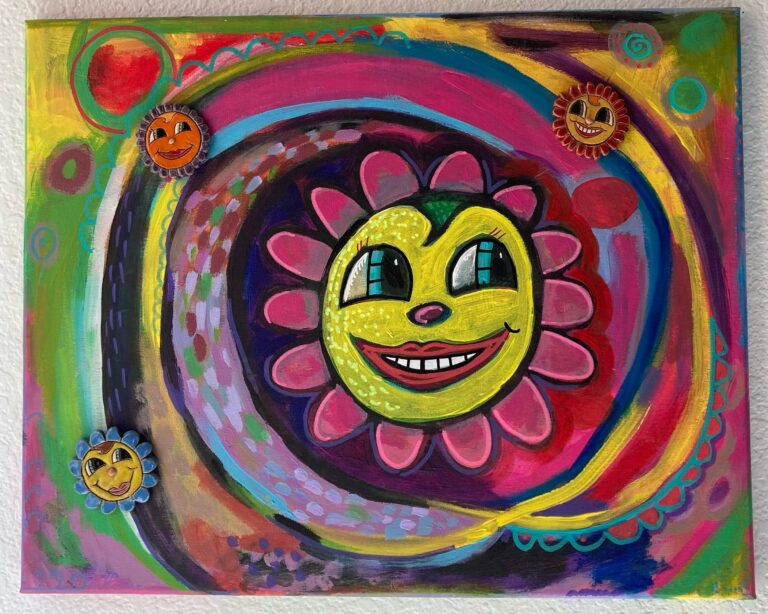
The Artery is an artists cooperative located in downtown Davis that features new fine arts and contemporary crafts from local artists every month. From Oct. 28 to Nov. 20, The Artery presented “Cuteware Celebration,” a showing of ceramics and paintings by Heidi Bekebrede. 

Bekebrede is a UC Davis alumna who graduated with a degree in studio art in 1980. She studied under well-known professors such as Bob Arneson, who sculpted the eggheads that can still be spotted on the UC Davis campus, as well as Wayne Thiebad, Roy De Forest and Cornelia Shulz. Bekebrede has also made a positive impact on the community by teaching children’s painting classes in Davis. 

After graduating and moving away decades ago, The Artery was one aspect of Davis that Bekebrede said drew her to move back to the college town. 

“I still love The Artery because it has allowed my artwork to have lots of friends,” Bekebrede said. This outlet has served as a way for many people to discover and enjoy the work of established and emerging local artists. 

One of Bekebrede’s signatures is including eyes in her work, which she said is why a lot of her work has been perceived as “cute.” 

“I kept hearing the word cute. Cute, cute, cute,” Bekebrede said. “I wasn’t sure if I liked that until I looked it up in the dictionary. The first definition was daintily pretty. But, the second definition was shrewdly clever — once I heard that, cuteware it was.” 

Upon entering the Cuteware Celebration exhibit, what stood out immediately was the colorful palette of Bekebrede’s work and the intertwining of ceramics and paintings. 

“I like to have every single color of the rainbow in every one of my pieces,” Bekebrede said. “To me, it’s like eye candy.”

Bekebrede’s work has a playful mood that stems from her personality; she carries a ceramic finger pickle and strings in her purse just in case she runs into any of her students or someone who wants to learn string tricks. 

Her exuberant style not only makes the process of creating art fun for her and fun for us to look at, but it also holds a deeper meaning: the importance of carrying a lighthearted manner throughout life. Bekebrede said that through tough and serious times, maintaining a hopeful mindset and being optimistic enough to accept your tougher feelings allows them to pass by easier. 

For emerging artists, Bekebrede has some advice: “Get some materials, maybe do it with a friend, take a class, maybe sip wine and paint. But get out and just do it.”

For more fine arts stories and showings, you can visit the Artery in downtown Davis or check out their website. Their annual holiday sale will begin on November 22 and their next monthly Art About event will be on the second Friday of December. 


Written by: Ruma Poudell — arts@theaggie.org

Why you should care about the James Webb Space Telescope

Meet the amazing telescope that took 30 years to build, and learn about the international collaboration and new discoveries it has made possible


By EMILIE BROWN — emrbrown@ucdavis.edu


It’s been almost a year since the James Webb Space Telescope (JWST) was launched, and already it has transcended our greatest expectations, inspiring new generations of scientists and bringing us closer to finding answers to some of the universe’s biggest questions.

The JWST gracefully aligns 18 gold-plated mirrors in interconnected hexagonal shapes and four instruments, all suspended on a silver sun shield to bring us the clearest pictures of the universe ever captured. It’s elegant, streamlined and simply beautiful.

Even more impressive than the graceful design of the JWST is what it took to make it a reality. Creating it required around 30 years of planning, testing and building in collaboration with thousands of engineers, physicists, mathematicians and technicians across 29 U.S. states and 14 countries. Multinational collaborations in science are almost always beneficial, but the successful creation of the JWST is nothing short of remarkable. It was designed so perfectly that, following a very successful launch last December, its expected mission life was doubled. 

When you look up into the sky at night, you are looking at light that has already left galaxies and stars thousands, millions or even billions of years ago, so you are essentially looking into the past. The JWST allows us to see farther into spacetime than ever before. Its mirrors and infrared capabilities mean that its best images can capture objects over 100 times dimmer than the next best space telescope, the Hubble Space Telescope. In addition, its instrument’s data is not distorted when looking through dust clouds, meaning we can use it to watch the birth of galaxies. 

The scientific possibilities with an instrument as powerful as this one are endless. Already, scientists have been able to use data from the telescope to investigate some of the most pressing issues in astronomy and physics today. From the JWST’s first image alone, scientists have been able to study gravitational lensing effects and dark matter. 

I believe to appreciate being alive on earth, and the rarity and beauty of existence, we must appreciate our universe and how it came to be. The JWST can help us learn more about the creation of our universe and its growth over time, shedding light on our place in the universe as well. 

Just as the Hubble Space Telescope inspired the last generation of space-loving scientists, the JWST is inspiring a whole new generation to look to the stars. If you haven’t seen the JWST Deep Field or any other JWST images, I highly suggest you look it up. Put simply, they are mesmerizing. Hubble’s images of galaxies thousands of lightyears away instill wonder in schoolchildren and high school students alike. The JWST will create more awe-inspiring images and scientific knowledge, carrying on Hubble’s legacy.

It took roughly $10 billion to build the JWST. I wouldn’t be surprised if you doubted the usefulness of the new telescope, or if you think that the resources and brain power spent on the JWST would have been more beneficial on Earth. However, less than a year after launch, the JWST is already providing humanity with the clearest, deepest, widest and most complete images of the universe yet. It has proven what great work can happen when scientists collaborate, it has inspired the future scientists we will someday rely on and it has helped us learn and theorize about how we came to be. 

Not only that, but by letting us look more closely at other planets and star systems, we can use the JWST to make technological advances and learn more about our own planet. It is one of the greatest assets to civilization as we know it, and the future beneficial applications of the JWST are unlimited. 

If you would like to learn more about the JWST, check out webb.nasa.gov.


Written by: Emilie Brown — emrbrown@ucdavis.edu


Disclaimer: The views and opinions expressed by individual columnists belong to the columnists alone and do not necessarily indicate the views and opinions held by The California Aggie.

First instance of ‘backward walking gene’ found in child of two former UC Davis tour guides

But she can’t walk forwards, which is a bit sad, actually


By ELLIE SCHULTZ —  eeschultz@ucdavis.edu


Last week, UC Davis alumni Johannes and Clarissa Tompkins brought their 13-month-old daughter, Agatha, into Dr. Jennifer Cronenberg’s developmental genetics lab. Agatha, named in homage to her parents’ alma mater, only walks backward.

“She just got up and took a few long strides back without even looking behind her,” Clarissa recalled. “She maintained perfect eye contact with me while she did it.”

The couple met back in 2012 when they bumped into each other at the MU while giving their respective campus tours. Of course, both became much more skilled at walking backward before they graduated. In fact, Johannes still works as a guide in Old Town Sacramento. For the last month, Agatha has made backward strides around the house, at the park and into countless doctor’s offices, leaving health professionals utterly dumbfounded.

This case has Cronenberg and her lab staff completely reconsidering their stance on genetic determinism. 

“This isn’t a mutation,” Dr. Cronenberg said. “Tompkins’ years of projecting over the racket of superfluous construction projects and walking the vastness of this very campus, the largest UC in acreage, have simply resulted in a child genetically-suited to be a tour guide.”

Imaging of Agatha’s feet shows a consistent morphology; a flatter ball and significantly more flexible tendons compared to the average human.

Though baby Agatha hasn’t said her first words yet, Johannes hopes that when she does speak, her voice will be “kind, but deafening,” ready to follow in her parent’s footsteps.

Of course, the Tompkins want their daughter to enjoy childhood before being thrust into work because life as a tour guide can be draining. Long hours, excessive physical activity and endlessly dumb questions (there is most definitely such a thing) have historically deterred capable individuals from this line of work. But unfortunately, after taking more in-depth scans, it seems as though backward is the only direction Agatha will ever be able to walk.

Back in Cronenberg’s lab, the staff has seen Agatha as a glimmer of hope for an otherwise doomed human race. Research assistant Leann Briggs reflected on this moment, almost forgetting that the university doesn’t pay her a living wage: “Maybe we aren’t completely set to evolve into technologically-dependent life forms, fused into our desk chairs. There are some funky fresh genes floating around, and maybe if I procreate with another grad student, our child will be able to survive without being able to cover the cost of living!”


Written by: Ellie Schultz — eeschultz@ucdavis.edu


Disclaimer: (This article is humor and/or satire, and its content is purely fictional. The story and the names of “sources” are fictionalized.)

Culture Corner

The Arts Desks’ weekly picks for music, movies and more


By CLARA FISCHER — arts@theaggie.org


Book: “The Great Gatsby” by F. Scott Fitzgerald (1925)

Yes, this book is part of the much-disputed classical canon, and most people probably only know it from being forced to read it during their junior-year English class in high school. However, I consistently claim this book as my favorite of all time because of its beautifully melancholy prose and complex themes. Was Gatsby truly in love with Daisy, or did she represent something greater than one human could ever live up to? At the end of the day, what motivates all of us? Fitzgerald has a way of exploring concepts that resonate across generations, especially among young adults — the search for identity and a sense of belonging is something that transcends any zeitgeist. 


Song: “Sign of the Times” by Harry Styles (2017)

I wouldn’t consider myself a Harry Styles superfan, but after seeing him live, I might become one. His debut single remains, in my opinion, one of the best in his discography, and seeing it performed in real life was a quasi-out-of-body experience. The lyricism, musical production and vocal performance on this track are top-notch, and Styles backs it up with his live performance. Though he brings energy and vocals to every song performed, “Sign of the Times” was one of the most special parts of the show because of its emotional pull. 


Movie: “Heathers” dir. by Michael Lehmann (1989)

Think “Mean Girls” but with a murderous streak. I’m a sucker for any form of media exploring the complexities of the female adolescent experience — as well as anything that uses colors as a form of symbolism. “Heathers” delivers on both counts, with the story focusing mainly on the dynamics between Veronica, JD and the titular Heathers (Chandler, McNamara and Duke), as well as other students at Westerburg High. With a stellar cast, compelling themes and sardonic dialogue (who could forget Heather Chandler’s iconic chainsaw line), this classic teen movie is worth the watch. 


TV Show: “Dancing with the Stars” (2005)

When it comes to reality TV shows, I like mine as cheesy and nonsensical as they come, and “Dancing with the Stars” is pretty high up there. Whoever thought of the idea to enlist as many celebrities (a generous term with the likes of some of the contestants in recent seasons) as possible to learn how to ballroom dance is so silly that it actually becomes entertaining. It’s honestly heartwarming to see the effort most contestants put into bettering their scores every week, making it easy to stay invested until the end of the season. 


Written by: Clara Fischer — arts@theaggie.org

Native American community members discuss UC Davis Land Acknowledgement Statement

0

UC Davis was built on land that originally belonged to the Patwin people, and according to community members, the university’s Land Acknowledgement Statement is only the beginning of reparations

By ANVI KALUCHA — features@theaggie.org


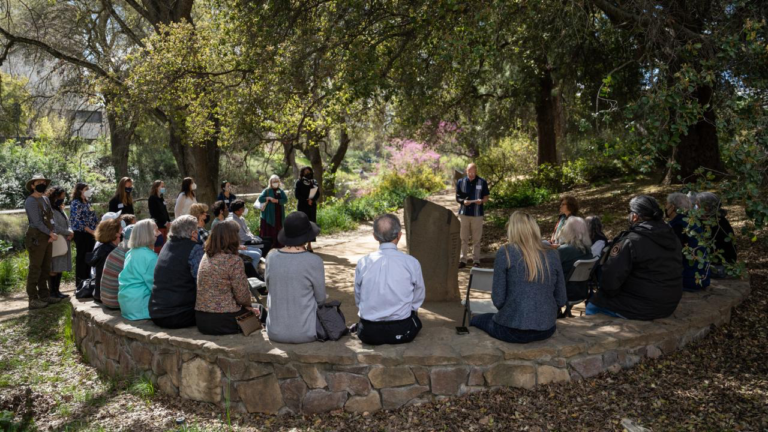
Posters reminding students of the UC Davis Land Acknowledgement Statement are posted all across campus — in bathrooms, on bulletin boards and in many community spaces. The statement, which was updated on March 23, opens with, “We should take a moment to acknowledge the land on which we are gathered. For thousands of years, this land has been the home of Patwin people.”

The Patwin consist of three federally-recognized tribes: Cachil DeHe Band of Wintun Indians of the Colusa Indian Community, Kletsel Dehe Wintun Nation and Yocha Dehe Wintun Nation. The first ancestral remains found on campus were discovered in 1999 where the Mondavi Center for Performing Arts is now located. 

Native American Studies Professor Juan Ávila Hernandez had close ties with Patwin Elder Bill Wright, who worked with UC Davis on the land acknowledgment as a representative for his tribe.

“In meetings that we would have, it’s really important that we would take our cues from him,” Ávila Hernandez said. “For me, that was always a very present idea or concept or feeling, you know, that we […] were doing something right.”

When it was first established, the statement was revolutionary, according to Native American Studies graduate student Melinda Adams.

“The university has reached out to create the Land Acknowledgement Statement, which […] was pretty impactful because, at the time, we weren’t acknowledging Native peoples or the ancestral homelands to which the university’s occupied or situated,” Adams said. “So I would say, at the time, it was a movement forward in [making visible] Native people, students, staff, faculty [and] community members in Davis and the surrounding areas.”

The Land Acknowledgement was created to foster conversations surrounding the historical treatment of Native American tribes and continue making reparations. But according to Native American Studies Associate Professor Justin Spence, it is just the beginning of the work necessary to support Native peoples. 

“I think that that was an important step of really just making sure that […] Patwin people are not relegated to the mists of history,” Spence said. “They’re part of the ongoing conversation of what UC Davis is, where UC Davis is and what the university’s responsibilities and sort of mutual relationships and commitments are with Native folks whose lands the university has been built on.” 

The lack of education about Native American communities extends to public schools, where Indigenous people have been unfairly represented, according to Spence, who is looking to rectify this gap by educating students and staff on campus. 

“We’ve been doing a lot of work lately to try to create more opportunities for students, staff, faculty [and] anybody on campus to learn more about local Native American groups in Northern California, through things like lectures and course offerings, and to really have more opportunities for people to understand [the culture],” Spence said.

The fight for representation and acknowledgment for Indigenous tribes is far from over, according to Spence.

“I think that the Land Acknowledgement Statement is a beginning,” Spence said. “It’s a good start, but it’s also not the end of the story. There need to be some more conversations, maybe sometimes difficult, uncomfortable conversations about what else the university can be doing to honor those commitments and those responsibilities.”

Native American students and allies looking for support can find many resources on campus. The Native American Academic Student Success Center, known as the Native Nest, has counselors and advisors available for students and hosts social events weekly in community spaces.


Written by: Anvi Kalucha — features@theaggie.org

Davis Youth Softball Association and civil rights nonprofits settle with the city of Davis over Fair Play Act violations

0

A settlement between the associate and the city of Davis will provide new opportunities for girls’ youth sports


By MADELEINE YOUNG — city@theaggie.org


On Oct. 27, the Davis Youth Softball Association (DYSA), backed by nonprofit groups Legal Aid at Work, Fair Play for Girls in Sports and the California Women Law Center, came to a settlement with the city of Davis. The settlement addressed ongoing allegations against the city for noncompliance with the Fair Play in Community Sports Act, which was passed nearly 20 years ago, and promised renovations and improvements to softball facilities across the city of Davis that have yet to be implemented.

The city will begin improving facilities and programs to promote fair play, equality and opportunities for girls in sports. The city will additionally manage funding, equipment, practice, coach compensation, publicity, qualified umpires, judges and game schedules, according to the settlement.

DYSA President Jennifer Martinez has voiced her concerns regarding the state of DYSA softball fields with the support of parents, players and nonprofits over the past year.

“We noted that there were some inequities between different sports organizations that are down and we wanted to have equity for girls,” Martinez said. “It’s not girls against boys, it’s equity for the youth in the community.” 

Despite the Fair Play Act being in place for almost two decades, the association, players and parents voiced concerns over the differences between the F Street softball field and the Davis Little League baseball fields. 

“There’s no fences, no bathrooms, there’s no concessions standards, there’s no lights, there’s no place to sit for the girls, but right across the street, the boys have all of those things,” Martinez said. “And then as they grow up, they notice these things and they start asking questions.”

Legal Aid at Work was one of the nonprofits that contributed to the settlement. Elizabeth Kristen, the legal aid director and senior staff attorney of the Gender Equity and LGBT Rights Program for Legal Aid at Work, wrote a letter in Oct. 2020 addressing the violations of the Fair Play in Community Sports Act with support from other organizations.

“A lot of girls don’t have access to sports in their schools, maybe not until they get to high school, and club sports are really expensive and sometimes out of reach,” Kristen said. “And so having access to fair opportunities in community sports is really important.”

In order to assist the association and reach this settlement, Kristen gave a prepared testimony that addressed the violations and put forth specific steps Davis should take to comply with the act. Two years later, a settlement was finally reached on Oct. 27, 2022.  Kristen explained the improvements that the settlement will provide. 

“They’re going to do everything, from things that seem small, like access to drinking water, to bigger improvements like dugout improvements, adding more shade and creating better storage,” Kristen said. “There’ll be a multi-use building, there’ll be some lights which allow them to use the fields more and there’s going to just basically be generally improved facilities and maintenance of those facilities.” 

With these changes, the DYSA hopes to provide better opportunities for girls to play softball. Martinez said that the board, players and parents are all looking forward to these improvements which previously seemed unattainable.

“It’s wonderful for the girls to grow up in a place where, when you see something that’s wrong and not right or not just, […] you speak up and you work hard and you never give up. Then things will happen,” Martinez said. “And I’m really proud of what we’ve done and what the girls in this generation and the future generations will have because of the tenacity of this board.”


Written by: Madeleine Young — city@theaggie.org

Friends of the UC Davis Arboretum and Public Garden conclude fall plant sales

The seasonal sales are a hub for the Arboretum and local plant shops to sell stock and for growing experts to share advice with community members


By LILY FREEMAN – campus@theaggie.org


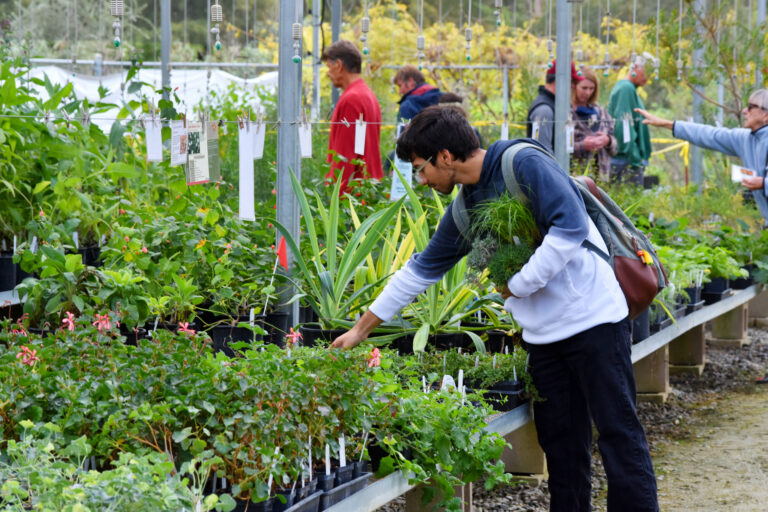
After welcoming the public back to the UC Davis Arboretum Teaching Nursery for the first time in three years due to the COVID-19 hiatus this fall, the Friends of the UC Davis Arboretum and Public Garden completed their final plant sale of the fall 2022 season on Nov. 5. These large-scale sales took place several times this season, according to their website, and involved dozens of students, volunteers and nursery staff, who grew and propagated some of the plants themselves on-site at the Arboretum. 

The concluding sale offered many varieties of low-water, easy-care plants, according to the Arboretum website. Also present at the sale were staff members willing to share their knowledge about growing plants.

Enola Lagrave, a third-year environmental science and management major and a staff member on the Arboretum Nursery Management team, detailed her involvement in preparing for the plant sales. 

“While sometimes we get the plants from different local distributors, we also have patches of plants around the Arboretum that we take pieces from,” Lagrave said. “[We] put them in tiny little pots, and once they’re grown a little bit, we’ll put them in bigger pots, and eventually, they’ll go on the sales floor. We do a lot of our own cuttings [and] other times, we take care of watering, pruning or making sure they look nice and healthy.” 

The sale also partnered with other local plant shops and organizations that had information to share about growing plants. Dispersed throughout the nursery, community members stood alongside tables showcasing their diverse plants and infographics about growing techniques and environmentalism. 

Lawrence Groves, the founder of The Growing Groves, a newly-opened plant shop in downtown Davis, described his experience collaborating with the Friends of the UC Davis Arboretum and Public Garden for the first time this fall. 

“I was kind of gagged when we were reached out to by the Arboretum,” Groves said. “It was very much like a moment of ‘Oh my gosh, these people know who we are.’ Being able to meet the directors and everyone who makes this possible has been a really present and amazing experience. It’s been really amazing feeling like a kind of staple in the community.” 

Groves said that he hopes to come back to the next plant sale season and “have new things to show everyone.” 

Amelia Swanson, a second-year design major who attended the plant sale, described her experience as a first-time customer.

“It was such a cool community to feel a part of,” Swanson said. “Everyone was so knowledgeable and willing to help me, whether I was looking for a plant or wanting to get involved with the community garden. The plants were super affordable, which is super cool considering that they aren’t that accessible in a lot of places. I definitely see myself getting involved in the future.”

Lagrave said that in hopes of promoting more community involvement in future plant sales, volunteers handed out informational pamphlets at the final sale about how community members can become involved with upcoming events. She also outlined the qualifications for volunteers. 

“You can be as unqualified as you’d like,” Lagrave said. “We have a bunch of people that have just a mild interest in plants and they’ll volunteer here. Our interns who have been here only a few weeks are already on the sales floor. You know a lot more than you think.” 

Lagrave said that while she works on the Nursery Management team every season, interns can pick and choose the seasons and events they want to work.

Although this was the concluding plant sale of the fall 2022 season, volunteers promoted the upcoming spring 2023 season throughout the event. The dates for the spring season sales will be announced soon, according to the Arboretum website. 

Larissa Thatcher, a third-year environmental science and management major and intern at the Arboretum, said that they have “never been this fully stocked for spring.” 

“It should be a good season!” Thatcher said. 


Written by: Lily Freeman — campus@theaggie.org

How to spend a day in Davis

0

Follow an itinerary curated by locals to visit popular spots downtown and on the UC Davis campus


By REBEKA ZELJKO — features@theaggie.org 


Some believe that an unassuming town like Davis doesn’t have much to offer beyond its cows and pastures, but locals say otherwise. If you’re just visiting, or looking for something new to do with your friends, here is a curated itinerary to best enjoy what Davis has to offer. Try beloved eateries, experience beautiful nature and visit incredible museums frequented by Davis residents. 

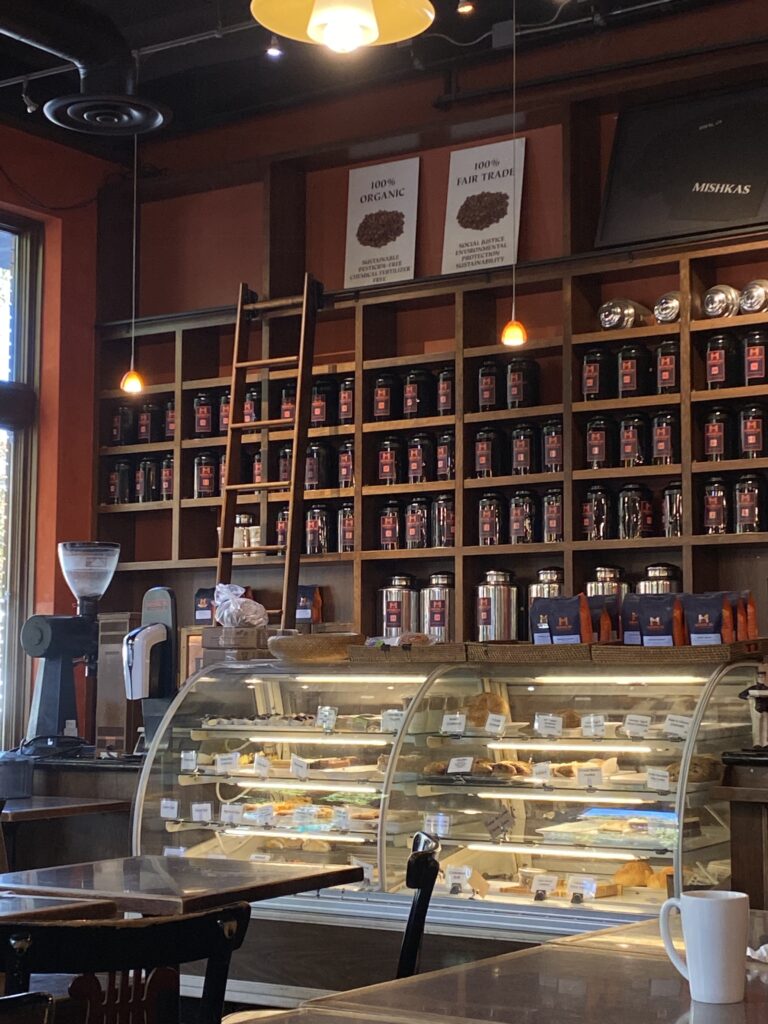
The first stop on our list is the local coffee shop Mishka’s. Stepping into this brick building, you’ll be immediately welcomed by tall ceilings, warm lighting and the smell of freshly-brewed coffee. Artwork from local artists is on display and for sale. 

Mishka’s is always buzzing with people, whether they be studying for a final or catching up with friends. According to the Mishka’s website, the coffee shop was established in 1995 and inspired by European cafes. Their emphasis on quality, locally-made products is felt every time you take a sip of the coffee they roast and brew themselves. 

Hukum Sekhon, a fourth-year environmental science and management major, is a regular at Mishka’s. 

“The ambiance of Mishka’s is honestly why I keep going back,” Sekhon said. “It’s a great spot to study at, and they always get your coffee out fast no matter how busy they are.”

Mishka’s serves a variety of drinks and food without compromising the quality.

“All of the coffee and pastries are honestly amazing,” Sekhon said. “You can’t go wrong with any of them.”

Mishka’s long-standing presence in Davis is a testament to the quality, consistency and ambiance many locals have grown to love. The cafe is open every day at 7:30 a.m. on 2nd Street and is worth a visit.

“Mishka’s just feels like that special local coffee shop,” Sekhon said. “You always know what to expect going into there. They don’t disappoint.” 

After grabbing a cup of locally roasted and brewed coffee, we recommend you bike or walk over to the UC Davis Bohart Museum of Entomology. 

According to their website, the Bohart Museum was established in 1946, and their collection of over seven million specimens is the seventh-largest in all of North America.

Joseph Johnson, a third-year political science major, discovered the museum, which he describes as a hidden Davis gem, earlier this year. 

“I went with my girlfriend over the summer when they were celebrating the California butterfly, and the staff was so excited to involve students in entomology,” Johnson said. “I would recommend it to anyone who is struggling to find a new place to explore [in] Davis.”

The Bohart Museum is exemplary of the diverse activities Davis has to offer. The enthusiastic staff and impressive variety of insects that many visitors would otherwise never see make it a unique spot.

“It’s the only place where you can hold roaches or get an up-close-and-personal look at some of the most beautiful insects in our world,” Johnson said. “You have free rein to look through the thousands of pinned insects.”

The Bohart Museum is open Monday through Thursday from 9 a.m. to 12 p.m. and 1 p.m. to 5 p.m.  

When you are in need of a midday pick-me-up, Zia’s Delicatessen is well-known and recommended. Opened in 1995, Zia’s offers an array of Italian products like jams, cured meats, traditional Italian desserts and delicious made-to-order sandwiches. 

Kayle Chavez, a fourth-year psychology major, is a repeat customer at Zia’s. 

”It’s a one-stop shop for all your Italian snacks, foods and coffees,” Chavez said. “There’s no place like it.”

She said that their products’ quality and value sets Zia’s apart from other food spots in Davis. 

“Why would you go to Panera when you could go to Zia’s for cheaper and better quality?” Chavez said. “Zia’s is a bang for your buck because everything is so high-quality, and it is superior to any other sandwich shop in Davis by far.”

Zia’s serves something for everyone. 

“The sandwiches are super customizable, and there are so many options to choose from,” Chavez said. “They have a lot of vegetarian options, too, which is great.”

The local feel is very important to Zia’s. 

“The deli has created an extended family of customers,” owners Kevin and Anne Marie Crilly said on Zia’s website

After grabbing a sandwich at Zia’s between 10 a.m. to 3 p.m. on 3rd Street, head to the UC Davis Botanical Conservatory. Its arrow pathways are overflowing with flora its beautiful sanctuary is teeming with plant life that everyone can visit. 

Zhuowen Kong, a fifth-year biomedical engineering major, said that she loves going to the conservatory in her free time.

“Do you not want to be amazed by nature?” Kong said. “The leaves are taller than you, and the color is just fascinating. And the way they are laid out, it’s so aesthetically pleasing. It makes you feel like you are walking through a jungle.” 

Kong also pointed out that the conservatory is a great place for plant enthusiasts to visit, but everyone can gain an appreciation for nature by going to the conservatory. 

“For people who love plants in general or just interested in nature, they have a great range of plants,” Kong said. “But I’ll take anyone I know there. It’s just fantastic.” 

According to the conservatory’s website, there are nearly 4,000 specimens on display that you can view through tours that are available to the public. The conservatory is open Monday through Friday, from 9 a.m. to 4:30 p.m. on Shields Avenue.

To wind down your busy day in Davis, stop into the Root of Happiness Kava Bar. It features a well-curated ambiance with murals, plants and tons of cozy seating. For those who are 18 and older, grab a kava drink and enjoy the relaxing benefits of the beverages. 

According to their website, their drinks are made from a kava root sourced from Hawaii, and it’s a drink that’s been enjoyed by Pacific Islanders for over 3,000 years. Share a drink with some friends and enjoy the positive, relaxing sensation that kava brings.

Farah Noor, a third-year political science major, goes to the Kava Bar with friends often.

“I used to go with this group of people, and it was our weekly activity,” Noor said. “Even if you don’t drink kava, it’s just a comfortable environment.” 

She said that the space itself is what draws many people into the Kava Bar. 

“They have couches, magazines, a great environment and amiable service that attracts customers,” Noor said. “I have literally fallen asleep there before.” 

Root of Happiness is also a great place for people who are under the age of 21 and looking for a place to go out and enjoy themselves with friends. 

“It has that unique touch in Davis,” Noor said. “Not a lot of students can go to the [21-and-up] places in Sacramento and Davis, so it’s a great 18-and-up spot.”

After a long day spent hopping around Davis, we hope you can see all the great variety of activities, restaurants and local spots the town has to offer. 


Written by: Rebeka Zeljko — features@theaggie.org

Thanksgiving checklist

Drawn by: Lidya Shcherbakova –– lvshcherbakova@ucdavis.edu


Disclaimer: (This cartoon is humor and/or satire, and its content is purely fictional. The story and names of “sources” are fictionalized.)

Negotiations continue after first week of UC worker strike

Progress was made in negotiations between UC officials and UAW, but current UC offers regarding pay increases still do not meet the union’s demands

By KAYA DO-KHANH — campus@theaggie.org

The largest strike in higher education history, which began on Nov. 14, has continued into its second week. Academic workers have set up picket lines on Russell Boulevard and College Park/Howard Way, as well as on Hutchison Drive and La Rue Road from 9 a.m. to 1 p.m. and from 12 p.m. to 4 p.m. every day of the work week since the strike began. 

In addition to the picket lines, other protest activities have been planned and enacted throughout the duration of the strike, including rallies, speakers and more. On the first day of the strike, there was a midday rally in front of Mrak Hall, where Chancellor Gary May’s office is located. The rally featured speakers from the Teamsters Local 2010, which represents the University of California’s (UC) skilled trades workers. There was also a sit-in inside the hall from 10 a.m. to 4 p.m. on Nov. 18. 

The picketers have been fed daily by a self-organized group of academic strikers and undergraduate students, according to a recent press release, with the “strike kitchen” serving food purchased with donations and cooked on a camp stove, as well as baked goods, fruit and vegetables that community members have dropped off. 

The unions, United Auto Workers (UAW) 2865, Student Researchers United (SRU-UAW) and UAW 5810 are demanding an annual pay increase from $24,000 to a minimum of $54,000. Students on the picket lines at UC Davis, such as fourth-year physics Ph.D. candidate Samantha Abbott, said that their wages do not support the growing cost of living, as most academic workers are spending 50% to 60% of their monthly paycheck on rent.

“I hope to see a fair contract,” Abbott said. “We have been underpaid for a long time. I hope to be able to pay less than 30% of my paycheck to rent […] I want to be able to come home everyday and feel like the work that I am doing is actually valued and that I don’t have to spend my time and energy outside of school trying to keep my life in order because I have the proper resources from the school that controls almost every aspect of my life. I want them to empower me to be able to do the things that they ask of me.” 

Since the strike began, a number of classes have been canceled or moved online, disrupting undergraduate education. There have been disruptions to the Unitrans Memorial Union bus terminal, due to the picket line on Russell Boulevard and College Park/Howard Way, making it difficult for some students to arrive to class on time. However, there has still been undergraduate support on the picket lines, according to Abbott. 

“I had some anxiety, to be honest, that some students would think that I was betraying them,” Abbott said. “But they were all extremely supportive. They wanted to see me and all of the other TAs be actually paid for what we do.” 

On Nov. 18, ASUCD released a letter acknowledging the impact that strike action has had on undergraduate education and asking administrators to make emergency changes to typical policy as a result.

The statement calls upon the Executive Council of Academic Senate, which, according to the letter, is charged with “[taking] measures to cope with [emerging problems] before they become urgent,” to convene an emergency session in order to consider an extension of the Pass/No Pass grading option and a recommendation to faculty to utilize virtual exams and waive attendance-based components of final grades for the remainder of the quarter.

“The largest work stoppage at any academic institution in history and the impact thereof on the undergraduate student body surely constitutes an urgent circumstance,” the letter reads.

On Nov. 15, Provost and Executive Vice Chancellor for Academic Affairs in the UC Office of President Michael Brown sent a letter to inform faculty of the university’s latest updates on negotiations and information on significant areas of disagreement. 

“Under our current proposals, our academic student employees would be among the highest compensated among public universities in the Association of American Universities (AAU), with compensation similar to what top private institutions offer,” the letter from Brown reads. 

Brown said that the university has reached tentative agreements with the UAW on areas such as work environment and health and safety matters, but there are still areas that separate them from the union’s proposal. Areas of separation include the proposal to tie compensation directly to local housing costs and waiving out-of-state tuition for international and other non-resident graduate students. 

“Tying compensation directly to housing costs […] could have overwhelming financial impacts on the University,” the letter from Brown reads. “One review of the Union’s proposal predicts an annual unfunded obligation of at least several hundred million dollars, with inflationary pressure and no cap.”

On Nov. 17, the union representing academic workers said there was progress made in negotiations with UC officials on issues of parking and transit, job security provisions and paid time off, but the UC’s slight increase in terms of compensation does not meet their demands, according to an article from the Los Angeles Times

The new offer indicates a raise of around $132 per month for student researchers, which would result in the average worker paying 56% of their income on rent. 

“We still think this is far from sufficient,” President of UAW 2865 Rafael Jaime said in a statement to the Los Angeles Times. 

On Nov. 28 at 11:31 p.m., the University of California (UC) and UAW 5810, the union representing two of the striking units, academic researchers and postdoctoral students, reached a tentative agreement on contracts for the two parties. 

However, the members of UAW have decided to continue to strike in solidarity until the two remaining units, academic student employees and student researchers, come to an agreement with the UC.

The UC proposed that the university and unions engage with a third-party mediator as they move forward in negotiations, according to Brown, and in the evening of Dec. 9, the UC Office of the President sent out a letter officially announcing that after “multiple requests […] the UAW has accepted our invitation to join us in mediation with a neutral third party.”

The most recent offer to academic student employees and graduate student researchers as of Dec. 9, according to the letter, includes salary increases totaling 12.5% to 48.4% over three years, and also addresses child care reimbursements, transit subsidies and health care premiums. 

Mediation is confidential, according to the letter, and during the process, neither party will be allowed to speak publicly about the negotiations. The letter went on to say that a timeline for mediation will be decided on soon. Until then, the strike of 48,000 UC academic workers persists. 


Written by: Kaya Do-Khanh — campus@theaggie.org


This is a developing story, check back for updates. This article was last updated on Dec. 10 at 11:38 p.m.

Why I hate ‘chai tea’

Traditional chai will always outclass café “tea tea”


By JENA TUFAIL — jjtufail@ucdavis.edu


On one fine early morning before this quarter’s midterms, I walked into a cozy local café (Peet’s) to order a cup of energy (coffee). Gazing at the menu, I wondered to myself, “What lovely drink shall I waste my money on for the third time this week?” And it was only Tuesday. 

Suddenly, while waiting in the rather long line, something caught my eye. I squinted to get a closer look, reading the words Chai teaaloud. I was instantly confused. “Doesn’t chai literally mean tea?” I asked myself. 

Since I’m Pakistani, I already knew the answer to that question; “chai” does indeed translate to “tea.” But every time I read the words “tea tea,” I still feel confused. 

Instead of getting a caramel frappe for the millionth time this quarter, I decided that on this fine rainy morning before I sat down to take a long, difficult midterm, I would indeed order a “tea tea” for the first time in my life. 

My stomach turning, (because of my impending midterm?) I got excited just to be disappointed. All my life I’ve drunk “traditional chai,” which I love. I love not only its sweetness, spices and aroma, but also that, depending on the ethnic group, state, towns and families making it, the recipe and taste will never be exactly the same. 

As I waited for my drink, I tried to be open-minded. The taste of chai always varies, so I made sure to remind myself that this one wouldn’t be like anything I’d tasted before. Hearing them call my name, I excitedly walked to grab my drink. It was my first “tea tea,” and I was excited to become more “cultured.”   

I grabbed a straw and sat down to do some studying. Slowly, I brought the drink to my lips. I took a sip and gasped. I’m not kidding when I say that it was the worst thing I have ever drunk in my entire life. All I tasted was cinnamon! This was nothing like the chai I had drunk before. I was astonished. 

I took a few more sips and it still didn’t grow on me, so I let it sit and simply looked at it while I studied instead (it looked pretty at least.) 

Don’t get me wrong, there is nothing wrong with liking cafe “chai tea.” If I had a good experience with it I probably would have ordered it again. However, I hope that this dramatic story of my experience drinking chai tea for the first time will inspire you to one day try traditional chai.

Recipes differ across South Asia, so there are numerous options, and TikTok is a great way to find easy at-home recipes to try. Although chai is traditionally made with whole milk, oat, almond, soy and water are great alternatives to use as your liquid base for chai. Most traditional chai does consist of black tea and traces of cinnamon, cardamom and vanilla, but to me, it has always been faint. The “butteriness” of the tea is universal, however, and it is a perfect warm treat for winter. 


Below is my family’s own quick and easy way to make chai.

Ingredients: 

  • ¾ cup of milk of your choice 
  • ¼ cup of water 
  • Black tea (we use the Brooke Bond Red Label tea brand) 
  • Cardamom (optional) 
  • Sugar 


  1. Start by bringing the water and milk mixture to a boil (you can use only milk as well) 
  2. Add the tea and cardamom to the pot 
  3. Use a ladle (or spoon) to mix the tea as it heats (make sure to adjust the heat as you continue stirring so it doesn’t overflow). This step will ensure that your tea will have a smooth taste.  
  4. Continue to boil until the color of the tea turns a deep milky-brown color. 
  5. Add your desired amount of sugar.
  6. Stir and enjoy! 

If you try it, I hope you enjoy it, and remember, it’s “chai”, not “tea tea!” 


Written by: Jena Tufail — jjtufail@ucdavis.edu


Disclaimer: The views and opinions expressed by individual columnists belong to the columnists alone and do not necessarily indicate the views and opinions held by The California Aggie.