54.1 F
Davis

Davis, California

Tuesday, December 23, 2025
Home Blog Page 186

The launch of Artemis 1 is the next giant leap for mankind

NASA’s newest moon rocket signals the beginning of a new, exciting era of scientific discovery


By EMILIE BROWN — emrbrown@ucdavis.edu


It’s 1:46 a.m. on the Florida coast, where hundreds of scientists and engineers sit anxiously checking displays. Three-and-a-half miles away, the most powerful rocket humanity has ever built is sitting on a launch pad, booting up systems and completing final tests. The terminal countdown begins, and 30 seconds later, a 332-foot tall, 20,000-pound rocket pushes off with 8.8 million pounds of thrust, shaking the ground and lighting up the night sky as people around the globe watch in awe. The control room explodes with joy as the rocket they have been working on for years finally soars into the sky, paving the way for humanity’s next greatest achievements.

After months of canceled launches due to leaks, technical issues and multiple hurricanes, the Artemis 1 Space Launch System successfully launched Wednesday, Nov. 16 at 1:47 a.m. EST. 

This launch marks the beginning of the Artemis Program, which, among other goals, intends to land the first woman and the first person of color on the lunar surface by 2025. When the original Apollo missions launched in the 1970s, aerospace, physics, mathematics and engineering were dominated by white men. Today, many more women and people of color are coming into scientific research and development, as well as taking on leadership roles in those fields. The Artemis Program is an opportunity to represent both groups’ involvement in space exploration and science overall.

In 1969, when Neil Armstrong first set foot on the moon, millions of families stopped what they were doing to gather around screens and watch. As a result, Apollo inspired millions of kids, and Artemis will carry on Apollo’s legacy. I’m hopeful that with the increased diversity of the Artemis crew, young women and people of color will feel more represented and inspired to enter the scientific field.

The Artemis Program missions are the result of four of the world’s most powerful space agencies united by one common goal. Led by NASA, the European Space Agency, Japan Aerospace Exploration Agency and the Canadian Space Agency all have major roles in the Artemis rockets and systems. The program brings together thousands of scientists and engineers from around the globe, improving relations and opening a path for future scientific collaborations.

The Artemis program will also launch the Gateway Space Station orbiting the moon. In the last 22 years that the International Space Station (ISS) has been in space, it has brought us ways of exploring new states of matter, developing new drugs, helping determine how the universe began, monitoring Earth’s climate conditions, creating water purification systems and assisting cancer research. The research being done on the ISS can not only save lives but help us find new scientific principles we couldn’t have found on Earth. The Gateway Space Station will have the capabilities to conduct research like the ISS but will be able to go even further — its position in a low-gravity environment and its ability to see both the Earth and the sun in one frame make research possibilities onboard endless. 

The success of Artemis 1 means more launches to follow and more discoveries to be made. NASA’s end goal for the Artemis program is to develop a sustainable robotic and human presence on the moon. We will gain valuable insight into living in environments other than Earth, which we can use when we visit Mars in future missions. 

The moment Artemis 1’s rocket ignited marked the beginning of a new era of space exploration. Over the coming years, as Artemis 2, 3 and 4 launch, the program will inspire new generations, put women and people of color on the moon, strengthen international scientific bonds, bring new scientific discovery and help us expand humanity’s reach beyond Earth to the moon and Mars.


Written by: Emilie Brown — emrbrown@ucdavis.edu


Disclaimer: The views and opinions expressed by individual columnists belong to the columnists alone and do not necessarily indicate the views and opinions held by The California Aggie.


Commentary: Exploring obsession and mystique in female protagonists

Breaking down the “obsessed prodigy” trope in popular films and television shows 


By VIVI KIM — arts@theaggie.org


Out of all the popular character tropes seen in movies and television shows, one that never fails to paint an intriguing protagonist is that of the “obsessed artist.” This character typically exhibits some exceptional skill or talent that fuels their drive for success. However, in their pursuit of perfection, they end up losing themselves in a cycle of self-destructive behavior. 

These characters stereotypically highlight the disturbing aspects of obsession, addiction and competition in an interesting way — especially when they are women. 

When you see female-centric films like “Clueless” or “Black Widow,” where the lead is either a superficial teenage ditz or an undeniably strong and empowering heroine, it is easier to spot their underlying motives, behaviors and not-so-subtle quirks. Though they don’t exude quite the same charisma as these traditional female archetypes, the “obsessed artist” character shows a type of vulnerability and raw struggle that is far more nuanced and impactful. The question is, how exactly are these characters depicted in modern film and television? 

Nina Sayers, the protagonist of “Black Swan,” is a ballerina whose passion turns into paranoia after she is threatened with losing her lead role in “Swan Lake.” Throughout the film, the delicate, naive ingénue is destroyed by perfectionism and sabotaged by her own delusions. 

Intense and even horrifying in some parts, “Black Swan” highlights the intrusiveness and psychotic nature of Nina’s thoughts with quick cuts and mirror illusions. But the film displays her obsession while simultaneously making her a paragon of beauty and poise. As a result, her passionate talent is not the only lens through which we see her character. Her obsession and dangerous behavior is displayed next to an innocent and delicate personality, creating layers of conflict. 

The character Beth Harmon from “The Queen’s Gambit” is a young chess prodigy who, despite her adverse upbringing, struggle with addiction and prior failures, rises to the top of a male-dominated field. Though she is depicted as an outcast, her looks and attitude are also made a prominent feature of her character. She is shown wearing flamboyant outfits while maintaining her confidence, boldness and wit. 

Toward the end of the series, Beth is essentially at the lowest point in her career. She has grown insecure in her chess skills, and in one scene, she is shown ignoring all contact from her friends, instead dancing around her living room, drinking excessively. While the moment is a culmination of their obsessive behaviors and unhealthy addiction, all the while, she maintains her pretty, feminine looks and mysterious aura. 

Both of these examples not only depict the female protagonists as alluring and elegant but also highlight these traits in contrast to their more unappealing ones. These stories commonly depict two sides of obsession — one where skill and artistry are met with beauty and one where the strive for perfection is taken to unhealthy extremes. 


Written by: Vivi Kim — arts@theaggie.org


Culture Corner

The Art Desk’s weekly picks for movies, books, television and music


By SARAH HAN — arts@theaggie.org


Song: “Blue” by Elina (2020)

In honor of rising stars, I thought I’d highlight Elina, a Swedish singer who has co-written songs for Maroon 5, Hilary Duff and Zara Larsson. Out of her songs, “Blue” is particularly my favorite because it’s calming and warming. The song is about moving on and learning from past experiences; the lyrics also reflect these messages, as it frequently mentions acceptance of life’s changes. My favorite part of the song is its subtlety: the melody and rhythm are pretty constant, which contributes to a relaxing tone. Elina’s voice is also a standout; it’s slightly husky but also piercing, which complements not only the meaning but also the tone of the song. The official lyric video’s aesthetics are also more subtle than the videos of most current pop songs, which is a nice change of pace. “Blue” is cohesive and enjoyable and I highly recommend listening to this when you need some quiet time or want to check out something new.


Book: “Atomic Habits” by James Clear (2018)

“Atomic Habits” is quite life-changing. The biggest takeaway of this book is that in order to grow, one only needs to make atomic improvements, and eventually, these will mount up to a giant change at some point in the future. James Clear supports this statement by providing anecdotes and scientific research, which I personally appreciate since most books about self-motivation lack those aspects. Furthermore, Clear deconstructs different ways to improve self-discipline, and ways to make habits easier and more attractive. The book is validating and welcoming; therefore, it’s suitable for anyone who’s looking for advice. 


Movie: “A Silent Voice” dir. by Naoko Yamada (2016)

“A Silent Voice” is one of those films that leaves you wiser and more educated. The story centers around the relationship between Shouko Nishimiya, who is deaf, and Shoya Ishida, who bullies Nishimiya, as they grow older. What I really appreciate about the film is that it gives equal importance to both characters. The film doesn’t plot the two against each other, but it’s more about how they both learn to accommodate each other’s differences while also repairing their negative past. The key takeaway of the film is that everyone can change. This is particularly shown through Ishida, who has a difficult time preventing his past life as a bully from shaping his current life. I highly recommend the watch if you’re interested in animated films.


TV Show: “The Big Bang Theory” by Mark Cendrowski (2007-2019)

Needless to say, “The Big Bang Theory” is a classic sitcom. Each episode describes daily interactions between the main character, Sheldon Cooper, and his friends. Despite Sheldon’s static personality in the first few seasons, I liked the way the directors showed his character development later on. At the beginning, he was stubborn, entitled and pedantic, but toward the end, he becomes a less extreme version of his past self through spending time with his friends. With this in mind, I like how the show hones in on the value of friendship and how it can drastically change someone’s personality and perspective. Whether looking for a new weekly show or wanting to revisit a classic, I suggest “The Big Bang Theory.”


Written by: Sarah Han — arts@theaggie.org

Knowing your history is knowing yourself

Why stories from our grandparents are important


By YASMEEN O’BRIEN — yjobrien@ucdavis.edu


I’m constantly in pursuit of finding my identity, searching for an understanding of myself that will allow me to better understand the world around me. As I’ve grown more independent and settled into my skin, a strong sense of identity has become my grounding force. This can come from many different places, but one of the most profound ways I have been impacted has been through learning about my family’s history. Knowing the stories of my ancestors has given me a fuller picture of myself. It is powerful and important to me to learn and preserve stories about my family history. 

One of the last things my grandmother ever said to me was, “Remember your roots.” At the time I didn’t process what it really meant, but I did write it down. As I sat at the edge of her bed, I realized how many questions I had never asked her. I was always looking for the right time to sit down and ask more about her life. Eventually, time ran out. 

Timing has never been my strong suit, and I’m sure many of you struggle with it as well. Oftentimes, it is out of our control. So how do we take control of the time we do have? How do we deal with losing close connections to our past, before we can ever ask about it? 

The truth is that losing our grandparents doesn’t have to mean losing a way to learn about our family history. Starting conversations and learning about their lives allows them to live on through our memories. We are the keepers of their stories and the stories of many of our ancestors. This realization has made me feel closer to my roots, and maybe even to a piece of myself I didn’t know was there. The beauty of these stories is that they outlive people. The things they taught me, wisdom they imparted upon me and stories they shared with me will stay with me throughout my life. Everything I learned from them shapes who I am and the decisions I make. 

There are many additional benefits to knowing where your family comes from. Learning about your family and embracing your culture can open your eyes to what makes you unique. This gives you a greater sense of self and improves your self-esteem. Discovering how your family persevered through difficult times can give you the courage and resilience you need to keep going. It builds strength and belief in yourself. Not to mention, knowing the history of diseases and illnesses in your family can help you make good choices to ensure you are staying healthy. 

While the impact of these benefits differs from person to person, they are a valuable addition to anyone’s life. Humans are knowledge-seeking, social creatures. We desire attachment and belonging. Connecting to our family and to our pasts gives us these things. 

We have limited time with our family. While my ability to learn about my heritage is not something that everybody has access to, if you can, spend time during the upcoming holidays listening to the stories of those that came before you. You can’t find that kind of wisdom anywhere else. It is valuable, memorable and personal — not only to yourself, but to future generations as well.

Ask your grandmother what her biggest dream was when she was your age. What achievements was she proud of? Ask your grandfather about his relationship with his father. Who is someone that impacted them deeply? Ask what they used to do for fun when they were little. Learn their stories while you still can. Remember your roots.


Written by: Yasmeen O’Brien — yjobrien@ucdavis.edu


Disclaimer: The views and opinions expressed by individual columnists belong to the columnists alone and do not necessarily indicate the views and opinions held by The California Aggie.

We are giving tech billionaires too much power

Elon Musk’s acquisition of Twitter is proving detrimental to users and employees alike


By CLAIRE SCHAD — cfschad@ucdavis.edu


As you have probably heard, Elon Musk, the richest man in the world with a net worth of almost $200 billion, now owns Twitter. The Tesla and SpaceX founder has added to his portfolio the social media platform that has arguably the most direct line to political communication and makes its way into the hands of over 300 million monthly users around the globe. 

With that much reach comes immense power, which Musk has used thus far to change the nature of Twitter. He plans to limit censorship and promote a platform that takes a maximalist approach to free speech. However, it remains unclear exactly what this will actually look like. 

In the weeks since Musk’s ownership was solidified, the company has experimented with a subscription service called “Twitter Blue.” The idea is that users can opt in by paying $7.99 a month, giving them a blue checkmark by their name and access to other enhanced features, such as tweet editing. 

In Musk’s effort to give more freedom and power to the users, the users did exactly what you might expect — they pushed the limits of that freedom. The initial rollout of Twitter Blue was problematic to say the least. There was a lack of identity confirmation required in the subscription process, resulting in people paying the fee, then claiming to be large corporations, politicians and celebrities. 

One of the most amusing cases came from a user who impersonated Eli Lilly, a prominent manufacturer of insulin. In an attempt to mock the pharmaceutical conglomerate, a verified user took the name Eli Lilly and tweeted, “we are excited to announce insulin is free now.” The post was later removed but only after it racked up over 10,000 likes and 1,500 retweets. The impersonator’s tweet caused Eli Lilly officials to go into crisis mode as the cost of a share in the company dropped over $20 and reignited the public debate over rising costs of insulin. After the problems with the initial rollout, Musk announced that Twitter Blue would be pushed back until the end of November.

While the subscription feature certainly levels the playing field and provides an opportunity for anyone to draw attention to societal problems, it also creates an environment ripe for impersonation and misleading content.

I would argue, however, that the direction that Musk is taking Twitter is largely unsurprising. After all, who else but the richest man in the world would want to ensure that those who have the resources can pay their way to the top? Or in this case, pay their way to unchecked verified legitimacy. 

The chaos of the Twitter transition has been hard to watch from a user perspective, but it is nothing compared to the interior havoc currently unfolding. Following widespread disapproval of Musk’s acquisition of the company, the tech giant decided to lay off half its employees. 

Many of those laid off held roles such as content moderators and data scientists working to control misinformation on the app. After shrinking the company’s workforce in half, Musk put out an ultimatum that all remaining employees must commit to an “extremely hardcore” work environment and further limited the situations in which remote work would be accepted. To no surprise, this resulted in a mass exodus of many more employees. 

Musk’s inability to work with those who are critical of his goals highlights his volatile personality. As he continues to create a toxic work environment at Twitter, the outside world is once again reminded of just how far you can get if you have the money. 

While boycotting Twitter is something that might feel difficult for many, the least we can do is refrain from buying into any enhanced feature that Musk promotes. He has used his wealth and greed to put himself into a position where he can largely control the narrative around both himself and his financial interests, and his practices must be widely rejected by all. We must take a critical look at the dangerous amounts of power that society has allowed tech giants to amass. A fair and equitable society cannot prosper with the presence of unchecked billionaires. 


Written by: Claire Schad — cfschad@ucdavis.edu 


Disclaimer: The views and opinions expressed by individual columnists belong to the columnists alone and do not necessarily indicate the views and opinions held by The California Aggie.

 

Popular Sacramento art exhibit extends its stay

Vincent van Gogh virtual exhibit to remain in Sacramento until January

By LA RISSA VASQUEZ — city@theaggie.org

Van Gogh: The Immersive Experience,” which is organized by Exhibition Hub Entertainment in association with ticket-sales-distributor Fever, announced ticket sale dates for the exhibit in June of this year. Farah Jad, Fever’s senior public relations and communications specialist, said that due to the exhibit’s popularity, ticket sale dates have been extended into next year.

“Due to popular demand, we are excited to announce that we will be extending ‘Van Gogh: The Immersive Experience’ until 2023 in the great city of Sacramento,” Jad said.

According to an educational case study produced by Panasonic Corporation of North America, the exhibit employs projection mapping technology generated by Lighthouse Immersive Inc. and hardware manufactured by Panasonic to emulate the feeling of being inside a painting.

 Dr. Michael Yonan, a European art professor at UC Davis, explained Van Gogh’s art and legacy.

“Van Gogh is a Dutch painter who was active in France in the late 19th century and one of the most famous artists of all time,” Yonan said. “He is a post-Impressionist painter known for his vivid use of color and highly visible, dynamic brushwork. He is also known for his personal suffering and is the classic example of the ‘tortured artist’ stereotype. He only sold one painting during his lifetime but is now one of the most popular artists in history. His paintings sell for millions today.”

Traveling multimedia and virtually-immersive exhibits displaying Van Gogh’s work have become a popular and marketable experience, but a second Van Gogh exhibit occurring at the same time in Sacramento caused some confusion.

John Tellem, who works for “BEYOND Van Gogh: The Immersive Experience” public relations department, explained the different exhibits. 

“There are at least seven different Van Gogh immersive experiences traveling the country and as many as three playing at the same time in some cities,” Tellem said. “We do our best to differentiate the Beyond brand from the other Van Gogh immersive experiences, and our customer service team works hard to help our ticket buyers with questions.”

The “BEYOND Van Gogh” exhibit’s stay in Sacramento concludes on Nov. 27, while “Van Gogh: The Immersive Experience” will run until January 2023. General admission ticket sales for adults start at $39.99 and $34.90 respectively. They are also both offering waitlists for their Monet immersive experiences in 2023.

 According to Yonan,  this type of art exhibit offers a different experience than traditional museums, but technology can never fully capture the experience of seeing these works of art in real life. 

“The Van Gogh virtual experiences are not unique; similar shows have been mounted for other artists recently, including Caravaggio, Monet and Klimt,” Yonan said. “They’re fun, but we shouldn’t confuse them with experiencing the actual, real works of art in their original form. Nothing compares to that.”

Written by: La Rissa Vasquez  — city@theaggie.org

UC Davis student seeks legal action against Housing and Dining Services

Sameer Syed took Housing and Dining Services to small claims court after an alleged contract violation regarding Aggie Cash 


By SYDNEY AMESTOY — campus@theaggie.org


When fourth-year political science major Sameer Syed canceled his meal plan halfway through the quarter earlier this year, the $200 of Aggie Cash he hadn’t spent was voided. Syed said he believes this to have been a contract violation, and has been in a legal battle with UC Davis Housing and Dining services ever since. 

The saga began in March, when Syed, who was a resident at The Green at West Village at the time, canceled his meal plan for the next quarter, along with his roommates. Syed said that he thought the cancellation would only void unused Aggie Cash from previous quarters. However, after canceling, he and his roommates found that their Aggie Cash from the current quarter had also been voided. 

Aggie Cash is a declining balance account that students, faculty and staff use to purchase food at UC Davis Dining Services locations, and is commonly used by students living at on-campus locations, and is included in residential meal plans.

Syed said that he then contacted Housing and Dining Services and requested a refund for his $200 of unused Aggie Cash, but was denied based on the argument that their contract warned students that unused Aggie Cash would be voided if their meal plan was canceled.

“But after checking the contract, there was nothing like that,” Syed said. “It does say that they void Aggie Cash for previous quarters, but […] when I switched to no meal plan, it was still the middle of the current quarter.”

At this point, Syed took Housing and Dining Services to small claims court, where he won four provisions. Some of the provisions included Syed being refunded for his $200 and an amendment to the meal plan contract.

“There’s an Aggie Cash webpage […] that doesn’t say anything about [the voided cash],” Syed said. “So I said, ‘One of the settlement provisions is that you make changes to the website to make it more clear to students.’”

The current 2022-2023 residential housing contract, provided on the Housing and Dining Services website, now includes a revised statement about Aggie Cash in the meal plan section.

“$200 Aggie Cash per quarter is included in the residential meal plan for students living in Residence Halls,” the statement reads. “Students canceling their contract will be refunded for unused Aggie Cash for the current quarter and unused Aggie Cash from previous quarters will be forfeited.”

As of Nov. 21, Housing and Dining Services did not respond to a request for comment on whether the change in policy came as a result of the lawsuit.

Syed also requested public record data from previous quarters regarding the total amount of Aggie Cash that had been voided because of a mid-quarter meal plan cancellation. However, according to Syed, only one previous quarter’s information was provided. 

Housing and Dining Services provided information from winter quarter 2021. According to their data, the total amount of Aggie Cash forfeited from the quarter because of mid-quarter cancellations totaled $13,287.61. In 42 of these cases, the Aggie Cash forfeited ranged from $175 to $200.

In alignment with the terms of the agreement, we have provided Sameer with information regarding the total amount of unused Aggie Cash that was forfeited by students canceling their residential meal plan mid-year,” Donelle Davis, executive director for Housing and Dining Services, said via email. “We have indicated that updates will be made to the housing contract and website for the upcoming academic year.”

However, according to Syed, he doesn’t consider this information to be enough. 

“Now I’m looking at a class action [lawsuit], because all together it seems like this is a pretty extensive problem,” Syed said. “They’ve voided 221 students’ Aggie Cash. And just for this one quarter from those 221 students, they essentially unlawfully took a total of $13,287.61.”

Written by: Sydney Amestoy — campus@theaggie.org

Meet the people who keep the UC Davis Arboretum running

0

Learn about the community members and volunteers that work to make the Arboretum a beautiful place for visitors to enjoy


By REBEKA ZELJKO — features@theaggie.org 


The UC Davis Arboretum is a diverse natural reserve that runs along the UC Davis campus. It includes more than 20 distinct gardens that span over 100 acres, all maintained by hardworking faculty and volunteers from the Davis community. According to the UC Davis Arboretum website, the Arboretum is a great place “for visitors to informally explore the academic richness of UC Davis.”

Carmia Feldman, who is the assistant director of the UC Davis Arboretum and Public Garden, said the botanical gardens stand out from other natural reserves. 

“The Arboretum is unique because it is right in the heart of campus, meaning people can get here by walking or biking from the dorms or the City of Davis,” Feldman said in an email. “This nearby nature makes it an attractive and beloved open space for the campus and local community, as well as making it easily accessible to visitors from farther away.”

Feldman began working at the Arboretum during her time studying plant ecology and science education at UC Davis. 

“It was inevitable that I would get connected with the Arboretum!” Feldman said. “I started as the Education Director of the Arboretum in 2001 and was promoted to Assistant Director in 2006. I truly love how the work we do impacts our campus, community and beyond.”

Community members and students are highly involved in the Arboretum. According to their website, the Arboretum has dozens of volunteer internships and positions for students and Davis residents, all of which contribute to the projects and upkeep of the natural landscape.

Our organization, the Arboretum and Public Garden, is also unique in how we engage people through our innovative initiatives, with an emphasis on giving UC Davis students leadership growth opportunities through our Learning by Leading™ program,” Feldman said in an email. “We have over 100 students participating each year in Learning by Leading™ internships that focus on Sustainable Horticulture, Ecological Land Management and Public Horticulture & Engagement.”

One volunteer, Barbara Ohlendorf, began working in Arboretum’s teaching nursery when she retired in 2010.  

“I’ve always worked with plants,” Ohlendorf said. “It’s my hobby, it was my profession and when I retired from the university, it was a no-brainer.”

Like many others who got involved with the UC Davis Arboretum, Ohlendorf’s affinity for plants and gardening has grown into a full-time passion.

“I started in college in Wisconsin with my indoor plants, and when my plant that I was growing indoors bloomed all winter, I was hooked,” Ohlendorf said. “And at my first house, I had a garden full of zinnias, and I’ve been gardening ever since.”

Like Ohlendorf, Taylor Lewis wanted to make his love for plants his career, and now, he works as the nursery manager for the UC Davis Arboretum Teaching Nursery.

“My initial exposure was as a student [at UC Davis] going through the environmental horticulture program,” Lewis said. “I was growing my first seed that I collected from the California native plant, salvia, and after seeing it germinate and grow, it was sort of my lightbulb moment. I thought, ‘I want to do this every day.’”

Lewis’s love for plants, combined with his love for the UC Davis Arboretum, meant that the nursery manager job was a dream opportunity.

“When I saw this position pop up almost 10 years ago, I knew I had to apply,” Lewis said. “I guess I needed something that was more hands-on, and I knew this was more hands-on than what I was doing.”

For Lewis and many others, the Arboretum is the ideal escape from the city into nature. 

“It’s a free plant museum that people use for exercise, research, being out in nature, forest bathing and getting that nature fix,” Lewis said. “It gets better every single year. We are improving and growing, and our gardens keep expanding.”

Lewis also manages the many volunteers they work with.

“I think there are about 40 different community members that volunteer for the nursery in [some] way, shape or form,” Lewis said. “We have well over 150 volunteers that work for the arboretum and at least 150 for plant sales. You need that many people when you get 1,500 people walking through the doors in four hours.”

The UC Davis Arboretum has a wide variety of internships and positions available. 

“There’s something for every student,” Lewis said. “We have programs like no other on campus. I don’t know of any other program on campus with over a hundred students volunteering.”

Many volunteers and staff are particularly concerned with climate research and studying the effects of different climates on plants. One of these volunteers is Sam Vitt, a fourth-year environmental science major. Vitt works as a coordinator for the urban tree stewardship team and is currently involved in a long-term project.

“It’s a project called the Texas Tree Trials, and we study tree specimens from Texas and their adaptability to differing climates,” Vitt said.

Ohlendorf is also contributing to the Arboretum’s forefront involvement in climate consciousness and how it affects plant life.

“I think it’s important the way that the Arboretum is showcasing native plants and drought-tolerant plants,” Ohlendorf said. “They’ve been a leader in the state for the promotion of these plants and have partnered with the nursery industry to grow and market these plants.” 

Apart from the research she is involved in, Vitt also enjoys the Arboretum recreationally.

“I think it’s really cool, it’s like a living museum from all around the world attached to our campus,” Vitt said. “It’s such a perfect getaway.” 

Vitt’s interest in the Arboretum began before her time as a student at UC Davis.

“I remember coming to the Arboretum before I chose to go to Davis and I was like, ‘Oh my gosh, what is this place? I want to get involved!’” Vitt said. “It’s definitely one of my favorite places.”

 Like other students, Vitt finds refuge in the Arboretum gardens. It’s easy for students to get caught up in their studies, so the Arboretum is a great way to take a step back, according to Vitt. 

“I’ve always been interested in getting in touch with nature, especially because I feel like everything is moving more toward urbanization,” Vitt said. “So I like to push back on it and go back into nature.” 

Lewis emphasized that the Arboretum is the perfect place to connect with nature.

“We definitely are able to make our impact felt across campus,” Lewis said. “We are raising awareness sort of by putting people in touch with plants.”

Volunteers at the Arboretum believe plants are beneficial to everyone, whether they are plant enthusiasts or simply in need of a breather. 

“It was such a rest spot for everyone,” Ohlendorf said. “It was one of the few places you could gather during the pandemic, and it still is my favorite place. It has so many wonderful gardens and areas to offer for everyone.”


Written by: Rebeka Zeljko — features@theaggie.org

Violence against the LGBTQIA+ community cannot be tolerated

We must condemn hate speech and put pressure on politicians to ensure LGBTQIA+ rights and safety


By THE EDITORIAL BOARD


On Nov. 19, five people were killed and 17 were injured in a mass shooting targeting the LGBTQIA+ community. The shooting took place at Club Q, a gay bar in Colorado Springs, a day before Transgender Day of Rememberance — a day to honor those “whose lives were lost in acts of anti-transgender violence.” 

The incident is a reminder of the long history of violence against and oppression of LGBTQIA+ people in the U.S. and has left the community mourning, including some members of the Editorial Board. Regardless of our gender or sexual identities, the Editorial Board stands united with the LGBTQIA+ community across the U.S.

Hate crimes like this shooting are a frequent occurrence, caused in part by a lack of gun control. But a bigger issue is the prevalence of violent rhetoric against LGBTQIA+ people on digital media platforms and in politics.

Hate speech online has become a common occurrence which can lead to violent actions against the LGBTQIA+ community. For example, a Twitter account known as “Libs of TikTok” is an anti-LGBTQIA+ social media presence that spreads hateful messaging and misinformation to its follower base of 1.3 million. In addition to its large following, this account is particularly dangerous because it often targets and harasses people based on gender and sexual orientation, and the comment sections of their posts share the same sentiments thousands of times over.

Kyle Rittenhouse, another outwardly anti-LGBTQIA+ online presence who gained notoriety after shooting three men at a Black Lives Matter protest, mocked an LGBTQIA+ event taking place in Colorado on his social media account just hours before the Club Q shooting took place. Rittenhouse deleted his tweet after news of the shooting broke.

Many influencers and politicians have similarly posted hateful comments towards a community and then backtracked when an incident of violence occurred. For example, Republican Representative Lauren Boebert of Colorado has spread anti-LGBTQIA+ rhetoric on Twitter, calling LGBTQIA+ people “groomers” and claiming children shouldn’t make “life-altering decisions,” referring to coming out as gay or transgender. But after the Club Q shooting, Boebert tweeted, “The news out of Colorado Springs is absolutely awful. This morning the victims & their families are in my prayers. This lawless violence needs to end and end quickly.” Democratic Representative Alexandria Ocasio-Cortez criticized her for voting against gun control in Congress and spreading hate online and then turning around and posting a sympathetic tweet.

Anti-transgender laws across the U.S. have also contributed to the previously discussed violent rhetoric. Such laws include bans on gender affirming medical care, restricting access to the use of appropriate facilities such as restrooms, limiting trans students’ participation in sports and making it difficult to change their name and gender on official documents. Additionally, in the state of Florida, Governor Ron DeSantis passed a law known as “Don’t Say Gay” bill, which prohibits teachers in public academic institutions from holding classroom instruction about sexual orientation or gender identity. 

All of these examples normalize and contribute to the violence against the LGBTQIA+ community. Those who have contributed should take responsibility for their actions and be held accountable. Instead of sharing condolences when violent attacks do occur, they should change their actions to prevent these incidents from happening again. Additionally, it’s important for allies and members of the community to continue to put pressure on elected officials to enact policy which upholds LGBTQIA+ rights and ensures the safety of LGBTQIA+ people.


Written by: The Editorial Board

Evanne Turner’s 26 points fuel UC Davis victory

UC Davis beats Boise State, rolls to 2-1 on the season after Turner’s career night


By MARLON ROLON — sports@theaggie.org


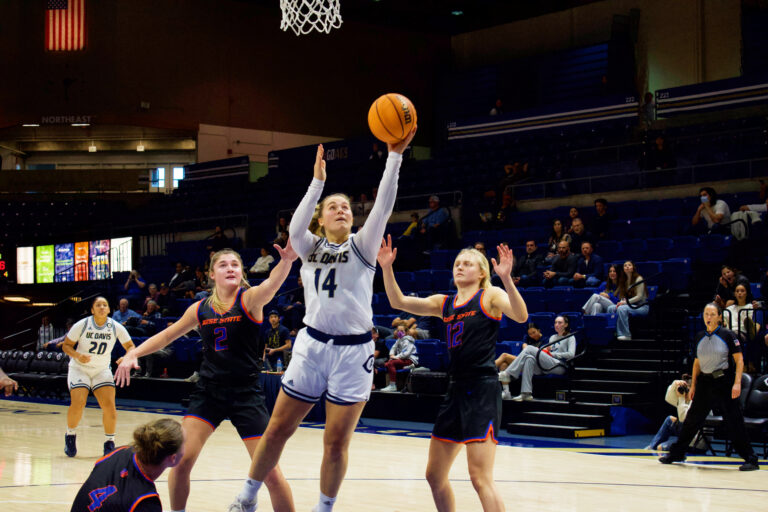
The Aggies beat Boise State 69-62 at the University Credit Union Center last Thursday night. With the win, UC Davis Women’s Basketball improved their record to 2-1 in the early portion of the season.  UC Davis Head Coach Jennifer Gross said that third-year guard Evanne Turner’s offensive performance was integral to the win.

“She’s [Turner] just been unbelievable; she’s really expanded her game,” Gross said. “She’s obviously a tremendous shooter, but she’s doing a really nice job of attacking the basket as well and becoming a multidimensional player.”

Gross’ high praise of Turner comes after a 26-point performance, including five three-pointers, as well as six rebounds and two steals in 39 minutes of play. Turner has taken a big step this year in taking over the leadership role that was left vacant by Cierra Hall — arguably one of the best players to ever don the UC Davis jersey. In just three games, Turner is averaging 21 points per game and shooting 44.1% from the three-point line. 

“I’m really proud of [Turner] and the work she’s put in the offseason, and it’s really showing up,” Gross said. 

UC Davis came into tonight’s contest with a 1-1 record for the season thus far. Their lone loss was to the University of Washington, which is a Pac-12 team. With new faces on the team, UC Davis was predicted to finish sixth in the Big West this season, but in two of the three games played so far, the team’s offense looked extremely strong. 

In the first quarter, Turner scored an impressive 16 points, going 4 for 4 from the three-point line. 

“The first quarter, I was just super locked in,” Turner said. “I told one of my teammates, Lena Svanholm, ‘I’m going to go in there and get things done and be locked in from step one.’” 

Even though Boise State couldn’t contain Turner, they kept the game close, as both teams traded baskets inside the paint. Boise State’s third-year forward Elodie Lalotte gave the Aggies trouble with her length inside the paint, scoring eight points in the quarter alone. By the end of the first quarter, UC Davis held a three-point lead, 25-22. 

In the second quarter, the Broncos’ game plan was to contain Turner, which they did by not allowing her to score any points. Turner went 0-2 from the field and 0-1 from beyond the arc. However, second-year guard Sydney Burns took over the scoring duties for the Aggies, with six points, going 2-2 from the field and converting two free-throw attempts. The Aggies still had trouble containing Lalotte inside the paint, and she scored another six points in the quarter. 

Going into halftime, the Aggies led 37-32. Their lead was due to better stats on the three-point and free-throw lines. UC Davis shot 5-10 from the three (50%), compared to Boise State’s 2-7 (29%). The Aggies were perfect from the free-throw line going 6-6 (100%), while the Broncos went 6-7 (86%). 

UC Davis’ redshirt first-year center Megan Norris opened the third quarter with a layup. The Broncos answered back quickly with a jumper from Lalotte inside the paint.

The game turned into a defensive battle, with both teams blocking shots and causing turnovers. The next points would come almost two minutes later when third-year guard Tova Sabel hit a much-needed three-pointer that gave UC Davis the momentum and increased the Aggies’ lead to 10 points.

Boise State couldn’t get much offense going, scoring 10 of their 14 points in the third quarter from the free-throw line. 

Turner came back strong in the third quarter, putting up seven points and playing strong defense. UC Davis spread the ball around on offense, allowing Norris, who is averaging 9.3 points per game along with 5.3 rebounds per contest, to have a productive quarter. She managed to score five points and an important three-pointer in the closing seconds of the third quarter, which gave the Aggies an eight-point lead heading into the final quarter. 

“The game plan is to go to the hot hand and to keep moving the ball,” Turner said.

“We’re a team that likes to hit people that are hot, so I was hot the first quarter; the second [quarter] and the third [quarter] was time to start looking for other people that are hitting threes and getting to the rim,” Turner said. 

UC Davis opened the fourth quarter very similar to the third quarter with a layup — this time from Sabel, who is one of the Aggies’ new recruits. 

Sussman forced Boise State to turn the ball over and scored the easy two points off of a fastbreak steal to put the Aggies up by 10, 58-48. In the following play, UC Davis played outstanding defense, and on the turnover, Sussman once again scored off of the fastbreak. By this point, the Aggies were rolling. 

The University Credit Union Center was buzzing, and Boise State could not score a bucket. Redshirt third-year guard Campbell Gray buried a three-pointer and gave UC Davis the largest lead of the night so far, 15 points, to make the score 63-48. 

Just when it seemed that the game was over, UC Davis got into foul trouble late in the quarter, and Boise State managed to chip the deficit to six points, bringing the score to 66-60. The 10-0 run by the Broncos included six points from the free-throw line. However, all hope was diminished when a pair of free throws were awarded to the Aggies that put away the Broncos — the Aggies held on to the win 69-62.

“It was a good win; Boise State is a really good team. I thought we had some really good stretches where we were able to string together some stops and some scores,” Gross said postgame. “In games like these, it’s about momentum, and we were able to get the momentum on our side for enough stretches to win the game.”

Not only is UC Davis off to a good start for the season, but their new players are thriving under Gross’s leadership. Newcomers Sussman, Sabel and redshirt first-year guard Victoria Baker had a combined 24 points in the game, with Sussman and Sabel having 10 points apiece.

“[Sussman] is a good passer; she’s a good defender, so she’s plugged in a lot of gaps for us, and Tova [Sabel] is a really nice scorer —  she’s a match-up problem because she can score inside and out,” Gross said. “I think they’re both still getting comfortable, which is exciting because I still think there is a tremendous amount of room for growth, but we’re building chemistry with new players and older players, and we’re kind of figuring out as we go, but I like our improvement so far.”

Many thought the new-look Aggies would struggle in the early portion of the season, but it’s been quite the opposite. They look like a team that has been playing together for years. With Turner running the offense and getting everyone involved, this UC Davis team looks ready to make a run for the Big West Championship. 

UC Davis looks to continue their upward trend against Sacramento State on Nov. 22 at the Golden 1 Center. 


Written by: Marlon Rolon — sports@theaggie.org

Breathe easy: UC Davis Health’s Pulmonary Rehabilitation Program helps alleviate respiratory symptoms in COVID-19

Post-COVID-19 involves an array of symptoms that can persist long after the infection’s disappearance


By LILLY ACKERMAN — science@theaggie.org 


UC Davis Health’s Post-COVID-19 Clinic has been providing treatment options for patients suffering from lingering symptoms after a previous infection with COVID-19, a condition colloquially referred to as post-COVID or long COVID. 

According to Tracy Seward, who is a nurse practice manager at UC Davis Health’s Pulmonary Rehabilitation Program, the Post-COVID-19 Clinic was created out of the need to treat patients whose symptoms did not subside after a prior viral infection. 

“These patients are typically referred to as ‘long-haulers,’ as their COVID symptoms have not resolved and these symptoms continue to negatively impact their daily lives,” Seward said via email. “At the UC Davis Post-COVID clinic, we are able to assess the patient and determine their greatest need for care.”

Dr. Bradley Sanville, a pulmonary and critical care physician in UC Davis Health’s Department of Internal Medicine, who helped establish the Post-COVID-19 Clinic, explained post-COVID-19’s complicated nature and the need for personalized treatment. 

“Post-COVID Syndrome is a pretty widely-varied potential symptomatology that patients can have,” Sanville said. “[It ranges] from a singular symptom to a compilation of symptoms that doesn’t have a necessarily clearly well-defined singular cause to it.”

According to Aimee Kizziar, a respiratory therapist and supervisor for the Pulmonary Rehabilitation Program, post-COVID-19’s varied symptoms can also impact a patient’s life in many ways. 

“It is worrisome because post-COVID conditions are associated with a spectrum of physical, social, and psychological consequences, as well as functional limitations that can present substantial challenges to patient wellness and quality of life,” Kizziar said via email. 

The array of symptoms that these patients face often includes some sort of respiratory distress, which is commonly identified by exercise intolerance and shortness of breath, according to Sanville. This leads to many referrals of patients to the Pulmonary Rehabilitation Program at UC Davis Health.

According to two UC Davis respiratory therapists and coordinators for the Pulmonary Rehabilitation Program, Mallorie Mullendore and Veronica Encarnacion, the program has been treating patients referred from the Post-COVID-19 Clinic for nearly two years. 

“The UC Davis Pulmonary Rehabilitation Program is an AACVPR [American Association of Cardiovascular and Pulmonary Rehabilitation] accredited program that assist[s] patients with lung conditions through education, exercise, motivation and support,” Encarnacion and Mullendore said via email. “Our first Post COVID referral was in January 2021. We have continued to see a rise in Post COVID referrals. We have learned to be innovative and adaptive to everyone[‘s] needs to best assist their progression.”

The program is eight weeks long and includes both in-person treatment sessions and virtual education sessions, according to Encarnacion and Mullendore. So far, patients have generally responded well and have seen improvements in their post-COVID-19 condition. 

 “Even though we’ve struggled to define exactly what is causing these symptoms for these patients, they do seem to get better when you put them in a supervised and very defined, graded exercise program,” Sanville said. 

The Pulmonary Rehabilitation Program at UC Davis Health has become a crucial provider of treatment for these patients, and it is likely going to continue in this way as the Post-COVID-19 Clinic sees more patients with lingering symptoms. 

Additionally, the general field of respiratory therapy has been a pioneer for treatment of respiratory distress caused by COVID-19, asserting its importance within the healthcare system. 

“I feel that the demand for respiratory therapy is going to continue to remain,” Mullendore said via email. “The COVID-19 pandemic has raised awareness of the respiratory care profession, and many people both inside and outside of health care have a better understanding of the important role RTs [Respiratory Therapists] play in the nation’s health care system – inpatient and outpatient care.” 


Written by: Lilly Ackerman — science@theaggie.org

Student-run and community organizations actively addressing student housing insecurity and homelessness in Davis

0

The response to the housing crisis must expand to include the university, according to involved community members


By MARIA MARTINEZ CASTRO  — features@theaggie.org 


Students across the UC systems are experiencing housing insecurity and homelessness, and despite its feel-good college town reputation, Davis is not free from a housing crisis. 

As a result, both student-run and community-based organizations are stepping up to address these critical and widespread issues. Chelina Rhee, a fourth-year communications and sociology double major, is the external co-president for Aggie House, a student-founded and student-run organization that aims to provide transitional housing for UC Davis students. 

“Housing is such a basic human right, it’s a no-brainer that everyone deserves housing,” Rhee said. “Seven percent of UC Davis students experience homelessness, and 18% of UC Davis students experience some type of housing insecurity. We really wanted to address the problem of housing insecurity because no one really seemed to be talking about it, and there were not a lot of resources for students that were facing housing insecurity.”

Aggie House began its operations in fall 2021. The organization provides students experiencing housing insecurity or homelessness with transitional housing and resources while in the process of looking for permanent housing. Through the efforts of its board members, student volunteers, donations and partnerships, Aggie House can provide its residents with resources like meals and community relationships. 

“The fact that a lot of students are worried about if they’re going to have a place to sleep at night, if they’re going to have to stay in the car [or] if they have to couch surf at a friend’s house […] all of these are concerns UC Davis students shouldn’t have,” Rhee said. “They should be focusing on their academics. They should be focusing on enjoying their college experience.” 

Robert Weiner, a continuing lecturer in the Department of Human Ecology is the executive director of the California Coalition for Rural Housing. He attests to the housing crisis happening in Davis and all over the state. 

“We have students, I’ve heard, that are experiencing housing insecurity,” Weiner said. “[They are] couch surfing, living in a car, sometimes living on the street because of the cost of housing, tuition, books, etc. It is definitely a growing crisis as the cost of education and housing go up, but student incomes are flat or decreasing.” 

Students continue to live in a climate of constantly rising and piling expenses. The causes of housing insecurity and homelessness expand beyond the individual. Numerous external factors affect students every day, such as rising housing and food prices, expensive tuition, mental health and individual financial situations. 

“A lot of these issues are systemic,” Rhee said. “Number one, UC Davis as an institution, the tuition is so high, so a lot of students are already struggling with affording tuition, and so on top of that, there’s housing insecurity. There’s not enough affordable housing for students to stay here. [It] is not the students themselves choosing to be unhoused.” 

Weiner describes it as “a constellation of different factors coming together.” 

Davis Community Meals and Housing is a community-based organization addressing food and housing insecurity at the local level. Their services include shelter housing, meal programs and basic needs resources. They are another type of on-the-ground service available to the UC Davis student population and the Davis population in general. 

Bill Pride, executive director of Davis Community Meals and Housing, said that student housing insecurity is a rising issue in recent years that the university doesn’t seem to have a solid solution for yet. 

“To be blunt, the issue of student housing insecurity and food insecurity is kind of a newer issue in town, frankly,” Pride said. “I would say this much, I don’t necessarily think the university paid a lot of attention to it for many years, even though we knew it existed. But I don’t think there were large enough numbers to pay much attention to it. I know in the last couple of years it’s become more of an issue because of local rising housing costs.” 

Addressing housing insecurity and homelessness in Davis cannot fall on student-run and community-based organizations alone. Weiner believes that UC Davis and the city of Davis are large ruling entities in town that also bear the responsibility. 

“I don’t know that any school or local government is doing enough,” Weiner said. “You always have these tensions between universities and cities or counties where they are located about whose responsibility it is to provide housing. In the case of Davis, that has been a continual debate. I think the city, over time, has tried in different ways to address the affordable housing crisis, but have they done enough? No. Has the university done enough? No. There are a lot of things the university could be doing that it isn’t doing with respect to housing.” 

Pride believes that universities have a responsibility to ensure the well-being and security of their students. 

“If you’re accepted into a university, you’re there to get an education, but somehow the university [should] take care of your needs, too,” Pride said. “You know, whether it’s through grants, student housing [or] through other things. I mean, honestly, to me, it’s a public disgrace that this is happening locally and at any university. There should be some resources put aside for folks to meet their needs so that they get the education they need and not have to worry about feeding themselves and having a place to stay.” 

While the university and the city continue working toward comprehensive solutions, organizations such as Aggie House and Davis Community Meals and Housing will continue to serve the Davis community. Rhee said that the university and city could work in conjunction with these organizations to support students.

“Our campus can make more of an effort for organizations such as Aggie House and for other resources such as Aggie Compass [by securing] more funding for [these] programs […] in the case that students are housing insecure,” Rhee said. “The dream goal is that every student in Davis has access to secure housing. But until then, we just want to try our best to help as many people as we can, even if they just need a place to stay for a week or a month or even a year. We just want to be a resource students can rely on.” 


Written by: Maria Martinez Castro — features@theaggie.org 

Twitter now run by single employee in Wisconsin basement

Meet Jeff, Twitter’s newest (and only) employee


By ANGIE VELARDE — avelarde@ucdavis.edu


After a series of unprecedented layoffs, resignations and terminations, Elon Musk’s latest purchase is now in the hands of one man: Jeff — a recent college graduate, Dungeon Master, video game enthusiast and now Twitter’s most important employee. According to Jeff, the position was described as “Social Media Management,” but he was unaware that the position he applied for would involve the day-to-day operations and management of an entire social media platform.

“I’m learning as I go,” Jeff said. “I’m just trying to do what Elon wants. But it’s hard sometimes when you’re getting text messages in the middle of the night saying things like ‘charge per Tweet.’ Then I have to figure out what that means and how to do it.”

The text messages from Musk, Jeff says, are frequent, often coming at all hours of the day and night and rarely including specific instructions. But as Twitter’s only employee, all communication flows through Jeff. While it has come with complications, the mass exodus of all other employees at Twitter means that he can now work from the basement of his home in Wisconsin.

When asked how he feels about being Twitter’s sole employee, Jeff replied, “It can be really hard. I mean, first, I’m running an entire social media platform of almost half a billion users single-handedly. But also, company birthday parties have gotten really lonely.” 

Jeff was, in fact, the only attendee at the recent company party held for his 21st birthday. However, he was quick to note that Musk attended via video chat and even wore his own party hat for the occasion.

With the rate at which advertisers, as well as paying and non-paying users, are dropping their Twitter accounts, Jeff is not expecting to be employed for long. However, he says that if nothing else, he is grateful for the ride. He also mentioned that he wouldn’t mind participating in Musk’s next failing business venture — whatever that may be.


Written by: Angie Velarde — avelarde@ucdavis.edu

Disclaimer: (This article is humor and/or satire, and its content is purely fictional. The story and the names of “sources” are fictionalized.)

Senators discuss police relations, heard quarterly reports at Nov. 17 meeting

The Elections Committee reflects on recent ASUCD election during their quarterly report, referencing low voter turnout and technical difficulties 


By RACHEL GAUER— campus@theaggie.org


Vice President JT Eden called the meeting to order at 6:10 p.m. on Thursday, Nov. 17. After roll call, he recited the UC Davis Land Acknowledgement.

Next, Perry Eggleston, the executive director of Transportation Services (TAPS), gave the department’s quarterly report. Eggleston said that they have been working to convert some of the A parking zones to C+ zones to allow more access to parking on campus for students. 

Following the presentation, the Senate moved to public comments. Several senators spoke on the impact that the academic workers’ strike has had on undergraduate students. 

“A bunch of students are turning in work and submitting assignments and taking exams, [which] puts an onus on the university to be grading the exams and grading midterms without the crucial labor of the TAs,”  Senator Stephen Fujimoto said. 

Next, four ASUCD committees gave their quarterly reports. First, Chairperson Rashita Chauhan gave the quarterly report for the Sexual Assault Awareness and Advocacy Committee (SAAAC).

In her report, she asked the senators for assistance with SAAAC membership interviews, community outreach and awareness. Additionally, Chauhan said that going forward, the committee hopes to make it possible to report sexual assault cases through an online platform they will create. 

“The goal is to make a platform that is just a little more friendly so that if you are someone that chooses to report, you will feel like your claim is something that will be taken seriously and be accounted for,” Chauhan said. 

Next, the Elections Committee gave their quarterly report, during which Chairperson Pendar Salemi discussed the recent ASUCD election that had a 5.53% voter turnout. She recounted several issues the committee faced during this quarter’s elections, most of which she said were caused by lack of control over the election website. 

Salemi said that students also faced some issues trying to sign petitions in support of ASUCD candidates’ campaigns before the elections.

“I received multiple emails that when people, especially transfers and freshmen, tried to sign a petition, they got an error message saying they were not registered as an undergraduate with the school,” Salemi said. 

Although the elections website experienced several issues during the fall elections, Salemi said that future elections will likely not have the same issues due to a change in ownership over the site. 

“We are going to have complete control over the elections website which is 100% the biggest step in the right direction,” Salemi said. “That is the main way anybody can get information about elections.”

Next, Chairperson Ashley Chan gave the quarterly report for the Gender and Sexuality Commission (GASC). In the report, Chan spoke about their recent reproductive rights panel, which had 40 attendees. The committee plans to spend the remainder of the quarter planning their winter events, according to Chan. 

Finally, Chairperson Mackenzie Field gave the Environmental Policy and Planning Commission (EPPC) report, in which she described future projects the committee hopes to complete. 

After committee presentations concluded, each elected officer gave their individual reports about weekly activities.

No legislative business could be conducted due to a vacancy on the Judicial Council, which has persisted for four weeks.

Next, open forum commenced. During this period, senators discussed the recent Pass/No Pass survey, as well as their opinions on relations with the UC Davis Police Department. 

“We need to have good morale with them,” Police Accountability Board Chairperson Megan Chung said. “We need to be able to speak with them. It is not conducive if we completely shut off any communication with the police chief.”

Fujimoto suggested having a separate meeting outside of the weekly Senate meeting to continue discussions about the police. 

“I don’t feel comfortable having [a discussion about this] here in the Senate meeting, but I do recognize the importance of having [this] dialogue to make any reform that we can,” Fujimoto said. “Maybe a meeting outside this meeting […] is something we can consider.”

Eden adjourned the meeting at 9:54 p.m. 


Written by: Rachel Gauer — campus@theaggie.org

City of Davis planning commission discusses reapproving D Street Gardens project

Following the expiration of a tentative plan, the planning commission decides whether it still meets site-improvement and environmental standards 


By ANTHONY W. ZAMMIKIEL  — city@theaggie.org


On Nov. 9, the planning commission for the city of Davis discussed reapproving and renewing the tentative plans made for the D Street Gardens project. The commission, which meets on the second and fourth Wednesday of each month at 7 p.m., decided to hold a public meeting to determine whether the plans still satisfied the required city standards for development. The meeting agenda discussed the status of the map.

“The tentative map was previously approved by city council in 2017 as part of the D Street Gardens Project; however, the tentative map has since expired before it was recorded and requires reapproval,” the agenda reads. “The project would subdivide the subject parcel into eight residential lots. Site improvements include grading, utilities, landscaping, shared driveways, shared parking, and other related improvements. The proposed tentative subdivision map is consistent with the previously approved map and there are no substantial changes.”

The location that the D Street Gardens earmarked for development, 717 D St., has remained vacant since the plans were submitted to city council in 2017, with construction expected to begin once the city finalizes the remaining permits. The meeting agenda discussed the findings for approval.

The purpose of the planning commission was to “determine that the project is consistent with the Initial Study and Mitigated Negative Declaration (MND #5-15) that adequately addressed the environmental impacts of the previous project (PA#15-51) and was adopted as part of the previous approval,” the agenda reads. The commission was also set to decide whether “no further environmental review is required [and to] approve Planning Application #22-47 based on the Findings and subject to the Conditions of Approval.”

Greg Rowe, the chairman of the planning commission, said after the meeting concluded that he was happy to see the developments made at the meeting.

“I have been wondering for the longest time why that nice lot is vacant,” Rowe said. “It is very gratifying to know that something is going to move forward with that. It is not going to be student housing, it is going to be ownership housing, and I think that is a real positive thing.” 

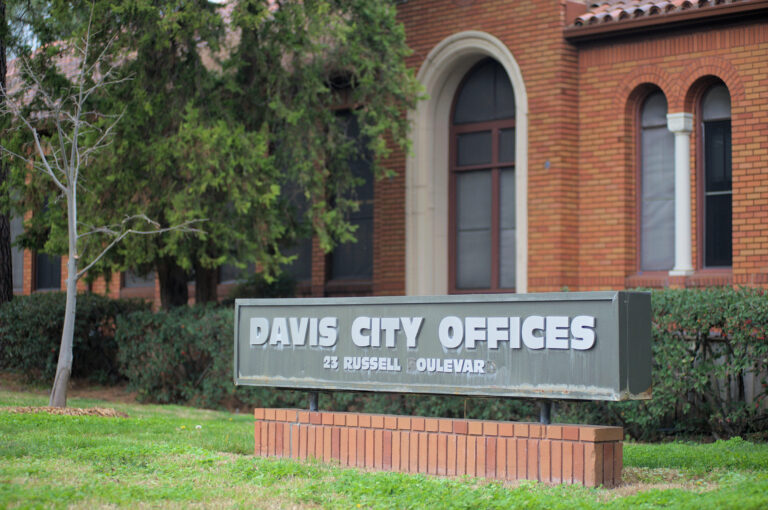
The Planning Commission’s meetings can be attended in person, at the Community Chambers located inside City Hall on 23 Russell Blvd, or online, through the city of Davis website. The commission can be contacted via email


Written By: Anthony W. Zammikiel  — city@theaggie.org