


By LIDYA SHCHERBAKOVA –– lvshcherbakova@ucdavis.edu
UC Davis rallies back to defeat Sacramento State
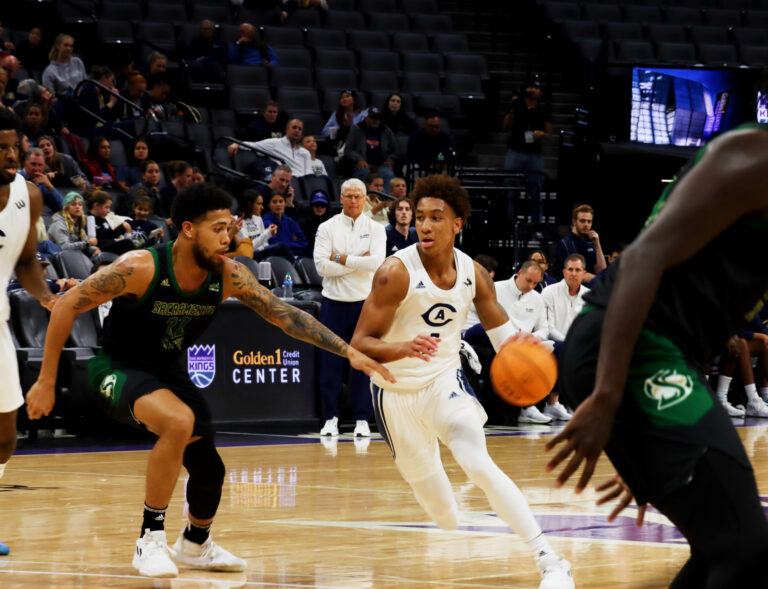
Elijah Pepper and Christian Anigwe combine for 46 points in an impressive performance
By GABRIEL CARABALLO — sports@theaggie.org
The Causeway Cup is a yearly rivalry game between the UC Davis Aggies and Sacramento State Hornets basketball teams. In men’s basketball, Sacramento State holds the lead in overall victories, 8-6. This year, UC Davis hosted Sacramento State at the Golden 1 Center in Sacramento on Nov. 22. After a competitive match, UC Davis cut Sacramento State’s overall lead to one game.
The referee tossed the ball in the center of the Sacramento Kings’ crowned-purple logo and the Hornets claimed the tip-off. With one pass from Hornets fourth-year center Callum McRae, fourth-year guard Zach Chappell took the first shot of the game. Chappell hit a long three-pointer and gave Sacramento State an early 3-0 lead. He would go on to lead the Hornets in scoring with 19 points by the end of the game.
Shortly after Chappell’s three, on defense, the Aggies caused a shot-clock turnover. Then, third-year guard Elijah Pepper drove down the court, pulled up from mid-range and hit a shot for the Aggies’ first bucket of the game.
As each team swapped shot for shot, the Hornets took control of the first half. The Hornets quickly started to expand their lead, with second-year guard Austin Patterson hitting a second three-pointer with about 13 minutes left in the half, putting the Hornets up 15-11. Then, after a missed layup for the Aggies, the Hornets hit another three to go up 18-11. This was their fourth in six attempts from beyond the arc, in part due to UC Davis’s lackadaisical perimeter defense, and an onslaught from deep by Sacramento State was the result.
The Hornets shot 70% from three-point range, backed by precise shooting from Patterson, who shot 4-4 from beyond the line in the first half, and third-year forward Akol Mawein, who tallied 11 points. With three minutes left in the half, 39-27, UC Davis took charge.
Following an emphatic offensive rebound by the fourth-year forward, Christian Anigwe laid the ball in for his 13th point. The Aggies started to chip away at the Hornets’ lead, drawing fouls to get to the free-throw line twice before the end of the half. By halftime, Sacramento State’s lead was cut to seven points at 40-33.
Anigwe led both teams in points in the first half with 13 and helped the Aggies stay in contention. Meanwhile, Patterson led Sacramento State with 12 points. The Hornets shot 52% from the field, while the Aggies shot 40%.
But when the second half started, the Aggies looked like a new team. Pepper carried over the momentum from the end of the first half and hit an incredulous three-point shot. However, Sacramento State kept drawing fouls and getting easy buckets in the paint. A few minutes into the second half, UC Davis found themselves back down by double digits.
With 14 minutes left in the game, the Aggies changed their game plan. UC Davis Head Coach Jim Les decided to pull out the full-court press, which caused a five-turnover stretch for the Hornets.
“It ramped up our intensity and aggressiveness and shortened the clock for them,” Les said.
With chemistry developed over the past three years, Pepper and Anigwe began to play “two-on-two,” as Les would say.
The pair used a seemingly unstoppable pick-and-roll to score two straight buckets and cut the lead to six. Then, the team went on a seven-point run. Third-year guard Kane Milling scored five of those points and hit the go-ahead three to give UC Davis their first lead of the game at 54-53. Sacramento State reclaimed the lead with foul shots and a lay-up from McRae to go up 56-57 but Milling would answer back with another deep three-pointer, which gave the Aggies a 59-57 lead.
Both teams traded baskets and the Hornets tied up the game. However, Pepper and Anigwe used their pick-and-roll to get Anigwe an open three to retake the lead 67-64.
“We’ve been working on that pick-and-roll all three years, and I knew I’d get those wide-open jump shots,” Anigwe said.
After retaking the lead, the Aggies maintained it for the rest of the game. With under five minutes left, and after a converted hook shot from Pepper, the Aggies were up by five points. The Hornets made a crucial turnover and allowed UC Davis to secure the game. Milling took up that opportunity, pulled up for a three-pointer and — swish — hit the shot. Up 74-66 with under two minutes left, Sacramento State’s only option was to foul. UC Davis went to the line for seven more points and the Hornets would score five more points to finish regulation. The final score was 82-71.
The Aggies came back from a 12-point deficit to beat Sacramento State and secure the Causeway Cup.
“It’s really big for us because of our rivalry with Sac State. We lost pretty badly last year and wanted to come out here with fire,” Anigwe said.
UC Davis came out with that fire in the pivotal second half. The Aggies outscored the Hornets 49 to 31, outrebounded Sacramento State 18 to 12 and caused nine turnovers in the second half.
“I can’t tell you exactly, but I thought we were cool and soft on defense. I challenged them to ramp up their aggressiveness together,” Les said about his half-time pep talk.
Pepper scored 19 points in the second half and led the game in total points with 24. Anigwe had 22 points for the Aggies, Milling had 14 and second-year Ty Johnson had 11. Four players scoring double digits against Sacramento State speaks to the Aggies’ depth as a team.
“It’s a strength of our team; it doesn’t necessarily peep its head in the first half or the first 10 minutes of the second half. But those last 10 minutes and the collective effort of being able to play 10 guys will wear you down,” Les said.
After the Causeway Cup victory, the Aggies headed to Milwaukee for the Cream City Classic, a four-team tournament with the UC Davis Aggies, Milwaukee Panthers, Boston University Terriers and Southern Eastern Missouri State University Redhawks. In the first game of the tournament, UC Davis fell to the Panthers, 85-87. The Aggies will return home on Dec. 1 to play the University of Pacific Tigers.
Written by: Gabriel Caraballo — sports@theaggie.org
New partnership between UC Davis, Barnstorm Foundry aims to discover innovative food technology markets, enhance food access and sustainability

UC Davis graduate students help identify markets for sustainable and healthful foods into the future
By LILLY ACKERMAN — science@theaggie.org
A new partnership between UC Davis’s Graduate School of Management, the UC Davis Innovation Institute for Food and Health and venture capital firm Barnstorm Foundry has been formed to identify market spaces for new food products and ingredients that can support a growing world.
Barnstorm Foundry is a venture firm headed by managing partner Aryeh Ganz, a UC Davis alum, that combines entrepreneurship and science. The firm is trying to identify new market spaces with the help of UC Davis’s Master of Business Administration (MBA) students.
The market spaces this partnership is looking to emphasize improved nutrition in food products, find ways to adapt ingredients for a changing climate and increase food access for those in need, according to Dean of the Graduate School of Management (GSM) H. Rao Unnava. Solutions like these are becoming more crucial with continued human population growth.
“With the climate changes, with the population growth, with sustainability issues, with water shortages, all these things put together, [in the future] we may not be eating like we are eating today,” Unnava said. “The same vegetables [will not] grow. We cannot continue to eat meat in the quantity that we are eating [it today].”
Unnava gave an example of this type of innovation: a savory snack currently being worked on that would cost about as much as a bag of potato chips. Unlike potato chips, this snack has much less sodium and much more dietary fiber and protein, making it an inexpensive and sustainable — but still nutritious — option.
Not only is the program a major step in innovation for increased food security in the future, but it also gives the UC Davis MBA program a unique emphasis on food and agriculture science, setting it apart from other programs. According to Unnava, the GSM has been aiming to incorporate these specific elements for several years to highlight UC Davis’s strengths.
“We have been working on the concept of the MBA program that we have representing UC Davis somehow,” Unnava said. “Is it just one more MBA, or is there something about UC Davis that we can reflect in our MBA program?”
Lucas Haskins, an MBA student at the GSM and one of the members of the first cohort of graduate students to join this market research program, chose UC Davis for his MBA because of its opportunities in food and agriculture. He blogged about his experience working under this new partnership, in which he worked on white papers, or reports to inform and guide readers, identifying market spaces for new food products.
“The collaboration has opened the opportunity for UC Davis MBA students to critically evaluate several macro-food-industry trends and publish a series of white papers on the market potential within each of them—with the ultimate goal of launching new food products,” Haskins wrote in his blog. “It’s just one of the many extracurriculars and elective courses that are part of the GSM’s Food & Ag Industry Immersion experience.”
Ultimately, this collaboration aims to enhance UC Davis’s MBA program and the university’s potential for innovation in food tech, especially in areas of high need, like sustainability, affordability and nutrition. According to Haskins’ blog, graduate students have already worked on white papers for plant-based milk and ketogenic diet markets, with more to come as the program grows.
Written by: Lilly Ackerman — science@theaggie.org
The connecting power of music

Davis has a vibrant musical community — go out and see a show
By YASMEEN O’BRIEN — yjobrien@ucdavis.edu
One Thursday evening a couple months ago, I biked past Central Park in Davis and couldn’t control the smile that came to my face at the sight of it. It was full of people — families, friends, couples and individuals, some sitting on blankets, some standing and watching a performance and some dancing in front of a stage. Although it was blocked from my vision, the sounds of live music drifted over, compelling me to get off my bike and see what was going on.
I was pleasantly surprised to find people of all ages enjoying the music. Young children danced barefoot in circles in front of me, their parents a few feet away dancing as well. College students sat in the grass laughing with their friends, and local vendors sold their goods. I talked to several fellow Davis residents that night, trying to find out more about the event. I learned bits and pieces, but many of the participants didn’t even know what it was and were just there enjoying themselves.
A quick Google search, however, told me everything I needed to know. This was a recurring event called “Thursdays in the Davisphere” put on by the Davis Downtown Business Association. I learned it was open to the public, free of charge. They brought live music, food, drinks, local retail, arts and crafts and more to the Davis community every Thursday from 5 to 9:30 p.m. While the event series has ended for 2022, it will be returning in Spring 2023, as it runs from May through October every year.
I didn’t realize until recently how large of a role live music plays in Davis culture, something that wasn’t possible for the community for a long time due to the pandemic. I felt lucky that I was able to witness the pure joy that came from people of all ages who were able to share the music together.
The Davis community’s love for music doesn’t stop at this event. There are a variety of other live music events that local businesses put on throughout the year, including in-store performances at Armadillo Music, small shows performed by various bands at the E St. Plaza, performances at Ruhstaller Farm in Dixon and student band performances.
Something that I love about the music scene in Davis is that it’s open to everyone. This speaks to the community’s genuine love for music and the connection that music provides. You can also meet new people and discover new parts of your community at live performances. I have met some of my closest friends through student shows over the years I have spent in Davis.
Not only do music shows connect the local community, they also connect our community to other communities. People from all over come to music events — I know I have definitely ventured outside my local area for them. Furthermore, I have met and befriended students from all over California at local shows hosted by other UC Davis students or organizations like KDVS, our local student-run radio station. Events like these make me feel like we are one step closer to connecting the world.
All of this is to say going to see a show is bound to be a worthwhile experience. Music is a powerful tool for connection, and you never know what you might learn about yourself in the process.
Written by: Yasmeen O’Brien — yjobrien@ucdavis.edu
Disclaimer: The views and opinions expressed by individual columnists belong to the columnists alone and do not necessarily indicate the views and opinions held by The California Aggie.
Why I’ll miss UC Davis

Make the most of your time here — it doesn’t last forever
By JENA TUFAIL — jjtufail@ucdavis.edu
When starting undergrad at UC Davis last year, I wasn’t that excited. On the contrary: I was kind of stressed out. I felt like I had changed so much over the course of the pandemic and lost my “people skills,” making me even more anxious for my first year of in-person instruction and at a public university.
Not only was it hard to adjust to having to attend class again, it also took a while for me to get assimilated to Davis’s culture. Everyone I knew or met over the span of the year were either living on campus or in apartments nearby, which gave them a bit of an advantage when it came to making friends and getting adjusted to campus life. Compare that to me, who only came to campus two-to-three times a week, primarily for classes. While others had the ability to experience the nightlife and hang out with friends in the evening, I was driving home every night instead.
It definitely was an adjustment period at the beginning of college: I had to learn how the campus ran, the biking rules on campus and so on. But over time, I really came to love my time at Davis.
This year, Davis has come to feel like my home away from home. Even though I’m a commuter, I’ve found that I have the ability to explore something new in the area surrounding campus every day.
The beauty of the campus — all its nature, trails and animals — are the things I enjoyed most over the last year. But it isn’t just the campus that I love, I am fortunate to be able to say that the people in my major have made my time worthwhile as well. I felt welcomed on campus and was able to build strong bonds within my community.
Knowing that I’ll be graduating soon, I decided to start a bucket list of everything I want to do in Davis before I graduate. For starters, I have yet to visit the Arboretum, however I plan to go by the end of this quarter. I also hope to visit the Davis Creamery sometime in spring or summer with friends. I haven’t been able to experience the culture in downtown Davis as much as I would have liked over the last year, but from what I have heard from friends, it sounds like a lot of fun. I hope to also visit the Davis farmers market as well.
Overall, my experience at Davis has been full of ups and downs, but I have highly enjoyed my time here so far. I believe that UC Davis was the best choice for my undergraduate degree, and I’m so thankful I decided to enroll here a year and a half ago. If you’re like me, try to make the most of your time here before you leave. I guarantee that you won’t regret it.
Written by: Jena Tufail — jjtufail@ucdavis.edu
Disclaimer: The views and opinions expressed by individual columnists belong to the columnists alone and do not necessarily indicate the views and opinions held by The California Aggie.
How to view art

A step-by-step guide for making the most of your art-viewing experience
By SARAH HAN — arts@theaggie.org
Whether it is a sculpture or a painting, visual art comes in various forms. Regardless of the medium, many viewers overlook the specific and elusive parts of art; therefore, a step-by-step guide on how to view art may be a helpful tool for your next visit to the museum.
Begin by choosing only a few pieces of art to look at. Oftentimes, the museum can be quite overwhelming at first, with sculptures, paintings and canvases scattered everywhere. Thus, select a few pieces that catch your eye — or just look at the ones in the front.
Once you have selected a few pieces, I suggest leaving your phone behind. Although photos are great for preserving memories, looking at the art first might help you remember details that a mere photo can’t even capture.
While viewing the art, focus on the colors, tone, style, theme and size. Also, ask yourself what message the artist is trying to convey. But keep in mind that art can have multiple messages; in fact, some artists even leave the message up to the viewer’s interpretation. Therefore, feel free to use what you notice to create any messages you think the art is trying to convey.
But how exactly should you focus on all of these artistic components? For color, note the use of bright and muted tones and the color palette. You don’t necessarily need to know much about color theory to observe their effect on artwork; for a lack of better words, simply see how the colors speak to you.
As for tone, divide up the artwork into sections, and see how each section’s color palette complements the other. Asking yourself if the colors are warm (red, orange and yellow), cool (blue, green and purple) or neutral (brown, white, black and gray) can help determine what the overall tone of the art is.
Style may not be the most obvious for viewers. Every painting can be categorized into a certain time period in art history, which determines the style of art. Some may be realistic, baroque, abstract, avant-garde or something else entirely.
This leads to a step that requires a bit more effort: do outside research prior to your visit. If you really want to understand the works as best as you can, doing a little background research on a specific piece, or even just art in general, can give you an advantage before going to the museum.
I personally recommend researching art history, since it can help determine style as well as the different colors and techniques used in each time period. In other words, knowing the different art movements in history can help you orient yourself with respect to the details of the piece.
Finally, always keep an open mind. Art is undeniably diverse: some pieces can be crowded and complex while others can be simple and minimalistic. Regardless of how the art is, be open to all types — you may even find a new favorite piece of work.
Beyond these steps, my best advice for truly appreciating a work of art is to view it in a way that does the artist justice. Artists put so much time and effort into their works that it’s important to fully take in their meanings as intended. Combining the steps outlined above with this respect of the artistic intent is one of the best ways to express your appreciation for the work of art.
Written by: Sarah Han — arts@theaggie.org
KDVS is back on air after seven-week hiatus

The radio station spent several weeks off of the air due to a broadcast tower malfunction
By RACHEL GAUER— campus@theaggie.org
As of Nov. 7, UC Davis’ student-run radio station KDVS is back on air after a seven-week hiatus caused by technical difficulties. The station was forced to pause its FM radio broadcast during this time due to a broadcast tower malfunction, but its online stream continued broadcasting throughout the entirety of the maintenance period.
The outage lasted from mid-September through early November, according to fourth-year sociology major and KDVS General Manager Cate Hatcher. The malfunction itself was caused by an outage of one of the tower’s RF power modules, which Hatcher explained is a core function that amplifies the frequency of the radio broadcast.
Hatcher went on to say that the process of repair was prolonged by the long shipping time to and from the part’s repair office in Maine, as well as by an unpaid invoice to the company.
“The invoice was from March of this year, and it sat unpaid for six or seven months,” Hatcher said. “It’s not something that I [could] take care of on my end. We had to wait an extra week because the company wouldn’t accept a new job from us until we settled the old payment.”
Though KDVS continued to stream online, the FM broadcast is the primary way listeners tune into the station, according to Hatcher — which is why the radio outage was so significant to the group’s operations.
“Usually for shows, we always get callers and people letting us know about our show and obviously we were not getting as many callers,” Hatcher said. “It was kind of like just putting music out into a void.”
Jacob Ikuna, a fourth-year sociology and cinema and digital media double major, serves as the assistant general manager at KDVS. Ikuna explained that some listeners solely have access to the FM broadcast and were unable to listen during the hiatus.
“There is one listener in particular who calls in very regularly to our shows, and he talks about how he doesn’t have a TV,” Ikuna said. “His radio is his main source of entertainment. We also get a lot of truckers who listen as they drive through the region.”
Ikuna explained that because the signal power is so strong, KDVS is typically able to reach a large number of communities and individuals within the general region. Among the regular listeners who tune into the FM station are incarcerated individuals at Folsom State Prison, which is located over 30 miles from the station’s transmitter.
“There are a handful of shows that have dedicated fans that are people who are incarcerated, ” Ikuna said. “For a lot of those regular listeners, they just basically lost access to KDVS for that period of time, which was very unfortunate, [and] it definitely was damaging to a lot of our listener base.”
Though the outage impacted regular listenership, Hatcher said that they felt like it also revealed the significance of the station to its fans.
“I will say, while we were down we got over probably a couple hundred phone calls, emails and social media messages from listeners asking, ‘Where are you guys? What happened?’” Hatcher said. “[The situation] was frustrating, [but] it was good to know that so many people were looking for KDVS. It was really reassuring.”
Max Bahena, a third-year animal science major who serves as one of the community coordinators at KDVS, notes the impact the outage had on the overall ambiance within the station.
“We usually have the radio station playing in our lounge, but because of the tower issue it was always pretty dead and quiet,” Bahena said. “Now that it’s up and running, it feels nice. “It feels like we are KDVS again.”
Written by: Rachel Gauer — campus@theaggie.org
The Editorial Board meets with Chancellor Gary May, UC Davis administrators

May and administrators discuss the UC academic workers’ strike, plans for graduation, law school rankings and more
The California Aggie’s Editorial Board met with Chancellor Gary May, Provost and Executive Vice Chancellor Mary Croughan, Associate Chancellor and Chief of Staff Karl Engelbach, Vice Chancellor for Finance, Operations and Administration Clare Shinnerl, Vice Chancellor for Diversity, Equity and Inclusion Renetta Tull, Chief Marketing and Communications Officer Dana Topousis, Academic Senate Chair Ahmet Palazoglu, Faculty Advisor to the Chancellor and Provost Ari Kelman and Associate Vice Chancellor of Student Life, Campus Community and Retention Services Sheri Atkinson on Nov. 22.
Below is a transcript of the meeting that has been edited for length and clarity. This interview took place over Zoom the Tuesday before Thanksgiving.
Question: After the return to in-person instruction, many ASUCD units have been struggling with low employment numbers. What is the university doing to encourage more students to work for ASUCD and resume normal operations?
May: So as you probably already know, labor shortages and staffing issues are not unique to UC Davis or higher education. They’re nationwide, applying to all employment and all workforces. In the past week, there have been campus job fairs that offered some incentives, like gift cards to attract new applicants. We can see what more we could do on that end to assist ASUCD in the same way.
Atkinson: I know Unitrans does incentives as well to get some drivers hired. And also the Coffee House has been working on getting employees onboarded so that they can open up more platforms. And I think that we’ll see more of that in winter quarter. The ongoing support we’re trying to provide early amplifies student employment because we have a lot of positions available. People also are in the process of hiring additional students for positions at the internship center to help with those types of positions.
Q: With the upcoming winter, there have been predictions of spikes in COVID-19 cases on top of the current flu season and RSV currently being reported from hospitalizations. Will the administration make any changes to on-campus public health policies in response to this and are any preventative health measures going to be put in place to accommodate students for the 2023 winter quarter as more students might get sick?
May: Firstly, I’ll just say that we’re expecting guidance from the UC Office of the President some time probably next week that will talk about the vaccination policy. We don’t anticipate doing the same level of compliance checking that we were doing with COVID rapid-antigen tests, but we do anticipate there being a requirement for flu shots, COVID boosters and any other relevant vaccinations. So as we’re getting close to Thanksgiving, I want to make sure that as people travel outside of Davis, we mitigate the spread of the virus. So we have issued some testing guidance for students and employees. And we recommend the students take tests prior to returning to Davis. If you test positive, you have to isolate yourselves until the isolation period ends. The positive test also has to be recorded on Health-e-Messaging, our software that’s online. And after the break, we have hope the students will take a safe test within one week of returning to campus. And again, positive tests are important to Health-e-Messaging. During the break, we recommend you take a saliva test at our testing site where that’s available, and you can make an appointment again via Health-e-Messaging for our site. We keep everything up to date on our policy page and our campus website, as we’ve been doing for two years, to see anything that you need to know.
Croughan: Right now, it is required for students to have both the COVID vaccine and boosters in addition to the flu vaccine. The policy letter that will come out from the president’s office is for faculty and staff. And I wouldn’t be very surprised, honestly, if it’s not still a requirement, given what’s happening in our hospitals. But I want to be clear that RSV (respiratory syncytial virus) is more of an issue in children than in adults. It’s with infants and children under the age of five that you worry about RSV. I’m only familiar with one adult case. And in children, literally in the first six months, it can be life and death. More often, as adults, we carry it. So it comes back to the same issue around the importance of wearing a mask. Particularly, if you’re traveling on airplanes, I make the choice to, in public places that are not Davis where I know we have very high vaccination rates, always wear a mask. So on an airplane, in an airport, traveling on a bus any place outside of Davis, I can guarantee I’ve got a mask on. That will help protect you and that will help protect others on the chance that you’re a carrier. It’s highly unlikely that you would actually get RSV. The problem with the combination of what we’ve already had in past winters, with COVID and the flu together, is one or the other is bad enough. Having both epidemics at once really is problematic. You add RSV on top of it, which takes away the available pediatric hospital beds. And it’s the pediatric beds that we’re having the most concerns about right now in California and throughout the U.S. So we want to make it possible that kids can come in, and if the viruses are so much more adversely affecting their health, we can move them into an adult unit. And that’s not going to be possible if the adult units are filled with individuals with COVID infections. So vaccines and wearing masks are still the right route to go.
Q: The strike that began Nov. 14 is just the most recent graduate student strikes for higher wages to support rising costs of living. Is UC Davis or the UC planning to make any changes long term in order to decrease the number of strikes and ensure that graduate students are compensated fairly for their work?
May: Our campus administration certainly recognizes the right of students and other union members that are employees to strike, and we agree that the cost of living in Northern California is high. And so it’s a real concern. We hope that the union negotiators and negotiators in the office of the UC president will agree on a contract that makes it possible for the members of that union — for those four bargaining units of the union — to live here and thrive and be successful in the graduate programs. It’s important to note that the negotiation does not occur on the campus level. The negotiation occurs at the Office of the President with a team of negotiators. Income inequality is a concern. And it’s not just a concern here; it’s also a concern nationwide. The university will do what it can to address the issue with those resources that are not unlimited. So we have to figure out an appropriate compromise so that the university can continue and the students and postdocs can have a successful livelihood and career.
Croughan: We want to clarify that this is a strike of the union that they are allowed to have. If they take a vote and declare that they’re going to take a strike, that is the circumstance we’re under now. When you’re saying there have been multiple strikes in the past, the last strike that occurred was a “wildcat strike.” That was a strike that was called by the members and not allowed by the union, because they were still under contract. But that’s a very different thing.
May: A lot of it had to do with labor laws that you may or may not be familiar with. So when you do say “multiple strikes,” it really only has been this one strike that was authorized.
Q: Some Jewish students have expressed that due to recent events on campus and in Davis, they do not feel like UC Davis is a safe place for them. How would you respond to this, and what is the administration doing to address this issue?
May: First, let me just say, unequivocally, that we stand in strong support of the Jewish community — that includes our students, faculty and staff. And we understand the toll that some of these recent events have taken on that community. We are working proactively with the Jewish community now, both on and off campus, to raise awareness to combat antisemitism. We’ve been doing this since I’ve been here, for five years. The Jewish Student Life Advisory Council was established in 2020 and activated in 2021 during the pandemic. It was created per my recommendation in cooperation with Hillel at Davis and includes Jewish student leaders, Hillel board members, Davis faculty, leadership and community representatives. In fall of 2021, we had educational sessions on antisemitism for all members of UC Davis Council of Deans and Vice Chancellors. The session was on Zoom and was facilitated by staff from the Academic Engagement Network, which is a Washington D.C. nonprofit that promotes campus free expression. We continue to meet with our Jewish colleagues, students, faculty and staff to show our support and talk through solutions. We invite the community to learn more on our addressing antisemitism webpage, which is hosted on the Diversity, Equity and Inclusion website. But in terms of other things we’re doing, we’re in the very early stages of a program we’re calling “Hate Free Together,” modeled loosely after “Healthy Davis Together.” But the idea is now that the virus is hate, and we’re trying to combat hate in collaboration with the city of Davis and Yolo County. We’ll be having some news occur very soon where we have a resolution that will adopt some other activities — like programming, some promotional activities and raising public awareness — to really redouble our efforts to make this community free of antisemitism and all forms of hate.
Tull: We’ve been paying a lot of attention to the uptick of antisemitism. We’ve been very disturbed by that. Last year, I did participate in the Academic Engagement Network that Chancellor May talked about and went to the Holocaust Museum in Washington D.C. and worked with a lot of leaders from around the U.S. to see what can we do on our campuses to have more awareness about antisemitism and to increase our resources. And so with that launch of the addressing antisemitism page this year, one of the things that we also did was to work with Rob Davis and the Center for Student Involvement part of Student Affairs to meet with members of Jewish student groups to look at our antisemitism page to offer resources so that we could have something that was co-constructed. And about a week and a half ago, members of my team went over to Hillel to have a meeting with the Hillel Student Board Chair [and others] to not only talk about our page, but to also get information related to case studies to find out what some of the students are experiencing here and to be able to put that into some of the training that we’re doing through Diversity, Equity and Inclusion. [Our office is] putting it into the modules for DEI training that students take when they come into UC Davis — the new students and the transfer students. In addition to that, one of our other colleagues, who’s in charge of our harassment and discrimination assistance and prevention program (HDAPP), hosted a training that was led by the Anti-Defamation League (ADL) for leaders on campus about a week ago. So we had an opportunity to see things that were tropes, to ask a lot of questions, so that we could obviously do a stronger job as we’re working with not only our staff, but also planning resources for students, faculty and others on the campus.
Q: After the Turning Point USA event and protests earlier this quarter, there has been a lot of discussion about ensuring people have a safe way to protest on campus. What solutions has the administration come up with to ensure future protests are safer?
May: Campus safety is a primary concern — a high priority for me all the time. When people ask me, “what keeps you up at night,” that’s probably the one thing that keeps me awake at night, worrying about this community being safe and every definition of that word. So these controversial events really raised the level of concern. We’re going to work closely with Student Affairs, as well as the fire and police department, as we plan these events. We try to develop operational plans prior to the events taking place, and we always do an after-action meeting with a discussion of what happened, what went right and what went wrong. Our solutions to ensuring the safety of future events are trained quarterly — the leadership team trains and discusses these things regularly to listen carefully to the community. Just had a meeting with UCD leadership last night where this was discussed, and we’re talking with you now and absolutely listen to the community and try to express what we think is the right approach to our student community. And to be very clear on a couple of things: One, I probably don’t agree with anything Turning Point USA espouses except for their right to espouse it. So, and I don’t, we don’t condone any violence of any kind, that includes property damage, as well as physical violence and vandalism. We try to confront and reject discrimination whenever we face it, and we have our principles of community that we use as a model and as a guide.
Atkinson: What the Chancellor said was right on point again. Student safety is one of the things that I think about a lot. Oftentimes, supporting student strikes, rights and protests can come off in a lot of ways that they don’t really want to. So with Student Affairs, our work is to work with students, empower them, help educate and support what they want to do to have their voices heard.
Topousis: I’ll just add that I know there’s continued concern about the Proud Boys who turned up on campus. Things quickly escalated as soon as they arrived when things were already escalating at that location. But I think there’s some people out there who think we should be able to predict and stop people from coming to campus like that. But there was no way for us to know; they don’t tell us in advance that they’re coming to our campus. And I am guessing that most of them are not UC Davis students, faculty or staff, and that they’re probably not from our community. And so we just have to, in real time, deal with that when that happens and do our best. We do a lot of planning to make sure that we’re prepared as much as we can be, to keep that area safe and to keep things in as much control as we can. In that case, we were surprised that they showed up and they were looking for activity and helped create it.
May: As you know, we don’t have a fence or gate around our campus. So the entire community has access in a public situation like that. This was difficult to control as people can just come and go. We’re at a disadvantage when someone wants to do something like that.
Q: UC Davis students have been expressing discontentment with the student fees that are a part of the university’s quarterly tuition and for parking on campus. Some ASUCD senators are trying to lower these fees. How is the UC Davis administration working with ASUCD to hear student matters and address these concerns?
May: We have this council on student affairs, called the Council on Student Affairs and Fees (COSAF), which we work with very directly. That committee includes ASUCD members that bring the concerns to the administration. And Student Affairs meets regularly every month with COSAF. The committee helps guide our campus policies or at least advises on campus policies. So in terms of what we recommend, we recommend leveraging job boards and other search engines through the Internship and Career search and to help spread the word about these opportunities to provide input. And we’re always open to those kinds of discussions. We also know that there’s a fairly systematic, rigorous process for changing fees. That process is documented, and student government officers are always welcome to utilize that process whenever they think there needs to be some sort of adjustment.
Atkinson: We have worked with student leaders recently as well on the guidelines. And we’ve gotten feedback that there needs to be some more clarity on those guidelines. And so we work closely with our student representative leaders over the summer and early fall to make sure that that document closely aligns with our policies and is very clear. We were just about to wrap that up; it’s pretty much a complete document so that we’ll be able to allow folks if they do want to add a referendum, or adjust the record and that it’s clear.
Q: Last spring, commencement ceremonies were cut short due to excessive heat. How will this year’s ceremonies be different from last years and what changes are being made to ensure that the ceremonies are able to take place as scheduled?
May: We do have some news to share. You have already seen the announcement last Friday, in the chancellor email about spring commencement being held at the Golden 1 Center in Sacramento. That was after a student survey that was created by a planning committee, made up of half students and half administrators. They put the survey together and have been discussing the planning for commencement. So we don’t expect any more heat events because we’ll be inside and we have a facility that’s well accustomed to having such events. You might know that Sac State has their commencement at the Golden 1. We’re looking forward to a much smoother and more celebratory event than we were able to have this past June.
Engelbach: The Commencement Advisory Committee will be meeting again in December. The next issue that’s on the docket is to discuss exactly whether students want to continue to walk with their major when they graduate, or if they want to be able to select which ceremony they attend based on their own schedule and their family’s schedule and availability. So that’ll be the next issue we tackle. And then after that, we’re going to go to speakers. We’ve received feedback about what’s not the highest priority for our students. So we’re going to keep having a discussion about who we should invite, how we should invite them and how we can get our students engaged in helping us invite the fabulous speakers that they have in mind. And together, we’ll figure out how to make that work.
Q: The ongoing events in Iran have been distressing to many students. What do you view as the university’s responsibility to support and protect students who feel unsafe in light of these events?
May: We have an unshakable commitment to upholding human rights, not just here on our campus in the community, but it’s standing up for those rights for members of those communities that are represented here around the world. So again, we stand against violence, repression and discrimination anywhere that might happen. We are concerned about the feelings of our Iranian students. We’ve actually put out a statement very early on in that conflict about providing support and suggestions for support for students who are feeling anxiety. It was a joint statement from campus leadership following the death of Mahsa Amini. And again, we share support resources for those impacted by it. We also direct our students to our Aggie Mental Health and staff to our Academic Staff and Assistance Program (ASAP) office to help them get through these anxious times. We’ll continue to monitor, make statements and provide other resources as we think it’s necessary. We’ve been listening to members of that community and trying to respond appropriately.
Tull: I’ll just add that one of the things that we did is there was a teach-in session that was sponsored by graduate studies, but it also included the Davis Humanities Institute and Human Rights Program and Global Studies. And there were students on the panel as well as faculty and staff. And we were asking them in some of the questions after a lot of the information was shared, “What are the things we can do?” So continuing to raise awareness, women’s life freedoms and the different kinds of things that Iranian students want us to share and to make sure that information is coming to the forefront. We’re going to continue to do that in the DEI newsletter and in some of our other resources but also continue to have these partnerships and opportunities to have conversations and to raise awareness. I think those are some of the things that we hope are helping students to feel safe, because we’re not being silent about these various issues.
Atkinson: I’ll just add that we also have provided support to students who have been impacted by what’s happening, and as you mentioned, causing distress and impacting their time here on campus. So we’ve been providing support in different ways to help them navigate that and also their academics.
Q: A recent investigation by the Dallas Morning News revealed that UC Davis Police have been using a software program to track students’ social media posts. One of our articles revealed that the UCDPD has been using the scanning software since 2015. Davis students are concerned by this software and the lack of transparency surrounding the program, specifically that it can be used to track student protests. What would you say to students who already feel unsafe when UC Davis Police are present, especially when considering historically poor responses to student protests such as the pepper spray incident?
May: Let me first start by saying that the software is not used to track student protests by any means. It’s not used to monitor private texts, emails or devices, but we try to look for our students that are in crisis and are going to need help. And we look for trends in that electronic communication that would indicate that students that are thinking about harming themselves or showing suicidal tendencies, and this is based on their public- posts only. You might be interested to know that we’ve had many successful interventions by using the software, and in fact, we have saved lives, specifically of students that were thinking about harming themselves. So I think if we stopped doing this, people could be hurt. So this software has been very useful in a very positive way. And as for students who might feel unsafe when UC Davis police are present, again, this is not relevant for the software. This is used to help students in crisis and it’s not used for anything else. You might be aware of this already, but our campus Police Chief Joe Farrow has really been committed to mental health training for himself and his officers. In July, he was elected to a three-year term as President of the Board of Directors for the California Branch of the National Alliance on Mental Illness (NAMI). So, we take this commitment to addressing students’ mental health crisis situations very seriously.
Q: Summer and fall have been particularly distressing in terms of current state- and federal-level political change, especially for students of marginalized communities. For example, the DACA program was ruled unconstitutional and, most recently, the Indian Child Welfare Act is being challenged in the Supreme Court. How does the university plan to address how these changes in policy may impact the university and UC Davis students?
May: Thank you for the question. You know, we’re proud at the campus level and the UC system level as well, despite some of the national trends, that we’ve remained committed to supporting our undocumented students, who are also concerned about the uncertainty that accompanies their educational journey. We can’t change the decisions made by the courts, obviously, but we can advocate in those matters, and we do. I’ve printed letters and given speeches, etc. And we’re doing all we can to make sure that our undocumented students can enroll and stay enrolled here at Davis and elsewhere in our public system. AB540 and Undocumented Student Center is a valuable resource in this activity. It gives those students up-to-date information and supports them academically, as well as their private lives outside of the university. Their peer and staff mentors on call connect them with resources that they need to deal with all this uncertainty and anxiety they’re experiencing, particularly [due to] this recent judgment. With respect to Native American students, we have watched that decision on the Indian Child Welfare Act. We’ll be working in close consultation with our own Native American community here on campus, through our Department of Native American Studies, and the Native Nest and the regional tribes to determine how best to support those in that community and their situation. So, we’re doing what we think we can do to be supportive, be aware and to be advocates.
Tull: I will say that an interesting thing that happens with our office often is that we’ll have family members who will come in or people who are thinking about coming to Davis. And I think in the last year, particularly due to a lot of the political unrest, it has been very interesting to have parents come or even students who are thinking about Davis say that they’re specifically coming to Davis for their families or moving to California because they want to be able to have access to the higher-education system that’s here and recognizing that there are so many things that are happening around the country and in states where they don’t have the same levels of free thought. There are people who have decided not to go to school in various other states, but specifically to come to California, and then in looking at California, to come to Davis, because of where we stand. They looked to see what we were doing in past administrations in response to things that were coming out of Washington, D.C. And then we took a stand for our students, whether they were DACA students or [students affected by] other forms of discrimination, when other states were having things shut down. And we moved full force ahead, saying that we were going to stand with our students, that we were going to support them and that we’re going to put resources behind all things that they would need. And I think that that has worked in our favor at the university.
Atkinson: I’ll just add that in addition to our AB540 and Undocumented Students Center, you also have the California Immigrant Legal Services Center, which serves all these needs, but it’s housed here at UC Davis. And this center works with students and their families related to immigration.
Q: The shooting at the University of Virginia is just the most recent of many instances of gun violence at educational institutions. What are the measures that UC Davis has in place to prevent gun violence on our campus?
May: That was such a terrible tragedy. Again, I’ve talked about things that keep me up at night and that’s got to be one of them. To answer the question, we train and practice very heavily for active shooter potential situations. You may have seen some of these training taking place in the MU or Mondavi while you’re out walking around. The Police Department also holds an active shooter survival workshop for the UC Davis community that aims to increase the likelihood of surviving such an event. State law and University of California policy both prohibit possession of weapons on university property. And that information is available at the campus police website, which provides regular updates on campus crime and a lot more. So those are things that we do. We’re always remaining vigilant and training very regularly to prevent such a tragedy from happening on our campus.
Q: There has been some concern expressed regarding the Resnicks’ recent donation to UC Davis, specifically the motivation behind their donation and the overall character of their financial decisions. What is the screening process you have for taking in large-scale donations?
May: So to answer the question, there’s a very rigorous screening process that includes a background check. But I would add, regarding the Resnicks, that it’s not their first philanthropic venture. There’s a Resnick building at UCLA. You may have read that they gave Caltech $750 million for sustainability research. The tone of the question is a little bit more negative than I would expect; this is the largest gift our university has ever received from a private donor, or in this case, a couple. It’s going to be a transformational gift for the College of Agriculture and Environmental Sciences, for the research they want to do to make agriculture more resilient to climate change, more energy efficient, use of byproducts and waste byproducts in agriculture. So I don’t want to be defensive but I’m surprised at the negative tone of the question, given the really, really super positive aspects of having such a gift. When the gift was announced, I can’t tell you how many other chancellors and presidents around the country called me to say congratulations, or “How did you do it?” So I would hope that we would take a more positive view of a really wonderful gift. Stuart Resnick has been a member of the Chancellor’s Board of Advisors for more than a decade. We know him well. He’s a friend. He’s a contributor and supporter in many ways beyond this particular gift. Forty wonderful scholar students are supported by their company at our campus. Most of them, from the Central Valley, are marginalized students who would otherwise not have the opportunities they have because of the Resnicks. So I really hope that the people that have these concerns consider all of that.
Q: Many top law schools including UC Berkeley have decided to remove themselves from rankings such as U.S. News due to equity concerns. Will UC Davis follow suit?
Croughan: We had been talking about it when Yale was the first to remove themselves from the U.S. News and World Report rankings. I approached Kevin Johnson, our Dean of the Law School, and said, “Would you consider this for UC Davis?” because Kevin is very much an equity-minded dean. He’s a civil rights lawyer and immigration expert, and he has worked harder than any other dean of a law school to diversify the student body. So two things are happening right now. One is people pulling out of the U.S. News and World Report rankings. The second is potential elimination of the LSAT, and the LSAT has been shown to specifically disadvantage African American students. So Kevin and I, just yesterday, had further conversation. We’re looking at both of those. I only wish we had been the first UC to remove ourselves from U.S. News, but we were beat out by Berkeley. But anyway, we are considering it strongly. I’ll put it that way.
Q: ASUCD elections have historically received low voter turnout which led to the TGIF student fee referendum failing. Do our university officials have any ideas for promoting higher voter turnout in these elections?
May: Historically, I have done PSAs on students to vote, not just voting in elections in the city, county and national elections, but also ASUCD. I’m happy to continue to use my voice on campus to encourage students to participate in the process.
Atkinson: I’ll just add, in my time, the years where I saw the greatest voter turnout was when a lot of students were out and about encouraging their peers to vote, more than, the administration encouraging people to vote. So I think that one of the biggest tools that ASUCD and students have is talking to their peers and encouraging them to vote as well.
UC Davis Health receives Digital Health Most Wired recognition
The medical center earned the highest-level rankings in both acute and ambulatory care
By KAYA DO-KHANH — campus@theaggie.org
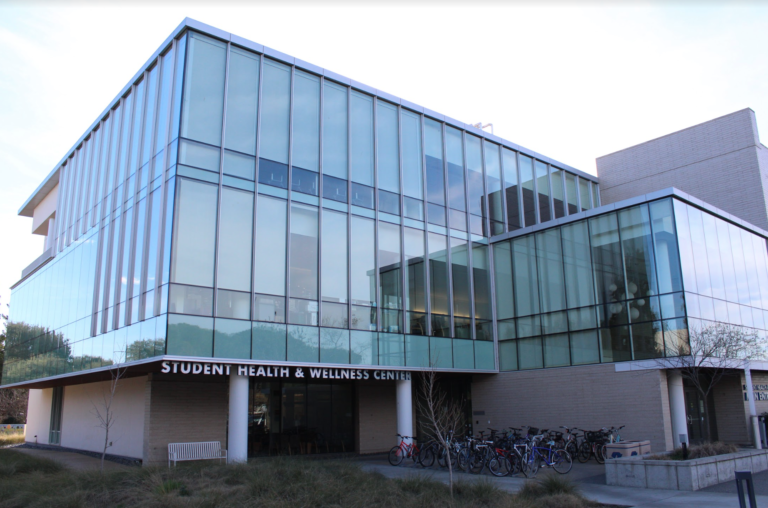
UC Davis Health recently received the Digital Health Most Wired recognition from the College of Healthcare Information Management Executives (CHIME), which marks the medical center’s 11th year in a row receiving the honor, according to a recent press release.
CHIME is a professional organization for chief information officers and other senior healthcare information technology (IT) leaders. It serves as a network for members and business partners to collaborate, develop professionally and promote the effective use of information management when it comes to health and care for communities.
The group conducts an annual survey of healthcare organizations worldwide that acts as a “Digital Health Check-Up” to assess their adoption, integration and impactful use of technology, according to the press release. UC Davis Health was one of 38,000 organizations that were surveyed in the 2022 Digital Health Most Wired program.
“As success in digital health increasingly determines the quality of patient care, the scope of the CHIME Digital Health Most Wired survey reflects the progress of leading healthcare providers as they reinvent healthcare for a new century,” a statement on the CHIME website said.
For both the acute and ambulatory care surveys, UC Davis Health was given a certified level 10, which is the highest level that distinguishes health IT leaders who have demonstrated innovative use of technology at their organizations. It is one of 17 hospitals in the nation and the only health system in California to earn a level 10 ranking in both categories.
“It’s an honor to be recognized as one of the 20 Most Wired health systems in the nation,” CEO of UC Davis Health David Lubarsky said via email. “For over 25 years, UC Davis Health has been a national leader in digital health, allowing us to improve care for patients in rural areas across our region and helping us to provide digital-enabled care to patients at the highest level possible, regardless of their location.”
According to Lubarsky, UC Davis Health uses artificial intelligence and digital health technology to improve care delivery. The medical center is also planning on further expanding the use of technology in the future.
“Through innovative partnerships, we are working to create more efficient ways to diagnose and treat patients, with the goal of making health care more precise and effective — and also more personalized and equitable for every person,” Lubarsky said.
Written by: Kaya Do-Khanh — campus@theaggie.org
Consider dropping products containing lactose

Consider dropping products containing lactose
By MAYA KORNYEYEVA — mkornyeyeva@ucdavis.edu
Virtually every coffee shop and restaurant now offers dairy-free milk options for customers. You walk into any Starbucks, Peet’s or Philz — not just in downtown Davis but around the world — and you are immediately greeted with a smiling employee who proceeds to take your order while listing three or four milk alternatives.
In my experience, many businesses encourage consumers to opt for dairy substitutes, and for a good reason. These milks are easier to source, more sustainable and generally simpler to maintain than products from cows or other livestock. It is also easier to ensure their consistent quality.
Soy, oat, almond, coconut, rice, cashew, hemp, hazelnut and macadamia milk are among the most popular options that have surfaced in the past several decades, leading to a massive surge in the industry of plant-based milk production.
You might be wondering when it all started, and why lactose-free milk alternatives are suddenly all the rage. To answer this question, we must direct our attention to the early 20th century, with the emergence of soy milk as a popular ingredient in East Asia. This key player in what is now a multi-billion dollar trade had humble beginnings. Soy milk originated in a small chain of farms in China, where soy initially served as an additive in tofu and nutritional non-dairy creams.
The issue with the first iterations of soy milk (and indeed all plant-based milks) was the “vegetable” taste and short shelf life, which caused many Americans to avoid lactose-free drinks like the plague. “Why drink lactose-free milk when you don’t have to?” was a question I often heard posed in the early days of milk alternatives, when products were just hitting the shelves.
As more research was devoted to the production of lactose-free milks, the taste was significantly refined, transforming into the creamy, naturally sweet plant-based milks you can find at the supermarket today. Further into the stages of development, non-dairy milks gained a longer expiration date, lasting several weeks rather than just a few days.
In addition to their delicious taste, plant-based milk alternatives offer a wide range of benefits. First, it is undeniable that they have a more positive impact on the environment than cows’ milk. Raising and maintaining cows takes up a massive amount of land, with 41% of United States soil devoted to cow pastures (that’s 124.7 million acres!). Cows are also a large producer of methane gas, which is one of the most abundant and harmful greenhouse gasses in our atmosphere.
In contrast, plant-based milks, like soy and oat, are produced from plants that are able to photosynthesize and effectively remove carbon dioxide from the atmosphere, improving our air quality and diminishing the effects of global warming. Aside from having a minimal carbon footprint, farming plants like soy is much more water efficient, with soy milk production using less than one-third of the water necessary for dairy milk.
Few can argue against the established ecological benefits of milk alternatives, but what are the drawbacks? Believe it or not, a primary one is the cost. Oat milk specifically involves only two ingredients — oats and water — but the equipment that is necessary to drain, filter and cream the oats is expensive. This is why oat milk is almost two-and-a-half times more costly than dairy milk, averaging around $5.29 per half-gallon bottle.
The increased price tag on plant-based milks is a valid reason to be nervous about switching away from dairy; is it really worth the effort and the dip in your bank account?
I believe the answer is yes, not only because of the environmentally-friendly nature of plant-based milks, but also because of the nutritional benefits. Research suggests that coconut milk has properties that help with weight loss, body composition and metabolism. Soy milk includes essential Omega-3 fatty acids and antioxidants, as well as anti-inflammatory and cardioprotective properties. Oat milk promotes healthy blood pressure and iron levels, while almond milk is an excellent source of calcium (which is one of the healthiest minerals found in lactose products).
Making the simple switch from dairy to non-dairy milk can also expose you to a new flavor palette. We all know the taste of cows’ milk, which doesn’t vary much from gallon to gallon. However, the different varieties of plant-based milks are distinct in both texture (ranging from non-fat milk consistency to thick and creamy) and taste. Trying oat milk in your cereal, or almond milk in your lattes, can change the flavor entirely, as the different nutrients in the milk alternatives mix with the espresso or the Cheerios. The bottom line is that there is a substantial reason behind the newfound popularity of plant-based milk alternatives.
While non-dairy milks are slightly more expensive than the cows’ milk everyone is used to, choosing them over dairy means you’re not only helping the environment, but also supplying your body with healthy minerals and nutrients. The less consumers are drawn to cows’ milk, the smaller the industry will become, and the healthier our planet will be.
I challenge you to take this first step and explore the dozens of plant-based milk varieties that are out there. Perhaps you will even find your favorite milk alternative, like I have, or at least get the opportunity to experiment and try something new.
Written by: Maya Kornyeyeva— mkornyeyeva@ucdavis.edu
Disclaimer: The views and opinions expressed by individual columnists belong to the columnists alone and do not necessarily indicate the views and opinions held by The California Aggie.
Pay attention to your mental health this holiday season
SAD doesn’t last forever — take steps to improve your mental health
By MICHELLE MENDOZA — mimendoza@ucdavis.edu
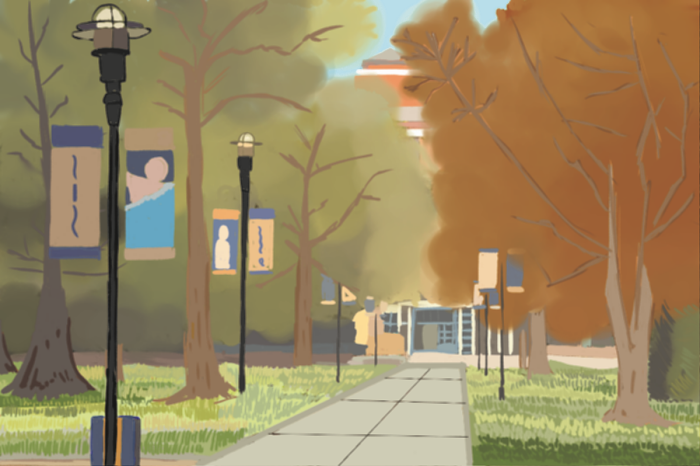
It has been roughly a year since I first moved to Davis after the pandemic, and in that time I have grown to appreciate the campus’s foliage, especially during the later part of the year. In Southern California, we don’t get the opportunity to feel or see the seasons change so drastically. For some students, the change of weather signifies a time to pull out their winter sweaters, coats and thick blankets and get in the holiday spirit.
With the end-of-quarter stress, people start to recognize that they feel more anxious and tired, lacking motivation or energy. Many students are affected by the shorter days and lack of sunlight. Seasonal affective disorder (SAD), also known as seasonal depression, is defined as the recurrent mood disturbance or depressive episodes due to the change in seasonal patterns. SAD is a complex disorder that results from the interaction of several vulnerability factors acting at different levels, and the various genetic mechanisms that underlie them.
In general, seasonal depression is a shift in mood from your usual behavior. It is important to notice the atypical symptoms of depression in your everyday life. However, this can be especially difficult with daily pressures and responsibilities, along with the changes in our environment.
Research encourages regularly setting aside some time to adjust, destress and relax. While it is very easy to stay inside when it is cold or dark out, it is crucial to still reserve some time where you can sit out in the sun. Deficits in vitamin D — from the lack of sun or supplements — may hinder serotonin activity. This affects the production of melatonin, a hormone that regulates sleep. The combination of decreased serotonin and increased melatonin impacts our circadian rhythm that regulates our internal clock. Sitting outside in between classes, walking to the bus or reserving an hour outside every day can balance these productions.
Light therapy is also an easy and preventative way to regulate our body and emotions. However, our mental health is complex and needs more than one treatment. Talk therapy aims to shift negative association or unhelpful thoughts. Changing your perspective can have a drastic effect on your mood and relationships.
The most important thing to remember is that SAD is seasonal and eventually goes away. Recognizing our behavior and taking the steps necessary to take care of our mental health can help prevent or manage SAD. If you have any concerns, mental health services and counseling is available to UC Davis students.
Written by: Michelle Mendoza — mimendoza@ucdavis.edu
Disclaimer: The views and opinions expressed by individual columnists belong to the columnists alone and do not necessarily indicate the views and opinions held by The California Aggie.
The Green Initiative Fund measure fails in ASUCD fall 2022 election
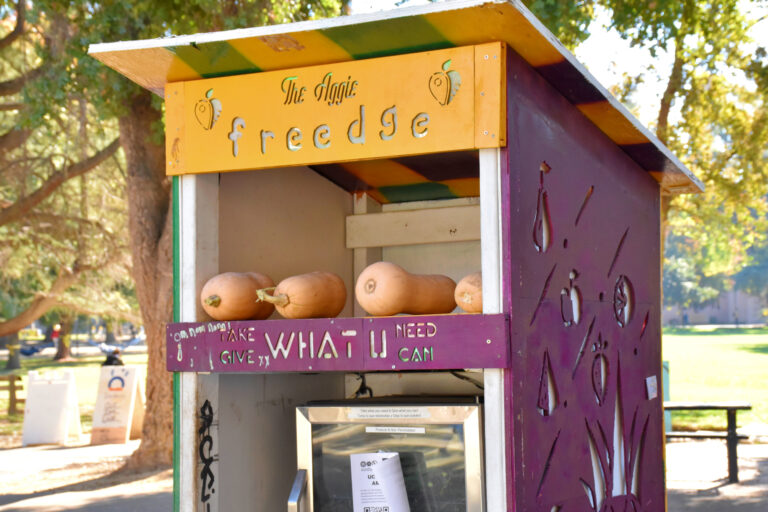
Despite popularity, the measure did not pass due to insufficient voter turnout
By LILY FREEMAN – campus@theaggie.org
The Green Initiative Fund (TGIF) fee referendum failed to earn renewal in the ASUCD fall 2022 elections due to insufficient voter turnout, according to the ASUCD elections website. The site outlines that though 79.85% of voters were in favor of the measure, only 5.58% of UC Davis’ undergraduate population participated in the election. A 20% voter turnout is required for any measure on student fees to pass.
TGIF, which has been active on campus since 2016, works to promote sustainable development and environmental innovation by providing financial resources to sustainable organizations and projects run by UC Davis undergraduate students, according to its mission statement. The TGIF site offers examples of previously-granted projects that focus on reducing food insecurity and food waste, promoting climate and environmental justice and introducing composting infrastructure and sustainable agriculture.
TGIF Grant Program Manager Madison Suoja explained what the program has been able to accomplish on campus.
“[TGIF] benefits all students [at UC Davis], whether it be through being a part of the committee, applying for a grant or benefitting from the projects happening on campus,” Suoja said. “In our lifetime, we have funded just about 112 projects and funded about $880,000 [for them].”
TGIF relies on undergraduate student fees to operate. If the fall 2022 election TGIF measure had passed, it would’ve meant reinstating the TGIF fee at $3.50 per quarter per student, effective fall 2023 through spring 2033, with a $0.50 per-quarter increase annually, according to the ballot language of the proposed bill.
According to Suoja, a similar TGIF referendum was held in the 2021-2022 ASUCD election cycle but also failed to pass due to a voter turnout of only about 7%.
“All of this and last academic year, we haven’t been collecting any student fees,” Suoja said. “We have been running our program fully on reserved funds that we have left over from previous years, so this referendum was and is very important to the future of TGIF.”
Olya Egorov, a fourth-year political science – public service major and president of the Zero Waste and Sustainability Club, said that TGIF’s financial support has been greatly impactful to the club.
“They have given us grants for our projects [and] they have given us significant funding for our workshops,” Egorov said. “We rely on TGIF, and I know that many other environmental clubs do too, [so] the immediate impact is that we no longer have funds for our club and for the bigger projects that are significant to students.”
Hanna Wang, a fourth-year environmental science and management major and the co-president of the UCD Environmental Club, agreed.
“We used [the TGIF] grants to fund a free trip for students to attend the California Academy of Sciences in San Francisco,” Wang said. “It was the largest event we had hosted, [and] the grant covered the costs of tickets and food for over 40 students. The club has relied on the grant to make our largest events possible, so now we need to find other sources of funding with TGIF no longer available.”
Suoja detailed several other undergraduate research projects funded by TGIF, such as the Arboretum Floating Islands and the CoHo Rooftop Garden.
“The floating islands in the Arboretum [were] a project where students built plastic islands that float in the Arboretum [and hold] plants in the mesh with roots going into the water to measure the nitrate content of the Arboretum Waterway,” Suoja said. “This was to see if floating islands could be a solution to the unhealthy water and ecosystem that is the Arboretum.”
The CoHo Rooftop Garden is a developing project.
“So far, [we’ve] built a bunch of structures on top of the CoHo to grow fruits and vegetables,” Suoja said. “These will be used in production to supply fresh produce to the CoHo, and any surplus will be given to The Pantry and Aggie Compass.”
ASUCD President Radhika Gawde commented on the TGIF measure in relation to voter turnout, saying that she was “incredibly disappointed” that TGIF failed to pass.
“I think ASUCD has struggled with turnout following COVID-19,” Gawde said. “We are making elections administration more streamlined and effective. We’re also instituting more cohesive and broad marketing strategies to ensure that students are aware of how many services ASUCD provides […] and how their vote matters for these services and beyond. We remain optimistic that spring election turnout will reflect the impact of our new marketing and communication efforts.”
Suoja explained how the program is planning for the future now that a second renewal measure has failed.
“We don’t want TGIF to end,” Suoja said. “There is an option to be on the ballot again, either the spring or the fall, but given the voter-turnout rates, we’re not confident that that is a viable route for us. We’re going to be having conversations with the university, ASUCD and the Sustainability Office about the different routes we can try to take to reinstate the TGIF fee.”
Suoja concluded with her thoughts on the insufficient voter turnout in relation to the impact that TGIF aimed to have.
“TGIF did a lot of things in our power to try and spread the word,” Suoja said. “Our program requires a very small fee that makes a very big difference on campus, [and] while it is important to have a 20% voter turnout, there needs to be more efforts to make sure that at least 20% of the students are voting; otherwise, what is the point of having elections at all?”
Written by: Lily Freeman — campus@theaggie.org
UAW 5810 reaches a tentative agreement with UC
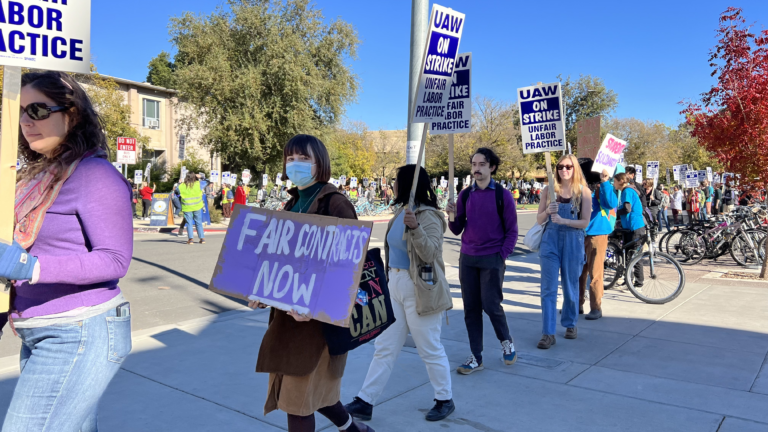
The 48,0000 academic workers will continue to strike until an agreement is reached for academic student employees and student researchers
By RACHEL GAUER— campus@theaggie.org
On Nov. 28 at 11:31 p.m., the University of California (UC) and UAW 5810, the union representing two of the striking units, academic researchers and postdoctoral students, reached a tentative agreement on contracts for the two parties.
The two remaining units, academic student employees and student researchers, still must come to an agreement with the UC in order for the strike to cease. Although the members of UAW 5810 have tentatively accepted the UC’s proposal, they have chosen to continue to strike in solidarity with the remaining units until they both reach agreements as well.
A press release from UAW 5810 on the morning of Nov. 29 outlined the coming steps needed to reach a final agreement for all units.
“We expect [the UC] will start making substantial offers to Academic Student Employees and Student Researchers,” the release read.
Additionally, the membership of UAW 5810 must still vote to ratify the agreement, which will remain tentative until its ratification.
If the proposal is ratified, academic researchers will receive, on average, a 29% salary increase over the course of their contracts, and postdoctoral students will receive, on average, a 20-23% salary increase by Oct. 2023. Once ratified, the new contracts will be effective through Sept. 30, 2027.
Additionally, the proposal offers both academic workers and postdoctoral students eight weeks of parental and family leave at 100% pay, as well as more protections for workers with disabilities and free transit passes for transportation.
In the press release, Neil Sweeney, the president of UAW 5810, urged the UC to propose an agreement to the two remaining units on strike.
“It is now time for UC to make serious proposals to Academic Student Employees and Student Researchers and to reach fair agreements that recognize the contributions these workers make,” Sweeney wrote in the statement.
Written by: Rachel Gauer — campus@theaggie.org
Christina Quarles at the Manetti Shrem: A glimpse through the lens of an artist

A deep dive into one of many incredible resources of the UC Davis Arts Department
By ANA BACH — arts@theaggie.org
On Nov. 17, I had the opportunity to check out one installation of the recurring Visiting Artist Lecture Series at the Manetti Shrem Museum.
The lecture was given by Christina Quarles, an artist based out of Chicago who now works in Los Angeles. Her work consists of abstract paintings that center around queerness, sexual identity and gender. She has hosted an exhibit at the Museum of Contemporary Art in Chicago and graduated from the Yale School of Art with a Master’s in Fine Arts.
Quarles began the lecture by going in depth about the medium she finds herself the most comfortable using: acrylic paint on canvas. Her creative process begins with looking for inspiration from informal elements such as cartoons and media. After she has an idea of what she wants to create, she proceeds with painting creative amorphous structures that have no particular format, structure or approach related to the end concept.
“Make work through the problem,” Quarles said as she described her artistic process.
She stressed that oftentimes people suggest working around “problems,” treating them as obstacles that inhibit us from achieving our goals. Quarles rebukes this, treating the “problems” she has with her paintings as a catalyst for change that otherwise might have gone unnoticed.
Once she has a general idea of what shape the painting will take, she uses other applications, such as Adobe Illustrator, to plan out the spacing for the rest of the work and to add complementary details.
Another method Quarles has adapted into her repertoire is gesture painting. This technique is practiced when an artist uses extensive gestures, sometimes even contorting their body to reach certain spots so that the overall movement of the limb is emphasized in the work. She said that she typically works on larger canvases to accommodate this practice.
Quarles closed the lecture by sharing the topics that surround her work and how they relate to a broad audience. One of the biggest themes she plays on is intimacy, specifically as a mode of self-expression. This can be seen through her use of figures that blend with one another, some of which reflect entanglement with another person, while others offer a platform to contemplate our relationships with ourselves.
I thoroughly enjoyed seeing how Quarles interacted with the audience, creating a comfortable environment throughout the lecture. The lecture’s casual nature encouraged audience members to look deeper into how the themes presented in her art aid exploration within our own lives.
These lectures take place regularly at the Manetti Shrem and are available for free to any member of the student body. I would highly suggest checking one of them out, whether you are already interested in the arts program or you just want to broaden your creative horizons.
Written by: Ana Bach — arts@theaggie.org
MLB free agency preview

Teams have the opportunity to improve their rosters with several star players available in free agency
By PATRICK FIGUEROA — sports@theaggie.org
With the end of the MLB postseason, the offseason begins. Now, baseball fans are focused on free agency — a period of time during which MLB teams can sign players without existing contracts. While some star pitchers like Clayton Kershaw, Edwin Díaz and Robert Suarez have already signed deals with their previous teams, there are still many players who will be looking to sign long-term contracts in the near future.
There are multiple talented shortstops on the market, including former Los Angeles Dodgers shortstop Trea Turner, Minnesota Twins’ shortstop Carlos Correa, Boston Red Sox’s Xander Bogaerts and Atlanta Braves shortstop Dansby Swanson.
Turner has established himself as one of the best shortstops in baseball during the past two seasons. What stands out most about Turner is his speed, making him a threat whenever he gets on base. Fangraphs predicts that Turner will receive a seven-year, $210-million contract. The Philadelphia Phillies are currently the favorites to sign Turner.
Correa opted out of his three-year contract with the Twins after one year to test the free agency market. He is a great all-around shortstop, but his defensive abilities, which contributed to his Platinum Glove Award win in 2021, are especially noteworthy. Fangraphs projects him to get an eight-year contract worth $256 million. There is no clear favorite to land Correa, but whichever team does acquire him will have an elite shortstop.
Bogaerts has been a stalwart shortstop for the Red Sox for nearly a decade. Bogaerts won his fifth American League (AL) Silver Slugger Award last season. Projected to receive a six-year, $168-million contract, fans should expect a team looking for offensive production to sign Bogaerts.
Swanson won a National League (NL) Gold Glove Award in 2022 after putting together the best season of his career. With great defensive abilities and above-average hitting, Swanson is reliable. He is projected to receive much less than the other top shortstops, at $141 million over six years. However, this could be an advantage for teams that desire a good shortstop without breaking the bank on a single player.
There are also several pitchers that teams can acquire to bolster their starting pitching rotation. Former New York Mets pitcher Jacob deGrom, Houston Astros pitcher Justin Verlander and Japanese phenom Kodai Senga are all on the free-agent market.
34-year-old deGrom is arguably the best available pitcher, despite his injury history. Teams are willing to sign deGrom to a record-breaking deal because of his incredible abilities when healthy. Projected to sign a three-year, $140-million contract, deGrom has recently expressed interest in signing with the Texas Rangers.
After winning his third Cy Young Award and a World Series championship last season, Justin Verlander opted out of the second year of his two-year contract with the Astros, thus making him a free agent. Despite the fact that he will be 40 years old when the 2023 season starts, Verlander is projected to receive a two-year contract worth $70 million. Despite there not being a clear favorite to sign Verlander, the Dodgers have expressed interest.
Kodai Senga is a Japanese pitcher who is on the international free-agent market this year. Senga has only pitched in the Nippon Professional Baseball (NPB) league, the highest level of baseball in Japan, but he has a variety of pitches that should translate well in MLB, such as his splitter. Senga can choose whether he stays in the NPB or if he signs to play with a team in MLB for an estimated four-year contract worth $60 million.
There are also some noteworthy outfielders in the free-agency market. This includes one of the best available free agents, former Yankees’ outfielder Aaron Judge, as well as former Mets outfielder Brandon Nimmo.
After a historic season in which Judge broke the AL home run record and won his first MVP award, he is now a free agent. Projected to receive an eight-year, $300 million contract, Judge will be a huge asset for any team that he signs with. The Yankees are the favorites to re-sign Judge, but it is not certain. Fans can expect Judge’s childhood team, the San Francisco Giants, and Dodgers to be in the race for Judge’s services as well.
Nimmo is not the flashiest player in MLB, but he has a skill that many general managers desire: high on-base percentage (OBP). Nimmo has a stellar career OBP of .385. He is a jack-of-all-trades that is projected to receive a five-year, $100 million contract. After the Toronto Blue Jays traded away outfielder Teoscar Hernandez to the Seattle Mariners, they have expressed interest in Nimmo.
Other free agents that baseball fans need to know about are former Giants’ pitcher Carlos Rodon, who opted out of his two-year contract with the Giants, becoming the best left-handed pitcher available, as well as former White Sox first baseman José Abreu and designated hitter J. D. Martinez, a former member of the Red Sox and an all-star last season.
Written by: Patrick Figueroa — sports@theaggie.org