57.9 F
Davis

Davis, California

Monday, December 22, 2025
Home Blog Page 232

Student Farm helps combat food insecurity on campus

0

Through partnerships with on-campus initiatives, the Agriculture Sustainability Institute is working toward a more sustainable and accessible Davis food system

By JALAN TEHRANIFAR — features@theaggie.org 

UC Davis’ Agricultural Sustainability Institute’s goal is to ensure that everyone has access to healthy food while also promoting agriculture’s vitality for the current and future generations, according to their website. They conduct integrative research, education, communication and early action to try to mitigate large, emerging environmental concerns. The Student Farm on campus is a part of this institute which helps educate Davis students about sustainable agriculture by allowing them to participate in the practice.

The mission of the Student Farm is to provide a space for students to learn, practice and model agriculture and food systems that are ecologically, socially and economically sustainable.

The 23-acre farm is run by a team of UC Davis students, including Katharina Ullmann, the farm director. Ullmann said that across the 23 acres of land, they grow organic fruits and vegetables, sustainable flowers and herbs and native plants. When harvested, these products are sent to a few different places to be sold. 

Some fruits and vegetables are sent to the Community Supported Agriculture program (CSA), which sells organic seasonal produce to students through a weekly subscription. Students and other community members can also purchase their produce at the on-campus farmers market on Wednesdays during fall and spring quarters.

The Student Farm also partners with UC Davis Dining Services and the ASUCD Coffee House on campus. Davis’s Dining Services uses Market Garden produce to have a more sustainable and nutritious dining system in the dining commons.

These partnerships have allowed the farm to hire more students and produce more crops each season. This income also helps the farm partner with organizations to donate their crops to.

The Student Farm established the Community Table Project (CTP), which examines how the Student Farm can help address campus food insecurity and initiate dialogue about the intersections of people, place and food. This project was started by two UC Davis students, Nicole Lesnett and Kiko Barr, who wanted to fight food poverty. 

Their website reads, “In 2014, two Student Farm students, […] began delivering [Student Farm] produce to the Associated Students of UC Davis (ASUCD) Pantry, where it was made available, free of charge, to all UC Davis students.”

Barr’s and Lesnett’s initiative evolved into the UC Global Food Initiative in fall of 2016, but the Student Farm produce still contributes to the UC Davis Pantry through a program called Fresh Focus. 

Nicole Curiel, a fourth-year sustainable agriculture & food systems major, is the lead student farmer at Fresh Focus and a partner coordinator at the Student Farm. She first started volunteering at the Student Farm as a first-year and began interning at Fresh Focus during her sophomore year in 2019. Curiel said that she is passionate about the student farm because of its mission.

“It’s a space for experiential learning in terms of food justice, land stewardship and regenerative organic practices,” Curiel said.

Now, Curiel is a partner coordinator at Fresh Focus, which she explained works to obstruct food insecurity on campus.

“The goal is to increase food security and destigmatize food insecurity on campus, [while] simultaneously reducing food waste as well,” Curiel said. “When Fresh Focus was first born, it was mainly because the Pantry at that time didn’t have that much fresh produce, so students were really passionate about increasing the availability of fresh fruits and vegetables for patrons.”

The Student Farm has partnered with the Pantry for over 30 years, but through Fresh Focus and the Community Table Project, they’ve been able to distribute to many other associations on campus.

“Our role […] is to provide fruits and vegetables to different groups and communities on campus,” Curiel said. “We distribute to the Pantry, Fruit and Veggie Up! and different resource centers like the LGBTQIA+ center, the AB540 and Undocumented Student Center, the Native American Academic Student Success Center, Center for African Dispora Student Success and the Educational Oppurtunity Program.”

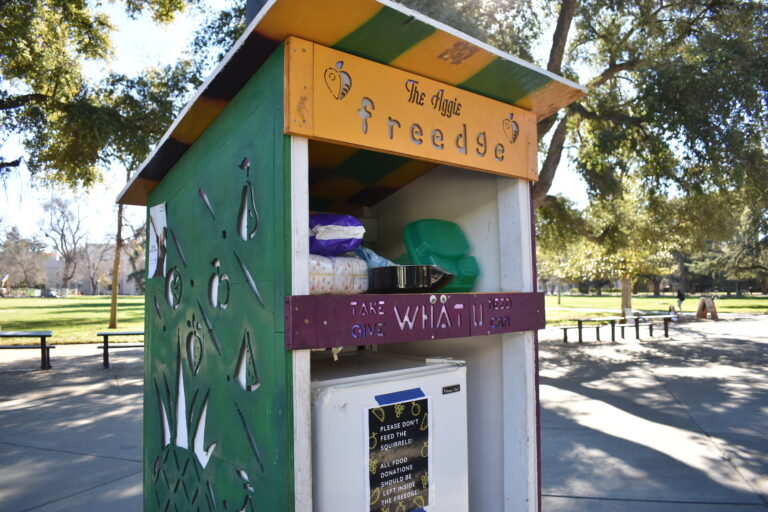
Even after Fresh Focus makes all these donations, there are times where they find themselves with extra produce. Curiel said that this extra produce is sent to the Freedges at the Memorial Union and Silo on campus. The Freedges are part of UC Davis’s Food Loss and Waste Collaborative, and are places where anyone with extra sealed or packaged food can donate it. Anyone can grab this donated food. This helps reduce food waste and helps those in need. Curiel said that often, the food found in Freedges is from the Student Farm.

“I think it’s really important, really cool, that a lot of the work that’s happening toward combating food insecurity and increasing food security in that aspect is being done by students,” Curiel said. 

The Student Farm is currently hiring multiple positions in the Market Garden, Eco Garden, Flower Project and with Fresh Focus. For more information and employment opportunities, check out the Agricultural Sustainability Institute website or contact studentfarminterest@ucdavis.edu

Written by: Jalan Tehranifar — features@theaggie.org

Review: ‘Notting Hill’ is a meta modern love story

The 1999 film follows a complicated relationship with a philosophical flair

By BRIAN RILEY — bkriley@ucdavis.edu

What would you do if a superstar celebrity came into your life while you were going about your regular, humble routine? Would you carry on normally and attempt to engage in casual banter with the star, knowing that you’d probably never meet again? 

Such is the situation at the beginning of the classic film “Notting Hill,” which is now back in movie theaters, when a small bookstore owner in London named William (played by Hugh Grant) looks up from his cash register to see that the ultra-superstar American movie actress Anna Scott (played by Julia Roberts) is quietly browsing for travel books in his store. He offers to help, sparks fly, she leaves; a happy accident then occurs on the streets that brings them together again and a problematic romantic relationship ensues.

Some problems, like those of this new romance, are good problems, and very good ones indeed. William’s wife had recently divorced him for superficial reasons. He is living with a seemingly wildly inconsiderate but paradoxically well-meaning roommate named Spike (played by Rhys Ifans), a self-employed, very unkempt artist with a low-to-nonexistent income, and he was bored with his bookshop and feared that his business was failing.

From Anna’s perspective, her preexisting relationship with her movie star boyfriend had been quickly fading, or perhaps had never really gotten off the ground in the first place, and she was experiencing something of a personal slump, doubting her acting abilities and future acting prospects.

How could these two interesting characters find a way to adjust to each other so that their fledgling and prospective relationship could blossom into a real and lasting one? The ending of the film only hints at how they might have accommodated each other on a long-term basis, showing a peaceful scene of the two of them in a park in the backyard of their newly purchased, upscale home, thus leaving plenty of questions left unanswered, creating assundry possibilities for an eventual sequel.

In the meantime, though, in the story being told, it’s Will and Anna’s differing processes of solving their pressing intermediate conflicts that create interest. Anna has no apparent qualms with jerking his emotions violently from one extreme to another. William, in a typical British way, prefers an even-keel approach to life, but knows he would have to give that up in order to be with her. Although William owns a travel bookshop, he has never been able to venture out and explore the world as he had originally intended. Now is his chance. Anna, by contrast, has been on a burdensome low-calorie diet since age nineteen and craves a meaningful home life.

Both characters also experience a strong “meta” component in their daily lives, Anna obviously so due to her fame and needing to find ways to examine and understand her own fame and navigate through its complexities. Will, we can infer, took literature classes as part of his studies at university and so understands the meta function that narration plays in novels, which evolved in interaction with industrialization and the onset and development of the Modern Age.

For those who have not yet seen the movie, I’ll leave out the details of the incredible scene where the plotline takes an unexpected turn, with both Julia Roberts and Hugh Grant giving the performance of their lives — cinema perfection — uttering writer Richard Curtis’s ingenious lines under the masterful direction of (the now recently deceased) director Roger Michell. In this simple yet effective dialogue, the unconsciously authentic aspects of life mix with the type of meta posturing that we all engage in these days and blend together with all the various and intriguing plot points. 

Philosophy, of course, is the ultimate form of the meta in life — the ultimate integrator — and this movie has a strong philosophical feel, all the way from Will’s opening voice-over narration, through the scene where Will and his best friend Max (played by Tim McInnerny) discuss the Greek gods, to the unpredictable climax where Richard Curtis sweeps us all away with another master-stroke of dialogue combined with meta-dialogue.

The movie was twenty years ahead of its time, but it leaves us wanting to know more, not only for entertainment purposes but also as a guide to how we might make needed compromises and breakthroughs in today’s world. A romantic relationship is the ultimate social form of unity in diversity, but when one partner ends up only serving the needs and desires of the other, unity goes astray. When both partners’ goals diverge too starkly, that degree of diversity breaks them apart. The content and style of the movie cries out for a sequel, which will hopefully be forthcoming. 

With all this in mind, the thoughtful viewer can come out of the movie experience charged with ideas and questions in the way that the artist, or artists in this case, intended. And this truly is great art.

If you’re interested in appreciating it on the big screen, the film is showing Wednesday, Feb. 9 at Regal Theaters in Sacramento.

Brian Riley has written two previous guest movie reviews for The California Aggie, one on Paddington 2 and another on the movie Yesterday. He is in a transition phase, academically, and hopes to find a new advisor and dissertation chair in order to be able to switch to Independent Major (PhD) status, with a focus on Philosophy and University Studies. He can be contacted at bkriley@ucdavis.edu.

Written by: Brian Riley — Guest Writer


Research using deep mantle krypton deduces more about Earth’s outer solar system ancestry

Using precise measurements of krypton isotopes, UC Davis researchers prove that volatile organic compounds were incorporated into the Earth earlier than they thought 

By MONICA MANMADKAR — science@theaggie.org

According to a new study published in Nature by UC Davis researchers, krypton (Kr) isotopes provide better insight into how, when and where carbon, nitrogen and water were brought to Earth. The study of these volatile organic compounds is an extremely important component of understanding Earth’s history and, by extension, the history of other planets. 

Pulling these isotopes together from the Galápagos Islands, researchers Sandrine Péron and Sujoy Mukhopadhyay analyzed these isotopes for chemical fingerprints. According to the study, since krypton is composed of both meteoritic and atmospheric isotopes, this element can tell us a lot about Earth’s history and how its volatile elements like carbon, nitrogen and water initially developed. 

“This study will allow [researchers] to better understand how Earth came to be and more importantly when these volatile elements developed in Earth’s history,” said Sandrine Péron, the lead author of the study and a current Marie Skłodowska-Curie Actions Fellow at ETH Zürich in Switzerland.

Péron conducted the research at UC Davis as a postdoctoral fellow working with Professor in the Department of Earth and Planetary Sciences Sujoy Mukhopadhyay. She described how the deep mantle krypton remains unchanged from the moon’s formation, which is why the isotopes can be used to deduce when volatile compounds came to Earth. The volcanic spots at the Galápagos Islands pull magma from the mantle, which is near the Earth’s iron core. Collecting the lava plumes themselves, researchers can use this magma to extract krypton isotopes. However, even with the lava, researchers are only able to collect a few million atoms of the most abundant krypton isotopes. 

“Since the process of deducing their impact poses a challenge, [Péron] was able to come up with a better method for measuring the mantle krypton with mass spectrometry,” Mukhopadhyay said. “[She] was able to concentrate the krypton from rock samples where the samples would be void of air contamination and separated from argon and xenon.” 

Péron continued to explain how their study was the first one to exactly calculate all krypton isotopes, including the rarest krypton isotopes, Kr-78 and Kr-80. Using these isotopes like a fingerprint, the researchers hoped to find where the volatile elements and compounds initially arose from the asteroid belt, the inner solar system or somewhere else. 

“These isotopes are basically acting as the DNA in terms of their lineage, [and are answering questions like] where did these elements come from and which bodies delivered these elements that are essential for life,” Mukhopadhyay said. 

The researchers soon discovered that the isotopes’ fingerprints contained traces of primitive, carbon-rich meteorites which originated from very early in Earth’s history. 

This reveals two novel discoveries, Péron said. Firstly, although the isotopes show that the volatile elements arose very early in Earth’s history, not all of the isotopes were accounted for in the known meteorites. Secondly, the researchers found that the ratio of deep mantle krypton doesn’t match the atmospheric krypton isotope levels, which means that some of the ones in the atmosphere were delivered during the moon formation. If not, then the ratio for the deep mantle krypton and the atmospheric one would be the same, Péron explained. 

Keeping this research in mind, Mukhopadhyay’s lab hopes to continue answering questions about why the fingerprint of krypton in the Earth’s atmosphere is different from the deep mantle and how representative the study’s measurements are of the entire interior of the Earth’s mantle. 

Written by: Monica Manmadkar — science@theaggie.org


Mugler’s fashion: power and playfulness

Remembering Manfred Thierry Mugler (1948-2022) and his revolutionary fashion designs

By ANGIE CUMMINGS — arts@theaggie.org

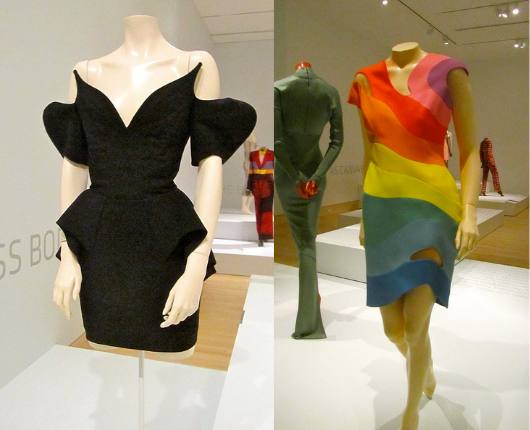
Whether or not you know or care about fashion, it’s hard to avoid Mugler’s striking designs. Even after over 30 years in the industry, his work managed to stay fresh and relevant to the ever-changing tastes of the fashion world. Manfred Thierry Mugler launched his first collection in 1974, and by the ‘80s, he was a fashion powerhouse, known for his hyper-feminine designs, highly structural pieces and brightly-colored creative concepts. 

Most of Mugler’s work can be identified by cinched waists, exaggerated shoulders and a general “femme-bot” feel. Inspired by the iconic feminine designs of the ‘40s and ‘50s Balenciaga and Dior, Mugler created revolutionary (and sometimes controversial) avant-garde fashion that somehow felt timeless. From his recent minimalist Fall/Winter 2021 collection to even his most extravagant gowns and corsets of the ‘90s, there is always a definite sense of power in his work. Even a sheer glittery dress is never understated when it’s from Mugler — from the way his designs are presented on runways to the celebrities he dresses, the women who wear Mugler always seem in control of the room. 

Mugler’s creations have been worn time and time again by some of the most influential people in pop culture, only further establishing his long-lasting legacy as a forefather of bold and modern fashion. Some of his muses include Diana Ross, David Bowie, Lady Gaga, Beyoncé and essentially every top supermodel from each decade. He dressed these icons in latex, metal, leather and other materials previously deemed unconventional in the high-fashion world, but we have now become fairly accustomed to seeing them on runways and red carpets. 

His use of these materials and constructions reminiscent of fetish wear has always branded Mugler as controversial, but it is also what makes so many appreciative of his impact on mainstream fashion. Fetish has always been a part of the queer community, and for many years, it was something considered shameful that was hidden from the public eye. But Mugler’s fashion designs turned it into a joyful celebration of these visual components. 

Mugler’s own fascination with body modification is evident in the ways he has played with proportions and construction on many of his pieces over the years, from his Les Cowboys Spring 1992 collection in which he transformed his models into car and motorcycle cyborgs, to Kim Kardashian’s impossibly sculpted 2019 Met Gala “wet dress” dripping with crystals. It is clear from just a glance at Mugler’s work that the image he creates is unique from most luxury designers, as their looks often create an image of a perfect lady or even a doll-like sense of femininity. What Mugler creates is almost superhuman, often combining animalistic or mechanical motifs with his exaggerated feminine signature to create futuristic hybrid looks. 

Many of Mugler’s collections could easily be the wardrobe of a “yassified” superhero film, with some incredibly badass heroines (or even cooler villains) dominating the world. One could even argue that Manfred Thierry Mugler was the Stan Lee of modern fashion (I am the only one arguing for this), blowing audiences away year after year, and always making headlines with some of the biggest names in the business. 

With his passing, many in the fashion world mourned the end of a vibrant and tantalizing era of fashion, but Mugler’s legacy will live on in his revolutionary fashion. Dresses, corsets and bodysuits are not always exciting, but Mugler showed the world that there is room for showstopping and conceptual pieces in what can often be the monotonous world of luxury fashion. 

Written by: Angie Cummings — arts@theaggie.org

DiSC 2022 recommended for city council approval

Innovation Park may be heading to another vote 

By RACHEL SHEY city@theaggie.org

On Jan. 12, the Davis Planning Commission voted unanimously to recommend that the city council approve the new Davis Innovation and Sustainability Campus, or “DiSC 2022.” The new project, which will be built in the “Mace Triangle,” has been revised to occupy a smaller space, reducing from 194 to 102 acres. Most of that reduction is in housing units and office space. Retail has remained largely intact. Otherwise, the project is largely untouched, according to Principal Planner Sherri Metzker.

“It’s pretty much the same project except it’s about half the size of what it was, and the bike undercrossing is no longer part of the original proposal,” Metzker said.

Opponents of the plan are concerned about traffic problems that the new development would create. Metzker explained that there are many traffic mitigations required for the builders of the project. 

“There’s some bike improvements that they have to build, and they’re required to build a new bike lane on the inside of the Mace Curve,” Metzker said. “We did an analysis of the project as if you could wave a magic wand and the whole thing would suddenly appear, to figure out what they would need at full build-out. As each project comes in, they’re required to do a study to say what has to be built to meet traffic requirements.”

Some are also worried that the retail components of the new project will take away customers of Davis downtown, leading to decreased foot traffic in the downtown area. Principal Officer and Treasurer of “No on Measure B” Alan Pryor was concerned that while the housing and office space has been halved, the projected retail was only reduced by 20%. 

“That 80,000 square feet of retail is a big concern,” Pryor said. “That’s going to be devastating to the downtown, which is already reeling from COVID-19. We’ve had dozens of businesses shut down there that have yet to reopen. This is simply going to cannibalize that. DiSC will generate 130,000 square feet of empty office and retail space. That would be devastating to our downtown and our hotel industry.”

Metzker said that the new retail is designed to serve those working in the campus. 

“We’ve had to do an urban decay analysis, and the study does not show any evidence that the new retail will cannibalize Davis downtown,” Metzker said. “The commercial in that area is meant to serve the folks who are working in the DiSC. It isn’t as though the businesses in the downtown area are there to serve a specific type of end-user. The idea is that there might be a coffee shop in DiSC so folks don’t have to go all the way downtown to get a cup of coffee.”

Metzker also noted that the developers are unable to promise that the residential units will be filled by those who work in the campus, but they agreed to stipulations that hope to sync up the building of the residential units with the creation of the office space. 

“The best the developer has been able to commit to is to meter the amount of residential they can build,” Metzker said. “They can only build one residential unit for every 2,000 square feet of nonresidential that they’re building. In other words, they can’t just run out there and build all the residential first because that’s the thing most people are most interested in and the market would sell them real quick. It meters the residential building so that it’s more synced up with the building on the nonresidential side.”

Pryor pointed out that the project is still anticipated to increase Davis traffic by 5% and suggested alternative projects that might not cause the same degree of traffic gridlock.

We’ve still got a hundred acres and there’s going to be 12,000 cars a day going on Mace Boulevard,” Pryor said. “I think they have to seriously start looking at some major infill possibilities that are closer to the train stations so you can get mass transit in there from over the causeway and some type of enhanced bus transport. They say they’re going to add a free shuttle that runs from 2nd Street, but they won’t commit to making that an electric shuttle. And the developer is selling us hope and a prayer backed only by his promise.” 

Written by: Rachel Shey — city@theaggie.org

Seven pieces of legislation passed at Jan. 27 Senate meeting

SR #22, SB #43, #42, #41, #40, #37 and #39 passed unanimously

By KAYA DO-KHANH — campus@theaggie.org

Vice President Juliana Martinez Hernandez called the Senate meeting to order at 6:10 p.m. on Jan. 27 and recited the UC Davis Land Acknowledgement.

Sabrina Zahid was confirmed to the position of vice controller after being nominated by Senate Controller Isabelle Poux. 

Cynthia Carter Ching, the interim vice provost and the dean for undergraduate education, gave a presentation about the Office of Undergraduate Education’s support for students and academic flexibilities for the current academic year.

Ching discussed the Teaching and Learning Complex, which is partially open at this time and will be fully open in the spring. Regarding the return to campus for winter quarter, she touched on academic flexibilities such as lecture capture technology, student assistants and workshops that are available to faculty to advance teaching during the pandemic through the Center for Educational Effectiveness and Academic Technology Services. 

Research and Data Committee Chairperson Stephen Fujimoto nominated Vishal Duggal to be a member of the committee, and he was confirmed without any objections. 

Calvin Wong was confirmed as the Infrastructure Task Force chairperson and the Communications Outreach chairperson after recommendation by ASUCD President Ryan Manriquez. 

Nisha Dharmara was confirmed as the Alternative Crisis Response Task Force chairperson, and Michael Logoteta was confirmed as the chairperson for the Donation Drive Task Force.

Next, Dhanya Indraganti, the chairperson for the Library Committee, and Itzel Gallardo, the chairperson for the Fair Trade Committee, provided a quarterly update and both mentioned efforts to increase their staff with future vacancy listings. 

The co-director of the UC Davis Mental Health Initiative, Aparna Manoj, provided a quarterly update and specified the initiative’s most popular workshop from last quarter, “Exploring Grief Concepts and Creative Coping.” Manoj also said that the team is preparing for its winter quarter recruitment and planning events, such as themed activities during the day and evening workshops for Mental Health Awareness Month in May. 

External Affairs Vice President Shruti Adusumill provided a quarterly update for the Office of External Affairs and stated that in the fall quarter, the commission had a fully staffed office that worked to promote voting for ASUCD elections and the Double the Pell campaign. Ongoing projects for winter quarter include the legislative team’s redesign of housing bill AB #1277, which is now AB #886, and the legislative team is looking to help with a scholarship bill.

Morayah Horovitz, the creative director of Creative Media, presented the unit’s quarterly update. There were new additions to the unit’s staff, such as new art directors, a graphic designer and a computer programmer. Creative Media contributed jumbo screens, glow sticks and mask and merchandise designs to ASUCD’s annual welcome concert, Sunset Fest in fall quarter. For this quarter, the animation department is working on the Picnic Day logo, and the photography department is working on taking pictures of campus life during the return to campus.

Next, there were elected officers reports, in which elected officers detailed their weekly progress. 

In Public Announcements and Discussion, Cindy Lamas, an intern from the CALPIRG organization, announced that a petition in support of banning unnecessary plastic packaging in California received 1,040 signatures. Manriquez gave updates about ASUCD operations: The third floor of the Memorial Union is fully open, and N95 and K95 masks are available for employees and visitors. The ASUCD Coffee House and Unitrans will return to their normal fall schedule.

The senators transitioned to emergency legislation, with Senator Dennis Liang introducing SR #22, which urges UC Davis Academic Senate, faculty and administration to provide hybrid learning options, require the recording of all lectures and discussions, and prohibit attendance-based grading. The bill passed unanimously. 

SB #43, which calls to amend chapters of the ASUCD bylaws related to the Internal Affairs Commission vice chair of regulation and finance to establish responsibilities and duties was discussed, revised and passed unanimously. 

SB #42 is a bylaw amendment which puts bylaws in congruence with the constitution to reflect the new ASUCD election process. SB #40 calls for a revision of the Unitrans budget due to changes in operations. SB #41 allocates $3,615 to KDVS to purchase new dehydrator equipment. SB #37 establishes the Executive Board of the ASUCD Lobby Corps. SB #39 reflects procedural updates to ASUCD Sustainability Audit procedure from bi-annual to annual and adds a section about the ASUCD sustainability guide. All passed unanimously. 

Martinez Hernandez adjourned the meeting at 11:45 p.m.

Written by: Kaya Do-Khanh — campus@theaggie.org

UC Davis health professionals share insights about omicron variant

As the upward trend of omicron cases is seeming to decline, experts say it is important to stay cautious while returning in-person classes 

By MONICA MANMADKAR — science@theaggie.org

With students, faculty and other UC Davis members coming back to campus for in-person learning, it is still important to keep COVID-19 in mind and take the necessary precautions to keep everyone safe. UC Davis health professionals emphasize the necessity of keeping masks on and testing in a timely manner.

In interviews with The California Aggie, UC Davis public health experts, infectious disease professionals and epidemiologists answered some common questions and noted measures that everyone should take to continue staying safe. 

What is the omicron variant and what makes it different? 

Like any virus, COVID-19 evolves and mutates, which allows the strains to continue infecting people at increasing rates, according to Dr. Dean Blumberg, the chief of pediatric infectious diseases at UC Davis Children’s Hospital. The original strain has 32 mutations, which is much less compared to the omicron variant which has over 50 more mutations. With these mutations, the virus can more easily attach to cells, hence initiating infection. 

“Some of these mutations result in stronger binding of the spike protein to our receptors, some enhance viral replication, and some avoid neutralizing antibodies from infection of immunization with previous strains,” Blumberg said via email.

Is the omicron variant more transmissible and why?

Since the omicron variant can bind easily to receptors and cause infection, the variant is more transmissible. Blumberg explained how stronger binding to the cell’s receptors leads to a higher viral replication rate and thus higher virus concentrations. This results in omicron being two to five times more transmissible than the former delta variant. 

“With the virus’ rapid replication, the mutation rate is much higher and so is the evolution of the virus,” said Dr. Bradley H. Pollock, a professor of epidemiology and chair of the Department of Public Health Sciences. “Omicron is one of the results of the mutations that the original virus made and is continuing a prominent variant due to its evolution into being so contagious.” 

Why should people still continue to get tested even if the symptoms of omicron are milder?

The omicron variant is extremely infectious. Dr. Lorena Garcia, an epidemiologist and professor in the Department of Public Health Sciences, explained that although people may not feel the effects of the symptoms, they can still infect others such as immunocompromised individuals. Those who are unvaccinated and not boosted are also more susceptible to severe symptoms than the vaccinated population. 

“If you infect someone who is unvaccinated, that person can go on to have severe outcomes, including hospitalization, severe illness and even death,” Garcia said

Garcia also detailed that individuals have died due to omicron across age groups. Hence, it is important that individuals get tested, even if they are asymptomatic, and if they test positive, to quarantine and inform those with whom they’ve had close contact. Garcia added that the viral load of omicron is much higher than delta and the other variants, which is why someone with omicron is more infectious. 

How long are omicron symptoms contagious? Are the symptoms different?

“For all intents and purposes, you may be seeing maybe not the same frequency and effect of the symptoms with the omicron variant,” Pollock said. “However, the core symptoms remain the same — loss of smell, coughing, fever, etc.” 

In terms of the timeframe, Blumberg described that people may still be contagious for up to 10 days from the onset of symptoms. But they are no longer considered infectious after that if they are clinically improving and do not have a fever without using fever-reducing medications.

What type of masks should students wear? Is it okay to keep using cloth masks?

Pollock explained that the highest efficacy mask would be N95s or equivalent masks, followed by surgical masks and then the cloth masks without a filter. 

“The surgical masks are much better than the cloth masks, but they would be even more effective if you can put a cloth mask over it,” Pollock said. 

The cloth masks keep the surgical masks tightly in place on the face, firmly covering the nose and mouth completely and avoiding any type of leakage around the facial area.  

What does this surge with the omicron variant tell us about future COVID-19 strains and their effects on the community?

Pollock explained that all omicron can tell us about the virus is that we hope that future variants are milder, and we hope that there will be less hospitalization. 

“However, it is extremely important for everyone to get vaccinated and boosted. With those antibodies, infected individuals will have more mild symptoms and will most likely not be in danger,” Garcia said. 

In addition, we do know that more viral transmission leads to more replication, which increases the chances for variants to arise. That is why it is so important to increase efforts to vaccinate more people worldwide, Blumberg said. 

As a whole, experts say it is important to stay safe and wear masks even with declining cases. The omicron variant is still in the community and is extremely transmissible, they said.

Written by: Monica Manmadkar — science@theaggie.org

Upcoming events in February

Markets, speaker events, live music and more to check out in Davis this February

By JACOB ANDERSON — arts@theaggie.org

Davis Craft & Vintage Market (Central Park Pavilion, Sunday, Feb. 6 and 20, from 10 a.m. – 4 p.m.):

The Davis Craft & Vintage market is offering a place to get your hands on a varied selection of local products — from stationery and pottery to food, art and plants. The market runs from 10 a.m. to 4 p.m. and will feature live music from the New Harmony Jazz Band. Small business and independent sellers will be offering their best, so check it out if you get the chance.

Artist Talk: Kota Ezawa (Manetti Shrem Museum, Thursday, Feb. 17, 4:30 p.m.):

Koto Ezawa, most notable for his 2002 animation “Simpson Verdict,” which now resides as a permanent installation at the Museum of Modern Art, will be at the Manetti Shrem for a talk on Feb. 17. He uses a distinctive flat and unshaded style of animation to depict wrought and often racially charged moments in recent American history. Another of his exhibits, “National Anthem” (2018), uses footage of NFL players protesting police violence as an object to be reimagined in his uncanny style. The Japanese-German-American’s talk is sure to be enlightening.

“Heartbeat Opera: Beethoven’s Fidelio” (Jackson Hall, Saturday, Feb. 19, 7:30 p.m.):

This daring adaptation of “Fidelio” places the famed opera in a modern context, featuring a digital chorus of more than 100 incarcerated singers in the U.S. It follows the wife of a Black activist who must infiltrate the prison system in order to free her husband. Seven musicians and five singers unite to bring this vision to the stage, one that the New York Times called “Imaginative, vital and heartbreaking.”

“An Evening with Fran Lebowitz” (Mondavi Center, Thursday, Feb. 24, 7:30 p.m.):

Writer and keen, caustic social commentator Fran Lebowitz will be in town on Feb. 24 for an interview and Q&A at the Mondavi Center. Her hilarious essays have been collected in “Metropolitan Life” (1978) and Social Studies (1981), launching a career that has brought her countless television and speaking appearances for decades. Most recently, Martin Scorcese’s Netflix series, “Pretend It’s a City” (2021), introduced Lebowitz to a new generation of audiences.

“Ronald K. Brown and Evidence, A Dance Company” (Mondavi Center, Saturday, Feb. 26, 7:30 p.m.):

Ronald K. Brown’s Evidence dance company fuses traditional African dance with eclectic, modern choreography and spoken word that revitalizes and reacquaints contemporary audiences with the joys of African art. On Feb. 26, Evidence will be performing three pieces, including “The Equality of Night and Day: First Glimpse” — which is inspired by John Coltrane’s “Equinox” and, according to the company, “examines the concepts of balance, equity and fairness.”

Written by: Jacob Anderson — arts@theaggie.org

The Editorial Board shares key takeaways from its quarterly meeting with administrators

On Jan. 27, administrators shared information about meetings with students, spring graduation, affordable housing and carbon neutrality

The Editorial Board meets with a panel of UC Davis administrators, including Chancellor Gary May, each quarter to ask questions prepared in advance. These are some of the main points from the one-hour meeting, along with our thoughts on the discussion. For more detailed information, a full transcript of the meeting can be found here.

Multiple administrators emphasized their preference for conversations with students over petitions or ASUCD resolutions. They highlighted that students can always email their offices to set up in-person meetings or phone calls with administrators — May even said he has “never turned down a meeting with a student.” We were impressed with their dedication to making themselves available, but we don’t think many students are aware that they can request these meetings. A social media post from UC Davis’ account or an email outlining what each administrator is responsible for and how to get in touch with them would be helpful for connecting concerned students with the relevant administrators.

Spring graduation is planned to be in person, with three large ceremonies taking place on June 10, 11 and 12. Students from different colleges will be able to attend the same ceremony, unlike previous years in which ceremonies were separated based on a student’s college. Eligible students will be able to register for graduation in March. Vice Chancellor of Student Affairs Pablo Reguerín also shared some helpful tips for students preparing for post-grad life, including being active on Handshake and adding at least an hour of job hunting to their schedule every week.

UC Davis is in the process of building enough housing for 50% of its student population. Since West Village and other UC Davis-owned accommodations tend to be expensive compared to some housing options in Davis, we were concerned about the affordability of these new units, especially Orchard Park family housing. Their goal is to charge 30% below market price for Orchard Park units, which we think is a good start to making affordable housing more available to students.

May said he was proud to describe UC Davis’ progress in its Big Shift project towards the UC-wide goal of being carbon neutral by 2025. We were also glad to hear that a plan outlining how to make UC Davis completely carbon free is due at the end of 2022 with an expected end date of 2030. We hope that the university can stay on schedule, especially given that they missed a deadline for their zero-waste goal in 2020. 

The administration didn’t share any progress they might have made for funding UC Davis Athletics if the Student Activities and Services Initiative and the Campus Expansion Initiative are eliminated next fall. They emphasized that they can’t rely on donor gifts to make up the potential gap, and they also can’t speculate about any potential consequences yet.

Written by: The Editorial Board

Long Beach ices UC Davis as they lose two straight at home

Ezra Manjon’s spectacular performance was not enough to keep the Aggies afloat in their loss to The Beach

By MARLON ROLON — sports@theaggie.org

After two straight road games, the UC Davis men’s basketball team hosted a homestand on Jan. 27 and Jan. 29, where they took on Cal State Fullerton and Long Beach State at the University Credit Union Center. After losing to Cal State Fullerton, 78-58, on Thursday night, the Aggies dropped a second consecutive home game against Long Beach State.   

UC Davis’ point guard Ezra Manjon poured in 26 points, keeping the Aggies at distance throughout the contest. But, the team’s three point shots were not falling en route to a home loss 70-63 to Big West rival, Long Beach State. 

Manjon scored 10 points in the first half as Davis led for the majority of it. His intensity on the floor energized the Aggies as their defense was superb in the paint. 

“We knew he was going to come out today and play at a high level, that’s just who he is and that’s a sign of a good player,” said Coach Jim Les. 

Coach Les stood by the sideline, arms crossed as he usually does and let Manjon operate the offense. It’s as if he expected his star point guard to come out guns blazing with Manjon running plays, controlling the pace. His teammates set up screens for him and he shot freely.  

Elijah Pepper added 12 points for the Aggies in the first half with two back to back three pointers that revitalized the home crowd. Both teams traded points with one another and Davis led by as many as seven. However, Long Beach kept the home team at bay. 

Towards the end of the first half, the Beach trailed by three points when first-year guard Jadon Jones scored a three pointer off a fast break to tie the game with 35 seconds left on the clock. 

The momentum had swung in favor of Long Beach in which they finished the half shooting 47% from the field and an astonishing 50% from beyond the arc. Davis shot a mere 25% going 3-12 during the first 20 minutes. 

“It’s hard to fault some of the things we were doing cause we were getting some great looks,” said Les. “I know a lot of times, we as coaches want to over analyze and at the end of the day it’s making and missing. We had some good looks with the right guys shooting them.” 

Indeed the momentum shifted in the second half, as Davis’ shooting woes followed them. They went scoreless for the first three minutes and their inconsistencies in transition turned into six turnovers in the half.   

Long Beach relied on their fast break play and quickly established control with a 49-38 lead. They never looked back from that point on.

“They play really fast, a huge component of the game was their transition points. They come at you, they’re going to shoot it, they shoot it quick,” said Les.

Manjon responded to the challenge with his stellar play. Manjon and company trimmed the deficit down to 51-47. Although the Aggies had great looks,they missed many shots that could’ve changed the momentum. 

“He’s upset about the loss, he’s even more upset about his level of play. That’s the kind of competitor he is. That’s the sign of a good player,” said Les about Manjon.

Third-year guard Joel Murray answered every time the Aggies scored, he finished with 19 points. Murray took over the offensive duties making nine straight free throws as he could not be contained in the paint. The Beach pulled away late in the game to steal a game on the road. 

Pepper finished with a double double, 16 points with 10 rebounds and three steals. Meanwhile, Manjon finished with 26 points in 38 minutes. 

The Aggies finished shooting 39% from the field and 16% from the three point line, going 3-18 which was a factor in their loss. Still, Coach Les sounded optimistic about the team moving forward. 

“This group has a great attitude and a really great work ethic and the character of this team is really good,” he said postgame.

“Before it’s all said and done, this is going to be a really good basketball team,” said Les. “We have to focus on, as staff and players, the continuation of getting better and growing as a unit and I think if we do that good things will happen.”

UC Davis fall to 8-7 (1-3 in Big West Conference play) and will travel to Riverside on Tuesday to face off the Highlanders in a Big West Conference game. The Aggies will come back home on Feb. 5 to face off against Hawaii. 

Written by: Marlon Rolon — sports@theaggie.org

During Black History Month, The Aggie recognizes Black alumni

0

A celebration of plant biologist and mentor Dr. Beronda Montgomery

By MAYA SHYDLOWSKI — features@theaggie.org

This article is the first in a four-part series in honor of Black History Month in which The California Aggie interviews a few of the many distinguished African American UC Davis alumni. These alumni discuss their achievements, how they’re uplifting underrepresented communities and offer their wisdom to Davis students. 

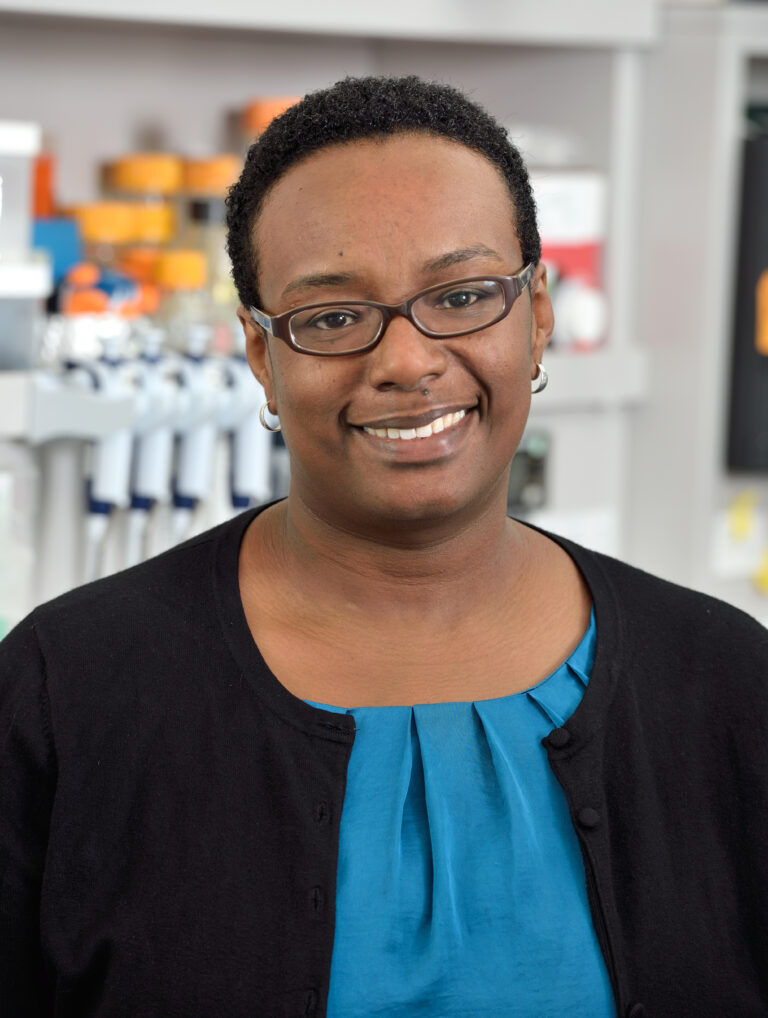
During Black History Month, which is celebrated annually throughout February, The Aggie will be interviewing and showcasing a group of African-American alumni. One of these alums is Dr. Beronda Montgomery, who earned her Ph.D. in plant biology from UC Davis in 2001. 

Today, Montgomery is the Assistant Vice President for Research and Innovation and an MSU Foundation Professor at Michigan State University (MSU). During her time at UC Davis, she was part of a training grant funded by the National Science Foundation (NSF), a prestigious honor for graduate students whose research goals are deemed especially creative and impactful. Montgomery’s research focused on plants’ perception of light signals (including which proteins are involved) and how plants change to adapt to different light environments for successful growth. Montgomery remembers her time working in the plant biology and biochemistry departments well, but she acknowledges that other on-campus organizations also impacted her time at UC Davis.

I think that when I was there, I was the only African-American graduate student in my program,” Montgomery said. “But I found that there was a larger community at Davis.”

Montgomery joined various organizations, including the Biology Undergraduate Scholars Program (BUSP) and groups centered on women in the sciences, in order to find a community in biology. By joining these organizations, which were mostly made up of undergraduate students, Montgomery said that she became a mentor for younger students, especially those who came from underrepresented backgrounds. She said that in addition to being able to help younger biologists, these larger networks helped her through her time at UC Davis.

After leaving Davis, she continued to mentor while completing her postdoctoral work at Indiana University, where she became a formal mentor for the Graduate Women in Science program. She also participated in a collaborative program between Indiana University and several historically Black colleges and universities. In this way, she connected with a wide and diverse group of students across the U.S. When she began her career, she found herself diving deeper into different methods of mentoring. 

“I wanted to know if there were some documented practices that worked well for mentoring, and that’s how I moved from just doing the mentoring to also being involved in conversations about effective mentoring,” Montgomery said. “Over the years, I began to study mentoring and published papers on it. Some of that work, together with a number of students and junior scientists that I’ve mentored, ultimately led to me getting some recognition.”

Montgomery’s website lists all of her publications on both mentoring and leadership. Her work primarily focuses on mentoring and uplifting women and communities of color in STEM and in higher education in general. 

Mentoring, Montgomery said, is about promoting the growth of an individual rather than trying to fix them or the work that they’re doing. It also includes creating an environment that supports a diverse array of mentors and mentees. 

Montgomery takes a different stance to mentoring than the “classical approach,” which she said pushes individuals along a narrow, pre-paved path that is in the “mainstream.” Instead, she aims to address the individual mentee’s needs and goals in work and social settings, paving a new path for mentorship. 

In a collaboration between the American Society for Microbiology (ASM) and the NSF, Montgomery and some of her colleagues have built a program to support mentoring in STEM, called the ASM-NSF Leaders Inspiring Networks and Knowledge (LINK) program, which aims to “link” or connect students with professors and researchers. She was also a chair of the ASM Watkins Graduate Research Fellowship, which works to increase the number of students from underrepresented backgrounds in STEM earning their Ph.D. in microbiology. 

Most recently, Montgomery was awarded the 2021 Mentoring Keynote Lecture Award from the American Society of Cell Biology to celebrate her efforts and success. This award is given to an individual each year who mentors “scientists and scholars who belong to underrepresented groups, particularly racial and ethnic minorities.”

 In addition to being a mentor and studying mentorship, Montgomery attributes a lot of her success — in both plant biology and leadership — to her own mentors.

“Some of my most powerful mentors have been peer mentors,” Montgomery said. “I’d like to mention that because a lot of times, we think we have to find the ‘wise senior Guru,’ […] but some of the most powerful mentors I’ve had throughout my career have been peers who were going through some of the same things. We have different strengths, and we can share our strengths through community.”

Montgomery also stressed that everyone needs, and has, mentors; everyone has people who have helped them get where they are today. She said that science is tough, especially for members of underrepresented groups and that no one should go through that alone.

“I think sometimes science can really prize people who we think are these lone geniuses who figure things out all by themselves, but I still have mentors now at this stage of my career,” Montgomery said. “We all need mentoring, and we can also all serve as mentors.”

Overall, Montgomery emphasizes that forming networks with people of diverse backgrounds and perspectives is very important in science — and in life. When asked what advice she would give to underrepresented students in the sciences, she emphasized this need for diverse perspectives.

“I think the first thing I would say is that you’re needed in these spaces, even if you don’t hear that message routinely,” Montgomery said. “The other thing that I would say is that it’s critically important to build and find networks of support. Sometimes those networks will be built in for you […], but I also had to show some agency to identify networks that had diversity, whether it was gender diversity or racial and ethnic diversity.”

While diversity in STEM education and careers has increased, there is still a gap between white and Black, Indigenous, People of Color (BIPOC) populations in these fields. While a campaign to support women in STEM has gained popularity in recent years, the campaign to support BIPOC students in STEM has not grown as successfully. Eleven percent of the workforce in the U.S. is Black, but only 9% of the STEM workforce is Black, according to a 2021 Pew Research Center report. More specifically, only 6% of those in the life sciences, which would include biology and botany, are Black, compared to 65% white. Montgomery said that this pattern is what motivated her to be so involved in mentoring students and in the conversations around effective and inclusive mentoring. 

“For me, some of the biggest struggles have been a frustration with the system adapting and changing,” Montgomery said. “I think that too frequently we focus on individuals and want to point to their individual deficits or the problems that they have. We don’t often pay as much attention to the ways in which the system itself could improve to support people, and that has been a frustration, but also a motivation, for some of the mentoring and leadership work that I do.”

However frustrating the system may be for Montgomery, she has always found a way to both grow through and work to address the problems she has faced. She also said that she has found successes worth celebrating along the way, which is somewhat uncommon in science. While many people constantly look toward the next step or don’t accept something as a “success” until an experiment is complete or a paper is published, Montgomery has been called an “over-celebrator” by friends. She doesn’t mind this title, though; she recommends celebrating every small step — and then celebrating again when the whole project is done. 

 “I think it’s critically important that we celebrate the small steps,” Montgomery said. “If you celebrate the small steps, and you get to the end, and something’s not successful, you still recognize the successes and the hard work that you had to put into that, as opposed to just whether you don’t get the grade that you want or the paper is not accepted.”

Though so much of her life has been devoted to mentoring, she is also an acclaimed plant biologist with multiple publications on photosynthetic organisms. Her research today is an extension of her Ph.D. work at UC Davis and her postdoctoral studies at Indiana University. Her contributions to the study of plant biology have earned her much recognition and awards.

According to her Wikipedia page — yes, she even has her own Wikipedia page — she was elected a fellow of the American Academy of Microbiology in 2018, a fellow of the American Association of the Advancement of Science in 2020 and a fellow of the American Society of Plant Biologists in 2021. A complete list of her many awards and accomplishments can be found on that page. 

In 2020, Montgomery co-founded Black Botanists Week, a weeklong celebration of BIPOC who are interested in and work with plants. In April 2021, she published her first book, “Lessons from Plants,” which ties together her plant biology knowledge and what it has taught her about the art of mentorship. 

Written by: Maya Shydlowski — features@theaggie.org

Video series seeks to provide family caregivers with educational resources

The UC Davis Betty Irene Moore School of Nursing took part in a collaborative project that created educational videos about wound care, mobility and more to assist caregivers in caring for family or friends at home

By SONORA SLATER — science@theaggie.org

Nearly one in five American adults are unpaid caregivers for a family or friend with health or functional needs, according to a 2020 report by the American Association of Retired Persons (AARP) and the National Alliance for Caregiving. Often, this can be very difficult and time-consuming — which is why the UC Davis Betty Irene Moore School of Nursing Family Caregiving Institute, in collaboration with AARP, created an educational series made up of videos and articles that seek to give family caregivers the resources they need to take care of their family members or friends at home. 

The idea for the project began with a study done in 2012 by the AARP called the Home Alone Study, according to Heather Young, a professor at the Betty Irene Moore School of Nursing and one of the founders of the Family Caregiving Institute at UC Davis. The biggest finding of the study was that more than half of caregivers are now doing “medical nursing tasks.”

“The old way of thinking about caregivers was helping with bathing, maybe cooking a meal,” Young said. “It wasn’t very high tech, and it wasn’t very complicated. But what’s happened in the last decade is that people are getting discharged from hospitals much sicker and much quicker than they used to, and families are being asked to do a lot of things that nurses used to do.”

Tasks like administering injections, facilitating breathing treatments, checking blood sugar and giving medicines are a few examples of the jobs that family caregivers have, and are often unprepared to do.

“What happens is, you’re about to leave the hospital, and you’re taking someone home who is very sick, and someone comes in and says to you, ‘Here’s what you’ve got to do!’” Young said. “They give you a list and a bunch of things really quick, but you don’t have time to process it, to think about it and to be ready to actually do it when you get home.” 

Holly Kirkland-Kyhn, the director of wound care in the patient care services department of the UC Davis Medical Center, described the unpredictability of caregiving. 

“We do a great job when people are in the hospital, but when they go home […] there’s a huge area we need to work on, and they’re calling that transition of care,” Kirkland-Kyhn said. “We try to teach them how to do it here, but oftentimes something happens that you don’t expect.” 

After recognizing the gap in resources, Young said that the Family Caregiving Institute, along with AARP, the Family Caregiving Alliance and the United Hospital Fund, created a formal group called the Home Alone Alliance.

As a group, they then decided that the way they wanted to provide caregiving education was through video. 

“We looked at all the videos that are out there, and realized that they’re not teaching a family caregiver how to do it — they’re teaching a nurse how to do it,” Young said. “So we didn’t find resources for family caregivers to do these complicated nursing things. We’ve got about 42 videos now.”

Kirkland-Kyhn, who participated in making the educational series, shared what sort of content the videos focused on.

“It’s actually kind of basic things [like] how to get yourself from your wheelchair into your car,” Kirkland-Kyhn said. “It’s one of those things that you don’t really think about until you’re at home trying to figure it out.”

According to the AARP website, where the videos are published, there are video series on special diets, operating medical equipment, wound care, mobility, medications and more.  

“They’re based on what caregivers have told us are the most pressing issues for them,” Young said. 

From there, the project expanded into a partnership with the American Journal of Nursing through an article series directed at teaching nurses how to use the videos to teach people.

“We package the videos with an article that goes with them that tells [nurses] how to use the videos, and the evidence that goes with them,” Young said. “The videos are for consumers, the articles are for nurses, and then we also have resource guides for consumers.”

Young went on to talk about the Family Caregiving Institute’s partnership with AARP, and how it has helped make the video series more accessible.

“Our school of nursing has collaborated with the public policy institute for many years,” Young said. “We really like that partnership because we’re an academic partner and we have clinical expertise, and they’re a public-facing consumer organization. […] We can make research come to life together.”

She also emphasized another goal of the video series: recognizing the diversity present in caregivers.

“Caregivers [come] from all ages, and different racial/ethnic groups… We made a real point in this series to try to portray caregivers who are different kinds of caregivers to really reflect the diversity of who’s out there doing care,” Young said.

She then detailed why she thinks it’s important to devote time to making resources and support available to this group of people, and how being a family caregiver can affect a person’s whole life.

“I think it’s an invisible issue,” Young said. “It’s not nearly as visible to employers. It’s also a huge economic issue — if […] you have to reduce your work hours, or you have to not take a promotion at work because you’ve got these family demands, you won’t end up accruing the same amount of wealth in your lifetime. And then when you get to be old, you’ll have less financial means to support your own aging. So, it’s a lot of sacrifice.” 

Young also explained the generational cycle of care that caregiving can lead into.

“We also know that caregivers experience higher rates of depression, loneliness and health problems than the general population,” Young said. “So, in caring for someone else, you’re creating a person who’s going to need more help as well, unless we support them properly.” 

Written by: Sonora Slater — science@theaggie.org

‘Hearts of Davis’ project celebrates love among the community

Project originator and artist Will Durkee shares the importance of a community-building art project after weathering a pandemic

By CLARA FISCHER — arts@theaggie.org

Davis might not be the first city that comes to mind when you think of artwork, but the humble town has a mighty spring of local artists working on their own projects every day. Among these artists is Will Durkee, the 29-year-old from the Bay Area behind the “Hearts of Davis” project.

As a community effort, the concept is simple enough — Durkee provides blank, white wooden hearts to any member of the community who wants to paint one and will then place the finished products up around town. 

The hearts act as a visual representation of the love among the Davis community: proof that not even a pandemic can strip away humanity’s best qualities.

“It was really rough during the pandemic — especially during the first year — just not being able to see anyone,” Durkee said about the inspiration behind the project. 

Absence of genuine connection is something that many people suffered from during this long-standing health crisis. Art has always been a response to the times and has often served as an outlet for humanity’s troubles. 

It seems fitting, then, to respond to the difficulty of the last two years with a project meant as a visual display of the area’s resilience — especially in Davis, where the sense of community is so strong.

Furthering the concept of collaboration, Durkee took inspiration from another nearby town for the actual hearts. 

“I was actually staying in Sonoma at the time with [my] family, and they kind of had this heart thing going there,” Durkee said. “I thought, ‘Oh, we should try that in Davis!’”

After creating a few of his own wooden hearts, Durkee teamed up with the City of Davis Arts program, who bestowed him with a grant to bring his vision to life. This action highlights what makes the project so special: It’s a true community effort from the ground up, with public offices getting involved at the base level and regular citizens (not just trained artists) going on to create the pieces. 

Having these hearts up around town may provide just a little boost of encouragement to those in need after a hard couple of years. By turning Davis into something of a curated community gallery, Durkee is painting the town in a colorful, loving light. 

“A lot of people got sick and it was really hard, but hopefully having a positive message out there will let us know that we’re ok and that we still like each other,” Durkee said.

Anyone looking for more information on the project, such as how to pick up a heart or when the next community-painting session will be, should look on Durkee’s Instagram for further details (@will_durkee_fine_artiste_69). 

Written by: Clara Fischer — arts@theaggie.org

Column: Having too many choices is becoming a burden

The onset of decision paralysis

BY ALEX MOTAWI — almotawi@ucdavis.edu 

Making confident choices and shrewd decisions is something everyone strives to reach. Making a solid choice and dealing with the consequences has been a battle humans have been fighting for the entirety of their existence, and it’s been getting more and more difficult every day. It’s easy to spot in all facets of life. Whether you are deciding how to invest your hard-earned cash, buying a pair of jeans that fits better than the rest or picking the right variety of chicken breast, the number of options we have to pick from is honestly getting excessive and just hurting my brain. Doing basic shopping used to feel therapeutic, but now even getting groceries feels stressful due to the sheer amount of options to pick from.

Being able to make choices for ourselves is one of the foundations on which our society is built. What is freedom if not the ability to make your own choices? While having the freedom to choose for ourselves is obviously something extremely valued, is there a point when it gets excessive? When you are at the front of the line trying to order some ice cream and you are starting to sweat due to not being able to choose from the 80 flavor options, it doesn’t feel all that liberating. It takes a bit of introspection to realize that more isn’t always better.

The pinnacle of research on the subject of decision paralysis is the jam study, which was published in 2000. The jam study was a grocery store experiment in which the researchers switched between offering six and 24 different gourmet jam types to sample before purchasing to try and gauge how the number of options affected purchases. You would think that offering more options would increase sales as it’s more likely each customer would find the perfect jam for them, but that couldn’t be further from the truth. While the larger selection did garner more samplers (60% versus 40% of people stopped at the booth), customers still sampled a similar amount of flavors (roughly 1.50 versus 1.38). In addition, 30% of shoppers at the smaller booth purchased jam while only 3% of browsers ended up purchasing from the booth with 24 options. The six choice station garnered 10 times as many purchases as the 24 option station. Even though having more options theoretically makes it easier to find the “perfect choice,” something about having so many options drove away purchasers.

Having more options just doesn’t make people happier, it’s that simple. Since the breakthrough jam study, similar experiments in different industries (snacks, alcohol and retirement planning) have consistently reached similar results. More options come with diminishing returns to the point that eventually fewer choices end up being better. Colin Camerer, a professor of behavioral economics at Caltech and author of a similar study, says the sweet spot for choices like jams resides in the eight to 15 range depending on the person. 

Decision overload is something that weighs on everyone at some point in their life. Whether it’s a big decision that’s been dragging you down for weeks like a college commitment or job offer, or a plethora of small choices made in bulk like what to eat for breakfast every day — they add up. It’s honestly really draining and depleting to the point where you just wish someone will make the choice for you. I already have to make a litany of choices just to function every day, sometimes choosing a restaurant for date night is the straw that breaks the camel’s back. Everyone has those days, and with the way our society is trending, they will become more and more common; however, there are a few ways to make it more bearable.

I’ve found that setting a schedule is a great way to save brainpower. Instead of having an inner debate of when to wake up and eat breakfast, just set an alarm and get into the habit of making the same thing every day. Setting a morning routine can let you run on autopilot at the start of the day and save your inner battery for when it’s needed most. 

On the other hand, you can just let go a bit and think less about small decisions. People (myself included) often end up looking through all the options for the “perfect choice” and end up unhappy because of it. Being good with good really is a good mindset. I personally never like to settle when I know a better option is at the tip of my tongue, but the effort spent finding the best option is rarely worth the payout. Unless there’s a drastic shift in society, decision overload is here to stay — don’t forget it.

Written by: Alex Motawi — almotawi@ucdavis.edu 

Disclaimer: The views and opinions expressed by individual columnists belong to the columnists alone and do not necessarily indicate the views and opinions held by The California Aggie.

Sacramento County Board of Supervisors approves ordinance banning the sale of flavored tobacco products

Community discussion ensues surrounding public health benefits and potential repercussions for marginalized communities

By LEVI GOLDSTEIN city@theaggie.org

On Jan. 11 and Jan. 25, the Sacramento County Board of Supervisors met to discuss an amendment to the County Code Chapter 4.07 introducing a ban on all flavored tobacco sales in the county. 

A similar ordinance went into effect in the city of Sacramento on Jan. 1, 2020. This new county-wide ordinance would expand the ban to Elk Grove, Rancho Cordova, Folsom, Citrus Heights, Galt and Isleton. 

Bans on flavored tobacco sales are meant to curtail the circulation of tobacco products among youth, who are more attracted to flavored products, and prevent disproportionate use of mentholated cigarettes in Black communities, according to Jose Mendez, the Code Enforcement Manager for the City of Sacramento. 

“In certain parts or zip codes of the city, where there’s a high minority population, marketers or wholesalers or distributors will reduce the price of mentholated cigarettes to encourage purchase of those products,” Mendez said. “The impetus was to strengthen regulation to reduce the access of tobacco products to minors, but in addition to that, there was a push to eliminate the sale of mentholated cigarettes to reduce access to certain populations that were impacted most.”

The ban was highly contested among county residents. Some, including health professionals, parents and school teachers, expressed their support and gratitude for the ordinance through public comment at the Board of Supervisors meetings. However, other residents were concerned that it would have an unintentional negative impact on marginalized communities and business owners despite the Board’s good intentions. 

Many feared that it would lead to over-policing in Black neighborhoods and increased legal action against Black tobacco users due to a history in the U.S. of disproportionate punishment for drug crimes

The use of flavored tobacco in the city of Sacramento was not criminalized with the ban, according to Mendez. The ordinance only prohibits the sale, not the use, of flavored tobacco. 

“There was a large push from advocates not to penalize the users for flavored tobacco,” Mendez said. “There was concern that a regulatory agency or a public safety agency would then cite the users, and that’s not what they wanted to achieve, and the city agreed with that. […] We only regulate and cite the business that is ultimately selling the product.” 

Despite taking care to ensure that users are not punished at an increased rate because of the ban, police are still very involved in the enforcement of tobacco sale laws in the city.

“We conduct sting operations with the police department,” Mendez said. “We will have a decoy, usually a person under the age of 21, go into a retailer and attempt to purchase a product. […] We incorporated the prohibition of flavored tobacco into our routine inspection process. […] We look to ensure that retailers are not selling flavored tobacco. If they do, their license is suspended.”

These undercover inspections of retailers are conducted at least twice a year, according to Mendez. 

Sacramento County Supervisor Don Nottoli addressed the concerns, saying during the Board of Supervisors meeting on Jan. 25 that the ban is “not meant to be punitive.” In the meetings, it was unclear what the methods of enforcement would be across the county. 

Another contestation was that the flavored tobacco ban would also ban the sale of hookah. During public comment, residents spoke about the cultural value of hookah lounges. Many of them are owned by immigrants from the Middle East and Eastern Europe. The flavored tobacco sales ban would most likely close the majority of these businesses owned by people of color, taking away an important social destination and cultural practice for marginalized communities in the county, as was discussed during public comment. 

Other small business owners were also worried about the financial ramifications of the ban.

“They were concerned that people would start driving to places outside of the city to buy flavored tobacco, and therefore would impact their sales,” Mendez said. “Not just the sale of tobacco, but any auxiliary sales. […] Their biggest concern was the loss of revenue.”

Other residents were anxious that the ban would redirect sales from convenience stores, where flavored tobacco products are better controlled and regulated, to an underground black market. However, this hasn’t been observed anywhere else where a similar ban went into effect. 

“A couple stakeholders, mostly wholesalers that sell flavored tobacco, indicated that all they would do is they would push flavored tobacco into the black market or underground,” Mendez said. “In talking to the city of Oakland and other cities that had adopted a similar prohibition; they didn’t experience that. And it’s not something that we’ve experienced either.”

Alternative options to curtail the use of tobacco were suggested in the board meeting, including rehabilitation and recovery programs, education and outreach and regulations of targeted advertising and price reductions in marginalized communities. Residents believe that these would better address substance use issues without unintended consequences. 

No such programs have been introduced in the city of Sacramento. 

“We feel that our focus should be the retailer, not the person that’s ultimately using the product,” Mendez said. “We also feel that maybe some of that should be left to the school district. We don’t feel like it’s really our role.” 

Mendez also commented that if there were a grant available, the city wouldn’t be opposed to working with non-profit organizations to establish rehabilitation programs or increase outreach with schools and health professionals. However, it is not currently one of the city’s main goals or interests. 

Sacramento County does have publicly funded substance use services, but no updates or amendments to the programs that address tobacco use among minors and marginalized communities specifically were discussed as alternative options during the Board of Supervisors meetings.

In the state elections of November 2022, a ballot proposition will be put to a citizen vote that, if passed, would ban the sale of flavored tobacco products across the entire state of California. Sacramento Board of Supervisors members were asked to wait for the verdict of this vote instead of imposing a county ban. County residents said this would allow California citizens to decide on the matter instead of a board, and prevent tobacco users from going to another county to obtain products. 

Despite the upcoming election and the many concerns that were brought to the board meetings, the ordinance to ban sales of flavored tobacco in Sacramento county passed on Jan. 25. It will go into effect officially on July 25, allowing retailers a six month period to destock flavored products in preparation to comply. 

The flavored tobacco sales ban in the city of Sacramento has been functioning as intended since it was enacted. According to Mendez, the city has seen a compliance rate of approximately 98% from retailers. 

Because of similar successes elsewhere, the Sacramento County Board of Supervisors and county residents are hopeful that the new ordinance will be a step in the right direction for county-wide public health and for curbing the teen vaping epidemic. Some, however, are still wary of the potential consequences. The actual impact of the ordinance will become evident in the months following the implementation of the ban. 

Written by: Levi Goldstein — city@theaggie.org