52.4 F
Davis

Davis, California

Tuesday, December 23, 2025
Home Blog Page 237

City of Davis awarded grant to add amenities such as an interactive water feature to Central Park

Experts discuss the benefits of spending time outdoors

By SHRADDHA JHINGAN city@theaggie.org

The City of Davis “has been awarded a grant in the amount of $2.784 million by the Statewide Park Development and Community Revitalization Grant Program to renovate Central Park,” according to a press release from the City of Davis on Dec. 8, 2021. The grant will also be used to “create an interactive water play feature near the existing universal play structure and restroom.”

Of the 465 projects that were submitted for the fourth and final round of funding, 112 received funding, including the one in the City of Davis. Vice Mayor for the City of Davis explained the benefits of the project.

“This project’s features will significantly improve the health and quality of life for Davis residents and visitors by providing a safe opportunity to play outdoors,” Frerichs said in the press release. “The water play feature that is free and inclusive will help keep everyone cool during the hottest months of the year, creating a social destination for people of all ages.”

Additionally, according to the press release, California State Parks announced on Dec. 8 that $548.3 million in grant funding would be granted for new parks across 100 communities. This is also an effort to continue the Newsom Administration’s “Outdoors for All” initiative, which aims to enable all residents in California to access and visit open spaces and parks.

“Today’s grants represent the single-largest investment in state history in expanding access to parks in underserved communities with new or enhanced parks funded in every region of California,” the press release reads. 

According to the Office of Governor Gavin Newsom’s website, “through the Outdoor Access for All initiative, California First Partner Jennifer Siebel Newsom is working to build a healthier and more equitable California for all kids.”

The website also states that time spent in nature is mentally and physically beneficial for kids, “especially for youth in underserved communities.” According to the website, 70% of low-income communities in the U.S. live in places that are “nature-deprived.”

Nate Sowa, an assistant professor of psychiatry at the University of North California at Chapel Hill School of Medicine, said in a video that alongside physical benefits, time spent outdoors also has mental health benefits.

“Something about being in nature is calming to humans,” Sowa said. “We seek environments that seem calming and protective to us, and so they’re actually starting to show that people’s brains work differently when they’re in nature, compared to an urban setting[…].

This in turn affects how people think and lowers levels of stress and anxiety, according to Dr. Sowa. David Strayer, a professor of cognitive neuroscience at the University of Utah,  similarly discussed how nature can restore the brain in a TED Talk. In a study, two groups were told to go on a walk at an arboretum in Salt Lake City, UT. One group was not allowed any technology during the walk, while the other group called a relative or friend while on the walk. Electrical signals were collected before and after the walk.

“The people who are using their cell phone could only remember half of what they saw compared to the group who didn’t have the cell phone, wasn’t using the technology so these multitasking was creating a form of inattentional blindness where people failed to notice things in plain sight,” Strayer said.

Strayer said that the differences between the two groups cannot be attributed to just exercise because each group walked for the same length of time. He also stated that in a longer-term study, after three days of being outdoors without technology, the electrical signals’ theta levels showed that people’s brains rested.

The news release from the City of Davis includes a full list of features that will be included in Central Park. Some of these include “new pollinator gardens,” six new trees to be planted and public art and a “water-efficient irrigation system” that will use recycled water from the upcoming water feature.

Another city in California that received funding is San Diego for Beyer Park in San Ysidro, San Diego.

“If the pandemic taught us anything it is the need to have readily accessible and ample green spaces for our community is critical, it’s essential and because everyone no matter their identity, their ability or their address deserves access to high quality parks and the benefits that they bring,” Mayor of San Diego Todd Gloria said in a video.

Written by: Shraddha Jhingan — city@theaggie.org

UC Davis Academic Senate extends Pass/No Pass deadline for winter quarter

ASUCD Academic Affairs Commission urged Academic Senate to extend deadline for the remainder of the COVID-19 pandemic and beyond

By KATIE DEBENEDETTI — campus@theaggie.org


On Jan. 13, the UC Davis Academic Senate voted to extend the Pass/No Pass deadline for winter quarter to the last day of the quarter’s instruction. Previously, the deadline had been set at the 20th day of instruction for each quarter of the 2020-21 academic year. 

In a letter addressed to the administration on Jan. 6, the ASUCD Academic Affairs Commission (AAC) urged the university to permanently extend the Pass/No Pass deadline to the last week of instruction until the end of the COVID-19 pandemic to alleviate student stress and increase academic flexibility. The AAC claimed that based on a recent survey on the matter, 94% of the 861 students who responded to the survey said that the deadline was too early in the quarter for them to efficiently use the accommodation at this time. 

Radhika Gawde, a second-year political science major and an ASUCD senator, said that the COVID-19 pandemic poses academic challenges for students that requires additional flexibility from the university.

“I think it’s fairly apparent even to faculty administrators that the COVID-19 crisis is an extenuating circumstance that’s facing students,” Gawde said. “It impedes our ability to perform well in our classes, many of us have jobs or have to take care of sick family members. And, if you fall sick during the quarter system, it’s so easy to fall behind.”

Gawde said that she and the AAC are continuing to push for a permanent extension of the Pass/No Pass deadline, as many students face academic challenges aside from COVID-19 that will require increased flexibility even after the pandemic. 

“I wish [the Academic Senate] would give the same credence to other extenuating circumstances, like other health issues beyond COVID, for a permanent extension of the Pass/No Pass, because it shouldn’t take a global pandemic for faculty to give additional academic flexibilities to students,” Gawde said. “Students have lives, a lot of us have to work to pay our rent, and we have health issues. It’s great that they recognize that COVID-19 is an extenuating circumstance, but students have to struggle with things like this all the time.”


Written by: Katie DeBenedetti — campus@theaggie.org

UC Davis prioritizes residence hall students for isolation, weekly testing

As more students test positive for COVID-19, UC Davis Housing scrambles to get apartments prepared for new residents

By KATHLEEN QUINN— campus@theaggie.org

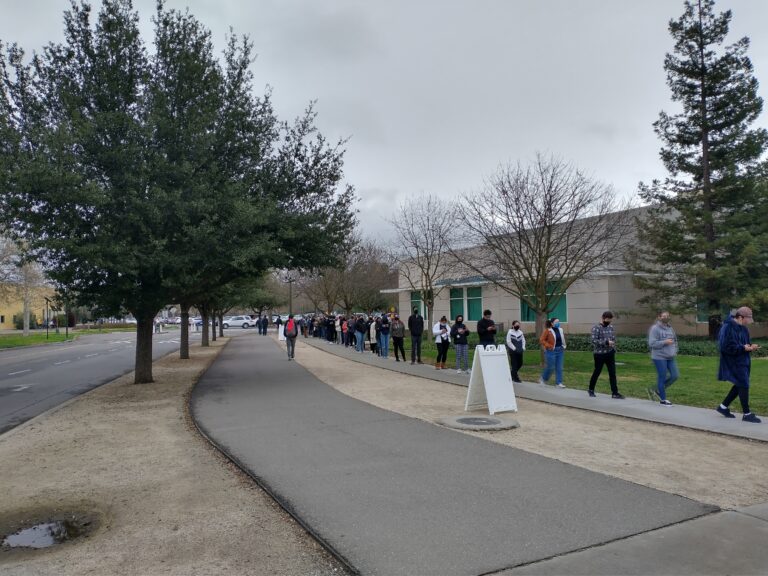
UC Davis’ isolation and quarantine housing are over half full as omicron sweeps through the student body. As of Jan. 10, 59% of available beds have been filled. 

Most students who tested positive for COVID-19 cannot relocate to quarantine housing since quarantine and isolation housing at Primero Grove, the only current location for isolation housing, consists of approximately 250 beds.There have been 1,113 positive results among students alone in the last seven days, constituting a positivity rate of 5.02%.

Alyssa Vallejo, a second-year computer science and engineering major who lives at the Tercero residence hall, said she tested positive on Jan. 3 and was moved into quarantine housing by the fourth.

“Someone from housing called to inform me that I tested positive for COVID and that they would be sending an email explaining how they were going to go about isolation housing,” Vallejo said.

Alayna Davidson, a third-year history major who lives at The Green, tested positive for COVID-19 on Jan. 2 and received an email from Housing that said they would receive a phone call from a contact tracer, but no follow-up call came. 

“Twenty-four hours passed and I didn’t hear from them, so I called the next day on the third,” Davidson said. “The response I got was, ‘Just wait and see because someone will contact you.’”

Davidson said that as of Jan. 8, no one had reached out to them, and they have been self-quarantining in their room in an apartment shared with two other students at The Green. 

Julia Ann Easley, a news and media relations specialist at UC Davis, said that the process for who is isolated has changed as of Jan. 2 to reserve isolation for residence hall students.

Because of that, students who test positive for COVID-19 and live in apartments — on or off campus — would generally be asked, if possible, to isolate in a room of their apartment,” Easley said via email.

Alex Shvakel, a third-year medical and molecular biology student, tested positive on Jan. 3, and self-isolated in his room at The Green.

“After day one, you are pretty much on your own in isolation,” Shvakel said. “They do send emails in the e-Health saying to take your isolation survey, and they send text reminders about it.”

According to Easley, the staff of Student Health and Counseling Services work together to provide services and support for students while in isolation.  

Support includes health care, dining, instructional support and other services as needed,” Easley said via email.  “Meals are provided by a dining commons. Students are given a contact to call if they need anything while in isolation.”

Vallejo said that when she arrived at her isolation accommodation around 4 p.m., there was frozen food available but no microwave. She contacted Housing and Dining Services to find a solution.

 “She told me ‘Oh well, unfortunately we can’t get you microwaves yet,’” Vallejo said. “They instructed me to use a delivery service which was not ideal.”

The next day, she received a microwave and Housing and Dining Services offered her a refund through Aggie cash.

Vallejo, who is fully vaccinated and boosted, said even with her booster, it was difficult for her to attend courses over Zoom due to fatigue throughout the week. 

“I would wake up around 8 a.m., would make myself some breakfast, I would try to attend lecture and then I would fall asleep by 1 p.m.,” Vallejo said. “It was a continuous cycle where I would wake up, eat, take a nap and then got back to sleep around 10 [p.m.]”

As of Jan. 9, Vallejo is no longer in quarantine after testing negative for COVID-19 using an antigen test, but she still has some mild symptoms.

Students need to isolate for 10 days from the day any symptoms started or the day you took your test, whichever is earlier,” Easley said via email. “After five days, if the student does not have symptoms or if any symptoms are resolving, he or she can end isolation upon a negative antigen COVID-19 test (not the PCR test performed at the ARC).”

Shvakel said he was advised to not take the PCR test after he finished quarantine.

“They don’t allow you to test negative on their PCR test because they say that if you have the antibodies, you may possibly test positive for 90 days,” Shvakel said.

Davidson said their symptoms were mild beyond a bad cough and a headache, but they are more concerned about long COVID-19.

“I’m concerned about issues in my chest, like having a lingering cough,” Davidson said. “I’m concerned about how long the cough will go on.”

Shvakel said he feels lucky that he was able to quarantine in his room at The Green.

“I got lucky in that single room,” Shvakel said. “But for the people in the dorms, I feel like that is where a lot of the cases are coming from because they really have no choice.”

Easley said that as of Jan. 10, students in residence halls will now need to test once a week through Jan. 31 with the possibility of an extension to that requirement.

“With the increase in transmissibility of omicron, it is important that we continue to identify and isolate asymptomatic positive cases, especially among students living in high-density housing,” Easley said via email.

Easley said that if Primero Grove does fill up with students from the residence halls, they will designate additional areas for isolation housing.

Written by: Kathleen Quinn— campus@theaggie.org

Thank you essential workers for your tireless work throughout the pandemic

Be kind and remember to appreciate those working amid the recent COVID-19 surge

After our short but sweet stint having in-person classes and — dare we say — some sense of normalcy during fall quarter, the last thing most people wanted was to return to online school and spiking COVID-19 cases. But, here we are, and though we’re all upset about the newest surge, it’s important to remember that the essential workers who have gotten us through almost two years of this pandemic are continuing to show up, and we should be grateful. 

Healthcare workers have worked tirelessly, dealing with staff shortages and the physical and mental strains of working during a public health crisis in which not everyone can get the care they need. During the lulls between COVID-19 surges that have allowed many to be more social and feel more “normal,” these workers have continued to treat severe COVID-19 infections, and even see people die from it, on a regular basis. We can only imagine that as we approach the two year mark of the pandemic, this record surge can only be making their jobs even harder, and we want to express our gratitude for all healthcare workers — and urge you all to do the same.

It’s also important to acknowledge the burden that has been put on our instructors to adjust their course format and content quickly as campus guidelines have changed. From planning for in-person instruction to having one — and now four — weeks online, teachers have had to quickly re-write tests more suited to online learning, work out ways to conduct labs, make sure they have childcare during their classes and many other behind the scenes adjustments that we haven’t had to think about. 

And of course, we understand that this volatility has not been easy for students either, but we need to remember that on the whole, people 18 to 29 years old are less vulnerable to hospitalization and death as a result of COVID-19 infection. Even though some students’ risk assessment of in-person classes is fairly low, others may not feel comfortable having in-person classes. In addition, some of our community members are older, immunocompromised or have unvaccinated or immunocompromised family members. We don’t know everyone’s situations, and we need to acknowledge that what is preferable for some might not be best for everyone. 

The same can be said for all other essential workers — like retail workers, restaurant employees, Unitrans drivers and others. Due to the staffing shortages that many businesses were experiencing last fall, coupled with the steep rise in employees contracting COVID-19, many restaurants and shops have had to cut back store hours, cut or extend employee hours and work with less staff per shift. While it remains important to support local businesses, if you do choose to go to a restaurant, coffee shop or local store, try to be extra kind and patient — and tip well if you can. 

Though all of this might sound like a broken record in 2022, it bears repeating. None of us expected such a sharp surge this far into the pandemic, let alone the pandemic lasting this long at all — and none of us are happy about it. So please take it easy on those around you, and yourself, and express gratitude for the healthcare workers, teachers and all essential workers that are getting us through this tough time.

Written by: The Editorial Board

Nella Larsen’s novel ‘Passing’ comes to life in black and white on screen

Sociocultural issues of the 1920s and today resurface in the Netflix film

By SIERRA JIMENEZ — arts@theaggie.org

On Nov. 10, 2021, Rebecca Hall’s monochrome film adaptation of Nella Larsen’s 1929 novel “Passing” was released on Netflix. Nominated in the top ten films of 2021 by the African American Film Critics Association, the film stars Tessa Thompson as protagonist Irene “Reenie” Redfield and Golden Globe nominee for Best Supporting Actress, Ruth Negga, as Irene’s literary foil, Clare Kendry. 

The title refers to the practice of “racial passing” in which fair skinned African American individuals would “pass” as white to escape racial discrimination in the Jim Crow America of the 1920s. With the political polarity and racial distress currently present in modern America, the film brings up past social issues of race, sexuality and identity still seen today. 

Taking pieces of her own experiences as a mixed woman in America and historical events such as the Homer Plessy case of 1892, Larsen utilizes the environment around her to create the characters in her novel. With the emergence of the Black Lives Matter movement, LGBTQIA+ activism, and other sociocultural movements, the film could not have come out at a better time. 

Larsen’s novel is about cultural transformations post World War I, and reveals “changing definitions of concepts like race and gender, and the inextricable relationship between whiteness and blackness,” wrote author Emily Bernard in the introduction of “Passing.” “It is a universal story of the messiness of being human as it is portrayed in the particularly explosive relationship between two black women.” 

The novel is structured in three sections: Encounter, Re-Encounter and Finale, much like acts in a theatrical play. According to Bernard, the theatrical structure is meant to represent race as a function of performance and “blackness [as] a matter of perception.” The film is shot in black and white perhaps to visually represent the perception of blackness and whiteness in the story. 

The film begins with a white screen and then transitions into a blurry camera view of shoes walking the streets of New York with faint voices echoing in the background. The camera shifts into focus, and the black and white film unfolds from a foggy perspective to crystal clear vision — symbolic of the differing perceptions of race in Larsen’s novel. 

Irene Redfield, who could pass as white due to her fair complexion, chooses to associate with her Black heritage and play an active part in the Black community of Harem. Conversely, Clare Kendry, who is also white passing, chooses to pass as white in order to evade prejudice and benefit from the privileges of white society.

Clare represents the New Woman, a notion born in the late nineteenth century of a defiant sexual woman who counters traditional norms. Her mysterious and seductive nature portrayed literarily in Larsen’s novel and visually in the film make her the rebellious character put into question by more conservative characters like Irene. 

Irene represents the world of the Black bourgeoisie where race consciousness and racial pride were boisterously talked about in conversation and incorporated in daily life. In the film, Irene coordinates elaborate Black-centered events and is close to white author Hugh Wentworth as a tribute to her elite social class in Harlem. 

Clare envies Irene’s involvement with her Black culture and attends these events to compensate for her lack of “Blackness” in the white world in which she lives. She straddles the line between Black and white, which Irene constantly reminds her is a dangerous game.

“Irene is a conservative who is threatened by Clare because she represents a challenge to the sense of order and linear progress endemic to the ‘lifting as we climb’ motto of the black bourgeoisie,” Bernard wrote. “[Clare] is a gambler, playing the high stakes game of racial roulette.” 

Their differing identities and their unique struggles to grapple with race are represented by their complex relationship being both beautiful and frustrating. While Irene despises Clare, she also adores her — adores her to a point of sexual romanticization. Through a third person perspective of Irene, Clare serves as “the personification of desire itself” — both a racial and sexual desire. 

The film exemplifies the women’s sexual tension through various videographic persepectives and their sensual and slightly embarrassed body language. Jazz music plays over the noir-esque Roaring ‘20’s allure, seductively yet almost uncomfortably placing the viewer between the characters. 

Up to the notoriously controversial ending, the relationship between Clare and Irene illustrates, cinematically and literarily, the performance of race and the balancing act of identity in a racially-separated society. 

Written by: Sierra Jimenez — arts@theaggie.org

All Things Right & Relevant donated to suicide prevention for the month of December

The thrift and consignment nonprofit benefits mental health organizations

By RACHEL SHEY city@theaggie.org

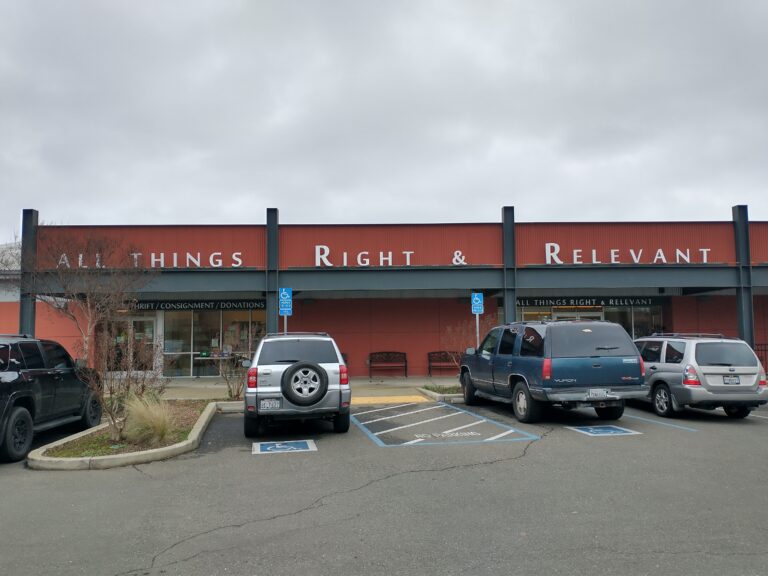
All Things Right & Relevant, a Davis thrift and consignment nonprofit on Spafford Street, donated to suicide prevention for the month of December, with contributions of up to $300 matched by the organization’s board of directors, according to the general manager Lynne Okamuro.

The nonprofit has benefited mental health organizations since its inception. It currently works with nine charities.  

We’re a nonprofit consignment store and we work with mental health organizations and charities in Yolo County,” Okamuro said. “When somebody either wants to donate or consign, we take in most clothing and household goods as long as they are in good quality condition.”

The consignment portion of the nonprofit operates with a staggered pricing system, where prices drop over time. Profits are distributed to charities at the end of the year.  

“With consignment, the consigner gets 40% of the money from the sale, and the nonprofit gets 60%. The consignment period is 30 days,” Okamuro said. “Prices go down over time; it will spend 10 days at full price, 10 days at 20% off and 10 days at 40% off, which incentivizes people to buy it a little quicker. If we do end up making profit in a year, we distribute the amount to charities. Last year was a little rough so we didn’t do the distribution. I was hoping that this year we will be able to distribute some money.”  

In the 1990s, the founders of the nonprofit wanted to help mental health organizations with fundraising, according to their website. They decided that the best way to do this was to open a thrift store, therefore also reducing their environmental impact by recycling unwanted goods and finding them new homes.  

“Fundraising has been a long-standing dilemma for nonprofits in Yolo County and elsewhere,” the website reads. “The need for additional revenue sources had become increasingly apparent in the late 1980s as California slipped into the deepest recession in recent memory and traditional funding sources dried up.”

All Things Right & Relevant started as thrift and eventually added consignment.  Okamuro briefly broke down the difference between thrift and consignment.  

“Consignment is where we sell an item for you, so you still own the item, and if it sells, you get a portion and we get a portion,” Okamuro said. “Thrift is that you are donating the item and not getting any money. If a consigned item does not sell within 30 days, it becomes a donation.”

All Things Right & Relevant sees more consignment than donation, among other interesting trends that Okamuro noticed. Most of the store’s revenue comes from jewelry, but the largest volume of goods is in clothing.  

“I would say about 85-90% of what you see in our main store is a consignment item,” Okamuro said. “I would say that we are about 65-70% women’s clothing. We have a lot of female consigners, and the rest are non-clothing or men’s clothing. I don’t know why that is; we just have fewer male consigners, but if you do bring in men’s clothing, your item is one of the few options available, so it’s more likely to be bought. Our best sellers vary from season to season. Most of the year, it’s women’s blouses. This time of the year, it’s usually outerwear and women’s dresses.”

Okamuro also added that another mission of All Things Right & Relevant is to employ those with mental health diagnoses. All employees at the nonprofit are mental health clients from local agencies.

We rely on our 9 mental health agencies to refer mental health clients to work in our Thrift Store,” Okamuro said via email. “Most of our clients have come from Yolo County Department of Mental Health, Yolo Community Care Continuum (YCCC), Communicare, and Pine Tree Gardens.

Written by: Rachel Shey — city@theaggie.org

Do New Year’s resolutions actually work?

Davis students offer their perspectives on the effectiveness of the tradition

By CLARA FISCHER — arts@theaggie.org

As a new year dawns before us, there is one certainty it brings with it — the onset of a slew of resolutions, made in good faith by people seeking to better some aspect of their life.      

The tradition of making New Year’s resolutions dates back to Babylonian times and has evolved from the making of religious promises to a secular practice of self-improvement.

This tradition seems harmless enough, and it can even be argued that there is some benefit to a majority of the population seeking to improve something about themselves.

However, statistics have shown that only 25% of those who make resolutions actually stick to them after 30 days, and a mere 8% of those who declare resolutions actually end up accomplishing them. 

“I’ve found that when I attempted to make New Year’s resolutions, I’d just be disappointed that I hadn’t done them,” said Elizabeth Woodhall, a second-year English and psychology double major, via Facebook Messenger. 

So how do people get started on (and more importantly, stay committed to) this journey of self-improvement?

“There needs to be some other motivating factor behind a change in your lifestyle,” said Kiara Kunnes, a third-year international relations major. “People are able to make changes without that, but the most successful lasting transformations do have an underlying cause.”

She may be right — New Year’s resolutions are notoriously easy to give up on. According to The New York Times, resolutions tend to fall through due to their being too vague, being made for the wrong reasons (i.e. what society wants the resolution-maker to do rather than what the individual themselves wants to do) or being too unrealistic. 

But can there really be harm in setting a positive goal for yourself with the onset of a fresh, new year? Connie Wang, a second-year political science major, doesn’t think so.

“I think New Year’s resolutions let people reflect on any improvements they want to see in their life, which is always good,” Wang said.

While it may be true that resolutions provide a convenient opportunity for many to reflect on what in their lives may need improvement, the general consensus seems to be that long-lasting change is not likely to come from them.

  “I don’t typically make New Year’s resolutions,” Kunnes said. “I don’t see a need to — I’m generally a person that will make a change at the moment that I want to make it.”

Reagan Campbell, a second-year English major, had a different take on the matter. 

“Overall, I believe that New Year’s resolutions can start your year off on a positive note — however, it’s more about whether or not you have the willpower to actually follow through with them,” Campbell said.

Her viewpoint succinctly summarizes it: Anyone can make a resolution, but it will only be beneficial to those who actually set realistic goals and are willing to put in the necessary work to see them through. 

That being said, even just setting a goal for yourself can be considered a win, and after these past two years, every victory (however large or small) deserves to be celebrated. 

Written by: Clara Fischer — arts@theaggie.org

Humor: Davis launches Dungeons & Dragons spin-off

My lawful-evil film major can patronize your music taste up to 30 feet! 

By ANNABEL MARSHALL — almarshall@ucdavis.edu 

“I need a 12 or higher,” repeats Julie, a second-year ecology major. She’s saying it more to herself than anyone else, but the small crowd of undergrads gathered around the table nod eagerly. They’re dressed in a wild mash of discount UCD merch and pseudo-Wiccan attire, holding their breath as Julie lets the die skid across the table and flash the number 13.

All eyes land on another student, sitting at the head of the table with a dirty laptop and a paleness that speaks to an unbelievable fear of the outdoors. 

“Your TA smiles at you as they pass back your test,” he narrates, “You got a 62.” The crowd erupts into cheers.

“Roll for the curve!”

This is a typical session of the Dungeons & Dragons wave rolling through campus. Despite my best efforts, UC Davis has become a haven for D&D players, spawning clubs, first-year seminars and year-long quests. It seems only right that this explosion should culminate in a Davis-brand version of the game, fittingly named UCD&D. And it’s taken off at a speed that makes me think we should reevaluate our admissions system.

UCD&D is driven by imagination, like how when someone talks to me about D&D, I imagine they are trapped in a sound-proof glass box. The game has survived many iterations, including Classrooms & Cows, Elves & Eggheads and Wellman & Warlocks. 

There are a few subtle differences in the new version. While the original game requires a DM (Dungeon Master), UCD&D uses a GM (Gary May). D&D has you choose a mythical race for your character, while UCD&D asks you to pick a major in order to determine your player’s strengths and weaknesses. Computer science, for example, grants you +10 in Job Security but -80 in Conversational Ability. Popular quests include “Remember where you parked your bike” and “Turn in your weekly Canvas quiz at a crowded frat party.”

The quest I’ve been watching is a daunting challenge titled “Stay Awake in an 8 a.m.” It occurs to me that maybe they would have a better shot if they didn’t stay awake until 3 a.m. watching other people play UCD&D. I choose not to say anything, lest I be threatened with $13 foam swords from Michaels.

Now it’s another person’s turn to make a move. Oliver, a first-year sociology major, speaks haltingly.

“I… remind myself of the importance of education?” Groans sound all around. It’s a critical mistake.

“Sorry, Oliver,” says the GM, “It’s ineffective. You drift into dreams for the five minutes that TA gives out useful information about the final exam.”

Written by: Annabel Marshall — almarshall@ucdavis.edu 

Disclaimer: (This article is humor and/or satire, and it’s content is purely fictional. The story and or names of “sources” are fictionalized.)

UC Davis club hosts female-centric esports bootcamp

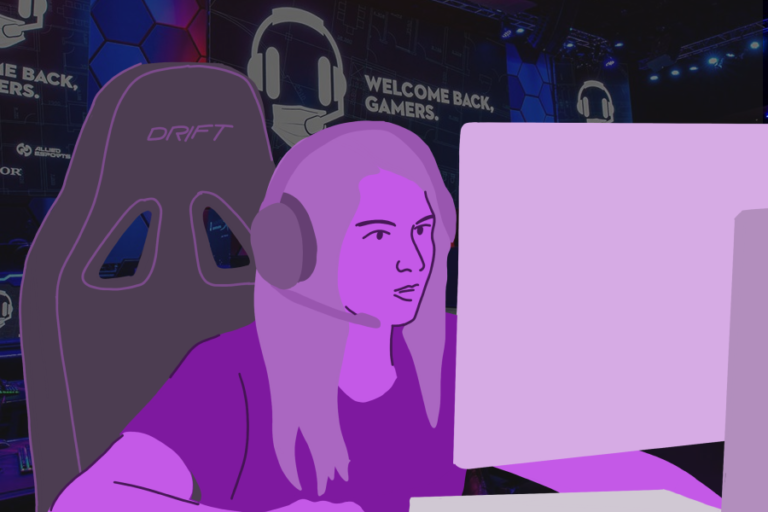
Esports at UC Davis recently hosted a bootcamp designed to create an inclusive environment for women to learn about online gaming and build community

By SONORA SLATER — science@theaggie.org

Whether your only interaction with online gaming is building a house once in Minecraft, or you regularly ruin your sleep schedule staying up late to game with friends, it is hard to deny the growing impact of gaming on today’s generation.

But according to Samuel Petruescu, a fifth-year applied physics major and the director of the Esports at UC Davis club, this online space often faces the challenge of being unwelcoming to female participants — a challenge which sparked an idea for the leaders of the club.

The week of Dec. 13-17, 2021, Esports at UC Davis hosted a female-centric esports bootcamp, both virtually and in-person on the UC Davis campus, seeking to help women get involved in esports and create an inclusive environment for anyone to participate. Kevin Deras-Guerra, a second-year biological sciences major and the co-director of Esports at UC Davis, explained how the idea came about.

“This event was my Co-Director, Sam’s, brainchild,” Deras-Guerra said via Discord. “Before I had been onboarded as esports assistant director and elevated to Co-Director, Sam put in the [framework] for what he saw as an environment in which women-identifying individuals could have a space to learn about the various facets of esports and grow and find identity within the community.” 

According to Petruescu, the event is part of the club’s “Inclusion Plan,” created through a partnership with student affairs.

“In my experience and judging from what we saw at the boot camp, there’s a lot of really talented women here at Davis who can compete [at] higher competitive levels, but often are discouraged from doing so due to their gender,” Petruescu said via Discord. 

Petruescu then elaborated on some of the other goals of the bootcamp, beyond competitive gaming.

“As the only esports organization on campus, we wanted to try and provide women with the opportunity to get introduced to esports,” Petruescu said. “Not just to compete but to also participate and intern in areas like graphic design or casting so they can develop valuable career skills.” 

As the club was only recently instated in the summer of 2021, and this was their first in-person event, Deras-Guerra listed a number of individuals and programs who were instrumental in making the bootcamp a reality.

“Vice Chancellor Pablo, Ben, Ferguson from the games area, and the women’s center all gave us valuable and much needed help on the logistics of this whole operation,” Deras-Guerra said. “Monetary support from fundraisers at the games area was a huge game changer that allowed us to fund a lot of what we needed to make the program possible, not to mention the support from Vice Chancellor Pablo and Ben with their own monetary pledges to help us out with catering and all the perishables.” 

He also highlighted the work that their graphic design and public relations interns did in order to advertise the event.

According to Deras-Guerra, each day of the event consisted of three main stages: conferences and guest speakers, lunch and free gaming time, with each day focusing on a specific game such as Valorant or Rocket League. Petruescu elaborated on what these stages entailed. 

“We had gaming sessions each day […] which provided newer players with the opportunity to try new games and learn from their fellow peers,” Petruescu said. “We also had small group discussions and guest speaker sessions discussing topics such as toxicity in gaming, opportunities in esports, and more.” 

According to Petruescu, there were 50 students signed up for the event, though the close proximity to the holidays, COVID-19 concerns and unpredictable weather prevented some from participating. Although in-person attendance was low, online attendance was fairly high, allowing plenty of participants to game together through Discord. 

Despite the challenges of lower attendance, Deras-Guerra said that he actually found it positively impacting the sense of community and quality of interactions.

“The smaller crowd gave us, as well-versed figures in collegiate esports, [time] to provide more individualized support to the participants we had,” Deras-Guerra said. “It also led to a lot more personal conversations, [and] anecdotes about the disparities that woman-identifying individuals face in the online space.”

He went on to detail some of the conversations he had with participants during the event.

“On the first day, I emphasized a sense of community and belonging, and opened up a space for all of our participants to have a discussion on why they were there, what they aimed to gain from participating in this program,” Deras-Guerra said. “Responses ranged from just wanting to make friends or challenge their social anxiety to receiving coaching to learning more about the non-gaming side to esports.” 

Lindsay Legate, a fourth-year food science major who participated in the bootcamp in-person, talked about why she decided to join. 

“I like video games and had a tiny bit of interest in the esports scene, but I was always pretty intimidated by the environment[,] and I wasn’t really sure where to start,” Legate said via Discord.

She then described her experience, and what she took away from the week. 

“Sammy and Kevin were both really helpful in leading the event, and they created a really welcoming environment that took away all the stress of being new to some of these games,” Legate said. “Overall[,] I’m really happy that I went, I learned so many new things[,] and I met lots of new people who I still sometimes play games with!”

According to Petruescu, the overall goal of the event was to create “an equal space” where anyone, regardless of skill level, was encouraged to participate. But in addition to welcoming beginners, they wanted to highlight the success many female players have already had.

“Esports is currently male dominant, but there’s no reason for it to be,” Petruescu said. “We are starting to see a shift where more and more female identifying players are competing and being very successful.” 

Deras-Guerra clarified that the event isn’t meant to encourage a separation between genders in competitive gaming, but rather to recognize a disparity in opportunities. 

“I don’t think many people in the space advocate for that same separation that exists in sports,” Deras-Guerra said. “The unfortunate reality however is that there is a notable, undeniable gap between the opportunities that women receive in gaming versus men traditionally.”

According to Deras-Guerra, having a bootcamp focused on female players rather allowed participants to build support groups and make friends with similar interests.

“Events like our Women in Esports Bootcamp [aren’t meant] to devalue women but to empower them by giving them a space where they aren’t held back by the majority that so often undervalues them or writes them off,” Deras-Guerra said. 

Written by: Sonora Slater — science@theaggie.org

Upcoming events in Davis

Art exhibits, comedy shows, live music and more to check out in Davis this January

By ANGIE CUMMINGS — arts@theaggie.org

Note: This article reflects information prior to closures and cancellations as a result of the recent surge in COVID-19 cases. Please refer to the links below for updated information regarding the status of these events. 

“Mary Heilmann: Squaring Davis / William T. Wiley and the Slant Step: All on the Line” (Manetti Shrem Museum, open January 8 through May 2022):

Start the first weekend of the quarter off appreciating some beautifully made art of varied mediums from UC Davis alumna Mary Heilmann, who the Manetti Shrem website describes as “one of North America’s greatest living painters.” This exhibit features early works by Heilmann, which include paintings, ceramics and sculptures from the 1960s and 70s. Admission is free, and if you miss opening night, not to worry, because this exhibit will be open through the entire quarter (and into the next). 

“From Moment to Movement: Picturing Protest in the Kramlich Collection” (Manetti Shrem Museum, open January 8 through June 19):

Opening on the same day is this incredibly emotionally charged and apropos exhibit that aims to shine a light on the varied forms of resistance, and what the Manetti Shrem website describes as “the power and politics of viewing.” This inspiring show comprises six large-scale video and film installations, bringing together decades of media from the Kramlich Collection that will be available for all to see at no cost through the end of this school year. This show promises to be an incredibly valuable viewing experience for anyone who attends. 

“The Conversation: “The U.S. Capitol Insurrection: One Year Later” (Student Community Center, 3:10 – 4:30 p.m. on January 11):

Presented by the UC Davis Humanities Institute just after the first anniversary of the riots and subsequent insurrection of the U.S. Capitol on Jan. 6, 2021, this conversation offers a discussion about what that unprecedented event means for us now. This compilation of short presentations and an open discussion is free and open to all, being held in the Multipurpose Room of the SCC. While this is quite a bit more of a heavy topic than most of the recommended events for this month, it is still a worthwhile event to attend and is relevant to the 2022 midterm elections coming up in November.

“2nd Friday Art About” (826 2nd St, 5 – 9 p.m. on January 14):

On the second Friday of each month, a rotating collection of downtown Davis businesses and galleries provide Davis residents with an evening complete with a self-guided art walk, live music, andfree food and drinks as a fun way to mingle with the community. With displays of everything from local art and jewelry to performances, this is always sure to be a fun (and free) Friday evening, so why not catch the very first one of the new year? 

“Hasan Minhaj: The King’s Jester” (SAFE Credit Union Performing Arts Center, Sacramento, 7 – 9 p.m. and 10 – 11:59 p.m. on January 14, 7 – 9 p.m. on January 15):

While this event is not actually in Davis, it is only a quick 20-minute ride away to see a notable UC Davis alumnus perform. Tickets for Minhaj’s stand-up show range from about $50 all the way to over $100, but even with nosebleed seats, you will still be laughing. In addition to attending UC Davis, Minhaj has also been a star correspondent for “The Daily Show” and the host of his own Netflix series “Patriot Act,” giving us a good glimpse of his humor and wit. Tickets are available on most third-party ticket vendor sites, including tickets for both of the 7 p.m. shows starting at $69, and (much more affordably) tickets for the 10 p.m. show starting at $48 on Stub Hub, Seat Geek, Ticketmaster and Vivid Seats

“Davis Jazz Night” (John Natsoulas Gallery, 521 1st St, 7 – 9 p.m on January 28):

Smooth jazz and beautiful art really do go together like wine and cheese, and John Natsoulas Gallery makes this dream pairing a reality. This special night, which is normally held the last Friday of every month, has been on pause for months now due to COVID-19, but is finally starting back up at the end of January. The event is completely free and is right downtown, so there really is no reason for any jazz lover or art appreciator to miss out on this monthly event’s triumphant return. 

“Winter Season Celebration” (Manetti Shrem Museum, 2 – 4 p.m. on January 30):

The Manetti Shrem Museum invites all to come at the end of the month for their first large-scale in-person event of the new year. This celebration features a talk between one of the featured artists, Mary Heilmann, and the museum’s curator, Dan Nadel. The event is free and is a great way to learn even more about the amazing art exhibits available at the museum, including the first two events on this list. 

Written by: Angie Cummings — arts@theaggie.org

It’s time to rethink letter grades

Students and instructors could benefit from learning practices that do not revolve around letter grade outcomes

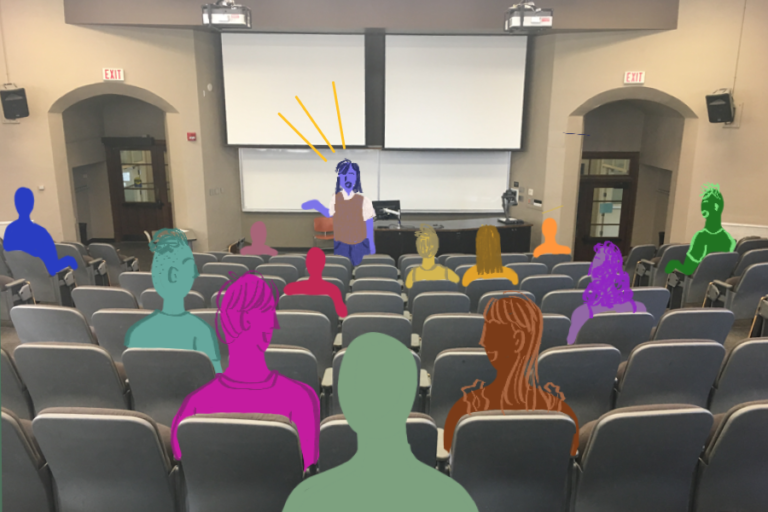
After nearly two years of mainly virtual and hybrid classes, the pandemic has undoubtedly altered the way students at all age levels view and engage in learning. This is a time of vast change for our educational system, making now the perfect opportunity for universities to reevaluate the educational practices and strategies that create the best learning environment for students — for many, this may look like redefining the current standard grading system. 

For students, learning is often tied to a culture of stress that revolves around grades and exams — an environment that can be harmful for the mental health and academic performance of students. In one survey, 55% of college students in residence halls indicated academics as being their biggest source of stress. The link between ongoing stress and anxiety and depression is well-established, and anxiety and depression are known to hinder academic performance.

One aspect of the education system that has been called into question is the effectiveness of grades as measurements of learning. Several K-12 school districts have recently transitioned away from the ingrained system of grades to focus on standards-based learning, citing non-academic considerations and inconsistencies between teachers as major flaws of the grading system. Though such a system is uncommon in post-secondary education, many universities changed the standard grading to pass/fail during the COVID-19 pandemic, in recognition of the fact that letter grading would cause students more undue stress. 

Higher education has already taken steps to distance itself from inequitable and biased means of judging students’ academic performance, like the elimination of SAT and ACT scores from the UC’s admission process. The SAT is administered by the College Board, whose stated mission is to promote equity in education, but it perpetuates racial and economic inequality, giving the upper hand in admissions to more affluent students. Given that the traditional grading system has been known to perpetuate similar biases, it’s time to reconsider our institutions’ reliance on grades as relevant predictors of our learning. 

Instead of enhancing students’ intrinsic motivation to learn, grades are a form of extrinsic motivation, distancing classes from their primary goals of learning. When students are more concerned about the grade they receive than actually understanding the material, an environment of increased competitiveness, greater anxiety around performing well and an enhanced fear of failure may ensue. 

Certain tactics like curved grading and including subjective effort and behavior outcomes in grading systems can also penalize low-income students without providing an accurate metric for their learning. Since practices like curved grading include subjective effort and rely on comparative performance, grading based on individual performance and improvement is fairer to all students.

Practices like providing descriptive feedback, offering opportunities to improve work and encouraging self-evaluation can be effective tools for promoting intrinsic learning in the classroom. These practices foster a growth mindset and encourage failure as a crucial aspect of learning. Studies have shown that incorporating these practices without giving students grades is most effective for a student’s improvement in the class. 

While some smaller colleges like Reed and Sarah Lawrence have implemented non-grading options for their classrooms, it would be hard to imagine such a setup becoming widespread without a massive reorganization of our education system. Grades are much faster for instructors and can require less effort than other forms of feedback, especially in classes where hundreds of students are enrolled; for example, scanning a scantron is considerably less work than providing in-depth, individualized commentary to each student. 

For such a system to be effective at UC Davis, instructors would need much smaller class sizes and more resources, and a grade-less education system would also require more effort from students and instructors alike. Similarly, employers, graduate schools and internship opportunities would need to find other measurements for judging applicants in order to reduce the emphasis on grades for students.

That being said, there are a number of small steps instructors can take to create a more learning-focused environment in their classroom, and the eventual transition from virtual to in-person learning is an excellent opportunity to do so. Assignments and practice problems based on completion provide avenues for students to practice material without the fear of losing points. In certain classes, allowing note sheets on exams can also encourage students to identify and study important concepts before exams and can reduce some of the stress of test taking. Even just emphasizing that grades are not accurate predictors of success at the beginning of the course, especially in postgraduate life, can be comforting steps to alleviate the stressors of grades. 

Using these tools, instructors can begin to move away from using grades as an indicator of learning and focus on other metrics for defining academic success — creating a more effective learning environment for students and teachers alike. 

Written by: The Editorial Board 


The UC-AFT agreement should not increase tuition for incoming students

0

UC Davis needs to be transparent about allocation of funds

By OWEN RUDERMAN — opruderman@ucdavis.edu 

The contract reached by the UC system and University Council-American Federation of Teachers (UC-AFT) in mid-November is a great step towards the fair treatment of lecturers. Recent research found that UC lecturers’ pay was considered low-income at six of the nine UC campuses. If the contract is ratified, lecturers would be guaranteed pay increases, paid leave and more. This is a tremendous step for untenured lecturers at UC, who must be compensated fairly for the incredible work that they do. But there remains a glaring question: Where is this money going to come from?

A 7% pay increase is nothing to scoff at, and with the number of lecturers teaching at UC, it adds up. Lecturers in the UC system teach about 30% of all classes, which means that thousands of lecturers are getting a pay increase. 

The UC Board of Regents had already voted in July 2021 to raise tuition for incoming students starting fall 2022, months before the lecturers’ contract was reached. UC President Michael Drake explained that the tuition hike can address the issues of classroom overcrowding and high student to faculty ratios. 

Research based on the Baumol hypothesis suggests that in response to wage increases, universities may increase enrollment rather than raise tuition. However, with Drake citing high student to faculty ratios as a problem to address, this doesn’t seem like an ideal option. 

Allow me to make one thing clear: This is not about students versus lecturers. In fact, it’s the opposite. We need to support one another to make sure the school system is the best it can be. Our lecturers are incredible and deserve to receive a livable wage. I can’t help but wonder though, how much is this pay increase going to impact future students?

In the posted contract details by UC-AFT, there is a lot of information about the new benefits for untenured staff at UC. However, there isn’t any mention of how the UC system is going to pay for the increases in pay and benefits, especially since the UC Board of Regents had already approved a plan to increase tuition gradually until 2027 before its agreement with lecturers. 

It’s entirely possible that incoming students don’t need to worry about any changes to tuition. When the agreement was reached, the school may have already done the math to ensure that students wouldn’t see any change. However, UC needs to be transparent about how lecturers’ pay will be increased. 

When the UC system was first created, tuition was free for California residents. While free tuition would be a long shot, we need to keep these principles in mind. College should be affordable, and schools having to pay lecturers a livable wage should not prevent new students from attending.

Just like the lecturers, we as students need to utilize the power that we hold, and we must demand transparency from the university. The UC-AFT agreement isn’t a bad omen for students —  it’s a beacon of hope, showing us that when we fight together, we can create real change.

Written by: Owen Ruderman — opruderman@ucdavis.edu 

Disclaimer: The views and opinions expressed by individual columnists belong to the columnists alone and do not necessarily indicate the views and opinions held by The California Aggie.

UC Davis extends remote instruction until Jan. 28 following push by students, faculty, staff

Rising COVID-19 case numbers due to the omicron variant have led the university to continue online instruction for three additional weeks

By KATHLEEN QUINN— campus@theaggie.org

UC Davis will continue remote instruction until Jan. 28, after initially proposing a return to in-person instruction beginning Jan. 10, according to an announcement from Chancellor Gary May on Jan. 6. 

This decision was made after positive cases for COVID-19 skyrocketed during the first week of instruction. As of Jan. 5, 4.3% of asymptomatic tests have returned positive with 782 positive results overall over the past seven days.

Campus leadership is comprised of human beings,” May said in the email announcement. “We don’t have a crystal ball to predict the future. We weigh all of the data, consult with experts and review all relevant information before we make decisions that impact 70,000 people in our community.”

Hemant Bhargava, a professor of business management at UC Davis, specializes in decision sciences and decision analysis. He wrote an article shortly after the announcement to hold classes online for the first week of winter quarter, criticizing the administration for not making a clear and transparent decision earlier.

“I’m beginning to see challenges […] because of the way the decision has been made,” Bhargava said. “Students are confused and they don’t know what to plan for and it makes my job difficult as well.”

Before the announcement to continue remote instruction, many students took to the UC Davis subreddit to express their anxiety about returning to campus instruction Jan. 10.

Third-year Native American studies student adnan Minasian collaborated with over a dozen individuals including teaching and non-teaching staff and students to create an online petition to be sent to UC Davis administrators demanding online options be made available to students this quarter. As of Jan. 6, the petition has reached over 6,000 signatures.

“I think my biggest concern is the disregard for people who are higher risk,” Minasian said in reference to the university’s original announcement. “It feels like the school has basically said, ‘We all decided to make your own personal health decisions for you.’”

A few hours before the announcement was sent out, ASUCD Letter in Support of Academic Accomodations expressing concern about the decision to return to in-person Jan. 10. The letter urged the university to extend online instruction for another week as well as an extension of Pass/No Pass until the end of the quarter.

In the announcement on Jan. 6, May emphasized that although the positive tests are rising, Davis still has lower case numbers than most other areas in California. The seven-day COVID-19 positivity rate for California is 18.7%.

Daniel Muhammad, a third-year psychology major, said the administration should have made a decision based on available information sooner.

“I think that the UC system is very used to making decisions seconds of, rather than thinking ahead,” Muhammad said.

A follow-up update will be coming in the next “Checking In with Chancellor May” letter on Jan. 14.

Written by: Kathleen Quinn — campus@theaggie.org

Jennifer Ma also contributed to this report.

This story is developing, check back for updates.

UC Davis Health developing PET imaging tool to detect liver inflammation for non-alcoholic fatty liver disease

PET imaging tool provides a non-invasive alternative to liver biopsies, the current standard of detection for liver inflammation

By BRANDON NGUYEN — science@theaggie.org 

According to the American Liver Foundation, about one-third of the U.S. population is diagnosed with non-alcoholic fatty liver disease (NAFLD). A severe form of this liver disease is non-alcoholic steatohepatitis (NASH), which forms as a result of metabolic fat buildup in the liver, leading to inflammation of the organ and potential scarring, or fibrosis. If not treated, the inflammation can progress to liver cirrhosis and even increased risk of liver cancer. 

Dr. Souvik Sarkar, a gastrointestinal and liver specialist at the UC Davis Medical Center, described what non-alcoholic fatty liver disease entails and why it demands so much attention. 

“Fatty liver disease has three parameters which define the disease, one of which is a fat, the start of the disease,” Sarkar said. “It is becoming a very fast growing problem in our country today, being driven by obesity and diabetes. The only way you can diagnose NASH at this time, unfortunately, is with a liver biopsy. There are new tools coming out to determine NASH, but they’re still in research.” 

Fortunately, UC Davis Health researchers and clinicians have introduced a non-invasive alternative to the invasive liver biopsy to detect fatty liver disease — a positron emission tomography (PET) imaging tool. Dr. Ramsey Badawi, vice chair for research in the Department of Radiology and the co-director of the EXPLORER molecular imaging center at the UC Davis Medical Center, discussed why the new PET imaging tool for liver disease is so significant.

“With this new technique of processing the data using the PET scan, clinicians can easily detect an inflamed liver without having to do a biopsy,” Badawi said. “That’s a huge deal because it’s like 100 million people we’re talking about. You can’t do biopsies on all these people. That is why this non-invasive way of detecting fatty liver disease is so significant.”

Dr. Guobao Wang, an associate professor of radiology at the UC Davis Medical Center and a co-lead of the project alongside Dr. Sarkar, echoed Badawi’s optimism toward this first-of-its-kind non-invasive method to detect fatty liver disease.

“It is exciting to see that our methodology can fill the gap in clinical imaging of nonalcoholic fatty liver disease,” Wang said. “This collaboration has been extremely fruitful, as our team has been working diligently to develop this technique.”

With the state-of-the-art EXPLORER total body PET scan machine located at the UC Davis Medical Center, both Sarkar and Wang are looking to incorporate their computational PET imaging tool into the EXPLORER machine to reduce radioactive dosage on tracers while still being able to effectively assess liver inflammation and fibrosis early on in the treatment process. 

“You have a patient which you see, and we send the patient in for a scan in the EXPLORER so eight years down the road we can actually be able to predict, not only the disease that is happening in the liver, but also the disease and the potential for future disease in the heart and the brain and the kidney all at the same time,” Sarkar said. “So you can imagine what a big benefit that will be for the patient being able to plan their health with more personalized care.”

Written by: Brandon Nguyen — science@theaggie.org 

Tips for setting ‘smarter’ New Year’s resolutions in 2022

A UC Davis Health clinical psychologist shares strategy for making, and sticking to, goals this year

By MAYA SHYDLOWSKI — features@theaggie.org

Losing weight and getting healthy are some of the most common “New Year’s resolutions” people set. According to data collected by Bloomberg, gym memberships spike during January and reliably begin to fall off in February. People’s dedication to their resolutions wears off, but for that month — or two — lots of people seem bent out of shape about getting into shape. 

While these “health” resolutions can be achieved, a new wave of resolutions is gaining popularity that is quite different. Many people are choosing to look within and setting goals focused on improving their relationships or mental health, whatever that means to them. Others are focusing on giving back to their communities.

A UC Davis Department of Psychiatry and Behavioral Sciences article published in January 2020 proposed that students set goals that differed from the classic resolution repertoire. It suggested skipping the most common resolutions and instead urged students to prioritize their mental health, including tips for improving mental health in order to have a happier and more productive year. These tips include ones that focus on personal self-care but also on being patient with others and focusing on joy. 

Nicole August, a fourth-year psychology major, said that each year, she re-affirms a continuing goal to share what is on her mind with those around her more. 

“I always try every year to be more proactive on the things I say in my mind,” August said. “If I see a person with cool shoes, I try to tell them; if I’m thinking of someone, I should text them; if I want to get someone flowers, I should go get them.”

Other alternative New Year’s resolutions focus on being more eco-friendly by opting for a more sustainable lifestyle. A small goal could be deciding not to buy any plastic water bottles this year or putting on an extra sweater instead of turning up the thermostat. A more life-altering resolution could be choosing to eat a vegetarian diet or commit to “meatless Mondays.” 

Whether you decide to make small or big resolutions, Dr. Angela Drake, a clinical professor in the Department of Psychiatry and Behavioral Sciences and a clinical psychologist at UC Davis Health, said that staying on track comes down to the approach.

“What you want to do when you’re defining or developing goals is to try to set yourself up for success,” Drake said. “New Year’s resolutions, the way they’ve been historically done, don’t set people up for success.” 

Drake said that a more successful approach to goals, which could be applied to a New Year’s resolution, is theS.M.A.R.Tmethod, an acronym that stands for specific, measurable, achievable, realistic and timely goals. Drake said that she also adds a “C,” for consistency, to the end of the acronym. 

Drake gave an example of how to use the S.M.A.R.T. method to set a goal. Drake said if you want to volunteer more, decide that you will volunteer with one organization or multiple organizations twice per month, every month — which makes the resolution both specific and measurable. She added that for most people, volunteering twice per month is also achievable and realistic, but what is achievable and realistic depends on the individual’s schedule, as well as whether or not the organization is nearby and its mission is something one is passionate about. New Year’s resolutions are goals for the whole year, setting a timely window for their achievement. Finally, Drake said that by making your volunteering monthly, you are setting up consistency, fulfilling her additional C for the consistency step.

Drake also shared one of her own alternative New Year’s resolutions: striving to be more connected to and have more social engagement with the people around her.

“My idea was that when I saw somebody, I would smile and say hello, and that might make their day a little better,” Drake said. “It was kind of like this idea of paying it forward. I actually made that a goal — and sometimes, it didn’t go over well. People would look at me like ‘What does that lady want?’ but a lot of times, people would respond back and smile, and then it made me feel better too, which is called getting positive feedback.”

Drake said that having positive feedback is another important part of making and keeping a resolution, because being “rewarded” for keeping a goal incentivizes you to continue it. Positive feedback can come from the experience itself, like getting a smile back from someone in Drake’s case, but reward can also be personal. Drake suggested not only choosing goals that will make you feel good about yourself, but also planning rewards for yourself for following through with the goals. This could be treating yourself to a coffee or watching your favorite movie after each month you complete your goal’s steps.

Drake’s biggest point is that when setting up whatever resolution you choose to make, make sure to set yourself up for success — because in her experience, people’s unmet resolutions can sometimes do more harm than good.

“I think [unfulfilled esolutions] feed into the internal dialogue that people have with themselves that they’re a failure or that they’re not able to change, and I think that’s unfortunate,” Drake said. “I have known many people who just won’t do New Year’s resolutions anymore because they don’t think they’re realistic and the resolutions don’t make them feel happy or successful.”

This January, if you choose to make a resolution for 2022, find a goal you believe in and want to achieve, and then make a plan that sets yourself up to complete it successfully. 

“You have to be positive,” Drake said. That’s really an important part of achieving change, which is what New Year’s resolutions are about. You have to believe that you can do it.”  

Written by: Maya Shydlowski — features@theaggie.org