57.9 F
Davis

Davis, California

Monday, December 22, 2025
Home Blog Page 244

The wheels that keep the sports world running

0

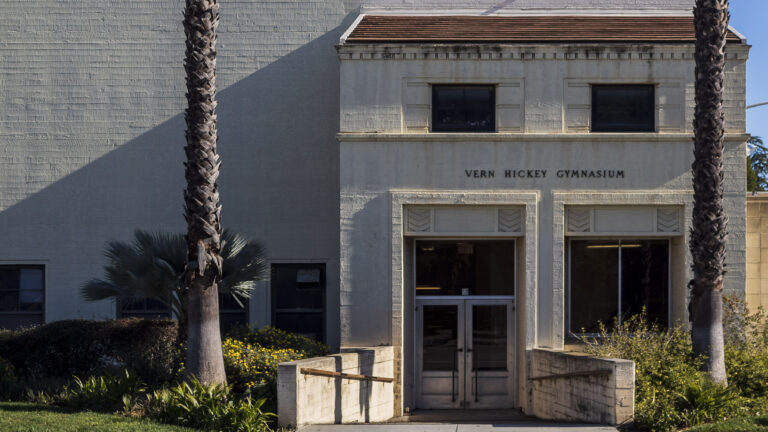
The sports medicine internship at UC Davis assists injured athletes

By KATHERIN RAYGOZA — sports@theaggie.org

    Athletic trainers can be one of the most essential building blocks of an athlete’s life. Without them, athletes and teams may not compete to the best of their ability. 

According to SPINE-health, athletic trainers study sports medicine which “is an area of medical practice concerned with the treatment of injuries resulting from athletic activities.” Athletic trainers must be certified to “offer rehabilitative exercises to help athletes regain strength and also develop exercise plans to prevent any future injury.” 

This type of physician practices sports medicine which means they turn their attention to all sport-related services. These are health care providers that often are the first ones to tend a player’s injury on the field of play. 

     Many colleges and professional sports utilize athletic trainers to aid athletes through their medical needs. This may include preventative measures, such as conditioning and injury prevention, as well as treatments such as osteopathic manipulation — which can be suction cups or a massage — and rehabilitation. 

An athletic trainer — not to be confused with a physical therapist — works specifically with athletes to help prevent injuries. Although an athletic trainer and physical therapist both assist people to regain or maintain mobility and recover from their injuries, a physical therapist works with patients and usually works closely with those who suffer injuries from illnesses or accidents.

Lisa Varnum has been the co-director of the UC Davis sports medicine internship program for 32 years.

“The goal of a physical therapist is to return someone to activities of daily living,” Varnum said. “The goal of an athletic trainer or intern [at UC Davis] is to return the athlete into an elite level of athletics Division 1.” 

    At UC Davis, the sports medicine program operates a year-round internship that welcomes undergraduate students who wish to pursue a career in sports medicine. Their services include, “treatment and rehabilitation of athletic injuries, providing protective equipment/supplies, assisting with nutritional and psychological concerns, being a site facilitator for the NCAA Drug Testing Program, serving in a liaison position with medical personnel and maintaining appropriate medical records.”    

UC Davis’s sports medicine team is composed of a group of full-time athletic trainers, a full-time physician, about 15 volunteer physicians and about 35 interns. This department provides an encouraging environment to cultivate and expand the knowledge of students with hands-on experience that will serve important purposes for their futures.

Students must first undergo a process that includes three phases and can take up to a full academic quarter before they become interns. Phase one is completing an application in fall quarter, phase two consists of having a total of 15 observation hours “shadowing” and asking questions to the staff members. The third and final phase requires an interview with the directors of the internship.

Although this may be a lengthy process, this is the time to show what the internship encompasses. Once a student becomes an intern, they are assigned a specific sport in which they must attend all games to assist the athletic trainer. The reason why athletic trainers and interns attend games and practices is because “they are the number one contact, medically, for all of our student athletes,” according to Varnum.

It is extremely important for a medical and certified professional to be on the field or court as soon as an athlete becomes injured. In order for an athlete to receive the proper care, a medical physician would have the right knowledge for the steps that should be taken next. 

“For you as a student, I’ll just use an example,” said Varnum. “If you get hurt, you can go to the student health center and you can see a doctor. Maybe you get x-rays and they refer you to physical therapy. Then a week or two later you might see a physical therapist, but you only visit them once or twice a week. We see the athletes at time zero, and we can see them once or twice a day, seven days a week. Usually, the student interns are with them.”

The reason why athletic trainers are an important part of an athlete’s life is because if an injury isn’t given immediate attention or the proper care, the athlete is at high risk of being injured longer and missing more time — something teams can’t afford in a season that moves fast. 

“What you do, typically, in the first 24-72 hours can determine how long an athlete’s injury is going to take,” said Vernum.

Athletic trainers and volunteer student interns are a critical component that contribute to sports at UC Davis. Not having athletic trainers at the university or the sports world would be like not having a doctor for every day activities. 

Written by: Katherin Raygoza — sports@theaggie.org
City of Davis chooses Julia Levine for Poet Laureate

Levine plans to focus on ecopoetics, poetry of the Anthropocene, and creating a dialogue about poetry cross the city

By RACHEL SHEY — city@theaggie.org

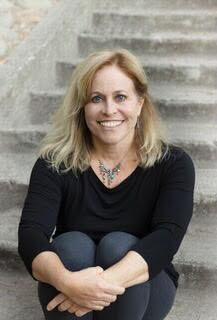
On Sept. 30, the City of Davis chose Julia Levine to be the new Poet Laureate of Davis, according to a press release

“This honorary position celebrates the art of poetry and its impact on the Davis community,” the press release read. “Duties of the Poet Laureate include: representing the City of Davis and the art of poetry through outreach activities, presenting original works of poetry at official City events throughout the year, writing and submitting poetry about Davis for publication, presenting and discussing poetry at community events, in schools or with community groups, and acting as a resource for poetry and literary activities in Davis.”

Arts and Culture Manager Rachel Hartsough explained how Poet Laureates are chosen through a lengthy process. 

“We have an application process, and there’s a selection committee that consists of a couple of members from our arts and cultural staff from the city, a couple of members from our Civic Arts Commission and a couple of members of the community who have expertise in the area of poetry and literary arts,” Hartsough said. “We receive applications and nominations, those are reviewed, and the committee meets with and interviews the finalists, and selects the laureate from those, and makes a recommendation to the arts commission, and the arts commission recommends that to city council.”

Hartsough explained that past Poet Laureates have focused on a variety of topics.  

“James Lee Jobe, who was our most recent Poet Laureate, was interested in schools, but unfortunately his term overlapped so much with COVID-19, so that was really unfortunate timing,” Hartsough said. “He was writing poetry and posting everyday on a blog that he ran, and he ran some poetry workshops on a weekly and monthly basis. Julia is a little different in that she brings a more specific focus on the work that she’s interested in doing, so I think her term will be quite different from the previous poets.”

Levine describes herself as having three focuses, one being “the age-old question of why there is so much beauty and love and tenderness in the world besides so much horror and suffering,” another being the natural world — which she describes in terms of an ecopoetic and poetry of the Anthropocene and the last being an elevation of the ordinary world through meticulous attention.  

Levine loves reading poetry and enjoys the works of poets like Jennifer Sweeney, Louise Glück and Eduardo Corral. She was mentored by Brigit Pegeen Kelley, whom she describes as an unsung poet, and Frank Gaspar. Levine, surprisingly, did not always love poetry.  

“I hated poetry in high school, I hated it,” Levine said. “Actually I was listening to KDVS when I was in between college and graduate school, and I was sweeping, there’s actually a poem in my latest book called Song for Sylvia Plath on the Radio, it was the first time I’d ever heard Sylvia Plath, and the moon was coming up, and I just had this out of body experience. I just thought, oh my god, this is what poetry is? I want to do that.”  

On the question of what constitutes poetry, Levine was encouraging.  

“Any poem that you write that does any kind of work for you is worth writing,” Levine said. “So, if you write a poem and something surprises you, and you feel like now you know something you didn’t know before, that poem has done its work for you.”  

But as for what constitutes good poetry, Levine was much more specific.  

“There’s a lot of subjectivity in poetry and very few rules that really apply, but I do think you will find that in the really great poets, there is a startling mysterious penetration into both mystery and truth,” Levine said. “And there also has to be the other really difficult thing about poetry, is there has to be some capturing of music and song in the language. If you have to work with image and meaning and sound, that’s a lot!”

Written by: Rachel Shey — city@theaggie.org

Oiled Wildlife Care Network saves wildlife affected by oil spill in Huntington Beach

Consequences are severe for wildlife when they are not rescued, according to OWCN members

by ELLIE LEE — elelee@ucdavis.edu

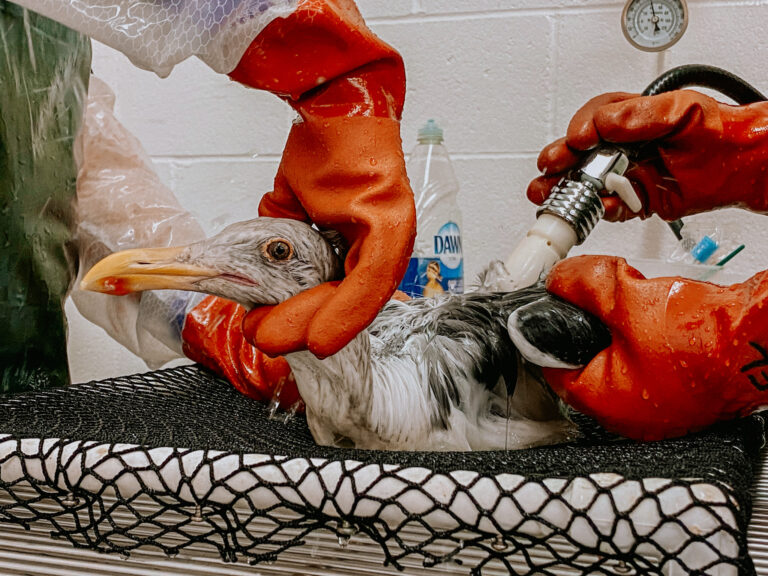
Oiled Wildlife Care Network (OWCN) takes initiative in rescuing many living organisms, as a result of the oil spill off Huntington Beach in Southern California. They have saved 31 live birds and one mammal from the oil as of Oct. 14.

When they are rescued, oiled animals are transported to a medical facility, where they go through “intaking & processing” procedures, including a physical exam, and they are given pre-wash care, cleaning in warm soapy water, and conditioning. Dr. Michael Ziccardi, the director of the OWCN, explained how the organization responded quickly to the oil spill.

“The more rapidly we can recover them, the more likely it is they will survive,” Ziccardi said. “That’s one of the reasons why we have so many people trained to be able to respond quickly. We have over 1600 people that are available to us to respond in large scale emergencies. The longer animals are out in the environment without recovering, the less healthy they are.” 

On top of saving wildlife that is covered in oil, he discusses how they work with other agencies to be prepared as possible. Trained individuals at UC Davis continue to care for wildlife and to work on preventing damage that might occur from oil spills.

Oiled Wildlife Care Network is guided by four principles: readiness, response, research and reaching out. For readiness, they maintain equipped equipment throughout California, test procedures regularly in exercises and drills and regularly conduct supervisors, volunteers and faculty members.

OWCN recruits professionals and organizations that respond to oil spills. This ensures that they can provide first aid to the organizations and access to at least one of the 12 wildlife  rehabilitation facilities. 

Members share knowledge with other organizations. They hope to ensure that the world learns about accurate, new information about how oil affects animals. 

Network members research, test and explore innovative ways to improve ways to save wildlife; this includes donating over four million dollars to more than 180 scientific studies. In addition, they conduct self-directed research about environmental topics that they find the most concerning.

“UC Davis runs the world’s wildlife Prevention and Response Program,” Ziccardi said. “It’s something I’m proud of. The state should be proud of it, it’s definitely something UC Davis should be very proud of as far as our role in trying to address, saving animals in emergencies such as this.”

Ziccardi is also the executive director of One Health Institute program that addresses health issues between people and the environment, including animals. He directs the California Veterinary Emergency Team, and he teaches free ranging and conservation in the UC Davis Veterinary School.

Kyra Mills, the OWCN senior manager of field operations, explains that OWCN has 44 member organizations as part of the network in the state of California.

“We take them to a rehabilitation center; in this case, the closest center for us is the Los Angeles Oil Bird Care and Education in San Pedro, California,” said Mills. “That’s where the birds collected as part of the spill are being cared for.”

Mills details that the impact of oiling depends on each species affected. The most serious impact is to the animals that depend on their waterproofing to keep warm, according to Mills.

“Seabirds are the most highly impacted,” Mills said. “When oil comes in contact with their fur, it disrupts the feather structure. If it doesn’t have oil in it, it acts as a drysuit and keeps them dryer and warmer when they are in the water.” 

She adds that if they are affected by the oil, they stop eating. If they are not rescued, they could die, depending on their species, the amount of oiling and the weather. Large oil spills do not happen too often but small ones happen frequently.

“Not all of them are marine; some of them are impacting in lakes, streams [and] rivers,” Mills said.

Correction: A previous version of this article had an incorrect figure for the number of animals rescued by OWCN. The article has been updated to correct the error.

Written by: Ellie Lee — city@theaggie.org

An ultimate ranking of biking weather, according to UC Davis students

0

Which types of weather do students love to bike in, and which do they dread?

By SONORA SLATER — features@theaggie.org

The street is deserted, a torrent of leaves tumbles across the Russell bike path — for every inch students pedal forward, a vicious gust of wind blows them back two. Defeated, they wonder if choosing to bike to class was really worth avoiding the throes of a crowded Unitrans bus.

For all the convenience that bikers enjoy in Davis, there are a few significant inconveniences they face as well: people who don’t understand bike circles, overly bold squirrels… and weather. 

Arriving to class drenched in sweat from cycling in 90-degree heat, contending with fog that limits visibility and conceals potential hazards, or tolerating a wet bike seat and a soggy backpack can all be challenging, but each weather also has its perks. 

According to Davis students, how do the different biking conditions stack up? Based on data collected in a survey of 19 current or former Davis students ranking their experience biking in sun, wind, cold, rain and fog on a scale from one to five, the average of their ratings determined the (somewhat) definitive ranking of biking weather at UC Davis. 

5th Place: Rain

Rain had the lowest average score: 1.42 out of 5. There were a variety of complaints about the challenges that biking in rain poses — and since Davis has an average of 66 rainy days per year, student bikers will have to face those challenges frequently during the upcoming winter months. 

Davis rain is so common that it gives name to one of the most infamous markers of a new student: the freshman stripe. Even for students whose backs aren’t damp from their bike tires and unfortunate lack of fender, Julie Daseking, a first-year graduate student in the UC Davis School of Education who also attended Davis for undergrad, said it’s nearly impossible to get to class dry during a downpour.

“Horizontal rain is the absolute worst — say goodbye to dry pants,” Daseking said.

4th Place: Windy

Wind followed close behind rain with a score of 1.53, though this data might have been negatively impacted by the recent windy weather. 

Wind can be a truly dangerous condition to ride in; the fear of wind-struck fallen branches could possibly be the only thing that convinces students to actually wear helmets while riding around campus.

Nic Lattig, a fourth-year mechanical engineering major, acknowledged a potential benefit of wind but emphasized its hazards.

“Wind keeps the rider cool, but 30 mph winds are dangerous,” Lattig said via Instagram Direct Message. “Wind is awful because you can’t see and you’re blown 3 feet back for each foot you pedal.” 

On Oct. 11, a somewhat gusty day, second-year biological sciences major Olivia Yoder gave her opinion.

“Today taught me that wind plus dirt plus biking is the least fun,” Yoder said via Instagram Direct Message.

3rd Place: Foggy

Fog had a much higher score than wind and rain, with an average rating of 2.95 out of 5. When early-morning fog shrouds campus, it turns each tree into an indistinct shadow and each corner into a mystery. The conditions might be haunting, but students tended to agree that they were less unpleasant than wind or rain. 

As with rain, many students currently on campus have never experienced biking in fog, perhaps skewing the results toward their romanticized imagination of quiet foggy mornings but failing to account for the lack of visibility and dampness it creates.

One survey respondent who gave high marks for foggy weather acknowledged that they had not biked in either rain or fog before, and therefore did not know for sure how good or bad cycling in those conditions would be.

Alumna Kristen Krick, who’s had lots of experience with the Davis fog, expressed a more negative view.

“Fog makes riding sucky, due to the more potential cow poop smell,” Krick said via Instagram Direct Message. 

Tied for 1st Place: Sunny and cold but clear

Each achieving a score of 4.12 out of 5, opposites sun and cold, sans rain or fog, tied for the best biking weather. Despite the threat of sweat, a sunny, clear day was a favorite because of its perfect visibility and the comfort of warmth. 

Others had a strong preference for cold and clear days, which allow riders to stay cool while avoiding the hazards of other winter weather. 

Though cold and sun received high scores, the pool of respondents were fairly divided — and passionate — about their number one choice.

While many survey respondents expressed love for sunny rides, Lattig held an opposing view: “Sun is bad,” Lattig said via Instagram Direct Message.

As the Davis temperatures trend downward over the next few months, it’s likely students will experience all of these conditions. Regardless of your weather preferences, bike safely, and be thankful that so far, we haven’t experienced the weather favored by Raaghav Saxena, a fourth-year animal biology major: “It’s best when hailing, obviously.” 

Written by: Sonora Slater — features@theaggie.org

Culture Corner

The Arts Desk’s weekly picks for television, movies, books and music

By CLARA FISCHER — arts@theaggie.org

Music: “Don’t Shut Me Down” by ABBA (2021)

ABBA has been a global pop sensation ever since their debut at Eurovision 1974. Personally, I can proudly say that I grew up with ABBA — if my life were made into a movie, the soundtrack to the childhood scenes would be exclusively oldies. Fans of the legendary group were ecstatic when they announced new music coming out in 2021, and they were not disappointed. ABBA dropped two new songs in September, one being “I Still Have Faith in You,” a more grandiose ballad that features a swelling orchestral backing, but the standout to me is “Don’t Shut Me Down.” This song could have been released on ABBA’s debut album and I wouldn’t have questioned it. It’s so true to the group’s iconic style and combined with the slightly deeper, more mature voices of the group members, this song feels like catching up with an old friend after being apart for many years. 

Book: “The Bell Jar” by Sylvia Plath (1963)

Written by Sylvia Plath in 1963, the underlying message of this novel holds just as much relevance today as it did 50 years ago. The book is a semi-autobiographical journey into the human psyche and discusses issues of mental health with a refreshingly dark frankness. At the time that Plath wrote the book, mental health issues were still widely stigmatized and writing a book centered around a young woman’s mental breakdown was a bold choice for the time. Many critics compare “The Bell Jar” to J. D. Salinger’s 1951 classic “The Catcher in the Rye,” and while both Plath and Salinger touch upon the same ideas, the two novels differ greatly in their delivery. “The Catcher in the Rye” has a very masculine tone, tinged with an overwhelming sense of anger. “The Bell Jar” comes across much more depressed and almost subdued. Esther Greenwood, the protagonist, does partake in manic acts, but it’s almost still rational. Everything is described poetically, and some lines need a double take for the reader to realize that something out of the ordinary has occurred. It’s astounding that a piece published almost half a century ago is still so relatable, especially to adolescent women. 

TV Show: “The Great British Baking Show”

This British-born series is the epitome of a comfort show. Personally, I use TV and movies as a way to destress and escape into a less complicated world, if only for 30 minutes at a time. While American TV does have a variety of cooking and baking competitions, they aren’t relaxing like “The Great British Baking Show”. Contestants on American cooking competition shows are often racing against the clock, stressed down to the last second and challenged by a plethora of intensely difficult twists. On “The Great British Baking Show,” however, contestants are often seen helping each other out, cracking jokes and lifting each other’s spirits, all while whipping up delightfully obscure baked goods. The show’s friendly nature sets it apart from others and is a big reason for its global success and cult following. There’s truly nothing more stress-relieving during fall quarter midterms than turning on an episode of “The Great British Baking Show” and relaxing on the couch. 

Movie: “Corpse Bride” dir. by Tim Burton (2005)

Halloween movies hold a special spot in my heart. They’re comparable to Christmas movies in the sense that they both evoke holiday spirit in their audiences, but Halloween films are special because there are far less of them. Don’t get me wrong, I am a huge fan of cheesy Hallmark movies and could probably recite every word of “Elf” by memory, but the limited selection of Halloween movies gives each one their own spooky flair. “Corpse Bride” is, in classic Tim Burton style, hauntingly beautiful. The colorscape of the movie feels almost physically chilling, with everything appearing in muted shades of gray and blue. I found that the soundtrack and character design, along with the simple love story at its core, gave the film an eerily romantic tone. Because of this, viewers can’t help but empathize with the characters, no matter how great their faults may be. “Corpse Bride” never fails to send a chill down my spine, and perfectly sets the mood for the cooler autumn nights to come. 

Written by: Clara Fischer — arts@theaggie.org

UC Davis Football celebrates homecoming with a blowout win against Northern Colorado

The Aggies spectacular defensive effort allowed 3 points in their homecoming win while improving their record to 6-1

By MARLON ROLON — sports@theaggie.org

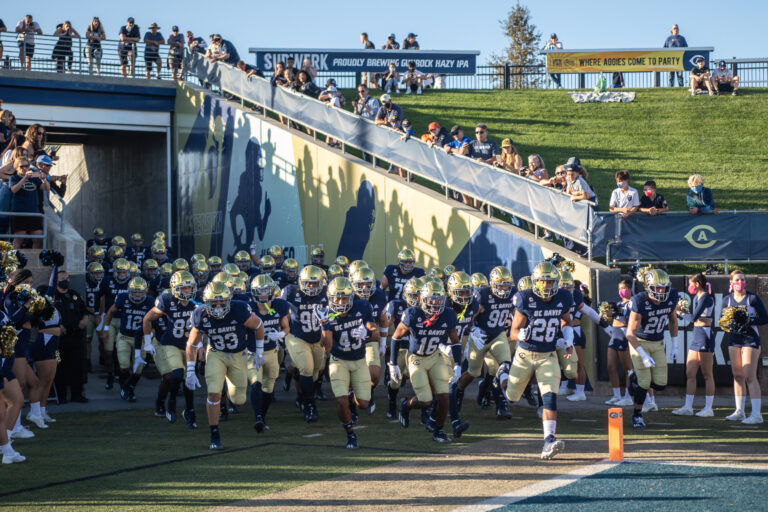
After suffering their first loss of the season last week, UC Davis rebounded with their stout defense leading the way, securing the homecoming victory 32-3 over Northern Colorado. It was not all smooth sailing however, as the Aggies offensive line had four sacks while junior quarterback Hunter Rodrigues threw two interceptions.

Prior to homecoming, Rodrigues struggled in the last two games completing less than 50% of his passes, zero touchdowns and two interceptions.

“In this league, guys just show us different looks every single week so we [have] got to be ready to adjust on the fly,” Rodrigues said. “We weren’t really expecting that much pressure. They weren’t a high pressure team going into this week.”

 The Bears aggressive defense had Rodrigues scrambling early. Northern Colorado’s defense forced Rodrigues into making bad decisions. With 9:28 remaining in the first quarter, Rodrigues snapped the ball and under threw his receiver, Carson Crawford. 

The following play, Rodrigues operated from the shotgun, but Northern Colorado’s defensive pressure led Rodrigues to scramble out the pocket causing a poor throw behind his receiver’s shoulder. With 9:17 left to play in the first quarter, Rodrigues started the play from the shotgun formation. He immediately scrambled out of the pocket trying to evade the sack while uncharacteristically throwing it into traffic and was easily picked off by the Bears linebacker Jace Bobo.

“It’s very interesting in this league you don’t always get exactly maybe what you thought you were going to coming in,” Coach Dan Hawkins said. “They did a few extra things there that gave us some issues. They got some good edge players there.”

 The Bears looked to be in control during the first quarter, however, on 4th & 2UC Davis stopped the Bears running back Gene Sledge Jr., converting a turnover on downs. That particular play swung the momentum in favor of the home team, the Aggies offense suddenly looked alive. 

Rodrigues, once again operating in the pistol formation, motioned to freshman running back Lan Larison, threw him a short pass in which he ran for 49 yards after the catch. Larison was elusive in evading defenders left and right, nearly scoring a touchdown. However, a late tackle inside the 25 yard line stopped him from scoring.

Northern Colorado’s defense kept breaking through to once again sack Rodrigues for a five yard loss. Eventually the Aggies settled for a 34 yard field goal attempt, kicker Isaiah Gomez missed the three point attempt, turning the ball over on downs. 

In the second quarter, UCD made adjustments on offense. As Rodrigues kept feeling the pressure from the Bears ferocious defense, the Aggies turned to their run game with star running back Ulonzo Gilliam Jr., leading the charge. 

“Obviously we got some guys banged up on the o-line, so some guys stepped up allowing us to run the ball.” Rodrigues said. “When we get the run game going, I think everything kind of opens up.”

The game clock read 10:12 during the second quarter, with Rodrigues handing the ball off to Gilliam Jr., as he sped across the field running through defenders for a 17 yard gain. The power run jolted the home crowd as UC Davis Health Stadium was as loud as ever. Gilliam Jr., rushed two more times for a combined 21 yards. The rushing attack led to Rodrigues throwing a touchdown to Jared Harrell off a quick slant at the goal line that was good for six points. 

Instead of going for the extra point, the Aggies opted to go for the two point conversion with Trent Thompkins, also known as the “Magic Man.” Thompkins indeed showed off his magic as he effortlessly ran into the endzone putting the Aggies up 8-0. 

Northern Colorado was looking to answer back on 3rd & 2 as they lined up on the power formation making it obvious they were going to run the ball. The Bears quarterback, Dyla McCaffrey had a miscommunication with the offense when he attempted to hand the ball off and fumbled in the process. The 360-pound redshirt freshmen Chubba Maae recovered the ball for the Aggies eliciting loud cheers from the crowd.

UC Davis continued to feed Gilliam Jr. the ball as he rushed in three consecutive plays gaining 23 yards to put the Aggies in successful field goal range. The score was 11-0 with six minutes remaining in the second quarter.

Coach Hawkins spoke about Gilliam Jr’s., production. 

“He gets banged up a lot and he always has shoulder or ribs, he always has something but he never misses, never says anything he just keeps producing,” Hawkins said. “He doesn’t care if you give it to him 50 times, five times, he does what he can do and it’s really great having a guy like that. He loves to win, he loves to compete and he works at it.” 

The Bears offense was no match to UCD’s defense, gaining only 10 yards in seven plays. Ultimately, Northern Colorado punted the ball back with the second quarter coming to a close.

Rodrigues finished the half with 122 yards, passing on 15 attempts. completing nine passes with one touchdown and one interception. Gilliam Jr., who added 63 yards on the ground with nine attempts, averaging seven yards per carry. Larison caught three passes for 63 yards and Crawford caught two passes for 51 yards. 

To start the third quarter, UCD was intercepted off a tipped pass, making that the second interception Rodrigues threw for the night. However, Northern Colorado could not generate anything on offense, punting the ball back after three plays and only gaining six yards. 

UC Davis focused on the run game utilizing Gilliam Jr., Thompkins, Larison and Crawford. Eventually, Tompkins swapped in as quarterback, playing off the shotgun formation. The “magic man” easily ran into the endzone for a five yard touchdown putting the Aggies up 18-0 with 2:44 remaining in the third quarter. 

Northern Colorado could not find any sort of rhythm as they were forced to take more shots down the field by throwing the ball. The Bears quarterback McCaffrey attempted a short pass on first down as he darted a pass the ball was deflected and ultimately picked off by Erron Duncan for the Aggies.

When asked about the defensive effort Rodrigues said, “They played lights out, they got us good field position almost every single drive.”

UC Davis fed off the crowd’s roaring cheers as the defense sucked the life out of Northern Colorado’s offense. The third quarter came to a close, with the Aggies ground game eating up the clock with 19 rushing attempts that was good for 81 yards. UC Davis dominated the time of possession with 10:33, meanwhile the Bears only had the ball for 4:33 during that span.

UC Davis opened the fourth quarter rushing the ball and mixing in throws to eventually land on the four-yard line. Once again, Tompkins was swapped in as quarterback. He bulldozed his talents into the endzone putting UCD up 25-0. Northern Colorado looked defeated and exhausted on the field making the game look too easy for a hungry UC Davis team. 

The Bears looked like they wanted to leave UC Davis Health Stadium by running the ball to let the clock continue to run down. They scored a field goal on a 44-yard attempt to avoid a shutout making it 25-3. The game turned into an all out rushing attack by both teams in an attempt to run out the clock. 

The Aggies running back, redshirt freshman, Larison gained valuable game time experience by rushing six times in a row gaining 33 yards in the process and a touchdown to put the game away 32-3. 

UC Davis’ defense allowed 11 first downs throughout the game while Northern Colorado allowed 24. UC Davis outgained the Bears with 398 total offense yards while allowing 254 yards. 

“We have a good football team. I do think our defense played pretty well,” Hawkins said. “We were not being as productive as we wanted to offensively but our defense continued to play great.”

Rodrigues finished the game with 187 passing yards, completing 16 of 26 of his passes with one touchdown and two interceptions. He was also sacked four times and pressured throughout the game. Running back Gilliam Jr. rushed 22 times with 107 yards and 4.7 yards per carry. 

The game came to a conclusion as the Aggies turned in a dominating performance in front of their home crowd. 

“There’s a lot of ways you can measure a football team in the season. One of the ways I particularly measure a team is not losing two games in a row and I think that’s a credit to the staff and credit to the kids to pick themselves up,” Hawkins said. “That’s part of life, that’s part of football too. It’s okay if you got knocked down, you got skinned up, pick yourself up and keep going. Let’s not feel sorry for ourselves, so it was a good life lesson and a good football lesson.”

With the win, UCD improved their record to 6-1 after a disappointing loss last week to Idaho State. UC Davis hopes to ride the momentum into next week when they face off against the 1-5 Cal Poly. 

Written by: Marlon Rolon — sports@theaggie.org

Humor: After years of disrespect, UC Davis archaeologist uncovers untold treasures fossilized in gum underneath desks all over campus

“Who knew history could be so sticky!”

By IAN COSNER — iacosner@ucdavis.edu 

COVID-19 has changed a lot of things, but with the return of in-person classes and heightened public health concerns, students get to enjoy an unexpected benefit of this unique school year. In accordance with mandatory COVID-19 safety regulations, the university has finally had all desks and chairs throughout campus thoroughly de-gummed. 

That’s right everybody, this means that for the first time since you arrived on campus, your legs will no longer brush against the hard, sticky, sugar-free goodness that has somehow inhabited every single chair you’ve ever sat on. No longer will you have to try and repress that your BIS 2A midterm rests only a mere inch above someone’s desiccated mouth juices petrified into resin, wax and elastomer. No longer — now you can lounge to your heart’s content during class and live a sticky-free life as long as no one ever chews gum again!

But for the historians out there, fret not, for UC Davis archaeologists have preserved every piece of pasty, expectorate-covered plaster in hopes of uncovering the untold history of students. They have already discovered a myriad of wonderful relics going all the way back to the ‘90s. Whether it’s old Capri Sun packages, hacky sacks or pogs, it’s truly remarkable to know that this disgusting habit of leaving saliva-ridden garbage on a piece of public furniture has lasted throughout the decades.

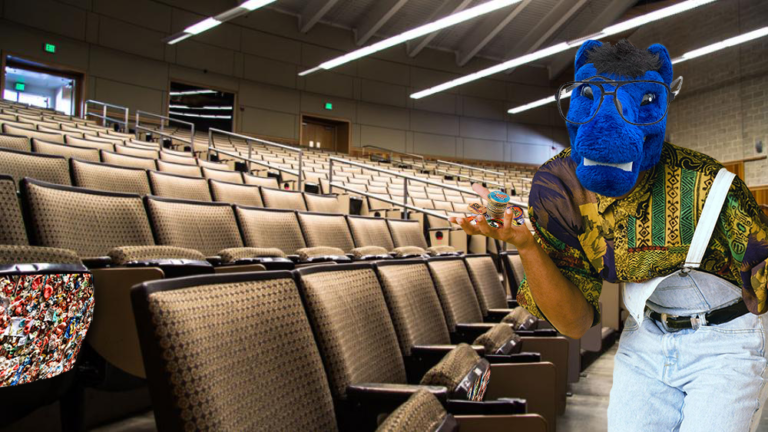
But recently, UC Davis archaeologists uncovered something even more surprising than worthless ‘90s memorabilia. Using new, unlicensed cloning technology developed by UC Davis genetics students, researchers were able to revive a Gunrock clone directly from the ‘90s. 

While this old-school Gunrock may be a bit different from our current blue-haired monstrosity, with its mohawk hair, unreasonable obsession with ska music and infatuation with “Xtreme” sports, it’s still the original horse that this university has, for some reason, based its entire identity around. 

The new-old Gunrock, or Gunrock 2: The Sequel, will be seen around campus, taking classes, skateboarding through the Arboretum and absolutely demolishing folks at ultimate frisbee. So if you’re feeling nostalgic for a decade that was best known for Will Smith and being “radical,” look no further than our lovely new mascot, a weird blue horse with a mohawk that keeps asking you if you wanna play pogs. 

Written by: Ian Cosner — iacosner@ucdavis.edu 

Disclaimer: (This article is humor and/or satire, and it’s content is purely fictional. The story and or names of “sources” are fictionalized.)

UC Davis Health offers free mammogram screenings for uninsured women in recognition of Breast Cancer Awareness Month

After many delayed vital cancer screenings during the pandemic, UC Davis Health seeks to serve the community through their free screening program

By SONORA SLATER — science@theaggie.org

Free mammogram screenings are being offered to uninsured women in the Davis community by the UC Davis Health Department of Radiology in recognition of Breast Cancer Awareness Month, according to a recent press release

The screening mammograms are available for uninsured women aged 40 and older who are not currently displaying any symptoms. Appointments are available on a first-come, first-served basis on select Saturdays in October, and the mammograms will be done at the UC Davis Health Lawrence J. Ellison Ambulatory Care Center. 

According to Dr. Shadi Shakeri, the chief of breast imaging at UC Davis Health, the program began several years ago as a collaboration between the Breast Radiology Division in the Department of Radiology and the UC Davis School of Medicine student-run clinics. After a short lapse, the program was re-started last year. 

“Everyone in our division, from front desk staff, technologists, trainees and radiologists to our department leadership is passionate about patient care and serving the community,” Shakeri said via email. 

Screening rates are low among women who lack insurance coverage, a dangerous trend considering that consistent and timely breast screening reduces mortality due to breast cancer, according to Shakeri.

“Getting a high-quality screening mammogram on an annual basis is the most effective way to detect breast cancer early,” Shakeri said. “Early detection of breast cancer means that treatment could possibly be less extensive and have a better prognosis. Without regular mammograms, tumors can go undetected allowing […] breast cancer to grow and possibly spread to other parts of the body. Early detection saves lives!”

Stephanie Winn, the senior public information officer at the UC Davis Comprehensive Cancer Center, emphasized that Breast Cancer Awareness Month, and the free screening program specifically, are even more important in the wake of the COVID-19 pandemic.

“Women have put off getting their routine mammograms and [we’re] concerned pandemic-related delays will have dire consequences,” Winn said via email. “Breast cancer caught early is easier to treat, but if left undiagnosed it can prove fatal.”

Winn went on to offer some statistics about how pandemic screening delays may prove dangerous.

“The National Cancer Institute predicts almost 10,000 people will die from breast and colorectal cancer alone over the next decade because a third of adults have failed to get recommended cancer screenings during the pandemic,” Winn said.

Shakeri talked about why she believes this screening opportunity is so important. 

“We want to raise awareness regarding the lifesaving potential [of] mammograms to detect breast cancer early when it is most treatable,” Shakeri said. “We aim to facilitate the process of getting screening mammograms for women, in particular for uninsured and underserved women.” 

She went on to describe how collaborative the project has been.

“We have been working on this project for several months which requires support from multiple resources to make it possible,” Shakeri said. “We’ve partnered with our colleagues in finance and advertising, as well as identifying a clinic environment for patients who may need follow-up examinations.” 

She concluded by reminding people of the significance of the month, emphasizing why they chose to offer the free screenings during October.

“There is no better time to offer this program than during Breast Cancer Awareness Month,” Shakeri said. 

To schedule an appointment, please call (916) 734-6145 and ask to book an appointment for a free Breast Cancer Awareness Month (BCAM) screening mammogram. Spanish-speaking representatives are available. Appointments are required and available on a first-come, first-served basis.

Patients needing follow-up care will be referred to their primary care provider or other health care provider.

Free mammograms are offered for eligible, uninsured patients. For insured individuals, UC Davis Health will bill the insurer for the provided screening services, as appropriate.

Written by: Sonora Slater — science@theaggie.org

Eduroam isn’t serving needs of campus community

Students need fast and reliable Wi-Fi everywhere on campus

By EDEN WINNIFORD — opinion@theaggie.org

UC Davis students and staff need access to reliable Wi-Fi throughout campus in order to work efficiently and effectively, but eduroam has been slow and unreliable so far this year. Students may be able to take notes offline, but many other necessary functions, including accessing Canvas, completing iClicker prompts for attendance credit and verifying your identity with Duo are impossible without quality Wi-Fi. Eduroam’s spottiness isn’t just frustrating — it can be detrimental to our grades. 

Despite the importance of Wi-Fi on campus, I’ve heard nothing but complaints about eduroam. There have been multiple instances where I’ve needed to wait five minutes for my laptop to connect to eduroam in lecture halls, and some of my friends haven’t even been able to access Wi-Fi in the library. Others report eduroam dropping their connection sporadically and have even made accounts for the UCD-Guest Wi-Fi in order to bypass eduroam. 

Almost all of the people I’ve spoken with don’t remember eduroam being this unsatisfactory before the pandemic — it had its problems, but you could connect to it quickly and it would eventually load whatever you searched for. Now, that doesn’t seem to be the case.

At the very minimum, high-speed Wi-Fi should be available in every on-campus building, especially high-traffic areas like the library and MU. Students should be able to connect to it quickly, and it should be able to load pages without dropping connections randomly and without warning. 

Of course, eduroam’s problems may be outside of UC Davis’ control. As of April, the chip shortage had caused a 60-week delay in the shipping of internet routers, so I understand if this has caused a router shortage on campus or has forced UC Davis to use slower, outdated routers. The statewide worker shortage may also have an impact if any UC Davis tech support is understaffed, since providing Wi-Fi coverage to such a large area requires workers who are knowledgeable about picking proper equipment, managing the Wi-Fi network and optimizing coverage in different environments. 

More transparency from the university about the reasons behind the laggy Wi-Fi would help me feel less frustrated when I’m stuck waiting for pages to load endlessly. I wouldn’t mind the sluggish connection and failures to launch if I knew this was a problem the university was actively addressing and planning to fix as soon as possible. 

Written by: Eden Winniford — opinion@theaggie.org

Disclaimer: The views and opinions expressed by individual columnists belong to the columnists alone and do not necessarily indicate the views and opinions held by The California Aggie.

UC lecturers deserve job stability, increased pay

The Editorial Board calls on UC administrators to support our instructors

Last week, members of the University Council-American Federation of Teachers (UC-AFT), the union representing over 6,000 lecturers within the UC system, congregated on A and First streets to advocate for job stability, increased pay and fair workload compensation for teaching faculty across the UC campuses. For lecturers, valuable leaders of our education and integral members of our community, these protections are long overdue. 

Lecturers teach roughly 30% of credit courses in the UC system, including those at undergraduate and graduate levels, and provide valuable instruction, though they make significantly less than professors. According to a CalMatters analysis, lecturers earn roughly a third or less of what tenured faculty or those who are on track to tenure make, though those disparities may also be attributed to the fact that most lecturers work part-time. The minimum annual pay for full-time lecturers, however, is $57,000, which is considered a low-income wage at six of the nine UC campuses, according to the same analysis.

UC-AFT and the UC Office of the President (UCOP) have been in negotiations for nearly two years, and this summer, the union filed for an impasse, meaning that both sides are deadlocked in their negotiations. While the UC is proposing pay bumps for lecturers, members of UC-AFT claim that these bumps will not rise with inflation and are therefore insufficient to ensure lecturers the financial means they need to survive. 

Beyond pay, a central issue lecturers and faculty are advocating for is job security. Every year, roughly one quarter of lecturers do not return to teach at the UC — this turnover has been dubbed “the churn.” The exact reasons for this aren’t listed in the UC employment rolls; a common complaint from lecturers is that they do not receive an explanation when their contract is not renewed, and it’s often done on short notice. For example, the 14 lecturers of the Physical Education Department at UC Davis received notification of their layoffs right before fall quarter 2020 — only two days before the start of classes.

It would diminish the work of lecturers to say that this turnover does not have an impact on students’ quality of education. Having different teachers for the same classes can affect the relative intensity of a course from quarter to quarter. Furthermore, classes taught by new teachers can prove challenging for students as a new lecturer must adjust to the content and the pace of the course during the early weeks of the quarter. For students that have built academic relationships with their teachers, it can be jarring to have them removed so suddenly from their educational realm and hinders students from asking for letters of recommendation and building professional connections.   

This seems especially ironic considering one of the primary goals of the UC, as established in its mission statement, is to teach students at all education levels, thus building California’s economy. The UCOP website states: “Through our academic programs, UC helps create an educated workforce that keeps the California economy competitive.” While the UC clearly takes pride in educating the future workforce for the state, it fails to acknowledge its crucial role in being the third largest employer in California by refusing to provide the necessary job security required for the lecturers directly responsible for creating this workforce.

UC-AFT members are also frustrated by the lack of communication from the UC Davis campus administration and the system-wide administration. Never has the gap between our teachers and the administration been so glaring: As members of our community who are so valuable in shaping student’s education, lecturers deserve to feel heard and not ignored by Chancellor Gary May and President Michael Drake.

If they don’t, students will be paying the price. In June, 96% of union members voted to authorize a strike, which would force more than a third of classes to be canceled. Though extremely disruptive, this may be a necessary step for lecturers to receive the rights they deserve as employees. The Editorial Board encourages students to educate themselves on the negotiations and show their support however possible. 

The UC has a duty to provide the appropriate job security and compensation to lecturers to not only support their employees but also to ensure students are receiving a consistent and excellent education. It is unfair both for employees and students to continue to teach and learn in these conditions without action taken by the UC system to meet the needs of lecturers.

Written by: The Editorial Board

UC Davis COVID-19 academic policies need to be more consistent and widely spread

Administrators must set standards for COVID-19 accommodations

With the return to in-person learning this fall, we are all in classrooms once again, surrounded by strangers, acquaintances and even close friends that we have not seen in a year and a half. While it’s definitely an adjustment, it’s exciting to be back on campus, and we can thank UC Davis for their work to ensure our safety. We are thrilled that 98% of UC Davis students are vaccinated; it’s because of you all that we have safely returned to campus. 

Mandating vaccines, necessitating symptom surveys and requiring frequent testing are important precautions that UC Davis has taken to protect our community. But beyond that, more work needs to be done to communicate the COVID-19 guidelines to both students and faculty. Although the administration has put public health policies and self-quarantine measures in place, this information is not actively disseminated and ambiguity remains as to what students should do when they are feeling sick.

To the Editorial Board, it seems like COVID-19 policies vary by the professor. Most of our instructors haven’t given us detailed explanations for what to do if we get COVID-19 beyond staying home. We’re told not to come to campus if we don’t pass the symptom survey, but protocols surrounding exams and mandatory attendance when we aren’t feeling well haven’t been made clear. Many of our syllabi say to follow campus guidelines, but those instructions usually end there. With some professors refusing to record lectures and others saying it’s okay to come to school with a cough, we are confused about what is the “right” thing to do. 

There have been professors who have been accommodating throughout this uncertainty by offering midterm drops or conducting quizzes via Canvas rather than in person. However, what confuses students is the discrepancy between different professors, sometimes even within the same department. The lack of consistency in implementing these public health policies forces students to navigate these ambiguities on their own, causing unnecessary stress during an already stressful pandemic. The Campus Ready guidelines instruct students to reach out to their professors or an academic advisor if they have to quarantine and miss class, but the burden should not be on already-sick students to secure accommodations on an uncertain, case-by-case basis. 

While professors should absolutely have flexibility in instructional decisions, COVID-19 policy should be set by administration. Allowing professors to determine for themselves what constitutes a fair make-up policy can be unfair to students who have to choose between keeping themselves healthy and keeping up their grades. Though COVID-19 has brought this issue to light, with the current flu season and potential future pandemics, there needs to be a standard for all professors to follow when it comes to navigating student illnesses.

Students shouldn’t need to scour the internet to find information about what to do if they get sick. It should be widely accessible, easy to find online and more broadly disseminated by campus administrators. 

Online resources exist detailing mask, vaccine and testing requirements and mandatory reporting of COVID-19. These resources tell students to stay home if they feel ill or fail a symptom survey, but they lack explanations of what to do if you actually get COVID-19. If you do, you’ll be out of class for at least 10 days. Since not all lectures and discussions are recorded, it might be challenging to make up in-person classes and assignments. Catching up on classwork is already stressful enough, and if you’re really sick, it might be even more challenging to do so while recovering. 

Getting reacquainted with in-person learning is not easy, but better communication about COVID-19 policies would help our transition. We hope the lack of accessible information does not cause people to lie on symptom surveys or come to class if they feel unwell. By informing students, faculty and staff of what to do if they get sick, people will likely feel more comfortable skipping class or work — they will know exactly what to expect. 

While UC Davis continues to be a championed leader in many ways during the pandemic, the Editorial Board believes the administration has a responsibility to create and promote clear policies during this transition to in-person learning. And it’s okay for students to be stressed or anxious about the lack of clarity surrounding certain campus COVID-19 policies — the Editorial Board definitely feels it. We are still in a pandemic, and we would appreciate feeling that the university is prioritizing our mental and physical health.

UC Davis administrators can help ease this stress by more clearly communicating about how we will be academically supported if we test positive for COVID-19 or need to miss class because we are sick. It’s vital for campus administration to provide easily accessible information and spread it to as many people as possible. 

Written by: The Editorial Board

Lecturer protests call for job security, fair workload compensation

The two-day demonstration by UC-AFT lecturers brings attention to the fight for better work compensation

By CHRISTINE LEE — campus@theaggie.org

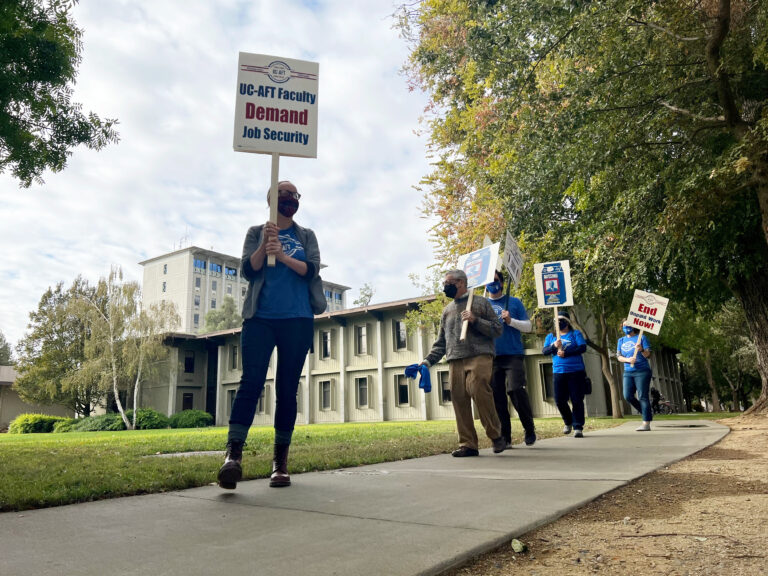
Members of UC-AFT, the UC-wide union representing non-senate faculty and librarians, gathered on the corner of 1st and A St. on Wednesday, Oct. 13 and Thursday, Oct. 14 to bring attention to issues surrounding job stability, fair workload and compensation across the UC system. 

“We’re turning out to show the university administration that we have lecturer support, we have student support and we have ally support through senate faculty, other UC unions and even the communities in which our campuses are located,” Katie Rodger, the internship coordinator of the University Writing Program (UWP) and the local president of the UC-AFT Davis Chapter, said. “What we really want to signal to the university is that in spite of being at home and being separated we have not become [disunited], in fact we are stronger than ever.”

The UC’s offer on Oct. 11 included some pay raises, changes to contracts offered and more transparency in workload assessments. UC-AFT argues that the raises will not keep up with inflation and the cost of living in California. The union is fighting for contracts that create a pathway for a career in teaching where instructors will be compensated for the work they do outside of the classroom.

The UC Office of the President (UCOP) provided a statement of their negotiations with UC-AFT. 

“We believe that this proposal is fair, equitable, and responsive to our lecturers’ concerns — and aligned with our shared values and mission as a world-class higher education institution,” Associate Director of Media Relations Ryan King said via email. “From demonstrating flexibility to incorporating union feedback, the University has made good-faith, earnest efforts toward achieving a contract.”

According to Sean McDonnell, a continuing lecturer at UWP, lecturers find it frustrating that the administration has not publicly made a statement about their efforts to change their working conditions.

“One of the things that is surprising, and quite frankly disappointing, is that the administration on campus and the system-wide administration, and I’m talking about people like Gary May and Michael Drake, have not even acknowledged that this is going on,” McDonnell said. “They have a whole team of highly-paid lawyers who meet with the union. All lecturer negotiators are volunteers. But we’ve never heard from Michael Drake, we’ve never heard from Gary May. I actually saw Gary May, he was a block and a half away yesterday and walked in the other direction.”

Protesting lecturers also brought attention to the contacts they sign with the university. Those under the continuing contract have security in their work, but many lecturers are hired as part time. At UC Davis, lecturers teach 30% of undergraduate credit hours, and a quarter of UC lecturers — whatever the reason — do not return to their jobs each year. 

“Getting the strong contract we’re after will benefit students,” Rodger said. “Having teachers and mentors that don’t stick around because they don’t tend to last in the UC system more than two years on average is going to directly impact the quality of students’ educations. It’s going to directly impact the course of our lives and the livelihoods of our families. It’s also going to impact, frankly, the state. People who don’t work full time and can’t earn a livable wage end up utilizing state resources to support them. So it’s good for all if we have a better contract.” 

According to the lecturers who turned out to call for more action and greater consideration of their demands, they participate in these demonstrations with their students in mind.

“I love my job so much,” Cassie Hemstrom, a continuing lecturer for UWP, said. “I think that the teaching we do here at this school is amazing, and we’re a world-class institution. Our students expect to see a world-class education they’re paying for. It’s a promise that we’ve made to them, and we need to make sure we can keep that promise, but we can’t do that if the UC is constantly moving us out of our jobs, shifting us around, giving us only part-time work and undercutting the promise they’re making to students.”
Written by: Christine Lee — campus@theaggie.org

‘The Darkness Within’ exhibit at The Basement Gallery spotlights students’ talents

Students DJs and artists host concert, gala in basement of Art UC Davis’ student-led art gallery showcases both collaborative and personal, expressive artwork at first show of the quarteruilding

By ANGIE CUMMINGS — arts@theaggie.org

On Friday Oct. 8, UC Davis’ entirely student-run art gallery, The Basement Gallery, held its first in-house show since the COVID-19 pandemic — starting the first quarter back on campus with some exceptional student artwork. The show was titled “The Darkness Within,” referencing “spooky season being around the corner,” as stated on their Instagram page. The show was not restricted by any medium, style or even size, as there were introspective photography works, whimsical ceramics, experimental video and sound pieces and much more. 

In the center of the small basement room of the art building was a large-scale sculptural installation made up of unidentifiable reddish masses growing in size as they reached the very center, which consisted of a metallic cylindrical pole reaching the ceiling. There was no tag or written information regarding this piece, making it even more intriguing, and allowing viewers to take whatever they needed from the work.

Another conceptual and abstract work was playing directly across the sculpture on an old Sony TV. While it was just as unclear as to what you were looking at, this work by Kai Maurer-Mabanglo, a fourth-year design major, titled “Clean,” was paired with a succinct explanation about how their work reflects the way that “proximity of family affects the individual,” perhaps alluding to the sentiments of some students after spending much of the pandemic back at home.

One piece of art that cannot be ignored is the collaborative work painted directly onto the one support column in the room. To read the many sentiments written on the column in sprawling black paint, you are forced to repeatedly circulate it, and before even finding the information tag, it is clear exactly what this artwork is. The artists created a literal opinion column to express their feelings toward the university and to more personal audiences — with statements like “WE OWE YOU NOTHING,” “goodbye and good riddance” and the wonderfully concise “F*** YOU” taking up an appropriately large amount of space. This creative play on words perfectly tied the show together, as it was a collaborative work in the center of a room, balancing out the extremely personal works along the walls.

It would have been impossible to leave this show without a renewed appreciation for the amazing work students can create when they are completely in charge. From the curation and promotion of the show to every aspect of its design and event organization, everything was done by UC Davis students, for other students to enjoy. 

This show was the first of many more events for the 2022-23 school year. Next up is a ceramic showcase partnered with the John Natsoulas Center for the Arts (the one on 1st Street with the giant cat sculpture outside) coming up on Oct. 22. The other event announced so far is a quarter-long anthology series exploring the effects and experiences of over-sexualization in our society today, which will be shown during the tenth week of the quarter. Announcements and information about the gallery can be found on their Instagram, @ucd_basement_gallery, as well as on their website.

Written by: Angie Cummings — arts@theaggie.org

UC Davis Energy and Efficiency Institute partners with Rio Tierra Junior High School to teach beyond campus

150 eighth grade students given the opportunity to learn about air quality and build air purifiers

By AARYA GUPTA — science@theaggie.org

Science teachers at Rio Tierra Junior High School and researchers at the UC Davis Energy and Efficiency Institute partnered together to deliver a two-day lesson on air quality to about 150 eighth-grade students, according to an article published by UC Davis. 

    “This partnership came about after talking with my friend, Theresa Pistochini, regarding concerns I had with ventilation in my classroom,” science teacher at Rio Tierra Junior High School Amber Mitchell said via email. “I decided to pursue this partnership because I have been following Theresa’s research for years, and consider her an expert source for help and information.” 

    Pistochini is the Co-Director of Engineering at the UC Davis Energy Efficiency Institute and the lead for this project. 

    “Connecting K-12 students with university students and researchers[,] students learn about potential future education and career opportunities they may have not otherwise thought about,” Pistochini said via email. “Often when students think about engineering[,] they generally think about opportunities like studying cars, aircraft, and space, and not necessarily about buildings, energy efficiency, and the environment.”

Mitchell said that the lesson consisted of a “guided presentation by researchers at UC Davis.” 

“Students learned about indoor and outdoor pollutants, health effects, air quality sensors, ventilation and filtration, and how to build a low cost air filter with a box fan and MERV13 filters,” Pistochini said.  

The presentation was followed by the students having the opportunity to engage in a hands-on learning experience. 

    “The students explored different types of filters, and determined which filters would be best based on their characteristics,” Mitchell said. “The students built an efficient air purifier, and each system was delivered to a different room on campus.”   

    Mitchell emphasized the importance of her students learning about air quality.
    “It is important for K-12 students to have these experiences because it relates what we are doing in the classroom with what is happening in the real world,” Mitchell said. “They are living through the pandemic and the horrific wildfire seasons. They understand that they have some control over the air they breathe, and this project showed them a way to directly influence the air in the classrooms.” 

    Camille Kirk, the UC Davis director of sustainability and campus sustainability planner, echoed similar sentiments. 

    “It is critical to engage K-12 students in projects related to sustainability for the same reasons it is critical to engage college students—these kinds of opportunities offer students a chance to learn more about sustainability science, social science, legal and humanistic approaches to global challenges,” Kirk said via email. “Students are the future and they will be the most impacted by climate change and other major social and environmental challenges.” 

    The Sacramento Municipal Utility District (SMUD) Sustainable Community Program provided funding to the UC Davis Sustainable Campus, Sustainable Cities Initiative, which funded this project, according to the article published by UC Davis. 

    Director of Sustainable Communities at SMUD Jose Bodipo-Memba said via email that SMUD is “proud of its long and successful history of partnerships with UC Davis.”

    “As a community owned nonprofit, it is our responsibility to ensure that all communities are holistically sustainable, with the ability to provide a healthy environment, economic opportunities, safe mobility options, and access to social services,” Bodipo-Memba said. “The two-day air quality lesson made clear to students that they can improve indoor air quality at home and in the classroom. We hope this foundational knowledge will also inspire them to do even more.”    

Written by: Aarya Gupta — science@theaggie.org

ASUCD Senate Bill #3 passed at Sept. 30 ASUCD Senate meeting

ASUCD senators voted to create a special election reform committee

By RACHEL SHEY — campus@theaggie.org

    On Thursday, Sept. 30, the ASUCD Senate meeting was called to order at 6:10 p.m. by Internal Vice President Juliana Martinez Hernandez. All senators were present. 

    Senator Kabir Sahni was confirmed as the President Pro Tempore; he will preside over the senate in the absence of the vice president.

    Chair of Club Finance Council (CFC) Joe Martinez gave a presentation about student organizations on campus, reminding everyone about the involvement fair and AggieLife. The CFC is working on allocating their funds to UC Davis clubs through grant applications. 

    “Students do better in classes if they are involved on campus,” Martinez said. “We are all working together to find that outreach.”

Hernandez gave a presentation about using Slack as ASUCD’s primary mode of communication. She gave a quick demo of Slack’s features and presented a few etiquette rules.

Then, Vinal Chand was confirmed as the associate vice president of external communications. Chand stated that he hopes to organize “more in-person events, start with tabling, get the word out, get more people to know about ASUCD, whatever the initiative may be [and] to create events so that everyone can get to know one another.”

President Ryan Manriquez announced that the official date for Sunset Fest will be Nov. 5 at the UC Davis Health Stadium. 

The senate meeting then moved on to evaluating past legislation. Senate Bill #1 was passed, including a judicial stipend of $75 a week for the judicial chair, paying TSR and ISR for 10 hours a week starting Winter Quarter and reducing the hours for the Bike Barn by 30 minutes. The operating budget is $1,920,713. 

Senate Resolution #1, the first ASUCD resolution to outline the “overarching goals, priorities and business strategies of ASUCD” was tabled. Senator Kristin Mifsud suggested withdrawing the resolution and making it more concise. Sahni expressed concern that the resolution was too hastily written and appears to have no clear purpose. Internal Affairs Commission Chairperson Radhika Gawde said that it should be rewritten to communicate the administrative priorities more clearly. Manriquez motioned to table the resolution and guaranteed that he would “make it right for next time.”

Senate Bill #3, creating a special committee on elections reform, was passed. The committee “will work to study and analyze matters regarding elections, including Article VII of the Constitution,” according to the text of the bill. 

The previous minutes were approved and the meeting was adjourned at 11:34 p.m. 

Written by: Rachel Shey — campus@theaggie.org