55.7 F
Davis

Davis, California

Monday, December 22, 2025
Home Blog Page 243

Can The Satanic Temple help keep the U.S. government in check?

The Satanic Temple is trying to push America forward

By ALEX MOTAWI — almotawi@ucdavis.edu

One of the pillars of the U.S. Constitution is the separation of church and state — so important that it’s a part of the First Amendment. It states that the government cannot promote any one religion and that citizens can follow any religion they please as long as it doesn’t hurt the interests of the public. 

With religion being a dominant part of many lives and the government’s progress towards reinforcing the safety of all groups, quarrels between the government and organized religion have been getting more and more serious. While this is a big issue to tackle, The Satanic Temple (TST) is doing its part to hold the U.S. government accountable by holding a magnifying glass to dangerous or hypocritical situations and trying to help marginalized groups.

Before we get into the nitty-gritty, let’s get to know TST (which is entirely different from the Church of Satan). The best way to describe TST would be to say that they are a political organization fighting for progressive ideals by masquerading as a religion with the end goal of helping marginalized groups. 

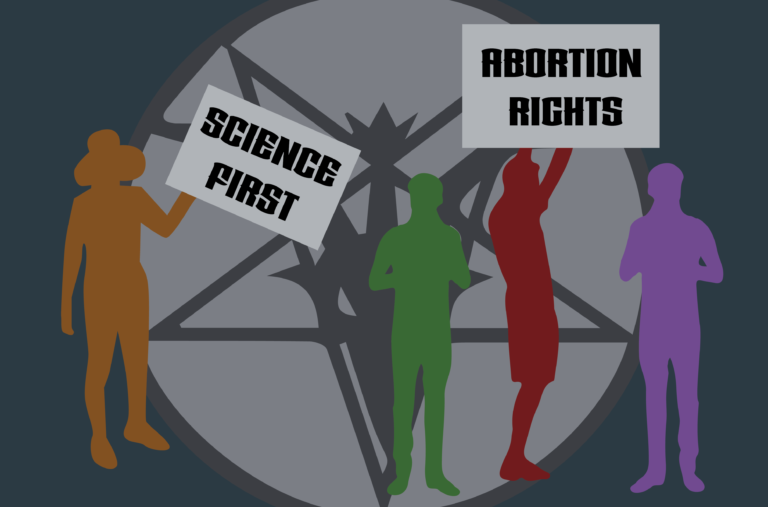
Although it’s named after Satan, the group does not worship Satan or any god, and instead embraces science first, devoting itself to its mission to spread individual liberties and empathy to everyone. Its followers believe that science is more important than religion, distinguishing it from other more popular religions. TST has been making rounds in the news lately because of its science-first attitude focusing on the individual, and the campaigns it’s running have been showing why it matters and how it can help the U.S.

With the recent Texas abortion ban and the upcoming Supreme Court Case challenging it, abortion is a pressing current issue. Certain religions forbid the practice and have been pushing lawmakers to ban it across the country, challenging the government to continue enforcing a separation between church and state. While some states have passed laws taking away female body autonomy by banning abortion, one of TST’s strongest campaigns is to use the Free Exercise Clause along with the Religious Freedom Restoration Act to allow people in those areas to retain control over their bodies. TST’s belief in science and bodily autonomy comes with the benefit of allowing followers to undergo their “religious abortion ritual,” which is one of the nation’s last hopes to keep forms of abortion legal in restrictive states like Texas. While an extremely complicated process, TST is working to give aid to those in Texas who need it.

While TST is finding ways to obtain religious exemptions from the government for the needy, they are also trying to keep religious favoritism out of the government. Making sure the government stays honest is one of America’s favorite pastimes, and TST has a ball of it. Public displays are the foundation of many religions, and TST is no different. The government has a lawful obligation not to show bias between religions, so if it allows one religion a public display, it must let others follow. This means that when a majority religion is allowed a public display, TST has full rights to be there as well. While some people may not appreciate a religion with a name like TST out publicly with other congregations, the government has to allow it or admit to showing bias. TST is effectively forcing the government to adhere to its own rules, and the US is better for it.

The Satanic Temple deserves the respect of others for its contributions to the health of our country. While the group seems like a joke at first, it has the good of the people in its heart and many quality initiatives to prove it. The U.S. is what it is today because of its individuality and inclusion of others, and The Satanic Temple has a part in trying to keep it that way.

Written by: Alex Motawi — almotawi@ucdavis.edu

Disclaimer: The views and opinions expressed by individual columnists belong to the columnists alone and do not necessarily indicate the views and opinions held by The California Aggie.


Sheep with cash fleece: We are paying more than $550 a year to fund a program many of us do not benefit from

UC Davis charges the student body $19 million annually to fund the athletics program that only benefits 700 students

By CALVIN WONG — cvswong@ucdavis.edu

We, the student body, must have a revote on the student fees the UC Davis administration charges to fund the Intercollegiate Athletics program, namely through the Student Activities and Services Initiative (SASI) and the Campus Expansion Initiative (CEI)

Through the SASI and CEI, the UC Davis athletics department will receive $570 per undergraduate student in 2021-2022. These two fees provide athletics with over $19 million in funding. Yet, when looking specifically at what expenses this $19 million covers, it is clear that this money only benefits the 700 student-athletes on our campus, which is 2% of the undergraduate population.

The $11.7 million in SASI fees “support our 25 varsity athletic teams, including sport operating expenses such as team travel, equipment, home game expenses, medical related expenses, and coach salaries,” according to athletics’ 2020-2021 use of SASI report. The $7.5 million in CEI fees pay for athletic scholarships, also known as “Grant‐in‐Aid for Student Athletes,” according to athletics’ 2020-2021 use of CEI report

Ninety eight percent of the student body derive no tangible benefit from these fees. Non-student athletes will never be able to use varsity athletic sports equipment or benefit from team travel expenses. We will also never be recipients of athletic scholarships. 

The UC Davis administration’s rationalization for charging us this needless amount of money is that a successful athletics program puts UC Davis’ name “out there” and therefore makes our resumes stand out. But even if we were to accept this superficial argument, are the administrators saying UC Davis academics are not reputable enough to stand on their own? 

In contrast, UC Berkeley’s athletics program only received $444,374 in student fees in 2019-2020. With an undergraduate population of 29,770 at the time, that meant UCB only collected $14.93 per undergraduate for its athletics program. Evidently, UCB’s “prestige” does not rest on its undergraduate population bankrolling its athletics program.

Even if the student body revotes on the SASI and CEI and ends up nullifying the funds that athletics receives from them, UC Davis leadership already expressed their desire to ensure that the athletics program is thoroughly funded. On Nov. 21, 2018, Chancellor Gary May stated to the Davis Enterprise, “If I think athletics is a priority for the university — and it is — then I have to be involved in making sure it is properly resourced.” 

Furthermore, university leadership has plenty of money to pay for athletics. In 2021-2022, the government of California appropriated $456 million in unrestricted funds to UC Davis, an increase of $64 million from the previous year. If the university were to use its unrestricted funds to cover the $19 million that athletics receives from the undergraduate student body, it would still have 95.83% of its unrestricted state funds remaining to spend on whatever it wants.

Despite having the desire and the money to fund athletics, the university places the burden of funding the athletics program on us because we are chained to student fee agreements made decades before we were here. In 1994, only 13.7% of the undergraduate student body voted to approve the SASI. In 2002, only 20.4% of undergraduate students voted to approve the CEI. Holding referendums to renew or shatter the chains that bind us to the SASI and CEI should be pursued on the mere matter of temporality and principle. And the fact that they both barely passed should be further incentive to hold a revote.

If we do not hold a referendum on these two student fees this year, I believe the university administration will only make the process harder moving forward. After I expressed support for the student body having a revote on the athletics portion of the SASI and CEI, university administrators unilaterally removed me from my position as co-chair of the Council on Student Affairs and Fees, alleging that my support created a “conflict of interest” with my official duties. However, based on all COSAF and UC policies provided to me, no such conflict of interest exists. I believe that the administration’s apparent retaliation against me indicates that if we do not pursue revotes now, they will only make it more difficult to pursue the issue in the future.

Each year, the UC system and UC Davis administration take more and more from us through tuition and student fee increases while offering less and less. UC tuition is going up, and student fees at UC Davis have consistently increased each year. This places an even bigger burden on more than 9,200 UC Davis undergraduates who average $5,145 in federal student loans per year. Meanwhile, the UC Davis administration unilaterally and abruptly cut the physical education program effective winter quarter 2021, which has led to “loss of low-unit courses that help students meet financial aid requirements.”

This pattern of unequal exchange underpins the notion that the university sees us as nothing more than sheep with coats of money to fleece. Rather than stand by and pay for a program that the administration already has the desire and money to fund, every undergraduate should consider whether they want to continue giving athletics $19 million annually in student fee revenue. 

For more information and to learn how you can get involved with holding a revote on the Athletics portion of SASI and CEI, check out this slideshow

Written by: Calvin Wong — cvswong@ucdavis.edu

Calvin Wong is a 4th-year undergraduate history and political science major and voting member of the Council on Student Affairs and Fees (COSAF). Wong also previously worked as a copy reader for The California Aggie.

This story was updated on Nov. 1.

Commentary: Tim Burton’s films are disturbingly not diverse

Can art be separated from the artist?

By CLARA FISCHER — arts@theaggie.org

The name “Tim Burton” brings many images to mind. His signature movie style is so distinct and unmistakably his own — the muted color scape, eerie character design and twisted dark nature are all characteristic of a Burton film. 

However, a more disturbing image that comes to mind is the overwhelming whiteness permeating all of his movies.

Many (myself included) consider his films to be classics. Watching “The Nightmare Before Christmas” was a distinct Halloween tradition in my childhood, and it still is a telltale marker of the season for me. Other standouts in his extensive filmography include “Corpse Bride,” “Edward Scissorhands,” “Beetlejuice” and more, all marked by his signature gothic flair. 

But are fond childhood memories enough to justify a startlingly severe lack of diversity? Even though Burton creates works of visual genius and clearly has a knack for all things grim and sickly romantic, his disregard for inclusivity is inexcusable. 

When word got out that Burton was set to direct the 2016 book-to-film adaptation of “Miss Peregrine’s Home for Peculiar Children,” many were quick to point out that Samuel L. Jackson would be the first Black actor to lead one of his films. 

Burton had a rather controversial (albeit vague) response to the criticism. When asked about the importance of including representation in the media, he said “Nowadays, people are talking about [diversity in film] more… Things either call for things or they don’t.” 

Naturally, this indifferent attitude sparked backlash online. This explosive response from the internet is characteristic of the so-called “cancel culture” of the 21st century and touches upon the debate of whether or not art can be separated from the artist. 

Plenty of popular artists have fallen into this same disturbing pattern — they rise to fame, are adored for their artistic ability, have their horrible past exposed and then proceed to become absolutely vilified online. Chris Brown is one of the more well-known examples of this phenomenon, but even artists from long ago, such as Richard Wagner, have come under fire for their actions. 

Clearly, there have always been issues that arise when people are given so much acclaim and popularity. Just because someone has artistic ability and is brilliantly gifted does not mean that their morals are going to align with what most people consider “good.” 

The question then becomes more complicated — are fans ready to give up the art in order to denounce the actions of the artist?

To make matters even more complex, there are other social factors that go into determining whether a person is “canceled” or not. There are many opinion pieces online that delve into great detail about how someone’s identity — such as gender, race, religion and other elements — can impact the hit their career will take when they spark controversy online.

Ultimately, it is up to the consumers of entertainment to determine the consequences of public figures committing immoral actions. In areas where the legal system does not reach, money still has real power, and fans have the final say in who gets a platform.

Written by: Clara Fischer — arts@theaggie.org

ASUCD ends year-and-a-half long state of emergency

As national, state and local governments return to normal operations, ASUCD follows suit

By KATHLEEN QUINN — campus@theaggie.org

On Oct. 7, ASUCD ended its state of emergency which began in March 2020, the beginning of the COVID-19 pandemic.

The original declaration of state of emergency included the cancellation of in-person meetings of 10 or more people and a transition to meeting via Zoom. It also closed several ASUCD units including the CoHo, KDVS, in-person events like Picnic Day and the Whole Earth Festival and the Pantry. The declaration was later revised as the pandemic progressed.

Ryan Manriquez, the ASUCD president and a fourth-year double majoring in political science and communication, said that the decision to end the state of emergency came naturally as national, state and local state of emergencies were removed.

Reimbursements for units, committees and commissions required approval by the controller and the business manager alone. The decision replaces pandemic procedures where the controller and business manager made most major decisions. This included reimbursement funds for units, committees and commissions which were not reimbursed without their approval. 

Kabir Sahni, the ASUCD senate president pro tempore and a fourth-year double majoring in communication and international relations, said that although pandemic procedures were intended to speed things up and streamline decision-making, as the campus returns to in-person instruction, it has created a bottle-neck at the top, slowing down activity within the association.

Though the state of emergency could have been ended by an act of the president in consultation with the cabinet and the senate pro tempore according to the ASUCD Bylaws, the senate made the decision to discontinue the state of emergency by a two-thirds majority.

“I advised them to wait about a week or two because of the numbers coming from the [internal affairs commission],” Manriquez said. “The books close for ASUCD in late July but we don’t get the final numbers until mid to late October so I wanted to be able to wait to 100% confidently make that determination that we were going to be OK.”

Sahni said he felt the decision not to move forward with the letter to discontinue the state of emergency was done without appropriate communication with the senate. 

“Suddenly he made the decision that he didn’t want to send out the letter to end it because he’s holding out for some numbers,” Sahni said. “I was not consulted, but the bylaws state that the only voice from senate members consulted is the pro tem.”

Aidan Kato, an interim senator and a third-year majoring in international relations, was the one member of the senate who voted against ending the state of emergency. He said he did so because he didn’t understand the consequences of voting yes until after the vote was taken. 

“As an interim senator, I was never briefed on or informed of the effects of the state of emergency—just that it was in existence,” Kato said via email.

Despite the particulars of how the vote and letter were sent out, the general consensus was that it was time for the state of emergency to end.

“The argument that the campus is no longer in a state of emergency is really all the argument we need to no longer be in one,” Manriquez said.

Written by: Kathleen Quinn — campus@theaggie.org

Normalize asking instead of assuming others’ pronouns

By using gender neutral language until learning someone’s pronouns, we can create a more inclusive environment for queer, gender non-conforming, nonbinary and transgender people

Transgender and nonbinary individuals face frightening, unjust violence, inequality and nonacceptance — oftentimes just because of their identity. Respecting and using people’s correct pronouns is one simple way to foster a safer, more inclusive world for all. In light of LGBTQ+ History Month, the Editorial Board encourages our community to evaluate how often they ask others’ pronouns — or whether it’s a part of their daily practices at all. Regardless of what month it is, we encourage the normalization of conversing about pronouns, since it’s never appropriate to assume someone’s gender or pronouns. 

 A first step in normalizing these conversations is including pronouns in your social media bio, or introducing yourself in class with your pronouns. When introducing yourself to others, offering your own pronouns first creates an inclusive environment for others to share theirs as well. If you’re comfortable, you can start the conversation by offering your own pronouns as a way to show you do not want to assume genders or pronouns. 

Instead of assuming someone’s pronouns (and possibly messing up), it is recommended to use gender-neutral pronouns such as they/them, or just ask what the person uses before referring to them at all. Providing the opportunity for people to share how they identify themselves should never be frowned upon, and if someone makes negative comments about the question, then they’re fostering an unsafe environment. That being said, it’s important to respect when people feel uncomfortable sharing their pronouns.

Since pronouns can be an important part of someone’s identity, misgendering can cause discomfort, stress or anxiety, especially for queer, gender non-conforming, nonbinary and transgender people. For transgender youth, using correct pronouns and names reduces depression and suicide risks, according to a 2018 study. Mistakes with pronouns happen and can be unharmful, so long as it wasn’t intentional and an active effort is made to use correct pronouns in the future. While people’s preferences will vary, LBGT Life Center recommends to “apologize, do better, and move on quickly.”  If you witness others misgendering someone, don’t be afraid to correct them. 

Younger adults in the U.S. are substantially more comfortable using gender-neutral pronouns than older adults, according to a 2021 Pew Research Center survey. And in Davis, the Editorial Board has seen this be the case. We’ve witnessed many instances of pronoun-friendly language and conversations among our peers, such as at freshmen orientation, when leaders ask new students to introduce themselves with their pronouns if comfortable or at ASUCD senate events, during which senators also share their pronouns.

The UC Davis LGBTQIA Resource Center provides resources and an inclusive space for LBGTQ+ students. It’s also an option to update your preferred name in university information systems. Wherever possible, the preferred name will be used, such as in the UC Davis Online Directory and most instances of university communications and reporting.

But, like the rest of the world, our university has much room to grow. The UC Davis directory allows students, faculty and staff to add pronouns to their profile — yet many are currently blank. Additionally, while there is a system for changing gender from male to female or female to male on individual UC Davis records, a nonbinary option is currently unavailable. The LGBTQIA Resource Center and other other campus organizations are working to include nonbinary options.

Also within classrooms, we must be conscious of how we refer to each other. We’ve noticed that instructors don’t always introduce themselves with pronouns. Zoom made it easy to broadcast one’s pronouns, as students and instructors could include them in their display names. But now that we are back on campus, we’ve noticed some professors call on students and assume their pronouns and gender. Professors and faculty should use gender neutral pronouns and language when they don’t know how a student identifies and opt for terms like “student” rather than “young lady” and “young man.”  

We must encourage and further normalize conversations about pronouns within the Davis community and beyond. These problems are not central to this campus or city — they are omnipresent throughout the world. We need to do better to make transgender, nonbinary and other people in the LGBTQ+ community feel safe and heard. 

At The California Aggie, we strive to create an accepting and welcoming environment for all people. We emphasize the importance of not assuming pronouns by training our writers to ask sources their pronouns at the beginning of interviews and by introducing ourselves with pronouns at events and in hiring interviews. While we acknowledge that we have room to grow, we believe these actions are steps in the right direction to establish ourselves as a safe workplace and inclusive publication, and we encourage other campus organizations to do the same. 

To make the Davis campus a safe and inclusive space, we welcome members of the LBGTQ+ community to share their stories with us at The Aggie. Because in the end, we’re all people who are deserving of love, respect and inclusion. Asking — and not assuming — others’ pronouns is just the first step.

For anyone looking for resources regarding pronouns, gender, sexuality and more, visit the UC Davis LGBTQIA Resource Center website

Written by: The Editorial Board

Some helpful tips for safe biking in Davis

Remember to equip bikes with lights, reflectors and fenders

Biking on campus is already hazardous enough, with bikers navigating through bike circles, other cyclists and clueless pedestrians. The upcoming rainy season and daylight savings will add limited visibility to this list of challenges, so with that in mind, here are some biking tips to remember.

    Using hand signals is common courtesy while biking, since it can prevent accidents by alerting other cyclists and pedestrians about where you want to go. You should always signal before turning and look behind your shoulder (just like in a car) to ensure you won’t run into anyone. 

Helmets can save cyclists’ lives, reducing head injury by at least 48% for cyclists in crashes. Despite their protective value, helmets aren’t cheap, but TAPS offers a free helmet to everyone who completes its “Cycling Savvy” Canvas course and its “Helmet Hair Don’t Care” training session. Keep in mind that it’s not safe to wear a hat or hood beneath a helmet, so consider investing in ear-warming headbands if you want to keep your ears toasty while riding.

    It’s important to have reflectors and working bike lights since both are required by law during periods of limited visibility, which include darkness and rain. If you don’t already have lights, the UC Davis Police Department gives them out for free, and if you’re worried about someone stealing your lights, take them inside with you. 

Biking without a light isn’t only dangerous for your health — it could be dangerous for your bank account. Cyclists can be fined $200 or more if they’re not compliant with the law in Yolo County. Additionally, bicyclists can be held liable for damages if they’re found negligent in an accident, and in California, negligent parties also receive less compensation for their own damages.

    Before it starts raining in earnest, do yourself a favor and buy fenders for your tires. If your bike doesn’t have fenders in the rain, your tires will spray mud onto your clothes and backpack in what has been lovingly dubbed the “freshman stripe.” Many bike seats, especially the comfortable foam ones, soak up water and can stay wet for a while, so some students keep their seats dry by covering them with a plastic shopping bag. 

    If biking stresses you out, you can probably still get everywhere you need to go on campus by walking. But if you’re a pedestrian, please don’t cross without looking, walk diagonally through bike circles or jump in front of bikes and expect them to stop. Biking on campus can already be hectic enough without needing to worry about people running out in front of you without warning. 

    Stay safe out there, Aggies.

Written by: The Editorial Board

ASUCD state of emergency ends with 10-1 vote by senators

Senators discuss work environment concerns and confirm new committee chairs

By CHRISTINE LEE — campus@theaggie.org

ASUCD Internal Vice President Juliana Martinez Hernandez called the senate meeting to order on Thursday, Oct. 7 at 6:10 p.m. 

Following roll call and the land acknowledgment, the Student Government Administrative Office (SGAO) Office Manager Sloane Ramras gave a presentation on the payroll procedures for ASUCD members. Additionally, Ramras provided information on how to reserve rooms through the ASUCD Room Reservation Agreement Form and how to create and navigate the ASUCD vacancy site for hiring positions. 

Dr. Cory Vu, a UC Davis alumnus and the associate vice chancellor for Health, Wellness and Divisional Resources, presented statistics and projects to improve mental health for students. Initiatives include hiring 11 mental health providers and three psychiatrists, limiting high-risk spaces, implementing peer-to-peer programming and establishing a task force entitled Health 34. The task force aims to provide Emergency Medical Technician (EMT) and nurse services to urgent calls related to mental health with the goal of sending non-uniformed personnel to assess the situation. 

“As a student, there are a lot of things in addition to academics and other things you all go through [that creates stress],” Vu said. “It’s important for us to be able to help students succeed and focus on some of the areas that we need to address.” 

Keven Zhou was confirmed as the interim international student representative, a new position aiming to represent international students within ASUCD, by Martinez Hernandez’s recommendation.

Dhanya Indraganti was confirmed as the library committee chairperson by Senate President Pro Tempore Kabir Sahni.

Marcos Lopez was confirmed as the Aggie Housing Advocacy Committee chair by Martinez Hernandez’s recommendation. 

Chairperson Jared Lopez brought to attention that Oct. 11 was Indigenous People’s Day, reading an excerpt from the article “Land-Grab Universities Expropriated, Indigenous Land is the Foundation of the Land Grant-University System” by Robert Lee and Tristan Ahtone. 

“I am expecting us as a commission and you all at the table to do everything in your power to work with Indigenous communities on and off campuses to make sure the demands that they ever make of the university, or from us, [are] met with full support,” Lopez said. 

Senator Owen Krauss shared concerns from overhearing ASUCD business manager Greg Ortiz raise his voice at Martinez Hernandez during a meeting. 

“What I heard was not the vice president having a meeting with the business manager, but rather the business manager berating her,” Krauss said. 

Krauss said he took notes of what he heard being said to Martinez Hernandez such as, “I can see in your body language you’re getting defensive” and “Everyone thinks [she’s] passive-aggressive.”

“This is nothing but disgusting intimidation and mansplaining by an unelected grown man whose responsibility is to support the members of the student association and student body,” Krauss said. “It’s our endeavors, not theirs. And their job is not to be degrading and disrespectful to the young elected representatives of the student body. I’m extremely disappointed in this behavior and I call for a formal apology directly to the internal vice president. And I encourage this table to look into fair and proper measures to ensure that a situation like this never happens again.”

Senator Sergio Bocardo-Aguilar confirmed the account, and other members at the table who were bystanders apologized for their inaction. Senator Kristin Mifsud also said that she has had similarly hostile encounters with Ortiz in the past. 

Following an apology for staying silent in the meeting, president Ryan Manriquez recognized the work that needs to be done to make ASUCD a better work environment. 

“I want to apologize, and I want to work together with everyone here to address that behavior,” Manriquez said.

As of Oct. 18, there have not been any updates to this, according to Manriquez. Ortiz was not available for immediate comment on Oct. 18.

Concerns about transparency within the association were brought up by Chairperson Radhika Gawde, and Martinez Hernandez stated that Manriquez was involved in a conversation regarding the state of emergency without the senate president pro tempore present. Sahni expressed frustration that a bylaw was violated.

ASUCD’s state of emergency ended with one negative vote and one absence. 

    Senate Resolution #2 passed unanimously.

    Senate Resolution #3 passed unanimously.

    Senate Bill #4 passes with a 9-3-0 vote.

    Senate Bill #12 passed unanimously.

    Constitutional Amendment #72 passed unanimously.

Martinez Hernandez adjourned the meeting at 10:48 p.m.

Written by: Christine Lee — campus@theaggie.org

This story is developing and will continue to be updated.

UC Davis Medical Center faculty respond to the rise of treatments like Merck’s anti-COVID pill

Merck’s pill, molnupiravir, shows reductions of hospitalizations and deaths by 50%

By BRANDON NGUYEN –– science@theaggie.org

    Over a year and a half into the pandemic, with sweeping changes to the standard of living along with distressing upward trends of illness, hospitalizations and deaths, recent developments of treatments such as Merck’s anti-COVID pill offer hope toward a return to the status quo. 

    According to an article in The Sacramento Bee, “Pharmaceutical company Merck took the internet by storm when it announced Friday morning that findings from a recent study showed its experimental oral pill molnupiravir reduced COVID-19 related hospitalizations and deaths by 50%.” 

    Dr. Christian Sandrock, a trained infectious disease pulmonary critical care doctor at the UC Davis Medical Center, discussed the current state of the pandemic as being dominated by “downward trends in new cases by about 20% from where it was two weeks ago.” However, he highlighted that “hot spots” of cases remain in certain states and areas within the U.S. where vaccination rates are not as high as in California. 

    With the advent of continuing trials for new treatments against COVID-19, a multi-faceted approach is necessary to reduce the impact of the pandemic, according to Dr. Rachael Callcut, the division chief of trauma and acute care surgery at the UC Davis Medical Center. Part of this approach, aside from initial prevention of the disease and treating the virus itself, includes risk mitigation and decreasing the chances of hospitalization by preventing the development of severe illness arising from the coronavirus.

    “This particular oral agent is targeted at people who are at risk of developing severe illness from the virus, and it is something to be given early in the course of illness to try to prevent the development of complications,” Callcut said. “I would say that this is sort of analogous to the approaches that you see with things like pills that we give to patients who have influenza to try to prevent them from developing complications of influenza.” 

    Merck’s study is important to altering the current landscape of the pandemic and its ferocious impact on the global population in the past year. In the same vein, Sandrock summarized the promising results of the pill and its significance proceeding toward a hopeful end to the pandemic. 

    “The data looks promising: the trial had just about a little over 350 people in each arm so, not whopping numbers but still reasonably high, and the key is the major endpoints of hospitalization and death were certainly down,” Sandrock said. “So I think that the big thing is it can be taken orally, and this changes the landscape to something that is a single pill.” 

    Other current treatments include the administration of monoclonal antibodies to the patient to combat the virus, and maintaining a steady supply of this product is relatively more costly in terms of price and time, according to Sandrock. For individuals who live further away and have little to no access to healthcare, reducing hospitalizations is key to facilitating a return to the status quo. With Merck’s anti-COVID pill, it has the potential to drastically reduce the burdens of both the patient and the medical professional.

    “Fighting the COVID-19 pandemic has fostered collaboration among drug developers, academic medical and research centers as well as supportive funding agencies,” Dr. Allison Brashear, the dean of the UC Davis School of Medicine, said. “UC Davis School of Medicine, renowned for its research expertise, is a trusted partner on many COVID-19 clinical trials at the forefront of efforts to cure this terrible disease.”

    Callcut’s lab is also involved in one of the many ongoing clinical trials, working with mesenchymal stromal cells, cells that are stem-cell like that aid in regeneration of damaged lung cells and reducing inflammation associated with acute respiratory disorders caused by viruses like COVID-19. 

Hope is on the horizon for individuals actively fighting the pandemic with the race toward developing treatments attacking all realms of the virus. Callcut echoed this sentiment, encouraging the continual efforts in enforcing public health safety and support.

“There’s got to be a multi-faceted approach that resides on the principles of our public health initiatives, and the first is prevention of illness,” Callcut said. “One of the most effective strategies for that is vaccinations, specifically investing in increasing vaccination education and administering vaccines. These types of measures will be our most important defenses in leading to the end of the pandemic.”
Written by: Brandon Nguyen —science@theaggie.org

City of Davis discusses proposal to remove 63 trees from Sutter Davis Hospital, install solar carport panels

Two appeals were discussed in the meeting

By SHRADDHA JHINGAN — city@theaggie.org

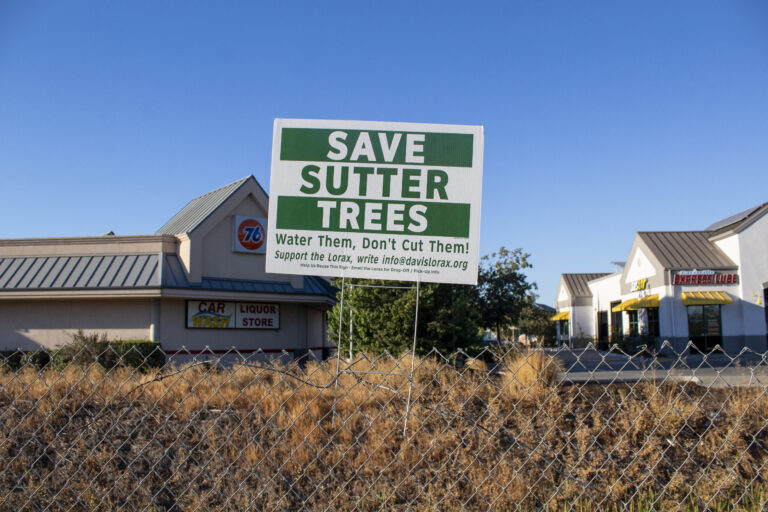
In a meeting held on Sept. 21, the City of Davis’ City Council discussed the 2000 Sutter Place Phase 2 Solar Project.

According to the 93-page staff report, the project was first approved on July 14 by the Planning Commission at Sutter Davis Hospital Campus and consists of “the installation of 11 solar carport/canopies over an existing paved parking lot and the removal of approximately 63 trees.” Although the project was approved, conditions of approval were also added, according to the staff report.

“On July 14, 2021, the Planning Commission approved the Phase 2 solar project at Sutter Davis Hospital Campus by a vote of 6-1, based on the findings and staff recommended conditions of approval,” the staff report reads. “However, the Commission added and modified conditions of approval to address its concerns about having vegetation within the planter strips and to require the applicant to transplant all existing Phase 2 mature trees identified to be in good condition (43 trees).”

Ashley Feeney, the assistant city manager for the City of Davis, explained during the meeting that two appeals have been filed.

Though the project was initially approved in July, there were two conditions of approval in the Sutter Appeal. The Sutter Appeal was then filed on July 23, according to the presentation during the meeting. Feeney explained what the Sutter Appeal encompasses.

“One of them is planting of additional shrubs and ground cover in the planter strips to ensure a fully vegetated planter,” Feeney said. “These are the existing planter strips that currently there’s trees that occupy those planter strips. They’re proposing to put in the photovoltaic rays, and then Planning Commission added this condition to vegetate those remaining planters in those areas.”

 Feeney described the second condition that Sutter is appealing, which is the “transplanting of 43 mature trees onsite.” Subsequently, another appeal was filed by Alan Hirsch on July 26. According to the presentation, this was “the appeal of the Planning Commission decision to approve the Phase 2 project.”

“So it’s really an appeal of the entirety of the Phase 2 project, but also part of his appeal was an appeal of the Tree Modification Permit that was issued as part of the permitting for the approved Phase 1 project,” Feeney said during the meeting. 

 The staff report which was referred to in the meeting can be found in the agenda for the Sept. 21 meeting, alongside a copy of the presentation and other relevant documents. The Notice of Public Hearing for the meeting can also be found online, which explains the appeals that were discussed during the meeting.

The document explains that “the City has received two appeal applications regarding the July 14, 2021, Planning Commission approval of the Phase 2 Solar project at Sutter Davis Hospital Campus.”

According to the document, the applicant made the first appeal “on behalf of Sutter Davis Hospital,” requesting “the removal of two conditions of approval.” The applicant described these conditions as “cost prohibitive and present[ing] substantial confounding issues that jeopardize implementation of the Sutter Davis Hospital solar array installation.”

Additionally, the second appeal was filed by Alan Hirsch, et. al, requesting that a few approvals be overturned, the details of which can be found in the Notice of Public Hearing. Ultimately, the City Council voted for Sutter Health to be able to remove the trees and install the solar carports, an article from KCRA reported.

Written by: Shraddha Jhingan — city@theaggie.org

City of Davis holds meeting to discuss allocation of American Rescue Plan funding

Community can take survey to provide input on how funds should be used

By SHRADDHA JHINGAN — city@theaggie.org

    On Oct. 13, the City of Davis held a meeting to discuss American Rescue Plan funding and how it will be allocated in Davis, according to a press release.

    Also on Oct 13, the city launched a community survey that’s open until Nov. 1, the link for which can be found on the City of Davis’ American Rescue Plan (ARP) funding web page. 

    Barbara Archer, the communications and customer service manager for the City of Davis, explained that the survey will allow the city to get input on how the funds should be distributed. The City of Davis is also encouraging those who have more input to reach out to them via email at cmoweb@cityofdavis.org.

“It’s a fairly extensive survey because we want to get community input on how the city should allocate the American Rescue Plan dollars,” Archer said.

    The web page defined ARP and described the funds being distributed to Davis. 

    “The American Rescue Plan (ARP) is a federal stimulus plan approved by the United States Congress and President Biden that provides $350 billion of stimulus funding to State and Local governments,” the web page reads. “The share received by the City of Davis is $19.7 million.”

    Additionally, according to the web page, the City Of Davis held a meeting on May 25. In this meeting, it obtained a staff report highlighting how the funds can be used and guiding principles for the allocation of funds.

    “At its May 25, 2021, meeting, the Davis City Council received a staff report listing guiding principles for ARP funds use,” the web page reads. “In addition, there are federal guidelines for how ARP funds can be used. The City of Davis allocation of ARP funds is $19.7 million. ARP funds are intended to be used to respond to the impact of COVID-19 and to assist with efforts to contain COVID-19.”

    The funding will be “encumbered by December 2024” and “spent by December 2026,” according to the presentation. The presentation also explains that the U.S. Department of Treasury “released initial guidance” on how the funds can be utilized. Three additional uses were also mentioned, including the “response to public health emergency and its negative economic effects,” “backfill for revenue reduction” and “infrastructure.”

    According to the web page, more specific uses include providing “premium pay for essential workers,” addressing “negative economic impacts caused by the public health emergency” and “[replacing] lost public sector revenue”.

    Archer explained that along with the eligible uses mentioned earlier, the City Council also has its own Guiding Principles.

    “When you get into the eligible uses for ARP funds, they talk about mitigating conditions caused by the public health emergency,” Archer said. “And so there’s two uses, there’s the American Rescue Plan eligible uses and then when this topic was presented to the Davis City Council, the Council also created Guiding Principles of their own. Those are available on the website as well.”

    The Guiding Principles include recovering from the economic losses as a result of the COVID-19 pandemic, linking to the City of Davis’ City Council goals and more. The web page also states that the funds are not only limited to cities, such as Davis.

    “In addition to cities receiving funds from the American Rescue Plan, states, counties, tribes and school districts will also be granted funds,” the web page reads. 

Written by: Shraddha Jhingan — city@theaggie.org

Technical issues cause concern, worry for international students and their families

WhatsApp blackout highlights students’ reliance on messaging services for communication back home

By KATHLEEN QUINN — campus@theaggie.org

On Oct 4., Facebook, Instagram and WhatsApp were all down for over six hours. Though Facebook and Instagram may have been inconvenient, WhatsApp’s blackout cut off the main line of communication to friends and family for many UC Davis students, especially international students. 

WhatsApp is the main telecommunication tool for many international students whose friends and family remain in India and South America, according to Business Insider. India in particular has the highest user base in the world.

Deepi Agarwal, a second-year master’s student in business administration, said she uses WhatsApp to keep in touch with her mother in India.

“It was Monday around nine, that was the time I generally receive a call from my mom,” Agarwal said. “I happened to observe there was no call.”

At first, Agarwal assumed it was an internet issue. When she finally got in touch with her mother through a standard international call, she learned that her mother had been trying to reach her and was worried. 

Ayodeji Fagbohun, a first-year doctoral candidate in animal biology, said he uses WhatsApp as his main way of communicating with his wife and son back in Nigeria. 

“It was so unusual,” Fagbohun said. “I was really concerned because the previous day my wife had complained about not feeling well.”

Megha Ayyagari, a third-year design major, uses WhatsApp to keep a hold of her parents in India with whom she speaks to every day. If WhatsApp discontinued its service, Ayyagari said it would hinder her ability to stay in close contact with her parents.

“I think it would restrict how much we communicated because it is really expensive to text or call internationally,” Ayyagari said.

WhatsApp provides free text, phone and video calling which saves on what would be expensive international calls. For example, a call to India from California using AT&T would cost $5 base rate per call.

Though cost-effective, WhatsApp’s parent company, Facebook, has recently raised concerns with some users about privacy.

“Some people really respect their privacy and want to keep it private,” Agarwal said.

Fagbohun said that for him, his main concern was reaching out to his wife and son through any means, and he tried almost every hour for six or seven hours.

“Last week taught me that there need to be alternatives to this,” Fagbohun said. “What happens if WhatsApp suddenly shuts down for a week? There should be alternatives, reliable alternatives, that can actually compete with WhatsApp.”

The current alternatives to WhatsApp outside of the sphere of Facebook, with similar formats, are Chinese-based WeChat or Telegram. 

“One of my family members from the Middle East wants to use Telegram to talk to me,” Agarwal said. “Big countries that cannot use WhatsApp, maybe they can use Telegram.”

Despite the potential issues, Ayyagari said she has been using the app ever since she’s had a phone, and WhatsApp has revolutionized communication through allowing her to quickly be in contact with her family. 

“It reduces distances in a big way bringing people together from around the world,” Agarwal said.

Written by: Kathleen Quinn— campus@theaggie.org

Academic resources for students in quarantine for COVID-19

Students who test positive and show symptoms for COVID-19 are required to quarantine, imposing academic interruptions and challenges

By EMILY REDMAN — campus@theaggie.org

    Although 98% of students on the UC Davis campus are vaccinated, and regular testing has helped to keep the campus safe, there is still a small percentage of students who have tested positive and are required to quarantine. 

    The number of positive COVID-19 cases has stayed at a very low number, 0.06%, during the week of Oct. 3-9 according to the COVID-19 Dashboard. For those who do test positive and show symptoms, there is a specific protocol for quarantine and isolation.

    “If a student becomes ill with COVID-19, we will […] isolate them and quarantine any individuals who were in close contact per CDC guidelines,” the Quarantine and Isolation page on the Campus Ready website states.

    While in quarantine, students will not be able to attend classes. In these situations, students are responsible for their own communication with professors over missed assignments, instruction and assessments. 

    “Students should contact their faculty to alert them of their situation and coordinate regarding coursework,” according to the Quarantine and Isolation page.

    Some classes have mandatory attendance and graded participation, and with the lack of hybrid options, quarantined students would not be able to attend.

    “While they are required to be in isolation, they are not permitted to attend classes or access campus facilities, so this would be considered an excused absence if professors are requiring in-person participation,” Jennifer Butler, the director of Student Affairs Marketing and Communications, said.

    Although students are given an excused absence, academic challenges may arise due to missed course material.

“If students experience academic challenges due to the impact of Quarantine or Isolation, they should contact their academic advisor,” the Quarantine and Isolation page states.

Advising offices on campus are giving students the option of virtual and in-person appointments.

“We are offering all L&S students the choice of in-person and virtual academic advising appointments,” said Mark Foncannon, the interim co-director of Undergraduate Education and Advising at the College of Letters and Science. “Students who are quarantining or have otherwise not passed the [daily symptom survey] will be routed to a remote appointment (if scheduled for an in-person appointment) or our virtual front desk for drop-in assistance.”

Another option to assist with academic struggles is to attend virtual appointments with the Academic Assistance and Tutoring Centers (AATC).

During this time, professors are encouraged to be forgiving with policies for quarantined students.

“A good practice would be to encourage students to have a back-up plan in the event they can’t attend classes,” the Classroom Instruction webpage on Campus Ready website states.

Written by: Emily Redman — campus@theaggie.org

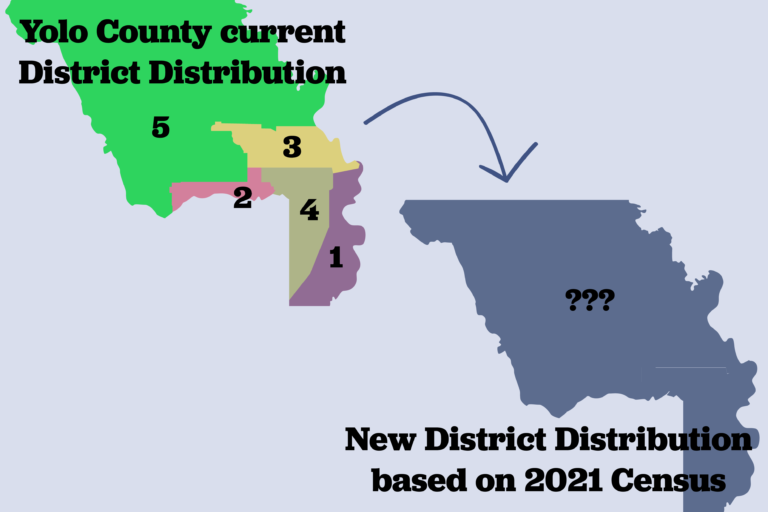
Yolo County prepares for 2021 redistricting

The redistricting process could have significant impacts on community representation

By YAN YAN HUSTIS HAYES — city@theaggie.org

Every 10 years, districts must be redrawn in order to have proportional representation. This process ensures that each board member represents the same number of constituents. 

 This year, the redistricting process is set to be completed by Dec. 15, 2021. 

According to Yolo County Communications Coordinator Frank Schneegas, the Board of Supervisors is tasked with overseeing the processes with help from other advisory boards. 

“Redistricting happens every ten years and is the process of redrawing district lines to reflect how local populations have changed,” Schneegas said via email. “The Board of Supervisors oversees redistricting and is responsible for drawing supervisorial districts, with recommendations from the Advisory Redistricting Commission. Alexander Tengolics is the Advisory Redistricting Commission Liaison.” 

Schneegas explained that the Board uses census data in order to create an accurate reflection of changing populations in Yolo County. 

 “Census data is used to redraw the district lines to ensure that board members each represent about the same number of constituents,” Schneegas said. “Redistricting determines which neighborhoods and communities are grouped together into a district for the purposes of electing a board member.”

While the latest census data should reflect the most recent changes in population, many Yolo County residents expressed concern in regards to adequate representation for rural communities at the Sept. 20 Yolo County Advisory Redistricting Commission meeting

At the meeting, Yolo County Community member Rachel Long voiced her concerns about rural representation and districting. 

“I live in Zamora where we farm, and I’m really concerned about the representation of rural communities in having a voice,” Long said. “We only come up with 32 thousand people in our rural area and we need at least 10 thousand more people in order to find representation. The question is where do we get these extra people? That has to come from cities.” 

Chair of the Yolo County Advisory Redistricting Commission Marco Lizarraga addressed these representational concerns by stressing his role in this redistricting process at the Sept. 20 public meeting

“One way to motivate the community to come to the official planning commission is to make their components and their views known,” Lizarraga said. “I am on the commission to serve and I will do that.” 

Redistricting Partner’s Chief Operations Officer Chris Chaffee detailed three different ways that community members could become more involved with the redistricting process. 

“There’s a [few] ways that the public can provide input—a great way is to appear at one of these meetings and provide comments,” Chaffee said. “A second way is to submit a Community of Interest form through the website and another great way is to draw your community of interest on DristrictR.”

Chaffee outlined the submitted testimonials and explained that many of them share common themes.   

“We started our outreach presentations in July and we can start talking about district plans,” Chaffee said. “There really are some basic themes with several community members asking that Winters be incorporated into current District 5 and with the rural unincorporated areas of the county.”

Much of the meeting concerned the need to adequately represent communities of interest. This is defined by the Yolo County website as a group of people in the same geographically definable area who share common social and economic interests. 

“Some common examples of Communities of Interest are senior citizens, LGBTQIA+ communities, people who live downtown or in a neighborhood, and residents who share a common language,” reads the website.  

For any community members who are interested in participating in the redistricting process, the next meeting will be held on Oct. 18 from 5:00pm to 7:00pm, according to the Yolo County website.

Written by: Yan Yan Hustis Hayes — city@theaggie.org

Review: ‘The Card Counter’ is missing something

Despite its resemblance to the successful “First Reformed,” Paul Schrader’s newest release lacks cohesion

By JACOB ANDERSON — arts@theaggie.org

If Paul Schrader (director of “First Reformed,” “Hardcore” and almost 20 other films in addition to his writing credits on myth-making films like “Taxi Driver” and “Raging Bull”)  has one defining artistic quality, it is endurance. How else could a man possessed of such rare skill film, script after script, lonely, male, deracinated weirdos struggling against a world that seems to have no place for them? Not that any medium has a lack of artists oozing out the same ideas and themes from the cradle to the deathbed, but with Schrader, this repetition is less meditative and more blunt-force, betraying a willingness to mine his ideas for the entirety of their value. After the unexpected success of 2018’s “First Reformed,” Schrader appears to have doubled down on his recapitulations, condensing his retro stylings into a list of rules which translate quite awkwardly into the modern world portrayed in “The Card Counter.” 

    Schrader has always vocalized his love for the severe, anti-editorial masters of the mid-20th century like Robert Bresson and Yasujirō Ozu (Legend has it that Schrader once had a licence plate that read “O-Z-U”.) Schrader has now used the ending of Robert Bresson’s “Pickpocket” (1959) in which the protagonist, detained by the authorities but finally self-aware, reconciles with the woman he loves through some kind of police-enforced barrier—if I’m counting on my fingers correctly—three times, composing nearly 10% of his filmography.

    “First Reformed,” with its slim budget, appears to have been Schrader leaning into these films as much as he truly wants to: the lack of camera movement and 4:3 aspect ratio summon nostalgia that is clean and careful, perfect for the film’s inner-moving plot. “First Reformed” is brilliant, but it stomps dangerously around the line between being an homage to Ingmar Bergman’s “Winter Light” (1963) and Bresson’s “Diary of a Country Priest” (1951) and using their shooting scripts as a first draft.

    Schrader, emboldened, as far as I can tell, by the reverential (no pun) reception of “First Reformed,” has duplicated its approach in “The Card Counter” without reservation, down to the aspect ratio and self-effacing performances. The latter element embodies maybe the most confusing difference between the two: the recreation of Bresson’s “anti-acting” style feels very natural in the rural churchgoers and quivering protagonist of “First Reformed” but synthetic and almost psychopathic in the phone-bearing gamblers of “The Card Counter.” Rather than conjuring an almost dreamlike simplicity, it often feels as if characters are either badly performed or under the influence of hardcore tranquilizers.

    The reliance on elements tested in “First Reformed” isn’t surprising or condemnable, but it’s alarming how easily “The Card Counter” has slipped off-course despite their guidance.

    Oscar Isaac’s performance as Willam Tell, a cold, elusive loner, is slow and delicious. He opens up over the course of the film in classic Schrader style, but his internal workings remain obscure enough to keep us absorbed the whole way through. His younger pupil, Cirk, to whom he’s connected by a mutual hatred of a high-ranking military slimeball played by Willem Dafoe (whose rotten, sideways grin is a joy in all of his brief appearances), feels robotic and awkward, as does WIlliam’s love interest, Linda. 

But even William himself, despite being the most arresting personality on display, eventually gives the impression of having less going on under the hood than his strange furniture habits and cool demeanor initially suggest. His softness toward Cirk is evident from early on, and his own worries and weaknesses are eventually presented so clearly that there isn’t enough emotional tissue left by the film’s end to connect his various eccentricities, and so he ends up as just a weird guy. The figure isn’t uncompelling, but for a director who mastered this sort of character decades ago, William is undercooked. 

The film gravitates around the shadow of the United States’ wars in the Middle East (once again, just like “First Reformed” with climate change) in a way that feels similarly insufficient. We get a good sense of how that cruelty ripples throughout these people, but the thread isn’t enough to transcend that basic sum of its parts. Brief scenes of blaring, visceral torture don’t infect the rest of the film like ravenous parasites; the viewer is inclined to forget they ever happened.

However, beauty is not absent: the patient photography retains impact, and lengthy moments of thought between characters feel rich and purposeful rather than painful. Breakneck cuts and sundry reaction shots are appropriately absent, and we get long looks at empty, sterile casinos. The only truly inappropriate moment (beyond a aneurysm-inducing scene involving Google Maps that intimates a truly boomerish understanding of modern technology) is a scene in which William and Linda go on a date to a sort of Christmas light forest and the camera abruptly and comically soars around on a drone. This and a few comparable but less drastic moments impart a feeling of incongruity that grows as the film approaches its climax; the subtle components of the filmmaking conflict with these dirtier, more modern parts, producing a strange aftertaste that lingers after you’ve finished the film.

It’s more stimulating than most large releases to see daylight recently, but there’s something here that doesn’t come together. If it were just relying on elements from “First Reformed” (Schrader is hardly the first filmmaker to use an idea twice) or harboring some weak characters, it might still reach the heights of Schrader’s more cohesive films, but there seems to be another element at play. Schrader needs to reexamine his approach after this one.

Written by: Jacob Anderson — arts@theaggie.org

Podcasting research: knowledge made accessible

UC Davis researchers speak to the experience of sharing their work through podcasts.

By VICTORIA MCJUNKIN  — science@theaggie.org

The British Journal of Educational Technology advocates for podcasts as a valid channel for putting forth research, as the medium boasts a host of benefits for researchers hoping to communicate their work beyond academic journals and those who are already plugged into the literature. Storytelling and immersive audio qualities inherent to podcasts add a personalized dimension to research, allowing experts to explain it in a way that renders knowledge digestible to more general audiences.

UC Davis graduate student Ashley Teodorson-Taggart echoed these notions in a talk she gave in a series called “PhD Unlimited: Podcasting the Humanities.”

“There’s long been a feeling that podcasting is a cool and interesting form of production, but it’s not necessarily considered legitimate within academia,” Taggart said. “If you’re publishing a journal article or you’re writing a book, that is considered in a very different light than, for example, if you’re producing a podcast.”

Taggart works in performance studies, which is a field that examines how social and cultural conditions influence human expression and the construction of knowledge.

“We’re really interested in questioning knowledge production — questioning its form and the methods, and how we can be creative and effective at communicating our research,” Taggart said. “So podcasting becomes a really interesting sort of venue because it speaks to some of the benefits of new media, allowing knowledge to be more accessible, and for us to disseminate it more easily.”

Taggart’s talk focused around podcasting the humanities, but the implications for the medium can be extended to all areas of expertise; podcast production requires minimal equipment, available to any field interested in utilizing it. When it comes to scientific research, podcasting can help in making technical information more digestible.

“So often when we’re reading scientific research, there is this sort of distance between the reader and what you’re reading — the data creates a space there,” Taggart said. “What podcasting allows is for some of that same research to be shared with a human voice behind it, and I think that that makes it a lot more accessible. I think that there really are some incredible opportunities to not only increase engagement with research but to really draw people in and allow them to connect in a more, sort of human way.”

Dr. Charan Ranganath, the head of UC Davis’ Dynamic Memory Lab, drew on his podcasting experiences to advocate for the medium.

“I’ve done quite a few podcast interviews now — I have been at UC Davis since 2002, and for much of that time print media, radio, and TV were the main vehicles for science communication,” Ranganath said via email. “But over the past few years, podcasts have become an amazing way to reach people, and now there are many intelligent, thoughtful, and fun podcasts that can help us get our message out to the public.”

Ranganath was featured on the “Every Little Thing” podcast in May this year, brought on as a memory expert to answer questions like ‘Did that memory really happen?’ In the episode, he suggested tips to a live caller in order to figure out the legitimacy of a specific memory.

“That was fun,” Ranganath said via email. “It was not about my research per se, they really were talking to me as an expert on memory, and that’s fine because I’m actually writing a book for the general public about how memory works.”

Right now, Ranganath and the Memory Lab are studying how we use our memories to make sense of the present and plan for the future. They are also working on projects that track the trajectory of memory over one’s lifetime and over the course of Alzheimer’s Disease. As Ranganath’s research begins to develop computational models to reverse engineer the brain, figuring out computational solutions and communicating these steps pose challenges for general communication.

“In general, I find that the challenge to science communication is that, as a scientist, you have to get deep into a topic in order to make progress, but for the general public, most of the things we have to work through are not particularly interesting,” Ranganath said via email. “So you have to keep it simple and have a punchy message while still doing justice to the science.”

However, podcasts hold the potential to preserve the integrity of the information.

“On conventional TV, radio, or print media, you can talk with someone for hours and everything is reduced to a few soundbites or phrases,” Ranganath said via email. “With podcasts, I generally find that there is more of an exchange of ideas. Podcasters generally have a great deal of curiosity, so they are really excited to talk, and I find they can ask some really interesting and thought-provoking questions.”

Justin Cox, the communications director of the UC Davis-funded SeaDoc Society — a scientifically-based organization with the goal of affecting change whether by inspiring people or influencing policy, discovered just that when he launched its podcast “Pod of Orcas” in the middle of the pandemic. When science nights at a local theater were canceled, Cox was inspired to create the podcast instead of attempting to replicate an in-person event.

“It felt like an opportunity to tell the full, cohesive story about this specific endangered species,” Cox said. “The logic was this: in addition to the people we get listening to it now, it will continue to exist. It almost feels like a book you can pick up and read over and over.”

The series consists of seven episodes of 40 to 60 minutes each. Cox spoke with a variety of guests who are experts in different topics. Here, science experts collaborated with communicators to create knowledge for the average listener.

“I don’t have that deep, deep level of expertise, but I think I was uniquely positioned to try to be a person that knows enough to ask good questions, and then maybe make this accessible beyond that bubble,” Cox said. “I think it’s smart enough and scientifically sound enough for it to be worth something that a scientific organization can produce, but also something that anyone could share with anybody, and they can learn about it.”

“The podcast fits into that in that it’s education and inspiration, and it’s meeting people where they are at,” Cox said. “And in making it, you just kind of take it one step at a time and hope the thing that you’re making at the end is good. I think that’s a beautiful thing about a lot of online media, but podcasting especially — there’s a low barrier of entry, which means there’s going to be a lot of bad stuff, but it also means anyone can try to make something that’s good too.

Written by: Victoria McJunkin — science@theaggie.org