55.7 F
Davis

Davis, California

Tuesday, December 23, 2025
Home Blog Page 242

Results for California gubernatorial recall election in Yolo County finalized

Election officials reflect on challenges to pandemic-era voting and urge students to vote in upcoming elections 


By YAN YAN HUSTIS HAYES — city@theaggie.org


On Oct. 6, the Yolo County Elections Office finalized the results from the Sept. 14 California gubernatorial recall election.

Of the 121,550 registered voters in Yolo County, 78,048 ballots were counted, with a total voter turnout of 64.2%. Of that, 67.92% voted not to recall California Governor Gavin Newsom and 32.08% voted to remove Newsom from office. The official results are available on the Yolo County Elections website.

Yolo County Registrar of Voters Jesse Salinas said that while the turnout for presidential elections is typically higher, the turnout for this past recall election was consistent with past gubernatorial election turnouts.

“The last presidential election had record turnout, but typically in presidential elections we have around a 76-77% turnout,” Salinas said. “In this particular election, we had a 64% turnout overall, not what a presidential election is but still it was comparable to the gubernatorial election in November 2018.”

The pandemic has posed unique challenges to the way the county runs elections, according to Salinas.

“The pandemic has fundamentally shifted how we run elections in Yolo County,” Salinas said. “Before the pandemic, we had 96 polling places that were spread throughout the county. What we discovered was that when the pandemic was just starting, we started to have a near crisis in terms of poll workers.”

Salinas said that while the pandemic has posed challenges to staffing in-person polling stations, there has been a sharp increase in the number of mail-in ballots.

“[For the Sept. 2021 gubernatorial recall election,] 95% of the voters voted using the vote-by-mail ballot option and of those, 58% returned it by mail, another 30% used the drop box and 7% dropped it off directly at a voter assistance center,” Salinas said. “To give you context, in 2010 essentially 50% of voters voted by mail.”

Running elections is a long and involved process which means that it is very important that voter information is up to date, according to Salinas.

“We start preliminary work for elections now for June, things typically kick into gear 154 days prior to the election and what’s even more challenging is that redistricting is taking place,” Salinas said. “If you have moved at all, go online to the secretary of state’s office and register to vote online so we can get your latest address. We strongly encourage folks and especially students to update their address if they’ve moved, even if it’s just from one side of campus to the other.”

Third-year biological sciences major Briahna Oliva said that while she was already planning to vote, on-campus polling stations made the choice even easier.

“I was planning on voting before, just because my friends always talk about politics and how important it is,” Oliva said. “It was easier because [the polling station] was on campus — voting is really important and it’s easier for you to vote as a student because there’s polling stations on campus.”

Oliva advised students who are going to be voting for the first time in the midterm elections to register in Yolo County and stressed the importance of paying attention to all elections, not just presidential elections.

“Make sure you’re registered in Yolo County — that was one of my mistakes when I was a freshman,” Oliva said. “I don’t think people thought [the recall election] was as pressing [as other elections] but they should. You want your opinion to matter.”

Yolo County Elections Office Outreach Specialist María Coronel said that ensuring that youth in the community vote poses a unique challenge.

“Historically, and regardless of the country or state of origin, youth in general have voted at lower rates than their slightly older peers,” Coronel said via email. “It is estimated that 50% of young people, ages 18-29 nationwide, voted in the 2020 presidential election, a remarkable 11-point increase from 2016 (39%) and likely one of the highest rates of youth electoral participation since the voting age was lowered to 18.”

This trend of low youth turnout is compounded by the pandemic, according to Coronel.

Another equally great challenge was to reach out to students who were participating in virtual and distant learning classes and away from campus and their Yolo County place of residence,” Coronel said via email. “The Yolo County Elections Office social media handles, voter information phone line, and email communication were essential tools for providing streamlined up-to-date information for this group of voters.”

Student registration drives are another big part of how Yolo County Elections reaches out to youth voters, according to Coronel.

“Yolo County Elections in partnership with organizations such as the League of Women Voters Davis and identified college campuses such as UC Davis have organized and led student-oriented Voter Registration Drives in these college campuses and communities,” Coronel said via email. “These registration drives provide students with the opportunity to register to vote, often for the first time, or as a reminder and real-time opportunity to update their existing voter registration in the event a change in name or address occurred.”

More information about upcoming voter drives and opportunities to get involved can be found on the Yolo County Elections website or on their social media pages.


Written by: Yan Yan Hustis Hayes — city@theaggie.org
Two ASUCD senators leave the Thrive slate to become independent

Senators Mallika Hari and Owen Krauss chose to leave the Thrive slate due to differences in values


By EMILY REDMAN — campus@theaggie.org


Senator Owen Krauss, a second-year international relations major, and Senator Mallika Hari, a second-year political science major and public health minor, announced that they will be stepping down from all responsibilities with the Thrive slate at the Oct.14 senate meeting. They have both chosen to continue in their senator positions as independents.

“It is my belief that not only has this slate contributed to a toxic two-party system, but it has also actively caused hurt and strife among many,” Krauss said at the senate meeting after resigning from his position as vice chair and interim chair of Thrive.

Both Hari and Krauss stated that Thrive did not align with their values anymore, and they find that continuing as independents will better suit their goals as senators.

“My moral and ethical duty has centered around ASUCD, and I will strive to uphold the duties and responsibilities of a senator,” Hari said at the senate meeting.

When choosing to run with the Thrive slate, Krauss said that he did not thoroughly research the slates before running with them.

“Probably in hindsight, I really should have looked at the slates I was picking and what I was running on,” Krauss said. “But even now, I don’t think it would have changed me becoming an independent.”

Hari initially chose to run with the Thrive slate because she valued the effort they put into listening to many opinions and perspectives.

“[Bi-partisanship] is very vital to a functioning Senate,” Hari said via email. “Listening and compromising with each other to best represent the student body is close to my heart.”

For Krauss, the bi-partisan, two-party system was a reason to leave Thrive and continue as an independent.

“For a long time there’s been a two-party system gridlock,” Krauss said. “I’m not okay with being a part of this toxic environment.”

Krauss also said that Thrive and BASED senators do not disclose when they are working together due to bi-partisan tensions, and he feels that senators should be focused on working for the students rather than slate politics.

“I think by not being a part of it, it allows me to work with anyone and everyone,” Krauss said.

Hari said that she learned about the history and beliefs of prior senators and does not feel that they align with her values.

“Being an Independent is the best position for me to be in, in order to represent my own perspectives and opinions and support the Student Body to the best of my ability,” Hari said.

Though his slate has changed, Krauss’ goals as a senator have not.

“The forefront of my campaign when I was running was LGBTQ advocacy and that hasn’t changed,” Krauss said. “Going forward, [the plan is to] do my best to not only set out what I came to do, but also to help reform a process that’s been toxic for so long.”

Hari looks forward to her future as an independent at the senate table and wants to focus her work on supporting students.

“Being independent encompasses my perspectives and opinions more,” Hari said. “I will be able to reach more of the student body and represent students from all walks of life.”

Senator Kristin Mifsud, the newly-appointed vice-chair and interim chair of Thrive, was contacted but not available for comment.


Written by: Emily Redman — campus@theaggie.org

A guide to technology resources for UC Davis students

An introduction to the tech resources offered on and off campus

By SONORA SLATER — science@theaggie.org

College is expensive—and apart from courses and textbooks, it’s sometimes hard to know how to best take advantage of the myriad of resources you have access to as a student. From virtual access to specialized software, to library materials such as journals, newspapers and databases, UC Davis has a vast array of technology resources. Here’s a guide to a few of its most-used. 

Computer Rooms

Many of the other tech resources for students can be found in the computer rooms, where a wide variety of general and specialized software and hardware can be found. 

Beyond printers, hardware available includes flatbed, document and film and slide scanners, a video editing room and an audio editing room. In addition the computer rooms offer a VHS to DVD recorder and Wacom tablets, a tablet where you can draw on a responsive pad and have your drawing automatically appear on your screen, available for checkout for use in computer rooms, according to the IET computer rooms website. 

There is also a large array of software available, including Microsoft Office, Adobe Creative Cloud, AutoCAD, RStudio, Stata, SPSS and much more. A full list of software can be found on the UC Davis computer rooms website.

Tim Leamy, the manager of computer lab management at UC Davis, explained more about how access to computer rooms works.

“Many of [the computer rooms] are used as classrooms, but there are also drop-in rooms for students to drop-in and use the software,” Leamy said. “We have a website that shows when computers are available to use.” 

Virtual Labs

    In addition to being offered in the computer rooms, many applications are also available through the IET Virtual Lab, which, according to the Virtual Lab FAQ page, allows UC Davis students, staff and faculty to access computers remotely. 

“The virtual lab is how we make our PCs available for students to use at home,” Leamy said. “It’s the same hardware, but they can access it off-campus.”

Because of the way the virtual lab works, there are only a limited number of systems, so not all applications will be available all the time—they’re most likely to be free in the afternoons and evenings, after most classes for the day have ended. 

In order to connect to the IET Virtual Lab, you need a Remote Desktop Connection client, which comes automatically with Microsoft Windows and otherwise can be downloaded and installed. You can then log into the virtual lab website and choose which program you would like to use, at which point you will be prompted to download and open an RDP file. 

Because the software will be running on a remote computer, none of your files will be accessible on the PC computer you are virtually borrowing, so you will need to copy the files over and remember to copy them back to your own computer before you disconnect. 

Access Library Resources Virtually

    According to the UC Davis Library website, while limited access to virtual library resources can be attained without any further action, other resources require use of the library Virtual Private Network (VPN). You can connect to the VPN by downloading and installing the Pulse Secure client, as well as signing in with your Kerberos ID and UC Davis Duo authentication. 

These resources include “paid journal and newspaper subscriptions, library databases, streaming media services, and educational and clinical apps,” as well as full access to the library catalog. They also include the library A-Z list, where you can search for databases of information on scholarly articles, newspapers, literature, statistics and more.

Printing

Despite many assignments being moved online, especially through the pandemic’s impact on technology usage, students may still need to physically print out and turn in certain lab reports and essays. While some may have printers in their houses or apartment complexes, there are also black and white and color printers available to use at Shields Library, the Student Community Center and other locations around campus. 

There is a charge of 11 cents per sheet for the black and white printers, charged through Student Bill at the end of each quarter, according to the IET Computer Rooms Printing FAQ page. However, if you print 30 or fewer sheets in a given quarter, the charges will be waived. When you print in one of the general computer rooms, a message will appear on your computer to inform you of how many sheets you have printed that quarter.

For color printing, each page costs $1 to print, charged on a separate account from black and white printing. 

According to the FAQ page, student fees do not support printing. Instead, it is entirely funded by the printing fees. 

Leamy explained that another feature of the on-campus printers is wireless printing. He went on to say that in recent years, wireless printing has become one of their most-used tech resources, as more and more students are bringing their own laptops with them.  

“Things are always shifting,” Leamy said.

Second-year biological engineering major Cecelia Wong talked about how she’s struggled to find a place to print homework assignments in the past.

“Ink is so expensive, and printers are not very accessible near my home, so I’ve found it frustrating in the past to try to find a time and place to print out what I need to,” Wong said. 

Fourth-year evolution, ecology and biodiversity major Isabelle Esber-Tolentino said that she used the wireless printer in the library for the first time on Wednesday, Oct. 20.

“I live at The Green, so we don’t have printers there,” Esber-Tolentino said. “I’m pretty good with technology, so I figured it out pretty easy […] I used the dorm computer rooms in the past.”

Written by: Sonora Slater — science@theaggie.org

Commentary: In defense of country music

A deeper understanding of the meaning and origins of country music, following an enlightening chat with UC Davis Cinema and Digital Media Professor Jesse Drew

By ANGIE CUMMINGS — arts@theaggie.org

    There is no need to fret, this is not a defense of the flag-waving, American conservative patriot brand of country music that takes up far too much of the limelight. It is merely an investigation into what went wrong, and how country music strayed so far from its beautifully radical roots. According to UC Davis’ self-proclaimed country music spokesperson, UC Davis Cinema and Digital Media Professor Jesse Drew, it is not even close to accurate to claim this brand of music as true country. 

With approximately 10,000 contemporary country songs revolving solely around pick-up trucks, beer and pretty girls being pretty, it’s hard to imagine it’s the same genre that brought us songs about economic justice, prisoners’ rights and even the questioning of women’s role in society. 

    Today’s country music industry brilliantly co-opted the rural, working-class sounds and ideas of disdain for authority found in early country and folk music and aligned it with conservatism, thus stripping the left-leaning themes from traditional country music of any actual meaning. Today we are looking into the truth behind real country, its roots and the people who built it up (who are too often forgotten).

What we know as traditional country did begin as folk music back in the 19th and early 20th century, which were often stories and lessons of hard work and family values in addition to Christian gospels. Rooted in the all-American hope for better days and the promise of prosperity, country music was meant to be songs for everyday people, by those same people. Perhaps the most prominent name when it comes to this truthful kind of country is Johnny Cash — almost everyone has heard at least one of his songs, even if it wasn’t of their own volition. 

With hits like “Ring of Fire,” “I Walk the Line” and his iconic duet with his wife (and equally fiery country star) June Carter Cash, “Jackson,” Cash can be admired even solely for his powerful sound, and some often forget his controversial lyrics and political opinions. Once you listen to Cash’s discography, you learn a few things about him. He had an incredible reverence for the working class of America, resented the military-industrial complex (before that term was even created) and his actions only work to back up his words. In the height of his career, he performed for prisoners in Folsom State Prison, and not only treated them like human beings but empathized with the horrible conditions they were put through — something for which he received widespread criticism. In 1972, he went so far as to perform in front of President Richard Nixon and overtly critique the Vietnam War as well as stand up for the rights of Native Americans. 

Cash’s extraordinarily left-leaning themes throughout his songs have often gone unnoticed, and audiences across the political spectrum have been enjoying his hits and deep, soulful twang for decades. Unfortunately, there were some country powerhouses that didn’t get so much leeway, one being the women of country music who dared to sing about their experiences. Cash’s own wife, Carter Cash, is one of these women who went through extreme ridicule throughout her career for simply living her life. She was in the spotlight from an early age, as a part of her family’s band, “The Carters.” After going through multiple divorces, audiences shunned her and questioned her faith as a “good Christian woman.” Still, she remained an iconic voice in country music, known for her twang when she sang and her sharp wit offstage. 

No good discussion of country music can go without a mention of Dolly Parton. Not only is she behind the traditionally feminist song (and film) “9 to 5” about women’s lives in the workforce in the 1970s, but she is perhaps one of the most talented and influential musicians in the last few decades regardless of genre or gender. In addition to Parton and Carter Cash, many successful women in music have roots in this American folk tradition. One of note is Loretta Lynn and her extremely controversial song, “The Pill” from 1975, which is exactly what you may expect — an ode to her birth control pill letting her take back autonomy in her marriage and life. This song was ridiculed and subsequently banned from many radio stations, and yet Lynn kept on singing her truth and the realities of being a woman, rather than keeping to the status quo. 

    As so often happens, this deeply American tradition ended up excluding those who actually created it. The sounds we associate so closely with country music were created by enslaved Black people in the South — perhaps most notably, the banjo (aka the country-est country instrument), which was invented and carried on through generations by enslaved Africans in the Caribbean and the southern U.S. Another iconic country sound that many might not even know of is the lap steel guitar, which helps artists create that twang essential to country music. This instrument came to the continental U.S. from Hawaii right after it was annexed, and when southern Americans heard the smooth melodic noise coming from the innovative way of playing the guitar, they quickly incorporated it into what Drew called the “heart of country music.” 

Country music is quintessentially American, not just in the sound and ideas behind it, but in the way it was created — it continues the American tradition of appropriating the talents and ideas of oppressed groups and marketing it towards a new (whiter) audience. Acknowledging the true roots and intent of American country music is the first step in taking back a truly radical and impassioned art form from the clutches of “God, guns and flags,” as Drew said.  

Written by: Angie Cummings — arts@theaggie.org

Senate Bill #17 passed at Oct. 14 meeting

ASUCD commissions and units provided quarterly updates, and the senate passed two emergency bills

By EMILY REDMAN — campus@theaggie.org

    The senate meeting was called to order at 6:10 p.m. by Vice President Juliana Martinez Hernandez. She then recited the UC Davis Land Acknowledgment.

    The senate unanimously confirmed six candidates for the Gender and Sexuality Commision. One candidate was not able to be there in person, so it was approved for them to be confirmed remotely. 

    “I think all of you seem very engaged with this role and all seem like you care a tremendous amount about the rights of these individuals,” Interim Senator Aidan Kato said before motioning to approve the candidates.

    Next, a member of the public, Calvin Wong, made a presentation informing the senate on the amount of student fees that go toward athletics. The Student Activities and Services Initiative (SASI) makes up part of students’ quarterly resource and recreation fees.

    “The majority of it, 89%, goes toward the athletics program, $11.7 million in funding,” Wong said.

Wong said that these fees should go through a referendum because not all students have access to the athletics programs on campus and should not face financial hardship because of them.

    Next, Jeffrey Flynn, the general manager of Unitrans, delivered a quarterly update. Currently, 65% of the Unitrans bus fleet is operating, compared to past academic years, and lines are running 30-60 minute services. Employees are enforcing mask wearing in compliance with COVID-19 policies.

    “Windows are kept open whenever possible, and our ventilation systems are on,” Flynn said. “We ask people to keep conversations to a minimum just to reduce the transmission of droplets.”

    Unitrans is hiring in all positions and recently took down the posting for drivers due to a number of new members preparing to train. They are also introducing a mobile app for non-students to pay bus fees.

    “Six of our 13 buses that are being outfitted with new near-zero emission engines are completed,” Flynn said.

    Unitrans is also reintroducing the vintage buses in spring quarter and renovating its bus washing facility. The service is also beginning the process of installing chargers for the new electric buses.

    Next, the nominee for the Student Health and Wellness Committee was confirmed unanimously by the senate. 

    The Student Sustainability and Career Fair Committee presented its quarterly report. Members of the committee have created a social media series featuring UC Davis graduates who have entered sustainable careers, and they are planning in-person events.

    Next, the Creative Media and Aggie Studios team presented its quarterly update. Members have worked on the graphics and videos for Sunset Fest as well as other video projects around campus and the surrounding area.

    In public announcements, Senator Owen Krauss and Senator Mallika Hari announced that they will be stepping down from the THRIVE slate to continue as independents. 

The senate is planning to bring back Town Halls in the CoHo with three senators leading the task force.

    SR #1, which outlines the expectations for the year, passed unanimously.

    Senate Bill #14, which addressed some of the problems in the bill the previous week, passed unanimously.

    Senate Bill #17, which raises the necessary signature level for senate candidates, was passed with amendments. The bill originally suggested that the signature level return to 125 which it was before the pandemic. After discussion, the table decided to raise the level to 200 for senate candidates and 400 for executive positions.

    SR #5, which shows the support of students for the University Council-American Federation of Teachers (UC-AFT), passed. 

“Our goal is to improve lecturers’ working conditions not only for our own benefit, but also because our working conditions are the learning conditions of you, our students, ” Senator Maahum Shahab said.

Martinez Hernandez ended the meeting at 11:08 p.m.

Written by: Emily Redman — campus@theaggie.org

Yolo County holds free flu shot clinics during October, November

Flu vaccines will help prevent the possibility of a double pandemic

By SHRADDHA JHINGAN — city@theaggie.org

    Yolo County announced that it will be holding free flu shot clinics during the month of October to help protect residents against the flu, according to a press release published on Oct. 8. More clinics will also be added to the list for November as well.

    “Yolo County strongly encourages residents to protect themselves and their loved ones from influenza (flu) this year by vaccinating,” the press release reads.

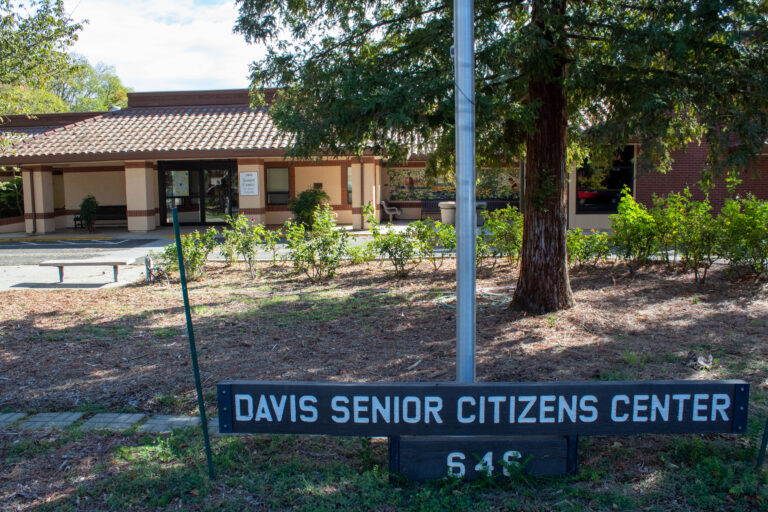
    The locations of upcoming flu shot clinics include the Yolo County HHSA Building on Oct. 26, in the River City Room and the Knights Landing Family Resource Center on Oct. 29. Additionally, another clinic was held at Davis Senior Center on Oct. 19 and the Yolo County Office of Education on Oct. 12. The hours of the respective clinics can be found in the press release.

    John Fout, the public information officer for Yolo County, explained the impact that the free flu shot clinics will have on residents in Yolo County.

    “The free clinics are spread around the county, including unincorporated areas like Esparto and Knight’s Landing,” Fout said via email. “The free flu shot removes the need to pay for a shot. This assists our residents with convenience and best of all, it comes at no cost.”

    Fout added that the free clinics also help “older residents who need the flu shots the most but live on a budget,” among others.

    “Our hope is that this availability and no cost increases the number of people getting a flu shot,” Fout said via email. “The more people who get the flu shot, the less likely we will have flu hospitalizations, further stressing our healthcare system and our hard working, but exhausted healthcare workers.”

    The UC is now also mandating flu vaccines for employees and students.

    “The more shots we get out there, the better,” a UC Davis employee said in a video by ABC10.

    The CDC also published a video in Sept. 2020, discussing the importance of getting a flu shot.

    “The more people vaccinated, the more people protected,” the video narrator said. “Get your flu vaccine to protect yourself and your loved ones.”

    In addition to the flu shots, a certain number of first doses of the COVID-19 vaccine will also be provided at the locations of the flu shot clinics. The Yolo County press release also explains how the flu shot clinics operate, in terms of appointments.

    “All sites will be walk up sites, with some indoor locations,” the press release reads. “Appointments are not required but recommended and can be made by calling (530) 666-8552.”

    Fout explained that appointments are encouraged however.

    “We encourage appointments, but walk ups are always welcome,” Fout said via email. “The only exception was the Davis Senior Center, as they specifically requested appointments to better manage the traffic flow in a small space.”

    In addition to the flu shot clinics, people can also get flu shots at pharmacies like Rite Aid and CVS, as well as on campus.

    The press release also shares common symptoms of the flu, such as a fever, as well as ways to help prevent it. Ultimately, Fout explained that the flu shots will not only help prevent the flu, but also the onset of a double pandemic.

    “We avoided a double pandemic last year, as many people were taking every precaution to prevent COVID and flu and restrictions were in place,” Fout said via email. “This year, a double pandemic is a very real possibility, and we want to prevent the increased burden on our healthcare system, that is already struggling under the weight of the COVID pandemic.”

Written by: Shraddha Jhingan — city@theaggie.org

The Jon Gruden era comes to end in Las Vegas, leaving questions on what’s next

0

Questionable trades, draft picks and free agent signings have the Raiders organization in limbo  

By MARLON ROLON — sports@theaggie.org

Jon Gruden’s email revelations led to his resignation as the head coach of the Las Vegas Raiders on Oct. 11. From 2011 to 2018, Gruden’s emails reportedly contained racist, homophobic and misogynistic comments on his behalf after an intial investigation on the Washington Football Team.

Who is Jon Gruden?

Gruden’s coaching stint in the NFL began with the Raiders from 1998 until he was traded to the Tampa Bay Buccaneers in 2002. Ironically, that same season he won a Super Bowl with Tampa Bay against his former team, the Raiders. Gruden coached Tampa Bay from 2002 until he was fired in 2008. In 2018, the Raiders’ owner Mark Davis signed Gruden to a 10-year, $100 million dollar contract. 

Gruden’s well known for his offensive mind as a quarterback guru. He was a beloved character to the Raider Nation, the man known as “Chucky” for his striking resemblance to the fictional demonic doll in the horror film, “Chucky.” Gruden was well known around the league as a fiery, military head coach who could motivate his players and get the best out of his quarterbacks. Gruden’s persona fit in perfectly with the Raider brand, known for their past as being a tough and gritty football team who dominated from the late ‘70s to the mid ‘80s.

Leaked emails

During an investigation on the Washington Football Team for workplace misconduct, shocking emails between Raiders’ very own Gruden and Bruce Allen, former president of the Washington Football Team, were discovered. While working with ESPN as an NFL analyst from 2009 to 2018, Gruden sent emails containing explicit and discriminatory language. DeMaurice Smith, an executive director of the NFL’s Player Association, was targeted and insulted with racial slurs. Aditionally, Roger Goodell, the commissioner of the NFL, was insulted with homophobic slurs. Gruden’s language insulted women referees and many league officials as well.

The Washington Football Team has been in turmoil since the summer, where it was discovered that the team was under scrutiny for unethical practices within the teams culture. As a result, the organization was fined, which prompted an investigation where the emails were discovered. 

Gruden second tenure with the Raiders

In 2016 The Raiders finished the season 12-4 and ended a 14-year playoff drought. The following year, after the Raiders finished 6-10, head coach Jack Del Rio was fired immediately. It was announced shortly after that Jon Gruden would come back as the Raiders head coach after a 16-year absence from the team. Raiders’ fans were ecstatic as Gruden was the definition of a Raider. With the arrival of Gruden under a 10-year, $100 million dollar contract, he surprisingly went into rebuild mode that sent shockwaves around the league.

Gruden’s shocking trades   

Upon his arrival, the Raiders traded cornerstone franchise players, such as Khalil Mack and Amari Cooper. Defensive end Mack was drafted with the fifth overall pick in the first round of the 2014 NFL Draft and wide receiver Amari Cooper was drafted with the fourth pick overall in 2015. Those players were fan favorites who changed the culture within the Raiders organization. Gruden traded one of the best defensive ends, who was the first player ever to make an All-Pro team in two different positions. The perennial Pro Bowl pass rusher was sent to Chicago for two first round picks. Amari Cooper, a talented wideout with high potential, was traded to Dallas for a first round draft pick. 

The Raiders then traded a third round pick to the Steelers for speedy wide receiver Martavis Bryant. In a series of bizarre decisions, Bryant was cut from the team during training camp and a valuable third round pick was wasted. Gruden’s most notable trade was for Antonio Brown, in which he sent the Steelers a third and fifth round pick for Brown’s services. Unfortunately for the Raiders, the trade was a disaster, as Brown never suited up to play a single game for the Silver and Black: another third and fifth round pick wasted. The Raiders under Gruden’s control then traded a sixth round pick to the Packers for receiver Trevor Davis and Davis was cut from the team just after a few months. Gruden had been essentially throwing away valuable draft assets since his arrival. 

Gruden’s questionable free agent signings

With Gruden at the helm, controlling the team’s operations, made erratic free agent signings. In 2018, the team signed Jordy Nelson for two-years, ($14 million). Nelson was cut from the team after his first-year. Gruden then went after linebacker Tahir Whitehead who signed for three-years ($19 million) and cut after his second-year. Cornerback Rashaan Melvin was signed for one-year ($5.5 million) and only played in seven games. Free-agent Tight end Darren Waller, was signed for 2-years ($1.3 million). Eventually, his contract was extended as he became a top tight end in the league — one of the bigger acquisitions throughout Gruden’s tenure. 

In 2019, the head scratching free agent signings continued. Offensive Tackle Trent Brown, whom the Raiders made the highest paid O-Line player at the time, (signed him for four-years, $66 million) was eventually traded to the Patriots after two years. Gruden then went after Wide Receiver Tyrell Williams who signed for four-years ($44 million). He was injury prone and only appeared in one game and eventually cut. Lastly, Cornerback Lamarcus Joyner signed for four-years ($42 million). He was cut from the team after two years. 

In 2020, Raiders’ free agency spending spree continued. Linebacker Corey Littleton was signed for three-years ($35 million). Up next, linebacker Nick Kwiatkoski was signed for three-years ($21 million). He is still on the roster, but currently on the bench. Gruden desperately needed pass rushers after trading away the best pass rushers in the league. Gruden went after edge rusher Carl Nassib and signed him for three-years ($25.3 million). Nassib is currently on the Raiders roster playing exceptional football. Gruden then went out and paid a high amount for a quarterback with the position already filled by Derek Carr. Marcus Mariota was signed for two-years ($17.6 million). Mariota has not started one game for the Raiders, however, he is still the backup to starter Derek Carr. The last free agent signed in 2019 was defensive tackle Maliek Collins signed for one-year ($6 million). He’s currently on the roster, however, he hasn’t made a major impact for the team. 

Gruden’s final year, 2021, the Raiders made a huge free agent splash by signing Edge pass rusher Yannick Ngakoue two-years, ($26 million). Ngakoue has been the Raiders best free agent signing since Gruden’s return, he has two sacks in six games thus far. The last free agent signed under the Gruden tenure, running back, Kenyan Drake, signed for two-years ($11 million). This move was a head scratcher that caused confusion as they already have stout running back Josh Jacobs. 

Gruden’s pattern is obvious: sign veteran free agents hoping they pan out instead of spending on high profile players. The problem here is that Gruden spread the money around and overpaid players who either underperformed or were not needed. 

Draft picks

Gruden was in charge of selecting draft picks for the Raiders. Most were shocking picks that baffled a lot of Raiders’ fans. In 2018, he drafted Kolton Miller in the first round. Miller has been a stud for the offensive line as he is their best player in protecting Derek Carr. P.J. Hall (second round) was considered to be mid to late tier talent and surprisingly was taken in the second round. He is no longer on the team. Brandon Parker (third round) is currently on the Raiders roster but seems to struggle when he is needed. Arden Key (third round) started for the Raiders and did not play to his potential as he was cut from the team after a few seasons.

In 2019, the Raiders drafted Clelin Ferrell in the first round. He was a starter for two seasons and is currently on the bench.The Raiders shocked the world when they drafted Ferrell with the number four overall pick as he was considered to be third round talent. Then in the same round, they selected Josh Jacobs who is a stud for the Raiders as he is currently their workhorse running back. Still in the first round, the Raiders selected Johnathan Abram who is currently a starter. These three picks were part of the package deal they got for trading away Mack and Cooper. In round two, the Raiders took Trayvon Mullen Jr., who is currently the Raiders best piece on the secondary. Maxx Crosby was drafted in the fourth round and is currently the Raiders best pass rusher. He is considered to be a diamond in the rough by his production on the field as a fourth round pick. Pass rushers in the fourth round rarely produce the way Crosby has. So far since 2019, Crosby leads the team with 22 sacks. 

Moving on to 2020, Gruden and the Raiders selected Henry Ruggs the third (first round), Damon Arnette (first round), Lynn Bowden Jr., (third round), Bryan Edwards (third round) and Tanner Muse (third round). Ruggs is a starter on offense and is considered to be one of the fastest wide receivers in the league who has shown potential. Arnette has been a disappointment for the secondary so far, and he has been placed on the bench after blowing coverages on defense. Bowden was traded to the Dolphins in a surprising move, as he never had the chance to play for the Raiders. Edwards is currently a starter and a star on offense. He is reliable and brings value to the offense. Muse was eventually released and joined the Seahawks. As you can see, Gruden had more misses than hits in drafting players, contributing to the lack of success in his tenure.

2021 was Gruden’s last draft with the team. The Raiders selected Alex Leatherwood, Tre’von Moehrig, Malcolm Koonce, Divine Deablo, Tyree Gillespie, Nate Hobbs and Jimmy Morrissey. It’s too early to consider these players as hit or miss. However, this is the last class that was selected by Gruden. Only time will tell if they’ll pan out. 

Quarterback development

Since the arrival of Gruden, Derek Carr has improved as the team’s signal caller. Carr’s numbers have gone up each season under Gruden. In 2018, Carr completed 68% of his passes and reached 4,000 passing-yards for the first time in his career. He passed for 19 touchdowns and 10 interceptions with a passer rating of 93.

In the 2019 season, Carr’s numbers improved from the previous year. He completed 70% of his passes and again reached 4,000 passing-yards. He passed for 21 touchdowns and with eight interceptions. He had a passer rating of 100.

In the 2020 season, Carr’s number continued the improving trend. He completed 67% of his passes and passed for 4,103 yards. He threw 27 touchdowns and nine interceptions with a passer rating of 101.

In the 2021 season, Carr has been playing at an MVP level with 6 games into the season. He’s learned to control the line of scrimmage, read defenses, change plays and scan the field to make the best possible decision once the ball is snapped. 

With Gruden’s departure has he left the Raiders roster in limbo?

In the wake of Gruden’s resignation, the Raiders have been left in a mess. When signed to be the head coach in 2018, he changed the roster that had cornerstone players to have one of the youngest rosters on the rise. Additionally, Gruden traded away what some argue was the best offensive line in football. Some say his draft picks have been questionable, with many being traded or cut and the majority have underperformed with the exception of a few starters on the roster. Gruden did leave behind the improvement of Derek Carr, who looks confident and aggressive in the pocket and his numbers have been trending upward. The team currently sits in second place at 4-2 in the AFC West division. 

Did Gruden regress the Raiders by trading away their star players and drafting poorly? Or will his departure benefit the team with the current roster they have? Only time will tell, but what is certain is that Las Vegas has a lot to fix once again.

Written by: Marlon Rolon — sports@theaggie.org

Culture Corner

The Arts Desk’s weekly picks for television, movies, books and music

By SIERRA JIMENEZ — arts@theaggie.org

Book: “Frankenstein” by Mary Shelley (1818)

When you think of Frankenstein, you probably picture the green monster with jagged black hair and bolts through the sides of his square head. Hollywood did a fantastic job of hammering that image of this Halloween monster into our cultural consciousness. However, in Mary Shelley’s original novel “Frankenstein,” originally published in 1818, the monster is far different from the glorified modern portrayal of Frankenstein. In fact, Frankenstein is not even the man-made monster in the novel at all, he is the scientist who created the eight-foot-tall beast. The underlying message of the book is to reveal the montrocities of humanity trying to defy the laws of nature, not so much the (somewhat) gentle giant in the novel itself. It is a harsh truth to read about, but a good background for the green monster plastered on all the Halloween merchandise in all the stores in October, and a classic at that. 

Song: “A Nightmare On My Street” by DJ Jazzy Jeff & The Fresh Prince (1988)

The Fresh Prince (Will Smith) and DJ Jazzy Jeff (Jeffery Allen) throw listeners back into the 90s with their hip-hop parody of “Nightmare on Elm Street” (1984). This song, like many of the iconic duo’s other pieces, is a lyrical story which transports listeners into their world created by rhymes. “A Nightmare On My Street,” released in 1988, is a story similar to the famed Halloween film, but with the Fresh Prince as the victim of Freddy Krueger’s (who is referred to as “Fred” in the song) torturous nightmares. The beat used in the backdrop of the song is an iteration of the main title song for “Nightmare on Elm Street” by Charles Bernstein, adopted to satisfy the 90s quirk. DJ Jazzy Jeff’s incorporation of bass and an alternative beat supporting the Fresh Prince’s narrative rap sends a spooky chill up the spine for the Halloween goers, but also keeps it fun and lighthearted for listeners of all ages. The imagery of the song does not require any visual aid, but there is a totally ‘90s music video with a young Will Smith that will leave you waiting for a remake of the original movie. 

Movie: “Coraline” (2009)

To this day, everytime I watch this utterly disturbing film of an alternate reality where buttons are sewed into the face for eyes, I find myself curled up in bed wishing I was not alone in the darkness of my room. Henry Selick’s stop-motion animated picture is a nightmare-ish story about Coraline Jones, played by Dakota Fanning, whose mundane life and detached parents are less than ideal in comparison to the romanticized parallel world found within the portal behind a small door in her new house. In this other world, Coraline is greeted by her doppleganger parents, called the “other mother” and “other father,” who entice her with seemingly unconditional love and materialistic fulfillment. The doll is the instrument in which the “other mother” watches Coraline’s dissatisfaction with her life to manipulate her into staying in this idealized world. The underlying message that the grass is not always greener on the other side is portrayed in a variety of creative ways such as contrasting color imagery and parallelism which accentuate the spine-chilling truths of the storyline. The relatability of this nightmare may be the creepiest part of this movie. 

TV Show: “The Vampire Diaries”

As the leaves retire from the comfort of their mother tree and the chilled autumn wind echoes through the cracks of the windows, it is only appropriate to want to find solace in the safety of your room and binge watch a spooky show. If corny early 2000s teen supernatural drama suits your itching desires for an escape from the cold reality outside your door, this is the series for you. Vampires, werewolves, drama, sex and unequivoble humor from the poor acting, this series is full of Halloween-ish nonsense that will leave you wanting more despite the shame you may feel from having this title in your search history on Netflix. 

Written by: Sierra Jimenez — arts@theaggie.org

Halloween movies to make the scariest day of the year even scarier

Many great horror movies are now available on streaming services

By JACOB ANDERSON — arts@theaggie.org

    I get it, we’ve all been there: It’s that most horrifying, most shriek-fueled, bone-rattling month of the calendar year and yet there’s nothing to watch. With so many horror movies being somewhere between tepidly bad and unwatchable as a result of the genre’s decades-long oversaturation, it can be difficult to know where to start. But fear not, The California Aggie is here to mollify you with arcane knowledge of the prime cuts of streamable horror.

“Hellraiser” dir. by Clive Barker (1987) — Watch on Hulu:

After being sent to a sort of BDSM-hell by unknowingly activating a demonic artifact, Frank must convince his brother’s wife (with whom he’s had a long-running affair) to murder enough people so he can reconstruct his body before the Cenobites (of the aformentioned BDSM-hell) discover he’s escaped them. Endlessly creative and gruesome, almost every scene is saturated with gooey, primordial practical effects and incredible exploits. Also the progenitor of so many awful sequels.

“The Lighthouse” dir. by Robert Eggers (2019) — Watch on Amazon Prime:

A modern horror masterpiece. Two (mostly) unnamed lighthouse keepers, one veteran — played by the filth-master Willem Dafoe — and one gloomy newbie portrayed by Robert Pattenson, are orphaned on the sea and under siege by a foghorn that shrieks with maddening regularity. The duo grow both more intimate and detached as a haze of repetition and a missing supply ship fuel their descent. The film spirals wonderfully, and as it does, insanity drips into every aspect of the filmmaking.

“Frankenhooker” dir. by Frank Henenlotter (1990) — Watch on Amazon Prime:

“Frankenhooker” was at one point a video store rental legend: Discerning clerks could point to its absurd case with a cool smile as a response to inquiries about the dirtiest, funniest movies available. The film’s reputation grew steadily in the years following its direct-to-video release.  And justifiably so: The movie is singular. The film’s plot is so literally incredible that describing it here would do it no justice, especially when watching it is so much more fun. 

“Rosemary’s Baby” dir. by Roman Polanski (1968) — Watch on Hulu:

It’s been named among the greatest horror films ever made for good reason, and it is masterfully constructed and to this day one of the textbook examples of immaculate buildup in cinema. The eponymous Rosemary and her struggling actor husband (Mia Farrow and John Cassavettes respectively — fantastic leads) move to New York City, finding themselves in the company of some subtly strange neighbors. It is a film that doesn’t deserve to be spoiled. If you haven’t seen it, you’d do yourself well in giving it a watch (in spite of Polanski’s involvement).

“Kiki’s Delivery Service” dir. by Hayao Miyazaki (1989) — Watch on HBO Max:

This is maybe cheating slightly, but a film about a witch is conceivably Halloween-tangential enough to justify a spot on this list. If you’re not in the mood to be scared, but still want something great in theme with the season, it’s hard to do better than this classic Studio Ghibli film. Pleasant and beautiful and suitable for all.

“Friday the 13th IV: The Final Chapter” dir. by Joseph Zito (1984) — Watch on Hulu:

The definitive slasher. A group of campers arrive for a weekend away from society — you know the drill. The film is surprisingly creative, featuring what is probably the greatest defenstration-murder scene in slasher history and myriad other moments of pink-stained ‘80’s terror. Crispin Glover’s mesmerizing, off-kilter performance as camper Jimmy keeps the film from falling prey to the slasher’s ubiquitous, mind-numbing issue with unstimulating first halves. His dance scene alone makes this film a must-watch.

“Winterbeast” dir. by Christopher Tines (1992) — Watch on Amazon Prime:

Charmingly amateurish (although altogether “unexperienced” might be the better term here), this film was pieced together over the course of several years, filmed on weekends and only being released years after production ended. It makes no sense, dialogue is often nonsensical or inaudible and practical effects are incompetent enough that it’s nearly impossible to discern what’s supposed to be happening. There’s an incongruous scene, however, toward the end, in which the troublesome owner of a ski resort, who has been haranguing the protagonists for wanting to shut down the slope in light of recent mysterious deaths in the film, masks himself, unknowingly observed by the protagonist, grinning serenely, and mimes along to a muffled recording of some old song. The scene is baffling and strangely long, and it penetrates too well for a movie this awful.

Written by: Jacob Anderson — arts@theaggie.org

Controversy arises over future of G Street closure

The city council is planning to review the closure while local business owners weigh in

By RACHEL SHEY — city@theaggie.org

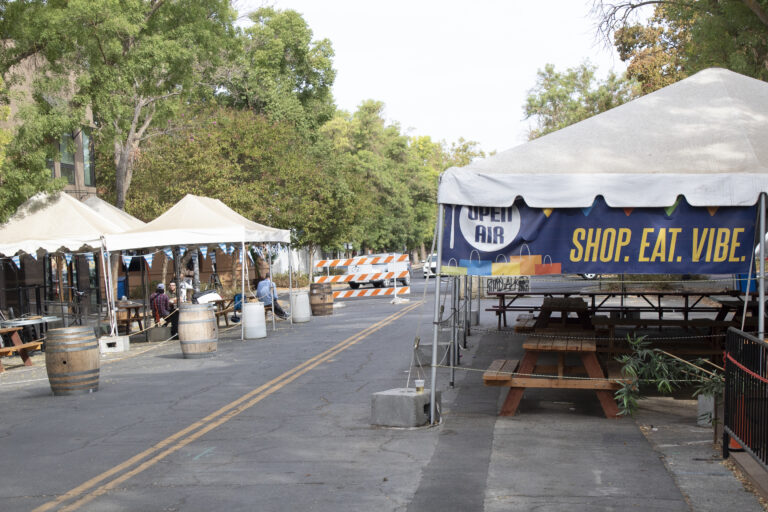
    On Sept. 24, The Artery co-owner and artist Adele Shaw posted an open letter on the Davisite, expressing dismay over the continued closure on G Street.  

    “A permanent closure of the street will likely cause the death of many of the non-restaurant businesses on G Street,” the letter reads. “The city issued TUP’s [Temporary Use Permits] during “emergency” times but they’ve created another emergency all together- an inequitable restaurant takeover on G Street. It may look like a party when you’re picking up a pizza or having a beer, but it’s not an equitable, harmonious party.”  

    In the letter, Shaw described the closure as “a hastily planned and poorly executed response to the Pandemic that only addresses outdoor food service: mainly to the benefit of a few chain-run businesses and to the detriment of the locally-owned majority of the businesses affected by the street closure.”  

    According to Shaw, the closure has eliminated parking spots, which creates parking issues in the surrounding area, and the barricades are unsightly to residents and merchants.

    Others, such as Davis Vanguard Executive Editor David Greenwald, hope that the G Street closure becomes permanent.  

    “Indoor dining is back open, but, as someone who works on that block, I can tell you that the outdoor eating is filled most days,” Greenwald wrote for the Davis Vanguard. “You see people outside on the street in that area all of the time—and people are around and able to safely congregate in public outdoor spaces.”

    Greenwald believes that G Street has been improved by the closure and would now be “very dead” if it were not for the outdoor seating.  

    “The way G Street was before was unkempt,” Greenwald wrote. “Homeless people and debris next to the parking lot. Homeless people and their belongings in the doorways of closed-off businesses.”

    Greenwald also said that G Street was “never a major road.”

    “In fact, I would argue that it was ill-suited as arterial,” Greenwald wrote. “One of the major problems is that it narrowed at the parking garage, which created all sorts of traffic problems. There were always vehicles backing out of parking spots. At midday the delivery trucks would partially block the street.”

    City councilman Dan Carson assured that the public would be allowed to contribute their opinions on any decision.  

“In the past, meaning a couple of months ago, members of the City Bicycle Transportation and Street Safety commission weighed in wanting us to make the changes at G Street permanent,” Carson said. “Our normal process is that once city staff has a recommendation for us, they’ll bring it to city council as an agendized matter, and we’ll let the public weigh in, including those with businesses as well as others in the community.” 

Carson explained that the council plans on reconsidering the closure again very soon.  

“We’d always planned to periodically review the arrangements we made when COVID-19 hit hard, to close or restrict certain streets to traffic, and we will be doing that again soon,” Carson said. “In particular, the city of Davis asked the Davis Downtown Business Association to talk to its membership, which includes retailers as well as restaurants, to see what they think should be done.”  

The city is also trying to solve the problems that people have complained about, according to Carson.  

“We are doing some things to address some of the underlying issues we heard about,” Carson said. “So for example, there was concern that downtown needed to be cleaned up, and we’ve actually been making considerable effort lately to power wash places and clean up trash.  The city council adopted collectively a new set of goals for the next two year cycle. We’ve heard a lot about trash, not just in downtown, so we directed our city staff that we wanted to make it a priority to spruce up our downtown, to make it a more attractive place.”

Written by: Rachel Shey — city@theaggie.org

Yolo County Board of Supervisors pass resolution to officially recognize October as Domestic Violence Awareness Month

Yolo County resolution and organizations raise awareness for domestic violence

By YAN YAN HUSTIS HAYES — city@theaggie.org

On Oct. 12, the Yolo County Board of Supervisors signed a draft to proclaim October as Domestic Violence Awareness Month. The District Attorney (DA)’s office will also host an office-wide clothing drive to benefit Empower Yolo. 

Yolo County DA Violence Against Women Act advocate Dessi Munoz explained that this most recent resolution is a direct result of the Victims Services program. 

“The Yolo County District Attorney’s Office Victim Services Program has been raising awareness and educating the community in regards to domestic violence for over 13 years,” Munoz said via email. “One of the ways we have been raising awareness is by submitting a resolution to the Board of Supervisors annually.” 

The clothing drive is an important resource for survivors who have to leave domestic violence situations, according to Munoz. 

“Sometimes when a survivor has to leave a domestic violence relationship, they leave with nothing but the clothes on their backs,” Munoz said. “Empower Yolo has a clothing closet where survivors can go to obtain clothing for themselves and their children’s shoes and personal hygiene items. 

Munoz explained that community work is important to the Yolo County DA’s office as it supports, develops and implements prevention strategies that target change in society. 

“Being out in the community gives us the opportunity to educate underserved communities about the criminal justice process so they can have a better understanding of the system,” Munoz said. “This can lead to victims reporting their abuse to law enforcement and therefore, getting help or intervention in their current situation, which is ultimately what we are hoping for.” 

Munoz recommends that Yolo County residents who want to get involved should look to programs like Hear Us Yolo.

“[Hear Us Yolo] was created with the District Attorney Office to help victims and survivors come together to educate the public about victimization and victim service resources,” Munoz said. “It provides victims of crime to have the opportunity to become participants and members of Hear Us Yolo and having their voices heard.” 

Empower Yolo Associate Director Celia Alveraz explained that survivors can come to the resource center in Downtown Davis and identified UC Davis CARE as a good student-geared program.  

“Empower Yolo provides free counseling services, support groups, legal advocacy, housing advocacy, peer counseling and more to all survivors,” Alveraz said via email. “Additional resources for UC Davis students can be found by contacting the UC Davis CARE program to be connected to a confidential advocate.”

My Sister’s House Executive Director Nilda Valamores explained that the Sacramento-based nonprofit has been helping victims of domestic violence, sexual assault and human trafficking for over 20 years. 

“Our mission is to serve Asian and Pacific Islander and other underserved women and children impacted by domestic violence, sexual assault, and human trafficking,” Valamores said via email. “[We] provide a culturally appropriate and responsive safe haven, job training, and community services, legal services, counseling and job training and support.”

Valamores stressed that culturally responsive services are critical to help begin the healing and rebuilding process.   

“Because culture often contributes to the impact of domestic violence, it must also be included in the healing part,” Valamores said. “Quality culturally responsive services reflect everything from the outreach to the intervention to the evaluation.” 

Many services are designed to support this community, although My Sister’s House helps all communities, according to Valamores. 

“Our outreach is focused on the Asian/Pacific Islander community; we make extra efforts to have bi-lingual Asian/Pacific Islanders available to answer our 24/7 helpline,” Valamores said. “Our shelter is uniquely designed for Asian/Pacific Islanders, reflecting everything from size, to decoration, food, and staffing, and our programs recognize the needs of Asian/Pacific Islanders.” 

Valamores advised those who may be experiencing domestic violence to remove themselves from the situation. 

“If you don’t, it results in long term emotional, physical and financial stress and trauma for yourself and your children,” Valamores said. “Take all threats seriously. 

If someone is experiencing or maybe experiencing domestic violence or cares about someone who is, they should come to My Sister’s House events, like our Run for a Safe Haven, or call our 24/7 hour help line.” 

A big misconception about domestic violence is that it only affects certain people, said Valamores. 

“Domestic violence affects at least one of every four women, not to mention their children,” Valamores said. “This is a huge public issue. It affects and involves people of all ethnicities, income, education levels.” 

Written by: Yan Yan Hustis Hayes — city@theaggie.org

Making the case for the NBA all-time top 75 snubs

With some notable names being left off the NBA’s top 75 players of all-time list, did they have a case?

By OMAR NAVARRO — sports@theaggie.org

Making a list of any kind will surely result in controversy, and the NBA’s 75th Anniversary Team is no exception. To celebrate the league’s 75th season, a group composed of current and former NBA players, coaches, general managers and team and league executives, WNBA legends and sportswriters and broadcasters all voted on 75 of the greatest NBA players of all time. They were not asked to rank them, and also, it did not matter the position they played. 

As expected, the list was headlined by names like LeBron James, Michael Jordan, Kobe Bryant and other all-time NBA greats. As the names continued to get announced, the honor of being selected to this anniversary list was one that they held in high regard. 

“From where I come from I’m simply LOST FOR WORDS!!” tweeted LeBron James after his announcement. “BEYOND HONORED & BLESSED!!” 

“Obviously it’s an amazing honor,” Golden State Warriors’ Steph Curry told reporters in his post-game press conference following the announcement. “It’s something I never dreamed of […] I remember watching the top 50 list, those interesting jackets they had, and just the names that you saw and all that. Now, you think about 25 more in the last 25 years and what it meant. So, to be on that list, it’s amazing.”

As the congratulations continued to pour in for those in the top 75 (or 76 since two players tied), some people began to see some names being left off the list. By far, the most accomplished name left off the list was 8x All-Star Dwight Howard, who was not among the players selected. 

“Dwight Howard not being on the NBA 75th Anniversary Team is an indictment on the entire list,” First Things First host Nick Wright said. “It makes it seem like the cool kids lunch table rather than the most prestigious group in NBA history. His resumé is not borderline top 75, it’s borderline top 45.”

Along with his eight All-Star appearances, Howard also boasts an NBA Championship, is 8x All-NBA, 3x Defensive Player of the Year, 5x All-Defensive Player, 5x Rebound Leader and 2x Block Champ. A lengthy resumé indeed, Howard was left off the list for some reason. Whether it be his ugly exit from the Orlando Magic, his antics, or other things he has done in his long NBA career, it was enough for voters to keep him off the list. Antics or not, Howard’s resumé is one that deserves the recognition of the best 75 players in NBA history — especially considering some of the names on the list that are not even close to his accomplishments. 

Another big man who was left off of the list was former Toronto Raptor and Miami Heat star Chris Bosh. Despite the scary end to his career, the hall of famer accumulated 11 All-Star appearances, two NBA Championships — including the crucial rebound that led to Ray Allen’s famous three pointer against the San Antonio Spurs — and was one of the better big men in the game throughout his time. Although people saw him as the third fiddle of those 2010s Miami Heat teams with James and Dwyane Wade, he was an integral part of that team as well as those Raptors teams of the 2000s.

To continue on the trend of big men left off, a name that was never flashy but deserved some recognition was that of Pau Gasol. A crucial part of the Lakers’ back to back championships in 2009 and 2010, his play helped the late-great Kobe Bryant on his quest for greatness following the departure of Shaquille O’Neal. 

“The reality is I wouldn’t win those two championships without Pau,” Bryant said in 2018. “[Los Angeles] wouldn’t have those two championships without Pau Gasol. We know that. Everybody knows that.”

In addition to his two championships, he was a 6x All-Star, 4x All-NBA selection and also top 50 all-time in career points, rebounds, blocks and wins over replacement. Although he may not have had the longevity that some players had, neither do some on that list. Gasol’s peak resulted in championships, and his omission from the list of 76 players remains one of the misses. 

When looking back at the NBA’s history, injury is something that certainly takes over a lot of great players’ careers. That can be said about two players that did not make the list, Tracy McGrady and Grant Hill. While both players did have fantastic careers, it is likely that injuries were the number one thing that kept them off the list. Even then McGrady, a 7x All-Star and All-NBA player, lit up the league throughout his time where he was healthy. He won the scoring title twice, and had injuries not derailed his career prematurely, he would’ve easily made the list. Hill on the other hand, a 7x All-Star and 5x All-NBA member himself, was a victim of injuries throughout his prime years. His peak saw him dominate as a new era point forward, but as injuries broke his body down, he became less effective. Still, him not being on the list caught many eyes, as both Hill and McGrady were more than worthy of being on it. 

When looking at the active players that made it — LeBron, Curry, Kawhi Leonard, Damian Lillard, Russell Westbrook, Giannis Antetokounmpo, Carmelo Anthony, Anthony Davis, Kevin Durant, James Harden, Chris Paul — there are a couple of omissions that people have highlighted, and those are the absence of Brooklyn Nets star Kyrie Irving and Golden State Warriors sharpshooter Klay Thompson. When looking at current players in the league, names like Paul George and Derrick Rose could have an argument on accolades alone, but Irving and Thompson stand out the most.

A 7x All-Star, 3x All-NBA player, rookie of the year and an integral player in the Cleveland Cavaliers 3-1 series comeback against the Golden State Warriors, Irving’s resumé speaks for itself. Despite the controversy that surrounds Irving at the moment, he is arguably one of the greatest finishers around the rim in league history as well as boasting one of the best handles ever as well. When looking at his counterpart Damian Lillard, it is possible to argue that Irving should be in over Lillard, as his career does not compare to Irving’s, yet he made the list.

While he hasn’t played in years, Thompson is hoping to remind people who he is when he returns from injury later this season. Still, him being left off the top 75 list did not sit right with the Warriors’ sharpshooter. 

“Maybe I’m just naive in my ability to play basketball, but in my head I’m top 75 all time,” Thompson said following the announcement of the list. 

A 3x NBA Champion and 5x all-star, Thompson will go down in history as one of the three best shooters of all time. His pure shooting mechanics and laser accuracy has led him to make his mark on NBA history, especially during the championship Warriors’ runs. Overlooked by many, his high level defense on opposing players is another part of his game that has been undervalued throughout his time in the league. Between Thompson and Howard, they might be the two players with the biggest argument to join the greats on that list.

Making a list is an imperfect science that will never make everyone happy. A lot of names were left off, but that should not diminish their greatness. For those who made the list, this will serve as a great accomplishment, knowing that their impact on the game has been felt at an all-time level. For those omitted from the list, this will be more fuel to the fire, as they will be out to prove why they deserved to be on the list of the 76 best players in NBA history. 

Written by: Omar Navarro — sports@theaggie.org

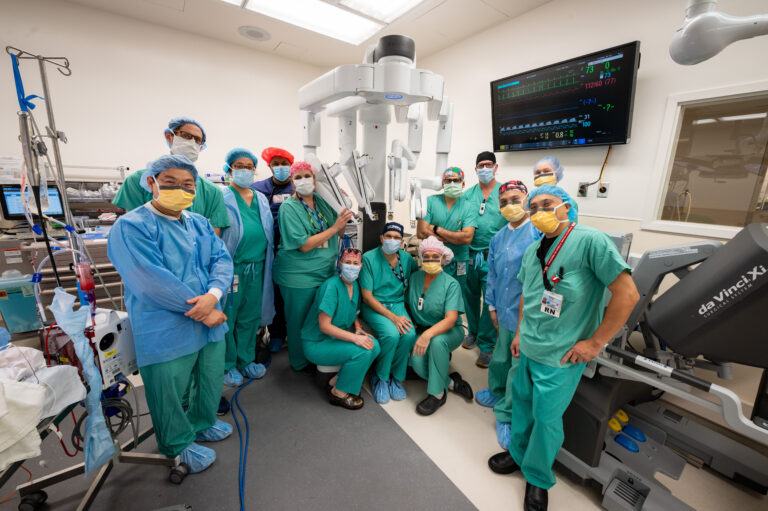
UC Davis designated as one of six national training centers for the Cardiac Surgical Robotics Program

Surgeons across North America can undergo training at UC Davis Medical Center for robot-assisted mitral valve heart surgery

By BRANDON NGUYEN –– science@theaggie.org

The American Association for Thoracic Surgery (AATS) Foundation recently delegated UC Davis Medical Center as one of the six national host sites for its Cardiac Surgical Robotics Program. The fellowship program aims to provide “advanced educational experience in robotic cardiac surgery for up to three North American cardiac surgeons with experience repairing mitral valves, who will bring expanded knowledge back to their home institution,” the organization’s website states.

Dr. Bob Kiaii, the chief of cardiothoracic surgery at the UC Davis Medical Center, has been practicing minimally invasive heart surgery with the assistance of a robotic tool for the past 20 years. Kiaii, whose expertise is worth sharing with future surgeons pursuing the collaboration of robotics and cardiothoracic surgery, would be a fitting and honorable surgeon to lead the program. 

“We’re extremely fortunate and privileged to be given this opportunity, and it also makes me feel very humble that basically I’m able to be selected as one of such institutions,” Kiaii said. “But all of this was possible because of our amazing teamwork that we have already illustrated, not only to have gone through the training phase ourselves, but how that training that we already experienced is translated to becoming a center where we can show that training to other institutions.”

Unlike conventional surgery, the surgery Kiaii carries out applies advanced technology to minimize the invasiveness of heart surgery while maintaining the same capabilities as a heart surgeon with tools in his hands.

“The robot is a very sophisticated surgical instrument, and the reason why it is sophisticated is because it’s computer assisted robotic surgery,” Kiaii said. “When we do conventional surgery, we make big incisions because our hands are large and we need to have our hands inside the chest cavity to be able to maneuver the hands as we do operations. But with robotic surgery, you get all the same freedom of movement with your hands but through a smaller incision.”

Dr. Jorge Catrip, a surgeon trained under Kiaii for minimally invasive heart surgery at the UC Davis Medical Center, discussed how heart surgery is different from other surgeries and why the advancement of minimally invasive robotic surgery in the field of cardiology is revolutionizing.

“Cardiac surgery is different from other surgical specialties because you have to use the pulmonary bypass pump that circulates the oxygenated blood while stopping the heart so you can surgically operate on it,” Catrip said. “Cardiac surgery is a complex surgical field, and if you then add a robot, it becomes one of the most complex surgeries that requires years of training.” 

The growth of technology in imbuing robotics into medical procedures that both Kiaii and Catrip execute is phenomenal for the expansion of possibilities for surgeries. Kiaii provided further insight into how transformative cardiac robotics surgery has been for him in his operations.

“The visibility is amazing because you get a very high definition of fully digitalized three-dimensional views of the chest, or of any cavities that you are looking at,” Kiaii said. “So the precision in doing the surgery gets further enhanced when we do operations. You get 10 times the magnification with the robot compared to regular surgical magnifying glasses in a very highly defined image that allows you to improve your visualization. This allows you to see more detail of the structures you’re looking at to better perform the surgery.”

Allison Ranade and Kimberly Smith, both physician assistants and members of Kiaii’s robotics cardiothoracic team at the UC Davis Medical Center, offered insight into their growth and dedication in their roles to support the main surgeon in the operating room.

“It was a huge stepping stone for all of us,” Ranade said, on behalf of Smith. “He [Kiaii] told us, ‘You’re going to have command of the room. You’re going to tell the nurses what you need.’ And we’ve had so much more autonomy in these cases, because the surgeon is not scrubbed and we truly are the ‘bedside surgeon’ by the patient’s side. I think the learning curve and transition were the hardest, but now I feel most rewarding because we truly are his right hand.” 

Cardiac robotics surgery is still in its infancy stages, and Kiaii said he is hopeful that these simulations associated with the Cardiac Robotics Surgery Program that he will be leading at the UC Davis Medical Center can be similarly rewarding for other areas of surgery.

“The future of surgical training is with simulation and with computer-assistance where you can simulate a particular problem a patient has and then using different types of models, you can allow the team to practice to learn how to perform operations,” Kiaii said. “I think that these simulations have already shown to be extremely beneficial for not only trained individual surgeons, but the team that the surgeons work with. These simulations will make the team work better and improve the team dynamic, so I think the future is just at the cusp of the early phases of such training.”


Written by: Brandon Nguyen —science@theaggie.org

Humor: UC Davis reallocates funds from stem cell research to lip fillers for Eggheads

Ya hear that Kylie?

By KATE HARGES — klharges@ucdavis.edu

Upon touring UC Davis as a wee high school student, I found myself conflicted. Such a beautiful campus, with academics ranked at the top of the charts and thousands upon thousands of unique students. Yet, those pasty round sculptures known as the Eggheads haunted me, making me wonder if Davis was the right place for me. 

Robert Arnesson is the sculptor of the famous Eggheads that adorn the UC Davis campus. The Eggheads are incredibly unique and special to the Davis community, and while they initially scared me, I have now come to treasure them. 

But I still can’t get past one thing: their lips. Arnesson perfected their facial expressions, shape and symbolism of the structures. However, he seemed to have failed in giving the Eggheads voluptuous lips. After noticing this fatal flaw, I brought this issue up to the good people of Davis. I was met with agreement, excitement and desire for some action to be made.

With a group of people in favor of the Egghead lip fillers, we took the issue up with the UC Davis administration. It turns out our protest signs and chants yelling, “Hey hey, ho ho, those Egghead lips have got to go” weren’t even necessary. With no hesitation, the administration decided to reallocate funds from their extensive stem cell research to lip fillers for the Eggheads.

While the Eggheads haven’t received their fillers yet, ASUCD is in contact with the producers of Keeping Up With The Kardashians. With the amount of funds going into the procedure, UC Davis wants it to be perfect, which means getting in contact with the experts.

So start celebrating for these Egghead glow ups! Oh and hey — you’re not supposed to know this, but apparently somebody spotted the Yin & Yang Eggheads sharing the latest edition of People Magazine, just for some inspiration.

Written by: Kate Harges — klharges@ucdavis.edu

Disclaimer: (This article is humor and/or satire, and it’s content is purely fictional. The story and/or names of “sources” are fictionalized.)

UC Davis students share their coming out stories in honor of LGBTQ+ History Month

0

Three students give insight into navigating their queerness and advice for others 

By LYRA FARRELL — features@theaggie.org

For many members of the LGBTQ+ community, coming out is a defining moment that can shape how they’re perceived, not only by others but by themselves. Many must decide whether they want to publicly declare their queerness to the world or be more selective about who they come out to throughout their lives. Three UC Davis students have diverse experiences in regard to their own journeys with understanding their queerness.

Kelsey Crist, a fourth-year biomedical engineering major with a minor in education, said that she fully identified as lesbian about six months ago, after dating her now-girlfrind for three years. 

“I feel like my whole coming out story was more coming out to myself,” Crist said. “I was convinced that I was straight all the way up through high school and the beginning of college. […] I was in pretty hardcore denial because in high school, I was the “straight friend” of the friend group and was constantly told, ‘You must be bi, you must be this,’ and I was like, ‘No, you don’t get to tell me what I am.’”

Crist said that she feels that her friends telling her what they thought her identity was stunted her journey to making these discoveries for herself. Coming into college, she had been dating her ex-boyfriend for two and a half years when she met her now-girlfriend. She said that dating her girlfriend helped her understand her queerness better. 

“It felt so different and so electrifying, something that I had never felt prior with my ex, and I just thought with him that was how it was,” Crist said. “I was like, ‘OK, that’s a little disappointing, but that’s fine.’ But turns out, I was wrong.”

Lori Pradham, a second-year marine and coastal science major, said she came into her identity as a freshman in high school, but sharing that identity with people in her life took time. 

“Coming out is more of a process than an event — the first time [I came out] was to my friends in high school […], and my second time was to my mom a year after,” Pradham said.

Pradham said that while her mom’s reaction to her coming out was unexpected, it was quite relieving.  

“I was in the car and I was freaking out,” Pradham said. “I was like, ‘Mom, I have something I have to tell you and you have to promise not to hate me,’ and she was like ‘What?’ and I was like, ‘I like girls,’ and she’s like, ‘OK, and?’” 

While Pradham thought that she would have to come out to each of her parents, she was surprised to find out that her mom had told her dad before she did. 

“I forgot that my parents tell each other everything, so I technically don’t have to tell my dad anything,” Pradham said. “I just have to tell my mom, and he’ll find out.”

While Pradham’s parents were accepting, she said they did caution her against coming out to other members of the family. 

“My mom was really cool with it,” Pradham said. “She was like, ‘Your dad and I are chill, just don’t ever tell your grandparents, because you will be responsible for their heart attacks and deaths.’”

Over the course of Pradham’s time navigating her queerness, she has found that the spectrum of ‘micro-labels’ that exist for the queer community have been a useful and validating tool. These are labels that are hyperspecific and which describe certain identities that often fall under the umbrella terms like lesbian, gay or queer, according to the Western Gazette. Pradham has used these micro-labels to identify which she feels best describes her at the moment.

“[I’m] biromanticdemihomosexual,” Pradham said. “Demisexual means that you’re not sexually attracted to people until you form an emotional connection with them, biromanctic is bisexual but romantic, and then the demihomosexual is […] when I form an attraction to someone, I will only be attracted to women. It’s so complicated that I tell people I’m bi.”

Aleshia Rose, a third-year communication major, recounted an early memory when she first began to realize her queerness during a board game. 

“I was six or seven and my friend was over and we were playing [The Game of Life],” Rose said. “We got to the point on the board where you would get married and I was extremely adamant about the fact that I would not be marrying one of those little blue plastic pegs.”

Rose remembers her parents opening her eyes to another option within the game, which she seized at the time. 

“My parents were sitting on the couch and said, ‘You know you can marry a woman, right?’ and I was like, ‘No way!’ and so I did, but after that I was super embarrassed and ashamed so I tried so hard for the next 11 years to repress that,” Rose said.

After years of difficulty understanding her identity, she decided to come out to her parents when she started dating a girl in college.

“I didn’t know what to say to my parents because I had been denying it for so long even though they fully knew, so I didn’t feel the need to tell them until I started dating a girl,” Rose said. “I told my mom my sophomore year of college. She picked me up for Thanksgiving break, and the second I got in the car I was like, ‘Mom, I have to tell you something.’”

Rose also chose to come out to her dad on the drive home from school for a holiday break. She said that she wasn’t surprised when he was accepting of her, but she was surprised that he had some news to share himself.

“My dad picked me up for Christmas break and I repeated the same exact thing but with him, and he goes, ‘Aleshia, I already knew this, did you expect me to be surprised?’ Rose said. “Then he was like, ‘by the way, I’m bigender.’” 

All three students expressed that understanding their queerness and coming out was a uniquely challenging experience, but they all gave some advice to others questioning their identities and how to share that identity with others.

Due to personal experience being labelled as queer before getting a chance to come out, Crist recommends not to assume people’s identity. 

“I’d encourage them to come out to people that they know will support them, and on the flip side, not ever assume or tell people what you think their sexual orientation is or should be,” Crist said. 

Pradham’s advice is to let queerness be something sacred to oneself before sharing it with the world.

“This is completely contrary advice to my experience, but I just feel like there’s a lot of pressure these days to tell everyone everything about yourself because your whole life is on the internet, [but] you can have some things that are just for you and the people you care about,” Pradham said.

Rose said that coming out can be whatever an individual wants it to be and they shouldn’t feel the need to earnestly approach every person in their life with the news of their querness.

“It does not have to be a big event, you can just start quietly slipping little comments into conversations and it’s honestly really entertaining,” Rose said. “That’s how I came out to all my friends. It was hilarious watching the look on their faces as they tried to figure out what the hell I was saying.”

For those questioning their identities, Pradham advised not to overthink it. 

“If you feel like your experience in sexuality and gender and orientation is different than other people, congratulations, you’re queer now,” Pradham said.

Written by: Lyra Farrell — features@theaggie.org