53.5 F
Davis

Davis, California

Tuesday, December 23, 2025
Home Blog Page 25

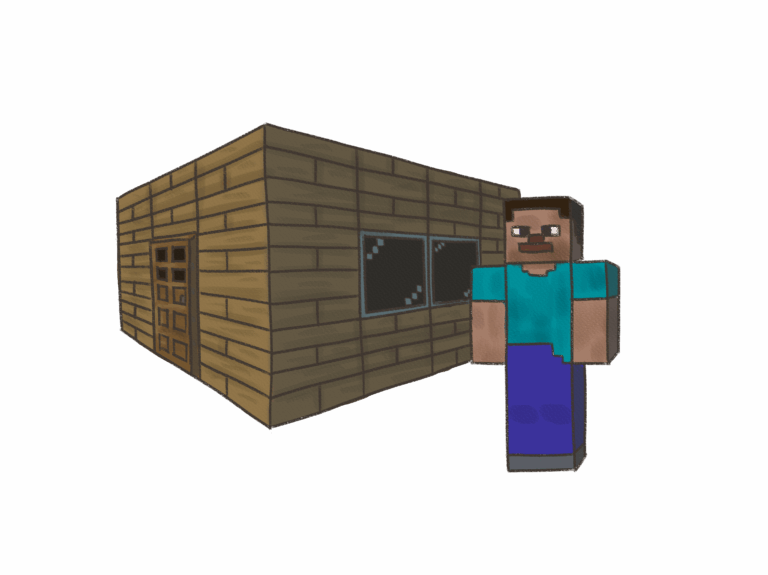
Minecraft: the miracle maker

Anything is possible with a pickaxe and a dream


By NADIA IWACH — nmiwach@ucdavis.edu


In the era of technological free-for-all, a platform capable of optimizing, monetizing and gamifying every interaction would seem like a glitch itself. 

Where Instagram became auto-voyeuristic and Facebook faded into the digital peripheral, the answer to facilitating community, creativity and applicable skills is simple: Minecraft. 

Minecraft has no algorithm, no creator fund and no “perfect ratio” of followers to following. Just a user, a pickaxe and a dream. Despite a lack of external incentives — or maybe because of them — it quietly became one of the most formative creative platforms of our generation. Kids mining redstone, fighting zombies and shepherding chickens suddenly found themselves acting as real innovators, honing their home-grown ability to develop the technology of tomorrow. The best part? They simply wanted to build something cool.

Minecraft does more than reward creativity — it interpolates the typical trajectory of skill development and flips the script entirely. Build now, learn later. With a little more than an introduction tutorial, users are flung into an armageddon of monsters and tasked with the most primitive task: survival. 

Starting with only a building block, users are given a carte blanche to create worlds only they could imagine. The process — self-led and intuitive — rewards intrinsic motivation; the more you build, connect and obsess, the more knowledge you absorb without even realizing it. Led by pure love of the game, there’s no room for ego when you’re knee deep in a to-scale recreation of the Golden Gate Bridge, arguing with the 12-year-old server admin. 

A case study in the archetypal builder this ecosystem creates is Nils Fleig, a current first-year. He’s easy to approach but does little to advertise that he’s among the most promising minds on campus. 

Initially, he taught himself coding and programming as a Minecraft user before becoming involved in what he describes as the tightly-knit server host community. Since then, he’s become something of an early savant — recently, he won his first hackathon at Stanford University’s TreeHacks, where he claimed victory by devising a crime detection software. 

The mission of his startup, MCMetrics, underscores the relationship between technical curiosity and community-driven collaboration by returning lost revenue to Minecraft server hosts.
“When I was 14 and making Minecraft servers, I was just messing around with code; MCMetrics turned into messing around with the business side,” Fleig said. “I found that the combination of coding and business — turning your work into a product that solves problems — is what I love doing most.” 

Beyond its entrepreneurial advantage, the venture echoes a deeper impulse etched into the platform’s DNA: a desire to create for the greater good.

Fleig’s story is likely the “nth” anecdote of genuine ability and impact: discovered, rather than pressured. A close friend of mine from high school, who once ushered me through a Disneyland server complete with ride soundtracks and parades, is now pursuing UX/UI and Design at UC Berkeley. Her inclination for visual arts, design and building purely for enjoyment was always obvious, long before college applications or career plans were ever a question. 

Minecraft, while often dismissed as the birthplace of many memes and cringeworthy catchphrases, earned its longevity by rejecting the blueprint of a standard video game. With a user-driven approach to learning and creating, the lack of a strict storyline acted as a creative petri dish where no idea was too great. This model, in addition to fostering the creation of truly fascinating digital communities and collaborative builds, instilled a quieter truth in a generation raised to optimize — true creation doesn’t need the mechanics of a five-year plan or a four-figure course. With just the right tools at their fingertips, they only need a space to try, fail and care. 

More simple than we care to admit, the most meaningful innovation is uncovered in what you build when no one is watching. Rejecting the pressure to optimize or monetize, individuals are equipped with the keys to create: a user, a pickaxe and a dream. 


Written by: Nadia Iwach— nmiwach@ucdavis.edu


Disclaimer: The views and opinions expressed by individual columnists belong to the columnists alone and do not necessarily indicate the views and opinions held by The California Aggie.
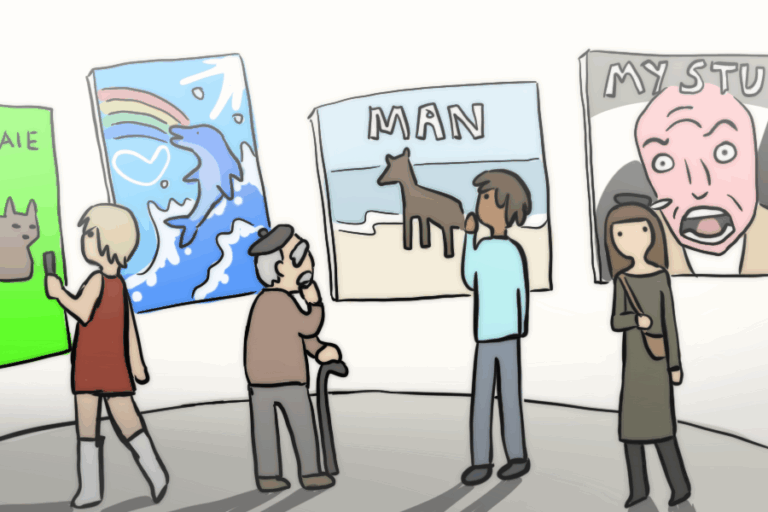
 

Cavi-art for the masses

Exploring the historical ontology of fine art


By VIOLET ZANZOT— vmzanzot@ucdavis.edu


Historical ontology. Just reading these two words invoked a complicated and philosophical feeling. It probably makes old white guys feel really important when they talk about it, but it can also be explained perfectly by this upcoming tanning season. 

Allow me to explain, and not like one of those guys with the scrunchy faces that all look the same. Today, a proper tan is a thing earned by spending hours sitting by a pool or on the beach. Some people go so far as to use spray tan as a shortcut. 

However, historically speaking, being tan was often a byproduct of extensive hours of outside labor. This “farmer’s tan” spoke for itself — it was usually agricultural workers who got tan. As time passed, the social context of a tan has changed. This example can very loosely be representative of the idea of historical ontology: things change meaning as society changes. 

Other than the sex appeal of skin damage, lots of things have changed meaning over time — notably, the theater and art.

I recently went to the Crocker Art Museum in Sacramento with my grandmother. Walking in with a discounted student ticket, I asked myself why I hadn’t gone sooner. I always loved art in the many forms it takes (excluding opera). But it just doesn’t feel like a normal thing for a kid to enjoy on their own accord.

I get my mass art from the movies, TikTok and, if you catch me on a good day, a book. There is the small chance that I am but one person suffering an ailment of cultureless existence, all by my lonesome. What I think might make more sense, though, is that the experiences we deem as “fine arts” have become victims of historical ontology. 

Things we see as high culture, high brow — best observed with high heels and caviar — are the things that used to belong to the masses. Shakespeare didn’t write “Romeo and Juliet” so that the rich Londoners could take a limo down to the historic Globe Theater dressed to the nines.

He wrote it for the “ones” to come together to feel like “10s.” Because 10 guys with a penny might as well be a dime piece when the goal of the author is to write for the masses.

The very idea of which art exists for the masses has shifted over time. Today, people come together over mass media. We scroll the halls of TikTok; We don’t stroll the halls of the Louvre. 

This is not to say that historically different aspects of the arts have not been gate-kept by the elites. The idea of salons as a place to meditate on art’s cultural acceptability was specifically a space for the elite to dictate the worth of certain art. 

But we have shifted the art and entertainment that was originally designed for us lowly normals to be experiences that feel inaccessible. There is art that was designed to be gawked at by only the few who could afford to gawk. There is also art that was designed to give people a mirror to understand their own humanity.

We have lost access to this art. Of course, the meaning of art is always changing, and what is produced now will not look like what Picasso produced, but I do not think that means we should deny ourselves access to the world that was told through less direct means.

People are meant to be their own translators to the world of art, and yet we’ve allowed the perpetuation of the idea that there must be a “middle man” to explain what Andy Warhol meant when he mass-printed soup cans. 

We exist in the rapid age of advancement and technology that over-emphasizes the ability to produce. Call me a romantic, but I think it’s high time we bring back a love for the ability to create. Let’s shed light on the world as seen through the eyes of a visionary. Let the poets preach and the painters paint. Let us learn that art, too, is a common language we can share, rather than a world one must be able to afford. Consider this my formal petition to make art lowbrow again, without changing the art but solely by changing the way it is seen by the people.                           


Written by: Violet Zanzot— vmzanzot@ucdavis.edu


Disclaimer: The views and opinions expressed by individual columnists belong to the columnists alone and do not necessarily indicate the views and opinions held by The California Aggie.

Fiscal Commission discusses Village Farms project analysis

Concerns from both residents and commissioners dominated the nearly three-hour long meeting


By PIPER AWEEKA city@theaggie.org


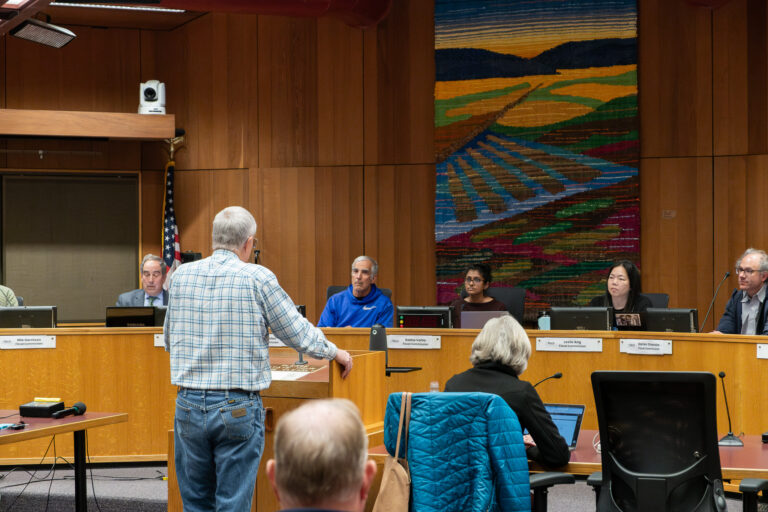
On April 2 at 6 p.m., the city of Davis Fiscal Commission met to discuss the Village Farms Development Project analysis. After a call to order from Commissioner Rekha Vaitla, the agenda was unanimously approved by all members present. Before commencing the primary items of concern, public comment was held.  

Matt Williams, a Davis resident, shared concerns over the ongoing absence of audited financial statements to the Davis public. 

“Each of you have received two emails from me which I have directed to Council Member [Donna] Neville and to our Public Information Officer Jenny Tan,” Williams said. “We are now three years behind in terms of our audited financial statements. […] The whole purpose is to transparently and honestly tell the people who are paying for and living in the jurisdiction how the city is handling its finances.”

The commission then moved to address one of the meeting’s primary agenda items, the Village Farms fiscal analysis. 

Dara Dungworth, the principal planner at the city of Davis Community Development Department, began by giving an overview of the ambitious project. With the proposed construction of a 498-acre neighborhood with 1,800 units of affordable housing, Dungworth described the vital role of the commission in hearing the fiscal analysis of the project.

“This would be the first and only time that the project comes before the commission,” Dungworth said. “[The commission] will help guide the applicant in finalizing specific project details ahead of going to the planning commission and onto city council. This commission is being asked to review the fiscal impact analysis and its assumptions.”

Matt Kowta, the principal manager at BAE Urban Economics consulting firm, followed Dungworth’s project overview by presenting the aforementioned fiscal report.

“The fiscal model is intended to illustrate how the project’s costs and revenue impacts would ramp up over time,” Kowta said. “We’re assuming an average long-term 2.5% annual increase for personnel costs, we’ve plugged in a 4% annual average based on discussion with the finance department.”

Kowta went on to discuss the projected property valuation assumptions, including property tax and other property-related revenues.

“We’re expecting [single-family home lots] to come in at $1.3 million on average per unit, for the medium density residential […] we’re plugging in an average of $740,000 per unit, […] but market-rate apartments we’re assuming $400,000 a unit valuation,” Kowta said. “The [proposed] pre-[kindergarten], early learning center, the educational farm and the affordable apartments are all assumed to be tax exempt.”

After the conclusion of Kowta’s presentation, the commission opened to public comment. The Village Farms proposed an additional fire station within Davis, but multiple citizens expressed their opinion of it being unnecessary. 

Dan Carson, a former city council member, touched on this sentiment.

“In 2018 we received a consultant report the council did from one of the foremost consultants that looks at fire protection issues in the country,” Carson said. “His response to us was that, ‘You don’t need to build a fourth [fire station].’”

Matt Best, the superintendent of Davis Joint Unified School District, articulated the importance of the Village Farms project approval, regardless of fiscal concerns.

“We are projected to lose about 100 students per year for the next decade should there not be new housing in Davis,” Best said. “While I always want public servants to do their due diligence, I want you to do that within the context that we need more housing in Davis to sustain the excellent academic program that many of you have experienced, your children, my children, all value.” 

With concerns from the commission over financial absorption, rising property values, property taxes and the financial demands of an additional fire station, the commission moved that the Village Farm fiscal assumptions made in the report should be adjusted.

Vaitla began concluding the discussion by summarizing the commission’s call for further examination of the project.

“First would be an analysis of the option to relocate fire stations, […] looking at assumptions related to construction delays, […] additional sensitivity analysis around home prices, […] greater clarity around some numbers and potentially the city council to consider having a conversation with the school districts to see if there’s some sort of negotiation there,” Vaitla said. “I think just a recommendation to city council to really think about only approving funding when there’s some assurance that this development would be developed to its fullest extent.”


Written by Piper Aweeka — city@theaggie.org


Stop podcasts now!

Save us from the podcasting pandemic


By MADISON SEEMAN — meseeman@ucdavis.edu


Every day, millions of unassuming victims find themselves struck by the urge to start a podcast. Many resist the call, but in far too many cases — especially for men in their 20s and 30s — we see them giving into that seemingly harmless temptation. Those with larger egos are especially at risk.

The result? A podcasting pandemic.

The infection can even reach friend groups, in what researchers are calling a modern epidemic hysteria. Imagine those medieval crowds that collectively couldn’t stop dancing. Everything starts out normally: good conversation and a round of laughter. Then, a lull, where the quiet, unassuming suggestion takes root: “We should start a podcast.” It almost always seems like a good idea.

This idea can be triggered by thoughts like, “The people need to hear our take on who would win in a fight between all of the Pokémon and a billion lions” or preceded by the collective thought, “We’re so entertaining!”

And from there it spirals.

There’s simply so much to share! A take no one has heard about the economy in a spot-on RuPaul impression, debates on whether water is wet, a completely unbiased report on why that backstabbing flake Jennifer was kicked out of the friend group, a man’s take on womanhood — those infected are taken by the idea that the world NEEDS this.

Take my good friend’s ex-boyfriend’s podcast, one of many creatively named “The Daily Sip.” Tragically, all of the episodes have recently been taken off of Spotify, but I’ll paint you a picture. Two hours of unedited audio content where four people (which is way too many people for a podcast, by the way) talk into a singular microphone about people you’ve never met — unless you happen to be a graduate of Glenbard High School.

But what does a podcast have that a regular conversation doesn’t? An audience and a digital footprint? Many podcasting hobbyists seem unaware that their coworkers and exes can find their opinions on what really counts as cheating, deeply researched and completely unbiased takes on why women won’t date nice men or why the Rizzler is “falling off.”

What happened to journaling? And to the “alpha males”: Is it not manly enough to journal? Find a nice manly pen and put the microphone down; if you’re going to be a misogynist, you can at least keep that to yourself.

It seems like there are too many cases where podcasts have replaced the age-old practice of keeping thoughts to yourself with conversations in a glass display, screaming into the void and posting it online. 

I’m strong enough to admit: I’m not immune to the urge — writing for the newspaper is actually my attempt to stave off the temptation. But even worse than that? I actually listen to podcasts.

I know, I know, I’m only enabling this epidemic. But there are, in fact, good podcasts. While dangerously contagious, there are a few cases where the podcasting urge strikes someone with talent, or a duo with chemistry. 

A good podcast can have valuable insights and thoughtful commentary. It makes you giggle! But outnumbering clever podcasts like “Talk Nasty to Me and “You’re Wrong About” is an oversaturation of men in baseball caps expressing their completely “original” takes on the true alpha males or friends in basements reading other people’s X posts out loud.

Podcasting is dangerous. It’s an indulgence of the ego, a temptingly easy outlet and — every once and a while — it’s successful. Maybe it’s worth sifting through the grime to find the gold, but in the meantime, if you find yourself thinking of starting a podcast? Try journaling first.


Written by: Madison Seeman –– meseeman@ucdavis.edu


Disclaimer: (This article is humor and/or satire, and its content is purely fictional. The story and the names of “sources” are fictionalized.)


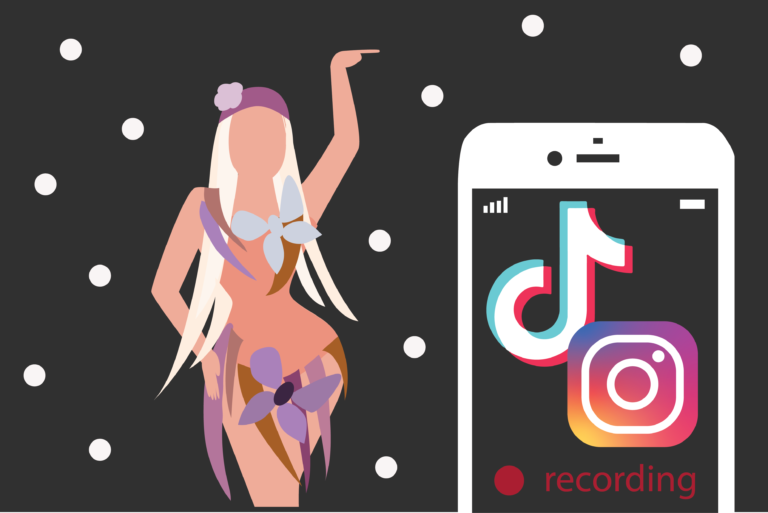
Your brain deserves better than little miss Ballerina Cappuccina

Let your brain breathe, or don’t and meet Tralalero Tralala in your algorithmic descent


By IQRA AHMAD — arts@theaggie.org

Bored? Good. You might be onto something.

Stop doomscrolling. Yes, you. The 38th TikTok video or Instagram Reel will still be there in five minutes; it’s a promise. Let’s talk about that strange, sticky feeling you get when you’re sitting at your desk, staring into the abyss of your Google Calendar, wondering why you’re bored even though you have 73 unread emails, two club meetings, three deadlines and a Canvas notification that feels vaguely threatening.

Welcome to boredom, not the “stuck-in-line-at-the-DMV” kind, but the weird existential void where your brain’s like, “bada-bing, bada-boom, I could do stuff…but I simply won’t.” And here’s the plot twist, that might actually be a good thing.


Boredom: brain fog or brain fuel?

Boredom is actually secretly a gift to your brain, and it can even be positively impactful to your brain’s health to allow boredom to creep in.

Boredom can give your brain a chance to decompress and reflect on social connections that foster new ideas. It’s a power nap for your creativity, the calm before that “aha!” moment, or as Leo Tolstoy put it, boredom is “a desire for desires.” Boredom, in this definition, isn’t the absence of stimulation, rather it’s the craving for meaning.


But wait, enter brain rot.

Here’s the catch: Boredom isn’t always zen and poetic. Sometimes, instead of gazing thoughtfully out of a window like a misunderstood protagonist, you end up deep in the digital trenches of brain rot. Yes, brain rot. The word that your spellcheck hates and puts a red squiggly line under, but your TikTok “For You” page loves.

Brain rot is “the supposed mental decline resulting from too much time spent in the chasms of the digital world reserved for trivial content,” according to a National Geographic article. In other words, it’s the side effect of watching 27 short TikToks in a row about a show you would never watch on Netflix or lore you didn’t ask for or scrolling past memes that make less and less sense the longer you’re awake. What’s actually happening here is that your brain becomes habituated to the constant stream of repetitive content. The more you consume it, the less stimulating it becomes, and over time, your brain starts to crave more intense input just to feel the same effect, kind of like building a tolerance, but for memes.

The term has gained so much traction that it was declared the 2024 Oxford Word of the Year and had a whopping 230% increase in usage between 2023 and 2024, according to the Oxford University Press. This is probably because half of the internet was filled with riddles and soundbites of phrases like “Rizzlers of Oz.”


From Walden to Ballerina Cappuccina

Ironically, the first known use of brain rot was in a book, titled “Walden,” authored by Henry David Thoreau in 1854 when he expressed leaving a complex modern life for one that is composed of a simple lifestyle. Though, we’ve taken that simplicity and run into memes and endless TikToks to express our goals for a simpler life.

Welcome to the age of “Italian brain rot.” You might have encountered some of TikTok’s finest creations.

“First, there was a shark with feet wearing Nike sneakers, called Tralalero Tralala (the TikTok account associated with the first iteration of that character has been deleted),” an article by The New York Times reads. “Then came Bombardiro Crocodillo, a military bomber plane with a crocodile head.”

And now, reigning supreme is Ballerina Cappuccina, a ballerina with a cappuccino cup for a head. Yes, this is real. No, we can’t explain it either. But, if you’re feeling lost, it’s okay. This viral fever dream of content describes the rise of Artificial Intelligence-generated characters that are as bizarre as they are beloved. It’s weird, it’s chaotic and that means it’s peak brain rot.


So, should you be worried? Here’s the takeaway. A little bit of boredom? Good. A little brain rot? Harmless fun. But if your main source of serotonin comes from artificially animated cappuccino-headed ballerinas, maybe step outside and touch some grass for a second.

Boredom, at its best, leads to creative sparks, meaningful reflection and mental rest. At its worst? It turns into a digital rabbit hole where you forget what year it is and start ironically saying things like “Ohio core.” So next time you feel bored, don’t panic. Don’t immediately reach for your phone — instead, go for a walk or call your mom. Because in a world of Ballerina Cappuccinas, real boredom might be your last link to sanity.


Written by: Iqra Ahmad — arts@theaggie.org 

What it’s like being the only conservative in the room

By JACKSON BONNAR— jtbonnar@ucdavis.edu


At UC Davis, I’ve learned to scan a classroom before I speak. It’s not paranoia, it’s self-preservation. When you’re a conservative on a campus where the prevailing narrative leans left, every comment feels like it carries extra weight. You’re not just speaking for yourself, you’re defending your entire worldview.

I didn’t come to college expecting everyone to agree with me. I welcome disagreement. Debate sharpens ideas as iron sharpens iron. But what I didn’t expect was the silence. Not only from myself, but from others. I recall wearing a Make America Great Again (MAGA) hat for a day before the last election; not to provoke, but to offer a visible counterbalance to the many Democratic campaign shirts, hats and stickers being worn by fellow classmates.

To my surprise, students pulled me aside after class or even mid-bike ride, saying, “Nice hat” or “Hey, good for you, I wish I had that courage.” A few even told me days later it gave them the confidence to be more open about their own views or religious beliefs.

They’re out there. We’re out there. But being a conservative in the classroom often means feeling like you’re the only one.

It’s not that professors or students are overtly hostile. Some are, most aren’t. It’s more subtle than that. It’s the jokes about Fox News that draw automatic laughs. It’s the eye rolls when personal responsibility is brought up. It’s the assumption that “we all know” who the villains are in every policy debate.

There’s probably an opinion in this very paper dismissing conservatism or the current administration. That’s their right, and I support their right to publish it. But it highlights the deeper issue: Ideological conformity has become so normalized that dissent feels taboo.

And so, we learn to speak carefully. We soften our language, preface opinions with qualifiers or, simply and much more easily, we stay quiet. That’s not intellectual freedom, that’s self-censorship.

The irony is that universities like UC Davis pride themselves on diversity. But diversity can’t stop at skin color or gender. It has to include ideas. If campuses are going to be true marketplaces of ideas, then every viewpoint, left, right and everything in between, should be tested, challenged and heard. Not just tolerated, but taken seriously.

I don’t want special treatment. I just want the freedom to think, speak and engage without being branded as dangerous or backward. I believe in limited government, strong national defense and economic freedom. Those convictions don’t make me extreme, they make me part of a long-standing American tradition.

So here I am. Still raising my hand. Still voicing the unpopular opinion. Still walking into rooms where I might be the sole individual who sees the world a little differently. And that’s okay. Because university should be a place where uncomfortable conversations happen, not a place where one side dominates the narrative.

To students who disagree with me: I want to hear from you. To students who feel like they’re alone in what they believe: You’re not. Speak up, have honest debates and ask hard questions. Because if we want to be a campus that truly values free thought, then it should welcome all of us, even when we are the only ones in the room.


Written by: Jackson Bonnar— jtbonnar@ucdavis.edu


Disclaimer: The views and opinions expressed by guest columnists belong to the guest columnists alone and do not necessarily indicate the views and opinions held by The California Aggie.
 

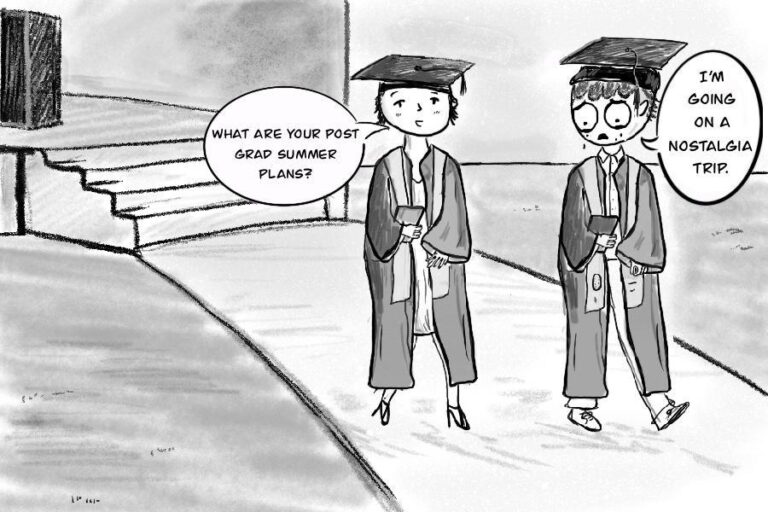
Good luck to all of our graduating Aggies on their next journey!; We are sorry that you now have to use the phrase, ‘Back when I was in college’

Drawn by: Lauren Swing–– laswing@ucdavis.edu


Disclaimer: (This cartoon is humor and/or satire, and its content is purely fictional. The story and names of “sources” are fictionalized.)

Graduating students prepare to maintain post-graduate relationships

Fourth-years describe the evolution of their friendships with graduation right around the corner


By GRACIELA TIU — features@theaggie.org

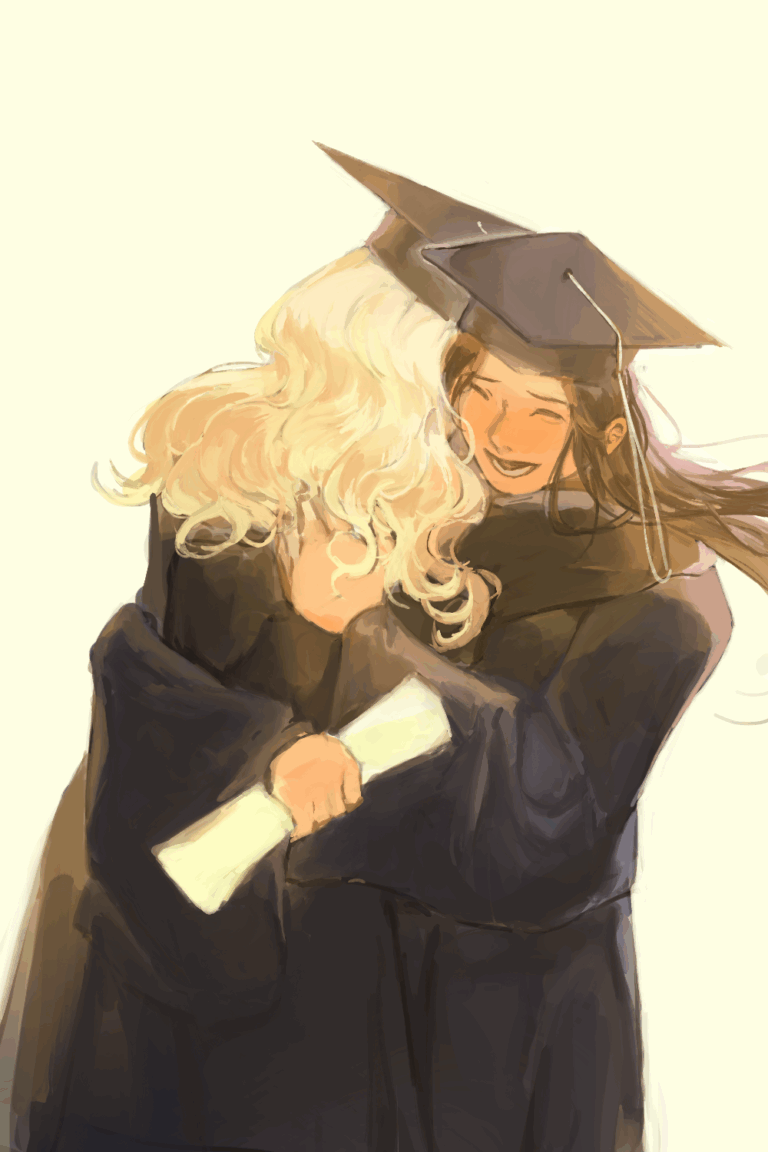
As the end of spring quarter approaches, many fourth-year students are getting ready for graduation. Preparing to part from classmates, close friends and loved ones, the soon-to-be college graduates are reflecting on their changing relationships.

“I met a lot of my close friends during orientation and throughout freshman year,” Sara Pimenta, a fourth-year managerial economics major, said. “We’ve seen each other grow up and turn into the people we are today. We’ve helped each other through tough times and celebrations, and I look forward to continuing them through post-grad.”

Pimenta described how she expects that leaving college will shift the nature of some of her friendships.

“Not all college friendships will last beyond college,” Pimenta said. “However, the ones who mean the most to you definitely can. It’s important to check in on one another and have clear communication so no one feels like the friendship is one-sided.”

Jasmine Lam, a fourth-year managerial economics major, relayed how her friendships have evolved throughout her four years at Davis.

“Over time, some of those relationships deepened while others faded as we grew older and apart,” Lam said. “My closest friendships now are the ones that have withstood all the transitions, the midterms, drama, hardships, bonding moments and late-night talks. They’ve grown from convenience to true emotional support.”

Some students feel that nearing the end of their time together in college has changed their friendships already.

“Honestly, the core of my friendships hasn’t changed; We’re still just as close, but the focus has definitely shifted,” Lam said. “Now, it’s more about supporting each other through this huge transition. A lot of our conversations revolve around post-grad plans, goals and what we hope for in our careers. It feels like we’re growing together — just in a new direction.”

With a new stage of life comes impending challenges, and many graduating students are preparing to navigate how to maintain their relationships.

“To me, keeping up a post-grad friendship means being intentional,” Bush Ngo, a fourth-year biological sciences major, said. “It’s about checking in even when life gets busy and making the effort to stay present, even from afar.”

Even though post-graduate life and relationships may seem overwhelming, Ngo — as well as many fourth-years at UC Davis — feels that change can also be beneficial.

“I also remind myself that change is natural,” Ngo said. “Letting go doesn’t mean I’m losing the love or lessons those friendships [have] brought me.”


Written by: Graciela Tiu — features@theaggie.org

Type A, Type B or a secret third thing

Why pigeonholing personality types limits you


By ABHINAYA KASAGANI— akasagani@ucdavis.edu


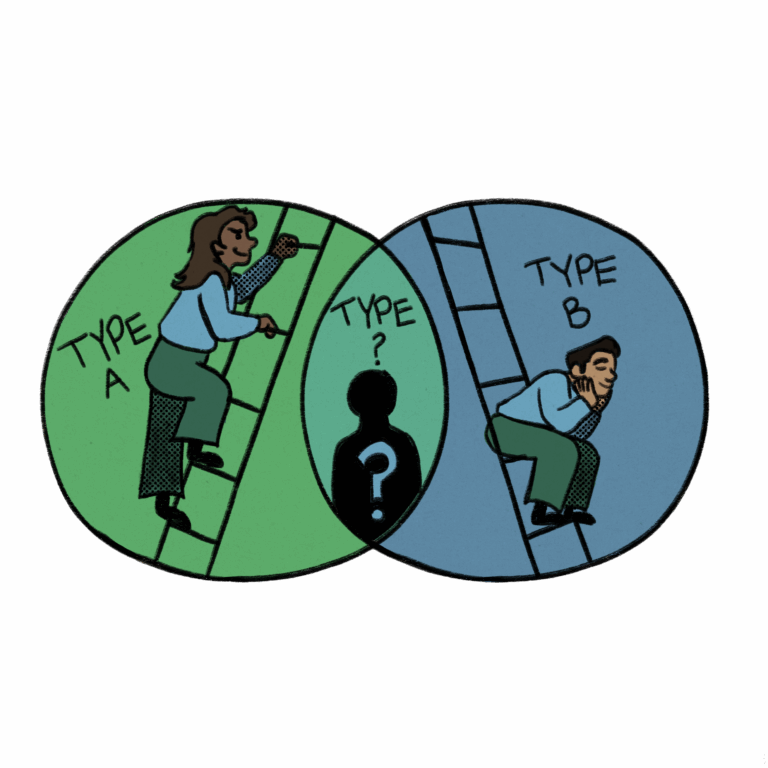
For as long as I can remember, the classification of myself as Type A or Type B has felt foreign to me. I have shirked a label not solely to surpass a social tag, but to demand reclassification into a category that felt more like mine. No bone in my body is ambitious in the way it would be if I were Type A, nor do I possess the capability to completely lay my life in the hands of the universe like the quintessential Type B.

If anything, I would fit the self-assigned classification of “Type A.5” — I am able to be efficient, punctual and mostly laid-back, but altogether not high-strung to the point of immense stress nor spontaneous to the point of complete self-destruction. I have transcended to a state of balance without trying to get here, and so, where do I now place myself?

The Type A/B binary has been used by researchers to understand how and why people interact with the world in the way that they do, how they approach similar situations and how they respond to stress. This allows one to explain their particular tendencies and find ways to leverage their strengths and inhibit their weaknesses.

While useful, clinging to these binaries unhealthily oversimplifies human complexity and nuance and unknowingly shapes the assumptions that schools, employers and even individuals use to understand their lives. Some might use organization as a way to manage their ambition and limit stress, while others might resort to simply “winging it” — what is important here is that erasing the nuance of personalities that fall in between Type A and B can force people to operate within these predetermined frameworks, prohibiting them from discovering what truly works best for them.

So, what if you don’t want to pick a lane? Then, don’t. My inclination to identify as a “Type A.5” has allowed me to admit that, although I do appreciate providing myself with clear instructions and a semblance of structure, I find it easier to adjust to the transience that comes with everyday life. Structure is no longer restrictive to me in the same way that it was when I was trying to emulate someone who was a textbook Type A.

The binary nature of these personality types can take root in institutions, which assign a set of demands and expectations that favor the Type A student. The Type B student might be celebrated for their natural capabilities, but they are often thought of as inconsistent. Workplaces also disregard those in between Type A and B, believing them to be too focused for casual assignments and too adaptable to be tasked with project leads. This internal confusion leaves these kinds of people feeling deserted, constantly questioning their competency and authenticity.

Reframing these questions creates a space for people to define their own modes of operation or undertake their own self-evaluation, rather than catering to someone else’s distinctions. Retiring the either/or of personality — Are you a summer or winter? Are you a sunrise or sunset? Are you a beach person or a land person? — allows us to think of ourselves and our personhoods as more fluid and less extreme in either direction, embracing the amalgam of self in the only way we can.

So, I implore you not to take the Type A versus Type B quiz (or maybe take it with a grain of salt). Binary personality tests like these are often both inaccurate and constricting, failing to encompass what distinguishes you from the masses. For the sake of embracing your own idiosyncrasies, refrain from constructing this identity of yourself as solely a “thinker” or a “doer” — there is nothing more dangerous than the urge to pigeonhole yourself.


Written by: Abhinaya Kasagani— akasagani@ucdavis.edu


Disclaimer: The views and opinions expressed by individual columnists belong to the

columnists alone and do not necessarily indicate the views and opinions held by The California Aggie.
UC Davis Mental Health Initiative to host Pride in Mind Festival on May 30

The festival is set to feature live performances and local LGBTQ+ organizations, all celebrating pride and mental health awareness

By SAIRAKSHA THIRUNAVUKKARASU — campus@theaggie.org

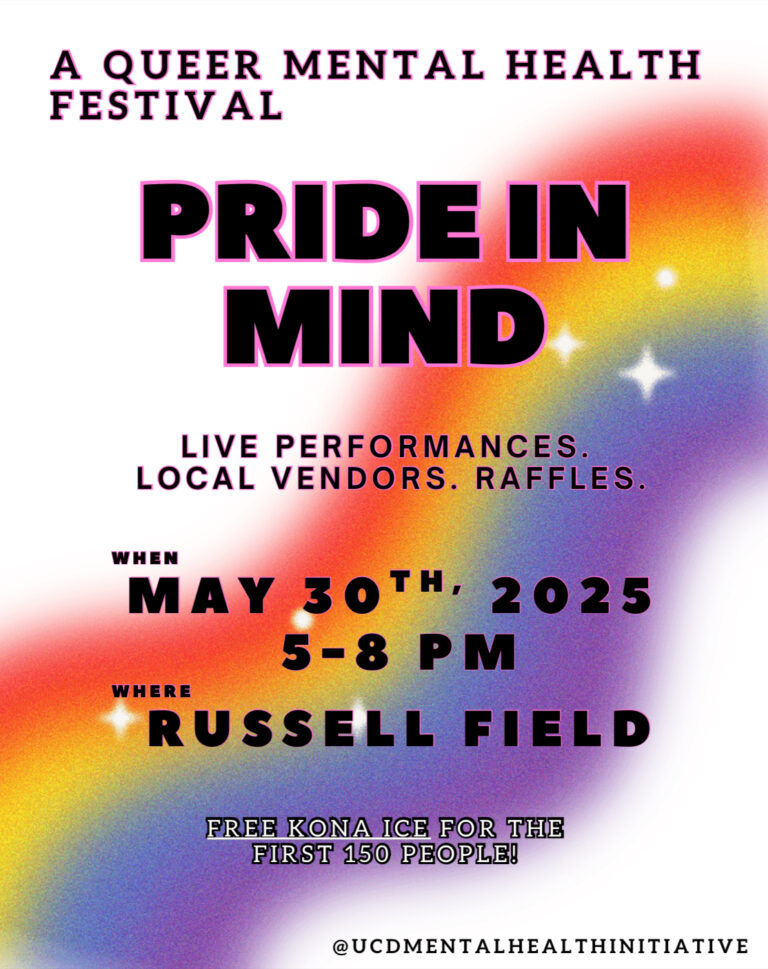
On Friday, May 30, the UC Davis Mental Health Initiative (MHI) is hosting Pride in Mind, a queer mental health festival, at Russell Field. The event will take place from 5 to 8 p.m. and is free for everyone. No RSVPs are required, and the first 150 attendees will get free Kona Ice.  

With no traditional ASUCD Pride Festival having taken place this year, Pride in Mind seeks to explore the intersectionality between mental health and queer identity. It is MHI’s last and largest event as a part of their program for Mental Health Awareness Month. 

“Mental health is extremely stigmatized among many cultures and different demographics,” MHI Point Director Ramya Pondicherry, a fourth-year psychology major, said. “We’re hoping to have discussions about queer identity and allow for a safe space for the queer community to talk about their experiences.” 

The goal of the event is to destigmatize mental health and celebrate Pride Month, which is in June but often celebrated in May at UC Davis so as to better fit the quarter system.

The festival includes live performances from individuals in the Davis and greater Sacramento community, including students performing spoken word poetry, drag queen performances, a story enacted by the Puppet Club in Davis and a musical show from the Queer Marching Band. Over 50 organizations, including clubs, vendors and on-campus resources are tabling as well. 

Programming Coordinator Emerald Hue, a third-year psychology major, said that MHI has opened the event up to groups of all backgrounds and those not primarily identified as queer.

“We also looked for clubs that might not be openly queer-based but have a lot of queer folk [in order to] create a welcoming space for people to come and find other communities or resources that they align with,” Hue said. 

On-campus clubs present at the event will include Sakhi, a South Asian queer club, Davis Period, a menstrual advocacy club, and the Student-Health Awareness Resources Empowering Davis club. Students can also find mental health support with the LGBTQIA Resource Center, Sexual Assault Awareness and Advocacy Committee and Students for Reproductive Freedom. Elevate Queer Yolo, a free program for LGBTQ+ youth based in Sacramento, will also be available to help students navigate community resources. 

“It’s scary to talk about mental health by yourself,” Pondicherry said. “Having an environment [like this] helps individuals uplift and appreciate each other.”


Written by: Sairaksha Thirunavukkarasu — campus@theaggie.org


How many ways can you say ‘I love you?’

Where the five love languages fall short 


By MOLLY THOMPSON – mmtthompson@ucdavis.edu


“Your love language is physical touch,” proclaimed the results of my online quiz, displaying a colorful pie chart depicting my “Love Language Profile.” Spanning 33% of the circle, the orange segment representing physical touch was thus deemed my primary love language.

The concept of the five love languages was developed by Gary Chapman more than 30 years ago. In 1992, he authored his popular book, “The Five Love Languages,” which proposed that everyone has one of five ways that they prefer to give and receive affection — receiving gifts, acts of service, physical touch, words of affirmation or quality time. While the concept has held consistent popularity since its conception, it experienced a resurgence in 2020, when it became a major cultural phenomenon of our generation and a common feature of the Internet diaspora.

Returning to the results of my quiz, if my main love language is physical touch, then love, for me, is felt, not just heard. As explained in the quiz, “loving touches communicate love, safety and belonging in a way that words often cannot.”

But, at least to a certain extent, that’s just the truth of human communication. We send and receive nonverbal messages constantly (as a communication major, it’s been drilled into me that you “cannot not communicate,” as even a lack of intentional messaging is a message in and of itself). Physical contact is one of the many ways in which we connect with each other every day. It’s an incredibly important facet of interpersonal connection, and by nature, it supersedes what can be transmitted through words alone. While everyone’s comfort level regarding physical touch is different, it remains true that touch lets us communicate with each other beyond what words allow.

The quiz is predictable in the same way as a “Harry Potter” Hogwarts house quiz — it’s easy to guess the direction in which each option is leading you. When prompted to choose what is most meaningful to you — a partner surprising you with a gift or a partner saying “I’m proud of you” — you’re blatantly choosing between receiving gifts and words of affirmation. In other words, it’s not an exact science.

Maybe your primary love language is acts of service because, for you, “actions speak louder than words.” But again, that’s just an inherent characteristic of human interaction. Some things can only be shown and not told, just as some things — the love language of words of affirmation — can only be told and not shown.

We have all of these different modes of communication for a reason — we simply cannot convey the full range of ourselves, our thoughts and our emotions without any single one of them. We are subconscious experts of messaging. Socially, we have an innate understanding of how and when to use different techniques to display our affection. Perhaps it’s true that some people gravitate toward certain methods more than others do, but we need them all.

You can express gratitude, for example, uniquely through each love language. You can give someone a hug, tell them how much you appreciate them, buy them flowers, take care of an errand for them or spend time together. While the basic message of “thank you” is conveyed through every method, the implicit subtleties are vastly different. That’s why we have and need them all — we use love languages in different ways with different people in different situations.

At the end of the day, the fact that we’re sharing our love and affection is more important than the way in which we go about it. But, just one or two love languages isn’t enough to paint the whole picture — whether or not we realize it, we use all five love languages to strengthen our relationships on a daily basis.

Sometimes, the words “I’m happy to see you” just don’t hit the way a really good hug or a kiss on the forehead does. Sometimes, a souvenir doesn’t mean as much as the simple words “I miss you.” Sometimes, picking up groceries for you on the way home wouldn’t feel as special as a bouquet of flowers. Sometimes, taking a walk together doesn’t cut it in the same way that taking care of the dishes would. Sometimes, an arm around your shoulders isn’t enough compared to a couple of hours watching a movie together.

Sometimes words are enough; Sometimes you need something more.


Written by: Molly Thompson — mmtthompson@ucdavis.edu 


Disclaimer: The views and opinions expressed by individual columnists belong to the columnists alone and do not necessarily indicate the views and opinions held by The California Aggie


Storage Scholars becomes UC Davis’ preferred moving company

The partnership includes advertising on campus and lets students easily ship and store their belongings


By NOAH HARRIS — features@theaggie.org


On May 8, 2025, UC Davis announced a partnership with Storage Scholars, a university-focused company meant for storing or moving items for the summer. Advertising in several different locations on campus soon followed.

At the Tercero, Segundo and Cuarto Area Service Desks, large standing posters have been erected, with smaller boxes displayed next to them. Now, when students in student housing get packages or are locked out of their room, advertising for Storage Scholars will be in prominent view, giving the company significant exposure on the UC Davis campus.

Storage Scholars was created in 2017 when its founder was a first-year student at a university. Currently, the company works in collaboration with 72 campuses across the country and has completed over 40,000 moves. They recently went on Shark Tank, securing a deal from Mark Cuban worth 250,000 dollars in exchange for 10% of the company.

Advertising is a major part of Storage Scholars’ game plan. Richard Ronquillo, the director of marketing and communications with Student Housing and Dining Services (SHDS) at UC Davis, explained the types of advertising SHDS has done for Storage Scholars in a written statement.

“Part of the agreement with Storage Scholars included advertising,” Ronquillo said. “SHDS has advertised via flyers, displays, banner stands, emails, the Aggie Reader newsletter and the In the Know newsletter.”

Sam Chason, the chief executive officer of Storage Scholars, described the benefits of a relationship between a university and a company like Storage Scholars.

“Oftentimes it’s pay to play, so [universities] get a percentage of revenue, but that’s for kind of helping promote the service, through things like flyers or emails and such, as well as kind of helping us with access to the residence halls,” Chason said.

Chason described why he believes that universities choose to partner with Storage Scholars.

“Candidly, you know what, I think actions speak louder than words,” Chason said. “You can have a bunch of good salespeople, and you can offer really cheap pricing and just kind of get people in the door, but I think in this industry […] it’s a lot of fly-by-night companies, where they promise a lot of things and then they just don’t deliver. I’m not going to say we haven’t had our growing pains, and we definitely have — but I think for us, it really just comes down to quality service. That’s just something that we’ve done at a very high level for many years.”

Ronquillo explained why UC Davis secured a partnership with Storage Scholars.

“Student Housing and Dining Services wanted to provide a solution for move-out and storage assistance for UC Davis students that was safe, secure and offered comprehensive benefits,” Ronquillo said.

Ronquillo also said that UC Davis gets a percentage of the revenue that Storage Scholars generates from UC Davis students.

For students, Storage Scholars will send boxes to students to put their belongings in, before picking up and storing them in climate-controlled environments until they are brought to a resident’s new home, whether it be on or off campus. Ronquillo added that to SHDS, Storage Scholars seemed to be an ideal partner.

“We were happy to discover that Storage Scholars is available to both on-campus and off-campus students; supplies students with all necessary packing materials; provides secure, local storage; and has the option to ship boxes anywhere in the country,” Ronquillo said. “The agreement conforms to university policy and was handled through our contracting office.”

Aside from Storage Scholars, there are other moving companies that can assist in moving out of student accommodation housing.

Jibril Rouag, a fourth-year materials science and engineering major, mentioned a potential need to utilize a moving company when he leaves Davis. Despite having seen advertising for Storage Scholars, he had some reservations.

“I think I definitely will [use a moving service],” Rouag said. “Right now, my main concern would be price. It’s just whoever’s most competitive.”

For those interested in using Storage Scholars, information can be found on their company’s website.

Written by: Noah Harris — features@theaggie.org

Loved ones testify in third week of Carlos Dominguez trial

As the Dominguez trial continues, testimonies include Dominguez’s former girlfriend, father and sister


By GIA LOOMIS — city@theaggie.com


As the court enters its third week of the Carlos Dominguez trial, regarding serial stabbings that occurred in Davis in 2023, witness testimonies take over the courtroom with Dominguez’s loved ones’ statements. This week, the defense is calling several witnesses to the stand, including Dominguez’s ex-girlfriend and his family members.

Over the past few weeks, the prosecution and defense have been building their arguments over the guilt of Dominguez, who is facing murder and attempted murder charges from the stabbing spree that left two dead and one injured.

The prosecution took an early rest at the end of week two as they built their argument that Dominguez willfully and with premeditation stabbed the three victims. Then, the defense began developing their argument that Dominguez did not willfully commit the stabbings as he was suffering from schizophrenia.

Testimonies this week started off with Dominguez’s loved ones taking the stand. First, Defense Attorney Dan Hutchinson called Dominguez’s father, Juan Carlos Reales Campos, to testify. Campos spoke on Dominguez’s past, emphasizing the physical and mental struggles leading up to the stabbings.

“I thought maybe there was a lot of stress at school, or maybe he was using a drug,” Campos said.

Campos continued by explaining how he noticed Dominguez’s mental state further deteriorating during his second year at UC Davis, which neared the time of the stabbings.

“He was no longer calling me continually, and calling less his brother and sister,” Campos said.

Following Campos’ testimony, the defense called Dominguez’s 13-year-old sister, Mia Reales Dominguez, to the stand. Mia started off by explaining that her brother’s decline seemed to begin following his breakup with his girlfriend, as she began to notice obvious changes in Dominguez’s mental state.

“He wouldn’t talk,” Mia said. “He wouldn’t smile. He wouldn’t leave his room. […] He said he was seeing things.”

Mia continued by explaining that Dominguez stopped replying to their calls and texts in winter break of his second year in 2022, just a few months before the stabbings. His family grew concerned and decided to reach out to his former girlfriend, Caley Gallardo, in an attempt to get in contact with Dominguez.

Gallardo was next up to the stand, where she explained that she was also concerned for Dominguez’s well-being in the winter of 2022. Gallardo testified about the end of their relationship in the spring of their second year, which she says was consequent to Dominguez’s mental shifts.

“He mentioned that the devil had spoken to him in his dreams,” Gallardo said. “He thought that he was okay and that I was being overdramatic.”

Gallardo’s testimony ended with her reaction to the stabbings, which began just a week after her last text interaction with Dominguez.

“To find someone I had loved had done something like that was very difficult,” Gallardo said. “The person I had initially dated would have never done something like that.”

Further this week, the defense plans to call Dominguez’s former roommates to testify more on Dominguez’s deteriorating mental state in 2022 and 2023. Then, the court will end week three by playing the six-hour video of Dominguez’s testimony to the jury.


This is a developing case, follow The California Aggie’s coverage in the coming weeks. 


Written By: Gia Loomis — city@theaggie.org

UC Davis baseball secures a victory against CSUN in their three-game series

Aggies find success in their last series of the season


By DANIELLE WIRNOWSKI— sports@theaggie.org


On May 15, the UC Davis baseball team hosted California State University, Northridge (CSUN) for the last three-game series of the season. The UC Davis Aggies walked away from the series with a win, capturing the last two games of the series as victories.

CSUN began the series ahead, obtaining a 3-2 win over the Aggies in the first game of the series. Despite the fact that the Aggies had the advantage early in the game, Korey Williams, a third-year undeclared major, hit a home run in the second inning, allowing Nick Leehey, a fourth-year communication major, to score. However, CSUN was able to rally in the fifth, sixth and seventh innings, securing a run in each inning.

The Aggies followed this by securing a 5-3 win in the following game. The Aggies were trailing behind at the beginning of the third inning, until they scored two runs in the third and proceeded to score three runs in the sixth inning, securing the win. Four of these runs were as a result of a Leehey and Tyler Howard, a second-year managerial economics major, driving in two runs batted in.

The Aggies came through with a 10-6 win on Senior Day, ending the series and the regular season on a high. Prior to the game starting, the team and fans honored the nine graduating fourth-years in an emotional ceremony, in which each graduating student was gifted specialized UC Davis Aggies baseball bats.

The Aggies, initially starting the Senior Day game trailing behind CSUN with the score of 0-1, quickly followed up with six runs at the bottom of the third inning.

This inning started off strong with Ethan Felix, a fourth-year managerial economics major, hitting a single, safely reaching first base. Felix then reached third base due to Braydon Wooldridge, a third-year human development major, hitting a double. Wooldridge was also able to reach second base off this hit.

This play was followed up by Howard successfully batting, giving the Aggies the ability to have the bases loaded. Jaxon Murphy, a second-year political science major, then hit a single through the left field, getting Felix and Wooldridge to home base for two runs.

With Howard and Murphy on base, Leehey hit a single, returning the Aggies to the status of bases loaded.

Jason Hanson, a fourth-year history major, followed his previous teammates’ actions, hitting another single and allowing Leehey to advance to second, as well as Howard and Murphy to hit home runs. This brought the score to 4-1.

The last two runs scored in this inning were run-ins by Leehey, with credit to Alex Gouveia, a sixth-year human development major, hitting a fly ball, and Hanson, due to Felix hitting a single for the second time that inning.

The Aggies shut down any attempt CSUN had to score until the top of the fifth inning, where CSUN earned two runs during the inning. However, UC Davis was still in the lead and needed to be prevented from scoring further runs.

CSUN retaliated with this energy up until the latter half of the seventh inning, in which the Aggies were only able to secure two runs via Hanson and Mark Wolbert, a fourth-year managerial economics major, bringing the score to 8-3.

CSUN challenged this enthusiasm with their own at the top of the eighth inning. CSUN, despite the defensive play that the Aggies employed, was able to score two home runs, bringing the score to 8-5 in favor of the Aggies. The Aggies fought back right away, scoring two more home runs at the bottom of the eighth. Hanson and Riley Acosta, a fourth-year computer science major, were at bat, successfully allowing their two teammates to run to home base.

While this would be the last the Aggies scored during this game, they led 10-5, which ended up ensuring they would be taking home a victory.

The Aggies rounded out the game by placing Carter Delaney, a Master of Management graduate student, as pitcher in the ninth inning, shutting down CSUN from scoring more than one run.

Finishing up the game, the Aggies ended with a strong victory of 10-6, a perfect ending of the season for the nine fourth-years in the lineup. The team wrapped up their overall statistics for the season with 27 wins and 28 losses. The Aggies will return for their next season in February 2026.


Written by: (Danielle Wirnowski) — sports@theaggie.org

A guide to the 11th annual Davis Pride Festival

Festivities begin in late May and will continue throughout June


By OLIVIA HOKR — city@theaggie.org


The Davis Phoenix Coalition is a non-profit organization that aims to eliminate intolerance and promote diversity through community engagement, advocacy and education. With a specific focus on social justice issues and creating safe spaces for the LGBTQ+ community, the organization hosts an annual Davis Pride with a variety of events throughout June to bring people together and promote unity.

Wendy Weitzel, who does public relations for Davis Pride, shared a press release with a variety of information regarding the upcoming festivities as well as more background detailing the significance of the Davis Phoenix Coalition, Pride Month and Davis Pride.

“June is International LGBTQ+ month,” the press release reads. “Davis Pride events are coordinated by an all-volunteer community formed by the Davis Phoenix Coalition, a nonprofit that works to foster diversity, eliminate intolerance, prevent hate-motivated violence and support LGBTQ+ youths in Davis and surrounding communities.”

The press release continued by describing the origin of the Davis Phoenix Coalition.

“The coalition was founded in the aftermath of a 2013 anti-gay attack on Davis resident ‘Mikey’ Partida,” the press release reads. “Proceeds from Davis Pride events fund the coalition’s anti-racism and anti-bullying campaigns, support to LGBTQ+ youths and their families, and outreach with area police departments, churches and schools.”

This year’s events will all share the theme “Forever Loud and Proud.” The celebration began on May 25 when volunteers painted rainbows across the crosswalks surrounding Davis’ Central Park. The schedule of June events hosted by the Davis Phoenix Coalition is as follows:

  • June 5: Sing with Pride at the UC Davis Mondavi Center, 7 p.m.
  • June 7: Pride is a Protest rally, Central Park, Downtown Davis, 2 to 3 p.m.
  • June 7: The 11th annual Davis PrideFest, a community fair and music festival in Civic Center Park, Sixth and B Streets, from 3 to 8 p.m.
  • June 8: The 11th annual Run/Walk for Equality from Central Park, 8 a.m. to 12 p.m.
  • June 14: Skate with Pride in Central Park, 7 to 9 p.m.
  • June 19: Drink with Pride trivia night at Dunloe Brewing Co., 6 to 9 p.m.
  • June 27: Davis Pride Comedy Night presented by Laughs on the Lake at Stonegate Country Club, 5:30 to 9 p.m.

Sandré L. Henriquez Nelson has worked with the Davis Phoenix Coalition for 12 years and has been the director of Davis Pride Events throughout this time. For this year’s Pride Month, he shared his anticipation for the addition of a new event to the schedule.

“I am excited about the introduction of Pride is a Protest rally,” Nelson said. “This event is to help return our pride event to the foundation of where pride events started and really focus on bringing the community together under one voice.”

The Pride is a Protest rally precedes the PrideFest celebration on June 7. It is intended to unite people to stand together in solidarity. Toward the end of the rally, participants will march from Central Park to Civic Center Park to kick off the festival.

Nelson emphasized the welcoming environment of Davis Pride. With a lineup of different performers and artists, food vendors, children and teen activities, there is something for everyone.

“We are a great ‘starter’ pride,” Nelson said. “For those individuals that have never attended a pride event or if they have, if they felt larger events were not their space, we are a great space to spend time with the community. We pride ourselves on being family friendly and ensure that we are a focused space for community members to feel welcome and that they have a space to truly be themself.”

Whether you prefer to listen to live music, participate in a run for equality or play trivia while enjoying a drink, Davis Pride offers so many ways to show up for the community and advocate for unity.


Written By: Olivia Hokr city@theaggie.org