52.4 F
Davis

Davis, California

Tuesday, December 23, 2025
Home Blog Page 26

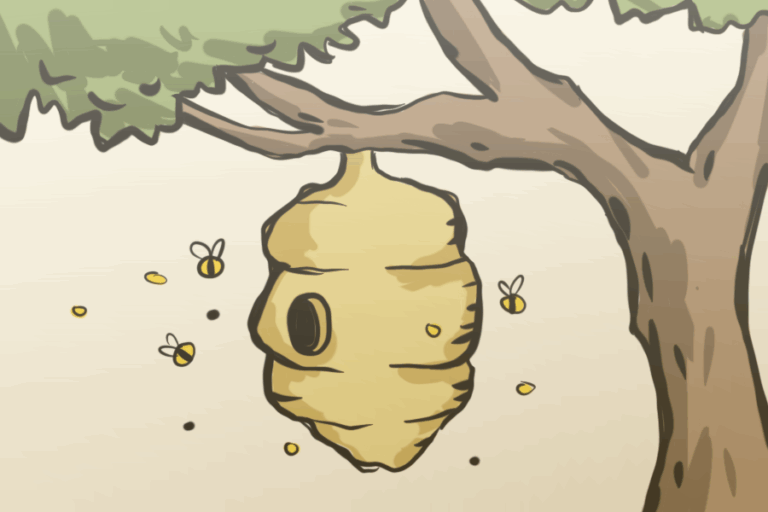
Following massive colony loss in early 2025, new methods analyzing temperature data help beekeepers predict issues in the hive

Research is still ongoing to identify the cause of the colony loss reported in early 2025 — elsewhere, new methods look to help beekeepers monitor their colonies’ health


By KATELYN BURNS— science@theaggie.org


Project Apis m. reported massive colony loss in early 2025, estimating around 1.6 million colonies lost in a report from April — a large number considering the National Agricultural Statistics Service (NASS) estimated the total number of United States colonies is 2.7 million. While there have been continuous losses of 30 to 50% in previous years — such as a colony collapse disorder first noted in 2006 — the recent losses have been especially drastic, drawing concern regarding food security, among other things.

While research to identify the cause of this most recent colony loss is ongoing, past research shows that bee decline is often driven by pests, pathogens, pesticides and poor nutrition.

Dr. Elina L. Niño, the director of the E.L. Niño Bee Lab and an extension specialist for the University of California working primarily with beekeepers, commented on the bee decline and the role of beekeepers.

“What we have come across in the past, and the reason why we started the California Master Beekeeper program, is that people get excited and want to help but don’t get the education,” Niño said.

For example, Varroa mites, a parasitic pest found in bee colonies, are one of the challenges that beekeepers have to manage. If beekeepers aren’t properly educated, their hives could become a breeding ground for these mites resulting in “mite bombs,” high numbers of Varroa mites that can end up spreading to neighboring hives and contributing to colony collapse. Varroa mites can also vector viruses to bees, such as the deformed wing virus.

“What we do know, from prior research, is that proper nutrition is really important to be able to deal with a lot of different potential issues,” Niño said.

Past research has shown that proper nutrition has helped bee colonies recover. Natural spaces, like public forests or federal and state lands, often have a lot of forage for bees. Additionally, planting flowers — which produce either nectar, pollen or both — are beneficial to bee colonies. Planting in ways so that they will bloom at different times of the year is beneficial for all pollinators, including honeybees, and this is especially important in places like California, where the mild weather year-round means that bees don’t fully go dormant. The UC Davis Bee Haven is a model for what a pollinator-friendly garden could look like in Northern California.

Regarding forage, the biggest concern is pesticide use. Surprisingly, the largest “misusers” of pesticides are actually urban gardeners — or “backyard gardeners” — or any gardeners not agriculture-related. Pesticides are easily purchasable at any local Lowes or Home Depot, but “backyard gardeners” aren’t necessarily taught the importance of following the labels.

An experienced beekeeper can detect these problems. For example, some diseases can even be smelled. However, while an experienced beekeeper is irreplaceable since human senses are usually able to pick up on things that machines cannot, technology continues to develop.

“One of the biggest costs for beekeepers is labor,” Niño said. “So, if there’s any way to reduce costs in that way, that would probably be beneficial for the beekeepers.”

In a paper published in early 2025 in the Association for Computing Machinery Transactions on Knowledge Discovery from Data journal, a team developed a system utilizing low-cost sensors to predict problems in the hive.

The team included Shamima Hossain, a Ph.D. candidate in the Electrical and Computer Engineering Department at UC Riverside, Dr. Christos Faloutsos, a professor in the Computer Science Department at Carnegie Mellon University, Dr. Boris Baer, a professor of entomology at UC Riverside, Dr. Hyoseung Kim, an associate professor in the Electrical and Computer Engineering Department and the chair of the computer engineering program at UC Riverside, and Dr. Vassilis Tsotras, a professor in the Electrical and Computer Engineering Department at UC Riverside, discussed their system and their decision to focus on temperature.

The system uses the hive health factor, which is computed from their Electronic Bee-Veterinarian Plus (EBV+) model using the environmental temperature and the hive temperature as inputs.

“The health factor is how close the actual temperature is to the ideal temperature of 35 [degrees Celsius],” Faloutsos said. “The bees can operate like an air conditioner or a heater.”

If the temperature is close to ideal, the bees are considered strong and healthy, and they can take care of themselves. If the temperature is off, indicating the bees are not thermoregulating, there might be problems in the hive — such as pests, pathogens, pesticides or poor nutrition.

“We already know that if bees have certain diseases, they can create social fever,” Tsotras said. “It’s very similar to your own body — if you have an infection in your body, the temperature of your body is increased to activate your immune system, [and] bees do the same — they use temperature as an immune defense.”

The system gave flags, changes that didn’t drop below the thresholds and warnings, alerts that occurred when changes caused the health factor to drop below the threshold. In the paper, they noted temperature changes resulting in flags or warnings following stressors or unexpected events, such as hive openings, sensor rechanging or replacements and mite treatments.

This paper used temperature changes to quantify general hive health, but the team hypothesized that eventually identifying specific activities or issues could also be possible.

“We basically quantified how healthy the bees are solely by temperature,” Kim said. “We are currently working on distinguishing different activities just using temperature, […] because [our hypothesis is] that different activities actually have a different pattern in the temperature changes.”

The system can allow beekeepers to remotely monitor many hives. Only when the warning is raised do beekeepers have to take action, decreasing the frequency of manual inspections.

A reason for focusing on temperature was that temperature sensors are generally much cheaper than other sensors and require less power to run.

“Accessibility and cost efficiency is really important for deploying these technologies across different kinds of beekeepers,” Kim said.

While a cheap device using off-the-shelf components was developed to better help beekeepers keep costs low, their research wasn’t focused on the sensors themselves.

“We developed a method [that] can be integrated with any temperature sensor found in the market,” Hossain said.

They are continuing to improve upon the system, working with several associations of beekeepers operating in Southern California and organizing conferences to give updates and receive feedback.

“This is something that the beekeepers are engaged with and they can give feedback,” Baer said. “The beekeepers are really excited about this.”

Written by: Katelyn Burns— science@theaggie.org

Homelessness continues to grow despite programs offering support

Community leaders and residents with lived experience discuss solutions and shortcomings in addressing homelessness


By EMME DUNNING — features@theaggie.org


Homelessness remains a pressing issue for many Californians. More than 180,000 people currently experience homelessness in the state — an increase of 23% since 2019, according to CalMatters and The National Alliance to End Homelessness. The issue of homelessness within Davis, in many ways, reflects this rising trend seen throughout California.

Becky Marigo is one community member trying to make a difference on this issue. Marigo is the program supervisor and case manager for Davis Community Meals and Housing (DCMH), a non-profit organization dedicated to providing the homeless community in Davis, with housing, food and support for long-term stability.

In her time working with DCMH, Marigo has come to understand just how complex the issue of homelessness is and what it truly takes to create lasting change.

“I don’t think folks understand the realities of what goes on with it,” Marigo said. “They think you can provide a house, and everybody’s going to want to change — that’s not it. The change comes from within the person. You need to continue to work with the person, support the person and support their situation. Every situation is different. Unless you’re willing to really deal with the issues at hand with each person, you’re going to have a hard time.”

DCMH employs this relationship-based approach with all of its clients, using the resources they have to sit down with people to understand and address their unique needs and challenges.

Rosa Michelle is a testament to what can happen when this support meets grit and determination. Today, Michelle is stably housed and sober — a reality that for many years felt impossible.

Michelle was born and raised in Woodland, where trauma and instability defined much of her life. It was in Woodland that Michelle found herself unhoused after a long struggle with domestic violence and drug abuse, issues that kept her without stable housing for 30 years.

“Drugs led me to lose my job, lose my home [and] lose my children,” Michelle said. “I ended up going to jail and going to prison.”

For years, Michelle worked to get herself into treatment and support programs, but repeatedly found herself let down by the resources available to her.

“I was in and out of programs,” Michelle said. “I would get all ready, and by the end of my program, there was no help. When we came out, we came out to the streets again. You just ended up back in that cycle, back with the people you used to be around. It was really sad to feel alive again in a program and be clean and be working on yourself, and then they’re like, ‘Okay, your time’s up, you [have] got to go now.’ And there’s nowhere for you to go. If family members don’t have anywhere for you to go or if the shelters are full, it’s devastating.”

Finally, through a referral from a local hospital after a heroin overdose, Michelle was placed in a Medication-Assisted Treatment program, which has brought her three years of sobriety and counting. This made her eligible for one of the sober housing and living facilities that DCMH offers, where she has been living for the past year and a half.

Through their resources and her own perseverance, Michelle now pays her own rent, works a part-time job, volunteers for DCMH and gets to regularly see her children and grandchildren.

“For over 30 years, I didn’t have a job, a car, nothing,” Michelle said. “Now, I have a car and a job, and I’m on [Supplemental Security Income]. I’m happy I have the support now — never in my life did I ever imagine I could accomplish this.”

While the existence of DCMH has been transformative for Michelle, it is far from a perfect solution. Open beds are few and far between, and the clean and sober requirements for their transitional housing can exclude those still grappling with addiction. Their dedicated staff works hard to bridge these gaps, but like many similar organizations, they need more funding to meet the growing demand for services.

Former Mayor Robb Davis is one of several city leaders who have long grappled with the issue of homelessness. These issues were a major focus during his time in office, a passion that has continued into his current role as the assistant director of housing resources at the UC Davis Aggie Compass Basic Needs Center. Davis believes that DCMH is doing important work but emphasized the need for more widespread support, both in terms of personnel and strategy.

“What [the case managers] do is amazing,” Davis said. “But there are two of them. We need 15 or 20 people doing that type of work on a regular basis — not two people who are just run ragged by the sheer magnitude of the problems.”

Davis proposed a system that draws on the same person-first approach of DCMH but incorporates more consistent outreach and coordination in connecting people with services and support.

“We need a pretty structured navigator system,” Davis said. “We need a group of workers who are trained to do constant regular outreach, filling relationships, getting people to their appointments and legal hearings, getting their [medications].”

Davis continued by describing how navigators can help provide transitional support for people while infrastructural developments are in progress.

“Navigators are really about inviting people back into the community,” Davis said. “I think that if we only had that and didn’t even have more rooms, we would be able to help a lot of people make a move off the street. It would be transformative.”

As the city of Davis continues to grapple with its rising unhoused population, advocates hope the city will prioritize more expansive, person-centered infrastructure. Whether that change comes may decide the future for hundreds in the county still waiting for improvements in services.

For additional resources on local support services, visit the websites of Aggie House, Fourth and Hope, the Willow Clinic and the DCMH.


Written by: Emme Dunning — features@theaggie.org


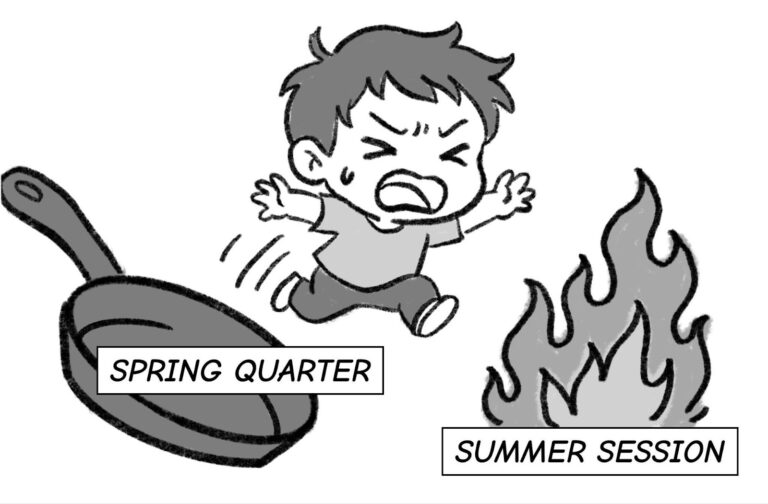
Out of the frying pan and into the fire: Davis heat can get higher, if you can believe it

Drawn by: Katherine Ong–– keong@ucdavis.edu

Disclaimer: This cartoon is humor and/or satire, and its content is purely fictional. The story and names of “sources” are fictionalized.

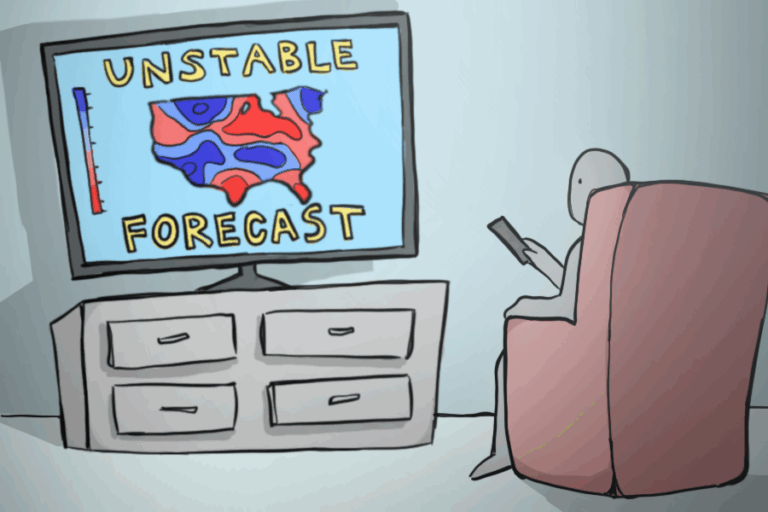
The bipolar nature of society

Forecast: a heavy downpour and fluctuation in political opinion


By NEVAEH KARRAKER— nakarraker@ucdavis.edu


I’ve never had an official tour of Davis; My first time on campus was a result of spontaneous exploration during a coincidental visit to town. What I did not expect, though, was to be completely drenched head to toe in rain, walking endless miles in the downpour.

Logically, springtime signifies wet weather. Yet, when people (including me) first think of Sacramento — and Davis by extension — they imagine a hot city in the middle of nowhere.

Once the school year officially began, I was surprised time and again by these short bursts of rainfall. It was 90 degrees one day, and the next I had to bundle up in layers or wade through flooded bike paths. This constant back and forth became exhausting. Bipolar weather is something I particularly detest, because you have to plan for both sides of the weather extremes. I’m convinced that there’s a team of people employed at weather stations, dedicated to frustrating users by making the most insanely inaccurate forecasts.

This unpredictability extends far beyond the skies — it’s ingrained within society. What’s in today is cringe tomorrow, like needing an umbrella in the morning and sunscreen by lunch. And, in many ways, it’s nearly impossible to accurately predict. Society can’t decide whether it wants productivity or self-care, perfection or authenticity. Every person will say a different thing, and before you know it, you get inundated by an abundance of opinions that progress into indistinguishability.

But then who’s calling the shots of what and when something changes? Is it the general consensus of the public, the dumb luck of a random post going viral or something much deeper?

Social media amplifies this disorientation. Each swipe becomes more addicting, contributing to an ever-decreasing attention span. And, on top of that, many other platforms are adopting similar styles that include short-form content similar to Instagram Reels. Users constantly require change for a dopamine boost, and, in a way, irregularity and inconsistency become the norm.

Surprisingly, some people prefer this inconsistency. It’s sort of like a challenge — seeing how long they can frolic in the sun before they burn. Either it’s an ingenious method to enhance adaptability or just plain ignorance disguised as adventure.

Still, there’s an allure to the chaos. It’s a classic search for danger and excitement;  Stable, consistent things, although good, become old very fast.

This constant change isn’t just found in your “For You” page on TikTok, but also in news publications. National outrage periodically surges with each event or policy passed, and it’s hard not to think it won’t have catastrophic long-term impacts. And yet, the next day, something new occurs. Rinse, repeat.

In our current political climate, federal actions are like storms — unexpectedly and abruptly rolling in before vanishing. And, like storms, the political opinions of others rapidly sway over time. An ideal previously thought to be favorable is actually discovered to be harmful. The volatility of politics and the media results in erratic clashes between the left and right, citizens and government, the education system and students.

This boredom and inconsistency we’ve grown accustomed to (and, in some cases, fond of) keep us incessantly occupied with the next headline or trend. Oddly enough, we start craving chaos rather than feeling alarmed by it.

Hence, the bipolarity of trends, expectations and political opinions redirects our attention from the present to the future, bringing our focus away from historic events and their significance. With each new piece of information the media presents, the previous occurrences slowly fade from our minds. This unreliability is one thing all media have in common and is fueled through the consumption of misinformation. Amazingly, most people are gullible to what they see or hear; We often forget the original design of social media was for entertainment.

In our modern world, we’ve become desensitized to change. Instead of questioning why something is unstable, we simply accept it. This numbs our critical thinking and analytical skills and ends up giving more control to the media as we continue to scroll.

The weather can’t be controlled and neither can the tide of change. But we can adjust our sails to navigate the whirlwind of these unpredictable environments. So, don’t postulate about the world — stay aware of current events, and don’t put the entirety of your faith and trust in forecasters, for we may not know what is truly happening behind the scenes.


Written by: Nevaeh Karraker—nakarraker@ucdavis.edu


Disclaimer: The views and opinions expressed by individual columnists belong to the columnists alone and do not necessarily indicate the views and opinions held by The California Aggie.

UCD Squared: University College Dublin renews partnership with UC Davis for global research

The renewed alliance focuses on sustainable food systems, environmental health challenges, Artificial Intelligence and climate change

By ROBIN FRANKLIN — campus@theaggie.org

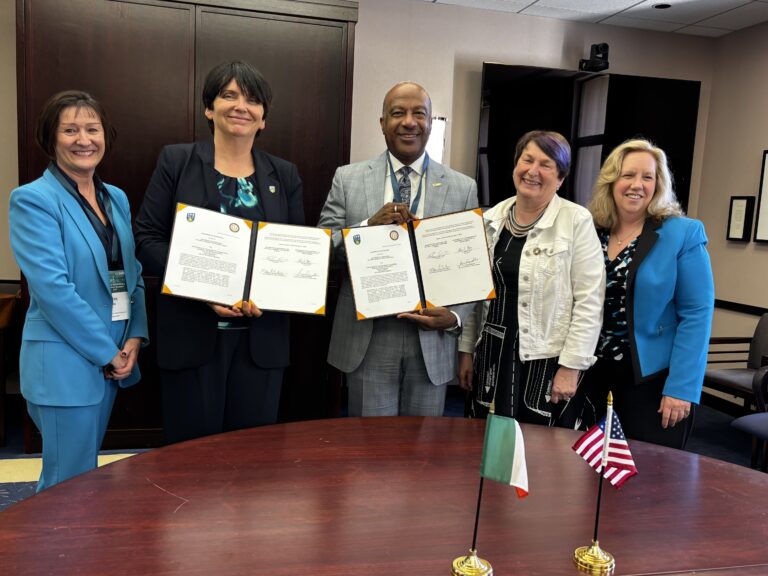
Aside from acronyms, UC Davis and University College Dublin have much in common, one of which is a shared vision for academic excellence and research in tackling global problems. The two universities recently renewed an agreement, affectionately titled UCD Squared, which affirms their connection and collaboration.

Dolores O’Riordan, University College Dublin’s vice president for global engagement, said the most exciting part for her in this alliance is addressing the global challenges of sustainable food systems and climate change together.

“There has been a long-term connection with [UC Davis],” O’Riordan said. “It was through those relationships that it was very obvious that our universities had an awful lot in common, across the disciplines, but overall from an agriculture, food and medicine perspective.”

University College Dublin is currently the only university in Ireland with such an interdisciplinary approach in assessing all of those areas of focus together. Both Ireland and the United States are major food producers for the rest of the world, elevating the impact of a university partnership supporting agricultural research and addressing climate change.

“We shared very much a mindset long before it was popular to have a collaborative interdisciplinary approach,” O’Riordan said. “It’s very critical in terms of building the long-term trust to get to where we got at the signing of the renewal of the treaty.”

The latest agreement was signed by UC Davis Chancellor Gary May and University College Dublin President Orla Feely at the UC Davis campus in early May, during the Universitas 21 — an international group of research universities — Annual Network Meeting.

“This latest agreement between our universities marks an important step forward in the enduring and fruitful partnership which has existed for over a decade,” Feely said at the signing.

“At UC Davis, we believe that global collaboration is essential to creating equitable, sustainable solutions to the world’s most complex problems,” May said. “We’re excited about what the future holds and look forward to what our institutions can achieve together in the years ahead.”

O’Riordan, like many other academics at the University College Dublin, has maintained professional connections to UC Davis for a long time. O’Riordan’s began when her doctorate degree advisor moved to Davis. Later, once she became a faculty member, students from her own lab traveled to Davis to complete their studies there as well.

One way the revamped alliance will help drive research is by helping to explain how diet-driven diseases and crop field health trends can be predicted with the use of Artificial Intelligence. This helps researchers prevent problems in food systems and step in quickly to remediate agricultural issues before it’s too late.

As recent energy costs in Ireland have soared and impacted their food systems, they have also been able to learn sustainable energy practices from UC Davis. Homeside, the agreement allows UC Davis to view sustainability from the broader cultural, political and economic perspective that the University College Dublin offers.

Funding is always tricky when it comes to global agreements, but the universities are striving to support one another. The reaffirmed partnership also strengthens and safeguards international research so that jurisdictions can continue to provide the necessary research funding for both universities.

For O’Riordan, the interdisciplinary nature of combining expertise is what makes partnerships like these so important.

“There’s synergy in terms of where we have strengths and where UC Davis has strengths,” O’Riordan said. “We were speaking the same language when others were more one-sided with their approach. That’s an exciting part of the strategy — learning from each other.”

Editor’s Note: A previous version of this article, printed in the May 30 issue, incorrectly gave the title of University College Dublin’s Dolores O’Riordan. She is the school’s vice president for global engagement, not director of the Institute of Food and Health.

By: Robin Franklin — campus@theaggie.org

To our readers, thank you

The California Aggie has grown so much this year, all thanks to your support 


Dear Readers,


Firstly, thank you for your continued support and readership. For the last 100+ years, this newspaper has been serving the campus and local community — we are proud to be your trusted source of news in Davis. Believe it or not we are quickly approaching our last few issues of the academic year. Don’t worry, we aren’t going anywhere, but the end of this school year is almost here. That being said, I wanted to write this letter to highlight some of our accomplishments and share some updates with you. 

On May 7, the ASUCD Senate passed our 2025-2026 operational budget. One of my goals as Editor-in-Chief this year has been to be transparent. So I admit, the budget process was not an easy accomplishment, but it is one we take pride in. Frankly said, without your continuous support, we wouldn’t be where we are. 

We had reason for serious concern regarding support for our proposed budget before the first round of budget hearings, so we responded with an editorial explaining the process and calling for ASUCD to support our operations. Our editorial was signed in support by several student newspapers including: UC Irvine’s New University, UC San Diego’s Guardian, UC Berkeley’s Daily Californian and UCLA’s Daily Bruin. The New University even wrote an editorial of their own regarding our print operations.

It’s been a long journey, but we are proud to share that next year we will be able to maintain our print operations and compensate our staff. I’m proud to share that next year we will be reintroducing paid positions that had been lost in the previous years. Thanks to your support we will be able to hire a new media manager, a videographer, an assistant layout manager, paid assistant editors and more. If you’re interested in any of these roles be sure to follow https://vacancy.ucdavis.edu.

In other news, we also recently hosted our first alumni conference. Our panel consisted of Sacramento Bee Visuals Editor Nathaniel Levine, former Editor of the Almanac Angela Swartz and Pulitzer Prize Winner / San Francisco Chronicle Investigative Reporter Matthias Gafni — all California Aggie alumni. I’m grateful for all those who could attend and forever thankful to our staff who helped me organize this event. This was certainly one of my highlights during my time at The Aggie. 

I’ve dedicated myself to this newspaper for the last four years and I’m proud to share that in my time as Editor-in-Chief I’ve seen our newspaper grow so much. In my time at this paper, one thing has been constant: we have some of the most talented staff and loyal readers that any publication could wish for. I don’t anticipate this changing anytime soon. If this is my last letter from the editor, I’d just like to say thank you. 

Maybe you only pick up this paper for the crossword, maybe you’re a Davisite who reads us every Thursday, whoever you are, this newspaper will always be for you. No matter who you are, dear reader, thank you. 


Best,

Chris Ponce

Editor-in-Chief


If you ever wish to reach out to me, please send me an email at editor@theaggie.org.

Police Accountability Commission reviews complaints toward Davis police

The meeting focused on the auditor report review of police military equipment


By YUENJO FAN — city@theaggie.org


On May 5, the Davis Police Accountability Commission met to discuss the police auditor update and an annual review of the Davis Police Department’s military equipment.

The police auditor’s report specifically focused on two recent police incidents. The first involved a teenager who claimed to have been stopped and momentarily detained by police on her way home from the convenience store on suspicion of shoplifting. Following this incident, the mother of the teenager reported her concern that this may have been attributed to racial profiling.

Stephen Connolly, an auditor representative, said that the Davis police consequently opened a formal investigation into the issue.

“We were really impressed with that investigation,” Connolly said. “The allegations of racial profiling and problematic interactions between the police and young people are two very sensitive areas, and this checked both of those boxes. We thought the department was very conscientious about trying to do a thoughtful job of verifying and figuring out what the basis of the young woman’s complaints to her mom had been about.”

Furthermore, the Davis police interviewed the teenager, her mom and a school representative to discuss the incident. Police also looked into on-duty officers at the time and the GPS locations of patrol cars, yet neither fit with the teenager’s claims. Ultimately, Connolly explained how the police could not verify the allegations made by the young woman, though due diligence was done during the investigation.

Commission Chair Dillan Horton brought up his concerns about the difficulties of identifying racial profiling, due to the blurred nature of the issue. He specifically noted past incidents where Davis police had investigated racial profiling but yielded no conclusive evidence.
“It makes me worry about a system that we as a society have created where there is an impossibility to determine a racial motivation, unless it is the most overt, in-your-face kind of version,” Horton said. “I know that’s not a solvable problem for the [auditor], but it’s a continuing concern that I have when there is a review of this type of complaint.”

The second case regarded a call for service following a quarrel between two Davis residents. This issue arose after the caller felt that one of the responding Davis police officers was dismissive of her and did not take her concerns seriously.

“While it fell short of being formal misconduct, we certainly thought there was room for counseling the officer, working with him and sharing her perspective a little bit,” Connolly said.

Following the incident, the police attempted to reach out to the woman for further inquiries, but when she refused to participate, the investigation was dropped. Connolly described the approach as “suboptimal,” with the auditor’s report drawing on three different recommended approaches toward a similar situation in the future.

Moreover, the commission also conducted an annual review of the Davis Police Department’s renewal/usage of inventory deemed as military equipment. Commission Member Mary Bliss pointed out the lack of mentions about police tasers, questioning whether Davis police should keep a closer eye on their usage and stock.

“There’s no policy that I could find on the use of tasers,” Bliss said. “We have three complaints coming up about the use of tasers, […] and there’s a huge safety issue with it. Not that I think we misuse them, but I do think it is an important thing that I would like us to look at more.”

Aside from this, the Police Accountability Commission did not provide any major pushback or critique on the military equipment review. The Davis Police Accountability Commission meets on the first Monday of each month at City Hall. More information can be found on their website.


Written By: Yuenjo Fan — city@theaggie.org


Yolo County appoints new director of Health and Human Services Agency

Effective June 4, Mónica Morales will take on the director role for HHSA


By OLIVIA HOKR — city@theaggie.org


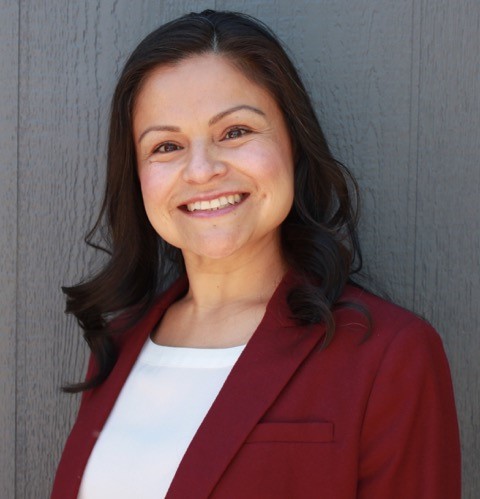
Yolo County recently announced the appointment of a new director of the Health and Human Services Agency (HHSA), Mónica Morales.

The HHSA provides a wide variety of services dedicated to promoting health and safety throughout the county. The department ranges from services to assist the community with behavioral and mental health, homelessness, substance use, public health and various welfare programs.

Morales previously served as director of the Health Services Agency for Santa Cruz County. She received a master of public administration in public policy and administration from Columbia University and has a Bachelor of Arts in sociology from UC Santa Cruz.

In the press release shared by Yolo County, Chair of the Board of Supervisors Mary Vixie Sandy and County Administrative Officer Mike Webb expressed enthusiasm for Morales’ appointment.

“We are thrilled to welcome Mónica Morales to Yolo County,” Vixie Sandy said in the press release. “Her demonstrated success in managing complex health and human services systems, along with her commitment to innovation and equity, make her an exceptional choice to lead HHSA. [Morales’] collaborative leadership style and strategic approach will strengthen our ability to serve residents and address the growing needs in public health and human services.”

Webb, who worked for the city of Davis for nearly three decades and recently took the position of Yolo County administrative officer, reflected on Morales’ work history and professional skills that make her the right fit for the job.

“With her extensive professional experience and leadership in the critical services that HHSA provides to our community, and her expertise in navigating challenging resource constraints, [Morales] is the right person at the right time for Yolo County,” Webb said in the press release. “[Morales’] strategic thinking, collaborative approach, and proactive communication skills will facilitate continued effective and efficient delivery of vital services and partnerships to those most in need. I am excited to welcome [Morales] on board as a dynamic leader of the Yolo County HHSA team.”

In her previous role as director of the Health Services Agency, Morales directed reforms concerning welfare programs, mental health services, substance abuse, emergency medical services, public health and clinical services.

Morales is filling the spot of Nolan Sullivan, who previously held the position from 2007 until early 2025. During this time, he was a division director, supervising all of Yolo County’s eligibility and employment programs. He now works as the director of the Department of Health Services for Sonoma County.

Morales shared her appreciation and eagerness to serve the people of Yolo County and promote health and safety in the press release.

“I look forward to working with the dedicated HHSA staff and community partners to advance the health and social needs of the community in an equitable way during these uncertain times,” Morales said.


Written By: Olivia Hokr — city@theaggie.org


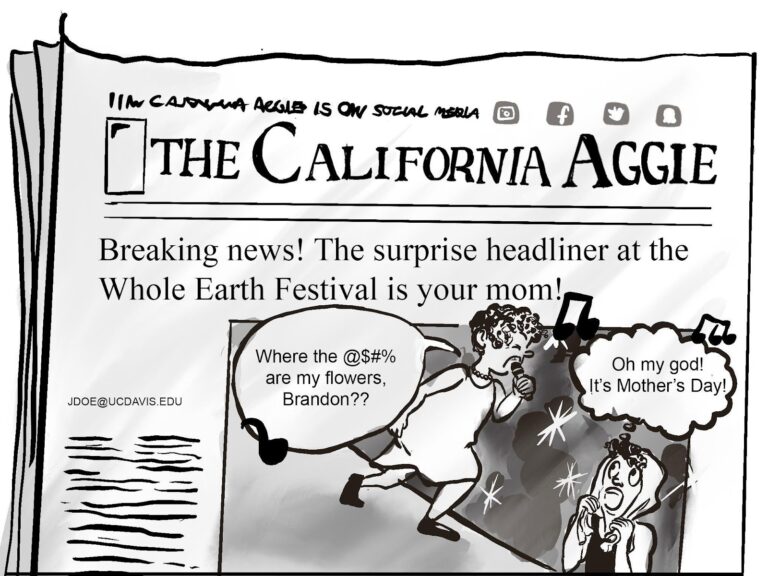
Whole Earth Festival gets a Mother’s Day surprise

By AILI KOGA — aakoga@ucdavis.edu

Disclaimer: (This cartoon is humor and/or satire, and its content is purely fictional. The story and names of “sources” are fictionalized.)

Sacramento band Lo-Fi Lowdown electrifies Sudwerk Brewing Co.’s outdoor patio

As part of Sudwerk’s Concert Series, patrons enjoyed spirited tunes of classic rock and blues


By PIPER AWEEKA — city@theaggie.org


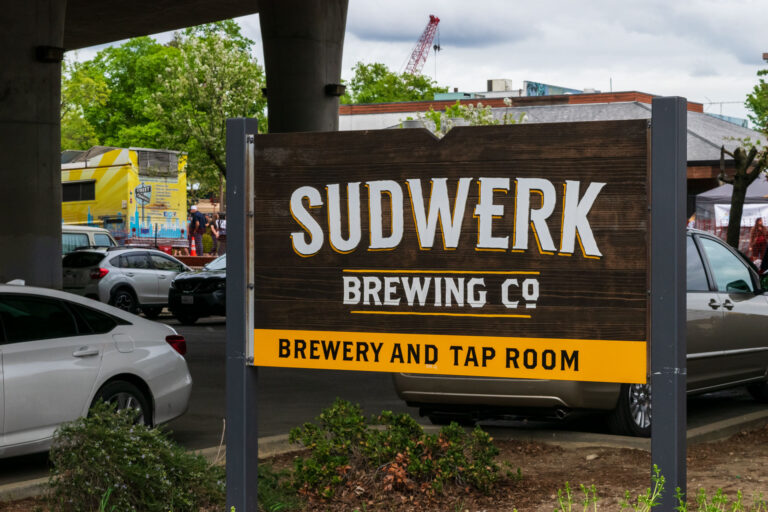
Sacramento band Lo-Fi Lowdown held a set at Sudwerk Brewing Co. at 7 p.m. on May 8. The set was part of Sudwerk’s Concert Series, featuring touring and local artists for live performances.

With the sound of electric guitar, drums and banjo ringing in the air, Dana Hanson, musician and girlfriend to one of the six band members, gave a brief rundown of Lo-Fi Lowdown.

“James [Berry] is the lead,” Hanson said. “He plays banjo [and] guitar and sings. It’s really cool, because this is all really done with electric instruments. All of them play multiple instruments. They do half their own music, and then they take rock and roll and make it bluegrass.”

Clay Walton-Hadlock, mandolin and occasional guitar player, as well as backup vocalist for the band, discussed the origins of Lo-Fi Lowdown.

“[Berry] put out a Craigslist post, I want to say spring of 2021, when things were just starting to open up after [COVID-19],” Walton-Hadlock said. “He was saying he wanted to put together an americana, roots, rock, bluegrass-inspired classic rock ensemble. What I usually hear, what people are impressed by, is the vocal harmonies, which I think is unusual for an all-male band. I think what sets us apart is not only can we be a jam band, but we can also do some pretty decent open work.”

Chris Preston, a sound contractor for Sudwerk, spent most of Lo-Fi Lowdown’s performance sitting at a table nearby tinkering with sound quality. In working with the brewery, Preston expressed the success that Sudwerk’s Concert Series has had so far.

“The Concert Series has been going great,” Preston said. “It’s a great thing in the community to put on free music. Whether it’s the free Concert Series or the ticketed concerts, Sudwerk has become a really good music venue.”

Sarah Martinson, lounging in a patio chair while sipping beer, echoed Preston’s sentiment about the importance of Sudwerk’s Concert Series for the community.

“I’ve lived here [in Davis] for about two years,” Martinson said. “We come here pretty regularly, at least about once a week for the food, the drinks and also the amazing live music.”

With consensus around the success of Sudwerk’s free performances, Lo-Fi Lowdown shares an enjoyment for the Davis atmosphere. Hanson, in describing the reasoning behind this show at Sudwerk, relayed their own pleasure for the small city.

“[Berry] does all of the concert coordinating for the band,” Hanson said. “But the thing is, they like Davis. It’s Davis, and it’s fun.”

With Berry passionately harmonizing with his band behind him, Walton-Hadlock highlighted Lo-Fi Lowdown as the lead singer’s true passion project.

“[Berry] would never say it, but we all know it’s his band,” Walton-Hadlock said. “It’s his concept.”

As Hootie and the Blowfish and Lo-Fi Lowdown’s exclusive “Oaktown Buddha” reverberated into the dusk, patrons tapped their feet and sang along heartily. The patio at Sudwerk Brewing Co. was scattered with a happy audience, eating, drinking and singing along with the harmonious melodies.

Preston, taking a break from sound contracting, encapsulated the enjoyment of those listening.

“There’s no doubt about it, the five-part harmony is pretty killer,” Preston said.


Written By: Piper Aweeka — city@theaggie.org


Our silence speaks volumes

Parallel play as an adult model of social intimacy


By ABHINAYA KASAGANI— akasagani@ucdavis.edu


So much of my adult life has been informed by the enclosure of my friendships within four walls, stationed in the same room and space. I do not think I understand much about the world outside of two girls sprawled across the floor listening to Fenne Lily sing “Car Park,” or rewatching the first season of HBO’s “Girls.” The continual influx of friends through my door — with no expectation of worldliness from me — is why I am able to hold this happiness in the palm of my hand.

In the simplest of words, parallel play is primarily about “children playing independently in the same area, with the same materials, but with minimal engagement with one another,” according to the Neurological and Physical Abilitation Center. What initially starts with building blocks or coloring, with the passing of age, transforms itself into more interactive play, becoming extremely valuable in adulthood.

For children, the integration of parallel play into their playdates comes more organically. Free from implicit biases or inhibitions, they prioritize physical presence over communication. The inclination for parallel play in adult relationships, however, often gets overshadowed by our need for more structured interaction or socialization, where we are often predisposed to evaluating our friendships based on the depth of conversation and shared activity they provide.

You pencil your friends in for coffee, meals or drinks, demanding from these relationships constant engagement that can be overstimulating and overwhelming for both parties. This expectation of conversation inhibits your relationship and, as a result, pressurizes it. Parallel play offers you an alternative: low-pressure intimacy. This approach to social togetherness can allow you to be present and meet more realistic demands, while simultaneously reevaluating your own, without the constant need for dialogue or active engagement.

The need for new models of social intimacy is a byproduct of the quickness with which the world is evolving and changing. The COVID-19 pandemic only accelerated this shift, forcing many of us back into our holes of solitude (which were, more often than not, computer screens), making it difficult to readjust to the constant flux of information we were bombarded with.

Parallel play antidotes these overstimulating settings, allowing us to recognize the importance of finding new ways to connect with one another that don’t require consistent verbal interaction. Moving away from the traditional approach to “quality time” that hinges on shared conversation can lead to rewarding moments of closeness — the anxiety that comes with keeping up the conversation and constant performance is done away with.

The beauty of this model is that it not only manages your anxieties regarding your relationships but also allows you to remain accountable. Modern adulthood looks dystopian at times, with lives distilled through layers of media — you never fully know if you or others are being taken at face value. Interacting within a common space like this allows you to prioritize your time: you might read together, work alongside one another or finally devote yourself to a hobby you’ve always wanted to learn. What was once the stress of overscheduling or the insistence that “quality time” be of high quality now requires no planning.

Many already participate in forms of parallel play without considering it as such. The appeal of parallel play as an adult model of social intimacy eliminates further pressure within social settings for introverts, allowing them to enjoy the company of others without the expectation for reciprocity — engagement is encouraged at your own pace.

The science behind parallel play suggests that non-verbal communication can strengthen social connection, not only through the release of oxytocin, but also through the theory of attachment, which claims that presence stimulates feelings of safety, familiarity and trust. The practical implementations of parallel play include but are not limited to: social media-free gatherings, collective hobbies, book clubs, silent retreats, craft nights, walking and yoga. Inculcating this method of play is fairly easy for those who find themselves able to limit their use of technology and maintain a healthy work-life balance.

The primary challenge with embracing parallel play as a social model is overcoming the misconception that intimacy inherently demands interaction. Some might feel as if, by not speaking, the relationships lack an arbitrary fundamental element — this is not necessarily the case. Understanding that being present is what’s most necessary to foster intimacy can help veer one away from this school of thought.

The rediscovery of parallel play provides adults with access to novel vocabulary to define social intimacy, suggesting the cultivation of meaningful and wonderful relationships without an itinerary. Listen to the loudness in the silence, and hear it speak volumes.


Written by: Abhinaya Kasagani— akasagani@ucdavis.edu


Disclaimer: The views and opinions expressed by individual columnists belong to the

columnists alone and do not necessarily indicate the views and opinions held by The California Aggie.


Davis celebrates National Bike Month with rides, events and community initiatives

With events for every rider and tools to get started, Davis makes biking accessible, fun and community-driven this May


By ALMA CULVERWELL — city@theaggie.org


May is National Bike Month, and the city of Davis, long known as a national leader in bike-friendly infrastructure, is celebrating with rides, special events and incentives that encourage residents to bike more.

National Bike Month, established in 1956, aims to promote cycling as a sustainable, healthy mode of transportation for community members. In the Sacramento region, including Davis and Yolo County, May has been celebrated as National Bike Month for more than two decades.

May is Bike Month is a regional campaign run by the Sacramento Area Bicycle Advocates (SABA) that celebrates local biking culture and encourages both new and regular riders to leave the car at home.

Jennifer Donofrio, the senior transportation planner for the city of Davis, explained the goals for this year’s bike month.

“The goals of May is Bike Month are to encourage people to try bike riding and thank and celebrate people who ride their bike,” Donofrio said. “We measure success using the new NorCalGO app. People who participate in bike month log their trips on the app to win prizes. They also have access to incentives for bike tune-ups, accessories and money toward a new bike.”

Residents can participate by logging their bike rides, whether to work, school or around town, through the app or website. Each ride earns points, and participants can track their progress throughout the month. Rides can be logged automatically or manually, and even added retroactively until the end of May.

SABA hopes that this year’s campaign helps new riders discover the joy of biking. La Reina Lavon, SABA’s community engagement manager, further explained these sentiments.

“We’re hoping riders can have fun this May is Bike Month — that’s the main thing,” Lavon said. “It’s about getting outside, feeling the benefits of a bike ride and having a positive impact on the environment. We’re hoping people will feel encouraged to ride more often, try out a new route around Sacramento and encourage others to do the same.”

To reach hesitant or new riders, SABA is partnering with local groups to host events throughout the month, ranging from maintenance workshops to group rides and bike parties. Lavon described some of the upcoming events and goals of the organization to help increase ridership.

“We show that biking is for everyone,” Lavon said. “Additionally, our platform has local information on where to find bike shops, quick courses on how to build biking confidence, how to prepare for riding in all weathers and loads more.”

Davis has historically been recognized for its unique and inclusive approach to cycling infrastructure. In 1967, it became the first United States city to construct a dedicated bike lane, which paved the way for decades of urban bike planning to follow. Today, Davis features more than 100 miles of bike lanes and over 4,000 bike racks. The city’s bike-friendly culture dates back even further, with early plans for bike paths and tunnels emerging in the 1960s. In the early 1990s, Davis became one of the first cities in the country to install bike signal lights, another landmark for protecting cyclist safety.

Davis residents have a full calendar of events to look forward to this month. Loopalooza, which was held on May 4, is a family-friendly community ride organized by Bike Davis, The Bike Campaign and the Safe Routes to School Program.

Trish Price, the interim president for Bike Davis, explained the organization’s involvement in the month-long event.

“We helped organize the Loopalooza with the city,” Price said. “We shared a station with Peter Wagner and his WhymCycles. We’re also hosting an Energizer Station on May 16 at Third and B Streets, where cyclists can get some May is Bike Month swag and snacks, meet some Bike Davis board members and tell us about their cycling experiences in and around Davis. Finally, we’re promoting the annual Bike Scavenger Hunt, organized by the city and UC Davis design students, on May 31.”

She emphasized the organization’s collaborations and advocacy efforts.

“We table with Cool Davis at the Davis Farmers Market on the third Saturday of each month, and many board members attend the monthly Davis Bike Cafe on the fourth Friday of the month,” Price said. “We are in regular contact with other local advocacy groups like Sacramento Area Bicycle Advocates and CalBike.”

On Saturday, May 17, the Davis Double Century will challenge cyclists with a 200-mile ride through the counties of Yolo, Napa and Lake. The city is also participating in Celebrate Davis, a Davis Chamber of Commerce event scheduled for May 16 that offers valet parking for bikes. During Bike to Work Week from May 13 to 17, residents are encouraged to commute by bike with various incentives throughout the week.

Toward the end of the month, the city will host a Community Bike Party on Friday, May 30, a festive celebration featuring bike-themed activities and entertainment. Additionally, residents are invited to participate in the Davis Bike Scavenger Hunt, an event that encourages cyclists to explore local landmarks and neighborhoods.

Donofrio explained how Bike Month supports the city’s long-term sustainability and transportation goals.

“Bike Month is fun,” Donofrio said. “It is meant to highlight how easy and comfortable it is to get around Davis by bike. The city encourages people to use bikes as a form of transportation. Biking is meant to be enjoyed.”

Lavon echoed this message, noting that community engagement is key to the campaign’s success.

“Community is super important to us,” Lavon said. “Our May is Bike Month platform allows riders to post pictures of their activities, give each other high fives and words of encouragement. Using the community feedback map on our app, riders can understand the comfort ridings of other riders in the Sacramento area and plan their ride accordingly. Without the Sacramento community, it wouldn’t be possible to run such successful events each May.”

Donofrio also explained the city’s goals surrounding long-term engagement with biking beyond May.

“We have year-round activities,” Donofrio said. “We like to say that every month is bike month in Davis.”

Lavon explained the advice she would give to first-time or less-experienced bike riders.

“Enjoy it,” Lavon said. “You don’t have to ride for miles and miles every day — just one short bike ride can really boost your mood. Take a look at the great events going on around Sacramento, too.”

Logging only one ride before the end of the month enters you into a drawing for a brand-new bike. Registration and more information are available on the SABA website.

Price also shared why Bike Month is important to the Davis community.

“Even in Davis, it’s so easy to get into the habit of just hopping in the car to get to places that are easily accessed on foot or on bicycle,” Price said. “Unfortunately, owning a car is a luxury that many can’t afford, and the presence of cars makes our streets less safe and more unhealthy for everyone. Bike Month gives us a chance to celebrate alternative, slower modes of travel that enhance our personal and community well-being by bringing people into direct contact with each other and their surroundings.”


Written By: Alma Culverwell — city@theaggie.org 

The Basement Gallery and Open Walls Collective come together to celebrate graduating student artists, senior show at Pence Gallery on June 7

Board members speak to the significance and process of the upcoming collaborative event 


By SAVANNAH ANNO — arts@theaggie.org


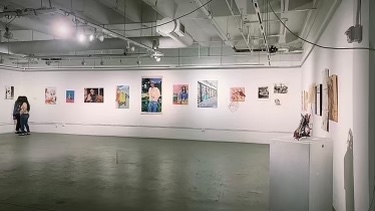
Creating their own portable gallery walls from the ground up and converting the Art Building’s basement into an exhibition space, neither Open Walls Collective (OWC) nor The Basement Gallery (BG) are unfamiliar with bringing a complex vision to life. This June, the student-led organizations will be teaming up to showcase the work of graduating UC Davis artists, displaying as many different mediums, voices and themes as possible.

“We had multiple meetings during winter quarter to discuss potential collaborations,” Lead BG Director Shaelyn Smith, a fourth-year art studio and design double major, said. “Once we were introduced to the idea of creating a joint senior show at the Pence, we were sold. Bringing graduating student artists deeper into their professional practice excites us, so we figured this show would be a very fitting send-off.”

In the planning process since March, the senior show will be hosted at the local Pence Gallery. While it will be The Basement Gallery’s first time curating a space outside of their home-base, Open Walls Collective previously worked with the Pence Gallery to host “Are you better than AI?,” an interactive exhibition including one secretly Artificial Intelligence produced work.

“One of the key differences this year is our mindful curation,” Open Walls Collective member Krishna Das, a fourth-year art studio major, said. “I made an effort over the past few quarters to pay close attention to my peers’ unique voices and mediums, and it’s important to us that the spotlight we are creating for our community highlights how they want to be seen.”

Crediting the Pence’s Education Director Katharine Schultz, a UC Davis alumna and past member of BG, for the opportunity, OWC will return to the space in hopes of building even greater momentum as an emerging art collective.

“It’s exciting,” Das said. “She once helped run The Basement Gallery as a student, and now she’s generously providing us with the space to showcase the incredible talent of our graduating seniors. Through this collaboration, we all want to establish a working relationship between the undergraduate community and leading local, regional entities.”

With enough space to fit both organizations’ ideas and curation practices, the June 7 senior show is projected to be one of the largest events yet for both groups.

“In The Basement Gallery, we usually try to choose a proportional number of mediums based on what’s submitted and at least three sculptures to fill our space,” BG Director of Communications Abby O’Sullivan, a third-year art studio and cinema and digital media double major, said. “However, at the Pence, we have a lot more room to fill and are thrilled to be able to accommodate as much work as we can. This show is a celebration of everything these seniors have accomplished, and it’s important to include as much of their work as we’re able to.”

No stranger to the concept of a senior show, The Basement Gallery has been inviting groups of graduating art studio majors to exhibit their final works for years. Hosting a different show almost every week of each spring quarter, BG allows student artists to experience the process of creating an exhibition from start to finish: the artists curate, install, host and de-install their own show.

Lola Jung, a fourth-year art studio major and BG preparator, who last year referred to herself as “The Basement Gallery’s biggest fan,” discussed the value of the senior shows in a past interview with The California Aggie.

“I love the student-centered nature of it all,” Jung said. “I think it’s really good at actually preparing art students for a future career. A big factor that college art curriculum lacks in general is practical application, actually getting involved in the art world, in the people, and actually setting up art in a gallery.”

In this new expansion of senior shows into the Pence, soon-to-be-graduated students will be able to see their work celebrated and curated within a professional art institution, furthering the BG and OWC’s collective mission to highlight and set artists up for success beyond their time at UC Davis.

Months in the making, The Basement Gallery and Open Walls Collective continue to plan and curate the upcoming show, currently working through a long list of art submissions.

“As a third-year, I feel like this show will be incredibly bittersweet for me,” O’Sullivan said. “I’m so proud of us and everything we’ve accomplished, and this show is going to be a celebration of us. The Pence show will give us one last chance to put an exhibition together while spending time with each other.”

Join both organizations as they reveal the final coalescence of student artists’ unique and moving works on June 7 at the Pence Gallery.


Written by: Savannah Anno — arts@theaggie.org 

Relationship advice from the chronically single people

The REAL experts on dating


By MADISON SEEMAN — meseeman@ucdavis.edu


Modern dating is hard. It seems like messy relationships are around every corner: drama, cheating and — worst of all — situationships. Not for me, of course, but fragments of totally ethical eavesdropping and the stories from friends paint a dire picture of the Davis dating scene. Maybe I’m just cynical, or maybe I’m just chronically single, but it’s become clear to me that you all need some advice on how to either keep your relationships clean or leave them behind. 

A four-day sixth-grade relationship and what feels like 21 years of watching strangers (and maybe some of my friends) make terrible choices have prepared me for this moment. All the relationships where I’ve been the invisible hand — the whisper in someone’s ear — have given me wisdom I can now impart unto you.

So, no, maybe I wasn’t the actual participant; Call me more of a director than an actor. But, chronically single people know the most about your relationships — it’s true! We’ve been there for every first date, observing the break-up-make-up cycles. You all are Sisyphus, and we watch you from the bottom of the hill, rockless and completely happy.

Ok, so maybe I’m also a little bitter. But I’m here to help! I rounded up some of my chronically single friends to gather relationship advice:

So you’ve captured your target on the dating scene. You’re learning new things about them; you might even find them quirky. But these “quirks” can actually be signs of real relationship-ending issues.

“My friend found out this guy he was seeing was using ChatGPT to draft his texts,” my single friend, Oscar, said. “Like, um, grow up?” 

If they’re using ChatGPT for their friends, chances are they’re using it for you, too. Do you want to date a robot? Do you want every text you receive to waste a bottle of water? Do you want to date someone who can’t come up with a response to a text of your day? Call me crazy, but I consider that a pretty clear red flag.

Delilah, another proudly single friend of mine, had another take.

“Hating Chappell Roan; it’s an instant no for me,” Delilah said. “Disliking is one thing, but hate? Just say you hate women. And that applies to women, too!”

And, if you happen to be a man-dater, my single roommate, Elysia, tells me you can know the quality of a man from how honest he is about his height. 

“If he’s lying about his height, what else is he lying about?” Elysia said. “What other realities will he refuse to accept?”

My personal advice? As the relationship progresses, you may find your music tastes changing, reminding you of your significant other. While it’s only natural, it’s important to balance out your soft romantic playlists with some cold, hard, reality-check music. “No Scrubs” by TLC, ”Before He Cheats,” “Maneater” (both the Hall & Oates or Nelly Furtado version): all great choices for reminding you that it’s never worth it to put up with anything less than you deserve.

Whether or not the relationship is successful, there’s always something to win from forcing your significant other to share your interests. If you break up, it haunts them, and if you’re together forever, now you can share hobbies!

And of course, always remember the classics: communicate, establish healthy boundaries and never settle. Why invest your time in something that isn’t guaranteed to last? Call it delusion or call it hope — it’s kind of beautiful in an unavoidable trainwreck kind of way. If anything, at least it’s character development, and maybe even the start of something wonderful. 

Whatever you do? Listen to your single friends.


Written by: Madison Seeman –– meseeman@ucdavis.edu


Disclaimer: (This article is humor and/or satire, and its content is purely fictional. The story and the names of “sources” are fictionalized.)


UC Davis Athletics scores big on Give Day, raising over $400 thousand through donor support and competitive spirit

The department celebrated one of its most successful fundraising efforts yet, securing crucial resources


By LUCIENNE BROOKER — sports@theaggie.org


With 25 teams competing in various collegiate leagues across the country, UC Davis Athletics is a big-budget operation. While much of this budget comes from event revenue, merchandise sales and generous donations, one of the most important days of the year for the Athletics Department is Give Day. UC Davis Give Day is an annual event, overlapping with Picnic Day, where people can donate online and in person to many different areas of campus.

In 2024, the eighth iteration of Give Day raised over $4 million, with Athletics taking home a significant portion of that total. 

While the numbers are still being run for Give Day 2025, which took place on April 11 and 12, Director of Athletics Rocko DeLuca described the success of this year’s event. 

We wrapped up one of our most successful Give Days to date — thanks to the generosity and passion of our supporters. These wins off the field are just as meaningful as the ones in competition, as they provide the resources necessary to fuel our continued success this spring and beyond.”

The Athletics Department thrives on a little competition, with Give Day being no exception. Teams are organized into four groups, each named after a legendary Aggie athlete, and compete to see which team can get the highest number of donors.

  In the Joe Singleton group, the men’s tennis team led the way with 62 donors. Women’s soccer won the Vern Hickey group with 80 donors, though paling in comparison to the football team, which won the Marya Welch group with 248 donors. Finally, men’s soccer received 104 donors to claim the Woody Wilson group. 

On the numbers side, football also received the largest amount of money donated, raising almost $85,000. Men’s water polo with $35,000 and lacrosse with $30,000, rounded out the rest of the top three. Overall, the projected final total for Athletics sits at just above $400,000. 

Challenges make up an important part of Give Day as well. Donors can set up specific parameters, like the number of donations, the demographic of the donor or the financial value, and once those are met, a certain sum is unlocked and donated. Athletics was the direct recipient of 21 of those challenges, including the “Give a Gift & Get Income Challenge” by Wayne and Jacque Bartholomew, which was unlocked when 200 people aged 70 or older donated. There was also the “Employee Giving Committee Challenge” sponsored by the Employee Giving Committee, which was unlocked when 500 UC Davis employees donated. 

These generous donations will help continue to improve Aggie athletics and provide a world-class environment for UC Davis athletes as they look toward the future. 


Written by: Lucienne Brooker — sports@theaggie.org