55.9 F
Davis

Davis, California

Tuesday, December 23, 2025
Home Blog Page 27

The “need” for fear

How the Trump administration benefits from fear


By TARA ROMERO — tcrome@ucdavis.edu


On March 8, 2025, the United States Immigration and Customs Enforcement (ICE) detained Mahmoud Khalil, a pro-Palestine activist at Columbia University, for using his right to free speech. A U.S. court has ruled the Donald Trump administration is within their rights to deport Khalil, a legal permanent resident, on the basis that his “presence in the U.S. was adverse to American foreign policy interests.” 

On April 5, 2025, the federal government terminated the F-1 visas of seven international students and five recent alumni from UC Davis, without any explicit explanation. Now, the numbers have risen to 14 current students and nine graduates

Although there is no evidence released that links these UC Davis students to pro-Palestine protests, the Trump administration has stated they are actively deporting international students across the country for speaking out against the genocide in Gaza. Not only is this an infringement on the rights of international students, but it is also an outright censorship regime meant to inflict fear upon students for speaking out.

By threatening deportation as a punishment for involvement in pro-Palestine protests, the Trump administration is trying to set a standard of conformity. Being in the U.S. means conforming to “American foreign policy interests” — even if those interests mean endorsing the genocide of Palestinian people, according to the Trump administration. 

International students, especially those who refuse to conform to the Trump administration’s beliefs, are now threatened with deportation — to be stripped from their homes, communities, friends and opportunities to achieve their goals at their respective universities. 

By threatening and enacting deportations, the Trump administration is intentionally trying to silence the movement for a free Palestine. They want protesters to be scared to speak out, in fear of being deported next — so they will not speak out at all.

  It’s certainly not new for the Trump administration to threaten deportation as a form of “punishment.” Since 2016, we have seen the Trump administration quite loudly mobilize to deport undocumented Latino immigrants in order to invoke fear amongst undocumented communities. Instead of giving undocumented immigrants the resources to get the right paperwork, ICE detains and deports as “punishment” for not entering the “proper” way.

For undocumented immigrants to advocate for themselves, they risk making their immigration status known — placing themselves and their families at a higher potential risk for deportation. In both immigration cases, the Trump administration benefits from each group’s fear. The quieter the opposition, the better. 

It’s important to remember, however, that this is not solely the Trump administration’s doing. Both Zionist and anti-immigrant rhetoric is not a one-party issue. The Joe Biden administration financially supported Israel’s military and its genocide of the Palestinian people and deported the highest number of undocumented immigrants since 2014. As easy as it is to point the finger at Trump, the reality is that neither side is listening to the needs of the people. The Biden administration’s regressive politics in silence should not be overshadowed by the Trump administration’s loud and brash fear-mongering actions and suggest larger structural problems within our country.

That being said, the Trump administration’s reliance on fear rhetoric is especially dangerous at the current moment. He’s stripping people of their right to free speech and then  holding people’s immigration status over their heads to prevent them from advocating for themselves and others.

Trump has built his entire campaign on fear-mongering. Lies like “they’re taking your jobs” and “they’re all terrorists and criminals” parade across Fox News to resonate with the fears of White Americans. He speaks to these racist and xenophobic fears with intention. He places the identity of the white man at risk so that he can strategically place himself as the hero to make their fear go away by deporting and displacing human beings. 

Through Trump’s fear-inducing rhetoric, we have seen how he uses terror in two ways: in motivating and in silencing — the classic fight or flight. The Trump administration is doing both simultaneously. Through every enactment, he is motivating this white supremacist regime, prioritizing power and control over all else. At the same time, these enactments create uncertainty and fear for immigrants whose livelihoods are being put at risk. 

We can either hide in fear or use this fear as motivation to continue to resist — there’s really only one option. We’ve seen this bravery already: International students continue to lead pro-Palestinian protests, and for decades, undocumented immigrants have actively advocated for themselves and their communities.

To every international, undocumented and immigrant student at UC Davis who is feeling anxious and uncertain right now, your choice to speak up is your own: but know that many students are standing with you. And, to those of you whose citizenship is not at risk: Use your voice — you have nothing to lose. 


Written by: Tara Romero— tcrome@ucdavis.edu

Disclaimer: The views and opinions expressed by individual columnists belong to the columnists alone and do not necessarily indicate the views and opinions held by The California Aggie.

Culture Corner

The Arts Desk’s weekly picks for movies, music and more


By BELLA PETERSON —- arts@theaggie.org 


Book: “Klara and the Sun” by Kazuo Ishiguro (2021)


“Klara and the Sun” was a book I was assigned to read for my fourth year of high school, and I am forever thankful that my 12th grade English teacher assigned it. It’s one of those novels you read and just can’t stop thinking about after you finish it. It’s so tragically beautiful. The main topic of the book is a world where the shock of robots being a part of your day-to-day life has passed and now is considered the norm of society. That humanity itself has taken the back seat of life on Earth and is now a dystopian future shaped by the technology that humans, themselves, have created. Human connections weakened as a result of the manufacturing of their current state of Artificial Intelligence (AI). Especially in today’s age with AI coming up in almost all of our discussions, people could really benefit from reading this novel. Not only is it a beautiful and well-produced story but it offers a lot of knowledge to the possibilities of what our world may become one day.


Movie: “The Princess Bride” dir. Rob Reiner (1987)


If you asked me to choose my all-time favorite movie, I would probably think it over for about an hour before I give you some obscure answer…but in my heart I would immediately say “The Princess Bride.” It is the perfect amalgamation of romance, adventure and comedy into one story. I also remember when I was young being so enchanted by the name “Buttercup,” like, “You’re telling me an actual person can be named that? I’m in.” It’s a classic for a reason and so many people grew up either with the story or watching the movie. It’s what I would deem as the perfect fairytale. It’s the perfect comfort film to come back to and a personal favorite of mine to watch at the beginning of every spring. There’s nothing better than the weather getting warmer and seeing color return to the world while hearing Westley say, “As you wish.”


Song: “Under Pressure” by Queen & David Bowie (1981)


I’ve always been a big fan of both Queen and David Bowie, so it’s no surprise that “Under Pressure” would be one of my favorite songs of all time. I used to listen to it a lot when I was younger, but I didn’t really think too much of it; I just thought that it was an amazing song. It wasn’t until I saw the movie “Aftersun” that I felt the trajectory of that song change for me. I’ve never felt so emotional hearing a song in a movie before — it was like being frozen in place and feeling a million emotions all hit you at once. I felt the lyrics really come to life and completely sweep me off my feet. That was the impact the song had on me: listening to the lyrics rather than just hearing them. It’s easy to let a song wash over you and pass by but it’s another thing entirely to let the song consume you. So now, whenever I hear “Under Pressure” I don’t just hear it, I listen. 


TV Show: “Lost” created by Jeffrey Lieber, J.J. Abrams and Damon Lindelof (2004-2010)


I watched a lot of shows with my parents growing up, but “Lost” still stands to be one of the most iconic shows of my childhood to this day. It’s one of the most well-crafted shows I think I’ve ever seen — especially the first three seasons of it. The thing I really enjoy most about the show, and what I believe its strength is, is that it’s a show shaped around the characters. Its ensemble cast all carry their own strengths in the show. It really feels like each character could have their own story and I would be invested in it. It’s something I feel lacks from most shows we get nowadays. It’s also nice to experience a show that has around 20 to 40-minute episodes each season. So many new shows only provide 10 episodes (if you’re lucky) every couple of years. Another amazing aspect of the show is its soundtrack, I don’t think I’ve ever felt so moved by a soundtrack before. “Lost” inspired me in so many ways, it’s the perfect television example of how to properly develop your characters and invest your audience. Consider yourself lucky if you haven’t seen it yet, go in completely blind and you’ll find yourself enamored with the genius that went into the show. And even if you have seen it, it’s always just as amazing to rewatch it. 

Written by: Bella Peterson — arts@theaggie.org

The use of technology and its impact on the environment

Ways technological advancements can be both detrimental and beneficial to the environment


By ELLIE NOH — eenoh@ucdavis.edu


With the plethora of recent technological advancements — from electronics to artificial intelligence (AI) — there are many positive implications in terms of improved environmental measures. However, what are ways in which these technologies might negatively impact the environment?

One of the ways that these technological developments can have a detrimental impact is through their reliance on a constant source of energy. If such sources of energy are not renewable, this dependency can cause various harmful effects on the environment. This includes contributing to climate change and global warming through the combustion of fossil fuels, which causes air pollution. Additionally, energy usage can create a need for water cooling systems, in order to cool down power plants.

Another underlying effect of such technologies is the need to dispose of electronics after they are used. Commonly known as “e-waste” or electronic waste, many electronics, such as phones, are considered difficult to recycle or break down. This is due to the various mixtures of metals and toxic components that go into ensuring that they function properly. 

Because of these recycling challenges, it is fundamental to dispose of these electronics correctly. Without proper disposal, such harmful components can end up in the water and in the earth, causing further pollution. Due to the constant changes and upgrades to electronics, the amount of e-waste is continually increasing. Thus, it is important to keep in mind the impact of always purchasing the newest popular item, versus maximizing the usage of the products you already have.

While it is crucial to keep in mind these various negative impacts on the environment, advancements of technology have also resulted in numerous benefits. With regards to the development of AI, it can prove helpful for environmental data analysis, especially when it comes to mapping ecosystems. Additionally, AI is now able to detect different types of waste to assist with waste sorting, which is helpful for industries such as recycling. 

Within the agriculture sector and beyond, there are also improvements in terms of resource allocation. In order to support society, agriculture plays a crucial role in cultivating the food that ends up on our dinner tables. To foster environmentally friendly solutions, precision agriculture — a developing field — is actively helping to decrease the amount of fertilizer and water wasted.

Other positive results of current technological advancements include improvements to common environmental technologies used for renewable energy. This includes hydropower, wind turbines, solar panels and more eco-friendly energy strategies that replace fossil fuels.

As the need for technology increases over time, it is important to consider that there are environmental impacts accompanying these changes. While some technologies help mitigate environmental issues, they need to be managed properly to ensure a more secure pathway to a greener future.


Written by: Ellie Noh — eenoh@ucdavis.edu


Disclaimer: The views and opinions expressed by individual columnists belong to the columnists alone and do not necessarily indicate the views and opinions held by The California Aggie.

 

Carlos Dominguez trial symbolizes a step toward justice for the 2023 stabbing spree victims

As the trial begins, the Editorial Board remembers and honors those victimized by the stabbing spree


BY THE EDITORIAL BOARD


In the spring of 2023, former UC Davis student Carlos Reales Dominguez went on a stabbing spree. The spree resulted in the death of unhoused resident David Henry Breaux and UC Davis fourth-year Karim Abou Najm. Additionally, Dominguez assaulted another unhoused resident, Kimberlee Guillory, but she eventually went on to recover from her injuries.

The Dominguez trial began on April 28, 2025, after he was deemed fit to stand trial, and it is still ongoing. 

Dominguez suffered from a schizophrenic break at the time of the attacks, though this does not absolve him of his actions or imply that everyone with schizophrenia will behave violently. While this individual’s actions affected many lives in the Davis community, it’s important to remember that one person’s actions are not representative of an entire group of people. Amidst the trial, remember to have compassion for those who may be struggling with their mental health.

Although there has been extensive coverage on Dominguez and what compelled him to commit these horrific attacks, this editorial will instead focus on those victimized by these senseless acts of violence.

David Henry Breaux was a well-known fixture in the Davis community and was affectionately referred to as the “Compassion Guy” downtown. David helped create the Compassion Bench on the corner of 3rd and C Street and commonly asked community members what compassion meant to them.

“I had decided to spend the rest of my life with a pen and notepad, and asking people to share their concept of compassion,” Breaux said. “I will continue doing this until this can no longer continue.”

Former Davis Mayor Will Arnold shared his thoughts on the passing of Breaux shortly after he was identified as the victim of the April 27, 2023 stabbing.

“The death of David Breaux is utterly and completely devastating,” Arnold said in a press release. “Many of us knew David. We talked with him. We shared in his vision for a kinder world. We connected on what it means to be human and humane. David was gentle and kind, soft-spoken and thoughtful, brilliant and selfless. He will be missed.”

Karim Abou Najm was an enterprising, soon-to-be software engineer just a month away from graduating when he passed. He interned at Audible and Amazon and was a part of the University Honors Program at Davis.

UC Davis Chancellor Gary May released a statement on April 30, 2023 regarding Abou Najm’s passing.

“By all accounts, he was an exceptional student, son and friend,” May said.

In April of 2024, a memorial bench was dedicated to Abou Najm to honor his legacy and impact on the Davis community. Nadine Yehya, Abou Najm’s mother, wrote the phrase on his memorial bench plaque.

“May the trees whisper his name and the birds sing his glory,” the plaque reads. “May the stars shine his light and the hearts carry his story.”

Kimberlee Guillory was unhoused at the time of the assault, sleeping in a tent at 2nd and L Street. Guillory first experienced housing insecurity after leaving her home to be a caretaker for her daughter, who was fighting pancreatic cancer. When she passed at the age of 33, Guillory stayed in a Davis encampment while waiting for low-income housing approval.

Guillory’s dog, Toby, prevented her from staying in a homeless shelter, which is why she was sleeping in a tent the night of the attack. Shortly after the stabbing, community members raised over $60,000 for Guillory through a GoFundMe.

The unhoused community was uniquely vulnerable during this period, and they deserve to be assisted in a manner that any other resident would receive, especially in times of crisis. Two of Guillory’s friends called 911 just two hours before her attack, reporting to have seen the suspect, but authorities did not respond.

The city of Davis released a statement in April of 2024 reflecting on the tragic loss of life the Davis community experienced only one year prior. Still, the words hold weight as the Dominguez trial enters its fifth week.

“In sadness and grief, there is also light and hope,” the statement reads. “Though these tragic events will always be part of our history, so will our resilience, strength and spirit. Let us endeavor to act compassionately in memory of David [Breaux] and live vibrantly in honor of Karim [Abou Najm]. Let us continue to support one another and lead with kindness.”


Written by: The Editorial Board


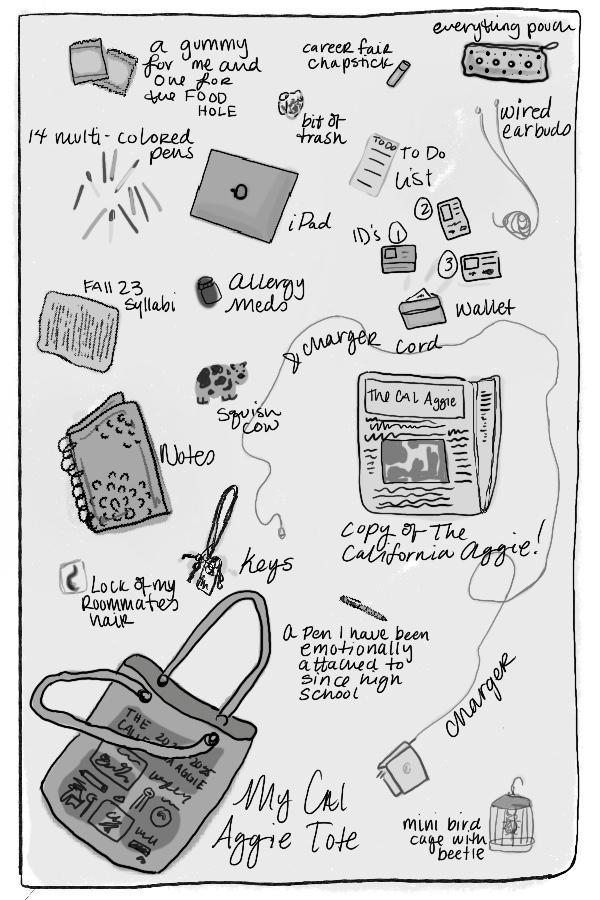
What’s in my bag — The California Aggie tote edition

Drawn by: Lauren Swing–– laswing@ucdavis.edu

Disclaimer: (This cartoon is humor and/or satire, and its content is purely fictional. The story and names of “sources” are fictionalized.)

Stay Unkempt: Davis Feminist Film Festival celebrates its 20th year

Davis Feminist Film Festival interns and director share their process in coordinating the festival event


By EVELYN SANCHEZ — features@theaggie.org


Hosted by the Women’s Resources and Research Center and sponsored by the Manetti Shrem Museum, the Davis Feminist Film Festival (DFFF) celebrated its 20th anniversary on the weekend of Friday, May 9 and Saturday, May 10.

With a team of eight interns led by a graduate director, the festival’s theme, “Unkempt,” showcased feminist films from around the world. This year’s grassroots event featured projects that represented the messiness of gender, bodies and nature.

Beginning as a fundraiser for the Gender and Global Issues program in 2005, the DFFF amplifies personal, intimate and political projects, seeing 1,182 submissions from 88 countries.

Outreach and Marketing Coordinator Sonny Baker, a second-year English and cinema and digital media double major, offered their sentiments on the outcome of the event.

“I’m really, super happy with how everything turned out and how much energy people put into stuff this year, especially with how [large] the turnout was,” Baker said. “This is our biggest festival yet.”

With an estimated 130 attendees on Friday night alone and film selections from countries from Canada to Iran, success for the festival represented something more for the team. With DFFS occurring during a troubling political climate for women and queer people, Baker finds it more important than ever to celebrate marginalized voices and their work.

“There are stories that are not going to get told through the general media that need to be told,” Baker said.

Having the final say on the selections, Co-Curator Ngoc Tran, a third-year Asian American studies and psychology double major, elaborated on the process of the film selection.

“We work to screen most of the films so that we can decide which ones we want to put in the lineup,” Tran said. “We also develop the theme surrounding the festival. We don’t necessarily pick films that are supposed to be exactly aligned with the theme, but we use it to frame our thinking and curation process.”

The approach to film curation also resonated with Aaron Benedetti, the director of DFFS for the past three years, who is a UC Davis Ph.D. candidate in cultural studies and feminist theory.

“Directing the festival has been one of the most rewarding experiences of my time as a graduate student here at UC Davis,” Benedetti said. “On the one hand, I am able to experience and curate a huge variety of really fantastic independent feminist films.”

Similarly to Baker and other interns, the messages that are conveyed through works made for and by marginalized voices resound with Benedetti, encouraging him to work diligently to promote the messages.

“Queer [and] feminist stories, onscreen and off, have always really interested me and affirmed me at different points in my life,” Benedetti said. “To help plan and execute an event that uplifts this kind of art is extremely rewarding and politically meaningful.”

A personal connection underscores the team’s relationship with the film. With “Unkempt” focusing on reimagining, redefining and reclaiming established systems, DFFF allows for the dominant perspective to be challenged.

“The theme is collectively agreed upon,” Baker said. “The way we choose our films is between a thousand submissions that get pre-screened to fit our criteria, which has to be about women or a minority group of [people of color], queer or transgender peoples. We had about 100 films get through that prescreening.”

Baker continued to outline the selection process, highlighting a personal favorite film.

“Then, the interns take teams of two and go down the list and watch them, rating them one through five,” Baker said. “My [ranked] five pick is actually going to be filmed at the end of the day, which is ‘Mpamosavy.’ It’s my favorite, and it is phenomenal.”

“Mpamosavy,” directed by Arielle Lone, follows the events of the French occupation’s massacre of Malagasy rebels in 1947. The film contrasts the past experiences with present-day descendants, following the Mpamosavy’s revenge as history repeats itself.

“Unspoken injustices inspire me to create,” Lone said in the festival’s written program. “My goal is not to victimize Madagascar to glorify the violence, but to denounce it. To confront the audience with reality, I must show the horrors of history.”

Benedetti also shared one of his standout selections screened during the festival.

“One film that especially stuck with me this year was ‘Desync,’ directed by Minerva Marie Navasca,” Benedetti said. “She and her co-writer, Chen Sing Yap, created a film about how something as personal as your relationship with your mother can be tightly coiled up with historical forces that appear very impersonal or distant from us — like colonialism, capitalism, eugenics [and] histories of exploited labor. It’s important to recognize that the specifics of those experiences are particular to the Filipina and Filipina Canadian women in this film.”

With such careful effort being placed on curation and design, Nico Singh, a first-year biomedical engineering major and a general graphic designer for the festival, shared their experience with designing the messiness of the theme.

“We picked ‘Unkempt,’ because we’re really trying to focus on intersectionality and this inherent messiness [and] taking pride in that,” Singh said. “A lot of that came down to reclaiming our roots and embracing the natural world. So, when I was doing a lot of the design work, I interpreted that as plant life and growth, and we knew that eco-feminism was also something that we really wanted to highlight for the festival. Keeping that in mind, I knew that we wanted a lot of those line-heavy images.”

The year’s program was also a highlight of the event. The booklet, containing all of the screenings and directorial biographies being featured in the festival, interwove the Unkempt theme within its pages.

“One of the definitions of Unkempt that really stood out to me was the hair,” Cassie Ngo, a third-year design major and the festival’s program designer, said. “Because of a lot of colonial views of hair, when women of color are in their natural state, their hair is curly, frizzy and unkempt, but with a negative connotation. We wanted to reclaim that.”

The program is designed elegantly with many forms of lines running through all pages, where Tran deliberately drew splintered cracks on the page of films that all dealt with breaking — whether from the cracking of a pot or a shattered mirror, there was much deliberation in the design of the festival.

“This inherent messiness is boiled down right into our core,” Singh said. “It’s written into our DNA. Unkempt is a fundamental part of every living thing, so I wanted the graphics to reflect that.”

The Davis Feminist Film Festival is an important platform on campus that continues helping to tell stories about people whose stories are not normally told, including communities outside of Davis. For those interested in interning for DFFF, visit the Women’s Resources and Research Center’s website or visit their Instagram at @femfilmfest.

Written by: Evelyn Sanchez  — features@theaggie.org

It’s giving unrealistic

If settling feels like a sin, then perfection is an idol


By NEVAEH KARRAKER— nakarraker@ucdavis.edu


The perfect school. The perfect career. The perfect home. The perfect partner.

Most influencers on social media post about their surplus of accomplishments and their outlandish income. No matter the type of perfect we see on social media, we all strive to acquire the best possible things in life, and understandably so: If someone else can have that, surely I can, too, right?

Over time, our standards and expectations evolve. The list of what we want grows longer, and the way we want our life to look feels more serene and unreachable. Ironically, while social media encourages us to never settle, it rarely shows us the full picture of all the turmoil and setbacks experienced in the quest for perfection.

We often see adorable videos paired with a cliche “Pinegrove” song, of partners singing “Happy Birthday” while being served breakfast in bed or a student getting accepted into their dream internship. These wholesome posts all have one motivational caption: “Don’t settle.” Influencers encourage their viewers to exercise perseverance and resilience for what they truly want, whether it’s in their relationship, career or their life goals; It’s a gentle reminder that everyone has self-worth and value, which should guide our decisions.

Yet, the use of this term poses a risk of setting expectations that are unrealistically high. While immediately accepting the first opportunity that comes our way may not be the most beneficial action if it doesn’t align with our goals, we also have to be careful not to dismiss every imperfect option out of fear of settling and missing out. There’s a fine line between knowing your own worth and chasing a level of perfection that doesn’t exist.

When it comes to relationships, we have to hold ourselves to the same standards at which we hold others. Since no one is perfect, including us, we can’t expect to be with a partner that never makes mistakes and always makes us happy. When it comes down to it, accountability goes both ways.

At the same time, this doesn’t mean staying in a toxic relationship or ignoring clear incompatibilities. Those in a relationship should be rooted in shared morals, not forged merely out of convenience. You certainly shouldn’t sacrifice your core values, but it is equally important to have realistic expectations.

This mindset doesn’t just apply to relationships; It affects many other aspects of our lives. Sometimes, this pursuit of perfection leads us to sabotage our own progress, causing us to put our goals on hold as we endlessly wait for the perfect thing that’s missing. In reality, everything requires a level of sacrifice.

We fear making the wrong choices and experiencing a sense of failure or regret. However, we need to accept that trying and failing at doing what you love is better than failing doing the thing you hate. This is why a growth mindset is essential — life is brimming with opportunities, even though not all of them will turn out how we imagined them to be.

Each closed door is a redirection; Success rarely comes from perfect timing but instead from learning how to pivot, a willingness to grow and the experience of joy from where we currently are. None of us will have that perfect life we desire, and that’s okay. Each one of us was born with different preferences, goals and values — but that’s exactly what makes our journeys so unique and enthralling.

Rather than succumbing to something that goes against our nature or chasing unattainable ideals, maybe a new approach needs to be adopted: one of gratitude — a strong antidote to perfectionism. Appreciating where we came from and who supported us along the way tethers us to reality. When we learn to value the present moment, peace comes.

In the end, the decisions we make, regardless of whether they’re the correct one, will ultimately lead us to exactly where we need to be.


Written by: Nevaeh Karraker—nakarraker@ucdavis.edu


Disclaimer: The views and opinions expressed by individual columnists belong to the columnists alone and do not necessarily indicate the views and opinions held by The California Aggie.
Homer’s ‘Odyssey’ and the archetype of the siren

The ancient Greek myth of the sirens continues to fuel a harmful portrayal of  women in the media


By JHANA RHODES — jsrho@ucdavis.edu


If Homer’s “Odyssey” taught me anything, it’s that the unfair stereotype of women as “sirens” is inherently dangerous and manipulative, with a long history dating back to ancient myth. While sirens aren’t the beautiful half-woman, half-fish mermaids prevalent in pop culture today, their original portrayal, immortalized by Ancient Greek poet Homer, depicts a much more terrifying hybrid: creatures with the body of a bird and the head of a woman.

To fully understand the genesis of the siren archetype, we must first look at how society has viewed women historically. Women have long been characterized as irrational and more easily swayed by their desires and, if left unchecked, capable of leading men astray. A real-life example of this stereotype includes (but is not limited to) the witchcraft trials in Europe and North America, where women were accused of witchcraft by those who feared their sexuality, power and perceived influence.

This perception of women likely contributed to the creation of beings like the mythical sirens. However, this archetype isn’t unique to Greek mythology. There are countless examples in ancient and religious texts, such as the Judeo-Christian narrative of Eve — a story that has been used historically to portray women as temptresses leading men to destruction or “sin.”

Given how society has historically viewed women, it’s interesting to note how the portrayal of sirens has shifted over time. Perhaps influenced by rising mermaid folklore or by varying artistic interpretations, the perception of sirens strayed from their original depiction, which relied less on their looks and more on the fact that their enchanting voices were their deadliest weapon.

In contemporary versions of the siren, retellings rely more on how these sirens appeared, luring men with not only their voices but their seductive beauty as well. This emphasis on physical beauty as a tool of temptation is what ultimately solidified a harmful archetype imposed on women today.

Even when we aren’t seeing a bunch of mermaids on screen, the archetype is heavily present in modern media tropes. The femme fatale, the cold and calculating career woman, the black widow — the tropes that have been used to label women are endless. Another familiar example is the “gold-digger”: someone who pursues a relationship with a (wealthy) person for the sole purpose of financial gain.

The late actress and model, Anna Nicole Smith (26 years old at the time), was a tragic example of how unfairly this label can be wielded. When she pursued a relationship and married American businessman Howard Marshall (89 years old at the time), Smith was relentlessly vilified by the media. The media’s narrative often focused closely on her supposed ulterior motives, without considering her own perspectives or experiences. This branding ultimately stripped her of her agency, reducing her to a caricature of a woman who used her physical appearance for financial gain. Of course, this issue isn’t unique to Smith, as there is an underlying societal bias about women who wield power and wealth — prejudices that can highlight the parallels between the label of the “gold-digger” and the siren archetype.

The constant, negative portrayal of women as “sirens” confines women to two extremes. They are either an idealized version of purity or a manipulative and cunning temptress. It’s important that the media and society remember that women have their own motivations, goals and agency beyond their physical appearance. Only by moving past archetypes like the siren are we able to foster a more respectful environment and facilitate a more authentic representation of women in the media.


Written by: Jhana Rhodes— jsrho@ucdavis.edu 


Disclaimer: The views and opinions expressed by individual columnists belong to the columnists alone and do not necessarily indicate the views and opinions held by The California Aggie.

 

Only survivor of the Carlos Dominguez stabbing spree testifies in the murder trial

After a two-year break, Dominguez’s trial begins to determine his guilt and sanity for the stabbing of three victims in 2023


By GIA LOOMIS — city@theaggie.com


After a two-year hiatus, the trial of Carlos Dominguez began on May 5 with opening statements. Former UC Davis student Carlos Dominguez will be tried over an estimated 10-week period on murder and attempted murder charges for the 2023 Davis stabbing spree that left two dead and one injured.

Debates regarding Dominguez’s mental state caused this lengthy break in the case. In July 2023, three months after the stabbings, Dominguez underwent a competency trial to determine if he was mentally fit to face charges.

Following the opening statements, several witnesses were called to the stand to give more details on the case. Kimberlee Guillory, the only surviving victim, testified.

“Somebody came up […] behind me, where I was sitting outside, and they came down with a knife and cut my tent,” Guillory said. “And at the time I wasn’t sure I was getting stabbed, I thought somebody was punching me at first.”

When examined, Guillory then described the attack in more detail when asked how many times she was stabbed.

“Three, [the] first time it took my breath away and then it just continued,” Guillory said. “I started screaming [“help”] very loudly and then I laid down, because I guess Larry and Isaac […], they came running towards me, and that’s when they grabbed him and started fighting with him.”

Witnesses included victim David Breaux’s sister, Anne Maria Breaux, who testified for her brother explaining how he was known as the “Compassion Guy.”

“[David] realized that he would devote the rest of his life to raising awareness of compassion,” Breaux said. “He had a notebook and a pen, and he would ask people to write their definition of compassion, and so he did that from June 3, 2009 until his passing, and that’s how he got to be called ‘Compassion Guy.’”

Then, ornithologist and previous UC Davis graduate student Ian Haliburton and Aiden Reynolds, a current UC Davis student, were both called to the stand to explain how they found Breaux after the stabbing.

“I saw someone sitting on one of the benches,” Reynolds said. “But it was only when we approached the area, about 10 to 15 yards away, where [Haliburton] noticed that he was in a really, really bad state. I remember he said, ‘That man is dead.’”

After several months of treatment, Dominguez was ruled mentally fit in January 2024, and the case was put back into motion. This led to the preliminary trial beginning on Feb. 26 of that year, which led Judge Samuel McAdam to order a trial for two homicides and one attempted homicide for which Dominguez was arraigned.

Now, the trial is officially proceeding with jurors having been selected last week and trial beginning last Monday, May 5. The trial will involve both a guilt phase and a sanity phase considering Dominguez’s dual not guilty and not guilty by reason of insanity pleas which were taken in October.

On Monday, the defense and prosecution each began with opening statements. The prosecution’s opening statement began by recounting the time leading up to and the nights of the stabbings, in doing so, they emphasized that these attacks by Dominguez were premeditated.

Yolo County Deputy District Attorney Frits Van der Hoek led the prosecution’s opening statement. He explained to the jury that the premeditation of these attacks began in December of 2022 when Dominguez went on Amazon and purchased the knife for the attacks.

“We’re gonna go down to the kind of 100-foot level as to what’s going on,” Van der Hoek said. “What is the evidence that you’re gonna expect in this case? And understand the evidence, to understand why this is going to be proven to be a deliberate, willful and premeditated murder, you’re gonna need to go back further than when this kind of first comes to light, before [Breaux] is found in the park. We’re gonna go back to December 5 of 2022.”

The prosecution’s statement continued by explaining the logistics and facts of the attacks in 2023. The first victim, David Breaux, was stabbed 31 times sometime on the night between April 26 and 27. Most of his stab wounds were in the back, yet he was found sitting up on a bench, which makes the wounds and position found incompatible.

The prosecution then explained more about the second victim, UC Davis student Karim Abou Najm. He was stabbed 52 times in vital positions on the body on April 29, while biking home through Sycamore Park.

The final victim, Kimberlee Guillory, was stabbed through her tent on L Street on May 1. Guillory sustained two stab wounds but survived. Dominguez was caught several days later when a Davis resident recognized him from witness statements and reported him to law enforcement.

After recounting the details of the case, the prosecution finished by explaining the broad goal of their case. Van der Hoek concluded his opening statement with the prosecution’s case.

“The evidence is going to be that the defendant not only stabbed David Breaux, not only did he stab [Abou Najm], not only did he stab [Guillory], but for each of those, he did so willfully, deliberately and with premeditation, and I’ll ask you to find him guilty,” Van der Hoek said.

Following the prosecution, the defense then gave their opening statement. They took a fairly different approach; rather than focusing on the physical details of the case, they highlighted Dominguez’s mental state during the crimes.

Public defender Dan Hutchinson delivered the defense’s opening statement.

“What is not in dispute is that Carlos Reales Dominguez did the physical acts that caused the deaths of David Breaux, Karim Abou Najm and injured Kimberly Guillory,” Hutchinson said. “The question that will be presented to you is, what was Carlos Reales Dominguez’s specific intent and mental state when he did those physical acts, and what was happening in his mind? The evidence will show that it was a mind that had been devastated by severe and debilitating mental disease. Mr. Reales Dominguez has schizophrenia.”

The defense’s opening statement focused heavily on Dominguez’s mental state during the crimes in order to prove that he was not in sound mind.

Following the opening statements, several witnesses were called to the stand to give more details on the case. These witnesses included Anne Maria Breaux, Ian Haliburton and Aiden Reynolds.

In his competency trial, Dominguez was evaluated by forensic neuropsychologist Dr. Dale Watson, who was hired by the defense. While Watson could not fully determine Dominguez’s mental capacity as he eventually refused to continue meeting with him, Watson testified his professional opinion to the court.

“My opinion is that he is most likely schizophrenic,” Watson said. “That this is a ‘first break’ of schizophrenia and that he’s suffering both of the psychiatric illness and the neurocognitive deficits that are often associated with an illness like schizophrenia.”

Dominguez was also evaluated by a court-appointed psychologist Dr. Juliana Rohrer, who gave a congruent opinion as Watson that Dominguez was not mentally competent for trial at that time. Eventually, the prosecution found Dominguez mentally unfit for trial, and having been diagnosed with schizophrenia, he was sent to Atascadero State Hospital for treatment.

Finally, the court heard from several law enforcement officers who were on scene when Breaux’s body was found.


This is a developing case; the trial will continue and The Aggie’s coverage will be updated in the following weeks. 


Written By: Gia Loomis — city@theaggie.org

ASUCD Senate hears quarterly reports, funds campus bike counters at May 15 meeting

The Pantry reported strong volunteer activity and plans for a mobile site; Innovation and Research lab to install bike counters and monitor ridership


By AALIYAH ESPAÑOL-RIVAS and KHADEEJAH KHAN— campus@aggie.org


The ASUCD Senate heard multiple quarterly reports on May 15 and passed a bill to purchase and install new bike counters on campus.


Quarterly Reports

The Senate first heard a quarterly report from The Pantry. Unit Director Andie Tarabzooni, a third-year economics and communication double major, outlined the accomplishments and goals of The Pantry for next year.

The Pantry had over 250 volunteers this academic year, 29 paid staff members and 36,000 ID swipes from students, according to Tarabzooni. Additionally, The Pantry saw an increase in its budget for food orders, a larger stock of hygienic products and the introduction of over-the-counter medication.

“Beyond food, there is always advocacy needed for basic needs,” Tarabzooni said. “Even just volunteering is enough.”

Next year, students can anticipate a new mobile pantry, cultural food days and collaborations with registered student organizations (RSOs). Tarabzooni hopes to increase publicity, procure more volunteers and expand stock in other categories for students.

Afterward, the Senate heard a quarterly report from the Campus Center for the Environment (CCE). Advocacy Director Arianna Blandon, a third-year environmental policy analysis and planning major, discussed the accomplishments and challenges of the ASUCD Garden, a five-acre community garden where students can buy a plot of land and tend to their plants.

Since fall quarter 2024, the garden has seen 30 new gardeners, new tools and less garden complaints. However, it has also seen a loss of equipment due to the lack of a tool shed.

Set to be introduced at the next Senate meeting, Senate Bill (SB) #88 authored by Senator Zack Dollins seeks to allocate $4,514.73 from the ASUCD Senate reserves for CCE to “revitalize and reimagine the ASUCD Garden.”

“We’re hoping the bill will allow us to put a tool shed in the garden and replenish the tools we have lost,” Blandon said. “The shed would offer guidance for gardeners and a level of accountability that ensures everyone has equal access to our tools.”

Next, the table heard a quarterly report from the Environmental Policy and Planning Commission (EPPC) from Chairperson Annie Kanjamala. In the presentation, she outlined the various projects the EPPC underwent and is currently working on, including the Cool Campus Challenge, a sustainability audit and advocacy surrounding the UC Davis-Pepsi pouring rights contract. The EPPC hopes to collaborate with more RSOs and other student organizations to host environmentally friendly events.

From the Coffee House (CoHo), the Senate also heard from Associated Students Dining Services Director Darin Schluep. This quarter saw the reintroduction of Saturday hours for the CoHo and extended hours on special event days like Aggie Day and Picnic Day.

Schluep also discussed the introduction of new programs co-piloted by their adopted senators, including Senator Lexi Raben’s Share a Table initiative and Senators Jenna Younes and Mia Cohen’s partnership program that allows RSOs to fundraise at the CoHo. Additionally, the CoHo is set to host and cater the ASUCD 530 Market: Asian and Pacific Islander Community Health and Culture Fair on May 30.

Looking ahead, the CoHo continues to work on phasing out single-use plastic bottles and continuing sustainability initiatives with EPPC and UC Davis Sustainability.


Legislation

After passing a series of bills, the Senate began considering old legislation starting with SB #81, aiming to restructure the Executive Branch and remove the administrative divisions of Executive Agencies. The bill would move the Disability Justice Committee (DJC) under the Legislative Branch at the supervision of the External Affairs Commission (EAC). DJC and the Housing and Transportation Advocacy Committee (HTAC) were both moved to the Executive Branch at the start of this school year from EAC. HTAC was moved back to the EAC during the prior week’s meeting with the passing of SB #80.

Senator Ezra Rubin believed SB #81 would provide “broader structural reform for oversight and accountability” in regards to units and committees. After brief discussion, the Senate moved to table the bill in order to further consult with more units and committees.

Next, the Senate unanimously passed SB #82, allocating just shy of $32,000 to the Innovation and Research Lab (IRL), ASUCD’s in-house research and software design team, for the purchasing of bike counters around campus.

IRL Unit Director John Carraher, a fourth-year computer science and engineering major, speaking on behalf of IRL Associate Director Jeremy Elvander introduced the project, titled “Aggies on the Move.” In this project, IRL collected 15 years of data on Unitrans ridership, precipitation, environment and transportation data in collaboration with the National Weather Service and National Center for Environmental Information to determine transportation infrastructure improvements for UC Davis.

“As part of this project, we have identified major weaknesses in UC Davis’ planning capabilities, despite being known as the bicycle capital of the [United States,” Carraher said. “Working with [the UC Davis Office of] Campus Planning and [the] Moving Forward Together [plan], we have determined that the installation of permanent bike counters at eight campus locations would be transformational in Davis’ ability to monitor cycling habits and plan for key infrastructure updates.”

Senators overwhelmingly supported the project, with Senator Dhilena Wickramasinghe describing it as “one of the most thorough projects” introduced during her tenure.

Wickramasinghe then introduced SB #87, a piece of emergency legislation to clarify the process for hiring unit directors to reflect the current election timeline. It passed unanimously.

The meeting was called to order at 6:11 p.m. and adjourned at 7:50 p.m.

Written by: Aaliyah Español-Rivas and Khadeejah Khancampus@theaggie.org

100 men versus the Primate Research Center

Who will win?


By ALLISON KELEHER — adkeleher@ucdavis.edu


Recently, there’s been some rumbling caused by grown men on social media, who think that they could collectively take down a single gorilla. Not only is this troubling because it promotes violence, but the poor gorilla would be forced to interact with 100 men at once.

I thought we were safe here at UC Davis, since those in higher education should surely understand that they don’t stand a chance against a 400-pound gorilla. Unfortunately, a cohort of male students has proved me wrong. One of my spies informed me that a secret society has appeared on campus, and they are planning to find a gorilla to take on. Since trends are so fleeting, these students wasted no time getting together to plan their gorilla excursion. I have confirmation that they have met bi-weekly for the past three weeks.

To make things even more juicy, I got tipped off that this secret society was planning to take on a gorilla that same night. Naturally, I, informing no one, took matters into my own hands. Armed with my notebook and night vision goggles, I prepared to follow these men to their demise.

Many are probably wondering where these men would find a gorilla in Davis. Another source of mine told me that, in their first secret society meeting, the men searched “gorilla near me” on Google and, surprisingly, received no results. Without a gorilla in their sights, they did the only thing that felt right — they decided to break into the UC Davis Primate Research Center in hopes that the facility would have a gorilla just lying around.

Unfortunately for these men, I happen to know that the Primate Research Center does not have a gorilla.

I followed the men in my Jeep Grand Cherokee all the way to the Primate Research Center. Normally, I tailgate people with my brights on, but I thought it would be better to follow at a safe distance to maintain my secrecy.

One of these men miraculously had a key to the Primate Research Center, and they all filed in one after another. They were wearing black ski masks (classic) to conceal their identity, which was perfect, because I was able to put one on and blend in with the group. Dare I say 101 men versus one gorilla?

Unfortunately, I wasn’t there to help them — I was there to watch and secretly take notes — so they were on their own with the imaginary gorilla. I watched as they filed through different labs and found no gorilla fighting ring. Even with the ski masks covering their faces, I could tell that they were disappointed. When they reached the final lab room, it was becoming glaringly obvious that there was no gorilla. The men sighed in disappointment and looked around at each other, searching for something to do or say.

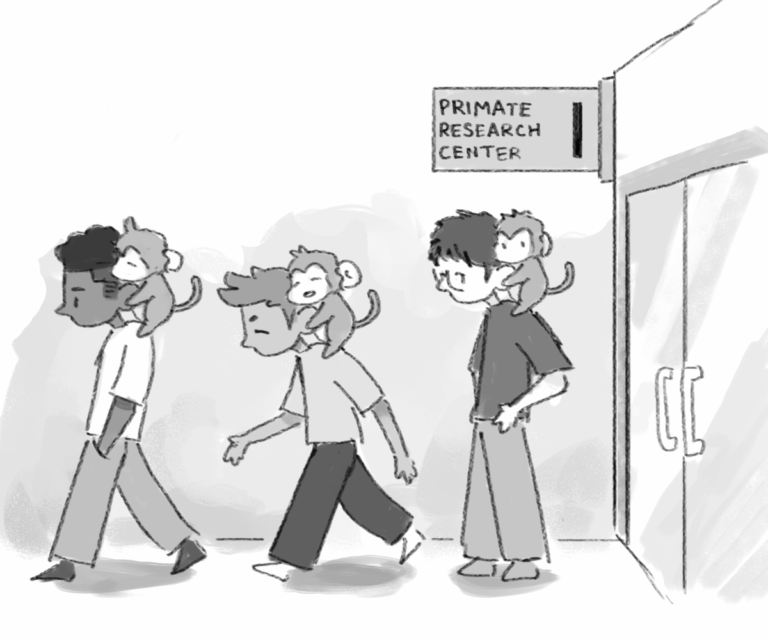
That was when a couple of the men started interacting with monkeys in the lab. It appeared that the monkeys and the men had many things in common. So, when it was time to leave, the men felt an overwhelming amount of sadness to let their new friends go. Until one of them said, “Guys, what if we took the monkeys with us?”

With that, it took very little convincing to get all 100 of the men to pick a monkey to take away from the lab. Nestled on their shoulders, it appeared that the monkeys were also enjoying their rescue. One by one, the men filed out of the Primate Research Center, each with a monkey on their shoulders. None of them had a care in the world about what would happen next, because all they needed were their newfound primal friendships.


Written by: Allison Keleher — adkeleher@ucdavis.edu

Disclaimer: (This article is humor and/or satire, and its content is purely fictional. The story and the names of “sources” are fictionalized.)

Who is James B. Milliken, the next UC President?

With a multitude of issues affecting the UC, Milliken’s history offers a glance at where the future of the UC system lies


By RIVERS STOUT— campus@theaggie.org


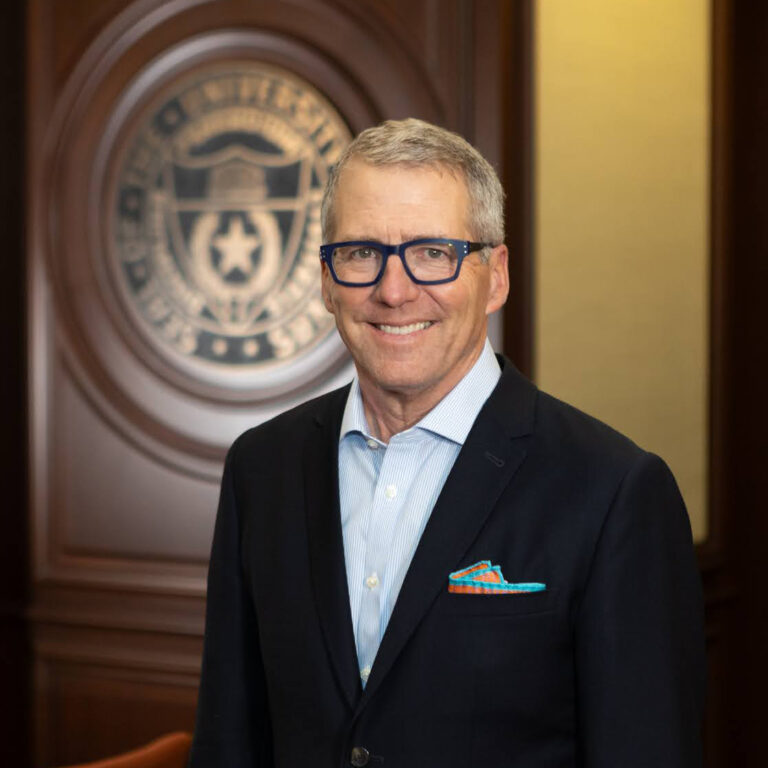
James B. Milliken, the chancellor of the University of Texas (UT) system, is set to start as the new president of the University of California (UC) system this August. As the UC enters a new stage of leadership, we look at where the system stands now and what Milliken’s past may indicate about the direction he will take.


The University of California: Where is it today?

Outgoing President Michael V. Drake became the 21st president of the UC system in 2020; his reasons for stepping down have not yet been made public.

While Drake came in during the difficulties of the early COVID-19 pandemic, Milliken will no doubt face a variety of internal and external challenges.

The last few years have seen several system-wide labor strikes affecting campuses and medical centers as well as protests over a variety of issues, including the Israel-Palestine conflict, transgender rights and immigration policy.

Federal funding cuts and scrutiny from the Trump administration on higher education at large have also placed pressure on the UC and senior administrators on ways to move forward and continue the system’s research and educational missions. In the courts, the UC, alongside other universities, has an ongoing case against the United States Department of Health and Human Services (HHS) and the National Institute of Health (NIH) for proposed cuts and budget restrictions.

The UC is also facing budget cuts from the state, which, though slightly relieved, will still result in the loss of hundreds of millions of dollars. The UC has also faced accusations of antisemitic discrimination in the wake of pro-Palestinian protests and encampments.

University response hasn’t been uniform to protests, with some protests over immigration policy and funding cuts having less police presence than others within the system.


James B. Milliken: Who is he?

Throughout his career as an academic administrator, Milliken has been lauded for his ability to fundraise and increase graduation rates.

Milliken led a campaign that raised over $1.2 billion from 2005 to 2014 as the president of the University of Nebraska. Funds went to various causes, including constructing and expanding academic facilities and sponsoring student scholarships. He also took part in creating the College Bound Nebraska program (now the Nebraska Promise), which greatly lowers university costs for many students.

He is perhaps best known for successfully creating and expanding the Accelerated Study in Associate Programs (ASAP) at the City University of New York (CUNY), which assists students financially and academically. ASAP saw significant increases in graduation rates across many students, including in other university systems that have recreated ASAP to similar degrees of success.

The UT system has also seen an increase in four- and six-year undergraduate graduation rates during Milliken’s chancellorship.

During his time as CUNY Chancellor from 2014 to 2018, the Professional Staff Congress — a trade union for academic and professional staff — criticised Milliken and CUNY management for slow negotiations. For his part, Milliken publicly approved of negotiation agreements, expressing satisfaction at their conclusion.

“I am very pleased that [CUNY faculty and staff] voted overwhelmingly to ratify the agreement that their representatives and the University had reached through lengthy and ultimately productive negotiation,” Milliken said in a 2016 CUNY statement.

As chancellor of the UT system, a role he has held since 2018, the two largest labour movements included an employee strike of the UT Dallas student newspaper, The Mercury, in 2024 and a faculty and staff work stoppage in support of pro-Palestine protests that same year.

In a statement from UT faculty, the president of UT Austin (UTA) and UTA administrators were criticized for inviting police to campus. As the chancellor, UTA leadership responded directly to Milliken, though Milliken is not in direct control of UTA.

On the student pro-Palestine movement, Milliken has been publicly in favor of students’ rights but critical of the movement in general. While at CUNY, the university conducted investigations into allegations of antisemitism by Students for Justice in Palestine campus organizations.

“CUNY leadership have promptly and strongly condemned speech — even when legally protected — that is hateful, discriminatory, antisemitic,” Milliken said in a letter preceding the investigation report.

At UT, Milliken approved of the UT Board of Regents’ decision to adopt a policy reinforcing freedom of speech. However, police were called during student protests last year in support of Palestine, resulting in student arrests and suspensions.

A year ago, as UT Chancellor, Milliken oversaw the dismantling of the system’s Diversity, Equity and Inclusion initiatives, in compliance with Texas state law. More recently, the UC announced the end of diversity statements, and the Trump administration has proposed changes to the accreditation process that would further weaken diversity initiatives.

Written by: Rivers Stoutcampus@theaggie.org

Black Family Day to be hosted on the UC Davis Quad on May 24

The event will feature performances, vendors and events to highlight the African diaspora


By JESSICA YUNG — campus@theaggie.org


Black Family Day, hosted by the Cross Cultural Center, is set to be held on the UC Davis Quad on Saturday, May 24, from 12 to 8 p.m. The event will feature speakers as well as vendors selling crafts and food from across the African diaspora.

Makhi Jones, program coordinator of the African diaspora and Middle Eastern, North African and South Asian (MENASA) communities at the Cross Cultural Center, describes the event festivities as a celebration open to all.

“Black Family Day is a day of remembrance, a day of new experiences within the campus of UC Davis for Black families as well as anybody else who is welcome to come and just experience the day and the culture that we’re having,” Jones said. “It’s a good place for families to come out and enjoy some great food. So we have some good Black-owned food vendors that come out, craft vendors who end up selling their clothing, merchandise that they end up making themselves, all Black-owned businesses.”

Black Family Day has its roots in the picnics hosted by the Black Student Union in the 1970s, which sprouted into a larger gathering.

“Black Family Day began in the spring of 1970, when the Black Student Union held a barbecue on the Quad — though there were only 100 or so Black students at the time,” the Cross Cultural Center’s website reads. “Over the years, the stage at Black Family Day has featured many legendary performers and speakers, including famed writer and poet Maya Angelou in 1998, celebrating themselves and taking a stand against historical and cultural exclusion on campus.”

Last year’s Black Family Day event was canceled due to rain. This year’s event has a rain plan should the weather be unfavorable, according to Jones.

The headliner for the event is John Mackk, a Bay Area-based hip-hop and rap performer. Visitors can also expect performances from DJ KweKu and Shabbal Dance, a Sudanese and East African dance group based in the Bay Area.

There will also be performances by the UC Davis Majorettes. Majorette is a dancing style that combines parts of jazz, hip-hop, marching band and contemporary dance. The UC Davis majorette team is relatively new to campus, having formed earlier this year. The Sacramento State Stingerettes, another majorette group, are also slated to perform.

Other activities include a Stompfest, an alumni wine and jazz event held at the Coffee House, a children’s fair with bounce houses, a book talk, recreational basketball and live music from a cover band.

Those interested are encouraged to RSVP for the event on Eventbrite, however, it is not required. Students can reach out to Jones, mojjones@ucdavis.edu, directly for support and to collaborate with for future events.

Written by: Jessica Yung – campus@theaggie.org

Federal funding cuts impact the Yolo County Food Bank

By CHRISTIAN CENDEJAS — photo@theaggie.org

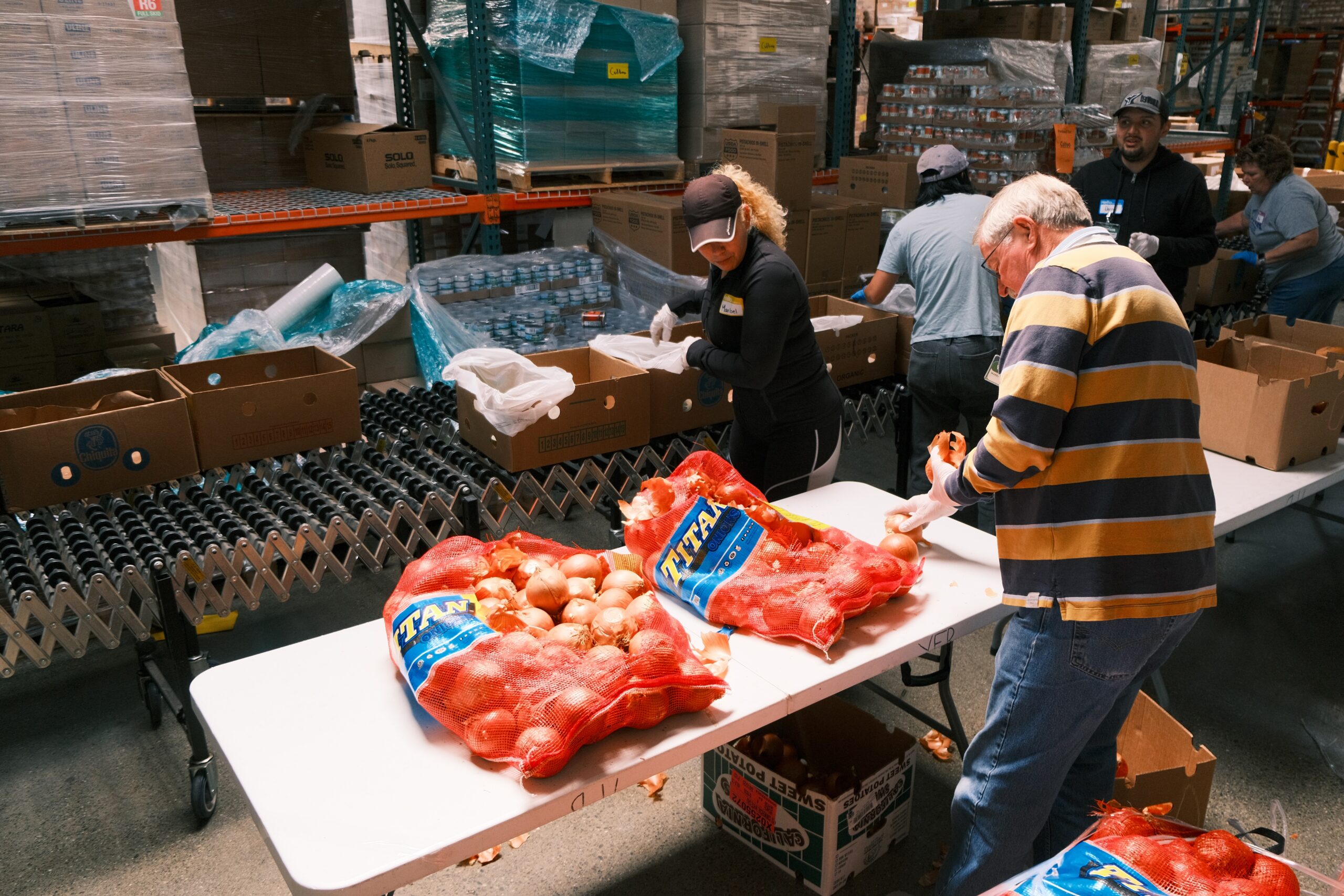
The California Aggie recently reported on federal spending cuts affecting Yolo County Food Bank. These cuts result in a more than $2 million budget shortfall for the organization’s annual operating budget. This photo gallery presents a visual story of the Yolo County Food Bank’s daily operations and how they would potentially be affected by the spending cuts. 

The Yolo County Food Bank relies heavily on volunteers to put food together for food recipients. (Christian Cendejas / Aggie)


Volunteers sort through bags of onions. (Christian Cendejas / Aggie)


Bins filled with bagged food for recipients. (Christian Cendejas / Aggie)


Pallets of food provided by the USDA [The] Emergency Food Assistance Program (TEFAP). (Christian Cendejas / Aggie)
Additional pallets of food provided by the USDA TEFAP Program. (Christian Cendejas / Aggie)


Additional pallets of food provided by the USDA TEFAP Program. (Christian Cendejas / Aggie)


The Yolo County Food Bank receives food from local grocery stores through a contract with Feeding America, an organization that works with food industries to rescue food otherwise destined for waste. (Christian Cendejas / Aggie)


The federal spending cuts affect the Yolo County Food Bank’s annual operating budget. This means less money overall that can be allocated to other operating costs, such as maintaining a fleet of trucks. (Christian Cendejas / Aggie)


The Yolo County Food Bank prepares bags of produce and dry foods to give out to recipients. (Christian Cendejas / Aggie)


Bag of fresh produce at the Yolo County Food Bank. (Christian Cendejas / Aggie)


The Yolo County Food Bank provides food at 21 different sites across Yolo County. (Christian Cendejas / Aggie)


Photographed By: Christian Cendejas — photo@theaggie.org


English Professor Joshua Clover, known for his activism and engagement with protests, dies at 62

Tributes for the teacher and poet hail him as a gifted writer on a social mission

By RIVERS STOUT— campus@theaggie.org

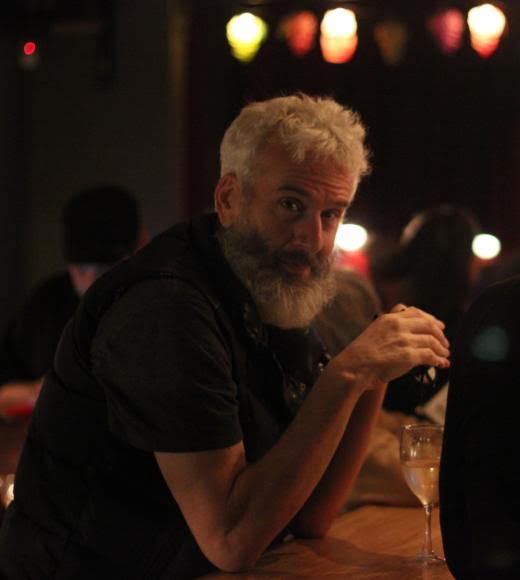
Joshua Clover, a professor of English and comparative literature who worked at UC Davis beginning in 2003, died April 26, 2025 at 62 years old. Those closest to him -– as well as many members of the general public — will remember him for his political convictions and his radically progressive organizing efforts alongside his role in academia. His cause of death was not immediately disclosed. 

“Always economical with his prose,” members of the UC Davis English Department and students said in a statement. “[Clover] captured the complexity of capitalism’s historical development and the particular forms of struggle that attend it with pithy locution and often devastating precision.”

Clover held a Master of Fine Arts from the University of Iowa Writers’ Workshop. He taught classes on English and poetry and was an avid writer in his own right outside of the classroom.

“Madonna Anno Domini,” Clover’s first book and a collection of poetry, won the Walt Whitman Award from the Academy of American Poets, a once-a-year honor given to exceptional first-time authors. Other poetry collections included 2006’s “The Totality for Kids” and 2015’s “Red Epic.” He also wrote “Riot. Strike. Riot.,” published in 2016, a political analysis on the act of rioting.

Clover was often seen at protests around campus and beyond. Most recently, he was at the Turning Point USA (TPUSA) event in April of this year, removing signs from local right-wing activist and UC Davis staffer Beth Bourne.

In 2023, he penned a guest opinion for The California Aggie criticizing Charlie Kirk, TPUSA apologists and Chancellor Gary May for allowing the group to be on campus. He could also be regularly seen around pro-Palestine protests and strikes, expressing vocal support for Palestine and arguing in a 2018 post that, as a state, “Israel should be ended.”

“Joshua was a professor, theorist, scholar, editor, and poet, but first and foremost, he was a communist,” the English Department’s statement reads. “Indeed, his political commitments were at the core of everything he did: from the streets to the courthouses, the reading groups to the letter-writing nights, he was a partisan of the real movement wherever it could be found.”

The fire-brand that many have remarked him as being, Clover sparked controversy for a series of anti-police tweets in 2014 that ultimately resulted in unsuccessful calls from California Assemblyman James Gallagher for him to be fired.

“I remember him during that unsuccessful Occupy Oakland-ish action to potentially occupy the Kaiser Center,” Clover’s friend Juliana Spahr said in a written tribute to him published in The Nation. “[Clover motioned] me and my son down an alley and away from the line of police eagerly loading their tear gas rifles.”

Those close to him were just as inclined to bring attention to his love for pop culture and country music, which he wrote lengthy articles about, mixing his passions for music and revolution.

At the time of his death, he was working on a new book manuscript, tentatively titled “Infrastructure and Revolution.”

“He always made a point to acknowledge me, sharing a wave and the wry smile that he was known for,” Andy Jones, an academic associate director at UC Davis, said in a Substack post. “I will always think of that smile as I fondly remember our friendship. Whether in a poetry reading or at a pub quiz, Joshua displayed the same brilliance, mischief, and moral clarity.”

Written by: Rivers Stout — campus@theaggie.org