52.4 F
Davis

Davis, California

Tuesday, December 23, 2025
Home Blog Page 292

Yolo County opened additional testing site which was free for all California residents

0

As more contagious strains spread, experts urge residents to get tested frequently and adhere to public health guidelines

On Jan. 12, an additional OptumServe mobile testing site opened in Yolo County for the entirety of January, making it easier for residents to get tested, according to a press release. The OptumServe testing sites are free for all California residents regardless of their age or documentation status. For those without health insurance, the state will cover the cost—otherwise, the provider will be charged, with no out-of-pocket costs for the resident.

The additional testing site was shared between Winters and West Sacramento.

Spokesperson for OptumServe Aaron Albright explained the process of scheduling an appointment to get tested at the 125 sites available in California.

“People who are interested in getting tested can schedule an appointment via our scheduling website,” Albright said via email. “There, you will set up an account and have to answer some demographic questions and health insurance information, if you have coverage. Insurance coverage is not necessary, though. Once you see your patient ID number, I advise people to write it down or print it out just in case.”

Once an appointment has been scheduled, a reminder will be sent out, and once the results have been received, a text or email will be sent out instructing those who have been tested to access their lhi.care account.

In addition to the OptumServe testing site, there are also several other testing locations in Yolo County, including the on-campus testing option at the UC Davis Activities and Recreation Center (ARC), which is open seven days a week.

Medical Director at UC Davis Student Health and Counseling Services Cindy Schorzman explained the decision to provide testing all throughout the week.

“We decided to do testing 7 days per week to allow for hours to help better meet the needs of our campus community, including individuals who work and study on campus on the weekends,” Schorzman said via email. “We also have testing scheduled 7 days per week to increase our testing capacity to meet the needs of our employees and students.”

 Professor at UC Davis and Director of the Genome Centre Professor Richard Michelmore explained that the university has started to encourage students to get tested more frequently. 

“The testing efforts have been ramping up well,” Michelmore said via email. “We are now encouraging students to get tested twice per week for maximum epidemiological impact in slowing the pandemic.”

Michelmore noted, however, that testing is not a standalone solution for preventing the spread of the virus. In addition, he encouraged residents to social distance, avoid gatherings with large groups and wear masks—particularly since more contagious variants are spreading to Northern California.

“It is also important to keep being tested after vaccination,” Michelmore said via email. “The efficacy data for vaccines was generated on the decrease in the number of people exhibiting symptoms. Nucleic acid tests were not performed. It is not known whether vaccinated individuals can become infected and be asymptomatic and infectious.”

Yolo County is also providing weblinks for the general public and healthcare workers in Tiers 2 and 3 of Phase 1A to register for vaccine clinics and get notifications and information.

Yolo County Public Information Officer Jenny Tan explained that although there are many testing sites available locally, testing overall has decreased as people stop traveling.

“Residents have been continuing to take advantage of the testing that the County has made available,” Tan said. “We have a lot of different opportunities where people can get tested. Some of our testing has gone down a little bit. Not as many residents have been using testing compared to during the holidays, which is to be assumed because they’re not traveling.”

Tan recommended, however, that residents still get tested in order to track the spread of the virus and infections. The testing positivity rate has decreased in Yolo County, according to Tan, although this is not a replacement for adhering to health and safety guidelines.

“Our testing positivity rate did go down, but we are still having a lot of positive cases,” Tan said. “I believe [on Jan. 18] we had like over a hundred positive cases, so there is still a lot of spread that’s happening in our community. We don’t want people to let their guard down just because our testing positivity rate has gone down.”

Schorzman said via email that “[…] students are overall doing a great job with adherence to public health measures,” which is increasingly important with the spread of more contagious strains. She expressed hope that things will eventually return to normal when vaccines become more widely distributed. 

“We are looking forward to increased vaccine availability and the hope of returning to more in-person activities and interaction,” Schorzman said via email. “Until then, please continue to look out for yourselves and each other.”

 Written by: Shraddha Jhingan — city@theaggie.org

Reinstate PE now, we must hold the administration accountable

0

UC Davis administration silently cuts PE program without student consultation amidst pandemic

I’m sure by now you all are familiar with the administration’s decision to eliminate our physical education (PE) program. But if you are not, here is a brief timeline. On Sept. 25, 2020, the UC Davis administration abruptly announced that they would be cutting the PE program beginning Winter Quarter 2021. In a few meetings I have had with them, they admitted that the decision to cut PE had been in the works for the past few years. It seems likely not a coincidence that they decided to cut PE in the midst of a pandemic. 

The first excuse they used to justify their decision was enrollment decline. After being asked about how they have increasingly cut PE sections in the past couple of years, they changed their justification. In the first email sent out to the students regarding this decision, they stated it was not due to budget implications. A separate administration representative said it was due to budget implications—two contradicting points of view in a private meeting. Where’s the truth? 

A recent letter from the UC Davis Academic Senate states that the PE program’s savings would be less than $500,000 a year, at best. When I asked a representative from the administration how they would use this money, they said they would use it to fund an alternative recreation program through campus recreation. If so, what is the actual point in removing this incredibly unique and vital program for another one that might not be as accessible or of the same quality? The Academic Senate stated that “From the savings perspective alone, we find the justification for eliminating the program to be rather weak.”

I’ve been researching this issue for the past few months and have been able to work with a great team, but my interactions with administration regarding this situation have been hostile and stagnant at best. The administration’s attendance at senate meetings and private discussions regarding PE during the Fall Quarter of 2020 only made this process more difficult. They took up space during these meetings and barely let us get a word in, they lectured us on the situation as if we were children, they told us that it was inappropriate how other adults advocating for PE were pushing for us to advocate too even though the administration was practically doing the same thing. They even went as far as verbally trying to discredit me to my peers regarding this situation. 

Why didn’t they consult anyone until after they made their decision? What other vital programs might the administration cut without our knowledge? All in all, I am disappointed in our administration’s lack of consultation with the students, their hostile behavior towards students who are only looking out for other students, and their confusing reasoning. This states loudly that the administration believes $500,000 is worth more than our students’ health and wellbeing.

I urge you to fill out the petition to reinstate PE if you have not already done so. I must note that the petition heavily surrounds a discussion of student fees, particularly the Student Activity and Services Initiative (SASI) fee from 1994. Administration has pushed so fiercely that this fee has no connection to the PE program whatsoever despite SASI clearly stating the opposite.

Moreover, the Academic Senate has stated that “all evidence indicates that “the UC Davis administration committed itself to continue to fund the PE program as part of Chancellor Vanderhoef’s campaign for the transition to Division 1 of ICA,” which was directly tied to the passage of the Campus Expansion Initiative in 2003. I choose to believe that the Academic Senate has our best interests in mind, and over 5,000 students and alumni have signed this petition so far. Let’s get the petition to 10,000 and hold our administrators accountable. 

Written by: Tenzin Youedon — tyouedon@ucdavis.edu 

Tenzin Youedon is an ASUCD Senator in her third year studying political science and design.

Disclaimer: The views and opinions expressed by guest contributors belong to them alone and do not necessarily indicate the views and opinions held by The California Aggie.
To submit a guest opinion, please email opinion@theaggie.org

Student EMTs transport COVID-19 positive students to quarantine housing

0

The new program is a partnership between UC Davis Fire Department, Student Health and Counseling Services and Student Housing and Dining Services

The UC Davis Fire Department, Student Health and Counseling Services (SHCS) and Student Housing and Dining Services have collaborated to establish a new program for students who tested positive for COVID-19. The transportation service is available from 8 a.m. to 8 p.m. seven days a week. They are now able to move into on-campus quarantine housing safely and efficiently with the assistance of student emergency medical technicians (EMTs). 

“Often freshmen, on campus in particular, and people that live in the dorms don’t have access to a vehicle,” said Nathaniel Hartinger, deputy fire chief of the UC Davis Fire Department. “How do we get the positive folks, who no one wants to be exposed to, to this other area where they can quarantine?” 

Matthew Kenaston, a third-year microbiology major and senior-level student EMT, further elaborated on the difficulty people living on campus face.

“If you’re in Tercero, West Village, these other university-associated apartments, it’d be really difficult to bike with all your stuff that you would need for a 10-day period in quarantine,” Kenaston said. “Unless it’s your own personal, private vehicle that no one else will be using, they don’t recommend having someone else drive you because you’re increasing exposure.”

Kenaston stated that the fire department is suited for the transportation service because they’re already equipped with the necessary provisions. 

“Our service is the optimal service because we have the PPE, we have the resources and we have the wherewithal to do this in the most safe way possible, aside from someone’s own personal vehicle driving them,” Kenaston said. 

When an individual tests positive for COVID-19, they are referred to SHCS to see if they qualify for the service, Hartinger said. 

“We are very excited about this amazing partnership with the UC Davis Fire Department,” said Cindy Schorzman, the medical director of the SHCS via email. “Student Health and Counseling Services oversees the result notification and case investigation process for students who test positive for COVID-19 on campus, either through the asymptomatic screening kiosk at the ARC, the mobile asymptomatic screening kiosk at veterinary medicine or through symptomatic or close contact at SHCS.”

After SHCS conducts contact tracing and determines whether the individual needs to be quarantined, they are asked questions to help determine if the student can safely and effectively isolate their current residence, Shorzman said. If a student cannot quarantine in their place of residence, they are offered space in the on-campus quarantine/isolation housing. 

According to the UC Davis Campus Ready website, the process of contact tracing has four steps: notifying students of their diagnosis, offering direction and support, assisting through consultations and appointments and identifying potential transmission.

“If they live on campus, the student housing department has a whole area for quarantine for them,” Hartinger said. “Instead of having to quarantine within their room and be within a building with other folks—where it is more densely populated—they will house them in a separate area.” 

“We have a system in place where our student EMTs will pick [the patients] up in a particular vehicle and transport them over there in a safe fashion,” Hartinger said. 

According to Hartinger, the program started just right before the break. 

“Because everyone was already off campus, we didn’t even have a transport over the holiday,” Hartinger said. “So our first transport started at the beginning of this month.” 

To transport positive students to quarantine-specific housing, the UC Davis Fire Department repurposed an existing vehicle. 

“We repurposed the vehicle that we had,” Hartinger said. “We’re able to put some plexiglass up in it and cordoned off the back area so that they’re fully separate. [There are] different air systems in there so there really isn’t that much of an exposure, and our student EMTs have full PPE that’s appropriate for transport as well.”

This vehicle was an EMS 234, a repurposed vehicle originally intended for football games, according to an article published by Dateline UC Davis. 

“We are always happy to step in wherever there is a need,” Hartinger said. “We have quite a few trained EMTs already. They are aware of disease transmission. They are aware of proper PPE usage [and] how to put these items on and off.

Currently, there are six qualified students who can provide the transportation services, Hartinger said. 

“Even though the folks aren’t patients [of EMTs]—they are students being transferred and they’re not technically being treated by EMTs—there is a real high level of knowledge that lends to a level of comfort,” Hartinger said.

This position is volunteer-based, and students who are transporting patients are being paid for their services. 

“They were all eager to help,” Hartinger said. “One of the silver linings to this entire pandemic is that everyone is stepping forward to do what they can and provide to help others.” 

“Now that we are in the middle of the quarter, we are averaging 50 to 60 students in isolation housing at this point in time,” said Director of the Office of Student Development of Student Housing and Dining Services Branden Petitt. 

Petitt said that in addition to providing the staff support to look over the intake process, Student Housing and Dining Services actively communicates with partners on campus during this process. 

As of Jan. 22, in the past seven days, the total campus COVID-19 cases has reached 97, taking into account cases identified from asymptomatic testing, Student Health and Wellness Center and self-reports, according to the Campus Ready website. 

Out of 13,500 asymptomatic tests, 0.58% were positive between Jan. 10 and Jan. 16.

“This is just us trying to bridge that gap in available services to people that need it,” Hartinger said.

Written by: Aarya Gupta and Lyra Farrell — campus@theaggie.org

Postbaccalaureate programs provide a career alternative to students pursuing health professions

0

Academic enhancer postbaccalaureate programs aim to help students reach their professional goals

For students who are pursuing careers in medicine and other health professions, there may be significant pressure to perform well during their undergraduate studies. Some may be discouraged if they do not graduate with a grade point average (GPA) as high as they had hoped. Postbaccalaureate programs, however, can provide an opportunity for these students to enhance their academic abilities and become stronger applicants for professional health schools.

The UC Postbaccalaureate Consortium is a collaboration between postbaccalaureate premedical programs at the Schools of Medicine at UC Davis, UC Irvine, UC Los Angeles and UC San Francisco (UCSF). Cassidy Kays, the UC Postbaccalaureate Consortium coordinator, works with all four of these programs. According to Kays, their mission is to increase the number of physicians who practice in areas of California that face shortages in healthcare workers by helping students from disadvantaged backgrounds gain admission to medical school.

“We’re looking for students who have that passion, and in particular, want to give back to those communities who have physician shortages in California,” Kays said. “We are really big on networking and connecting you with inspiring faculty that work in medicine, so you can see all of the different pathways that you can take as a future doctor.”

Kays explained that there are two common types of postbaccalaureate programs: academic enhancers and career changers. Academic enhancer programs focus on improving students’ GPAs and enhancing their metrics in order for them to be more competitive medical school applicants. Career changer programs cater to students who decided to switch their path to a career in medicine after completing their undergraduate studies in another field.

“A big thing about postbacc programs is we understand that students don’t live their life in a vacuum,” Kays said. “Life happens. You go through different experiences that may impact your GPA or what you were able to do in your undergrad. So this is really an opportunity for students to showcase their ability to handle academic rigor and to prove themselves to those medical school admissions committees.”

The academic enhancer program includes enrollment in upper-division science coursework to boost students’ science GPA, practice with the Medical College Admission Test (MCAT) and hands-on support with the medical school application process in the form of interview practice and letters of recommendation.

“What’s different from undergrad, especially for our students who might be first-generation students or who may be underrepresented in medicine and don’t see themselves reflected in those positions, is that this space really tries to cultivate support and mentorship that you may not get as an undergrad student trying to navigate higher education institutions,” Kays said. 

While the UC Postbaccalaureate Consortium focuses on students who are pursuing medicine, postbaccalaureate programs can cater towards other health professions as well. For example, the UC Davis Health Professions Post-Baccalaureate Program is designed for students pursuing not only medicine, but also dentistry, veterinary medicine, nursing, physician assistant positions or other health professions. 

Kays noted that there are several factors to consider when choosing which postbaccalaureate programs to apply to. She encourages students to ask themselves what they want out of the program in the first place, then decide whether the academic enhancer or the career changer route works best for them. The next steps would be to consider additional factors such as location, cost, mission and culture of the program. To find what works best for you, Kays recommends reaching out to pre-health advisors.

Carlos Moya, a UC Davis class of 2019 graduate with a B.S. in cognitive science, made the decision to attend a postbaccalaureate program after meeting with a health professions advisor.

“We sat down and looked at my stats, then looked at all the schools that I’m applying to this year,” Moya said. “That’s when I came to the decision: ‘I think my app is strong right now, but it could definitely improve if I do a postbacc.’ If you feel like your application is strong in everything but your academics, I would say to look into it, speak with an advisor and see how your stats align with the schools that you want to apply to in the future.”

Moya attended the academic enhancer track of Cal State East Bay’s Pre-Professional Health Academic Program (PHAP). The program is semester-based and requires at least two semesters for a certificate of completion.

“It’s not really a structured program, per se,” Moya said. “For the most part, you have control over how long you stay in the program and what classes you take. But we do have really good advisors who guide us.”

Moya began the program in spring 2020 and is now finishing up his last semester. Afterwards, he plans on applying to dental school.

“If you’re thinking about doing a postbacc, it’s not something that can hurt your application,” Moya said. “East Bay has a lot of good connections with the Bay Area health schools. They even write you a committee letter, which is essentially one letter where the school is writing on your behalf instead [of] just one professor. At the end of the day, they really do want you to matriculate to your top school.”

Melissa De Guzman, a 2018 UC Davis graduate with a B.S. in neurobiology, physiology and behavior, attended the same program at Cal State East Bay. De Guzman noted that the program offered more specialized science classes compared to undergraduate courses.

“We took classes in advanced molecular cell biology, parasitology and major organ biochemistry,” De Guzman said. “A really nice thing about the postbaccalaureate program is that there was a lot more life application in our studies. They allowed us to use the foundation of what we’ve learned in our undergraduate studies but in a new way, and it made us think a little bit harder.”

Postbaccalaureate programs differ from undergraduate studies not only in regards to their course content, but also in the size of their classes. De Guzman noted there were typically 25-30 students in each of her classes.

“It was definitely a lot smaller than our regular undergraduate classes,” she said. “It felt like how high school classes are set up or even discussion groups in college. I think a lot of our learning in our undergraduate courses was most effective in discussion groups because we got to talk a lot with our classmates, so it was a really nice way for [the program] to be set up.”

De Guzman finished the program last year and is now working as a medical scribe while applying for medical school. She stated that the amount of support she received while attending the program helped her stay on track to reach her goals.

“During the program, you’re with a group of people that are in the same place as you,” De Guzman said. “They set you up with advisors, and the professors know very well what your situation is. And being in classes specifically with only postbaccalaureate students was definitely a big plus. It was very catered to help us succeed and to recognize where our flaws were and what we need to improve on as students in general.”

Michael Baliton, a 2016 UC Davis graduate with a B.S. in neurobiology, physiology and behavior, also attended the program at Cal State East Bay and is now in his first year at the University of Colorado School of Medicine. Baliton stated that attending a postbaccalaureate program helped him develop better study habits, which he carried into medical school.

“I felt like I developed really good habits in postbacc,” Baliton said. “The course material was really valuable too. I think a lot of the material that I covered in postbacc was covered in medical school, so I didn’t feel like a fish out of water coming to school.”

In addition to building these habits, Baliton stated that the postbaccalaureate program helped him grow as a professional. The flexible class schedule gave him free days to study, work and volunteer.

“I got more work and volunteer experiences that I felt were really meaningful to me,” Baliton said. “I tried to stay engaged with the Filipino community in the Bay Area through the Mabuhay Health Center that’s affiliated with UCSF. I was also a medical scribe for Stanford Healthcare at the Women’s Cancer Center, so I developed a deeper, more specific interest in that. So I think there’s a lot of benefit that comes with taking your time after college, just thinking about yourself as a developing professional.”

Baliton stated that coming out of college, he did not have the best academic standing. He stated that while most undergraduate students should not come into college thinking that they have to do a postbaccalaureate program, it’s also important to recognize that there are still options for them if they do not go straight into medical school after graduation.

“For those who feel like they need to strengthen their application in one way or another, I really encourage you all to just hang in there,” Baliton said. “If this is really your dream to give back to patients and communities in the way that doctors do, you’ll know that in your heart. I just want to encourage you [to] keep the faith and keep on it, because we need people like you to serve the patients and communities who are out there.”

Written by: Liana Mae Atizado— features@theaggie.org

Netflix set to release a new movie every week of this year

0

A short list of some of the movies to look forward to

Netflix has decided to save us from another year of being stuck watching repeats on movie night. In a recent announcement, the streaming platform shared their plan to put out new movies every week of 2021. Keeping in mind that not everyone plans to watch each new release, below is a list of movies from several genres to get excited about. 

Action: “Army of the Dead” 

After Las Vegas, NV goes under quarantine due to a zombie outbreak, a group of mercenaries plan the ultimate heist in the quarantine zone. The movie is set to be part of the “Dawn of the Dead” universe. The first movie premiered in 2004, now, 17 years later, zombie fans will finally get another movie. 

Once filming ended, Chris D’Elia was charged with sexual assault allegations from multiple minors leading director Zach Snyder to quickly replace D’Elia with Tig Notaro and reshoot scenes.

Drama: “Afterlife of the Party” 

We don’t have much information about this movie, but it does star Victoria Justice. I’ve always wondered when she was going to make her comeback. She was immensely popular as a celebrity when I was younger, starring on Zoey 101 before then moving onto Victorious, but after that we didn’t see much of her. With the recent release of a new song, I’m hoping to see her rise again to the screen.

According to Yahoo, the movie follows a young woman who dies on her birthday week. But she is given one last chance to right her wrongdoings on Earth in order to prove that she’s worth saving. 

Thriller: “The Woman in the Window” 

This film was directed in 2020 by Joe Wright, but was never released. Netflix bought the rights to the movie from Disney and is now set to release it this year on May 15. Thriller films are always some of my favorite films, mostly because everything is so anxiety-packed that I forget about the real-life anxiety on which I should be focusing. 

Amy Addams plays Anna Foxx, an agoraphobic woman imprisoned alone in her New York home. With her illness, the only person Foxx invites in is her front-door neighbor and friend Jane. But when she witnesses violence through the window and calls the police, her life goes on a downward spiral filled with deceit, murder and self-doubt. 

Check out the trailer for the movie.

Fantasy: “Pinnochio” 

Guillermo del Toro’s films made their way into my heart as a child. And although the award-winning film “Pan’s Labyrinth” probably wasn’t the safest movie to watch as a kid, I’m excited to see his newest fantasy film as an adult. The cast includes Finn Wolfhard, Cristoph Waltz and Cate Blanchett, among other popular Hollywood stars. 

We can only wonder if the movie will follow the original story in which Pinnochio kills Jiminy Cricket and is hanged and left to die. Knowing the dark twist del Toro’s films tend to have, I’m sure we’ll see something unexpected. Your guess is as good as mine. But I just might be happy with a cute story of a man finally getting the son he’s always wanted. Might

Fantasy: “Nightbooks” 

After releases like “Locke and Key” and “A Babysitter’s Guide to Monsterhunting,” Netflix found that the niche genre of fantasy with a bit of children’s horror was one that rated well. Given that this age group is probably at home browsing Netflix as we speak to avoid doing their homework now more than ever, it was a good call to continue making movies for this demographic. 

“Nightbooks” is based off a horror-fantasy book with the same title in which a young boy, Alex, who is obsessed with scary stories, is imprisoned by an evil witch in her New York City, NY apartment. Alex meets Yasmin, a young girl who is also trapped by the witch, and he soon finds out that in order to stay alive they must tell the witch a scary story every night.  

Horror: “Fear Street” 

Based off of R.L. Stine’s classic books, Netflix is producing all three “Fear Street” movies, set to release one after the other. The trilogy covers a range of time periods, the first one taking place in 1994 where a group of teens investigate a series of deaths in their small town only to find out they might be next. 

Even as a teenager I was unashamedly obsessed with R.L. Stine’s series “The Haunting Hour,” and before that, when I was a kid, I was obsessed with the show “Goosebumps.” The movies may turn out to be cheesy seeing as they are intended for a much younger audience, but I’m willing to watch it even if it’s just for nostalgia’s sake. 

Written by: Itzelth Gamboa — arts@theaggie.org 

UC Davis study finds that the pandemic has impacted Latina mothers both financially and psychologically

0

Low-income families and families of color are disproportionately affected by COVID-19

The spread of COVID-19 has unexpectedly impacted the lives of many individuals, but it has especially affected low-income families in the U.S. A study led by Leah Hibel, an associate professor of human development and family studies at UC Davis, asked Latina mothers in Yolo and Sacramento counties about the hardships they have faced since the beginning of the pandemic, as well as the resulting toll on their mental health.

         Hibel has previous experience studying low-income families as an associate professor of family studies, so when the pandemic initiated lockdowns and a rise in unemployment, she knew that low-income families would face more challenges than others due to the pre-existing systems “built to oppress non-white families.”

         “Families with low income have very little buffer in terms of their own financial security,” Hibel said.

         For example, families living paycheck to paycheck will have a tougher time recovering from one missed paycheck versus families that have savings in their bank accounts. There are multiple factors that can lead to economic hardship, according to Hibel. One is that non-white families are more likely to have a lower income because disproportionate impacts of current immigration policies make it more difficult for members of these families to obtain jobs.

         Another factor is that our current education system makes it expensive to pursue higher education. It also does not help that public schools, from kindergarten to high school, are esentially segregated, making it more likely that non-white children attend the schools that are underfunded, according to Hibel.

         Along with the stress of making ends meet, families of color are more likely to contract the virus, according to Hibel. They are less likely to obtain white-collar positions, which can often be completed remotely. In contrast, essential workers, such as service workers, do not have the option to work from home and are more likely to get exposed to the virus from their daily human interactions.

         The type of job an individual has and their work environment are also important factors. A position could consist of working in a private office where there is easy access to a bathroom for consistent hand washing, and where a limited number of people are allowed in the building.

In contrast, another position could be at an assembly line where employees could be working inches apart from each other and where bathroom breaks could be limited, which would result in a reduction of hand washing. It is also possible that there is also no access to ventilated air, and that personal protective equipment (PPE) supplies are not readily available. Not everyone who is exposed to the virus contracts the virus, but consistent exposure will increase health risks, according to Hibel.

“Because we live in a society where healthcare is not a right, it’s a privilege, and it’s an expensive privilege, people are not able to take care of their health to the degree they might want to because finances get in the way,” Hibel said.

With an increased chance of contracting the virus, low-income families and families of color may have a higher chance of serious health issues and can be more likely to have pre-existing health conditions, which is worsened by systems of oppression limiting access to healthcare, healthy spaces, and healthy foods, according to Hibel. The concern for contracting the virus while undergoing financial distress contributed to Latina mothers reporting increasing anxiety and depression, according to the study published this year.

Chase Boyer, a Ph.D. student studying human development, and Andrea Buhler, a Ph.D. candidate also studying human development, assisted Hibel with this study. Boyer contributed by lending his input on the study design that revolved around the constantly changing situation regarding the pandemic. He assisted with the design of the surveys as well with adding questions about childcare and the effects of the stimulus.

Buhler contributed by interviewing mothers with the survey and collaborated with Hibel, Boyer and Blake Shaw, a masters of science biostatistics student, to analyze data and write the published paper. She, along with Boyer, was a part of the study from the very beginning in 2015 when it was known as the California Babies Project.

According to Boyer, this was a time when systematic oppression was evident through increased immigration enforcement, the separation of immigrant children from their families and the increased instances of racism and discrimination towards Latinx people of the U.S. The current pandemic has further added to the suffering of these individuals.

It was a challenge to transition to working remotely on the study and to organize its many components with only virtual communication, according to Boyer. The switch from in-person visits to phone calls with the families helped the researchers understand what other people were going through during the start of the pandemic.

“As a researcher, it was helpful to get out of the bubble we are all in just being stuck inside,” Boyer said.

Buhler hopes that what the public takes away from the study is that Latina mothers and families with young children are being heavily impacted and deserve more systemic support during the COVID-19 crisis.

“I want us as a society to value Latina women and the motherwork that Latina mothers do on a daily basis, and recognize the economic and psychological consequences occurring as a result of the government’s mishandling of this crisis,” Buhler said. “At the very least, they need more financial support in the form of greater stimulus payments.”

Hibel wants policymakers who have steady incomes, the privilege to work from home and regular access to PPE to be aware of the ongoing crisis many low-income families face and understand they need ongoing stimulus payments.

“A one-time payment is just not sufficient. Low-income families need to be compensated for what has been lost, which is of no fault of their own that the economy has crashed in the way that it has,” Hibel said.

 Written by: Francheska Torres — science@theaggie.org

The pandemic is not over: wear your masks, keep your distance and get tested

0

The vaccine brings good news, but we are farther from the end than we might think 

When news of a COVID-19 vaccine hit, it was all anyone could talk about—for weeks, our news feeds were overtaken by the high success rates, approval of the vaccine and, eventually, a rollout plan. It was the light at the end of the tunnel we’d all been waiting to see. It was, and still is, exciting.

The possibility of moving on from this in the foreseeable future brought a wave of optimism. Estimates of when who could be vaccinated gave us a tangible date to look forward to, and announcements like the UC’s plan to reopen campuses by fall 2021 showed us that the end is in sight. 

But the last time things were looking up, it didn’t work out so well. Remember when cases were going down at the end of last summer? Scientists warned of a hard winter, but restrictions were lifted, and millions of people, sick with COVID-19 and pandemic fatigue alike, ventured outside again. By November, new daily cases were double what the worst averages of summer were.

Now, as the national daily case average lowers after the worst peak in cases yet, history is repeating itself. California just lifted stay-at-home orders, allowing people to interact once again as outdoor dining, gyms and salons are reopened with restrictions. After so many months of dealing with this pandemic, clear, consistent safety expectations should be in place. Instead, we’ve been weaving in and out of different tiers and modifying restrictions on businesses like nobody’s business. 

While there’s no excuse for defying statewide safety precautions and mandates, the constant changes do make it difficult to know what’s considered safe and when. Not to mention, even if the state did keep a more consistent standard, scientists are constantly debating what measures are actually effective. In an era of alternative facts and multiple truths, the last thing we need are mixed messages.

We can appreciate the optimistic sentiment behind reopening plans—whether it be schools or businesses—but all this hope could be having a negative effect. Instead of inspiring people to wait it out just a little longer, might it be telling them that the end is close enough, that things are getting better fast enough, to not bother worrying about COVID-19 so much anymore?

While some people are acting like we’re almost out of this, science tells us that we’re far from that stage. We don’t have the onset of winter or another flu season to increase caseloads, but new variants of COVID-19 have made their way around the globe. 

The first case caused by the UK variant was discovered in the U.S. in December, and on Jan. 25, the strain originating in Brazil was found in a Minnesota resident. These new strains are reported to be spreading at alarmingly high rates. As if the uncertainty of one virus variant wasn’t enough, we now have multiple strains that we don’t fully understand yet—now is not the right time to ease restrictions.

To make matters worse, the vaccine we were all looking forward to has been administered at much lower rates than planned by this point. On top of that, with a brand new vaccine comes a lot of anxiety, and plenty of people are not planning on getting vaccinated. 

The Editorial Board would like to share our plans to get the vaccine. We have a responsibility to ourselves and our community to do everything we can to keep each other safe, and getting a vaccine with a 95% efficacy rate is a great way to do that. We understand where concerns are coming from, but medical professionals agree that both vaccines are incredibly safe, with no major side effects. We trust their science, and you should too. 

Most students won’t be given the option for several months, so in the meantime, it’s imperative that we maintain social distancing, wear masks and keep a small bubble. It’s not that hard. Plenty of people our age are staying inside or at the very least avoiding large gatherings. UC Davis offers free, easy testing to keep tabs on your status, and besides, it’s week four, don’t you have a midterm to study for? We know you want to celebrate your 21st birthday, but so did the 20-year-old who died—yes, young people do die from COVID-19—so your decision to celebrate, unmasked and indoors, is selfish and deadly. 

The fact of the matter is that it’s not over until it’s over. We can be hopeful that numbers continue going down and believe the policymakers who say we’ll get vaccinated soon, but if there’s anything this pandemic has taught us, it’s that we never know what’s coming next. 

Sure, we can finally see a faint light at the end of a very long tunnel, but as an Editorial Board member put it, that doesn’t mean you destroy the infrastructure of the tunnel, it means you keep it in place, and even continue building it, so you can finally reach the light everyone’s been talking about. 

Written by: The Editorial Board


Internships should be accessible for all college students

0

 While internships can be valuable education experiences, interns should be paid a living wage for their work

In the midst of summer internship applications, many students—members of the Editorial Board included—can begin to lose track of the goal of an internship: to gain experience in a field of interest. But this is not entirely our fault—internship positions have become more akin to entry-level jobs, requiring outstanding prior projects, multiple references and a history of accomplishment.  

It makes sense that organizations want their interns to be qualified and hard-working, but the point of an internship is for students to gain work experience and explore career options before entering the workforce. The Internship and Career Center (ICC) at UC Davis mentions developing new skills and practically applying knowledge from courses as benefits of an internship. Realistically, though, students must already have practical skills and knowledge as well as some connection to their organizations of interest in order to gain those benefits.

With internships becoming increasingly competitive and selective, some organizations don’t even provide rejection letters and instead send vague emails acknowledging that an application was submitted and that due to the high volume of applicants, a response may not be sent. It shouldn’t be that difficult to send applicants who didn’t make the cut a simple, automated email to let them know that they won’t be offered a position. 

Applicants are encouraged to send follow up emails and connect with recruiters to demonstrate tenacity and an eagerness to work at a company. But students are expected to send out so many applications: According to the No. 1 job site Indeed, individuals should apply for a minimum of 20 internships every application cycle. Sending that many personalized follow-ups when there may not even be an indication it has been received is more of a chore than anything else. Again, if the point of these positions is to provide a new experience that will help students explore a professional field, why are there so many hoops to jump through, most of which have nothing to do with the required skills for the position?

After the grueling application and interview process, some internship positions pay less than minimum wage, and others are completely unpaid—this is unacceptable. Interns should be paid at least a living wage, even if it is a stipend, and if they are completing work that a full-time employee would be doing, their compensation should reflect that. 

With the uncertainty surrounding paid internships, some students prefer to seek other employment over the summer. Attending UC Davis is expensive, and the summer is the one chunk of time that students may not be taking classes. Unpaid interns do get “experiential education,” but working a paid job for those same hours could allow students to work one less job during the academic year, provide students with income to help pay rent or help pay off student loans—why would they pick an unpaid internship over that? 

There are multiple possible answers: It is a resume booster, it can allow for future internship opportunities that could lead to a job, it helps build a network in a field of interest. Inherently, though, internships are accessible to the students who have a comfortable income to fall back on as well as the luxury of time to submit applications, meet recruiters and follow up on each application.

On top of that, students who have connections with employees at companies they hope to work at may receive an unfair advantage that sets them apart from equally qualified peers who aren’t lucky enough to know someone at the company. But with a system as competitive as it is, those students can’t really be faulted for using their connections—unless they lie about how they got there and refuse to acknowledge their own privilege. 

Students who receive help from acquaintances at their companies of choice must be cognizant of what they’re doing, and if they’re in a position to help others, they have an obligation to do so. Although it is not students’ responsibility to completely overhaul a system that clearly disadvantages certain students, their refusal to help peers form connections and refusal to accept that their privilege played a role in landing a position makes them complicit in upholding existing power dynamics. 

Surrounded by peers churning out dozens of applications, it can be hard to remember that your worth does not come from whatever summer internship you do or do not get. Internships can be valuable experiences, but we all must bear in mind the privilege that comes with even being able to apply for positions and help those around us.

Written by: The Editorial Board


Inaugural First-Bumble-Bee-of-the-Year Contest honors memory of Robbin Thorp

0

Bohart museum remembers former entomology professor’s legacy

In the midst of a chaotic start to 2021, Charlie Nicholson, a postdoctoral researcher in the department of entomology and nematology, found peace in going out on sunny days to observe bumble bees. After carrying out this routine every day at 3:00 p.m., he finally found one on Jan. 14 and sent a photo to the Bohart museum, winning their inaugural Robbin Thorp Memorial First-Bumble-Bee-of-the-Year Contest. 

Lynn Kimsey, director of the Bohart Museum of Entomology, explained that after Robbin Thorp, a distinguished emeritus professor in the department of entomology, passed away in 2019, the museum wanted to come up with a fun way to honor him while also promoting public engagement and education about bumble bees. 

“He was pretty much ‘Mr. Bumble Bee’ for the west coast,” Kimsey said. “It’s a huge loss for us and the larger community that does pollination, so we thought it would be fun to do something in honor of all the work that he did.”

Kimsey explained that Thorp had done decades of research on bumble bees, and produced a manual about them, called “Bumble Bees of North America: An Identification Guide.” Nicholson recalled using this book and many of Thorp’s papers throughout his Ph.D., and stated it was foundational to his work. 

The closest Nicholson had ever worked with Thorp was at the Bee Course, a workshop experience organized by the American Museum of Natural History in Portal, AZ, where leading experts in bee taxonomy and bee ecology gathered. For two weeks, he described spending days in a van in the Chihuahuan desert, one of the epicenters of bee diversity. At night, he would be hunched over a microscope with Thorp right behind him, guiding participants in learning how to identify bees. 

“I didn’t work closely [with him] like a grad student or an undergrad student might work, but I had this wonderful curative two weeks at the Bee Course as one of many students that Robbin had guided during that year and over the years,” Nicholson said.

Richard Hatfield, a senior conservation biologist at the Xerces Society for Invertebrate Conservation, also attended the Bee Course in the past, and described Thorp as an incredibly knowledgeable, patient and encouraging instructor. 

Kimsey noted that Thorp’s influence on the community grew exponentially after his retirement from being a professor. She had met him as an undergraduate student when she took his classes, and had known him for decades. Kimsey noticed that once he retired from his position it was as if he had been freed, and he suddenly became the go-to person for all people in the field of bees and pollination. She recalled he received endless faculty promotions because of his contributions to the field, and helped many graduate students receive their degrees through his guidance.

“It was almost superhuman,” Kimsey said. “He really, really did have a huge impact on the community, really more after retirement than before. It’s kind of interesting.”

Nicholson expressed he was very excited that the Bohart Museum is conducting this competition, and believes that the data collected from citizens could potentially be studied in the future. He elaborated that it may be interesting to see if the ‘first bumble bee of the year’ is spotted more consistently as the years progress or if it tends to vary. Kimsey added that this data also indicates current pollinator health status and knowledge about the current season. 

“I think the exciting thing is, citizens who participate in this kind of community science project will over time develop this kind of data set that you could use to answer some of those hypotheses,” Nicholson said.

As the “grandfather of bumble bee conversation,” Hatfield expressed that in addition to contributing decades of research and hundreds of research studies, Thorp was incredibly generous with his time. Hatfield remembers Thorp patiently sharing his knowledge to all who came to him, and continuing to advocate for bee protection and conservation until his passing. 

“I hope that Robbin will be remembered as a kind mentor, a generous colleague and an excellent scientist,” Hatfield said via email. “I fondly remember the many hours that I spent with Robbin in the field and in the lab [—] I now cherish those days more than ever.”

Written by: Michelle Wong — science@theaggie.org

The ‘Cottagecore’ aesthetic

0

What is it and why are we so attracted to it?

Overgrown plants strewn over bricked houses, wispy and whimsical wildflower fields, lace and cotton dresses with wooden baskets filled with food for a picnic—these are all major elements of the cottagecore aesthetic.

“Cottagecore” is used to describe an aesthetic that romanticizes life in the countryside. It’s rustic, it’s cutesy and it takes much of its inspiration from the outdoors and farmlife.

The term was supposedly first coined on Tumblr in 2018, though it can be hard to track the exact time online trends come to fruition it began popping up more on social media throughout the past year in conjunction with the pandemic. In an interview with Vox, Tumblr trend expert Amanda Brennan described how from early March to early April, the cottagecore hashtag jumped 153% and likes on cottagecore posts went up 541%.

Several forms of this aesthetic have sprouted during our year indoors. Artist Taylor Swift’s newest albums “Folklore” and “Evermore” have seemingly adopted the cottagecore look and sound, taking inspiration from Fleetwood Mac’s Stevie Nicks. As the song “Dreams” became a TikTok sensation, Nicks herself also resurfaced and became a cultural icon once again with her billowy dresses and whimsical nature. The trend has even shown up on Animal Crossing, because much of the game’s design heavily fits the creative ideals of cottagecore—its coziness and simplicity has been a way for players to give their island the perfect look.

TikTok has also made a large impact on the cottagecore culture, with many TikTokers using their platform to bring this aesthetic to life. Thousands of followers for users like @jesca.her or @rachaelwilsonmusic allow people to see this aesthetic in real life and long for something like that in their own lives as well.

With how strikingly different it is to the reality of how many of our lives, why has it become so popular?

It might just be in the difference itself that people find solace. The whimsical way of life that is so key to the aesthetic—a simplistic rural life in the countryside—seems much more appealing to many than urban or suburban living, especially the Gen Z-ers who have grown up in a technologically advanced society.

In the cottagecore fantasy world, you spend hours creating natural crafts out of moss and mushrooms. You go to the farmer’s market and pick fresh fruit for a new pastry recipe you want to try.

In the real world, you are stuck in a seemingly endless quarantine and are threatened with a life-endangering virus, spending hours a day looking at a screen and mindlessly scrolling. 

It’s important for us to find ways to cope with reality considering how scary it’s been this year, and in this case, people have taken to fantasizing about a fairytale-like world to escape from it. Why suffer at home in quarantine when you can (pretend to) sit in a garden by a cottage with your gnome friends to pass the time instead?

Written by: Mariah Viktoria Candelaria –– arts@theaggie.org

Students and staff reflect on the positive impact they have made in their community during quarantine

0


Throughout the pandemic, volunteer and service organizations have continued to work to improve the Davis community

With stay-at-home orders and social distancing protocols in place, in-person volunteering activities have been minimal. However, many students and faculty have found ways to safely provide positive impacts on the Davis community. Inspired by actor John Krasinski’s Some Good News, The California Aggie presents a few examples of organizations that have contributed to volunteering and service efforts in the Davis community. 

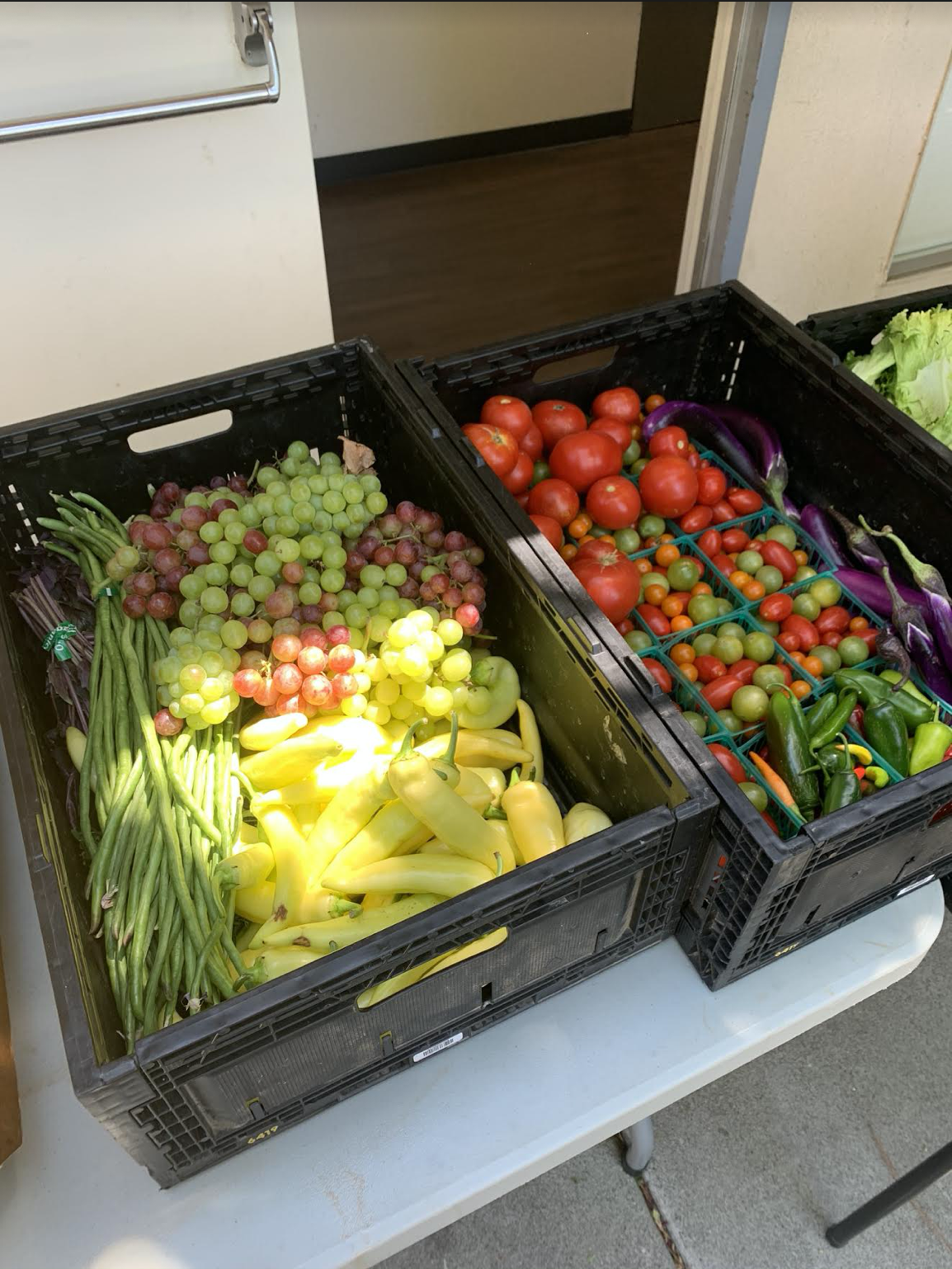
Produce recovered from the Saturday Farmers Market. 

UC Davis Food Recovery Network (FRN)

Since 2013, the UC Davis Food Recovery Network (FRN)  has worked to reduce food waste while simultaneously feeding the community. The organization has been delivering excess food from vendors to communities in need and spreading awareness of issues regarding hunger and food waste.

“During quarantine, we have been recovering surplus food from Latitude, Segundo and Tercero dining commons as well as the Segundo and Tercero markets once a week,” said Alicia Marzolf, a third-year clinical nutrition major and the president of FRN. “We donate this food to Davis Community Meals. We also recover excess produce from the Davis Farmers Market on Saturdays and then donate this produce to the distribution at Solano Park Apartments.”

Davis Night Market members distribute excess food from Davis restaurants to the community.

Davis Night Market 

In spring of 2019, a group of UC Davis graduate students founded the Davis Night Market that aims to combat food insecurity in the Davis community. Valerie Weinborn, one of the co-founders of the Market, noted how the Market has expanded its reach during the stay-at-home order. 

“During the pandemic we have continued our food distribution events and we went from twice a week to five times a week (Monday to Friday 9 p.m.),” Weinborn said. “We noticed that when lockdown and shelter-in-place orders started, there [were] more people needing food and also more volunteers, so we decided to expand to five days a week.”


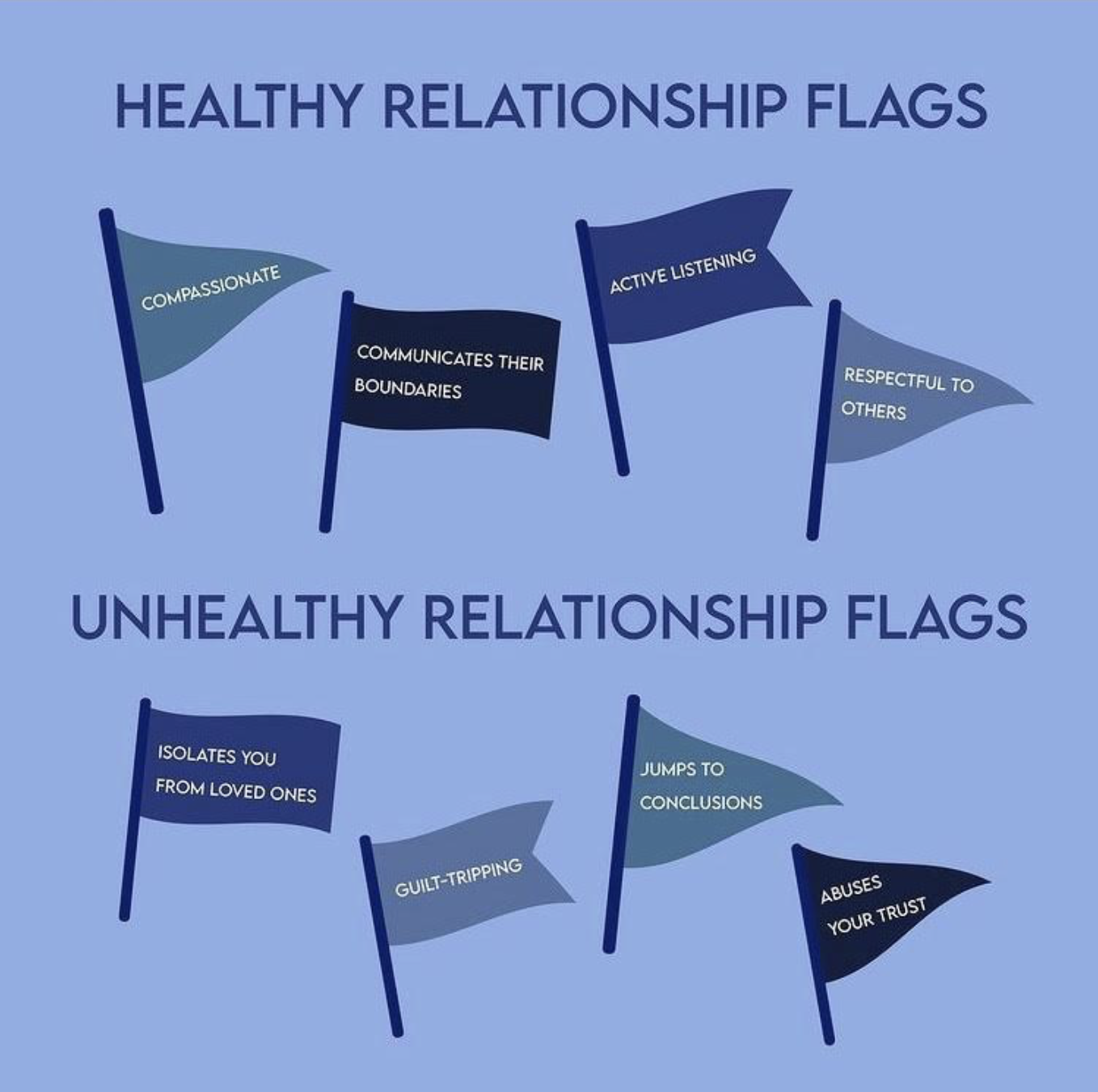
CARE members host Instagram live sessions to discuss the obstacles to a healthy relationship (left).

Graphic designed by CARE members regarding the differences between healthy and unhealthy relationships (right).

UC Davis Center for Advocacy, Resources & Education (CARE)

The UC Davis Center for Advocacy, Resources & Education (CARE), aims to educate and engage students and faculty on issues regarding sexual violence prevention on campus and in the Davis community. Rachel Henry, the education and outreach manager for CARE, stated that the organization has provided resources and online events for students during the pandemic. 

“During quarantine we have found that social media, specifically Instagram, has been the most successful way to connect and continue our mission,” Henry said. “[We have] increased our educational posts on Instagram, hosted an IG Live series on relationship values for Domestic Violence Awareness Month back in October and we are currently producing an IG Reels series on safety tips for Stalking Awareness month in January. Our outreach assistant has also initiated innovative projects to support students with wellbeing and self-care.” 

Projects include a Self Care Toolkit and a Spotify playlist to help students de-stress.


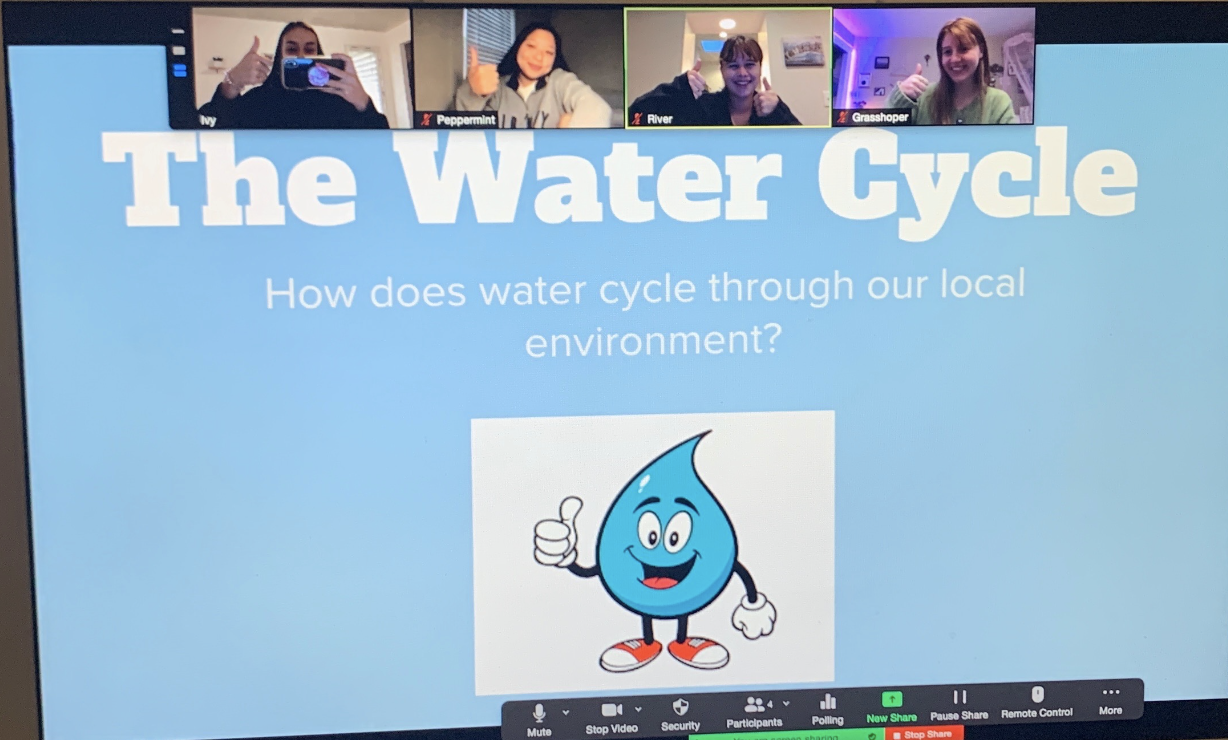
RIVER members share their exercise essentials via Zoom (left).

RIVER members participate in socially-distanced exercise events outdoors (right).

Recognizing Illness Very Early and Responding Club (RIVER)

TheRecognizing Illness Very Early and Responding Club (RIVER), is a student-run organization that aims to provide preventative care, nutrition and exercise education to underserved communities in Sacramento and Davis. The organization has worked alongside the Yolo County Foodbank, CommuniCare Health Centers and Bret Harte Elementary School to provide access to resources and health and welfare information. 

“RIVER is a student-run organization at [UC Davis] that has been working through the pandemic to support our community,” said Kylie Olsen, a fourth-year neurobiology, physiology and behavior major and the co-president of RIVER. “We transformed into a fully online health coach program, working with members of the community to reach their goals. We have interns working on graphics to provide vetted health information as well as interns presenting recipes and workouts for others to learn from. We also support the health of members of our organization by hosting online [or] socially-distanced socials such as workouts and meditations.” 


Sprout Up instructors hold sessions on Zoom to teach elementary students about the water cycle.

Elementary students create signs to encourage others to conserve water during Sprout Up meeting (Taken in 2019 pre-COVID-19).

Sprout Up 

The UC Davis Sprout Up chapter has worked towards teaching elementary students about environmental science and the importance of being environmentally friendly. The organization has held events to encourage young students to understand the impact they can have on the environment and promote sustainability at a young age.

“Sprout Up at UC Davis is an organization that goes to local elementary schools in the Davis area and teaches first, second and third graders about science and being environmentally conscious,” said Kritika Sharma, a fourth-year biochemistry major and the community manager of Sprout Up. “Our weekly lessons consist of activities about water conservation, different sources of energy and how we can reduce our carbon footprint. Although we are no longer allowed in classrooms, we have been continuing our weekly lessons via Zoom. Our awesome instructors have helped adjust to an engaging virtual platform and help amend our usual lessons […] with activities that kids can do from their own homes.” 


Camp Kesem counselors meet via Zoom after Friends and Family Day.

Camp Kesem 

Camp Kesem is a nationwide organization in which college students hold an annual summer camp for children who have been impacted by a parent’s cancer. Camp Kesem offers kids a safe and supportive environment while also holding camps packed with fun outdoor activities. Alex Dillabaugh, a fourth-year neurobiology, physiology, and behavior and Spanish double major, is this year’s camp director. Although camp was canceled this past summer, Dillabaugh detailed ways in which the organization has continued to support its campers. 

“We have been continuing our efforts despite the pandemic by fundraising throughout the year and even hitting a chapter fundraising record on this fall’s ‘Giving Tuesday,’” Dillabaugh said. “Additionally, we have held a virtual Friends and Family Day, and we will be holding two more throughout the year. During these events we have had various programs for counselors and campers to reconnect.” 


Group photo of Clinica Tepati undergraduate members (Taken December 2019, pre-COVID-19).

Clinica Tepati 

Clinica Tepati is one of nine student-run clinics in the Sacramento area. The clinic aims to provide accessible healthcare to the underserved Latinx community. UC Davis undergraduate students and medical students work collaboratively to provide basic health care services such as health screenings, health education and primary care to the clinic’s patients. Ananya Narasimhan, a fourth-year genetics and genomics major, is the medical records and technology co-head for Clinica Tepati. Narasimhan commented on the efforts that the clinic has made to continue to provide for patients during the pandemic.

“Here at Clinica Tepati, our undergraduates take a lot of pride in doing whatever we can to better the lives of our patients,” Narrasimhan said. “Although the pandemic has been a huge challenge when it comes to delivering our services to our patients, we are committed to making sure our patients are taken care of. With the pandemic, we were still eager to fundraise for our patients and had even more of a drive considering that the pandemic increased the disparities that our patient population faces.”

Written by: Sneha Ramachandran — features@theaggie.org 


Students juggle insurrection, impeachment and schoolwork

0

As armed rioters scaled the Capitol, students tried to pay attention to their lectures

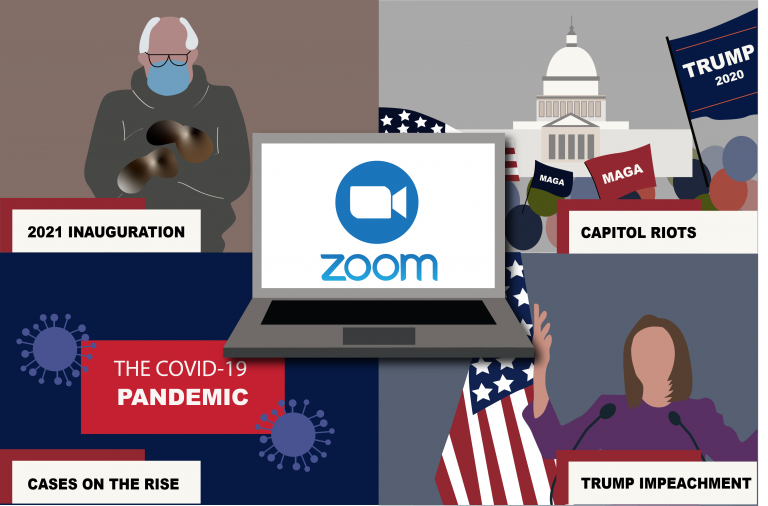
As students tried to get a handle on winter quarter, an insurrection was taking place in the Capitol. As far as their studies were concerned, not much had changed.

Ardash Chandra, a third-year political science major, was in his political science class when news from the Capitol reached him. 

“It was right towards the end of class when the whole thing happened and everyone was typing into the chat and going a little crazy about it,” Chandra said.  

Sonya Gomez-Enriquez, a third-year computer science major, was also in class when she heard about the events.

“I wasn’t really paying attention in class, because I wanted to see what was up,” Gomez-Enriquez said. “I was seeing it progress throughout the day too.”

When asked for comment, Michelle Burt, the director of multicultural services at Student Health and Counseling Services, declined but provided a flyer for students dealing with socio-political stress

“Definitely the day was incredibly stressful for me,” said Marco Moeljadi, a first-year environmental policy major. “I was just so focused on it for a long time.”

Gomez-Enriquez said she wished there would have been more outreach from professors during that time.

“I would want at least an email alert from my teachers saying what they think about it,” Gomez-Enriquez said. “Just to acknowledge there are things going on outside.”

Chancellor Gary May did briefly address the events in an email sent to students on Jan. 8.

“However, as resilient as we can be, we understand the stress brought on by current events,” May said in the email. “Please continue to care for yourselves and others.”

Chandra said this should help people see what is really going on in the U.S.

“We really got to see the other half of the story, the other side of the picture which for the longest time we have said, ‘Oh it doesn’t really exist, it’s just a small population who are like that, who hold those beliefs,’” Chandra said. “That’s just not true, given what we saw.”

Many of the events, such as the plan to arrest congressional members and potentially hang former Vice President Mike Pence, were not known until much later.

“I really feel like it should have been a bigger deal because I saw articles where people were going in there with zip ties and the panic buttons in the congressional room were ripped out ahead of time,” Gomez-Enriquez said.

Moeljadi said he didn’t hear anything from either of his professors that day.

“There could have been at least some recognition,” Moeljadi said. “I don’t know about officially cutting down on assignments, but definitely some recognition.”

The historic second impeachment by the House of Representatives of former President Donald Trump, which occurred just days later on Jan. 12, was not at the top of the list of important topics for Gomez-Enriquez.

“At the end of the day, it doesn’t really mean anything anymore,” she said. 

Moeljadi said that the events of Jan. 8 were not as stressful as they would be during a regular year, mainly because students are just used to unprecedented events.

“If the Capitol stuff had occurred independent of a pandemic, it would have been much crazier,” Moeljadi said. “It followed a lot of other crazy things going on this year.”

Written by: Kathleen Quinn — campus@theaggie.org

Tuesday Table continues to offer free essentials, more locations available

0

Organizers hope Tuesday Table continues as a food resource even post-pandemic

Since the start of the COVID-19 pandemic last March, Tuesday Table has been providing various essentials to the Davis and Yolo County communities. These essentials include—but are not limited to—food, books and other personal care items. Over the past few months, Tuesday Table has continued to grow and provide for the community. 

Melanie Carr, a Yolo County Tuesday Table organizer, explained how Tuesday Table progressed to offer six main tables: three in Davis, two in Woodland and one in Knights Landing.

“The people who are doing the Tuesday Tables each week are consistent and the tables are consistent,” Carr said. “We’re a little bit more consistent in our operations in terms of when do we get the donations and how we get them out to people who need them.”

Lindsay Wilson Terry, another organizer for Tuesday Table in Yolo County, noted the large appeal of Tuesday Table due to its efficiency. While other food distribution sites may require paperwork or identifying information, Tuesday Table does not.

“We don’t require any paperwork,” Terry said. “You don’t have to give us your address or your phone number. You come, you get what you need—you don’t need to tell us your business.”

Carr emphasized that Tuesday Table’s main goal is to get as much food to people as the organizers can.

“We don’t want any food to go to waste,” Carr said. “We want it to go out to people who need it. We want to give the community an opportunity to participate in that, and then I think we get a stronger sense of our community and who’s in it.”

Terry explained how Tuesday Table allows residents to choose from a variety of goods instead of receiving a preselected box, which is a common method for distributing necessities. This way, residents can take what they truly need. 

“We’re a way to give even more life to some of those boxes—to some of that aid that people get elsewhere,” Terry said. “It doesn’t give individual voice and choice to everybody. I feel like that’s something our table provides.”

Co-host for Tuesday Table in Knights Landing Sara Guevara-Plunkett described how she first became involved with Tuesday Table. When the pandemic began, Guevara-Plunkett became financially insecure and used Tuesday Table because she felt too ashamed to utilize other food distribution sites. 

“Because of Tuesday Table, I was allowed to get the help that I needed but in a more respectful manner,” Guevara-Plunkett said. “I could keep my privacy, but still continue to build my life.” 

Guevara-Plunkett further explained how Knights Landing is a food desert, meaning residents have limited access to affordable fresh produce. Guevara-Plunkett knew she wanted to give back to her community and brought up the idea of hosting her own Tuesday Table with her housemate Elyse. 

“Now that we’re hosting Tuesday Tables, we can see that it does help a lot of people and a lot of families,” Guevara-Plunkett said. “The people that come not only get things for themselves, but for their neighbors.”

Fellow co-host for Tuesday Table in Knights Landing Elyse Kristine Ong elaborated on the rewarding experience of hosting a table.  

“It’s a really humbling experience,” Ong said. “It gives me a lot of hope in the world, considering this devastating time that we’re living in right now.”

Ong further commented on the hectic schedule of hosting a Tuesday Table. 

“Even though it’s really busy, [Guevarra-Plunkett] and I are constantly out almost on an everyday basis collecting donations,” Ong said. “We’re constantly emailing new organizations and trying to coordinate volunteers to come help us.”

Terry reflected on the tenacity of the Tuesday Table effort as a whole.

“Our handful of core tables that have been around for months—I think they can carry on indefinitely,” Terry said. “We have figured out our system. We’re known as a resource. We’re known as someone who can prevent food from going into the waste stream. We’re known as someone who provides food for the community.”

Carr reflected on what Tuesday Table has in store for the future. 

“As long as we keep getting donations, we’re going to keep going,” Carr said. “Most of us are committed to keeping those tables up to the extent practicable and we’re planning to keep chugging along here. Honestly, I think it’s a great thing so as long as we have the ability to keep doing that, I think we’re going to keep doing it.”

Written By: Jelena Lapuz — city@theaggie.org

Many UC Davis sports seasons canceled due to pandemic

0

With worsening COVID-19 case numbers and strict county guidelines, many UC Davis sports were forced to say goodbye to their season

After months of trying to maintain college athletics, UC Davis athletics have fallen victim to the real world. Nearly every sports season that would currently be playing at UC Davis has been rescheduled or canceled because of COVID-19. Athletes faced yet another hard hit after the cancelation of fall 2020 sports under the Big West Conference.

All competition for men’s and women’s cross country, men’s and women’s soccer and women’s indoor volleyball will not be rescheduled due to strict guidelines mandated by the Yolo County health department.

At the beginning of the 2020-21 school year, fall sports were believed to only be postponed, but later on, were officially canceled by the Big West Conference Board of Directors. The board attempted to push back all sports to the winter or spring seasons, but in the end, they came to the conclusion that it was best to cancel it all. 

The decision came after a long process involving both the schools and their counties. 

“Protecting the health and safety of our student-athletes and following public health guidelines are our top priorities,” said Big West Commissioner Dan Butterly. “Despite a strong desire to return our sport student-athletes to competition, the Board unanimously agreed that the resources and protocols needed to safely and equitably conduct fall, winter and spring sports seasons concurrently was not in the line with those priorities nor in the best interests of our student-athletes and coaches”.

After the Big West made its decision, it left many of the sports at UC Davis with decisions to make. On Jan. 6, the university announced that women’s indoor track & field would also not compete this season. 

“This was a difficult decision to make, but one that is consistent with our commitment to safeguarding student-athletes’ health, safety and well-being,” said Rocko DeLuca, the UC Davis interim director of athletics. “Head coach Ngoni Makusha and I feel this was necessary since the team would have limited opportunity to adequately prepare for the upcoming season,” 

It has been a difficult academic year for athletics, as the uncertainty surrounding all sports has lingered over colleges all across the country. As cases continue to worsen, the decisions to put these programs to a halt for this year continue, with UC Davis gymnastics as one example.

“It’s a complex situation with many layers of decisions to factor in,” said UC Davis gymnastics head coach John Lavallee. “We’ve come to a point in time where we had to make a decision, and it’s the best one we could make right now. Obviously, we are not going to slow down our progress. As soon as we can, we will get back in the gym and get back to work.”

As for the athletes, they have worked countless hours not only during their college careers but also as children. Unfortunately, many freshmen had their first college season canceled and many seniors had the last season of their careers taken away.

“It’s extra hard because I’m a senior,” said senior Kelley Hebert of the UC Davis gymnastics team. “I’ve been doing gymnastics since I was five, training 20 hours a week. It’s a huge part of my identity so it’s hard having it ripped away like this. But if this is what we have to do to keep people safe, then that’s what we have to do”.

The toughest part for coaches and athletes was that they didn’t know if the season would be canceled, so practices were inconsistent. Because the county guidelines changed depending on the status, training was difficult for indoor athletes, like gymnastics, because they had to train outside without the proper equipment. Then, around October, they got the green light to begin training indoors and began to get hopeful after a few weeks of strong practices. 

After winter break, when COVID-19 cases started to increase, athletes were told to train outside again. A week later, they were allowed to practice inside the gym again right before they got the bad news that they’re season had reached an end.

“There was so much back and forth as to whether we should train hard because we would be in the groove training hard and then be shut down,” Hebert said. “Then on the flip side we would hear, we’re getting canceled for sure.” 

Although winter sports were added to the NCAA guideline that gave seniors an extra year of eligibility, many will not be able to use it, as future goals and careers might be on the horizon. 

This past year was a very challenging one for athletes, especially since some of them had consecutive seasons canceled or postponed. It remains to be seen what occurs with basketball, football and the upcoming spring sports, but the outlook of athletics for next school year has some potential.

Written by: Katherin Raygoza — sports@theaggie.org


Students juggle insurrection, impeachment and schoolwork

0

As armed rioters scaled the Capitol, students tried to pay attention to their lectures

As students tried to get a handle on winter quarter, an insurrection was taking place in the Capitol. As far as their studies were concerned, not much had changed.

Ardash Chandra, a third-year political science major, was in his political science class when news from the Capitol reached him. 

“It was right towards the end of class when the whole thing happened and everyone was typing into the chat and going a little crazy about it,” Chandra said.  

Sonya Gomez-Enriquez, a third-year computer science major, was also in class when she heard about the events.

“I wasn’t really paying attention in class, because I wanted to see what was up,” Gomez-Enriquez said. “I was seeing it progress throughout the day too.”

When asked for comment, Michelle Burt, the director of multicultural services at Student Health and Counseling Services, declined but provided a flyer for students dealing with socio-political stress

“Definitely the day was incredibly stressful for me,” said Marco Moeljadi, a first-year environmental policy major. “I was just so focused on it for a long time.”

Gomez-Enriquez said she wished there would have been more outreach from professors during that time.

“I would want at least an email alert from my teachers saying what they think about it,” Gomez-Enriquez said. “Just to acknowledge there are things going on outside.”

Chancellor Gary May did briefly address the events in an email sent to students on Jan. 8.

“However, as resilient as we can be, we understand the stress brought on by current events,” May said in the email. “Please continue to care for yourselves and others.”

Chandra said this should help people see what is really going on in the U.S.

“We really got to see the other half of the story, the other side of the picture which for the longest time we have said, ‘Oh it doesn’t really exist, it’s just a small population who are like that, who hold those beliefs,’” Chandra said. “That’s just not true, given what we saw.”

Many of the events, such as the plan to arrest congressional members and potentially hang former Vice President Mike Pence, were not known until much later.

“I really feel like it should have been a bigger deal because I saw articles where people were going in there with zip ties and the panic buttons in the congressional room were ripped out ahead of time,” Gomez-Enriquez said.

Moeljadi said he didn’t hear anything from either of his professors that day.

“There could have been at least some recognition,” Moeljadi said. “I don’t know about officially cutting down on assignments, but definitely some recognition.”

The historic second impeachment by the House of Representatives of former President Donald Trump, which occurred just days later on Jan. 12, was not at the top of the list of important topics for Gomez-Enriquez.

“At the end of the day, it doesn’t really mean anything anymore,” she said. 

Moeljadi said that the events of Jan. 8 were not as stressful as they would be during a regular year, mainly because students are just used to unprecedented events.

“If the Capitol stuff had occurred independent of a pandemic, it would have been much crazier,” Moeljadi said. “It followed a lot of other crazy things going on this year.”
Written by: Kathleen Quinn — campus@theaggie.org