55.5 F
Davis

Davis, California

Wednesday, December 24, 2025
Home Blog Page 297

Point Reyes Seashore is one step closer to national dairy farm

The Park Service’s proposed management plan of the Point Reyes Seashore prioritizes agriculture over wildlife in a national park

In Marin County, ranching is more than just a nine to five for many residents, but a way of life. Roughly half the land in Marin County is designated for farming or ranchland. Ranching has existed in the Marin for years, going back to the first settlers’ arrival in the area. Nestled within this agricultural landscape are a few conservation gems like Mt. Tamalpais, Muir Woods and most of all the iconic Point Reyes National Seashore. Keeping this lengthy history in mind, agriculture has outstayed its welcome in the Seashore. The Point Reyes peninsula was just narrowly saved from development and remains a slice of wilderness in the rapidly changing landscape of California. There are thousands of acres of farmland across the Golden State, but only one National Seashore on the entire West Coast.

Point Reyes is so unique in fact, it is designated by the United Nations Educational, Scientific and Cultural Organization (UNESCO) as an international biosphere preserve—home to hundreds of species which are endangered and only found in the peninsula. Despite this status, roughly a third of the park’s land is designated for agricultural use. This prevents visitors from using a large portion of the park and contributes to growing concerns about the environmental impact of ranching on the Seashore’s ecosystems. To truly understand this complex issue, we have to understand its history.

The modern history of Point Reyes has been characterized by compromise. When the park was founded in the ‘60s, it was not without controversy. Initially both sides, parts of the federal government and the ranching community, were vehemently against the Seashore’s establishment, but the Ranchers’ tune quickly changed realizing that federal subsidies would help keep the industry afloat. 

Additional concerns were raised by members of Congress about leasing the park land as a national park, which would be a first. When the park was established, there was no mention of permanently establishing ranching in the 1962 legislation. Although later amendments added the possibility of extending leases, the intention that ranches be phased out is present from the very beginning of the Seashore. The original agreement was that the ranchers were allowed to reserve a right to use the land for 25 years or the life of the original owner. As that period came to an end, ranches were still there and coming up with any reason to stay.

“I know the people who put [The Point Reyes Act] together. At the 40th anniversary I talked to Stewart Udall, the Secretary of Interior. He remembered the same thing I did, that ranching was never intended to be permanent,” said Ken Brower, an environmental writer and son of David Brower. “The founder’s idea had nothing to do with what you’re hearing now from ranchers, that they’d be here forever.”

You may often hear that the Seashore ranches are “historic” and must be preserved on that basis for future generations. This is blatant propaganda. If these ranches truly had historic value, this “historic” status would logically also be applied to the oyster farms, which had been in business for nearly a hundred years before being shut down by the park service due to a variety of reasons. 

In 2012, the Secretary of Interior at the time Ken Salazar did not renew the Drakes Bay Oyster farm’s lease after extensive review. His foremost argument for closing the ranches was its environmental repercussions to the Seashore’s marine ecosystems. Following this train of thought, it does not make sense that the same agency which helped shut down the Oyster farms is now pushing through a plan to keep these “historic” ranches from being just history. 

Furthermore, if it was the intention of the park service to preserve history, Coast Miwok people occupied these lands for thousands of years. Many of the cultural and sacred sites in Point Reyes are difficult to access due to hundreds of acres of ranchland that encompass them. Instead of promoting real restoration and preservation of the sacred and historic sites of the Coast Miwok, the park service has chosen to create a fictionalized village outside of the ranching zone. 

History aside, the park service’s foremost duty is to protect biodiversity, especially in the context of a possible anthropogenic mass extinction event. Every decision we make, from what we eat for lunch to how we decide to get to work, has environmental repercussions. Luckily, systems like the national parks exist to protect remarkable environments from human development. These places can’t exist solely as rich isolated islands of life in an anthropogenic world, but they are a great first step. If we can’t even protect our national parks, what can we protect? 

“It’s 2021 and yet the park service is proceeding in Point Reyes with a medieval-like mindset, prioritizing a few leaseholders over the well being of the natural heritage of this geographically significant peninsula. The conversation needs shifting, the priority in our parks and wilderness areas must be about promoting biodiversity and environmental health first, not hindering it,” said Matthew Polvorosa Kline, a wildlife photographer and West Marin resident. “There are numerous habitat types like threatened eelgrass meadows and endangered coastal prairie (the most species rich grassland type in North America) that need restoration. Likewise, there are numerous native wildlife like the Snowy Plover, Red-legged Frog, Coho Salmon, Myrtle’s Silverspot Butterfly and rare Tule Elk that need our diligence.”

The Dairy Industry at Point Reyes has often been hailed as the embodiment of sustainable ranching and resource management in California. Unfortunately, this narrative does not line up with the facts. The agriculture industry is one of the biggest contributors to climate change. In fact, livestock alone contribute 14.5% of total greenhouse gas emissions. The environmental impact statement addresses the impact of continued ranching in the peninsula, stating that under current conditions, roughly 24,500 metric tons of emissions will be produced annually. This is in sharp contrast to the carbon sink which Point Reyes and other national parks are often advertised as.

According to an independent investigation by The Revelator, Point Reyes National Seashore is ranked in the top 10% most contaminated places in the nation for e. coli and fecal coliform. This is likely due to the practice of spreading liquid manure across the open areas in the park where it trickles down into streams and other water sources. The most contaminated areas include Drakes Estero and Limantour which are popular tourist destinations. Tomales Bay, a popular swimming and boating spot, has also been contaminated with fecal coliform and e. coli. 

“I have to say that these public lands at Point Reyes National Seashore are in some of the worst conditions I’ve ever seen from excessive numbers of cattle,” said Laura Cunningham, the California director for the Western Watersheds Project.

It is against the fundamental premise of the national park to continue ranching within its boundaries. The purpose of the Seashore is to protect the natural resources of the park—the proposed plan is undoubtedly harmful to the environment. Prioritizing private industry over the needs of the general public on public lands is both unethical and unpopular in the county. The decades of compromises between the private dairy industry and public interest have come to a climax. 

The park service released a plan which included several alternatives and allowed the public to comment. According to the Resource Renewal Institute, who went through every single comment, 91% of the comments had an unfavorable opinion of the proposed alternative B. Despite this, the park service announced last fall that they would go through with their “preferred alternative” from the beginning, which would expand ranching leases from five to 20 years, allow diversification of operations and allow the culling of a herd of native Tule Elk. 

“It’s not a vote on the alternatives, for lack of a better way to describe it. We want to hear what people are thinking about them and we want to improve the document,” said Melanie Gunn, the park’s outreach coordinator, at a meeting with the Marin Conservation League. “We look for substantive comments, group them and prepare responses.”

The park service has a history of ignoring public objections. For instance, during a drought between 2012 and 2014, roughly half of the Tule Elk herd on the Elk Reserve died. Because there are no perennial streams in the Reserve, the elk were trapped in an area with inadequate water and forage which caused them to die of thirst. This is the carrying capacity imposed by the park service to make room for private agriculture. 

The Park’s response to this die off was that they were “closely monitoring the situation” and would implement a contingency plan if necessary. But this past year, Kline, a local wildlife photographer, documented the remains of at least 18 dead elk in the Tomales Point Reserve from late summer to fall. 2020 was a year of extreme drought and wildfires, and it is common sense that a fenced area with no significant sources of water would at least warrant investigation by the park. Despite this, the park service dodged any culpability giving a map of supposed water sources and claiming to be monitoring the situation.  
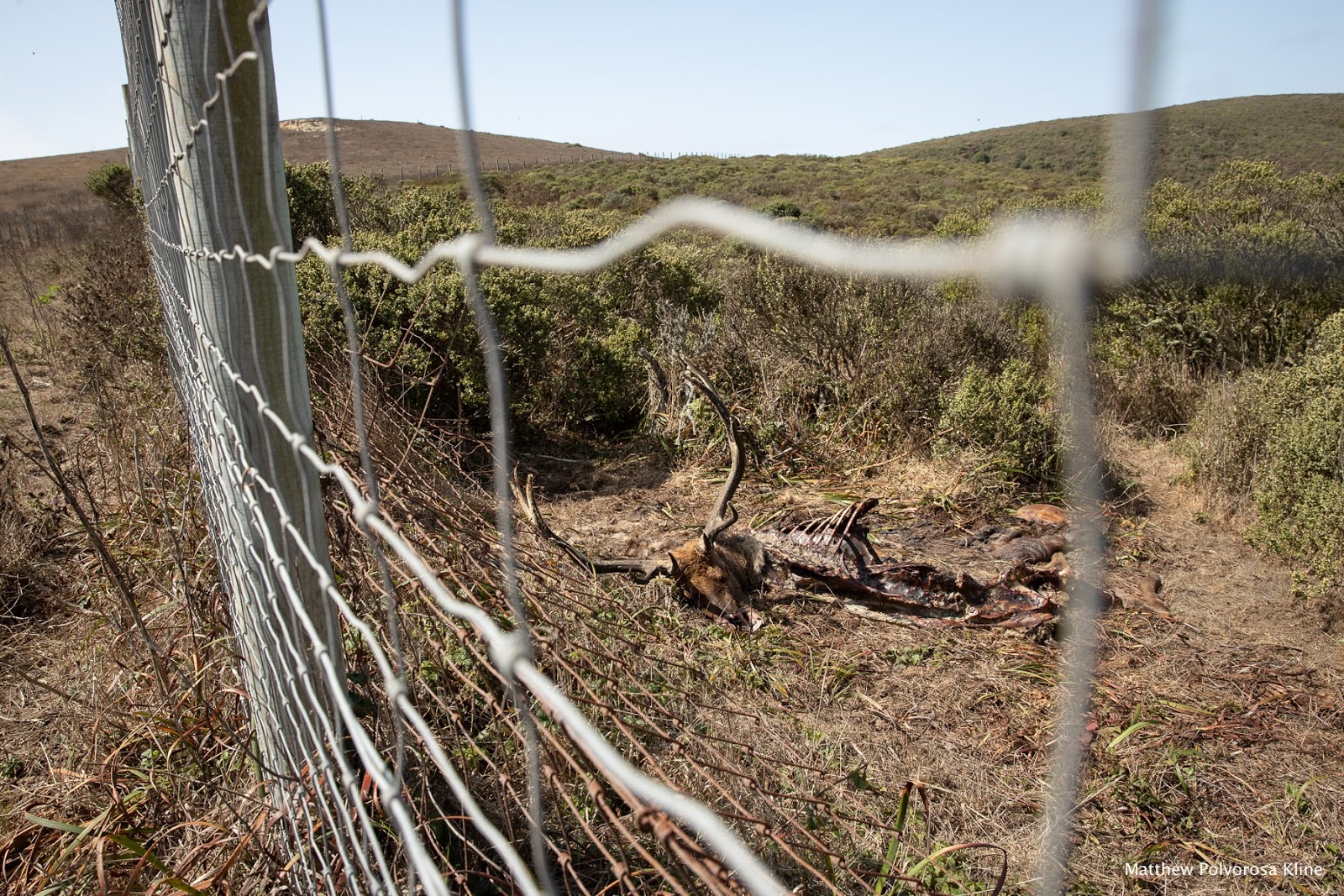
One of 18 documented dead elk in fall of last year. ©Matthew Polvorosa Kline

Another source of great controversy is the culling of the native Tule Elk. These elk were once abundant in California, estimated to have a stable population of nearly half a million spread across the Coastline when the first Westerners arrived. That quickly changed with American acquisition of California, and by the turn of the century they were believed to be on the edge of extinction. By the late 19th century, there were less than 20 individuals left in the entire world. Luckily, a conservation-oriented rancher named Henry Miller protected a herd on his property until they could be slowly reintroduced across the state. It was because of the actions of a single rancher that the species was saved and now has a population of nearly 5,000. Ironically, today ranches are the exact reason that the park service wants to kill a species that is just beginning to return to the California wilderness.

For every elk in the park, there are roughly 13 cows. In fact, population estimates put Tule Elk at roughly 1% of their historic population, and the government is already making plans to start killing elk to appease private ranching on public land because they can’t just relocate them elsewhere due to an outbreak of Johne’s disease caused by cows.

“As a Native American that has travelled up and down the state of California, that’s tracked the Elk throughout the state of California from San Diego to Riverside to the Tahoe region to Northern California where the Roosevelt Elk are here at Pt. Reyes…,” said Terrance Chitcus Brown, a Karuk Medicine Man and traditional dip net fisher in an interview for The Shame of Point Reyes. “[The National Park Service (NPS)] are supposed to take care of the public interests of the land, they’re supposed to uphold the spirit and intent with which the Point Reyes National Seashore was created. They’re supposed to protect the Point Reyes Tule Elk. They did not do that. If the Uniformed people did anything, they let them down.”

The park’s preferred plan also violates several laws. According to Jeff Miller of the Center for Biological Diversity, the “NPS preferred alternative B does not comply with the Organic Act, the Point Reyes Act, or the GGNRA enabling legislation as it authorizes and promotes significant impairment of natural resources and killing of native wildlife.” 

The Environmental Impact Statement (EIS) undertaken by the park, in accordance with National Environmental Policy Act (NEPA), concluded that the plan would be detrimental to the area’s natural resources by allowing the continued pollution of air, land and water within the park. The park only complied with drafting this EIS after settling a lawsuit by the Center for Biological Diversity, Western Watersheds Project and the Resource Renewal Institute. This implies that from the onset of this process, the park service’s intent was to expand ranching leases and allow mobile slaughterhouses on public lands at any cost. At every step along the process, the park service has attempted to cut corners and ignore its duty as stewards of Point Reyes.

Despite the overwhelming evidence that this plan is against the best interests of the land and visitors to the park, it has been hailed as a great compromise by local Rep. Jared Huffman and the Marin Conservation League. In particular, Huffman, generally a reputable environmentalist, has been a fervent advocate of the general management plan. In fact, Huffman introduced a bill in 2018 to implement 20 year leases and definitively establish the ranches’ position in the park for generations to come. He argues that this follows the directive of ex-Secretary of Interior Salazar, who directed the park service to pursue the extension of leases. Huffman’s bill passed in the House but died in the Senate and he has not announced any intention to reintroduce this bill. 

Huffman’s comment to then-Superintendent Muldoon about the proposed plan makes his position quite clear. He argues that the ranches are an integral part of the park’s history and future, and that the proposed plan is very close to being the perfect compromise. He states that the culling of the herd is necessary and that the park will have to dedicate substantial time and funds to research and resource management to appease both the ranches and public.

Huffman presents himself as an environmentalist but his criticisms often focus on coal and oil companies which are not heavily present in his district. It is a safe political move for him to critique and advocate for harsher restrictions on these industries because they have no monetary hold over him or his voting base. On the other hand, he is much more moderate with his opinions on agriculture, praising Marin’s agriculture Industry as sustainable and historic while also taking $189,000 from agribusiness in campaign donations. It is no wonder that Huffman is willing to turn a blind eye to a couple of ranches when necessary. 

“All the data we have, from the comments submitted to the NPS, and to the California Coastal Commission, to social media, town halls, etc., indicate that the public is heavily in favor of wilderness over cows,” said Ken Bouley, a local resident. “The only people supporting commerce in our national park seem to be the ranchers themselves and certain in-tow politicians. There is precious little wilderness left, and this land belongs to the public.  Arguments for continued extractive operations in Point Reyes would be pathetic contortions, if they weren’t on the verge of winning the day. Hopefully people wake up to what’s happening here, and soon.” 

So who can you turn to? Well, Craig Kenkel, the former Superintendent of Cuyahoga National Park, begins management of the park this year. He comes from a large farm family in Iowa, with decades of experience in the NPS. He has been praised for his work with “cultural” and “historic” resources, and oversaw the culling of white tailed deer in Cuyahoga using trucks and sharpshooters. Where have we heard the word “historic” before? Unsurprisingly, many environmentalists are skeptical of his appointment due to his background while others believe he might bring a fresh perspective to the issue.

The final issue I wish to address is accessibility. Point Reyes has intentionally never had an entrance fee, allowing it to be accessible to nearby urban areas and to low income communities that might not necessarily be able to afford a trip to other national parks like Yosemite. This idea has been so important to the core values of the park that it is an official park rule ensuring that the park service would never include a fee. To pollute and sell out the public lands to private industry in a park intended to be for everyone makes this more than just an environmental issue but a social justice issue as well.

Later this month, the California Coastal Commission (CCC) will issue a decision on whether or not to approve the management plan. Because the CCC is a state agency, ultimately their approval isn’t technically necessary to go forward with the plan because the park is federal land. Despite this, the park service would be in an incredibly awkward position without the approval of the CCC and it would make it abundantly clear that their decision was politically motivated rather than based in facts and science. Tentatively, the CCC staff recommendation has raised concerns about the lack of water quality data and the lack of a comprehensive water quality monitoring program by the park service but still suggested conditional approval of the plan if the park service was to create some form of water monitoring plan.

“It is not reasonable to find the plan consistent with the Coastal Act, based on the NPS producing a water quality assessment plan. The Park has been unable to monitor the ranches consistently for decades. They have not had a range management scientist on staff for almost all of the years since 1980,” said Robert Johnston, a professor emeritus of environmental planning at UC Davis.

Even if the CCC was to object to the general management plan, that would not be enough. It would take a group of engaged citizens to advocate for the park like they have done consistently in the past. There would be no Point Reyes National Seashore today without the hard work of private citizens trying to right a wrong. The only reason Marin County has any places left unpolluted by the agriculture industry is because of the work of forward-thinking individuals like Marty Griffin and Clem Miller. Ultimately, though, what is happening at Point Reyes is not an isolated incident or unique to California. 

Over the past four years, the Trump Administration has rolled back hundreds of environmental regulations and pushed an agenda that has expanded private industries like drilling and agriculture into public lands across the country. Even as we watch the transition of power, now is not the time to let up. To simply blame this on the Trump Administration and expect it to be fixed with U.S. President-elect Joe Biden’s entrance is not enough. We cannot rely on our elected officials to do the right thing without public pressure. It is time to take action towards a greener future. We need radical substantial change, and that requires action from you and I.

Written by: Joe Sweeney — jmsweeney@ucdavis.edu 
Disclaimer: The views and opinions expressed by individual columnists belong to the columnists alone and do not necessarily indicate the views and opinions held by The California Aggie.


Culture Corner

The Arts Desk’s weekly picks for television, movies, books and music

TV Show: “Avatar: The Last Airbender” (2005)

When “Avatar” was added back to Netflix on May 15, I, and many other people who were kids when the show was running from 2005 to 2008, promptly rewatched the series. The perfectly paced plot, the spectacular concept of “benders” (people who can manipulate one of the four elements) and the dazzling universe brought back a childlike sense of awe. I got a chance to appreciate the complex journey undertaken by Aang, the titular Avatar who has the ability to bend all four elements, as he seeks to restore balance to a war-torn world. With more serious themes interspersed in the generally lighthearted, humorous storyline, it is the type of show that can be enjoyed by viewers of any age and doesn’t seem overly childish. Unlike other shows of its time, “Avatar” has been lauded for a more respectful approach to worldbuilding. The show draws from specific Asian cultures without relying on Orientalism, and each element bending style is inspired by a different martial arts discipline. Spoiler alert ahead—the show celebrated its 15th anniversary this year though, so if you haven’t watched it yet, that’s rough, buddy. The final episode involves the classic good defeating evil trope, yet rather than the villain being killed, his bending is taken away. The show approaches redemption with nuance and, alongside heartwarming storylines with copious amounts of humor, proves to be a thoroughly delightful, thought-provoking watch for children and adults alike. 

Movie: “The Parent Trap” dir. by Nancy Meyers (1998)

The iconic Lindsay Lohan movie is everything a comfort movie needs to be. It is full of family favorite songs, endlessly rewatchable and so easily quoted and referenced (though perhaps that is due to how many times I’ve rewatched it). The ear-piercing scene that Roger Ebert suspected would “lead to an epidemic of do-it-yourself home surgery” in 1998? Terrifying, but in a good way. The pure cinematic experience of Elaine Hendrix’s Meredith Blake and the lizard? Unmatched, but perhaps the origin of my overwhelming fear of lizards. Annie and Martin’s secret handshake? Inimitable, though we ALL try. I’m lucky enough to have a roommate who is ready to do the handshake at the drop of a hat if I play the Young-Holt Trio’s “Soulful Strut.” I would recommend you start the year off right by watching the movie a few times and practicing each time the handshake happens. 

Book: “Dessert Person” by Claire Saffitz (2020)

Having witnessed—and participated in—many stress baking adventures over the past four months, one of my roommates gifted me Claire Saffitz’s cookbook for Christmas. Although I had quite an unfruitful attempt at making the cover recipe, an upside-down blood orange olive oil cake, the tomato tart with spices and herby feta was so wonderful that it seems sacrilegious not to recommend this book. I am a huge fan of the recipe matrix that details the amount of time and skill required to make a recipe—perhaps one day I will be brave enough to attempt a kouign-amann. If the aesthetic pictures are not enough to convince you to check this book out, Questlove provides a glowing review on the inside cover that is a must-read.

Album: “Sing To Me Instead” by Ben Platt (2019)

If 2020 taught us anything, it’s that it is hard to do things alone. To me, “Grow As We Go” is the poster song of this sentiment. Ben Platt has said that the song is about the desperation of wanting a relationship to work while still needing personal growth, but every time I listen to it I am reminded of the ultimate best friend song “Lean on Me” by Bill Withers. “Bad Habit” is the perfect opening track and “New” showcases his incredible voice and range. The aching ballad “In Case You Don’t Live Forever” combines gentle piano with painfully raw lyrics. Platt’s theater kid roots are on display with his skillfully constructed debut album; it is genuinely vulnerable and wholly deserves devoted attention for all 44 minutes.
Written by: Anjini Venugopal — arts@theaggie.org

UC Davis students reflect on 2020, hopes for 2021

0

With the start of 2021, students discuss 2020 and their hopes for the new year

Last year the headlines, events and conversations all told the same story: 2020 has been a year like no other. From N95 masks to protests to elections to new online realities, everyone adjusted to ever-evolving circumstances this year. Now at the very beginning of 2021, UC Davis students share their experiences from 2020. 

Ananya Srinivas, a second-year chemical engineering major, began 2020 with an adjustment that many freshmen faced. 

“My year as a whole started off on the wrong foot since I had to move out of my dorm and back into my house, making my life feel as if it was on pause,” Srinivas said via email. “However, as the year progressed, I actually became much closer to the people in my life and learned to take quarantine and all of 2020 as a blessing.”

While moving back home was an unexpected change, Srinivas found herself discovering the importance of family during the pandemic. 

“Since quarantine limited talking to others, my immediate family and I started to become closer by eating dinners together again, taking our dogs on walks and just talking to each other more since we were all working from home,” Srinivas said via email. 

She moved into an apartment in Davis at the start of the school year, and shared that she consequently developed a newfound sense of independence. Looking ahead to 2021, Srinivas stated that she has many hopes and resolutions for a brighter year, including the hope that the effects of the pandemic will subside.

“My new year’s resolutions are to spend less time on my phone and put more time into my hobbies like painting and learning the piano,” Srinivas said via email. “I also aim to go outside on runs more often than I currently do.”

Similar to Srinivas, Isabella Bianchi, a second-year electrical engineering major, learned the importance of connections during quarantine. 

“My takeaways from 2020 are how important staying connected, paying attention and gratitude are,” Bianchi said via email. “Staying connected was vital for me to not slip […] inside myself and let the time go by unnoticed. Similarly, it was important for me to pay attention to the small things, like the leaves on the trees during a walk or a squirrel on the fence.”

After saying a sad goodbye to her roommates at the end of Winter Quarter, Bianchi moved back home and decided to take a break from school during spring quarter. 

“I had two amazing roommates and we had a lot of fun together, so I miss dorm life for sure,” Bianchi said via email. “We all went through a collective grieving when we realized that Spring Quarter together […] wouldn’t happen.” 

After summer, Bianchi returned back to Davis for Fall Quarter. With three out of her four housemates gone for the term, however, Bianchi found herself isolated once again. 

“The house felt big and empty,” Bianchi said via email. “I spent most of my time in my room doing online classes, studying and eating food. Cooking and going on walks were my ways of ‘getting out.’ Overall, even though I wasn’t completely alone, I felt pretty lonely everywhere I lived. There just weren’t that many people to see or things to do. It could be overwhelming spending so much time with myself.”

Bianchi shared that she doesn’t have high hopes for 2021. She is unsure of when life will return to normalcy, and pointed out that the pandemic has brought a lot of issues to the forefront that will dictate future conversations. Despite reservations, Bianchi shared that she still has personal goals for the new year.

“I’m hoping to be very productive in 2021,” Bianchi said via email. “I’m motivated to catch up on school and pursue more opportunities since I feel like I lagged behind in 2020. I want to change my major, really focus on my studies, exercise at home and continue to stay connected with my friends and family. I also want to work on my mental health.”

For Marielle Allen, a second-year cognitive science major, her experiences in 2020 have caused her to be thankful for what she has. 

“Making sure to make the most of your time and be thankful for whatever you do have is important,” Allen said.

Despite her overall feelings of gratitude for the good things in her life, Allen described her year as “turbulent.” After leaving the dorms in March because of COVID-19, Allen stayed in her parents’ home and remained there for the rest of the year to participate in school online. 

Looking forward, she stated that 2021 will be an “introspective” year, as she believes many will realize that they want to better themselves and achieve goals related to personal growth. Additionally, Allen hopes that in the future everyone will be careful and take proper safety precautions regarding the COVID-19 pandemic as it continues into 2021. 

“My main hopes are that people are cognizant and aware and concerned for others and for public health in general,” Allen said. “[I’m] hoping that all of us students get the vaccine and that overall it’s just a more positive year.”
Written by: Nora Farahdel — features@theaggie.org

Long-term care facilities in Yolo County test staff more frequently following implementation of new order

Health experts explain it’s still important to follow public health guidelines despite increased testing capabilities

Skilled-nursing facilities in Yolo County are now required to test their staff two times a week—which started Dec. 15, 2020—according to an article from the Davis Enterprise. Prior to the updated order requiring more frequent testing, staff were tested once a week, according to the article. 

However, on Dec. 2, 2020, Yolo County Public Health Officer Dr. Aimee Sisson issued an updated health order targeting Long-Term Care Facilities (LTCFs). The updated order, Order No. 2020-03, replaces Order No. 2020-02 (issued on May 8, 2020), according to a press release from Yolo County. 

“Effective December 15, 2020, each Long-Term Care Facility listed in Section 6 below must implement twice-weekly COVID-19 screening testing of all staff working in the Facility,” the order reads. “Staff previously diagnosed with COVID-19 who remain asymptomatic after recovery are exempt from testing for 90 days after the date of symptom onset for the initial COVID-19 infection or date of positive test for staff who never developed symptoms.”

Staff who regularly work within the LTCFs but are not employed by them are also required to be tested twice weekly, either by their employer or by the LTCF. 

Dr. Larissa May, a professor of emergency medicine and former interim health officer of Yolo County, explained via email the importance of continuing to abide by public health measures.

“Unfortunately our low tech public health measures are still the most effective at mitigating the virus, including physically distancing from others not in your household, avoiding gatherings, wearing face coverings around others not in your household, and handwashing as well as avoiding touching your eyes, nose and mouth,” Dr. May said via email. 

Additional measures include getting tested when showing symptoms of COVID-19, staying home and isolating for at least ten days until symptoms are improving, quarantining for a minimum of ten days after traveling or receiving visitors. Testing asymptomatic people 5-7 days after they have been exposed or have traveled can also help with identifying asymptomatic cases. 

Coupled with following public health measures, this order will help protect vulnerable members of the community, the order explains. 

“This Order is issued based on scientific evidence and best practices as currently known and available to prevent the spread of the virus that causes COVID-19 to the residents at the Long-Term Care Facility and to protect those residents from avoidable risk of serious illness or death resulting from COVID-19,” the order reads. “The age and underlying health conditions of a significant majority of Long-Term Care Facility residents place those residents at high risk of experiencing serious health complications from COVID-19, including death.”

“Routine testing of asymptomatic individuals in the community with highly sensitive tests can help mitigate spread as long as individuals follow the public health recommendations,” Dr. May said via email. “Evidence for large scale testing in areas of high prevalence of individuals at higher risk of transmitting infections such as essential workers and university students is still limited.”

While the capacity to test people has increased since the past summer, it is still focused on those who have been exposed to COVID-19 and people who are symptomatic, according to Dr. May. 

Students can continue supporting the local community while staying safe, Public Information Officer at Yolo County Jenny Tan explained, such as by buying locally and supporting restaurants.

“Students can also donate food items or volunteer their time to many nonprofit organizations to give back to the community,” Tan said via email. “We can still support our local businesses and organizations while following the health and safety measures of wearing a face mask and physically distancing.”

Ultimately, while increased testing in LTCFs may help identify cases and protect vulnerable members of the community, it is not a replacement for following health guidelines. 

“Bottom line, without following the public health recommendations above, testing alone will not be sufficient to mitigate spread especially if it does not change behavior,” Dr. May said via email. “A negative test may still provide false reassurance particularly when prevalence is high and test sensitivity is low.”
Written by: Shraddha Jhingan — city@theaggie.org

Study analyzes a decade of necropsies from stranded killer whales

Killer whales face a variety of mortal threats, with many of them caused by humans

A study analyzing pathology reports of 50 killer whales over the past decade has compiled a list of various causes of killer whale deaths, including threats from humans. The effort was led by Dr. Joe Gaydos, a senior wildlife veterinarian for the SeaDoc Society, a program of the UC Davis Karen C. Drayer Wildlife Health Center. Gaydos led the effort alongside Dr. Stephen Raverty, a veterinary pathologist with the Animal Health Centere in Abbotsford, British Columbia. 

Before this report, most of the data on killer whale health and diseases largely came from captive animals or individual case reports of stranded whales. A collective look at stranded animals can give a clearer idea of what killer whale health, diet, reproduction, anthropogenic stressors and diseases look like. Understanding these factors allows for researchers and policy makers to take actions mitigating vessel collisions and other threats to whale mortality stemming from humans. 

The study uses pathology reports of 53 whales from 2004 to 2013. A cause of death was found for 42%, or 22, whales. Calf mortalities were due to causes such as infectious diseases and nutritional and congenital malformations. For sub-adults, it was due to issues like trauma, malnutrition and infectious diseases. For adults, it was due to bacterial infections, emaciation and blunt force trauma. However, each age class faced direct human-related causes of death, calling for a more serious look at human interactions with marine mammals.

“This last study is a look back at a decade of people doing necropsies on stranded killer whales,” Gaydos said. “So what we’re interested in is why are they dying and is there something we can do about it,” 

By taking a more comprehensive and extensive look at the multiple causes of death for different populations of killer whales, single reports of causes of death for individual whales are now being reexamined in a larger sense. 

“There have been case reports published, and even a series of animals are included, but they tend to be relatively small, the […] sort of things [that] were found with an individual whale that was stranded or, in some circumstances, up to four or five individuals that were stranded,” Raverty said. “The strength of this paper is  the geographic breadth of it, from California to Alaska as well as in Hawaii, and then looking at it long term over time and doing things fairly systematically so we literally try to model each specific animal.”

In 2004, Gaydos and Raverty developed a standardized killer whale necropsy protocol which allows for a more systematic collection of data from stranded killer whales to better understand the animals. National Oceanic and Atmospheric Administration Fisheries and Fisheries and Oceans Canada invested money into testing the animals and flying people out to where animals were on remote beaches. 

“When we realized how little we know about killer whale diseases and even killer whales’ health for free range animals, we said ‘Hey, we just need to get everybody on board,’ and so by developing a protocol we gave everybody a step-by-step playbook to respond,” Gaydos said. “You have a 20,000 pound animal on the beach and that can be a little bit overwhelming, but this said, ‘Hey, here are some diseases we are concerned about, here are the different samples that you can take, here are the places where you can ship those samples, and also call us because we have some of the grant money to get some of those tests done.’”

Over the course of this analysis and study, the researchers knew that humans have had an impact on killer whale populations by overfishing the salmon that the whales eat, the boats that cause noise disturbance or the high level of contaminants. Although, they were surprised by the amount of whales coming into contact with humans and boats.

“The ship strike was very, very interesting in terms of the implications of what’s been happening along the cost in the past couple of years,” Ravery said. “There have been efforts to try and reduce noise and ship traffic in the vicinity of killer whales. So there is a killer whale tracking network that’s been established and this largely consists of submerged hydrophones and they can track the vocalizations of the whales.”

Washington state and British Columbia have already begun to take steps in addressing collisions by listening out for animals or by moving whale watching tours further away from the animals. Having gathered better data on whale mortalities, policy makers can take appropriate action to minimize deaths. But this is just one of the first steps in addressing killer whale mortality. 

“This paper pointed out that there are some human interactions that we need to address and think about and deal with,” Gaydos said. “But that does not take away how important it is for us to recover salmon populations and quiet the oceans so animals can find already-scarce food, or to remove chemicals from the environment that we’ve put in the environment. Those things are still very important and definitely at the top of the list of things we need to do. This just added a couple of new things that we need to start thinking about and working on.”
Written by: Simran Kalkat — science@theaggie.org

UC system pushes to open in-person courses for next academic year

The UC system announced today that it will be reopening campuses for instruction for Fall Quarter 2021

The University of California Office of the President (UCOP) stated plans to reopen campuses to in-person instruction throughout the UC system in Fall Quarter 2021 in a press release.

“With robust research advancements and COVID-19 vaccines soon becoming available to students, staff and faculty, UC is preparing to welcome students back to all its campuses this fall, while remaining vigilant in all critical prevention efforts and continuing to prioritize the health and well-being of the University community,” the press release reads. 

The statement is intended to provide notice to students so that they can make plans in advance to prepare for the return to campus since many students have been residing off-campus as courses moved online, according to the statement.

The 400-bed quarantine housing that was only at 2% capacity during the winter break has jumped to 22% according to the UC Davis COVID-19 dashboard as students return to campus.

Sam Daou, a first-year electrical engineering major, said that he is excited to take courses in person in the fall.

“I’ve never really had the college experience,” Daou said. “It’s a good thing to finally get out of Zoom and finally go to in-person classes.”

UC Davis has begun giving vaccinations of both the Moderna and the Pfizer vaccine to medical professionals and some staff according to UC Davis Health. However, it is unclear when these vaccines will be available to students or if COVID-19 vaccination will be required for returning to campus. 

“On the Davis campus, we are receiving inquiries from students, staff and faculty about how and when COVID-19 vaccines might be made available to our campus community,” said UC Davis Chancellor Gary May in an email newsletter to students. “The short answer is, we do not yet have all the information, as planning for much of this is dependent upon receipt of vaccine doses from the state of California and approvals outside of UC Davis.”

Stett Holbrook, a senior communications strategist for UCOP, responded via email that the office has no further information to provide at this time. 

The plans for re-opening will be released by individual campuses according to the statement by UCOP.

“Specific plans for resumption of fall classes, including additional safety measures and starting dates, will be announced by individual UC campuses as they continue to coordinate closely with local public health agencies and follow all local and state health guidelines,” the statement reads.

Written by: Kathleen Quinn — campus@theaggie.org

Psychedelic drug analog shows potential to treat mental illnesses

Researchers synthesize compound from ibogaine without hallucinogenic effects

Psychedelic drugs often carry the stigma of only being used recreationally to experience extravagant hallucinations and achieve heightened sensory awareness. Yet the Olson Laboratory, led by David Olson, an assistant professor in the department of chemistry at UC Davis, found that one of these compounds could be rewired to create a substance to potentially help mental illnesses. After experimenting with the psychedelic drug ibogaine, Olson and his research group created a synthetic analog named tabernanthalog (TBG) that may be able to help treat depression and addiction.

“Our group has been very interested in developing neural plasticity-promoting drugs to treat mental illness by rewiring the brain,” Olson said via email. “In 2018, we discovered the psychedelic compounds were particularly good at promoting plasticity in the brain.”

Lindsay Cameron, a neuroscience PhD candidate, explained that ibogaine has been used for centuries in West African rituals. In one anecdotal account from the 1960s, 19-year-old Howard Lotsof claimed to feel cured of his addiction to heroin after taking ibogaine. Cameron elaborated that this report spurred many scientists to study ibogaine. From their studies, many found it held the potential to treat addiction. Olson hypothesized that this may be due to its ability to rewire neural circuitry. 

Despite the benefits ibogaine offers, there are still dangers associated with the drug such as hallucinations and heart attacks. According to a press release by UC Davis, ibogaine is a Schedule 1 controlled substance under U.S. law. The U.S. Drug Enforcement Administration states that a Schedule 1 drug has a high potential for abuse and to create severe psychological or physical dependence. The UC Davis article further elaborated that Olson’s lab is one of the very few in the U.S. licensed to work with such substances.  

In order to synthesize a compound without these effects, Cameron explained that the Olson lab essentially broke ibogaine down into various components and identified what each was responsible for. Once they were able to identify the areas that led to cardiotoxicity and hallucinations, they cut these parts off, leaving only the beneficial aspects in the new TBG molecule. 

“For decades, many people have assumed that hallucinations are necessary for achieving the therapeutic effects of psychedelics,” Cameron said via email. “This research demonstrates that hallucinations are not necessary to achieve therapeutic effects!”

Though they are still not entirely sure how TBG works, Robert Tomabari, a PhD candidate in the department of chemistry, says the lab hypothesizes the compound is able to promote the growth of cortical neurons, which often atrophy in several psychiatric disorders. Olson added that the next steps in their research will be to understand the compound’s mechanism of action. 

Olson elaborated that in addition to the lack of cardiotoxic and hallucinogenic effects of TBG, this compound is significantly easier to synthesize than ibogaine, meaning it can be produced on a large scale to increase its chances of going through human clinical trials. TBG is also water soluble, which allows it to be easily distributed throughout the body through the bloodstream. 

“Our work is a significant step toward developing a drug inspired by the structure of a psychedelic compound that is safe enough for you to store it in your medicine cabinet, just like you would aspirin,” Olson said.

Cameron explained that she joined the Olson lab after being fascinated by the fact that psychedelic drugs are so powerful and yet so little is known about them. Tombari added that when he first came across the Olson lab, he found the research to be at the frontier of combining the fields of chemistry and biology. He was drawn to their work in synthesizing novel compounds and testing them in biological assays to explore questions about neuroscience. 

“This study demonstrates the kind of science that a well-rounded team can achieve when working together,” Tombari said via email. “Hopefully in the future, we can take what we learned from this study and use it to combat a number of neurological disorders.”
Written by: Michelle Wong —science@theaggie.org

Davis Measure B failed by 1269 votes last November

Measure B supporters and opponents examine why the Davis community voted against the Davis Innovation & Sustainability Campus

Measure B failed in the local election on Nov. 3, 2020 by 1269 votes. If it had passed, the measure would have allowed for the development of the Davis Innovation & Sustainability Campus (DISC) and Mace Triangle.  

Campaign Consultant for “Yes on Measure B” Andrew Truman Kim explained that DISC is the last of three potential business park plans that the City of Davis has been studying and attempting to put forth since 2008

“The Studio 30 Report, which was a product of the Innovation Park Task Force, identified three viable private sector innovation centers that could comprise the dispersed innovation strategy,” Kim said. “One was the Nishi Gateway Innovation Center by the Mondavi Center, second was the Davis Innovation Center by the Sutter Hospital and third was the Mace Ranch Innovation Center, later known as the Davis Innovation & Sustainability Campus today—which was Measure B.”  

According to Kim, the Nishi Gateway Innovation Center failed in 2016, and the Northwest Davis Innovation Center subsequently moved to Woodland. 

Kim explained that Measure B would have provided more research and development space (R&D) for local startups. 

“The Davis Innovation & Sustainability Campus would address a critical and unaddressed need in Davis to support technologies spinning out of UC Davis and local scale-up companies by providing the lab, R&D, advanced manufacturing and office space to help advance their technology globally,” Kim said.  

Opponents of the measure were concerned about the possibility of increasing traffic gridlock on Mace Boulevard. Principal Officer and Treasurer of “No on Measure B” Alan Pryor expressed concern about the nature of the project.  

“In terms of DISC being a model for the future, I don’t think it could be more wrong,” Pryor said. “This was a very car-centric, auto-dependent, freeway-dependent project. They projected there were going to be 24,000 auto trips a day resulting from that project.”

Kim said that the number of car trips was taken out of context, describing it as a “worst, worst, worst case scenario.”  

“This project wouldn’t have been built out for many years,” Kim said. “This is a multi-phase project. Full build-out, when all of the commercial and housing would be fully constructed and occupied, wouldn’t happen for another 20 to 25 years. So the framing that was placed around the estimated number of daily car trips, which was repeated often by the opponents, was a selective presentation of the facts. The daily trip estimates that the opposition purported widely did not account for the significant mitigation measures, which the project was mandated to have.”

The project would have been constructed in phases; Phase 1 involved roadway improvements and extension of internet infrastructure, Phase 2 included park construction and drainage channel improvements and Phase 3 planned to build an agricultural buffer and peripheral trail.

The possibility of urban blight, which occurs when there are an increased number of empty or abandoned buildings, was another concern that opponents of Measure B raised. According to the rebuttal to the argument in favor of Measure B, DISC competition could harm downtown businesses. 

Kim countered that this concern would have been mitigated by city council demands.   

“Before any of the ancillary retail could be built on site, the project was obligated to demonstrate to the city’s satisfaction through a market demand study that there is an unmet demand that is not being served by existing Davis businesses,” Kim said. “In other words, ancillary retail cannot be built on-site unless it could be shown that it would have no negative effects on existing Davis businesses.” 

Pryor stated that bringing more business to Davis was an “admirable” goal, but there was concern that the primary purpose of DISC was to bring revenue into the city.  

“I think the real motivation for the council was that they expected this was going to turn into a little piggy bank for them,” Pryor said. “They were projecting 5.3 million dollars a year in net revenue from this project, and property taxes and other sales taxes from that.”

Pryor went on to point out the dangers of increasing sprawl for revenue.  

“Transportation impact fees could be used for repaving roads all over the city,” Pryor said. “Obviously, the city desperately needs that, but that’s a shell game. That’s what has gotten so many sprawling cities into trouble—they continue to sprawl unchecked to get these short term impact fees. When that money’s gone, all they’re left with is impacts without enough revenue from the projects to pay for the impacts themselves.”  

Transportation funding is important to Davis sites, and Kim stated that revenue from DISC would help the city fix roadway issues.  

“We’re stuck in this negative feedback cycle. There’s not enough current funding to improve road conditions, and because of that, we have traffic,” Kim said. “But an important funding mechanism to improve traffic are fees and private contributions from these types of projects. However, people use traffic as one of the main reasons to oppose them, thus our city is unable to realize the revenue required to move quickly on infrastructure improvements.” 
Written by: Rachel Shey — city@theaggie.org

The NBA has been slow to start this season

0

Shortest offseason in U.S. professional sports history provides lackluster games to start the NBA season

When the National Basketball Association (NBA) announced their Dec. 22, 2020 start date back in early November, fans across the globe celebrated as basketball would be back very soon. From a fan perspective, it is amazing because as the NFL season winds down, there will be something to keep everyone engaged post-February. But on the other hand, this quick turn around raised many questions on whether the league rushed their return and how certain players would react. 

The NBA bubble in Orlando held in July, 2020 featured some of the greatest basketball performances fans had seen in a long time. The fanless basketball played in the bubble was a once in a lifetime experience, and the quality of games only improved as the rounds continued. With so much to play for, teams gave their all every night, leading to the exciting games we saw. As the season began getting closer, the excitement and expectations were that we would see something similar, however, we have gotten quite the opposite. 

With only 71 days in this past offseason and the plan only being announced on Nov. 9, NBA teams had to squeeze in everything. That includes the players, who were accustomed to a near four month break between NBA Finals and Opening Night. Now, they had a 12 day training camp and only three weeks total to get to know their team and work together before the games counted. This, coupled with COVID-19-related absences and no fans in attendance has led to lopsided victories throughout the league and games that create no interest for the casual fan. 

Over the last decade, around 7% of the NBA minutes have seen a team lead by 20 points or more. In the small sample size to start the season, that number has nearly doubled, and is at 12.1% according to Seth Partnow of The Athletic. This includes a 51-point loss by the Clippers at the hands of the Mavericks and a 47-point loss by the Miami Heat thanks to the Milwaukee Bucks. None of the five Christmas Day games had a final margin of under 10 points, three of the margins were 23 points or more.

Teams knew before this unprecedented season began that there would be some struggles, as it is nearly impossible to cram all of the regular offseason duties into a month. 

“Obviously, it’s been a super quick turnaround for our team,” said defending champion Los Angeles Lakers head coach Frank Vogel. “The shortest offseason in the history of the NBA. But this is a team that embraces challenges and this is just the next challenge in line for us.”

Both the Lakers and Miami Heat finished their season in mid-October and as the season begins, they will make sure to monitor their minutes and workload. 

“We’ll try to be as smart as possible and mindful as possible to keep—the guys that need to be fresh, we’ll keep them fresh,” the Heat head coach said to the media before the season. “It’s our first time going through this, even though this is a little bit different, obviously.”

Whether teams last played in October or hadn’t played since the March stoppage, getting back into the flow of an NBA season so suddenly has created these lopsided scores. Adjusting to the new reality and rules that come with playing in a pandemic has hit some teams harder than others. 

“I don’t think nobody has said it, but it probably has something to do with the environment we’re playing in,” said Portland Trail Blazers superstar Damian Lillard. “Now we’re in these big arenas with no fans, and there’s a quick turnaround from last season. Some people are still getting their mind into the season. Others are looking around like ‘Man, we need to create our own energy.’ There’s no true energy in the building.”

Although the NBA had no fans during their Orlando bubble, the difference was that the majority of those were playoff games, whereas these are games in the beginning of the season. Playing in an empty 20,000 seat arena where all you see are empty rows of nothing can affect the player psychologically, and not having the time to mentally prepare for a long season can lead to teams having off games. 

So far in this very young season, we have seen a slow start from many teams and their stars as well. For the rookies, we’ve seen some limited minutes and inconsistencies, but this at least was expected. 

In a normal NBA offseason, rookies have nearly three months to become familiar with their new teams and get accustomed to NBA life. This year, players had about 13 days until training camp started and a little over a month before their first NBA game. Of course, all players will develop at separate times, but the quick turnaround will take some adjustment. 

“Anytime you go from the high school level to the college level, the college level to the pro level, the pace of the game, the speed of the game changes,” said Minnesota Timberwolves head coach Ryan Saunders. “We want to do our job as a staff not to overload these players, especially after a longer hiatus. But also do our jobs to push these guys.”

It is important to not be too hard, especially on the rookies, so early in the season. Having not played any organized basketball since at least March, getting back into playing shape as well as adjusting to the pace and physicality of NBA basketball, will take some time. For the veterans, especially those on the older side, there is a chance they will cruise through the first half of the regular season just to pace themselves. 

“The first half of the season, I’m cherry-picking the whole first half of the season,”  said Lakers superstar LeBron James.  

The early lopsided affairs are simply a result of the NBA’s decision to return quickly. These scores won’t be the same, come the end of the season, but the league must deal with the fact that the product is not as great as it could be. We can still look forward to seeing all the stars perform at a high level down the road, but for now, fans should come to expect some slow starts for the time being. 
Written by: Omar Navarro — sports@theaggie.org

11 faculty members named AAAS’ 2020 Fellows

Two faculty fellows explain what the recognition means to them

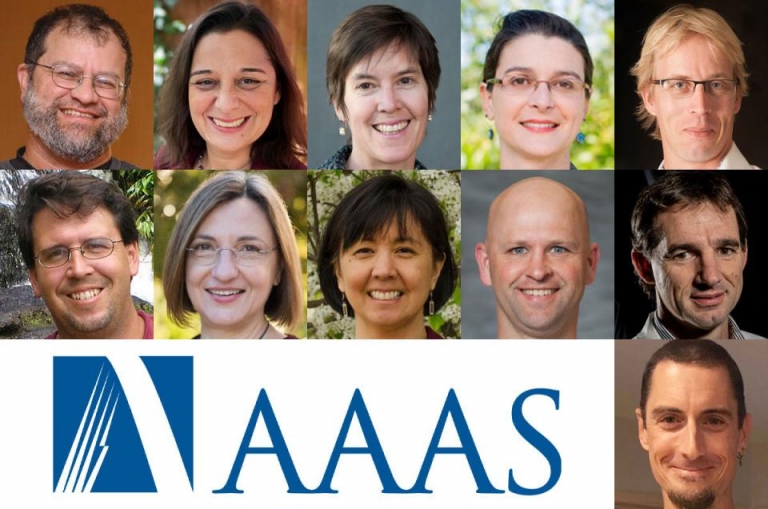
The American Association for the Advancement of Science (AAAS) has selected 11 UC Davis faculty members to receive its 2020 Class Fellows award.

The association, which is the world’s largest scientific society, selects fellows by nomination of candidates by their peers and colleagues.

All faculty being recognized include: 

  • Jonathan Eisen, a professor of evolution and ecology
  • Tessa Hill, a professor of Earth and planetary sciences
  • Mark Huising, a professor of neurobiology, physiology, and behavior
  • Daniel Kliebenstein, a professor of plant sciences
  • Laura Marcu, a professor of biomedical engineering
  • Lisa Miller, a professor of anatomy, physiology and cell biology
  • John Owens, a professor of electrical and computer engineering
  • Pablo Ross, a professor of animal science
  • Jeffrey Ross-Ibarra, a professor of evolution and ecology
  • Valerie Avenir, a professor of plant sciences
  • Stacey Harmer, a professor of plant biology

Andy Fell, a spokesperson for UC Davis, touched on what this means for UC Davis.

“We’re always pleased to see our faculty members honored in this way,” Fell said. “The university [continues] to provide an environment where everyone can strive and emphasizes the diversity and quality of our faculty.” 

Valerie Avenir, who has been a plant sciences professor at UC Davis for 12 years, is currently studying the functions of ecosystems and humans’ dependency on them. She is working with land managers on how these processes can be enhanced to benefit both the ecosystems and humans. 

“[The award is] an honor that someone would recognize me and my contributions,” Avenir said. 

She offered students and researchers who are early in their career advice for entering this field. 

“When you’re doing work in a different way than folks have done in the past, it can feel really discouraging that maybe you’re not getting some grants your first few tries for some of your ideas that are new or pushing the boundaries,” Avenir said. “Early in your career it can feel really discouraging but stick with your vision and confidence about the contributions that you see you can make.”

Stacey Harmer, who has been a plant biology professor at UC Davis for 18 years, shared similar advice. 

“You got to be stubborn,” Harmer said. “I had some low points, especially in graduate school, where things just didn’t work. That’s really hard after you’ve spent six months [on it] but you have to roll with it and say ‘Onto the next thing.’”

Harmer is currently researching circadian rhythms in plants and the impact it has on plant processes. She said she is thankful for the support UC Davis faculty and students have given her. 

“Davis is a really friendly campus and so, if I have a question about something, it’s a big university and lots of biologists, there’s probably someone on campus who knows more about it than I do and generally speaking they’re happy to help me,” Harmer said. 

She notes that her work is a collaborative effort between herself and the graduate and undergraduate students who help to develop research in her lab. 

All 498 fellows will be virtually recognized in an induction ceremony scheduled for Feb. 13.

Written by: Annette Campos — campus@theaggie.org

Panhellenic and Interfraternity Council officially split, created a tiered system

0

With issues of sexual assault and relationships between chapters, Panhellenic has officiated a disassociation with the Interfraternity Council and produced a system for future reintegration

Throughout the past year, organizations within the UC Davis Greek-life community have had numerous allegations of sexual assault and hazing. After years of unsuccessful and individualized disassociation with fraternities, Panhellenic has officially called for total disconnection from all fraternities. 

This pivot was made by the Panhellenic executive board and in conjunction with all sorority chapters. Siena King, a third-year human development major and president of the Alpha Chi Omega sorority, discussed these movements. King said that their changes were a response to sexual assault cases as well as the perceptions of, and assumptions about, Greek life.

“Sexual assault and rape culture is definitely a big driving force behind this,” King said. “[There is an] underlying culture that this is the way things are: it’s white, it’s straight, it’s flat, it doesn’t change. It feels like it’s not progressive.”

By separating from fraternities, King said that the overarching goal is to allow women to thrive and be immersed in women-identifying organizations. Currently, the modeled structure for disassociation follows California’s COVID-19 tiered plan. During this conditional moment with online school, King stated that the first step is complete dissociation where all chapters are disinvited from philanthropies and activities, activities that are currently remote. If growth is shown during this conditional period, then fraternities could potentially be invited to participate in philanthropies as the first tier in the process.  

When classes return to being in person, King said that the next possible tier allows for monitored interaction in a safe space and avoiding high-risk situations where alcohol is involved. Individual fraternities must follow expectations during this conditional quarter, ensure safety during monitored events and must successfully implement action items and processes to regain a relationship with Panhellenic. 

Action items have been established as checklists that fraternities must follow and enact successfully in order to regain Panhellenic relationships. According to King, action items include: reporting all steps toward sexual assault training and education to the Interfraternity Council (IFC) and Panhellenic presidents, establishing anonymous surveys on social media for feedback, meeting with Center for Advocacy, Resources and Education (CARE) and ensuring that 90% of chapter members are participating during sexual assault program meetings. Davis chapters are also expected to connect with national chapters, and advisors and board executives should undergo training for the handling of sexual assault cases. There is also the possibility of introducing new programming that offers specialized training for men. Bylaws and policies must also be reviewed to ensure safety for women, and plans are required on how cases would be addressed and filed. Moreover, there is an added emphasis on the standards and training for sexual assault prevention during a pledge or candidate’s recruitment process. 

Antonio Caraza, a fourth-year mechanical and aerospace engineering major at UC Davis and president of Pi Kappa Phi, similarly believes that fraternities require a unified approach to overcoming IFC-wide issues regarding sexual assault. He emphasized a basic need for personal responsibility and accountability. 

“Not just survivors doing the work but working with them to actively resolve the situation” Caraza said. 

Similarly, IFC also requested action items from Panhellenic to solidify a stronger and safer relationship. King said that IFC wished for executives to be trained in sexual assault prevention, have a minimum of 90% participation at sexual assault program meetings, promote CARE education and executive position with CARE, support survivors and prioritize safey at all events. 

Overall, all outlined expectations and action items are still new and are undergoing adjustments and may shift as needed.

King hopes that fraternities will formulate an environment predicated on respect, education and preventative programs that eliminate harm. 

“Less toxic masculinity, more support of survivors, [and eliminate] the bro code of silence when it comes to taboo topics like this,” King said. 

In the future, Caraza aims for an overall shift in mindsets and normalized actions. 

He outlined Pi Kappa Phi’s continuous goal to educate pledges and bring sexual assault awareness during the initation process. Caraza seeks transparency regarding the severity and the consequences of assault, asserting that it’s never tolerated. 

“The blame gets put on other things like alcohol or they might say that the intention of someone else was showing toward them,” Caraza said. “That’s very subjective and at the end of the day does not matter. You should not be taking advantage of others.”

Beyond his own chapter, Caraza believes that real change can only be possible with individualized change among all chapters. Mindsets, actions and programs need to be pivoted so that members of all chapters stand with survivors and are not perpetrators. 

“As obvious as it is, just see the situation and do the right thing,” Caraza said.

For him, the issue returns to instilling clear IFC-wide consequences and uniting as an

organization to universally stand against misdemeanors. There needs to be proper education and chapter-wide efforts to foster respect, accountability and awareness, Caraza said.

King also discussed a cultural shift, stating that this program is a step toward accountability and building respect within the Greek community. 

“That’s why we’re calling it a culture shift rather than a disaffiliation with action steps,” King said. “Because it truly is going down to the roots of what the culture within fraternities and inter-greek relations look like and trying to change it.”

Beyond Greek organizations, she stated that she hopes the program will benefit Davis students in general.

“This isn’t just for the safety of our own members,” King said. “Everyone deserves to be safe in Davis, everyone deserves to be safe in a Greek life situation. Even if you’re not in Greek life, this affects everyone on campus.”
Written by: Farrah Ballou — features@theaggie.org

I found a dead squirrel

And much more…

Weeks ago, I found a dead squirrel. You may be sitting at home reading this thinking, “This isn’t newsworthy,” or maybe even: “I think this guy killed a squirrel.”

This isn’t my first rodeo—and by this I mean that I have come across many dead squirrels in my time on the planet. Due to a past issue with the rodent law, I must reiterate that I had nothing to do with any of the squirrel deaths that I have discovered. The squirrel district attorney has nothing on me, and he never will.

I digress. This wasn’t the usual squirrel pancake slowly becoming one with the asphalt. This squirrel was intact, frail and lifeless, just lying there in the middle of the sidewalk. How did it get here? What was its story?

I attempted to talk to squirrels in the area for hours, but they dodged my requests. They ran into moving traffic and scurried up trees just to get away from me. They scuttled past the lifeless husk of their fellow squirrel like it wasn’t even there.

The obvious answer to all of this was that squirrels die of natural causes sometimes. Case closed. Or was it? 

No, far from it. This was evidence of a rot in squirrel society. An indictment of a caste system masquerading as a meritocracy. This squirrel was set on this path from the day it entered this world.

I turned around to look back at the dead remains of the squirrel and it had vanished. Gone. Like it never existed. Like squirrel elites don’t want the general population to be reminded of its society’s failings.

As I was walking away, realizing that I had stumbled upon something bigger than just a dead squirrel, I saw something in the corner of my eye—the squirrel I presumed dead running up a tree. I guess squirrels sometimes just sleep in the middle of the sidewalk. Case closed, I am an idiot and not at all credible.

Written By: Ean Kimura — etkimura@ucdavis.edu

Disclaimer: (This article is humor and/or satire, and it’s content is purely fictional. The story and or names of “sources” are fictionalized.)


UC Davis researchers run COVID-19 childhood vaccine trials on infant primates

The development of a children’s vaccine would allow kids to return to normal developmental environments and help curb the coronavirus pandemic

Dr. Koen Van Rompay, a researcher at the UC Davis California National Primate Center, is leading a team dedicated to developing a childhood COVID-19 vaccine, which is currently being tested on infant primate monkeys at UC Davis. The center is also using primates to research new reagents and diagnostic tests, according to a UC Davis News article. Tests are showing encouraging results which could soon lead to human trials.

The research team consists of Van Rompay; Dr. Sallie Permar, the head of pediatrics at Cornell Medicine; and Dr. Kristina De Paris, a researcher at University of North Carolina Chapel Hill.

Currently, COVID-19 vaccine trials are available to healthcare workers and other limited groups of children and adults older than 12. Researchers believe that providing immunity to children under age 12 and, as young as six months, could help control the spread of the virus.  

“We would like to advocate that the vaccine be administered to younger children, especially less than five years old,” Permar said. “The pediatric vaccine schedule [of this age group] gets very high coverage; over 90% of children under 5 will get their vaccines. When it comes to older children such as those age 12, it falls to 40%.”

Van Rompay echoed these sentiments, saying that children often produce better immune responses than adults do.

“Children make good immune responses, often stronger and more durable than adults,” Van Rompay said. “If those children are immune, they would not be able to transmit the virus to others; it would help reduce transmission in the community. 

The researchers are testing two COVID-19 vaccines: the Moderna vaccine and a protein vaccine not yet widely available to the public. 

Sixteen rhesus macaques monkeys have been separated into two groups of eight, and each group will receive one type of vaccine. The monkeys are being given two doses at four weeks apart, and blood samples are collected monthly.

So far, the monkeys have not shown any side effects. Permar hopes that these results will be reported this January.  

The childhood vaccine development also serves the need for children to return to normal child development environments. The team hopes to begin human trials before the academic school year begins next fall. 

“The sooner we can find a vaccine for children the better,” Van Rompay said. “These children can then go back to school; it’s good for the children’s welfare and education.”

Permar also noted the pandemic’s severe effects on children’s ability to go to school and interact with peers. 

“While children do not have as much severe disease compared to adults, they certainly have been indirectly heavily impacted by the pandemic through the loss of in-person school, group activities and sports, all of which are important to a child’s development.”

Van Rompay emphasized that any risks that may come with the vaccine pale in comparison to those that are associated with having the virus.

“The risks of the vaccine are so minimal compared to getting the virus,” Van Rompay said, adding that long-term exposure to the virus could bring cardiovascular complications and could affect the brain. “These days with social media, rumors and false information spread so fast. [It’s] something that we also have to work on.” 

Although some vaccines have been delivered to the Primate Center, Van Rompay is waiting to receive the vaccine. 

Permar, who has already received the COVID-19 vaccine, emphasized its importance, adding that she hopes to enroll her own son as he approaches the age of 12 in a vaccine trial if one is still available. 

“I feel very lucky to have gotten the vaccine,” Permar said. “These vaccines have proven to be so effective and very safe. There’s a lot of people who would like to start developing their vaccine immunity so that they can be protected for their jobs or families.”
Written by: Annette Campos — campus@theaggie.org

UC Davis cases peak as UC Davis Medical Center and quarantine housing brace for more

The university’s health center boasts flexibility in the face of many new cases, Primero Grove facility is currently well under capacity

UC Davis cases have peaked to the highest they have been since the beginning of the pandemic, but the UC Davis Medical Center remains adaptable and student quarantine housing is managing well thus far, according to experts. 

UC Davis Medical Center does not define their intensive care unit (ICU) capacity by a set amount of beds since the center can increase the capacity if need be according to UC Davis Health’s Senior Public Information Officer Charles Casey. This makes it difficult to give an exact number of beds available in the ICU, as the number can be adjusted.

“Our ICU functions like an accordion, and can be expanded, when needed, by converting medical/surgical bed spaces into ICU space,” Casey said via email. “The available capacity for our ICUs is always a small percentage—because if we don’t need the space for ICUs, we convert the bed space for other patient uses.”

There are currently 37 COVID-19 patients hospitalized in Yolo County. The City of Davis in particular has had a total of 1,205 cases since the beginning of the pandemic with the vast majority of cases college-aged, according to the Yolo County COVID-19 dashboard

Lilly Soto, a third-year design major, is staying at the UC Davis quarantine dorms at Primero Grove after returning from a trip back home for the holidays where she was exposed.

“I wasn’t necessarily scared,” Soto said. “It was just frustrating because it’s like ‘Oh, that’s why we weren’t supposed to go home.’” 

There are not many other students residing in Primero Grove at the moment. UC Davis is using only 2% of it’s 400 beds designated for quarantine housing, but Soto said she expects that will change.  

“I bet it will be full like next week or something, when people come back,” Soto said. “I’ve seen one other person get their food delivered across the courtyard and another person distance talking to someone. I’ve only seen two other people here.”

There has been an uptick in cases as students returned from the winter break. Of the 22 cases reported on Jan. 2, 19 were asymptomatic and three were self-reported.

UC Davis has seen 43 new cases in the last seven days between self-reported, asymptomatic and SHWC testing, which consists of any other COVID testing completed on campus according to the university’s dashboard

Soto said that each student at Primero Grove has their own kitchen and their own bathroom, with meals delivered three times a day and students are tested twice in a 10 day period. 

“My first one came back negative, which is really good and I think helped put my roommates at ease,” Soto said.  

Casey said that UC Davis Health expects to be ready when the cases do rise. 

“As a Level 1 trauma center and tertiary care hospital, the UC Davis Medical Center ICU is usually quite busy — even without a pandemic,” Casey said. “Our experience handling incidents with large numbers of patients has prepared us well to respond to COVID-19 surges.”

Over half of the cases at the university have been within the last 30 days and the expectation is that numbers will continue to rise.

“UC Davis Medical Center is very fortunate that Sacramento and Northern California have not been as hard-hit as areas such as L.A. and San Joaquin County,” Casey said. “However, our region is continuing to see high COVID-19 positivity rates and high levels of the virus spread in our community, too.”
Written by: Kathleen Quinn — campus@theaggie.org

Review: “Man on the Moon III: The Chosen”

Kid Cudi’s newest album continues common themes from his prior works in the Man on the Moon trilogy

When I first heard Scott Mescudi’s, more commonly known as Kid Cudi’s, music, I was just a small, sad, yearning middle schooler. His top hit “Day N Nite” introduced many of us to his music, which eventually led into the legacy of his now trilogy of “Man on the Moon.”

In his latest addition, “Man on the Moon III: The Chosen,” many features appear, from Pop Smoke to Skepta to Trippie Redd and others that demonstrate the depth of Cudi’s growth in the music industry. While Kanye West is commonly featured in his albums, after their joint album under “Kids See Ghosts,” Kanye does not make an appearance in “Man on the Moon III.” Their partnership has always been linked by their common struggles with mental health but diverge in the different types of illnesses they face, West mainly with bipolar disorder and Cudi with depression. 

As this new album follows many of Cudi’s common motifs, it serves as an extension of his old album but with new and deeper struggles. Ultimately, it depicts the sad and lonely road Cudi faces as he goes through different stages of his life.

The introduction song “Beautiful Trip” repeats his trophic melody from the first album of the trilogy “In My Dreams (Cudder Anthem).” Like the title of the song suggests, it remains a persistent staple throughout the album saga. As an introduction, it connects the end of the last album to this one and christens his third installment of the trilogy.

He also uses spoken word in his songs, often ending a song with what seems to be an internal monologue of the inner conflicts he faces. My favorite dialogue is the intro of “She Knows This” which takes lines from “Scott Pilgrim Vs. The World,” another work that Cudi constantly references in his work. 

Loneliness is a recurring theme in Cudi’s work that appears in his songs “Solo Dolo” and “Mr. Rager,” which personifies his loneliness into a semi-alter ego version of himself. He refers to himself as “Mr. Solo Dolo” or “Mr. Rager” interchangeably, which is when his loneliness is at its peak as reflected in the deep sadness of these songs. The addition of “Solo Dolo III, Part III” illustrates how depression and isolation go hand in hand, hiding its sad message under a bumping bass beat.

In general, the concept of this album is the same: learning, growing and being sad in classic Cudi fashion. But with his father’s passing, “September 16” explores the new layers of Mr. Solo Dolo’s sadness.

“Elsie’s Baby Boy (flashback)” also explores his family life and is one of my personal favorites on the album. It contrasts heavily from the rest of the record and goes into his childhood. It also uses a similar guitar track to “House of the Rising Sun” by the Animals.

Compared to the second “Last Man on the Moon,” which contained a lot of instrumentals, this third was a good combination of his old styles and new styles.

The album cover is half his face and half a skeleton, which plays into the new theme of death and mourning during this period in his life. Although it has been a while since I first became a Kid Cudi fan, this album definitely brought me back and has me listening on repeat.
Written by: Mariah Viktoria Candelaria –– arts@theaggie.org