57.3 F
Davis

Davis, California

Wednesday, December 24, 2025
Home Blog Page 327

Davis businesses struggling, as shown in Davis Chamber of Commerce survey

Over half of Davis businesses surveyed report significant loss of income during shelter-in-place

Results from a survey conducted by the Davis Chamber of Commerce show the COVID-19 pandemic has had a profound negative impact on Davis business. Over half of Davis businesses that form the Chamber’s membership have reported “severe” loss of income and 14% report shuttering completely. 

The Chamber surveyed its 124 local business members in early May and sent out the results in a press release to the Davis Enterprise and the Davis Vanguard. The Chamber asked businesses about the financial and operational impact of the COVID-19 outbreak and subsequent shelter-in-place order.  

Seventy-five percent of businesses said they had experienced a loss of income and half saw that reduction as “severe;” 18% said most or all of their staff had been placed on leave or laid off and 26% reported some layoffs and reduction to staff hours, according to the Vanguard. 

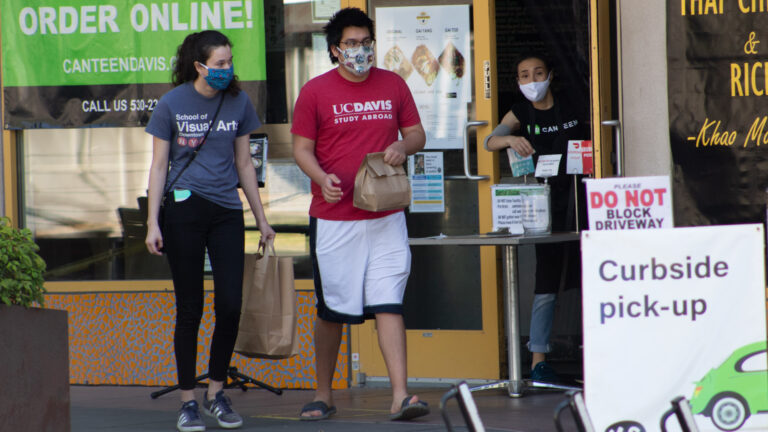
Thirty-seven percent of businesses reported that they had moved part of their operations online or introduced delivery options to continue operations, and 70% reported that they had applied for some kind of financial assistance, either from federal, state or local entities, according to the Vanguard. 

The survey also asked participants what further actions the Chamber and local and state officials could do to help Davis businesses stay afloat during the pandemic. Respondents requested outreach to community members — providing information on which businesses remain open — and outreach to members of the business community on best practices related to conducting operations during the pandemic, the Vanguard reported.  

“The most urgent request from businesses was to receive clear guidance on how to operate safely within current and emerging conditions,” the chamber reported, according to the Vanguard. “In the challenging days ahead, the Davis Chamber of Commerce will work tirelessly in partnership with our colleagues at the city of Davis, Yolo County and the state of California to continue to provide support and assistance to our local businesses.”

Recent relaxed shelter-in-place orders — both at a state and county level — may provide some degree of relief to Davis businesses in the coming days. On May 4, Gov. Gavin Newsom’s office announced that the state would move into the second of his four-stage reopening process, allowing for some “low-risk” businesses to resume. And on May 21, Yolo County had been approved to move further into the reopening process, according to Yolo County Public Information Office’s Manager of Public Affairs Jenny Tan in a daily briefing.

“This means that our county has met criteria outlined by the California Department of Public Health to move more quickly through Stage Two,” Tan said. “Activities and businesses that are now eligible in Yolo County to reopen include dine-in restaurants and shopping centers like retail stores and swap meets.”

In a May 26 press release, the county announced which activities and business had been approved for reopening under the new, relaxed restrictions. Non-essential offices, in-store retail shopping centers and dine-in restaurants were eligible to reopen as of May 27, according to the release. Hair salons and barbershops could reopen after May 28 and places of worship could reopen as of May 29. The release highlighted the importance of complying with state guidance for reopening during the pandemic, making special note of restrictions for dine-in services at restaurants. 

“Some key measures to note in the State’s guidance for dine-in restaurants include, but are not limited to: removing tables and chairs from dining areas so that six feet of physical distance can be maintained, closing bar areas, adjusting maximum occupancy rules, encouraging reservations, performing thorough, frequent cleaning, and installing hand sanitizer dispensers at entrances and contact areas,” according to the press release.

Even with the relaxed shelter-in-place orders, however, Davis businesses will still face significant challenges. The Chamber conducted an information session via Zoom on May 15, during which police, city and Chamber officials fielded questions from community members and business owners about operations during the COVID-19 pandemic. Assistant City Manager Ash Feeney discussed the challenge of restoring customer confidence — creating business spaces where customers feel safe enough from infection to visit and spend money.

“We’re continuing to see more businesses allowed to open, but they’re not necessarily opening in the way we did business yesterday,” Feeney said. “What we’re trying to do is be proactive in thought and say ‘Okay, if it isn’t going to look like it did two or three months ago with respect to commerce, what can we do to help facilitate businesses to ensure that customers are comfortable coming back and getting those cash registers ringing again?’” 

Written by: Tim Lalonde — city@theaggie.org
UC task force unable to reach agreement on how to move forward with Dignity Health partnerships, gives two recommendations

Some argue that partnering with Dignity restrict care to LGBTQ+ people, women, others argue more are harmed by not partnering

Unable to agree on a single set of recommendations, a UC task force presented two options on how best to affiliate with health care systems outside of the system to UC President Janet Napolitano in the Working Group on Comprehensive Access (WGCA) Chair’s Report of Findings and Recommendations.

The WGCA was formed in August of 2019 after public outcry in the spring when UCSF was revealed to be expanding affiliations with faith-based hospital system Dignity Health. The WGCA was composed of 15 UC officials: a regent, chancellors, deans, faculty, Academic Senate representatives and UC health leadership. 

Ten of the 15 WGCA members had already expressed support for the UCSF and Dignity Health partnership before the formation of the WGCA. All three Academic Senate Representatives in the WGCA, as well as UC San Diego Professor Gabriel Haddad, were explicitly not in favor of a UCSF and Dignity Health partnership before the formation of the WGCA.

The group was tasked with creating a list of policy recommendations to ensure the values of the UC are upheld in all affiliations with other health care systems and that UC personnel would be unrestricted in providing medical care.

Unable to agree to one set of recommendations, the WGCA created two options which could be adopted individually or in combination with one another, according to UC Irvine Chancellor and Chair of the WGCA Howard Gillman.

Option 1, supported primarily by UC Health officials “allow affiliations with organizations that have non-evidence-based policy restrictions on care if governed by appropriate policies and guidelines,” Gillman said in the report. Option 2, supported by those who could not endorse the report was “designed to impose a prohibition on such affiliations.”

In short, Option 1 encouraged continued affiliation with health care systems that may restrict health care based on religious doctrine if clear guidelines are created to protect UC personnel. Option 2 discouraged continued affiliation with health care systems that have restrictions based on religion. 

The two groups formed because the WGCA could not unite in answering two fundamental questions: “Whether UC should affiliate at all with organizations whose institutional policies (a) prohibit the use of contraception, abortion, assisted reproductive technology, gender-affirming care for transgender people, and the full range of end-of-life options and (b) permit non-clinicians to make clinical decisions affecting the health and safety of individual patients irrespective of the professional judgment of health care providers and/or the informed decisions of patients.”

Though the WGCA was tasked with making policy recommendations that protect the freedoms of UC personnel, enable the appropriate care of patients regardless of which facility they are first examined and encompass respect for a diversity of opinions, the issue comes down to the fact that some Catholic Church-sponsored hospitals restrict care based on religious convictions. These convictions, called Ethical and Religious Directives (ERDs), are determined by the U.S. Conference of Catholic Bishops (USCCB), not doctors. 

The ERDs do not allow the prescription of any FDA-approved methods for preventing pregnancy including sterilization, elective abortion; assistive reproductive technology such as in-vetro fertalization (IVF) or the use of a surrogate for pregnancy; gender affirming care such as hormone replacement therapy or surgery or physician-assisted aid in dying.

Women and transgender individuals are those most affected by these policies, and gay couples who need IVF or a surrogate for biological pregnancy are also highly impacted.

Dignity Health, which has agreements with five of six UC medical centers, operates under the ERDs at 17 out of 31 California hospitals. At the other 14, they operate under the Statement of Common Values where they do not perform elective abortions, IVF or physician-assisted death. 

“It’s pretty clear why [these policies are] discriminatory against transgender people,” said WGCA member and UCSF Ob/Gyn Vanessa Jacoby. The discrimination against women is trickier to pick out, though, Jacoby argued. 

“Policies that prohibit women from getting standard of care services are discriminatory against women because the vast majority of our contraception is for women,” Jacoby said. “Women who are prohibited from getting contraception are the ones that bear the consequences of undesired pregnancy.”

Because Jacoby views these policies as so discriminatory towards women and members of LGBTQ community, Jacoby is fundamentally against these partnerships as they conflict with the values of UC.

“When I’m considering a healthcare decision, if one of the harms is discrimination against any group, but in this case discrimination against women and against LGBT people and against transgender patients […] that, to me, overwhelms any potential benefit,” Jacoby said. “I don’t believe UC should violate our anti-discrimination policies, no matter what the potential benefits are.”

UC Davis’ ASUCD shares this belief and unanimously passed Senate Resolution #18 which calls for the UC to end all plans to expand affiliations with Dignity Health. 

Others such as David Lubarsky, vice chancellor of Human Health Sciences and CEO for UC Davis Health, follows a different line of reasoning. Since many of Dignity’s facilities are in rural areas, the only healthcare facilities for miles, UC would not have access to these patients if not for partnerships with Dignity Health. Lubarsky said he believes that more harm would be done to these rural communities by not partnering with systems like Dignity Health than could potentially be done by partnering with them.

“We agree 100% that we have to do everything we can promote for Reproductive Rights and full access to health care for the LGBTQ community in every way,” Lubarsky said in an interview earlier this year with The California Aggie’s Editorial Board. “But that principle cannot trump the real harm that would be done to a large population of individuals who [would no longer be able to] get advanced care at a UC hospital.”

Lubarsky put bluntly what a complete disengagement with Dignity Health would do: “It prevents the poor people [which] Dignity primarily serves from having access to any UC hospital.”

Lubarsky said he believes the WGCA did not get to the root of the problem: How can we balance the need of the underserved communities that need access to UC doctors through Dignity with our own values surrounding women’s reproductive health care and LGBTQ+ healthcare?

“It became an argument over a single issue, which was actually a mistake,” Lubarsky said, saying he believes “a broader discussion about ‘How do we best serve the human beings we’re responsible for?’” would have been more productive.

Dan Loeterman, the director of External Communications for Dignity Health, said he agrees. 

“It’s very clear to us that tens of thousands of Californians depend on [UC and Dignity] programs for their health each year,” Loeterman said. “We believe that there’s a lot more where [UC and Dignity] agree than where we disagree.”

Everyone does seem to agree on the fact that the partnership between UC and Dignity Health is highly political, especially because each is a powerhouse of medical care, since half of California doctors are trained at UC, and Dignity Health is the largest hospital chain in California.

“UC Health will try to say this isn’t about politics — this is about one of the most important issues facing this country,” said UC Davis Professor and Member of the WGCA Robert May. “If Roe v. Wade is overturned, and there’s a very good likelihood that that will happen, that will engender a major health crisis in this country. Our getting involved with this is just aiding that.”

Lubarsky said he thinks otherwise. By participating in these affiliations, the UC is able to at least have some sway in the conversation regarding the treatment of patients at hospitals that operate under the ERDs. 

“By disengagement, we lose our voice in that argument,” Lubarsky said. “We think principled engagement plus support of organizations like Planned Parenthood will be a better tactic than disengagement.”

Jacoby, however, did not adhere to this idea.

“I really believe that the University of California can find solutions to address our clinical needs, our research needs, our educational needs, that do not compromise our core values and our anti-discrimination policies,” Jacoby said. “I would love [for leadership in the UC] to propose solutions that don’t have this controversy around it and don’t discriminate against women or LGBT people.”

Written by: Jessica Baggott — campus@theaggie.org

UC is largest educational institution in nation to divest completely from fossil fuels

UC sells more than $1 billion in assets from pension, endowment, working capital pools to divest completely from fossil fuels

After a five-year effort to move the UC’s $126 billion investment portfolio toward more environmentally sustainable sources, the UC Office of the Chief Investment Officer of the Regents announced on May 19 that the final $1 billion of the UC’s investment portfolio in fossil fuels was sold. 

In working toward the sustainable investment goal, Jagdeep Singh Bachher, the UC’s chief investment officer, also announced that the UC had surpassed its goal of investing $1 billion into “promising clean energy projects.”
“Today we remain convinced that continuing to invest in fossil fuels poses an unacceptable financial risk to UC’s portfolios and therefore to the students, faculty, staff and retirees of the University of California,” Singh Bachher said.

With the divestment, the UC has secured its place as the largest educational institution in the nation to divest completely from fossil fuels. 

This comes eight years after students, staff, faculty and alumni first began organizing for Fossil Free UC in 2012. 

Even as recently as 2018, real change felt distant and unobtainable, according to UC Davis alum Evan Steele, who was an environmental policy and planning major and advocated for Fossil Free UC. 

“My experience working [in] Fossil Free UC Davis was very frustrating, it kind of led me to the belief that not much was going to happen quickly,” Steele said. 

Steele and others involved with the Fossil Free UC Davis movement arranged a meeting with UC Regent Richard Sherman, the chair of the UC Board of Regents’ Investments Committee, after a several-day sit-in at Mrak Hall in protest of the UC’s investments. 

“[Sherman] sidestepped all our questions and it seemed like he had only accepted the meeting to basically waste our time and get it to end our sit-in,” Steele said. 

Yet four years prior, in 2014, the UC had already begun to discuss and integrate environmental, social and governance (ESG) factors into investment decision making and committed to “Evaluate all strategies for achieving ESG goals as soon as practical, including whether to use divestment,” among other things, leading to its eventual complete divestment from fossil fuels.

“As long-term investors, we believe the university and its stakeholders are much better served by investing in promising opportunities in the alternative energy field rather than gambling on oil and gas,” Sherman said.

Steele took issue with some of the reasoning behind the recent divestment, given that much of the language used by the investments committee, Regents and the chief investment officer centered around financial risks and serving stakeholders rather than the principle of protecting the environment and serving future generations of UC staff, students and faculty.

“If you believe [the researchers at the UC] and all their research, it’s not a gamble,” Steele said. “It’s [an inevitability] that renewable and alternative energies are the future.”

Steele also recognized that not all investments in alternative or renewable energies are created equal, saying that just because something is “under the label ‘alternative energy’ or even ‘renewable energy’ or ‘green energy’” does not necessarily mean “it’s totally good for the environment and people.”

The “UC Investments’ commitment to clean energy now stands at $1.036 billion, with the lion’s share — $750 million — allocated to two best-in-class, utility-scale wind and solar developers, and an aggregator strategy to own and operate commercial and industrial solar opportunities,” according to a press release from the UC Office of the President (UCOP). 

UCOP’s Senior Communications Strategist Stett Hollbrook commented on the UC’s unique responsibility to climate action as one of the nation’s largest, most prestigious and forward thinking universities. 

“Universities in particular have a responsibility to translate their research findings into technologies and solutions that benefit the public good,” Hollbrook said. “These commitments will better bridge the gap between the latest academic findings on climate and on-the-ground actions that universities and communities can take to advance sustainability at home.”

Written by: Jessica Baggott — campus@theaggie.org

All lives do not matter until Black lives matter

The Editorial Board expresses its solidarity with nationwide protests for Black Lives Matter movement

George Floyd’s tragic death in broad daylight should not come as a surprise. Breonna Taylor, Tony McDade, David McAtee, Dion Johnson and Ahmaud Arbery, among countless others — the loss of Black life due to state violence carried out by the police is nothing new, it is simply being broadcasted more. Change must start immediately with oneself and one’s circle in order to achieve broader transformation of race relations in this country and the world. It goes without saying: The Editorial Board is in complete solidarity with the Black Lives Matter (BLM) movement. Among an onslaught of information and misinformation, we want to draw attention to being a non-performative ally as well as moving into action safely and respectfully.

Taking the time to understand the biases and privileges we hold and urging family and friends around us to do the same costs nothing, and it is the most basic first step we can take in making progress toward equality. We need to commit ourselves to anti-racist action. While it may be uncomfortable to confront our shortcomings, being uncomfortable cannot compare to the murders, injustices, silencing and suffering that Black people face every single day due to collective complacency. 

In this journey of self-educating, make space for and listen to Black organizers, voices and leaders, but remember it is not their responsibility to address questions about how to help. There are plenty of resources available and texts to read in this effort that do not require further burdening the very people who are most likely burnt out from years and decades of attempting to educate those around them. Read, not just about the history of police and their role in society, but about why it’s so hard to talk about race. 

As protestors across the country face both arrests and police-initiated violence in response to their peaceful protests, donating to bail funds can help support them pre-trial. It’s critical to support these bail funds right now because these protests have and inevitably do result in a disproportionate number of Black people being arrested and forced into a system designed to keep them incarcerated. There are also local mutual aid networks that use funds to support fellow community members, whether it be by delivering groceries or distributing cleaning supplies. Research local organizations to support that are committed to ending police violence and resisting white supremacy; BLM chapters can point to the right resources as well. 

Recognize that an ally’s role at these protests is to protect Black lives and to listen to and support Black voices; it is absolutely not an ally’s place to promote any other cause or perspective. Think twice about the media that you choose to spread and consume. Post on social media thoughtfully and constructively. Take seriously the significance of this movement and commit to action by, for example, signing petitions as well as calling and emailing local representatives to hold those in power accountable for Black lives. 

Black lives are at stake. We are all personally responsible for reforming our communities in a way that values everyone’s full humanity and lives outside of our own. We must take it upon ourselves to understand our role in promoting respect for all human life and fighting systems that perpetuate oppression — systems that have been in place for time immemorial. There should not have to be perfectly packaged narratives, stories or metaphors to get us to understand. We must work to dismantle oppression now.

Written by: The Editorial Board

Revisiting “Friends” in 2020

The iconic, trendsetting ‘90s sitcom is both revered, criticized today 

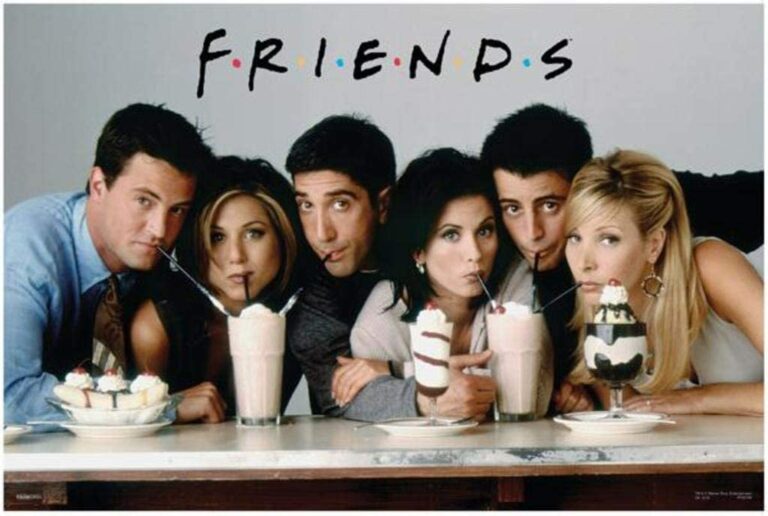
The NBC sitcom “Friends,” which first aired in 1994 and ran for 10 seasons, was a hit from the start. The ensemble cast of six 20-somethings in New York City trying to figure out life resonated deeply with the American public. The series was nominated for 62 Primetime Emmy Awards and the 2004 finale was the fifth most-watched television finale of all time

More than 25 years later, new viewers have come to question the merits of “Friends” and wonder why older generations were so obsessed with it. There have been debates about some of the offensive humor and antiquated messages. And there are critiques regarding the dozens of fatphobic jokes surrounding Monica’s character as well as the lack of diversity in the cast. 

“‘Friends,’ a show about white people being thin and having the pointiest nipples in the continental Americas…is absolute garbage,” writes Scaachi Koul for BuzzFeed News

Others, however, have defended the series for being progressive for its time. The series was created in the early ’90s, and some argue that it should not be held to the same standards shared by a more modern and progressive audience.

“The truth is also that show was groundbreaking in its time for the way in which it handled so casually sex, protected sex, gay marriage and relationships,” said David Schwimmer, who played Ross Gellar. “I feel that a lot of the problem today in so many areas is that so little is taken in context. You have to look at it from the point of view of what the show was trying to do at the time.” 

Both sides of the debate are valid and present important discussions about the way art ages and how we should interpret it. More than 25 years after the debut of the series, “Friends” has aged both well and poorly, and that’s okay. 

Cons

 There are certainly aspects of the series that have aged poorly. For example, there were only two significant characters of color in the show’s 234-episode run. In New York City, it is hardly plausible that the six main characters ran into people of color so infrequently.

There were also many insensitive, fatphobic jokes. The characters would mock the “Ugly Naked Guy” that lives across from the girl’s apartment because of his weight. Even more mean-spirited jabs were directed toward Monica, who struggled with her weight in her teenage years. Flashbacks to the ’80s include Courtney Cox in a fat suit, often seen dancing or with a candy bar in hand. 

There were also several jokes where people in the LGBTQ community were the punchlines. Chandler’s father was a transgender woman, which was constantly played up for laughs. The role was also played by cisgender heterosexual actor Kathleen Turner. The male characters were always mocked for acting too effeminate or showing too much emotion, and when they did, they were quickly accused of being gay, used as a pejorative.

Not only were these storylines offensive and tasteless, they were also lazy. Having an overweight character dancing around should not suffice for comedy, regardless of the year it was written. 

The Pros

While there are glaring issues we can’t ignore about “Friends,” there are also ways to appreciate it today and view it as even progressive for its time. The characters are adamant about having protective sex, and the female characters are just as sexually active as their male counterparts without being shamed or being the butt of a joke. 

“Friends” definitely passes the Bechdel Test, as Monica, Rachel and Phoebe are written to be dynamic, three-dimensional characters. They all have successful careers and deeply value each other as friends. The series even explores the concept of infertility in a sensitive and progresive manner. When Monica and Chandler cannot conceive, they decide to go forward with adoption. This is never written as an invalid way to have a child.

“While it’s hard to convey the emotions surrounding infertility, the Friends team didn’t just dismiss them out of hand: instead, they tackled them head on — proving that you can still cover heavy topics while allowing the audience to laugh,” writes Kayleigh Dray for Stylist.

The 1996 episode “The One with the Lesbian Wedding” featured one of the first weddings between two women to be shown on television. NBC even expected complaints about the episode, but aired it anyway. Despite some distasteful jokes about the pair, the episode was unanimously positive about the union, and the wedding scene was touching. Even Ross’ character, whose betrayal after Carol left him for another woman led to some serious homophobia, walked Carole down the aisle and supported her completely. 

To summarize, “Friends” is not — and never has been — perfect. The characters are clueless at best and sexist, homophobic and closed-minded at worst. But they reflect the level of education and awareness the average person held at the time. The fact that so many struggle with the issues of “Friends” shows how far we have come. Nonetheless, there is a lot to be enjoyed about the series for what it is. It may not be fair to hold the series accountable for norms that did not exist back when it was the most popular show on television. 

Written by: Alyssa Ilsley — arts@theaggie.org

“Normal People” review: It’s not like this with other books

The universal appeal of “Normal People” is captured both on paper, on screen 

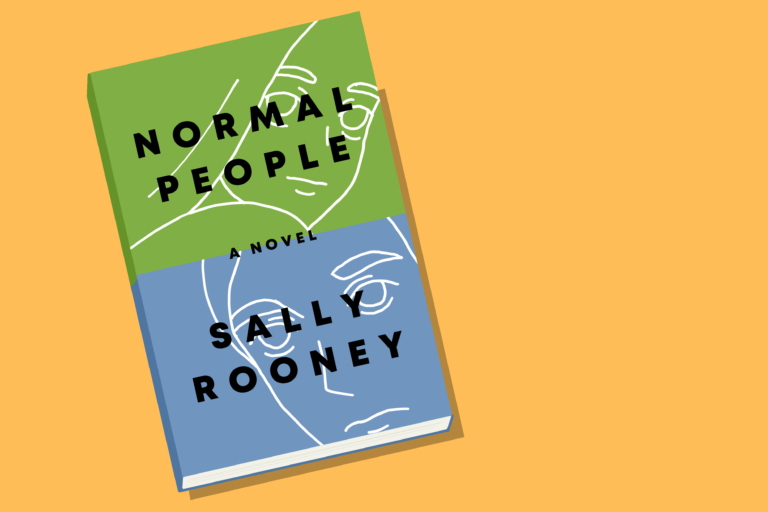
What is it that is so fascinating and so engrossing about the 2018 bestseller “Normal People” by Sally Rooney? Recently adapted by the BBC and Hulu as a hit limited series, the popularity of Rooney’s sophomore work has skyrocketed over the past few months. But its rise to cultural relevance can’t only be attributed to the televised series — it’s the gentle nature of the novel, which focuses on myriad romantic stepping stones, that really swept the world. 

A central tenet of “Normal People” is the always overt, often heart-wrenching portrayal of vulnerability. At times, the book seems to squarely set its sights on the reader, invoking emotional, if not painful, relatability that might require you to stop reading for a moment. And Rooney masterfully illustrates this universal feeling through the pages of “Normal People,” most heavily with Marianne. 

Marianne is a fairly high-class and exceptionally smart young woman who grew up in the same small Irish town as Connell, a stoic classmate who enjoys reading and writing as much as football. Marianne doesn’t really care about power dynamics with teachers, the pecking order at school and, most notably, what other people think of her. She is staunchly and unapologetically herself. This confident veneer becomes brittle, however, when she begins to spend more time with Connell after a suggestive conversation after school.

Marianne is dynamic and full of depth in her opinions and thoughts, but that feeling of letting yourself go and of vulnerability becomes fully realized with Connell. She gives her entire self to him, although in the beginning it is simply in return for his physical affections. She even tells him, at an abandoned house behind their school, that he could literally, not figuratively, walk all over her if he so chose. What they have is special — strange perhaps, but deeply special. 

Connell, too, is not absent from this. Whereas the walls Marianne puts up are to defend herself from the attacks of her peers, Connell’s are there to isolate, to make sure he doesn’t fall prey to the same feelings Marianne so clearly has. But it’s all for naught — his walls come crumbling down once they begin to spend more time together, and especially when they both end up at Trinity College in Dublin. He begins to think of her incessantly. Marianne does the same, even while her social standing is rapidly climbing. 

And standing — both social and financial — play a hefty role in “Normal People.” Connell is the child of a single mother, a housekeeper who is elated when the premise of scholarship at Trinity is seized by her only son. Marianne is much more well off — her family lives in a mansion that Connell’s mother happens to housekeep for. The acquisition of a scholarship for Marianne is more of a testament to her intelligence than a financial aid. 

Their love is one that is weighed down by their standing in different ways. Marianne will never know what it is like to be from a background of lower wealth, and Connell will never understand what it means to be hated, seemingly for no reason, by those you call your peers. While one has material wealth, the other seems to hold a lot of social currency. Some of the most captivating parts of “Normal People,” however, are when these standings shift or criss-cross — when, suddenly, Marianne is the talk of the town at university or when Connell no longer has to be bothered by his expenses. This shows us different sides of the same people, and of the ever-changing dance they amble along over the years. 

Marianne and Connell’s emotional vulnerability is increasingly characterized by moments both gentle and callous as the work goes on. Their standings, cemented in many ways yet loose in many others, help them understand who and what they are. These two things lead to a realization between Connell and Marianne: It’s not like this with other people. Indeed, over the few years “Normal People” covers, with multiple other partners and circumstances, it never was the same with other people. The two have something much stronger than a normal romantic entanglement; they have an elevated sense that no matter what, they will be there for one another. And that faith, that deeply-rooted feeling of belonging to each other, is more worthwhile than, truly, anything else. 

Despite this unwavering faith being foreign but to a lucky few, the Irish author’s writing feels important to the reader. Her characters take on real experiences that one can’t help but empathize with, be it an anxiety-ridden social gathering or the superficial nature of a friend. These moments in life that we all know have the potential to make a story mundane. A young couple navigating life with their internal battles getting in the way of each other? Sounds familiar.

But Rooney is not familiar, at least not in her storytelling. You may relate to your favorite novel’s main character, but you haven’t read a book like this before. She has created Connell and Marianne, two complicated, even damaged lovers, more intensely than anything experienced on a TV show — except maybe for the rendition of the novel itself in televised form. 

After having had such a profound experience reading the book, the show’s adaptation was of concern. Did it need dramatization, or new plots? Would it be worse, if only slightly, like the on-screen versions of perfect novels often are? It took one episode to find the answer to these questions is a resounding no. 

The Hulu-produced program is remarkably as beautiful and gut-wrenching as the book. The setting below a gloomy west-European sky brings the poignancy of the novel to life. The perplexing characters prove equally as analyzed, somehow painting the backstory of even minor personas distinctly. 

The deep-dive into the psyche of her characters is perhaps Rooney’s biggest asset. The intimacy you build personally with the story is supported by that built between the main characters, who seem to only expose themselves fully when with one another. To become attached to a character is indication of a powerful narrative, but to relate and emote right alongside them requires the storytelling of an insightful and gifted writer. 

This translates to the show, where, in only 12 25-minute episodes, every necessary detail of their lives, both together and apart, is recounted so that Marianne and Connell’s painful romance shakes you as much as it does in the novel, as such doing it justice.

But the way you feel it isn’t quite the same. Whereas Rooney’s energetic prose fosters the intimacy we feel with the characters, the televised version of her story captivates us with brilliant actors who enrich our idea of them through idiosyncratic, if often faint, expression.

It captures every nuanced interaction, every subtle look and swift emotion that the supporting characters notice, but that only Connell and Marianne understand. The short series manages to not only highlight, but enhance the complexity of their relationship — the defining characteristic of the novel — including each fundamental moment that makes or breaks their dynamic. 

And while the joy of physically reading this novel cannot be recreated through the viewing experience, new joys are brought on by the story shown on film. Intricacies, like Marianne licking an ice cream cone as Connell speaks of her financial ignorance, aren’t held onto throughout a scene in the book. In the show, the Italian sorbet points to the ways her maturity masks a certain childishness which was mostly taken from her by a cold, fatherless family. In the book, we don’t pick all that up in a matter of seconds as we do in the series. 

No matter the medium, the story has made its mark by way of Rooney’s exquisite dedication to refined characters in “Normal People.” Connell and Marianne’s unparalleled love affair is one worth knowing, not just for the sake of a good read and (subsequent) watch, but for a chance to indulge in an intimate journey, which, if you’re lucky, you’ll be normal enough to navigate one day yourself. 

Written by: Allie Bailey & Ilya Shrayber — arts@theaggie.org

Online activism: Club leaders discuss promoting climate justice while in quarantine

Environmental Club, Sunrise Davis continue activist work digitally

Whether it be the Women’s March or a Climate Strike, most activism is characterized by people taking to the streets, marching or gathering with cleverly-worded signs, finding strength in numbers. Although COVID-19 prevents this kind of physical protest, the Environmental Club at UC Davis and Sunrise Davis, the local hub of the national Sunrise movement, have found new ways to continue their work for climate justice and environmentalism. 

Activism at home

The Environmental Club has held Zoom meetings and workshops to allow UC Davis students the opportunity to get involved. According to third-year plant sciences major and club treasurer Nathalie Gomez, even if students do not attend the club’s meeting, there are still many ways to promote sustainability.

“Reducing your energy use, composting, staying informed and taking political action, thrifting and eating less meat are a few ways to start,” Gomez said. “[Take] this time to reflect on some changes you plan on implementing in your everyday life.”

Sunrise Davis has also had to find new ways of organizing, hosting their own online workshops relating to climate justice and the Green New Deal in addition to joint workshops with groups such as the COLA movement.

“We did some educational workshops on how to facilitate meetings […] and lots of other educational tools for people who want to key in to the climate movement and also develop their own skills,” said fourth-year environmental science and management major Ben Claire, co-coordinator of Sunrise Davis.

Despite the challenges of online meetings, according to Claire the group has seen an increase in participants, as students have more flexible schedules in quarantine. 

“I feel like people are more drawn to in-person workshops,” he said. “However, one of the advantages of quarantine is that people don’t have normal schedules to attend to. In this time when everything is kind of slowed down, I think people have the time to actually join in and get involved.”

The current climate

Shelter-in-place orders have caused a significant decrease in fuel emissions, as many no longer need to travel to and from work or for any nonessential reasons. Although this trend is encouraging for climate activists, in Claire’s words, much more is needed to effectively combat climate change.

“It would take a massive cultural shift,” he said. “But it’s really hard to put pressure on politicians and make them change when we’re all in quarantine and can’t get out and talk to them. Finding new ways to organize is the way to go in order to make that happen.”

Claire said he hopes politicians will view this difficult period as he does: as a chance to reorient and refocus priorities within the economy. 

“The slowing of the U.S. economy as a result of the pandemic kind of shines a light on the hyperproductive aspect of the U.S. economy and how we don’t need to be polluting in such magnanimous amounts in order to survive,” Claire said. “We’re in an essential point in history where we absolutely have the opportunity to redirect our economy in a manner that protects against climate change.”

Looking forward

For Gomez, environmental activism not only takes the form of large-scale participation in strikes or marches but also conscious decision-making.

“As individuals the choices we make everyday matters, so we have to think about ways to lower our carbon footprint,” Gomez said.

Once shelter-in-place orders are lifted, she hopes that everyone will continue thinking about their environmental impact.

“I think once everything resumes we should reflect on how much we have accomplished over the years as a community and what we need to improve on to meet our goals and continue a healthy environment,” Gomez said. “We should all remain optimistic for our environment as we continue striving for a sustainable home.” 

Written by: Sophie Dewees — features@theaggie.org

Retail therapy doesn’t have to be an oxymoron

It can provide the creative stimulation we need to move forward

To many, retail therapy means one of two things — either a “treat yourself” day to splurge at the mall or a clever trap for shoppers to spend excessively. Although retail therapy seems like an oxymoron, and many use it as an excuse to engage in out-of-hand American consumerism, even I have to admit that there were times in my life when it worked its magic. 

We form some aspect of our identity based on the objects and possessions we surround ourselves with. From the pictures we hang up on our walls to the design of the shoes we wear, we all make choices that visually express our preferences and personalities. When we shop, we’re searching for the clothing, furniture and appliances that do just this, which is partly why retail therapy works. 

In an article for Psychology Today, Dr. Kit Yarrow weighs the many positive and negative consequences of retail therapy. It can be a chance to hit the reset button and transition from one phase of life to another. After all, what better way to move forward than changing the objects that make up your surroundings? 

Shopping isn’t just a mind-numbing activity void of any substantive mental stimulation — it requires thought and visualization. When you buy a painting, you’re often thinking about where you’ll hang it up and how it will fit the room. The same goes for shoes; you don’t pick out a new pair without considering where to wear them and what outfit best matches. It’s a visual activity. 

“Visualization is a performance booster and anxiety reducer,” Yarrow said.  

But what makes retail therapy so mentally stimulating is the degree of creativity involved in these choices. There’s a unique satisfaction in finding the perfect combination of furniture, paint and decor for your home or the right colors, fabrics and textures to incorporate into your outfits. This is probably why I spent hours of my middle school years perusing Pinterest and religiously updating my meticulously organized boards. 

I loved the creative inspiration that Pinterest offered. And when I redid my own room in high school, it was exciting to pick paint for my walls, decide where to mount my bookshelves and work out every tiny detail in the most creatively demanding task I had ever taken on.

Shopping is one of the few areas in life where we can have total and certain control. It’s gratifying to choose how to visually represent ourselves, even if through nothing more than a new sweater to wear at home. 

Although retail therapy does come with some positive psychological effects, it is not a substitute for an actual therapist. Temporary happiness from shopping, however powerful in the moment, isn’t a meaningful solution to our problems. Excessive indulgence in retail therapy just causes more stress and can be a counterproductive coping mechanism.

That being said, there’s no denying that shopping is fun. Like most of life’s pleasures, shopping isn’t inherently unhealthy, but anything can be harmful in excess.  

Written by: Simran Kalkat — skkalkat@ucdavis.edu 

Disclaimer: The views and opinions expressed by individual columnists belong to the columnists alone and do not necessarily indicate the views and opinions held by The California Aggie

Police Logs

Noisy chicken edition 

May 14

“Chickens.”

“Screaming chickens.”

May 15

“Loud chickens.”

“Neighbor just threatened to pull a gun on respondent as respondent was trying to mediate the chicken issue.”

May 16 

“Groups of girls in front of the residence with signs requisitions — people honk vehicle horns for the past hour.”

May 17 

“Rooster is very noisy at all hours of the day.”

May 18 

“Rooster is crowing.”

May 19

“Something about a dog, and I’m going to sue you.”

May 20

“Large white german shepherd wandering around this area.”

Woodland undertakes beautification project to encourage pollination

Bee City USA aims to support pollination, raise awareness

In January of 2019, the City of Woodland was designated “as an official Bee City,” according to its website. In order to continue support for bees, Woodland recently “facilitated a pollinator-friendly Main Street beautification project,” according to the Daily Democrat

In order to encourage pollination, Woodland’s Economic Development team has been working with the UC Davis Arboretum to develop a plan for planting more than 100 pollinator-friendly plants, through the Arboretum’s Learning by Leading program. 

The beautification project consists of flowers planted across various spots in Woodland, such as at the “Welcome to Woodland” sign at the entrance of Main Street. In addition, compost has been added to the soil, mulch donated by C L Smith has been laid down, drought-resistant plants have been added and drip irrigation has been installed. The City of Woodland also worked with two artists who created a sunflower sign out of partly recycled metal, alongside a ceramic planter. 

Through these changes, Bee City USA hopes to raise awareness about native pollinators, as well as encourage pollination. 

Stephanie Burgos, who works in business engagement and marketing at the City of Woodland, explained the goal of the project.

“The main trigger for this project is our commitment as a Bee City USA to support our pollinators and create educational experiences about pollinators for our community,” Burgos said via email. “It was important for us when planning this project to ensure that we were using our local resources and talent.”

In addition, Molly Martin, the Bee City USA coordinator at the Xerces Society for Invertebrate Conservation, explained the impact that such projects can have.

“Projects like Woodland’s beautification project are a great way to raise awareness of the importance of native pollinators while also providing pollinators with the floral resources and nesting habitat that they need to survive,” Martin said via email. “It’s wonderful to see communities like Woodland creating pollinator habitat in such a visible area.”

According to Burgos, 2020 was supposed to be the “BIG” year for “our city to plan educational events to get the word about pollination to our community.”

Activities included “a pollinator workshop led by Xerces Society for Invertebrate Conservation,” a Water Wise Tour, in addition to the California Honey Festival along with others too. These events, however, have been postponed until 2021 as a result of sheltering in place due to the COVID-19 pandemic.

Despite this, “the Main Street relandscaping project is a visible way that our City team has launched efforts to support our pollinators,” Burgos said. 

The project is currently nearing completion as of May 20 (which is also World Bee Day). There has not been any feedback from the community yet due to the community sheltering in place. 

“However, several Downtown businesses have already approached us with positive feedback about the changes and are looking forward to seeing the plants grow and thrive in front of their businesses!” Burgos said. 

Due to loss of habitats and exposure to pesticides, pollinator species have been undergoing large declines. 

“Providing habitat rich in a variety of native flowering plant species and free from pesticides will help support these essential and declining species,” Martin said. 

There are more than 20,000 species of bees worldwide, and 3,600 of these species are native to the United States, according to Martin.

Bee City USA focuses on conserving native species or native pollinators by “providing them with healthy habitat, rich in a variety of native plants, and free to nearly free of pesticides,” Martin said. 

The general public is also able to help support these species in a variety of ways, such as by “planting native flowering plants,” using exposed and bare soil, using less herbicide and creating nesting areas. People can also help with scientific research by participating in a community science program by Xerces Society called Bumble Bee Watch.

The Main Street landscaping project in Woodland can help to raise awareness about pollination and spread awareness about native pollinators, which are declining in numbers, according to Burgos. 

“It is our hope that our community will feel pride about the efforts that are made to support our pollinators and hopefully be inspired to introduce natives/pollinators into their own residential landscapes AND buy Woodland/local honey,” Burgos said.

Written by: Shraddha Jhingan — city@theaggie.org 

The Editorial Board meets with Chancellor Gary May, UC Davis administrators

May, administrators discuss COVID-19 impact on university, Campus Media Board, mental health

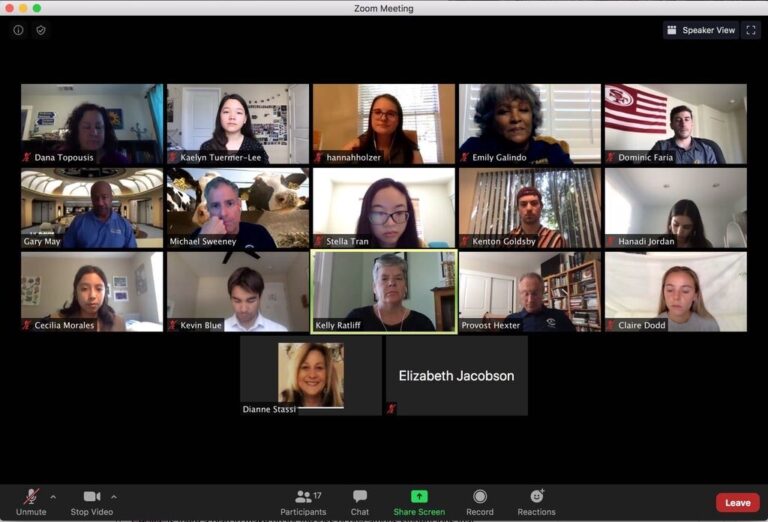
The California Aggie’s Editorial Board had a Zoom call with Chancellor Gary May; Provost and Executive Vice Chancellor Ralph Hexter; Vice Chancellor for Student Affairs Emily Galindo; Vice Chancellor of Finance, Operations and Administration Kelly Ratliff; Chief Counsel Michael Sweeney; Director of Athletics Kevin Blue and Chief Marketing and Communications Officer Dana Topousis to talk about instruction plans for the next academic year, the pandemic’s impact on the university’s finances, The Aggie’s editor-in-chief selection process reform and how the campus is preparing for the future.

Below is a transcript of the meeting that has been edited for length and clarity.

Do you have any idea when you plan to make the official decision for Fall Quarter?

Gary May: We’ve been saying we’re going to have our announcement on all of our plans by June 15.

Ralph Hexter: I was talking with the other EVCs [executive vice chancellors], [and] the question is: How much specificity and reliability will we have, even on June 15? Everyone has to realize that, should the virus, the pandemic, take a new course, all bets are off. We are constantly going to be as specific as we can, and I would like to think that we are going to be very clear about which courses are going to only be in person by that mid-point, but we’re working toward that goal.

Kelly Ratliff: I am leading a group on operations, and we’re pretty far along on some guidance for what it means to return administrative and other office work back to university facilities.

There’s also an advisory team with five medical experts, and then a few folks who do logistics like myself or Mike Sweeney from campus counsel and Mike Sheehan from campus housing who really focus on the health aspect: What will the campus be doing in terms of symptom screening? Contact tracing or case investigation? What will we do for isolation? All of those things are a very important part of the plan. New information is emerging constantly. There’s systemwide committees, and UC Davis experts are a part of those committees. We’re making progress there in terms of being able to tell employees and students and families, ‘Here’s the programs and processes we’ll have in place as we get ready for fall,’ and that will definitely benefit by the next couple of weeks and evolve over the summer. 

Some students and faculty have levied accusations online that UC is waiting to announce if Fall Quarter will be remote so that it can collect tuition and housing deposits from incoming students. One UC Davis faculty member tweeted: “my university is pretending that it isn’t going to be basically all online in the fall so as to lock in the deposits of the incoming first years.” Can you respond to these allegations?

Gary May: Yeah, that’s completely false, and I’m really disappointed that somebody would have that point of view. We’ve tried to be as upfront about our plans as possible throughout the entire pandemic. We’ve said in campus updates and recent letters — one communication went to incoming students and one communication is about to go to returning students very soon — [that] we are likely to have a hybrid arrangement with instruction where the remote instruction will be available for most, if not all, classes. But we’ll also have some in-person classes as well.

What I’ve been saying to the team, almost from the beginning, is that I would like to try to get as close to normal as public health policy and the pandemic will allow as soon as we can, and that’s still the direction we’ve been going. We have these two work groups working to return the campus to normal operations, one in instruction and one in operations. Instruction has been headed by Provost Hexter, and operations being led by Vice Chancellor Ratliff. The notion that we’re doing this to collect tuition is pretty offensive to me.

Ralph Hexter: It’s often easier for people to imagine that there’s some deep, dark plot and that we know everything. The real reason we’re taking our time is that we don’t know everything yet. One of the things that is most going to be directing exactly the balance of in-person courses is the guidance we’re going to get from Yolo County from how they will measure appropriate density. And we’re working very closely with them to get that but, in the meantime, we have gone out and asked every major and department to tell us what classes they are planning to do remotely [and] classes they need to do in person, and we’re helping all the departments plan for the best combination for those things. 

We’ve already messaged the incoming students and we have on the table a draft that will go out in the next day, I expect, to all continuing students. It’s challenging to say absolute things but, as the chancellor said, the great majority of classes will be available remotely. Some of them will have an in-person option for people who are on the campus — of course, depending on the limitations that public health requires of us in terms of density in a given classroom. And there will be some classes, probably very few, that will be offered in-person only. In most cases, [students] will be able to have a full schedule of remote classes. If there are issues about classes they need, particularly for graduation, where they’re not able to attend them and those kinds of accommodations and solutions, we’re getting down to one-on-one using major advisors. We are going to be releasing that statement this week and when we have more specifics we will convey that as soon as possible.

What kind of feedback have you received from the campus community — students, staff, faculty and parents — in response to your weekly check-ins?

Gary May: They’ve been well received. In fact, I just got a couple letters from parents yesterday complimenting us on how well we’re staying connected with our student body and the rest of the community. I’m glad that we decided to do it, and we’ll probably continue to have those throughout this quarter and maybe into the summer as we continue to grapple with the COVID-19 pandemic. Everything’s been extremely positive with respect to the weekly updates.

In the past, you’ve said campus-wide emails and messages should be infrequent because, if used too frequently, people might ignore them and they might become ineffective. What made you increase the frequency of campus-wide check-ins during the situation with COVID-19, and is this something you will continue to do in the future?

Gary May: Well, certainly, this was motivated because we’ve never had a pandemic before — this is an unprecedented situation — and I thought that everyone was very anxious about every detail of campus instruction, operations and planning. I felt that it was prudent to keep people updated regularly, as things were changing so frequently. From my understanding, most people wanted to hear my voice or see my face attached to the messages, so that’s what we decided to do. 

As to whether it will continue, first, I guess I should properly give The Aggie Editorial Board credit for asking me to do more communication like that. And I think for this situation, you were certainly right on target. As to whether we’ll continue when the pandemic is over, or whenever things get back to whatever “normal” is, we’ll have to evaluate and see. I still think that mass communication to the entire community should be infrequent and should be very targeted. That is not to say we won’t have newsletters and things like that that we traditionally have. But at least at this point, don’t anticipate a weekly update as a regular part of business for the campus when we get back to normal.

You recently posted a social media status about the murder of Ahmaud Arbery including a photo of you running as part of the “dedication distance run” and said, “What if I were running in Brunswick, (Georgia) on February 23?” What inspired you to post about Arbery’s killing in such a personal way?

Gary May: I run every other day and I knew about the event, which was commemorating Arbery’s birthday. I lived in Georgia for almost 30 years, so I’m familiar with Brunswick and that community and I just was motivated to make a statement. It’s easy when it’s some unknown person out there and some unknown place being treated a certain way, but in this case, this young man was murdered because he was a Black guy running in the wrong place at the wrong time. I wanted people to accept the possibility that that could’ve been me and not just some unknown person you think might have done something to deserve it or whatever like some people might think. It could’ve been any African American running in Brunswick, Georgia that day who had happened to run into those murderers, and I wanted people to have that in their thought process. It wasn’t planned, it just kind of came to me.

There has been a certain amount of confusion and frustration among students about why there won’t be a refund on tuition. Some students feel like the services they’re paying for, like the ARC, aren’t being rendered and they should therefore be given some money back. Can you respond to this?

Gary May: I can only respond in a limited way, and the limitation is due to the fact that now there is active litigation so we can’t really comment on things for the record. I will say that I would encourage students who feel that way about fees to take a good look at the COSAF [Council on Student Affairs and Fees] website and look at the fees that they’re paying and what they’re actually paying for. 

You mentioned the ARC as an example, there’s not a pay-as-you-go fee for the ARC in there. If there were, that would make sense to refund it. But our fees are bundled in a particular way. A lot of it has to do with paying debt services. Buildings are still there and we owe the money — the fact that people are not using them is not impacting the fact that we owe the money. I would just encourage you and your readers to take a look at the COSAF page for the list of fees and the description of what the fees are for. Beyond that, where the litigation winds up, I really can’t comment further.

In 2009, during the recession, there was a significant amount of pay for tuition that was increased on students to make up for a lack of funding coming from the state. Have there been any talks about the foreseeable impacts on tuition that decreases in funding from the state might have?

Gary May: Only that the March regents meeting, where we were scheduled to discuss this cohort tuition, was taken off the agenda because we were right in the middle of trying to deal with the pandemic and all the associated issues. There was no mention of tuition at the recent May regents meeting. 

I suspect that — this is just me speculating — there’s not much of an inclination or a stomach for having a tuition increase at this time, as far as I know. We have a set of tools in the toolbox that we can try to use, including various workforce actions that may get us through. I think there’s some recognition that a significant fraction of this current financial problem is transient. The hospitals are going to get their patients back, housing and dining is going to eventually get students back. What’s less transient and less well-known is what the state support will be and what enrollment will be. The immediate impacts, we think, over time, can be dealt with. 

The administration works with the Council on Student Affairs and Fees (COSAF) on a regular basis. Are there any different ways the administration has been working with COSAF, specifically in terms of student fees?

Kelly Ratliff: The COSAF process continues. As part of that normal process, the committee provides recommendations. For this year, given the presentations that had occurred, they did recommend CPI, or consumer price index increases, for most of the fees. We’re reevaluating those recommendations now based on some new parameters, like the salary freeze. We’ll circle back with them because of that change in circumstance that they weren’t able to consider and provide those updates.

There are also the new fees that the students voted on and COSAF provided recommendations on that fee. There’s a strong inclination to proceed with those recommendations. We’re analyzing their recommendations now with these new parameters, as the salary freeze was just announced last week. We are also waiting for the rest of the approval process for the new fee, because after the students vote, the chancellor recommends the fee to the UC president, and then the president ultimately has the final authority to approve those fees. We’re waiting for the rest of that cycle to finish. 

As to the fall, frankly, I hadn’t contemplated that. The process with COSAF is really robust. We start out in the summer with an orientation and set the agenda for the year. I think the normal process gives us good opportunities to look at the process and decide, given this pandemic situation, ‘Is there something we need to change or modify?’

Emily Galindo: The COSAF chairs are students, and they develop the agenda. We could certainly respond to anything they felt was important for us to have conversations about. 

Vice Chancellor Ratliff, you mentioned the student fee that was approved during Winter Quarter is still awaiting final approval by the UC president. Could you give us more information about whether you think that the fee will be approved?

Kelly Ratliff: Right now, it feels very much like we’re in the normal process, except [it] is running a little bit slowly right now because there’s so much attention on COVID-19. 

What level of testing capacity do you think UC Davis needs to have in order to safely open campus when it is time to do so?

Gary May: There’s a subgroup within our operations working group that is focusing on testing. We’re actually using the language of “screening” now rather than “testing” because that’s, I think, a more accurate connotation of what we’re going to be doing. 

You may have read about the idea of doing a full test of every student, faculty and staff member on both campuses. That’s not really realistic. From a timing standpoint and from a cost standpoint, most of the literature would say we’re not convinced that testing asymptomatic people really even tells you anything useful. I think where we’ll probably wind up is on some sort of sampling-based approach. We’ll let the medical experts tell us what the right percentage and frequency should be for the samples. Certainly anyone who has any symptoms will get tested immediately and handled appropriately. 

For asymptomatic populations, however, it’s not likely that we’ll have pervasive screening for that group — we’ll have some sort of schedule and some sort of sampling arrangement for that, followed up by contacting tracing and, if needed, isolation.

Kelly Ratliff: We had one of these advisory team meetings last night. There have been a couple of efforts underway that you may have heard about at UC San Diego and UC Irvine to have mass testing protocols on those campuses. I have here in my notes from last night that UC San Diego tested almost 1,100 students and they found no positives. At Irvine, they tested about 1,500 and they found five positives, but they already knew about four of those — so they really only found one asymptomatic person. 

When you talk to the medical experts, some of the concern with a mass screening protocol when you have a low prevalence of the disease is that you get a high false positive rate. The science and the data seem to be coalescing much more around screening. You may have heard about self-assessment tools and people doing their own screening, testing folks who have symptoms, either by the self-reported screening or who present with symptoms and the idea of contact tracing, which is really a formal responsibility of public health. The campus may be able to help more carefully with what they call “case investigation.” Can we have some local places where we’re doing some hand offs with public health, where if we find a positive we can have folks who are trained on what to do? UCSF has developed an eight-hour training program. So these are all the different things we’re evaluating. 

I think an outline of what the campus plan will be is going to be available by mid-June. It will include those elements we’re evaluating, like people doing temperature screenings. UC Davis is so big — you can’t do that everywhere — but there are certain locations that make sense, both for the cultural aspect as well as the health aspects. The most important things we can do are physical distancing, [as well as] wear our face coverings [and] stay home if we’re not feeling well. If someone has symptoms, then we’ll move to testing quickly. The Student Health and Wellness Center is connected with UC Davis Health and the testing is done there. We get results in three to 24 hours, depending on the timing of the sample collection. We’re relying on UC Davis Health, and we have a very good protocol there.

Emily Galindo: We’re strongly encouraging flu shots this coming fall. That will really make a difference in how we are able to separate out people who are sick with the virus and the rest of the folk. The more people who will get flu shots, the better it’ll be for our whole community. So that will be another campaign. 

What efforts would the university take to ensure that the education experience is the same, regardless of whether it is remote or in person?

Gary May: We work hard to do that even now. The Academic Senate and provost work closely together to ensure that the education you receive is seamless. I’m not saying that this is perfect, because we did this in a rather shortened manner. But I think the quality has been there. We expect that the instruction will be performed at the same high quality you’re used to.

What are some of the lessons you’ve learned about remote instruction this quarter and how will those inform decisions around remote instruction as it might occur in Fall Quarter?

Gary May: I think there have been some difficulties like proctoring exams. We try to make adjustments with communication. Some things were out of our control, like when the Internet goes out in Davis, but we try to work around that. We encourage faculty to have some flexibility in evaluating students — we know that they have these issues to overcome. I think that the lessons have been learned. There are always new things that can happen, but I should say that, if there’s a second wave of the virus, we will be prepared to go back to fully remote as we are now. Having done it once, we will be much more prepared to do that if we need to. 

Ralph Hexter: When we made the leap into Spring Quarter, we acquired 700 laptops and the opportunity for students who needed them to get them. We established spaces on campus — whether [students are] remaining in our residence halls or living in the area — to come in and safely use the Internet on campus. We will be building on that. 

No one was looking forward to this, but I heard people say that there are certain aspects of their teaching that works better in this format. So many of our faculty have learned more about remote instruction. So at the school level and the many departments and through our educational excellence center, we’re offering clinics and more guidance. More faculty will be more prepared and learn from one another [in terms] of what has worked for them. In the end, each faculty member has to figure out what works best for them and for the students they have.

Do you plan to continue implementing flexible pass/no pass and PLEP rules?

Ralph Hexter: They [the Academic Senate] want to do this quarter by quarter. They’ll do it in a timely fashion and communicate whatever they do. I believe they’ve made certain determinations now for summer. I would expect that they would [make an announcement about Fall Quarter] a little bit later.

From what you know, so far, how has the pandemic affected first-year enrollment for fall, if at all?

Gary May: First-year enrollment looks surprisingly strong. We had some concerns about that, but based on the last data I saw, our yield rate is somewhere between where we were in 2018 and 2019. 

Can you talk generally about what the financial impact of the pandemic has been on the university and in terms of funding from the state? 

Gary May: In the first couple of months of the pandemic, between cost and missed revenue and lost revenue, it was about a $125 million problem for the university. About $90 million of that is at UC Davis Health, where they were having to make arrangements to accommodate what they expected to be a surge in COVID patients, and they deferred many elective surgeries that tend to be higher revenue operations. The rest of that $35 million or so was from the main campus here in Davis, most of which coming from returned Housing and Dining contracts from students who went back home. There are some other costs but that’s that’s the bulk of it.

Through the CARES act, we received $34 million of the federal government’s $2 trillion CARES act money. That money is divided equally between student financial aid and operations, and we dispersed the $17 million to students — 80% or so went to undergraduates, 20% roughly went to graduate students. We used some of the money for our undocumented community because they were not covered in the first half. We are figuring out right now how we’re going to take care of some of the needs across the campus with the other $17 million.

The governor announced that we would not be getting the 5% increase that we were anticipating and, in fact, it would be a 10% decrease from the state revenue — which, for UC Davis, is about $40 million that we were expecting to get that we won’t get for the 2020–2021 fiscal year. On top of the hole we were already trying to fill in from the current year, we have a hole next year. We have some real challenges. Provost Hexter has established a budget advisory committee to give us recommendations around helping to fill that hole. We’re actively seeking FEMA funds and other things to try to do some other recovery.

Kelly Ratliff: I will say that there are also some CARES funds that will be available on the healthcare side. That’s good, but again, it’s scaling at about half of the challenge. On the healthcare side, they’re anticipating just under $50 million [in lost revenue], and again, they’ve already had about $90 million in losses. So those funds are incredibly important.

But there really is still a large gap with respect to the state. The governor may revise — these are proposals, the legislature has to vote and then, ultimately, the governor will place the final budget vote. But we really don’t have an expectation that that will change much. 

The swing for UC Davis is closer to $65 million. We were planning on this 5% increase, and instead we’ll have a 10% decrease. Compared to what we were planning for next year, it’s a much larger swing. In response, the one action that the president has announced is the salary freeze. And that specifically stops normal merit range adjustments for staff that aren’t represented by collective bargaining and our faculty and academic appointments not represented by collective bargaining. For the folks who are represented by unions, then there are separate conversations underway as well with those groups. Universities are people, and salaries are the biggest part of our budget. So whatever we can do to spread the pain, share the sacrifice, will reduce how much of a budget challenge we have left to close through other choices.

We also have in place what we’re calling a vacancy management program. Even as we’re using the language that the campus is closed, this campus is never closed — there are a lot of folks who are here as essential workers. The vacancy management program put in an extra level of review and sign off for people to justify hiring. As part of that process and knowing the budget pressures, folks definitely have pulled back on refilling certain positions. We hope that will give us an opportunity through attrition to garner some savings. Those are some of the early strategies — we have in place right now.

Ralph Hexter: Our hospital prepared for a surge [and] stopped these surgeries. We, in the Sacramento greater metropolitan area, are so fortunate compared to so many areas of the country. That surge did not materialize. My understanding is that we’re back up to normal operations, 80 or 90%. Compared to most other health centers, our health center is on a path to a rapid recovery, including financially and being able to serve the area population. 

Gary May: Let’s not forget the chancellors took a 10% pay cut. No one is shedding any tears though, I see. 

We’ve heard historically that community resource and retention centers have faced budget cuts if they don’t use the entirety of their budget during a given fiscal year. What funding commitments is the university willing to make for the CRRCs and other cultural and ethnic resource centers on campus during this pandemic and into the future?

Emily Galindo: It’s unfortunate that that is the understanding, and perhaps we need to do a better job of explaining how we deal with carryforward dollars. Budgets are not cut. At the end of the year, if there are dollars available within the particular AVC’s portfolio, those dollars go back to the AVC to redistribute. But they’re not cut. Currently, we don’t have any plans for doing anything other than providing the funding that the various units are asking for. 

Is there a plan to make up for the loss of on-campus student jobs that cannot be made virtual? 

Gary May: We certainly recognize the issue. I don’t know if there’s a firm plan in place yet, and we’re looking for other opportunities to use those students. We talked about ‘contact tracing’ as an example, that’s a possible job that students can do. 

How has this crisis impacted the athletic department financially? How is the department preparing to move forward with respect to funding/revenue generation?

Kevin Blue: The pandemic, in the current fiscal year, had a pretty significant impact because of the cancellation of the NCAA men’s and women’s basketball tournaments, which are revenue generators. As a result, we reduced expenses in the spring. The lack of travel for our spring teams made the reduction of expenses easier to facilitate. We also saw some slight funding decreases from our projections based on the uncertainty in the economic environment, and we changed our ‘Give Day’ strategy — instead of trying to raise money actively for our own teams, we threw our publicity efforts behind raising money for the COVID-19 relief efforts for campus, which also negatively impacted our financial position. As we move forward, we’ve been very conservative in our revenue projections for the 2020–2021 academic year and have already taken some cost reduction actions to develop a budget which we believe will end up being a balanced budget as we get closer to the start of the fiscal year. 

Will fall sports be able to hold practices or workouts in-person in June, in accordance with the NCAA’s recent decision? What kinds of restrictions, changes or guidelines, if any, would those types of activities be subject to?

Kevin Blue: We hope to be able to resume athletics activities, starting with the voluntary activities that the NCAA will permit. However, we will only resume activities once it is deemed safe to do so by public health authorities and campus safety officials. We expect that there will be safety-related modifications when activity does resume. 

Is the university willing and able to hold athletic events in fall, even in the event of remote instruction? Is there a certain date by which the university and athletics department are aiming to have these decisions made by?

Kevin Blue: All decisions about the fall quarter are being discussed currently, and we expect to have more certainty by the middle of June.

Will UC Davis have to terminate any of its current athletic programs?

Kevin Blue: We do not anticipate reducing programs. All decisions on the entire campus have to take into account the challenging financial circumstances that we’re in. All leaders on campus are faced with trade-offs given the financial circumstances, and athletics is no exception.

Do you have any additional remarks regarding how UC Davis athletics is planning on preparing for the gradual return of collegiate sports?

Kevin Blue: We are eager to resume activity, but we will be appropriately thoughtful and safe as we do so in a gradual manner under the guidance of public health guidelines and campus safety policies.

Why has the university effectively cut back on its scope of mental health resources during this pandemic by furloughing six counselors, when counseling staff was already understaffed pre-pandemic at 75% staffing capacity.

Gary May: I’m not even aware of the furlough. 

Emily Galindo: I’m not able to answer. I do know that, on an annual basis, we do furlough. I was only aware of that happening during the summer time, because students leave campus. That’s all that I’m aware of.

Provost Hexter, you released an email during late Winter Quarter about a student who contracted the virus while studying abroad. Since then, we have not heard about any additional campus cases. What steps is the university taking to inform the campus community about individuals who have contracted or potentially been exposed to the virus? 

Ralph Hexter: There have been very few cases of any sort on campus. To the extent I’ve been involved in those discussions, we look at them on a case-by-case basis. The couple occasions when there were people who might have been exposed, we communicated to all those who were in their residence hall. We worked with anyone who had contact with them, but we’ve not always felt that it was appropriate immediately to have a special message. [In] the Friday messages we always referenced any new cases that we do have on campus.

Gary May: We’ve never had more than two positive tests at any one time, and the time we had two, neither of the people lived on campus. 

Kelly Ratliff: Under our division in health and safety services, if you look up coronavirus reporting protocol, there’s very clear protocols. It’s mandatory for folks to report positive cases. We also now have the ability to inform people. We use our privacy operations if somebody suspects a case, because people like to be reassured. We really don’t want folks off investigating on their own. We want to have appropriate protocols to honor privacy and involve our medical experts and determine the right steps of action. 

Michael Sweeney: It may seem suiting to get a blast to the campus community every time there’s a positive patient, but that’s actually not recommended. We take directions from the public health officer on when and how to communicate these messages. 

We wrote an editorial recently criticizing the fact that The California Aggie’s editorial-in-chief is hired — and can be fired — by the campus Media Board, an administrative advisory committee. Since that editorial, we have been working to completely overhaul this selection process so that The Aggie can choose its own editor-in-chief, as is the case at other campus papers at all of the other UCs and at campuses across the nation. What are your thoughts on this?

Emily Galindo: We’re certainly in the process of looking at the structure we have in place right now, but we do feel like there’s some merit to the way in which the Media Board currently operates in that the Board, rather than student government or one particular administrator, allows for accountability [and] checks and balances. It’s made up of students, faculty, staff and administrators, and we believe that’s important and serves us well. It’s never been part of what the Media Board does to censor content. The newspaper is free because of freedom of the press to have whatever content they feel is appropriate. The selection process does involve members, it does require a certain number of affirmative votes in order for interviews to happen.

Dana Topousis: I appreciate that you raised that issue, and Student Affairs is reviewing their process. I think it’s important that we’ve listened to your voices and I just want to thank you for putting that out there. I sat briefly on the Media Board as a non-voting member and it was never about talking about the content of the stories you’re covering or the editorial you write, that’s never been on any of the agendas that I’ve sat in. It was more about the budget oversight and making sure that you have the support that you needed. 

Michael Sweeney: I, too, appreciate raising this concern. I’m very sensitive to any effort that would be actually censoring or suppressing freedom of expression, or even the perception that it’s chilling freedom of expression. Unfortunately, some of our boards have challenges with student participation. I understand the Media Board has struggled, certainly this year and certainly with the pandemic, with students participating on the Media Board. I think we need to think about how to fix that. I can say, in my 14 plus years at UC Davis, I’ve worked with the Media Board on countless occasions where it has served as a buffer to support The Aggie, as it does its important work, against individuals — whether at student government, administration or the community — who don’t like something that’s been published. The goal of the Media Board is to support the ongoing, excellent journalism of our student newspaper.

Vice Chancellor Galindo, how do you feel about the fact that none of the members of The Aggie, specifically those in leadership positions who have been with The Aggie for several years, are allowed to serve on Media Board or have any type of voting capacity? 

Emily Galindo: I would just restate that the structure of the Media Board is what it is. It’s been that way historically. I served two years as chair of Media Board. We’re in the process of taking a look at that. We’ve simply been following what’s been established, and that’s what’s been established. We have student participation, but not necessarily specific members of The Aggie. 

Chancellor May, as a parent of a recent college graduate, what advice do you have for UC Davis students who are graduating into a pandemic? 

Gary May: We wish you best of luck, and I’m sorry we won’t be able to celebrate how we normally do  in person. I hope you’ll take advantage of the virtual celebration we’ve prepared, and I hope you’ll find that there will be some nice pieces you’ll like. We hope to do something in the late Fall, if we can, in person. My daughter just graduated from Lynn University in Florida. She’s an early childhood education major and she has a job with City Year in Miami. So we’re all happy she’s going to have a gainful employment. That’s one of our goals for the family — it buffers the 10% pay cut the chancellors are taking tremendously, her school is not cheap. 

I think you all should be very encouraged with the fact that you all got a very tremendous and high-quality education at UC Davis that will prepare you for your future career, no matter what it is. There will be challenges, because the pandemic has caused some challenges nationwide that you’ll have to face, but those kinds of challenges happen from time to time. You’re going to be prepared to deal with it. We’re going to be there to support you. I hope you’re taking advantage of the ICC and the job fairs that are being conducted on your behalf so you can get connected to possible career opportunities. I’m proud of you. You’ll have a great career, great life. And don’t forget about UC Davis.

Written by: The Editorial Board

Academic Senate allows instructors to make finals optional in light of pandemic, protests

Instructors are not required to make finals optional, not authorized to cancel scheduled finals

In light of the ongoing COVID-19 pandemic and ongoing protests and demonstrations focused on racism and police brutality, the UC Davis Academic Senate announced its decision today to allow instructors to make their scheduled finals for Spring Quarter courses optional, as per a letter sent to instructors by Academic Senate Chair Professor Kristin Lagattuta.

“Our UC Davis community is currently experiencing the compounding stressful effects of the global pandemic with the pain, suffering, and outrage over the recent killings of George Floyd, Ahmaud Arbery, and Breonna Taylor,” the letter states. “Due to these events, some instructors who have scheduled a final exam in Spring 2020 may wish to offer students the alternative of receiving their course grade based on work completed through the last day of instruction (June 4).”

In an email sent to The California Aggie, Lagattuta explained that instructors are not required to make their course finals optional. Even if a course’s final exam is made optional, students are still able to take the exam, as “many students rely on their final exams to improve their grades,” Lagattuta noted.

She also clarified that the Academic Senate, which has authority over decisions regarding courses, instruction and grading, “did not authorize instructors to cancel scheduled finals.”

This is now the second quarter in a row that the Academic Senate has made provisions for finals. In Winter Quarter, the Academic Senate allowed for “maximum flexibility,” which enabled instructors to substitute scheduled finals for a take-home exam or to drop the final exam altogether.

Lagattuta also emphasized the flexibilities made this quarter to assist with student academic success: The deadline to opt into undergraduate Pass/No Pass (P/NP) and graduate Satisfactory/Unsatisfactory (S/U) grading was pushed until June 4, the last day of instruction, the quarter was made exempt from university and college-specific undergraduate P/NP unit caps and advisors were encouraged to be flexible with late drop requests.

Additionally, Lagattuta noted that, as is the case every quarter, students are able to contact their instructors to request an incomplete.

“Instructors are working hard to make sure that their students learn the material and are prepared for the next course in a series or for their post-graduation plans—they do have their students’ best interests in mind,” Lagattuta said via email. “Students should also be aware that many instructors are processing their own trauma and stress. So, please respect the decision the instructor makes for your course.”

Written by: Hannah Holzer — campus@theaggie.org 

Curbside pickup gives retail businesses more flexibility, economic opportunities during California’s shelter-in-place order

Yolo County loosens restrictions for non-essential businesses as California enters stage 2 of COVID-19 response

Yolo County is allowing retail businesses to sell their products through curbside pickup and delivery following California’s transition into stage two of the state’s COVID-19 response. The updates to the county’s shelter-in-place order encompass other parts of the supply chain, including manufacturing and warehouse operations which are opening up again under these guidelines. 

In a press release on May 8, Yolo County officials explained how curbside pickup differs from traditional transactions in retail stores. 

“Curbside pick-up and delivery allows retailers to resume operations in a modified contactless format where customers can pre-order, pay for items and either pick up items outside the store or have them delivered to their home,” the press release read. 

The press release added a list of businesses that are allowed to reopen, which included “clothing stores, bookstores, shoe stores, jewelry stores, home and furnishing stores, sporting good shops, antique stores, music stores, toy stores, and florists.”

County officials stress that this is not a complete reopening of businesses, as retail stores are still required to follow strict social distancing guidelines and adhere to the requirements set forth by the state. The press release continued to explain how California was allowing more variation between counties in their progression through stage 2 of the “Resilience Roadmap”.

“Counties can move further into Phase Two, if they can attest to meeting the State’s criteria by submitting a readiness plan approved by the local health officer and Board of Supervisors,” the press release read. “In preparation for this, Yolo County is developing a draft readiness plan for future review by the Board of Supervisors.”

California’s “Resilience Roadmap” explains the four stages for safely reopening the state during the COVID-19 pandemic. In a press release announcing California’s transition from stage 1 to stage 2, Governor Gavin Newsom explained that though the shelter-in-place order and other public health measures have allowed California to transition to stage 2, the disease has not been fully eliminated.

“It’s critical that businesses and employers understand how they can reduce the risk of transmission and better protect their workers and customers,” Governor Newsom said. “COVID-19 will be present in our communities until there is a vaccine or therapeutic, and it will be up to all of us to change our behavior and eliminate opportunities for the disease to spread.”

For Erin Arnold, the owner of The Avid Reader in downtown Davis, curbside pick-up makes it easier to interact with the local Davis community, who have shown an outpouring of support amid the financial hardships impacting local businesses.

“We’re lucky in that people love books,” Arnold said. “We’ve had a significant cut in our daily sales of books, but we’ve had a constant stream of people frequenting and supporting the store.”

Other sources of relief, like the Downtown Davis’s Business Association’s stimulus program and the Book Industry Charitable Foundation’s emergency grant program, have also helped to alleviate some of the financial burdens from lost revenue. Despite these hardships, employees are staying positive and finding creative ways to reflect a sense of normalcy. For instance, transitioning to curbside pickup has inspired staff to develop new ways for customers to interact with books while still enforcing social distance guidelines. 

“We have a table blocking both entrances that are set up with hand sanitizer and a couple [of] books so people can have the experience of browsing,” Arnold said. “I think a lot of people are missing being able to browse and look at books, particularly now that libraries are closed. We wanted to provide a sliver of that experience.”

As for public health measures, staff are required to wear masks and clean their hands frequently with hand sanitizer or by washing their hands. Additional precautions, like bagging books for pick-up and not accepting cash payments, are enforced to protect employees and customers alike. 

“We have hand sanitizer that’s CDC-approved on the table so when people hand us their cards, [and] when we hand them back — people can wash their hands,” Arnold said. “We’re putting books in bags which decreases a little bit of the contact. We were contactless payment before this, but once curbside opened, we are now accepting card payment, but we aren’t accepting cash or checks.”

Though the financial effects of curbside pickup are not yet certain, positivity and hopefulness remain as small businesses navigate the current economic crisis with support from local Davis residents.

Written by: Madeleine Payne — city@theaggie.org

Humor: Chancellors hold secret meeting during COVID-19

“How can we keep screwing students if there’s a pandemic?”

In this series of investigative pieces, The California Aggie investigates how the COVID-19 crisis has affected individual lives in our community.

“Ladies and gentlemen, please take your seats,” announces a hooded figure from the head of a skull-shaped table. Her throne is ash black, and screaming faces are ornately carved into the stonework. One by one, hooded men and women shuffle to their chairs. They all wear blood-red cloaks fastened at the neck with a skull pendant.

“As you know, COVID-19 is one of the greatest challenges our organization faces. Never before in the history of California has it been harder…” she pauses. “…to f-ck with students trying to get an education.” 

She removes the hood from her death cloak to reveal the face of the UC President Janet Napolitano. “We’ve put millions of dollars into R&D on this one, but COVID-19 presents a unique challenge to our staff. How can we keep screwing over students if they’re safe at home? I’m now opening the floor to suggestions.”

“What if we spend a bunch of money on Zoom licenses?” offers Chancellor Henry Yang of UC Santa Barbara.
“That’s a good start,” Napolitano adds. “That means they’ll have to use Zoom for everything. And when they use it for personal meetings, they’ll feel like they’re blurring the lines between work life and their personal life!”

“We should use this to distract from the COLA protests that are happening too!” exclaims Chancellor Cynthia Larive of UC Santa Cruz.
“Yes! I… uh…” Napolitano hesitates. “What do they want again?”
“A livable wage for Grad Students.”

“Oh, yeah,” Napolitano recalls. “F-ck ‘em.”

“Some students might have hope that they can go to school in the fall. How do we taint that?” inquires Chancellor Pradeep Khosla of UC San Diego.

“Hmmmm… How about we call it something really vague like Hybrid Mode,” suggests Napolitano. “And then raise serious questions about how it’ll be conducted?”
“Brilliant!” says Chancellor Howard Gillman of UC Irvine.

“Now that the cost of school is lower, should we issue any refunds to tuition?” asks Chancellor Gary May of UC Davis.

“No!” shouts Napolitano. “In fact, let’s use the money they’re spending on tuition to fight the lawsuits we’ll get for not returning their tuition!”

All at the table murmur in agreement and clap excitedly.

“Then what should I do instead?” asks May.

Napolitano pauses to think. “Try sending out inspirational emails every week about how hard things are.”

“Will anyone read them?” May asks. 

“No, but if you send out enough of them,” she smiles evilly, “it might get on their nerves.”

“Should I do anything?” asks Chancellor Kim Wilcox of UC Riverside.

“Nah. Your guys go to Riverside. Give ‘em a break.”

They all cackle loudly. It echoes through the chambers of the Hall of Doom.

“Now, let’s start planning on that project about raising tuition in three years for some new reason. My yacht won’t buy its own fuel.”

Written by: Matthew Simons — mrsimons@ucdavis.edu 

(This article is humor and/or satire, and its content is purely fictional. The story and the names of “sources” are fictionalized.)

In deep blue California, Republicans find signs of life

Mike Garcia’s special election victory shows Republicans how to succeed in blue states

After a sound defeat in the 2018 midterms, California Republicans have a reason to be hopeful again. 

Although registered Republicans number behind registered Democrats and voters with no party preference, they gained an additional congressional seat on March 13, 2020, when Mike Garcia was announced the winner in a special election in California’s 25th congressional district (CA-25).

Garcia, a former U.S. Navy pilot and son of Mexican-American immigrants, soundly defeated challenger Christy Smith in a battle to fill the seat of Democratic Congresswoman Katie Hill, who resigned last November. It was the first time Republicans were able to flip a Democrat-controlled House seat in California since 1998, and they did so in a dominating fashion in what many anticipated to be a hotly contested race. 

They also won in a region that doesn’t fit the usual demographics of Republican congressional districts. 

CA-25 is a majority-minority district that voted in favor of Clinton by almost seven points in 2016. Located in the suburbs of Los Angeles, CA-25 was formerly a GOP stronghold — congressional Republicans represented the district for 26 years prior to Katie Hill’s victory in 2018. But in recent times, the prospects of a Republican victory here have been flustered by diverse demographics and the retreat of suburban voters away from the GOP. Consequently, there was worry that President Trump inserting himself into the race –– first by endorsing Garcia and then later by exclaiming that the race was rigged against the candidate –– would potentially scare away swing voters

But last month showed it didn’t.

In fact, Garcia not only won overwhelmingly, he actually overperformed in a number of categories. According to data from the LA County Registrar-Recorder office, he won by six points in the heavily Latino city of Lancaster, and was edged out by just two points in nearby Palmdale. And per his own campaign’s data tracking, he won a majority of Hispanic voters.

Some are now concerned that Garcia’s victory reveals what could be a potentially frightening outcome for Democrats this November, with small shifts in minority voters enough to cost the Biden campaign victories in a number of crucial swing states. Already, many political experts around former Vice President Joe Biden warned him that he is not doing enough to court Hispanic voters. Just last month, Latino activists told Politico that they are concerned that the campaign is not doing enough to increase voter turnout in their communities.

Although Trump is still unlikely to win a substantial number of Hispanic voters this fall, increasingly depressed turnout and insufficient catering could damn the Biden campaign. And in a much broader view, Garcia’s victory also reveals that Republicans might not just die the demographic death that so many experts anticipated. 

Garcia’s general consultant put it simply: “You can win a race anywhere if you have the right candidate.”

So, while critics are quick to point that the GOP has become the party of white men –– 41 of 53 sitting Republican senators fit the description –– the reality is that California’s Republican candidates are slowly but surely diversifying. Of The Cook Political Report’s seven most competitive California congressional races in 2020, four of the seven GOP candidates feature immigrants or their recent descendants. Aside from Garcia, state legislators Young Kim (CA-39) and Michelle Park Steele (CA-48) were both born in South Korea, while David Valadao (CA-21) was born in California to immigrant parents from Portugal. 

It’s also worth noting that three of these four candidates are running in congressional districts with majority-minority populations. 

Valadao, for example, is seeking to reclaim his seat in the 21st congressional district, which he previously lost by less than a thousand votes in 2018. Located in the heart of the San Joaquin Valley, CA-21 is 74% Hispanic. Skeptics will be quick to point out the phenomenon of higher White voter turnout, especially in midterm elections, as an explanation for why Valadao was previously so successful in this district. But voting data proves otherwise. 

Latino turnout in CA-21 actually decreased when Valadao lost in 2018, with 45% of eligible Latino voters arriving at the polls. In comparison, the number was 55% in 2016, when he was reelected, according to analysis by The Sacramento Bee.

Although Valadao and Garcia both face hefty challenges this fall, at the very least, they have a chance to win. And even if they don’t, they will have shown that Republicans can still be competitive in a changing world.

Consequently, it’s possible that Garcia will lose when he reappears on the ballot in November. Democrats are quick to cite higher voter turnout, Trump’s presence on the ballot and the general difficulty of split-ticket voting in an election year as reasons why Republican incumbents like Garcia may not be poised for reelection. But the fact that an electoral victory was possible for Garcia proves that Republicans may be able to challenge the common assumption that they cannot win in minority-majority districts.

For this reason, it is dangerous to assume that changing demographics will permanently alter the American political scene. Shifting perceptions of racial identity, evolving party ideologies and interstate migration will all inevitably change the future electoral college in ways we can’t even imagine.

Truth be told, there are almost no given certainties in predicting the future of American politics, aside from the fact that national realignment is mostly inevitable. 

Don’t believe me? Just look at the 1976 presidential election electoral college map. Just a few years later, such an outcome was considered impossible. In a decade or two, we’ll probably say the same about 2016.

Written by: Brandon Jetter — brjetter@ucdavis.edu 

Disclaimer: The views and opinions expressed by individual columnists belong to the columnists alone and do not necessarily indicate the views and opinions held by The California Aggie