57.6 F
Davis

Davis, California

Tuesday, December 23, 2025
Home Blog Page 348

The Aggie demands selection of its new editor-in-chief be halted until adjustments are made

All members of the Editorial Board, applicants for EIC ask Media Board to follow its own guidelines, commit to reform selection process

Dear members of the UC Davis Media Board, Associate Vice Chancellor for Student Life Sheri Atkinson and Chancellor Gary May,

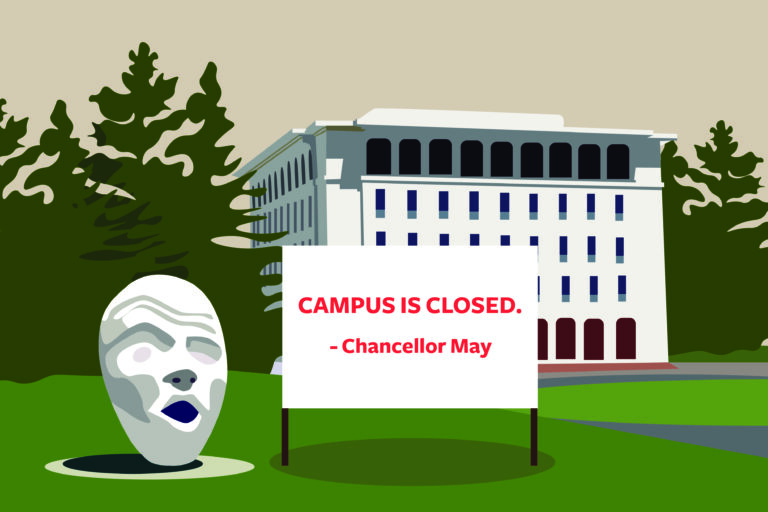
We are writing to let you know that all four prospective applicants for The California Aggie’s 2020–21 editor-in-chief (EIC) are refusing an interview for the position, as any selection made by Media Board would be in violation of its own bylaws. Furthermore, we ask you to immediately halt the current interview process for the selection of the next EIC of The Aggie until adjustments can be made and until discussions about reforming this inherently flawed process begin.

Many independent, autonomous student newspapers — including all other UC student newspapers — choose their own EIC with either minimal or no university staff input. The Aggie’s EIC, in contrast, is chosen by the UC Davis Media Board, an advisory body to the administration. Campus Media Boards, created in the 1970s amid a UC-wide crackdown on campus press, were initially set up by order of the UC Regents “to oversee student publications, especially to serve as watchdogs over student newspapers,” according to an archived 1971 Aggie article. It currently operates under the delegation of the Vice Chancellor for Student Affairs out of the Office of the Chancellor.

Discussions around changing the EIC selection process are not new — Aggie staff and leadership have discussed reforms to the process for years. This year is a pivotal moment for The Aggie, when all current members of the Editorial Board are set to graduate and leave The Aggie. Now, more than ever, student input must be at the forefront of the EIC selection process. This is why The Aggie’s current EIC and managing editor twice requested that they participate in the selection process, additionally emphasizing that it should be completely reformed moving forward. 

Both of these requests were met with resistance, as Media Board heads said allowing them into this process would violate its governing bylaws. We later learned — one day before EIC interviews were set to begin — that Media Board itself was operating in violation of its own bylaws by allowing the selection process to proceed without reaching quorum. 

Media Board effectively decided that involving the two leaders of The Aggie, each with four years of experience on staff at The Aggie, and each with existing relationships with all four EIC applicants, would have disrupted the process, as the request was not pre-approved by Media Board, which meets only once a month. Media Board decided that the selection of the next EIC — a position that is vital to The Aggie’s operations for next year — could proceed as is: without meeting quorum, placing the selection of the EIC in the hands of only two UC Davis staff members, neither with any direct involvement in journalism.

In light of these circumstances, here are our grievances:

Failure to meet quorum 

As stated in the Campus Media Board Guidelines, Media Board will “consist of seven (7) voting members, a non-voting chair, and ex officio members.” Those same guidelines also state that hiring decisions “shall require no fewer than four (4) affirmative votes from members present at all interviews for the position.” This year, there are only two voting members — one, an employee at UC Davis InnovationAccess, and the other, an employee at UC Davis Development & Alumni Relations. By failing to meet quorum and having two non-journalists vote to select the next EIC, Media Board has delegitimized and disrespected the EIC selection process. It is inconceivable that two people, neither with any direct relation to nor knowledge of the applicants, were approved to select our next EIC, when it would be impossible for them to make a truly informed decision.

Upholding the bylaws to restrict important student input 

While we acknowledge that Media Board has bylaws to adhere to, it has upheld these guidelines selectively, turning a blind eye to essential points, like quorum requirements. Additionally, EIC interviews are scheduled to continue until April 16; therefore, Media Board has again failed to uphold its bylaws by failing to select the new EIC “no later than April 15,” according to its own guidelines. 

We wonder: Why were Media Board members willing to proceed under the current circumstances — circumstances in violation of at least two points of its bylaws — yet unwilling to be flexible when The Aggie’s EIC and managing editor asked that they be included in this decision process? 

In short, Media Board has refused to include substantial input from student leaders at The Aggie in this process (the current EIC is an ex officio member of Media Board). These students would provide invaluable perspective and insight, and they have forged personal and working relationships with EIC candidates. Letters of recommendation are not a replacement for sitting in on interviews and participating in the hiring process. Members of The Aggie are the ones who truly know the newspaper, inside and out, and these individuals should make any and all staff hiring decisions.

Reforming the process

We feel that the students within a student organization, especially an independent, student-run newspaper, should be able to — and would be best equipped to — choose their next student leader. And the student staff members at other UC and university newspapers feel the same way. While they may have The Aggie’s best interests at heart, members of Media Board have not worked closely with any of the candidates, nor do they have any intimate knowledge of their work ethic, their relationships and dynamics with other staff members or their ability to take on the EIC position, which entails much additional responsibility.

While we recognize that reforming the selection process for EIC will be a continued discussion and take necessary time, we ask that quorum — a minimum four voting members — is obtained. The role of the EIC is extensive and, as such, each of the candidates deserves a legitimate interview.

Respectfully,

The Editorial Board:

Kaelyn Tuermer-Lee, Editor-in-Chief

Hannah Holzer, Managing Editor

Kenton Goldsby, Campus News Editor

Stella Tran, City News Editor

Hanadi Jordan, Opinion Editor

Claire Dodd, Features Editor

Liz Jacobson, Arts & Culture Editor

Dominic Faria, Sports Editor

Cecilia Morales, Science Editor

All four applicants for EIC:

Sabrina Habchi

Margo Rosenbaum

Anjini Venugopal

Hannan Waliullah

UC Davis LibreTexts Project receives $1M grant from California Education Learning Lab

Funds designated for optimization of adaptive learning programs

A new $1 million innovation grant from the State of California will help “develop, test and widely distribute a new adaptive learning platform” that accompanies the existing library of LibreTexts, a non-profit organization founded by UC Davis Chemistry Professor Dr. Delmar Larsen, according to an article on the UC Davis website. The grant will fund collaborative work between faculty from UC Davis, California State University, San Bernardo and Mendocino College.

“The three-year innovation grant, titled, “Rebalancing the Equity Gap in Chemistry Education with Culturally Sensitive Adaptive Learning,” will use online, personalized learning technologies to decrease the achievement gap in for approximately 8,000 students per year through a coordinated effort which was one of only five grants selected by the State of California,” according to a press release from CSU San Bernardino

The project aims to “directly improve outcomes for underrepresented student populations pursuing STEM education by using culturally-responsive, technology-enabled learning to address factors known to disproportionately impact historically marginalized groups in STEM,” according to CSUSB’s press release.

The project was one of five to receive an innovation grant, presented by the California Education Learning Lab — established in 2018 by Assembly Bill 1809, the California Education Learning Lab strives to “increase learning outcomes and close equity and achievement gaps across California’s public higher education segments, particularly in science, technology, engineering, and math (STEM) disciplines,” according to its website

“Textbooks have gotten quite expensive, and that is quite detrimental,” Larsen explained.

“The goal of the project is to be able to make an alternative that is fairly available for students to turn to and faculty to turn to, and to address the rising cost of textbooks.”

LibreTexts

LibreTexts was born out of a precursor project called ChemWiki, which Larsen launched between 2007 and 2008 after using an “atrocious” book to teach CHE 107B: Physical Chemistry for Life Sciences. 

“It was a first edition, full of errors and made my life unbelievably painful, and it was $200,” Larsen said. “I felt that it was a rip-off. [CHE 107B] was a large class of 300 students. We are talking about $60,000 if everyone in that class purchased a book. I felt that there was a way to work around that.”

Following its creation, ChemWiki grew to address academia beyond physical chemistry. 

“[ChemWiki] started to expand into multiple STEM Wikis [like BioWiki, GeoWiki, StatWiki, MathWiki],” Larsen said. “There were about six of them. About three or four years ago, we threw it all into one moniker called ‘LibreTexts.’ We expanded it to now 14 libraries with the scope of basically all of academia.” 

LibreTexts has an extensive array of material available, including 154 courses and a collection of 398 textbooks, textmaps and LibreTexts. Serving 223 million students, LibreTexts has saved students a total of $31 million, according to the LibreTexts website. Additionally, according to a LibreTexts blog post, LibreTexts was the most popular resource for students in California accessing chemistry content, receiving 100 million page views last calendar year. 

The definition and nature of a conventional textbook has radically evolved over the last decade, Larsen said. 

In October of 2018, LibreTexts announced that it had received a $5 million Open Textbooks Pilot Program award from the U.S. Department of Education. LibreTexts is currently in pursuit of other funds in order to expand into spaces like K-12 education as well. 

“We’ve always had the goal to build an online homework system,” Larsen said. “That is part of this grant from the U.S. Department of Education. We have that going. That system is called Query, and we even have a library of questions already put in place in our Query library.” 

Looking to the future, Larsen hopes to utilize existing infrastructure to enhance the type of material available to students. As opposed to having a system that operates by presenting a question and then an answer, Larsen aspires to generate a “virtual tutor” through integrating “decision tree infrastructure” into technology that LibreTexts currently has in place. 

“Collectively, it is called adaptive learning, and it is a way to personalize the interactions between the homework system and the student in order to help address the deficiencies in a student’s knowledge,” Larsen said. 

Through the most recent grant obtained by LibreTexts, Larsen hopes to “help every student.” More specifically, the California Education Learning Lab is encouraging LibreTexts to use the money to “help handle the achievement gap between advantaged and disadvantaged students,” Larsen said.

“The questions, the videos, […] even coupling down to the textbook, will start to better reflect [a student’s] identity,” Larsen said. “Seeing old white guys in your books is constantly reiterating that it’s not a position for [disadvantaged students]. That needs to be changed.”

Written by: Dina Gallacher, Aarya Gupta — campus@theaggie.org

Review: “All the Bright Places”

For once, the movie might be better than the book

When I first read Jennifer Niven’s young adult (YA) novel “All the Bright Places,” I was a 15-year-old sophomore — quite remarkably the worst year of high school for me. I relied solely on YA books to get me through the never-ending days of AP U.S. History and DBQs. 

The novel follows two narrators, Violet and Finch. Readers are given a quick introduction to the characters through their mental illnesses: They’re both standing at the ledge of a bell tower, debating whether to jump off. When Finch notices Violet, he takes it upon himself to talk her down — his first act of saving her. Throughout the novel, we see Finch repeatedly do this to Violet; he tries to make her see the bright side of situations and places. The pair work together on a group project, where they are supposed to see three wondrous sights that Indiana has to offer. It’s meant to make them proud of where they are from, but Finch takes it as an excuse to save Violet. I’m not proclaiming that an individual with a mental illness can or can’t save another. But Niven does, and that’s why I hated the book when I was 15.

 I hated the idea that someone can save another person. Mental illness shouldn’t be depicted as something from which you can be saved or cured. It’s a daily struggle, and the idea of one romantic interest saving another made me hate the book. But I was 15, and once I finished it I never picked it back up. So I recently re-read the book. 

As far as characters go, Violet was beautifully written. She played the part of the heartbroken sister well, but she was so much more than that. She didn’t want to be playing that part. She didn’t want to be in that small Indiana town to be solely known as Violet Markey, the one who survived. She wanted to get out of the town, and awaited the days until graduation.

She found herself feeling guilty for living in those small happy moments that she accidentally gave herself throughout the day. Niven allowed Violet to be a remarkable character who showed fully what it was like to have depression and survivor’s guilt, but the movie lacked in showing every redeemable trait that Violet has in the books. What the movie did manage to accomplish, however, was make Finch likeable. 

I really tried to like Finch. It’s hard to get through a book without liking the main character, which is exactly why I couldn’t read it a second time. I grew tired of the overplayed hurt boy who falls too hard for girls that give him a simple smile. I quickly found myself annoyed by how persistent he is to take Violet out on a date; I’ve never liked that character type. I hate it so much more now, and all it did was make me dislike Finch more. He was a hard pill to swallow, but I suppose that is the entire point of the character. 

Finch doesn’t have very many friends at school, and he’s bullied and named as the school’s freak. But that’s just another thing that I never liked. Even as I re-read the book, I was confronted with multiple school clichés that were overused and should be the last resort for a writer. The second time around reading the book, I didn’t like it any better. I did, however, hate it a little less because of Violet. But it wasn’t just that I didn’t like Finch, it was that I didn’t like the writing. It was boring, and it didn’t pick up until about 100 pages in. I found myself rolling my eyes more often than not, and the storyline was cute, but that’s all it was. For a small part, at least. There wasn’t anything eye-catching. 

I would have never even watched the movie if it weren’t for the actors. I guess it’s true that if you get well-known actors, people will watch anything, because I did. I first saw the trailer for “All the Bright Places” on Instagram and of course when I saw that Elle Fanning and Justin Smith were the main characters, I had to watch it. Not for the plot or the story, but for the actors.

The Netflix movie was better, but it still wasn’t great. I cried, I’ll give it that. But I also cry over 30-second commercials. The thing that surprised me the most was Finch. He was, simply put, more likeable. He wasn’t obnoxious, he wasn’t borderline creepily persistent, and he tried to guide Violet in gaining back her voice — as opposed to the book, where it seemed like Violet found her voice in Finch. 

But the movie didn’t start off how the book did, which was the best part of the original story. To so evidently display the characters’ dwindling chance at life shows what the book is really about: mental illness. But it’s not just about Violet’s depression, it’s about Fitch’s. This is something that the book does well — it shows that both characters are in pain, an unseen pain that they are pretty good at hiding. But the movie doesn’t. The audience can tell there’s something off about Finch, but he’s more quirky than anything else. He doesn’t speak much about his depression. 

The movie was more of a romance movie than a movie about mental illness. The book shows the effect that an illness has on a person and how it can consume their entire being. We don’t see that happen to Finch until mid-way through the movie. It still depicted that all someone with a mental illness needs to do to be okay is find love, and that was a bit of a disappointment. It did, however, have a better way of showing it throughout the movie than the books did. 

The movie does a good job of throwing away the overused character types that are there simply to fill in a plot. The only bad thing about that is it doesn’t entirely show Violet’s past. We don’t get to see who she was before her sister’s death. Despite all of this, I did like the movie more than I liked the book (shocker!). I wouldn’t necessarily watch it again when I have the free time to watch one movie during midterms week, but during this stay-at-home time, I just might recommend my friends watch it. If not for the story line, then for the purely angelic presences who are Elle Fanning and Justice Smith. 

Written By: Itzelth Gamboa — arts@theaggie.org

How the “John Oliver Effect” is changing the way we consume news

HBO talk show host John Oliver uses compassion, sharp wit to engage America on issues we didn’t know we should care about  

In the second season of John Oliver’s late night talk show “Last Week Tonight,” he announced that he had officially started his own church: Our Lady of Perpetual Exemption. This entire (legally binding) sketch was written to target televangelists who found mega-churches in order to take in millions while being exempt from paying taxes. Oliver proved what little effort creating an organization like this requires and how easily fraud and corporate greed can take advantage of these platforms. 

The way Oliver clearly portrays a very nuanced political problem with humor in just a 20-minute segment has led to what is now known as the “John Oliver Effect.” The term refers to the power of Oliver’s satirical commentary and the lasting effects his messages have on the country. 

Before getting his own show, Oliver worked as a senior British correspondent on “The Daily Show with Jon Stewart.” Oliver was praised for his work on the show, winning Primetime Emmy Awards for his writing. He then started filling in for Stewart as host of the series, and the public started getting used to him. 

“He has a very inviting way of having us all take a look at issues around us with amusement, with sadness, with irony,” HBO programming president Michael Lombardo said in an interview with the Hollywood Reporter. “But there’s no cynicism or judgment in it. His observations are always really acute and heartfelt.”

This sentiment is what carried Oliver in his career — and eventually into his own series in 2014. Although he originally had a two-year contract, “Last Week Tonight” still airs today. Oliver has become commonplace in households and classrooms alike due to his ability to explain and support his opinions about topics that might otherwise go over the common person’s head, often leading to significant action being taken as well. 

The “John Oliver Effect” can be seen in the numerous examples of Oliver affecting change in both legislation and national opinion. In 2015, Oliver tackled the issues of the bail bond system, showing the ways it works as a disservice to the impoverished and keeping innocent people behind bars. Soon after, New York officials made plans to change the bail requirements, and Mayor Bill de Blasio issued a statement addressing the problem just a month after the segment aired. 

One of the most significant examples of the “John Oliver Effect” was during the net neutrality debate in 2014. Oliver brought the term “net neutrality” into the cultural zeitgeist by explaining its significance to the common person in an interesting and understandable way. This alone was a feat of his writing, as too often the terms of net neutrality had been explained in intensly mundane and convoluted ways.   

“That is the most boring thing I’ve ever seen,” Oliver joked after showing a clip of an interview discussing the net neutrality laws at stake. “I would rather listen to a pair of Dockers tell me about the weird dream it had.”

Oliver used the rest of the segment to explain net neutrality in a way that connected with average people. After explaining its importance, Oliver urged his viewers to flood the Federal Communication Commission with their opinions about the proposed bill. After receiving so many messages at once, the FCC’s website crashed. The FCC eventually voted to adopt net neutrality regulations, and many credit Oliver in making that happen. 

The effects of Oliver’s style are palpable, and he might be changing the face of news as we know it. As more people are growing distrustful of news outlets, people are leaning more toward satire. 

“There is dissatisfaction with mainstream news media,” said Julia Fox, an associate professor at Indiana University’s Media School in an article in Variety. “More people don’t trust media than do.”

Oliver is intelligent but not pretentious. He explains things that might go above the average person’s head with wit and, most importantly, factual data to back up his claims. There are no gimmicks or ulterior motives — just in-depth analysis under the guise of comedy. Oliver truly seems to be on the side of the masses, which enables more action.

Especially in today’s state of unease, it is hard to know what or who to trust. While Oliver does not gloss over the very real threat the world is currently facing, there is also a comfort in knowing there is someone with a platform who is worthy of being trusted.  

“Try your best to tune out and not pass on misinformation in the coming weeks from sources like, sadly, the president.” Oliver said in a recent segment. “And instead, pay attention to trustworthy information from the CDC, experts like Anthony Fauci and, of course, TikTok hamsters. Always TikTok hamsters.”

Written By: Alyssa Ilsey — arts@theaggie.org 

Clubs, Greek Life adapt to online alternatives during Spring Quarter’s remote instruction

Student life adjusts to functioning remotely 

This Spring Quarter is one like no other: The pandemic is affecting many aspects of university life — instruction is online and a number of students are residing in their hometowns rather than in Davis. Given these circumstances, changes have been made to keep the UC Davis community safe and healthy during this time of crisis. Extracurriculars, which are a prominent pillar in many students’ lives, have also changed course to function remotely. 

One example is Yoga Club, which brings students together who share a common love for yoga. Normally, the club would hold at least one yoga class or guided meditation per week. The club has decided to maintain the same schedule remotely with visual content, which will involve virtual yoga classes that students can watch from their own homes. 

Yoga Club is also utilizing their social media to communicate and maintain their sense of community. Their Facebook page, for example, is filled with members past and present, allowing the club to stay connected without meeting face-to-face. 

Although functioning remotely is a change from normal operations, third-year international relations major and Yoga Club Vice President Justin Singh-Courtney shed light on the peace and growth he believes can be found with such distance. 

“It gives our students and our instructors the opportunity to define themselves as individuals,” Singh-Courtney said. “Practicing in a distant community with less influence from others.”

For other clubs, like Aggie Gaming, functioning remotely isn’t much of a shift from normal protocol. Aggie Gaming brings UC Davis’ gaming community together with game nights, social events and other activities. With the exception of in-person events, the club primarily functions online, so it can easily continue to function smoothly during Spring Quarter. 

The club will operate with online game nights and meetings. To fill the void of in-person interaction, there are also plans to create online spaces where members can communicate and interact. 

Zhekun (Victor) Hu, a third-year computer science major and Aggie Gaming director of technology, remains optimistic about the club’s future and its tight-knit community.  

“We expect these changes to encourage more participation from Aggie Gaming members and help the club grow closer and become a stronger community,” Hu said. “Gaming is one of the few activities that function well in these difficult times, and as such, we hope to provide some much-needed sense of community and interaction to as many students as we can.” 

Many UC Davis students are members of sororities and fraternities, which is another part of student life subject to changes this quarter. Tri Delta, a Panhellenic sorority at UC Davis, will omit in-person events and adjust to functioning online, a particularly big hit because of the regular plethora of in-person social events. Tri Delta has instituted virtual meetings to discuss important chapter business and stay up to date on information. The sorority is also planning on having some of their usual activities online, such as movie nights, workouts and painting nights.

 In terms of keeping communication strong, the chapter is taking advantage of social media platforms such as Instagram and Facebook to keep members connected and engaged. Jenna Koermer (’20), a fourth-year aerospace science and engineering major and chapter president, describes one social media ritual that brings the girls together. 

“Every Monday night, we do a special shoutout to one of our sisters and all other members comment ‘why we love…’ and it is a great positive reminder about what makes our sisterhood so unique and the impact we make on one another,” Koermer said. 

Despite the obstacles of functioning remotely, Koermer said the chapter is committed to staying strong by maintaining connections and supporting each other as a sisterhood. 
“Our goals for this quarter are to keep morale high during this very challenging time and to be a valuable resource for any of our members who need us even more now,” Koermer said. “Our executive board officers truly want to keep our girls virtually engaged and active as much as possible to keep the spirit of our chapter alive.”

Written by: Nora Farahdel — features@theaggie.org

The next great political realignment

Democrats, Republicans and the battle for the soul of America

At the Republican National Convention in 1992, the controversial conservative political commentator Pat Buchanan declared that the country was in a “struggle for the soul of America.” 

Just a few months earlier, Buchanan was on the offensive, leading a populist attack against the same reigning president he was now endorsing: George H.W. Bush. The paleoconservative insurgent had hit Bush Sr. from the right, utilizing a platform of fair trade, immigration reductionism and opposition to multiculturalism. This led to surprise showings in states like New Hampshire and Georgia. Buchanan eventually dropped out and endorsed Bush, but not before first provoking a conversation about the ideological identity of the Republican Party.

Nearly three decades later, the Republican Party now finds itself once again engaged in a battle for the soul of America, faced with the same debates that shook their party’s core in ‘92. 

Starting with the election of President Donald Trump in 2016, the Republican Party’s voter demographics began to transform, bringing a gradual leftward shift in fiscal policy. Trump, who has at times opted toward the Republican tradition of corporate tax cuts, initially ran on a theme of trade protectionism and economic nationalism, vowing to transform the GOP into a “worker’s party.” 

Republican support since then has become increasingly centered around the white working class, capturing a segment of the population that was traditionally regarded as part of the swing vote. The Democratic Party, meanwhile, has continued to utilize a broader coalition of different minority groups while also bringing new demographics to its fray. Democrats are now finding support in a considerable number of older, upper-class whites — a former key constituency of the Republican Party — as well as younger, liberal white voters (a majority of whom actually hold more radical views of race and inequality than their black and Hispanic counterparts).

The ongoing economic crisis provoked by the outbreak of the COVID-19 pandemic has accelerated this new ideological split. Republicans are now increasingly finding themselves to be the non-college-educated white-people party. Because of this, they have essentially doubled down on social conservatism while maintaining a slow approach to abandoning the free-market fundamentalism, once advocated for by deficit hawks like Paul Ryan and Mitt Romney. 

When the prospect of direct cash payments to American citizens initially arose, it was largely Republicans leading the charge. Ironically, the aforementioned Romney was the first Republican at the helm, calling for a $1,000 dollar payment to every American adult. This action was further contrasted by conservative suggestions coming from Senate Democrats, like Kamala Harris who proposed a mere $500-per-adult payment. And now, once again, President Trump appears to be flirting with the idea of expanding healthcare coverage, flanking a large portion of the Democratic Party from the left.

The divide between fiscal conservatives and renegade populists in the Republican Party has also trickled down to the college level. In California, conservative students are dealing with a major fracture in the organization of collegiate groups. Traditional, establishment-based California College Republicans have seen chapter organizations disband and join the California Federation of College Republicans, a coalition of nationalist, largely pro-Trump student organizations. 

The thought of the campus conservative no longer conjures up the image of the principled Reaganite. Instead, it produces a picture of a much more provocative variety of right-wingers.

Although establishment Republicans and free-market advocates have good reason to fear this ideological transformation, Democrats should as well. Even with the country’s rapidly transforming population demographics working in the latter’s favor, the majority of Americans still oppose perceived political correctness and a huge portion of the national constituency, especially swing voters, continue to identify as economically progressive and socially conservative. This group previously didn’t have any sort of meaningful political representation — now that’s changing. 

This could spell doom for the Democrats, many of whom have opted to embrace broad appeals to identity, which remain largely unpopular outside of college campuses and progressive think tanks. 

Indeed, it was Joe Biden, the least socially progressive of the Democratic presidential candidates, who was able to capture the key Democratic primary constituencies of older African-American and white, working-class voters. Those two groups remain relatively socially conservative compared to their younger party colleagues.

The future of the American soul thus belongs not to those who double down on their strict adherence to ideology. It instead belongs to whichever party first manages to adopt a pragmatic approach, appealing to the highly popular but lightly represented socially conservative, fiscally progressive voter. 

Written by: Brandon Jetter — brjetter@ucdavis.edu

Disclaimer: The views and opinions expressed by individual columnists belong to the columnists alone and do not necessarily indicate the views and opinions held by The California Aggie

Drive-through COVID-19 testing available in California

Project Baseline launched in Sacramento 

Project Baseline, founded by the company Verily and a subsidiary of Google’s parent company, Alphabet, recently launched a coronavirus testing program that has — in two weeks — become available in four testing sites in California. As of March 28, more than 3,700 people had been tested for coronavirus through the program. 

According to The Covid Tracking Project, more than one million tests have been administered in the U.S. and its territories as of April 1. 

Testing became available through the Baseline COVID-19 Program on March 24 in Sacramento County. It also became recently available in Lake Elsinore City, after previously commencing operations in Santa Clara and San Mateo Counties, according to Project Baseline’s blog.

“Verily was asked by government agencies to contribute in any way we could to COVID-19 screening and testing efforts,” said Carolyn Wang, the communications lead at Verily, via email. “Our team has moved with great urgency to support development of the California community-based COVID-10 testing program, which is state-directed with federal input. We did this by creating the Baseline COVID-19 Program, a connected solution to support individuals from screening through testing at community-based testing sites (CBTS) and receipt of their test results.”

Many entities are involved in this project, in order to administer testing and conduct an analysis of the samples. 

“Our primary partner in this first pilot is the California Governor’s office and local Bay Area public health authorities,” Wang said via email. “We’re also partnering with federal authorities and different organizations across healthcare to access testing and lab analysis resources.”

Individuals can check to see if they are eligible to get tested through this program through the company’s website. Additionally, a guide to the testing process can be found on the company’s blog.

In order to help those who are the most vulnerable, the program will start off by testing those who are at a higher risk, as defined by the California Department of Public Health (CDPH).

“Our staff intends to reach back out to eligible individuals as capacity becomes available,” Wang said via email.

The testing process is multi-step. The first step of the testing program involves doing an online screener, according to a blog post by the company. Based on CDPH guidelines, this helps prioritize the need to be tested. After completing this step, people who qualify to get tested for COVID-19 through the program will get an email confirming the details of the appointment, including the time and location of testing.

The drive-through testing site consists of three stations, the first of which is called an appointment check. Individuals will have to show their ID, with the windows of their cars closed for safety. After this step, people will be able to drive up to the second station. At this station, “healthcare staff will match each individual [with] a lab kit and attach a lab requisition to the car’s windshield [and] this document helps ensure tests are processed safely and correctly.” 

At Station 3, individuals will have to roll down their car’s windows and tilt their head back so that a nasal swab can be taken. Staff at the site will then ship the samples to a lab for analysis. 

Results will be provided to individuals approximately two to five days after they have been tested — but this may be longer, depending on the capacity of the lab. If an individual tests positive, a healthcare professional will contact them. A video of the program’s testing process can be found online.

The process of fighting against coronavirus is a collective effort, Wang said.

“We’re all together in the fight against COVID-19 — researchers, public health officials, and citizens,” Wang said via email.

Written by: Shraddha Jhingan — city@theaggie.org

UC Davis researchers work toward developing potential vaccine for COVID-19

Broad distribution of viable vaccine could take up to a year 

As the lives of people around the world have drastically changed due to the novel coronavirus, or COVID-19, pandemic, researchers from UC Davis have been working tirelessly to understand the mechanisms of the severe acute respiratory syndrome, coronavirus 2 (SARS-CoV-2), the virus which causes the COVID-19 disease, in order to develop a potential vaccine.

“Vaccines are based upon harnessing the ability of the immune system to recognize pathogens that they have counteracted before,” said Angela Haczku, a professor of medicine and associate dean for research at the UC Davis Medical School. “This feature or characteristic of the immune system is utilized when a small amount of the properties of the pathogen is being injected into the person.”

When an individual is exposed to a virus, a particle from the virus is recognized by a component of the immune system called a T lymphocyte, explained Haczku. Once T lymphocytes come into contact with these particles, they become memory T cells, which allow the immune system to recognize the virus if exposed to it again. Memory T cells allow helper lymphocytes to trigger B lymphocytes to produce the antibodies necessary to eliminate the viral particles. 

The amount of time these memory T cells can live on in a person’s body depends on the nature of the antigen, otherwise known as a foreign substance or toxin. When vaccines are administered, with a specific antigen, one no longer has to worry about contracting a certain disease in the future as memory T cells remember how to fight it off. But certain viruses, such as influenza, are able to mutate and become infectious again, so new vaccines must be created in response. The ability to develop a vaccine for COVID-19 depends on the nature of the virus and whether researchers will be able to find a proper antigen that T lymphocytes will be able to remember as the virus ages.

“We don’t know what’s happening with [COVID-19] because humankind never encountered a coronavirus pandemic before,” Haczku said. “This is the very first time and therefore we never had the need to develop vaccines against coronavirus.”

Although COVID-19 is novel, as the virus which causes it is not the same as the viruses that cause other coronaviruses, previous research already conducted on other coronaviruses has contributed to some of the early progress for UC Davis researchers, according to Denis Hartigan-O’Connor, an associate professor in the department of medical microbiology and immunology and a core scientist at the California National Primate Research Center (CNPRC).

“We learned from [previous research] about basically how to grow this virus, what things might inhibit it, what are some vaccine strategies that could be tried and then we start to think about the biology of this new agent and whether these strategies are applicable,” Hartigan-O’Connor said.

Hartigan-O’Connor is a part of a group of researchers at the CNPRC working toward developing the first animal model in learning how SARS-CoV-2 affects monkeys. Smita S. Iyer, an assistant professor and core scientist at the infectious disease unit at the CNPRC, explained that once an animal model is developed, researchers will be able to answer fundamental questions that are difficult to answer with a human model. For example, factors like the mode of infection and viral concentration in the body, both of which are difficult to control for in humans, can be accounted for in these essential animal models.

“We are not going to win the race to make a vaccine in academia because of resources,” Iyer said. “We just cannot compete with biotech [companies] and pharmaceutical [companies]. But what we can do and what we do really well is to understand the immune mechanism of protection, and so if we use that kind of approach to design a vaccine, that might inform the field.”

Hartigan-O’Connor explained that his group plans to test a vaccine on monkeys in the next three to four months. Once they establish a candidate in which the vaccine seems to be effective, researchers will be able to quickly move onto human trials, Hartigan-O’Connor predicts. Iyer speculates that it will take another 12 months or, optimistically, closer to the end of the year for a viable COVID-19 vaccine for humans to be widely distributed .

“That seems like a long time to get to humans, but it’s actually quite a short time scale because it’s so important to make sure we get a vaccine that makes the situation better and not worse,” Hartigan-O’Connor said.

Despite the world’s uncertainty concerning this virus, there have been promising results. A recently published study illustrates how monkeys that have been infected by the COVID-19 virus once are protected from reinfection. Although this is just one study, this information allows researchers to be hopeful that infected and recovered patients are protected from reinfection and that a vaccine will prove to be helpful in this pandemic, according to Iyer. This also raises the possibility of herd immunity, when there are enough individuals who are protected from the virus so that it is unable to find new hosts, slowing transmission.

Although her lab did not initially have any particular expertise in coronaviruses, Iyer explained that her ability to study SARS-CoV-2 is due to a team effort of her graduate students Sonny Elizaldi and JW. Roh, colleagues Chris Miller and Koen Van Rompay and many other essential faculty members from the Center for Immunology and Infectious Diseases (CIID) and CNPRC. 

Haczku described the nature of this virus as “sneaky” since it did not cause its original host, most likely a bat, to become sick but was still able to attack the immune systems of different species. This means everyone must practice proper hygiene and social distancing, as asymptomatic people may also be spreading the virus.

“We have to fight against this very ruthless and sneaky virus. It’s kind of a combat situation,” Haczku said. “In order to win this fight, we all have to unite, even people who don’t know anything about vaccination or how the viruses work. It would be nice if we understood the importance of fighting against it together.” 

Written by: Michelle Wong — science@theaggie.org

Online instruction proves paramount for slowing spread of COVID-19, scientists say

Scientists call for campus closures due to novel coronavirus 

No longer are bikes dotting the streets of campus. No longer are lecture halls filling up with students diligently taking notes. No longer are dining halls bustling with freshmen. With the recent campus closures due to threats of spreading COVID-19, instruction is held remotely and entirely online this Spring Quarter. Students will be watching lectures, contributing to discussions and taking tests using computers in their homes, at their desks, at their dining room tables or even in their beds. 

UC Davis, along with all other UC campuses, made this decision based on guidance from local and state public health authorities, including the Centers for Disease Control and Prevention (CDC). Further measures, including stricter guidelines regarding avoidance of non-essential gatherings, have been implemented to ensure social distancing to keep the Davis community safe, said Cindy Schorzman, the medical director of Student Health and Counseling Services, via email. 

“The health and safety of students, faculty and staff is of paramount importance,” Schorzman said. 

Guidelines provided by the CDC as well as local and state public health authorities informed UC Davis’ decision to transition all finals online at the end of last quarter and implement remote instruction for the entirety of Spring Quarter, Schorzman said. Because much is still unknown about this virus, these guidelines have been put in place, such as the CDC’s recommendation to reduce as much interaction with others as possible.

“Online classes are the only way to properly practice social distancing while continuing school education,” said Angela Haczku, a professor of medicine and the associate dean for research at the UC Davis School of Medicine, via email.

Currently, scientists believe that the virus spreads through respiratory droplets, which are produced when an infected person coughs or sneezes, Schorzman said. These droplets can land in the mouths or noses of others within six feet, which can then possibly be inhaled into the lungs. Individuals may also become infected by touching a surface or object that has the virus on it and then touching their faces, especially near the mouth or nose. 

“[The virus] stays on surfaces for days waiting for people to touch and pick them up,” Haczku said. “The virus first enters the mouth and gets into the gut system (sometimes causes diarrhea) and then makes its way into the airways, where it infects the lung.”

Researchers have found that the symptoms can vary widely. Some people may develop no symptoms, while others have a mild flu-like illness or even extremely severe pneumonia that can be fatal, Haczku said. 

Since the main way COVID-19 spreads is thought to be through inhaling respiratory droplets, the main strategies implemented to prevent its spread involve limiting potential exposure to these droplets, Haczku said. 

One strategy is social distancing since respiratory droplets are unlikely to travel more than six feet. Also, washing one’s hands multiple times a day to remove infected particles before they spread to others is very important. Lastly, cleaning and disinfecting frequently touched surfaces is effective to reduce the number of infected particles to which individuals are exposed, Haczku said. 

“[The virus] is spread by droplets and by contact, so if we limit the number of contacts people have, we can limit the spread of this infection,” said Dean Blumberg, the chief of pediatric infectious diseases at UC Davis Children’s Hospital. “We know it is already in the community, so we are trying to limit the number of contacts to limit the number in the entire community.”

By reducing interactions with others, scientists hope that the spread of the virus can be slowed down, Blumberg said. Since cases of COVID-19 are increasing logarithmically, the number of cases is climbing rapidly. New York City’s doubling time — the time it takes for the number of cases to double — is about a day, which puts immense pressure on the health care system. In California, the doubling time is three days, giving hospitals more time to prepare for more patients.

By following public health guidelines, such as the current shelter-in-place order from Yolo County Public Health, this doubling time will slow and fewer individuals will get infected, Blumberg said. If students returned back to Davis after spring break, it is important that they continue adhering to social distancing guidelines. 

“This means that anyone not living together is strongly discouraged from meeting together in person unless essential for health and safety and that individuals should only leave their home for essential travel and activities,” Blumberg said. “When students are away from their home, they should adhere to strict social distancing guidelines.”

For individuals who are not infected but want to protect themselves, in addition to practicing social distancing and keeping good hygiene, they should keep a healthy lifestyle, Haczku said. They should eat and sleep properly and avoid activities that weaken the immune system, like stress, smoking and excessive consumption of alcohol. Exercise is also important, even if people cannot go to the gym.

“This is a time when showing leadership and team spirit in following the rules for social distancing is necessary in order to save lives and help slow down the disease course for everyone,” Hackzu said. “It is a little bit like a war situation when, in order to stay alive, teamwork and unity is essential.”

It is easy for people to feel lonely and less connected to their community while isolating at home, so maintaining relationships with others is important, Schorzman said.

“Consider regularly reaching out to classmates and friends, including through online chat options,” Schorzman said. 

For students who are having difficulties such as anxiety or depression, resources such as counseling services are available 24-hours at 530-752-0871.

“Humans and especially young people are extremely social creatures,” Hackzu said. “Social distancing is resented by everybody. In order to cope, you should stay informed and find ways to keep in touch remotely with your friends, family and community, regularly.” 

As the first coronavirus pandemic, it is important for students to stay informed. COVID-19 is a disease that scientists do not know much about, which is scary and fascinating at the same time, Haczku said. 

“We should all learn together how to handle a dangerous and unusual disease potentially affecting all human beings,” Haczku said. “This is also an opportunity for all of your bright students out there to shine, be creative and come up with groundbreaking new ideas on how to conquer this devastating pandemic.”

Written by: Margo Rosenbaum — science@theaggie.org

Champions to Asterisks*

The Astros’ cheating scandal inspires heckling, unites fan bases

Before the coronavirus became the daily conversation worldwide and suspended all events, the baseball world was gearing up for an exciting 2020 season. From the big offseason free agent signings of Gerrit Cole, Anthony Rendon and Stephen Strasburg, to the blockbuster trade that saw one of the game’s best players, Mookie Betts, move to the LA spotlight, there was much hype coming in. 

As always, the debates among fans picked up as spring training began and the season was still rapidly approaching. Yet, this offseason had one key difference. There was one team that, with a simple mention, filled fans with disgust and anger. A team that had done something never before seen in baseball, and had the rest of the league questioning the legitimacy of its past three seasons. Finally, a team that everyone could agree on was the most hated. Enter: The Houston Astros.

Shortly following the conclusion of the 2019 season that saw Houston lose in the World Series in a close seven games, the Astros — or, as many fans like to refer to them now, the “Asterisks*” — made waves in the media, but not for the right reasons. 

Former Astro and current Oakland A’s starting pitcher Mike Fiers told The Athletic on Nov. 12 that Houston used a camera in center-field to steal signs during their 2017 championship season. Fiers was a part of that team that won the World Series in seven games against the Dodgers, and the news sent shockwaves throughout Major League Baseball. 

The league office promptly conducted an investigation and announced the findings in mid-January. It discovered that the Astros had used this scheme from 2017 all the way until the most recent World Series. Instantly, the once well-liked, young Astros team turned into the most hated team in the league. 

History, geographic proximity and division affiliation generally determined the great baseball rivalries and which team a certain fan base hated most. The general consensus recently was that the New York Yankees were the game’s top villain. 

That changed once the scandal broke. The Astros became the lone villain in a sport that had historically struggled to create one. Even before the scandal, the team rubbed some fans the wrong way because of the arrogance they showed at times during their run of success, so this news just brought everyone together.

A prime example of this is the viral “Astros Shame Tour” Twitter account (@AsteriskTour) that has grown a significant following in such a short period of time. Created in February of this year, the account currently has over 188,000 followers and has become a place where fans can unite around their shared hatred for the Astros.

“One year to shame them all, one year to jeer them, one year to boo them all and from your seat deride them” reads the account’s bio.

And that it does, as the account regularly posts a variety of content from fans booing and jeering the Astros at spring training, comedic signs that spectators took to Astros games, heckling of the players and even tracking of the number of times the Astros players were hit by pitch during so far this year. 

It doesn’t stop there, though, as the account also adds informative content that shows the extent of the Astros’ cheating and “examples” of these practices in action. The account quickly gained traction and continues to grow. When the season eventually resumes, it will be in full force once again.

Another social media account that has flourished amidst the scandal is MLB Trash Talkers (@mlbtrashtalkers) on Instagram. The account made sure to flood its content with Astros criticism. Posting a wide variety of satire, facts and evidence, the already popular account gained even more followers, currently standing at 264,000. 

The list of social media accounts is long, but the most impactful voice of censure has come from the Astros’ own MLB counterparts. Other players have come out and said what they really felt about Houston, and that has only further ignited the fire among fanbases. One player in particular is the already outspoken Cincinnati Reds pitcher, Trevor Bauer. Bauer does not mince words, in front of the camera or on social media. During spring training, he called the Astros “cheaters” and “hypocrites,” citing their reluctance to admit what they had done.

“I think it’s important to stand up and say something because I’m not afraid of the backlash” he told reporters back in February. “We’re all pissed. If no one ever comes out and says anything, then nothing gets done.”

Bauer wasn’t alone, as many star players including Mike Trout, Cody Bellinger and Aaron Judge — to name a few — have made their frustrations heard. For a sport that has been criticized for having the most quiet stars, baseball’s top players certainly aren’t staying quiet in this situation. 

Throughout what was played of spring training, the Astros were mocked relentlessly for their sign stealing scheme. Heckling and boos filled Houston’s spring training games in Florida, and, once the season commences once again, they will have to endure the same treatment on the road, however many games they end up playing. 

Possibly the best example of just how far fans are willing to go to express their displeasure is that two historic — but very different — franchises have come together. Before the season was postponed, Houston was scheduled to play a series against the Angels in Anaheim during the second week of the season. Pantone 294, a popular Dodger fan group, bought upwards of 2,000 tickets for that series in order to attend and jeer the Astros. Even Yankee fans were going to join in on the booing, bringing together two of the biggest rival franchises in the league to express their hate for a team they believe cheated them out of glory.

There’s no question that what the Astros did crossed the line of sportsmanship in a major way. This scandal will stain the franchise for many years to come, and the players that were involved will feel it for the rest of their careers — whether it’s in Houston or elsewhere. Sign-stealing is part of the game, yes, but using sophisticated technology to know what pitch is coming next gives a team a significant, unfair advantage. 

The effect that Houston’s cheating had on opposing players and the outcomes of certain games is impossible to calculate, but it is clear that no one will be forgetting anytime soon. In addition to all of that, the attitude that most Astros players showed toward this situation was unprofessional and lacked remorse, and only served to further anger fans across the nation. The current pandemic may have taken some heat away from them for the time being, but when the game eventually comes back, that passion won’t disappear.

 In a way, this is a perfect example of the old saying, “any press is good press” for the MLB. Every sport needs storylines and a villain, but these are sometimes hard to develop. This scandal has opened many new doors for the MLB, good and bad, and will most certainly carry on for a long time. For a sport that has struggled to create interest outside of the game, baseball now holds one of the biggest storylines in sports history. This has sparked a new interest in the sport and attention that it has not seen in years.

 You either are a fan of the Astros, or you hate them. There is no inbetween. They cheated the sport and deserve whatever is meant for them. Still, the unity that these fan bases are displaying is something strange to see. The bond created from this is something unique and may last a long time. 

As Astros Shame Tour put it: “Maybe the real Astros scandal was the friends we made along the way.”

Written by: Omar Navarro — sports@theaggie.org

Can Lea Michele Read?

Unpacking The Conspiracy

Acclaimed journalist Henry Grunwald once said, “Journalism can never be silent: that is its greatest virtue and its greatest fault. It must speak, and speak immediately, while the echoes of wonder, the claims of triumph and the signs of horror are still in the air.” In July of 2017, Jaye Hunt and Robert Ackerman, the hosts of the podcast “One More Time,” spoke. They hosted a Facebook Live video and proposed a riveting new conspiracy theory: Can “Glee” star and Broadway bombshell Lea Michele read? In the 45-minute presentation, we are given example after example, slowly convincing us of the shocking revelation..

The theory began when Hunt and Ackerman both separately purchased a copy of “Glee” actress Naya Rivera’s tell-all memoir “Sorry Not Sorry.” Rivera, who played the crass but loveable cheerleader Santana Lopez, details her feud with Lea Michele (the same feud that cut out Rivera from the show’s later seasons) in a chapter called “From One Bitch To Another.” She talks about a moment where famous comedian and improviser Tim Conway played a guest role. Without explicitly calling out Michele, Rivera wrote, “While the rest of us were in hysterics over Tim Conway’s constant improvisation, it was throwing her off. Instead of just rolling with it, she kept interrupting, ‘So, like, um… are we going to do the scene as it’s written now?’” The letter tells that Michele got fed up and locked herself in her trailer out of frustration.

Lea Michele is a diva.That is not news and we love her for it. Without divas, the world of celebrity gossip would go extinct. This situation in the book brought something completely different to light: Lea Michele can’t read. Why would she only perform the lines the way they were written, unwilling to budge? Because she had them memorized.

Hunt and Ackerman flip through slides of Michele’s various childhood broadway roles: Cosette in “Les Miserables” at age 11, Little Girl in “Ragtime” at age eight. With a rigorous job at such a young age, Ackerman and Hunt explain that she learned to memorize rather than read, simply because she never had the time.

 Michele’s memorization leads us to her partnership with frequent collaborator and creator of “Glee” and “Scream Queens” (and so much more) Ryan Murphy. Ever since Michele opened her mouth at that fateful first audition for Rachel Berry, he knew he had something special on his hands, but that talent came with a cost. Murphy, known for keeping secrets, took Michele on and became her memorization teammate. Hunt and Ackerman believe that for dialogue, the pair would go through every line until Michele memorized them. For lyrics, she would use her incredible musical ability to listen to the recording of the songs and mimic it.

The hosts turned to her social media presence as their next piece of damning evidence. Her Instagram account is full of yoga pics, beach sunset shots and sponsored #ads. On her page, they scrolled through several posts, noting how most were taken by someone else. We assume that someone is her assistant, a figure who sometimes appears in the reflection of her posts. This leads us to believe that her assistant is also the person writing the captions, when they include words. While her assistant adds the captions, Hunt and Ackerman believe Michele had some influence in the process. Many of her posts are captioned by only an emoji or acronym, assumed to be added by her. Examples from 2017 being “two palm trees emojis” and “NYC // ILYSM.” The trend has continued in some of her recent captions: “black heart emoji” “as if!” and “Happy Monday!”

Hunt and Ackerman go into detail about other clues, like the fact that Michele is never photographed with a pen to paper at signing and that her signature has no detectable letters. The show clips from “Glee” cast appearance on Ellen, where Michele struggles to write down her cast members’ names in a timely manner. They note how she never presents an award alone and is never the one to read the card. Each clue is more eye-opening than the last.

The theory eventually got so popular that it spawned thousands of tweets adding onto or agreeing with the theory. Michele herself addressed it in interaction with Ryan Murphy. He said “@leamichele, they are onto us.” She quoted the tweet, responding “I know @MrRPMurphy what do we do????” Any true Gleek has a full grasp on the writing style of Ryan Murphy’s and can immediately discern his voice in this dishonest attempt at a distaction post.

Like so many pieces of raw, truthful journalism, the Facebook Live has been taken down and is nowhere to be found. You can find a transcript of it here, but nothing does it justice like the in-person presentation. A small clip remains, salvaged by a single tweet. We many never truly know the answer to this forbidden question. Can Lea Michele read? Did she learn to read after her secret was brought to light? Is she just trying her best? Aggie readers, it is now in your hands to seek truth in this world of uncertainty.

Written by: Livvy Mullen — arts@theaggie.org

Inside the UCDPD Cadet Academy

 As Cadets near graduation, they discuss the program’s rewards and challenges, react to COVID-19

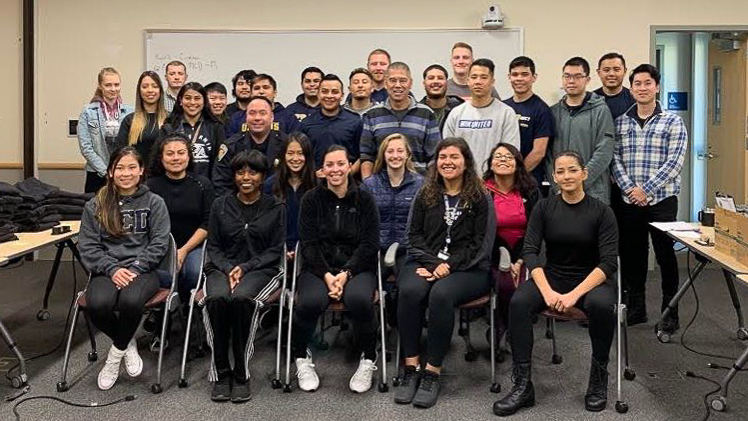
The individuals in the UC Davis Police Department’s Cadet Academy have almost completed another season of physical training, learning and teambuilding. From January until their graduation in late April, the cadets dedicate themselves to an experience in law enforcement. 

Every Winter Quarter, the UC Davis Police Department hosts a team of students and recent UC Davis graduates in its Cadet Academy, a program for individuals interested in law enforcement, forensics or related fields. According to UCPD Chief Joseph Farrow, the program was designed for two purposes: It is “an introduction for students to learn more about the law enforcement profession, and for us to learn more about student needs, feelings and recommendations,” Farrow said. 

The program began in 2016, but Farrow said it has “grown and matured since its inception.”

The program has room for about 30 students, and, according to Farrow, the cadets come from a variety of backgrounds, majors and career paths. Farrow said many cadets are low-income, first-generation or altogether non-traditional police applicants. Some are not interested in a career in law enforcement at all, but simply want to learn. 

Farrow, who has direction over the academy, says the cadets’ voices are what keeps the program changing and developing.

“Our students are very open and are asked to be critical so we can learn and adjust,” Farrow said. “Policing remains turbulent in America and we are trying our best to adjust and adopt more contemporary practices that are accepted or appreciated by the people we serve.” 

Many cadets are students or recent alumni juggling class, work and the academy. Cadets spend Tuesday and Thursday evenings and all day Saturday in the classroom and then engage in physical training. 

Mihoko Kubo, a UC Davis alumni who graduated in Winter Quarter of 2019 with a double major in chemistry and Spanish, describes classroom sessions as more than sitting down for lecture.

“The classroom lectures on Tuesdays and Saturdays have included all kinds of materials, from CSI (crime scene investigation) forensic classes to CPR certifications to scenario-based trainings,” Kubo said. “We even have a training coming up this Saturday where we will be experiencing the taser and getting pepper sprayed, so that one day when we have the opportunity to serve our community as police officers we have the empathy and know what it’s like to be on the other end of the taser or getting pepper sprayed.”

Physical training, Kubo says, involves strengthening exercises, miles of running and martial arts techniques.

“For strengthening, we’ve done tire flipping, using dumbbells and kettlebells

— thank you Fire Department for letting us borrow — carrying fire hoses while running up and

down six flights of stairs on the Hutchinson parking structure and pushing cars in neutral,” Kubo said. “This all sounds horrifying at first, but the best part […] is that we get to do this as a team and push each other to work through it. It’s the best feeling in the world to know that we made it through after completing these intense and high-impact workouts.”

Kubo says being part of a team makes the rigorous physical exertion and long Saturdays worth it. 

“Teamwork is a huge part of law enforcement,” Kubo said. “I don’t think I could have gotten this overwhelming amount of support anywhere else on campus.”

Christian Dolf, another recent alumni with a degree in cellular biology, agreed with Kubo, saying the biggest rewards in the programs were “having the opportunity to meet and get to know all the other cadets in the class, as well as the officers that work for UC Davis.” 

Cadets also described other rewards, such as increased physical fitness and new insight into the world of law enforcement. 

“I feel like the biggest reward for me while in the program has been learning about all aspects regarding law enforcement,” UC Davis alumnus Jenny Choc said. “I didn’t personally have any prior knowledge or experience working with or being around police officers. Many of the things I have learned in the cadet academy have all been new to me.” 

One of the major rewards and opportunities for graduating cadets is that they are offered positions at the police department. According to Chief Farrow, almost 50% of UCDPD officers were academy graduates. Additionally, Farrow said the academy prepares cadets for other opportunities in the real world. 

“They get a great introduction to all aspects of the law enforcement profession, learn great skills in teamwork, and are taught insightful skills in job applications and job interviews,” Farrow said. “We try to impart on them the life skills necessary to be successful after leaving college. We also try hard to help place those interested into full-time positions or paid internships in fields of their interest.”

Farrow said with the success of the program and increased demand, UCDPD is considering offering an additional fall academy.

Of course, for the cadets, where there are rewards there are also challenges. 

“[The biggest challenge was] learning to be comfortable with the uncomfortable,” said Kara Jones, a UC Davis alumni. 

Many cadets experienced initial difficulty with the rigorous workout routines. Kubo said when she started the academy, she was not physically prepared. 

“But as I kept up with the trainings and became better in shape, I was able to overcome that challenge while also gaining several pounds of muscle mass,” Kubo said. “It’s uncomfortable to do all of those workouts at once, but I was able to break out of my comfort

zone and embrace the discomfort.”

Choc noted that, going into the cadets, she expected and even welcomed challenge.

  “If someone is trying to be a part of law enforcement, they need to have the mentality to be able to push themselves past what they think is their best,” Choc said. “I came in with the mentality to have an open mind, ask many questions and try new things. Yes, Physical Training may cause me to be tired in the moment or sore the next day, but I welcome that.”

All of the challenges are worth it for the cadets, who gain muscle mass and obtain experience for a potential career in law enforcement.

“I wanted to prepare myself for attending a police academy,” fourth-year psychology major Timothy Brooks said. “[And] gain the opportunity to apply to UC Davis as a police officer while making professional contacts for my own career development.”

Of course, being a part of the academy changed or reinforced some previous sentiments about police officers and law enforcement, which can be a difficult subject for some students on a college campus. 

For students like Dolf, being a part of the academy changed his perspective in that he was able to identify more similarities than differences between himself and police officers.

“The program has allowed us to interact and get to know some of the officer’s at UC Davis in a more comfortable setting,” Dolf said. “It has enhanced my opinions, because we were able to get to know them as people and are able to recognize that they’re all still people.”

For Jenny Choc, her time at the academy exposed her to a much more positive side of the UCDPD.

“When I was an undergrad at UCD, the only police exposure I had was when they pepper sprayed students in the MU,” she said. “With this academy, I can genuinely say that every single officer I have met has left a positive impression. I do believe that UC Davis as a whole has a clear vision as to how they want to grow, and the UCDPD is doing a great job with that, as well.”

Cadets today have a new and very unique challenge to their weekly routine: COVID-19. With cases of the virus increasing in the US and the introduction of the government mandate to stay inside, the cadets’ time in the academy has been cut short. 

“We missed out on several learning opportunities because we were unable to meet [in person],” Jones said. “Luckily, the physical fitness sector of the academy is still attainable with COVID-19.”

Kubo added that the cadets missed out on specific training sessions she had been looking forward to. 

“We are missing out on those opportunities, such as learning how to operate emergency vehicles at the California Highway Patrol (CHP) Academy, lectures on hostage situations, interactions with people with mental disabilities/illnesses, and volunteering at the assisted living care home to spend time with the elderly folks,” Kubo said.

Choc said the cadets are working together to make the best of the situation and continue their physical fitness.

“Physical Training is no longer mandatory but the majority of the cadets have decided to continue meeting Tues/Thursday for PT [physical training],” Choc said. “Some of us have decided to create fun HIIT workouts that allow us to work hard but be able to maintain social distancing, too.”

Farrow said, like the rest of the world, the academy has been affected by the virus. Farrow explained that UCDPD has decided to cancel the graduation ceremony, a celebration which is typically attended by more than 500 people. While the cadets are just about wrapped up for the year, Farrow said he still feels the cadets deserve recognition for their hard work this quarter.

At the end of the month, 26 cadets will graduate from the academy. While the cadets might have faced more challenges than usual, the cadets agree that anyone who might be interested in joining should give it a try. 

“There are different layers to the academy that I think students could benefit from,” Choc said. “There are currently cadets that are looking into a career in law enforcement, some that want to work with other populations but want to understand law enforcement more, and some that joined because they simply wanted to get out of their comfort zone. You are able to get multiple perspectives from different students and make new friends and connections.”

Written by: Alana Wikkeling –– features@theaggie.org

Pussy Riot: A turning point in Russian politics

Russia’s protest group is telling of its political dissonance

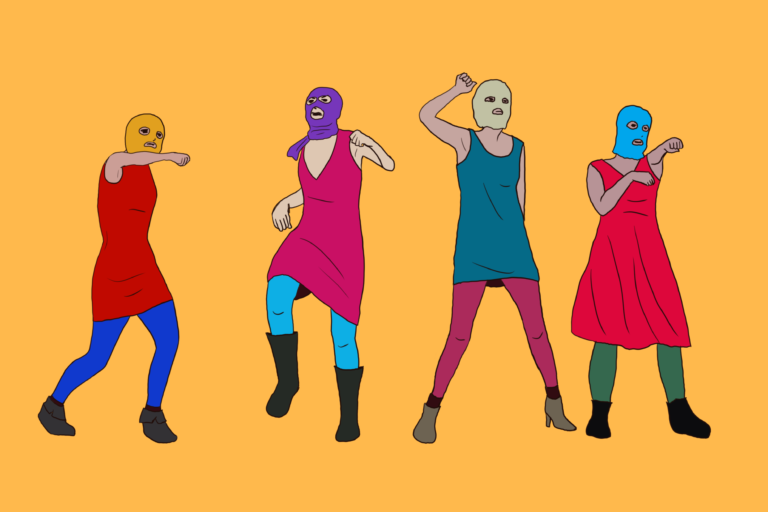
On Feb. 21, 2012, a group of women wearing colorful ski masks and carrying electric guitars stormed the Cathedral of Christ the Saviour in Moscow, Russia. In what they would later call a “punk prayer,” the women jumped around, crying “Mother of God, drive Putin away!” in response to President Vladimir Putin’s recent presidential “re-election.” The three-minute performance of the feminist, punk, protest group, otherwise known as Pussy Riot, not only led to a major prosecution case, but a surge in worldwide activism that left a great impact on modern Russia.

Destroyed by Stalin and rebuilt under the second mayor of Moscow, Yury Luzhkov, the Cathedral of Christ the Saviour is a symbol of Russia’s transforming landscape, both physically and ideologically. While many people condemned Pussy Riot’s stunt as distasteful, given its religious backdrop, the architectural revisions in the church are strangely appropriate for the group’s attitude. Russia’s political identity can be best described as reconstructive, and Pussy Riot is another loose nail that undermines government oppression.

It’s clear that the group’s attack was not just against Putin and his administration, but the entire social and political order he enables. This includes endorsed homophobia, media control and the increasing reunification of church and state.

Following the incident, three members of the group — Nadya Tolokonnikova, Masha Alyokhina and Yekaterina Samutsevich — were arrested and accused of hooliganism. They spent six months in pretrial detention, where they went on a hunger strike that gathered support from Western music stars such as Madonna, The Beastie Boys and the Red Hot Chili Peppers. Hilary Clinton even voiced her support for the group in 2014, calling them “strong and brave women who refuse to let their voices be silenced in Russia.” 

All three women were found guilty of “premeditated hooliganism performed by an organized group of people motivated by religious hatred or hostility.” This sentencing led to a new Russian bill in 2013 that introduced imprisonment for “insulting the feelings of the believers.” 

Pussy Riot’s stunt, though controversial, was only met with more outrageous policies from the Russian government. In 2016, Russian blogger Ruslan Sokolovsky was arrested and added to an official list of “terrorists and extremists” after posting a YouTube video of him playing Pokémon Go inside a church. 

After being released, Tolokonnikova and Alyokhina founded an online news outlet, Mediazona, that covers the corruption of the Russian government. It also focuses on the judicial and correctional systems in Russia, as both women experienced abuse during their time in prison. 

“The convicts are always on the verge of breaking down, screaming at each other, fighting over the smallest things,” Tolokonnikova wrote in an open letter. “Just recently, a young woman got stabbed in the head with a pair of scissors because she didn’t turn in a pair of pants on time. Another tried to cut her own stomach open with a hacksaw.”

During the 2014 Sochi Olympics, Pussy Riot attempted to perform their song, “Putin Will Teach You to Love the Motherland,” but they were beaten with belts and pepper sprayed by a Russian paramilitary group known as Cossacks. Cossacks were historically self-governed troops in Russia and Ukraine, and today they can beat anyone with whom they disagree, including peaceful protestors, without repercussion or police intervention.

Since 2016, Pussy Riot has been releasing music revolving around global issues such as feminism, political oppression and inequality. They even released a song titled “Make America Great Again,” in response to Donald Trump’s presidential campaign. The music video features Tolokonnikova dressed as Trump in a dystopian world where he is an abusive president.

I recall seeing individuals dressed in police uniforms dash across the field in the 2018 World Cup final, before being hauled off by security. A little annoyed, I researched what had happened and found out it was a group by the name of Pussy Riot attempting to draw attention to Russia’s human rights abuses. Even after six years, there’s still something to protest.

Although their attention in the media has begun to fade in recent years, their impact on Russia is undeniable. While some view them as insane, others applaud their bravery and use of shock value to promote an awareness toward the problems of modern Russia and its government. As someone who is disheartened by Russia’s current political climate, I find Pussy Riot’s activism more important than ever, and I am glad that they are able to reach wider audiences. It’s easy to forget the injustices that happen in other countries, but the group’s blunt actions certainly don’t go unnoticed.

“The young people who have been flayed by the systematic eradication of freedoms perpetrated through the ‘00s have now risen against the state” said Tolokonnikova in an interview, “We were searching for real sincerity and simplicity, and we found these qualities in the [‘holy foolishness’] of punk.”

Written by: Julietta Bisharyan — jsbisharyan@ucdavis.edu

Disclaimer: The views and opinions expressed by individual columnists belong to the columnists alone and do not necessarily indicate the views and opinions held by The California Aggie

Blood centers urge donations, citing heightened need during pandemic

Although blood supply currently stable, blood centers fear donation shortage 

As the COVID-19 crisis continues, many blood drives have been canceled. Due to this, blood centers warn of potential shortage in the coming weeks. The U.S. Food and Drug Administration (FDA) confirmed a decrease in donations due to the pandemic on their website

“At this time the number of blood donations has been dramatically reduced due to the implementation of social distancing and the cancellation of blood drives,” the website reads.

Despite the decrease in donations, blood supply has remained able to meet patient demands so far. Drew Fowler, the marketing and communications manager for Vitalant, a blood donation company with a center in Davis, explained this phenomenon.

“Because of COVID-19, a lot of people are canceling elective surgeries and traumatic need has dropped, so actually the blood level is fairly stable for right now,” Fowler said. “When all the shelter-in-place orders happened, we started drawing blood at a very high level to meet the need we had prepared for under normal circumstances.”

The American Red Cross website echoed that the current supply is able to meet patient demands but reminds people that it is vital to continue donating throughout the pandemic.

“Thanks to the many who gave blood and scheduled upcoming appointments over the past couple of weeks, the American Red Cross has been able to meet immediate patient needs,” the website reads. “During this uncertain time, we encourage individuals to keep scheduled […] donation appointments and to make new donation appointments for the weeks ahead to ensure a stable supply throughout this pandemic.”

Fowler also mentioned the flood of donors during the early days of the quarantine mandates, whose donations prevented a disastrous shortage.

“There was this phenomenal outpouring of people who came out and donated in the beginning of the shelter-in-place,” Fowler said. “That has helped us level out some of the critical need that existed a couple of weeks ago.”

COVID-19 cannot be spread through blood. The FDA emphasized that donating blood at centers is safe because they have already had strict health guidelines in place to decrease likelihood of disease spreading.

“Blood donation centers can facilitate the safe donation of blood because they are skilled in infection control practices and already have procedures in place to prevent the spread of infections,” the website reads.

U.S. Surgeon General Jerome Adams also assured the American people that blood donation isn’t a high-risk activity during the pandemic in a video.

“Blood centers are open now and in need of your donation,” Adams said. “I want Americans to know that blood donation is safe and blood centers are taking extra precautions at this time based on new CDC recommendations.”

Recently, Adams announced that the FDA would be easing restrictions on blood donations from gay men and other groups previously barred from giving blood. Advocacy groups, including the American Civil Liberties Union, have repeatedly criticized these restrictions. Donated blood is screened for HIV, among other infectious diseases.

Fowler listed the precautions Vitalant centers are taking in order to ensure patients are not exposed to COVID-19 while donating. 

“We’re practicing good social distancing, we’re obviously wiping down patient areas after everybody comes in,” Fowler said. “We also have somebody at the front desk take temperatures as people come through the door to make sure nobody is running a fever. People are making appointments before they come in to help us manage the flow of donors.”

Shelter-in-place orders don’t prevent people from leaving their houses to donate blood — as the FDA explains blood donation is critical and, therefore, exempt from the mandate. 

“We also recognize that maintaining adequate levels of our nation’s blood supply is critical,” the website reads. “People who donate blood are equivalent to those people who are working in a critical infrastructure industry. In volunteering to do so, they are contributing immeasurably to the public health of our nation.”

At the end of his announcement, Adams urged Americans to donate blood for the benefit of their fellow citizens. 

“Social distancing does not have to mean social disengagement,” Adams said. “So give blood today. You’ll feel good about it and you’ll be helping your country and your community during this crisis. And you might even save a life.”

Written by: Eden Winniford –– city@theaggie.org

Unitrans reduces schedule, goes fare-free while running during shelter-in-place

Extra precautions taken to promote social distancing on Davis transportation

Unitrans will continue operating fare-free, weekend service only until at least April 12. 

The reduced service has been in effect since March 18 and was announced March 9. It was made fare-free, according to Unitrans’ General Manager Jeff Flynn, so that drivers would not have to handle cash or tickets and risk potential COVID-19 infection.

Along with changes to service and cost, Unitrans buses, which serve the entirety of the City of Davis, will only accept passengers through the back door. 

These measures are the latest in Unitrans’ effort to ensure safety for drivers and passengers while buses, as “essential infrastructure,” continue to run during the mandatory Yolo County shelter-in-place order, effective until May 1. Under the order, only workers who are employees at essential businesses and those needing to get groceries, go to the doctor or leave for a place of residence outside the county should leave their house.

As of Feb. 27, Unitrans was already sanitizing all bus interiors twice a day and mandating that drivers and conductors wipe down their work space at the start of their day. It was encouraged, but not recommended, that customers “try to maintain” as much distance as possible on the buses and at bus stops and bring personal hygiene products.

Flynn, who worked at Unitrans during his five years at UC Davis, said that Unitrans has about 150 student drivers and 250 total student staff. He said no student was mandated to work, and said there were a number of people who chose not to work during Spring Quarter. 

For those who were working, he and the rest of the career staff have been consistently engaging with students to make sure they felt comfortable driving.

“We had one-on-one engagements with students and gathered their opinions through email to understand what would make them feel safe,” Flynn said. “The management team, student and career staff also had conference calls and Zoom meetings.”

Though fourth-year marine biology major Michael Brito, a driver, route trainer and supervisor for Unitrans, said he did not recall being part of specific discussions, he said he felt Unitrans career staff established good lines of communication to make sure everyone felt protected at work.

“We had to change our service and redesign it multiple times, but they made sure we were following guidelines,” he said. “At the end of the day, it’s the drivers — not the career staff — who are increasing their chances of interacting with people, and they’re not in any way making sure that we have to do that.” 

With a reduced schedule, Unitrans student employees, particularly drivers, have less opportunities to work and be paid. Brito said drivers last quarter tended to work 30 hours a week, but that’s been reduced to 10-13 hours a week.

Whether workers take the quarter off or not, however, Flynn said they can use the UC-provided Emergency Administrative Leave, which offers students up to 128 hours of paid leave based on the amount of hours they have previously worked.
“Students who are still working can use that leave to supplement their income,” he said. 

Many students at Unitrans can apply for multiple positions, like Brito did. Currently, students with multiple positions can only perform duties for that job, according to Brito. 

“I’m supervising and don’t have any driving shifts for the next five weeks,” he said. “Unitrans has been good at distributing hours, since students with more than one position could potentially get more hours than a regular driver.”

He added that he feels protected when he goes to work because the Unitrans office is fairly big, with sanitizing wipes and hand sanitizer stocked everywhere. 

Flynn is also showing up to work and said he still rides the G line to and from the office.

“I think it’s important for me to show, as general manager of Unitrans, that I trust and believe our service is safe to ride for essential trips,” Flynn said. 

Unitrans isn’t the only transit service for Davis students that has adjusted to COVID-19 concerns. On March 22, UC Davis Ride Sharing Facebook group administrators closed the group to new posts until April 7, the initial end of the Yolo County shelter-in-place order. 

UC Davis alum Justin Chen, who became a group administrator in 2014, said he and other administrators made that decision because they believe social distancing is the most effective way for the country to slow down COVID-19 infection rate. 

“It is nearly impossible to practice social distancing — six feet apart from people not living under the same roof — in most of the ride shares requested,” Chen said. “As [an] admin, it is important to set the group guidelines to ensure the group can comply with government policy.” 

Chen’s post announcing the group shutdown includes a list of alternate methods of transportation, including public transportation and ride hailing allowed by California laws. 

Still, Chen said the group does not encourage people to take Uber, and that, as group admin, it was a gesture meant to remind the group’s members that there are still alternative ways to get to places when necessary.

“The group will not be aiding the chances of transmitting COVID-19 while the government has already given out clear and strict guidelines of what Californians should and shouldn’t do,” he said.

Flynn said he has already seen overall ridership fall by 90-95% since the shelter-in-place order was implemented. He added that, on a typical weekday, Unitrans carries about 23,000 people, and on a typical finals week, around 15,000 people. During finals week this past Winter Quarter, he said, Unitrans carried, on average, 1,500 people. 

“Everyone needs to come together as a society and work together to make sure COVID-19 doesn’t spread,” he said. “It’s been heartwarming to see Unitrans move people to their essential jobs and medical appointments. These numbers are encouraging because they suggest people are taking social distancing seriously and using Unitrans only for essential trips.”

Written by: Janelle Marie Salanga — campus@theaggie.org