58.4 F
Davis

Davis, California

Tuesday, December 23, 2025
Home Blog Page 349

Here’s why UC Davis tuition is unlikely to change for Spring Quarter

Spring Quarter tuition likely to remain the same, university offering paid administrative leave

Spring Quarter tuition will likely remain unchanged amid the COVID-19 crisis, despite demands from students that the university reduce tuition and fees. 

Tuition at UC Davis is used to pay the salaries of students and educators, but it also funds a vast host of payments that the university must make, including building maintenance, upkeep, utilities and debt services. 

With the suspended operation of the UC Davis campus, some students and parents feel that there should be a tuition reimbursement in exchange for services not being rendered — such as the currently closed ARC, which is supported by student fees.

The UC Office of the President (UCOP) said that, as of now, tuition will not be reevaluated. Students are still pursuing degrees, and this, UCOP said, is justification enough to maintain tuition. 

“Students are generally able to access all required instructional materials, complete their coursework, and make timely progress towards their degree,” said Sarah McBride, a media and communications strategist with the UCOP, via email. 

McBride also said students will continue to earn full credit for their coursework, and mandatory charges such as Tuition and the Student Services Fee will proceed to help cover delivery of instruction, other educational costs and the cost of student services such as registration, financial aid and remote academic advising. 

“The University has not changed its policies or practices related to refunds for these charges,” she said, reiterating Paul Jenny’s statements from the UC Regents’ March 20 meeting. Jenny is interim executive vice president and chief financial officer for the UC.

This, however, does not exclude the possibility of individual campuses within the UC evaluating refunds for other costs. Across the UC, petitions have sprung up demanding campuses reduce tuition — including one change.org petition demanding that UC Davis reduce Spring Quarter tuition.

Ehab Muhammad, a third-year chemical engineering major at UC Davis, is responsible for the change.org petition

“Why am I being held responsible for fees or services that I will not be using, and that I cannot use because of the shelter in place order?” Muhammad asked. 

Muhammad pointed out that, in accordance with Regents policy 3101, many of the fees outlined in the UC Davis financial statement go to social, recreational and cultural activities and programs — programs that the university cannot host this quarter due to the extenuating circumstances of late. The Regents policy is not a contractual obligation. 

UC Davis Vice Chancellor of Finance, Operations and Administration Kelly Ratliff said the campus is in “suspended operation,” not closed. 

“For the units I’m responsible for, the vast majority are still open or providing services — some remotely, some on campus,” Ratliff said. “Many faculty are still coming in and recording their lectures and we’re still opening every day, […] which means we’re still servicing those buildings, providing custodial support, doing tech support, and so that involves not just my organization, but IET and others.”

Another cost to the university is debt services. 

“For most of [the buildings], we still have ongoing costs,” Ratliff said. “We finance those buildings much like a mortgage — even if I’m on vacation or whatnot, I still have to pay the mortgage.” 

Although the campus is in suspended operation, all support staff and professors still need to be paid. 

“Our operating budget is mostly people,” Ratliff said. “The vast majority of our budget is about compensation for the faculty and staff at the university — and all those folks are still here and engaged in both instruction and research.” 

Some, like Muhammad, contest the value of remote instruction and say that it is not comparable to in-person lectures. 

“I’m writing lab reports on data that I never collected, based on equipment that I never used,” Muhammed said. “I will probably never be able to get any experience on that equipment in an academic setting, and that’s very disappointing.” 

Muhammad said online instruction is not as valuable as in-person instruction and therefore students should be compensated for this. 

“At the end of the day, we’re students, and our success is important,” he said. 

Paid administrative leave

As Ratliff said, most of the operating budget goes directly to faculty and staff. Given suspended operations across the UC, UCOP issued an executive order giving employees, including students, a one-time allotment of 128 hours of paid administrative leave. However, because 128 hours only amounts to 16 work days, the school continues to work on ways to compensate those who cannot work remotely. 

“What comes next after paid administrative leave is actually the most urgent thing that’s being worked on, and there’s conversation with the president and the university and the chancellors about what to do next,” Ratliff said. “What we will do as a university for these sorts of issues […] will be a university-wide response. We really are waiting for some guidance from the Office of the President about what comes next.”

All of this comes amid an announcement from UC President Janet Napolitano that “there will be no COVID-19 related layoffs for all career employees through the fiscal year ending on June 30, 2020.” The announcement does not detail how individual campuses will achieve this.

According to the Twitter account for the University Council-American Federation of Teachers at UCLA, however, “the commitment to no layoffs through June 30th does not apply to academic appointees, meaning that contingent teaching faculty and librarians are not protected by the policy.” UC-AFT, the union that represents UC librarians and non-Senate faculty, said via Twitter that it is currently looking to change that: “The contingent faculty who are lifting heaven and earth to keep teaching our students now must be reappointed after the crisis is over.”

Meanwhile, UC Davis is taking steps to avoid a financial crisis.

“We’re going to implement what we’re going to call a ‘vacancy management program,’” Ratliff said. “Both for student employees and staff employees, we’re looking for opportunities to redeploy people. But, the other thing is, just because of the financial uncertainty and the extra cost we’re experiencing because of the crisis, we need to slow down hiring.” 

The administration is making more stringent guidelines for the hiring process, sending potential positions through several committees before the opening is posted. 

“Any position that needs to go forward for recruitment has to be signed off on by the dean, vice chancellor or vice provost,” Ratliff said. “Then we’re going to have a separate central review committee to have one more level of review on those positions before they can be posted.”

Cost Breakdown: Utilities Savings

Under suspended operation, Ratliff said via email it is reasonable to assume that the UC Davis campus utility savings will be “about $200,000 per month.” 

This is not an exact number, Ratliff said, because the school has never experienced closures for this anticipated length of time in recent history. The estimate is based on savings experienced during the first two weeks of suspended operation. This amounts to a savings of about 10% of the utility budget ($2-2.5M per month). 

“Energy savings are not proportional to the decrease in population because our largest energy users on campus are the lab and animal spaces, which have to remain ventilated and conditioned 24/7 for safety purposes regardless of how many people are there,” she explained. 

Cost Breakdown: Expenditures of Online Transition

The other principal cost of this crisis is the transition to online instruction. According to Ratliff, the Information and Educational Technology department is “reporting almost $800,000 in additional expenses.” 

This comes from Zoom licenses, VPNs, laptops for students and faculty and other sources. In the haste of this transition, the university still has not been able to fully assess the cost of transitioning to remote instruction and suspending campus operations. 

“We are in the process of collecting additional expenses across the campus, but that data is not ready yet,” Ratliff said. 

Therefore, the exact number that students could expect to receive should the university take the unlikely step to provide refunds is unknown. When asked again for a more precise cost via email, Ratliff said it is “too soon” to make any determinations. 

Other Expenses

With the continuation of administrative leave or a comparable substitute to the end of the fiscal year, the cost of salary is not yet known or calculable. The UC Davis FOA office is currently working with the chancellor and UCOP to resolve this issue.

Ratliff said the administration is “in the process of collecting data about extra costs.”

It is unlikely that the university, in its transition to online instruction and fulfillment of UCOP guidance, will provide tuition refunds to graduate and undergraduate students. 

“If there are questions […] those prompts would be appreciated,” Ratliff said. “There are impacts all over the place, and there’s a lot of fear. This is having a big impact. Whatever we can do to communicate in a way that conveys more [information], I would love to get there.” 

Following Vice Chancellor Ratliff’s interview with The Aggie, the UC Davis COVID-19 FAQ for Students has been updated to reflect some of the additional information provided here. 

Written by: Alex Weinstein — campus@theaggie.org

UC lecturers say UC has failed to provide adequate resources for their success at today’s UC-AFT press conference

UC says it continues contract negotiations with UC-AFT, is working hard to provide individual lecturers with support 

The UC’s handling of the shift to remote instruction reflects a lack of interest in “prioritizing student education and providing lecturers what they need to support their students,” according to lecturers from UC Berkeley, UC Davis, UC Los Angeles, UC San Diego and UC Santa Cruz who spoke at a University Council-American Federation of Teachers (UC-AFT) press conference held today.

Alison Black, an education studies lecturer at UCSD, said she was teaching her last class of Winter Quarter when she found out — through her students — that the university was moving to remote learning in Spring Quarter and that Winter Quarter finals were interrupted.

“I couldn’t answer any questions, because they found out before I did,” Black said. “Students, for the most part, found out about the instructional changes before instructors and faculty.”

Lecturers like Black, who are on the quarter system, had only the remainder of the last week of instruction for Winter Quarter, finals week and spring break to prepare for an online Spring Quarter.

Crystal Chang Cohen, who lectures at UC Berkeley, one of the two semester schools in the UC system, had to make the switch from in-person to remote instruction in one day.

She recalled being in class on March 8 and the next day receiving an email telling her not to come to class “because everything is going online.”

“We were struggling to go immediately online,” Chang Cohen said. “I keep hearing things from my students before things become official, which makes me feel so ill-informed, unprepared and stupid in front of them.”

The UC said decisions made regarding the dissemination of COVID-19 information are determined by each campus, in a statement from the UC Office of the President provided to The California Aggie via email.

“Each campus has its own COVID-19 website for its community, including students, with local resources and contact information,” the statement said. “Systemwide employees can find information and resources on UCnet […] and are encouraged to speak with their supervisor with any concerns.”

UC-AFT, which represents over 3,500 lecturers in the UC system, has been bargaining with the UC over COVID-19 protections since March 13. The union has also been in contract negotiations with UC since April of 2019, according to an FAQ and bargaining update on the UC-AFT website. The current contract protecting lecturers expired on Jan. 31, 2020.

Mia McIver, the chief negotiator for UC-AFT’s bargaining unit and a lecturer for the writing program at UCLA, said she hopes the UC will implement more standardization in its COVID-19 response.

“We want to have comprehensive emergency response plans for all campuses and contract extensions for all teaching faculty so they know that they can and should be preparing classes for the summer and fall,” McIver said.

This is particularly important, she added, because lecturers, who are on short-term, part-time contracts and often work multiple jobs to stay afloat, already face job insecurity, without a pandemic. 

According to a press release from the union published on April 6, UC lecturers teach over 30% of student credit hours. At UC Davis, around 30% of classes are taught by lecturers. 

“UC has historically been reluctant to invest in lecturers even though we are front-line educators primarily responsible for developing relationships with and teaching our students,” McIver said.

McIver also expressed concern about the inconsistency of resources from campus to campus, calling the available resources “collections of links to explore in [their] own time” and saying they are not targeted to what people need on an individual level.

The UC said in its statement that it has been working “very hard” with UC-AFT and individual lecturers to provide lecturers with the support they need.

“[This has been through] including resources for working at home such as addressing Internet connectivity, as well as using their empty office on campus if working at home is not feasible,” the UC’s statement said. 

The union, however, contested this in its press release, which centered the experience of UC Davis lecturer Jillian Azevado, arguing that the UC has not been taking lecturers’ job security, health and safety seriously.

Azevado, according to the press release, has asthma, and was recently told by administrators to go back to work at her campus office, which is a “small, shared room in which safe social distancing would be impossible” because she didn’t have a desk or a steady internet connection.

“While refusing to supply better Internet, UC negotiators expressed frustration that Azevedo kept disappearing from the Zoom call because of her weak Internet connection,” the press release stated.

Katie Rodger, the president of UC-AFT Local 2023 and a lecturer for UC Davis’ University Writing Program, said lecturers weren’t just asking for better equipment for the sake of it.

“Faster Wi-Fi, our own computers, better desks — these are essential tools,” Rodger said. “If [the] UC wants to claim it’s the greatest educational institution in the world, it needs to stand by that claim and implement the best educational infrastructure in the world.”

Rodger emphasized the fact that not every lecturer has an office in an accessible location, and that lecturers who are parents — including herself — cannot just leave their children.

Black said that working from home has been a “huge struggle,” as she has been working while also tending to her family’s emotional needs.

“The work-life balance is always emotionally burdening, and when I’m the instructor, I can’t lose it,” Black said. “I considered taking unpaid leave for the whole quarter.”

Though she tried to access faculty and staff mental health services, she said it takes weeks to get an appointment “if you’re lucky,” and that she hasn’t been able to take advantage of those services yet. 

Black’s department eventually helped her and her family relocate, but she echoed McIver’s wish for more standardized support from UC.

“We don’t have the resources we need to maintain stability and focus at the levels required for our success and our students’ success,” Black said.
In its statement, the UC said it would follow campus reimbursement policies, with requests for resources handled on a case-by-case basis to determine how it can best accommodate individual needs. 

“We are continuing to work with public health officials to take steps that prioritize the health and safety of the UC community while continuing to deliver quality educational services,” the statement said. “The University is dedicated to making sure UC instructors are successful in the remote learning environment.”

Josh Brahinsky, a lecturer from UCSC, called the university’s response “chaotic,” and said it bore parallels to the way the Trump administration responded to the pandemic.

“We are happy to do our work and make sure we do it well,” Brahinsky said. “{The] UC is recognizing that lecturers’ work is crucial, which is interesting. It’s new recognition, but they’re not giving us the support we need to make [our work] happen.”

Brahinsky pointed out that most of the lecturers in the call were taking care of their kids, were in their kids’ spaces or had their kids in the background while participating in the press conference. 

He said that UC management has tried to ask faculty and librarians to sign agreements to say they would not be responsible for childcare during work hours.

“For most of us, that’s completely impossible,” Brahinsky said. “Who are you going to hire? The kid down the street?” 

Rodger, who has two degrees from universities in the UC system, said it was hard to get “more Team UC than me.”
“I’m proud to be part of the UC system, but I’m just so appalled [at the UC response],” Rodger said. “If I had a student in the system right now, I would be furious at the lack of response on behalf of the students. I just want action. I want to see more leadership.”

Written by: Janelle Marie Salanga — campus@theaggie.org

Remote instruction will continue during Summer Sessions

“Virtual UC Davis” website now online, campus provides resources to increase Zoom privacy

In an email sent to faculty, staff and students on April 10, Chancellor Gary May announced that both Summer Sessions will be offered via remote instruction.

“Hundreds of courses will be offered, so summer will still be a good time to access high-demand classes for progress to degree,” May wrote in the email.

It is possible that in-person laboratory courses — which are currently being taught virtually, as per the UC Davis directive that all classes must be available remotely — may be available for Summer Session II, depending on public health recommendations, according to May.

Changes to graduate student grading were also announced. For Spring Quarter 2020, the Davis Division of the Academic Senate approved added flexibility for late drops, removed form fees for late drops and grading option changes and offered students until the last day of instruction to switch from letter to Satisfactory/Unsatisfactory grading. 

Instructors should contact their departments with questions about the remote learning changes, according to May, who linked to a guide created by the Center of Educational Effectiveness and Academic Technology Services and providing several remote assessment and testing options.

May suggested that supervisors “think creatively” about projects students could undertake remotely, sharing that the Internship and Career Center could help brainstorm ideas. He also shared information about available campus resources, announcing a “Virtual UC Davis” website, where students can find information about services still available, including Academic Assistance and Tutoring Centers, Campus Recreation and Student Health and Counseling services. 

The Division of Student Affairs, which organized the website, said that it anticipates that services will “evolve and expand over time,” and that information would continually be updated. 

“Departments within the Division […] have gone virtual to continue to support and empower students in ways that align with public health and safety guidelines,” it wrote. 

Other resources in the email included a letter and FAQ created by Minming Wu Morri, the UC Davis campus privacy officer, and Cheryl Washington, the UC Davis chief information security officer, to address privacy concerns around Zoom.

“Know that unlike many K-12 users or private citizens who use free Zoom, your Zoom is protected by UC’s contractual data security and privacy terms and safeguards,” the letter reads.

The updates follow May’s Wednesday announcement that the Spring Commencement of 2020 ceremony will be offered virtually, with the potential for an in-person ceremony later.

Written by: Janelle Marie Salanga — campus@theaggie.org

UC Davis School of Veterinary Medicine develops COVID-19 website app

Interactive map displays local, national, international trends in coronavirus cases

The UC Davis School of Veterinary Medicine and CalSurv, a computer-generated disease outbreak monitoring system, cooperated to generate an interactive online map and graph set displaying daily changes to local, national and international COVID-19 trends, according to UC Davis News.

Christopher Barker, an associate professor of epidemiology at the UC Davis School of Veterinary Medicine, oversaw researchers’ COVID-19 website application project. Funding for the program was provided by the state of California and the Centers for Disease Control and Prevention.

The COVID-19 Trends application displays a map of the U.S., with each state color coded in relation to the frequency of cases per state. When the user uses their cursor to hover over each state, the app displays the current coronavirus case count, the state’s case incidence and the current death toll related to the virus. 

According to the app, California currently reports 16,957 cases with 442 deaths and a case incidence, or case frequency, of 42.89. Case incidence is a reflection of the number of cases in any given time period. The time period, however, is not provided on the app.

Users can also access up-to-date line graphs displaying international trends in reported COVID-19 cases in comparison to the U.S. The graphs display total cases, case incidence, daily new cases and total deaths per country.

UC Davis researchers continue to collect data from Johns Hopkins Center for System Science and Engineering to display on the app and online. The data is updated daily at 5 p.m. PDT.

Written by: Hannah Blome — campus@theaggie.org


It’s okay to not be productive right now

Prioritize your mental and physical health during this time, save the next Great American novel for later

California and many other states have been under shelter-in-place orders for a few weeks now, and with the transition to remote learning and teleworking, there seems to be more hours in the day. With those extra hours, some people have taken up new hobbies or re-ignited old passions. And everyone seems to be baking bread — three of the Editorial Board’s members have literally succumbed to the urge to bake bread. 

“As the coronavirus outbreak has brought life largely indoors, many people are feeling pressure to organize every room in their homes, become expert home chefs (or bakers), write the next “King Lear” and get in shape,” The New York Times succinctly sums up. “The internet — with its constant stream of how-to headlines and viral challenges — has only reinforced the demand to get things done.”

But with all of the baking, exercising or dedicated craft time, we find it necessary to reinforce that even with extra downtime, no one is expected to be hyper-productive nor on their grind. It is important to prioritize mental and physical health, both of which may be seriously impacted during this pandemic. “The reason you are so exhausted is because you are busy trying to survive a traumatic situation,” said Rabbi Danya Ruttenburg via Twitter. Navigating and understanding this pandemic is exhausting, and no one should feel the pressure to run a 5K during what would have been their daily commute. 

Some of this exhaustion might be from the grief that we are collectively feeling. 

“We’re feeling a number of different griefs,” detailed David Kessler to the Harvard Business Review. “We feel the world has changed, and it has. We know this is temporary, but it doesn’t feel that way, and we realize things will be different. The loss of normalcy; the fear of economic toll; the loss of connection. This is hitting us and we’re grieving. Collectively. We are not used to this kind of collective grief in the air.”

UC Davis students, in particular, may be grieving the loss of Spring Quarter activities, commencement or internships. They are readjusting to their childhood bedrooms and worrying about how next month’s rent is going to be paid — all of this is on top of what they may already struggle with on a normal day. 

This grief can be a lot to process, accept and work through. This current pandemic forces all of us to actively survive a traumatic situation, so we must all find our own ways to process and cope. It is important to remain gentle with ourselves and figure out how to best succeed under the circumstances. If that means taking up a new hobby to keep your mind distracted, great, but if that also means just being proud of getting the bare minimum accomplished, that is also great. It can be difficult to actively reject the capitalist, productive and “always-on work culture” to which we have become so accustomed. 

Many students have expressed frustration that their classes seem to be harder with remote learning. Adjusting to remote learning takes time and patience. It is important to remember that we are not working or learning from home — we are at our homes during a crisis trying to work and learn. For students who are at home with their families that need them or have jobs that need hours entered: Be especially kind to yourselves. 

It’s also important to remind ourselves that any feelings of boredom we have are a privilege. There are those who have lost their livelihoods and are struggling to afford a home in which to be bored. And every day, thousands of healthcare workers and other “essential” workers risk their lives to combat the spread of COVID-19 and keep society afloat. So regardless of your situation, understand that no one is expected to write the next Great American novel while sheltered-in-place. 

Written by: The Editorial Board

UC Davis Alpine Ski and Snowboard Team reflects on 2020 season

 Powerhouse club ends season with nationals in New York

Each year, the UC Davis Alpine Ski and Snowboard team (DASS) rents a cabin in Lake Tahoe, California for five months of the year. The cabin serves as a touch point for team members to come up to, rest at and connect with each other. This year’s season, which ran from Week 1 of Winter Quarter through Week 5, ended at the U.S. Collegiate Ski and Snowboard Association (USCSA) National Championships. This year, the team sent its women’s team up to compete at Lake Placid, New York. 

The team is composed of about 50 team members who compete in both ski and snowboard events at varying skill levels. Some of the team members are competitive skiers, who started skiing on contract in high school, but others on the team have had little to no experience prior to joining the team. Despite this range in competitive background, members are all able to come together to help each other improve. 

For Aidan Callahan, DASS’ club president and a fourth-year electrical engineering major, having team members who were skiing at very high levels helped him make the transition from snowboarding to skiing much smoother. 

Callahan, who grew up in San Francisco, started snowboarding as a child with his parents, avid skiers themselves. Before coming to Davis, he went to Tahoe for one or two weekends a season, but he wasn’t able to come up as often as he would have liked. So, upon entering UC Davis, he decided to join the team as a snowboarder as soon as he arrived on campus. After competing as a snowboarder his freshman and sophomore year, he decided to switch to skiing last year. 

“I just was more interested in competing as a skier,” Callahan said. “Our league is a little bit skier-biased in that there’s a lot more skiers racing and a lot more snowboarders doing slopestyle stuff. But generally, more skiers are competing as racers than snowboarders competing as freestyle athletes.”

During his transition to skiing, he found that the frequent practices at the club’s cabin, as well as being able to ski with other students who are highly competitive, helped him improve his skiing abilities drastically. 

Team members for DASS head up to the cabin almost every weekend of the five-month ski season during which they rent the cabin. Each weekend, roughly 15-20 people make the drive up to ski at the Boreal Mountain Resort in Tahoe. In previous years, the team skied at the Sugar Bowl resort, but due to an increase in season pass prices, the team made the switch to skiing at Boreal. Season passes for the resort cost around $400, which, in addition to the team dues of $500, almost entirely subsidizes the cost for the cabin rent, race tickets, training and flight tickets for the women’s team to go to nationals.

On the slopes, current team members often run into alumni, who stop to comment on the UC Davis team gear and to share stories about their time on the team. The team as a whole is still very connected to their alumni, often reaching out through email to share milestones, such as the team’s 50th anniversary last year. 

As students, members of DASS have to strike a balance between schoolwork and practice. Most team members, like second-year wildlife, fish and conservation biology major Milena Torres Londono, try to finish their work during the week so that they can devote their weekends to practice. 

Like Callahan, Torres Londono also began her ski journey with family. She began skiing with her dad as a four-year-old, and has gone skiing regularly every year since. When she toured UC Davis as a high school senior and saw the club tabling at the MU, she was immediately interested in joining. After speaking with the team members tabling and asking about their experiences, she decided to get involved with the club. She has so far loved her experience with the team. 

“It’s super welcoming, Torres Londono said. “And I like that there’s no skill level that you have to have to join the team, even if you’re barely starting out your welcome, because all the team is really about is just people who like to bond over the sport. We all just share that passion.”

DASS team members competed on March 10-14 in Lake Placid, New York for the USCSA nationals. The club sent its women’s team to compete at Lake Placid, which placed 16th out of 19 teams in the Alpine Women’s category. Third-year managerial economics major Haley Louis placed 15th out of 92 in the combined individual competition and 2nd in Skier Cross event.

Written by: Priya Reddy — sports@theaggie.org

Keeping concentrated: Students, professor discuss tips for online learning

UC Davis students, psychology professor give advice for succeeding in online classes

With the constraints of social distancing, students and staff have to learn to navigate the world of online learning. Psychology professor Steven Luck and two UC Davis students offered their advice on how to adjust to learning online during Spring Quarter. 

Luck said the main source of distraction for students is their phones — he recommended that phones be put out of sight during every lecture.

“There’s actually research showing that if you have somebody doing a laboratory task on a computer and you just have their iPhone sitting next to the computer, it distracts them even if they’re not touching them,” Luck said.

Luck also said hand-writing your notes has a different impression on your brain than typing them does, and utilizing this will be especially useful with online learning. 

“When you’re writing by hand, it’s so much more effort, and so much slower, that you have to take what you’ve heard and rephrase it,” Luck said. “That process of putting it into your own smaller number of words helps you to understand it better and remember it better.”

Throughout a school day, students have a normal flow of activities that online learning clearly lacks. This absence of structure can affect student productivity, according to Luck. He recommends that students try to simulate a normal day as much as they can from home with activities as simple as going for a walk. 

“Ordinarily, you go to a class, and then you walk from that class to somewhere else,” Luck said. “The act of getting up and moving is beneficial for your brain. If you have back-to-back classes, you might have five minutes after the end of one class before you want to join early to the next one. If you can go outside, walk around the block and come back, it will make your brain work better.”

According to Luck, maintaining human connection is vital for humans’ deeply-coded social needs. As a former student of online classes, first-year cell biology major Tyanna Hoang has experience practicing methods of connection through social media. 

“I’ve definitely joined group chats on Facebook for all my courses, so just in case I’m confused on something, I can text in that group and just ask if anybody has any suggestions or anything,” Hoang said.  

In addition to chatting with peers, third-year cinema and digital media major Rafael Carbajal finds positive meaning at home in other ways. 

“I would take advantage of this time for sure because we live in a very fast-paced world, so this is rare that there’s breathing room to just be by yourself,” Carbajal said. “I kind of think of ways that I can improve myself, like what can I do to be more productive in my house.” 

In her past online classes, Hoang found treating the classes the same as an in-person lecture to be the most useful strategy. 

“You’ve just got to not think of it as an online class,” Hoang said. “Just put yourself [into the mindset] that this is still your traditional class where you have deadlines and things you need to be aware of, and you still need to be proactive.” 

Written by: Lyra Farrell —  features@theaggie.org 

From the meme page to a UC Davis-themed viral TikTok, how students are using social media during the pandemic

Students share their thoughts on memes, mobile apps, websites in light of COVID-19, social distancing

As with any unprecedented event, memes about COVID-19 and online classes are abundant and highly popular. The Facebook group “Zoom Memes for Self Quaranteens,” formatted in the style of other college meme pages and created on March 11, has over 510,000 members at the present moment and is described as a “meme page for college studs stuck doing online courses in closed universities.” 

On Instagram, users are participating in a variety of challenges that include drawing carrots on their stories and tagging friends, posting ugly pictures with the caption “until tomorrow” and sharing a list of people who inspire them. According to a Business Insider article, TikTok was approaching 2 billion installs as of March 13 and was the most popular non-gaming app worldwide — something the publication attributed to “bored users impacted by the virus […] logging daily life under quarantine and social distancing.” 

Third-year electrical engineering major Gauruv Virk uses Instagram, Twitter, Facebook, Snapchat, Wildfire and YouTube on a daily basis, and he posts to his YouTube channel once a week. Virk said that in a time of crisis such as this, it’s crucial that social media put out as much accurate and helpful information as possible. 

“I think it is important that the public is at a place where they can trust the information they receive in order to make informed decisions for themselves and those around them,” Virk said via email. “I’ve also always valued humor and entertainment, and during times like these I think it’s important for social media to provide as much of it as possible as a way to keep people distracted and at ease.”

Virk said the pandemic is currently being addressed all over social media — pointing to examples of YouTube videos that depict people in group settings appearing alongside disclaimers stating that these videos were filmed before shelter-in-place took effect.

“The influence of meme pages and trends can’t be ignored in times like these,” Virk said via email. “They are the new way of conveying topical information to an incredibly impressionable and media-driven population, and so to dismiss them entirely would be a disservice to anyone that is trying to stay informed in today’s world.” 

TikTok

Second-year cell biology major Mehrab Hussain downloaded TikTok last summer when he was studying abroad. 

“I downloaded TikTok solely to watch one creator,” Hussain said via email. “I had seen some of his videos posted on Instagram and really loved him, but refused to download TikTok, as I was going through the phase that everyone initially goes through regarding the app: it’s stupid, cringe and a waste of time. I eventually caved and downloaded the app, only following the creator who I wanted to see and limiting myself to that. That didn’t last long though, as I fell down the rabbithole of downloading TikTok casually or as a ‘joke,’ then becoming addicted and finding myself scrolling mindlessly for hours on end.”

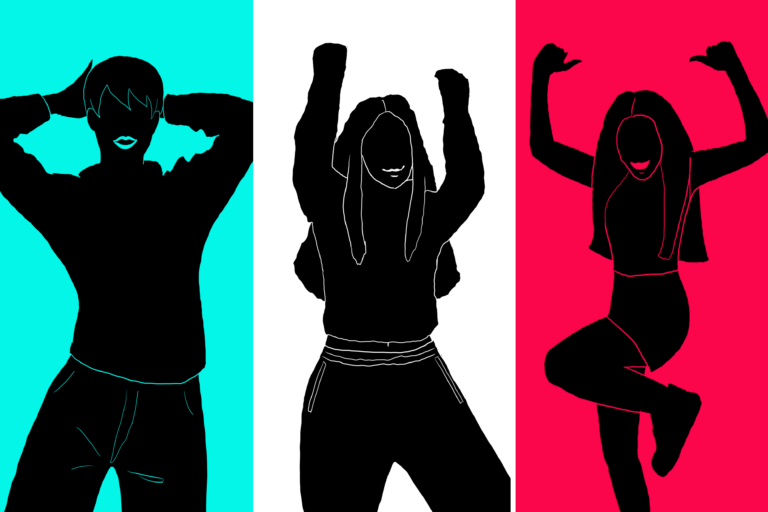
Last month, “around the beginning of when the world started to fall apart,” Hussain made a Davis-related TikTok that went viral. His TikTok, which references the tornado that touched down in Davis in late September, the WarnMe notice alerting students to a man armed with a machete seen on campus in early March and the ongoing COVID-19 pandemic, was posted on the UC Davis meme page on March 10 and received over 1,000 likes. After that, he saw it go viral on TikTok, receiving more than 270,000 views, 34,000 likes and 200 comments.

“We were coming up on finals, COVID-19 was still serious, but not serious enough to [move Spring Quarter online] yet and it was a time of great uncertainty, fear and confusion,” Hussain said via email. “There were just so many crazy events going on at the time, and during the school year for us Aggies […] that I figured why not do something that would lighten everyone’s spirits.”

Even though the TikTok took a while for Hussain to put together and involved many outfit changes, the idea came to him all at once — probably while he was zoning out in one of his classes, he said. 

Friends from out-of-state and people he hadn’t talked to since middle school reached out to tell Hussain that he was on their “For You” page — a customized page curating specific content for every TikTok user. 

“To me that was the craziest thing, somehow being everywhere and having all my friends, both local and from other states, and thousands of strangers hype me up and support me,” Hussain said via email. “My sister in high school even texted me saying that I had been the first video to show up on her For You Page. It boggles my mind how many people it reached, and how many of my own friends and their friends from all over somehow saw me.”

Hussain said the most shocking incident was when someone walked up to ask if he “was the guy in the TikTok” video that she had loved and reposted. 

“I found out that she was actually in my class, but we did not know each other and she somehow recognized me and remembered seeing my face in class,” Hussain said via email. “I was in shock after, just about how someone actually recognized me on campus from a video online. To top it all off, she asked me after class if I could take a picture with her! At that point I was just so at a loss for words and shook, to put it simply.”

Hussain has noticed changes to TikTok since the outbreak of COVID-19, notably through the content on the app. Not only are there more hashtags and memes, but there are also videos with preventative tips and even a “warning” about the virus, which his video received. He also shared his thoughts on how COVID-19 and social distancing are impacting creators. 

“We’re confined to our homes and forced to stay inside, obviously for the better, as the only way to slow this virus down is through social distancing,” Hussain said. “I think in order to entertain themselves, more and more people have given up the preconceived negative notion of TIkTok and downloaded it. Ever since the quarantine, I noticed a lot more smaller creators and videos that had not amassed thousands of likes, which I found really cool since this meant more people were creating content and the app was constantly getting saturated with more and new videos.”

Facebook meme pages

There has been quite a lot of activity on the UC Davis Memes for Egghead Teens page on Facebook — some, but not all, of which has to do with COVID-19 and related changes to instruction and administration.

Third-year computer science and economics double major Julie Deng and third-year computer science major Jason Lin made the Davis Purity Test “out of quarantine boredom” and posted it to the meme page on March 28. The website describes it as “an unofficial purity test designed to satirize the ‘ideal’ experience of a student at UC Davis, inspired by the Rice Purity Test and the Berkeley Purity Test.”

 “Everyone was reposting the UC Davis bingo on their Instagram stories,” Deng said. “So we figured that we wanted to do an extended version of that and just had the Davis Purity Test as the result.”

They noted that the test looks similar to the original, as they used the original template accessible on GitHub, made changes to formatting and background and changed the questions, with the help of some friends, to be UC Davis-specific. Deng said she asked a few of her friends for some of the “21 plus questions” because she is underage and wanted their input about bars.

“It was interesting to see people tag all of their friends, and they thought it was pretty impressive,” Lin said. “We didn’t really put that much time into making it, so it made us feel pretty good.”

Another popular meme in the UC Davis meme page, created by fifth-year design and electrical engineering double major Karli Ching, has the text “when you realize Canvas is the coronavirus in disguise” with a side-by-side comparison emphasizing the similarities between the Canvas logo and the visual representation of the COVID-19 virus. The post received over 1,000 likes. 

This was Ching’s first meme — she was reading about COVID-19 and happened to go to Canvas immediately after. 

“Many of us, including myself, often joke about how Canvas and school are evil,” Ching said via email. “I saw the Canvas logo and thought it looked like the virus image that I had just seen in the article I read, and decided to make the meme.”

Ching thinks that viral memes can “help clue people in to significant events,” something that Virk and Hussain also mentioned. 

Since people have been adhering to social-distancing and shelter-in-place, Ching said meme content relates to these new norms, but the memes themselves don’t really change. 

“I think memes are a humorous way for us to face reality, and I think humor is a way for us to also find relief in stressful situations,” Ching said via email.

Written by: Anjini Venugopal —  features@theaggie.org

Shelter in plays: UC Davis Theatre Department to turn spring play into a film

UC Davis Department of Theatre and Dance will produce spring play as a film, shot by students on their own devices

This story is the first installation of The California Aggie’s two-part digital art series.

Artistic endeavors have gone digital with the present need for social distancing. It’s even become common to open Instagram and see a favorite singer putting on a live concert for digital followers. But even with advanced streaming technology and social media, some art forms, such as theater, might still seem impossible to continue while quarantined. Despite restricted communication and prohibited social gathering, the UC Davis Department of Theatre and Dance plans to move forward with its spring play — it will just look a little different than usual. 

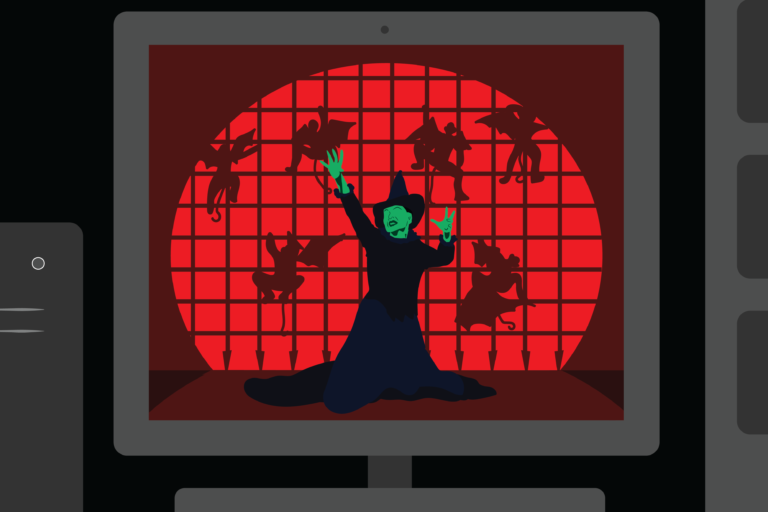
The play, “AntigoneNOW,” a reinterpretation of the 2,000-year-old Greek tragedy “Antigone” by Sophocles, will be an entirely novel production. The play will be produced by students and staff around the globe, created and performed almost entirely by women and contain multiple languages. It will also be presented in the form of a film, shot by the students in their own homes. 

According to Margaret Kemp, associate professor of theatre and dance and co-director of “Antigone,” students will be participating from around the world, including Tokyo and Shanghai. Co-director Sinéad Rushe will be working remotely from London.

“We’ve got this gigantic cast, some of them have dispersed around the world,” Kemp said. “Everyone will be working from wherever they are.”

A lot of different art fields have created similar content, such as video dance performances. In the theater world, however, this production is unique.

“There are some templates out there, but really nothing like what we’re doing with ‘Antigone,’” Kemp said.

From stage to screen

Throughout Kemp’s career, she produced three other solo pieces similar to this new project of turning digital work into film.

“The pieces mostly have been shown in gallery settings, […] and they were really well-received, so I was confident that it could be done and it could be quite beautiful,” Kemp said.

According to Kemp, the footage shot independently by students should be finished by the end of April. Then she will compile and edit the footage to create the ultimate film.

For cast-member and MFA student Danielle Levin, this reinterpretation of the play seems apt amid a crisis and provides further opportunities for group unity.

“In times like this, arts become something new,” Levin said. “It feels like this project really has the chance for all of us who are in the cast and crew to work as an ensemble to create a piece together,” Levin said. “That is super exciting, and the fact that it’s unknown kind of highlights that.”

Cast-member Zhenglin Zhang, a first-year plant science major, also looks forward to participating in this project.

“Especially because a lot of the people involved in the production are theatre majors, […] it allows us an alternative way of exploring art in general, not just of theatrical productions,” Zhang said. “For me, especially, this is the first time a director has given me so much freedom.”

A global stage

The finished piece will be shown in mid-May around the UC Davis campus and, eventually, the world. Kemp plans to exhibit the film in New Zealand next year, and also hopes that her students can play a part in sharing the piece.

“It will be shown outside, on buildings on campus, during what would have been our week to do the show on stage,” Kemp said. “Maybe students who are outside of the U.S. will help us to get it shown wherever they are, too.”

The film will be global in not only its audience, but also its use of languages.

“Because it is a 2,000-year-old play, one of the first things I did was to start to ask some students who are really interested in it to see if they could translate it into their home languages,” Kemp said. “We have at least five languages in the piece that will be spoken.”

Zhang also plans to bring his own culture to his part in the play. He is the only male voice in the cast, representing through song the spirit of Antigone’s brother. As Zhang will be an off-camera presence and play a role invented for him, Kemp said his character will show the strength of the brother’s relationship with Antigone, rather than distract from the otherwise all-female production.

Zhang said he got into the show after Kemp asked those auditioning to sing a folk song.

“I’m looking to see what kind of folk music I can bring to the piece,” he said. “I am trying to bring in languages through my own folk music, because I speak both English and Chinese and I can speak a bit of Malay as well. I’m hoping to bring in different cultures, if I can.”

Arts in a time of crisis

According to Kemp, the story of “Antigone,” is relevant — now more than ever. 

“This is a play about how a community [deals] with grief and strife,” Kemp said. “It seems to be almost like we picked it after this [crisis], but we didn’t, we picked it before. It’s a 2,000-year-old play that’s really dealing with a lot of the same things. It’s so current.” 

Kemp said the situation and this endeavor has created a more interconnected theater community.

“Part of it being in the virtual space is there’s a sense of sharing in this time of crisis because a lot of people want to do the same thing with their students,” Kemp said.

For Zhang, the play acts as a way to continue art and adjust to a world in crisis.

“One really important part about this entire situation is that there have been a lot of creative avenues for people,” Zhang said. “For us, as artists, I think we have a play that we wanted to do and tried to adapt it to what’s happening now in the world. I thought that it’s just a really powerful way for us to continue doing the art form that we love but at the same time not deviating from what’s happening in the world.”

According to Levin, theater can have another powerful impact, especially given the current climate.

“I’m a theater artist, so I believe in the medium of theater,” Levin said. “I’m sad not to have the in-person interaction which is what draws me to the art form, but I do think that telling stories and retaining humanity is important always, and for people who are in isolation, I think it’s probably even more important. There’s something about telling stories about the collective nature that, to me, happens exactly in theater.”

Written by: Sophie Dewees — features@theaggie.org

Humor: Despite pandemic and ban on sporting events, healthcare industry to continue screwing people over for sport

Giving sports fans life by denying it to others 

In an unprecedented several weeks, the coronavirus pandemic has wiped the sports calendar clean. No MLB, no NBA, no NHL. No Masters, no Boston Marathon, no NASCAR, no Formula 1, no Wimbledon, no cricket and not even the Olympic Games this summer! Most significantly, there is no football (real football). That means no UEFA Champions League, no Serie A, no La Liga, no Bundesliga, no Ligue 1, no Eredivisie, no Euro 2020, no MLS and no Premier League (for Manchester United and Everton fans, at least the title might not be going to Scouseward for the first time in 30 years after all!). There’s also no fake football, but those prolate-spheroid-throwing wimps only play for one month of the year anyway.

Nonetheless, Americans looking for solace through the world of sports during these trying times can still turn to one cherished sporting tradition (at least in America) that vows to plow ahead: screwing people over for sport — healthcare edition, with live broadcasts, coverage and analysis on every news channel and play-by-play commentary on every news website. This season, the novel coronavirus and gross inefficiencies of the U.S. healthcare system have been in breathtaking form. Literally. This has produced a world-class highlight reel of all the best ways in which America has made staying healthy anything but a slam dunk.

“If we simply allowed our healthcare system to save everyone, that would be like giving everyone a winner’s medal,” said sports medicine specialist Dougeet Dogg. “In America, we got winners and losers.”

A new report from the Economic Policy Institute estimates that approximately “3.5 million workers likely lost their employer-provided health insurance in the past two weeks.” To compound this situation, the Trump administration announced that it will not reopen Obamacare markets for purchasing health insurance plans through the Affordable Care Act. This really puts the uninsured behind the eight ball.

Recently, an ill California teen was turned away from urgent care for not having health insurance and later died. It is unclear whether the teen had coronavirus, but they did not have health insurance, which — and I might be wrong about this — can help insure health.

Meanwhile, a UC Davis student with a fever, cough and difficulty breathing tested negative for influenza and pneumonia and “tried reaching out to the Student Health and Wellness Center, the UC Davis Medical Center (UCDMC) and a hospital in Roseville, none of which would test for COVID-19,” according to an article previously published in The California Aggie. The student was then spun in circles between three different hospitals, each denying testing to the student because they did not have a primary care referral and did not live in the correct county. This reporting is quite suspect, however, given the fact that, according to President Trump, “anybody that needs a test gets a test,” especially considering that the tests are quite “perfect” and “beautiful.”

While this UC Davis student demonstrated great athleticism, agility and sportsmanship by jumping through hoop after hoop only to go home empty-handed, U.S. states have shown unbelievable tenacity and competitiveness as they fight against each other for crucial medical supplies

“You now literally will have a company call you up and say, ‘Well, California just outbid you,’” said New York Governor Andrew Cuomo. “It’s like being on eBay with 50 other states, bidding on a ventilator.”

Despite these concerns about the danger of bidding wars, some people remain confident that this level of cutthroat competition is exactly the type of entertainment that sports fans are looking for right now.

“Most people say poker isn’t a sport, but all they have to do is give it a sporty name like ‘World Series of Poker’ and VOILA — it’s on all the sports channels!” said health insurance and former pharmaceutical executive Shay Mellisprough Phiteer. “It’s the same deal with these bidding wars over life-saving medical equipment, and it’s the same deal with screwing people over. When it comes down to it, screwing people over for sport is our real national pastime. That’s why I think Americans can satisfy their sports fix during this crisis simply by watching ‘the news.’ And that’s why I’m pleased to announce that betting on the ‘World Series of Ventilators’ at St. Caesar’s Memorial Palace Hospital is now OPEN!”

Written by: Benjamin Porter— bbporter@ucdavis.edu 

(This article is humor and/or satire, and its content is purely fictional. The story and the names of “sources” are fictionalized.)

Streaming is reshaping the music industry

Streaming is the biggest threat to stars like Selena Gomez and Justin Bieber

 Before streaming, buying iTunes gift cards occupied the top of my Christmas list. I spent hours deciding which songs I wanted to buy. Would I spend my last $1.29 on an old favorite or the newest chart-topper? 

When I was a freshman in high school, I was introduced to Spotify, a certifiable game changer. My playlists were embellished with descriptions and covers, often spanning hours. That was in 2015 amid Spotify’s rise into streaming royalty, so I was pretty late to the game.

Buying music is an obsolete practice nowadays. The relatively small fee for Apple Music or Spotify Premium has proven to be worth the endless collection of music, podcasts and radio options. In lieu of these changing times, music has changed monumentally in recent years. Chart-topping tracks now become viral TikTok hits as opposed to radio frequents. 

And so, in the classic fashion of celebrities impounding any sort of cultural phenomenon for their own personal gain, the practice of begging for streams began. 

I don’t blame artists, honestly. If most music consumers are listening through streaming platforms, it’s entirely logical for artists to appeal to their audience through this method.

Take BTS, for example. I’d say they’re the most successful boy band in the world at the moment. The group is a lethal combination of excellent choreography and intoxicating vocals that have earned them high praise across the board. 

One of BTS’s most defining aspects, however, is not musical. Their fandom, known as “the Army” (a nod to the band’s Korean name, Bulletproof Boyscouts) is an essential part of the band’s identity. The Army’s upstanding goal? Support the band by all means necessary. This includes devoted streaming of music videos and new music releases in efforts to increase the band’s numbers.

Reddit threads are dedicated to smart streaming practices, including bypassing YouTube’s view removal algorithms and efforts to maximize your streaming even while you sleep. 

From an outsider’s perspective, this can seem like a typical boy band obsession. In reality, streaming culture has skyrocketed BTS’s success. Streaming services account for 80% of music revenue today, according to the Recording Industry Association of America. This is reflective of BTS Army’s practices.

The rise of streaming has not only shaped how we listen to music but also how we discover music.

Roddy Ricch, a more recent viral success, found commercial success with “The Box,” characterized by an infectious creaking sound that spawned thousands of TikTok videos and later topped the Billboard Hot 100 chart for 15 weeks. 

The song’s success has been a win for the entire music community. Ricch has been cited as a “new pop star,” as his rap hit outshined Bieber’s “Yummy” and Selena Gomez’s “Rare.”  

Then, things began to get messy. Justin Bieber, noticing his success wasn’t as immediate as it usually was, reached out to his aged fanbase, pleading them to stream his barely mediocre single. In a now-deleted Instagram post, Bieber encouraged fans to create playlists of “Yummy” and to play it at a low volume while they sleep. The post also encouraged iTunes users to buy the song multiple times. 

Bieber’s post was vile. BTS’s streaming efforts are similarly militant, but they are promoted by the fanbase themselves. Sure, BTS will occasionally call on their fans to stream their music, but no artist actually asks the fans to go to the extreme lengths that they end up doing anyway. 

What was even more distressing was that Selena Gomez actually followed suit in begging her fans to stream her new album. Via Instagram story, Gomez asked her fans to stream the album, acknowledging that “Rare” was close behind Ricch’s album “Please Excuse Me For Being Antisocial.” 

The plaguing of Ricch’s commercial success with these desperate calls by industry giants is a complete disservice to the music community. 

Justin Bieber and Selena Gomez grew up in the limelight. Their music had a time and place (namely, mid-2010). Unlike Gomez, Bieber has been producing a steady stream of content for years through albums or features on various projects. These industry giants shouldn’t have to beg us for money and appreciation, especially when they’ve received it their entire lives. As artists, they should primarily be focused on creating music that satisfies them.

 If your music doesn’t attain commercial success, whether through streams or charts, then it is out of your hands. It’s over the line when it directly impedes charting newcomers who are changing the course of music history and paving the way for other new artists. 

Written by: Isabella Chuecos –– ifchuecos@ucdavis.edu

Disclaimer: The views and opinions expressed by individual columnists belong to the columnists alone and do not necessarily indicate the views and opinions held by The California Aggie

First virtual Davis City Council meeting “zoombombed” with trolls broadcasting racial slurs, pornography

Technical difficulties, trolling prompt changes in procedure for future meetings, highlighting challenges of remote city leadership

In compliance with social distancing orders in the wake of COVID-19, the Davis City Council conducted its first virtual meeting over Zoom on March 25. Parts of the meeting were targeted by anonymous trolls who used the video conferencing app to broadcast pornographic images and racial slurs to attendees during public comment sections. 

The New York Times recently reported on this growing trend known as “Zoombombing.” As more and more organizations shift their meetings online, open Zoom meetings are being targeted by online trolls, who use the app’s features to project unwanted images or messages to the meeting’s participants. 

The Davis City Council was one among many organizations to fall victim to “zoombombing” trolls. The first virtual meeting began innocently enough, with some minor technical difficulties familiar to most who have used the app. Councilmember Lucas Frerich, for example, was initially inaudible during roll call, as were many individuals during public comment. 

During these public comment sections of the meeting, users present in the Zoom meeting could use the app’s “raise hand” feature to signal a desire to speak, which would add them to a virtual queue of public commenters. Individuals could also call in by phone to make comments. It was during this time that trolls first appeared, scrawling racial slurs and projecting graphic and explicit images on the shared screen. 

Recordings of the meeting were scrubbed of any explicit images or audio before the video was posted to the city website. Many of those present at the meeting, however, made note and took screencaps of the images and messages, including Davisite blogger Colin Walsh. In an article on the meeting, Walsh posted blurred versions of these screencaps and described how trolls used Zoom’s screensharing and annotation tools. 

“This feature was used to project hard-core pornography on the shared screen in the middle of the council meeting and an annotation feature was used to repeatedly scrawl racist messages, including the n-word, on the shared screen,” Walsh wrote. 

In the edited video posted on the city website, councilmembers can still be heard and seen reacting to these images and messages. When the first explicit writing and pictures began to appear, Lee referred to them as “kinks” in the presentation. 

“Obviously for those of you watching the Zoom, we’re experiencing a few kinks here in the video presentation, so if you just bear with us,” Lee said. 

In an attempt to prevent further disruption, the council removed the slideshow screen from the Zoom window. Trolls began using the call-in and hand-raise features in order to make audio comments, however, making lewd, racist, bizarre, and off-topic remarks,” according to Walsh.  

 Lee appeared to take most of the zoombombing in a stride, as staff muted trolls each time and moved onto the next commenter.

“I guess that’s what happens when the junior high school kids are out of school for several weeks — it gets a little boring,” Lee said. “I guess this is the next best thing to hanging out on the playground.”

The council took a 10-minute recess in an attempt to regain control of the public comments and filter out the trolls, with mixed success. During public comments on an emergency ordinance halting evictions in the city, trolls still seemed to outnumber those engaging in good-faith discussion.   

A second recess was taken after discussion of the emergency eviction ordinance. After returning, Lee announced that any further public comments must be emailed to the city council, after which staff members would read these comments aloud into the record. 

Some members of the public who later emailed comments into the meeting expressed displeasure with the switch in public comment format, however, with some even questioning the legality of this change to council procedure midway through a meeting. City Attorney Inder Khalsa said that she believed the changes were legal and sufficient to comply with Governor Gavin Newsom’s emergency order changes to the Brown Act.

“One requirement for teleconference meetings is that the public be able to participate in the meeting, and we’ve taken the position that submitting written comments during the meeting satisfies that requirement,”  Khalsa said. 

Lee closed the meeting by apologizing to attendees for both the changes to procedure and the trolling that occurred during the meeting, asserting that staff would focus on improving the remote public comment process by the next city council meeting on April 14.

Councilmember Will Arnold condemned the trolls, particularly those who engaged in racist speech and messaging. 

“Obviously, the racist rhetoric that was utilized by some folks — both in writing on our screen and verbally — has zero place in our public discourse,” Arnolds said. “I think all of us condemn that. The rest of it, which sort of falls in the bucket of shenanigans — while it’s sort of low-level, junior-high-esque humor — I think the mayor was correct in saying it still has no place in the public business. It did, today, make it more difficult for members of the public to comment.” 

Written by: Tim Lalonde — city@theaggie.org

Yolo County DA cracks down on stores illegally price-gouging during pandemic

Citizens who experience price-gouging are encouraged to report it 

The Yolo County District Attorney’s Office is increasing its investigation and prosecution of sellers who raise prices more than 10% of a product’s original value in an effort to make necessary supplies affordable during the coronavirus pandemic. 

Local attorneys are operating based on laws that only go into effect during a state or local emergency, preventing the dramatic increases in prices of goods and services — an act called price-gouging.

In a statement published on March 20, the Yolo County District Attorney’s Office explained price-gouging and asked Yolo County citizens to speak up if they notice any dramatic price increases. 

“District Attorney [Jeff] Reisig also encouraged Yolo County residents to report any instances of price-gouging when shopping for consumer goods or medical supplies,” the statement read. 

Reisig added that businesses should not be allowed to profit off of local residents who are fearing for their health.

“Local businesses have traditionally been community partners during crises, but anyone that profiteers during a state of emergency will be prosecuted to the full extent of the law,” Reisig said in the press release. “County residents must have access to necessary supplies, especially when community health is at stake.” 

Anti-price-gouging laws prohibit raising the prices of hotel lodging, food and drink, emergency supplies and medical supplies, according to the California Attorney General’s Office. Other goods can include, “building materials, including lumber, construction tools, and windows; transportation; freight; storage services; gasoline and other motor fuels; and repair and reconstruction services.” 

The laws can even protect against an increase in rent prices. Landlords may not raise the price of rent by more than 10% of the original value, or rent a new listing at more than 160% of the fair market value of the rental housing. Some can even be charged with a misdemeanor if they, “evict a tenant and then re-rent the property at a rate that the landlord would have been prohibited from charging the evicted tenant under the price gouging statute,” according to the California Attorney General’s Office. 

Deputy District Attorney Rachel Hilzinger explained that not every price increase is illegal under anti-price-gouging laws, though most increases that surpass the 10% threshold are not legal.

“There are some exemptions when a wholesaler or retailer is going to be able to mark up the price of an item,” Hilzinger said. “For instance, if the item was on final sale before the state of emergency was declared and they want to return it to the normal retail price — that doesn’t count.”

Those caught guilty of price-gouging could face hefty punishments, according to the press release. 

“Violations of the price-gouging statute are subject to criminal prosecution that can result in one-year imprisonment in county jail and/or a fine of up to $10,000,” the statement read.

The seller could also face civil charges and be forced to pay restitution to the buyers that faced increased prices, according to Hilzinger, though that would not provide restitution for those who were unable to afford the necessary goods during the price-gouging.

“Our office, particularly our consumer division, will take cases civilly as well,” Hilzinger said. “We could go after a retail, a business — someone who’s price-gouging — and we could pursue them civilly, and they could pay a penalty of up to $2,500 per violation per day.”

Price-gouging is not limited to only in-person purchases either. Online sellers can face charges if they sell products to Californians during the State of Emergency, Hilzinger explained. 

“The Attorney General’s office has been looking into online retailers,” Hilzinger said. “They’ve already been issuing price-gouging notices to the major online retailers like Amazon, Craigslist, Ebay, even Facebook Marketplace.”

In a series of recent press releases, the California Attorney General’s Office described the increase in price-gouging on online marketplaces and the alarming lack of regulation from the platforms enabling the price-gouging. 

“Many platforms are currently, or were until recently, flooded with potentially illegal postings by third-party sellers for products listed at highly inflated prices,” the statement read.

California Attorney General Xavier Becerra also provided guidance for companies to regulate third-party sellers. He encouraged platforms to “supplement algorithmic management of postings on their website with meaningful human review” and “ban sales by new third-party sellers of certain items that are particularly ripe for price gouging abuse, such as surgical masks, cleaning supplies, hand sanitizer, certain household goods, and paper products.”

Written by: Madeleine Payne — city@theaggie.org

“From the depths of my heart, thank you” — UC Davis laptop loan program helps students during virtual instruction

Laptops are still available for distribution during the first weeks of Spring Quarter

In response to UC Davis’ transition to online instruction platforms, efforts by the Information and Education Technology (IET) department and the UC Davis Library addressed concerns regarding equal access to technology.

Anita Nichols, the director of client success for UC Davis Information and Educational Technology, said frequently occupied campus computer labs served as inspiration for a student laptop checkout program prior to the campus’ implementation of suspended operation.

“Understanding that a certain percentage of students at UC Davis do not have laptops, and instead rely on the computer labs, IET and Undergraduate Education have been working closely to establish this program,” Nichols said.

The laptop lending program kick-started on March 16 and will continue to service students during Spring Quarter. Nichols said that 100 laptops have been distributed, and that the program receives nearly 25 requests per day. The funding for the devices originated from donations.

“Assistance came from numerous other campus departments and units, like Development and Alumni Relations, which heard about the effort and offered to cover the cost of the laptops from the Annual Fund, which is funded by donors,” Nichols said.

Nichols outlined the process for future students who wish to borrow a laptop. 

First, Nichols said the student submits a request for a laptop via the Service Hub at servicehub.ucdavis.edu. 

“They need to search for ‘Laptop Checkout’ or this link,” Nichols said. “The form includes a link to apply or submit a request online, including the best date and time to pick up, and reason for need. Upon approval, the student receives confirmation and location to pick up the laptop. After pick up, the student receives instructions on complete setup of the laptop and contact information to call for help, if needed.”

Hawanya Smith, a graduate student in math education, said she reached out to her professor because her laptop failed to relay audio during Zoom meetings. Her professor sent Smith the information about the IET and the library’s laptop loaning program.

Smith described the experience loaning the brand new Dell laptop as “very fluid and easy.” 

“When I went to the pick up location, there were instructions on the door,” Smith said.“I showed my ID through the window [and] social distancing protocol [was implemented], such as standing six feet away.”

This laptop checkout program may not continue for future Aggies. 

Nichols said the student laptop checkout program was implemented as an emergency resource during an “unprecedented event,” but UC Davis plans to evaluate the program’s success to determine its role in future operations. 

MacKenzie Smith, a university librarian and vice provost of digital scholarship, said the library has made significant efforts in recent years to increase online and digital services.

“The library’s vision is to be the academic hub of UC Davis, advancing research, education and innovation in a networked world,” Smith said. “We are committed to helping everyone at UC Davis get access to the information they need, from anywhere, any time. Laptops and networks are essential to that goal, particularly in a remote learning environment — including to use online library resources and expertise — so of course we want to make sure that no students are left out.”

Hawanya Smith said she hopes to see virtual learning become a future educational option at UC Davis for students with less schedule flexibility. 

“It does speak to the fact that UC Davis and other universities should consider distance learning as an option for students with hardships moving forward,” she said.

Hawanya Smith thanked the program organizers for providing the necessary resources for her continued academic success in the new quarter.

“It allows me to learn,” she said. “I can get on [my new laptop] and feel confident about learning. I want to thank those who were responsible for providing these laptops. I really want to tell them from the depths of my heart, thank you.”

Written by: Hannah Blome — campus@theaggie.org

Review: “Tiger King”

Absurd, addictive documentary about big cat people

Netflix released “Tiger King” on March 20 — a seven-episode, true-crime miniseries about the feud between big cat breeders Joe Exotic and Bhagavan “Doc” Antle, and big cat rescuer Carole Baskin. During the COVID-19 crisis, Americans have asynchronously gathered to fall in love with an animal-abusing, but emotionally available criminal. 

Joe Exotic has become the unexpected escape we didn’t know we needed from the now three weeks of social distancing. We are faced with a pandemic crippling the economy and jeopardizing our futures, just as many of us approach graduation. 

The series is a game of identifying the lesser of three evils coupled with a personality quiz that helps you discover your distinct brand of crazy. Each of the three main characters has their demons. Exotic is emotionally manipulative and conspires to murder, Antle is running a sex cult and Baskin probably killed her husband (yet somehow believes she’s a saint).

I chose Antle when I found out he provided the tiger for the iconic Britney Spears performance of “I’m a Slave 4 U” during the 2001 MTV Video Music Awards. He appears on stage with Spears for an extended part of the performance. And yes, we almost lost Britney. 

The series touches on the fight, led by Baskin, against the federal government ban on the ownership of exotic animals. I’m assuming that Baskin’s fortune, which she inherited from her deceased husband, will support her if her livelihood becomes illegal. A livelihood that, when put under the spotlight, looks a little too similar to the people she’s trying to put out of business. 

Watching “Tiger King” has helped me better understand how Donald Trump got elected. Joe Exotic ran for presidency in 2016 and failed. He then ran for governor as a Libertarian in the state of Oklahoma and received 18% of the vote in the primary race. 

“Tiger King” is one big “Florida man” meme, and we’re here for it. The Internet has become saturated with “Tiger King” inspired posts. My favorite is the meme of Trump whispering into Jared Kusher’s ear with the caption, “Release the tiger documentary.”

This series shows us that there are crazier things than sitting at home to avoid contracting a novel coronavirus — and that’s big cat people. There’s so much we could try to unpack from this series, but two things are sure — Carole Baskin killed her husband, and bread and circuses are alive and well.

Written by: Josh Madrid — arts@theaggie.org