55.9 F
Davis

Davis, California

Tuesday, December 23, 2025
Home Blog Page 350

Here are resources available to students on and off campus during COVID-19 crisis

Food accessibility, tech resources, study resources and grading options, crisis lines and mental health resources, paid administrative leave 

While much of the campus remains closed as a result of COVID-19, there are still many on-campus and off-campus resources available to students and non-students. When accessing these resources or going about your day, we, the Editorial Board, want to emphasize the importance of social distancing. The virus can spread through the air by an infected person breathing or talking — not just by coughing or sneezing, as was previously believed — making it easily transmissible from person to person. It is pertinent that we all remain at a distance of at least six feet from one another and adhere to the Centers for Disease Control and Prevention’s latest directives, which now recommend that everyone cover their mouth when going to public spaces. 

Food Accessibility 

Aggie Compass at the Basic Needs Center in the MU, remains open from 9 a.m. to 5 p.m, and offers weekly pre-packaged grocery bags on Thursdays, available from noon to 2 p.m. Students who are lacking adequate nutritious food, are experiencing homelessness, are at risk of losing housing or are otherwise food insecure can submit a resource request through the university or call 530-752-9254. 

Free to-go meals are also available to the community at various locations in Davis: Davis Community Meals is providing food at St. Martin’s Episcopal Church on Tuesdays, Thursdays and Saturdays from 5:45 to 6:30 p.m.; Grace in Action Lunch and Fellowship is providing food at Davis United Methodist Church on Mondays from noon to 1:30 p.m. and at Pole Line Baptist Church on Fridays from noon to 1:30 p.m.; Faith and Food is providing food at Davis Community Church on Fridays at noon; Yolo Food Bank is providing pantry staple bags at the C Street patio on Saturdays at noon. 

Tech Resources 

Students without laptops or with laptops that lack features to support online learning, such as a microphone and webcam, can rent laptops for free by filling out the student laptop checkout program request form. The Campus Store website remains open to take orders, but all physical locations will be closed. Services will be available from 11 a.m. to 1 p.m. on Monday through Friday: for TechHub repairs, call 530-752-2204 for a reservation; for online order pickups, call 530-752-7835 to confirm your pickup time. Comcast is also offering two months of free internet for low-income households. 

Study Resources and Grading Options 

The 24-hour study room in Shields Library remains open. Students off campus can use the library’s VPN to access online materials, and many publishers are temporarily making select content available online for free. Librarians with subject expertise are also available to remotely assist students with library research for class assignments. 

The university has implemented more flexible Pass/No Pass grading options available until the last day of instruction. This might not be the optimal option for everyone, however, so we highly encourage students to speak with their academic advisors beforehand. Academic advising appointments are still available but will be conducted remotely via Zoom or phone. 

Crisis Lines and Mental Health Resources 

Suicide Prevention of Yolo County offers confidential and anonymous telephone counseling 24/7 at 888-233-0228. Empower Yolo offers 24/7 crisis intervention, emotional support and advocacy, as well as emergency shelter for individuals and families affected by domestic violence and sexual assault, at 530-662-1133 or 916-371-1907. 

Student Health and Counseling Services is offering online visits to students for counseling, psychiatry and medical services. Campus Recreation has compiled a list of links covering topics like time management and at-home workouts. 

Paid Administrative Leave 

Student employees may request paid administrative leave if they find themselves unable to work as a result of COVID-19. To do so, employees must complete the Emergency Administrative Leave form and submit it to their immediate supervisor. 

We recognize that these resources are not comprehensive enough for the vast and varying needs of the student body, but we hope they are of assistance. Adhering to best practices is both physically and mentally isolating, and we want to emphasize that we are all in this fight together. As fellow peers, professors, administrators and friends, we must have empathy for one another at this time. Compassion is critical in the face of conditions that demand our detachment.

Written by: The Editorial Board

Animal Crossing: A tropical escape in the time of COVID-19

The simple pleasures of Animal Crossing

My alarm went off at 7:15 a.m., playing the once-loved but now highly detested “Total Eclipse of the Heart” by Bonnie Tyler. I woke up a bit groggy, rubbing my eyes and lifting myself out of bed. My hair looked bad, my beard was unkempt and the bags under my eyes seemed to have grown since yesterday. It was fine. This was life in quarantine. 

I couldn’t really focus on that, however. I had a big day ahead of me. I needed to welcome a new neighbor, plant some orange trees in my front yard and make sure I talked to residential services about the status of my home loan. I walked over to the other side of my room, picked up my Nintendo Switch and plopped back into bed. As I booted up “Animal Crossing: New Horizons,” I smiled, knowing that my little island would, without a doubt, keep me busy. 

Many friends, both close and not, have reached out to me, wanting to know more about “Animal Crossing.” For the latter, I give them a sentence or two about how it is a fun slice-of-life simulator, with cute animal villagers set against a lovely tilt-shift aesthetic. For the former, however, things take a turn.

 I delve into the cultural history of “Animal Crossing.” I wax poetic about how its creator developed the first game as a way of coping with a deep loneliness after moving to a new city. I ramble on about the parallels it has in real life — with your community only being as good as what you invest in it. I yell from the rooftops about its wholesome nature as a tool for healing, one that is a far cry from other ultra-popular games that involve mass genocide. I swing wildly from the rafters, crying out about the pioneering of having customization as endgame instead of something like a final boss. In short, I am a fan. And millions of others are as well. 

In fact, an interesting tidbit about “Animal Crossing” is its audience. They are vehement, passionate and fervent. They are obsessive, just like those who play “Call of Duty” and “Halo.” The only difference is… well, everything. Instead of million-dollar prize pools for tournaments or performance-boosting controller augments, “Animal Crossing” has spurred something even more valuable: communities that spring up throughout every corner of the internet. Trading outposts to swap furniture, Instagram accounts to archive high-fashion outfits, hyperspecific photography blogs and much more have sprouted up with the latest release of “New Horizons.” 

But the question remains: What do you actually do in “Animal Crossing?” Well, if the metaphysical explanation above didn’t satisfy that inquiry, let me expand. “Animal Crossing” is made up of emergent gameplay, as there really is no goal. You can use the tools the developer gives you to focus on fishing, interior design, bug catching, crafting projects or even your personal fashion sense.

 Many call these types of experiences “sandbox games,” where players can pretty much do whatever they want. Think of it in terms of childhood pastimes. Sure, the LEGO set with a “Star Wars” ship or a racecar is fun, but after you’re done building it, that’s pretty much it. Now, where it starts to get really interesting is when you look into the corner of the room and notice “the bin.” You know, the bin that’s just filled to the brim with all your LEGO from past sets. You can make anything you imagine; you can build whatever your heart desires. Even at an adolescent age, your brain processes this creative freedom as a magnet for fun, emergent experiences. 

It seems as if it could not come at a better time. In the age of COVID-19, a game like “New Horizons” is perhaps one of the greatest blessings we can ask for in terms of entertainment. I am currently writing this in San Francisco, where the past month has brought rapid change, both culturally and physically. The streets are empty. There are very few cars on the road. The restaurants are closed, and the hospitals are full. You don’t see many people out, and you definitely don’t interact with them if you do. A report released last week showed that our city’s attitude towards social distancing was working — we were successfully starting to flatten the curve. 

San Francisco was starting to make a dent in the pandemic, but were we doing the same thing in regards to our mental health? With our current administration focusing more on the toll this virus will have on the stock market than human lives, it’s an understandably worrisome time.

About two weeks ago, I started “New Horizons” and I was immediately whisked away to a tropical island. I met my fellow islanders. I went fishing. I argued with a Japanese raccoon dog about where, exactly, my tent should go to spend my first night. It was a nice break to know that the most pressing matter of the day was chopping wood for a building or catching a yellow butterfly. There is value in keeping your ear to the ground, listening for updates on our situation as they unfold. But there’s also value in relaxing, taking a breath and knowing this too shall pass. “New Horizons” is this very sentiment in video game form. It was, and still is, an escape.   

On my brief, government-sanctioned daily walk, I observe the ocean. It seems calmer. As I stare, I ponder what will become of global capitalism, of good art and, most selfishly, of commencement. I frown just a bit. Then I remember that a friend of mine invited me to his island later in the day. He wanted to trade some oranges for peaches, in addition to checking out my newly renovated house. My frown turns into a grin, and as I walk back home, I begin to wonder if he’d like some of those newly sprouted apples. 

Written by: Ilya Shrayber — arts@theaggie.org

Culture Corner with Sierra Jimenez

The Arts Desks’ weekly picks for movies, books, music and television shows. 

Book: “Wild” by Cheryl Strayed

As COVID-19 takes over our lives, all we want is to get the hell out of our houses, but unfortunately that’s not a possibility right now. This book may torture you with its adventure and outdoorsiness, or perhaps it will ignite a spirit for future adventure and exploration when the pandemic is over. Based on a true story, “Wild” follows Cheryl Strayed’s spontaneous (and underprepared) solo journey on the Pacific Crest Trail after multiple traumatic life experiences. The linguistic flow of the author’s story is so captivating that it’s hard to put the book down — and that’s not something I say often. So, if you’re an outdoors enthusiast forced to temporarily live a couch potato’s life during shelter-in-place, or if you’re seeking a rainbow after this rain, pick up this book to vicariously experience a rigorous, yet rewarding, journey of the body and soul. 

Movie: “Lords of Dogtown” dir. by Catherine Hardwicke

If you’re a California kid with a heart stuck in the ‘70s, this one’s for you. Based on a true story, this movie captures the evolution of the “Z-Boys” skate team comprised of a bunch of rebellious teens from Venice Beach (“the ghetto by the sea”). The boys’ lives revolve around skating and surfing, which eventually takes them pro. Vintage-looking cinematography captures gnarly rides on the board while rock classics such as Jimi Hendrix and Rod Stewart play in the background. This film makes you crave living on the edge and doing something spontaneously rebellious like throwing a glass bottle on the street. As a native Northern Californian, my secret desire is to live the carefree life of waves and sunshine. This movie does a brilliant job capturing the spirit of Southern California back in the days of long hair and hippies. 

TV: “Dark Tourist” 

My picks carry a common theme: a burning desire to get out of the house. That being said, this quirky documentary series goes around the globe exploring hot spots of dark tourism. Since we can’t get on an airplane, we might as well explore the darkest parts of the world virtually. Even if documentary series aren’t your cup of tea, this Netflix series may change your mind. Not only is it informational, but it’s also witty and sarcastic. l guarantee a good chuckle and a gasp here and there. Ranging from voodoo festivals in Africa to attending a cleansing ceremony of mummified bodies in Southeast Asia, this show is like watching a car crash — you want to look away, but you just can’t. 

Album: “The Babe Rainbow (AUS)” by Babe Rainbow

Just like there’s no real way to describe the band’s name, there is no real way to describe their sound. It’s almost like the Beatles’s “Yellow Submarine” movie made into music — erratic, unorthodox and definitely influenced by drugs. While listening to it, it’s as though life is a fluffy cumulus cloud hovering over all the chaos — undisturbed and at peace, coexisting with its eccentricity. It’s psychedelic, satisfying and makes you want to roll down all the windows in your car while your hand creates a wave from the passing wind. It’s a feel-good album. “The Babe Rainbow (AUS)” is a perfect accumulation of a carefree outlook on life: simple and one-of-a-kind. As the spring rains turn into summer sunshine, this album embodies the soul of an indie-kid summer. 

Written by: Sierra Jimenez — arts@theaggie.org

What your backpack says to the world

Six different backpacks, six different personality types

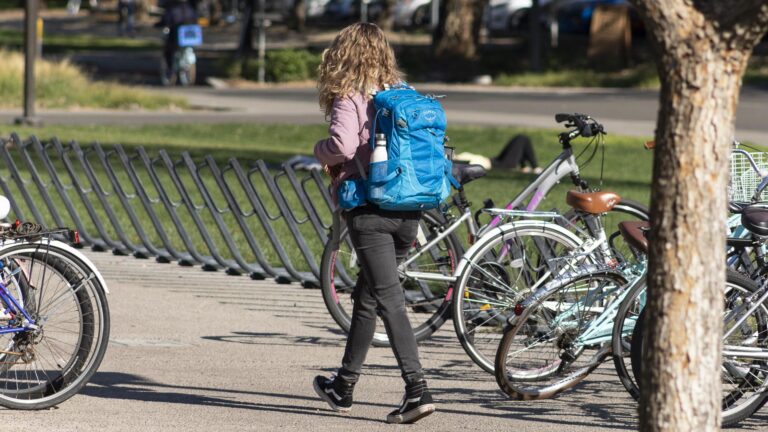
When my backpack ripped at the beginning of this year and I was faced with choosing a new one, I was met with an overwhelming amount of choices. I had to decide which backpack I would be identified with for the remainder of my college career. Was I ready for that kind of commitment? 

As I did my backpack research, it became clear that different types of people use different types of backpacks — their backpack being a representation of their personality. Here’s what I’ve gathered. 

Jansport 

This regular two-zipper backpack that can endure Davis’ heavy weather reminds me of high-school. I’ll admit it — I had a Jansport back in high school, but so did everyone else. It was sturdy, reliable and would keep your supplies safe. But if you have this backpack in college, I would bet you’re one of the most unorganized people on campus. For one reason and one reason only: It only has two zippers. 

An average college student has three to four classes — that’s a lot of worksheets from some of your less environmentally-conscious professors, not to mention your different pens, pencils, highlighters and erasers. These are the type of people that have everything and will know where everything is, but have to shove their entire arm to get one eraser. It’s like one of those clown cars where one clown comes after another and another and another. 

JanSport Big Student Backpack 

These are the backpacks that have so many zippers I couldn’t even count them. If you have this backpack, take this as your wake-up call: relax. You have way too much on your plate. While college activities and organizations are a fun way to get out of your comfort zone and meet new people, taking on too much is a recipe for stress. What’s important is that you focus on what you have and don’t let it fall apart — as your backpack most likely is doing. Pro tip: Do not let this backpack clutter. Once this backpack gets cluttered, it’s all downhill from there. 

The North Face

When I came to Davis, I was surrounded by an abundance of The North Face. It seemed like everyone here was a brand ambassador. If you have this backpack, you’re most likely from SoCal and have inevitably assimilated into the NorCal culture with a North Face backpack. With that said, this is the backpack I purchased. I am also, however, a really organized person. There is a pocket for my laptop, one for my notebooks and another pocket for emergency medicine (Spring Quarter allergies, am I right?) and my phone charger.

Additionally, there are the three NorCal native options when it comes to having The North Face backpack. 

  1. You have never been hiking and wanted to buy the backpack to seem cool because that’s what everyone else was using.
  2. You went hiking once and felt alive for the first time ever, decided that this would be the new you, bought all of the necessities and never went out again.
  3. You love hiking and everything outdoorsy and you hate everyone that wears a North Face backpack who doesn’t love hiking as much as you do because they’re “fake.” 

A Tote

I genuinely don’t understand how so many things can fit in a tote bag. And don’t your shoulders hurt? These are the kinds of people that bring one notebook, one folder and one pen to campus, and yet are somehow always prepared. 

As for the people that have The New Yorker tote bags, 90% of you all didn’t even buy it to read the news, you bought it for the bag. This bag is solely for looks — or rather, aesthetic.

Fjällräven Kånken

These backpacks blew up a couple of years ago and now everyone has one  — including myself. But to wear these backpacks around is plainly stating that you care more about your backpack being cute than anything else. Half of the reason why I won’t wear it is because it’s bright pink and the other reason is because the straps are not comfortable whatsoever. These are the uwu-type people that edit their pictures with little heart emoji around them. They must be protected. 

Anything Louis Vuitton 

Ma’am or sir, I’m going to need you to take a couple of steps back. This is not a fashion show, this is a public school. Nothing even goes into this backpack other than a major flex on everyone else. Louis Vuitton is so out of reach that I actually had to look up how to spell it. 

Written by: Itzelth Gamboa — arts@theaggie.org

California wildfires induce cardiovascular complications in cats

Researchers apply results from study on cats injured in Tubbs, Camp fires to humans

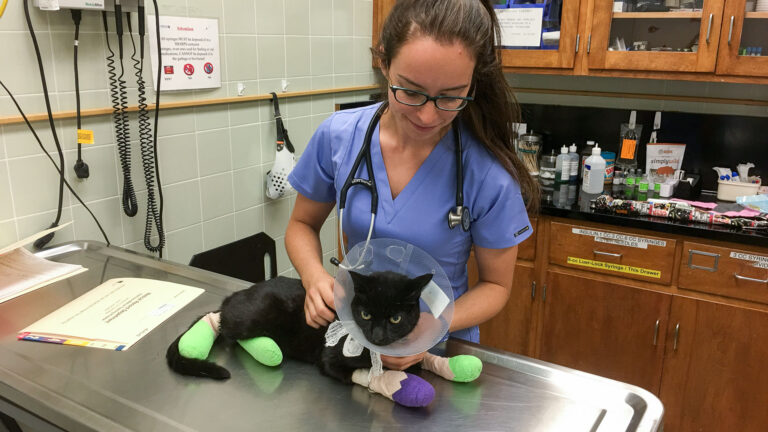
After studying the effects of burns and smoke inhalation on domestic house cats in recent California wildfires, researchers from the UC Davis Veterinary Medical Teaching Hospital (VMTH) found the cats also had a higher incidence of cardiovascular issues. This study, which was published on Feb. 14 in Scientific Reports, marks VMTH’s first endeavor into research on feline wildfire victims in California. 

The 51 cats included in the study were already at VMTH for treatment from both the 2017 Tubbs fire in Santa Rosa and the 2018 Camp Fire in Paradise. After performing echocardiograms, or heart ultrasounds, researchers found the fires had significant cardiovascular effects on these cats, including a much higher incidence of blood clot formation and heart muscle thickening. 

In this study, researchers examined the cardiovascular health and activity of these cats when they first came to the hospital as a baseline and then again one to two weeks after they had been receiving care for comparison, said Catherine Gunther-Harrington, an assistant professor of clinical cardiology at the UC Davis School of Veterinary Medicine. 

More than half of the cats studied had heart muscle thickening and almost 30% had blood clots or were at high risk of developing blood clots. When cats develop blood clots, they are also at a high risk of sudden death, Gunther-Harrington said. 

“[These results] tell us a lot about what we can expect in future fire environments and changes the way that we practice in terms of caring for cats that are victims of fires,” said Joshua Stern, a professor of cardiology at the School of Veterinary Medicine. 

Six of the cats died or were euthanized due to cardiac complications during the course of their care at VMTH. Eighty-two percent of the cats survived and were discharged to their owners.

“A few of the cats with very severe injuries unfortunately did not make it,” said Ashley Sharpe, a cardiology resident at VMTH. “These cats either died or were euthanized due to significant decline.” 

A number of the cats studied had significant cardiac findings. One cat of particular importance had a very large blood clot on his aorta, a vessel that leads to the rest of the body. A blood clot in this region is dangerous and signifies that the clot is very close to being dislodged, Gunther-Harrington said.

“The good news for that cat is despite having that blood clot in a very dangerous place, after treatment with us, that got resolved,” Gunther-Harrington said. “He was able to be discharged from the hospital.” 

If possible, in the event of a wildfire, cats should be evacuated along with humans. If cats end up suffering from smoke inhalation or burn injuries, it is important they get adequate veterinary care, just like how their human counterparts would seek medical attention, Stern said. 

Cats were used as the subject of this study because they were already at VMTH receiving care. More cats are present in hospitals after wildfires in comparison to other animals because they are good at hiding or getting out of the way in an emergency, Gunther-Harrington said. 

“When many owners are evacuating, they’re able to round up their dogs and get them in the car but oftentimes, especially outdoor cats are much harder to find in emergencies,” Gunther-Harrington said. “Those are the ones that often will have wounds or burn injuries.”

After being exposed to smoke from a wildfire, felines need drug treatment to prevent blood clot formation. Researchers found that the cats who started medication early on in treatment had the best health results, Stern said. 

Ronald Li, an assistant professor of small animal emergency and critical care at the School of Veterinary Medicine, used the findings of Gunther-Harrington and her team in the initial study to continue research on the cardiovascular effects of wildfires. The results of this work were not included in the original study in Scientific Reports, but will be published in the near future. 

Li studies the relationship between platelets, tiny blood cells that help the body stop bleeding, and blood clots in his lab. 

“We believe these cells are more activated, or turned on, and they can lead to unnecessary blood clots,” Li said.

After comparing blood samples from the 51 cats suffering from burns and smoke inhalation to 30 normal cats, Li and his researchers found that the platelets from the cats exposed to wildfire had blood clots in their hearts and more reactive platelets compared to normal cats. 

“Their platelets behave differently from normal cats and then we think that’s part of the reason why they form clots,” Li said. 

When platelets are hyperreactive and “unnecessarily doing their job,” the effects can be detrimental, Li said. The clots forming inside the heart can break up into little pieces and travel to other parts of the body, like the brain, lower limbs or smaller arteries. Similar movements of clots are seen in cats with heart disease. 

“I think this is the first time that we find that when they are exposed to smoke inhalation and wildfires they actually can do that too,” Li said. 

To treat platelet overactivation, Li and his team are researching the expression of receptors on platelets that could be responsible for forming clots. Because aspirin works well for many cats to reduce platelet activity, the team used it as treatment for the cats in the hospital.

 “Aspirin is a platelet inhibitor and we find that for whatever reason, aspirin stops those pathways and stops the platelets from overactivity,” Li said.

Gunther-Harrington said she hopes that by studying the effects of burns and smoke inhalation on feline health, other studies could research the best target therapies and treatment for those animals. Then, those treatments can be applied to other animals and humans.

“I think [the study’s results] tell us how many animals are affected by burn injury and by smoke inhalation injury [and] it sets the groundwork for us to understand exactly why this happened,” Gunther-Harrington said.

As with the results of the first study, Li believes that these findings about platelet activity could be applicable to people. To understand the connection, researchers use human models with mice and rats suffering from smoke inhalation and environmental pollution.

“But it also tells us a little bit about cats and how they may really model or mimic what happens to human patients that are either burn or smoke inhalation victims,” Stern said. “We’re hoping that as we continue to see cases and treat these cats that we learn more about the most effective treatments and maybe that can be applied to their human caretakers as well.”

Because each year wildfires are becoming more frequent in California, Gunther-Harrington said understanding health and treatment methods for fire-induced injuries is increasingly important. 

“We know that there’s likely going to be many more fires and so likely we’ll have many more cats that will be affected,” Gunther-Harrington said. “So if we can learn something from these cats, we can often apply it to the care and treatment of the people who take care of them.”

Written by: Margo Rosenbaum — science@theaggie.org 

Davis Joint Unified School District continues to offer meals to students amid shutdown

Local district one of many districts shut down across country due to COVID-19

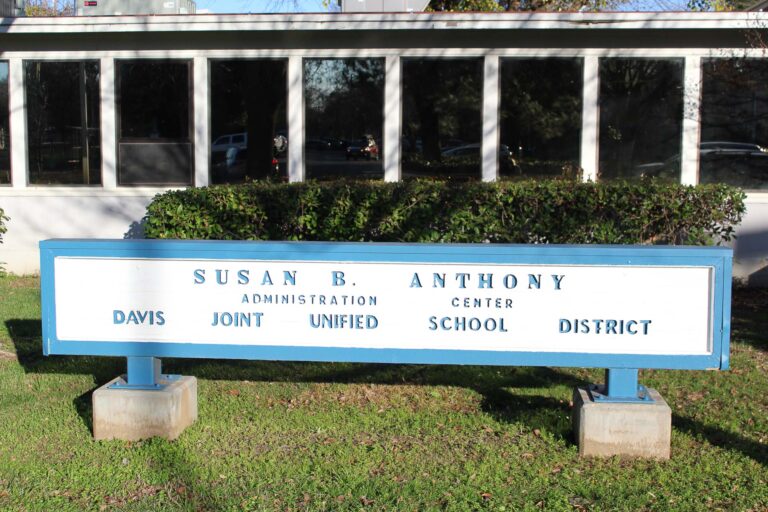
On March 18, 2020, Superintendent John Bowes announced that the Davis Joint Unified School District (DJUSD), school and district offices would be shutting down and remain closed for the time being. Despite the shutdown of schools in the district, however, meals will continue to be offered to students aged 18 and under, regardless of whether they are a student in DJUSD or not, from March 16 to April 3. 

The meals will consist of breakfast and lunch, specifically “lunch for the current day and breakfast for the next morning,” in the form of Grab-and-Go meals, according to the DJUSD Student Nutrition Services webpage. The meals will be available from 11 a.m. to 1 p.m. on weekdays and can be picked up from one of the following locations: Montgomery Elementary, Harper Junior High, Patwin Elementary and the parking lot behind the All Student Centre at Davis Senior High School on Oak Avenue. 

Families of the students will also be able to pick up the meal packages, as no form of identification is required. 

“The meal [count] is growing daily, from 100 plus on Monday to 479 today,” said Bruce Colby, the chief business and operations officer in a DJUSD meeting held on March 19.

Furthermore, as schools around the world shut down, the way in which various schools educate students will be affected. As of March 23, Approximately 1.38 billion students worldwide have been impacted by school closures — or approximately 80% of the world’s students — according to a chart from UNESCO that was published in a World Economic Forum article. Additionally, more than 138 governments have ordered schools and universities to shut down on a country-wide basis. 

In a message to the DJUSD community on March 18, Superintendent John Bowes said DJUSD will be implementing two phases in order to continue supporting students while the schools are shut down. Phase 1 will last until April 12 and will involve providing “supplementary materials and resources for students and families to voluntarily access at home.” The materials will be available on the DJUSD website. 

If schools are still closed after April 12, Phase 2 will be implemented. 

“This phase will focus on continuity of learning and will require planning and implementation by teachers and the use of a virtual platform in order to facilitate remote learning,” Bowes said in the message. “We will begin preparation and training for Phase 2 in the coming weeks.”

Phase 2 will focus on Distance Learning, “a system by which students and teachers who are located in different locations can continue instruction and learning using a variety of methods.”

In addition, the DJUSD Board of Education recently held a meeting on March 19, during which one of the topics discussed was COVID-19. 

“I’ve been working primarily to coordinate closure activities,” Deputy Superintendent Matt Best said at the meeting. “Closing down a district with more than 1,000 employees across 20 [some] locations is challenging to say the least. And I’ve been primarily working to make sure this action happens as cohesively and quickly as possible.”

DJUSD will also continue to support students in a variety of ways, such as by following up with students who are “medically fragile” and students who are vulnerable, as well as creating web pages that contain activities and resources for students. Additionally, Chromebooks will be offered to students who may not have access to the internet or a computer to participate in Distance Learning.

“We will have a drive-up station set up at Harper Junior High, Montgomery Elementary and Patwin Elementary during the meal disbursement windows in the coming week,” said Marcia Bernard, a chief technology officer. “A parent may come, sign out a Chromebook and charger, along with instruction for getting free access to internet, if they do not have it at home.”

Ultimately, DJUSD will help to support students and continue their education amidst the COVID-19 outbreak. 

“Let’s continue to stay connected as we adapt and navigate the coming weeks and months ahead,” Bowes wrote in his message to the DJUSD community, 

Written by: Shraddha Jhingan — city@theaggie.org 

UC Davis researchers study effects of Ibuprofen on mouse liver enzymes

More affected pathways found than previously thought

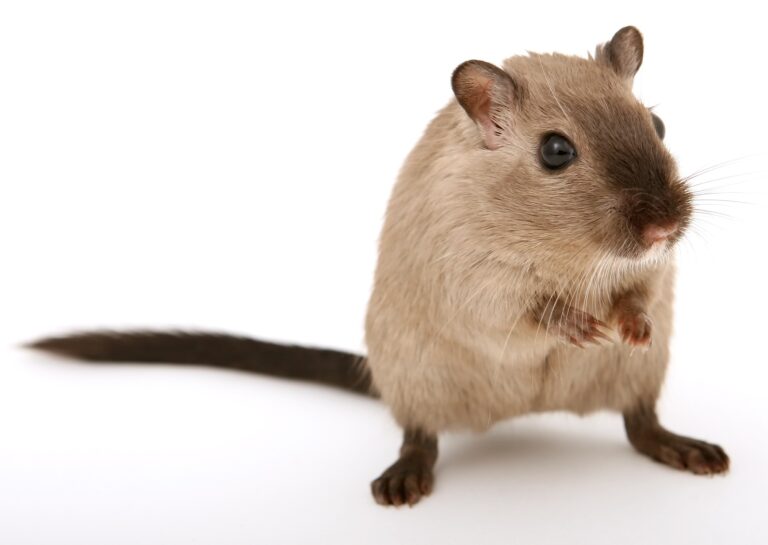
Though popular painkillers like Ibuprofen are generally regarded as safe over-the-counter medications, new research from the Gomes Lab at the UC Davis suggests that NSAIDs may have more negative effects than previously recognized, especially in regards to liver functionality. 

While many scientists — like Professor Aldrin Gomes of the Department of Neurobiology, Physiology and Behavior — agree that Ibuprofen causes heart problems and significantly increases the risk of stroke, the effects of over-the-counter painkillers on other regions of the body are less well-understood. 

“There are a few cases of people who take NSAIDs and have liver problems,” Gomes, who is also affiliated with the UC Davis School of Medicine for membrane biology, said. “A recent database analysis by one group showed that in Europe, in a certain segment that they were looking at, [patients] had a lot higher amounts of NSAID-induced liver toxicity than we expected.”

Intrigued by this phenomenon, Gomes and fellow researchers chose to study the effects of Ibuprofen on mice. The team treated mice with 400mg of Ibuprofen, the equivalent of two tablets per day, over an extended time period. Upon analyzing the data, the researchers were skeptical. 

“We didn’t trust the results,” Gomes said. “We thought [that] this is too much for something that is not supposed to cause this much damage.” 

Gomes and his team verified the data they received and even performed additional experiments, eventually coming to the same conclusions multiple times. The livers of treated mice revealed a wide range of affected proteins, including four major pathways that are critical to human health like energy metabolism.

“In the samples with Ibuprofen, there was increased activity of the oxidative stress enzyme called catalase,” said Joanne Newens, a class of 2019 neurobiology, physiology and behavior graduate who began research with the Gomes Lab in 2017. “There is increased oxidative stress with Ibuprofen, and oxidative stress plays a role in many liver diseases.”

The pathways for energy metabolism were also heavily affected in the treated mice. Gomes and his team saw many pathways correlated with ATP synthesis being affected by the drug. Levels of ATP were believed to be significantly decreased in these mice, suggesting that they had lower energy levels than their untreated counterparts. 

Additionally, the activity of the enzyme proteasome, which is responsible for the degradation of oxidized proteins, was decreased in groups of treated mice relative to their untreated counterparts. As humans age, there is a similar trend of decrease in proteasome activity. 

“This is making the young mices’ livers look a lot older,” Gomes explained. 

In addition to a wide variety of affected proteins in mice, including significant changes in beta fatty acid metabolism and hydrogen peroxide synthesis within treatment groups, researchers also noted sex-dependent differences in the treated mice. 

“The males had a reduction in glycolysis, which means they were using less glucose to make energy, but using more fatty acid oxidation,” Gomes said. “Females were using more fatty acid oxidation, but there wasn’t that decrease in glycolysis.”

Researchers also noted that in both males and females, stress-related enzymes were increased, as well as protein oxidation. This showed that animals of both sexes were stressed, but it seemed as though the treated males were more stressed than the treated females. 

Gomes and his lab are dedicated to studying NSAIDs and their effects on the human body as they are widely available and seemingly harmless. 

“A lot of [bodily operations] that we take for granted, those are being disrupted by Ibuprofen,” Gomes said.

Written by: Dina Gallacher — science@theaggie.org

Spring Commencement to be held virtually, with possibility of later, in-person ceremony

UC Davis administration will explore option of in-person commencement in December

UC Davis’ Spring Commencement of 2020 will move to a virtual platform due to COVID-19, rather than being held in-person, according to an email sent out today by UC Davis Chancellor Gary May to the university’s Class of 2020, faculty and staff.

May said UC Davis is also considering hosting an in-person ceremony at a later date, proposed for December, in order to properly honor this “significant milestone” for students.

“With the extension of stay at home directives and rapidly evolving public health conditions, we believe the risk is just too great and do not want to jeopardize the health and safety of you, your families or our communities,” May said in the email. “We also wanted to communicate this decision as soon as possible so that students and families are able to cancel or avoid travel penalties at this time, and we promise to communicate any future plans with as much advance notice as possible.”

Additionally, the administration has created a survey for the Class of 2020 in order to gather feedback regarding the virtual and potential later, in-person ceremony. The survey will be open until next Wednesday, April 15. The UC Davis Commencement website has also since been updated to reflect this announcement.

“We understand the impact of this decision and did not make it lightly,” May said in the email. “Thank you again for demonstrating such resilience, courage and care for each other as we continually take steps to respond to this situation. I am so proud to be leading this Aggie community.”

Written by: Kaelyn Tuermer-Lee — campus@theaggie.org

The Rise of Doja Cat

A look into the TikTok generation’s fastest rising star

Nothing has rocked the music industry like the introduction of TikTok, and no artist has benefited from the app more than Doja Cat. “Candy,” “Cyber Sex” and “Say So” are just some of the 24-year-old singer and rapper’s multiple songs that have gone viral on the videosharing platform. Now, she is the queen of one of the biggest apps on the market, but who was she before we knew her as the sexually liberated genre-bending artist she is today?

Born Amalaratna Zandile Dilamini, she was raised in the suburbs of Los Angeles. Not much is known about her family, but it’s suspected that her father is a South African actor while her mother is a Jewish art teacher. Elated to learn of her Jewish heritage, I scoured the internet trying to find confirmation from Doja herself, and ultimately failed. In the name of journalistic integrity, I spammed all of her Instagram live videos with “are u jewish” until I got blocked from commenting for three days. Weeks went by without a response. I began to lose hope — until her 11 p.m. live stream on March 11. After the second comment I sent, she stared at the camera and provided us Jewish Doja Cat fans with the confirmation we craved: “Am I Jewish? Yes.” 

She dropped out of high school to upload her self-produced Garageband songs on Soundcloud. This is where she released her 2013 song “So High.” Later, it became her debut single when she signed to RCA Records. With the release of her debut EP “Purrr!,” she released two of her more popular songs, “Go to Town” and “Tia Tamera,” the latter a collaboration with fellow up-and-coming artist Rico Nasty.

Her first album “Amala” gained mild success, but it wasn’t until five months after its release that it gained widespread acclaim with the release of the music video for “Mooo.” The homemade video shows scenes of Doja in a cow-printed two piece, lazily dancing in front of a green screen that alternates between GIFs of bouncing anime breasts and pixelated flipping burgers. The fun, laid back video paired with the creative lyrics: “B-tch, I’m a cow, b-tch, I’m a cow (Moo, moo, moo) /Got the methane, I’m a farter (Woo) With my farmer (Woo), MacDonald (Woo).” It took the world by storm. In August of 2018, “Mooo” made its way into our playlists and patterns of speech. Propelled by the “Mooo” fame, Doja Cat released a deluxe version of “Amala” with three bonus tracks. One of those bonus tracks, “Juicy,” marked her first entry on the Billboard charts, debuting at no. 41.

Doja quickly became familiar with the darker side of fame. Old tweets resurfaced and she was documented saying multiple homphobic slurs. When confronted, she uploaded one of the worst celebrity apologies to date. The tweet featured her announcing she “has said F****t roughly like 15,000 times” in her life while simultaneously displaying her accepting attitude stating: “Do I hate gay people? I don’t think I hate gay people. Gay is okay.”

There was a moment of outrage: Articles were published and tweets declared her canceled. But the anger came mostly from straight people. Members of the LGBTQIA community did not take as much offense. Many made it into a joke and continued to support her undeniably good music. The controversy blew over, but the joke remains.

After “Amala,” she released “Hot Pink.” Similar to her previous album, it had a slow start. It changed when TikTok user Haley Sharpe uploaded a dance cover. The dance took off, and it wasn’t long before its signature punch and body roll would be recognizable to any TikTok user. People heard the song in the background and started streaming and sharing it. It spawned multiple mashups, many with different verses from rapper Nicki Minaj — the most popular being an incredible pop mix of the background of “Say So” with the lyrics of Ariana Grande’s “goodnight n go.” “Say So” continues to climb the charts, peaking at no. 16 on the Billboard Hot 100, at the time this article was written.

Though Doja Cat is receiving unprecedented levels, she’s not immune to the controversy that seems to follow her on every step of her career. She has most recently received backlash for working with Dr. Luke, the infamous producer, on “Hot Pink.”

Whether you chose to focus on her faults, or ignore them to enjoy her skillful body of work, Doja Cat is currently the most powerful artist on the rise.

Written by: Livvy Mullen — arts@theaggie.org

UC Davis student interns at Hillel of Davis and Sacramento share their experiences

Students strengthen Jewish community through internship

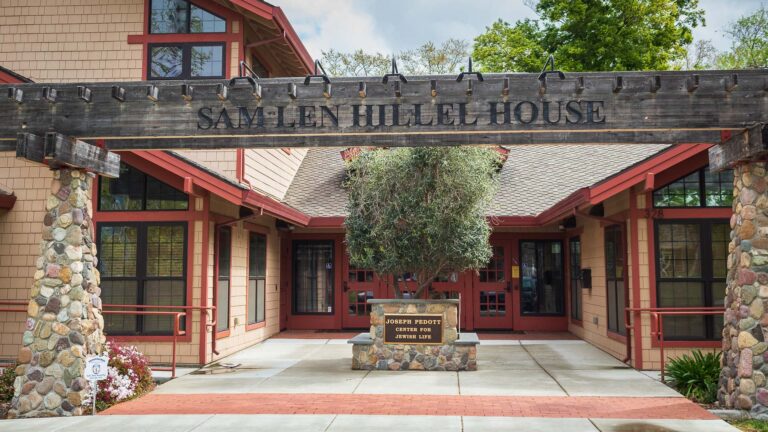
For many students, the Hillel of Davis and Sacramento serves as a home away from home. Students frequent Hillel, located directly across the street from campus on A Street, to attend Shabbat dinners on Friday nights, free Tuesday lunches or just to study in between classes. 

Hillel is open to all, welcoming the Jewish community with complementary food, conversations and more as students embark on their college careers. Hillel is made possible by a professional staff as well as four UC Davis student interns: third-year neurobiology, physiology and behavior major Yael Vainberg, fourth-year environmental policy analysis and planning major Forrest Pasturel, third-year psychology major Jane Bakhter and fourth-year communication major Eric Korman. 

Korman was drawn to the internship because of its integration with the Jewish community.

“Hillel always seemed like an important place, because it’s a place where Jewish students can gather and feel at home.” Korman said. “It felt like a good opportunity to work at a place like that, where I’m serving the Jewish community.”

The interns juggle many tasks. One big part of their job is helping to plan and execute the weekly Shabbat dinners that Hillel hosts. Each Shabbat has a different theme with its own menu and ambiance, such as Chanukah or Disney Shabbat. In addition to the planning, the interns help set up and clean up every Shabbat. 

The interns have a role in shaping the events and their themes. For example, Pasturel helped create New York Deli Shabbat, inspired by his grandfather who grew up in the Bronx. Former Soviet Union Shabbat was inspired by Vainberg, Bahkter and Korman’s family origins from the former Soviet Union, serving to shine a light on the discrimination toward the Jewish people that took place there.

The interns are also involved in planning less routine events, such as events for Jewish holidays or events that host influential speakers. Hillel hosts joint events by working with organizations such as the student group Aggies for Israel while also hosting many of their own events, like LGBTQ movie nights. 

Another part of the internship is student outreach. Interns are encouraged to take students out for coffee dates to check in on them and receive feedback on what they want at Hillel. The goal of this engagement is to show the Jewish community on campus that Hillel is there for them. 

Seth Browner, the engagement associate at Hillel, works closely with the interns while also planning the weekly Shabbat dinners. Browner collaborates with the interns on ideas and they all work together to execute the weekly events. 

“As an intern, you get a more direct say into the direction that you want to take Hillel, whether it’s with the programming, the social media — anything,” Browner said. “They get the opportunity to be campus leaders, they get the opportunity to make changes that they want to see at Hillel. Ultimately, Hillel is there to serve them, so that’s what we want to do, is to enhance their own college experience as much as possible.”

With Spring Quarter operating remotely due to health concerns over the ongoing coronavirus pandemic, Hillel is closed until April 7, 2020. The interns said Hillel is working on plans with Hillel International to continue on in an online platform in order to maintain connections with and continue to provide services for the students.  

Pasturel said working at Hillel was a valuable experience because it acted as an opportunity to serve the Jewish community, build relationships and positively impact others. 

“Hillel to me [is] not even a place but an idea of what community truly means,” Pasturel said. “And not just for the Jewish community, but for the human community. Bringing people together, getting people to talk, getting people to interact with one another, learning from one another and bonding.”

Written by: Nora Farahdel — features@theaggie.org

Fashion can make a difference: How the Duchess of Sussex used fashion to impact women’s lives

Smart Works is most noteworthy because it builds a community of mutual support using fashion

As I am a long-time fan of The Crown, the British royal family intrigues me. When Meghan Markle and Prince Harry got married, my friends and I stayed up until 5 a.m. to watch the wedding live. As Markle took on royal life, it was exciting to see her partake in the social and cultural engagements of the royal family and take on her own projects, particularly her collaboration with the Smart Works organization.

Despite Harry and Markle — who are also known as the duke and duchess of Sussex — announcing their departure from the royal affairs of the family, they still remain involved with some of their previous work. Markle is a Royal Patron for Smart Works, an organization that helps underprivileged and vulnerable women secure employment. Smart Works provides professional clothing, interview training and other resources to give underprivileged women the confidence and means necessary to secure employment. 

In September 2019, Markle launched her clothing line with Smart Works. Markle and Smart Works collaborated with various retailers and designers to create appropriate professional wear for women entering the workforce. For every item bought in the collection, another would be donated to Smart Works, like the one-to-one model used by the company Toms. This gives women access to professional and stylish attire that they wouldn’t have been able to afford otherwise. 

Since joining the royal family, Markle has become a popular style icon. Her elegant dresses and matching fascinators are among my favorite looks. Being a fashion and lifestyle influencer is nothing new for the British royal family — they have long been seen as trendsetters. And it’s also nothing new for Markle. Before joining the royal family, Markle spent much of her time running a lifestyle blog, The Tig, which she gave up as she transitioned to her life as a royal. Now, Markle wields her new position and influence to work on various fashion endeavours, such as guest editing the September issue of British Vogue, in which she featured a multifaceted and diverse group of women in the fashion industry’s most important issue. Markle featured Smart Works in the September issue to discuss the organization’s work as well as her partnership with them.

Smart Works has an uplifting concept. Women supporting one another and finding creative ways to deal with issues of employment and confidence is inspiring. Smart Works doesn’t fix anything with magic wands — Markle makes that clear in her piece for September Vogue, stating that there is no “before and after” transformation for these women. The clothing and training simply gives women the tools to build the self-confidence needed to find success with employment. It’s a simple idea but bold and creative in practice. For women without the resources to purchase trendy and popular professional clothing, the work of organizations such as Smart Works provides a crucial means of empowerment. 

It wasn’t Markle’s involvement with Smart Works itself that caught my attention — taking on charitable projects is common for all of the royals. It was the fact that she had chosen fashion as a means to empower women. On a superficial level, having access to professional clothing is a physical manifestation and a public statement of belonging and self-assurance. But that kind of impact on an individual can be powerful and meaningful. 

There has never been a one-size-fits-all approach to boosting women’s empowerment — there are many ways to do this. But Smart Works is most noteworthy because it builds a community of mutual support using fashion.

That being said, Markle’s initiative isn’t flawless. A simple one-to-one initiative boosting consumer culture isn’t going to solve the issues and constraints that underprivileged women face on a daily basis in the job market. It’s just a small fix to the larger hurdles and obstacles that capable women deal with on a variety of fronts in the professional world. But if fashion can be used for generosity and empowerment, then I’m excited to see more of this.

Written by: Simran Kalkat — skkalkat@ucdavis.edu

Disclaimer: The views and opinions expressed by individual columnists belong to the columnists alone and do not necessarily indicate the views and opinions held by The California Aggie

Police Logs

Bikes and scooters and tricycles, oh my!

March 4

“Male rode his bike into a vehicle then kicked the vehicle causing damage.”

“Tenant just came into the office demanding repairs to his personal appliances.”

March 5

“Two males smoking marijuana.”

“Construction crews not efficiently/safely directing traffic.”

March 6

“Loud engine revving for the last 30 minutes.”

“Swinging golf clubs […] Just arrived on tricycle.”

“Male standing in the roadway intermittently.”

March 7

“Throwing pots/pans out of the residence.”

“Broke computer, refusing to listen and go to bed.”

March 8

“Zebra brand white/black striped electric moped scooter stolen.”

March 9

“Masterbating.”

“Person used respondent’s phone and venmo account to send himself money without respondents consent. Total loss $900.”

March 10

“Subject riding a bike in lanes of traffic causing neat traffic collisions.”

Humor: Massive military budget and public health cuts to come good in fight against COVID-19

Nation relieved

Once upon a time in the United States, the National Security Council had a directorate for global health security and bio-defense, but this office was eliminated by President Trump. The office was tasked with predicting, planning and preparing for the possibility of a pandemic, but how could we have possibly predicted or prepared for the possibility that predicting or preparing for anything might be prudent?

You see, predicting, projecting, prophesizing and prognosticating are not the American way. In fact, we’re neither proactive nor reactive — we simply do. We’re a nation of doers. But we’re also a nation of do-nothingers, which means we’re not going to lift a finger — unless that finger is our trigger finger, in which case we stand our ground, shoot first and ask questions later. And that is precisely why Americans should be prouder than ever that we spend so much money on the military. Because it is in times like the present, as we face the global threat of the coronavirus pandemic, our boasting monstrous military might will finally come good. 

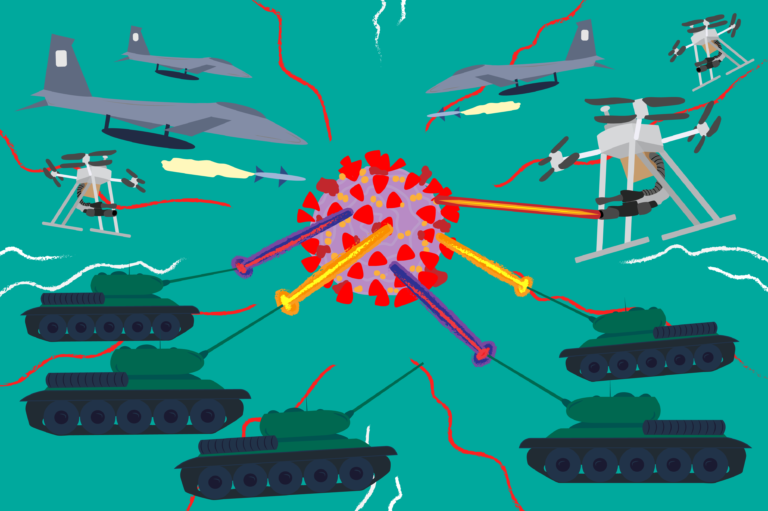
Who needs extra plastic gloves for keeping the virus off our hands when we can just snipe it from over a mile away? Why are we trying to show the virus hospitality by getting more hospital beds? And who needs hand sanitizer when we can just burn the coronavirus with Napalm? Why are we setting up temporary hospitals when we should be employing shoot-and-scoot tactics? Why do we need so many silly face-masks and ventilators when we have tens of thousands of high-tech, military-grade, tactical, full-face respirators with attached night-vision goggles? By using those, the doctors and nurses on the front lines of this war could work into the night! Come to think of it, we don’t even need to be paying all these doctors and nurses who are on the ground, in the trenches, when we could simply carry out an aerial assault on the coronavirus with fighter jets and drones. 

Our military will give us the cutting edge, ruthless tactics against the coronavirus that all these soft “first, do no harm” people simply cannot provide. Yeah, that silly Hippocratic Oath doesn’t really do much good when the primary objective is to kill the coronavirus, does it? So, unlike those hypocritical Hippocrats running our hospitals, trained soldiers will not hesitate to do as much harm to the coronavirus as possible. 

We will strike first against this evil and cunning virus. After setting up a blockade and beginning an artillery barrage, infantry will advance swiftly from our garrison in a frontal assault, a forward charge, ready to ambush, outflank, envelope and encircle the virus in a coup de main that will in all hope be a coup de grâce! We will resort to guerilla tactics if we have to! We will give no quarter! We will never retreat or surrender! We will not negotiate with the virus like those pacifist medical and public health professionals think we should!

With aggressive tactics like these, I predict that this battle plan we’ve prepared to defeat the coronavirus once and for all will work like a charm. In the meantime, we will never stop swarming, shelling and laying siege to this pandemic — no matter what the doctors tell us. Believe me, our fresh approach to public health war, or as I prefer to think of it, Blitzgesundheit, is just what the doctor ordered.

Written by: Benjamin Porter— bbporter@ucdavis.edu 

(This article is humor and/or satire, and its content is purely fictional. The story and the names of “sources” are fictionalized.)

UC Davis Police Chief Joe Farrow gives more information on machete incident

Identity of man seen with machete in his backpack remains unknown

The California Aggie recently sat down with UC Davis Campus Police Chief Joe Farrow to discuss an earlier incident on March 9 in which a suspect approached campus with a machete for unknown reasons. The suspect was first seen off campus in South Davis, where two people reported to the Davis Police Department that they saw an eighteen-inch “sword-like” machete in his backpack. They said that the suspect was behaving “erratically.” 

The Davis Police Department notified the UC Davis Campus Police (UCDPD) after the suspect headed down a bike path toward Segundo, coming from the direction of I-80. Students on campus received a WarnMe notification about the incident. Farrow explained that they wanted to send out the WarnMe alert before the suspect reached campus so that people were aware of what was going on.

 “The common thing about these WarnMe [alerts] is that we want to warn our campus about a pending situation, a bad situation,” Farrow said. “We respond and we try to deal with whatever the issue may be. And I thought that the on-duty supervisor made a really good call by putting the WarnMe out before [the suspect] got on our property.”

Campus police followed the suspect by car, but he discarded the machete and disappeared into a trail only accessible by bike or on foot. 

“We got a glimpse of him and he saw us and immediately pulled off and went down some trails off campus,” Farrow explained. 

Although the suspect was listed as a Hispanic male with short hair, a mustache, a white t-shirt and blue jeans on a black bike, Farrow explained that UC Davis Campus Police remain unsure of the man’s appearance since he disappeared so quickly. Since the incident, the suspect has not been found.

 “Nobody has any information on him, we had no cameras or anything that caught his profile,” Farrow said. “The Davis [police] went back and interviewed the callers that called in in the neighborhood and they didn’t know who he was.”

Farrow also noted that the police would not arrest somebody carrying a machete unless it appeared that they planned on harming someone with it. 

“The mere fact that you have a machete wrapped up in a pack in plain view is not necessarily a crime in itself,” he said. “The suspicious circumstances attracted the police’s attention. It’s not necessarily a crime just to have the knife.”

Following the incident, Farrow said that UCDPD “re-directed the WarnMe system,” alleviating people’s fears about a possible attack. 

“We figured then that maybe [the suspect] was either transient or didn’t live in the immediate area,” he explained. “He could have been 100% harmless and just riding a bike with a machete, or [worst-case scenario] he could have been a burglar. The good news is, we kind of have the description. And the officers [here know], and the Davis Police Department knows.”

Written by: Rebecca Bihn-Wallace — campus@theaggie.org 

UC announces no COVID-19 layoffs through end of fiscal year, but UC-AFT says this does not apply to academic appointees

UC student workers, career staff, clinical researchers could see reduction in hours due to COVID-19

On April 2, UC President Janet Napolitano released a letter to the UC community announcing that there will be no COVID-19-related layoffs between now and the end of the fiscal year, on June 30, 2020. As of today, the UC is the third-largest employer in the state, employing approximately 227,000 people.

“Providing pay and health and welfare benefits during this period will allow employees to more effectively care for themselves and their families as we all support California and the nation by staying home and doing our part to reduce the spread of this virus,” Napolitano wrote. 

According to the University Council-American Federation of Teachers at UCLA, however, “the commitment to no layoffs through June 30th does not apply to academic appointees, meaning that contingent teaching faculty and librarians are not protected by the policy.”

UC-AFT, the union that represents UC librarians and non-Senate faculty, said via Twitter that it is currently looking to change that: “The contingent faculty who are lifting heaven and earth to keep teaching our students now must be reappointed after the crisis is over.”

Over 6,000 UC lecturers represented by UC-AFT are without a contract after the previous one ended on Jan. 31. Union officials said via Twitter that job security is more important than ever now that lecturers are without a contract. UC-AFT members have made close to 200 calls to UC officials demanding job security.

“Join us in this digital action and call a UC administrator today,” wrote UC-AFT Vice President for Organizing Daniel Schoorl via Twitter. “This is an open action to contact admin about teaching faculty job security – no layoffs during #COVID19.”

Meanwhile, employees in UC administrative offices, campuses and clinical settings have faced significant disruptions to their work due to the virus. In her letter, Napolitano pledged that the UC would support these workers “as long as we are able.” The letter added that the UC “looked forward to working with unions to redeploy workers to areas of need and keep as many people working as possible.”

The number of career staff, student workers and clinical researchers hired during the summer typically fluctuates, and Napolitano’s announcement acknowledged that these employees may be facing a reduction in their hours due to the current conditions of the COVID-19 pandemic.

Due to this uncertainty, the UC will conduct discussions with different employment groups to determine how the university system can continue to support its workers after June 30, ideally extending job protections after this date. Additionally, human resources departments at the different campuses are addressing this issue with their employees.

The letter — signed by all 10 UC chancellors, including UC Davis Chancellor Gary May — acknowledged that there remained a great deal of ambiguity surrounding the progress of the pandemic. As Napolitano’s note indicated, it is difficult to determine how the UC will continue to adapt to the changing conditions wrought by the virus.

Written by: Rebecca Bihn-Wallace — campus@theaggie.org

Managing Editor Hannah Holzer also contributed to this report.