57.8 F
Davis

Davis, California

Sunday, December 21, 2025
Home Blog Page 390

UC Davis now has study abroad, internship programs on all seven continents

Antarctica, Lebanon, Tanzania among new additions to Global Affairs, Global Learning Hub

Global Affairs and the Global Learning Hub — formerly the Study Abroad Office — have introduced an extensive array of study abroad and internship programs led by UC Davis faculty for the 2019-20 school year. Antarctica, Lebanon and Tanzania are three notable destinations added to UC Davis’ overarching global reach. 

“These three programs provide opportunities in parts of the world that are underrepresented in study abroad,” said Zachary Frieders, the executive director of the Global Learning Hub, via email. “They each tackle subjects that are of global importance and resonate with UC Davis.”

Each year, 1,300 students are granted the opportunity to study abroad in over 30 countries. Now, with the addition of a program in Antarctica, UC Davis has established programs on all seven continents. 

“We are very proud of that accomplishment,” Frieders said. “But it’s not just about having a presence on every continent. It’s about asking the question: Do we provide students opportunities in the very best location for their area of study?” 

Last year, UC Davis adopted a set of global learning outcomes affirming what the university anticipates students will learn from participating in such programs. The three key elements of these outcomes include “building global self- and systems-awareness” as well as “embracing linguistic and cultural diversity” and “acting globally.”

“We want our programs to engage students in hands-on learning on issues of global importance,” Frieders said. “These sites highlight challenges that are critically important at those locations, but they are also concerns that affect people around the world.” 

With the “Ecology in Antarctica” program, 15 students will board a purpose-built polar expedition vessel and embark for the Antarctic Peninsula. 

“We stay on the boat overnight,” said Laci Gerhart Barley, an assistant professor of evolution and ecology. “The day trips will have a variety of excursions where you can go out on a small boat called a zodiac and either go whale-watching, or look for penguin rookeries, maybe do some surveys of icebergs or hike [on the land of the continent]. We’ll be able to see some of the historical areas and there is a working research centers.”                                                                                                                                                                                                                                                                      

During the university’s winter break, Dec. 16 to Dec. 30, 2020, students will delve into the ecology, biology and geology of Antarctica while understanding the history of the region integrated with human effects and interactions.

“In the seminar and on the trip, we will be considering the geopolitical environment, the social and historical history and how those components have guided how Antartica exists today, even in a legal context,” Gerhart-Barley said. 

Prior to visiting Antarctica, students will be required to take an online course, taught by specialists from various institutions, and attend on-campus meetings, according to the Global Learning Hub website. Specifically, students will be expected to complete readings, watch videos, write responses and answer some discussion questions. 

“What students will be learning in class is all the ways Antarctica is weird,” Gerhard-Barley said. “It’s weird ecologically, it’s weird geographically, it’s weird politically [and] it’s weird socially. It is fundamentally different than most land masses on Earth. We’ll spend a lot of time talking about why that is, and how those components of unusual nature interact to make it a particularly complex place.” 

“Science and Society in the Middle East” will be taught at the American University of Beirut in Lebanon. From June 22, 2020 to July 21, 2020, students will grapple with contemporary environmental challenges including “saltwater intrusion, waste mismanagement and deteriorating air quality,” according to the Global Learning Hub website. 

Taught by Majdi Abou Najm, an assistant professor of soil biophysics, students will also learn about community-based conservation efforts, study groundwater systems and delve into rain-fed agriculture and winemaking. 

From July 1, 2020 to Aug. 1, 2020, 30 students will be traveling to the College of African Wildlife Management, commonly known as Mweka, aside the southern slopes of Mount Kilimanjaro in Tanzania to study “Tanzania — Culture, Wildlife and Activism.” Later, they will be trekking to the Maasai Village. 

The program will be taught by Assistant Professor of Literature and Culture of the Black Diaspora Danielle Mollel. 

According to Mollel’s message to students and parents on the Global Learning Hub, she is “excited to combine [her] experience providing life-changing trips for travelers with her experience and knowledge as a professor and [her] commitment to social and environmental justice in this summer course.”

Through cultural immersion and field lectures, students will learn first-hand about wildlife behavior, conservation, political economy, tourism, human rights and indigeneity, according to the Global Learning Hub website

“We will continue to grow our global internship programs,” Frieders said. “Students can search from among 300 different global learning opportunities on our search tool.”

In addition to these aforementioned programs, UC Davis has launched opportunities such as studying human rights in Chile and Peru, water management in Mexico City, design in Japan, personality psychology in Germany and cell biology and behavior in the Netherlands, according to the Global Learning Hub website. 

“One goal we have at UC Davis is to prepare our students [to] tackle global challenges.” Frieders said. “It is useful to think about frameworks in that regard. Students can study topics on campus so it’s important that we understand what added skills, capacities and understanding we provide students through our programs.”

Written by: Aarya Gupta — campus@theaggie.org 

“Jesus is King,” lyrically lifeless and saved not by God, but collaborators

Ye is overpowered by a world of his own creation

Draped in a baby blue shroud, Kanye Omari West stood tall, rapping, singing and praising alongside one of Los Angeles’ finest gospel choirs during the Inglewood leg of “Sunday Service” — a sermon-infused concert to worship God and promote Kanye’s new album “Jesus is King.” 

The scene was fervent, as hundreds raised their hands to the heavens singing, swaying and shouting in blissful conviction. During the two-hour set, the ensemble worked through 20 songs, varying from gospel standards, to nostalgic Kanye hits, to tracks fresh off the new 27-minute album. An event centered around religious camaraderie was a new look for an artist who, in the past, has opted for solo performances on massive glowing platforms hanging above the outstretched hands of his own devout followers.

The “Jesus is King” journey from studio to stream has been fraught with drama. West’s personal life has been the center of an onslaught of criticism after he aligned himself with President Trump, proudly donned a MAGA hat and told his wife, Kim Kardashian West, that her Met Gala look was too sexy for a mother of four. West caught an immediate backlash, as many in his fanbase felt betrayed by the cultural icon who has previously promoted himself as a champion of the Black community and empowerment. 

This past July, an unfinished bootleg of “Yandhi” leaked, leading to increased public speculation and interest until the project was scrapped for “Jesus is King.” Then, right before the album was scheduled to drop in September, West continued to tantalize his fans by pushing back the release date another month. Compared to fragments heard on “Yandhi,” which where all “Ye, Ye, Ye,” “Jesus is King” aims to draw from an even higher power.

At the intersection of gospel and hip-hop, “Jesus is King” delivers heavenly production with insipid lyricism. West flexes his production chops by harnessing the power of soul and gospel (two long-time influences) in the Sunday Service choir’s punctuating chants, flowing crescendos and lung-busting climaxes. The instrumentals included rippling organs, pounding drums and a spattering of horns. Blanketed in a storm of gospel and soul, Kanye sings and raps along on the periphery with fleeting intensity and beleaguered focus.

“Every Hour,” a traditional gospel piece set to double speed, establishes the album’s reverent and rejoiceful tone to a higher power. The project pivots into the visceral “Selah,” which is the standout in the 11-track list. If anything can accurately convey the power of the gospel through a contemporary lens, it’s “Selah.” Kanye opens the track rapping over a foreboding church organ, expounding his place in society and faith. War drums accentuate his every word. The choir kicks in and drives the rhythm with swelling hallelujahs, culminating into one of West’s few, untempered passionate moments: a wall-busting war chant capable of rousing even the coolest of cucumbers.

In most of the album, Kanye is sonically overpowered in a world of his own creation. The full-body spirit of the chorus dwarfs Kanye’s ho-hum intonations. “Water,” featuring Ant Clemons, speaks directly to West’s lyrical inadequacies. Clemon’s refreshing voice meets a bubbling baseline and cooing chorus that washes over the listener, only to be abruptly ousted by West’s blunt preaching, “Jesus, flow through us. Jesus, heal the bruises. Jesus, clean the music,” and so on. 

We get the point, you’ve found God — but don’t tell us, show us. Gospel can transcend its religious origins. You can be secular and still revel in its uplifting characteristics, but Kanye barely attempts to address this in his flow. We see flashes of it on “God Is” as he exclaims, “This my kids, this the crib! This my wife, this my life! This my God-given right!” 

The majority of Kanye’s vocal expression, however, fails to match gospel’s spirituality. The frustrating thing is that he is fully capable of rising to its level of intensity. We’ve all seen it dozens of times before, whether it’s in the defiant snarls of “Black Skinhead” or in the wounded vulnerability of ”Roses.”

The penultimate song on the album is “Use This Gospel,” a three-minute piece of barebones production predominated by autotuned humming. Lyricists cycle from West on the chorus to verses from his longtime friend and collaborator Pusha T and Virginia-based (and recently converted Christian) No Malice. Not a single memorable bar is uttered. Despite the track’s misgivings, it includes perhaps one of the most memorable snippets of the album — a gliding 30-second saxophone solo from none other than Kenny G himself. It seems to perfectly reflect the gospel’s intimate spirituality — what West’s lyricism and delivery were desperately lacking. Once again, a supplementary musician saves the album from resounding mediocrity.

I commend Kanye for his bold plunge into gospel. In stereotypical fashion he keeps us on our toes while prodding at his own musical capabilities. This time, however, he misstepped. Outgunned by his own devices, West was lyrically lifeless on instrumentals that demanded the best from his talents. I wouldn’t chalk up the album to a failure, but for West it signals an emotional slump for an artist who has hallmarked his name as a super-charged provocateur.

Written By: Andrew Williams — arts@theaggie.org

Alaska is the last frontier, therefore we must destroy it!

Wait, what? Slow down, Mr. Trump

Like many Breaking Bad fans, I found the new film sequel, “El Camino,” to be unnecessary but satisfying. It was nice to finally see Jesse realize his dream of starting a new life in Alaska, a seed that was planted back in the original series. Unfortunately, Jesse may not have long to enjoy the natural beauty up there — not if President Donald Trump has anything to do with it. 

I say this because Trump now has an unholy trinity of major policy proposals to his name that would forever destroy three of the largest and most pristine ecosystems on the planet. Trump has opened the Arctic National Wildlife Refuge (ANWR) for oil drilling, revived the proposed Pebble Mine near Bristol Bay — which could devastate the most valuable salmon fishery in the world — and most recently, he opened the Tongass National Forest to logging and development. Sorry, Jesse.

Each of these decisions is harmful and shortsighted enough on its own, but together they make for a particularly nasty batch of cynical Trumpian environmental vandalism. Just how stupid and reckless are we talking here? Well, this is stupidity as measured on a log scale. For simplicity’s sake, and in keeping with the spirit of simple-mindedness, I’ll go in chronological order.

ANWR is about 19 million acres of pure nothingness, but the size of North Carolina. Pristine wilderness untouched by development; the last place of its kind in the United States. ANWR, also known as “America’s Serengeti,” was created by President Eisenhower in 1960 and has been protected ever since. But this is now at risk because Senator Lisa Murkowski (R-AK) snuck a measure into the GOP’s 2017 Tax Cuts and Jobs Act, of all places, that mandates oil drilling in ANWR. In a very poor choice of words, Senator Murkowski giddily said that this was a “watershed” moment for Alaska. Yes, it is a watershed moment in that it will likely destroy several watersheds. 

Where there is oil drilling, there are oil spills, and this is bad news for the 700 plant and animal species, not to mention the many indigenous people who rely on this robust ecosystem. North America’s largest caribou herd, which has between about 120,000 and 200,000 caribou, could be adversely affected by oil spills and the construction of roads and other infrastructure. But at least the oil lobby will be happy with almost 12 billion barrels of oil! Sucks to be a caribou! 

Meanwhile, in the southwest portion of Alaska, near Bristol Bay, the Nushagak and Kvichak watersheds “produce nearly half the world’s sockeye salmon.” A massive proposed open-pit mine, referred to as Pebble Mine, however, could destroy the fishery’s long-term viability. Bristol Bay supports an average annual run of about 37.5 million sockeye salmon, and the Obama EPA estimated that the salmon fishery supports about 14,000 full and part-time jobs and produces about $480 million in revenue per year. The mine would only create about 1,000 to 2,000 jobs for it’s short lifespan.

Unfortunately, the Trump Administration reversed the Obama-era decision to block the mine, which would be about two miles wide and 2,000 feet deep and produce about 80 billion pounds of copper, 107 million ounces of gold and 5.6 billion pounds of molybdenum, worth an estimated $350 billion. Obama’s EPA, however, determined that the adverse impacts on fish populations would be “significant.” About 10 billion tons of waste from the mine could destroy 94 miles of streams and 5,350 acres of wetlands, ponds and lakes and remove about 35 billion gallons of water from the watershed per year. This would permanently devastate a sustainable fishery for short term profits and temporary jobs, even though polls show that most Alaskans oppose the mine.

And now to the Alaska panhandle, where Trump’s Department of Agriculture is proposing to allow logging in a 9.4 million acre section of the Tongass National Forest that was previously protected by President Bill Clinton under the 2001 Roadless Rule. 165,000 old-growth acres and 20,000 young-growth acres could be clearcut. And these trees don’t just provide valuable habitat, they also sequester incredible amounts of carbon. Sucks to be anyone or anything impacted by climate change!

So in summary, Jesse Pinkman isn’t gonna have much luck if he hoped to live out his days as a peaceful fisherman up in pristine Alaska, so he’d better start rediscovering his meth-cooking chops. Fast.

Written by: Benjamin Porter— bbporter@ucdavis.edu 

Disclaimer: The views and opinions expressed by individual columnists belong to the columnists alone and do not necessarily indicate the views and opinions held by The California Aggie

Nurse practitioner residency program launched by UC Davis Health

Advanced practice residency program at Betty Irene Moore School of Nursing to provide care for underserved groups

The new residency program for nurse practitioners at the Betty Irene Moore School of Nursing has opened its applications. While nurse practitioner residency programs exist at other institutions, this is the first one to be funded by the Health Resources and Services Administration, according to Debra Bakerjian, a School of Nursing clinical professor and principal investigator. The $3.5 million grant is monumental for the nursing community since it depicts federal recognition of the importance of nurse practitioners in primary care. 

While residency programs are common for physicians — and often federally funded — the same cannot be said for nurse practitioner residency programs. This is partially because a residency is not required for nurse practitioners. Despite this, residency programs, where health professionals get mentored by experienced clinicians to complete their medical education, are critical in preventing the disorientation that would otherwise be felt by the sudden shift from a controlled classroom environment to a busy clinic. 

“I’ve seen new nurse practitioners leave practice within the first year of their first clinic experiences because they’re so disheartened at how unprepared they were,” said Greg Stone, CEO of Peach Tree Health. “And that’s a shame, because they’re likely just needing a little extra help and coaching to get through those big transitions.”

Peach Tree Health is a non-profit organization focused on providing “personalized, affordable, high quality services,” in healthcare for underserved groups. The organization is working together with UC Davis on this federal project of creating an advanced nurse practitioner program. Centers such as Peach Tree Health will be part of the residency rotations for the 10 nurse practitioner residents to be selected each year. 

Applications are open until Jan. 6, 2020 for nurse practitioners who graduated within the past 18 months. The program is looking for family or adult gerontological nurse practitioners, specifically those interested in providing care to underserved populations. There are few residency programs in California that are similar and most are carried out by existing practices hoping to hire the selected residents. 

“We are not requiring them to actually work for UC Davis Health,” Bakerjian said.

She mentioned that the program was simply meant to provide a mentored environment

for a 12 month period, although there is hope that some nurse practitioners will choose to stay with UC Davis Health and the clinical partners of this program.

Nurse practitioners in the program will have the chance to gain experience on working with addiction, chronic illness, telehealth, pain management and wound care. 

“There is a crisis in the United States with opioid addiction,” said Christi D. Delemos, the director of advanced practice at UC Davis. “This will help prepare these nurse practitioners, through better curriculum, to better manage that crisis and more responsibly care for patients with pain.” 

She also mentioned the interest in promoting telehealth, which is meant to increase convenience and reduce economic burden for those who live in areas where visiting a medical professional can be a costly, time-consuming task. 

Convenience and economic viability are important topics for this nurse practitioner residency because a large number of the people Peach Tree Health works with have little to no insurance, according to Stone. The program is also partnered with the Sacramento County Health Center, Western Sierra Medical Clinic and other Federally Qualified Health Centers, allowing nurse practitioners to work in a variety of communities during the six month rotation that is to be part of their residency. 

Nurse practitioners are meant to take up gaps that have been left in primary care by the lack of physicians working in the field. With a large segment of the United States population aging, the availability of such care is essential. This means providing mentorship to nurse practitioners transitioning into clinic work is of increasing importance. 

“This is vital,” Stone said. “We need to give more training and more structured experience without the pressure of making a living.”

In-person interviews for the program will be conducted in February, with applicants due to be selected by early March. Selected applicants will begin the program on July 1, 2020. 

Written by: Husn Kharabanda science@theaggie.org 

Same-day voter registration to come to UC Davis campus

MU polling place will have same-day registration by 2020 general election

For the 2020 general election in November, students will no longer need to drive to Woodland for voter registration during voting day if they have forgotten to register: the MU polling place will house conditional or same-day voter registration once construction is finished.

This development comes on the heels of efforts by different groups to prioritize voter registration by combating voter apathy and voting accessibility, including ASUCD’s #UCWeVote campaign, the Yolo County Elections Office’s YES! (Youth Empowerment Summit) and CalPIRG’s Youth Voters Project. Members of CalPIRG, an all-volunteer organization, lobbied the California legislature for the passage of SB 72, which mandates same-day voter registration at all California polling places. Before the legislature’s passage, same-day voter registration was only available at district elections offices — a barrier for Davis students without cars or without time to bus to Woodland.

Though same-day voter registration will definitely be available for the November general election, it remains uncertain if this type of voting will be available in time for the March presidential primary.

Since voting isn’t mandated by law, the U.S. has a lower voter turnout than other developed countries, according to a 2018 Pew Research Center study. Inconvenient polling places and election indifference are two of the biggest barriers for youth voters. 

UC Davis CalPIRG Chair Emily Webber said, historically, younger voters have a lower turnout than older voters. Through the Youth Voters Project, she emphasized that politicians can’t advocate for the wants and needs of youth voters if they don’t vote. 

“We really highlight that need to have people between 18 and 29 voting so that we can be heard and so our politicians have our priorities,” Webber said.

Last year, CalPIRG chapters across eight of the UC campuses were able to register over 6,000 new collegiate voters and build phone banks with over 500,000 numbers, Webber said.

“We text those numbers before an election to make sure people have a plan and ask if they know their polling place,” she said. “Even if people are registered, they don’t show up to vote because they don’t know their polling place and don’t have the motivation to find out.”

That’s where same-day voter registration comes in, according to Jesse Salinas, county clerk for the Yolo County Elections Office. 

“In the 2018 general election, over 400 voters were able to vote via same-day voter registration,” Salinas said by email. “It creates more opportunities for citizens and residents of California to engage in their civic responsibility.”

Salinas also said the office involves students in civic engagement through other initiatives, such as creating public service announcement videos for the UC Davis campus and local movie theatres, running the student body elections at Yolo County high schools and hosting YES!

YES!, an annual event that began in 2018, is held in September and aims to educate youth about the political process. The office is moving the event to March to encourage more 18-year-old high school seniors to attend — hopefully increasing their likelihood of voting in upcoming elections. 

Salinas shared data taken from entrance and exit surveys of the event. During the most recent 2019 summit, students were asked to rate the statement “I understand why it is important to vote and how the voting process works” on a scale of strongly disagree to strongly agree. 

Before YES!, 2% of students marked “disagree,” 12% marked “neither,” 30% marked “agree,” and 26% marked “strongly agree.” After YES!, 58% of students marked “agree” and 42% marked “strongly agree.”

ASUCD Organizing and Advocacy Director Ben McDougall tries to improve students’ understanding of the power of their vote through the #UCWeVote campaign. 

“We’re a non-partisan office, so we present students with the facts of different situations in the City of Davis or nationally,” he said. “We tell them, ‘Whether you want things to stay the same or change, you have to register to vote.’” 

He also said students need to remember to re-register once they move to Davis, especially if they’re switching their permanent address, in order to have a say in local issues. McDougall emphasized that students have the opportunity to vote for the construction of more housing projects when such measures are on the ballot, such as 2018’s Measure L, which zoned land for the construction of a senior housing project. 

The challenge with registering voters, he said, is convincing them that their vote matters. 

“It’s very important that the student vote get out because historically the city residents have had disproportionate power in the elections,” McDougall said. “But the residents of Davis are not our enemies — we want to work with them and communicate with them through a more even vote.”

So far, #UCWeVote has organized voter registration during move-in weekend and Welcome Week. ASUCD volunteers worked alongside volunteers from J Street, Davis College Democrats and CalPIRG, setting up multiple stations across freshman dorm areas — McDougall said almost all of Cuarto is now registered to vote. 

“You may not want to vote in your 350 million person election where the popular vote doesn’t matter,” he said. “But here, you’ll be one of 12,000 voters — that vote is quite a bit different.”

Written by: Janelle Marie Salanga — campus@theaggie.org

Ph.D. candidate Arik Davidyan is only graduate school ambassador of American Physiological Society on West Coast

Davidyan balances work, school, family life, membership in APS

Most cannot have it all: completing multiple degrees; working toward a Ph.D.; doing research work in a lab; being a parent and partner and maintaining a healthy lifestyle. Yet, Arik Davidyan, a graduate student in the molecular, cellular and integrative physiology program and a Ph.D. candidate studying skeletal muscle physiology, somehow seems to make it all possible. Davidyan, the only graduate student ambassador (GSA) for the American Physiological Society (APS) on the West Coast, still makes time for his wife, Tamar, and two children, Nadav, age four, and Yael, who is eight months old. 

Born and raised in Israel in the small agricultural town of Moshav Maslul, Davidyan is the first of his family to receive a college education and one of the first in his hometown to work toward a Ph.D. He met his wife when he was just 19-years-old, and they moved to the U.S. in 2008 for college. 

Davidyan started community college at Bellevue College in Seattle and, shortly after, moved to California to attend Woodland Community College. After attending for two years, he and his wife transferred to UC Davis, where he received a bachelor’s degree in exercise biology. 

When Davidyan graduated, he got a job at the coroner’s office in Yolo County and was working in a lab, but he was not sure what he wanted to do next. He decided to apply for graduate school and was accepted to UC Davis once again. 

“I didn’t really think much about graduate school,” Davidyan said. “I am coming from a very uneducated community.”

During his time at UC Davis, Davidyan decided to apply to become a graduate student ambassador of APS. Davidyan, who was elected to be an ambassador for APS in 2018, is in the second year of his fellowship now. He is one of nine other GSAs, but is the only one located on the West Coast. 

“The society is a way for people with a common goal, to promote physiology and the importance of physiology to the general population and also for physiologists around the United States,” Davidyan said. “Both me and the society believe that physiology is something that is relevant for everyone. It is really important that people understand what physiology is.”

APS is one of the oldest medical societies in the world, said Keith Baar, a neurobiology, physiology and behavior professor and member of APS. Founded in 1887, APS brings together people all around the country who are dedicated to studying physiology and how the body works. 

Currently, almost 10,000 members make up the society, according to Brooke Bruthers, the director of education and member communities for APS.

“One of the goals of the society is to get undergraduate students involved in both research and outreach, especially students from underprivileged minorities,” Davidyan said. “We have the goal of increasing the diversity in physiology. APS is doing a lot to recruit more young individuals from very diverse backgrounds to get into physiology, support their path as they’re getting into it with funds and opportunities and [provide] networking and awards.” 

Members of APS have multiple benefits, such as the ability to attend an annual APS conference, free access to peer reviewed journals, access to career resources and job opportunities and more, according to an email from Lila Wollman, a postdoctoral research assistant at the University of Arizona who serves on the trainee advisory community (TAC) of APS. She also leads the graduate student ambassador program. 

“I list positions in my lab on the physiological society website,” Baar said. “The people I am looking for are usually people who are interested in understanding what is happening, and take part in the society.”

The GSA fellowship program was launched by the TAC in 2015 as a way for student members to serve as liaisons between undergraduate, graduate students and APS, Wollman said. Fellows like Davidyan administer visits to classrooms at undergraduate institutions in their geographic region and give presentations promoting membership to APS as well as information about what physiology is and the diversity of careers in the field. 

The TAC choose candidates for GSA each term by reviewing current APS members who are in good standing, involved in scientific research, demonstrate an aptitude for scientific outreach and demonstrate the ability to present to groups and explain their research, Wollman said. 

“A lot of people do not realize how big physiology is,” Davidyan said. “Pretty much everything you can think of that has to do with human health, a lot of times it falls under physiology.”

Anyone can join APS, even people who do not work in the field of physiology. Members just need to be interested in how the science of the body works, according to Baar. Students pay $10 each year to join, but senior members who are not students have to pay over $200 a year. 

As Davidyan’s mentor, Baar has looked after his Ph.D. progress for the last three years after his previous mentor moved to the University of Iowa. Davidyan also works in Baar’s Bodine Lab, helps with teaching Baar’s students and mentors other students in the lab. 

In the Bodine lab, they study how the musculoskeletal system works and the best methods for studying it. Davidyan specifically studies testosterone. 

“[Davidyan] is a lot of fun,” Baar said. “We have a very relaxed and playful environment in our laboratory. We are always giving everyone a hard time and he both gives it and takes the jabs when they are coming at him. When the time comes to be serious, he is very serious, but he likes to have a good time.”

Additionally, Davidyan has been a TA, instructor and professor for almost every quarter he has been at UC Davis. This quarter, he is the associate instructor for a NPB 101 section. He is a part of a TA consultants program which is a group of graduate students that train and provide services for other graduate students in the realm of teaching. Also, he started a new program called TA Well-being, which aims to empower TAs to take care of their personal well-being and that of their students. 

“[Davidyan] is into everything,” Baar said. “I know he has a lot of energy. He loves physiology and the idea of teaching physiology to people. He is a very, very good teacher.”

In addition to being a good teacher, Davidyan is a good role model for students to look to for guidance. 

“[He] is really good at modeling the behaviors of the work-life balance,” Baar said. “He has a very new baby girl, and we often seen him in the lab carrying his daughter on his chest. A lot of students run into him at the farmers market, and they see him with his family.”

Working in the field of science is commonly known to take over one’s life, Baar said. But for Davidyan, he is a good example of a scientist who can have it all. 

“We all hear about people who do not have a life, they just have science, [but] Arik understands that is a deterrent,” Baar said. “He is modeling the behavior and showing people they can still have a really good home life and be a great scientist.”

As far as advice for other students, Davidyan said everyone should take advantage of all the opportunities presented to them as well as take care of themselves. He believes the entire experience of college is becoming too stressful and unhealthy.

“I do my own part to try to make it better for everybody,” Davidyan said. “First and foremost, we are all humans and we all need to take care of our own body, and make sure the physiology of our own body is working okay. We need to sleep well, to eat well, to exercise and to hang out with friends.”

After living in Davis for almost 10 years, Davidyan is sad to move on and leave the town. He will move to Oklahoma City in two months due to a postdoctoral position offer he received. 

“I love it here,” Davidyan said. “We are going to really miss Davis. It is really nice for myself and for raising my family in Davis.”

In Oklahoma, Davidyan will continue doing research on the aging body, skeletal muscle mass and its function in physical activity and the physiological differences between the sexes. Although Davidyan is still figuring out his future plans, he knows that he will try to continue pursuing opportunities to do research and teach. 

“I am going to keep working on skeletal and muscle [research], but it is going to be more on [the] metabolism side of things,” Davidyan said. “I will study how muscle is utilizing energy and how it is contributing to the systematics of the entire body.”

For anyone interested in learning more about APS, they can contact Davidyan at adavidyan@ucdavis.edu or visit the APS website.

Written by: Margo Rosenbaum — science@theaggie.org

You name it: How International students adopt their Western names

0

International students change more than just their location once they reach US universities

Many students born with a name more complex than the English-derived “Smith” or “Johnson” have experienced moments of embarrassment or discomfort as teachers or peers attempt to say their name aloud. For many international students attending school in Western countries, there is a common solution: adopt an English name. 

As part of traveling to the Western world — whether to attend university, participate in an English class or settle permanently — some migrants decide to use English names instead of their given names. For international students, taking on an English or “American” name is a common practice. 

“International students usually adopt a Western name because they want to make it easier for them to pronounce their names,” said Wesley Young, Director of Services for International Students and Scholars. “It’s really as simple as that most of the time.”

First-year electrical engineering major and China native Jeffrey Zhang, said that by using his English name, teachers and peers have a much easier time calling his name. 

“It’s easier for other people to call me by my [English] name — in a restaurant ordering food, in class when professors hand back tests, etc.,” Zhang said.

What other benefits are there to adopting an English name? Besides avoiding mispronunciation, many international students say it makes them more approachable to others, gives them individuality amongst their international peers and makes it easier to adapt in their new Western lifestyle. 

Additionally, in regards to Chinese students who might have similar-sounding names, choosing distinct English names may also help eliminate confusion from teachers. 

So how does an international student decide on an “American” name? Sometimes it’s as easy as skimming through a dictionary. 

First-year animal science major Silvia Ye, who left China in eighth grade to attend school in the U.S., said she chose her name after searching through a dictionary and landed on what she thought sounded “cool.” 

Other responses, however, suggest that a little more thought goes into deciding. According to a thesis authored by Garrett R. Ruzicka, a Missouri State graduate student, most of the time, choosing an English name occurs before traveling. Ruzicka reported that one strategy for selecting a name is noticing how some Chinese and American names sound similar — students will oftentimes choose an American name that sounds similar to their given Chinese name or that is the direct translation of their Chinese name. 

Another common influence is Western media, such as American literature, television shows or popular films. Fourth-year computer science major Gareth Yao explained how he chose his name after a famous British soccer player, saying the name also sounds close to his Chinese name.  

Regardless of their names, international students are still susceptible to facing challenges regarding racism and xenophobia while attending school in a foreign country. The Huffington Post reported an incident in 2017 where East Asian students at Columbia University were victims of racist vandalism in their residence halls. Their name tags hanging outside their doors were torn down, while the other students’ names remained in place. In response, Huhe Yan, a Columbia film student, gathered some of his classmates to create a video titled “Say My Name,” where students communicated messages of pride towards their given names. He also wrote an article that shared the same title.

Young said that although a level of difficulty persists in regards to the pronunciation of a given name, which varies depending on the language, it would be great if American students would learn to pronounce non-English names. 

Yao, who has witnessed teasing and harassment from other students, said tolerance and acceptance should be stressed to American children as they are being raised.

“I think it’s still important to raise awareness about ethnicity and equality at a very young age,” Yao said. “So kids can grow up knowing that any cultural or ethnic background is unique and beautiful in its own way.”

Written by: Alana Wikkeling — features@theaggie.org

Giving thanks for great television

Aggie writer reviews the best Thanksgiving episodes

Holiday specials of your favorite television series are often the most memorable — they can be sappy and sweet or full of twists. With Thanksgiving around the corner, here is a list of some of the best Thanksgiving-themed television. 

“Thanksgiving”  “Brooklyn Nine-Nine”

This was an early episode of “Brooklyn Nine-Nine,” and it worked well in establishing the individual idiosyncrasies of the characters in an ensemble cast, as well as the relationships they share with each other. Detective Jake Peralta (Andy Samberg) and Captain Holt (Andre Braugher) team up to solve a case in order to get out of a Thanksgiving dinner Detective Amy Santiago (Melissa Fumero) only hosted to impress Holt. Having the majority of the characters interact in the B-Plot while Jake and Holt work a case was a smart choice by the writers — it proved that “Brooklyn Nine-Nine” was not just Andy Samberg’s show but one that belonged to all of the cast. 

“Blair Waldorf Must Pie”  “Gossip Girl”

The Upper East Side wouldn’t be the same without extravagant and intensely dramatic holidays, which is perfectly exemplified by this episode. The episode utilizes flashbacks from all of the characters’ Thanksgiving festivities just one year prior, showing how all of them have grown since the start of the series. As usual, Leighton Meister’s Blair Waldorf is the driving force through the episode; we get insight into her complicated relationship with her family as well as the source of her eating disorder. The characters actually show some sense of morality around the holidays, and it’s nice to see them get along for once. 

“Thanksgiving”  “That ‘70s Show”

This season one episode is a basic but classic holiday special. Eric Foreman’s sister Laurie brings home a friend from college that Eric and his hormone-ridden friends find attractive. Meanwhile, Kitty struggles with her mother-in-law who dislikes her, and Red has to deal with a bunch of people in his home. Although the episode’s humor is as raunchy and shallow as other episodes, there are a few scenes that show the character’s maturity. Red gives Eric genuine parenting advice that is not based on insults, leading to Eric and Donna taking a genuine step forward in their relationship. Overall, this is a light-hearted and simple Thanksgiving episode that encapsulates the themes of the holiday. 

“Thanksgiving IV” New Girl

While “New Girl” struggled in its later seasons, this season four episode was surprisingly well-written and enjoyable. Schmidt (Max Greenfield), in his usual womanizer fashion, suggests that the friends host the aptly put “Bangs-giving.” Essentially, they all draw names from a hat and bring a date to the party for whomever they choose. This is a character-driven episode, exploring why Nick (Jake Johnson) and Jess (Zooey Deschanel) have struggled with moving on from their past relationship. It also shows that Schmidt and Cece (Hannah Simone) could have a relationship that actually works. The one-liners and the appearance of Nick’s elderly friend Tran makes the episode one of the funniest of the season.

“The Mom and Pop Store” “Seinfeld”

It wouldn’t be “Seinfeld” if they didn’t take a family-oriented holiday and turn it into something shallow and a bit deplorable. The characters are at their best (and worst) in this episode: George (Jason Alexander) obsesses about a car he thinks used to be owned by Jon Voight, Elaine (Julia Louis-Dreyfus) loses her hearing and Jerry (Jerry Seinfeld) over-analyzes not being invited to a Thanksgiving-Eve party. Meanwhile, Michael Richards’ character Kramer and his shenanigans threaten a family-owned business that had been running for almost 40 years. This episode was also the introduction of recurring character Tim Whatley, a fan-favorite who becomes more ridiculous with every appearance on the series. 

“Thanksgiving”  “Master of None

While Aziz Ansari’s “Master of None” was a bit tumultuous at times, there were a few masterful episodes within its two-season run. This episode follows all of the Thanksgiving dinners that take place at best friend Denise’s (Lena Waith) house, from the early ‘90s to present day. The story is a contemplative look at the power of family and the importance of acceptance. It shows Denise’s path of coming out to her mother and owning her sexuality. Viewers see her transition from wearing frilly dresses picked out by her mother to defining her own style and bringing girlfriends home for the dinners. This episode balances serious topics with humor, making it a powerful and enjoyable episode. 

“The One with All the Thanksgiving”   “Friends

The six friends gather around after Thanksgiving dinner and share their worst memories from the holiday. The memories are shown in flashbacks, and it is incredibly fun to watch the characters play younger versions of themselves. As each character tries to one-up the other for the worst Thanksgiving ever, the flashbacks get more and more ridiculous. “Friends” episodes that break from their usual format are some of the most memorable because of how fun it is to see where the characters were before the show began. The characters are all at their best here, and it is a stand-out from the entire series. 

“Harvest Festival” “Parks and Recreation” 

If you’re sick of Thanksgiving episodes, “Harvest Festival” is perfect for a fall viewing that doesn’t revolve around the holidays. The entire third season was building up to the Harvest Festival that the Parks Department was throwing for the town, so this episode feels like a culmination of everything the characters have been working toward. It is the quintessential “Parks and Rec” episode:” Leslie (Amy Poehler) goes above and beyond for her job, Ron (Nick Offerman) reluctantly helps everyone he claims not to care about and somehow everything that goes wrong gets blamed on Jerry (Jim O’Heir). Recurring character Joan Calamezo makes a welcomed appearance in this episode and the famed miniature horse Lil’ Sebastian makes his monumental first appearance in the series. It is hard to beat this hour of television. 

Written by: Alyssa Ilsley —arts@theaggie.org

Roughly 6.7% of students vote in Fall Quarter 2019 ASUCD elections

Six senators elected, three of four constitutional amendments fail 

The results of the Fall Quarter 2019 ASUCD elections were posted online today following a cancellation of a public tabulations meeting. Only 2,010 people voted out of a potential nearly 30,000 undergraduate students in ASUCD. The voter turnout was, thus, roughly 6.7%.

Six senators were elected: Khalil Malik and Camille Randolph, who ran on the BASED slate, and JB Martinez, Mahan Carduny, Samantha Boudaie and Juan David Velasco, who ran on the Thrive slate. 

The single candidate from F.U.C.K., McLovin — also known as Noah Dickman — was not elected. 

The Elections Timing Amendment to shift the Winter ASUCD Elections to Spring Quarter was not passed.

The Impeachment and Removal Amendment to add the process of impeachment and removal of elected officials, adding to existing recall and closed session processes, was passed. 

The Judicial Council Reform Amendment to reform the structure of the Judicial Branch of ASUCD was not passed. 

The Worker Student Solidarity Commission Amendment to create the Worker-Student Solidarity Commission (WSSC) was not passed. 

The full results were posted online at elections.ucdavis.edu, including more detailed statistics on the votes.

Written by: Graschelle Fariñas Hipolito — campus@theaggie.org

Russell Ranch: UC Davis’ hallmark sustainable agricultural research center

Russell Ranch’s Century Experiment first of its kind

Agriculture research at UC Davis aims to better understand what is occurring in the ground. For researchers at the Russell Ranch Sustainable Agriculture Facility, located only 15 minutes from the UC Davis main campus, there is no better place to study sustainable agriculture. 

“We are purposely pursuing a research program orientation towards sustainable agriculture and alternative practices,” said Nicole Tautges, the research director of Russell Ranch and cropping system scientist at UC Davis. 

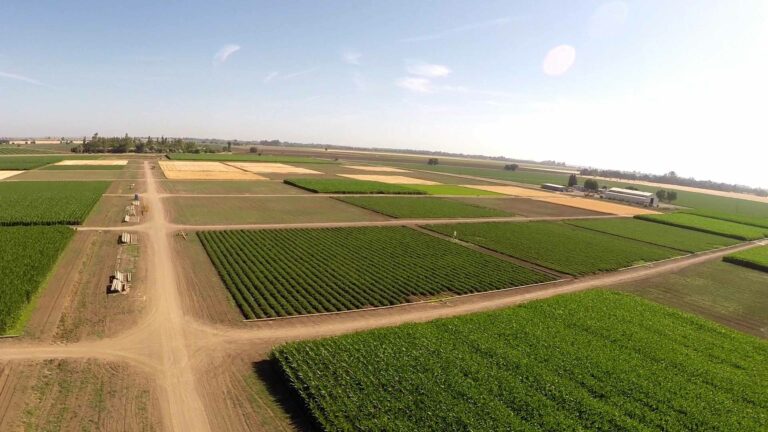
The hallmark of Russell Ranch’s sustainable agriculture research is the Century Experiment. Like the name suggests, scientists plan to conduct research on the same plot of land for 100 years. Starting in 1992, the Century Experiment is focused on tracking how different management practices affect soil health over a long time scale. 

Using tomatoes and corn as their main crops, they are comparing management practices on three different systems of farming: organic, conventional and mixed. One of the main practices they are comparing is the usage of compost and cover crops. The organic system implements cover cropping and adds compost to the soil, the conventional does neither of these things and the mixed system uses cover cropping but does not add compost to the soil. 

“One of the biggest things that differentiates the systems are the inputs of carbon and in a conventional system we don’t think at all about replacing what’s been removed, in terms of nutrients,” said Kate Scow, the director of Russell Ranch and a professor of soil science and microbial ecology.

Through comparing the results from the three systems, data has shown the importance of carbon for microbial communities to remain large and healthy. Microbes make the soil healthier, which in turn increases its crop yield and helps create more sustainable soil processes because there are less additional inputs required for the soil.

Yet, in order to see the changes in carbon levels, data needs to be collected over a long time frame. The amount of carbon in soil at a given time relies heavily on the amount of organic matter being added to the soil. The processes involved in carbon becoming stored in the soil takes a while. This requires the experiment to be maintained for years to observe the changes in carbon storage levels over time.

“Most experiments are just two, three years and you just don’t see things that take longer time to develop,” Scow said. 

Due to the magnitude of the experiment, they can confidently prove that the organic system with added compost has higher levels of carbon storage. It is not just the time scale of this experiment that is impressive and innovating, it is also the sheer size of land being researched.

“There are 72 plots and each plot is one acre in size so you can actually use the equipment that a farmer would use on a 300 arce or 1,000 arce farm,” said Radomir Schmidt, a researcher at Russell Ranch who focuses on soil microbial communities. 

It can be very hard to apply the findings of small scale research to larger scales which is why Russell Ranch’s Century Experiment is so unique. Other research institutes around the world are conducting long-term research, but UC Davis is able to perform large-scale research so that their findings are more applicable to the agricultural industry where large farms are the norm. 

“Other long term experiments are in small plots, like garden plots and what they don’t have is the realism of farming,” Scow said.

Farmers and policy makers are more willing to trust the results from the Century Experiment as it is realistic in the amount of land farmers would use. By using practices that are accurately representative of most farming in the world, the data they are finding can be more impactful. 

The Century Experiment is now over 20 years running. In a time of changing climate and environmental instability,  Russell Ranch research also often revolves around agroecology and sustainability. 

“We are conducting research on regenerative agriculture, conservation agriculture and resiliency agriculture and are really interested in resiliency, meaning the ability of a system to maintain productivity under biotic and abiotic changes,” Tautges said. 

It is through this research that they hope to keep soil healthy in the face of an already fluctuating climate that is changing due to anthropogenic causes.

“Soil is in trouble: globally, we lose a lot of topsoil to erosion, water runoff and soil is degraded as it loses carbon” Schmidt said.

To mitigate the negative effects of agricultural practices on soil, research is focused on “[f]iguring out what a healthy soil is in an agriculture cropping environment and what are the agricultural practices that create healthier soils,” according to Schmidt. 

This idea can be seen in their research on the effectiveness of different types of organic waste such as biochar and manure on improving soil health. Researchers hope to learn which organic waste can be beneficial to the soil and motivate farmers to start implementing these practices.

Beyond the research at Russell Ranch, it is also a place for education and outreach. They hold soil health workshops open to farmers that are focused on research findings such as cover cropping and usage of grazing to improve soil health. There is also an annual Field Day, which welcomes a diverse group of people ranging from those involved in the agricultural industry to policy makers. The outreach done at Russell Ranch allows their research to have a greater and broader impact on the agriculture industry and community.

The Russell Ranch Sustainable Agriculture Facility is home to larger endeavors such as the Century Experiment and also research that strives to improve agricultural practices so that  negative impacts on the environment are mitigated. For students hoping to either learn more about Russell Ranch or get involved, more information can be found on their website

Written by: Alma Meckler-Pacheco — science@theaggie.org

ASUCD fails to give students fair, ethical elections

Voter rights violated in Fall Quarter 2019 ASUCD elections

The maintenance of free and fair elections is of utmost importance to all members of the Editorial Board. We are beyond disappointed with how this quarter’s ASUCD elections have played out so far, and our faith in ASUCD has been irreparably damaged.

Any misstep during an election is cause for concern. At this point in time, allegations levied against the integrity of the Fall Quarter ASUCD elections have called their entire legitimacy into question.

This is not a partisan issue. This is not BASED or Thrive or liberal or conservative. We are looking beyond the toxicity and back-and-forth bickering that has plagued this association for far too long. This time around, political influence and unfair elections processes have marred our elections. We are witnessing the breakdown of good governance in ASUCD.

It was bad enough when there was no official elections chair nor official members of the Elections Committee. Considering the circumstances, we see that having the ASUCD Vice President serve as elections chair was probably the best option, as was appointing ex-officio members of the Senate to serve as committee members. Nonetheless, this situation is not normal nor should it be treated as such. The only option for fair elections is to have people serve in these roles who have been thoroughly vetted and duly appointed.

The icing on the cake, though, was the Election Committee’s failure to include the ballot measures for four proposed constitutional amendments on the ballot early Tuesday. The committee simply said this was a “procedural oversight.” We have to laugh. This was a denial of voting rights to a swath of ASUCD’s constituent members — the students whom the association is built to serve. Not only was this against the Student Bill of Rights, but failing to include these ballot measures directly contradicts the ASUCD bylaws. Asking students who had incorrect ballots to vote via email, tying their votes to their name, is a direct violation of their right to a secret ballot.

For those affected students, we are sorry that the Elections Committee has not properly upheld your rights.

This is not the first time an ASUCD or a UC student government’s elections have been marred by controversy. In the spring of 2017, ASUCD’s voter turnout was so abysmal in a special election that a measly 198 students voted. In fall of 2018, when only six people ran for six open Senate seats (ensuring their election to office), voter turnout was so poor that fewer than 7% of students voted. ASUCD is not the only UC student government where intense partisanship has affected good governance. Last year at UC Berkeley, when ASUC’s Judicial Council retroactively disqualified a number of elected students for campaign violations, ASUC’s student government was thrown into chaos inciting a chain reaction of official resignations.

Finally, the day before polls were set to close and a transparent and open tabulations event was set to be held, ASUCD elections officials abruptly canceled the event, citing “academic commitments.” The Elections Committee did not respond to three requests for comment on this matter and failed to explain how this is permissible under ASUCD code. This is an assault on transparency.

ASUCD: Get your act together. We, the students, elect you to conduct business in a fair, proper and ethical way. You have consistently failed to conduct our affairs in a way that makes us proud to be members of the association. Stop making ASUCD your political science experiment and focus on delivering the promises you made us when you were elected.

Written by: The Editorial Board

UCD Men’s Basketball 2019-20 season preview

Aggies enter the season looking to silence the doubters

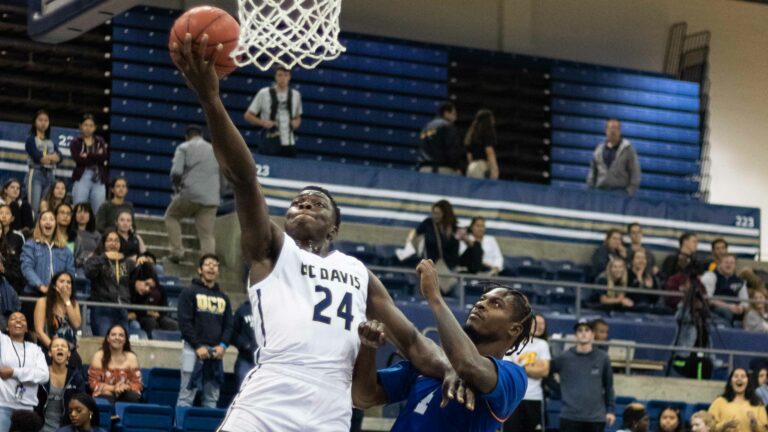
This November marks the beginning of a new season for the UC Davis men’s basketball team, which started off the 2019-20 campaign on Nov. 5 in the Windy City. Senior center Matt Neufeld led the Aggies with 15 points on 7-11 shooting, but UC Davis couldn’t quite match the firepower of Loyola Chicago, which coasted to a 82-48 win. Two days later, however, the Aggies rebounded and defeated William Jessup by 46 points in the home opener at The Pavilion. 

After finishing seventh in the Big West Conference last season and losing in overtime to Cal State Fullerton in the first round of the Big West Conference Tournament, this season is setting up to be an intriguing one for the Aggies. With the start of the new season, a lot remains up in the air in terms of the team’s starting rotation, as the long offseason and this hard-fought preseason will have every player competing for minutes.

After losing five seniors — four of whom were starters — at the conclusion of last year, including 2017-18 Big West Player of the Year TJ Shorts II, this season is a major  one for Coach Les and his staff as they try to establish an identity for a team with many new faces. Returning fifth-year seniors Neufeld, Joe Mooney, Stefan Gonzalez and Rogers Printup will likely be heavily relied upon given that they are the Aggies who possess the most experience on team. Their leadership both on and off the court will be a driving force of the team’s success. 

“What I like is we’re getting good leadership from our seniors,” head coach Jim Les said following the game on Nov. 7. “They’re all fifth-year guys, they all have a good understanding of our program. They’re giving a visual example day in and day out what we want Aggie basketball to look like.” 

Only two other players on this season’s roster, sophomore guards Damion Squire and Caleb Fuller, have prior playing experience at UC Davis. Squire and Fuller started in 12 and 7 games last year, respectively, and will look for expanded roles this upcoming season. 

Still, many of the rotations and playing time decisions have yet to be made this early in the season, giving the team’s seven new players something to fight for early on. 

With a roster turnover of this size comes the potential for young players to take on bigger roles, and freshman guards Elijah Pepper and Ezra Manjon seem to be putting themselves at the forefront of this conversation. 

Pepper, who was the 2017-18 Washington State 2A Player of the Year back in high school, has played significant minutes through the first two games of this season. While he struggled shooting the ball, he’s looking to be placed off the bench this season and has the potential to take on an expanded role moving forward. 

Manjon, likewise, has brought a lot of excitement and energy to this team, and could be the x-factor that the Aggies are looking for. Having led his high school to a CIF North Division I title last year, Manjon has started each of the first two games and finished second on the team in scoring in both contests. In the win over William Jessup, he poured in 16 points, five rebounds, and led the Aggies with seven assists. 

“[Manjon is] a really good player,” Les said. “He falls into line and we’ve had some really good point guards here over the years. He’s humble, he’s hungry, he works really hard — has a competitive spirit about him. We’re giving him the keys to the car, and so far he’s doing a good job of driving us around.” 

And so far, Manjon has felt quite comfortable in the driver’s seat, as evidenced by his contributions in the first two games. He credits his early success to his teammates and coaching staff.

“It’s easy to play with this team,” Manjon said. “My teammates are great, so it’s easy to play with them. I’m really comfortable with my coaches. They make it really easy for me to play.”

As was the case last year, the Aggies again have a tough non-conference schedule this season. Starting Nov. 14, the team will play a string of eight consecutive road games against teams like Cal, Utah and Idaho before returning to Davis on Dec. 7 to play Northern Illinois. This three-week stretch will be an important test for this team, as it looks to grow and improve, according to Les. 

“[We want to] continue to build on the momentum, especially on the defensive end,” Les explained. “We’re committed to going deep into our bench. We want to sustain the intensity, especially on defense. Go hard for four, five minutes, we’ll sub you out and throw another guy in there for four or five minutes. And we think that creates a really good pace for us that over forty minutes will wear people down.” 

Following the game on Dec. 7, the Aggies will have two more home contests to close out the non-conference schedule: a game  against Loyola Marymount on Dec. 16 and then another one against Holy Names for their first game in 2020 on Jan. 3. Sprinkled in before and in between those games are a few key road matchups against the University of San Diego, University of San Francisco and New Mexico. 

UC Davis will finally host its Big West Conference opener against UC Riverside on Jan. 9. The Aggies will have a tough conference schedule from the get-go, beginning on Jan. 18, when they travel to Northridge to take on the CSUN Matadors. The games that follow will be against Cal State Fullerton at home, Hawaii on the road, and defending Big West champion UC Irvine twice in the span of a week — making that four consecutive games against the conference’s top-five projected teams. UC Davis’ final game at the Pavilion will be against Hawaii on March 5 before the team closes out the regular season in Riverside on March 7. 

According to the Big West media poll, UC Davis is projected to finish in eighth, or second to last in the conference. The Aggies are well aware of the pre-season rankings, and they feel that, even though they lost a few important players from last season, they are on a mission to prove the doubters wrong. 

“We’re really just trying to prove something because people are doubting us right now, because we lost a lot of good players,” Manjon added. “But we’re just trying to prove that we’re still in it, we’re still good and we’re just trying to be aggressive with every team we [face].”

It’ll be a unique season for the Aggies as they adjust to a new roster and incorporate new faces onto this squad. They are confident, however, that they will be able to remain competitive this year. Veteran leadership combined with a young nucleus of players that possess the potential and energy to win have the Aggies excited about the upcoming season as they look to get back to their championship-winning days. 

Written by: Omar Navarro — sports@theaggie.org

Player Spotlight: Lauren Matias

UC Davis Women’s Volleyball star senior gives insight into her athletic career

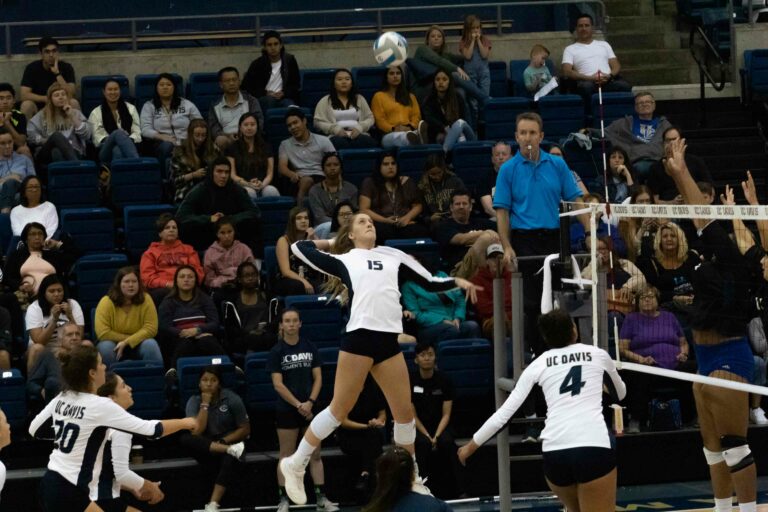
As students, we often have lives filled with constant “going” and rarely any breaks. Student athletes balance the stressors of school and everyday life on top of the mental and physical demands of playing a Division I sport. When it comes to balancing a busy life while excelling at one’s sport, UC Davis Women’s Volleyball senior outside hitter and team captain Lauren Matias leads by example for younger athletes.

Matias is a versatile, powerhouse player for the Aggies. Offensively, Matias has tallied over 900 kills in her career and a 2.75 kills per set ratio. On defense, she has amassed 492 digs thus far in her career. Going into the last three matches of the season, Matias leads all Aggies with 360 kills, is second on the team with 234 digs and has recorded 38 blocks  

Over the past three seasons, the Santa Cruz, Calif. native has accrued several accolades, such as All-Big West Freshmen Team in 2016 and multiple Big West Academic All-Conference Honors. The senior is now eyeing new achievements as she is in reach for the UC Davis single-season kills record. Through 23 matches, Matias ranks among the Big West Conference leaders in both total kills (fourth with 298) and kills per set (fifth, 3.65).  

She is a leader on the court statistically, but also a leader as a role model off it. Matias discussed her role as a leader and how the past year has changed her in an interview with The California Aggie.

The California Aggie: How much has changed for you as a player since your freshman season? What in particular has changed the most for you? 

Lauren Matias: I have changed immensely since my freshman season. I have matured so much as a leader and in my mental game. I was able to learn a lot of new skills while playing beach last spring. I gained so much confidence, learned a bunch of new shots, got into great shape, and dialed in on passing. These skills have transitioned so well into my indoor game and is helping me play at such a high level this season! Also, being a senior has transformed my work ethic because I am so competitive and determined to out-play some big-name teams. I also think my four years of experience has given me confidence and the ability to lead because our team is quite young. 

TCA: As a captain, what do you do in order to help the team reach its goals?

LM: I understand my role on this team and my ability to lead by the way I play and the energy my play brings. If I want to see a change in how we are playing, I know I have the ability to make it. I think that’s a very rewarding position and one I’ve come to embrace. In addition to leading through my actions, I try and instill confidence in my teammates and help others remain calm in high pressure situations because I have the experience of dealing with them. But, most importantly, I fight everyday for my teammates, because I love what I do and I understand that I’ll have these memories forever, so that makes my job easier and takes pressure off of me.

TCA: How do you best prepare for a game mentally?

LM: I tend to put way too much pressure on myself, so I try to get as relaxed as possible and remember that I won’t change the way I play for any opponent. I try and instill confidence in myself by visualizing myself performing really well. I will usually get some extra serve and pass reps with my bestie and teammate Ally Reyes — it helps me get in some more touches so I am confident when it comes to game time and helps me stay loose and goofy. 

TCA: What gets you on the court every game? Life can get busy and overwhelming, so how do you push yourself to play your hardest even if life may be piling up? 

LM: By my senior year, I have definitely learned what works best for me and how I personally manage time. I love school, so I enjoy studying and being productive, but it does add up — especially with volleyball every day — and I just got a part time job at a local preschool. I think experience helps a ton when managing all your priorities and recognizing when it’s time to do each of your responsibilities to the best of your ability. When 3 p.m. comes daily, I need to drop all my worries, stress or pressure and focus on practice and my team. Also, I understand that every one of my teammates are doing the same things and feeling the same stress, so we are not alone. I also try to have perspective every day, this had been a huge change in my mindset this senior year. I remind myself, “Will I remember this loss, or this essay that is giving me anxiety, a week or a month from now? Probably not.” This helps me put my life into perspective and only worry about things that actually matter. 

TCA: How have you grown athletically throughout your career as an Aggie? 

LM: Throughout my four years, I’ve perfected what works and does not work for me as an athlete. I had some injuries in the middle of my career that held me back and with time I learned how I needed to better prepare myself. So, I continued to do that the rest of my time here and I am enjoying a happy and healthy senior year. I have also learned from all the great players that have come through this program and tried to imitate what worked well for them. I think the biggest change isn’t so much physically, but my mentality shift my senior year and knowing this is my last opportunity to hit my peak. Emotionally and mentally, I am a different athlete and I am so proud of my progress! 

TCA: If you could give advice to your freshman self, what would it be? 

LM: To stand up for what you believe in, don’t be afraid to show your emotions, and to understand you are worthy and good enough to be on the court.

TCA: What is your biggest piece of advice for younger players on the team? 

LM: Put your teammates first 100% of the time. At the end of the day, you won’t 

remember wins/losses, but the relationships you’ve made and the lessons you’ve learned. And, to calm down. Lessen the pressure on yourself because the real way to unlock your best potential is to play with confidence and to know within yourself that you are good enough. No one can create that for you, you need to believe in yourself. Also, this journey goes by fast so be grateful everyday and do not take anything for granted — these memories will be with you forever. 

TCA: What do you believe are your core values as a leader? 

LM: I believe I am a very supportive leader and I try and lead my team through my actions and my words. I try to embody what I want our program to form into and hope that others will follow. I make sure to hold myself accountable to the things I ask of my teammates to earn respect. I think having influence on others comes from earning their respect. I will always prioritize my teammates and support them through anything. 

Written by: Frankie Veverka — sports@theaggie.org

Culture Corner with Caroline Rutten

The Arts Desks’ weekly picks for movies, books, music and television shows

Movie: “The Lighthouse”

In true Arts Desk fashion, a group of us spontaneously decided to see “The Lighthouse” at the Varsity Theater this past weekend. And, in true A24 fashion, the piece fits the mold of every film nerd’s perfect movie: black and white, framed in a boxy ratio and stellar performances from Willem Dafoe and Robert Pattinson. The film is haunting yet whimsical, combining allusions to 1800s sailor folklore and Greek mythology. The scene is set on two lighthouse keepers amidst a tremulous storm off the coast of Maine. The film dives deeper into their respective drifts into insanity, which includes sirens and the allure of the lighthouse itself. Their masculinities are tested and the lines between what is real and what is fantasy soon begin to blur.  

Book: “The Little Prince”

Yes, I chose a children’s book, but hear me out. It has come to my attention that, while most people know the basic premise of this classic children’s book, few remember its main themes or even read it in its entirety. What those readers have missed out on is an intergalactic prince learning how to truly love what is close to him and how to grapple with the changing tides of growing up. Within the context of an enchanting plot, this book covers topics that I need to be reminded of in the wake of my college graduation.  

Album: “It Might Be Time” by Tame Impala

Tame Impala will always be one of my favorite bands of all time, and the release of this single in anticipation of their upcoming album drop increases my excitement. The song follows the similar electronic, borderline-pop motif from their previous album “Currents” — an emphasis on repetitive beat and heavy keyboard. And while I personally crave grimey sounds similar to “Innerspeaker,” that is not to say “It Might Be Time” is not good. The uniqueness and composition of sound produced by Kevin Parker is still alive and well, and I anticipate such will continue into the release of their new album.  

TV Show: “Big Mouth” Season 3

I am continuously surprised by the constant flow of relevant subject matter and characters that are produced by “Big Mouth” creators Nick Kroll, Andrew Goldberg, Mark Levin and Jennifer Flackett. When I think that this Netflix program has exhausted everything encompassing puberty’s awkward years, they find another dimension that I must have suppressed in my memory. In this season, sexuality is explored in a variety of forms (no spoilers here) and even features a segment on the changing bodies of older women. As evident through the previous seasons, there is no topic the series shies away from, to our collective embarrassment and laughter. “Big Mouth” is available to stream on Netflix.

Written by: Caroline Rutten — arts@theaggie.org

Students recount being affected by power outages, store closures

0

Outages in Davis on Oct. 27 caused difficulty for students

The PG&E outages in California on Oct. 27 caused disruption in students’ schedules and closed down stores including Save Mart and the Safeway in North Davis. 

Some students, like second-year anthropology and history major Dhanya Indraganti, dealt with additional problems besides the lack of power. Indraganti, who lives in Anderson Place Apartments in North Davis, said the power was out in her apartment from 9:30 a.m. on Oct. 27 until 2:30 p.m. on Oct. 28. She said her apartment complex also did not have running water on Oct. 27 between mid-afternoon and night, preventing residents from using the restroom and obtaining water to drink throughout the day. 

“To deal with the [situation], I spent most of the day on campus, where I bought packaged lunch and did my homework,” Indraganti said via email. “I went to Target to get a big bottle of water in case the running water didn’t come back. I had to put my phone into extreme power saving mode so that I could keep my family updated on how I was doing.”

Save Mart closed on Oct. 27 but was back open on Monday afternoon, according to Victoria Castro, public affairs manager for the Save Mart Companies. 

“The store was impacted by the PG&E power outage that the Davis area experienced last week,” Castro said in an email statement. “We were able to minimize our fresh loss [through] the use of […] refrigerated and frozen trucks. Our priority was our customers and getting the store open and fully stocked for the community.”

Second-year material science and engineering major Rohit Mokkarala lives in North Davis in La Salle Apartments and was also affected by the outages. The power in La Salle Apartments was out for about an hour, and Mokkarala spent that time talking with housemates and cleaning. 

“I tried to go to Save Mart [on the] afternoon [of Oct. 27], but it was closed without any prior warning,” Mokkarala said via email. “There was a piece of paper that said ‘closed due to power outages’ on the door. The following Monday, the store didn’t have a full stock of their main produce, mainly frozen vegetables and other refrigerated goods. Other than this, it was as usual.”

Indraganti was doing homework on Sunday morning and only realized the power was off when she went into her kitchen to make tea. 

“I realized the power went out, and therefore my electric stove was also useless,” Indraganti said via email. “I couldn’t cook all day, and this was somewhat upsetting, because Sunday was Diwali, according to the Hindi Calendar. And since I had homework due that night, I had to go to school to finish it and submit it on Canvas.” 

Indraganti used to live in India and mentioned that despite “frequently [having] power outages” there, she was surprisingly stressed about the situation. 

“I think if PG&E or our apartment management warned us about the winds and the likelihood of power outages, it would have prepared me better,” Indraganti said via email.

Written by: Anjini Venugopal — features@theaggie.org