57 F
Davis

Davis, California

Sunday, December 21, 2025
Home Blog Page 389

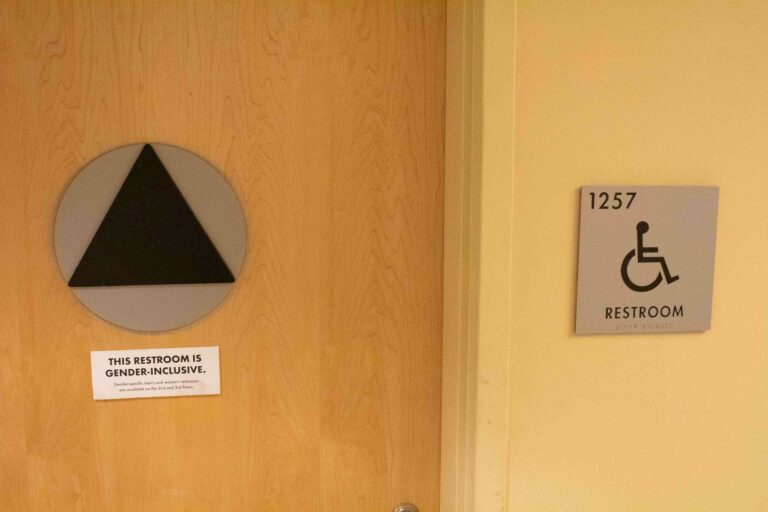
The Best Campus Bathrooms: A symphony of alleviation

Exploration of restrooms provides a glimpse into the very heart of UC Davis

The history of man could be split in two distinct eras: before indoor plumbing and after. Many would point to the discovery of fire or the invention of the wheel as the pinnacle of human ingenuity, but the true peak of cleverness lies elsewhere. It lies in the corner of every house, apartment, shop, park and office. It is right under our noses, used constantly and without remorse. I am speaking, of course, about the humble yet absolute infinite concept that is the bathroom. At UC Davis, we have been blessed with many an elegant latrine, some of which may rival even Buckingham Palace in their splendor. Perhaps, if we are speaking truthfully, they do not. But some of them are pretty nice, and an exploration into which ones specifically excel provides a glimpse into the very heart of UC Davis. 

   To begin, let us make note of the outright worst bathrooms on campus, testaments to the hubris of man and the awful things that come with it. First is the bathroom on the second floor of Cruess Hall, the Design Building. As a Design Major, I spend vast stretches of time at Cruess: sketching, measuring and cutting — all activities I adore. What don’t I adore? Walking into a bathroom that is pitch black because the light is activated by movement, but which always takes a few seconds to register, leaving you literally and figuratively in the dark. The only thing worse than the lack of sight is the pungent smell. According to Tristan Gibson, a fourth-year design major, “It smells like someone drank six cups of coffee and then pissed on the floor.” 

Another bathroom to avoid is the bathroom in Wellman Hall — dingy, smelly and crusty, it takes the prize of the most basement-esque restroom. And, of course, avoid the ground floor Olson Hall bathrooms, which are allegedly haunted by the ghosts of Aggies who did not pass their mandatory UWP courses. 

  To focus on the bad, however, would be going against everything UC Davis and its complex waste disposal system stands for. So let’s just jump right into the very best, the creme de la creme of what our school has to offer in terms of lavatory relief. 

   For many, California Hall represents everything a bathroom should be, and nothing less. Clean to every last detail, with sprawling mirrors and facilities that actually work, California is an example of a bathroom that just knocks all other bathrooms out of the park — in Socrates’ World of Forms, this is the bathroom waiting for you. 

“California Hall is the place to be, and the place to pee,” said Natalie Wright, a third-year international relations major. It’s also reportedly stocked with menstrual products, a welcome embrace for those that are in need of such items. 

Although California Hall houses a bathroom that is simply good, it misses some of the personality of other places to go and freshen up. A restroom that embodies the pure vibing out so prized among latrines is one located in Veihmeyer Hall. You know the one. Nestled underneath a staircase, a colloquial Hobbit Hole, this bathroom is outfitted with a sink, toilet, shower and urinal. It’s as if you’ve escaped the crowded campus of UC Davis and are suddenly transported to a better, simpler time. You are the ruler of your domain. A conqueror among undergraduates. You are the sole resident of the coziest bathroom on campus. 

The next entry may be controversial due to it’s intense stench of male sweat, embodying the very essence of “I am a man, please spot me.” The men’s restroom at the ARC, on the first floor directly across from the rock climbing wall, is one that stunned me upon first entry. The mint green tiles and lockers lining the walls resemble a Wes Anderson film. The beautiful pastel palettes of a modern-day auteur inside a place that smells like bottled testosterone is surprising and mesmerizing. The facilities themselves are quite nice as well — numerous and clean.  

They say ethics in journalism is dead, and that is exactly why the next lavatory mentioned is one located in Lower Freeborn Hall, right around the corner from the office of The California Aggie. Because of its location, this bathroom is hardly ever used, and it retains the atmosphere of a facility that hasn’t been touched in what feels like half a century. The mood is one that evokes images of the 70s with its warm lighting, pink stalls and just a little nose candy on the bottom of the mirror. If there was ever a bathroom where you were encouraged to wear a corduroy blazer, this is the one. 

The last truly great UC Davis restroom resides in Surge III, or, as it is known among students, The Grove. Specifically, the lavatory immediately on the left by the main entrance. A masterclass in great restroom design, with one toilet and one urinal, it emphasizes getting your business done on your own time. Just as well, it is perhaps the only restroom that locks from the outside. This means you have the entire place to yourself, if only for a moment. For some, the lack of ornamentation leaves something to be desired, but the true beauty of the restroom is in its simplicity. A vintage orange hue adorns the doors and floor, but not much else. The absence of decoration is what gives it it’s artistry and charm. 

UC Davis is a world-class institution, one that inspires passion among those who attend and those who wish to. In many ways, what makes it so great are the little things: aspects that might go unnoticed unless explicitly highlighted. In my eyes, the bathrooms are one of those aspects, hiding in plain sight. They are used everyday, but rarely mentioned. They are the sites of relief, of tears and smiles, of both tragedy and farce. It is high time the students of UC Davis acknowledge just how good they have it. It is time for the song of the campus bathrooms to be sung. 

Written By: Ilya Shrayber — arts@theaggie.org

Students in Camp Kesem, which hosts camps for children who have parents with cancer, talk about the organization

0

The organization is in the process of finding new counselors passionate about the cause 

Camp Kesem is a national nonprofit organization that holds week-long summer camps for children ages six to 18 who have parents with cancer or who have been affected by a parent’s cancer. The organization is made possible entirely by the efforts of college students, with 116 chapters at different colleges across the nation serving over 8,000 campers last year, many who get involved year after year.

These camps, funded in full through various fundraising efforts by each of the chapters to avoid placing additional costs on the families of campers, strive to guide the children through this difficult period of their life by ensuring that each child has a support system throughout and after a parent’s cancer.

The UC Davis chapter of Camp Kesem is able to hold two week-long sessions of camp because of the size of the chapter as well as the dedication and passion for the organization and its mission by the student counselors. Some counselors have personal experiences with cancer that inspired them to join Kesem, however, many do not and instead became counselors as a way to change others’ lives for the better. 

One of the quirks of camp is the nicknames given to each of the counselors. The campers only know the counselors’ camp names, and often the campers themselves come up with their own camp names during the week. Using nicknames at camp helps create a separate world for the campers, helping to alleviate stressors from back home and make camp seem “magical,” living up to the namesake of Kesem, which means magic in Hebrew. 

Bhavna “Sweet Pea” Kodira, a fourth-year neurology, physiology and behavior major and volunteer recruitment coordinator for Camp Kesem, was motivated to become a counselor because of her personal history with cancer.

“Both my brother and I were diagnosed with cancer within a year of each other when I was in high school, so coming to college I was looking for something that I could connect with, and when I saw Kesem I was just instantly drawn,” Kodira said. “I’ve always been someone who’s loved working with kids and I couldn’t find anything that brought my two passions together, so it was something really cool that I stumbled upon and I couldn’t imagine my college career without it now.”

The UC Davis chapter receives mass amounts of applications when they open each Fall Quarter, and the application and interview process is universally regarded around campus as being competitive. 

Sally “Yams” Ellberg, a fourth-year student majoring in biological sciences, applied and was accepted as a counselor for Kesem after hearing about it from several mentors on campus. 

“I was kind of having a tough time being in a school with 36,000 students trying to navigate my outlet and, once I found out about Kesem, it was something that I was dying to be a part of — not just [for] the social aspect, but the purpose and why we all do it,” Ellberg said. “I think that’s what makes our organization so unique from others is that we all share this common goal to do something good and give back to children who are going through [something] unimaginable. Not all the counselors have experienced something that these children do, it doesn’t mean that we don’t get something out of it.”

Members of the organization interview by The California are deeply passionate and give their all when it comes to fundraising and recruiting new counselors. Many also talk about the “magic” that the camp sparks. Maya “Bamba” Barak, a fourth-year international relations major who has been involved in Camp Kesem since her freshman year, explained the “fantastical” aspect of camp.

“We do talk about cancer at camp, and we do talk about what their lives are like and their friends at home and middle school and high school, but we also try our hardest to distract them from everything so that they can just be kids so that their burdens are lifted off their shoulders,” Barak said. “[We want to] bring them into a setting a camp that’s just so separate from everything that’s real and make it a fantasy for them for a week.”

The counselors also spoke expressively of an experience they’ve had during cabin chat, a nightly conversation each counselor has with the campers they are assigned. Conversations can range from the group’s favorite part of the day to more personal topics. When they ask the question of what one would say to cancer if it manifested in a physical form, it often elicits a response from all age groups that sticks with many of the counselors for its power and maturity. 

“A lot of campers say, ‘Thank you. You’re a terrible thing but you gave me Kesem,’” Kodira said. “Everytime I hear that I get chills from how strong of answer [that is] to hear from a 10-year-old or even an 18-year-old.”

When asked about their favorite part of camp, all three of the counselors who spoke to The Aggie had trouble finding the right words that would encapsulate their passion for Kesem. 

“It’s given me a community that I can be unapologetically myself and it’s given me a community that [gives me] more support than I can ever imagine,” Ellberg said. “I feel like I’m not doing it justice right now.”

Each of the counselors encouraged anyone who has the slightest interest in Kesem to apply to be a counselor for the program. Anyone can apply, regardless of personal history with cancer, as long as they are enthusiastic about the cause and working with children. 

“It’s hard to fully say before applying what it’s going to do to your life, but everyone I’ve asked, it’s easily the best thing that they’ve done,” Kodira said.

Applications for Camp Kesem will be open from Nov. 6 to Dec. 31 and can be accessed online through the UC Davis Camp Kesem Facebook page

Written by: Lei Otsuka — features@theaggie.org

Humor: Students stage an intervention on a crowded sidewalk

Do you know why we’re here? This is an intervention. 

At noon last Tuesday, an intervention was held for a student. 

The intervention took place in the high-traffic sidewalk between Dutton and Young Hall. The set-up included three fold-out chairs, notebooks filled with emotional sentiments and a whiteboard detailing their course of action. 

The student, Cole Rogers, was stopped by his friends as they were casually walking. “Cole, this is an intervention.”
Cole’s pupils were thrust out of their sockets in shock. He took out his AirPods. “Shit, no, not here.”
His friends, Sammy Bowers and Jack Johnson, nodded solemnly. “It’s time to go public.”

Students were starting to notice the AA-like meeting and were forced to dangerously walk on the road to pass them. One unknown individual told them to go f**k themselves, then continued on their route.
“Jack, get the chairs out,” Sammy ordered. He set up the folding chairs in a circle as Sammy arranged the whiteboard on a stand. 

As Jack and Sammy discussed Cole’s transgressions, our source lost contact with the group when a large crowd of nine protesters walked in between them. The source got back in touch with the group as Jack and Sammy were sharing their feelings.

Jack was sobbing, holding up a piece of notebook paper with his thoughts. “Lean into that pain, Jack. Lean in,” Sammy said, guiding Jack through his emotional breakthrough (in regards to Cole). 

“Oh, I’m leaning in, Sammy, I’m leaning into the waterfall of emotions that is cascading down my consciousness. It envelops me in its cold, refreshing embrace. I feel naked, like an infant crawling after my mother.”

This continued for several minutes as Jack unpacked the inner-workings of his consciousness. By the time it was Sammy’s turn to become an emotional baby, there was a flow-chart on the whiteboard detailing how Cole would seek retribution. The source was unable to decipher the chaotic details on the whiteboard. 

Cole finally gave in and let out a yelp of wretched pain. “I have been intervened,” he whimpered. His tearful confession caused even more salty secretions to pour out of his friends’ eyes as they eventually all began crawling on the floor.

The intervention lasted for a few more hours as Sammy took on the role of a psychoanalyst and considered Cole’s childhood in regards to his current state. They concluded with a group hug and let out what our source says appeared to be an empowering chant in an unknown language.

Written by: Kelsey Stewart — kcstewart@ucdavis.edu 

(This article is humor and/or satire, and its content is purely fictional. The story and the names of “sources” are fictionalized.)

The NFL’s diversity flaws

The NFL’s ongoing issues with racial inequality are a stark reflection of our society

The racial divide in the NFL is wider than ever. Given that only three of the 32 teams in the league have a minority head coach, it should come as no surprise that the NFL just earned its lowest score for racial and gender diversity hiring in 15 years. It is ridiculous that 90% of NFL head coaches are white when less than 30% of NFL players are.

Yet none of this is surprising at all. Who’s surprised when a bunch of rich white men are in charge of anything? It is the same reason why it took so long for the league to actually see multiple black quarterbacks. There is a racial bias built into the cracks of the NFL. Even this year’s leading MVP candidate, Lamar Jackson, was told by multiple teams that he would have to play a position other than quarterback because he was too athletic. 

The quarterback and center, two positions which are seen as the intellectual cores on offense, have historically been white –– white players still make up more than 80% of each position. This doesn’t mean that the teams drafting and signing these players are explicitly racist, it means that this issue is systemically racist and relates back to how we talk about talent in major media. 

A 2014 Deadspin investigation found that the word “leader” was more than two times as likely to appear in scouting reports for white players than it was for black players. And terms like “aggressive,” “discipline” and “disruptive” were used more than twice as often for black players than white players. 

The NFL has done very little to address this issue. The Rooney Rule, which was first implemented in 2003 and expanded most recently in 2018, mandates that teams must interview at least one or more “diverse” candidates for head coach, general manager and “equivalent” front office positions. The Rooney Rule has all the right intentions, but it cannot possibly begin to make up for the years and years of racial inequality that reflects the unequal practices we still see today. 

The most obvious reason for this? The NFL is just another reflection of the racial inequality of our society –– where white families earn $100 in income for every $57 earned by black families. The NFL’s system of predominantly white-owned franchises earning millions and billions of dollars off breaking-down the bodies of its majority black athletes reeks of that same racial inequality. Sure these athletes can get paid millions for their work on the field, but they should have the ability to take ownership of the league as well. It took the greatest NBA player of all time — Michael Jordan (owner of the Charlotte Hornets) — for professional sports to finally have an owner who understands what it is like to be a balck athlete in a white-dominated ownership system. 

The NFL has the same issue that our government has today — it is over-represented at its highest level by white men. In a sport where white players are nowhere near a majority, it is baffling that the overwhelming majority of coaches, GMs, owners and league managers are white. 

Texans owner Bob McNair even went so far as to refer to NFL players as “inmates” during the 2017 season when players were protesting during the national anthem. “We can’t have inmates running the prison,” McNair said. McNair issued an apology, only to later say, “the main thing I regret is apologizing.” 

The ownership level of the NFL will always be hard to crack in a country that makes it far too easy for the richest among us, the top 1%, to stay at the top, forcing others to struggle underneath. 

These owners are not elected to their positions where they run one of the 32 largest franchises in the world — they buy the position with billions of dollars. There are only two people of color out of the 32 owners in the NFL. But this problem is not just limited to the NFL: the three biggest American sports have just six people of color as majority owners. Old money dies hard. 

In a sport dominated by the success of black athletes, it is absurd that the same league is primarily owned, operated and profited off of by old, white men. The era of legacy hires in the NFL should have been over long ago, yet it still persists today. It needs to end now. 

Written by: Calvin Coffee –– cscoffee@ucdavis.edu

Disclaimer: The views and opinions expressed by individual columnists belong to the columnists alone and do not necessarily indicate the views and opinions held by The California Aggie

Police Logs

0

Dog barks out of loneliness

November 1

“Red Fiat or Mini Cooper driver irratically [sic]. Driver honking and causing disturbance.”

“Reporting party has filled out the online packet.”

November 2

“On-going for last hour. Dog barking. No one home.”

“Guests have their bikes parked on reporting party’s lawn and they knocked over their table.”

November 4

“Reporting party concerned about bike theft or bike part — theft taking place at the bike racks next to location as subject was seen removing a bike wheel from locked bike.”

“Five underaged subjects drinking alcohol in the park.”

“Vehicle driving continuously around parking lot, parking and turning off car to then start up again.”

November 5

“Reporting party witnessed someone take something off of a train and put it onto the truck of the car.”

November 6

“Vehicle blocking driveway, request tow if unable to reach a resolution as she has to leave for work.”

Davis Pedalfest: A celebration of bicycles

0

Davis bike advocacy groups host bike festival to encourage bicycle use 

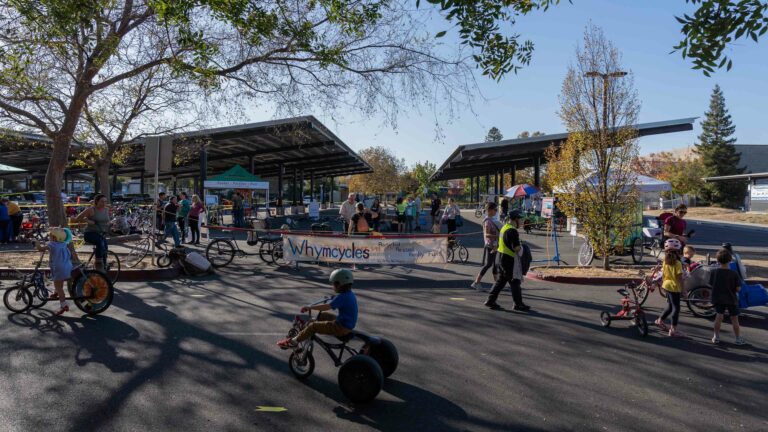
The Davis Pedalfest on Nov. 3 exhibited around 20 different types of bicycles for participants to learn about and experience at the Veterans Theater and Community Park. It was a joint effort of the Bike Campaign and Bike Garage, the City’s Safe Routes to School program, the Bike-Pedestrian program and Bike Davis.

Maria Contreras Tebbutt, a director of the Pedalfest and the founder of Bike Campaign and Bike Garage, said the event aimed to encourage more people to use bikes as daily transportation. 

        “We show a variety of bicycles at the Pedalfest so that people can see and experience them and begin to think about how they could enjoy life more using these bicycles as a way to be outside, in nature, with other people and a part of the community,” Tebbutt said.

        The Pedalfest consisted of two main activities: a bicycle film festival and a fun zone for test rides. The event showed assorted cargo bikes, e-bikes, trishaws and WhymCycles. Peter Wagner created the WhymCycles in Davis, which are taller bikes. 

The Pedalfest also introduced a side-by-side trike, specially designed for physically disabled people to ride. Tebbutt said there is always a right kind of bicycle for any needs.

        David Hickman, a participant at the Pedalfest, tried out a cargo bike with his children and described it as a unique experience.

“We have a bike trailer, so this is similar, but it is an interesting design,” Hickman said. “It takes a while to get used to it because the steering is a little bit different.”

        Hickman also said he bikes to work every day and will encourage his children to bike when they are old enough. 

        Leonardo Martinez, a fourth-year sustainable environmental design major and a volunteer for Cool Davis, which had a booth at the Pedalfest, advocated for sustainability and renewable energy use. 

 “We encourage the community to bike more than they do,” Martinez said. “Davis is really bike-friendly, but not everybody — or not as many people as you think — bikes to school or work.”

 Martinez also emphasized the need for collaboration in terms of making changes in society.

 “If you have access to a bike, then you should definitely take advantage of it and ride as much as you can to contribute to the shift of behavioral norms of society,” Martinez said. “It takes a large movement to get people to think differently.”

 Nico Fauchier-Magnan, one of the hosts at the Pedalfest, as well as the President of Bike Davis, introduced “Motherload,” a featured movie at the event. He also expressed his passion for bicycles.

 “The thing I love about ‘Motherload’ is that it isn’t just about transportation,” Magnan said. “But it really also speaks to something bigger: trying to connect with nature, with our neighbors and with our community.”

 Magnan also addressed the overarching goal which most bicycle advocacy groups strive for.

“What we are really asking for is a city that has vibrant streets, people walking and biking, neighbors chatting,” Magnan said. “We want our streets to be a public space that connects us and makes us feel like a community rather than just a feeling of transportation that isolates us.”

       While the Pedalfest advocated for more bicycle use, it also provided mechanical aids for participants’ bikes. 

        “Most people don’t know how to maintain their bicycles,” Tebbutt said. “Bicycles are kind of like a big dog or a small horse, and [they have] to be maintained.”        

        The bicycle is the official symbol of the City of Davis, and the Pedalfest brought the community together to celebrate this tradition, promoting biking as a healthy and pleasant lifestyle.   

        “We love bikes,” Tebbutt said. “We love people on bikes.” 

Written by: Rui Ding — city@theaggie.org

Bulosan Center for Filipino Studies receives $1M in state funding

Funding to support wide-scale Filipino research survey, media justice lab, advocacy, education efforts

The Bulosan Center for Filipino Studies at UC Davis received a $1 million allocation in state funding to expand its work in Filipino research studies, advocacy and education. 

Dr. Robyn Rodriguez, professor and chair of the Department of Asian American Studies, launched the Bulosan Center for Filipino Studies initiative in 2018. With Filipino Americans being one of the largest and fastest growing Asian American groups, Rodriguez saw the need to create a center for Filipino studies. 

The center builds on the work of the Welga Project – an initiative led by Rodriguez and Director of Archives and Public History Jason Sarmiento – that focused on documenting and preserving the history of Filipino Americans’ contribution to the farmworker movement in California, such as with the Delano Grape Strike. 

With its inception as a grassroots community effort, the Bulosan Center developed into the first and only research center focused on the Filipino American diasporic experience based at a major research university in the country. 

A team of undergraduate interns and leaders, including UC Davis doctoral students and scholar-activists, continue to contribute to the field of critical Filipino studies on a local and national scale and maintain their pillars of research, advocacy, and education through the Bulosan Center. 

“In just 12 months, we preserved Filipino American history through the Welga Digital Archive; we developed curriculum with K-12 teachers in support of AB123 based on the archive’s resources; we disseminated the Filipino American experience to hundreds of Filipino American community members through exhibitions, workshops and lectures; we convened young Filipino American scholars at what will be an annual national research conference on the Filipino American studies [and] we partnered with documentary filmmakers on projects highlighting the trials, tribulations and triumphs of our community,” Rodriguez said at a press conference. “We did all of this and more with modest funds we received exclusively from our community.” 

Rodriguez thanked California Assembly Member Rob Bonta, the first Filipino American state legislator in California, for championing the $1 million state funding that was announced during Filipino American History Month in October.

“I hope [the funding] is a down payment on ongoing funding and we’ll have to keep fighting for it every year, but this is a good first-time effort by all of us fighting together,” Bonta said at a press conference. 

One of the projects being pursued with the funding is a wide-scale Filipino survey of health and well-being in California – a project that has not been done to a great extent since David Takeuchi’s Filipino American Community Epidemiological Study (FACES) in 1995. The goal of this survey is to translate Filipino American academic research for broader consumption. 

“Through this research process, we are not only equipping [community members] with the resources to talk about their concerns grounded in empirical data, but we’re also fostering this data collection movement – this idea that our community is valuable and nobody has looked at us, but we need to be represented in these things,” said RJ Taggueg, a Ph.D student in the UC Davis Department of Sociology Ph.D. and the director of research for the Bulosan Center. 

For this centerpiece project, Taggueg said he and his team of interns are joined by community partners that focus on topics specific to Filipino American health and well-being, such as the migrant experience, youth mental health, labor, employment and housing issues. Taggueg aims to figure out the questions that they need to answer about their communities, what issues they face and how to get the information to be able to equip them with the necessary tools to push Filipino studies forward. 

“Later on down the line, this data will also be useful for other researchers to no longer be hindered by the fact that there just isn’t any data out there beyond what you can glean off of the big national surveys like the census,” Taggueg said. “When you take a subset of that big data set, you get a very limited picture of what is going on because those questions are not particular to the Filipinx community. Ultimately, we wanted to pursue a project that not only speaks to the Filipinx experience, but will be used by the community moving forward.”

Taggueg acknowledged that they would not be able to pursue this project without the $1 million in funding and credits Rodriguez for allowing him to pursue this work with the support that only the center can provide.

“I think it also says something that the state of California is the one funding this because it just demonstrates how valuable the center is,” Taggueg said. “It starts this conversation that the Filipinx community here in California in particular is worthy enough for investment.” 

Aside from the research survey, the funding will also support the launch of a lab for new media justice for the center. The prospective lab will encourage experimentation with digital and other forms of media to document the stories of everyday Fiipino Americans as they struggle against racism, heterosexism, homophobia, exploitation, and other forms of marginalization. 

“Most importantly, we will be ensuring future scholars complete their Ph.D.’s at UC Davis and that the next generation of FilAm scholars are on a path to following [in] their footsteps,” Rodriguez said. 

The Bulosan Center has also provided the opportunity for many undergraduate interns to learn more about their culture and history, as well as be more involved in their community as leaders. 

“I got into college and I really wanted to make change through government and policy, and then I joined the Bulosan Center and it taught me about community organizing and advocacy,” said Catherine Deguzman, a second-year Asian American studies and political science double major and intern at the Bulosan Center. “It showed me the power of the people, which really taught me that you don’t have to be in a government position to make change.” 

Abbygayle Principe, a fifth-year history major and one of the original Bulosan Center interns, said that she hopes the center serves as a source of empowerment for Filipino youth to not feel ashamed of where they come from or who they are. She wants them to reclaim their identities and be proud, especially as the center has supported the implementation of Filipino studies in K-12 curriculum throughout California. 

“I hope the youth are able to see that they are studying more than just George Washington and Benjamin Franklin and that there are visionaries that look just like them that have made history,” Principe said. “It’s just so empowering to think that maybe some young Filipina girl somewhere in a very white dominated area can learn about someone her skin color that did something amazing and how empowering that mentality must be for someone her age to grow up with.”

The center draws its mission from the life’s work of Carlos Bulosan, an immigrant worker, activist and writer who wrote about the Filipino experience in California through the book “America is in the Heart.” Rodriguez, Taggueg and other Bulosan Center team members – such as Sarmiento, Associate Director Wayne Jopanda, Director of Operations Kirby Araullo, Director of Policy and Community Engagement Katherine Nasol, Senior Historian Stacey Salinas and Senior Communications Editor Nick Garcia – aim to continue Bulosan’s legacy, provide other people all across the nation with the opportunity to pursue Filipino studies and divert more resources to their communities.  

“This funding represents a vote of confidence by the California state legislature in the importance of research that lifts up the stories, experiences, contributions and struggles of our community,” Rodriguez said.

Written by: Graschelle Fariñas Hipolito — campus@theaggie.org

Habitat fragmentation threat to biodiversity, research shows

Low human impact areas too isolated, may be detrimental to environment

Half the Earth must be set aside for nature in order to prevent a mass extinction and preserve biodiversity, according to biologist and pulitzer winner Edward O. Wilson. With about 200 species going extinct every day, many argue that a serious conversation about the conservation of biodiversity is dramatically in need. There is still the opportunity to protect such vast areas of the planet, according to a recent study by the National Geographic Society and co-authored by UC Davis conservationist researcher Jason Riggio. 

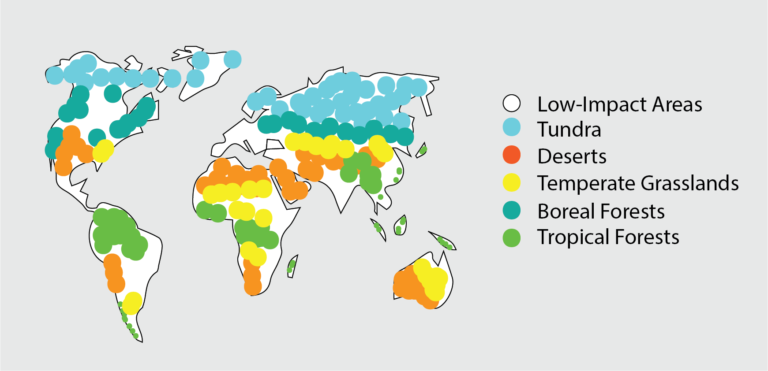
The study — which was released in early October as a global inventory — revealed that 56% of the planet, not including permanent ice and snow, is in low impact areas (LIA) distributed non-randomly across all continents and biomes. The areas were revealed to be severely fragmented, in the sense that there is little contact between multiple LIAs, reducing the opportunities for species in these areas to intermingle. While the discovery of vast amounts of relatively untouched wilderness provides hope to those who focus on conservation, it is this isolation of these LIA fragments that appears to be the real threat to biodiversity. 

This study also proclaims that there is still an opportunity to protect the areas of the earth will little to no human impact for the benefit of humans and the overall environment. Lead author of the study Andrew Jacobson, a geographic information systems professor at Catawba College in North Carolina, considers these results “conservative” though. 

“There are likely more patches that are smaller and with more edge […] than what we show,” Jacobson said. “Because we were doing a global analysis, we couldn’t afford to have a miniscule grain [plot of land] size, and so inevitably we are missing some of these fragmentation patches at a really fine-grained scale.”

The areas identified were not evenly distributed across biomes, however. Tropical dry forests and temperate grasslands were discovered to be extensively converted, with high levels of human impact. Ninety percent of tundra and boreal forests, on the flip side, were LIAs, making them the least converted. It is essential to acknowledge this disparity, according to Riggio. 

“There is this story that half the planet is low human impact,” Riggio said. “But most of what remains, almost three-fourths, is in high, cold and dry places.” 

Riggio thinks it is important to highlight that “[a]reas with the most biodiversity and the most threatened species do not have half their land” when the discussion on efforts toward conservation take place 

“The distribution of these places is biased towards inhospitable land,” Riggio said.

LIAs, in this context, do not mean areas completely devoid of human presence. Indigenous lands and lands with few people and livestock were designated as LIAs for this study.

“By our process, we did not necessarily exclude areas that had people. We did not set any type of base, any type of threshold, say, if we know there is one person in this landscape then it’s no longer a low impact area,” Jacobson said. “As long as the lands weren’t converted to some urban area — or there weren’t extensive croplands […]  — and have relatively low densities of people, it was still a low impact area, so a lot of these indigenous lands were probably captured within those low impact areas.”

National Geographic became interested in this subject in an attempt to find what was initially referred to as “the last wildplaces,” according to Riggio. What it evolved into was this study of how much land remains in a natural state to help set a target for the Convention of Biological Diversity (CBD) 2020. 

The CBD is a United Nations sanctioned international legally-binding treaty. 

“It is an internationally agreed plan to save biodiversity for future generation using specific targets as to the extent of terrestrial and marine areas to be protected,” said Tim Caro, a conservation biologist and behavior and evolutionary ecologist, via email.

Currently, only 15% of the Earth’s land is protected, although the push to dramatically raise protected area targets to 50% exists. 

“Our goal was accessing what percentage of the planet had a low human impact within the context of the Convention of Biological Diversity 2020 to set an ambitious target for land conservation,” Riggio said.

The intentions of the study were to see what remains and how those ambitious conservation targets could be achieved. 

This issue is not as distant or removed as it may seem. The Berryessa Snow Mountain National Monument, for instance, is an example of a LIA. Caro said the study is “an academic wake-up call to the devastating impact of humans on natural places.” 

Habitat fragmentation and its effects had received little attention prior to this study, and it shows that while much damage has been done, there is still a chance for preservation. Already, governments globally are taking steps to ease the burden of fragmentation on wild populations. 

Building wildlife corridors, which Riggio and Caro have studied, and linking habitat patches are steps toward maintaining the genetic variability of threatened species and alleviating the threats fragmentation creates. California’s own wildlife overpass is a testament to the genuine effort being put into solving habitat fragmentation. 

Written by: Husn Kharabanda — science@theaggie.org

West Village: Utopic living or living nightmare?

Students at West Village share conflicting experiences

In the search for off-campus housing, renting an apartment at West Village is a popular option for students and other members of the UC Davis community. For some, West Village is an attractive choice because of the newly-built modern apartments, pre-furnished units and amenities. Conversely, some individuals are discouraged by West Village’s high rent prices and negative reviews from previous tenants. 

The West Village apartments occupy a portion of the 5,300 acres of land owned by UC Davis. The large housing community has been managed by Greystar ever since it first opened in 2011, which proved to be a difficult year for the company. Upon opening the apartments up to new tenants, West Village delayed residents’ move-in day, placing the intended residents into nearby hotels rooms and compensating them for their troubles with Visa gift cards. 

Since then, the leasing company has received mixed reviews. On Yelp, there are 99 one-star reviews, 61 four-star reviews and 52-five star reviews. Many of these negative reviews claim that management at West Village did not appropriately respond to resident concerns and failed to return security deposits back to those who moved out. 

“I lived there last year [and] they allowed my housemate to harass me for months without doing anything,” said Alyssa St. John, a fourth-year animal science major. “They took [seven] months to solve an issue of my upstairs neighbor smoking inside so much that it leaked through my air vents. The front doors also leaked so much from the rain that it warped our floor and the wall fell apart. Maintenance came, made it worse, never fixed it and they charged my housemates [and] I for the damage.”

St. John claims that management made up “bad excuses” as to why they could not solve issues in her apartment. She said the company took too long to address issues and she needed to complain multiple times — the list, she said, goes on and on. St. John no longer lives at West Village and said her bad experience living there last year is “100 percent” the reason she moved.

Greystar at West Village did not respond to The California Aggie’s request for a statement over these allegations. 

Although there are negative Yelp reviews detailing experiences similar to those St. John faced, there are also many residents who enjoy living at West Village and attest that management is responsive to their needs. 

“Usually, when we have a problem, someone always comes and fixes it within a week,” said Noelle Tran, a second-year wildlife, fish and conservation major. “I think that’s fair because of how big West Village is.”

Tran has just moved into West Village this year and was attracted by the amenities and pre-furnished units.

“I like all of the amenities,” Tran said. “It’s fun to hang out with my housemates and play pool or ping pong in the clubhouse. The study rooms are also convenient for me and good place for me to study and really focus.”

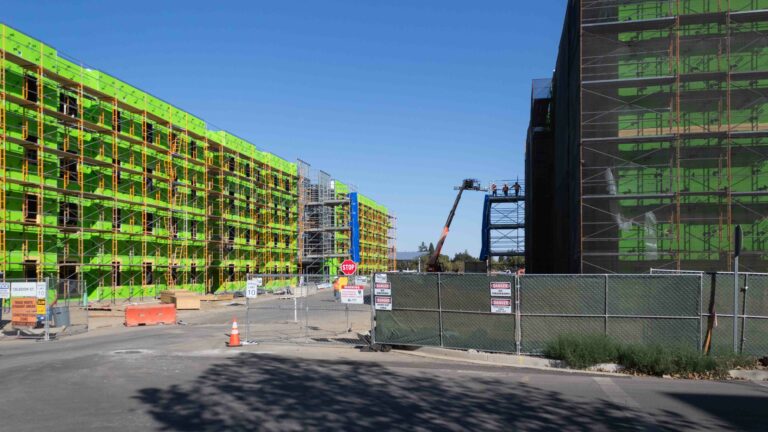
West Village houses over 2,000 residents and plans to house 1,000 more by Fall 2021 in the new “The Green” apartments.

Construction of The Green started in February 2019. Since then, West Village has received numerous complaints from tenants regarding noise from the construction.

Greystar does not own The Green apartments, and therefore does not oversee its construction, according to a previous article in The Aggie. Management at West Village apartments have not clearly addressed residents’ concerns over construction, and it is unclear how they will address these concerns as construction continues.

Written by: Linh Nguyen — features@theaggie.org

Aggies lament missed opportunities in home finale loss

0

UC Davis fails to capitalize in 27-17 defeat 

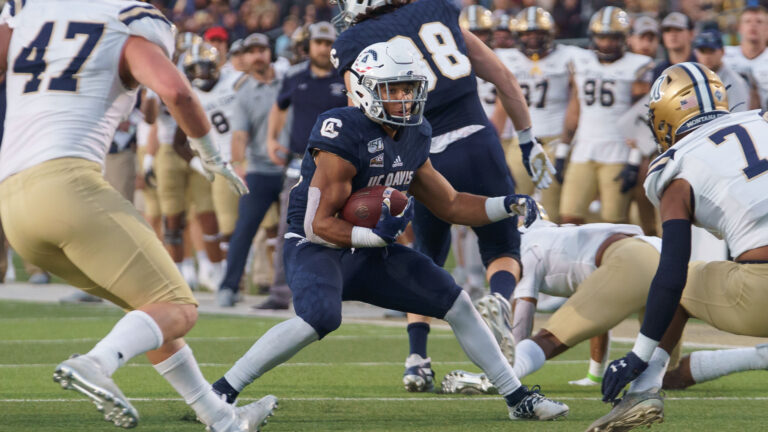
Going into Saturday’s home finale, the UC Davis football team was down to its final strike, with no margin for error remaining in its last-gasp effort to sneak into the FCS playoffs.

Admittedly, the Aggies’ chances were quite slim — they had already lost five games — but there was still an opportunity to make one last impression: a win over highly-ranked Montana State. 

But the Aggies squandered a litany of early opportunities to build up a lead and eventually paid the price in a 27-17 loss to the visiting Bobcats. 

UC Davis had four first half drives that ended inside the Bobcat 10-yard line but only came away with 10 points to show for it. Instead of pulling away and taking command of the game, the Aggies let the Bobcats hang around and then watched the offense completely sputter in the final 30 minutes of play. 

In the closing moments of the third quarter, with the home team holding a slim 17-14 lead, UC Davis Head Coach Dan Hawkins elected to keep his offense on the field for a fourth-and-one play on the Davis 35-yard line. This proved to be the moment that turned the tide in favor of the visitors, as sophomore running back Ulonzo Gilliam, Jr. was halted at the line of scrimmage and Montana State went on to score the final 13 points of the game. 

“I’m always going to play to win,” Hawkins said, in his postgame press conference. “I believe in these guys and I don’t like playing not to lose. That was on me. I really felt like we’d get it. We […] ran the ball well and I thought we had options to get it.”

UC Davis managed only 23 total yards and zero first downs in a lifeless fourth quarter, which officially put its playoff hopes to bed. 

Outside of one touchdown drive halfway through the third quarter, the Aggies recorded only one first down in the entire second half. This put all the pressure on a defense that was on the field for 21 minutes. 

 “We just didn’t make enough plays,” said senior quarterback Jake Maier, who finished with zero passing touchdowns for only the second time this season. “We had opportunities and a lot of one-on-one situations. I thought we were a little inefficient on the early downs and got into some third-and-long’s. [Montana State] did a great job, it wasn’t just our fault.”

The Aggie defense held up quite well throughout the evening, considering the unfavorable circumstances and made enough stops to give the team a chance to win. The achilles’ heel for UC Davis were lengthy chunk plays the Bobcats produced, most of which led to scoring opportunities. 

Montana State, which employs a run-heavy offensive attack, kept the football on the ground 47 times but also did some damage on a few deep balls into single coverage. A trio of 40+ yard pass completions accounted for over 60% of Montana State’s total passing yards. Additionally, the team broke off runs of 35 and 75 yards, both leading to touchdowns. 

As disappointing as the contest was, there was at least one bright spot that fans will always remember about this game. On the final play of the first quarter, Maier found junior wide receiver Darius Livingston open for a 33-yard completion and forever etched himself into the history books, becoming the school’s all-time leader in career passing yards. He will finish his three-year Aggie career with over 11,000 passing yards and will be recognized as a record-holder in numerous other statistical categories. 

“Last year, one of the key reasons why we won a championship and Davis football turned a corner is because of Jake Maier,” Hawkins said. “You’re not going to be around a more humble, hard-working and dedicated person. He’s got an unbelievable rage to master his craft. For a school that’s had as many great quarterbacks, he’s going to go down as arguably the best guy to ever play at UC Davis.”

The Aggies marched down the field with ease on their opening drive but were kept out of the endzone on four straight plays from inside the Bobcat 11-yard line. On 4th and one, Maier faked the handoff and rolled out to his right before overthrowing junior fullback Christian Skeptaris, who found himself wide open in the corner of the end zone. 

Several plays later, the UC Davis defense created the first turnover of the game when senior linebacker Nas Anesi forced a fumble at midfield, which was recovered by senior defensive lineman Jordan Franklin. 

Late in the first quarter, Montana State connected on a long passing gain of 47 yards down the sideline, setting up a five-yard quarterback run for the opening touchdown. 

On the next drive, UC Davis’ red zone struggles continued when the offense was unable to find the endzone on three plays inside the seven-yard line and settled for a 23-yard field goal from kicker Max O’Rourke to make it 7-3. 

Midway through the second quarter, Maier got the offense rolling with some intermediate throws down the field, starting with an 18-yard diving catch by redshirt freshman wide receiver Lance Babb II. Then, the tight ends got involved as senior Wes Preece and freshman Blake Thorpe recorded receptions of 15 and 16 yards, setting the scene for a 4-yard touchdown stroll by Gilliam to put the home team ahead 10-7. 

Shortly before halftime, UC Davis got down to the visitor 12-yard line but was once again stood up by the Montana State defense, which not only kept them from scoring six points but also blocked the ensuing field goal attempt. 

Three plays later, the Bobcats jumped back in front 14-10, breaking loose on a 75-yard touchdown run. 

After a slow, back-and-forth start to the second half, Gilliam took matters into his own hands and broke off runs of 17, 12 and 18 yards, with the latter resulting in a go-ahead touchdown for UC Davis. On the scoring run, which gave the Aggies a 17-14 advantage, Gilliam showed off his skill moves by juking two different defenders in the open field. 

“I just tried to get as many yards as I could each play,” Gilliam said, who finished with 133 rushing yards and became the second running back in school history to break 100 career career receptions. “On some of them, you’ve just got to just stick your nose down and get what you can get.”

Following UC Davis’ costly fourth down failure, Montana State took advantage of the turnover on downs and fired a game-tying 37-yard field goal early in the fourth quarter.

Later on, the Bobcats leaned on another chunk play to get into scoring position, this time utilizing a 35-yard quarterback run which set up the go-ahead 5-yard touchdown.

With just over eight minutes remaining in regulation, the Aggies were left with their backs against the wall but produced another lethargic three-and-out. 

Montana State pushed the lead to 10 points with a late field goal and the Aggies went down quietly to end the game. 

Although UC Davis doesn’t have much left to play for, there is still one more trophy up for grabs in the Causeway Classic versus Sacramento State this Saturday. 

The 2 p.m. kickoff at Hornet Stadium gives the Aggies a chance to play the spoiler role against the 8-3 Hornets, who are still vying for their first ever Big Sky conference championship. 

“Going into this last week, we’re going to prepare like we’re playing in a national championship next Saturday,’’ Maier said. “We’re going to execute at a high level in practice and clean up the details. That’s just what we’re trying to do here, regardless of where we’re at in the standings.”

Written by: Brendan Ogburn — sports@theaggie.org


At Long Last: Aggies are Big West Conference Champs

UC Davis men’s soccer tops UC Santa Barbara to clinch NCAA berth

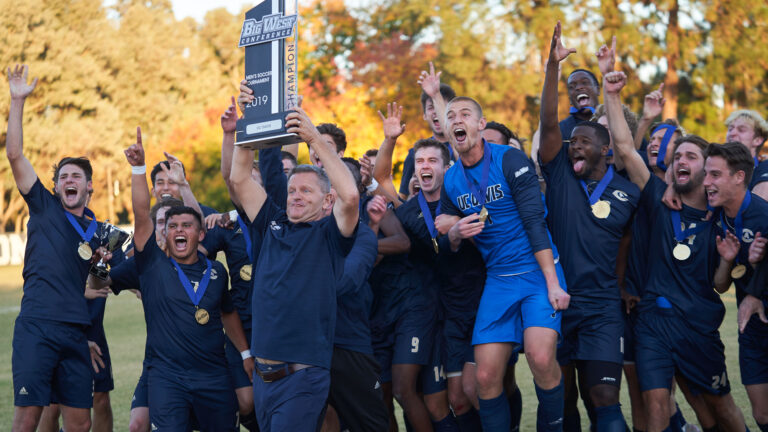
A record-setting, standing room-only capacity crowd at Aggie Soccer Field was treated to a game for the ages on Friday afternoon when the UC Davis men’s soccer team triumphed over UC Santa Barbara in the Big West conference championship match. The 2-0 victory earned the Aggies their first ever Big West title and a spot in the NCAA tournament for the first time in over a decade. 

“It’s been a long time coming for us,” said Head Coach Dwayne Shaffer, in his post-game interview with the Big West conference media. “We’ve been so close for several years. To finally just take it out of the committee’s hand, put it in our own hands with an opportunity to win a Big West championship here feels great. My student athletes have worked extremely hard to get back to three finals to get us an opportunity to get back to the NCAA tournament. So it feels extremely, extremely good.”

This was the first time the Aggies and the Gauchos had met in the postseason since 2015, when UCSB beat UC Davis 1-0 in the Big West semifinal round. But on Friday, the Aggies were more focused on rectifying the heartbreaking defeats they suffered in the conference finals at the end of the past two seasons. Face-to-face with a third straight chance to claim the Big West trophy, the Aggies did not blink. 

In an incredibly physical 90 minutes of soccer, the two sides totaled 36 fouls and seven yellow cards over the course of the afternoon. At the outset, the match swung back and forth. But as the first half went on, the Aggies began to take control, tallying eight shots with three on goal in the first frame, compared to Santa Barbara’s one. The game remained scoreless during the first 45 minutes of play, but with a raucous crowd behind them, the Aggies had plenty of confidence heading out of the halftime break. 

By the time the second half rolled around, the crowd at Aggie Soccer Field swelled from the additional fans that had trickled in during the opening period. Every seat was filled, forcing many in attendance to stand behind and in between the stands, as well as behind additional fences that the UC Davis athletics department set up behind the north goal at field level. UC Davis students and fans led cheers and brought a contagious and energetic atmosphere that built with every kick of the ball. 

The Aggies continued to apply intense pressure on the Gauchos defense, pushing the ball forward with a feverish pace. In the 55th minute, UC Davis finally found its golden moment.

On a give-and-go down the far sideline, sophomore forward Robert Mejia picked out a through-ball pass to sophomore midfielder Andy Velasquez, who took the ball into the Gaucho 18, fought off a defender on his back and placed the ball perfectly inside the far post with his right foot. The goal sent the crowd into a frenzy as the Aggies jumped in front 1-0. 

Velasquez’s sixth goal as an Aggie proved to be all UC Davis needed to take down the Gauchos. The stellar defense the Aggies had touted all season rose to the occasion, protecting the one-goal lead with every ounce it had. Santa Barbara registered just three shots following the score and only one was on target. The Aggie backline of juniors Nabi Kibunguchy and Jake Haupt, and sophomores Max Glasser and Sean Cooper frustrated UCSB by snuffing out any press forward during the Gauchos’ desperate attempts to equalize.    

With the game clock winding down, the crowd was on edge — it could feel that the Aggies were moments away from earning a victory they had fought so hard to achieve for so long. So to tear the lid off of the already boisterous stands, UC Davis made the most of a last-second Gaucho corner. With the UCSB goalkeeper in the UC Davis box for the set-piece, the Aggies turned away the cross, where the ball eventually fell to senior forward Adam Mickelson. 

Mickelson then sent a pass upfield to fellow senior forward Kristian Heptner, who sprinted down the pass and — with 15 seconds remaining — officially put the contest to bed with an empty net score. The crowd erupted, and just moments later, a mob of fans rushed the field to celebrate with UC Davis when time finally expired.

When the celebration finally subsided, the Aggies could finally begin to reflect on the emotional 2-0 win in front of their home crowd.

“I’m very excited,” Mickelson told Big West media following the match. “We’ve been trying to get [to the NCAA tournament] for the past two years. And then this year to win the Big West tournament, and on top of getting an NCAA berth, that’s huge and so exciting. It’ll give our team national exposure. It’ll give the players a chance to work for something that the team hasn’t been able to work for in the past decade or so. So I’m really excited.”

The pass to Heptner was Mickelson’s sixth assist of the season. The Missoula, Montana native leads the Aggies in that category, as well as in overall points, with 14. His play throughout all 19 games this season has drawn the praise of his head coach.

“I’m really happy for Adam,” Shaffer explained. “He’s worked really hard to get himself back at the elite level of a top-level, division-I striker. He’s been through some adversity with some injuries, but he’s worked hard to get himself back. Just the overall amount of work that he puts into a game and puts in for our team just makes us so much better. He’s a handful. He’s active, he’s quick, he’s fast and I think Adam will have some opportunities to play at the pro level out in front of him. And I certainly would have no problem letting a lot of coaches around the country know about Adam.”

The Aggies had the weekend to enjoy the historic feat, but when Monday rolled around it was back to business. That morning, the NCAA announced the 48-team field for its national division-I tournament, where the top 16 teams were awarded a first round bye. 

UC Davis is one of those top teams. The Aggies’ 13-4-2 record and conference tournament crown helped them earn a 14 seed in the bracket and a full week to prepare for their next contest. That also means that the Aggies will once again play in front of a home crowd; they’ll look to continue their dominant postseason run on Sunday, Nov. 24 when they host the winner of Louisville and South Florida. Kickoff for this second round matchup is set for 1 p.m. at Aggie Soccer Field. 

Written by: Frankie Veverka and Dominic Faria — sports@theaggie.org


Everything a cappella this school year

From the Liquid Hotplates in November to Greek Beats in June, and everyone in between

In chronological order, here’s everything a capella happening this school year.

November 23 to 24, 2019

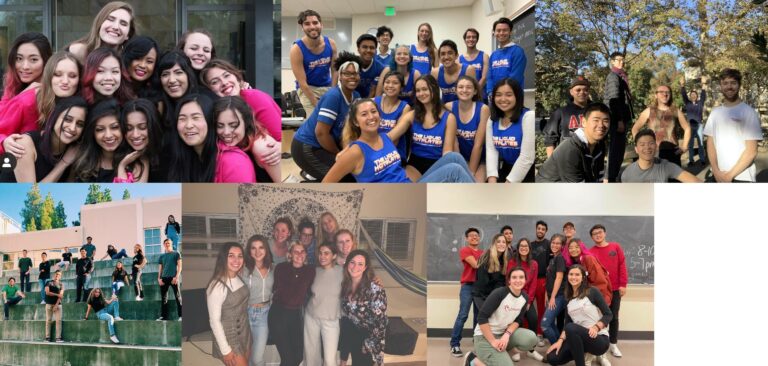
The Liquid Hotplates will hold their two-day showcase “Alotta Cappella” on Nov. 23 and 24 for the 13th year in a row. The showcase will be held on Saturday from 7:30 p.m. to 10 p.m. and on Sunday from 2:30 p.m. to 5 p.m. in the Sciences Lecture Hall. 

Alotta Cappella will host the groups DeCadence, UC Men’s Octet, Cloud 9 A Cappella, Acquire A Cappella, Drawn to Scale and a few local Davis groups like The Afterglow, The Spokes, Cleftomaniacs and The Lounge Lizards.  Each group will do a full 10 to 12-minute set. Tickets are $7 for students and $10 for the general public. 

“I love that music can bring everyone together,” said Hannah Perez, a fourth-year psychology major and the business manager for The Liquid Hotplates. “It doesn’t matter what type of person you are. Everyone can just forget about that, come together and do music. And I love that. I found a lot of my best friends through a capella.”

While other groups have entered into the running for the International Championship of Collegiate A Cappella, The Liquid Hotplates are the only group from Davis that has been in the semi-finals twice. The group hopes to compete again this year. 

“My first Alotta Cappella, it was really, really nerve wracking because my family came and they’re from San Diego,” Perez said. “And it’s really exciting and I wanted to impress them. But then once I was on stage, performing with [The Liquid Hotplates], it just felt so natural and fun.”

More information about their showcase can be found on The Liquid Hotplates’ Facebook page.

February 2020

The Afterglow will hold their annual showcase “Lights Low with The Afterglow” in Feb., 2020. The showcase will take place in the Sciences Lecture Hall and will present a variety of groups on campus. 

“We try to foster an environment that’s not just, ‘Oh, gotta practice, gotta perform,’” said Ryan Sie, a fourth-year psychology and human development double major and the public relations officer. “I think it helps that we’re all comfortable with each other and that we can support each other.”

The Afterglow is an all-men a cappella group. They sing in the traditional barbershop style, with a twist of pop and a newfound interest in EDM. 

“It’s just insane to me that you can have a group that has a cohesive, really musical sound,” Sie said. “[A cappella is] just something that you’re producing with your own body without any tools or instruments or anything [and] being in a group where everybody’s singing together and creating like harmonies with different patterns.”

More information about their showcase can be found on their Facebook page.

March 2020 

Cleftomaniacs will hold their third annual showcase “Cleftopella” in March. Students can expect to see multiple campus a cappella groups as well as improv comedy in the show. Cleftomaniacs was founded in 2014, making them the newest a cappella group on campus. They will hold auditions for their group in March. 

“Being in the Cleftomaniacs has come with an endless amount of fun times along with many hours of hard work,” said Nicollette Sanchez, a fourth-year animal biology major and president of Cleftomaniacs. “We inherently become close by spending lots of time together, and this motivates us to work hard so that we can sound as good as possible.” 

Cleftomaniacs perform two to six times per quarter, including performances at other showcases. Their upcoming performance will be at Alotta Cappella. 

“I’ve been able to watch us grow and transform into the group we are today,” Sanchez said. “And I am so proud of our growth. We have faced many challenges while trying to establish ourselves as a known and respected a cappella group within my last four years at UC Davis, but it has been the most rewarding experience to see us grow.”

More information about their showcase can be found on their Facebook page.

April 2020 

The Spokes is the premier all-women a cappella group on campus. They will host their annual showcase, Hellacappella, on April 10, 2020. The event will be held at the Mondavi Center from 7:30 p.m. to 10 p.m. In the past, they have brought a cappella groups from Oregon and the United Kingdom. The event will cost $16 for students and children pre-sale, and $21 at the door. For the general public, tickets are $30 presale and $35 at the door. 

“I love singing and during freshman year, coming to a new place, I was very shy,” said Brooke Talkington, a fourth-year international relations major and publicity director of The Spokes. “And then I went to Hellacapella before I knew about [The Spokes] and I saw them perform. And they were just these really strong independent women. They just represented what I wanted to be. I’m really grateful for it because it’s made me into a more confident person.”

The Spokes was founded in 2004 and built upon the principle of women’s empowerment. A founding member of the Spokes is Cam, a Grammy-nominated musician. Since then, the group has grown to develop on those building blocks and furthered their contribution to the community. At their past showcase, The Spokes had a donation box for Empower YOLO. 

“To be in any group, it’s always nice to find people and find friends, especially coming to someplace new,” Talkington said. “But to be in [The Spokes] specifically, it’s unlike any other group I’ve been in, just because of how supportive everyone is.”

“It’s amazing because even though we all come from different academic backgrounds, we have the chance to express ourselves and develop our shared passion for music,” said Mathilda Silverstein, a fourth-year human development and gender, sexuality and women’s studies double major and the group’s music director. “Being in The Spokes gives women the opportunity to learn how to arrange, beatbox, perform and more.”

More information on their showcase can be found on their Facebook page.

Late April/May 2020

Lounge Lizards A Cappella will hold their annual showcase “No Instruments Attached” in early Spring Quarter. The showcase will feature other a cappella groups and will be held in the Sciences Lecture Hall. Last year, in the International Competition for Collegiate A Cappella, they were the West Quarter Final champions and earned titles in Best Choreography (Scout Carlson) and Best Vocal Percussionist (Kyle Jung). This year, however, they will not be competing and instead will focus on their showcase. 

“The first time I sang with my group, I felt a nervous excitement that I’d never felt before,” said Sofie Adriasola, a third-year neurology, physiology and behavior major and the music director for Lounge Lizards. “In high school, I only sang with female-identifying members. Singing with male-identifying members as well opened up a huge wall of sound. It was incredible! Singing with everyone made me feel really at home here at Davis.” 

Lounge Lizards is the oldest a cappella group on campus. They were established in 1995 and will be celebrating their 25th anniversary this Winter Quarter. The all-gender group specializes in contemporary music but likes to mix it up with pop, rhythm and blues and oldies. 

“I love the humanness of [a cappella],” Adriasola said. “When I sing unaccompanied with my group, you have to really rely on each other and only each other to make music. There something so eerily humbling about only human voices, and the emotion that can you can convey is beyond words.”

More information about their showcase can be found on their Facebook page.

June 2020

Greek Beats will host their spring showcase in June. Greek Beats is an all-sorority women a cappella group, with a focus on the Panhellenic philanthropy Cal Aggie Camp. Their showcase will be held in 1100 Social Sciences and Humanities. Greek Beats attends about two to three events per quarter. 

  “It’s a really good way to build up your confidence because you are singing with other people on your part,” said Claire Ongaro, a fourth-year design and communications double major. “And although you’ll be singing from the stage, you don’t have to have a solo and it’s more of a group experience. So it’s really good practice to build up confidence.”

More information about their showcase can be found on their Facebook page.
Written By: Itzelth Gamboa — arts@theaggie.org

Humor: How to actually sign off your email

When “sincerely” just isn’t sincere enough

Undoubtedly, the most valuable bit of knowledge you’ll ever learn at college is mastering the art of proper email etiquette. Appropriate salutations, acknowledging your professor’s Ph.D. title and a formal tone are all important things to consider when drafting your message. But you already knew that.

 The greatest challenge I and any respected communication major will notice is the lack of conviction in email closings.

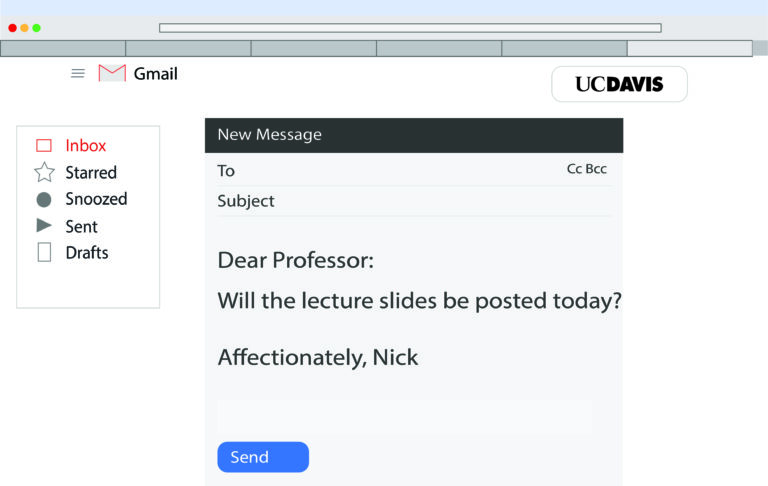
“But there are oh so many adverbs to choose from, how will I know which one to use?” I hear you, and I’m here to tell you to throw “thanks” and “best” out the window because the only sign-off you’ll ever need to use is “affectionately.”

“Why ‘affectionately?’” you may wonder. According to the OED (English major slang for Oxford English Dictionary), the word ‘affectionately’ is defined as, “with favorable disposition; in a kindly or loving manner; fondly.” That may seem too forward or just plain inappropriate when asking about next week’s midterm, but in this essay I will discuss precisely how it will help you ace all your classes and leave a lasting impression.

You’ll stand out.

  How many emails does your professor receive a day? Probably a lot. How many of them actually have anything interesting to say? Not many. But you and your doting diction are what’s going to get you that curve at the end of the quarter versus your basic classmate who signs “warmly.”

You’ll impress your professor with your extensive vocabulary.

A 14-letter word? That’s talented, brilliant, incredible, amazing, show-stopping, spectacular, never the same, totally unique, completely not ever been done before…

Your professor will feel appreciated.

Too often we ask our professors, “What’s on the final?” and never “What’s on your mind?” or “How are you?” They say a single word is worth a thousand other words — or something like that.

It suits any email subject.

Asking for a paper extension? Affectionately. Wondering about office hours? Affectionately. Initiating an affair with a married man? Affectionately. It really has a certain je ne sais quoi to it. 

So before you eagerly hit send, I ask you to look into your heart and say what you really mean.

Sent from iPhone

Written by: Julietta Bisharyan — jsbisharyan@ucdavis.edu

(This article is humor and/or satire, and its content is purely fictional. The story and the names of “sources” are fictionalized.)

City selects final, five-district map for next year’s election

0

New district map approved after lengthy planning, community input period

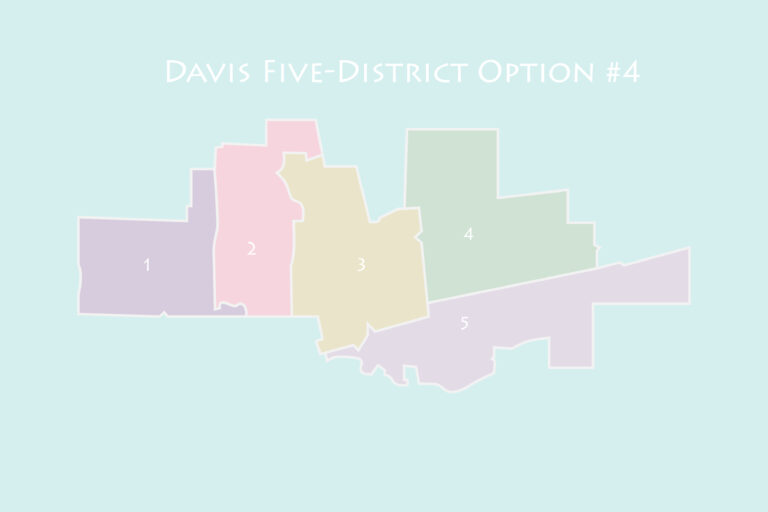
After months of meetings, public outreach and planning, the city council selected a new map of the city on Oct. 22 that will divide Davis into five separate voting districts, each with its own representative council member.

The new district map was the fourth version of a five-district model, one among ten potential districts maps released in two sets on Oct. 1 and Oct. 15. Four of the maps divided the city into five districts and six of them into seven districts. The final map approved by the council can be found on the city website, along with additional demographic data for each new district.

The Oct. 22 council meeting marked the fourth and final public hearing on the district mapping process, according to the city’s website. Much of the debate during the meeting centered around whether the city should be divided into five or seven districts. 

After a short presentation on each of the potential district maps, the council opened up the floor to public comment. The discussion drew an unusually high number of community members, with over 20 different individuals delivering input in two-minute comments. 

Many commenters advocated for five districts, citing a desire to keep council procedures simple. Supporters of the five-district maps expressed a desire to make the number of council members low and the city meetings shorter. Some also argued that Davis’ relatively small size did not warrant more than five districts.  

Greg Rowe, a member of the Davis Planning Commission, compared the population of Davis to larger cities where he had worked, like Cincinnati, which has nine districts or Oakland, with seven districts.  

“Davis is not that large of a town — it’s 68,000 people,” Rowe said. “I just don’t see the need to have the same number of districts that you see in cities that are substantially larger.”

Many students who attended the meeting spoke in favor of a seven-district map, arguing that one or more districts with a majority of renters would better represent student populations during elections.

Brooke Pritchard, president of the Davis College Democrats, argued that a majority-student district would give UC Davis students a voice in important city matters relevant to their concerns, including tenant rights and cost-of-living issues.   

“Because 55% of students are Davis residents, without a district aimed towards Davis students, we will inevitably be disenfranchised,” Pritchard said. 

Council members, on their part, also initially disagreed over whether five or seven districts would best serve the needs of the city.   

Councilmembers Dan Carson and Will Arnold, as well as Mayor Pro Tempore Gloria Partida, supported a five-district map. Carson argued that a seven-person city council makes it more difficult for the council to address city-wide issues in a unified manner.  

“There are really important issues coming to our city: on finances, on land use, on housing,” Carson said. ”We need, more than ever, to work closely and cohesively together and I think a five-district map gives us the best chance of doing that.” 

Partida, though voicing her support for a five-district map, expressed displeasure with the districting process itself, saying that she believed it ultimately disenfranchised the Latinx population in Davis. 

“What this has done for the Latino population is that we’re at [around] 11% in these districts, so this process has actually disenfranchised the Latino population,” Partida said. “The highest that I think I’ve seen is at 17%, so that’s very troubling to me.” 

Councilmember Lucas Frerichs and Mayor Brett Lee initially favored seven-district maps. Lee claimed that seven districts in Davis would lower the cost of campaigning in the city. As a result, more citizens would be encouraged to run for office. Furthermore, Lee said that seven council members would ease the substantial workload council members currently face.

“When I say [to citizens] ‘Hey, you should run for city council’ — if the cost doesn’t scare them off, then the fact that literally, they’re going to be away from their homes and family for four to five nights a week on a regular basis [does],” Lee said. “This is concerning.”

Lee and Frerichs represented a minority on the council and ultimately voted with the rest of the council members to unanimously approve the fourth version of the five-district map. In their next meeting on Nov. 5, council members approved an ordinance that would push the next city council election from March 2020 to November of that year, finalizing the city’s transition to a district-based election system. 

Written by: Tim Lalonde — city@theaggie.org

Only six seated senators show up for Halloween Senate meeting, with five arriving on time

Senate discusses UCPath payment issues for employees at CoHo — some students have not been paid since September

Only Senators Maya Barak, Sean Kumar, Shondreya Landrum, Karolina Rodriguez and Tony Chen were present and on time for the Oct. 31 Senate meeting. Senator Sahiba Kaur arrived late. Without two additional senators present, the senate did not reach a quorum. The meeting was called to order at 6:20 p.m. — based on a consultation of the Bylaws and Constitution, it was decided that the meeting would continue without a quorum.

Senators Anna Estrada and Andre Spignolio were absent. Senator Victoria Choi arrived an hour late to the meeting. Two chairpersons were also absent.

The meeting began with the confirmations of interim senators. Lylah Schmedel, a third-year transfer student and anthropology major, was confirmed as interim senator for both Fall and Winter Quarter. Schmedel addressed mental health among transfer students and safety on campus in terms of lack of lighting as issues that she has noticed during her time at UC Davis.

Violeta Ruiz, a first-year political science major, was sworn in to serve as interim senator for the remainder of Fall Quarter. Ruiz is interested in expanding advocacy efforts for the undocumented student community during her brief time as a senator. 

During elected officer reports, Rodriguez conveyed grievances brought up to her by students. Many students expressed their frustration regarding payroll problems associated with the transition to UCPath. Rodriguez said that she and other CoHo student employees have not been paid since September.

“I have rent due tomorrow and I haven’t gotten paid,” Rodriguez said. “It’s not okay, just because it’s a shift to a new system. Students still need to get paid.”

BreAnda Northcutt, a member of the UCPath communications team, weighed in on issues involving the UC-wide transition to a new payroll system.

“Bottomline, we have a process to get student employees paid within 24 hours or less if they are due pay,” Northcutt said. “If they’re not getting paid, then they should contact their supervisor immediately. The UCPath team has done so much to plan and prepare for potential problems and we need students to take advantage of those help options by letting us know so we can help.” 

Students can take advantage of resources located in Dutton Hall, where there are services prepared to cut students emergency checks in the event they are not paid. 

At the time of this article’s publication, there have been 59 student employees who have reported issues with payroll services, but many other cases have likely gone unreported.

“There are a lot of folks working around the clock, over weekends, with the sincere intention of helping our student workers get paid,” Northcutt said.

The week following this Senate meeting, on Nov. 7, students gathered outside of the CoHo to protest pay delays and system errors with the transition to UCPath. Students who gathered chanted “UCPath, pay your staff” and “UCPath can’t do math.” At this time, student protestors brought up the fact that while there are emergency checks being written, they should not have to rely on figuring out how to access emergency checks to get paid.

The Senate then confirmed Novejot Bal, a second-year economics and political science double major, as Student Advocate. The position was created through a Constitutional amendment last year, but this is the first time a student has been interested in the position. 

The Student Advocate position was created to be an advocate for the student body and a point of reference between students and different resources on campus. 

Bal hopes to shape the position for future students in the role. The position has been modeled after other UC campuses’ student advocates, which have boosted student turnout for student government elections.

Six students were confirmed to the Academic Senate. The Senate did one overall confirmation for all students without objections.

The Senate then moved into consideration of old legislation. The table saw five pieces of legislation: SB #10, CA #61, SB #8, SR #1 and SB #5. 

SB #10, authored by Internal Affairs Commission Chair Ashley Lo, would create a one-time Elections Committee made up of ex-officio members. Due to a number of circumstances, there is no official Elections Committee or Elections Committee Chair for this election cycle. 

Vice President Shreya Deshpande removed their own voting power from the committee after pushback they received due to the possibility of their own bias. They would remain on the committee because of their logistical knowledge of elections proceedings and workshop formats. 

Landrum commented on the executive team’s work behind the scenes trying to fill the position of Elections Committee Chair and specifically commended Deshpande’s efforts.

“This is not their jobs,” Landrum said. “They have taken steps to diligently rectify this and as you can see there’s a bill in front of you now.”

The bill passed without objections, just in time for the closing of student petitions and the candidate workshop on Nov. 1.

Written by: Ally Russell — campus@theaggie.org

Editor’s Note: A previous version of this article used incorrect pronouns for Shreya Deshpande. The article has been corrected to use their correct pronouns. The Aggie apologizes for this error.