57 F
Davis

Davis, California

Sunday, December 21, 2025
Home Blog Page 388

UC Davis will not meet zero waste goal, fails to be transparent about it

Editorial Board calls upon university to release contingency plan

Earlier this quarter, when The California Aggie Editorial Board sat down with UC Davis Chancellor Gary May, we asked him a straightforward question: Is UC Davis on track to achieve the UC-wide goals of being waste-free by 2020 and going carbon neutral by 2025?

“We are on track to get to carbon neutral by 2025,” May said. “We have some goals beyond that — to get to more renewables, less waste, we don’t have specific targets or dates on those yet.”

May neglected to answer the first part of our question. Rather than be transparent regarding the university’s progress on its waste-free initiative, he instead chose to focus his answer on the carbon neutral initiative. It was disheartening that the chancellor did not acknowledge the fact that the university would not be meeting its goal of being waste free by 2020.

Our suspicions that the zero waste goal had failed was confirmed after UC Davis Chief Marketing and Communications Officer Dana Topousis sent the Editorial Board a follow-up email after the interview, and said that the university “will not be meeting the zero waste goal by 2020.”

This initiative was lofty to begin with — the mere words “zero waste” alone command thoughts of rigid diversion strategies and benchmarks. Aspirational goals, however, require efforts of matched intensity, which sadly was not seen on the UC Davis campus.

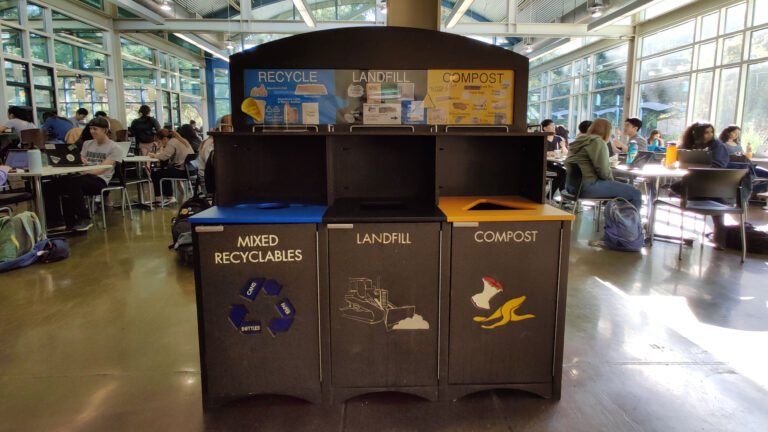
This is not to say that our campus hasn’t made impressive progress, such as placing compost bins around campus and constructing LEED certified buildings. The Environmental Policy and Planning Commission within ASUCD is also a vocal advocate for these types of goals.

Admirable as these efforts might be, UC Davis has an undergraduate student population of over 30,000. In order to become zero waste, there needs to be broader campus support and participation from both the student body as well as administration.

How is the sale of countless single-use plastic bottles every year at on-campus stores conducive to this campus-wide initiative? What is the point of supplying students compostable utensils if compost bins are only accessible in a select few areas on campus? Yes, being zero waste by 2020 is an enormous and important goal — one that would have been potentially feasible if UC Davis had made greater commitments earlier on.

Moreover, where was the notification when the administration realized our campus wouldn’t be meeting this goal? For a university that prides itself on being one of the most sustainable universities in the world, transparency regarding sustainability goals must be more of a priority. Now that we are not on track to meet this goal, we call on the UC Davis administration to release a contingency plan immediately.

The Editorial Board believes that increased transparency and genuine effort would have gone a long way in the fight for sustainability — a goal not just important for our status as a university, but one with a wide-reaching global impact. Hopefully the student body and administration can fully commit to the new goals that are expected to be released in the coming months.

Written by: The Editorial Board


Letter to the Editor

Local community member responds to paid parking petition

To the Editor: 

Re “Guest: Petition to stop paid parking in downtown Davis” by Daniel Urazandi (guest opinion, Nov. 2): 

An article in The California Aggie recently asked UCD students to gather signatures to put an initiative on next November’s ballot for “free” parking in Downtown Davis. It is known as the Freedom to Park Initiative (FTP). The sponsors have pitched this initiative as a “battle between the City of Davis and its constituents.” As a constituent, I would like to offer a different perspective. 

The City of Davis hired a consultant, Opticos Design, Inc. that, along with a 15-member advisory committee, developed a vision for downtown over a two-year period with opportunities for the public to participate. Thousands of public comments were received. Its draft plan, The Davis Downtown Specific Plan, has now been generated, and the public has until Jan. 14 of 2020 to comment.

The FTP Initiative is not compatible with the Specific Plan, so a choice between the two visions for our downtown must be made. How we allocate and use our precious land resources is a large part of the decision.

The FTP Initiative mandates a minimum number of parking spaces — 1,888 to be exact — for both cars and bicycles, which, according to the sponsors, is more than the city has now. The sponsors charge that the city has eroded car parking space through the use of bulb-outs, expanded restaurant seating, E Street Plaza, bicycle parking in the street and more. They are using the FTP Initiative to require the city to “put them back.” Specifically, the FTP Initiative states that “bikes shall not occupy spaces that could be used as auto parking.” Other statements suggest that they would use perpendicular parking to maximize on-street car parking, citing C Street behind the Farmer’s Market as their model. Beyond that, they don’t specify how the parking spaces would be “put back.” 

In stark contrast, the Specific Plan seeks to encourage sustainability, active transportation and beneficial uses of public space to serve the broad population. It tailors each block’s buildings, streets, parking areas and public areas to create a vital, mixed-use downtown. By incorporating more residential space downtown, it would enable more people to live car-free. It suggests some underground parking. Unlike the FTP Initiative, nothing in the Specific Plan is mandatory. 

The two opposing visions require choices to be made. For example: Would you rather have outdoor seating at Burgers and Brew or another parking space? Would you give up a mid-street crosswalk for two more parking spaces? Would you move the heavily used bike parking facility in front of Mishka’s onto a sidewalk area elsewhere? The FTP sponsors are looking for 120 more car spaces. 

A move to perpendicular car parking is not trivial. To accommodate the perpendicular parking behind the Farmer’s Market, the street has been expanded into the sidewalk area. Do we want to shrink our sidewalk area at the same time that the FTP Initiative requires us to move all existing on-street bike parking to the sidewalk area, add 250 more bike racks and use the sidewalk to accommodate the significant expansion of the JUMP bike program? At least nine restaurants already make full use of their sidewalk space for outdoor eating.  

Or do we keep the outdoor restaurant seating intact and sacrifice our historic and essential Third Street bike lane? As the first bike lane in the United States, it is eligible for the National Registry and the Specific Plan suggests ways to commemorate it. With perpendicular parking, not only would the bike lane be eliminated, but we would create conflicts between cars and bikes because cars turn either way to pull into perpendicular spaces. On what street will the business owners or homeowners voluntarily shrink their sidewalk area to accommodate free perpendicular parking? And how do we pay for the curb rearrangement if the beneficiaries are exempt? Would it be through increased parking fines, an increase in business license fees or an additional tax on our citizens? 

If the FTP Initiative were to be adopted, it could only be repealed through another vote by the people. But by then it will be too late, because the FTP Initiative mandates that the minimum number of parking spaces be provided within one year of adoption.  

DIANE SWANN, DAVIS, CA 

To submit a letter to the editor, please email opinion@theaggie.org.

Christmas music already? Students weigh in on whether it’s appropriate to start listening to holiday tunes

The turkey time versus jingle jangle dispute

It’s about that time of year when the holidays come knocking at your door. The weather gets a bit chillier, and stores sell decorations for a holiday that seems far away. Now that Halloween has passed, what are holiday enthusiasts supposed to listen to when the catalog of Thanksgiving music is so lacking? There exists a perpetual debate about whether Christmas music is socially acceptable to listen to during the empty period of time that exists between Halloween and Thanksgiving.

         “Coming from a household of extremely passionate ‘jingle-bell rockers,’ as we might call them, my family was always super adamant about Christmas and holidays in general,” said Andrew Bass, a second-year design major. “I mean, name one Thanksgiving song. You can’t. If there was a Thanksgiving song, I would sing it, and I would jam to it the whole month until the night of Thanksgiving. But in the sense of spirit, they’re lacking. They need to pick their game up [and] get some tunes out, so we can get into the Thanksgiving vibe.”

Bass is not alone in feeling the shortage of holiday spirit for turkey-themed tunes. Katie Truong, a third-year biological sciences and statistics double major, agrees with Bass’ argument.

         “Nov. 1 to Dec. 25 [is okay] because Halloween is over [and] I don’t think there’s Thanksgiving music, so I guess Christmas can kick in then,” Truong said. “I would allow that.” 

         Second-year communication major Emma Phillips, however, is torn by the decision over whether or not to listen to Christmas music at this time. Instead, she has been “depriving [herself] of holiday music” altogether. 

         “I feel like that’s very controversial because I want to say no, but when I woke up this morning and wanted to listen to music, I felt like listening to Christmas jazz,” Phillips said. “I decided to listen to my morning playlist instead because I felt like it was too early in the season.” 

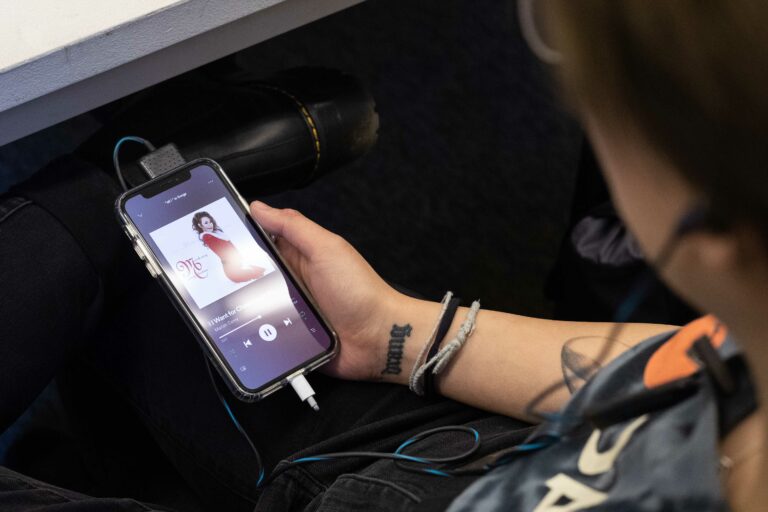
Phillips is not the only one who wakes up wanting to listen to Christmas music. In fact, Christmas music icon Mariah Carey posted a video on Twitter on Nov. 1 of her going to bed in her Halloween costume and then magically waking up at midnight in her Christmas pajamas and receiving a call from Santa. She answers the call trilling, “It’s time!” while her famous song, “All I Want for Christmas Is You,” plays in the background. 

To all the Mariah Carey enthusiasts out there, including Bass, it is about that time of year to start singing. 

“You definitely have to play [Christmas music] in moderation,” Bass said. “The closer you get to Christmas, the more concentrated Christmas music you can play, but now, maybe one song a day, maybe two here and there. Once it hits December, that’s when you start pumping the tunes. Thanksgiving is out of the way, and it’s just the mad-dash to Christmas.” 

         When asked to choose his favorite Christmas song, Bass laughed and said, “don’t do this to me” — for Bass, picking a favorite Christmas song is “like picking a favorite kid.” 

         Although Phillips avoids Christmas music altogether until the day after Thanksgiving, Truong plays Christmas music on a regular basis throughout the year. Phillips and Truong represent the two sides of the ceaseless controversy over holiday music etiquette.

         “I would say sometimes I listen to Ariana Grande ‘Santa Tell Me,’” Truong said. “It’s on a playlist, always.”

         Truong said Thanksgiving decorations can be displayed while listening to Christmas music.

So what’s up with Thanksgiving then? Is it a holiday people simply get through? It seems as though many people enjoy bathing in the Christmas holiday jams before the turkey is even on the table mostly because there is no music to accompany the holiday feast. 

“This isn’t necessarily a diss on Thanksgiving, it’s just a wake-up call that the holiday is whack and they lack spirit,” Bass said. “So it forces someone who’s interested in holidays to skip over them because they don’t have what we need or what we deserve, so it makes me go straight to Christmas to get into that excitement.”

There is no right or wrong answer here. Bass, Truong and Phillips embody the spectrum of opinions. There is, however, one consistent deficiency with the Thanksgiving holiday: the lack of music. It is safe to say that the blame of this unresolved debate falls on the  lack of tunes for the turkey season. 

Written by: Sierra Jimenez — arts@theaggie.org

Culture Corner with Itzelth Gamboa

The Arts Desks’ weekly picks for movies, books, music and television shows.

Television: “Buzzfeed Unsolved: Supernatural”

I first found out about “Buzzfeed Unsolved: Supernatural” while mindlessly scrolling on Instagram. Someone edited a video of one of the first episodes where a priest profusely tells Ryan Bergara and his co-host Shane Madej not to call on spirits or attempt to interact with them in any way. The video later cuts to Madej repeatedly making fun of spirits and demons in an alleged haunted house. This small clip completely sums up this oddly entertaining show. Madej is a skeptic about everything related to the supernatural and refuses to accept anything but scientific fact. Even as they go on trips to places that are strongly believed to be haunted, Madej is quick to dismiss the strange noises and electronic voice phenomenon with simple scientific explanations. Bergara is Madej’s perfect counterpart: He jumps at the sight of his own shadow and is consumed with the idea that one day they will find hard proof that ghosts exist. The unlikely duo explains and investigates unsolved crimes, mysteries and hauntings. 

Movie: “The Little Prince” (Netflix Original)

The Little Prince,” based off of the book written by Antoine de Saint-Exupéry, follows a young girl on a strict path to get into an elite school. Her life is planned out and written on a schedule that is mounted on the wall. Every minute of every hour is accounted for and messing up one single minute could potentially ruin her entire schedule. Soon after getting into her dream school, the young girl meets her next door neighbor, an elderly aviator. The aviator introduces the young girl to the story of a little prince who falls in love with a rose. The animated movie’s beauty and heart-wrenching plot made me sob. Although it might be a little slow for some viewers, it’s perfect for a quiet Friday night. The audience faces the reality of what it means to be an adult and learns how to feel alive again.  

Novel: “Me and Earl and The Dying Girl” by Jesse Andrews

Me and Earl and The Dying Girl” is told from the perspective of Greg Gaines, an awkward and friendless teenager. Greg goes through his life making bad parody films with his ”co-worker” Earl. They go through their high school career avoiding a clash with school cliques in order to stay alive within the walls of their high school. But when senior year comes along, Greg’s neighbor Ella discovers she has leukemia and his mother forces him to go over and befriend the dying girl. Although most young adult novels would make this story a romance novel that would do nothing more than make me roll my eyes, Andrews manages to turn this story into one of friendship and shows the reality of a self-deprecating teen who faces the worst that life has to give. 

Album: “Busyhead” by Noah Kahan 

Vermont-native Noah Kahn’s debut studio album found its way into my heart this summer, sparking a love for the singer-songwriter. He brings in the best songs to sing along to in the car and when the days get a little darker. Kahn’s debut album is undoubtedly a pop album, but it brings in minimalistic tones that strip down his music entirely and allow the listener to focus on one thing: him. His story, his voice and his pain are all evident in the album. It’s raw and doesn’t have a single skippable song, but the one that’s most worth a listen is “Mess.” 

Written By: Itzelth Gamboa — arts@theaggie.org

Review: “The Threepenny Opera,” student production showcases creative talent

Martinez-Campos, Chloe Wasil captivate in lead roles

This November, the UC Davis Department of Theater and Dance put on a production of “The Threepenny Opera.” The play was written by Bertolt Brecht and Kurt Weill and first hit the stage in 1928. 

The Davis rendition of the musical was co-directed by performance studies doctoral student Regina Maria Gutierrez Bermudez and Peter Lichtenfels, a professor of theater and dance at UC Davis. Granada Artist-in-Residence Jeffrey Saver directed the music in the show. 

“What I love about [the play] was that it gave people who were outside the mainstream of society the agency of voice,” Lichtenfels said. “I don’t think I know as complex and difficult and interesting a musical as this.” 

MFA student Diego Martinez-Campos stars as Macheath, a notorious criminal and the antihero of the play. Martinez-Campos has a strong presence on stage and takes command in every scene he is in. 

 “I am very grateful for the opportunity to play Macheath, which, to be honest, was completely unexpected for me,” Martinez-Campos said. “I have had various challenges with this role, mostly because it is my first time playing a lead role, and it’s my second time performing in a musical theatre production. I still have a lot to learn about this realm of performance. It’s a great role to play because it has a dark texture and tone to it, which is something truly out of my comfort zone.”

Second-year theater and dance major Chloe Wasil shined as Polly Peachum, a young woman who marries Macheath after knowing him for just a few days. Wasil is captivating in her role; she performed the musical numbers with sass and sensuality, and her voice sent chills throughout the audience. 

The music in this production was impressive — Diego’s rendition of “Ballad of Mack the Knife,” specifically, was powerful. At the close of Act I, Tiffany Nwogu, a fourth-year theater and dance major, and Sophie Brubaker, a third-year theater and dance and human development double major performed the exuberant “Life’s a Bitch” along with Wasil, one of the most memorable songs of the night. 

Although this play was written in the early 1900’s, the themes and energy depicted on stage are as relevant as ever. The stage design was fascinating and enchanting, and the musical score was performed beautifully. The hard work of the department on this production lead to an incredible night of theater. 

The show’s second weekend of performance will be Nov. 21-23 in Main Theater in Wright Hall.  

Written by: Alyssa Ilsley — arts@theaggie.org

When academic advisors offer students the wrong advice, students suffer the consequences

1

A student’s worst nightmare

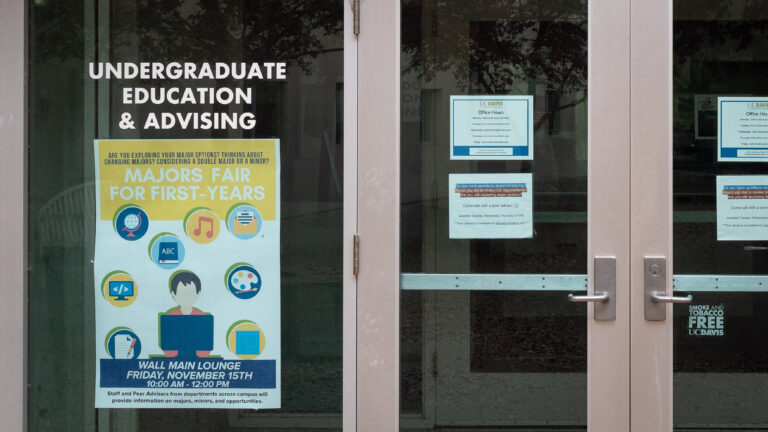
As the second round of pass times are upon students, many are eagerly attempting to fill the last time slots available to schedule appointments with academic advisors. For some students, however, quarterly meetings with academic advisors have done them more harm than good. 

Common issues with advisors for several UC Davis students include receiving the wrong information about which classes to take, experiencing poor time management and facing negligence — among other matters.

One major complaint cited by Alice Sokolova, a second-year biomedical engineering major, is advisors’ poor consideration of her time. She explained that trips to her major advisor made her feel as if her time wasn’t considered and that, in the time she spent in advising, she received little, if any, useful counsel.

“You come for your time and just end up waiting for half an hour for the previous student to have their questions answered,” Sokolova said. “Then, you finally get your chance at talking to them, and the advice is ‘look it up on the school webpage.’”

According to the National Survey of Student Engagement’s (NSSE) 2019 survey of freshman and senior university students, 41% of college freshmen and 37% of college seniors consider their academic counselors as a valuable academic resource. Another significant percentage of students prefer reaching out to their classmates or family members for academic advice. Additionally, The New York Times reports that students attending larger research universities are more likely to rate their experience with their academic advisors as relatively unsatisfactory. 

Sokolova said academic advisors should be more diligent with availability, as there are many students whose questions need answering. 

Nevertheless, poor academic counsel is not a new issue. Whether attending university or high school, in regards to advisor negligence in particular, many students and their families have taken matters to the courts. 

In the 2001 court case Sain vs. Cedar Rapids Community School District, Jefferson High School student and basketball player Bruce Sain sued his school district and academic counselor. Sain claimed his advisor provided false information about the classes that would satisfy his remaining English credit. Sain subsequently lost his basketball scholarship and was unable to play Division I basketball after the NCAA informed him that the class he took did not satisfy the requirement. The district court dismissed the case. 

Another instance occurred in 2003, when student Ryan Scott also lost his college scholarship after taking a course his academic advisor assured him would meet course requirements. He later discovered that the class did not. The trial court dismissed Scott’s complaint.

With these allegations of poor performances by major academic advisors, a shift toward peer advising might be a better fit for some. Some peer advisors have taken the same courses or directions as counsel-seeking students and students might find them to be more accessible.

But even peer advising isn’t a perfect solution. Sarah Underwood, a third-year pharmaceutical chemistry transfer student, said she found her peer advisor to be unhelpful when it came to planning her future as a transfer student.

“I was expecting more from UC Davis,” Underwood said. “The peer advisor gave incorrect information and barely looked at my transcripts to see what I already had credit for. I did not feel that I was receiving helpful advice.”

Underwood said her peer advisor didn’t take her individual case into consideration. While attending a university as expensive as UC Davis, she said, students cannot afford to waste time taking classes that do not contribute to graduation requirements. 

Underwood said she found more support from her major advisor. 

One second-year biological sciences major, who requested to remain anonymous, encourages students to do their own independent research when it comes to general education requirements and class planning. 

“Research on your own, don’t just 100% trust the advisors,” they said. “It’s also good to get more than one opinion, so maybe try to see multiple advisors or also go to peer advising or just ask friends/classmates from your major or with similar career goals.” 

Written by: Alana Wikkeling features@theaggie.org

UC Davis will not meet zero waste by 2020 goal

0

While the campus is not on track to meet its zero waste goal, it still plans on taking actions toward waste reduction, energy efficiency

UC Davis is known as an environmentally-conscious university, therefore it comes as little surprise that that university, alongside the entire UC system, has been working on the “Zero Waste 2020” initiative and #MyLastTrash pledge, all part of the first zero waste initiative for college campuses. The campaign’s main goal is to certify all UC campuses as zero waste by 2020, meaning that they divert 90% of campus-wide waste. 

While this goal is considered admirable by many, it has proven to be unrealistic for the campus. Although UC Davis has been working consistently to achieve zero waste status and has made considerable progress, 2020 is in less than two months, and the campus is not expected to meet these goals before the new year. 

The California Aggie’s Editorial Board interviewed Chancellor Gary May recently and asked about whether the university was on track to meet its goals of waste free by 2020 and carbon free by 2025. The chancellor did not directly address the university’s progress on the waste free initiative and, in a follow-up email with Dana Topousis, chief marketing and communications officer for UC Davis, it was revealed that the campus will “not be meeting the zero waste goal for 2020.”

“Our campus sustainability team is preparing a revised zero waste plan with strategies and steps that will be available for review in the coming months,” she said. “The plan will speak to progress to date and emerging barriers.”

This does not discount the progress UC Davis has made since the initiative’s launch in 2009. According to the Engagement and Zero Waste Program manager Sue Vang, UC Davis set and achieved a subgoal to meet 75% diversion of waste by 2012, but unfortunately, much of the campus’ progress has plateaued since then. 

Another component of the initiative that the campus has made considerable progress toward includes meeting a set level of California’s Leadership in Energy and Environmental Design (LEED) standards, a concept that UC Davis’ Director of Sustainability and Campus Sustainability Planner Camille Kirk commented on. 

“Those goals actually come from the UC sustainable practices policy,” Kirk said. “One of the things it calls for is for LEED buildings to achieve silver, strive for gold [status]. Since that policy was enacted and we’ve been building things and certifying existing buildings, we have one certified LEED building [that was previously existing], five silver, 20 gold and 11 platinum LEED certified buildings.”

UC Davis and the UC system are still committed to pursuing zero waste and plan on making structural changes in the initiative to make it more attainable. 

As part of these changes, the UC will now be setting annual goals to keep campuses accountable and make it easier to track progress, according to Vang. One particular update to the goal encompasses the Title 24 energy consumption mandate, a state-wide group of energy efficiency standards expected of California buildings. The UC Sustainable Practices Policy originally called for UC campuses to be at 20% below the energy efficiency limits put forth by Title 24 annually. UC Davis is striving to surpass these limits, and is aiming to be at 25% under the limit. This has proven to be a difficult standard to meet, according to Kirk.

“Title 24 is a constantly ratcheting down code, so every three years they update it to get progressively more stringent,” Kirk said. “We are finding that, at a certain point, 25% below something that’s really stringent becomes not actually achievable, so as a whole system we have called for [an option for our campuses.] Either you can do below 20% below Title 24 or you can meet an Energy Use Intensity, EUI, target, [which asks] for campuses to achieve a 2% [EUI] reduction annually.” 

The option to reduce the EUI annually may be a more achievable option. On Davis’ campus, the EUI, measured in British thermal units per square foot per year, has been reduced from 295 to around 160 since 2000, Kirk said. In recent years, the immediate Davis campus has struggled to maintain at least a 2% reduction annually, but in the past year it has revamped its approach to meet these standards. Kirk is hopeful that it will once again be below the 2% reduction mark, noting that the Sacramento campus has consistently been below this mark.

Another major revision puts more focus on reduction of waste, rather than on diversion. Vang expressed that, in the time that has transpired since the initiative first launched, reduction has become the most integral part of becoming zero waste. 

“We’ve had the goal modified in recent years to recognize that reduction is really important, and so we also have a waste reduction goal.” Vang said. “We’ve added a waste reduction goal that by the year 2030, our waste generated per capita will be reduced by 50% from our 2015 to 2016 levels. A lot of that is tied to recognizing that reduction is higher on the hierarchy than recycling and also recognizing that the recycling world is changing, and we need to better think about how we deal with our waste. Reduction and reuse are better ways.”

UC Davis has implemented action on campus in line with these goals to help students focus on their reduction. In each of the service centers in the residence halls, there are donation bins for students’ used clothes and shoes, donated to the Aggie Reuse Store — UC Davis’ very own thrift store — that sells office and art supplies, electronics, crafts and clothes. Aggie Reuse alone has helped divert over 8,100 pounds of waste since its founding in 2012. In addition, the CoHo and Peet’s Coffee shops on campus offer discounts to students who bring their own reusable cups and dishware. 

Another main issue that UC Davis is striving to improve upon is composting on campus. Much of the campus’s waste could be diverted through composting, according to Vang.

“In general, it’s safe to say that our landfill audits are showing that a lot of what we are throwing out that could be diverted is compostable,” Vang said. “Yet at the same time, it’s hard to have composting infrastructure. In the plan that we are writing that is a priority. We need to work more on how to make it easier to compost.”

One way to make composting a priority on campus is through education. Maya Bhadury, a second-year environmental policy analysis and planning and economics double major, is a commissioner on ASUCD’s Environmental Planning and Policy Commission (EPPC). She said the lack of education among students leads to a lot of unnecessary waste. 

“One area of weakness is definitely education, especially regarding CoHo signage,” Bhadury said. “All of the plastics there are compostable and actually contaminate the recycling because a lot of people don’t know that it’s compostable.”

In addition to upgraded composting infrastructure, making UC Davis a zero waste campus is a campus-wide effort. Second-year evolution, ecology and biodiversity major and chairperson of EPPC Kyle Krueger said that although it is overwhelming, there are ways that all students can and should get involved.

“The environmental movement often asks people to make small sacrifices for greater gains,” Krueger said. “Small actions give you a sort of sense of control over our future in terms of sustainability and the environment. I would hope that people begin with these small actions […] and then move on from that and find something that they are really passionate about […] and apply the skill set that [they] have to make some sort of difference.”

Written by: Katherine DeBenedetti — features@theaggie.org

Cartoon: Why are the eggheads making those faces?

MARIO RODRIGUEZ / AGGIE

By: Mario Rodriguez — marrod@ucdavis.edu 

Has creativity lost its spark?

A no-nonsense and uncreative poem might just be the most creative thing you’ll hear about today

I never found myself captivated by poetry until my friend introduced me to Kenneth Goldsmith. The more I looked into Goldsmith and his work, the more fascinated I was with not only his poetry but his conception of it. It was so blatantly uncreative that its creativity became astounding. 

Kenneth Goldsmith is a poet and the founding editor of “UbuWeb” — an online educational resource for avant-garde material — but he is no ordinary poet. No matter which of his works you read, one thing becomes immediately clear: Goldsmith isn’t searching for words to emotionally and “creatively” describe his thoughts, ideas or state of being (at least not in the traditional sense). He is one of the leading poets of the conceptual poetry movement, which is “self-described by its practitioners as an act of ‘uncreative writing’” according to poets.org. 

Conceptual poetry is unique because it focuses on the process of creating poetry as opposed to the finished poem. In other words, rather than emphasizing the creativity of the final product, conceptual poetry focuses on the creativity of the process itself. One of the most common styles used by these poets is the appropriation of existing texts.

Goldsmith’s poetic style seemed illogical to me, if not lousy, when I first encountered it. In a video with the Louisiana Channel —  a non-profit created by the Louisiana Museum of Modern Art in Humlebæk, Denmark —  he explains that, “Poetry is all around us. We just need to reframe it and suddenly it is our own.”

Goldsmith takes this sentiment literally. In the video, he illustrates his conception of poetry by reading a “poem,” which is really just an article from a newspaper he happens to be holding. He titles the poem “French writer wins Nobel,” and then proceeds to read the article in the paper, verbatim. 

I can’t quite articulate why Goldsmith’s work is so intriguing, but it might be because it challenges the way I was conditioned to view creativity. 

“I feel that writing from the heart is actually much more uncreative than the kind of ideas I’m proposing,” Goldsmith said in the Channel’s video. “I want to reinfuse it [poetry] with ideas of plagiarism, insincerity, inauthenticity — all the things that were never allowed to be a part of the creative practice.”

I’m not entirely sold on Goldsmith’s vision of creativity, but I admit that I counted the syllables in each chapter of his book “No. 111 2.7.93-10.20.96” to verify that the number of syllables in every word actually corresponded to the chapter number, as he intended. Goldsmith’s book is a prime example of the movements’ attention to a “creative process” as opposed to a creative product. 

Practically all of Goldsmith’s work is appropriated, but that doesn’t necessarily mean it’s uncreative. 

For example, his book “Weather,” is a transcription of a minute of each day’s weather report over the course of a year, separated by season. Goldsmith sees it as “a classical narrative of the four seasons evolving,” according to his interview with The New Yorker. Even though “Weather” is entirely a transcription, it’s hard not to be intrigued by the unconventional and peculiar process in which the poem was written.

His book “Traffic” compiles transcriptions of traffic reports on a holiday weekend over a 24-hour period. Goldsmith read “Traffic” at the White House Poetry Night in 2011 and was met with a positive response.

“So the weirdest, most avant-garde, most appropriated text was the one that got the biggest response because it was in the language that everybody could understand. It was vernacular, so this is radical populism,” Goldsmith said in reference to his White House performance. “People say the work that I do is undecipherable, [that] nobody can understand it. But in fact, the radicality of it is its democracy, is the fact that everybody can understand it.”

I have merely scratched the surface in my attempt to understand Goldsmith and other avant-garde works in and outside of the conceptual poetry movement. But through this process, I gained a better understanding of the dynamic and ever evolving nature of the humanities. 

We see growth in technology and the sciences as innovative, yet perceive developments in the humanities, like those spurred on by Goldsmith and others, in a different way. But applying a rigid standard on what qualifies as “creative” undermines the value of creativity itself.

Goldsmith’s work may seem dull and mundane, but it also offers a new approach to storytelling that pushes the boundaries of art, ultimately forcing us to question what it really means to be “creative.”

Written by: Simran Kalkat — skkalkat@ucdavis.edu 

Disclaimer: The views and opinions expressed by individual columnists belong to the columnists alone and do not necessarily indicate the views and opinions held by The California Aggie

Police issue warnings as string of Davis armed robberies, car-jackings continue

Eight armed robberies, two car-jackings within seven week period in Davis

Davis police continue to investigate a series of eight armed robbery incidents and two car-jackings that occurred in a seven-week period between late September and mid-November. The Davis Police Department has issued three separate warnings to the Davis community regarding the incidents over this period. 

On Nov. 13, police issued their most recent warning through the community alert system, Nixle. According to the Nixle release, two female victims reported being approached by a male suspect on the 1200 block of Alvarado Avenue after exiting their parked vehicle on the evening of Nov. 12. The suspect reportedly had exited a white Honda Odyssey minivan. 

“The suspect pointed a handgun at the victims and demanded they leave behind their keys and cell phones,” the release read. “The suspect then entered the victim’s vehicle, a silver 2007 Audi 4 door sedan, license 5VBZ037, and left the area heading west-bound on Alvarado Avenue near Sycamore, followed by the minivan which was occupied by an additional three suspects.” 

Davis Police said they later identified that the minivan had been reported stolen to the Woodland Police Department. In the release, they said the investigation remained open. 

The release included descriptions of three of the four suspects, who police said should be considered armed and dangerous. The gunman was described as a “Black or Hispanic male adult,” approximately 5’10” in height, wearing a white sweatshirt with a black bandanna covering his face. A second suspect was described as Hispanic, roughly 5’6” with a light complexion, wearing a bandana of indeterminate color, and the third simply as a Black male with a “tall, thin build.” There was a fourth suspect present with no available description, police say. 

The latest warning came half a month after another release on Nov. 1 from Davis police detailed two armed robberies, in addition to one attempted and one successful car-jacking incident on Halloween night. The first incident occurred in the parking lot of an apartment complex on Shasta Drive, according to the release. Two female suspects reported being approached by two male suspects in black hooded sweatshirts, ski masks and gloves while sitting in their vehicle.  

“The suspects produced two handguns and told the females to exit the car and lay down on the ground,” the release read. “While the suspects were rummaging through the victim’s vehicle in an attempt to locate the car keys, one of the victims fled the scene on foot. Unable to get the vehicle started, the two suspects stole a cellphone and a small amount of cash.”

The suspects then fled the scene to a nearby getaway car, a four-door black sedan, which was driven by a third unknown suspect, police said.  

Within an hour of responding to the Shasta Drive incident, police responded to a second report of armed robbery on 7th and D St. A lone female victim had just parked her car when she was approached by two men, one of whom told her to surrender her property while threatening her with a black handgun, police said. After taking the victim’s wallet, phone and keys, the two men fled in her recently purchased Honda Civic with dealer plates. 

On Nov. 4, Davis police issued a follow-up report to the Halloween incidents on Nixle, saying that they had recovered the stolen vehicle after a pursuit and arrested a 17-year old Woodland resident for evading police and weapons charges. They also noted that their subsequent investigations had connected the two Halloween armed robberies and that they would continue to work with Woodland police to “[follow] up on additional suspects and charges.” 

These three incidents come on the heels of five other armed robberies that occurred between late September and early October, for which the police issued a warning on Oct.10.  

“During the last few weeks there have been 5 armed robberies reported in Davis,” the October release read. “In all 5 cases the suspect(s) have approached the victim on a street or sidewalk and threatened the victim with a handgun before taking property. Property taken has included personal electronics (phones and computers) along with wallets.” 

Police have identified and arrested at least one suspect associated with these incidents. Eric Rodriguez was taken into custody in Woodland in connection with an armed robbery on Oct. 5 in Davis, according to the Davis PD Facebook page

In each of the three releases, police have asked anyone with information about these incidents to contact the Davis PD non-emergency number at (530) 747-5400. They also offered tips for Davis citizens to reduce their risk for personal harm by exercising caution. 

“1. Avoid walking alone late in the evening hours,” each release read.  “2. If you must walk alone, avoid dark unpopulated areas; 3. Avoid using or being distracted by your cellphone while in public; 4. Cooperate if you are confronted by an armed or potentially armed person; property can always be replaced; 5. Report suspicious persons and/or behavior; 6. Activate tracking software on phones and electronic devices.”

Written by: Tim Lalonde — city@theaggie.org

Racist graffiti found in Death Star, 25 students and staff members receive white supremacist email

Police tracking email servers, email recipient says university should do more 

Twenty-five staff — including some students — linked to the African American studies and political science departments received an email on Oct. 25 containing the message “It’s okay to be white.” Five days later, a student reported graffiti containing two discrete N-words on the fifth floor of the Death Star. 

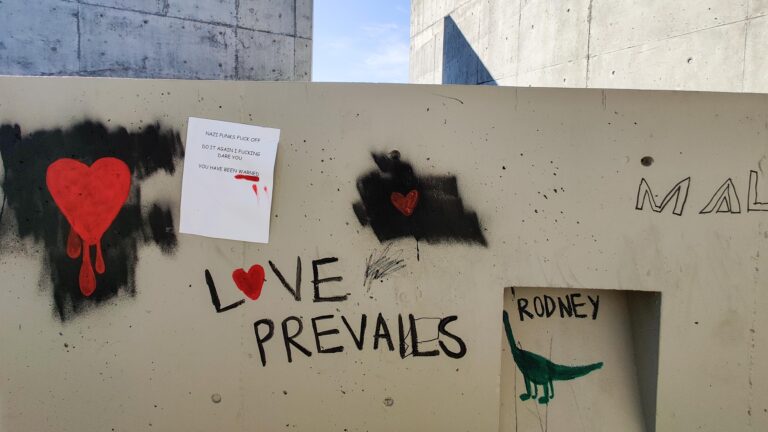
The events follow a trend of white supremacist messages planted on campus. This past September, the second incident of anti-Semitic, neo-Nazi fliers posted on campus occured in less than a year. As with the groups who posted those fliers, Chancellor Gary May condemned the perpetrators of both recent acts — he addressed the emails in a statement and said, “All can be valued. All can be supported. All can be successful. White supremacy, hate and intimidation have no place here.” 

His response to the graffiti contained a similar sentiment. “We do not and will not tolerate racism in any form,” the chancellor’s statement read. “We will take action when we discover who is behind this racist act.” 

UC Davis Police Chief Joseph Farrow said that the graffiti, unfortunately, is a tough case. 

“There are no leads and not much we can do because there were no witnesses, no cameras, no timeframe for when it happened,” Farrow said.

Farrow and his detectives tracked down the three different servers from which the emails were sent, located in Phoenix, Mountain View and San Francisco. 

“We’re doing our best to engage and identify the source to ensure that it won’t be a hate crime,” he said, adding that police were continuing to track the servers and monitor their activity.

A recipient of the “It’s okay to be white” email, who wished to remain anonymous, asked for the university to do more. 

“Who at the university is in charge of thinking about these issues?” the anonymous source said. “There should be a concrete plan that treats these messages as a possible endangerment to faculty and students.” 

While the anonymous recipient said they believed the emails were tied to the 50th anniversary of ethnic studies programs at UC Davis, Farrow said that police found accounts on two different public sources during the week of August 25 of people encouraging others to download and send the message, suggesting that the emails don’t coincide with the anniversary.

Similar incidents have happened at other universities over the past two years, including at UC Davis, with fliers containing the same message found on campus buildings.

The email recipient called it a “rising trend of racial harassment.” 

“We need more active vigilance and a preventative, informative plan,” they said. 

Farrow said the racist acts angered him, but said he believed in the campus community’s ability to use its voice to say when things were wrong.

“It’s our community that responds and reports it,” he said. “That serves as a reminder that our campus gets it.” 

Still, the recipient said that the university should also be aware of the dynamics at work when these acts occur, given the destabilizing effect such acts have on people.

“How do you call out the act without making it about everyone?” asked the anonymous source. “There’s a group being targeted — how do you support that group first and foremost? I don’t know the answer. But they’re questions the university should think about.” 

Written by: Janelle Marie Salanga — campus@theaggie.org

UC Davis administration needs to take stronger action against hate propaganda

Targeted acts of racism not isolated incidents

Last month, the UC Davis community was once again affected by acts of intolerance. First, 25 staff members affiliated with ethnic studies departments at UC Davis were sent an email with the message “It’s okay to be white.” And just days after, racial slurs were found written in graffiti on a campus building. 

We, the Editorial Board, vehemently condemn these insensitive and bigoted acts. We are extremely saddened and angered by the repeated attempts by outsiders to threaten and demean ethnic, religious and cultural groups in our community. These emails could not have come at a more hurtful time for our university, as the College of Letters and Science celebrates the 50th anniversary of its ethnic studies programs this year. A time of fond reflection was marred by deliberate, hateful rhetoric. Our hearts go out to all who have been affected by these repulsive displays.

Unfortunately, the emails and graffiti only add to the list of targeted harassment that has occurred far too frequently on our campus. Prior to these recent incidents, UC Davis had experienced multiple public displays of white nationalism and anti-Semitism dating back to 2015 and until as recently as this past September. Demonstrations of hate have become a pervasive issue at this university, and one that has caused many in our community to fear for their well-being. 

Threats against the identity of one group are threats against our entire campus community, as our diversity is our most important strength. We are deeply concerned and frustrated with these incessant acts of bigotry that seek to divide us, and we again call on the university to issue a stronger, more coordinated response.

On the same day that the anonymous emails were received, Chancellor Gary May issued a statement in response, reiterating much of the same sentiments he shared when fliers with a similar message were posted around campus in 2017. While we appreciate the timely efforts of May and the administration in these matters, we ardently believe that the university can and should do more to publicly support those impacted by the acts in question. Regrettably, a trend of hateful messages persists within our university. Those affected deserve more than just a single statement of apology, and shouldn’t be tasked with addressing these issues without continued support from the university. Instead, UC Davis would greatly benefit from a measured, systematic action plan to actively combat hate and uplift and protect those who are at risk of being targeted by it.

There is no doubt that this country is experiencing a rising tide of overt racism, nativism and hate. These recent cases remind us that, while UC Davis prides itself on being an extraordinarily progressive and tolerant place, there are individuals outside of the university and in our locality who possess blatantly hateful beliefs. When specific groups are targeted by horrific propaganda, the university has a responsibility to comprehensively ensure that those affected are made to feel safe from further harm.

The Editorial Board challenges UC Davis administrators to listen to the needs of those affected and take all necessary actions to see that those needs are met. If this is truly an institution that does “not tolerate racism in any form,” then it’s past time for the administration to do more to up to that claim.

Written by: The Editorial Board

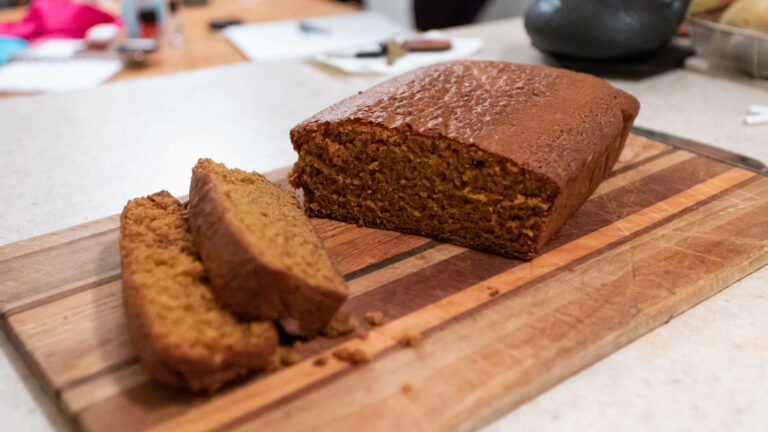
Recipe: Simple Pumpkin Loaf

Who knew how versatile pumpkin pie spice is?

With the transition from summer to fall finally happening in Davis, Calif., the time has come for fall traditions that make this season’s cozy atmosphere to come to life. All things pumpkin and spice have been on the shelves of Trader Joe’s for some time, but the crisp air and crunchy leaves now make it appropriate to delve into autumn recipes. 

While a Pumpkin Spice Latte and several servings of stuffing at Thanksgiving dinner usually fulfill my fall cravings, this year I decided to expand my seasonal food fare. I wanted to make something simple that would fill my apartment with an autumnal aroma and put me and my roommates in the fall spirit. Accordingly, I made a pumpkin loaf. 

Most pumpkin bread recipes are pretty basic, other than the incredibly long list of spices which they call for. Along with pumpkin pie spice, recipes usually call for ground ginger, cinnamon, nutmeg… the list goes on. Upon examining the pumpkin pie spice ingredients, I noticed that all the called-for powdered flavors were in the one little jar. Working with a budget and limited cabinet space, I decided to ditch all the other spices and just buy that one. Thus, the following is a college-friendly (and gluten-free) pumpkin loaf recipe.

Ingredients (this recipe makes one loaf, perfect for you and your roommates to share):

3 eggs

1 cup sugar

¼ cup brown sugar

1 teaspoon vanilla extract

1 cup pumpkin puree

⅓ cup vegetable oil (I used canola oil instead)

1 ½ cups flour 

1 teaspoon baking soda

½ teaspoon baking powder

2 ¼ teaspoons pumpkin pie spice 

Prep time: 10 minutes

Cook time: 50 minutes to an hour

Instructions:

Preheat oven to 350 degrees Fahrenheit. Line the loaf pan with parchment paper. This recipe is made for a 9-by-5-inch pan, but mine was closer to 8-by-6 and it worked fine — most loaf-shaped pans will suffice. 

Beat together eggs, the two sugars and vanilla extract in a large bowl (use a mixer if you have one. If not, use a whisk and a quick wrist).

Add the pumpkin puree and oil and mix until fully combined. 

Next, add all the dry (and remaining) ingredients: flour, baking soda, baking powder and pumpkin pie spice.

Once everything is mixed, fill the pan evenly with the batter and place it in the oven. Set a timer for 50 minutes, and then check it with a toothpick (or knife) — if it comes out clean, it’s done. Check every five minutes or so if the knife came out with batter on it the first time. 

Take some photos of your loaf, let it rest for ten minutes, then slice and enjoy with butter. 

Wrap whatever you don’t eat and store it in the fridge or freezer. 

Written by: Allie Bailey — arts@theaggie.org

Fifth Street now primary location for homeless respite center

0

Concerns from community members about Second Street location addressed during Davis City Council meeting

The Davis City Council has moved the planned respite center for the homeless to a corporate yard on Fifth Street, after listening to concerns from the community about its original location on Second Street. 

The topic was discussed during the City Council meeting on Tuesday, Nov. 5, where a number of community members voiced their opinions about the proposed Second Street site. The site is located on city-owned land under the Dave Pelz bicycle overpass. 

Several community members expressed their support for the project, including members from local church groups who volunteer with the Interfaith Rotating Winter Shelter.

Other community members, including residents of Mace Ranch, voiced their disapproval of the site chosen during a council meeting in July. 

Among their concerns was the safety of community members using the bike overpass, the center’s distance from downtown and the cost associated with building the project. These points were also stated in a petition, which gained over 400 signatures.

“While we feel strongly that the issue of homelessness must be addressed in every city, we also believe that the safety of our children drastically outweighs the benefits of this proposed location,” wrote Yingzhi Lu, the publisher of the petition. 

Mayor Brett Lee highlighted that a daytime shelter would bring an aspect of security and surveillance to the community. 

“Some of the folks have potentially serious addiction issues or mental health issues,” Lee said. “The proposal is for there to be 24/7 supervision, so whenever there are people on site, there would be a staff person on site as well. If anything, this will increase the availability and supervision — in a way that should address the community’s concerns.”

Following recommendations made by city staff and responses from the community, the Davis City Council shifted its focus to 1717 Fifth St. as the new location for the respite center. Lee supported the Fifth Street location during the meeting and emphasized a sense of urgency.

“I would like to see something happen prior to the rainy season,” Lee said. “For that reason, I suggest that we use the east end of the corporate yard on Fifth Street — so 1717 — and that we, with all speed possible, develop a daytime respite center in time for this winter.” 

Although the plan for the daytime respite center is continuing with the new location, the status of an overnight facility remains unclear. Gloria Partida, the mayor pro tempore on the Davis City Council, mentioned a needed focus on the overnight facility. 

“Hopefully, while we’re in the process of figuring out the day site, we can continue working on the night portion of this because I think that is also very important,” Partida said. 

Davis Community Meals and Housing currently has a daytime shelter in Davis with a few overnight beds. In the winter, the Interfaith Rotating Winter Shelter provides a place to stay for those needing shelter. 

Lee emphasized that the respite center would give additional support to the current services and hopefully provide more beds before the completion of Paul’s Place, a large overnight facility for the homeless that is underway.

“Part of the reason for the pilot is to prove that the city can manage a facility like this, and keep it as a well-organized, well-run project,” Lee said. “So we have examples of non-profits that are able to do that, and they’re doing a great job. This isn’t to take away from the good work that nonprofits are doing, but the need is much bigger than any one non-profit can do.”

Written by: Madeleine Payne — city@theaggie.org 

Undergraduates to study at Aggie Square campus in Fall 2020

“Quarter at Aggie Square” program set to begin at Sacramento campus

UC Davis has released new information about the progress of Aggie Square in Sacramento — including details about a new program set to begin next fall called “Quarter at Aggie Square.” Students pursuing this option will have the opportunity to earn one quarter’s worth of units on the Sacramento campus. 

Construction of Aggie Square, which UC Davis leadership describes as an “innovation center,” is not set to begin construction until mid-2021. The Quarter at Aggie Square program will use existing space for the time being. It is still in the planning stage: Faculty have been asked by Carolyn Thomas, the vice provost and dean for undergraduate education, to submit their ideas for interdisciplinary programs. She is in charge of the program’s design and implementation. 

Each program is meant to utilize the resources the Sacramento campus has, including proximity to the state capitol and UC Davis Medical Center as well as provide possibilities for internships. One potential connection is a partnership between the UC Davis School of Education and the Sacramento City Unified School District. 

In an article by David Wescot, the associate director of communications for Aggie Square, Thomas said, “UC Davis has two campuses, but we usually only think about one.” 

There will not be any housing at Aggie Square next fall, but construction for phase one calls for “200 housing units for undergraduate, graduate and professional students,” according to a UC Davis article.

UC Davis offices that already have or will soon find their homes at Aggie Square will include Continuing and Professional Education, the Sacramento Part-Time MBA Program, partners from IBM and the Office of Public Scholarship and Engagement, a new office that “focuses on integration, finding connections among UC Davis scholars, researchers and educators that focus on public issues.”

Many decisions are still yet to be made, including the appointment of a faculty member to serve as a “curator” and advisor for Aggie Square, a position that Provost Ralph Hexter is looking to fill in response to encouragement from Professor Kristin Lagattuta, the chair of the Academic Senate.

“They hope to identify a candidate by the end of the month,” Wescott said via email. 

Students can expect to continue hearing more about the opportunity to spend a quarter at Aggie Square in the coming months. 

Written by: Andrea Esquetini— campus@theaggie.org