57 F
Davis

Davis, California

Sunday, December 21, 2025
Home Blog Page 387

Police Logs

0

Piles of leaves need to leave

November 7

“Male came into store, upset his sandwich was made late. Subject demanded free items and employees refused. Subject was upset for not getting compensation.”

November 8

“Marijuana buds left on a bench. Request items be cleaned up.”

November 9

“Reporting party wants to know when the scheduled leaf pick up is. Reporting party already looked online and cannot find anything, requested we call out after hours public works to find out. Dispatch advised reporting party [that] this doesn’t qualify for a callout. Reporting party then stated that he’s concerned for elderly people due to the amount of leafs [sic] and other particles the tree drops. At [the] end of [the] call, reporting party then reiterated that he wanted the pickup scheduled.”

“[Reporting party] wants officers to follow up with a call he made Thursday night where a neighbor’s child dumped bale of hay on driveway. Officers had told the parents to clean up the mess or they would be cited. Reporting party states hay was not cleaned up properly.”

November 11

“Salesperson refusing to leave reporting party’s premises, currently outside the residence.” 

November 13

“Reporting party’s credit card stuck in reader, requested assistance.”

November 14

“Possible breathing or snoring heard.”
Why are hateful messages allowed on campus? Campus community members weigh in.

2

UC Davis’s Principles of Community called into question when religious protesters mobilize on campus

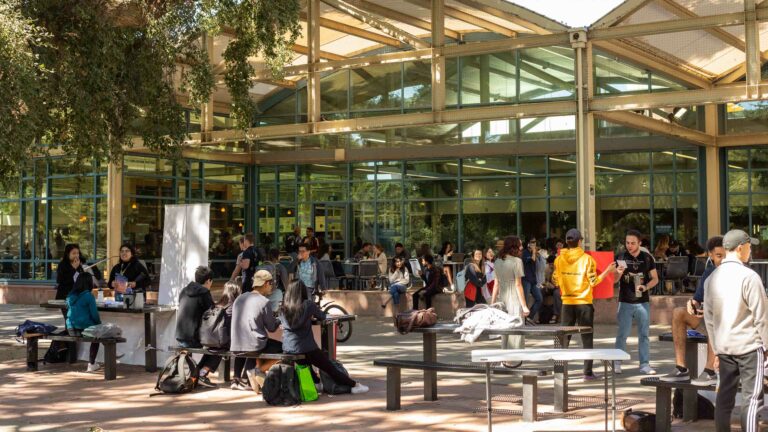
On campus, it is not unusual to see individuals wielding signs that perpetuate hateful and oppressive messages. Campus preachers on the Quad are often difficult to ignore — these encounters can potentially compromise feelings of safety and belonging on campus for marginalized communities who may be targeted by these individuals. 

Signs seen on campus contain slurs condemning “homosexuals” and urging “fornicators” to repent or “go to hell.” They also condemn the “immodestly dressed.” This content is not only threatening, but might also be considered a direct form of hate speech. And the presence of this rhetoric on campus raises the question of whether this speech should be allowed at UC Davis. 

According to UC Davis’ principles of community, the university “strive[s] to maintain a climate of equity and justice demonstrated by respect for one another. We acknowledge that our society carries within it historical and deep-rooted injustices and biases. Therefore, we endeavor to foster mutual understanding and respect among the many parts of our whole.”

According to university officials, these sorts of demonstrations do not interfere with community guidelines. Interim Vice Chancellor of Student Affairs Emily Galindo explained that attempting to eliminate these protestors from the UC Davis campus would be illegal.

“The First Amendment protects nearly all speech, including speech that is annoying, rude, offensive and potentially hateful,” Galindo said. “Therefore, the university will not, and legally may not, discriminate based on content or viewpoint.”

Third-year neurobiology, physiology and behavior and Spanish double major Molly Klipfel worries that marginalized groups are disproportionately impacted by these hateful speeches.

“I feel like a campus should be a safe place, especially because we have so many marginalized groups represented at UC Davis,” Klipfel said. “Having these people on campus creates an unsafe environment for these groups, especially since the preachers largely target specific identities.”

Not only does this rhetoric affect individual students, but some Christian groups on campus feel that these perspectives misrepresent their faith.
The Belfry is a Lutheran Episcopal ministry which welcomes “all UC Davis students, faculty, and staff regardless of religious (or non-religious) background, gender or gender identity, race, sexual orientation [or] ability.” Pastor Casey Dunsworth, the Lutheran pastor at The Belfry, said that “often, being Christian is associated with those who are very hateful or extreme.”

“My students tell me that in some of their circles, no one knows they are Christians,” Dunsworth said. “Just how, in some other circles they may have been in before, no one knew that they were queer.”

Dunsworth is concerned that these messages may cause students to question their own faith and feel insecure about their identities. 

“No matter what Christian community you are a part of, it hurts to hear some stranger tell you, ‘You are going to hell,’” Dunsworth said. “No matter how confident we are in the gospel, we are still humans and it still causes harm.”

The separation of church and state is another issue called into question when discussing religious voices on campus. According to Galindo, freedom of expression eliminates all issues associated with church and state. 

“From a freedom of expression perspective, the university does not discriminate based on content or viewpoint, which includes religious affiliation,” Galindo said.

Regardless of these protections, university officials retain the right to denounce actions which do not align with the Principles of Community. Since the start of the last academic year, this has occurred twice — first in response to anti-Semitic flyers posted on campus, and then almost a year later when racist grafitti was discovered in the social science and humanities building. 

“We are proud that UC Davis is a global campus, with a diverse community of people coming from many different backgrounds and countries, having many different identities, experiences and perspectives,” Galindo said. “With that said, there have been specific instances where the Chancellor has issued statements with strong denouncements against recent acts of racism, hate and intimidation.” 

Dunsworth commented on the university’s lack of action against hateful rhetoric seen on campus under the guise of religious ideology.

“There are organizations that are following the rules as they are written, while simultaneously telling students that some aspects of their identities are bad and wrong,” Dunsworth said. “That is what is causing harm to student.”

According to Galindo, there is little that can be done on an administrative level to combat this issue. Klipfel, however, believes that UC Davis administrators need to prioritize the physical and emotional well-being of marginalized students. She said the removal of these hateful and unregulated messages will allow all students to feel more welcome and comfortable on campus. 

“These students come to campus to be students, yet they have to be afraid that they might be attacked or belittled,” Klipfel said. “They have just as much of a right to be here and to feel safe as anyone else.”

Written by: Miki Wayne — features@theaggie.org

Novel use of detection dogs and genetic analysis for tracking endangered lizards

Bureau of Land Management, Working Dogs for Conservation, US Geological Survey, UC Davis develop noninvasive method for reptile conservation

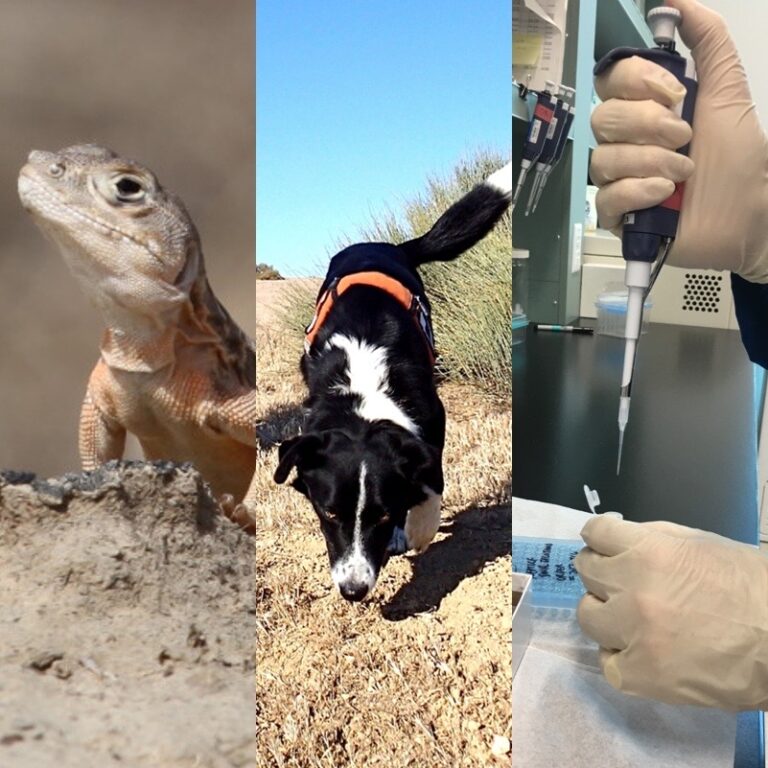
In a novel study, specially trained detection dogs sniffed out the scat of endangered lizards, including the blunt-nosed leopard lizard, in the San Joaquin Valley. After four years of collecting samples, UC Davis researchers used a newly developed technique in genetic analysis to identify species based on the scat. Through a collaborative effort between UC Davis genetic researchers, the Bureau of Land Management (BLM), U.S. Geological Survey and Working Dogs for Conservation, this new method provides a successful, noninvasive way to strengthen reptile conservation, according to Mark Statham, an associate researcher in the veterinary and genetics lab. 

The use of detection dogs for conservation is not completely new. In previous studies, detection dogs have located scat for other endangered animals such as bears, foxes and gorillas. Before this study, however, the dogs had never been used for reptiles in combination with genetic analysis to identify each species of lizard, Statham said. 

“If you want to see where a wild animal has been, one of the easiest ways to find that out besides footprints is picking up feces,” Statham said. “It is a very common technique for mammals but it had never really been used for lizards. The combination of the two things, the scat detection dogs and the genetics for the lizards, that combination is brand new.”

The main lizard the study focused on, the blunt-nosed leopard lizard, is endangered and only found in California’s San Joaquin Valley. As the area is prized land for agriculture and urban development, the lizards must compete with humans for space and, because they are small and difficult to track, researchers sought out a new method to study them, Statham said. 

“I’d really like to see this being used as a new tool in the toolbox for people studying species like this,” Statham said. 

Detection dogs could not have been previously used for lizard identification because no genetic method for identifying species by scat had been developed. For this reason, Statham and his team were tasked to develop a method and it proved to be successful. Their results are documented in a study published in the “Journal of Wildlife and Management.”  

“We needed to get a genetic technique so once you get the fecal sample, you can specifically identify which species it was,” Statham said. “That was the whole purpose of this. That was the unique combo of techniques, field personnel and dogs and genetic analysis.” 

Four out of the six lizard species that reside in the area were identified in the genetic analysis. After taking 327 samples across four years, the team confirmed 82% of them were from the blunt-nosed leopard lizard. 

“[Statham’s] team succeeded where prior efforts had failed, to extract usable DNA from very small and often degraded fecal pellets,” said Michael Westphal, a BLM ecologist, via email. 

For now, the genetic method can only identify the type of species, not individual lizards. 

“I made separate different markers that stick to the specific species’ DNA,” Statham said. “The fragment that sticks to the DNA is fluorescently labeled so it glows. Through a combination of fragment length and fluorescence, I can identify the lizard species.” 

In the future, Statham wants to complete additional analysis to differentiate individuals within the species.

“With the test we have developed so far, that is useful for differentiating between lizard species but we’ll have to do different analysis to identify individuals,” Statham said. “If we can identify individuals, that opens up a host of other questions we can answer, like trying to census the population.”

The work was primarily funded by the U.S. BLM, Westphal said. 

“The BLM provided funding for the study; provided permitting for collecting scat from captive lizards; provided access to BLM lands and other logistical support, and contributed expertise at each phase of the study including methodological design, execution in the field, and writing the manuscript,” Westphal said. 

Detection dogs were instrumental in the study’s success because humans alone cannot locate the lizards’ scat. Because the scat is only a couple of centimeters long, about the size of a grain of rice, and blends into the sandy ground, humans would struggle to efficiently locate the scat, said Kayla Fratt, the communication and outreach coordinator for Working Dogs for Conservation. 

“[The dogs] are much more efficient at picking up the scat and they can cover a wider area than humans,” Statham said.

Working Dogs for Conservation provided dogs for the sample collection. The organization rescues dogs and retrains them to become detection dogs for conservation purposes. Scientists, government agencies and nonprofits contact the group to use their dogs. Usually they will accept the project as long as it relates to conservation biology, according to Fratt. 

“These projects can be related to endangered species, invasive species or wildlife crime,” Fratt said. “We work all over the world. If someone has a scent and are having a hard time finding it, we can help out.” 

The nonprofit trains the dogs to sniff out and find whatever it is that needs to be found, Fratt said. The dogs are trained to know that whenever they find the smell in question, then the dogs are rewarded with their ball.

“We rescue high energy, ball crazy dogs as well as get them from career change organizations,” Fratt said. “We want dogs that are very, very obsessed with balls and toys. These dogs tend to be bad pets.”

Working Dogs for Conservation looks for dogs between 18 months and three to four years of age because that is when they are easiest to train. The group does not care about accepting certain breeds, but Fratt said that most tend to be Labrador retrievers, German shepherds, border collies and more.  

“We are mostly looking for dogs that have nerve strength and courage, we want them to be ball-obsessed, and to be able to keep up with fieldwork that we require,” Fratt said. 

With the collaboration between the BLM, U.S. Geological Survey, Working Dogs for Conservation and UC Davis, a new non-invasive method has been developed for reptile conservation and animal tracking since no animals need to be captured, said Ben Sacks, an adjunct professor in the department of veterinary genetics. 

“The new methods developed will allow scientists anywhere in the world to non-intrusively collect and extract reptile DNA from feces for the purposes of population monitoring, risk assessment, and pure research,” Westphal said. “Reptiles are ectotherms and highly vulnerable to climate change, and collecting reliable population data from vulnerable populations without intruding on the species in question will be crucial to their conservation.”

Written by: Margo Rosenbaum — science@theaggie.org 

NCAA announces plans to allow college athletes to profit off own likeness

0

UC Davis athletics comments on historic NCAA decision

On the morning of Oct. 29, the National Collegiate Athletic Association’s Board of Governors announced its plans to revise NCAA rules to allow college athletes to be compensated for their own name, image and likeness. This announcement came as a surprise to many, especially to those who have heavily criticized the NCAA for its ardent stance against student athlete name, image and likeness compensation in the past. 

“In the Association’s continuing efforts to support college athletes, the NCAA’s top governing board voted unanimously to permit students participating in athletics the opportunity to benefit from the use of their name, image and likeness in a manner consistent with the collegiate model,” the NCAA stated in a press release. “We must embrace change to provide the best possible experience for college athletes.”

After California Senate Bill 206 — also known as the “Fair Pay to Play Act” — was signed into law by Calif. Governor Gavin Newsom on Sept. 30, there was confusion over how the changes could affect college athletics going forward. Nonetheless, a number of other states have begun putting together the frameworks of similar bills immediately following SB 206’s signing.

All signs pointed to additional states eventually following California’s lead, likely pressuring the NCAA and playing a role in its most recent decision to revise its rules. The decision from the NCAA has caused many to believe that it saw no point in fighting the growing tide and rather embrace the change. As of now, there is no clear timeline as to when these changes are going to be made or implemented, but according to board chair Michael V. Drake, the decision prompts the NCAA to begin the process “immediately.” 

“The board’s action was based on comprehensive recommendations from the NCAA Board of Governors Federal and State Legislation Working Group, which includes presidents, commissioners, athletics directors, administrators and student-athletes,” the NCAA’s statement added. “The group gathered input over the past several months from numerous stakeholders, including current and former student-athletes, coaches, presidents, faculty and commissioners across all three divisions. The board also directed continued and productive engagement with legislators.”

When reached for comment after the report from the NCAA Board of Governor’s was released, UC Davis Director of Athletics Kevin Blue provided the following statement to The California Aggie: 

In recent years, there has been increased national discussion about the economic rights of student-athletes, and whether they are fairly compensated for participating in college sports.

Often, debates on this topic are driven by questions about whether student-athletes are able to receive a proper education while playing sports (i.e., and therefore legitimately reap the benefits of their scholarship) or if student-athletes should share in the revenue that is created by lucrative media contracts.

At UC Davis, our student-athletes annually are enrolled in approximately 70 majors and graduate at rates that match or exceed our accomplished undergraduate student body. We also extensively support the non-sports career development of our student-athletes through our comprehensive Aggie EVO program. Additionally, at our mid-major level of Division I, there is much less media revenue being generated. Accordingly, I don’t believe that many of the concerns cited about the fairness of student-athlete compensation apply here.

However, I also believe that all student-athletes, like all other students, have a fundamental right to own and legally monetize their name, image, and likeness. I am encouraged by the recent announcement from its Board of Governors that the NCAA plans to move college athletics down this path. I do believe that college athletics can and must maintain its educational roots while also evolving in a modern way.

A challenge that the NCAA is currently working through is how to implement this modernized philosophical direction in the context of a competitive recruiting environment. Effective regulations are necessary to ensure that name, image, and likeness compensation isn’t manipulated into recruiting inducements that do not reflect real market value. I am hopeful that the NCAA will arrive at a regulatory structure that modernizes the economic rights of student-athletes, prioritizes fairness in recruiting, and allows schools like UC Davis to continue competing successfully while we maintain our emphasis on the educational foundations of college athletics.”

Even after this landmark decision for amateur athletics, there are still a lot of questions as to what rules must be put in place to continue to have a level playing field. As Blue indicates, it remains unclear how the new rules will affect smaller, mid-major athletic programs like UC Davis, if at all. It is still very early, but a number of details must be resolved before the new rules can be put into effect, mainly with the goal of preventing some schools from having an advantage over others. 

There is still much time for that and, as NCAA President Mark Emmert states, there are many more decisions that must be made going forward. 

“As a national governing body, the NCAA is uniquely positioned to modify its rules to ensure fairness and a level playing field for student-athletes,” Emmert said. “The board’s action today creates a path to enhance opportunities for student-athletes while ensuring they compete against students and not professionals.”

This is no doubt a monumental step in the right direction for those who believe student athletes should have the chance to receive additional compensation. But this debate that has long clouded college athletics is incredibly complex and requires a lot of patience. 

As much as many people want student athletes to be able to profit off themselves, it is worth ensuring that the new changes do not lead to further competitive inequalities. Regardless, the NCAA’s decision shows that it is willing to move forward and embrace change. It seems that after much criticism has surrounded college athletics, there has finally been a huge step that will begin a new era. 

Written by: Omar Navarro — sports@theaggie.org

Review: “King of R&B,” Jacquees hones in on traditional rhythm and blues

Is it worth a listen? 

Rhythm and blues artist Jacquees has made headlines recently for claiming he’s the “king” of R&B, sending social media into a frenzy. Although his self-proclaimed title is debatable, Jacquees is well-known for several singles such as “You,” “B.E.D” and his controversial Ella Mai “Trip” remix.

It was through his remixes of other R&B and popular songs that I first heard about Jacquees. I can admit, I really enjoy a few of his songs.

So naturally, when I heard he was releasing his fourth studio album entitled “King of R&B,” I had to give it a listen. The hour-long album was released on Nov. 8. 

With features from big-time artists such as T.I, Tory Lanez, Young Thug, Gunna, Summer Walker, Future, Lil Baby and more, here’s a breakdown of the 18-song tracklist.

The album starts off with “King” featuring T.I, an understandable choice given the name of the album and T.I being known as the “King of the South,” yet it fails to set the tone. It’s a mediocre song, but it isn’t a preview of what is to come.

“Round II,” which follows “King” would have perhaps been a better choice to feature as the first song. It’s along the lines of traditional ‘90s R&B mixed with the more explicit nature of the genre today. Especially for a non-feature song, Jacquees really sets a mood with this one, and it’s a nice blend of what’s on the album.

I had to laugh a little at “EEeee” featuring TK Travis, just because the title alone is characteristically Jacquees. The song itself doesn’t stand out, but it fits with the tone of the album.

“Come Get It” featuring FYB is actually one of my personal favorites. Although it’s typical of a modern-day R&B and Rap crossover, choosing a lesser-known artist like FYB gives the song an unexpected edge.

One theme that stands out from the album as a whole is the quality of Jacquees’ solo songs. Especially since he’s known for remixes and features, his standalone songs really showcase his ability to hold his own as an artist.

“Good Lovin,” “Out of the Ordinary” and “Fact or Fiction” are prime examples of Jacquees standing out on his own and honing into the essence of traditional R&B. The production on these tracks stands out with the simple, yet beautiful, use of electric guitar chords.

“Never Say Goodbye” is also a great slow jam, tipping the lines of the 1990s and early 2000s.

If you’re not looking for that traditional ‘90s feel, Jacquees also has some other more R&B/Rap solo songs throughout the album. “Warning” and “New New” are good go-to’s for that type of sound, especially when it comes to the beats.

Now, as far as big-name features are concerned, it’s a mixed bag. Besides, “You” featuring Lil Baby, which was already a popular single before the album, the rest is mediocre.

“Risk it All” with Tory Lanez and “Hot for Me” featuring Lil Keed and Lil Gotit are my personal favorites. Jacquees’ chorus complements Lil Keed and Lil Gotit’s rap verses. I also enjoyed the Summer Walker feature “Superstar,” but I expected more from the R&B duo.

I would categorize “Verify” with Young Thug and Gunna as an unexpected bop. Not that I didn’t anticipate a great collaboration, but their chemistryis evident. In other words, it’s not your typical copy-and-paste feature.

The Quavo record with Bluff City, on the other hand, was disappointing. In theory, this feature had so much potential, and although I like parts of the song, it somehow ends up missing the mark. At times, I found myself questioning why Quavo was even on the record.

Overall, I would rate this album a seven out of 10, and if I had to sum it up in one word, I’d probably say it’s cool. Jacquees really held his own for a couple of the solo songs, and there are some features I enjoy as well.

The biggest downfall to this album for me is that it’s really something you need to sit and listen to a couple of times. Then again, I’m sure his fans appreciate the body of work, and as with most R&B projects, it’s probably something I’ll end up revisiting. 

Written by: Nahima Shaffer — arts@theaggie.org 

Humor: BREAKING: Frat Boy Frisbee Season leads to countless injuries

Let your loved ones know you’re okay: mark yourself “safe” from lethal sport

Eating her favorite CoHo entree beside her squirrel companions in the Quad, first-year student Jessica Blanche basked in the sun as she decorated her bullet journal for the week. Delighted with the warm weather, she even gave up an empty hammock to another student, insisting nothing could ruin her three-hour gap. 

Pulling out her brand new pack of Sharpie highlighters, Blanche was more than ready to destress. She shuffled through her favorite Glee covers on Spotify, blissfully unaware that this perfect day would soon take a dreadful hit.

Concentrated on her calligraphy writing, Blanche suddenly felt a sharp object strike her leg. She jolted and consequently messed up her straight lines. Turning around in horror, she found a frisbee at her feet and a tear in her heart.

“I thought I had been shot,” Blanche recounts, shuddering. She looked down at the pink pen marks that stained her hands. “Now I have to redo my entire spread for week 7!”

After the attack, a boy in an Alpha Sigma Phi shirt with his cap on backward rushed over immediately to claim the frisbee.

“My bad, ahaha,” Dylan Cooper said. His laughter trailed off in unpredictable directions. “Legit, me and my boys were just having fun.” He wiped the dirt off his Sperrys before heading back to his squad of khaki wearers.

Since the incident, multiple victims of Frat Boy Frisbee Season have come forward to tell their tales. Second-year Chelsea Hastings said she waits until Winter Quarter every year to sit in the Quad. 

“After a while, you don’t even notice the cold and wet grass. It’s still better than getting a concussion,” she said, shrugging.

Some students have chosen to rally together and organize a sit-in protest at the Quad in hopes of warding off the infamous frisbee season. Still, the disk tossing persists and the threat remains.

“I just don’t want anyone to experience what I went through,” Blanche said. “Not sure if I mentioned this before, but I seriously thought I had been shot.” She had mentioned this before.

To make amends for the injuries, Cooper wants to invite victims of Frat Boy Frisbee Season to his party. 

“We’re having a huge post-week 7 party at the house after this, you should all come,” Cooper said.

Written by: Julietta Bisharyan — jsbisharyan@ucdavis.edu

(This article is humor and/or satire, and its content is purely fictional. The story and the names of “sources” are fictionalized.)

Sacramento considers building tiny-house village for homeless

Sacramento Councilman Allen Warren proposes building overnight shelter for about 700 of city’s homeless

Sacramento’s worsening homelessness crisis has prompted City Councilman Allen Warren to tentatively propose a tiny-house village for the city’s homeless population. The settlement would be named “Renewal Village” and would house homeless and low-income renters. 

As of 2017, roughly 3,700 homeless people live in Sacramento, 56% of whom are sleeping outdoors, according to data collected by Sacramento County.

In the state of California, the United States Interagency Council on Homelessness found that nearly 130,000 people experienced homelessness each day in 2018. Much of this can be attributed to the rising cost of living. 

Warren expects the Renewal Village project to cost anywhere from $20-25 million, paid for by Sacramento, the state, philanthropists, the federal government and the affordable housing aspect of the project.

Renewal Village would be located on eight acres of land and would house 700 people at a time in roughly 200 tents and 500 tiny houses. Most of the housing would be for the homeless, but it would have some low-income paid housing as well. 

On top of the tents and tiny houses, Renewal Village would feature a health clinic, dining commons, garden, playground and dog park. 

“The idea is really homelessness to self-sufficiency,” Warren said. “I expect [Renewal Village] to give them a safe place to live and regain their lives.”

Seattle, Washington has already started a number of tiny-house villages for the homeless. Sharon Lee, the executive director for the Low Income Housing Institute in Seattle, gave details about the project. 

There are currently nine tiny-house villages in Seattle, serving about 1,000 homeless individuals a year in total. Individual homeless people stay for anywhere from a few weeks to six months. 

Each tiny-house costs about $2,500 and has electric wiring, heating, opening windows and locking doors. The villages also have communal dining and laundry rooms as well as kitchens. 

Similarly to Warren’s idea of eventual self-sufficiency, Lee stated that the eventual goal is to get people “housing ready.” This quarter, Lee said that 40% of the villages’ residents moved into permanent housing, 24% into transitional housing and 14% into other shelters — only 2% ended up back on the streets. 

So far, Warren said the reaction to the Renewal Village has been overwhelmingly positive. Community meetings concerning the project, however, will not start until December, when more of the public will be expected to give input.  

In Seattle, residents living in neighborhoods surrounding the villages have been supportive, according to Lee. The homeless became integrated as a part of the community, and police officers often state that neighborhoods with villages experience lower crime rates.

“So many people are frustrated by how much homelessness exists, and they feel powerless — they can’t do anything,” Lee said. “And now, when they have a village in their community, they’re able to come and help contribute.”

Lonni McMurtie, a woman in Seattle who became homeless after a work accident almost four years ago, is currently living in one of Seattle’s tiny-house villages. She has lived in a women’s-only village, Whittier Heights, since April. McMurtie spoke about how living in the village has impacted her life. 

“This is like a dream come true,” McMurtie said. “Basically, they nurse you back to health — they nurse you back to life.”  

McMurtie frequently attends fundraisers and Seattle City Council meetings to advocate for the construction of more tiny-house villages for the homeless. To better share how her tiny house has changed her life, she wrote an original poem about her experience. 

“My bare white door, became so much more,” McMurtie said, reading an excerpt from her poem. “Now back to life, back to salvation; no longer walking streets with shame and humiliation.”

Written by: Eden Winniford –– city@theaggie.org

EPA’s proposed “transparent science” rule is sick joke

It’s funny because more Americans will get sick and die as a result. Get it?

President Donald Trump spends his time distracting America by screaming and whining about what an innocent, perfect-call-making, stable genius he is (as any stable genius would). All the while, the environmental deregulation crusaders planted throughout his administration have been busy demonstrating quite high levels of stable, albeit evil, genius.

There’s perhaps no better embodiment of this than the proposed “Strengthening Transparency in Regulatory Science” rule. Sounds pretty great, right? Who wouldn’t want strength, transparency and [“everybody’s favorite category”] — SCIENCE? That certainly goes down a lot smoother than if the rule was named based on what it’s actually intended to do. That name, whatever it might have been, would go down about as smooth as swallowing a whetting stone coated in shoe polish.

Under the guise of transparency and an obviously insincere commitment to scientific integrity, this rule is actually an ingenious way to compromise all future, and potentially current, environmental regulations in one fell swoop. The rule will ban the EPA from justifying regulatory decisions with scientific studies for which all underlying models and raw data are not made public. On the surface, this sounds just fine too. But the problem is that meaningfully regulating harmful pollutants in our air and water often requires studies that use private health and medical data — you know, to assess health. As many publications have noted, this rule would ban justifying regulations with studies like the landmark “Six Cities” report of 1993, which used confidential medical information to show that Americans die faster in cities with worse air pollution. The raw data is not public, but it has been confidentially shared with independent researchers who have successfully replicated the findings.

Since former EPA Secretary Scott Pruitt proposed the rule in April 2018, industry groups, Republican lawmakers and conservative media have hailed it as a victory against what they refer to as the EPA’s “secret science” that is “withheld from the American people.” But as Naomi Oreskas writes in Nature, groups that lobbied hard for this rule have been hypocritically silent when it comes to publicly disclosing data on “composition of fracking fluids, or the information confidentially supplied by companies to register pesticides with the EPA.” 

The EPA claims that the rule allows for all research to be independently validated and reproduced, addressing the “replication crisis” in academia. The crisis of science reproducibility is a legitimate concern but mainly in biomedicine and psychology. The EPA also claims that the rule follows the recommendations of the Bipartisan Policy Center’s Science for Policy Project and the Administrative Conference of the United States’ Science in the Administrative Process Project and is “consistent with data access requirements for major scientific journals like Science, Nature and Proceedings of the National Academy of Sciences.” This is not true. These three journals issued a joint statement denouncing the rule and explaining the allowances they make for confidential data sharing with other academics and scientists — allowances that the EPA proposal doesn’t make. The International Society for Environmental Epidemiology has also made comprehensive arguments against the rule. 

Remember: The mission statement of the EPA is to “protect human health and the environment.” How might one protect human health without considering how pollutants impact human health? That’s quite a pickle. I’m stumped. I guess scientists always have the option of disclosing private medical records. But that’s illegal, as it should be. Just a coincidence that the writers of the rule left that as the only “viable” alternative, I’m sure. 

When I first researched the proposed rule, I feared that it was destined to become yet another tale of Trumpian deviousness that would never see the light of day. Luckily, The New York Times ran a front-page story on the rule earlier this month when a new draft of the rule surfaced. Many other publications quickly picked up the story, but unfortunately, the relentless pace of the newscycle seems to have eaten this important story alive.

In September, EPA Secretary Andrew Wheeler testified before the House Committee on Science, Space and Technology on a number of pressing environmental issues, including the  proposed science transparency rule. Wheeler said during that testimony that the rule would not apply retroactively to regulations that are already on the books. Yet the recent story in the Times notes that the updated proposal leaves open the possibility of applying the rule retroactively. This means that existing regulations could be significantly weakened when they are renewed since many public health studies with private data would be ignored in the decision making process. I’m sure Wheeler simply misspoke during his testimony, as I’m confident that someone as committed to transparency as he is would never even consider lying under oath.

During this committee hearing, Wheeler boasted that he is “the only EPA administrator to have ever gone swimming in the Great Lakes.” Well, if this rule of his goes into effect, he could eventually earn the distinct honor of becoming the only EPA administrator to have ever dissolved while swimming in the Great Lakes. He’d have only himself to blame, because it’ll be his fault that the EPA ignored studies demonstrating that dumping toxic soup in the Great Lakes is bad for human health.

Written by: Benjamin Porter— bbporter@ucdavis.edu 

Corgi Faire in Davis debuts distinctive Pembroke Welsh Corgi breed

0

Corgi lovers learn about, test what Corgis can do at annual event 

The Golden Gate Pembroke Welsh Corgi Fanciers (GGPWCF) hosted their annual Corgi 

Faire at Lillard Hall in Davis on Nov. 10. Around 200 guests attended the event, and most brought their corgis to try out various activities. 

Gina Lorenzi, the co-chair of this year’s Faire, described the event as a way to 

demonstrate the agility and intelligence of the Pembroke Welsh Corgi. 

“Our thought was to promote what this breed can do,” Lorenzi said. “Because we’ve got 

amazing little dogs that can really do anything.” 

The Faire had obedience demonstrations, conducted by Lila Lippow, and other agility tests, including going through tunnels and lure coursing for attendees’ corgis. 

Lorenzi brought her own corgi to the Faire as well.

“My dog does seven different sports and works [professionally] for seven different sports,” Lorenzi said. “Basically, in any dog sport you can think of, there is probably a Pembroke Welsh Corgi game in it.” 

The Faire also included a costume contest where attendees dressed up their corgis in a 

creative way. Stephanie Hughes-White, a participant at the event, dressed up her dogs to resemble the characters of Disney’s “Moana.”

“I grew up with corgis,” White said. “So, the first thing I thought about was having a 

Corgi that my husband and I would love.”

White described the corgi as bossy but a great companion.

“Being the size they are, corgis can still run the roost,” White said. “And they can be 

very protective toward their mommy and daddy.”

According to Lorenzi, the Pembroke Welsh Corgi is different from the Cardigan Welsh 

Corgi in several ways. They are two distinctive corgi breeds — the Pembroke Welsh Corgi is a spitz-type breed, whereas the Cardigan is more closely related to the basset hound. 

“The Pembroke Welsh Corgi is a little more fine-boned than the Cardigan Welsh Corgi,” 

Lorenzi said. “The Cardigan Welsh Corgi is always going to have their tails, but the Pembroke Welsh Corgi usually does not.” 

Lorenzi also emphasized the sociable characteristic of the corgi.

“We lovingly call them the frat boys of the corgi world,” Lorenzi said. “Because they are

really sociable — they love their people, they love other dogs and they love doing things.”

Ellen Perlson, the board director of the GGPWCF, as well as a Pembroke Welsh Corgi breeder, said she has had corgis since 1995 and has been breeding dogs since 2001. Perlson described the corgi as a high-energy breed. 

“They need an active home with an active lifestyle,” Perlson said. “Pembroke Welsh 

Corgis are very outgoing, with high drive and high energy.”

Perlson also pointed out some downsides of the corgi.

“They like to bark and, most importantly, they shed a lot,” Perlson said. “The nice thing is that you will get used to the hair. I always have hair on me because I have six corgis.”

According to Perlson, the Pembroke Welsh Corgis blow their coats two to three times a year, with an undercoat growing profusely. 

“You just need to give them a nice warm bath and comb it all out, getting rid of all the dead hair and you start fresh,” Perlson said. 

The GGPWCF is the first regional Pembroke Welsh Corgi club in the United States, 

established in 1957. Lorenzi said it was founded as a kind of fanciers to get people who love the breed together. 

“I just love this breed,” Lorenzi said. “And getting out there with other people who love 

the same breed is a lot of fun.”

To become a member of the GGPWCF, as Lorenzi said, one needs to know two people in the club for at least six months to get a letter of recommendation and fill out an application form, in addition to signing a code of ethics. 

Written by: Rui Ding — city@theaggie.org

Anti-plagiarism tool “Turnitin” tapped by UC Davis for Canvas integration

Turnitin should not be the sole determiner of plagiarism, says Turnitin representative

Popular anti-plagiarism software Turnitin is currently in the process of being added to UC Davis’ Canvas. While funding for the expense has been approved by the Provost, the anti-plagiarism product is under information security review and the timeline for implementation is unknown. 

The Turnitin database includes 70 billion current and archived internet pages, one billion student papers, over 47,000 journals and 69 million articles and documents from various publishers. Turnitin uses an algorithm to compare strings of text from students’ papers to its vast database. The result of this process is a “similarity report,” which highlights the text in a student’s paper to show potential areas of similarity or plagiarism. 

Donald Dudley, the director of the Office of Student Support and Judicial Affairs, said that requests for a tool like Turnitin originated primarily from faculty. Students concerned after seeing their peers engage in academic misconduct played a role as well. 

Despite this, some students struggle with the implementation of Turnitin. The company has received repeated lawsuits from students due to Turnitin’s practice of storing student papers in their database. 

Issues have also arisen when professors take similarity reports at face value when they should instead be used as a starting point for a conversation between a professor and a student about potential plagiarism. A representative from Turnitin explained that a similarity score on its own “is not an indicator of plagiarism, but rather an indicator that a conversation needs to be had and maybe a piece of work needs to be evaluated and a professor and student need to talk about proper citation methods.”

Plagiarism is not cut and dry but rather a spectrum — Turnitin’s website includes an article describing ten different types of plagiarism.

Trish Serviss, the associate director of the entry-level writing program, echoes this sentiment, explaining that as students learn, attribution errors may occur.

“Most students, especially when they’re beginning [a new type of writing] try to paraphrase and put their own terms, but they’re still learning what the terms are and what they mean,” Serviss said. 

Serviss said this is a common occurrence, especially among non-native English speakers and first-generation college students and should be seen as an opportunity for growth. 

Many current actions taken by the university to reduce plagiarism address problems such as these. Dudley outlined the ways plagiarism and misattribution could be stopped before they happen. These include faculty speaking at orientation regarding academic expectations, presenting workshops specifically about writing and citations, explaining writing assistance and tutoring availability and having students acknowledge the academic code of conduct at the beginning of each quarter.

Other types of plagiarism, however, are more sinister. Students now have the option to purchase papers online at the click of a button, obtaining them from “paper mills” or copying work word for word. 

“To me, it’s a whole different category,” Serviss said.

Having additional tools toward combating plagiarism is a “good thing,” according to Matt Traxler, the associate vice provost for academic planning.

“Having a good independent means for assessing whether something has been plagiarized or not, that’s a good thing,” Traxler said.

Serviss expressed concerns over faculty potentially using the results from Turnitin as the only way they have a conversation with students about their writing.

“It runs the risk of becoming the solution,” Serviss said. “It might become mistakenly the only way that they interact with students about writing and that’s my worst nightmare.”

Beshara Kehdi, a Ph.D. student in cultural studies, wrote that implementing Turnitin will not solve the plagiarism problem at UC Davis. 

“TurnItIn.com is not a quick fix panacea to preventing plagiarism or to developing competent writers,” Kehdi said via email. “If there exists distrust between faculty and students regarding what they are producing and submitting, and it is widely felt, then that is an institutional problem and the campus community, instructors and students, should be tasked with addressing it [as opposed to an outside company].”

Since the university is just beginning the process of implementing this service, many questions remain unanswered. Although the tool is an opt-in for professors, it remains unclear whether students will be able to opt-out.

“If I’m a student and I have to take a certain gateway course for my major, and all of those [class] sections require that I [either opt in to Turnitin or opt] out of the major?” Serviss asked. “I’m worried about the nuance. How are we going to apply it? How are we going to create safeguards [so] that we use it ethically?”

Written by: Jessica Baggott — campus@theaggie.org

Community space as culture: An exploration of the Quad

Where students kick back, incite social change 

If there was ever a space that symbolized the essence of what UC Davis is, was and should be, it must be the beloved Quad. It is our Statue of Liberty, our Hanging Gardens of Babylon and our Louvre. West Quad, East Quad, left or right, it makes no difference to our student body where you’re located; when you’re on the Quad, you are staunchly and simply on the Quad. The beauty of our university and the allure of campus life are deftly embodied within the few hundred feet of green nestled between the CoHo and Shields Library. 

But what exactly is the culture of the Quad? In truth, it is hard to pin down. So much of the beauty that resonates from the space comes from its multitudes. Every group — academic, cultural, social and economic — is represented on the Quad. In many ways, it is the great equalizer, a cultural slate where all, even for a split moment in time, are as one. It is the soft chatter of sorority women complaining about date parties, it is a squabble of engineers confused about an assignment, it is new faces in checkered pants yelling about this weekend’s Turtle House show. The Quad takes our huddled masses and shines a mirror back to them, reflecting an image of our student body seen nowhere else — one that is just as dynamic as the brochures make it out to be. 

“It is the communal watering hole of UC Davis,” said Sabrina Bloch, a second-year human development major.

One big unifying factor, however, is the leisurely quality of the Quad itself. Once one steps onto the rich green pasture (with only a few splotches of yellowed grass), it is as if a veil is sprung. Reminiscent of only the finest of health spas, one immediately feels relaxed, taking in fine blades of grass below and tall trees overhead. 

 “It’s my favorite place to soak up the sun,” said Sarah Bjerkholt, a third-year sociology major.

Responsibility melts away, however temporarily, when you plop down in the Quad. An escape from the enduring specter that is the daily grind, the ever-looming spirit of more work, more socializing — one that goes away when you are on the quad. Your brain can, for once, take a breather. But more importantly, so can the soul.

Another thing that people love about the Quad is its central location. 

“The Quad is central to everything happening around Davis,” said Jack Hyslop, a second-year environmental science major. “It invites people to relax and rally around issues important to the students.” 

Its location at the heart of campus makes it ideal for kicking back, but, on the other hand, it is an optimal space to incite social change.

Although the Quad is a haven of relaxation, it is also the home to many social movements on campus. The Sunrise Movement often advocates on the Quad for The Green New Deal and a resolution to climate change. Along with students surveying for projects and classes, the Quad becomes an extension of the student body itself, a sort of Times Square for UC Davis, without the famously overpriced hot dogs. The culture of the Quad is one of those who inhabit it, varying wildly throughout the day. 

Although other universities have ivy-clad buildings, massive sprawling structures and an emphasis on the excessive, UC Davis takes a different approach. There is no need to have blatant architectural testaments to create a sense of place; we can find the very essence of community on a simple, large patch of green grass. This is indicative of not only the culture of the Quad, but of our university as a whole. There is a distinct absence of ”hype” and, in many ways, this is how things should be in a collegiate system.

 No puffing of the chest and no crazy hooks, the true value of a university education should be based on the quality of time spent, and not on the bread and circuses many use to distract from that. In many ways, the culture of the Quad is the culture of UC Davis — refined, reliable, a hidden gem — where one can relax just as much as they can engage. 

Written by: Ilya Shrayber — arts@theaggie.org

The US Work Week: Due Time For Change?

Sociology professor Ryan Finnigan discusses reevaluating the labor/life ecosystem, moving past Ford’s creation

John Maynard Keynes, perhaps one of the most influential economists to ever live,  hypothesized that his grandchildren would be working 15 hours per week. He was dreadfully wrong. Over 90 years since the “traditional” 40-hour work week was adopted by Henry Ford of Ford Motors, it remains intact in the midst of transformative economic development. Since the 1930s, productivity rates have skyrocketed, yet work hours have remained relatively stable.

For many employees, the current system just isn’t cutting it. Most companies are still inflexible when it comes to schedules and hours. Balancing a healthy work and life schedule gets tossed to the side in order to meet managers’ demands and make ends meet. 

Sociology professor Ryan Finnigan, a specialist in U.S. labor schedules and worker  inequalities, gave his two cents on the state of the current U.S. labor system.

“In a lot of the research, it doesn’t necessarily seem like it’s ideal for workers for a lot of occupations,” Finnigan said.

Finnigan discussed how the role of management and workplace expectations perpetuate a rigid structure in order to get the perceived best solution for shareholders.

“Part of it is this logic of having something to show for your efforts, so for managers, they can control numbers and hours,” Finnigan said. “They have something to show their bosses and their bosses have something to show to the board of directors, in that they’re taking steps to limit cost because it’s a short-term reward.”

With companies focusing on the bottom line, many see workers as numbers in a system where they can manipulate schedules to reach optimal hours while cutting costs.

Finnigan, however, believes that by taking this strict approach and not allowing the workers to have some autonomy, they miss an integral component of the system and workforce — their humanity. Finnigan referenced a study done at the University of Chicago released in 2017 as an important discovery in schedule flexibility and productivity.

“The Gap introduced these new predictable scheduling rules for a random selection of their stores relative to a control group,” Finnigan said. “ Not only did the workers themselves report being happier and less stressed because they could manage their work and home life better, but productivity at The Gap stores with predictable scheduling went up.”

Across the board, workers were happier and productivity went up. Although the study is not a definite indicator that all employers should adopt more flexible hours, it should spark some curiosity and further investigation. With companies focused on the bottom line, it seems that they would want to get the most out of their labor force even if it means opening up schedule flexibility. Choosing to focus on the system as a whole rather than prioritizing the metric of hours may be a promising development for companies. To Finnigan, this seems like a win-win situation.

“If they boost the quality of the hours, then they wouldn’t have to worry as much about the quantity of hours,” Finnigan said.

This focus on quality rather than quantity and rethinking common practice is starting to catch hold in major companies across the world. Microsoft Japan recently experimented with decreasing the workweek to 32 hours and the preliminary results were stunning, with Forbes reporting “a 40% productivity boost, with over 90% of employees reporting they preferred the shorter week.” 

Perpetual Guardian, a New Zealand financial services company, tried a similar experiment where employees who worked four days instead of five were not docked any pay. According to surveys from the study employees at Perpetual felt a burden being lifted off their shoulders. When reporting on if they could manage work-home life, they found an increase from 54% in the five-day work week compared to 78% from the four-day, while also boosting productivity in the hours they were at the office.

In addition to reducing stress and increasing productivity, a shorter workweek may also have a positive effect on gender inequalities in family and work planning. Finnigan commented on family and work dynamics common in American households.

“Women often don’t want to give up their careers for family,” Finnigan said. “They want a better balance, but the problem is that the men aren’t meeting them halfway so they feel stuck between and they think, “if I’m not doing these things nobody is.” 

Potentially, with companies adopting shorter or more flexible hours, men may begin to contribute more to parenting — giving women who want it, an opportunity to remain dedicated to their careers.

“For male workers, it is possible it would balance some of the gender differences or at least it would make that possible,” Finnigan said.

Adopting a shorter workweek, especially in the U.S., however, may not bear the intended results. Finding honor in work and long hours is a value that’s been infused in the American ethos from the get-go. This long-term commitment to work may override any outside policy. Finnigan discussed how many employees may choose not to opt-in to the shorter workweek given outside pressures and to demonstrate their will to excel at their profession.

“In some fields there’s a culture of being really proud of being busy and working a lot even if they’re given the option to work less,” Finnigan said.

Choosing to work long hours in defiance of the policy may have an unintended consequence for the rest of the company, which may mitigate the policy’s effects. Finnigan discussed how the younger demographic who are driven to establish themselves in the company, might be the first ones to disregard the policy.

“If it’s just an option then young workers might not take it,” Finnigan said. “If young workers don’t take it older workers might feel pressure to step up and then we’re back where we started.” 

It takes both culture and policy in tandem to see a sustained change in the workplace — “The policy and culture have a very cyclical relationship,” Finnigan said.

The policy would have to be mandatory to have a significant effect. Otherwise, culture would simply override it and the workplace routine would remain unchanged. 

The U.S. economy and labor force is one of the most diverse, robust and adaptive in the world so it seems natural that it should continue to reevaluate and tweak current policies.

If employers can see the productive merits in giving workers more autonomy and look at decreasing overall hours perhaps, they can begin driving the cultural change needed to uphold new policies that are advantageous for the labor and life ecosystem at large. 

Written by: Andrew Williams  — arts@theaggie.org

Profile: LeShelle May

Distinguished software engineer and wife of UC Davis Chancellor shares her views on women in the workplace, protests on campus, Davis community

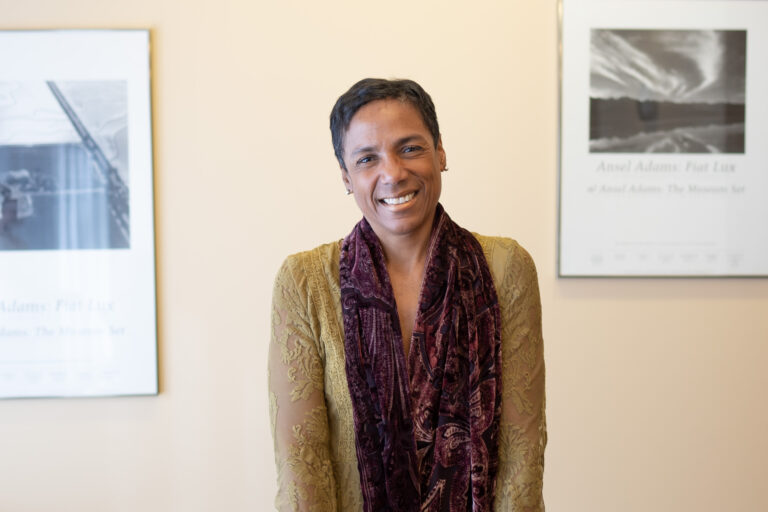
LeShelle May sits on the fifth floor of Mrak Hall — the same building that her husband, UC Davis Chancellor Gary May, has an office in. Yet she doesn’t appear concerned with this fact, and instead she greets the staff with a level of ease and warmth that shows her obvious comfort with being both on campus and in the office. 

Despite being in between trips — she was in San Francisco the night before, and had plans to fly with the football team to Portland that night — May appeared unhurried as she spoke freely about her involvement on campus, her fruitful career, student protests and more. She carried only a bike helmet and water bottle, which she gestured to when explaining the different aspects of Davis that she found appealing.

 “I love that it’s a walking [and biking] community,” May said. “To be honest, when we lived in Atlanta […] it wasn’t walkable. We had to drive to wherever, so what’s fun about Davis is that I walk everywhere, I cycle everywhere. I never have to fill up my tank.” 

May and her husband moved from Atlanta, Ga. a little over two years ago when her husband was offered the chancellor position. She explained that she was initially doubtful about the town of Davis, especially given that she was relocating from such an urban environment — so the thing that surprised her most about the community was how much she liked it. 

Though the pace of Davis may be regarded as a bit more lackadaisical in comparison to the bustle of Atlanta, May is anything but unoccupied. She has put her electrical engineering degree from Boston University to use at CNN for more than 20 years now, as both a senior software developer and manager. She played a crucial role in helping the company launch its website, CNN.com, and she has continued in her role, working remotely for the past two-and-a-half years since moving to Davis.

“It’s working out,” May said. “I have institutional knowledge that a lot of people don’t. The most challenging part is sharing that knowledge. Right now, it works out because I’m able to work for CNN from anywhere. So, when Gary and I are at a football game, I may work — my job is my laptop. That’s all that I need.”

 While May’s title may officially be senior software manager, she has yet another pivotal, more informal role: she acts as the Chancellor’s second set of hands whenever she has a spare moment, filling in where he can’t, developing new relationships and maintaining already established ones. Given her calm and intelligent demeanor, it is unsurprising that she’s largely instrumental in helping fundraise for the university.

“The good part between Gary and I is that my presence on the campus is nice [to use] as a divide and conquer [strategy],” May said. “I don’t make decisions or anything, but I do try to be there for a lot of our donors that just want to have lunch or dinner. I see my role as to fill in where Gary can’t. He can’t be everywhere, all the time.” 

She enjoys this unofficial role, viewing it as largely about “befriending” individuals, earning their trust and illustrating the vision of the school. Besides working with donors, May is a popular keynote speaker choice among many groups on campus — speaking at computer science seminars, at the graduate school of management and to Black Girls Rock that same morning — just to name a few.

The day before the interview took place, students swarmed Mrak Hall in protest over the implementation of UCPath, the UC’s new payroll system that caused many student workers to go weeks without pay. When asked her feelings about the UC Davis student body being notoriously activist, she replied, “the students have the right, and they should.” 

May believes that the campus needs to be conscious of students’ issues, and if striking or protesting is the best medium to accomplish awareness, so be it. She does, however, caution students to be aware of legality and overuse. May said the only time she gets concerned when it comes to protests is when laws are broken that could potentially cause harm to others.

She compared protesting on the East Coast to its presence on the West Coast.

“On the West Coast, there’s a lot of protesting, and you can become jaded to it,” May said. “Have a vision, and let’s address your issues — seriously address the issues so that it’s not just a protest and you aren’t wasting your time. When you protest, you want people to say, ‘Wow, this is serious stuff.’” 

In regards to areas of improvement for the university, May admitted that she worries about sexual harassment — an issue she acknowledged is widespread across college campuses. In her eyes, there is no “silver bullet” solution to this complicated issue, but she believes that education might be a good place to start. 

Being the highly accomplished female professional that she is, May said she herself has faced numerous bouts of sexism in the workplace. She said she didn’t allow these incidents to impact her performance, saying most of these incidents “flew over [her] head.” 

“Do you ever think straight when you’re angry?” May asked. “You really don’t, you lose vision. So I’ve never let those things lose my vision, because then I can be the better me. I’ve worked with men for a long time, but they always went to lunch every day and I was never invited. I was like, ‘Okay, I’m going to the gym.’ Eventually, you have to include me, because I’m the one [with knowledge]. I always say, ‘Be well studied,’ so that people will be forced to include you.”

When asked whether or not her husband’s status as somewhat of a public figure has ever impacted her personal or professional experiences, May quickly dismissed this notion. She made clear that her own pursuits were her primary concern.

“I’m not interested in academia,” May said with a chuckle. “I’ve talked to spouses of different presidents from the other schools, and they know everything because they just get involved more. My job is very mentally stimulating, it’s intense. I love that I have my own sense of me, and Gary has his own sense of him.”

It’s not that May is uninterested or even uninvolved with the university — it’s that her job is not simply that of the chancellor’s wife. While May works hard for UC Davis and lends a hand wherever one is needed, she is a career woman and is passionate about the work she does.

May and her husband keep their professional lives separate in many ways, but she did note how much she enjoys working with donors, as she’s able to relate to them on a certain level, given that they’re “more corporate than […] academia.”

And how does May want students to think of her? As a resource, she said. 

“Use me as you want,” May said. “I would love to be a resource. If you want me to speak, if you want me to march, if you want me to talk, […] I see myself as more of a resource.”

Written by: Claire Dodd — features@theaggie.org

Women’s Basketball Season Preview

Coming off historic campaign, Aggies seek to establish new identity

The 2019-20 season marks the beginning of a new era for the UC Davis women’s basketball team. Not many programs have an all-time leading scorer and an all-time assists leader playing on the same floor together, let alone for four straight seasons. But such was the case for the Aggies, who were spoiled by the talents of Morgan Bertsch and Kourtney Eaton. The duo, along with three-point sharpshooter Karley Eaton, led the Aggies on a historic postseason run at the end of their senior year, culminating in a Big West championship and an appearance in the NCAA tournament. It was an ideal send-off for three of the program’s most exciting players. 

Now for the first time since the 2014-15 season, UC Davis features a playing roster that does not have a player with the last name Bertsch or Eaton. It is a significant change, but if anyone is up to the challenge of putting together a competitive squad year in and year out, it is head coach Jennifer Gross. 

Now in her tenth season at the position, Gross oversees a program yearning to continue its dominance from last year, in which the Aggies finished 25-7 overall, including a school-record 15-1 in the Big West conference. The three-time Big West Coach of the Year has assembled one of the premier coaching staffs in all of college basketball, composed of associate head coaches Joe Teramoto and Des Abeyta and assistant coach Matt Klemin. The group is one of the longest-tenured in the country and one that has worked with a plethora of high-level athletes over the past several seasons at UC Davis.

And while this year’s roster is different from those in years past, that does not mean it is less capable of playing quality basketball. It features a number of returners, promising transfers and freshman who can ball. 

Leading the group of experienced returning players are the team’s three seniors: forwards Nina Bessolo and Sophia Song and guard Katie Toole. Bessolo was one of six players selected to the preseason All-Big West Team coaches’ poll after earning an all Big-West honorable mention award last season. Last year, Bessolo shot over 40% from the floor and 35% from three, finishing with a career high nine points per game average, along with 3.9 rebounds per game. 

Song was another pivotal piece in the Aggies’ championship run. She started 17 games and racked up over 650 minutes of playing time last season in a do-it-all role. Song averaged 5.7 points and shot 37% from beyond the arc. 

Song and Bessolo together have collectively won 78 games in their last three years, while also garnishing a Big West Tournament crown, two trips to the WNIT and an NCAA Tournament appearance in 2019. But if her performance so far in this young season is any indicator of what is to come, Toole is undeniably poised for a breakout year. The redshirt-senior has scored in double figures in each of the team’s first three games, including a career-high 21-point effort against Santa Clara on Nov. 16. The transfer from Utah State only played about eight minutes a game last year, but her height and athleticism make her a versatile scoring threat that Gross and the new-look Aggies will lean on going forward.

Despite Toole’s surge to the forefront of the Aggie attack, UC Davis has struggled to keep pace with its opponents in its first three games, losing on the road to Montana State and Fresno State, and then at home to the Broncos in heartbreaking fashion on Saturday. But the team is still a work in progress, according to Gross, and will hope to use its early struggles as a learning experience before the season really heats up.

“I think we’re still developing our offensive identity a little bit — getting our offensive flow going,” Gross said following Saturday’s loss to Santa Clara. “We have two point guards that are still new to the program a little bit. We have a lot of weapons on the floor, we just need to put it all together. So that’s on me, I need to do a better job of getting us there faster. Our focus is always on our defensive urgency and playing five together all the time, and I thought we’ve taken big steps forward on every game that we’ve played. It just wasn’t quite enough today.”

Those new point guards, redshirt-junior Mackenzie Trpcic and freshman Campbell Gray, have split fairly productive minutes thus far and will only continue to ease into their roles as distributors as the season wears on. Trpcic led the Aggies with a season-high six assists against Santa Clara, while Gray added in two assists and six points of her own. They are joined by another freshman guard, Evanne Turner, who has already seen substantial playing time off the bench so far.

A critical asset in helping the new guards get comfortable this season will be another key returner in junior forward Cierra Hall, who was one of two players last season to appear in all 32 games — averaging over 24 minutes of playing time in each. Hall, who averaged 6.7 points and 6.3 rebounds per game last season, is a glue-type player that Gross can rely on to provide additional stability to the team’s group of newcomers. An experienced core is part of the reason why Gross is already encouraged by what she’s seen out of the freshman guards, in particular.

“[They’ve been] hitting big shots, making big plays [and] getting stops for us,” Gross said. “By December-January, those kids aren’t going to be freshman anymore. And we have a lot of people playing different roles for us this year, so we’re still trying to build that chemistry. I’m very confident that we’re going to get there, it’s just a matter of time.”

The Aggies will begin a stretch of four home games starting on Nov. 22, so they will have ample opportunity to showcase their growing chemistry in front of a friendly crowd. Once December hits, the team will then hit the road for four straight contests — a stretch that includes challenging games at Minnesota and Stanford. These matchups and others will be pivotal for the Aggies to learn from and improve off of before their Big West slate begins on Jan. 9 at UC Riverside. 

Compared to their last several seasons, this is undoubtedly going to be a much different one for the Aggies. Bertsch and the Eaton twins were the engine that kept the Aggie offense humming in recent years, but now Gross’ squad will have to adjust to life without them. But that’s what makes the Aggies’ future so intriguing: the possibility of new players to make their own mark. It will happen one way or another, according to Toole.

 “People always seem to step up — it’s just a natural thing,” Toole said. “Whoever’s doing it that night, that’s who we’re going to go to.”

Feed the hot hand and play sound, team basketball will be the Aggies’ mindset this season as they attempt to defend their Big West title.

Written by: Dominic Faria and AJ Seymour — sports@theaggie.org

Letter to the Editor

UCD alum responds to administration’s handling of UCPath

To the Editor: 

Re “Transition to UCPath has proved disastrous for student workers” by the Editorial Board (editorial, Nov. 1): 

I read your article about the failure of the UC to pay its student employees. I note that its solution is to provide advances (a.k.a. loans) to the affected students. It’s typical that the administration’s response to its failure to pay students is to increase the student’s debt. If it has enough money to make these loans, then it has enough money to pay its workers.

MICHAEL ERICKSON, DAVIS, CA, UCD ALUMNI CLASS OF ‘84

To submit a letter to the editor, please email opinion@theaggie.org.