57.8 F
Davis

Davis, California

Sunday, December 21, 2025
Home Blog Page 386

Drake booed off the stage at Camp Flog Gnaw

Frank Ocean fans in their feels about his no-show

I bet it was not “God’s Plan” for Drake to get booed off stage. The notoriously viral headliner from this year’s Camp Flog Gnaw Carnival in Los Angeles, Calif. has made everyone’s hotline bling. 

Media has covered the Drake story as a completely humiliating experience. Is that what really happened, however, at the Tyler, the Creator-curated festival? UC Davis students who attended this year’s Camp Flog Gnaw uncovered the warped and over-hyped version of the story. 

“I feel like people are just hearing that Drake got booed off, and people are assuming he got booed off because he’s Drake and because people didn’t want Drake,” said Ali Janku, a second-year economics and history double major. 

Throughout the very secretive reveal of the mystery headliner building up to the festival, everyone was confident that the headliner would be Frank Ocean, a frequent collaborator of Tyler, the Creator. 

  “We were really looking forward to the mystery headlining act, which a lot of people thought was going to be Frank Ocean, because there were clues on social media and stuff […] especially since he dropped new music right before,” said Minaz Ali, a second-year Spanish and psychology double major. 

Ali, who attended Flog Gnaw in 2018, explained that last year, the crowd already knew who the mystery headliner was the day before. This year, however, the crowd found out who the guest performers would be only once they got on stage. 

At first, Tyler the Creator came out on stage and asked the crowd, “Can I bring a friend out?” then introduced rapper A$AP Rocky for a few songs. Then, Tyler came out again asking the crowd, “Can I bring another friend out?” and presented Lil Uzi Vert to perform a few songs. A$AP and Uzi performed a total of two songs each, when Tyler introduced his last “friend” to the stage: Drake. 

After a few songs, Drake continued performing even though A$AP and Uzi had stopped their sets after two songs. Something was off. 

“I’m here for you tonight,” Drake said. “If you wanna keep going, I will keep going tonight. What’s up?” The silence was then filled with booing. 

He wittily responded, “Well, look, it’s been love. I love y’all. I go by the name of Drake. Thank you for having me.”

The crowd booed — “not necessarily because it was him,” Janku explained. “But because they made it seem like there would be another artist after Drake.”

The actual booing was a reaction to Drake’s question to the crowd, rather than the rumored reason that he got booed off stage.

“I don’t think he would have gotten booed off stage if he didn’t ask, it was just a response,” Ali said. 

“I ended up buying a ticket because of the whole Frank Ocean hype,” said Chris Bruton, a second-year statistics and economics double major. “I’m not not a fan of Drake. I wasn’t super hyped about it, but in the moment, I wasn’t going to be mad about it. Everyone thinks that he was booed off the stage because people were expecting Frank Ocean, but they really made it seem like someone else was really going to come on after Drake.” 

“Yeah, I booed,” Janku said, chuckling.

Most of the booing came from the VIP section where Frank Ocean’s die-hard fans had set up camp, stood all day and even missed all the other performers specifically to see him. 

“It was really not the majority of people who were booing […] it wasn’t that dramatic in real life,” Ali said. 

Bruton confirmed that there was only “a little booing.”

“It wasn’t that bad,” Bruton said. “It wasn’t insane like on the videos, like how it sounds Drake was booed off the stage.”

Most of the crowd was on Drake’s side. They began to chant “f*** VIP!” in response to the section’s discourteous booing and throwing of items on stage after Drake had left.

“What bothered me about it is that if Drake was the headliner and they announced that and had a full show of a Drake concert, I would be like ‘this is sick,’ I mean, it’s Drake, you know?” Janku said. “But because it felt very disorganized and thrown together, I mean Drake was wearing sweatpants with no band or DJ, people started getting fed up with it. It really felt like a Plan B. I’m paying all this money to see a headliner, so I want a headliner show. There was really high production value in other [acts], but less so with the final performance. It just felt like such a mess.”

Given the build-up around Frank Ocean’s suspected appearance, Bruton asked, “How could they not have expected [the booing] to happen?” 

“There was such a big hype around Frank,” Bruton said. “Nothing against Drake, but he doesn’t necessarily fit into the Odd Future genre. It all just kind of felt weird while Drake was on stage.” 

With 20 minutes remaining, fans waited in confused anticipation for another performer who never came.

 “I honestly don’t think Frank was ever going to come on, and in retrospect it makes sense because he rarely performs,” Ali said. “He’s not a performer; he never goes on live. It was kind of naïve to say he was going to be at Flog Gnaw.”

Right after the festival, Twitter hopped on the hype and blew up the internet with the story. Drake, no longer in his feels about his humiliating experience, posted a response to all his haters. 

“Plot twist…just signed a 10 year residency at Camp Flog Gnaw sorry kids see you EVERY SINGLE YEAR till you are 30,” Drake humorously posted, followed by a smiley face emoji, under a picture of himself with Taco, an ex-member of Odd Future on his Instagram.

 “If [the post] is real, it would bring in a different group of people to the concert,” Bruton said. “But I don’t think it is, I don’t know why they would do that.”

Ali was also “pretty sure” the post was a joke — I think he was just trying to make light of the situation,” Ali said. “[The booing was] probably a blow to his ego. Their fan bases don’t really overlap.”

Drake is no Frank Ocean to Odd Future enthusiasts, but there is nothing to be done now. Haters gonna hate.

“It was a very anticlimactic ending to a really good weekend,” Bruton said. 

It seems that Drake’s “Hold On, We’re Going Home” was taken a bit too literally. Until next year, Flog Gnaw!

Written by: Sierra Jimenez — arts@theaggie.org

Review: “Ford vs. Ferrari Review,” revving up to the challenge

A saga of brotherly love, corporate shenanigans and sultry sports cars

Apple vs. Microsoft, capitalism vs. communism, Batman vs. Superman, Ford vs…. Ferrari? Released into theaters on Nov. 15, “Ford vs. Ferrari” accelerated into the box office, racking up over $64 million in its first week. The film is a high-octane biopic saga of man and machine, featuring one of auto racing’s most tense and legendary rivalries. Pumped full of brotherly love, corporate shenanigans and sultry sports cars, the two-hour-and-thirty-two-minute film provides non-stop entertainment.

The plot shifts into gear when an attempt by Ford Motors to acquire Ferrari from Enzo Ferrari spoils. During the negotiations, Enzo has a few choice words for Ford’s own main man, Henry Ford II. To the delight of autophiles, and now perhaps cinephiles, this heated exchange ignited one of the largest feuds in racing history.

The film centers around two Herculean figures in the racing world: Ken Miles, played by Christian Bale, and Carroll Shelby, played by Matt Damon. Miles is a fiery Englishman with a sweet tooth for speed and Shelby is a legendary automaker and charismatic businessman. The two work together after Shelby approaches Miles to join him on the newly assembled Ford racing team to take on Ferrari at the 24 Hours of Le Mans — the most prestigious racing event in the world. The dynamic between red hot Miles and cool and collected Shelby is pivotal in the development of the plot and one of the most compelling aspects of the film. The on-screen chemistry between the two Hollywood veterans is undeniable, even if it has some extra injected testosterone for entertainment value. 

Christian Bale, a.k.a. human Play-Doh, once again pulls a rabbit out of the hat by proving he can shape himself mentally and physically to become just about any character. Around this time last year, Bale played the critically acclaimed role of borderline-obese Dick Cheney in Vice. In order to play the wiry Miles, he shrugged off 70 pounds. I don’t know if this is impressive or disturbing, but I’m leaning toward the latter. 

Bale is a spitfire and a standout. He brings an “I don’t give a rat’s ass about you if you aren’t made out of metal alloy and have a bajillion horsepower” attitude to almost every interaction, but simultaneously shows emotional complexity when playing a dedicated dad and loving husband to wife Mollie, played by Caitriona Balfe. In the intimate moments with his son, we get a clear insight into the deeper motivations behind his need for speed.

In typical Hollywood fashion, Mangold tweaks a few key details to keep the storyline cohesive and ham up the drama. In one memorable scene, Henry Ford II takes a wild breakneck test ride with Shelby and the Ford GT, where the self-proclaimed “Deuce” proceeds to take a deuce in his pants and cry in sheer terror. Although I sincerely wish this had occurred in real life, there is no outside information to back it up. For the most part, however, Mangold is able to keep the story’s integrity, portraying the give and take between the Ford Racing Team and the corporate big-wigs. Josh Lucas plays Ford’s PR man, Leo Beebe, who works to undermine Carroll and Miles in the name of saving corporate profits and face. As the unequivocal bad guy, Lucas does an almost too good job at synthesizing all the negative stereotypes of corporate America into one grade-A prick. 

Mangold and the camera team capture the glorious chaos of Le Mans putting the audience in the driver’s seat, feeling the gears churn and the pistons fire. They piece together point-of-view driver shots where the audience is one with the driver. The camera tracks the race from the ground up, giving the movie a nitty-gritty, in-the-trenches perspective. You are front row to the manic speed and devastating collisions that unfold on the road. The heart-rattling racing paired with the drama even kept me, someone who is already familiar with the story, on the edge of my seat.

Despite all the film’s many upsides, I thought the machismo element was overblown. After butting heads, Shelby and Miles tussle on a neighborhood lawn, strewing groceries everywhere and looking like goddamn fools as Mollie looks on in amusement. I don’t contest that some unfettered masculinity was warranted (it’s about friggin race cars), but continuing to highlight this aspect muddled the character of the film.

The film had everything I wanted and expected from a story about 200 mph race cars and the massive egos that accompany them. The synergy of the cast paired with the blistering racing cinematography made for a time well spent at the theatre. When the rubber meets the road, “Ford vs. Ferrari” may not be flawless, but it’s definitely a winner. 

Written by: Andrew Williams — arts@theaggie.org

Culture Corner with Ilya Shrayber

The Arts Desk’s weekly picks for movies, books, music and television shows

Movie: “Pierrot Le Fou”

If you thought I wouldn’t recommend a dense, deeply tender French New Wave film in my Culture Corner, you were mistaken. Directed by none other than Jean-Luc Godard, a cinematic legend and perhaps my biological father, “Pierrot Le Fou” tells the story of a couple that acts on the most typical romantic questions: What if we just ran away and left it all behind? With mesmerizing shots of naturalistic dialogue, the film is the story of an amorous road trip gone wrong, with gangsters, vintage cars and lovers’ quarrels, all set on the sunny French Riviera. This film sparked my love for Godard’s vision of the world: always romantic, finding beauty in the everyday and mixing it into the surreal. “Pierrot Le Fou” is a film I would recommend to anyone interested in cinema, who explores perhaps not the way things are, but how they feel. 

Book: “The Unbearable Lightness of Being” by Milan Kundera

What does it mean to truly love someone? Set against the backdrop of a 1960s Soviet-occupied Prague, “The Unbearable Lightness of Being” explores the fragile, yet heartachingly relatable, act of giving yourself over to another person. Beautifully written with a narrative that jumps between man and woman, the book is filled with passages that will make you stop reading, put the book down and think about the words you just read. Kundera’s signature philosophical rants are juxtaposed nicely with simple tales from his youth, a technique that keeps the more dense pieces of the novel fresh. This is a book for anyone who has been perplexed by the universal mystery of devotion and the baggage, both good and bad, that comes with it. 

Album: “Chet Baker Sings” by Chet Baker  

I remember my first time in New York City, NY — it was years ago, and I was impossibly overwhelmed, albeit in the best way possible. Bright flashing lights, colorful halal carts and the roar of the subway were my favorite things along with, of course, strolling the streets listening to Chet Baker. Many of my friends had just started college in the city, and visiting them opened up a brave new world where it felt like anything was possible. The soft piano and Chet’s silky vocals take me back to that feeling of endless possibility. It’s been a while since I’ve been back to the Big Apple, but everytime “Chet Baker Sings” comes on, I glance at ticket prices to JFK. This is an album for anybody who misses a dollar slice and the fatally loud yell of pedestrians screaming, “I’m walking here!”

TV Show: “The Mandolorian”

My knees are shaking. My eyes are watering. My heart is full. George Lucas’ vision of seeing Star Wars on the small screen has finally come to fruition. And what a vision it is. “The Mandolorian” is essentially a Western set in the universe of “Star Wars,” abound with classic tropes. Yet, there’s nothing corny about the show. “The Mandolorian” is a stylish, big budget Disney+ affair executed with grace. The choice to still utilize puppets for many alien species brought me straight back to my childhood, and an enormous grin formed on my face as the first episode began. Zooming in on one tiny speck of the massive universe of “Star Wars” is deeply engaging, and it’s refreshing to finally take a break from the Skywalker Saga. This is a show for anybody who wants to feel like a kid again and engage a series that is intriguing, alluring and intoxicating. 

Written by: Ilya Shrayber — arts@theaggie.org

One year ago: remembering the Camp Fire

1

This time last year, the Butte County fire had a campus-wide impact, costing some UC Davis students their homes

At this time last year, many Northern Californians experienced a Thanksgiving away from home. In November of 2018, the Butte County fires roared for the majority of the month, leaving many students and community members without their homes and businesses. At the same time, the Camp Fire engulfed cities including Chico and Paradise in flames for weeks. The Sacramento Bee called it the deadliest Californian wildfire — 85 people died and almost 15,000 homes and buildings were incinerated.

As the fires blazed, neighboring regions in the Bay Area, Sacramento and Davis were blanketed under smoke clouds that kept the Air Quality Index (AQI) at levels labeled “very unhealthy.” Because of the hazardous air conditions, UC Davis students were granted no school for one day … and then another … ultimately leading to a two-week break from instruction.

On Tuesday, Nov. 13, UC Davis released a statement to the campus community that classes would be cancelled as a result of poor air quality due to the Butte fires. Many students were grateful for the day off. No school meant no need to travel to campus, attend lectures or go to work on campus. When the university sent out a statement that classes would resume the following day, many students protested, as the air quality was predicted to be worse.

Students took to Twitter, Facebook and the popular college-student app, Wildfire, to voice their concerns, monitor the AQI and pass around a Change.org petition to cancel school until the air quality improved.

Many students celebrated the cancellation of school, but others found the time away from school to be stressful. 

“I feel like lots of people just want classes cancelled for any reason and are using the situation to their advantage,” wrote one Reddit user at the time. “As much as I would love to not have to get up and go to class, I need to learn this material […] and missing significant amounts of class time is not ideal.”

As a result of the class cancellations, students missed two weeks’ worth of material from cancelled lectures, had midterms that were either pushed back or cancelled and experienced significant changes to the grading scales for courses.

For students with homes and family in the Butte County, however, the two weeks off could be used to spend time with family and focus on safety or recovery. 

“I have a lot of friends who live where the fires are and have midterms this week and are super stressed about leaving their families alone knowing there’s a chance they might not have homes next week,” wrote one user on the Wildfire app. 

For third-year managerial economics major Harshan Singh, the Butte County fires ignited stress and great loss for his family. Singh’s father owned businesses in Paradise, a part of California that was nearly burnt to rubble.

“My dad couldn’t do anything except try to get transportation for his employees to leave the city,” Singh said. “My dad ended up losing both businesses and his house. It was probably the most heartbreaking thing that has happened to my family, especially to my dad.”

Singh says his family took a financial hit, but they hope to rebuild their businesses in the future. 

While students may have been issued safety masks and were advised to remain indoors, Annie Houston, a fourth-year animal science major, said not enough was done for the animals in danger. 

“That was such a big issue […] — there was no concern for the animals,” Houston said. “We attended town meetings and county board meetings trying to convince people that the need for animal evacuations was a real concern, as it wasn’t something many people thought about.”

Houston works for NorCal Livestock Evacuation, a nonprofit dedicated to evacuating, rescuing and caring for animals in times of crisis. During her two week break, Houston spent time working with the non-profit.

“I had to do something to help,” Houston said. “Honestly, you cannot even begin to understand the devastation until you are actually there.”

Wildfires once again spread this year — in late October, the Kincade Fire burned in Sonoma County. As extreme winds shook Northern California, PG&E shut off power for over two million people in an attempt to prevent additional fires.

The recent outages, on top of the Kincade Fire, made some students worry that classes would be cancelled again. Because of the pattern of the fires, UC Berkeley’s Vice Chancellor of Administration Marc Fisher released a UC-wide report on new AQI regulations that will be implemented by the entire UC system. According to The Daily Californian, the report includes recommendations for handling activities that could be affected depending on the AQI. Activities include attending classes, working outside or participating in sports. 

Despite the seemingly unsalvageable destruction, contractors had finished removing almost four million tons of debris left by the fire in Butte County, KTLA reported on Tuesday. In nine months, the county was relieved of heaps of ash, concrete, trash and other debris that had scattered the area since last November. 

Reflecting on the devastation from a year ago, Singh was reminded to recognize what’s important in life. 

“After last fall’s fires, I definitely learned that you shouldn’t take things for granted,” Singh said. “You never [know] when a natural disaster could affect your family.”

To donate to students and their families affected by the Camp Fire, visit the UC Davis Foundation Board Student Fire Relief Fund at give.ucdavis.edu. For more information about NorCal Livestock Evacuation, visit norcalevac.com or find them on Facebook. 

Written by: Alana Wikkeling — features@theaggie.org

Young Adults literature gets a lot of undue criticism

YA novels are unique and important for the way they allow readers to connect to stories 

For better or worse, I credit the development of my formative teenage years to young adult literature. Over time, I have slowly moved away from YA, but I still think there’s a lot of value in these books, even for older readers.

I cannot mention my appreciation for YA books without making clear my love for the “Harry Potter” series, which is objectively one of the greatest book series to have ever been written. “Harry Potter” is timeless and ageless, not just because of its creative and incredible story, but because it touches upon themes of love, family and friendship that transcend any age constraints. I still read the entire “Harry Potter” series every other summer. I do this partly out of nostalgia, but there’s another part of me that craves for a magical, yet entirely authentic, telling of ideas, themes and life experiences to which I can relate.

That’s really the reason why the YA books of my (younger) teenage years will always have a special place in my heart — especially those of the realistic fiction genre. In middle school, I had read every Sarah Dessen book written up to that point, and I was always reading the newest and most popular YA books. I couldn’t get enough of reading about other people’s lives, even if they seemed wildly similar to mine.

Many people view YA novels as silly and focused on trivial issues. Most of these books don’t feature complicated themes or take place in tumultuous historical turning points. Many of the books that I became obsessed with were casual, if not somewhat banal, with their storyline. There’s no dramatic escapade that the characters go off on — rather, these books were reminiscent of the daily lives of its middle school and high school readers. Like most of us in high school, the characters in YA novels were juggling extracurriculars, jobs, studying for the SATs and falling in and out of friendships and relationships. Despite how taxing, ugly and confusing these real-life experiences often can be for young adults, YA books largely discuss them.

Of course, some of the criticisms about YA are justified, but it’s unnecessary to minimize the issues and topics covered in YA to being petty or mundane. Most of the books I read in middle school and high school focused on, and were written for, young teenage girls like me. Drama, fights, breakups and heartbreaks are all common features of teenage lives, so it only makes sense that many YA books reflect that.

  But it would be remiss of me to not discuss the obvious shortcomings of YA novels, which I find difficult to ignore. For instance, the lack of diversity in characters as well as the authors is astounding. On the one hand, I love that these characters go about their day-to-day lives in a relatable way. But, on the other hand, I wish I had the opportunity to read more books about characters who lead the quintessential American teenage life as a first-generation American or as a person of color. This doesn’t mean writing a storyline that is explicitly and solely centered around these identities, but rather, writing books that tell these familiar stories of American diversity from a unique perspective.

That being said, there are authors who are gaining traction for their diverse storylines. Angie Thomas’ “The Hate U Give” tells another story about a high school girl but through an authentic lens. Starr Carter, the protagonist of “The Hate U Give,” isn’t too different from the characters in other YA novels. She’s a high school student who studies, plays sports and likes spending time with her family, friends and boyfriend. But she is also grappling with, and navigating, the structural systems of inequality that have hurt, and even killed, her loved ones and members of her community. 

Stories like Thomas’ “The Hate U Give” make for impactful reads. They give teens the opportunity to meet and connect with a character who seems exactly like them, but simultaneously provides a unique perspective which affects how the character interacts with their society at large. This not only gives young people of color stories they can relate to, but gives readers who can’t relate an opportunity to better understand people with different backgrounds.  

YA books are fun, compelling and important reads. And while many of their themes may lack substance, they still provide significant value to readers, allowing them to better understand themselves and their peers. 

Written by: Simran Kalkat — skkalkat@ucdavis.edu 

Disclaimer: The views and opinions expressed by individual columnists belong to the columnists alone and do not necessarily indicate the views and opinions held by The California Aggie

Cartoon: A Turkey’s Feast

MARIO RODRIGUEZ / AGGIE 

Davis community comes together in support of DACA

Community members of all ages rally together in candlelight vigil to extend support to DACA recipients

The Davis community gathered at the “Home is Here” rally in support of DACA on Tuesday, Nov. 12. The rally was organized by the Davis Phoenix Coalition and the Unitarian Universalist Church.

DACA, an acronym for Deferred Action for Childhood Arrivals, is an Obama-era program that defers deportation for young immigrants who arrived in the U.S. without documentation. The program grants these individuals the ability to live and work in the U.S. — DACA status lasts for two years before it must be renewed.

There are almost 800,000 DACA recipients, also referred to as Dreamers, in the U.S. And roughly 600 Dreamers attend UC Davis. 

In Sept. 2017, President Donald J. Trump declared the program unconstitutional. Tuesday was the first day of Supreme Court hearings concerning the legality of DACA — with the UC serving as one of the key plaintiffs in the hearing. 

Of the nine sitting Supreme Court Justices, five are identified as conservative. As of Tuesday, the conservative justices seemed prepared to side with the Trump administration in the recission of DACA. 

In the case, the Trump administration argued that not only is DACA unlawful, but the President has the power to terminate the program regardless of legality. 

About 100 people attended Tuesday’s event in Davis to support DACA. People of all ages and ethnicities were present, and many held signs with statements such as “Their home is here,” “We support our Dreamers” and “Welcome the Stranger.”

Alexandra Lee-Jobe, a Davis community member of 20 years, is actively involved in the Unitarian Universalist Church and helped found the Davis Phoenix Coalition. 

“They give a voice to the families that come to this country for their children,” Lee-Jobe said. “Many of them came as young children, and their parents just wanted them to have a better future.”

Anoosh Jorjorian, another Davis community member in the crowd and member of the Davis Phoenix Coalition, shared similar sentiments.

“I’m sure that my children are going to school with DACA recipients,” Jorjorian said. “I know there are many DACA recipients at UC Davis. A lot of those students have graduated and now they’re our colleagues, our neighbors and they’ve been living here their entire lives. This is their home, and they absolutely deserve to stay.”

As the night progressed, organizers passed out lit candles to the crowd in recognition of DACA recipients. A series of speakers, including Yolo County Supervisor Jim Provenza, delivered speeches from onstage.

“The Court is looking at a lot of legal arguments, a lot of technical arguments,” Provenza said. “But if the court will look at the fundamental principles of our Constitution and the fundamental principles of the country that we live in, then they’ll decide in favor of the DACA students.”

Other speakers included Davis Mayor Pro Tempore Gloria Partida, Yolo County Supervisor Don Saylor, former Yolo County Superintendent Jesse Ortiz, Rabbi Greg Wolfe, UC Davis Law Professor Brian Soucek and Ignacio Alarcon, the assistant director of the Undocumented Student Center at UC Davis.

The evening included performances by the Davis sect of the Raging Grannies, a singing ensemble of local “Grannies.” Song lyrics were passed out into the crowd, and soon everyone was waving candles and singing “Songs for Dreamers.”

“So raise your voice in song for Lady Liberty,” the Grannies and the crowd sang together. “Who raised her lamp in welcome at our shore. Because compassion made this nation strong and free, we’ll never turn our backs, we’ll never shut the door!”

Afterward, Davis Poet Laureate James Lee-Jobe read an original poem he wrote for the event. 

“The measure of a good person is in kindness and love,” Lee-Jobe read. “Why should our government be any different?”

Written by: Eden Winniford –– city@theaggie.org

UC Davis Student Health to offer free HIV testing Dec. 2–6

Free HIV testing in honor of international AIDS day

For the first time ever, and in honor of World AIDS Day on Dec. 1, the Student Health and Wellness Center will offer free HIV testing from Dec. 2–6. The service will be offered to all students through the online appointment scheduling service Health-e-Messaging. When prompted, students will be able to select that they want HIV testing. 

The event is part of Zero HIV Stigma, a student-led campaign led by sexual wellbeing coordinators, and through a collaboration with the LGBTQIA Resource Center. 

One of the main goals of the Zero HIV Stigma initiative is to raise the number of people getting tested for HIV. 

“If someone’s engaging in sexual activity, […] they need to get an HIV test,” said Blake Flaugher, a sexual wellbeing health promotion specialist with Student Health and Counseling Services.

This work reflects findings from data collected in Spring Quarter of 2019 that showed that less than one in four students at UC Davis report ever having been tested for HIV.

The misconception that only certain people need to be tested for HIV — like queer men and people who use drugs intravenously — is what make this number so low, Flaugher said. 

“Everyone, no matter their identity, needs to get an HIV test,” Flaugher said. 

Zero HIV Stigma aims to support those at UC Davis living with HIV, open up a conversation surrounding HIV and get people tested.

Since extended free HIV testing like this has never been offered at UC Davis, the event is going to be treated like a pilot test. Regular free and anonymous HIV testing already occurs from 2–5 p.m. on the first Wednesday of every month at the LGBTQIA Resource Center.

This extended free testing service comes after UC Davis was named a leader in LGBTQ healthcare equality by the Human Rights Campaign through their healthcare equality index, Flaugher noted. UC Davis was one of three campuses to be awarded the title and was the only UC recognized in this way. As Flaugher explained, this is a testament to how UC Davis supports LGBTQIA students.

“We really want to let queer and trans students — and all students — know that we do care about them and that they are welcome here,“ Flaugher said.

Additionally, Flaugher explained that even if students are a dependent under a parent or spouse’s insurance, there is still a way to keep health information, including STI testing, confidential. The ACLU of Northern and Southern California’s Keep it Confidential explains this process in further detail. 

Written by: Jessica Baggott — campus@theaggie.org

Happy Thanksgiving from the Editorial Board

Aggie editors reflect on places for which they are thankful

Kaelyn Tuermer-Lee, Editor-in-Chief

While I have lived in several different places and have been fortunate to travel across the world, I will always be thankful for the city where I was born: Baltimore. Though I grew up in Catonsville — my beloved 21228 — I have fond memories of downtown Baltimore. I remember feeding the ducks at the harbor with my parents, going on walks with my Oma when she visited from Germany and eating the most delicious sausage sandwiches at the farmers’ market. And despite the fact that some may think of Baltimore as a dirty slum, I find the beauty in its character and will never forget where I grew up. Go O’s!!

Hannah Holzer, Managing Editor

There’s a fantastic line from the first episode of Tuca and Bertie that goes: “You know when you’re coming home late at night? And everything inside looks so warm and yellow, and everything outside is so blue? I love thinking about how, from now on, this little piece of yellow is for us, our warm home together.” There is no more apt descriptor than this for how I feel when I come home to my three housemates — my best friends — who I have been so fortunate to be with practically every day of my college career. This is the third year we’ve lived in this apartment, and in that time it has seen a lot of blood, sweat and tears (and latke grease, the frequent waft of brownies in the oven and an almost never-ending steam for countless cups of tea). This apartment is a testament to the friendships and relationships I have made throughout college, it’s seen the best times and the hardest times of my life and it’s old and cheap and quite literally always falling apart, but it’s my cherished home. 

Kenton Goldsby, Campus News Editor

Just over two years ago, I was living in Barcelona, Catalonia, while studying abroad. It was a particularly tough holiday season. My mom had passed away that summer and missing all of my family frankly sucked. This is all the more reason I am thankful for Sitges, a city 45 minutes south of Barcelona by train, where I spent the weekend after Thanksgiving with my boyfriend Joel. Having him be able to come visit me from California was such a comfort, and being able to form memories in that town was a blessing. Sitges will always hold a place in my heart because of that weekend.

Stella Tran, City News Editor

Spicy cajun aromas seeped up my nostrils as I thought to myself, “home.” My all-time favorite place is located in the heart of Southern California: The Boiling Crab. I spent my high school days there with my close friends, and I am forever thankful for my memories at this special place. We would catch up with one another over peeling crawfish and eating some of the most delicious fries, without a care in the world. The restaurant was a place where I shared Secret Santa gifts, gave the worst love advice, laughed until my stomach ached and cried when I was about to leave it all behind. My heart belongs there, beckoning me to return.

Hanadi Jordan, Opinion Editor

This year, as I look toward graduation and the uncertain future that follows, I am especially thankful for my grandmother’s — my teta’s —  home in Livonia, Mich., which has always felt like home despite my constant moving away from it. I will forever be thankful for the memories and the unconditional love I was given in that house. The smell of sizzling hash browns and scrambled eggs on a summer morning; my grandmother’s voice calling on my cousins and me for breakfast. The smell of fresh cut grass and the sharp metallic scent of a long-rusted swing; the sound of leaves blowing, child-like shouts and laughter. I am thankful for the time my teta’s house gave me with my cousins, and especially with those who have passed too soon. But more than the place itself, it is the love my teta filled it with, which makes me so grateful. 

Claire Dodd, Features Editor

While this may come off as cliché or lacking in creativity, the place I am most thankful for is a town I’ve had the pleasure of living in twice: Davis, Calif. Most people do a double take when I tell them I spent a large portion of my childhood in the same town they attend college in, but I am nothing but grateful for the wholesome adolescent memories Davis gave me. I can recall spending my mornings with my dad and our dog, Sammy, at Slide Hill park and climbing all over the curious Eggheads on campus — a place that seemed so alien to me back then. Although the city has changed significantly since 2006, it hasn’t lost its signature community feel that still, to this day, fills me with adoration and gratitude.

Liz Jacobson, Arts and Culture Editor

One of my biggest frustrations with Davis, Calif. is its lack of good salad places, but to be fair, it’s really just that no salad will beat the Brauhaussalat at the Café Brauhaus am Markt in Kaiserslautern, Germany or the afternoons I’ve spent there with my mom. This turkey salad, topped with the most delicious curry dressing and paired with an Aperol spritz, is always enjoyed after an afternoon of errands on the walkplatz with my mom, where we have wonderful conversations, both thought-provoking and frivolous, under an umbrella, against the backdrop of a bustling downtown. 

Dominic Faria, Sports Editor

Call my obsession for sports unhealthy, but the place I am most thankful for in my life doesn’t even exist anymore: Candlestick Park. The Stick was a place of joy, sadness, worship, confession and adrenaline-pumping excitement all wrapped into one battered relic of Bay Area sports lore. I’ll never forget the memories that I have made alongside my family within its now torn-down walls. I’ve been privileged to witness some of the greatest moments of 49er history inside that cold, unforgiving temple — some that even made me cry my eyes out in happiness. I sorely miss making the trek up to the city and spending my Sunday afternoons there. The real Faithful fans know how deep the passion runs. Niners for life!

Cecilia Morales, Science Editor

The introvert inside me wants to immediately say I am most grateful for the comfort my bed brings me at the end of long days (or really any day). But given California’s drastic and damaging (to say the least) housing crisis, I am most grateful for the places that my extended family of immigrants and their first-generation children have been able to call home in Southern California. Our experiences building our lives in an area known for entertainment and tourism differ from what most might equate Southern California to be, but it makes our relationships to the area that much more special. Last, but not least, I am grateful for where my parents are really from — two small cities a couple of hours outside Guadalajara, Jalisco in Mexico — as that connected me to my grandma Mama Meche’s home in Tecalitlán, which has been critical to shaping the woman I am today.

Written By: The Editorial Board

Aggies ousted from NCAA tournament

0

Louisville tops UC Davis men’s soccer in front of record crowd at Aggie Soccer Field

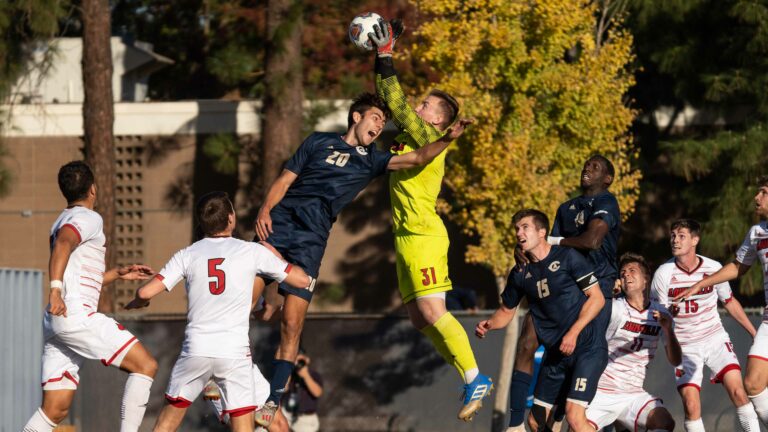
A dominant season for the UC Davis men’s soccer team reached its abrupt, heartbreaking conclusion on Sunday afternoon at Aggie Soccer Field, when the Louisville Cardinals slipped by the Aggies 1-0 in the second round of the NCAA tournament. 

In front of a crowd of about 1,700, the 14th-seeded Aggies were upset by the visiting Cardinals in what was a frustrating game for the UC Davis side. The Aggies outshot Louisville 18-5 on the afternoon and controlled the majority of the match, but all it took was one devastating Cardinals counterattack for the visitors to score, ending UC Davis’ hopes of advancing any further in the national tournament.

“I felt like we played well,” said UC Davis Head Coach Dwayne Shaffer about his team following the game. “In the first half, we created some great opportunities. There are two that stick out in my mind. Unfortunately, we just didn’t shoot the ball. We allowed their defense to recover. But overall, I thought my team played well. I don’t think we played as well as we have in the past four games, but you gotta give some credit to Louisville. They dropped in a very low block and defended in their half for the majority of the game. I thought we broke them down enough times, but we unfortunately just didn’t put the ball in the back of the net.”

Thanks to a 13-4-2 record and a Big West Conference championship win, the Aggies were awarded a first-round bye and enjoyed a full week of preparation for Sunday’s contest. The lower-seeded Cardinals, on the other hand, hosted their first-round game on Thursday evening, where they cruised past the visiting University of South Florida side by a score of 4-1 to secure their spot in the second-round.

But whatever momentum Louisville may have captured in Thursday’s victory was repelled by the Aggies from the outset of Sunday’s match. It looked as if UC Davis had picked up exactly where it left off when it defeated UC Santa Barbara to claim the conference crown on the same pitch just nine days prior. The Aggies played with all the confidence of a highly-ranked home side and were supported by a friendly, sold-out crowd. 

UC Davis wasted little time in eliciting cheers from the fans in attendance, as senior forward Adam Mickelson threatened a first goal in the 5th minute on a through ball that led him racing behind the Cardinals back line. But before he could get a clean shot off, the Louisville defense did just enough to recover and snuff out the attack.

In the 11th minute, freshman midfielder Max Arfsten fired off the first shot of the contest: an attempt on goal that was saved by Louisville goalkeeper Jake Gelnovatch. The Aggies did not let up on their offensive pressure, and, just a few minutes later, forced a turnover in the Louisville defensive third. Arfsten again tried to put the Aggies in front, but this time his shot flew just wide of the net. 

In what was already turning into a fairly confrontational match, Louisville eventually began to settle into the contest, but not before another quality UC Davis scoring chance was thwarted by the Cardinals. 

Off of an Aggie corner in the 28th minute, junior defender Nabi Kibunguchy sent in a half-volley shot to the net that forced a diving save from Gelnovatch and kept things level. This was the second of UC Davis’ six first-half shots that were on target, compared to none of the Cardinals’ three. In addition, a total of 11 fouls and three yellow cards were awarded in the first 45 minutes alone, setting the tone for what was to continue after the halftime break.

 Unwavered, the Aggies were determined to start the final frame on the right foot — and that foot belonged to senior forward Kristian Heptner. The West Sacramento-native fought to get on the end of a cross from the right side and then hammered the ball toward the net, but once again Gelnovatch made a spectacular save and shut the door on another UC Davis scoring opportunity less than a minute after the second half kicked off.

 “It’s definitely a huge motivator,” Mickelson said, referencing how his team was able to test the Louisville goalkeeper throughout the match. “If we can get shots on goal and make the keeper work, we believe at least we can put away chances throughout the game. Today, they just didn’t fall for us.”

Even over the next 15 minutes of the game, the Aggies were still motivated to break the deadlock. They recorded five more shots in that span — one of which came on a close-range header that bounced begrudgingly over the left side of the crossbar. But it was in the Aggies’ eagerness to press forward that the Cardinals ultimately found the chance to take the lead.

After a Mickelson shot was saved on one end, in the blink of an eye the ball was sent hurling down the opposite end of the pitch to the feet of a sprinting Louisville forward, Izaiah Jennings. With most of the Aggies still lingering in the attacking third, Jennings cut through the UC Davis defense and finished the ball past senior goalkeeper Wallis Lapsley into the bottom left of the net. It was Louisville’s first and only shot on goal of the afternoon, but one that made all the difference.

After the crowd-silencing score, the Cardinals immediately shifted to a defensive approach in an effort to hold on to their one-goal lead. Louisville packed 10 players into their defensive half, which made it incredibly difficult for the Aggies to push the ball forward without fierce resistance. 

“We had pretty good control of the game,” said Mickelson. “We were creating a lot of chances, they didn’t create much of anything up until the goal. I thought we played really well today, and then once they scored, it’s hard to break down any team that sits back like that. They did a good job of it — I mean, I’m sure we would have done the same thing had we scored a goal. I thought we played really well all the way up until that point and even through the end of the game. We just couldn’t put one away.”

 In the final 28 minutes after the Louisville goal, UC Davis still managed to get off six more shots, but only a couple of those were even on target. 

“We have all that implemented in our system of play,” Shaffer said, referring to his team’s action-plan when trailing. “We talk about it, we train it and hopefully we don’t have to use it too often — that sort of system that we go to when we’re down. But I thought we did well. We went to it and we created a lot of havoc, but we just unfortunately just didn’t score the goal.”

Even as precious time continued to slip away from the Aggies, they never showed signs of giving in. But in the end, UC Davis could not find that crucial weakness in the fortress of defenders entrenched in the Louisville side of the pitch. The visitors did literally just enough to survive and advance, while handing UC Davis its first home loss of the year in the process. 

The Aggies were the better side in nearly all facets of the game on Sunday, but in soccer the better side doesn’t always walk away with a victory. It obviously wasn’t the result that UC Davis was hoping for, but in the minds of those who were a part of the program this season, there is still plenty to be proud of.  

“Obviously, it’s disappointing right now to have it end, but it’s been an incredible year for us,” Lapsley said. “[We’ve had] a lot of success. A lot of success that’s a product of stuff that we’ve worked really hard on the last few years. The foundation that myself and Adam [Mickelson] and the rest of our senior class have laid, and then classes before us. A lot of guys walked in the program so we could run this year, so respect to them and respect to everybody who has been a part of us the last five years, because I think that’s been a big part of what we’ve been able to do.”

The 2019 campaign was no doubt fruitful for UC Davis. The Aggies tied the program division-I record for single-season wins with 13, earned the program’s first ever Big West tournament title and secured the program’s third division-I NCAA tournament appearance. The defense was menacing, allowing a program record of 13 goals against and contributing to nine clean sheets on the year. 

The team’s five seniors — Lapsley, Mickelson, Heptner and midfielders Dylan Wood and Marte Formico — were an instrumental part of this season’s success, according to Shaffer.

“It’s been a great run with the senior group,” Shaffer said. “Over the last three years they’ve won 35 games. Over the last four seasons, we’ve been the winningest team in the Big West conference during their career. So it’s been a great ride. The student athletes before them kind of laid the groundwork for these guys, but they’ve raised it to another level. They’re definitely going to be missed — all five of the seniors in the group have been outstanding. Not only outstanding soccer players, but really cool people. Fun to work with every day.

“Today didn’t go our way, but last week went our way and we won a Big West tournament championship — and 13 wins on the season. So they’ve got a lot to be proud of and they can walk away from the program knowing that they’ve raised the bar back to where we were ten years ago. And hopefully from this day forward, all these student athletes that join our program are going to look up to these guys and try to achieve what they have.”

One of those players that will be looked up to by the next generations of Aggies will be Lapsley, who became the second Aggie in program history to be awarded Big West Goalkeeper of the Year. Following the loss, the man who holds the program record for career shutouts thanked the entire UC Davis community for supporting the team through it all. 

“The energy, especially these last couple weeks, has been really great,” Lapsley said. “And hopefully that’s a standard that can be set and can be built on — not only for our sport, but for all UC Davis sports. Because there’s a lot of incredible student athletes, and I think sometimes they’re overlooked and I think sometimes we take each other for granted — ‘us’ being other student athletes around campus. It felt great to be supported today and all year long, so hopefully that can continue [not only] for UC Davis men’s soccer and UC Davis women’s soccer, but for all UC Davis athletics teams going forward.”

The future of the program is still as bright as ever. Key contributors from all across the lineup and from several classes of eligibility will likely be returning for the Aggies next season and beyond. That list includes current juniors like Kibunguchy and fellow defender Jake Haupt, sophomores Robert Mejia, Andy Velasquez, Max Glasser, Emmanuel Doherty and a true freshman in Arfsten. Come next fall, these will be the experienced pieces that UC Davis can lean on to continue the program’s winning ways.

Written by: Dominic Faria — sports@theaggie.org


AFSCME Local 3299 strikes in protest of alleged job outsourcing, unfair labor complaints

Latest protest marks sixth one over past year and a half

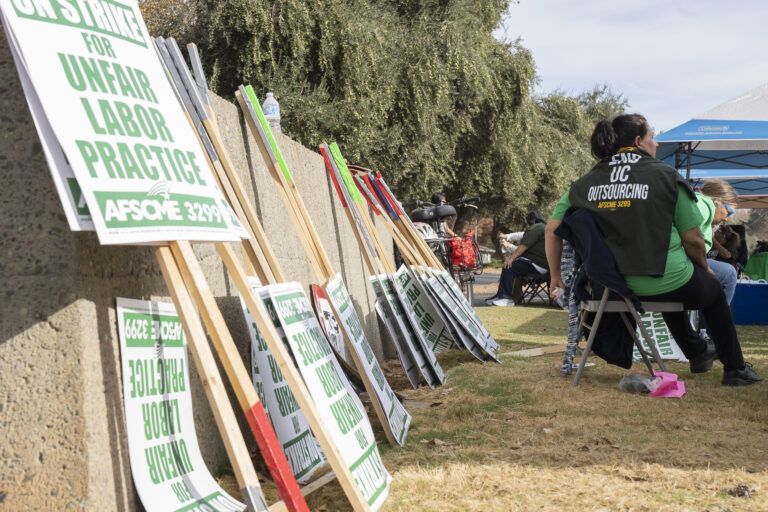
The American Federation of State, County and Municipal Employees (AFSCME) Local 3299, the UC’s largest employee union, went on strike on Nov. 13 for the sixth time in the last 18 months. Members and supporters protested the alleged outsourcing of jobs and unfair labor practices by the UC. This strike comes after six lawsuits were recently filed against the UC system. 

Union members and supporters formed picket lines at all 10 UC campuses as well as five UC medical centers. Despite this being the sixth strike organized in the last year and a half, rhetoric on both sides of the negotiation table has remained largely unchanged. With AFSCME and UC representatives presenting contradictory arguments, it is unclear how negotiations will proceed. 

Matthew Mussar, a UC Davis Medical Center employee on strike, spoke about concerns highlighted by union representatives.

“We won’t stand to have our jobs contracted out and lose the things we’ve fought so hard for in the past,” Mussar said. “We just want to provide the best patient care we can.”

At the same time, UC representatives have conveyed entirely opposing viewpoints. Andrew Gordon, the associate director of media relations for the UC Office of the President, disputed claims brought up by union members like Mussar.

“The University’s agreements with AFSCME already protect employees from displacement due to contracting,” Gordon said via email. “Furthermore, no employee can be terminated as a result of a sub-contracting decision.”

Kathryn Lybarger, president of AFSCME 3299, alleged in an article in The Sacramento Bee that there has been an 84% increase in UC spending on outsourced jobs since 2016. UC representatives, however, claim figures referenced are incomparable. Asked about the possibility of gaining access to comparable statistics, Gordon instead repeated the same statement available to the press, describing the latest offer presented by the UC to the union which was rejected by union representatives.

AFSCME 3299 workers have been without a contract since June 2017, despite numerous offers presented by the UC. The most recent offer included a 3% wage increase and “the same health insurance rates as other employees,” according to an email from Gordon. Over the past two years of bargaining, seven other unions have successfully negotiated acceptable contracts with the UC. 

After another 40-day bargaining session this fall, AFSCME-represented workers seem no closer to reaching a contractual agreement with the UC than two years ago. While union representatives are still unsatisfied with offers, the UC claims it has been generous and has consistently bargained in good faith.

“It would be unfair to provide AFSCME-represented workers more than double the raises of other UC employees, which is what the union is demanding,” Gordon said.

Another statement released by Dwaine Duckett, the UC’s vice president for systemwide human resources and programs, offered a different take on the disconnect between union and UC representatives.

“Given the hundreds of millions of dollars in state funding cuts UC has absorbed over the past five years, we must be fiscally prudent,” Duckett said. “University leaders have to be mindful that large, programmatic increases in pay and benefits for these workers drive up the cost of services they provide. We cannot — and will not — balance AFSCME’s demands on the backs of our students and patients.”

AFSCME service workers as well as patient care technical workers joined in strike activities across the state and garnered national attention for their efforts. In response to letters sent by union members urging Democratic candidates to respect union boycotts, the Democratic National Committee (DNC) made the decision to change the venue of the December Democratic debate. Previously, UCLA was scheduled to host the debate.

“In response to concerns raised by the local organized labor community in Los Angeles, we have asked our media partners to seek an alternative site for the December debate,” said Mary Beth Cahill, the DNC senior advisor, earlier this week in an article in the Huffington Post. 

Written by: Ally Russell — campus@theaggie.org 

International Education Week celebrates global education and worldwide exchange

U.S. Department of State and Department of Education initiative comes to campus

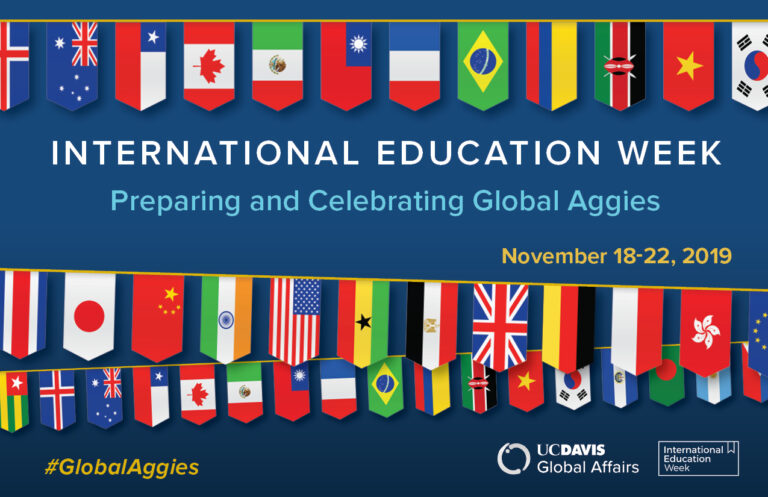
UC Davis is celebrating International Education Week from Nov. 18 to Nov. 22, 2019 — a nationally recognized event resulting from a joint initiative between the U.S. Department of State and the U.S. Department of Education. This week is a result of “efforts to promote programs that prepare Americans for a global environment and attract future leaders from abroad to study, learn and exchange experiences,” according to the International Education Week website.

“What we’re trying to focus on is this concept of ‘Global Aggie,’” said Rob Davis, the director of intercultural programs through the Global Learning Hub and Global Affairs. “[Global Aggies are] UC Davis students, in particular grad and undergrad, but also scholars and faculty, who are engaging critical global issues. We want to celebrate what they are doing.”

Davis also defined International Education Week to be a process of “demystifying what global challenges are and what it means to be globally engaged.” 

In particular, International Education Week at UC Davis reaffirms the importance of the 17 United Nations Sustainable Development Goals. 

“One of the things we want to do here in the Global Learning Hub is demonstrate to students and really everybody on campus, the way that UC Davis is engaging [with the goals], here in the U.S. and all over the world,” Davis said. “It’s really raising the profile of what students are doing.”

Global Affairs and UC Davis are in collaboration to spearhead an array of events and activities, connecting national endeavors to campus.

Global Affairs is committed to “inspiring global curiosity, understanding and engagement,” according to its website. Specifically, it affirms a commitment “to educating the next generation of problem solvers and change makers.” 

“Basically, we just put out a call through every channel that we had,” Davis said. “We said, ‘If you have a story to tell, if you have an experience that represents how you were engaged in a global challenge, then we’d like you to think about sharing it during this focused week.’”

Global learning events, information sessions for studying abroad, workshops for international fieldwork grant writing and film previews are examples of opportunities that students, staff and faculty are able to participate in through International Education Week. 

“There are a lot of really great stories that are out there,” said Blake Cooper, Assistant Director of Communications at Global Affairs. “There are definitely students that are coming back, sharing and reflecting on what they just experienced, staff who are working with students to learn about all of these global learning opportunities and faculty who are trying to integrate this into their class.” 

For instance, International Education Week recognizes the work of student organizations like Engineers Without Borders and Project RISHI, an acronym for Rural India Social and Health Improvement. 

Engineers Without Borders traveled abroad to “improve water access, sanitation, and hygiene in Latin America,” ultimately enhancing their education and advancing their professional goals, according to the Global Affairs website.

Similarly, Project RISHI brought computer programming and financial literacy to rural settings in Southern India. Through their presentation with International Education Week, Project RISHI hoped to communicate “why a sustainable and community-driven approach is essential to project development,” according to the Global Affairs website. 

“We want people to not just be inspired by it, but we want them to realize that they’re part of a movement,” Davis said. “We want everyone to have an opportunity to engage in global learning.” 

Three UC Davis faculty members of the Global Affairs’ Curriculum Enhancement through Global Learning Professional Development Program, from 2018 to 2019, hosted a panel Monday, Nov. 18, 2019, to connect the overarching themes of International Education Week in a classroom setting. John Goldberg, a lecturer from the Graduate School of Management, Assistant Professor of Teaching Communication Heather Hether and Associate Professor of Plant Sciences Li Tian discussed how global learning was being integrated into their classes and curriculum. 

“It’s an ongoing program,” Davis said. “There is a cohort of professors, starting right now, who go through training that Global Affairs provides to help them take their current curriculum and create more of a global focus in courses they already teach.” 

The Spoken World Story Jam was another activity that members of the UC Davis community could participate in. Hosted on Wednesday, Nov. 20, students, faculty and staff were given the chance to contemplate and comprehend what a global university actually entails. 

“[The event is] helping students process what they’re going through,” Cooper said. “‘What have I just experienced? What am I hoping to experience?’ And those who want to make these changes and solve these problems will be able to tell that in a way that’s digestible.” 

International Education Week has been ongoing for over 20 years. Davis hopes that the dialogue concerning International Education Week will continue to evolve, specifically emphasizing the ever changing global challenges.  

“You, me, all of us, no matter where, no matter what career we’re in, you’re going to end up in a community,” Davis said. “In that community, I don’t care where home ends up being, you’re going to have to face these global challenges, because they are not just in […] Africa or Asia, they’re here.” 

Written by: Aarya Gupta — campus@theaggie.org

Where do students get their news?

Social media, Twitter main source for news

Whether in class or at home, students spend a lot of time on their phones. Because of this, social media and various news apps are a convenient place to get the news.

Kelly Lee, a fourth-year art studio and sociology double major, likes to get her news from apps such as Naver and Nate, popular search engines used in South Korea. 

“I use these apps because everyone I know uses them and I also like to read the comments,” Lee said, adding that she likes to get her news in her first language. “With these sites, I can also share my thoughts, too, if I wanted to.” 

Similarly, Liliana Valenzuela, a third-year sociology major, likes to read the comments shared at the bottom of news postings on Twitter.

“People retweet and give their opinions [on Twitter] and I like reading different perspectives,” Valenzuela said, adding that although she is subscribed to the Los Angeles Times and follows KTLA5 and ABC7 on Twitter, she doesn’t “read beyond the headlines.”  

April Melendez, a third-year communications and philosophy double major, also gets her news from Twitter and through word of mouth.

“Since we are a very liberal campus, you do hear a lot of different types of opinions,” Melendez said. “You can be just walking around campus and hear about a [current] news issue.”

Despite the ease of access to information, it can be hard for students to discern what is accurate reporting and what is not. 

“I don’t know myself how to differentiate between which news platforms are credible or biased or even right-wing,” Melendez said. Because she engages with more left-leaning users and accounts, most of what she sees on her timeline aligns with her views, making it difficult to know what information is not biased. 

Vanessa Pinal, a third-year sociology major, also gets her news from Twitter but looks further into subjects that pertain to her major. 

“Lately I’ve been seeing a lot of posts of teen trafficking, sex-trafficking and posts where little kids have been killed because of a parent,” Pinal said. “I read a lot of those because they kind of correspond to what I am learning in my sociology classes. Because I am a sociology major, maybe that’s why they interest me more.” 

The news that speaks most to students might be the news that relates to areas of interest and subjects they study or news that directly impacts them — such as events affecting their hometowns. Sabina Kabra, a fourth-year genetics and psychology double major, looks for news that could affect her personal life. 

“I look more into [headlines] when I know it’s something that’s going to affect me or something that I care about,” Kabra said. “On Facebook, I do see a lot of news about Davis or UC Davis, so I usually look into that to see if it’s something that will affect me like are classes gonna be cancelled or are roads blocked?”

Written by: Gabriela Hernandez arts@theaggie.org 

Humor: Gorgeous professor is unaware that students only attend class for him

History is HOT!

Professor Alan Sanders, a stunning assistant professor in the UC Davis history department, was shocked to see that his course offered this winter already had 85 students on the waitlist. The class, A History of the Paper Clip, was previously taught by a now-retired professor who only managed to capture the attention of five students, if lucky.
The outstandingly handsome and young professor was ecstatic. In 2017, he completed his Ph.D. on the topic of paperclips and was fresh on the teaching scene. When asked by The California Aggie how his course was already so successful with the UC Davis student body, the fine specimen beamed. 

“They must have seen my reviews on Rate My Professor. I have seen thousands of chili peppers on there which I hear means ‘red hot teaching!’”

Professor Sanders gave a detailed account of his doctoral dissertation to reporters from The Aggie, yet none of them were able to provide any specifics as to what he said. They were, however, able to describe his eye color — “They were a clear, crystal blue framed with flattering spectacles that perfectly matched his sky-colored button down.” 

Several students of stupid hot Professor Sanders were interviewed to get a firmer handle on what makes his class so magnetic. “I think the class I took from him was on staples. I sat in the front at every lecture to see if he had a ring on,” said Jackson Carter, a fifth-year history major. “There is a ring, though no one knows why he wears it.” 

“I’ve heard he grades really harshly and his lectures are dry,” said Mika Smith, a second-year biology major who is fifteenth on the waitlist. “This class is going to be hell for my GPA if I get in.”

The history department opened up another section of the course due to high demand. Professor Carla Juarez, chair of the UC Davis history department, told reporters that she was extremely elated at the onset of interest in this niche topic. “It’s refreshing that Professor Sanders is able to connect with the students and inform them of the historical role paperclips have played. We are truly grateful to have him in our faculty.”

The Clark Kent look-alike is currently up for a prestigious award in teaching, an unheard-of honor for such a new faculty member. The Aggie wishes him luck and encourages him to come by and speak with us whenever… for, you know, research purposes.

Written by: Kelsey Stewart — kcstewart@ucdavis.edu 

(This article is humor and/or satire, and its content is purely fictional. The story and the names of “sources” are fictionalized.)

Fantasy football has revolutionized the NFL and you should play it

Revenue from the fantasy football industry has propelled the league to change the way we consume its product

Fantasy football makes every NFL game worth watching, which is exactly why the league has invested millions of dollars in getting you to play it. As a massive generator of revenue, it has driven the growth of the modern NFL.

Fantasy football is fake football. In its most basic form, it consists of 10 to 12 team leagues where each owner drafts from current NFL offensive players to fill a roster and compete head to head all season long. It is easy to learn and impossible to master.

The fantasy football industry brought in over $7 billion in 2017, according to the Fantasy Sports Trade Association. To put that in perspective, in 2018 the league as a whole brought in about $16 billion. An estimated 59.3 million people play fantasy sports in North America, with participants spending an average of $556 per year on league dues and fees. 

Daily fantasy football, a more complex form of the game, utilizes gambling-like practices to convince players that skill is something they can craft to win. In reality, the top daily fantasy players rely on numbers and algorithms to win thousands of dollars each week. 

The NFL isn’t just watching third party platforms like ESPN and Yahoo capitalize off their product — they are also an active participant. The NFL’s RedZone and FantasyZone channels are now specifically tailored to aspects of NFL games that matter most to fantasy football: high volume players and scoring opportunities. 

The NFL has adapted to cater to the interests of fantasy football players. It’s impossible to watch a game without seeing a barrage of advertisements for daily or season-long fantasy football. Getting people to care about every second of every game is the NFL’s number one priority and fantasy football does that most effectively. That’s why the anthem protests three years ago sent the league into such a frenzy — it detracted from the nonstop attention of the product. 

Fantasy football is especially advantageous for bad and smaller market teams. Christian McCafferey, in breaking fantasy records this year, has ensured the Panthers remain relevant despite lacking their star quarterback for the season. Fantasy has brought joy back to Thursday Night Football — the league knows that no matter how crappy the matchup, fans want to see if their fantasy players will put up points in the actual game. 

Fantasy football brings a new dimension of value to the game — instead of just rooting for their favorite team, fans also get to root for their favorite fantasy players. It boosts the NFL’s revenue through advertisements, jersey sales, increased viewership and more engagement. 

Fantasy football is both the most rewarding and infuriating game I’ve ever played. There is an unmatchable frustration about it. The decisions you make week in and week out often provide immediate and heartbreaking impact. That is also, however, what makes it so rewarding. Evaluating talent and opportunity in order to make the right decisions is what separates fantasy football from the randomness of gambling. The structure of the game gives players the impression that, through sufficient research, the outcome of the match-up will reflect the effort you put in, and it often does. 

The enjoyment of fantasy football is not limited to the highs of winning. For me, it is a way to stay connected with my leaguemates after we’ve all gone off to college. The trash talking, trade-offering and competitiveness will never fade. 

Everyone should play fantasy football, even if there is no money involved. What I love about it is the sense of community it builds between leaguemates and fantasy players. Fantasy football players are among the most well-versed fans in sports. They know the ins and outs of every team in the league and stay up to date with the latest news — all because it could help them win.

Am I addicted to fantasy football? That’s debatable. It allows me to enjoy the NFL even more than I already do. If my favorite team loses, I’ll probably be just fine as long as I pick up a win in fantasy that week. Fantasy football is the only reason I follow the league as closely as I do. It broadened my scope of the league and opened my eyes to the intricacies that every team and player can possess. 

Written by Calvin Coffee — cscoffee@ucdavis.edu 

Disclaimer: The views and opinions expressed by individual columnists belong to the columnists alone and do not necessarily indicate the views and opinions held by The California Aggie