59.5 F
Davis

Davis, California

Sunday, December 21, 2025
Home Blog Page 385

ASUCD elections accused of being unconstitutional

Suits filed with Judicial Council, special election to be held this week

Following a number of mistakes made by ASUCD officials during the recent Fall Elections, members of the Thrive slate have filed two complaints with the ASUCD Judicial Council accusing the entire election of being unconstitutional. 

The elections kicked off without an official Elections Chair nor any official members of the Elections Committee. Instead, an Emergency Elections Committee was organized just a few weeks before the elections, giving members much less time than usual to organize an election. 

After the Elections Chair quit in early October, ASUCD scrambled to put together an emergency Elections Committee made up of ex-officio elected members of the ASUCD Senate. Members of the Thrive slate immediately accused the emergency committee of bias, alleging that members of the committee were members of the BASED slate. In response, Vice President Shreya Deshpande, who ran on the BASED slate, gave up their voting position on the committee. The remaining members of the initial emergency Elections Committee were nonpartisan, according to ASUCD Controller Kevin Rotenkolber.

After voting opened, half of the ballot measures were left off the original electronic ballot on Tuesday, Nov. 12 — the first day students could vote. This error was due to an administrative oversight corrected later that day, according to the emergency Elections Committee. For Alisha Hacker, a third-year political science major and former senator working with the Thrive slate, the damage was already done.

Hacker filed a complaint with the Judicial Council later that day claiming that the election was fraudulent, disenfranchised voters, lacked transparency and was biased in favor of BASED candidates. 

Since the proposed constitutional amendments were added to the elections website late, students did not have a full 72 hours to cast their votes, which violates the ASUCD Bylaws — mandating that elections last at least 72 hours.

In an attempt to reach out to affected voters, the Elections Committee emailed individuals asking them to vote on constitutional measures via email, violating the premise of a secret elections ballot.

In addition to having the opportunity to email their votes, students also could re-vote once the measures were posted online, giving students the opportunity to potentially vote twice. 

“The anonymity of voters was compromised when an email was sent out regarding amendment votes,” Deshpande said. “It was realized shortly after that voters could have gone back to the website and cast their vote for the amendments without having to email.”

Later that week, following the results of the election, Adam Hatefi, the ASUCD vice president of external affairs, resigned from a position he held on the emergency Elections Committee and commented on his reasons for his resignation via a Facebook post.

“While I believe in the integrity of the Elections Committee and the intentions of its members, I also believe that the process of this election, despite the best efforts and the good intentions of the Executive Office and the Senate, was tainted by multiple potential violations of the Bylaws,” Hatefi wrote.

While only one of the four proposed constitutional amendments passed, the Judicial Council voted to apply a temporary injunction to constitutional measures, stalling any of the amendments from moving forward.

Most recently, it was announced that ASUCD would hold a special election this week, allowing the three constitutional amendments that failed to be voted on again by students Allegations that this election is against the Constitution and Bylaws have also surfaced.

Despite Thrive candidates winning four of the six senate vacancies, Thrive slate leadership, including Hacker, alleged that candidates received direct threats and an unfair distribution of violation points during the campaign. They also criticized the Elections Committee over a perceived lack of transparency, citing the committee’s decision not to release the names of the members to candidates as one example.

Deshpande addressed concerns raised by the Thrive slate and the student body regarding voter disenfranchisement.

“The Executive Office is deeply regretful of the circumstances that has led to feelings of voter disenfranchisement,” Deshpande said. “The student body deserves a fair election and we had tried to do our due diligence within the parameters of our positions to ensure the process was unbiased and transparent.”

Other members of the Thrive slate brought up issues regarding how the election was run.

Newly-elected senator José Benito Martinez III, a second-year political science major, ran for Senate on the Thrive slate. The Elections Committee accused Martinez of elections fraud on Nov. 10 via email. After initially asking if he would be willing to be interviewed, the Elections Committee later retracted their request and claimed they would make the decision regarding the allegation without input from Martinez. All updates regarding his case were conveyed to Martinez via email.

Specifically, the Elections Committee accused Martinez via email of “asking students to open their ballots and telling them how to vote which is considered election fraud under the ASUCD bylaws.”

Martinez asserts that he did ask students to vote for him and told voters where they could vote online, but claims this is not election fraud.

By not allowing Martinez to offer a formal statement in his own defense, it would seem the Elections Committee violated ASUCD Bylaws, according to Martinez. This email, saying he did not need to speak to the committee, was the last correspondence about the investigation that Martinez received. 

“I really think they know they’re lying when they sent this email,” Martinez said. “This is just a form of sabotage, trying to distract me from my campaign.”

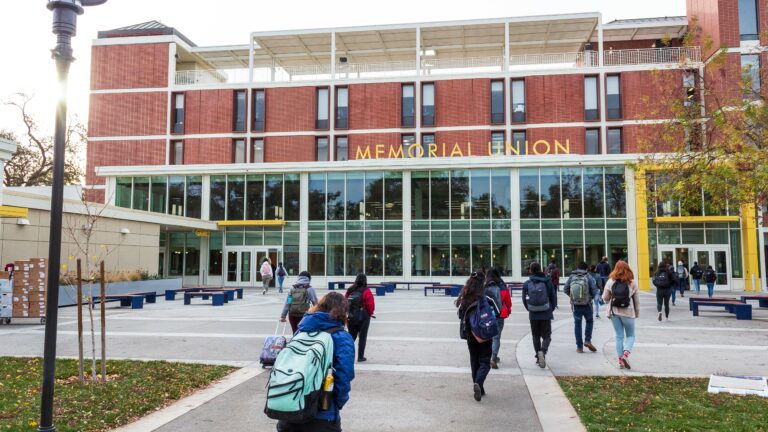
Martinez also brought up an instance where he was confronted by Rotenkolber in the MU. Martinez alleged that Rotenkolber told him passing out flyers to voters was not permitted in the Memorial Union, to which Martinez asserted that this was, in fact, allowed. Martinez also claimed members of BASED were in the MU passing out flyers.

In response, Rotenkolber did confirm at the time he believed campaigning in the CoHo was not allowed, but he has since recognized his mistake. 

In the past, candidates were prohibited from campaigning in the CoHo. In an effort to minimize confusion regarding where students can campaign, Senate Bill #68 was passed in Winter Quarter 2019, authorizing campaigning in the CoHo. Nonetheless, this bill was vetoed by ASUCD President Justin Hurst and his veto was not overridden. The bill did not become law.

Upon being informed by Martinez about other BASED members, Rotenkolber said that he left to address them as well.

“I then walked back into the Coffee House and looked for anyone potentially canvassing as well as anyone I may have recognized as a candidate,” Rotenkolber said via email. “I did in fact see three BASED candidates preparing to campaign in the Coffee House, but had not begun yet. I informed all of them that they were not permitted to campaign in the Coffee House and that if they wanted to campaign they would have to do so outside.”

Martinez was not aware that Rotenkolber brought his same concerns to BASED candidates. Martinez and other members of Thrive, including Hacker, maintain their slate was unfairly targeted for election point violations. 

Rotenkolber addressed allegations of election bias.

“While the Office of the Controller is under the ASUCD Executive Office officially, the operations of the two are independent of each other,” Rotenkolber said via email. “I am neither Based, nor Unite, nor Thrive, and I do not believe that anyone currently on the Senate table would claim otherwise.”

Hacker commented further on the lack of leadership involved in the elections process.

“I have a lot of sympathy for the newer people on the [Emergency Elections Committee],” Hacker said. “But at the end of the day, you took this on and you are in this association. These ballot measures not having the fair chance they needed to to potentially pass have major consequences for ASUCD.”

Beyond ballot measures, the Thrive slate had complaints about the entire elections process. Without going into detail, Hacker alleged that Thrive candidates were deliberately excluded from decision-making processes throughout the election.

“I know as someone who was very up close and personal with this election that I have seen countless times they have broken bylaws to advantage certain candidates over others,” Hacker said.

Moving forward, Hurst proposed that an entirely new special election could take place, which would disregard the results of this election. For the six newly-elected senators, this would invalidate their recent wins and force them to run again. This would also impact elections scheduled for Winter Quarter 2019.

Written by: Ally Russell — campus@theaggie.org 

Editor’s Note: A previous version of this article stated that Senate Bill #68 was passed. The bill was actually vetoed and did not become law. The article has since been updated to reflect this. The Aggie regrets the error.



Declining sea ice opens new pathways for deadly virus to reach Arctic marine mammals

Climate change leads to spread of phocine distemper virus in North Pacific 

UC Davis researchers at the One Health Institute, in collaboration with other co-authoring institutions, have linked the loss of sea ice in the Arctic with the emergence of a deadly virus in marine mammals in the North Pacific, according to a study published on Nov. 7 in the journal “Scientific Reports.”

After phocine distemper virus (PDV) was identified in northern sea otters in Alaska in 2004, scientists wanted to know how this pathogen, that previously had only been found in the North Atlantic, reached the Pacific Ocean. Upon completing the 15-year study, the researchers discovered that the decline of sea ice in the Arctic has opened up new pathways to spread the pathogen between marine mammal species, according to Tracey Goldstein, the associate director of the One Health Institute at the UC Davis School of Veterinary Medicine and one of the principal investigators of the study. 

“Sea otters aren’t migratory, so we wondered how viruses from the Atlantic got into animals in the Pacific and how it was introduced,” Goldstein said.

For this study, the One Health Institute brought together multidisciplinary teams to look at the intersection of human, environmental and animal health impacts of this pathogen in the Arctic, according to Jonna Mazet, the executive director of the One Health Institute and the other principal investigator of this study. 

“Members of the marine mammal community all came together to work with us at UC  Davis because we were concerned about the pathogen in the Arctic that didn’t belong in the Pacific Ocean,” Mazet said.

According to Mazet, PDV killed thousands of European harbor seals in the North Atlantic in 2002, so its recent emergence in the Pacific Ocean poses a serious threat to the mammals that live there.

“We are like disease detectives to find out why [PDV] is showing up in marine animals in an ocean that it should not be in,” Mazet said. 

After pooling data from 2001–2016, researchers found a pattern that illustrates how  melting sea ice allows marine mammals to move further into the Arctic and make contact with Pactific Ocean species. The 2002 outbreak in European harbor seals in the North Atlantic occurred in September, which is the time of year when ice is lowest. Also, 2002 was the first year the Arctic channel had an opening in the ice, Goldstein said

“Antibodies told us there had been exposure in 2003 in pups,” Goldstein said. “The moms might have been exposed earlier in 2002 or 2003.”

A second peak in an outbreak of the virus occurred in 2009, following the same pattern as the 2002 outbreak, since there was an opening in the Arctic ice again in 2008. Scientists believe infected marine mammals reintroduced PDV in the North Pacific, according to Goldstein. 

“There is variability from year to year with how many [marine mammals] are injected, but there is evidence that there are long-term changes due to climate change,” said Elizabeth VanWormer, a postdoctoral researcher at UC Davis during the study and the first author in the paper. “Since 2008, the ice in the Arctic has been open almost every year, creating many more opportunities for diseases to be shared across oceans.” 

Climate scientists have provided good evidence to link climate change to the reason for the decline in sea ice and the acceleration in the cycles of sea ice change, according to Mazet. 

“This is direct evidence that there are health threats due to the climate crisis,” Mazet said. “Climate critics will point to how they think it’s going to take decades to know if [climate change] is true, but this study shows it is true. These animals are giving us a very clear warning sign to do something now.”

The marine mammals that were researched in the study include Steller sea lions, northern sea otters, northern fur seals, spotted seals, gray seals, harbor seals, harp seals, ribbon seals, bearded seals, ribbon seals and ring seals, VanWormer said.

 “We studied pretty diverse populations over time, which helped us understand how the virus was moving among populations,” VanWormer said. 

Researchers found that each mammal reacted differently to the disease, some more negatively than others.

“Harbor seals are very susceptible to disease, and they get sick and die,” Goldstein said. “Gray seals don’t always get very sick and share the disease. Harp seal are carriers and give it to other animals in the Arctic. Sea lions and northern fur seals, ribbon seals, ring seals, spotted seals and sea otters can all be infected but we are not sure [about] all of the effects [they experience].”

After conducting this research, Goldstein said the pathogen is more widespread than previously thought and can infect many different animals. Since the Arctic ice has been open almost every year since 2008, diseases can spread more easily. 

“As the environment changes, it affects animal health and affects human health,” Goldstein said. “It is all linked and holistically affect each other.” 

Researchers were concerned that the pathogen could harm people who live in the Arctic and hunt marine mammals through traditional practices. No evidence has shown the pathogen causes harm to humans, Mazet said, but it can impact the people who depend on marine mammals in other ways. 

“Up in the Arctic, for Native Alaskans, these animals are really important for people,” Goldstein said. “As animals are affected, people are affected as well. People, animals and the environment are all very connected. Climate change increases the effects on the livelihood of the people in the Arctic.” 

In addition to UC Davis’ contributions, other co-authoring institutions include the University of Saint Andrews, U.S. Fish and Wildlife Service, National Marine Fisheries Service (NOAA Fisheries), Alaska Fisheries Science Center’s Marine Mammal Laboratory, University of Glasgow, Alaska Department of Fish and Game, University of Alaska-Fairbanks, Queen’s University Belfast, Pirbright Institute and Alaska Veterinary Pathology Service.

“By collaborating with one another, we could pool data together,” Mazet said.

Funding for the study was granted by the Morris Animal Foundation, NOAA Oceans and Human Health Graduate Traineeship Program, the Alaska Fisheries Science Center Marine Mammal Laboratory and the U.S. Fish and Wildlife Service.

Because of the high impact of this study on animals, humans and the environment, the Morris Animal Foundation (MAF) granted the study a total of $70,152 between August 2009 to October 2012, according to Kelly Diehl, the senior director of science and communications at the MAF. The foundation understands how wildlife can have great effects on the rest of the world. 

“I’m really proud of [the] foundation for dipping their toe in this controversial topic, and for not being afraid to fund it,” Diehl said. “If the science is solid, we want to fund it. It is important to do solid science that adds to conversation when a topic is controversial.”

Even though their paper has already been published, researchers are continuing their work on this topic. The published study contains samples through 2016, so now scientists are studying samples collected from the last two years to assess the virus’ current status in the Arctic, Goldstein said. 

“We want to continue to monitor this,” Goldstein said. “In the Atlantic ocean, we see cycles of the virus peaking between five to 10 years, but in the Pacitifc we see there are different peaks. We want to know the next time [an outbreak] happens and if any deaths happen.”

Written by: Margo Rosenbaum — science@theaggie.org 

Review: “Rick and Morty” Season Four

Classic dark comedy never gets old

After restlessly waiting for two years, fans are finally able to watch season four of Cartoon Network’s Adult Swim “Rick and Morty.” Creators Justin Roiland and Dan Harmon have created such an iconic show that the wait has been well worth it.

This adult animated show occurs in alternate dimensions and planets, but that is the only constant viewers can expect. From there, eccentric grandfather scientist Rick and grandson Morty’s decisions are unpredictable, allowing for endless possibilities.

There will be 10 episodes in season four, but the second half will not air until after New Year’s, in 2020. As for the first couple of episodes that have been released this month, they have yet to disappoint. 

The first episode, “Edge of Tomorty: Rick Die Rickpeat,” starts off with an adventure that escalates when Morty becomes obsessed with a death crystal that guides all of his decisions. His obsession leads to Rick gruesomely dying and being cloned in various dimensions. 

In this whirlwind episode, Morty can’t let go of the possibility of growing old together with Jessica, and Rick is continuously cloned into different fascist dimensions. Morty’s willingness to engage in combat against the U.S. Army is comical in its absurdity, and his decisions lead to crazier situations. 

The complex storylines are unpredictable, and the dark humor can make some scenes difficult to laugh at, but the unapologetic tone Rick has toward everything makes what he says amusing. 

In this episode, once Rick reaches a dimension of wasps, he lets his guard down. This scene is a great mesh of dark humor when the wasp version of Rick’s family are all together eating dinner, along with a live caterpillar with the face of Morty’s math teacher, Mr. Goldenfold.

Rick and Morty’s humor is controversial at times (it is Adult Swim, afterall), but there are tender moments where Rick imparts useful wisdom unto Morty. 

They regroup at the end of the episode and break the fourth wall, hinting at continuing their adventures for a hundred more years (or episodes), which is in line with the fact that Cartoon Network had already ordered an unprecedented 70 episodes after season two. 

This episode did not disappoint because the creators stick to what works. The show’s quick pace keeps each episode moving along. The small details of their voices being high pitched, Rick constantly belching, Morty’s stuttering, censored curse words and moments of meta commentary all make for binge-worthy television. 

Written By: Gabriela Hernandez — arts@theaggie.org 

Humor: Profound art history student finally says anticipated comment in class

Ugh his mind. So powerful.

Kenneth Coleman walked into his Art History class last Thursday evening and sat in his unassigned-assigned seat in the back, just as he always had. He sported his usual tank top and sandals, carrying nothing with him but his intellect. 

The cheap ceiling lights of Art Hall illuminated his empty desk. He crossed his legs, adjusted his man bun and sat in silence, his mind most likely brimming with philosophical thoughts beyond our capacity.

Professor Frost began his lecture, flipping through slides of Italian Baroque paintings. He stopped at one painting by Michelangelo Caravaggio and turned to the class.

“What do you see in this painting? What emotions does it evoke?” Frost asked, surveying the 12 students in his 70 maximum occupancy classroom. His question hung in the air as the students turned to one another in curiosity.

“I think the use of shadows emphasizes the dichotomy of innocence and darkness,” said first-year Janessa Lange. Her response was met with nods across the room. Our source said Coleman maintained a straight face.

“The way Caravaggio uses dimensions really brings the viewer into the painting. It’s a very immersive piece, and I think it symbolizes the Counter-Reformation period,” said an unknown student in the front. Professor Frost promptly wrote the responses on the board.

“Anyone else?” asked Frost, his finger hovering above the spacebar of his laptop.

“Grandiloquent,” Coleman finally spoke.

“Could you repeat that?” asked Frost, his eyes widening.

“I said the painting is grandiloquent. No — effervescent.” His analysis was met with silent stupefaction. Our source said that the entire class turned to look at him and erupted in applause. The unknown student sitting in the front of the room even sobbed. 

Professor Frost left the room for a brief moment and then came back inside, rubbing his temples. 

“Wow. Thank you,” Frost finally managed to say, his voice shaking. 

During the remainder of the lecture, no one raised their hand. No one tried to top Coleman’s comment — no one could. 

Ten minutes before class ended, Coleman headed for the door. His Beat headphones sat awkwardly atop his man bun. Maybe it has a mind of its own. 

Written by: Julietta Bisharyan — jsbisharyan@ucdavis.edu

(This article is humor and/or satire, and its content is purely fictional. The story and the names of “sources” are fictionalized.)

Environmental Impact Report released regarding plans to demolish University Mall

Proposed project would replace shops on Russell Blvd. with a seven-story structure for mixed residential, retail use

In early November, city officials released a draft of an Environmental Impact Report (EIR) for the proposed University Commons project. Plans continue to move forward to redevelop the University Mall (UMall) on Russell Blvd. into seven stories of mixed-use housing, parking and retail space that would add 264 new multi-family residential units to the Davis housing market. 

After releasing the draft of the EIR, city officials opened up the planning process for public comment until Dec. 20, according to a notice from the city. 

The site of the proposed University Commons project is currently home to a Starbucks, Cost Plus World Market, Fluffy Donuts and other shops and restaurants — along with the recently shuttered Forever 21 store and Grad Alligator bar. Under plans released last year by Brixmor Property Group, the current owners and developers behind the project, most of these business spaces would be demolished to build new housing and retail space. Developers, however, plan to leave the nearby Trader Joe’s intact throughout construction.

According to the EIR draft, current developer plans would add 264 units of multi-family housing to the site, with a total of 622 bedrooms and 894 beds. The planned University Commons building would be seven stories high at its tallest point, with an attached stepped-down portion of the building standing at three stories tall. 

“At buildout, the redeveloped University Commons building would be seven stories and approximately 80 feet in height […] with the northeast portion along Anderson Road stepping down to three stories and 44 feet in height,” the draft EIR read.

According to the draft EIR, the new housing would be primarily oriented towards students because of its proximity to the UC Davis campus but would be available for non-student residents as well.   

Plans include a three-level parking structure below four stories of residential units. Developers would expand the current available retail space at UMall, adding two new buildings adjacent to Russell Blvd, in addition to ground-floor retail space. In total, the available retail space would grow from its current 90,563 square feet to 136,800 square feet, adding almost 50,000 square feet of room for restaurants and retail shops to the site. 

The draft EIR notes potentially significant impacts on air quality, greenhouse gas emissions, energy use and noise from the project. In the report’s public notice, however, city officials claimed that mitigation measures proposed in the report can reduce such impacts to “less-than significant levels.” 

The project would have a negative impact on pedestrian, vehicle and bike traffic around the site though, even after proposed mitigation measures were implemented.

“The Draft EIR determined that the project would have certain impacts to Transportation and Circulation that would remain significant and unavoidable even after implementation of the feasible mitigation measures set forth in the Draft EIR,” the notice read. 

It may be some time before Davis residents see these impacts, however, according to Eric Lee of the department of community development and sustainability. The University Commons project is still in review and planning stages, Lee said, and current developer plans represent more of a conceptual framework than a concrete blueprint.

“It’s going to be a while — it’s not imminent,” Lee said. “There’s a couple [of] other steps we need to go through — certainly for this current process — and some additional review that’s needed. Right now, we’ve got the Environmental Impact Report out. We’ve been processing requests and review proposals for a while now, and we finally have been able to get to this point where we have a good understanding of what the project is, what the issues are, analyzing impacts and putting together this document for public comment.” 

Lee said he couldn’t speculate on when construction might begin. Last year, developers said they hoped that demolition and construction would begin in 2020, the Davis Enterprise reported, with residential and retail spaces opening in 2022.

Public comment on the draft EIR will remain open until Dec. 20, according to the City of Davis website. During this 45-day period, residents can direct their comments to Eric Lee, Planner City of Davis Department of Community Development and Sustainability, at 23 Russell Boulevard Davis, CA 95616 or at elee@cityofdavis.org

There will also be a public meeting hosted by the Davis Planning commission, tentatively scheduled for Dec.11, at 7:00 p.m. at the City of Davis Community Chambers at 23 Russell Boulevard, Davis, CA, 95616. During the meeting, the Commission will solicit input and comments on the project from public agencies and members of the general population. 

Written by: Tim Lalonde — city@theaggie.org

ASUCD to hold special election this week

Three constitutional amendments from Fall Quarter election to be voted upon again

Three constitutional amendments will be put before students for a second time this quarter, as ASUCD plans to hold a special election this week. These amendments all failed last time they were put to a vote just two weeks ago.

The three amendments voters will see on the ballot will be Constitutional Amendment #63, CA #64 and CA #65 — the same three that students rejected two weeks ago. That election, however, was affected by numerous problems. These included the constitutional amendments being omitted from the ballot for the earliest voters on the first day of the election. Since the amendments were not on the ballot at the beginning, they were not available to be voted upon for the full 72 hours required by ASUCD elections code.

In the wake of issues like this one, the ASUCD Senate amended the ASUCD Bylaws to allow this election to take place and to put the amendments back before voters.

CA #63, or the “Elections Timing Amendment,” would move the Winter Quarter ASUCD elections to spring. This would align ASUCD with every other student government in the UC. To account for the current ASUCD officials who would have their terms normally end during winter quarter, a clause would be added to the constitution that would automatically extend the terms of those officials by one quarter.

CA #64, or the “Judicial Council Reform Amendment,” would reform ASUCD’s Judicial Branch to add a subordinate court to the Judicial Council, and would explicitly allow the Judicial Branch to rule on violations of the ASUCD Bylaws.

CA #65, or the Student Workers Rights Commission Amendment, would create a commission within ASUCD focused on supporting student workers within ASUCD and UC Davis as a whole. This would add one ex-officio, or non-voting, member to the ASUCD Senate.

Students will be able to vote on these three amendments this week at elections.ucdavis.edu.

Written by: Kenton Goldsby — campus@theaggie.org

Proposed cannabis ordinance addressed at community meetings in Davis

Meetings will discuss Cannabis Land Use Ordinance, environmental impacts detailed in Draft Environmental Impact Report

Two community meetings will be held in Davis in early December to educate citizens about the proposed regulations for growing cannabis in unincorporated Yolo County. The meetings are the first two of nine scheduled throughout the county after the release of the Draft Environmental Impact Report (DEIR), which assesses the environmental impacts of the Cannabis Land Use Ordinance. 

The DEIR was made public on Oct. 25. It is currently under a 60-day public review period before a Final Environmental Impact Report can be completed and reviewed by county officials. 

According to the document, the DEIR focuses specifically on the issues of “aesthetics, air quality and odors, biological resources, greenhouse gas emissions and climate change, hydrology and water quality, noise, cumulative effects, and overconcentration,” with regards to cannabis cultivation in the proposed Cannabis Land Use Ordinance (CLUO).

Susan Strachan, the cannabis policy and enforcement manager for the Yolo County Department of Community Services, said the 720-page document was the result of a “team approach.”

“We had some consultants that worked on it with us — our county’s Counsel Office was involved, the Director of Community Development was involved and our county’s principal planner was involved,” Strachan said. “It’s a huge effort.”

This process, including the development and finalization of the DEIR, prepares for the incorporation of the CLUO into Chapter 20 of Title 5 of the Yolo County Code. Depending on the decision made by the Yolo County Board of Supervisors next spring, the new addition could either increase or decrease cannabis activities in unincorporated parts of Yolo County. 

The draft has five proposed options that vary in the authorized types of cannabis activities, the zoning location and buffer requirements and the total number of operations. The first option has the smallest number of licenses and only allows cultivation activities of the current 78 existing operations. 

The second and third alternatives allow all types of cannabis use and have higher numbers of allowed operations (132 and 264, respectively). The fourth alternative only allows operations indoors or in greenhouses. And the fifth would limit the operations to agricultural zone districts besides retail. 

The Environmental Impact Report has been under public review before, but only when it was an outline in a Notice of Preparation. The Notice of Preparation was published on Aug. 24 2018, and many state agencies — as well as community members — provided responses during the public feedback time. 

Concerns from community members include the proximity of cannabis operation sites to local farms, regulating the odor emitted by cannabis and misuse of land and water resources by the cannabis license holders. One member, Matthew Trask of Dogtown Farm, noted how more cannabis activity could affect housing in the community. 

“Our community in the Capay Valley has seen that growing and especially processing of cannabis involves a substantial number of employees, with one grower in the area employing 50 people for trimming alone,” Trask wrote in a comment letter. “The shortage of housing in the County, and especially in the Capay Valley and many other rural regions in the County, is already a major problem, and especially so for seasonal workers, and enactment of the proposed CLUO has potential to greatly increase the severity of this shortage.”

After the current comment period is over, the final EIR will include the comments and responses to such comments as well as adjustments to the DEIR based on the concerns from the community. The final EIR will be presented to the county’s citizen advisory committees, and the final decision by the Board of Supervisors will not happen until May or June, according to Strachan.

“These committees make recommendations to the Planning Commission,” Strachan said. “They’re going to make recommendations on the Cannabis Land Use Ordinance — buffer distances, license and license types. Then the planning commission will make a recommendation to the Board of Supervisors.”

Comments for the DEIR can be submitted by the public until Dec. 23 at 4 p.m. and written comments can be sent to the Yolo County Department of Community Services. Oral comments can also be made at the Yolo County Planning Commission Meeting on Dec. 3. The Davis meetings will occur on Dec. 2 at the South Davis Citizens Advisory Committee Meeting and on Dec. 3 at Unitarian Church in West Davis. 

Written by: Madeleine Payne — city@theaggie.org 

Reforestation of sugar pine trees in Lake Tahoe basin

Planting genetically resilient forest in effort to battle forest fires, climate change

Tree populations in the Sierra Nevada area have seen a considerable decrease in health and density. Between 2012 and 2016, the area lost more than 129 million trees. Patricia Maloney, UC Davis biologist and scientist in the UC Davis Department of Plant Pathology and Tahoe Environmental Research Center, attributes this increased mortality — specifically of sugar pine trees — to a combination of drought and mountain pine beetle outbreak. 

In an effort to combat this rapid decline, Maloney and a team of researchers collected seeds from 100 surviving trees in the Lake Tahoe basin to perform a sugar pine reforestation. The project, Maloney said, originates from a question she asked her colleague: “Can we detect the genetic consequences of historical logging on sugar pine in the basin?”

The subsequent research conducted by her colleague Andrew Eckert, a professor of biology at Virginia Commonwealth University, revealed an important idea. Eckert’s data indicated that historical logging not only reduced population sizes, but also removed genetic material inherent to the sugar pine. 

Eckert is a collaborator in the sugar pine reforestation project, working as the evolutionary geneticist finding variants in DNA and correlating them to phenotypic differences, or observable differences, among the trees. Phenotypic traits that respond to climate include growth rate, water usage and biomass production over time, all of which are important details to know in order for this sugar pine restoration to be successful. 

“Sugar pine is one of the major species of both ecological and economic importance in the California forest ecosystem, but it is under threat due to an introduced pathogen,” said David Neale, a professor in the department of plant sciences and principal investigator on the project. 

This pathogen is commonly known as white pine blister rust, which travelled from Asia to Europe, and then to North America in 1925 via imported wood products. From there, it quickly spread to living forest populations.

“Often, trees that adapt to a pathogen have a trade-off with their ability to adapt to their climate or environment,” Eckert said. 

The goal is to increase genetic resilience and survivability in these trees, which becomes difficult when being resilient to drought could possibly increase sugar pine’s susceptibility to pathogens like white pine blister rust. 

“Survivors do matter because […] what we’re seeing is natural selection playing out currently,” Maloney said. 

Sugar pine is not the only tree affected by the Californian drought, nor is it the only one threatened by white pine blister rust. The whitebark pine, a high elevation pine listed as an endangered species by the Canadian government, is under threat from the same pathogen. Losing the tree species would create a severe ecological imbalance, as whitebark pine is an important food source for countless native species ranging from birds to bears. 

While research on the sugar pine tree is not directly applicable to species related to it, Eckert mentioned that research on other pines will require similar techniques and technology. Due to genetic markers being present in the same locations in the DNA, trees like whitebark pine will be easier to study in the wake of this project. 

Even with all of this genetic information, reforestation and restoration remain a challenging project to work on. 

“There’s a lot of debate about what sort of seed sources to use for restoration and reforestation,” Maloney said. “There are folks who think that you should be replanting maybe with different species but I counter that and I still think the best seed sources to use for restoration and reforestation are local seed sources.”

The use of local seed sources could be necessary to maintain ecological balance, because the project unearthed how well certain populations of trees have adapted to certain areas. In turn, local populations become phenotypically different from trees of the same species in other regions. 

“[This discovery] will impact basic research by allowing us to think more about the spatial scale of adaptation as a function of the environment,” Eckert said. “For research, it upends the assumption that adaptation happens in a range-wide, latitudinal scale.”

This highly localised adaptation supports Maloney’s assertion against planting foreign species of pine in the Lake Tahoe basin. The replanted species must be capable of not just surviving, but also thriving in their given environment. Neale speaks of the forest restoration project as a way to indirectly combat wildfires in California. Healthier trees means less fuel for the fires as well as the reduced chance of the fires even starting.

Sugar pine restoration is a multi-faceted project with the opportunity to make a great impact not only on conservation efforts but on research as well. 

“This project not only fosters restorative growth in California’s forests, it also plants seeds of forestry awareness and experience in our Corpsmembers that can lead them to careers in forest conservation,” said Bruce Saito, the director of the California Conservation Corps, via email.

Written by: HUSN KHARABANDA hkhara@ucdavis.edu

Review: The End of “The End of the F***ing World”

Second season too dark for comfort, loses appeal of first season

The comedy-drama “The End of the F***ing World” first aired on Channel 4 in the United Kingdom in 2017. Although it was praised for its writing and direction, the series did not reach its peak acclaim until it was released internationally on Netflix in 2018 — the first season received a score of 96% on Rotten Tomatoes. 

Season one follows 17-year-old James, played by Alex Lawthur, who believes he is a psychopath and sets out to kill a classmate named Alyssa, played by Jessica Barden. In an attempt to escape her tumultuous homelife, however, Alyssa proposes that the two run away together. James decides that he can postpone killing her until a later time and joins her on a Bonnie and Clyde-esque escapade, where the two eventually fall for one another. 

The second season takes place a few months after the whirlwind of the first. After performing various crimes and experiencing traumatic events from their time on the run, both Alyssa and James are dealing with the effects of their own destructive, misguided ways. 

James is living in his late father’s car, carrying around his dad’s ashes in an urn like a security blanket. Alyssa plans to get married to a man she met just a few weeks prior. Neither of them have any source of comfort or familiarity left in their lives. 

In an article for The Ringer, Micah Peters writes, “the feeling you get from Season 2 is that of a devastating comedown from a dizzying high.” Not only are the themes throughout the season more subdued, but the overall energy and momentum of the plot feels muted as well. There is only so much of James and Alyssa’s story left to tell, and the season seems to drag on. 

The series rectifies this problem by adding a new character, connected to the events of the first season. Naomie Ackie plays the mysterious and slightly deranged Bonnie, a student who had a relationship with Clive Koch, a serial rapist who attacked Alyssa and who is subsequently killed by James.

The opening episode of the second season details Bonnie’s abusive childhood and relationship with Koch. She is an entirely sympathetic and menacing character, and she brings a level of anticipation to the plot as she sets out to kill Alyssa and James.  

The second season, while a bit redundant, does maintain many aspects that make “The End of the F***ing World” so uniquely spectacular. The acting is as superb as ever, and Ackie’s presence blends right into Barden and Lawther’s established chemistry. The cinematography is impressive as well. This season takes place mainly on the English countryside, and some of the scenes and images that emerge are truly stunning. 

What this season does best is portray the destructive nature of the show’s characters, as well as what trauma does to them all. 

“It was a fitting end. A doomed love story. A perfect tragedy,” James voiced in the second episode, considering the cliffhanger where he was shot in the first season’s finale. “And then I didn’t die.” 

This season wrestles with the fact that the world ends for James, Alyssa and Bonnie in their own ways after the events of the first season, but they all survived and have to find ways to cope with that trauma. 

Due to this season’s depiction of such hard themes, its black-comedy humor is more bleak than funny. The isolation and lack of humanity, particularly in Alyssa and Bonnie’s characters, become hard to watch after a while. Alyssa’s fiery personality has dulled after the traumatic events of the first season and along with it went the life force of the show. She is a shell of her prior self, a painful transition to see.  

While the series may have been better off ending after its first season, season two was still an entertaining and beautiful continuation of the storyline. It is certainly worth a watch, if only for the indie soundtrack that accompanies it. 

 Creator of the show Charlie Covell seems to think that season two is as far as the story should stretch as well. 

“I don’t think you’re going to get another series,” Covell stated at the premiere of season two. “I think sometimes it’s good to just stop things and I hope when you see the end you’ll agree. I think you can push things, but this feels like an actual end.”

Written by: Alyssa Ilsley — arts@theaggie.org

Coca-Cola’s confusing crusade for environmental cred

A case study in the confounding contradictions of corporate environmental stewardship

A few weeks ago, in one of my environmental policy classes, we had a guest speaker from the Pacific Institute, an Oakland-based environmental NGO that works primarily on water issues. She spoke mainly about the importance of the Pacific Institute’s role in facilitating corporate water stewardship — an approach that recognizes corporations as a crucial stakeholder in the environmental policy process. It gives them a seat at the table to manage their “water-related business risks” and help mitigate their negative environmental impacts. 

Given the ruthless way in which corporations have vandalized the environment over the centuries, it’s perfectly reasonable to be hesitant to include them in conversations about sustainability planning. I’m sure some of my classmates probably saw the speaker as nothing more than a corporate apologist. On one hand, corporations are largely responsible for some of the worst environmental crises we face. But on the other hand, I don’t think we’d be better off as a society if we didn’t try our best to include corporations in our solutions. But on the third hand (which we’ll eventually mutate to have because of all the toxins in our water), many corporations are probably just in it for the PR. To earn some green cred.

Regardless, we have a very interesting situation here with lots of uncomfortable ambiguities — ambiguities that are worth reading more about. After I did just that, a peculiar ad started popping up on my Facebook newsfeed from the Coca-Cola Company about its “commitment to water replenishment.” Purely a coincidence, I assume.

The post’s caption read, “We believe the health of our water sources is essential to the health of our communities. Find out more about the work we’re doing to restore our watersheds. #CocaColaRenew.” Soothing guitar music played as several peaceful, pleasant, [old, white] men canoed down a river in a peaceful, pleasant, serene valley. Text appeared on the screen explaining how Coke is “replenishing every drop of water” it uses. This ad is clearly supposed to make me feel great about Coke. Like it’s the real thing. 

The ad’s aesthetic and feel-good mood reminded me of the iconic “Hilltop” Ad. But it also reminded me a bit of that old fake car commercial meme that made the rounds a while back. I half expected a screaming monster to jump out and scare me at the end. Eventually, it did, only it was even worse. That massive, hideous, overly ornate cursive of the Coca-Cola logo popped up on the screen, superimposed over the serene river valley. As I would soon learn, the environmental hypocrisy of the Coca-Cola company made this image embody something far scarier than that silly car commercial monster. 

I am not someone who has ever really cared about Coke or even liked Coke. But this “water replenishment” ad piqued my interest because it was trying really hard to convince me that Coke is a friend of the environment — a message that is at odds with the recent headline naming Coke as the world’s worst plastic polluting brand. To gain more perspective, I decided to check out Coke’s website. More of a blog than a website, “Coca-Cola Journey” is absolutely overloaded (intentionally, I assume) with page after page about everything the company is doing to mitigate its adverse environmental impacts, promote sustainability and give back to communities. I couldn’t even finish reading one page without getting pop-ups saying things like, “RECOMMENDED FOR YOU: Small Decision, Big Impact: Creative Campaign Highlights all the Good That Comes From Drinking Honest Beverages.”

Clearly, Coke has managed to continue hiring good ad men and PR representatives since they had Don Draper, because that website is nothing but a maze-like digital shrine to the environmental champions of our time: Coca-Cola. 

Except they really aren’t. Coke is quite proud of that “water neutral” talking point that I previously mentioned, but it seems like they decided on the goal first and only then came up with the easiest and cheapest way to define it. Somewhat unsurprisingly, Coke does not replenish every drop of water it uses. The company only counts the water used to fill the bottles, ignoring the water used in the rest of the supply chain, which represents a substantial amount of water. Apparently, about 99% of the water the company uses isn’t really accounted for.

Meanwhile, Coke has been embroiled in controversies across the globe. These stem from them depleting local water resources in order to supply bottling and packaging plants, sucking wells dry and getting accused of trying to effectively privatize public water resources. 

The Verge reached out to Coke with a series of questions on its sketchy water use, and Coke replied with a defensive and contradictory statement that failed to answer many of the questions. The statement isn’t even consistent in its use of the Oxford comma — something that I know would drive my desk editor, managing editor, and editor-in-chief at The Aggie absolutely crazy.

Despite all of the hypocrisy, I think that the environment is in a better place if it does have companies like Coke continuing to invest in sustainability and environmental protection. It’s good that Coca-Cola and PepsiCo recently abandoned the pro-plastic lobby. It’s good that Coke recently gave the World Wildlife Fund $20 million to do conservation work. Even if Coke is only motivated by PR, the environment still stands to benefit. We just have to continue working with them when they need consultation and calling them out when they come up short and deceive people. And maybe we could drink less Coke too. I’m already there.

Written by: Benjamin Porter— bbporter@ucdavis.edu 

Disclaimer: The views and opinions expressed by individual columnists belong to the columnists alone and do not necessarily indicate the views and opinions held by The California Aggie

Over 1,700 undocumented UC students will be affected by outcome of DACA case before Supreme Court

UC President Janet Napolitano, Attorney General of California Xavier Becerra comment on DACA hearings 

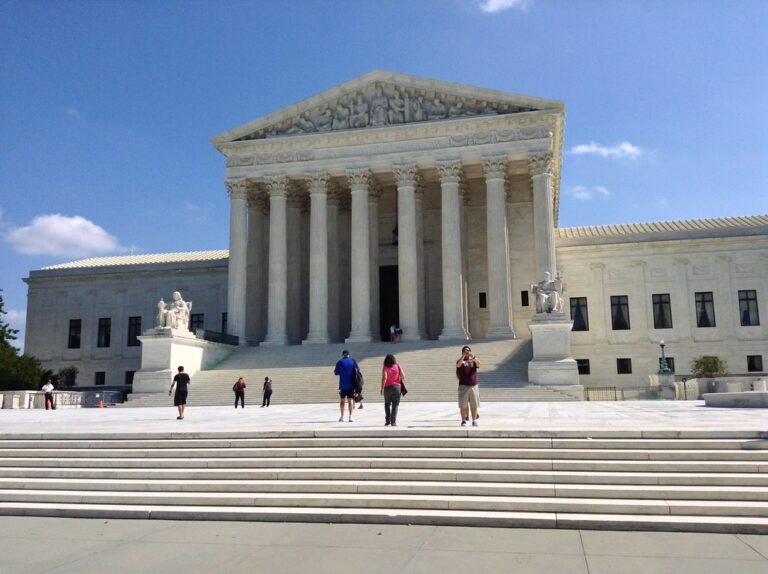
The nine U.S. Supreme Court justices heard oral arguments both for and against the ending of Deferred Action for Childhood Arrivals, also known as DACA, on Nov. 12. Their ruling will impact the trajectory of the over 660,000 undocumented young adults in America who are DACA recipients. 

DACA started in 2012 under President Barack Obama’s administration as a program to defer deportation for immigrants who came to the U.S. without documentation as children. Recipients of DACA — a status that lasts for two years before it must be renewed — are able to legally remain and work in the country. In 2017, however, President Donald J. Trump called for a “wind-down” of the program, with then-Attorney General Jeff Sessions announcing the program’s recission. 

Several lawsuits, including one from the UC — the first university to file a suit against the recission of the program — were filed against the administration. Ultimately, on June 28, 2019, the Supreme Court agreed to review the challenges, contesting whether the courts had the authority to review the DACA recission and whether DACA was constitutional, if the program was deemed reviewable.

Young adults whose lives may be changed by the ruling currently face challenges living as undocumented individuals. 

“My community has long been exploited and overlooked, constantly used as a disposable resource,” one undocumented UC Davis student said in a statement. “I have longed for a future where I feel included and valued under the current socio-economic environment.”

California Attorney General Xavier Becerra, who was present at the Washington D.C. hearing, was optimistic about that future. In a press conference on Nov. 12, Becerra underlined two points that he thought emerged during the oral arguments.

“First, that the courts had the right to review the recission made by the Trump administration,” he said. “Second, that the actions by the Trump administration were unlawful, unwise and consequential for many Americans.” 

If the Supreme Court rules that DACA is unlawful, the Trump administration’s decision to end the program will remain valid. As DACA recipients’ statuses expire, so does their ability to work and stay in America, putting thousands of young adults — including the over 1,700 in the UC system — at risk for deportation. 

The UC has been an advocate for the program in a number of ways, according to Brandon Minto, the director of federal government relations with UC Davis Government and Community Relations. Aside from starting the “I Stand With…” campaign on Oct. 22, Minto said that the university has continually advocated for legislative solutions since he started working with the UC in 2015. 

“We’ve had phone banks on campus where we organized a pizza lunch for people to call Congress and talk to them,” Minto said, adding that advocacy work ramped up in advance of the court case. 

Minto worked with the UC Davis AB540 and Undocumented Student Center to write DACA profiles, stories from undocumented students that members of the California delegation could read on the floor of Congress. 

After the hearing, Minto participated in a call for presidents of institutions that are part of the President’s Alliance on Higher Education and Immigration. He said that legal scholars present discussed what might happen based on the justices’ line of questioning. 

“They’re predicting DACA will be ruled unlawful,” he said. “But I’m hesitant to say that they would find DACA unlawful, because that’s just forecasting. Even one of the scholars said, ‘Anyone who tries to tell you how the court’s going to rule doesn’t know what they’re saying.’” 

Should DACA end, UC President Janet Napolitano said that the UC would continue to support students through centers on the various UC campuses and by providing free legal services to undocumented students. 

Napolitano, the secretary of Homeland Security when the DACA program began, did not make any predictions about whether or not the court would side with the Trump administration. She said, nonetheless, that the case was well-briefed and argued by both sides and that she trusted the court after it wrangled with legal questions. 

She also addressed a Nov. 12 tweet from Trump, stating  “Many of the people in DACA, no longer very young, are far from ‘angels.’ Some are very tough, hardened criminals.” 

“The president’s tweet is just wrong,” Napolitano said. “To be enrolled in DACA, you can’t have any felony convictions, no serious misdemeanor convictions and [you need] a clean criminal record. I’m not sure the president has met DACA criminals.” 

Napolitano said she expected the final ruling to come in spring, earlier than the court’s deadline of June. In the interim, the AB540 and Undocumented Student Center said in a statement that they “continue to provide holistic support and resources for the community.” 

“As the University of California asserts its support for undocumented and DACAmented students and advocates judicially for DACA, we will continue to enrich and seek justice for our community as we push for a clean Dream Act,” the statement concluded. 

Napolitano said that the court’s ruling would have a profound impact.

“These are young people who have done all that has been asked of them,” she said. “To make them subject to eviction from the only country they know as home is inconsistent with good immigration policy and inconsistent with our values as a country.”

Written by: Janelle Marie Salanga — campus@theaggie.org 

Evolution of Women’s Power Anthems

An overview of female empowerment in music

Music has long been a platform that allows women to express themselves and have their voices heard. Artists can write about the struggles of womanhood and engage an audience who wants to shout out the same things they do. 

Before women were outright combatting patriarchal behaviors with their lyrics, their participation in music was a form of empowerment. Starting in the 1930s, women like Ella Fitzgerald were writing and performing jazz music on their own, unassociated with other male musicians. By composing and performing in a male-dominated arena, they were making space for themselves and other women to contribute their musical creativity and powerful words.

In the early 1960s, women sang songs that would become female anthems for decades to come. One of the earliest examples of this was Lesley Gore’s “You Don’t Own Me” (1963). Although written by two men, the protest against the male objectification of women through the voice of a young woman resonated with others across the U.S. Similarly, the song “Respect,” originally released by Otis Redding, was popularized by Aretha Franklin in 1967. Hearing a woman’s voice demanding respect made it a powerful tune, and women everywhere related to the sentiment behind the song. 

Although women had been writing, singing and performing for a millenia, the rise of deliberately feminist music didn’t come until the 1970s. Female punk artists brought about a new wave of female protest in music. The anti-establishment nature of punk fostered an environment for women to break free from the status quo and follow their own rules. 

The music of singers like Patti Smith and Siouxsie Sioux is authoritative and loud, defying standards of femininity at the time and creating the opportunity for women to create without social constrictions. This attitude contributed to the formation of the “riot grrrl” movement in the ‘90s, a feminist punk movement credited by some as the catalyst of third-wave feminism. Popular all-women bands included Bikini Kill, Sleater-Kinney, Heavens to Betsy and The Third Sex.

The ‘90s brought about a wave of empowered women unafraid to do things on their own. In the mid 1990s, Destiny’s Child came to be an iconic trio of women who sang about a range of topics. Songs like “Bills, Bills, Bills” and “Independent Women” were central players in the surge of feminism in music. These women didn’t need a man to fulfill either monetary or other needs and they were comfortable singing about it. 

The Spice Girls were another quintessential ‘90s girl band that wasn’t afraid to say what they wanted — literally. “Wannabe,” a classic ladies sing-along, explains what they need from someone in a relationship, and how they aren’t willing to settle for less. 

Arguably the greatest female anthem of all time, Beyoncé’s “Run the World (Girls)” is a tribute to all women and the power they possess. Another classic of hers, “***Flawless,” includes a quote from Nigerian author Chimamanda Ngozi Adichie’s TED Talk about feminism and society’s unrealistic expectations of women. From Destiny’s Child to today, Beyoncé’s feminist lyrics have raised awareness, educated and inspired women everywhere. 

A special type of women’s anthem are those made just to make you feel good. At a time when the pressure is on to do everything right, while looking good, these songs are especially empowering. “Video” by India.Arie is about loving yourself unconditionally, and Lizzo makes you forget your sorrows and feel like a bad bitch in “Good as Hell.”

After years of women keeping their mouths shut about injustices, songs about real, painful issues women face have been released as well. Lady Gaga’s “Til It Happens to You” is a powerful and emotional telling of her and many others’ experience with sexual assault. P!nk’s “F**cking Perfect” is an encouraging tune, paired with a graphic music video that depicts a young girl struggling through adolescence. These artists acknowledge the realities of womanhood, even those that are difficult to talk about, letting everyone know that these problems exist and should not go unnoticed. 

Women have also presented empowerment by owning their sexuality in music. In “God is Woman,” Ariana Grande sings about the seemingly spiritual power women have, especially in a physical sense. Summer Walker’s “Girls Need Love,” takes it further than just acknowledging her sexuality, addressing how even if men are the only ones allowed to talk about it, women have a sex drive, too. 

Whether about relationships, adversities or self-love, these women’s anthems have contributed to the promotion of feminism in the music world and beyond. In a culture where young women are rarely taught to feel empowered, this type of song is an influential medium for celebrating women and all that they do.

Written By: Allie Bailey — arts@theaggie.org

Mikuni reopens after expansion

New restaurant is still as busy as before, increasing sales by thousands a day

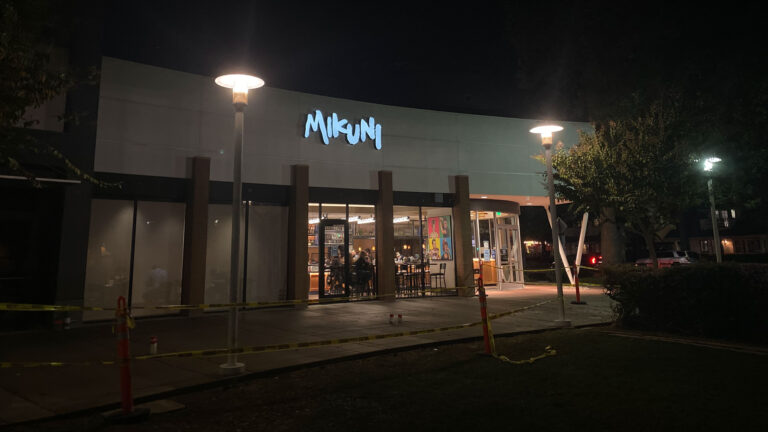
Mikuni, a Japanese restaurant in Davis, has completed its expansion and moved from Suite 11 to Suite 19 in Davis Commons. The new restaurant officially opened on Oct. 26, about a two-month delay in the moving project schedule.

Kimberly Yoon, the general manager of Davis Mikuni, said the expansion was out of necessity.

“We didn’t expect to be as busy as we were in the past couple [of] years,” Yoon said. “But slowly, we started to realize that we need a bigger space.”

According to Yoon, Mikuni finished the transition from the old location to the new one within three days. She described the moving process as seamless.

“We did kind of like a quiet opening,” Yoon said. “We didn’t make a huge announcement so that it would smoothly fall into place — which it did lovely.”

After expansion, the daily sales of Mikuni have increased by the thousands. Yoon said they are still as busy as before.

“Even on the weekends, people joke that we need a bigger space,” Yoon said.

The new Mikuni has not only increased seating for customers, but it also enlarged the kitchen and storage space in the back to better prepare for the rush.

Sarah Sun, a server who has worked at this Mikuni location for two-and-a-half years, said it was more efficient to work at the new place.

“In the old location, there were lots of things going on in the back — a very tight space,” Sun said. “It was very crowded, and everyone was running around and bumping into each other.”

Sun described the new Mikuni as more organized.

“Basically, all the stuff for servers are in one area,” Sun said. “And all the stuff for fryers and cooks — as well as sushi bar — are all put separately.”

Scarlett Kroencke, a regular customer who eats at Mikuni once a week, said the new restaurant is stunning.

“I think the new Mikuni is beautiful,” Kroencke said. “And it’s a little bit more sterile than the old place.”

Isaac Yang, a Mikuni customer and a third-year applied mathematics and economics double major, said his favorite part of the new Mikuni is the bar area.

“It feels very cozy,” Yang said. “We can have more interaction with the bartender and people who sit next to us.”

Some parts of the new location are still under construction, such as the patio area. Yoon said this will be done in a few months, which will allow even more customers to eat at Mikuni.

The new Mikuni also kept some pieces of the old one — it’s a “modern look, but with the same Mikuni feel,” Yoon said.

Mikuni has been in business at Davis Commons since April 2009, when it first opened during a Picnic Day weekend. As a former UC Davis student, Yoon said she was surprised to see the long-lasting success of Mikuni in the Davis community.

“It’s shocking because — especially in this Davis Commons center — we’ve seen a lot of restaurants come and go,” Yoon said. “We are lucky because we’ve been successful, and we are very grateful for it.”

Although Davis has many other Japanese restaurants, Yoon said Mikuni has its own distinctive features, and the main customers of Mikuni have been permanent Davis and Woodland residents. 

“We have Yakitori Yuchan across the street, but I think we both pick up different types of demographics,” Yoon said. “People pick and choose their days, but I think we’re able to not conflict too much when it comes to that.”

With adding DoorDash, a door-to-door delivery service, as part of the new Mikuni, Yoon said it will be more convenient for young families to eat at Mikuni as well. 

Written by: Rui Ding — city@theaggie.org

Aggies fall late in Causeway Classic defeat

UC Davis football stutters in second half of 27-17 loss

The UC Davis football team capped a disappointing 5-7 season with a 27-17 loss to rival Sacramento State in the 66th Causeway Classic on Saturday afternoon at Hornet Stadium. The Aggies went blow for blow with the co-Big Sky champion Hornets in the first half but were shutout in the final 30 minutes and watched Sacramento State rattle off 24 unanswered points. 

Saturday’s rivalry showdown was seen by an announced crowd of 19,882, the second largest in Causeway Classic history. It was a lively and festive atmosphere all day long, from the early tailgating hours before kickoff to the loud noise ringing throughout the stadium up until the final whistle. Unfortunately for the Aggie fans who made the 22-mile trek to East Sacramento, it was a performance symbolic of the entire season. 

Just like last week’s 27-17 loss to Montana State, the Aggie offense completely sputtered in the second half, managing just a half dozen first downs and 127 total yards. UC Davis found itself in numerous short yardage situations on third and fourth downs but simply could not make enough impactful plays to move the chains. 

Overall, the Aggies were held to under 300 yards of total offense for only the third time in 12 games this season. Sophomore running back Ulonzo Gilliam was one of the few standout players on offense, amassing over 100 scrimmage yards for the eighth time this season.

One of the most telling aspects of the final box score was that only four different Aggies recorded a reception, a number well below the normal average for UC Davis. 

Senior quarterback Jake Maier, playing in his final collegiate game, was unable to spread the ball around like he normally does and was often forced to check it down to Gilliam, who had eight catches. 

On three different occasions in the second half, the Aggies were faced with a short fourth down inside Hornet territory, but Hawkins opted to punt the football every time. This was a stark contrast to the aggressive-minded decision-making he has typically displayed throughout his coaching career. In many games earlier in the season, Hawkins has treated these situations as opportunities to jumpstart his offense when it’s struggling, especially when he can fall back on a capable defense on the other side of the ball.

Nonetheless, UC Davis forced its opponent to put together extremely long drives, thanks to the excellence of junior punter Daniel Whelan, who pinned five of his seven punts inside the Hornet 10-yard line. 

“Danny was redzone punting so great, so we just thought we’d go pin them again,” explained head coach Dan Hawkins. “He was knocking them down inside the five. I had a lot of confidence in him. As good as [the Hornet] offense is, you don’t want to give them a short field.”

Saturday’s result was the culmination of a frustrating 2019 season and an accurate representation of the entirety of the campaign. 

“It’s probably a microcosm of our whole season,” Hawkins said. “I thought we played well, played hard and finished. Now, we’ve just got to capture some details and that all starts with me. I’ve got to be a better coach.”

UC Davis got off to an encouraging start and had high hopes of spoiling what turned out to be a historic day for Sacramento State, which claimed a share of the Big Sky Conference title for the first time ever. The opportunities were all on the table for the Aggies to finish strong, with the defense playing exceptionally well against one of the top offenses in the FCS and dual-threat quarterback Kevin Thomson. 

At the end of the day, the Aggies simply weren’t sharp enough when it came down to the smallest details of the game — something that Hawkins has consistently said is the difference between this season and last year’s Big Sky championship team. The collection of critical missed tackles, dropped passes and penalties on Saturday were exactly the type of mistakes that plagued the team all season long. 

“Our defense was doing a pretty good job, but we just kept putting them back on the field,” Hawkins said. “We couldn’t make a play offensively and had too many three-and-out’s. We just couldn’t score.” 

Last year, the Aggies played in a lot of close football games and found a way to make just enough meaningful plays in the most important moments to come out victorious. This season, they were in many of the same situations but lacked the execution of marginal details necessary to come out on top. 

With UC Davis clinging to a 17-13 lead early in the fourth quarter, Sacramento State started an offensive drive at its own four-yard line, thanks to Whelan and the punt coverage team. Four plays later, the Hornets were celebrating the eventual game-winning touchdown, a 51-yard pass completion down the sideline. 

Several minutes later, Sacramento State put the icing on the cake when Thomson streaked 33 yards for a touchdown.

Even with the Aggies holding a lead for the majority of the game, Sacramento State was always within striking distance due to UC Davis’ offensive struggles. 

After each team traded a punt to begin the contest, the Aggies drew first blood when junior wide receiver Khris Vaughn escaped behind the last line of defense and took it all the way to the house for a 76-yard touchdown reception. 

The explosive scoring strike, Vaughn’s ninth touchdown of the year, was the longest play from scrimmage for UC Davis this season. It also marked the moment that Maier officially became the first player in school history to eclipse the 11,000-yard mark for career passing yards. 

Sacramento State responded with a never-ending 18-play drive of over eight minutes that ended with a 24-yard field goal. The Aggie defense made some critical stops deep in its own territory and nearly came up with an interception at the goal line, to keep the Hornets out of the end zone. 

Early in the second quarter, UC Davis was the beneficiary of two 15-yard Hornet penalties that kept the chains moving, including a roughing the passer call and a pass interference foul. Kicker Max O’Rourke capped the possession by hitting a 39-yard field goal straight through the uprights to extend the lead to 10-3. 

Later on, the Aggies were forced to punt, and again, Whelan placed a perfect kick that the UC Davis coverage team was able to down at the one-yard line. Two plays later, redshirt freshman linebacker Da’Von Frazier leaped at the line of scrimmage and intercepted the football, before taking one step into the end zone for the pick-six. At the time, UC Davis held its biggest advantage of the day: 17-3.

Shortly before halftime, the Aggie defense nearly made another goal line stand, but the Hornets were able to punch it into the end zone on a fourth-and-goal play to make it 17-10. 

After a grueling three-month stretch, one that often felt like an emotional rollercoaster ride, the UC Davis football team will finally be able to recover from the physical and mental fatigue it has endured and enter a long offseason full of preparations for the 2020 campaign. 

There’s no doubt that this team kept its fans on the edge of their seats and delivered a heavy dose of captivating action week in and week out. 

“It’s always a journey and a continuum,” Hawkins said. “We had some really beautiful moments and we played a lot of very good football teams.”

While the Aggies were unable to make a return to the FCS playoffs for the second year in a row, this is still a program trending in a very good direction with tons of positive momentum. Hawkins and his staff have tirelessly recruited the next generation of Aggie stars, while Director of Athletics Kevin Blue and the UC Davis athletics department continue to make strides off the field. The new student-athlete performance center, which includes a practice field for the football team, should be open in the near future. 

Whichever way you choose to look at it, there’s never been a better time to be an Aggie.

Written by: Brendan Ogburn — sports@theaggie.org

UC Davis study highlights the drivers and solutions to global food waste

Food waste more complex, interconnected than commonly known

Researchers at UC Davis have created a comprehensive report on food waste and loss to identify and provide solutions for the systemic inefficiencies currently in the food supply system that have resulted in the waste or loss of one third of global food. 

“We wanted to look at all aspects of food waste, from the farming end to the consumers and the systemic causes of food waste,” said Ned Spang, an assistant professor in the UC Davis Department of Food Science and Technology. 

The study, led by Spang, involved experts in fields ranging from food science to public health, highlighting the complexity of food and the loss of waste of it. This wide range of expertise allowed them to create an expansive and inclusive report that looked at food waste, the loss of products that are still usable due to avoidable reasons and loss, product that is trashed due to unavoidable reasons, from start to finish. 

Food waste and loss begins at the farm. The first losses are due to often unavoidable causes such as disease and insects that infect and ruin the crop. When it is time to harvest, more waste can be created. 

The United States Department of Agriculture grade system that defines the standards for food sold in commercial markets is effective at keeping food that is not safe for human consumption, due to potential disease and other ailments, from entering distribution. Farmers in search of the highest profit will want to grow food that is at the highest grade but the system is often restrictive due to its heavy focus on cosmetics. 

“Farmers will leave perfectly good produce in the field because it is not worth it to harvest it,” said Elizabeth Mitcham, director of the Postharvest Technology Center and the Horticulture Innovation Lab. 

A lower grade given to a farmer’s crop due to its “undesirable” appearances based on odd shape and color development causes farmers to leave good produce on the field. This is because the cost of harvesting it will not match or exceed the profits they would receive from selling “lower grade” produce. These highly selective standards that demand unrealistic levels of perfection from produce result in high levels of waste at the farm level. 

Postharvest food waste can be linked to the transportation and the storage of food. In a more industrialized and developed country such as the U.S., less food is wasted during this period.

“Developed countries have more infrastructure which includes good roads and refrigerators, and in less developed countries we tend to see higher level of losses due to less infrastructure,” Spang said.

The lack of infrastructure in less developed countries results in larger amounts of food waste as they do not have the technology available to extend the life of produce postharvest. In developed countries, an estimated 20% of food is wasted due to inadequate drying, storage, and transportation while in less developed countries 30% of food is wasted.

Once food reaches the market, consumer habits become the main source of food waste. Consumers enter a grocery store in search of the best produce, which is often based solely off appearances, and leave the less attractive produce to waste. Once the produce leaves the store, a high proportion of it ends up getting wasted in the consumer’s household.

In developed countries, a lower percentage of income is spent on food which results in food having a lower importance; not spending a large portion of one’s money on food helps create the perception that it is disposable and thus less valuable. Developed countries also tend to have more access to an overabundance of food, further instilling a societal acceptance of household food waste and valuing food less.

“Consumers have such an access to food, the waste is quite high,” said Irwin Donis-González, an assistant professor of biological and agricultural engineering. “In other countries where food is not as available, they tend to view it more importantly.” 

The cultural relationship with food in less developed countries highlights a key difference in the type of consumer waste seen around the world. Wealthier countries are less conscious of their private food waste because they can simply go buy more food. This mindset does not exist in places where food is harder to obtain. 

The complexity of food waste and loss is evident when attempting to analyze each realm of the food system. From the farm to consumers’ fridges, food waste is interconnected and coming up with solutions is just as complex.

Researchers at UC Davis work diligently to find solutions to the unsustainability of the food system at various parts in the cycle. Sara Pace, a postdoctoral scholar in the Spang Lab, is designing a new project that would address the impact of food waste going to landfills. When organic matter is thrown into landfill, due to the lack of oxygen, it undergoes anaerobic decomposition which produces methane, a very potent greenhouse gas. Because greenhouse gases contribute greatly to climate change, this project understands the importance of mitigating food waste.

The project uses anaerobic digestion infrastructure to treat food waste. Anaerobic digestion takes advantage of the methane naturally produced by the decomposition of food waste and harvests it to be used as a source of energy. The goal of this project is to install small systems close to processing plants and other main sources of food waste in urban environments to reduce greenhouse gas emissions and generate a source of renewable energy. 

“We are installing these systems close to the source or at the source so you can treat anything that is coming out and reduce them from going to the landfill,” Pace said.

The project will take food waste from processing plants and local restaurants and use it to produce heat or electricity through the capturing of released methane. Additionally, the process will produce a nutrient rich fertilizer that can be sold. If successful, this would be an efficient way to reduce food waste in urban settings while producing a form of energy.

At UC Davis, students are donating their time and energy to address food waste. The Food Recovery Network is a student run organization that collaborates with the on-campus dining commons and the Davis farmer’s market to reduce food waste.

“Our main goal is to reduce as much food waste as we can on campus and use that food to fight food insecurity,” said Alicia Marzolf, a third-year clinical nutrition major and the club’s event coordinator.

Since its creation in 2013, the Food Recovery Network has been able to divert 72,000 pounds of food from going to a landfill. Even at at student campus level, UC Davis is making it clear how important reducing food waste is. 

With a growing population, the need to address food waste is mounting. Globally, if we were able to reduce not only the amount of food being wasted but also reduce the amount of resources being wasted, we could increase the food produced by being more effective. 

“With an increasing population, we will need to use more land for agriculture and convert more land to farming,” Spang said. “Yet if we just start to reduce the inefficiencies within our current food system, we can increase yield as less will be wasted.” 

Reducing food waste has the capacity to help combat the ever rising global population. To be effective in our reductions, education and increased awareness of this issue are crucial. Changes started at an individual and local level have the capacity to be effective as people are inspired by their surroundings and motivated to do their part to reduce waste. 

Written by: Alma Meckler-Pacheco — science@theaggie.org