55.4 F
Davis

Davis, California

Monday, December 22, 2025
Home Blog Page 384

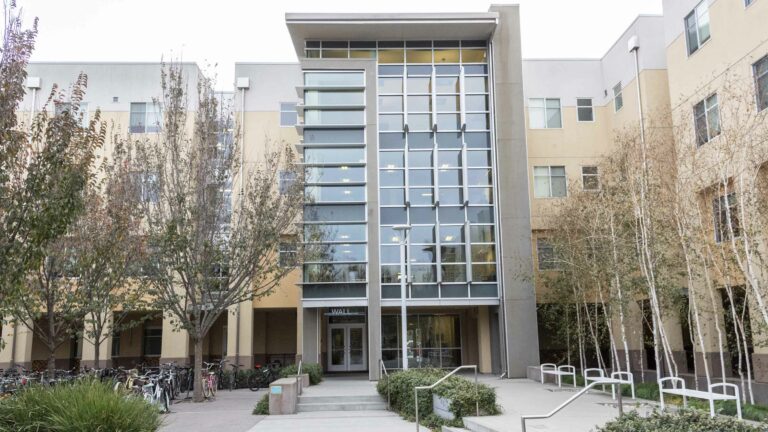
Man who helped construct Tercero dorms sentenced to 10 years in prison

Earl “EJ” Thompson convicted for insurance fraud, wage theft after causing total loss of over $2 million

A man who helped construct the UC Davis South Tercero Dorms was sentenced to 10 years in prison for insurance fraud, wage theft and other related charges. 

Over the course of the Tercero project, Earl “EJ” Thompson stole $633,199.55 from the wages of over 60 employees. He also defrauded $359,011.43 from the California State Compensation Insurance Fund, his employee’s compensation insurance carrier. Other charges against Thompson included multiple acts of perjury, conspiracy and grand theft. 

Deputy District Attorney Jennifer McHugh, the lead prosecutor of the case, explained the magnitude and severity of Thompson’s crimes. 

“This was a huge fraud case for the Yolo County’s District Attorney’s Office,” McHugh said. “It was over $2 million that were lost, and the complexity of the case was also much more significant than the average case. The amount that Thompson had stolen from his employees and the insurance company was the third highest in the state at the time.”

Thompson’s California Contractor’s License was revoked before the Tercero project, yet he convinced his wife and an employee to start a new business under their names — Russel/Thompson — which Thompson ran with a fraudulent contractor’s license. He underbid other contractors to work on the construction project referred to as Tercero South Student Housing Phase II, which included the construction of Wall, Campbell and Potter Hall.

One reason Thompson was able to commit fraud on this level was due to the secretive agreement between him and the official owners of Russel/Thompson, as McHugh describes. 

“Thompson was hiding the fact that he was really running this company and so that could explain how this wasn’t discovered right away,” McHugh said. “But they did quickly find that the wages weren’t being paid just a few months into the project, and so then they started doing the investigations and referring it.”

The case took six years to prosecute, mainly due to the amount of witnesses the prosecution needed to contact. According to a press release from the Yolo County’s Office of the District Attorney, the case “included over 35,000 pages of discovery, over 60 defrauded employees, and involved 26 felony counts.”

It was also delayed when Thompson switched attorneys and claimed to be incompetent to stand trial due to multiple sclerosis. The competency trial took about two years to resolve, according to McHugh.

“At a competency trial — unlike a normal trial — it’s the defense that has the burden to show that it’s more likely than not that he is incompetent,” McHugh said. “And at that competency trial they didn’t put on any evidence so the court found him competent to stand trial.”

Ultimately, Thompson pleaded no contest to the charges. On Nov. 13, he was sentenced to 10 years in state prison without probation. The court’s decision reflected Thompson’s history of fraud and the impact on his victims — some of which lost thousands of dollars in only a few months, McHugh said. 

“For several of the victims, it was over $20,000 that had been stolen — and we’re talking about in a five or six month period of time,” McHugh said. “When you think about it being in 2009, that’s when the housing crisis happened and a lot of people were losing their jobs and having a difficult time paying their mortgages or their rent.”

Paul Hillegass, the lead district attorney investigator for the case, elaborated on how fraud can affect not only the direct victims but also the surrounding economy.

“[Thompson] took advantage of the employees who were just glad to be making a wage that was higher than what they were making — but without knowing that they should’ve been making even way more,” Hillegass said. “When you [multiply] that [by] 60 individuals — how much would they have spent with that money in the surrounding economy? How much did it hurt the UC system in having to deal with the issues from this construction project? The cost gets spread out among everybody, so crimes like this really start affecting the economy.”

The county does provide outreach to educate the community about fraud, especially regarding the rights of employees and information on license contracting. When reducing the acts of fraud by businesses, Hillegass mentions how this case can be a deterrent in its own right. 

“The prosecution is a part of outreach to let them know that people do get caught,” Hillegass said. “So this is also a deterrent and education at the same time.”

Written by: Madeleine Payne — city@theaggie.org 
ASUCD Senate passes bill to improve elections processes in wake of Fall Quarter elections

Quarterly reports, confirmation of commissioners, commission chair among action items 

The ASUCD Senate convened its Nov. 21 meeting at 6:17 p.m. in the MU East Wing Lounge. Scheduled to take place from 6:10 p.m. to 10:00 p.m., the meeting continued until approximately 11:30 p.m.

Following the roll call, the members present at the Senate meeting delivered ex-officio reports, emphasizing their progress and accomplishments for that week along with action items to complete for upcoming weeks. Vice Controller Shambhavi Gupta and External Vice President Adam Hatefi were absent and Controller Kevin Rotenkolber was late. Senator Lylah Schmedel was absent and Senator Victoria Choi was late. 

In his ex-officio report, President Justin Hurst mentioned dealing with legislation concerning the recent ASUCD elections, receiving updates on UCPath, attending an event in which students could offer input on hiring provosts, conducting interviews for extending the chair position for various committees to students and discussing issues regarding Sunset Fest and legislation affecting the Entertainment Council’s large show reserves. 

From an alternative perspective, Vice President Shreya Deshpande communicated their interest in hosting a sustainable career fair, a project spearheaded by the Environmental Policy and Planning Commission (EPPC) in their ex-officio report. 

“I went to EPPC to talk about starting a sustainable career fair,” Deshpande said. “I [am] also talking to engineering folks that are pursuing the same projects. They are talking about how engineering career fairs are largely centered around oil and defense companies that come and contract engineering students. There are folks that want to be more in line with our UC Davis Sustainability Goals and want to divest from that and talk about alternatives.”

Additionally, in their ex-officio report, Desphande said that further updates need to be received on UCPath, and its ramifications. 

“I had a UCPath meeting with administrators regarding potential issues [for] people who are signed up on the UCPath system,” Deshpande said. “Like late fees, potentially the fact that students aren’t getting their checks delivered on campus, but have to go off campus and then conversations about compensation.”

Elena DeNecochea, chair of the Gender and Sexuality Commission (GASC), talked about the recent Transgender Day of Remembrance.

“[Nov. 20] was Transgender Day of Rememberance,” DeNecochea said. “I will say going onto social media, in my opinion, there wasn’t enough posts on this subject and there isn’t enough attention to it. We have to counter that, help and be allies. It’s very close to my heart, and I am really happy that you all stand in solidarity with us today.” 

Following ex-officio reports, the meeting was marked by a series of quarterly reports. Creative Media, the EPPC, the Committee on Committees, the Campus Center for the Environment, Entertainment Council and the Ethnic Cultural Affairs Commission all delivered presentations in front of the ASUCD Senate. 

Creative Media, a “full-service digital creative agency,” summarized its projects for this quarter, according to its presentation. Specifically, it highlighted its extensive involvement in the marketing of Sunset Fest, the rebranding of ASUCD, the promotion of elections and Aggie Studio’s photography and videography projects. 

EPPC reaffirmed its overarching goals, including “represent[ing] the student body’s interest in issues of sustainability,” according to its presentation.

Based on commissioner interest and project selection metrics, EPPC solidified six projects: the operation of an internal affairs team and an external affairs team, the creation of a comprehensive environmental survey, establishment of waterwise and green infrastructure across campus, analysis of how products procured by the UC system are produced and the creation of a sustainability career fair.

Aside from these core projects, EPPC plans on fostering collaboration with People for the Elimination of Animal Cruelty through Education, or P.E.A.C.E., to promote the regard for animal rights and increase the accessibility of vegan options in Student Housing and Dining Services; maintaining its partnership with Climate Reality Club; and supporting commissioners delving into topics like UC climate policies and disposal of laboratory waste.

The Committee on Committees recently hired seven academic senate student representatives, who are “extremely qualified and dedicated students, have been accountable and responsible, and […] have ideas about working with faculty on international education issues,” according to its presentation. 

Yasmeen Qursha, chair of the Committee on Committees, discussed an overall theme that representatives are encouraged to focus on: “emphasizing diversity and the new culture of ASUCD” and “how diversity relates to the Principles of Committee.” 

Qursha also presented the Campus Center for the Environment’s quarterly report. She detailed the impact of three projects: Project Compost directed by Karl Zahlhass Liebner, Project Challenge led by Lauren Jozefov, and Project Garden overseen by Sabrina Denton and Aiyun Liao. 

The Entertainment Council, “responsible for booking and hosting concerts, open mic nights, movie screenings and other events on campus for the student body,” according to their website, mainly debriefed Sunset Fest in their quarterly report. 

Last, Ethnic Cultural Affairs Commission (ECAC) which “[aims to] represent historically marginalized groups who face barriers in terms of institutionalized, internalized, and systemic oppression,” outlined its accomplishments, according to its presentation.

For instance, ECAC has spread awareness about its work and its mission at the involvement fair. Additionally, the commission presented to Davis College of Democrats and addressed cultural appropriation at the Whole Earth Festival. 

The confirmation of commissioners was also a prominent part of this senate meeting. EPPC, GASC and Academic Affairs all had commissioners confirmed to their commissions.

Similarly, the Disability Rights Advocacy Committee confirmed a chair. 

“This is a committee that has not been running for a long time,” Deshpande said. “It is very exciting to have somebody take on the initiative. It’s very important to establish community building and having a voice like Nasaki’s that will reach out to a variety of students to be able to build this community and advertise the resources we have for disabled, differently-abled folks on campus is extremely important.” 

The Senate meeting rounded out with consideration of old legislation. By the end of the meeting the following constitutional amendments had been passed: Constitutional Amendments #63, #64, #65 and #66.

CA #63 is “a constitutional amendment to shift the Winter ASUCD Elections to Spring Quarter.” Specifically, this amendment was written to “prevent the necessity for the ASUCD to hold a special election every Winter Quarter and prevent a violation of Article II, Section 1, of the ASUCD Constitution that mandates one (1)  year terms for every elected official,” according to the amendment itself. 

CA #64 is “a constitutional amendment to reform the structure of the Judicial Branch of the ASUCD.” 

CA #65 is “a constitutional amendment to create the Student Workers Rights Commission”, or SWRC. Specifically, the SWRC would “act as a representative body for, investigate concerns, and advocate for the welfare of undergraduate student workers employed by the Association and UC Davis workers as a whole.” 

“I think it would be really vital to have another chairperson on the table to advocate specifically for student worker rights,” Deshpande said. “Just having that extra voice on the table would provide a lot of context, getting their reports on what they’re constantly doing, and the level of campus engagement they’re having with our student workers functionally gives them a lot more agency.” 

CA #66 is “a constitutional amendment to add the process of impeachment and removal of elected officials to the ASUCD Constitution.”

Concerning elections, SB #16 was also passed. SB #16 is “an ASUCD Senate Bill to introduce crucial regulations with respect to ASUCD elections.” This bill was passed in response to the Fall Quarter 2019 elections. Specifically, “candidates abused loopholes […] there were […] a number of logistical failings […] and [there was a] lack of an Elections Committee Chair.” 

Senate Bill #8, Senate Resolution #1, SB #12, SB #14 and SB #15 were tabled. 

Written by: Aarya Gupta — campus@theaggie.org 

All three constitutional amendments fail in ASUCD special election

Two amendments fail by not reaching 60 percent vote in favor, one fails outright

Roughly two weeks after voters in the ASUCD Fall Elections rejected three constitutional amendments, those same three amendments failed again in a special election that concluded today.

Constitutional Amendments #63, #64 and #65 all failed to garner enough votes to be enacted. CA #63, which would have moved Winter Quarter elections to Spring Quarter, and CA #65, which would have created a Student Workers Rights Commission, both received a majority of votes in favor, but did not meet the 60% yes vote required in order to be enacted. CA #64, which would have restructured the ASUCD Judiciary, received a majority of votes against the measure.

More detailed voting results on the amendments are available at elections.ucdavis.edu.

Written by: Kenton Goldsby — campus@theaggie.org

Editor’s Note: A previous version of this article stated that Constitutional Amendment #64 would have moved Winter Quarter elections to Spring Quarter. That is incorrect. It is actually CA #63. The Aggie regrets the error.


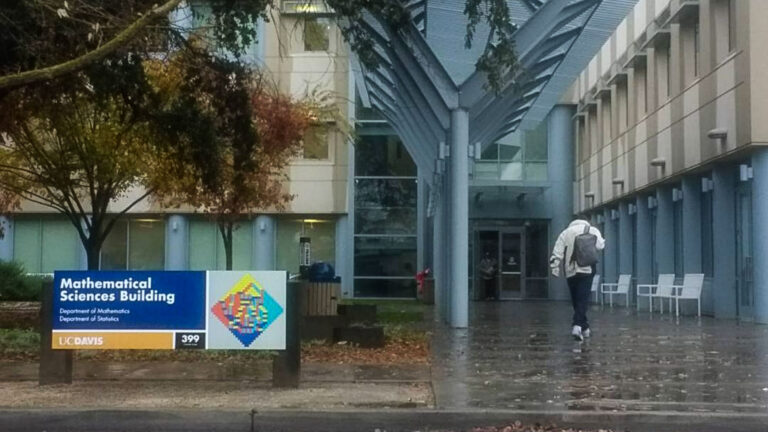
Yuval Peres, math professor with series of sexual misconduct allegations levied against him, gives lecture at UC Davis

Peres, who worked at UC Berkeley for over a decade, left position at University of Washington under threat of investigation

Updated at 11:21 p.m. on Dec. 5, 2019

Yuval Peres, a mathematics professor known for his work in the probability research field, gave a lecture at UC Davis on Wednesday, Nov. 6. Peres, who previously worked as a professor at the UC Berkeley from 1993 to 2006; as an unpaid affiliate at the University of Washington (UW) from 2006 to 2012; and as a researcher in the Microsoft Theory Group from 2006 to 2018, has been publicly accused by three women of sexual misconduct. 

Peres did not respond to The California Aggie’s requests for comment regarding the allegations against him. He had previously addressed his behavior in an email from November 2018. 

“I regret all cases in the past where I have not followed this principle [of not making invitations to junior researchers that may be viewed as intimate],” he said in a recently publicized letter to a group of mathematics professors. “I had no intention to harass anyone but must have been tone deaf not to recognize that I was making some people very uncomfortable. As I wrote above, I promise to adhere to this principle in the future.”

Abigail Thompson, the current chair of the math department at UC Davis, which advertised the lecture on its website, said that the department is currently “addressing this issue.” She said she did not know who in the department knew about the allegations against Peres before he was invited to campus, though she did acknowledge via email that “some people in the department were aware of the allegations several days before the event took place.”

Peres’ accusers include Dana Moshkovitz, an associate professor of computer science at the University of Texas, Austin; Animashree Anandkumar, the Bren professor of computing and mathematical sciences at CalTech and Lisha Li, the founder and CEO of Rosebud AI, a company that produces tools to create and edit photographs and videos. 

The UW Office of Equal Employment Opportunity and Affirmative Action confirmed that Peres resigned from his affiliate position in 2012 “after receiving notice that the university would be investigating allegations of sexual harassment.” A source stated that Peres had left the Microsoft Theory Group and that the company had nothing further to share about his time there.
Moshkovitz said that she was harassed by Peres while still a Ph.D. student at the Weizmann Institute of Science in Israel in 2007. In a 2009 public statement, Moshkovitz said that she had first met Peres as an undergraduate student in 2004 while touring the U.S.

“[The trip] influenced my life in many ways I did not expect,” Moshkovitz wrote. “Some of those ways were quite unfortunate.”

While in the U.S., Peres was friendly and introduced her to his family and his colleagues, with no indication of the behavior that was to come. 

In 2007, Moshkovitz received an email from Peres saying that he was in the U.S. and wanted to meet regarding her postdoctoral studies. Moshkovitz agreed to the meeting. In her statement, Moshkovitz wrote that Peres moved their meeting from a coffee house to his home, where he offered her wine, even though she told him she did not drink alcohol. He then sat close to her on the sofa and repeatedly grabbed her hand, insinuating that her behavior in 2004 had led him to view their interactions in a romantic light. 

When Moshkovitz tried to leave, he followed her out of the house.
“He told me that he was sorry, he misinterpreted my behavior,” Moshkovitz wrote. “I was quite stunned by this last remark. That man had invited me to a ‘job interview.’ He had pretended it was a job interview for almost the entire meeting. I acted like a person in a job interview, which I thought I was, until I realized otherwise. This ‘I must have misinterpreted your behavior’ is outrageous.”

Moshkovitz said that although she was supported by friends and family after the incident, the experience “undermined her trust in people.” She added that “sexual harassment is not about sex. It is not about love. Sexual harassment is about hunting down.” 

Moshkovitz said she contacted officials at the Microsoft Theory Group in Redmond, Wash., where Peres was working at the time. She received an email saying that they were “concerned about what happened and that [they] were looking into it,” however, she said she never heard from them again. She later learned that Peres had been promoted shortly after the incident.
Microsoft has faced criticism for its treatment of women. According to a 2018 article in the Seattle Times, it remains a predominantly male-dominated tech company, compared to Amazon, Apple, Facebook, Google and LinkedIn. In the company’s “engineering ranks,” the higher the pay grade, the fewer women there are. Between 2009 and 2018, 16 women sued Microsoft in both state and federal courts for “gender discrimination, sexual harassment, or gender-related retaliation.” Microsoft won only one of the cases that went to trial. And, according to The Guardian, “Between 2010 and 2016, women in technical jobs at the company lodged 108 complaints of sexual harassment, 119 complaints of gender discrimination, eight complaints of retaliation and three complaints of pregnancy discrimination.”
In the Seattle Times article, one Microsoft intern said no charges were filed after she reported to both the company and the police that she was raped by another intern after an event. Another woman alleged that her manager repeatedly propositioned her and sent her inappropriate emails. After she reported the behavior, she was moved to a different unit, only to find that her office was “just two doors down from her harasser.” Another female employee was confronted by her supervisor after reporting his “demeaning behavior” and “unfair performance reviews.”
Following the publication of the Seattle Times article, Microsoft president and chief legal officer Brad Smith provided a summary of the company’s efforts regarding diversity and inclusion, citing the progress the company has made in the last several years.

Christopher Hoffman, a current professor at UW who frequently visited the Microsoft Theory Group to work on projects, had heard from several sources that Peres was attempting to “re-integrate himself back into the mathematical community” following the allegations.
“I am a big believer in forgiveness, but before we get to a stage of forgiveness there has to be some honesty about the women who he harassed and the lies that Yuval told to enable their harassment,” Hoffman said. “I think the math community would be making a big mistake if they re-integrated someone and started the forgiving progress before there was any honest appraisal of what had happened.”
Hoffman did postdoctoral studies with Peres at the Hebrew University in Jerusalem from 1996–1997, and later worked with him at UW. He said that Peres was “very generous towards [him],” and found his later resignation from UW abrupt, adding that he received no explanation from the university for his departure. He did not hear about the sexual misconduct allegations until later.
“The more information I heard and the more detailed [the allegations have] become, definitely, the more upsetting they’ve been,” Hoffman said. “The first things that I heard were all very vague and third-hand and now I’ve read statements that people have written and that was definitely much more upsetting than just hearing rumors.”
Peres’ pattern of behavior was not limited to his time at UW. In November 2019, Lisha Li, a former Ph.D. student at UC Berkeley, said on Twitter that she and another graduate student studying probability both experienced similar harassment. “About time it is called out so that no more students are harassed,” Li wrote. Animashree Anandkumar, a professor at CalTech, wrote on Twitter in November 2018 that she “had a nauseating experience with Peres when [she] was younger,” adding that at the time she “was junior and felt powerless.”
Lior Pachter, who worked as a mathematics professor at UC Berkeley from 2001 to 2017, and who now works as a Bren professor of computational biology, computing and mathematical sciences at CalTech, said via email that concerns were raised in the equity committee of the math department at UC Berkeley after Peres had left his full-time position at the university.

When asked why he did not immediately file a report regarding Peres’ behavior, Pachter said that he felt the report was already being adequately addressed by the committee handling such concerns. Following a public records request by The Aggie, UC Berkeley said it had no information regarding any sexual misconduct by Peres.
Thomas Scanlon, who currently chairs the equity committee in the math department at UC Berkeley, said in an email that he heard about Peres’ behavior only after Peres had gone to work at UW and his position at UC Berkeley had converted to adjunct status. The departmental website indicates that Peres held an adjunct position at Berkeley until 2011.
“It is not the role of the equity advisor to address complaints of misconduct,” Scanlon said. “In practice, most complaints pass through the Department Chair. Since I do not have firsthand knowledge of how such reports were investigated by our administration, it is best that I not speculate on what may have happened.”
After he was contacted by The Aggie, Michael Hutchings, who was recently appointed as mathematics department chair at UC Berkeley, wrote that he “would not help […] try to dig up rumors and allegations about the Berkeley math department.”
Later, after Peres resigned from UW and no longer worked at Microsoft, Pachter chose to publicize a November 2018 letter written by computer science, applied mathematics and mathematics professors Irit Dinur, Oded Goldreich and Ehud Friedgut, who currently work at the Weizmann Institute of Science in Israel. 

The letter warned the mathematical community about allegations that had been made about Peres and alleged that Dinur, Goldreich and Friedgut knew of “at least five additional cases of him approaching junior female scientists, some of them students, with offers of intimate nature, behavior that has caused its victims quite a bit of distress since these offers were ‘insistent.’”

Goldreich said via email that he disagreed with the publication of the email. When asked why he had chosen to publish the letter, Pachter said that “it corroborated for me what I had heard. When I saw this letter from a lot of these colleagues, I thought I should make this public […] because it’s dangerous to have a sexual harasser working with students. I thought that students should know.”
In December 2018, the Centre de Recherches Mathématiques at the Université de Montréal released a statement condemning Peres’ actions. They said they were not aware of the allegations against him when he was the André-Aisenstadt Chair at the Centre.
Goldreich clarified in an email that while he and his colleagues have no official documentation about Peres, “We acted based on information revealed to us, in person and privately, directly and indirectly, by several of [Peres’] victims. The dilemma we were facing was whether or not to remain [silent] in [the] face of this information, which we considered reliable although it was not subjected to any formal legal procedure.”
Goldreich wrote that this feeling was not unique — others had faced the same moral dilemma.

“We believe that many others in the research community, who have (directly or indirectly) heard of similar [incidents] involving Peres or other people, faced the same dilemma,” Goldreich said. “The choice of doing nothing is a default one, but it has a huge cost in a reality in which there are no adequate ways of handling such instances, which are not [in the] realm of criminal law.”
Goldreich noted that many victims have legitimate reasons for choosing not to file complaints. He said that the current social climate in academia affects who chooses to formally complain to supervisors about this behavior.
“The aforementioned refusal [to file a complaint] should not cast doubts on the allegations nor should it be viewed as a personal (moral or ethical) failure on the part of the victims; it is actually the rational choice given this reality,” Goldreich wrote.
Karen Kelsky, founder and president of The Professor Is In, “which provides advice and consulting services on the academic job search and all elements of the academic and post-academic career,” wrote to The Aggie about the impact that sexual harassment can have on women pursuing careers in academia.
“What my research on sexual harassment in the academy revealed to me is that harassers (almost entirely men) have multiple kinds of impact on their victims (almost entirely women),” Kelsky wrote. “They might impact career options, in that women are forced to change programs or institutions or fields, to their own detriment (perhaps losing grant support or mentorship or years of credit along the way).”
She noted that such experiences can have serious effects on women’s mental health and can deter them from pursuing job opportunities at institutions of higher education. According to Kelsky, “a strong, unequivocal response” is necessary to ensure that survivors are not those who end up facing professional and personal consequences because of their choice to, or not to, report.
“Time and again, these perpetrators, even when found guilty, are permitted to rehabilitate themselves after just a few months or years, and given the chance to reclaim their authority and status,” Kelsky wrote. “That not only re-victimizes victims, but gives the perpetrator access to new victims, and tells other vulnerable individuals that they are not safe, and that they do not really ‘belong’ in academic spaces.”
She described the ripple effect that this kind of institutional decision-making can have.

“In the end we are all impoverished because one perpetrator often silences scores or hundreds of people whose scholarly contributions the world will never get to know,” Kelsky said. “This is why I created the #MeTooPhD hashtag.”
Hoffman similarly believes that academic institutions need to be more proactive in the way that they handle allegations of sexual misconduct.
“I hope that [universities] do not just try to end their affiliation but try to actively make sure that the complaints of victims are investigated,” he said.

Written by: Rebecca Bihn-Wallace — campus@theaggie.org

Correction: A previous version of this article incorrectly characterized Mathematics Department Chair Abigail Thompson’s understanding of the department’s knowledge of the allegations levied against Peres. Thompson did not state whether or not anyone in the department was aware of the allegations before the event took place. When asked if “anyone in the department [was] aware of these allegations before [Peres] was invited,” she responded, “I do not know who was aware.” Thompson additionally clarified that “some members of the department were aware of the allegations several days before the event took place.” The Aggie regrets this error.

UC Davis students deserve adequate time to study for finals

Implement dead week!

Finals are on the horizon, and students are suffocated in projects and assignments with approaching deadlines. Due to the pressures of studying for finals week, students simply need more time, and the 10 week quarter system leaves no room for anyone to catch a breath. 

“Dead days” were eliminated from the UC Davis academic schedule so that students don’t have to take exams on Saturdays. But universities that employ dead weeks still function without holding exams on Saturdays. Some students are left rushing to the finish line to submit their essays right on the day when they are supposed to take a final for a class. These deadlines and lack of time force students to ask themselves tough questions: Should students sacrifice studying time for their finals over submitting an assignment, or should they turn in a lackluster submission to cram in an extra couple hours of studying? 

Students remain torn over an unforgiving system that forces them to compromise their grades and, ultimately, their health. Tight deadlines can promote rising apprehension amongst students, which exudes a sense of testing anxiety that especially affects physical and mental health. In order to mitigate and provide preventative action toward student distress, the administration should consider implementing time off for students to catch up on both their assignments and studies. 

Rather than addressing a serious issue regarding students’ health and academic success, UC Davis simply advocates for students to change their attitude. The Editorial Board feels that this overview places full student responsibility on their distress during the testing season without consideration for systemic causes of testing anxiety. 

While UC Davis has implemented a texting option for students who want to talk about their mental well-being, this does not replace actual in-person counseling session appointments for which often get backed up for months at the end of the quarter. Since the quarter system is so restrictive when it comes to deadlines, professors rarely give extensions to make up for lost time, although students may be facing incredible distress. And a texting service does not offer students a tangible coping method. 

Universities like UC Berkeley officially have a “Reading, Review, and Recitation” (dead) week, understanding that students need such time to synthesize a copious amount of material, advocated for in 1961. Even though UC Davis is on the quarter system — compared to a longer semester at universities such as UC Berkeley — students still need ample time to prepare for exams, especially when some professors hold finals during week 10, some of which are not even during designated class times.

For instance, finals during UC Davis’ Spring Quarter starts right after the day that students end instruction. With just one night to study, students are left to scramble and cram in all necessary information. 

UC Davis has no excuse in ignoring the possibility of days off for students to study. While it is long past 1961, there needs to be a call to action to bring back time off before finals week for students at UC Davis — for the betterment of student well-being and success.

Written by: The Editorial Board

Editor’s Note: A previous version of this article stated that UC Santa Barbara has a dead week. While UC Santa Barbara’s week before finals is nicknamed “dead week,” it still holds classes during that time.

Despite accidents, Unitrans has rigorous training, safety protocol

0

The transportation service requires 50 hours more than bus industry’s requirement of 80-100 hours of driver training

On Nov. 8, 2019 around 7:30 p.m.,  a Unitrans bus stopped at the Oak and Russell stoplight, only to be rear ended by a drunk driver who fled the scene. The suspect was identified by police as 21-year-old Noah Amerault. Fortunately, no members in either of the vehicles were harmed. Amerault was later arrested. 

This is not the first collision the transportation service has experienced, with another notable event occurring in April 2019 when a high-speed pursuit led a suspect to crash into a Unitrans bus.

The Unitrans bus system was founded in 1972 and currently boasts 20 routes and 49 buses. In light of these recent accidents, and given the fact that Unitrans is an entirely student-run and student-driven service, some may have safety concerns. Jeffrey Flynn, Unitrans’s general manager, however, explained that the organization does not take safety lightly. 

In fact, the Unitrans training program is highly extensive, taking 50 hours longer to complete than the industry standard of 80-100 hours for bus driver training and 10 times longer than the state-mandated 15 hours. 

Moreover, Unitrans experiences both minor and major accidents every year — but its numbers are lower than other outside public bussing systems, especially taking into consideration the number of people it serves each day. 

Major accidents, defined as accidents that require a vehicle to be towed or passengers to be transported to the hospital, happen on average two times a year, and passengers riding Unitrans sustain close to zero injuries. 

 “I’m really proud of our training program and how our drivers operate our buses,” Flynn said. “Safety is the number one priority of Unitrans. We service 23,000 people a day, almost incident free.” 

In the 2018-19 fiscal year, Unitrans met the City of Davis’ short-range transit plan’s safety objective, measured by miles between preventable accidents. The standard was 100,000 miles between accidents — and Unitrans exceeded that with 266,336 miles. Another measure takes into consideration injuries per 100,000 boardings. The standard is one, or less than one, and Unitrans’s injuries per 100,000 boardings is less than one. 

Haley Schrock, a fourth-year animal science major and Unitrans worker, said drivers avoid making “illegal turns,” which are “turns we know we can’t make.”

“We know that 100% of [the buses] can’t make them, [so] our routes avoid these turns,” Schrock said. “We also do mirror checks every four to eight seconds because we need to see what’s going on around us at all times. When we stop, we keep a MINI Cooper-sized car between us and the car in front of us. This way, we can move in case the car in front of us breaks down. We are also taught to scan […] all the time — our heads should be moving the whole time instead of just staring in one place.”

Schrock is also a Unitrans route trainer. She tells her trainees to act like “they’re always going to be cut off” and to drive defensively. 

Drivers are also extensively trained on what to do in the case of an accident and have special protocols to follow if an incident were to occur. Anthony Andrade, a fourth-year animal science major and Unitrans supervisor, explained that no matter the severity, all incidents are treated with the same level of gravity. 

“All accidents have the same procedure, no matter how minor or major,” Andrade said. “The first thing you do is stop and pull over. Then […] check on our passengers [and] check on the other parties involved. If [the bus] was the only vehicle involved, like you popped a curb, then check for damages. But if there were other vehicles involved, we’d check on that person, make sure they’re okay. The police can be called. We usually call police anyways. If we need an ambulance, the driver should call them. The last step is to call the supervisor and let them know what happened so they can head out there.”

There are mandatory safety meetings every quarter for drivers, to refresh and update them on safety protocols. 

“As a driver, you receive a lot of training, but in the moment, when something happens, you forget because you’re really nervous about what happened,” Andrade said. “Every bus has a print out of step-by-step what to do in an accident in case you forget or to make sure you do everything right. I feel very confident responding in an accident, as a driver.”

Written by: Isabella Beristain and Linh Nguyen — features@theaggie.org

Culture Corner with Nahima Shaffer

The Arts Desks’ weekly picks for movies, books, music and television shows

Television: “Queen of the South” 

As with most TV shows, I found “Queen of the South” while looking for something to watch on Netflix. I’ve been hooked ever since. The USA Network drama-series is an adaptation of the bestselling Arturo Pérez-Reverte novel of the same name. The series stars Alice Braga as Teresa Mendoza, whose life changes drastically when she falls in love with a member of a successful Mexican drug cartel. After his murder, she finds herself wanted by the head of the cartel while also working as a drug mule for his wife’s operations in Dallas, Tx. Caught between the cross-fires of the couple’s power-grabbing rivalry, Teresa quickly rises to start her own drug empire, but not without sacrifice. Overall, the show is dramatic, action-packed and romance-filled. 

Movie: “Love Jones” 

When I heard “Love Jones” was going to be added to Netflix, I was super excited. It’s very rare for me to enjoy or even care to watch romantic comedies, but “Love Jones” is one of those exceptions. The 1997 film directed by Theodore Witcher chronicles the love story of Darius (played by Larenz Tate) and Nina (played by Nia Long). Darius, an aspiring photographer, and Nina, an aspiring writer, meet one night at a Chicago jazz club. As their instant connection blooms, the couple faces doubts about the seriousness of their relationship. Things become even more shaky between the two when Nina heads to New York to mend things with her ex-fiance, leaving Darius to date other women. The film blends the art of poetry, photography and cinema visually and scripturally as it tells Darius and Nina’s complicated love story. It’s real yet romanticized in a way that a lot of rom-coms aren’t.

Album: “Chixtape 5” by Tory Lanez

Tory Lanez released his highly anticipated “Chixtape 5” album earlier this month. “Chixtape 5” is the fifth and latest installment of his mixtape series, known for remixes of old-school Rhythm and Blues songs. This time, Tory Lanez chose to focus exclusively on flipping early 2000s R&B hits. With features from Snoop Dogg, Mya, Ludacris, T-Pain, Fabolous and more, the album is sure to put you in your feels. With remixes of songs like Snoop Dogg and Pharrell’s “Beautiful,” T-Pain’s “Sprung,” or Chris Brown’s “Take You Down,” the album is really an ode to the early 2000s with a modern edge. What’s even better than taking these older songs and remixing them is that in almost every case, Tory Lanez was able to get the original artists on the songs. Overall, “Chixtape 5” is a monumental step in segmenting the series’ legacy and perpetuity. 

Book: “Harry Potter and the Half Blood Prince” by J.K Rowling 

Ahh, the holidays! People turn to comfort food, fuzzy warm blankets and their favorite holiday movies. Personally, I’ve been revisiting my favorite book and movie series of all time: “Harry Potter.” I’ve been listening to the books again via Audible and wanted to give a shoutout to my favorite of the series: “The Half-Blood Prince.” I find that the plot becomes especially exciting in this sixth book of the series when the overarching narrative starts to really pick up. Set during Harry’s sixth year at Hogwarts, the book delves into the past of his nemesis Lord Voldemort and Harry’s preparation to overcome him. In this book particularly, readers get more insight into Voldemort’s development. Also, the book focuses quite a bit on Harry and Albus Dumbledore’s relationship as they set off to hunt for Horcruxes (dark magic soul-splitting objects). I like this book because the overall tone is much darker than it is in the rest of the series. Overall, I wouldn’t recommend this as a first introduction to the series, but for fans who are looking to pick it back up, it’s always my personal go-to before engaging in the final novel and films.

Written by: Nahima Shaffer — arts@theaggie.org

Study of immigrant economic mobility highlights success of US immigrants

Children of immigrants integrate into US economy at same rate as their historical counterparts

U.S immigration is and has been a highly controversial topic — as false stereotypes and narratives of immigrants have arisen in the U.S., blaming them for high crime rates and stolen jobs, an increase of negative misconceptions about immigrants have seeped into political decisions and divisions. At UC Davis, researchers are striving to address these misconceptions and prove, through their studies, the true nature of immigrants in our society. 

“Immigration is a very divisive issue and an area where people are not very well-informed,” said Santiago Peréz, an assistant professor of economics. “We are trying to bring some actual figures into the issue.” 

Peréz, along with Ran Abramitzky, an economics professor at Stanford University, Leah Platt Boustan, an economics professor at Princeton University and Elisa Jácome, a Ph.D. candidate at Princeton University, study the intergenerational mobility of immigrants in the U.S. They found that children of first-generation immigrants have higher rates of economic mobility than the children of their U.S.-born peers, and these rates are consistent with historical rates. 

The researchers focused on three groups of immigrants that spanned more than 100 years of U.S. history. The first two groups they analyzed accounted for four million immigrants that came from various parts of Europe during either 1880 or 1910. They followed father-son pairings, due to the challenges of following women — who often change their last name for marriage. Combining this strategy with data from the U.S. Census, researchers were able to follow the children of these immigrants for 30 years into their adulthood. 

The third group they observed were recent immigrants who first arrived in the US in the 1980s, a majority of which came from Latin America and Asia. The data they used for this cohort came from Opportunity Insights, which provides the federal tax returns of immigrant fathers and their 2.7 million sons, allowing them to follow father-son pairings to retain consistency with the historical data.

It is important to note that in the most recent group of immigrants they studied, not all of them had a Social Security Number (SSN), which resulted in a gap between the data they obtained from Opportunity Insights and actual immigration data. This gap is a result of current U.S. policy, which does not assign SSNs to immigrants who traveled to the country without legal permission. To account for these immigrants, they instead obtained data from the General Social Surveys, which has a smaller sample size but includes undocumented immigrants who have not been assigned a SSN. 

The researchers then compared their findings of immigrant mobility to U.S.-born citizens’ mobility. The children of immigrants, regardless of their country of origin, rose to a higher economic status than the children of U.S.-born individuals. The main causes they found include that first-generation immigrants often have more barriers, such as limitations in language, education and lack of a professional network, that limited their ability to participate in the economy at the same level as their country of origin. 

“Immigrants in the first generation might have an artificially low income from not being able to enter the same workforce,” Peréz said.

These limitations create an income that is not reflective of their true abilities or skills, which results in a large gap between the first generation’s income and their children’s income. 

Another cause is the location immigrants choose to live in. Often immigrants have less familial influences that determine their destination in the U.S., allowing them to live in areas that have more opportunities for economic growth. The researchers noticed immigrants move to areas that offer higher prospects to their children, allowing them to rise above the children of U.S.-born individuals, whose family ties link them to certain areas and limit their ability to find better opportunities.  

“This kind of research is important to counteract some of the negative stereotypes of immigrants,” said Kevin Johnson, the dean of the UC Davis School of Law.

The Trump Administration has been pushing to redirect our immigration policies so that income becomes a main factor in granting U.S. citizenship. This idea is built on the administration’s perception that lower-income immigrants take away from the nation’s public services. Peréz’s research refutes this by showing that the children of poorer immigrants have even higher rates of mobility than immigrants with higher incomes.

“In the U.S. there is a bit of a nostalgic view of past immigration patterns, the historical immigrants were better and assimilate faster,” Peréz said. 

This “nostalgic view” that many hold of past immigrants is based on the belief that current immigrants are not contributing to society in the same way. Yet Peréz’s research that compares historical data to present data shows how inaccurate that notion is, as present-day immigrants have similar mobility despite the differences in country of origin. 

“I think the broader implication of historical research on immigration is to challenge the idea that immigrants in the past were ‘good’ and that immigrants today are ‘bad’ in that they don’t assimilate like those in the past or that they are poorer than immigrants in the past,” wrote Katherine Eriksson, an assistant professor of economics at UC Davis, in an email. 

According to the researchers, understanding how immigrants contribute to society should be crucial in shaping U.S. policies. Johnson also echoed the idea that it is important to have people conducting research on immigration to fight personal beliefs based on inaccurate stereotypes. This will hopefully create a society and country that is more accepting of immigrants. 

While changes won’t occur instantly, having hard evidence to back claims provides the base to create informed change.

“We have to realize that the fact that people want to come and join our society is a good thing because we have created something that people want to join and be a part of,” Johnson said.

Written by: Alma Meckler-Pacheco — science@theaggie.org 

Burgers and Brew vs BurgerIM: It’s going down in burger town

Let’s get to the meat of it all

Burgers and Brew is undoubtedly an iconic Davis staple. Whether you found out about it by stumbling in at 1 a.m. for some late-night munchies or by taking your family there when you first moved to town, most of us have some sort of connection to it.

In reality, although a community favorite, Burgers and Brew is a chain founded in 2007, and its owners also own Crepeville and El Toro Bravo, with locations in West Sacramento, Sacramento and Chico. The Davis location is located on 3rd and C St. 

So naturally, when I heard another burger chain was coming to town, I got rather curious as to how it would compare to the tried and true Burgers and Brew. 

BurgerIM is an Israeli global fast-food hamburger chain started in 2011 with over 168 locations worldwide. Its name is a combination of the word burger and the Hebrew suffix
“-im” which means many in Hebrew. The Davis location opened in late July of this year on E St, next to Insomnia Cookies.  

To put these two burger joints to the test, I embarked on a tastebud-enthralling adventure alongside my roommate Clarissa Bailey, a fourth-year chemical engineering major. 

Our first stop: Burgers and Brew.

This is now the point in the story where I must admit I have failed any person reading this. I, in fact, did not order a burger at Burgers and Brew and neither did my roommate. The reason why? They have an extensive fries menu with eight specialty fries options.  

Now, don’t get me wrong, I still very much enjoy their burgers, but ever since I discovered the fries options, I haven’t gone back. 

I ordered the New England Fries covered with melted jack cheese, homemade clam chowder and applewood smoked bacon. Bailey ordered the Irish nachos — her all-time favorite — garnished with melted cheddar cheese, jalapeños and applewood smoked bacon. 

If neither of those sparks your interest, I’m sure you’ll find your match, whether it’s another of the specialty fries or other menu options.

It’s really the expansiveness of Burgers and Brew’s menu that’s most impressive. Beyond just burgers, it includes specialty items like chicken tenders, hotdogs, fish & chips, a grilled chicken sandwich and a Philly cheesesteak, just to name a few. 

Of course, they also have a wide variety of burgers, with about 20 customizable options. There are also several vegetarian-friendly options, such as the garden burger, the smoked tofu burger and the portobello burger. The only vegan option is the Impossible Burger, which comes with Veganaise as opposed to the restaurant’s traditional variations of mayonnaise. 

Clarissa and I also ordered vanilla and strawberry shakes with our fries, which we both really enjoyed. The shakes are charming because you get the tin in which it was made in. Overall, you can really tell that Burgers and Brew makes the commitment to providing fresh food, made from scratch. As per their website, they pride themselves on 100% Niman Ranch meats and fresh ingredients.

Now, onto BurgerIM. 

I tried my hardest not to peek at the Yelp reviews, but when one of my work supervisors told me they hated it, I had to. 

The two times Clarissa and I went, we really enjoyed it, and I was so confused as to why someone did not. Several people complained about the food and service, which were not problems for us. 

Although BurgerIM has fewer burger options than Burgers and Brew, I enjoyed the creative menu features. For instance, while Clarissa opted for a crispy chicken sandwich, I chose the duo option where you can have almost any two burgers, just in smaller sizes. 

There is also a trio version, but I decided to stick with the duo. I ordered the crispy chicken sandwich along with the Spanish beef burger topped with grilled jallapeño, lettuce and pepper jack cheese. For myself, and other indecisive people out there, I find the duo/trio system to be a great way to get a little bit of everything. 

There’s also a salmon burger for pescatarians and a vegan falafel burger. In terms of fries, BurgerIM also has unique fries in the form of a thin, chip-like circular potato wedge. Both times I went there, I stuck with them, but you can also order sweet potato fries, onion rings or half-and-half. 

As far as specialty items go, BurgerIM also serves chicken wings and chicken strips, both with a choice of Buffalo, BBQ or Sweet Crunchy Chili Garlic Sauce. Although I have not tried their milkshakes, they do look good and come in cookies and cream, vanilla, chocolate or strawberry. 

Although Burgers and Brew has a more extensive menu, I really appreciate the ingenuity of BurgerIM. The two are similar in that they are primarily burger restaurants, but they both have different atmospheres and are fit for different occasions. 

Burgers and Brew’s jovial, twinkle-lit patio offers a much different ambiance than Burger IM’s modern industrial interior, which is also something to consider when deciding where to go. Meanwhile, Burgers and Brew has more seating and longer hours. 

Overall, I wouldn’t say it’s a case of picking one over the other, but knowing what you’re in the mood for. Either way, if you love burgers, I would definitely check both of them out. 

Written by: Nahima Shaffer — arts@theaggie.org 

A do-it-yourself journey to finding the right homemade face mask

Making face masks from kitchen staples: What worked and what didn’t

Anti-Dry Skin Mask

1 teaspoon of coconut oil

¼ teaspoon of cocoa powder

1 teaspoon of plain Greek yogurt 

Coconut oil, when applied to the skin, has properties that lighten dark spots. Greek yogurt helps dry skin, giving it a refreshing feeling afterwards and tightening skin. Cocoa powder is filled with antioxidants so it will help repair skin with acne, redness and sunspots — and it smells delicious. Before making the mask, first take out the yogurt and let it sit for 15 minutes. This will make it easier to mix with the other ingredients. After washing your face, apply the mask, leaving it on for 15 minutes before washing it off with warm water. 

Although I did love the effects of the mask, I didn’t love the mask at all. The coconut oil made it too slippery, and it fell off of my face. I was laying down the entire time that I had the face mask on and despite putting it well above my eyes, I had to wash my eyes out because a few drops fell in — not the best experience for a self-care session. It left my skin soft, which was the only noticeable difference. It also left my skin incredibly oily, however, which was to be expected of course, but there’s a difference between my skin not being dry and feeling like my skin is smothered in oil. 

Redness Corrector Mask

2 tablespoons of honey

1 teaspoon of cinnamon 

The juice from one lemon slice 

I chose to do this mask because it is supposed to soothe redness and brighten dark spots. Honey has traditional healing properties, opens up pores and allows for a deep cleanse. I’ve heard stories and read articles about people only using honey as a face wash, so I wanted to do a face mask that had honey as one of its main ingredients. Cinnamon helps diminish scar marks, blemishes and dark spots and lemon tightens the skin. 

I have never had an even skin tone and I’ve always hated how my skin is sometimes comparable to a tomato in the sun, so I was excited to try this mask. I poured the cinnamon into a bowl with the honey and lemon juice. The mixture looked more like a liquid than a mask, but it attached to the makeup brush well. Keep the mask on for 15 minutes before washing it off with warm water. 

The mask smelled overwhelmingly like cinnamon, and it slid down my face for the first minute or so. But after a few minutes, it solidified, and I was able to go about my night, working on my homework. What should have been my first warning sign that this mask isn’t the best for my skin type was that it burned. I wasn’t sure if it was because my skin was too sensitive or because the mask was working, but I really wanted to see if it reduced redness so I stuck with it and left it on. Much to my disappointment, not only did the mask not work, but it made everything worse. My skin was so red that I was convinced I was having an allergic reaction. To make matters worse, the next day I woke up with a volcano of a pimple on my chin, and despite my best efforts over the next few days, it only got bigger and a friend grew to accompany it. 

Acne Mask

2 tablespoons of mashed banana 

1 tablespoon of baking soda

½ tablespoon of fresh lemon juice

Be very careful with baking soda: it’s not harmful, but it can easily irritate sensitive skin. It does, however, open up pores and absorb excess oils. The lemon in this mask is meant to provide an even skin tone. The banana hydrates the skin.

These ingredients together are supposed to help fight and prevent acne. Due to my previous mishap with a face mask, I figured I could use something for my acne. In hopes of treating the pimples on my chin, I did this mask two days after the redness corrector mask. But it did not work. What it did do was make my situation worse. The baking soda was a little too irritating for my skin, and my chin became inflamed. It got more red and the only thing it worked for was making me more frustrated with my DIY face mask journey. 

Moisturizing Mask

1 ripe organic banana

1 ripe organic avocado 

1 teaspoon of extra virgin olive oil

1 teaspoon of lemon juice

Not only is avocado great for toast, but it’s a great moisturizer for the skin. Olive oil, if used carefully, can even out dry blotches on your skin and lighten scarring. But this ingredient should be used sparingly. Too much oil can clog your pores, and although some people use olive oil as an all-night mask, I wouldn’t recommend it. The benefits do not outweigh the possible consequences. Mix all of the ingredients together and apply this mask onto clean and dry skin. The mask wasn’t slippery like the ones before, so I was able to enjoy the small amount of time I had for self-care in the midst of studying for my last midterm.

Surprisingly, this mask was actually my favorite. But really, the mask could have done absolutely nothing and I would have been happy about it. So long as it didn’t give me acne or leave my skin inflamed, I was content. My skin did actually feel moisturized — it felt like a real self-care session. It left me refreshed and happy that I went through with my self-care journey instead of giving up halfway through. If there’s any mask that should be tried on this list, it’s this one. 

While my small DIY self-care session was filled with highs and lows (mostly lows), when it comes down to face masks, I think I’m better off buying one from the store. 

Written by: Itzelth Gamboa — arts@theaggie.org

Activism in the NFL

Jay-Z is no sell-out

This August, Jay-Z’s entertainment company, Roc Nation, entered into a multi-year deal with the NFL to “enhance the NFL’s live game experiences and to amplify the league’s social justice platforms.” It’s a step in the right direction for a league that has struggled with racial inequality and player freedom for the past century. 

The deal makes a lot of sense for the NFL. It’s better to have one of your most public and successful critics working with you rather than against you. But for Jay-Z, the goal is much less clear. Some believe it’s a sellout and strategic money grab, while others believe it’s the next step for NFL activists in forcing the league to recognize a glaring problem in our society. 

These concerns are justified –– can a billionaire really be in touch with our society? But to that end, how in touch are the millionaires who play the game or the millionaires on Capitol Hill? Nothing about our society is black and white, so we should not expect activism to be that way as well.

This discussion flared up amid Colin Kaepernick’s recent NFL sponsored workout, which was moved because the league asked Kaepernick to sign a waiver in order to protect itself from future employment lawsuits. The rumor mill circulated the idea that Jay-Z was disappointed with how Kaepernick handled the incident. It was also rumored, however, that Jay-Z was the reason why the NFL was willing to give Kaepernick a workout in the first place. In their skepticism of Jay-Z, NFL activists incorrectly pitted the rapper and Kaepernick against each other — even though their objectives are aligned. As Michael Dyson wrote in the Washington Post, “The choice between Kaep and Jay, between Malcolm and King, is a false one.” 

 We see it today in the democratic presidential primaries, and also in countless activist movements of the past. The truth is that there is no singular way to make the world a better place. And unity, not division, will make the world a better place. 

We have seen these contentions throughout time. Just as Martin Luther King Jr. and Malcolm X were made out to be at odds with one another, society is now doing the same with Kaepernick and Jay-Z. In Jay-Z’s case (as is the case with many others), it is better to work within a broken organization and do what good you can from the inside rather than tear it down and take shots from the outside.

Kaepernick, who began this movement by highlighting racial injustice and police brutality for a broader audience, was a blessing for people like Jay-Z. Jay-Z’s partnership with the NFL is an extension of what Kaepernick started. 

Yes, Jay-Z is working with a league that probably colluded to blacklist Kaepernick from the sport, but it’s better than sitting on the sidelines and sending out tweets in protest. If Jay-Z believes that this is the most effective way to take action, who can blame him? This is how activism works. It’s messy. 

Jay-Z has been a decades-long advocate for social justice. He’s written op-eds, created The Reform Alliance for criminal justice reform, bailed out Black Lives Matter protesters and produced documentaries of prominent victims of racism like Trayvon Martin. And he intends to do the same with the NFL.

 “I’m really into action –– I’m into real work. […] If protesting on the field is the most effective way, then protest on the field,” Jay-Z said in a press conference. 

Jay-Z has shifted this battle against racial injustice from a simple protest to full blown corporate level participation and activism. As a result, more people who think like Jay-Z and Kaepernick are making impactful decisions at the highest levels of the NFL. Jay-Z’s involvement with the league allows him to influence how the league gives back to communities and deals with issues of social and racial injustice.

The league’s awful handling of players’ protests in support of social equality turned into a public relations nightmare. This deal with Jay-Z and Roc Nation gives the NFL, its players and its fans the opportunity to make amends for the mistakes of the past — and of the present.   

Written by: Calvin Coffee — cscoffee@ucdavis.edu 

Disclaimer: The views and opinions expressed by individual columnists belong to the columnists alone and do not necessarily indicate the views and opinions held by The California Aggie

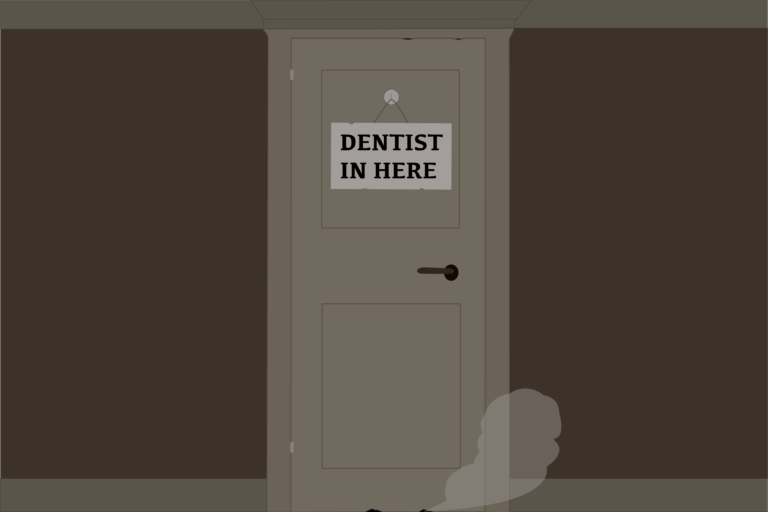
Humor: Come to this random dude’s dorm for discounted dental services

Don’t be alarmed if you hear fluoride-gagged screams coming from the hotbox 

Justin Miller, that random dude down the hall, is now taking new dental patients. Miller, a first-year sociology major, performs dental cleanings, tooth extractions, root canals and fillings for just $20 — or a gram of weed. 

If UC Davis students want to forgo sky-high insurance premiums, or if they simply can’t be bothered to clean their own teeth, his door is always open and smelling somewhat weird.

Kylie Betterson, a first-year English major, had four of her wisdom teeth taken out by Miller. When asked to describe her experience, the brave soul shrugged. 

“It was hella dark in there,” Betterson said. “He had me lie on his bed and used his lava lamp to look inside my mouth. He told me to sniff sharpies instead of anesthesia. Weird s**t, but it worked.”

The California Aggie got an insider’s look at Justin Miller’s makeshift office. Reporters noted his unusual choice of dental instruments: rusted tweezers for extractions, an unidentifiable bag of powder for whitening treatments and an empty Four Loko’s can filled with old teeth. 

The dorm was lit only by several harrowing lava lamps, and his roommate was nowhere to be found. The bed was empty, with no trace of his absolutely alive — and totally not dead — roommate Carlson. Miller only laughed when asked for further information about Carlson’s whereabouts.

There is a waiver patrons must sign before Miller can operate. The 40-page document is a Doodle poll where patients consent to the possibility of a painful procedure. But this is to be expected when an 18-year-old stoner’s fingers are in your mouth. 

The waiver discloses several potential dangers: close contact with Nickelback music and strobe lights, a hammer might be needed to eject particularly stubborn teeth and blood may shoot out of one’s nose.

Miller said his goal is to expand into orthodontics soon. He gave us a sneak peak into the tools he just bought from the dark web, which were so indescribable that we just didn’t bother.

Written by: Kelsey Stewart – kcstewart@ucdavis.edu

(This article is humor and/or satire, and its content is purely fictional. The story and the names of “sources” are fictionalized.)

Police Logs

Please signal when merging

November 15

“Bus merged into lanes without signaling.”

November 16

“Subjects pulled sign for reporting party’s apartment complex out of the ground and drop-kicked it to another location in the yard.”

“Three dogs running loose in the street — not aggressive — all seem to be together.”

“Unknown subject knocked on classroom door and ran off.”

November 17

“Male in red shirt riding a bike carrying two bicycle wheels.”

November 18

“Reporting party found her stolen bike posted for sale online.”

November 19

“Tenant saw someone climbing up the building on some railing.”

November 20

“Leaf blower heard in area for approximately six minutes, possibly coming from UMall.”

November 21

“Reporting party concerned about the way the vehicle is parked with expired tags and windows rolled down near the mailbox.”

Aggies take WWPA Championship

0

UC Davis men’s water polo dominates UC San Diego to clinch NCAA tournament spot

The top-seeded UC Davis men’s water polo team triumphed over UC San Diego 14-5 in the Western Water Polo Association (WWPA) championship game on Nov. 24, securing the program’s third WWPA crown in four years. The title-winning performance also earned the team an automatic bid to the NCAA tournament. 

“I couldn’t be more proud of how hard our players have worked to get to this point. It’s a lot of work. It’s a lot of hours, and it’s not always pleasant,” said Child And Meisel Families Director of Men’s Water Polo Daniel Leyson. “We stuck together through thick and thin and came together at the end. We’re honored to represent our conference at NCAA’s, and we can’t wait to find out who we play.”

The WWPA Conference Tournament took place on the weekend of Nov. 22-24 in Riverside, Calif. The Aggies came into the tournament as the league’s top-ranked team and had faced all seven other WWPA teams before, making them ready for play. 

To get to that championship game, UC Davis had to first beat out Fresno Pacific, which it did in dominating fashion. Redshirt-sophomore center defender Matthew Whipple led the Aggies with four goals, while UC Davis gave up a season-low three goals in a 21-3 win. 

Heading into the semi-final match, the Aggies knew they would need to continue to play their game and come out strong. Their opponent, California Baptist, was fourth-ranked and put up a tough fight, but the Aggies did not let up. Trailing by two at the half, UC Davis roared back, as junior attacker Jack Stafford netted three second-half goals to help push the momentum back onto the Aggies’ side. Both teams excelled defensively in the final quarter, thanks in part to junior goalkeeper Jonah Addington, who accumulated 10 saves in the match. UC Davis ultimately prevailed 14-9, securing a spot in its fifth straight WWPA title game. 

On Sunday, Nov. 24, the Aggies came prepared to seek vengeance, as they took on reigning WWPA champions, UC San Diego. In 2018, UC Davis fell to the Tritons in a nail-biter by a score of 11-10. In their three previous meetings this season, the team from La Jolla got the better of the Aggies twice, but UC Davis took the most recent contest in its final game of the regular season. Now, facing UCSD for the fourth time in 2019, the Aggies knew it was their chance to return to the National Collegiate Water Polo Tournament. 

Big plays were made for the Aggies by several players: junior utility Kyle Reilly finished with two goals and a pair of assists, senior attacker Holden Tamblyn tallied a goal and three assists for a four-point day, and the man in the cage, Addington, recorded 14 saves. 

In addition, redshirt-sophomore center defender Spencer Towill, sophomore center Nir Gross and senior attackers Yurii Hanley and Max Somple all finished the game with a pair of goals each. 

The match stayed level throughout the first quarter and into the second quarter, but then UC Davis began to distance itself from its competition. With the game tied at three early in the second period, the Aggies rattled off eight straight goals to stretch their lead to 11-3 into the third quarter. Seven different UC Davis players scored goals during the Aggies’ eight-goal run. Addington also blocked another penalty shot in the second half.

The Aggies put the game on ice with Somple, Hanley and Reilly netting one more goal each in the fourth — capturing a 14-5 win for UC Davis. 

One of the main reasons UC Davis was able to pull away and take over the game was Addington’s tireless efforts in front of goal. He was named the WWPA Tournament Most Valuable Player — rightfully so as he helped keep the Tritons off the scoresheet for 14 minutes between the second and third quarters and accumulated a tournament-best .653 save percentage. Addington has 178 saves this season and an average of 10.47 saves per game, making him a defensive powerhouse. 

“We felt like we were going to get better as the season went on because many of our players were new to their roles, and be able to catch up with some teams with more experience,” said Leyson. “We gradually got closer to [UC] San Diego and were able to take the last two.”

The championship win was UC Davis’ ninth straight victory, meaning that the Aggies now have a record of 16-7 on the season.

Their season is not over yet, as now the Aggies will head to Stockon, Calif. on Thursday, Dec. 5 to face Pepperdine in the first round of the NCAA tournament.  

Written by: Frankie Veverka — sports@theaggie.org


ASUCD officials manipulate Bylaws to hold special election

Special election announced with only one-day notice

This week, ASUCD gave students a one-day notice that a special election would be held today through Thursday, after an election held two weeks ago was afflicted by a number of issues, including voter disenfranchisement. But in this attempt to correct that issue, ASUCD has failed to appropriately notify the student body in a timely manner that an election will be held — disenfranchising more voters than the previous election and violating the ASUCD Bylaws. The Bylaws, which require that a special election be publicized three days after its approval, seem to have been disregarded — the Editorial Board only became aware of the election on Sunday evening, just two days before the election was set to take place. 

In its effort to resolve allegations of voter disenfranchisement, the ASUCD Executive Office and Senate amended the Bylaws to allow the Senate to convene a special election for a constitutional amendment. Previously, this had to be done by collecting the signatures of 8% of the student body. Additionally, the Constitution mandates that “Legislation to amend any ASUCD Elections Regulations must be signed by the ASUCD President or somehow otherwise enacted no less than four (4) weeks before the first election it will affect.” By changing the Bylaws in a political process to allow for a special election that otherwise couldn’t happen, ASUCD is facing a Constitutional crisis, the likes of which the members of the Editorial Board have never seen before.

The election will allow students to vote on Constitutional Amendment #63, CA #64 and CA #65 — all of which were overwhelmingly rejected by voters during the general Fall Elections. These measures were not on the ballot for the earliest voters on the first day of voting, however, due to what the Emergency Elections Committee called a “technical error.” As mandated by the ASUCD elections code, students must have 72 hours to cast their vote during a general election. But this special election brings up a whole host of other issues, the first being a violation of the rules on holding special elections. While ASUCD may have amended the Bylaws in order to hold this election, it did so in violation of the ASUCD Constitution. 

The ASUCD Bylaws mandate that the ASUCD Elections Committee notify the student body about a special election “no later than three days” after a special election is approved. There is no legal way in which a special election can be held this quarter. In an attempt to seemingly maneuver around elections rules, the Senate amended the Bylaws to allow for a special election less than two weeks after approving changes to the elections code — a direct violation of the Constitution. 

ASUCD’s laws and codes regarding election rules are not trivial. They were explicitly codified in order to protect students from the issue of voter disenfranchisement by requiring that ASUCD appropriately inform the students it represents of their right to vote in a timely manner. Giving students a one-day notice undermines the alleged objective of preventing voter disenfranchisement. With an abysmal voter turnout of under 7% in the last election — and the lack of notice regarding this special election — we, the Editorial Board, seriously doubt a significant portion of the student body will be made aware of the election for turnout to increase. 

Further cause for alarm comes from the fact that the identities of those on the Elections Committee are not public, despite the Constitution mandating this information be made publicly accessible. The total lack of transparency in this process, in conjunction with the constitutional violations that allowed for this election, means that those who should be held accountable are not going to be. 

Also at issue are accusations waged against ASUCD officials concerning the manipulation of the Bylaws to promote personal agendas. CA #63 would move Winter Quarter elections to spring with a clause allowing for current officials to extend their term by one quarter. 

“ASUCD officials have no personal vested [interest] in extending their terms,” ASUCD President Justin Hurst said in response to these allegations. The unconstitutional Bylaws that allowed for a second vote on an already failed measure that would extend senators’ term limits is incidental, not an attempt at personal gain. Even so, current senators still benefit, making this an arbitrary distinction.

After an election muddled by mismanagement and riddled with allegations of manipulation, we could only hope that ASUCD officials would have learned from that experience moving forward. They clearly haven’t. It is disheartening that many of these officials were elected on platforms of increasing transparency within ASUCD. It’s high time that they stop ignoring the promises they made when we, as students, elected them. Instead of devoting time and energy to petty Facebook comment wars, it’s time to return legitimacy to our student government. 

Written by: The Editorial Board