58.6 F
Davis

Davis, California

Monday, December 22, 2025
Home Blog Page 383

Davis Turkey Trot returned for 32nd year

0

Tradition inspires healthy lifestyle in Davis community

This year’s annual Davis Turkey Trot marked the event’s 32nd year. The event, held on Nov. 23, took off at Civic Center Field in Downtown Davis and featured eight different events and distances, including half-marathons, a 10K and 5K as well as a newly-added two-mile dog jog. 

Collaborating with the Yolo County SPCA, the Davis Turkey Trot specifically featured the two-mile dog jog for participants who want to run with their dogs. The division also helped raise funds for Yolo County SPCA programs.  

Kimberly Kinnee, the executive director of the Yolo County SPCA, said she appreciated the partnership with the Davis Turkey Trot — “We were honored to have the two-mile walk become a dog jog to help the Yolo County SPCA,” Kinnee said via email.

According to Kinnee, the Yolo County SPCA raised $600 through the dog house raffle during the event.

“The person who won the raffle then donated it back to the Yolo County SPCA,” Kinnee said, noting that the SPCA will replace the old dog house at their thrift shop with the newly donated one. 

According to the “A Change of Pace Foundation,” the main organizer of the event, the Davis Turkey Trot emphasized the entire family experience this year, while also offering a fast field for competitive runners.

“With eight different events and distance, there is something for every age group and ability,” according to A Change of Pace Foundation’s website

Sarah Errecarte, a participant of the Davis Turkey Trot, took her two kids in a stroller — one of whom is only eight weeks old — to run the 5K with her.

“It was a good race, and we do it every year since my daughter was born,” Errecarte said. “It’s a cool tradition […] and it is a lot of fun to do with the kids.” 

Bridget Flores, who participated in the event for the first time, described her running experience.

“I really enjoyed it,” Flores said. “It’s nice weather, and the event is well-organized — really smooth.”

Diana Langston, who also participated in the Davis Turkey Trot with Flores, said the event was inclusive of racers of various levels.

“We are not real competitive racers,” Langston said. “I think the Davis Turkey Trot works for both groups –– people who are competitive can do their things, and the rest of us can kind of be slugs.” 

The results came in to show that the 5K overall male winner was Ryan Waddington from Davis in the 25-29-year-old category and the overall female winner was Jennifer Schmidt from Davis in the same age category.

In the 10K, the overall male winner was Clancy Mcconnell from Sonora, Calif. in the 25-29-year-old category, and the overall female winner was Jennifer Schmidt. In the half marathon, the first top finisher was James Melkonian from Davis in the 20-24-year-old category.

Many other participants also dressed up in turkey costumes at the event to celebrate the upcoming Thanksgiving holiday. 

Written by: Rui Ding — city@theaggie.org

Couch Concert: Alfha Records

More than just a rap collective, Sacramento-based group gives back, empowers youth

It all began with a fist bump. Not just any fist bump — when Sam Lauderdale and Thaddeus Turner met up on the playground in middle school ready to fight, something unusual happened. “He squared up with me,” Turner said, “And then he threw a punch and both of our fists connected at the same time, and I watch anime so I was like… this is meant to be… and after that, everything’s been Gucci between me and him, like that’s my brother.” 

Alfha Records is a rap collective comprised of six artists: Sam Lauderdale (Alfha Sam), Alayé Sanders (Alfha Bliss), Thaddeus Turner (Alfha Blu), Nick Miles (Alfha Nick), Kenny Lee (Kayego aka Alfha K) and Tex Wambui. Although they are all associated through this group, they are individual artists under one label, and they “all want to capture a different essence” with the most important thing being staying true to themselves.

The artists met in middle school, not all as epic a meeting as that first fistbump, but nonetheless special enough to form friendships that would bloom into brotherhood. Alfha is an acronym for the message the group wants to share, each word reflecting a different part of their lives. 

“Alfha itself gives a perfect explanation,” Sanders said. “Artistry, being creative and not being sucked in by the industry; loyalty to each other, loyalty to who we started off as and why we wanted to do this; family, because we’re always about family, always about bringing back to our respective communities; honesty, in terms of not capping in our raps; and then just the Alfha symbol, beginning to end, making sure we are concise and clear and cohesive as a group.” 

The cohesiveness of the group is based in the similar struggles some of the members faced growing up in South Sacramento. 

“[We] just kinda got a connection, just being on a team together… going through hardships,” Miles said. 

For some of them, support through these hardships was crucial.

“When our families didn’t have food, we’d go to the other’s house and scrounge with each other together,” Turner said. “Feed our families together. That’s exactly what we’re doing now.”

The experiences are what makes this group’s message authentic: They recognize where they’re from and what they’ve been through in their music and use that to write genuine lyrics with meaningful themes.

A distinctive quality of the collective is the mindset they have when making music. The men took inspiration from artists like Kendrick Lamar, who “was a beacon of hope… [who] showed us that you can pop off and make money and give back to your community by being true to yourself and making an authentic sound.”

For Sanders, this influence was particularly important in finding his sound.

“Honesty is at the forefront of my music,” Sanders said. “There’s power in being vulnerable as an artist. We’re the speakers for people that don’t have a voice, so I always think that the most important thing for an artist is to speak for his or her generation. We’re reflecting the things that we go through on a day-to-day basis, reflecting what we’re thinking about, the trials and tribulations we’re going through.”

Turner touches on personal topics in his music, like the birth of his daughter.

“Things become pretty difficult when you have a child,” Turner said. “There are times when I’ve been feeling this heavy burden of needing money, so when I write that’s what comes out. Everywhere you try to make a move, there’s always something stopping you from trying to get money.”     

These rappers don’t take their platform as musicians for granted. 

“Us growing up in the hood, in South Sacramento […] we all were in AP classes and making sure that we could get the highest level of knowledge possible,” Miles said. “Breaking the stereotype. And [we] put that in our records. So yeah, we come from the hood, and yeah we got banging beats, but listen to what we’re saying.”

All the members are currently students at different universities and colleges. As exemplified by the ‘f’ for family within the Alfha name, they all take part in some sort of community outreach. Most of the group members work with students in programs similar to those that benefited them as highschoolers, like Improve Your Tomorrow in Sacramento. 

“There are a lot of young people looking up to us,” Lauderdale said. “[We’re] helping young men get into good colleges and helping them get more educated and get out of these environments.”

Tex Wambui, a fifth-year economics major at UC Davis and the producer of the group, is especially committed to promoting social change. His nonprofit SITTY, an acronym for Stay In True To Yourself, has a “mission to improve the lives of individuals by facilitating the discussion of how to stay true to yourself.” He is currently working on research in education with this goal in mind and has three published books related to his work. 

The group’s music reflects the message they wish to spread to the youth they work with as well.

“We can’t be putting out detrimental messages while trying to help these young men,” Lauderdale said. “I’m not going to be talking about shooting people in a community where people getting shot is one of the major problems that we’re trying to solve. Just making music that is more empowering rather than bringing people down is always something we’re going to hang onto. No matter how big we get, it’s always going to be the same message.”

Sanders added that a lot of people “don’t make music to contribute to a community.”

 “We’re not here to just turn up,” Sanders said. “We’re here to contribute to the culture.”

The conversation with the five members of Alfha Records was enough to discover the empowered and authentic nature of not only their music, but their ideologies as artists, influencers and human beings. For Alfha Records, relatability is something they want to convey in their music, and it shows. 

Alfha Records will be featured in an upcoming Couch Concert video. 

Written By: Allie Bailey — arts@theaggie.org

Alexandria Villaseñor: Davis’ climate change activist

0
COURTESY / TWITTER. Alexandria Villaseñor

How the 2018 Camp Fire inspired a 14-year-old Davis local to lead US Youth Climate Strike

Over the past year, a global youth climate movement has taken off, and a huge part of American involvement in the movement can be attributed to 14-year-old Davis local Alexandria Villaseñor. Though she moved to New York City with her mother Kirstin Hogue in recent years, she returned to her hometown of Davis for Thanksgiving 2018.

Villaseñor said the effects on air quality from the Camp Fire in Paradise, Calif. in Nov. 2018 worsened her asthma to such an extent that her parents sent her back to New York City, ending her trip to Davis early.

“I was very angry, because it’s becoming the new normal here in California,” she said. 

Upon returning to New York, Villaseñor was so upset about the reality of California’s wildfires that she began researching extreme weather conditions. She soon found the link between climate change and wildfires and said she felt the need to take action. Villaseñor was also inspired after seeing Greta Thunburg speak and decided to begin striking on her own. 

“On Dec. 14, 2018 […] I started striking weekly in front of the United Nations headquarters,” Villaseñor said.

Hogue said that she had laughed when Villaseñor first casually suggested they strike — Hogue assumed they would go out and strike, perhaps get some lunch, and “that would be that.” After Villaseñor began her weekly strikes, joining in on Thunberg’s Fridays for Future movement, Hogue says that she and her daughter never would have believed what lay ahead for them. 

Since Dec. 14, Villaseñor has never missed a Friday, and does not plan to any time soon. Villaseñor’s consistent striking quickly caught public attention, inspiring people to join her in her weekly strikes and spread the “Fridays for Future” movement. 

Villaseñor explained why she thinks the movement caught so much media attention and why it has been able to continue to grow in size and impact.

“When you strike, you are disrupting the system and, from that striking, it’s also a way to put pressure on those in power to take climate action,” Villaseñor said. “The Friday strikes are consistent, and that’s really helped keep up the momentum of the movement. It’s predictable, too; we are gonna be out there every single Friday.”

The movement helped Villaseñor get started, but she didn’t stop there — she was one of the lead organizers for the New York City Climate strike on Sept. 20, 2019, in which 315,000 students and adults, including Mayor Bill de Blasio, helped shut down the financial district. This strike kicked off the United Nations Global Climate Summit, including the first-ever Youth Global Climate Summit — both of which Villaseñor attended. 

Villaseñor and her co-organizers had three main goals going into the summit: preventing the use of new fossil fuels, pursuing renewable energy by 2030 and holding polluters accountable for their actions. 

“We really took our third demand, holding polluters accountable, to the next level on [Sept.] 23, because it’s when the Children vs Climate Change complaint was launched,” Villaseñor said. “Myself, Greta Thunberg and 14 other children from all around the world filed a complaint to the committee on the rights of the child saying that five countries […] were violating our rights as children by their inaction. Article six on the convention of the rights of the child states that we have an inherent right to life, but with more of these extreme weather events […] it’s directly threatening that article.”

Lodging this complaint with other notable youth activists including 16-year-old Swedish activist Greta Thunberg is not where Villaseñor’s incredible achievements begin and end. She also launched her own non-profit organization, Earth Uprising, which educates students about the basics of climate change, urging them to get involved in local climate strikes and creating a forum for people — specifically indigenuous groups — to share their personal experiences within the climate change movement. 

“After organizing all of these global climate strikes, I really saw how we were getting a lack of engagement by young people not knowing why to strike,” Villaseñor said. “When young people went in there and they really educated their peers, […] then they wanted to come out and protest and take action because they knew what they needed to do after knowing the science.”

Earth Uprising promotes climate education by presenting to classrooms — integrating climate education into school systems’ curriculum and forming groups on college campuses. The organization has ambassadors in over 50 countries who present the movement in a way fitting for their country while staying true to its global mission. Additionally, it listens to groups that have been taking care of the Earth as part of their cultural practices, particularly indigenuous groups. Villaseñor said learning from these people who have such an investment in and connection to their environment can teach us much of what we need to do to protect the planet.

Recently, Villaseñor spoke about the importance of every person getting involved in an English class at UC Davis. She emphasized that, because of the momentum the youth global climate movement has, now is a vital time for young people to take action. The advice she gave to UC Davis students is to do what you can for those who cannot.

“If you are privileged enough to be able to go out [and strike] and make your voice heard, then go out and make your voice heard,” she said.

Written by: Katie DeBenedetti — features@theaggie.org


Aggies lose second-straight at Golden 1 Center

0

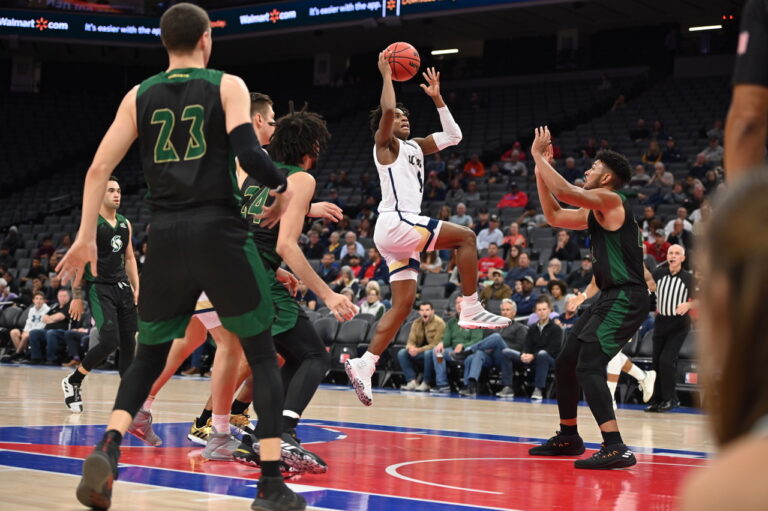
UC Davis men’s basketball falls in sluggish game versus Causeway rival

For the fourth consecutive year, the Causeway Classic matchup between the UC Davis men’s basketball team and Sacramento State took place inside the Golden 1 Center, home of the Sacramento Kings. In what could be the last Causeway Classic in that venue, the Hornets took down the Aggies for the second consecutive year, this time by the score of 61-51 — a poor offensive showing from both sides. 

The Aggies’ starting lineup was once again changed from their previous game, as Head Coach Jim Les elected to start two freshmen guards, Ezra Manjon and Elijah Pepper — meaning that senior guard Joe Mooney and sophomore guard Caleb Fuller would come off the bench. 

The UC Davis lineup was based mainly on physicality, a necessary action for going against a Hornets team led by senior center Joshua Patton, who averaged 18 points a game to open the season. Coming into the game, Sacramento State was ranked 23rd in the country in defensive efficiency, and the Aggies learned why early on in the contest. 

Playing an aggressive game of basketball on the offensive end, the Hornets forced four early team fouls on the Aggies in just the first three minutes of play. Sac State additionally did not let up on the intensity in defense, allowing only two points in the first four minutes of the game and keeping the Aggies to 2-8 shooting from the field. But once again, the free throws kept the Aggies in the game, as UC Davis erased the early deficit with senior center Matt Neufeld going a perfect 4-4 from the line.

Patton made the Hornets’ first seven points of the game and was the only part of that offense that was working, as they started just 3-9 from the field. A quick UCD run tied the game up at 10, with Caleb Fuller leading the charge. But with 13 minutes left in the half, the Aggie momentum was snuffed when Fuller picked up his second foul and Coach Les opted to not risk a third, leading him to take Fuller out of the game. 

Fouls were a common theme in this game, as the referees were calling a tight game on both sides of the court. Patton picked up his second foul as well with nine minutes left in the half and was taken out as their leading scorer, having 11 of the Hornets 17 points up to that moment. This seemed to be the Aggies’ chance to get back in the game as they were down five and the other teams’ best player was out of the game. For the Hornets, they needed someone to carry the load. And with seven minutes left in the half, they went on a 6-0 run that put them up nine, prompting a UCD timeout. 

“Guys stepped up […] guys were playing great defense overall.” Patton said about his team after the game. “I know when I went out [of] the game, I was a bit frustrated but I know my teammates got my back and they can hold their own without me out there.”

And that they did as Hornet junior forward Ethan Esposito came alive, scoring 10 in Patton’s absence. 

In a slow-paced game with 20 combined fouls at the half, the Aggies found themselves down 29-23. Manjon and Pepper combined for 1-10 shooting in the first half, as the team shot just 25 percent from the floor. Sinking 11-13 from the free-throw line kept UC Davis in the game, as well as starting center Matt Neufeld being the only source of offense with 10 points. 

“In the first half, I thought we had a lot of great scoring opportunities,” Les said after the game. “We didn’t see the ball go through the basket. I thought we let up a little bit on our defensive end. Part of it not going in is probably the physical defense so credit Sac State.”

The sloppy play continued in the second half for the Aggies, as the Hornets controlled the pace of the game and kept up the intensity, forcing turnovers and jumping out to a 35-25 lead. A night of bad shooting continued for the Aggies as the only bright spot on the offensive end was Neufeld. But after picking up his fourth foul with 14 minutes left, Neufeld was forced to come out of the game. 

The Aggies’ second-half deficit stayed at about 12. But after shifting to a full-court press, they fought their way back, going on a run and cutting the deficit down to six. 

Following a timeout, the Hornets scored, caused a turnover and scored once again, bringing their lead back to double digits. That proved to be the Aggies’ last effort, as time eventually ran out without any last-minute comeback. A thunderous dunk by Patton with under a minute left closed out what was a dominating 61-51 win for Sac State. 

Neufeld led the team with 20 points on 8-13 shooting along with three rebounds. The only other Aggie in double digits was Manjon with 10 points, but struggled from the field only shooting 29%. On the Sacramento State side, Patton led all scorers with 25 points and five rebounds, shooting an efficient 8-10 from the field. 

“We’re throwing some guys to the wolves,” Les added. “The experience they’re getting is going to be valuable. They’re talented, they’re fearless, they don’t know what they don’t know. That’s partly on us as coaches to teach, partly on them to go through some life experiences on the floor when the lights are on. We’ll continue to progress, grow and get better.” 

The road games kept coming for the Aggies when they traveled to Portland, Berkeley and Utah following the game on the 20th. The Aggies came up short in all three contests, but forced the two Pac-12 teams, Cal and Utah, to fight wire to wire — losing by a combined 10 points in those games. 

These tough tests will continue for Les and the team as the Aggies try to figure out the best way to utilize their mix of young and veteran players. It has been an early struggle to determine who can score the ball consistently, but these non-conference games are important to the development of the team as it readies for Big West Conference play. 

Written by: Omar Navarro  — sports@theaggie.org

An Ode to Bruce

An unabashed love story about a boy and his fish

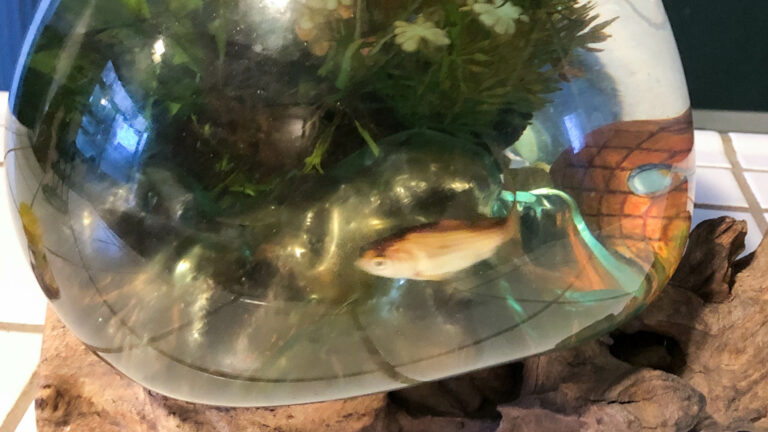
I have never considered myself a fish guy. What good is a pet fish? They aren’t fluffy, they don’t cuddle, they certainly aren’t cute. I believed a pet fish to be a useless, nitwitted conglomerate of helpless cells that offers no benefit to any self-respecting human being. Everything changed, however, once I laid my eyes on a certain fish — my sweet darling Bruce.

This fish tale all began when my parents decided to take a trip to Europe and informed me that they were to leave a parting gift — a puny, nondescript fish that my sister won at the County Fair. It had been passed from sister to parents and now, finally, it was landing at my doorstep. I initially pushed back, but eventually I caved and agreed to take in the sad sap.

It was a crisp mid-September’s day when my parents came to deliver the glorified guppy. I took the fish in and the kitchen counter became his residence. At first, he was just another common object in sight — comparable to the dusty knife rack next to which he lived next. Regardless, my roommates and I decided that if he was going to live under our roof, he would have a name. We settled on Bruce: an homage to the late Australian Great White Shark in Pixar’s “Finding Nemo.” Weeks went by and I found that Bruce and I were getting along just swimmingly. He became a constant in my life. Through thick and thin, he was always there, zipping about his bowl. 

Bruce is no ordinary fish. He is a smart cookie with a sparkling personality. How do I know this? He does tricks. Bruce gallantly follows your finger round and round the bowl. He is a symphony at my fingers’ command, twisting and twirling about, seeking nothing but companionship. Perhaps to a heartless fish despiser, this might not sound like much, but in person, it is quite the spectacle and a sure-fire way to entertain a small crowd at any social gathering. 

Bruce gradually became the pride of the manor and proved himself to be a true renaissance fish. I am sure some readers are still doubting the benefits Bruce provides because at the end of the day, despite his sparkling scales and inquisitive kind eyes, he still is, after all, a fish. But nay, he is so much more.

Bruce is discipline. Every day at 7 a.m. and 4 p.m. sharp, I pop four fish pellets in his tank. This simple routine adds consistency to collegiate chaos.

Bruce is compassion. I can always count on him to hear me out in times of distress. Let’s be honest, as we vent about our pent up day’s frustrations, do we ever really have someone who responds in just the right way? All he has to do is pace knowingly by opening and shutting his mouth in comforting acknowledgment, which never fails to put my mind at ease.

Bruce is a conversation piece. Trying to schmooze a lovely lady or a handsome man? I say pshaw to the voluptuous corgi or labradoodle. Get yourself a fish that does tricks.

My relationship with Bruce hasn’t all been peaches and cream. Recently, it almost went spiraling down the drain (quite literally) last week when Bruce’s bowl was due for a deep scrub. When I poured Bruce out of the bowl and into a bag, I missed and he went plummeting into the depths of the garbage disposal. Without thinking, I thrust my hand down the hole in a last-ditch effort to save my beloved friend. I felt something slippery and wet. Was it my beloved aquatic compatriot? No, just some soggy leftover penne pasta. I tried once again and alas, he emerged from the brink of death, flopping and out of breath, but unscathed.

His flirt with peril made me realize how much he truly meant to me. I had turned a complete-180 on the idea of a pet fish and now could not bear the idea of a life without my dear Bruce. To any tentative fish parents out there considering bringing a scaly finned companion into the fold, I say take the plunge. (Disclaimer: No guarantees they live up to Bruce).

Written by: Andrew Williams — arts@theaggie.org

Is environmental justice actually possible?

And how should we define it?

One of my environmental policy professors concluded a recent lecture about environmental justice (EJ) by asking the class whether or not we think achieving EJ is actually possible. One student eagerly raised their hand as if they had some very strong opinions about this and said, “I have some very strong opinions about this. I don’t think that environmental justice is achievable until we completely dissolve capitalism.” Much of the class responded by snapping their fingers.

This attitude concerns me. I can agree that rogue, unregulated, Wild West capitalism is to blame for a substantial portion of the environmental injustice that we observe and feel the consequences of. We must acknowledge, however, that there’s an inflection point — the good that capitalism does and can do to protect society from the worst environmental injustices outweighs whatever smaller environmental costs are created as a byproduct. In other words, the baseline actions that protect us from the least tolerable environmental harms and injustices will always have some environmental costs, which are worth taking on. But they are only worth taking on if the systems meant to regulate and mitigate those costs and harms are functioning properly. Unfortunately, they currently aren’t.

Our institutions, like the EPA, can actually achieve a lot when they are not corrupted, as they currently are under the Trump administration. We need to ensure our environmental enforcement mechanisms are working, which can happen in a capitalist society. A lot of people don’t understand that capitalism and democratic socialism, which promises social justice, are compatible. People at the other extreme think that anything but pure capitalism is communism. Pollution regulation works and protects people when it’s carried out properly, so thinking that we have to tear everything down anyway implies that our institutions as we know them are not capable of creating change. This belief only creates indifference toward the increasing levels of damage Trump is doing to our environmental regulation apparatus. 

This indifference is misguided because the damage of this deregulation crusade is tangible and will have consequences that reach far and wide. If people become indifferent, they will learn less and less about the environmental injustices being ignored or exacerbated by the Trump administration. Consequently, these people become less conscious of how much their vote could actually make a difference. Ironically, this belief that the change we need is likely impossible can make people neglect the importance of achieving smaller environmental goals, like those that can be achieved simply by voting Trump out of office.

The more damage Trump is allowed to do, the harder it will be to defeat environmental injustices in the future. And confusion over what success looks like in terms of EJ issues makes it harder to assess our progress. Conflicting understandings of basic terminology has helped fuel this confusion.

The EPA defines EJ as “the fair treatment and meaningful involvement of all people regardless of race, color, national origin, or income, with respect to the development, implementation, and enforcement of environmental laws, regulations, and policies. This goal will be achieved when everyone enjoys the same degree of protection from environmental and health hazards, and equal access to the decision-making process to have a healthy environment in which to live, learn, and work.” 

This definition is quite interesting because it promises procedural justice — that is, equal access to the decision- and policy-making processes. It then states what EJ would look like in theory but makes no promises about how to get there and no guarantees of actually achieving just outcomes.

The Environmental Justice Network has criticized the EPA’s definition and rhetoric. The Network’s website reads, “Environmental racism is the disproportionate impact of environmental hazards on people of color. Environmental justice is the movement’s response to environmental racism. ‘Environmental equity’ is not environmental justice. ‘Environmental equity’ is the government’s response to the demands of the environmental justice movement. Government agencies, like the EPA, have been coopting the movement by redefining environmental justice as ‘fair treatment and meaningful involvement,’ something they consistently fail to accomplish, but which also falls far short of the environmental justice vision. The environmental justice movement isn’t seeking to simply redistribute environmental harms, but to abolish them.”

I think that it’s possible to do our best to abolish these injustices while also trading a certain acceptable degree of environmental cost for some level of benefit. A recent story in The New York Times shed light on how Teviston and Fairmead, two small, low-income communities in the Central Valley with contaminated water supplies, have still not been connected to larger water systems. This story repeats across the Central Valley and across the country. But we’re not as far away from solving these issues as some would think. 

Research from UC Davis on the tens of thousands of people in the San Joaquin Valley who live in disadvantaged unincorporated communities (DUCs) — communities with less than 80% of California’s median household income that are outside incorporated city boundaries and lack adequate water infrastructure — is promising. The report found that in those DUCs, 44% of people live within 500 feet of a connection to safe drinking water and 22% live within a mile. This is encouraging. We just need the political will to accomplish these infrastructure projects in order to bring clean water to these communities and eliminate the environmental injustice.

When I saw this research presented as part of a lecture series at the UC Sacramento Center last summer, it made me optimistic that solutions to many EJ issues are attainable. But it requires us to push back against a resistant system, not tear it down. This takes work. And we will not be successful if we waste time, as a speaker at UCCS did a few weeks after that lecture when worrying about whether it was politically correct to refer to DUCs as “disadvantaged.” Let’s focus on actions, not words. These places literally don’t have access to clean water. That sounds like a pretty big disadvantage to me.

Written by: Benjamin Porter— bbporter@ucdavis.edu

Disclaimer: The views and opinions expressed by individual columnists belong to the columnists alone and do not necessarily indicate the views and opinions held by The California Aggie

Davis Mayor Brett Lee joins other CA reps. in call for customer-owned PG&E

Over two dozen CA reps. urge company to transition to publicly owned entity in letter

Davis Mayor Brett Lee was one of over two dozen California representatives, including 21 other mayors, who signed a Nov. 4 letter addressed to the California Public Utilities Commission (CPUC) and Calif. Governor Gavin Newsom. The letter called for the replacement of the Pacific Gas and Electric Company (PG&E) with a customer-owned entity. 

The coalition of local leaders’ appeal came on the heels of multiple controversies surrounding the utility company that provides power to many of California’s major cities, including Davis. PG&E declared bankruptcy last January, after accumulating $30 billion in liabilities when the company’s equipment was connected to wildfires, according to The New York Times. In October, PG&E shut off power during high-risk weather conditions, affecting millions of people and generating widespread social media backlash among customers, the Times reported.

The letter, posted online by KQED and other outlets, supports a proposal spearheaded by Mayor Sam Liccardo of San Jose that the utility giant, emerging from bankruptcy proceedings, be replaced by a customer-owned or public power utility. 

“Based on a foundation currently in the Public Utilities Code, we will propose transforming PG&E into a mutual benefit corporation — in essence, a cooperative owned by its customers,” the letter reads.

Lee, along with Yolo Supervisor Don Saylor and Sacramento Mayor Darrell Steinberg, was among the county and city leaders who signed the letter. The coalition of local officials outlined its “serious concerns” regarding how bankruptcy restructures the process of the utility company. PG&E is undergoing the process of working with the CPUC to reorganize in accordance with state bankruptcy code, which — according to the letter —  requires that the company propose a model that is “feasible, financially stable enterprise, [and] able to perform its functions for the long-term”. 

Mayor Lee said that he signed the letter because he felt PG&E has, for many years, failed to prioritize the utility needs of its customers over its shareholders. 

“It’s important [that] California has a safe, reliable source of power, and — as demonstrated over the past decade or so — PG&E has not demonstrated that their priority is the provision of safe and dependable power for our communities,” Lee said. “As an investor-owned utility, their main obligation is to their investors, not to people they serve. As a private business entity, they depend on customers, but their ultimate obligation is to shareholders — and I think that doesn’t make sense for California. ”

The coalition’s letter echoes a similar sentiment, saying that PG&E’s actions represent a betrayal of public trust by privileging shareholder interests.  

“To the extent that the public continues to believe that a profit motive has dominated PG&E’s decision making, the enterprise will never regain the trust of its customers, its regulators, and public policy-makers,” the letter reads. “It is time to pass control of the company from geographically distant investors to its customers.”

Lee said that PG&E’s decision to cut power to millions of customers only bolstered the argument for the transition to a publicly owned utility.

“The blackouts came after our desire to take back control over the power system,” Lee said. “But if anyone needed any proof — if they were skeptical about why we would want a municipality running the power system or why we would want the state of California running the power system — the blackouts coming shortly thereafter, I would think would be proof to many that the ideas were at least worth considering.” 

Representatives of PG&E, however, have pushed back against calls for cooperative ownership. In a statement forwarded to The Sacramento Bee and other outlets, the company resisted any suggestions of a transition from a private corporation to a publicly-owned entity. 

“We remain firmly convinced that a government or customer takeover is not the optimal solution that will address the challenges and serve the long-run interests of all customers in the communities we serve,” the statement read. “We remain focused on fairly resolving wildfire claims and exiting the Chapter 11 process as quickly as possible. PG&E is committed to working with all stakeholders to make the necessary changes moving forward to build a stronger and safer PG&E and be the company our customers and communities want and deserve.”

During a press conference in late October, Newsom said that he would consider a state takeover of PG&E if the company failed to pull itself out of bankruptcy by June 2020, according to CNN

“PG&E as we know it may or may not be able to figure this out,” Newsom said. “If they cannot, we are not going to sit around and be passive. If Pacific Gas and Electric is unable to secure its own fate and future […] then the state will prepare itself as backup for a scenario where we do that job for them.”

Written by: Tim Lalonde — city@theaggie.org

UC Davis has accumulated $1.2 billion in deferred maintenance

0

Upcoming 2020 GO bond would allow campus, UC system to update, improve facilities

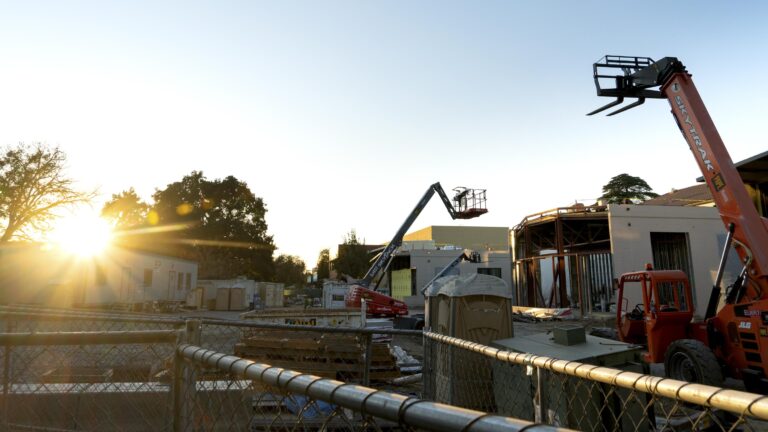
In the year 2018, UC Davis had accumulated over $1 billion in deferred maintenance investments. In other words, there was over $1 billion worth of facility maintenance — buildings and systems upkeep — that the university has been unable to collect due to a lack of funds. UC Davis’ backlog is the highest out of all of the UC campuses, with the average backlog at about half a billion dollars. 

The UC Davis campus spans over 5,300 acres of land with over 1,000 buildings that require regular maintenance to meet safety requirements and maintain the infrastructure as well as new security features, as many of them were built over 50 years ago. It is the largest campus within the UC system. Earlier this quarter, The California Aggie’s Editorial Board sat down with Chancellor Gary May — in this interview, he addressed deferred maintenance.

“We have more than a quarter of the system’s whole deferred maintenance here in one campus,” May said during the interview. “We have seismic problems, we have 13 buildings rated at a six or above, and six [is] bad — higher number means worse in seismic. We’ve been spending, of our own resources, about $70 to $80 million a year, but if the number that you’re trying to get to is $1.2 billion, it takes a long time to get to.”

Although there is over $1 billion in backlog on facilities maintenance, this doesn’t necessarily mean that the buildings and systems are unsafe. The Design and Construction Management and Campus Planning teams work to proactively address needs before they become urgent. This way, they can avoid an increased accumulation of deferred maintenance backlog from costly failures and repair needs. 

The university developed a three-year deferred maintenance plan in 2018 for how they would address the problem which will be working concurrently with the already-in-place 10-year capital investment plan.

Similarly, AB-48, a California bond measure for a $15 billion bond, will be on the ballot in March 2020, with these funds directly intended to “improve seismic safety of various buildings, address deferred maintenance and expand the physical capacity to serve California students.” This bond, referred to as a general obligation (GO) bond, was signed by Calif. Governor Gavin Newsom and would be the first GO bond in support of the UC since 2006. May explained that roughly $2 billion would be allocated to UC Davis. 

“The GO bond that’s going to be on the ballot [is] a $2 billion bond that will allow us to do more construction around campus and modernize some of our deferred maintenance problems,” May said. “Hopefully the GO bond and some other fundraising things will help us.” 

Allen Tollefson, associate vice chancellor of facilities management at UC Davis, did not respond to a request for comment. 

The aforementioned three-year plan’s guiding principles include capitalizing on opportunities with the highest return, addressing needs before they become urgent, striving for sustainability and improving the campus appearance and work spaces. It also makes clear that no new facilities or major renovations will be approved without a long-term funding plan for maintenance.

In the meantime, while the GO bond is still pending, these projects are funded by state and local funding. 

“State funds are those provided from sources outside of the UC Davis campus,” Jim Carroll, the university’s architect and associate vice chancellor in charge of design and construction management, said via email. “These could be from bond sales, budget set-aside from the State, budget set-aside from the University of California (Office of the President), or others. Local funds are those provided from sources within the UC Davis campus – over the past few years, UC Davis has significantly funded deferred maintenance through a few sources, such as the century bond program, annual budget allocation(s), or as part of capital improvement projects, when appropriate.”

Recent drastic cuts in state funds allocated to these maintenance projects worsened the already insufficient funds. UC Davis was given $90 million in 2015 to address the “campus’s most critical deferred maintenance needs over a five-year period,” but this amount is still under 10% of what it really needs. Moreover, this five-year period will be coming to a close, as 2020 is only one month away. 

According to the deferred maintenance plan, “the campus believes that based on its status as a public institution, the state should play a role in addressing and supporting campus deferred maintenance reduction efforts.”

The UC system as a whole has received $35 million to address deferred maintenance, but the total required funds for all its campuses adds up to $4 billion, according to the minutes of the meeting of the Financial and Capital Strategies Committee of the Regents of the University of California on Sept. 26, 2018. 

As of 2019, the university has not announced any updates to the deferred maintenance plan, nor has the website detailing this issue been updated since 2018. 

Written by: LINH NGUYEN — features@theaggie.org

Mercury in retrograde: What does it mean?

0

Ran into an ex and the TV won’t turn on? Here’s why.

If November 2019 was particularly chaotic or stressful for students, or if students experienced interruptions in communication or malfunctions in technology, there is an astrological scapegoat that may explain all the mayhem: Mercury retrograde.

Nov. 20, 2019 marked the last Mercury retrograde of the year, which means, for most believers, everything should now be back to “normal.”

So, what is Mercury retrograde and why does it seem like everyone and their mothers are convinced of its powerful influence? 

Astronomically, Mercury retrograde happens when Mercury, the closest planet to the sun, appears to be rotating backwards across the sky. What’s really happening, however, is a “trick of perspective” from those viewing it on Earth. According to various astrological websites, a year on Mercury is much shorter than on Earth and, as it rotates around the sun, Mercury appears to be moving backwards from east to west, rather than west to east. Still, for astrologists and astrology enthusiasts, Mercury retrograde is nothing to take lightly.

Rowan Curry, a fourth-year statistical data science major, said astrology is like her religion. 

“I think of myself as a car guy for astrology,” Curry said. “Car guys know so much because they’re always watching those weird YouTube videos and reading articles about cars and that’s what I do with astrology in my free time.”

Although she is not a professional astrologer, Curry explains that, in general, Mercury in retrograde symbolizes a time when members from your past, old habits and unresolved issues come back to bite you. Given that Mercury is a planet of communication and thinking, she said, when it’s in retrograde, complications are to be expected in these areas. 

Astrology and horoscope website Horoscope.com revealed similar insights into Mercury’s retrograde. The website claims that, along with communication and thinking, Mercury can be associated with technology, travelling and receiving information; therefore people can expect laptop glitches and delayed flights. Horoscope.com encourages people to spend time reflecting and balancing themselves out during a Mercury retrograde.

Mercury retrograde aside, Curry, whose zodiac sign is Aquarius, said astrology has been an anchor for guiding her decisions and behavior, as well as seeking self-improvement and introspection in her life.

“It helps me not be an a–hole,” Curry said.

A 2018 Pew Research Report shows that Curry isn’t alone in her affinity to astrology. According to the report, almost 30% of all U.S. adults believe in astrology. There’s a huge market for it, too. There are social media accounts on Twitter and Instagram that give brief, daily horoscopes, forecast monthly predicaments and share funny memes relating to the zodiac signs. 

Plenty of YouTube channels, websites, phone apps and even podcasts exist to dish out all things horoscope related. Media outlets like Buzzfeed create hundreds of quizzes related to guessing one’s zodiac sign or explaining what kind of animal one would be based on their sign. 

Of course, not everyone is convinced. NASA has said that astrology is not science, and there is no evidence to suggest it can predict the future or an individual’s behavior. 

Regardless of its scientific validity, it might be nice to think that the stars are at fault for receiving a poor midterm grade. Next time something goes wrong, just blame it on the stars. 

Written by: Alana Wikkeling — features@theaggie.org

Women of all ages and backgrounds deserve to have their stories shared

Telling the stories of women means telling stories about a variety of women

In anticipation of season three of “The Crown,” which was released on Nov. 17, there was one thought circling in my head: I was finally going to be watching a show in which the lead is a middle-aged woman. 

“The Crown” isn’t the first historical show to feature a middle-aged female lead, but it’s definitely a part of the slow and stubborn tide to cast older female leads. It’s common knowledge that there’s a diversity problem in Hollywood and film. An annual report from USC Annenberg’s Media, Diversity, and Social Change Initiative looked at different metrics of diversity in film, including gender. Of the top 700 top-grossing films between 2007 to 2014, 30.2% of the speaking characters were female. Furthermore, only 11% of those films had female characters with roughly half of the speaking roles. 

These trends are disturbing, and they don’t get much better when looking at the representation of middle-aged and older women in film. The report found that, “In 2014, no female actors over 45 years of age performed a lead or co lead role.” It’s not common to see middle-aged characters in movies, but in 2014 —  of all the middle-aged characters — only 19.9% of them were female. 

This was disheartening and discouraging to read for a multitude of reasons. I began to realize that many of the movies and TV shows I watched over the past year featured few middle-aged women, lead role or not. In an interview with NPR’s Fresh Air, Reese Witherspoon shared her experience working within the entertainment industry and taking initiative to begin correcting the gender imbalance in movies and TV shows. 

In 2010, the entertainment industry began to lose a third of its business with the drop in revenues from DVDs. As a result, studios began to cut down on production and development in smaller budget films, which happen to be the movies in which actresses predominantly star. 

“The first [movies] to go are the [movies] that have the smallest margins […] which is where women live,” Witherspoon said in her interview with Fresh Air. “From ‘Legally Blonde’ to ‘Sweet Home Alabama.’ You know, that was the kind of the budget level of films that I was working on.” 

When she began to confront studios about their plans to develop materials for women, she was met with a disappointing answer.

“With the exclusion of one studio, everybody said nothing — nothing with a female lead,” Witherspoon said. “One studio had said, ‘Well, we already have one movie starring a woman this year. We can’t have two.’”

This incident prompted Witherspoon to address the matter on her own. Witherspoon, an avid reader, decided to self-fund a company that would turn books with substantive, complicated, intriguing female characters into movies.

“I thought, ‘Well, this isn’t just about me trying to create parts for myself,’” Witherspoon said. “I want to create better parts for women. I want to have more female authors get their stories told.”

Witherspoon produces and sometimes stars in many of these movies. In 2017, “Big Little Lies,” based on the novel by Liane Moriarty, was released on HBO. The leading cast of “Big Little Lies” is a group of women of different ages and backgrounds whose lives are changed when there is a murder in their small California beach town. The show is exciting because it is a story of five mothers who, at the outset, may seem to be leading very similar lives, but are all going through their own complicated, confusing and difficult times. 

They are all going through turning points in their lives, tackling complex and important issues that deserve to have a place on our television screens. Placing women at the center of movies and TV shows doesn’t just make for great entertainment; it also creates a substantive, rich and vibrant storytelling experience.

In 2014, Witherspoon starred in and was the executive producer of “Wild,” based on the 2012 memoir from Cheryl Strayed, who hiked over 1,000 miles along the Pacific Crest Trail in the name of self-discovery. Witherspoon told Fresh Air about the experience of finding good roles in her 30s,and the importance of being a part of “Wild.”

“Many women are so deeply connected to nature, yet it’s not something we’ve explored,” Witherspoon said on Fresh Air. “We’ve seen every iteration of a man versus a bear, versus the Wild West, on hiking adventures […] But I haven’t seen a lot of a woman alone on film as well. And what is that singular journey for a woman to find herself alone in the wilderness?”

There is something exciting about reading and watching these stories of women whose life experiences we often gloss over or pay little attention to. There are so many great books out there written by women, waiting for their stories to be shared, discussed and featured in our cultural sphere. By excluding their voices, we are all missing out on enriching, valuable stories that many of us need — whether we realize it or not.

Written by: Simran Kalkat — skkalkat@ucdavis.edu 

Disclaimer: The views and opinions expressed by individual columnists belong to the columnists alone and do not necessarily indicate the views and opinions held by The California Aggie

Tablets: the convenient alternative to hand-written notes

More students use tablets in addition to their laptops, notebooks

On the UC Davis campus, it seems that more and more students are supplementing their school materials with tablets. Sleek and light, tablets provide an effective alternative to the old-school style of pen and paper. Yet, although laptops and tablets seem similar in many ways, key differences stand out in students’ selections of which tablet to purchase. 

Studies have proven that typing notes on laptops decreases students’ abilities to understand information compared to writing notes by hand. This has resulted in many students seeking new technological ways to handwrite notes. 

An experiment run by Pam Mueller of Princeton University and Daniel Oppenheimer of UCLA found that the way students take notes affects learning. After the students watched and took notes on TED talks, researchers concluded that the method of note-taking did not affect their ability to remember facts. When asked to explain concepts covered in the videos, however, the students who hand-wrote notes scored higher, according to their study published in “Psychological Science” in 2014. 

Tablets provide one option for students to hand-write notes digitally. Digital pencils and styluses, like Apple Pencils and Microsoft Surface Pens, allow tablets to be easily used for note-taking. Across lectures, students can be commonly seen opting for tablets to take notes, with 52% of college students owning a tablet. 

“I use my tablet mostly for readings and notetaking in classes,” said Karina Delgado, a fifth-year statistics and political science major. “I have an Apple pencil that makes highlighting [and] taking notes on documents really easy.”

With tablets, students only need to carry around one device that encapsulates all of their notes and materials, providing mobility benefits. 

“I like using a tablet because it’s easier to carry since my laptop is pretty big,” Delgado said. 

Additionally, Delgado said that she likes the ability to directly write on her iPad, which she cannot do with her laptop.

“The pros include that I can annotate my lecture slides and can catch what the professor is saying about the topic instead of copying slides, slide by slide,” said Somandeep Gurm, a second-year microbiology major. “I can rewrite things over and over again without taking up other resources.”

With a plethora of tablets for sale, students have many options for brands, sizes and features. Amazon created their version of a tablet, the Fire, ranging from seven to 10 inches screen size and with storage capacity from 16 to 32 gigabytes (GB). While the Fire mostly encourages Prime services and apps, its is a reliable tablet that gets the job done. 

Samsung offers a Galaxy tablet, the newest version has a screen size of 10 inches and up to 32GB of storage. From the basic version of the iPad to the iPad Pro, Apple offers a large selection with a range of sizes and styles that each cater towards a different purpose. Microsoft sells 2-in-1 tablets which run Windows 10 and when connected to an attachable keyboard become usable laptops. 

The most common tablets students chose to use are iPads, including Maki Mizutani, a first-year undeclared major. 

“I grew up using Apple products so it is the only way I know,” Mizutani said. “It’s easier to use since more people use Apple products, and it just makes sense because it is all connected.” 

Often Apple products are the go-to technology used by students. The connectivity of Apple products make it even more convenient to have an Apple tablet if you already have an iPhone or other Apple products. Apple technology is already quite trustworthy and popular as it has become such a staple product used by students. Yet, for students on a budget, the range in prices of tablets provide many options to choose from.

Buying a tablet can be an expensive investment for students, especially when adding on the costs of a stylus, case, more storage or a protection plan. Different companies offer varying prices and models to meet the needs of all students. iPads run from $329–$799, Amazon Fire tablets cost between $29–$230, Samsung Galaxy tablets range between $99–$749 and Microsoft Surface tablets are priced between $399–$2,299. 

Both Delago and Gurm bought their iPads and apple pencils for around the same price. Delgado spent $450 in total and Gurm spent around $500. 

Reilly Blair, a third-year plant science major, purchased a tablet this Black Friday because she wanted to buy it for a lower price. While she likes the portability and convenience of tablets, the cost had been holding her back from buying one for a long time.  

Even though tablets can be pricey, some students, like Gurm, think they are smart investments because it saves them from buying school supplies in the long run. 

“I use my iPad because I’m someone who needs to write something over and over again to learn it, so I realized that getting an iPad would save me from buying paper, pens and highlighters,” Gurm said. 

By reducing the amount of paper needed, tablets also provide environmental benefits. This also drew Delgado to buy an iPad. 

“I also like the eco-friendly aspect of having all of my documents and readings on my tablet,” Delgado said. 

Being more eco-friendly was a common theme when asking students what some of the pros of having a tablet are. 

“I would rather use a tablet because it is not as heavy, more portable and I am just wasting paper,” Blair said.

Students looking to reduce their consumption of paper can turn to tablets as a more eco-friendly option. But this is not the only benefit of having a tablet. 

“The benefits of having a tablet is that mine is small and portable. It has amazing battery life and has so much memory,” Delgado said. 

The size and easy mobility of tablets make it very convenient, especially for those college students on the move. Instead of carrying around lots of notebooks and supplies, a lightweight tablet can be convenient. 

For some students, tablets become another device that can be distracting during class. Since her tablet has access to the internet and texting, Delgado said she falls into that group of students. 

“In order to not get distracted by notifications, I usually put my iPad on ‘do not disturb’ mode,” Delgado said. 

While using more technology for school can create added distractions, the benefits of a light and portable device have seemed to cause tablets to spike in popularity. 

Written by: Margo Rosenbaum and Alma Meckler-Pacheco— science@theaggie.org 

Unpredictable season reaches finish line for Aggie football

UC Davis endures the highs, lows of a disappointing fall

It is hard to believe that the 2019 season is already in the books for the UC Davis football team. The journey over the past three months was a rollercoaster ride of epic proportions, with each week providing a different twist to the tale. 

When this adventure finally reached its conclusion, the only thing remaining was a disappointing 5-7 record that left something to be desired. UC Davis was never short on talent or ability, but simply lacked the final touch to push itself over the line and become a great team — instead of just a good team with high aspirations. 

Although the ball didn’t always roll their way, the Aggies still managed to put together one heck of an interesting season and left us with a multitude of storylines to look back on. 

Dealing with expectations

Following what was widely considered to be the program’s greatest season in its 101-year history, expectations were sky-high heading into this fall. The Aggies had good reason to believe they could defend their Big Sky Conference title and make a return to the FCS playoffs, where they earned a first round bye and defeated Northern Iowa before bowing out to Eastern Washington in a thrilling battle. UC Davis received a fair amount of recognition leading up to the 2019 season, placing in the top-five of several preseason rankings polls and garnering numerous individual honors. 

Although former Walter Payton Award finalist Keelan Doss moved on to the NFL, the Aggies still entered the season with all the tools for a lethal offensive attack, led by senior quarterback Jake Maier, last year’s Big Sky Offensive Player of the Year. 

Even as frustrating losses started to mount, the team never navigated away from its core principles of staying focused on the process, instead of getting caught up in the results and outside chatter. The only outlier to this mentality was an ugly 45-20 home loss to Montana in late September when Head Coach Dan Hawkins felt his team got caught up in the expectations and stopped having fun playing the game. Besides that one performance, Hawkins was extremely pleased with the team’s mindset in every other week of the season. 

Although the players inside the locker room took it one week at a time with the same focus, other teams around the league seemed to have extra incentive to knock the Aggies off their perch. 

“When you go win the championship, every team and staff that plays you will go research the heck out of you, figure out how to stop you and study your film,” Hawkins said after the Montana loss. “They’re gearing up for you.”

Mastering the details

Throughout the season, Hawkins frequently referenced the need for his team to clean up the avoidable mistakes and be more methodical with executing the small, vital details necessary for long-term success. This was one of the main themes of the entire season and a key factor differentiating the 2018 team from this year’s squad. 

Just like last season, the Aggies played in many tight games decided in the final minutes of the fourth quarter. The team suffered from a little bit of bad luck, yet UC Davis did itself no favors by committing crucial penalties in the biggest moments and making minor but fundamental mistakes that wound up costing it wins. The Aggies often struggled with open-field tackling and dropped passes. Overall, the Aggies just seemed to lack a certain sharpness in many of their performances and could never get firing on all cylinders for extended periods of time. They put themselves in situations to succeed, but the overall execution was slightly awry, leaving room for improvement.

“When everything goes well and you score 50 points in a win, everyone tells you how great you are,” Maier said, following the loss to Montana. “When [losses] like this happen, you’ve got to own it because you own the 50 points and the wins. We’ve got to be more disciplined. We keep turning the ball over and getting penalties in big situations.”

In a memorable showdown against North Dakota State, UC Davis outgained the Bison and was in position to win the game late in the fourth quarter, but a pair of Maier interceptions and some untimely penalties proved to be the difference. Two weeks later, the Aggies once again traveled to face the University of North Dakota, but were unable to close out a win in the final minute largely due to some late mental errors and multiple penalties. 

Both road losses could have easily changed the course of the season had a few plays gone differently and the Aggies came out on top. But, as Hawkins always says, every game comes down to about three plays, and UC Davis simply could not get the job done.

Inconsistency

As the season wore on, UC Davis kept finding itself on the wrong end of these close games and could not find a way to climb out of the hole and string together some momentum. Every week felt like a roller coaster of its own, and the exhausting whirlwind of fortunes surely had to take a toll on the team after a while. 

If the Aggies had been able to pull out a win in either one of their trips to North Dakota, the season could have looked a lot different. But that early three-game losing streak, coupled with a brutal home record at UC Davis Health Stadium, prevented the Aggies from turning their season around.

Offensively, the Aggies were wildly inconsistent, rattling off points in bunches at times but then going completely silent for long streaks. The team was continually plagued by lengthy scoring droughts that kept the defense on the field for long periods of time. This was not exactly an unfamiliar problem for UC Davis, as last year’s 10-win team dealt with the same issues on several occasions. The only difference was that the 2019 Aggies were not clinical enough in crunch time, failing to step up and make enough meaningful plays to wrestle victory from the jaws of defeat. 

Injuries

Like most every team, UC Davis had to deal with nagging injuries to some key players throughout the season. And with a late bye in the schedule following nine straight games, there was hardly any time to rest and heal up. 

On offense, the Aggies lost two important playmakers early in the season, forcing other teammates to step up and carry the load. Sophomore wide receiver Carson Crawford was an instrumental part of the aerial attack, but barely made it out of September before suffering a season-ending ankle injury in the loss to North Dakota. Junior running back Tehran Thomas, an effective change-of-pace weapon in the backfield, got nicked up in the first month of play and had to sit out the final seven games. 

As a result, sophomore tailback Ulonzo Gilliam was thrust into the spotlight, a position he took full advantage of. Gilliam, an All-Big Sky Second Team honoree, took almost every snap at the running back position after Thomas’ injury and was the Big Sky’s leading rusher with 1,249 yards and 11 touchdowns. He had five games with 100+ yards and also proved to be a valuable asset in the passing game, leading the team in catches. 

In the absence of Crawford, junior Khris Vaughn and redshirt freshman Lance Babb II became the primary receiving options on the outside, combining for over 1,300 yards and 13 touchdowns. 

Young superstars emerge on defense

If nothing else, the 2019 season provided the platform for a pair of young defensive superstars to burst onto the scene. 

Sophomore defensive back Devon King was already a known commodity around the Big Sky, having started 11 games as a freshman and earning Hero Sports First Team Freshman All-American honors. But King turned things up a notch and took his ballhawking abilities to another level this year, racking up team high’s in solo tackles (62) and interceptions (3). King, the only Aggie to be named to the All-Big Sky Conference First Team, will continue to be the leader of the secondary for a couple more years. 

Redshirt freshman linebacker Nick Eaton was equally as impressive from start to finish, playing in all 12 games and establishing himself as a force in the middle of the defense. Eaton, who led UC Davis in tackles for loss (12), sacks (6.5), pass breakups (6) and forced fumbles (5), developed a knack for making impactful plays when his team needed them most. As a result, he took home several accolades, including the Big Sky Freshman of the Year. He was also one of the 20 finalists for the Jerry Rice Award, which recognizes the top freshman in the entire FCS.

The hero’s journey

It is impossible to ignore the strenuous conditions UC Davis was faced with from the outset, starting with a daunting schedule of just five home games and nine consecutive weeks of action before the bye week. A pair of trips to North Dakota in three weeks, both ending in heartbreaking defeat, put the Aggies behind the eight ball and significantly decreased the margin for error before conference play even began. 

Overall, UC Davis knew it had to be on its “A” game every single week with a slate of talented opponents that included seven eventual playoff teams and five of the top-six ranked teams in the FCS postseason bracket. The Aggies went just 1-6 in those contests, only beating San Diego on the road in week two. 

Each Saturday provided a unique challenge in its own right, with every Aggie foe bringing different attributes and strengths to the table. At one point in October, defensive coordinator Robert Tucker and his unit had to prepare for three contrasting styles of offense in three weeks, battling the triple-option attack, spread offense and a traditional power run game. This provided some serious challenges for the coaching staff and scout team, who were responsible for implementing a game plan and getting the starters prepared in practice. 

Never a dull moment

Through all the ups and downs of the last three months, UC Davis never failed to keep its fans on the edge of their seats. Early on, the Aggies came relatively close to upsetting California and then grabbed their first victory over San Diego when King saved the day with a forced fumble at the goal line on the final play of the game. During consecutive wins against Cal Poly and Southern Utah in October, the Aggies started fast but almost squandered huge leads by letting their opponents mount large second half comebacks.

“For whatever reason, our guys are better with their backs against the wall,” Hawkins said, following the win over Southern Utah. “They do not like smooth sailing. The saying is ‘smooth waters never made a good sailor’ and they like it when the wind blows and the ship starts rocking.”

In season-defining losses to Weber State, Montana State and Sacramento State, UC Davis had ample opportunities to seize control of the game in the second half but failed to get the job done in the fourth quarter. 

Overall, Davis was competitive in every single game outside of the blowout defeat against Montana. 

“It’s probably the first time in my two and a half years here that I felt like we got out-coached, out-energied, out-executed and out-desired,” Hawkins later admitted.

Looking back, a 45-28 win over Portland State in early November was likely the most complete performance of the season. The Aggies, fresh off their bye week, piled up a season-high 649 yards on offense and thoroughly dominated for four quarters. 

“I think it was the first time this year we played off of each other in all three phases, which was really good to see,” Hawkins said after the game.

Maier says goodbye

UC Davis fans got to enjoy one last season of watching Maier call the signals under center. The second-year transfer from Long Beach City College officially finished his career as the all-time leading passer in program history, amassing 11,163 yards and shattering numerous other statistical records.

Beyond the X’s and O’s, Maier garnered unlimited praise from everyone who had the pleasure of knowing him. He built a reputation on being an unbelievable teammate, a selfless leader and an individual who represented the school in a classy and respectful manner. Each week, opposing head coaches always had something nice to say about Maier, who never failed to leave a positive impression on everyone around him. Hawkins could talk for hours about Maier’s lasting impact on the program and was cognizant of the “thousand invisible moments” that Maier expended to become such a successful player. 

“Last year, one of the key reasons why we won a championship and Davis football turned a corner is because of Jake Maier,” Hawkins said after the loss to Montana State. “You’re not going to be around a more humble, hard-working and dedicated person. He’s got an unbelievable rage to master his craft. For a school that’s had as many great quarterbacks, he’s going to go down as arguably the best guy to ever play at UC Davis.”

The future is bright

Like most years, UC Davis will be hit hard with the loss of 18 graduating seniors. There will be lots of holes to fill, especially on the defensive side of the ball where defensive linemen Jordan Franklin and Brandon Jamison and linebackers Nas Anesi and Eric Flowers will all have to be replaced. 

Obviously, the search for a new starting quarterback will be one of the main talking points leading up to the 2020 season. Hawkins has recruited heavily at the position and currently has five players to choose from, in advance of another incoming freshman class. 

There is a ton of talent left on this roster and more help on the way, as Hawkins and his staff have continued to churn out stacked recruiting classes every year. 

The fall of 2019 was an unfortunate stumbling block along what promises to be a special journey in the Dan Hawkins era of UC Davis football. Hopefully we will look back on this season as a valuable learning experience that provided opportunities for growth and development.

At the end of the day, the college football experience is supposed to serve as a metaphor for life in general. And as we all know, Coach Hawkins is a fan of a good metaphor. 

“Hardly ever, when you first learn how to fly a kite, do you just get it up in the air and it just goes the whole time,” he explained in late September. “You’ve got to lose a kite in the electrical lines or trees before you figure out exactly what you’re supposed to be doing.”

Written by: Brendan Ogburn — sports@theaggie.org

StUCC hosts its last comedy show of Fall Quarter

A look into the rise of the new stand-up club on campus 

The Stand Up Comedy Club (StUCC) hosted its last show on Friday, Nov. 22 — although the show lasted two hours, from 7:15 to 9:10 p.m. at 1100 Social Sciences and Humanities Building, much of the audience lingered outside to meet and further applaud the comedians. 

StUCC is a new club on campus that welcomes everyone, as well as non-students. Their club is built on the motto: “If you want to perform, we will give you the chance.” They hold four to five performances each quarter and each performance has about 13 comedians who get a five-minute set each. Every show is free, but the club welcomes donations and sells stickers.

“I have big, specific plans to carry out in the coming years,” said Will Alpers, a second-year political science major and director of StUCC. “Because I have a long time left at this college, I intend to use that time to make this club as big and important and visible to everyone on this campus as possible. I’m excited to make that happen. I want our club to not just be entertaining, but to serve the community — not just put on shows.” 

StUCC meets twice a week. During meetings, members participate in workshops where comedians perform their jokes in front of club members and receive feedback. 

“It happens very often where […] a comedian’s routine changes noticeably because they added suggestions from the club,” Alpers said. “And this is what professional comedians in the industry do, too. They workshop with each other on their own time.”

Not every workshop is required for members. Currently there are no set rules that is required in order to be considered a member of the club. The requirements to perform in a show are to show up to two meetings and do two workshops.

“In high school, I did a lot of public speaking,” said Cameron Evans, a first-year pre-landscape architecture major and member of StUCC. “I got a feel for that adrenaline rush to perform — that’s the kind of adrenaline junkie I am. I don’t do roller coasters. I do crowds.

Although the club has been active for a few years now, this past year it has grown significantly, almost tripling its number of members. They now have about 50 members who attend weekly meetings.

“It’s just about getting more people to do good stuff in terms of comedy, and I think we’ve definitely been doing that,” said Ean Kimura, a third-year managerial economics major and president of StUCC. “We’ve been more open to having people join us. It’s just about giving people an opportunity to perform. There’s not a lot of places to do that if you want to do stand up comedy in Davis.” 

Just last year, StUCC had about 10 members. Alpers recalled when he was a freshman and saw the flyer for the meetings, only to arrive, meet five people and then perform the next day. With a growing fan base and membership, StUCC is now reaching a larger crowd in Davis. Evans recalls that at the beginning of Fall Quarter, she and one other first-year student were the only girls in the club, which was intimidating to her.

“It’s interesting to be a girl in stand-up,” Evans said. “Stand-up is so often guy-heavy in the real world. But right now, female stand-ups are really having this moment. And so what we do is sometimes we’ll get together and we’ll talk about, ‘What can we talk about as girls that they can’t?’ And try to write funny material based on that.”

With this opportunity as a woman in stand-up, Hannah Button took the chance to create a 10-minute skit solely about her “tits,” as she phrased it. She was the closer and, following StUCC’s ideals, they save the best for last. To say the least, Button killed her set. 

StUCC’s main goal is to become a pillar of the community. They are currently raising money to get better lighting equipment. Every performance is recorded and sent to the comedians so they can send it back home or review their own performance. 

“People often say ‘there’s nothing to do in Davis, it’s such a boring small town,’” Alpers said. “I’ve been here for almost 20 years and I can tell you that’s basically true. But my point is that these comedy shows are something to do. This is adding culture to campus.” 

Although a fear of failing may be on the performer’s minds, Alpers suggests practicing. 

“I think I’m good at bombing,” Alpers said. “Because my philosophy is just keep going. Just don’t skip a beat. Don’t stop, because it only gets worse if you look visibly rattled when a joke doesn’t land.”

StUCC is an open community that welcomes anyone who has even the slightest interest in comedy, whether it be watching or performing.

“I love that anyone can do it,” Evans said. “It’s an interesting art form. It’s really just going up there with who you are.”

Information on when their upcoming meetings can be found on their Facebook or their Instagram

Written by: Itzelth Gamboa — arts@theaggie.org

Picture-perfect? Studying abroad holds more challenges than simply getting the perfect Instagram picture

0

Students evaluate beauty, hardship of studying in a different country

As many students are just now returning home from their Fall Quarters abroad, other students interested in potentially going abroad might find it useful to learn of potential difficulties and challenges they may experience if they choose to embark on an international adventure. Having the ability to spend an entire quarter to travel and learn in another country is a unique opportunity, and although this may seem like an ideal situation, many students face a variety of challenges while abroad, which often go unacknowledged. 

The fear of missing out — otherwise known as “FOMO” — is a phenomenon that seems to disproportionately affect college students. Whether it’s watching friends go out while stuck in the 24-hour room or having to work on Picnic Day, the feeling of missing out can take a toll on one’s mental health. This is Camille Moradian’s current experience. Moradian, a third-year environmental policy analysis and planning major, is currently abroad on the UC Education Abroad Program in Madrid, Spain. She said leaving Davis has caused her to feel like she is missing out on certain experiences.

“Although my experiences are wonderful and so different, being away from a loving

community that you spent two years building is not the easiest,” Moradian said. “Seeing my friends on social media, doing the activities that we are used to doing together or attending our favorite events makes the feeling of FOMO greater.”

She has also found it difficult to navigate between validating the struggles she has encountered throughout her experience while still remaining grateful for the opportunity.

“These feelings don’t seem justifiable when I am traveling the world,” Moradian said. “Because of that, it is difficult for many people to understand how someone could have any difficulties when being abroad, but my experience has proven that feeling this way is valid no matter where you are.” 

There are, however, ways around “missing out” during the school year and still achieving the abroad experience. Many students choose to participate in a summer abroad program.

Third-year global disease biology major Kathleen Groh opted for this choice, and participated in the “Microbiology in the Kingdom of Smiles” program in Bangkok, Thailand during the summer of 2019. Groh decided that a summer abroad would be a better option for her. 

“I didn’t want to be gone for a whole quarter missing my friends,” Groh said. “Summer was just the best choice for me because I didn’t miss out on anything or any classes I needed to take during the school year.”

Groh did, however, find it difficult to fully share her abroad experiences with her friends upon returning to Davis. 

“When people ask me about abroad, I don’t want to unload my entire experience onto them, because it’s hard to capture the experience in such a short amount of time,” Groh said. 

Social media plays a large role in generating FOMO. According to Moradian, people perceive abroad as being a perfect experience — based on curated social media posts. They may fail to take into account that real life does not stop once abroad begins. 

“Social media makes it seem that when you go abroad, every negative part of reality disappears and that there seems to be a lack of real problems that people face,” Moradian said. “However, people fail to realize that no matter where you go, your problems are carried with you. Whether it is a mental health problem, physical health problem, familial issue or any personal circumstance, studying abroad does not make these issues go away. For some, these issues are elevated because we are not in a comfortable place.”

Regardless of the discomfort which can arise from living in a place with a different culture and language, both Moradian and Groh found that by sharing a common experience with others on their respective programs, they were able to foster close relationships with people they would not have otherwise met. 

“I have found it easy to make other connections while being abroad, because most of the

participants are looking for the same relationships and comfort as others,” Moradian said. “Most participants travel abroad without a friend and therefore put themselves out there with a desire to feel comfortable and build meaningful relationships.”

Although students abroad may feel like they are missing out back home, FOMO works in both directions. According to Groh, students in Davis seeing peers abroad might become envious — especially students who may not be able to afford these programs. Groh believes, however, that not enough people are informed about help and financial aid if they want to participate.

“A lot of people think they wouldn’t be able to afford abroad, but I got a scholarship through UC Davis and an outside organization,” Groh said. “On top of that, all your regular financial aid works as well. I just want people to know that there is help for people who really want to go abroad.”

Similarly, FOMO is possible between a student and their “abroad” friends as well. Being in a foreign country presents individuals with a plethora of activities and adventures — which are sometimes hard to say no to, even if one may not want to participate. Fourth-year human development Audrey Nelson explained that trying to follow her own interests sometimes left her feeling lonely, especially when they didn’t align with others’ interests in her program. 

“Things that made me feel lonely were doing things that other people wanted to do and I didn’t, or choosing not to do them,” Nelson said. “Anything that isolates you makes you overthink everything.” 

She explained that going abroad was an overall positive experience — “I tried to take it all in and take everything as a growing opportunity,” Nelson said. 

Despite some of the hardships Moradian has faced while studying abroad, she feels that she has grown immensely from her time in Spain and recommends that anyone with access to a similar experience should consider it.

“I am so glad that I decided to go abroad,” Moradian said. “These past six months have been the most fruitful, growing, loving and meaningful of my life. I truly believe this experience made me stronger emotionally, mentally and physically and I am ready to take back the world when I arrive home. I believe that abroad is an experience for everyone, but experiencing hardship throughout is just a part of the process.”

Written by: Miki Wayne — features@theaggie.org